
Improving reading comprehension test results through direct instruction of metacognitive strategies for reading comprehension of eighth graders in a blended learning environment
125
0
0
Texto completo
(2) IMPROVING READING COMPREHENSION THROUGH METACOGNITIVE STRATEGIES. Improving Reading Comprehension Test Results through Direct Instruction of Metacognitive Strategies for Reading Comprehension of Eighth Graders in a Blended Learning Environment. EDWAR ANTONIO PRIETO RODRIGUEZ. Master in English Language for Self-directed Learning and Graduate diploma in TESOL Department of Foreign Languages and Cultures Universidad de La Sabana Chía, Colombia 2017.
(3) IMPROVING READING COMPREHENSION THROUGH METACOGNITIVE STRATEGIES. Improving Reading Comprehension Test Results through Direct Instruction of Metacognitive Strategies for Reading Comprehension of Eighth Graders in a Blended Learning Environment. EDWAR ANTONIO PRIETO RODRIGUEZ. Research report submitted in fulfillment of the requirements for the degree of Master in English Language for Self-directed Learning and Graduate diploma in TESOL. Directed by: MARTHA ADELAIDA RAMÍREZ RODRÍGUEZ Department of Foreign Languages and Cultures Universidad de La Sabana Chía 2017.
(4) IMPROVING READING COMPREHENSION THROUGH METACOGNITIVE STRATEGIES. Declaration. I hereby declare that my research report entitled: Improving Reading Comprehension Test Results through Direct Instruction of Metacognitive Strategies for Reading Comprehension of Eighth Graders in a Blended Learning Environment . is the result of my own work and includes nothing which is the outcome of work done in collaboration except as declared and specified in the text;. . is neither substantially the same as nor contains substantial portions of any similar work submitted or that is being concurrently submitted for any degree or diploma or other qualification at the Universidad de La Sabana or any other university or similar institution except as declared and specified in the text;. . complies with the word limits and other requirements stipulated by the Research Subcommittee of the Department of Foreign Languages and Cultures;. . has been submitted by or on the required submission date.. Date: February 2017 Full Name: EDWAR ANTONIO PRIETO RODRIGUEZ Signature:.
(5) IMPROVING READING COMPREHENSION THROUGH METACOGNITIVE STRATEGIES. Abstract. This document reports the effects of direct instruction of metacognitive strategies for the development of reading comprehension skills by using a blended learning methodology which involved technology mediated and face to face activities. This study was carried out with 35 eighth graders at Carlo Federici I.E.D School, located in Bogotá, Colombia. The intervention involved 16 sessions implemented during a two month period. Prior to the intervention, the problem was identified and inquiry about the level of students´ awareness of the systematic use of reading comprehension strategies was effected through the application of the Metacognitive Awareness of Reading Strategies Inventory (MARSI). With the data collected, students’ needs were identified regarding the use of reading comprehension strategies, and subsequently, sessions for the intervention were programmed considering metacognitive strategies suggested by Flavell (1978), Brown (1980), Baker & Brown (1984), and Koda (2005), focusing mainly on planning, monitoring and evaluating. Through the application of a Pre-test and a Post-test as well as detailed intervention descriptions taken from the Teacher’s journal and Students’ journals, it was possible to establish that, after the intervention, most students improved their results on reading comprehension tests, showing relationship and effectiveness between the systematic use of strategies and their reading comprehension skills.. Key words: Reading comprehension, reading strategies, metacognition, metacognitive strategies, blended learning..
(6) IMPROVING READING COMPREHENSION THROUGH METACOGNITIVE STRATEGIES. Resumen. Este documento reporta los efectos de instrucción directa de estrategias metacognitivas para el desarrollo de habilidades de comprensión de lectura utilizando una metodología mixta la cual involucra actividades mediadas por la tecnología y actividades presenciales. Este estudio fue realizado con 35 estudiantes de grado octavo en el colegio Carlo Federici I.E.D, localizado en Bogotá, Colombia. La intervención involucró 16 sesiones implementadas durante un periodo de dos meses. Previo a la intervención, el problema fue identificado e indagación acerca del nivel de conciencia de los estudiantes en el uso sistemático de estrategias de comprensión de lectura fue llevado a cabo a través de la aplicación del cuestionario MARSI (inventario sobre estrategias metacognitivas de lectura). Con los datos recolectados, fueron identificadas las necesidades de los estudiantes respecto al uso de estrategias de comprensión de lectura, y posteriormente, las sesiones para la intervención fueron programadas considerando estrategias metacognitivas sugeridas por Flavell (1978), Brown (1980), Baker & Brown (1984), y Koda (2005), enfocándose principalmente en planear, monitorear y evaluar. Mediante la aplicación de un Pre-test y un Post-test, junto con descripciones detalladas de la intervención tomadas del diario del Profesor y el diario de los Estudiantes, fue posible establecer que, después de la intervención, la mayoría de los estudiantes mejoró sus resultados en pruebas de comprensión de lectura, evidenciando efectividad y relación entre el uso sistemático de estrategias y sus habilidades para la comprensión de lectura.. Palabras Clave: Comprensión de lectura, estrategias de lectura, meta cognición, estrategias metacognitivas, aprendizaje mixto..
(7) IMPROVING READING COMPREHENSION THROUGH METACOGNITIVE STRATEGIES. Table of contents. Abstract ........................................................................................................................... 12 Resumen .......................................................................................................................... 11 Statement of the problem ............................................................................................. 15 Research Question....................................................................................................... 18 Research Objectives .................................................................................................... 19 Chapter Two: Theoretical Framework .............................................................................. 20 Reading Models ........................................................................................................... 20 Bottom-up model .......................................................................................................... 21 Top-down model .......................................................................................................... 21 Interactive Reading Model ............................................................................................ 23 Intensive reading .......................................................................................................... 24 Direct instruction ....................................................................................................... 25 Learning strategies ....................................................................................................... 27 Metacognitive strategies ............................................................................................... 28 Planning ................................................................................................................... 29 Monitoring ................................................................................................................. 29 Evaluation ................................................................................................................. 29 Blended learning .......................................................................................................... 32 State of the Art ............................................................................................................. 36 Chapter 3: Research Design Framework ......................................................................... 43 Type of study ............................................................................................................... 43 Context......................................................................................................................... 45 Participants .................................................................................................................. 46 Researcher´s Role ....................................................................................................... 47 Data Collection Instruments ......................................................................................... 48 Key English Test (KET) - pre-test, ongoing-test and post-Test ..................................... 49 Teacher´s Journal ........................................................................................................ 52 Ethical considerations .................................................................................................. 55 Validation of Instruments .............................................................................................. 56 KET (Key English Test)............................................................................................. 56 MARSI Questionarie ................................................................................................. 56.
(8) IMPROVING READING COMPREHENSION THROUGH METACOGNITIVE STRATEGIES. Chapter 4: Pedagogical intervention and implementation ................................................ 59 Pre-intervention stage .................................................................................................. 60 Intervention stage ......................................................................................................... 62 Reading: Texting “health risk for ..................................................................................... 69 Post-intervention .......................................................................................................... 70 Chapter 5: Data Analysis and Findings ............................................................................ 72 Quantitative Analysis .................................................................................................... 72 Qualitative Analysis ...................................................................................................... 89 Chapter 6: Conclusions.................................................................................................. 100 References .................................................................................................................... 105 Appendices .................................................................................................................... 111. List of tables Table 1. SABER 11 Results Colegio Carlo Federici morning shift (2015) Table 2. Features of teaching under Bottom-up and Top-down reading models Table 3. Metacognitive reading strategies used for intervention Table 4. Features of a metacognitive reader Table 5. Data collection instruments Table 6. Test analysis of reading comprehension competences assessed by KET Table 7. Timeline of the implementation of the study Table 8. Relationship between intervention strategies and collected results Table 9. Intervention sessions Table 10.MARSI - Global Reading Strategies Table 11. MARSI – Problem Solving Strategies Table 12. MARSI – Supporting Reading Strategies Table 13 Codes and categories merged from qualitative data.
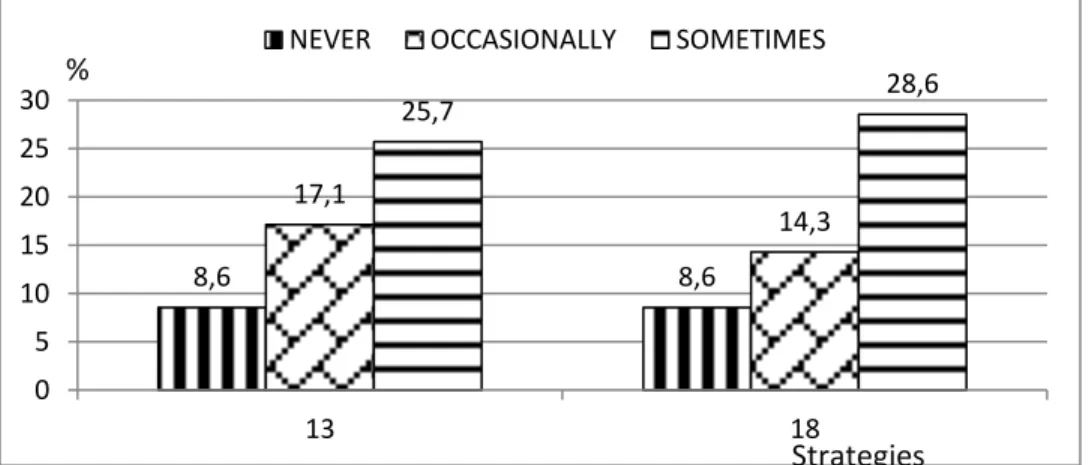
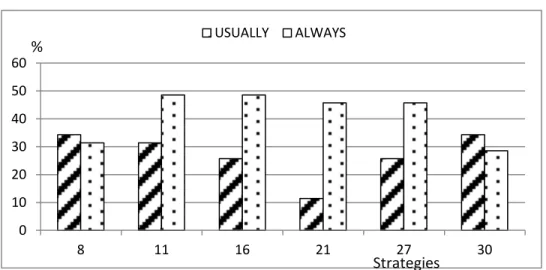
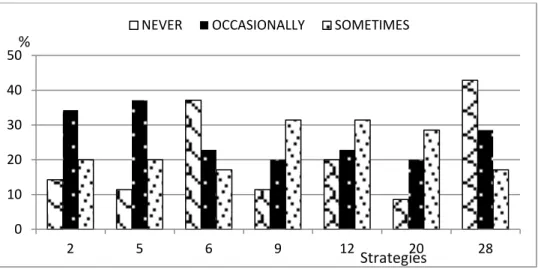
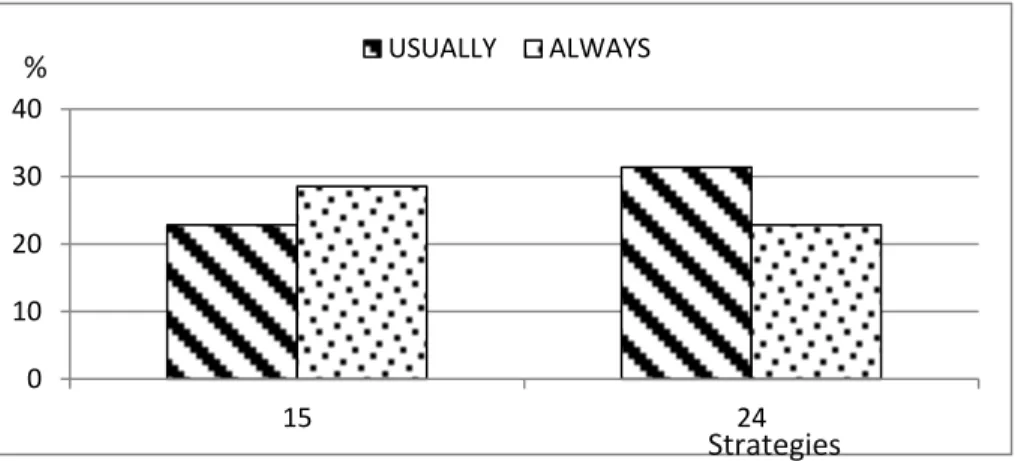
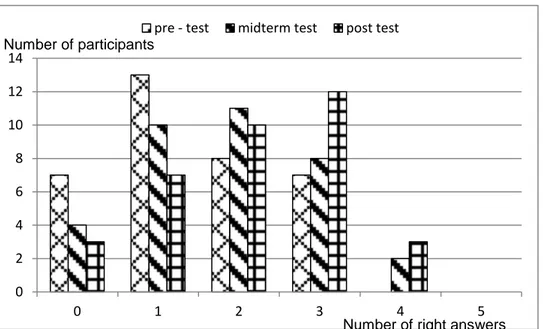
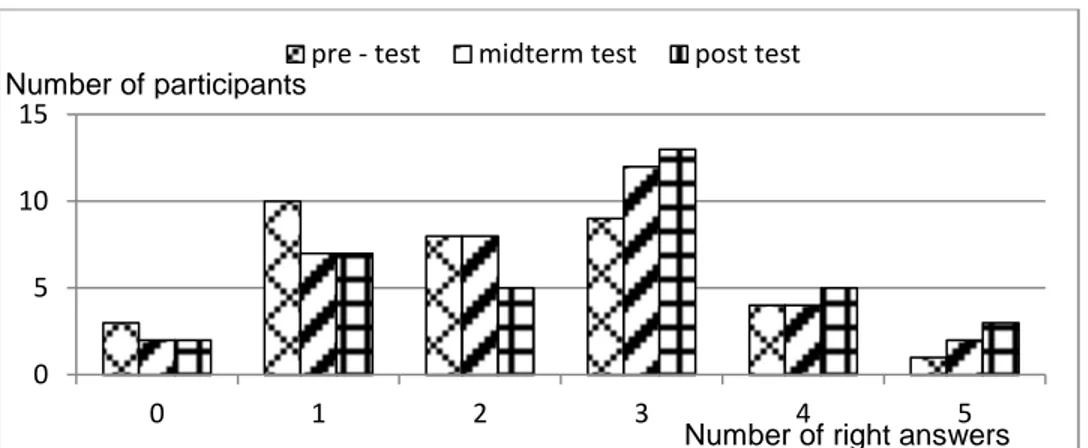
(9) IMPROVING READING COMPREHENSION THROUGH METACOGNITIVE STRATEGIES. List of figures. Figure 1. Action Research Cycle according to Nunan, D. (1992). Figure 2. Results of the use of Global Reading Strategies Figure 3. Results of Global Reading Strategies NOT considered for intervention Figure 4. Results of the use of Problem Solving Reading Strategies Figure 5. Results of Problem Solving Reading Strategies NOT considered for intervention Figure 6. Results of the use of Supporting Reading Strategies Figure 7. Results of Problem Solving Reading Strategies NOT considered for intervention Figure 8. KET results part 1 Figure 9. KET results Part 2 Figure 10. KET results Part 3 Figure 11. KET results Part 4 Figure 12. KET results Part 5. List of appendices. Appendix A Pre and Post Test Appendix B Metacognitive Awareness Reading Strategies Inventory – MARSI Appendix C Teacher´s Journal Appendix D Learners´ Journal Appendix E Participants´ Interview Appendix F Principal Consent Letter Appendix G Parents Consent Letter Appendix H Lesson Plan Template for Interventions.
(10) IMPROVING READING COMPREHENSION THROUGH METACOGNITIVE STRATEGIES. Appendix I Rubric for Blended Model Selection Appendix J Results of pre, mid and post test scored over 35 points.
(11) IMPROVING READING COMPREHENSION THROUGH METACOGNITIVE STRATEGIES. Chapter One: Introduction. Reading comprehension has been considered a weakness of the Colombian educational system. Every year, state examinations are held in order to assess educational quality at different levels of the Colombian educative system. Lately, results in local SABER examinations, led by Instituto Colombiano para el Fomento de la Educación Superior - ICFES (Colombian Institute for Promotion of Higher Education) and international examinations as the Programme for International Student Assessment (PISA), have shown the weakness of Colombian students in reading comprehension skills, being the reading area the one with lower results obtained by students, according with the results published by ICFES in 2015 and by PISA 2012. The analysis of PISA 2012 results (OECD, 2014) show that “Shanghai - China, Hong Kong China, Singapore, Japan and Korea are the five highest performing countries and economies in reading in PISA 2012” (p.4). “On average across OECD countries, 8% of students are top performers in reading (Level 5 or 6). These students can handle texts that are unfamiliar in either form or content and can conduct fine grained analyses of text” (p. 4). Meanwhile, Colombia obtained 403 points in a scale of five levels of reading performance, in which the highest score is 700; this means Colombia was classified in level 1, where scoring goes from 335 to 407 points. “These low levels of performance tend to be coupled with low levels of engagement with school and – as observed in PISA 2009 – with low levels of engagement with and commitment to reading” (OECD, p.9). This trend appeared not just in public schools, but also in the private ones, as shown by PISA results (2012), which tests both types of schools, questioning educators on how to improve reading skills and how to motivate students to read in a cultural environment where the reading rate in Colombia is one of the lowest in Latin America with an average of 2,2 books per person read in a year, compared with Chile, where 5,4 books.
(12) IMPROVING READING COMPREHENSION THROUGH METACOGNITIVE STRATEGIES. are read per person in the same period of time, and Argentina, where 4,6 are read, according with a study carried out in 2014 by Centro Regional para el Fomento del Libro en América Latina y el Caribe (Cerlalc). Considering this issue, generating a reading culture and improving reading skills is becoming a challenge. The low proficiency levels of reading comprehension are also perceived at institutional level in Carlo Federici School. According to the Sistema Institucional de Evaluación Estudiantil - SIEE (Institutional System of Students´ Evaluation), there are three dimensions to consider when evaluating students´ general performance by the end of each one of the four academic terms during a year, and they are: 1) “hacer”, which corresponds to the students´ assessment on classwork and homework; 2) “saber”, the end of term examination, which in the case of the EFL subject contains ten KET type questions; and 3) “ser”, which corresponds to students’ behavior, good manners and attitude shown during the lessons. Results obtained from the examinations administered by the educational institution Carlo Federici I.E.D, corresponding to dimension 2 (saber), showed that nearly 80% of students failed the EFL examination carried out at school, information supported by statistics provided from the Language Department at the institution. This phenomena has been present since the inclusion of the end of term examinations at Carlo Federici School, which have a value of 30% of the total grade each term. Considering the importance of these examinations at the School, its assigned value in quantitative academic performance, its influence as a practice for external examinations - SABER, and due to the low results obtained by students, the necessity of including an action plan for developing and improving students reading comprehension skills through the conscious use of metacognitive strategies emerged. Concern about the importance of developing reading comprehension skills in students arises from the relevance of this process in language learning. The role of reading comprehension in second language.
(13) IMPROVING READING COMPREHENSION THROUGH METACOGNITIVE STRATEGIES. acquisition has been widely explored in the EFL field. Harmer (2001), recognized that the act of reading in second language learning impact positively the development of other language skills such as speaking and writing. Other view about the relationship between reading comprehension and language learning is the one stated by Hussain (2005), who identified the capabilities that a person should have for comprehending English language. This capabilities are greatly related with reading skills and strategies such as: understand the lexical and the structural meaning of the words, phrases and sentences, guess the meaning of unfamiliar words while reading a text, skip unnecessary information while skimming, differentiate between facts and opinions locate the topic sentence in a paragraph, among others. Finally, and considering the direct effects of language input in language acquisition (Krashen, 1982), it is important to mention the importance of reading in the “internalization” period, where learners of a second language concentrate on understanding the meaning of oral and written text to help themselves to internalize the associations between form and meaning (Khul, 2009). This study aim to contribute to the improvement of the effectiveness of second language learning through the development of reading comprehension abilities.. Statement of the problem. At Carlo Federici School, where research was conducted, results in internal examinations in different subjects are considered low. According to institutional statistics provided by the academic coordination of the institution, 75% of students fail end of term examinations, which are aligned with SABER standardized tests type. Teachers at Carlo Federici School consider that lack of reading comprehension skills is the main cause of students´ academic failure, based on interviews carried out as part of this research. However, external examinations, specifically SABER 11, locate Carlo.
(14) IMPROVING READING COMPREHENSION THROUGH METACOGNITIVE STRATEGIES. Federici School among the best scores in the locality of Fontibón in Bogotá – Colombia. Nevertheless, results are still low if they are compared at a national level.. SABER 11 examinations assess students’ knowledge and skills in five components: 1. Lectura critica (critical reading) 2. Matemáticas (mathematics) 3. Sociales y ciudadanas (Scocial studies and citizenship) 4. Ciencias naturales (Natural science) 5. Inglés (English) Each component is evaluated in a 0-100 scale, including four levels of performance, Bajo (Low) from 0 to 30, Medio bajo (Medium-low) from 31 to 45, Medio alto (Medium high) from 46 to 70 and Alto (High) from 71 to 100. The following chart shows the results obtained by eleventh graders (morning shift) in SABER 11 examination in 2015: Table 1. SABER 11 Results Colegio Carlo Federici morning shift (2015) Place. Component. Score over 100. 1. Matemáticas. 59,08. 2. Inglés. 58,01. 3. Ciencias naturales. 57,15. 4. Sociales y ciudadanas. 57,08. 5. Lectura critica. 56,45.
(15) IMPROVING READING COMPREHENSION THROUGH METACOGNITIVE STRATEGIES. Despite the recognition as one of the tenth best results at SABER 11 examination among public schools in Bogotá with Medium High scores, results must improve for the purpose of reaching the school expected outcomes of being located at the High Level in the results of SABER 11 examination. Considering the role of the researcher as en English language teacher of the institution where the project is carried out, and the low results obtained in the English component (Inglés), it is evident that actions were needed to be taken in order to find out if helping students develop reading metacognitive strategies would influence academic success and particularly students’ performance on internal and external EFL examinations like SABER 11. Another aspect which called the researcher’s attention, regarding students´ results in SABER 11, was the fact that the critical reading component (lectura crítica) was located in the last place, supporting the proposal of this study to enhance the acquisition of effective reading comprehension strategies and reading metacognitive strategies. During the implementation and intervention sessions in this study, learners were provided the opportunity to develop their cognitive skills, to understand and select the reading strategies they considered most important and useful through the reading process as well as identify the aims to be achieved through the development of tasks they performed in order to help them be able to set their own academic and personal goals. Additionally, teachers and learners took advantage of the feasibility of using technology mediated resources along the development of the action research process through a blended-learning methodology, considering the advantages of this way of instruction to foster participants’ engagement and motivation and in the development of the study and for the possibilities it can offer to keep frequent communication between the researcher and the participants. Additionally, blended-learning was seen by the researcher as a.
(16) IMPROVING READING COMPREHENSION THROUGH METACOGNITIVE STRATEGIES. teaching and learning tool which allows the teacher to expand the time available with students in school with an educational environment available out of school schedule. In this study, it is believed that by designing and implementing an intensive reading course aimed at the development of six reading metacognitive strategies (asking questions, predicting-inferring, identifying main idea, analyze text structure, vocabulary cognates, summarize) through direct instruction in a blended-learning environment, learners are given the opportunity to make decisions and contribute responsibly to the improvement of their literacy skills, which might be reflected in better results in internal as well as in external English language reading tests. This experience might have a positive impact not only on learner’s context, but it can also enhance other teachers from different schools with similar issues to implement new strategies and approaches, pursuing the improvement of their pedagogical practice.. Research Question. Taking into account the role of reading comprehension in educational settings and especially in second language learning, along with the particular context and issues aforementioned, the following research question was formulated as a cornerstone for the development of this study: What are the effects of using a blended methodology involving reading comprehension activities aimed at developing planning, monitoring and evaluating metacognitive strategies for improving results on reading comprehension EFL (English as a Foreign Language) tests in eighth graders?.
(17) IMPROVING READING COMPREHENSION THROUGH METACOGNITIVE STRATEGIES. Research Objetives . To design and implement an intensive reading course aimed at the development of reading metacognitive strategies. . To determine the effects that direct instruction of reading metacognitive strategies has on learner´s performance in EFL examinations.. . To foster students´ awareness on the use of reading comprehension strategies and procedures.. . To determine the benefits of using a blended learning environment in the learning of metacognitive reading strategies..
(18) IMPROVING READING COMPREHENSION THROUGH METACOGNITIVE STRATEGIES. Chapter Two: Theoretical Framework. This chapter introduces important concepts, definitions and constructs that are essential to understand the formulation and execution of this particular research project. It also provides relevant insights about previous studies which have been carried out in the fields of reading comprehension and metacognition, among other key concepts involved along this research. It is relevant to highlight important concepts which are related with the core of this study. First, a description of the reading models, top-down and bottom-up will be introduced, followed by the definition of the interactive reading model, as well as the intensive reading approach proposed for the intervention stage. Then, approaches to reading instruction focused on direct instruction of reading comprehension strategies will be presented. As the intervention of the present study involves the instruction of the use of strategies, then the concept of learning strategies, including metacognitive, cognitive and socio-affective strategies as well as reading comprehension strategies will be broadened. Finally, features and implications of using a blended-learning methodology will be introduced. Reading Models. This research focuses on the ability of reading and the development of its effectiveness when taking ESOL reading tests. Different views, thoughts, insights opinions and theories have been developed around the concept, definition, and understanding of reading as a behavioral process and also as a cognitive one. When considering reading as a behavioral process, the act of reading is conceived as an associative perceptual act. From Bloomfield’s view (1938), reading is nothing more than the correlation of a sound image with its corresponding visual image, considering reading as learning to pronounce.
(19) IMPROVING READING COMPREHENSION THROUGH METACOGNITIVE STRATEGIES. the written representation of words. However, this definition moved to a more cognitive oriented view in which thinking processes were considered. For Richards (1938), reading is not only an understanding of the literal or sense meaning of a passage, but also the meanings implied by the author´s mood, his tone, his intent and himself. Later, Goodman (1968) referred to this action as an interaction between the reader and the written language, in which the reader attempts to reconstruct a message from the writer. As a comprehension process, reading also involves using alternatively some approaches such as the bottom-up and the top-down reading models. Bottom-up model. Although the term bottom up has been generally related to the behavioral view of reading and the term top down related to the cognitive view, this study conceived these two terms from Goodman´s view (1967), who characterizes the bottom up model description of the reading process as ‘the common sense notion’ by stating that “reading is a precise process involving exact, detailed, sequential perception and identification of letters, words, spelling patterns, and larger language units” (p. 135). Top-down model. This author also introduces the idea of the “top down” reading process to highlight the interaction that takes place between the reader and the text. According to Goodman (1967) it is a “psycholinguistic process by which the reader, a language user, reconstructs as best he can, a message which has been encoded by a writer as graphic display” (p. 135). Goodman (1967) describes this model of the reading process in the following way: “Reading is a psycholinguistic guessing game which involves an interaction between thought and language. Efficient reading does not result from precise perception and identification of all elements, but from skill in selecting the fewest,.
(20) IMPROVING READING COMPREHENSION THROUGH METACOGNITIVE STRATEGIES. most productive cues necessary to produce guesses which are right the first time” (p. 108).. The following table shows main features of teaching under Bottom-up and Topdown models adapted from Silvester & Farrell (2009).. Table 2. Features of teaching under Bottom-up and Top-down reading models Bottom-up Reading Model. ●. ● ● ●. Top-Down Reading Model. ●. Use of background knowledge.. ●. Higher level of cognitive processes direct the reading activity.. Reflects lower-level linguistic processing.. ●. Promotes reading as an active process.. Construction of meaning from smaller to larger linguistic units.. ●. Meaning does not require 100% of word identification.. Can be referred to as scaffolding activities.. ●. Reader based. Involves perceiving and decoding almost every letter or word in order to grasp meaning.. ●. Includes analytical and detailed oriented strategies.. ●. Text based. ●. Aims for developing building blocks necessary for text interpretation. During intervention sessions, In light of the above, reading instruction should aim for the setting of objectives and development of activities oriented towards recognition and practice of bottom-up as well as.
(21) IMPROVING READING COMPREHENSION THROUGH METACOGNITIVE STRATEGIES. top-down reading approaches for achieving effective reading as proposed in the interactive reading model described as follows. Interactive Reading Model. Based on Goodman´s reading models, bottom up and top down, this study frames reading instruction into an Interactive Reading Model -IRA, a term used to define the combination of both bottom up and top down processes, considered as a primary ingredient in successful teaching methodology, due to the importance of both processes in the development of effective reading skills, (Brown, 2001). IRA has recognized that there is “no single method or single combination of methods that can successfully teach all children to read” (p. 2). IRA has also remarked and recognized the value of the knowledge of multiple methods of teaching reading that teachers should have, as well as awareness of their students´ learning styles and preferences in order to create the appropriate balance of methods needed for the children they teach. (International Reading Association, 1998). The combination of both reading models, bottom-up and top-down in teaching reading, has been a matter of interest for research, starting by Rumelhart (1977) who developed the Interactive Reading Model, in which the author recognizes the interaction of bottom up and top down processes simultaneously through the reading process, considering that successful reading is both a perceptual and a cognitive process. The Interactive Reading Model has been supported by other authors. Years later, Davis & Bistodeau (1993) stated that bottom-up strategies alone are not sufficient for global comprehension and top-down strategies alone result in a “short circuit”, bringing the combination of both of them as a suitable option for improving reading effectiveness. Later, Nunan (1999) argued that reading is an interactive process in which the reader constantly shuffles between bottom-up and top-down processes. Considering previous.
(22) IMPROVING READING COMPREHENSION THROUGH METACOGNITIVE STRATEGIES. author´s´ position and insights about the benefits of an interactive reading model for reading comprehension, the present study has been framed under this specific model. Reading instruction, under the interactive reading model framework requires teacher’s efforts on developing efficient top-down and bottom-up reading strategies in their learners (Nunan, 1999), supported by this view, the present study involves direct instruction of metacognitive reading strategies which are defined hereunder. Bearing in mind the conditions of this study, regarding educational settings, time available for the development of the project and the objectives to be achieved, it was decided to plan an intensive reading course for the implementation stage. Intensive reading. Miller (2011) defines intensive reading as a teacher centered approach in which the instructor directs most of what happens in class including what to read, when to read, what vocabulary, grammar, text organization or comprehension points are to be discussed. This author also states that activities under intensive reading approach attend to issues of grammar, vocabulary, text organization and meaning that arise from the readings. Some benefits of intensive reading approach for improving reading comprehension have been argued by different authors. Pollar, Durodo, Gonzalez, Simmons, Kwok, Davis & Taylor, (2011 cited in Erfanpour, 2013) regarded intensive reading as an effective tool for improving reading comprehension and Paran (2003) considers that teachers require intensive reading methodology to enhance learning the three phases of pre, while and post-reading for better language preparation and activation strategies. Regarding the above mentioned conceptions about reading, this study considers both models of reading, bottom up and top down for the development and design of instruction materials used during intervention sessions and implementation in an intensive reading course proposed by the researcher..
(23) IMPROVING READING COMPREHENSION THROUGH METACOGNITIVE STRATEGIES. Reading Instruction Considering reading as an activity which involves cognitive processes, teaching and guidance on the use of strategies that facilitates understanding of written texts can be brought into the language classroom in order to make the reading process of learners more effective and help them improve their reading proficiency. The role of reading in language learning is determined by its purposes, which according to Nuttall (1982), are different in the first language compared to the purposes of reading in a foreign language. This author suggests that a typical use of reading in a foreign language class is to teach the language itself and, in this way, vocabulary, structures and other aspects can be learnt through reading in a foreign language. Supported by Nuttall´s (1982) view on the role of reading in language learning, this study gives importance to reading instruction in a foreign language with the purpose of developing learners´ comprehension ability of written texts and test performance in EFL. It also involved direct or explicit instruction as a means to carry out the intervention sessions along the development of the different implementation stages. Direct instruction. The term Direct Instruction (DI) is initially recognized by the idea of an explicit, teacher-directed model of effective instruction developed by Engelmann (1960). This pedagogical model proposes a curriculum design and instructional delivery in which explicit and systematic instruction takes place. Some of the main features of Engelmann´s DI Model includes: instruction based on scripted lesson plans, frequent assessment and careful monitoring of the program in order to ensure efficiency. Although at the beginning DI model was implemented in disadvantaged children, Engelmann was able to further demonstrate effectiveness of DI with middle class and above average students. It is important to mention that the concept of direct instruction in the development of this study.
(24) IMPROVING READING COMPREHENSION THROUGH METACOGNITIVE STRATEGIES. is supported by different authors’ views. For instance, Pearson & Dole (1988) demonstrated the positive impact of new instructional reading comprehension frameworks such as explicit instruction on reading comprehension skills compared with the traditional basal reading programs, in which instruction consists of allowing students to practice skills independently. Later, Duke (2001) demonstrated that explicit teaching of comprehension strategies favors students´ understanding of information in written texts. Based on her study, Duke developed the five components of explicit teaching of comprehension strategies: 1. An explicit description of the strategy and when and how it should be used. 2. Teacher and/or student modeling of the strategy in action. 3. Collaborative use of the strategy in action. 4. Guided practice using the strategy with gradual release of responsibility. 5. Independent use of the strategy. All these five components where considered in the design and implementation of the intervention sessions in the present study. Recently, authors such as Rosenshine (2008) and Rupley (2009) have pointed out direct instruction as an active reflective approach to instruction that breaks learning into smaller steps with scaffolding, leading towards students’ independence and mastery. Rosenshine (2008) has synthesized three types of direct instruction: 1) Teacher effects patterns, which refers to identification of specific patterns of instruction or instructional procedures used by the most effective teachers; 2) Cognitive strategies meaning, related with instructional procedures used for teaching higher-level cognitive tasks (such as reading comprehension, test-taking and reflective thinking strategies) with scaffolding or temporary supports being the predominant instructional procedure for teaching cognitive strategies; and 3) DISTAR, an acronym for Direct Instruction System for Teaching Arithmetic and Reading, which corresponds to a series of procedures for direct instruction.
(25) IMPROVING READING COMPREHENSION THROUGH METACOGNITIVE STRATEGIES. developed by Engelmann (1968). Although there are differences among the three types of direct instruction, Rosenshine (2008) also underlined some commonalities among them in which four main characteristics are included: . Guided practice. . Active students participation. . Scaffolding. . Gradual release of responsibility towards student Independence.. It is worth stating that Rosenshine´ synthesis also served as support for the design of the twelve blended-learning instructional modules applied during the intervention sessions along the execution of this research project. More recently, Lencioni (2013) carried out a study at two elementary schools in the suburban San Francisco Bay Area during a six-week period of instruction. That study aimed at finding out the effects of explicit reading strategy Instruction on reading comprehension in fourth grade students. A total of 105 participants divided in two groups were involved during the execution of the study. One group of 48 participants received explicit direct instruction of reading comprehension strategies and cooperative learning while the other 57 participants received explicit direct instruction and independent seat work. A pre-test and a post-test were applied and then results were contrasted ,concluding that both groups improved their scores in the tests applied, demonstrating the positive effects of explicit direct instruction of reading strategies on reading comprehension performance. Language learning strategies Strategies can be understood as skills that are opened to conscious reflection and use (Grabe & Stroller, 2002). In the case of reading comprehension, strategies are aimed at actively processing the sense and meaning of the text. According to Solé (2006), such.
(26) IMPROVING READING COMPREHENSION THROUGH METACOGNITIVE STRATEGIES. strategies are high order procedures which imply setting goals, planning actions for goals attainment and constant evaluation to adjust or change those actions. Strategies, particularly learning strategies and its relationship with effective learning have been highlighted by authors like Chamot and O´Malley (1994). These authors stated that students who use strategic approaches to learning will comprehend spoken and written language more effectively. They have also argued that students who make use of learning strategies tend to learn new information easily and have better retention in the use of a second language. Based on theory and on student observation, Chamot and O´Malley (1994) present three types of strategies: metacognitive, cognitive and social/affective. . Metacognitive strategies include planning, monitoring and evaluating learning activities and are described as the execution of a process which enables learners to anticipate or plan for a task, determine how successfully the plan is being executed, and then evaluate the success of the learning and the plan after learning activities have been completed.. . Cognitive strategies are often linked to individual tasks and involve three broad categories: rehearsal, organization and elaboration strategies.. . Socio-affective strategies involve interaction in order to assist learning, as in cooperating learning and asking questions for clarification, which make them particularly important in second language acquisition.. Metacognitive strategies One of the key concepts, in which the present study is framed, is metacognition. According to Koda (2005), the foreign language reading task “is the product of a complex information processing system, involving a constellation of closely related mental operations. Each operation is theoretically distinct and empirically separable, serving an.
(27) IMPROVING READING COMPREHENSION THROUGH METACOGNITIVE STRATEGIES. identifiable function” (p.19), that implies learners’ awareness of the different processes that they are carrying out as well as the ones that they need to develop in order to improve their reading comprehension skills. In accordance with Koda´s (2005) insights above mentioned, it is relevant to support learners to build up metacognitive awareness. The reader guided process of planning, monitoring, and evaluating the cognitive functions that are required by a task is referred to as metacognition (Flavell, 1978; Brown, 1980; Baker & Brown, 1984; Koda, 2005). Based on previous insights about metacognition, the intervention in the study involved sessions of direct instruction in which the metacognitive process of planning, monitoring and evaluating were considered. Planning Planning describes how the learning will be carried out and involves the selection of appropriate strategies and organization of activities required to achieve a goal. From Miller´s view (as cited in Abdullah, Almadi &, Ismail 2013), this is a thought process which is essential to the creation and refinement of a plan, or integration of it with other plans; that is, it combines forecasting of developments with the preparation of scenarios of how to react to them. Monitoring Monitoring refers to personal conscious awareness of comprehension and text performance. It is related to controlling the ongoing learning process and it enables students to determine whether the resources they have available are sufficient and are being well used, and whether they are doing what they planned to do (Slife & Weaver, 1992, cited in Abdullah, Almadi &, Ismail, 2013). Evaluation Evaluation is related to assessment of activities of current learning. It is considered as a comparison of current impacts on understanding against the strategic plans which.
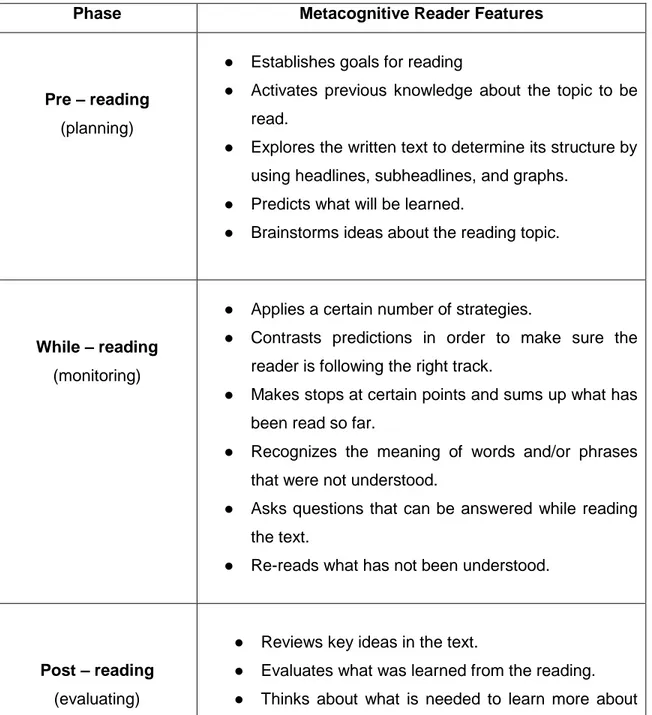
(28) IMPROVING READING COMPREHENSION THROUGH METACOGNITIVE STRATEGIES. were established during the planning process. As stated by Swanson (1994), planning, monitoring, and evaluation need to be emphasized in the learning process and would motivate learners to control their improvement in reading comprehension.. This table shows the specific reading strategies taught to learners during the intervention sessions, the metacognitive process each strategy belongs to, and their corresponding reading model:. Table 3. Metacognitive reading strategies used for intervention Metacognitive Process. Planning. Metacognitive Reading Strategy. Reading Model. ●. Asking Questions. (Top-down). ●. Analysing text. (Bottom-up). Structure Monitoring. ●. Vocabulary cognates. (Bottom-up). ●. Predicting and. (Top-down). Inferring Evaluating. ●. Identify main idea. (Top-down). ●. Summarizing. (Top-down). Moreover, Kellogg (1994) suggests that metacognition corresponds to the capacity individuals have to assume and control their own learning and it implies:. ●. Adopting awareness towards a learning task and to what should be learned.. ●. Selecting, applying and modifying strategies along the learning process.. ●. Recognizing what learning and thinking effectively means..
(29) IMPROVING READING COMPREHENSION THROUGH METACOGNITIVE STRATEGIES. ●. Internalizing conditions in which thinking and learning effectively is present. (Kellogg, 1994).. Table 4 represents the view of Gil, Garcia & Cañizales (2011), related to some fundamentals of the features a metacognitive reader should possess at each one of the three phases of reading (pre- reading, while reading and post reading). Table 4. Features of a metacognitive reader Phase. Pre – reading. Metacognitive Reader Features ●. Establishes goals for reading. ●. Activates previous knowledge about the topic to be read.. (planning) ●. Explores the written text to determine its structure by using headlines, subheadlines, and graphs.. While – reading. ●. Predicts what will be learned.. ●. Brainstorms ideas about the reading topic.. ●. Applies a certain number of strategies.. ●. Contrasts predictions in order to make sure the reader is following the right track.. (monitoring) ●. Makes stops at certain points and sums up what has been read so far.. ●. Recognizes the meaning of words and/or phrases that were not understood.. ●. Asks questions that can be answered while reading the text.. ●. Re-reads what has not been understood.. ●. Reviews key ideas in the text.. Post – reading. ●. Evaluates what was learned from the reading.. (evaluating). ●. Thinks about what is needed to learn more about.
(30) IMPROVING READING COMPREHENSION THROUGH METACOGNITIVE STRATEGIES. the topic. ●. Establishes relationships between the topic and other extra information learned.. ●. Reflects upon the strategies that best and least worked and why.. * Chart adapted by the researcher from Gil, Garcia & Cañizales (2011).. Previous insights about features of a metacognitive reader were considered for the establishment of the intervention sessions inside this study and at the same time, they can serve as a basis of what teachers should achieve in learners during reading instruction. Blended learning. In the simplest words, blended-learning can be defined as the combination of face to face instruction with computer mediated instruction (Graham & Bonk, 2006). However, it is important to consider Garrison & Vaughan’s (2008) statement, which relies on the fact that blending-teaching is not just a matter of transferring a portion of your current course to the web. Instead, it involves developing challenging and engaging learning activities. This study conceives blended-learning as a teaching methodology approach for instruction. As Pearson & Gallagher (1983) state, instruction of reading comprehension requires learners to be engaged in the process to become independent learners and a way to facilitate engagement can be considering learners´ interests for computer assisted activities in the design of the course. Additionally, Prensky (2005) highlights that twentyfirst century students may require more dynamic and differentiated options for reading in order to stay engaged. According to Horn & Staker (2015), blended-learning involves four models of instruction: the first one is rotation model, a model in which students rotate between learning paths or “modalities”—one of which is online learning—either on a fixed schedule.
(31) IMPROVING READING COMPREHENSION THROUGH METACOGNITIVE STRATEGIES. or at the teacher’s discretion. Rotation model includes four sub models: Station Rotation model, in which students rotate between various stations in the classroom, and at least one of these stations includes an online learning component. The second sub model is Lab Rotation model, which is similar to the previous one, but the online learning component takes place in a learning lab that is designed primarily for this purpose. It is also important to mention that participation of learners under this model happens while they stay on the school campus. The third sub model suggested is the Flipped Classroom Rotation model in which students rotate on a fixed schedule between classroom instruction during school day and online work outside of school hours. Finally, the fourth sub model, individual rotation model, in which students move to a variety of learning modalities based on student needs and interests, in this fourth sub model, the students’ course is not prescribed by a teacher or schedule, but is rather customized for each student according to individual needs. The second model of blended-learning instruction suggested by Horn & Staker (2015) is the flex model, which has a similarity with the individual rotation model in the sense that students work on a customized schedule that rotates between modalities, one of which is online learning. However, the flex model is fluid instead of fixed; it means that changes of schedules in real-time can happen according to students´ learning needs. The third blended-learning model is a la carte model, also known as the “self-blend” model. In this model students are allowed to design their educational experience by selecting specific online courses to supplement their traditional in-school coursework (Beaver, Hallar & Westmaas, 2014). Finally the fourth model, enriched visual model, suggests that students learn primarily online, but split their time between the school campus and an offsite environment. Described by Horn & Staker (2015) as a “whole school experience,” which means that it is a comprehensive approach to schooling..
(32) IMPROVING READING COMPREHENSION THROUGH METACOGNITIVE STRATEGIES. In the direction of deciding which one of the blended-learning models was the most appropriate to be adopted during the development of this study, the researcher relied on the rubric developed by Horn & Staker (2014) (See Appendix I). This rubric allows the teacher to analyze the circumstances of a course across six dimensions, represented in six questions: 1.. What problem are you trying to solve?. 2.. What time of team do you need to solve the problem?. 3.. What do you want students to control?. 4.. What do you want the primary role of the teacher to be?. 5.. What physical space can you use?. 6.. How many internet-enabled devices are available?. Once the given answers in the rubric were selected and the results were analyzed, the researcher came to the conclusion that the model that best fits the circumstances of the problem to be solved in this study was the Rotation Model: Flipped-classroom model. This model of blended instruction, Flipped-classroom seems to have some benefits in learning processes. Bergmann & Sams (2012) established, after research on this issue, the main advantages of flipped classroom for learners as well as for teachers. The following chart summarizes Bergmann & Sams (2012) findings about how flippedclassroom model of instruction can favor learning effectiveness in different kind of learners..
(33) IMPROVING READING COMPREHENSION THROUGH METACOGNITIVE STRATEGIES. Table 5. Advantages of the flipped-classroom model. Advantages for learners. Advantages for teachers. . Learners have more control over their own learning.. . It promotes Self-Directed LearningSDL.. . Lessons and content are more accessible.. . It promotes student-centred learning and collaboration.. . Learners can explore subjects in a deeper manner and go to their own pace.. . Teachers can support students in better understanding the concepts through practical application.. . Content can be explored once and again.. . Adaptation of teaching styles to different types of learning.. For the development of this particular study and due to its particular characteristics in terms of context, facilities and time available with participants for the different stages of the project, flipped-classroom was the blended model of instruction that better fit for the implementation during intervention sessions. Benefits of blended instruction have been highlighted by different authors. Sharma and Barrett (2007) refer to blended-learning as a language course which combines a face-toface (F2F) classroom component with an appropriate use of technology, and they have suggested six reasons for employing blended-learning in ELT: pedagogical richness; access to knowledge; social interaction; personal agency (i.e. learner control and choice); cost effectiveness; and ease of revision. However, Graham (2004) proposed a compressed list of three main reasons for implementing this type of approach which are: improved pedagogy, increased access/flexibility; and increased cost effectiveness. Other authors such as Marsh, McFadden & Price (2003) have also mentioned the use of a blended learning solution to improve the teaching of large groups..
(34) IMPROVING READING COMPREHENSION THROUGH METACOGNITIVE STRATEGIES. State of the Art The significance of the reading comprehension process in academic settings for developing cognition and the way reading should be taught have been a matter of study for EFL teachers and researchers. Different issues related to reading comprehension processes and what surround them have been widely discussed by different authors. The present study discusses the influence of direct instruction through a blended-learning methodology of metacognitive reading strategies in the performance of students in reading comprehension EFL tests.. Direct instruction on reading strategies There are studies in the area of improving comprehension of reading texts through explicit instruction on reading strategies. One of these studies is the implemented in Colombia by Romero (2013), who worked with a group of 39 low proficiency students from eleventh grade located at A1-A2 Level according to the CEFR in a secondary school. The study was aimed at improving students’ reading comprehension of English texts having in mind self-directed learning principles. A reading comprehension test was administrated in a pre-test post-test basis, in order to find out the effects of instruction on pre-reading strategies in learners reading comprehension performance. After implementation stage in which students were given twelve (55 minutes long) sessions of instruction on five prereading strategies (brainstorming, visual aids, pre-questioning, pre-teaching vocabulary and K-L-W), it could be determined improvement on participants’ reading comprehension ability and at the same time, progress of their language skills and involvement in their learning process was demonstrated. Considering that one of the main areas of interest in the development of the present study is the one related to the influence of metacognitive processes in reading.
(35) IMPROVING READING COMPREHENSION THROUGH METACOGNITIVE STRATEGIES. comprehension performance, it is considerable to mention some recent studies carried out in this area, which supports the benefits of teaching metacognitive reading strategies for improvement of reading comprehension. Teaching metacognitive reading strategies This field of study explores studies such as the empirical study developed in Iran by Koosha & Tavakoli (2015), which researched the influence of explicit metacognitive strategy instruction on reading comprehension and self-efficacy in EFL among university students. The study was developed with a sample group of 100 EFL major students aged between 19 and 18 from different universities in Khuzestan, Iran, who had studied English for 6 years at school. The study involved two sub groups, the experimental group, which included 50 students who were given twelve sessions of explicit instruction in the use of different metacognitive reading strategies, and the control group, with 50 students who received no strategy instruction, but instead a traditional-based instruction on reading during the twelve sessions. After the instruction period, both experimental and control group took the same reading comprehension test that they had taken as a pretest, this time as a post test. Results revealed that students in the experimental group showed greater achievement in reading comprehension than students in the control group. Researchers concluded that if explicit metacognitive strategy instruction is incorporated into everyday foreign language classroom activities and tasks, it can positively and significantly enhance learners reading achievement. In another study aimed at the establishment of the relationship between metacognitive strategy use and reading achievement, Seepo & Zhang (2013) found similar results. In this opportunity, a group of 33 third-year EFL major students, both high proficiency students (HP) and low proficiency students (LP) who were taking an “Advanced English Course” at Guizhou University in China, were assessed with the Metacognitive Strategy Questionnaire (MSQ) in order to find out the metacognitive strategies that they.
(36) IMPROVING READING COMPREHENSION THROUGH METACOGNITIVE STRATEGIES. actually used to plan, monitor, and evaluate their reading processes. Then, a reading comprehension test (RCT) consisted of six reading passages selected from the China Public English Test System (PETS 5, the highest level) was administered in order to identify participant reading comprehension achievement. Correlation among the use of planning, monitoring and evaluating reading strategies by the students and their English reading comprehension scores was significant enough to determine that the students who used more metacognitive strategies tended to score higher on the reading comprehension test, whereas the students who used fewer metacognitive strategies were likely to get low scores. This research motivates the idea of including instruction on planning, monitoring and evaluating reading strategies as a basis for the development of this study. However, as the focus group in this study includes a younger population (13 to 16 years old), it is also worth considering previous studies with younger learners, as the one carried out in two urban elementary schools in the United States by Boulware-Gooden, Carreker, Thornhill, & Joshi (2007). The purpose of the study was to determine the effectiveness of systematic direct instruction of multiple metacognitive strategies designed to assist students in comprehending text, specifically in reading comprehension and vocabulary achievement; it involved the participation of 119 third-grade students from two different schools. One of the schools was considered the intervention school and the other one, the comparison school. All participants were pre and post tested with the 2000 Gray Silent Reading Test in order to determine students´ progress in reading comprehension. During a 5 weeks period, the students in both schools received 30 minutes of reading comprehension instruction; students in the intervention school were given direct instruction of metacognitive strategies such as identifying main ideas and summarizing, while students in the comparison school received traditional reading instruction. After intervention, a post test was administered to both groups and findings showed that students in the intervention school gained 20% in reading comprehension over students in.
(37) IMPROVING READING COMPREHENSION THROUGH METACOGNITIVE STRATEGIES. the comparison school, concluding that the systematic instruction of metacognitive strategies led to positive effects for understanding written text. Results found in previously mentioned studies demonstrate the favorability of providing direct instruction in reading metacognitive strategies for the development and improvement of reading comprehension performance. In contrast, a study carried out in Santa Marta (Colombia) by Barbosa & González (2013), which included the participation of 40 tenth grade students, aimed at the establishment of the relationship between metacognitive activity and reading comprehension, concluded that after analyzing results, there was not statistically significant relationship between the two processes. The study did not involve any intervention as the main objective was merely to find out if there were relationship between metacognitive activity and reading comprehension. For that purpose, three instruments for collecting data were used: the first one was a social demographic survey which allowed researchers to identify aspects such as age of participants, scholar level of participants ‘parents, number and type of books that participants had at home and reading habits of both participants and their parents. The second instrument was a short version of the PISA test, which was used in order to measure participants´ level of reading comprehension in three dimensions; literal, inferential and critical. Finally, the instrument which allowed researchers to find out participants´ awareness and control of metacognitive activity was a self-report questionnaire of metacognitive activity. A relevant conclusion stated in this particular study, is that the teachers and the resources they direct, are responsible of the mediation and effective relationship between reading comprehension and metacognition. However, this confrontation of ideas enhances the development and analysis of data in the present study in order to compare and contrast them with early research..
(38) IMPROVING READING COMPREHENSION THROUGH METACOGNITIVE STRATEGIES. Finally, it is important to mention the relationship between the methodology applied (blended learning) as a means for direct instruction during the development of this study and its effects on reading comprehension performance. Blended-learning for teaching language learning strategies Implications of Blended-learning into reading comprehension processes have been lately a matter of research. An example of a research study carried out in this area is the one conducted by Schechter, Macaroon, Kazakoff & Brooke (2015) in an urban elementary school in western Massachusetts. The study aimed at investigating the potential benefits of a blended-learning approach on the reading skills of low socioeconomic status students. The study involved two groups, treatment students and control students. Treatment students were exposed to English language arts instruction that was both teacher-led and technology-based, while control students received the same English language arts instruction without the blended learning component. Results showed significantly greater pretest/posttest gains on a standardized reading assessment for the treatment students, compared to the control students, which demonstrates the positive impact of a blended-learning approach in the improvement of reading comprehension performance. In Colombia, research on blended- learning instruction and its relationship with reading comprehension performance in EFL has been scarcely explored and blended learning in EFL has been described as an educational challenge (Ochoa & Roberto, 2011). Nevertheless, some positive aspects of the use of technology for explicit instruction of reading strategies and the improvement of students´ reading comprehension in EFL have been demonstrated. Montalvo (2013) developed a research study aimed at the improvement of eleventh and tenth graders’ reading comprehension level through the use of explicit reading strategies and personal blogs. In her study, Montalvo (2013) involved 30.
(39) IMPROVING READING COMPREHENSION THROUGH METACOGNITIVE STRATEGIES. students who were tested with a standardized reading comprehension test before intervention in order to find out their level of reading comprehension. Then, 19 instructional sessions on the use of reading comprehension strategies were delivered. After explicit face-to-face teaching on reading strategies, technology was involved for the development of specific reading comprehension tasks in which students had the opportunity to use the reading strategies learned previously. By the end, a different reading comprehension standardized test was applied to participants as a post-test with the purpose of identifying students´ progress on reading comprehension. Analysis determined improvement not just in participants´ reading comprehension performance, but also in the development of students´ awareness of the use of reading strategies when approaching a written text, what the researcher described as metacognitive control. Other benefits of employing blended-learning in ELT have been demonstrated by outcomes found in studies like the one carried out by Arismendi, Colorado & Grajales (2011) in the school of languages at Universidad de Antioquia which aimed at exploring and comparing students’ reading comprehension processes in EFL though different modalities of instruction, specifically face-to-face and web-based modalities. They found that after giving the same content course of direct instruction on the use of reading comprehension strategies to two different groups of graduate students, one group receiving face-to-face instruction and the other one receiving web-based instruction, participants in both environments improved their ability to use strategies and understand written texts. Researchers of this study argued that despite the fact that both modalities of instruction showed independently to have a positive impact in the development of reading comprehension abilities, one of these modalities can be considered as a complement to the other one. Analysis of previous research in different contexts regarding common aspects involved in this study, contribute to the purpose of this research which aim at demonstrate if direct instruction on reading metacognitive strategies enhance reading comprehension.
(40) IMPROVING READING COMPREHENSION THROUGH METACOGNITIVE STRATEGIES. abilities and at the same time to find out information about the effectiveness of using a blended modality of instruction for teaching language learning strategies in a group of eighth grade EFL learners at Carlo Federici I.E.D. School. The next chapter will describe key aspects such as type of study, context, participants and instruments used to analyze data during the development of the present study..
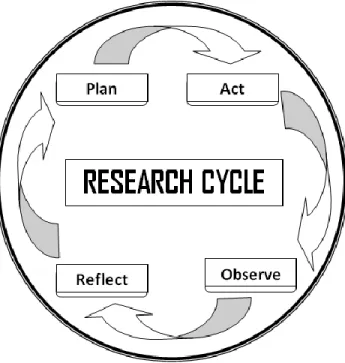
(41) IMPROVING READING COMPREHENSION THROUGH METACOGNITIVE STRATEGIES. Chapter 3: Research Design Framework The following chapter introduces information about the type of study, participants’ contextualization and the role of the researcher. It also describes the instruments used during the intervention stage and how data was collected.. Type of study This research was encompassed under an action research approach which involved the participation of all individuals who took part in the process (Bailey, 1998). In this case, the individuals were students from eighth grade and the teacher took the role of the researcher. According to Richards (1998), action research takes its name from two central processes: a data gathering component (the research element) and an action component. These two processes facilitate “the reflective cycle” and improve “professional action” (Wallace, 1998). Although authors such as Brumfit and Mitchell (1989) and Jarvis (1991) have considered reflective practice and professional growth as a weakness of action research, some other points of view have arisen in its favor. Authors such as Burns (1999) states that action research offers a valuable opportunity for teachers to be involved in research which is felt to be relevant, as it is grounded in the social context of the classroom and the teaching institution (p.17). Nunan (1992) considers that this type of research fulfills basic research requirements because it is initiated by a researchable question/ issue, is supported by data and interpretive analysis, and is carried out by a practitioner investigating aspects of his or her own context and situation, leading to improvement in the practice of language teaching as a professional activity. This last author states that action research is developed within an iterative cycle which involves four phases or stages (planning, acting, observing, reflecting) and they are the basis for the development of the present study (see figure 1)..
(42) IMPROVING READING COMPREHENSION THROUGH METACOGNITIVE STRATEGIES. Figure 1. Action Research Cycle according to Nunan, D. (1992). Adapted from Nunan, D. (1992). Research Methods in Language Learning. Cambridge: Cambridge University Press.. Further, a more detailed model of action research was proposed by Burns (as cited in Ellis, 2012), who established five repetitive phases: 1. Identifying an issue or problem relevant to a specific instructional context (the initial idea). 2. Obtaining information relevant to the problem / issue (fact finding). 3. Working out a possible solution on this problem (the action plan). 4. Trying out the solution in the specific instructional context (implementation). 5. Collecting data to investigate whether the solution is effective (monitoring). This particular research is framed on Burns’ (1999) mixed method design in which quantitative as well as qualitative data interpretation is analyzed and then contrasted, increasing the reliability and validity of the research, considered in this way as a viable research type. According to Burns (1999), the fact that data collection methods can be.
(43) IMPROVING READING COMPREHENSION THROUGH METACOGNITIVE STRATEGIES. triangulated, which means, findings can be tested out against each other, makes results more valid and reliable, and potentially more generalizable. That can be considered a great advantage, considering the replication of the intervention sessions by other teachers working in similar conditions. Additionally, Grabe and Stoller (2002) highlight that action research “permits to examine reading in practical terms and explore practical alternatives to reading instruction in our own classrooms, with our own students, at our own pace” (p.158). Context Carlo Federici School is a public school which was inaugurated in the year 2007. It is located in the locality of Fontibón in Bogotá, Colombia and is one of the schools called “mega-schools”, because of the amount of students attending (1.200 students in the morning shift and 1.200 students in the afternoon shift) as well as its infrastructure and resources provided, such as a technology room and two informatics rooms; one of them for primary students and the other one for secondary students, with 40 computers each. Additionally, the school has three laboratories: one for biology, one for chemistry and one for physics. The school also has a cafeteria where students have breakfast in the morning shift and lunch for students in the afternoon shift, all provided by the government. Thanks to the support of the major’s office of the locality, each one of the ten public schools located in Fontibón have a Language Resource Center where the purpose is to help students and teachers to improve English language teaching and learning processes. The school is located in an area which is considered an international node for being adjacent to the Free Trade Zone, where companies and enterprises demand qualified bilingual individuals, as for its proximity to “El Dorado” International Airport, where bilingual people are also required. All of these conditions must be seen as an advantage for the population of primary and secondary students who study at Carlo Federici School and who.
(44) IMPROVING READING COMPREHENSION THROUGH METACOGNITIVE STRATEGIES. will require to manage an additional or foreign language in order to be competitive in a globalized world. The School Carlo Federici I.E.D has been chosen as one of the pilot schools of bilingual education by the Secretary of Education of Bogotá in 2011. Being a bilingual education public school means that gradually and from the first stages of primary education, there must be a curricular proposal of bilingual education through Content Based Learning, (ACUERDO No. 364 de 2005 PROGRAMA "BOGOTA BILINGÜE EN DIEZ AÑOS” – AGREEMENT No 364 of 2005 PROGRAM “BILINGUAL BOGOTÁ IN TEN YEARS”). Participants Thirty five students participated during the development of this study: eighteen boys and seventeen girls. All of them were eighth graders aged between 13 and 15 years old. Most of the participants live in the school surroundings where their socioeconomic strata are 2 and 3. This group of students takes four hours of English classes weekly, divided in two sessions. Due to the grade they are coursing currently, this group of students is not still part of the bilingual curricular proposal of bilingual education through Content Based Learning. Their level of English language proficiency is considered to be A1, according to the CEFR, which was the result of the pre-test taken by participants at the first stage of the study. Moreover, as has been noticed in the vast majority of students, they present weakness in their reading comprehension skills, as shown in their results obtained in tests at the institutional level. In Colombia, according to National Ministry of Education (MEN), there are three levels of education: (preescolar) pre-school, (educación básica) primary and (educación media) secondary education. Moreover, following guidelines from secretary of Education in Bogota, Carlo Federici School´s curricular levels of education are distributed in five.
Figure
+7
Documento similar
In addition, as some authors point out, we can assume that the comprehension ability in itself is developed at an early age (Kendeou, van den Broek, White, & Lynch, 2007). That
The aim of this paper is to demonstrate that reading authentic literary material in the English as a Foreign Language (EFL) classroom can improve students’ language learning skills as
Direct memory access (DMA) is a feature of modern computers that allows certain hardware subsystems within the computer to access system memory for reading
SOLOMON (1989): The influence of prior reading instruction on fourth grade students 1 attitudes toward reading according to select national assessment of educa- tional
In relation to the learning strategies scales, EMI students have better learning strategies due to metacognitive self- regulation, time study management and effort regulation
Based on this procedure, NCLB is associated with statewide declines in average test score levels for reading and math of 2.6 percent and 0.6 percent, respectively, and
Mientras que por el otro, para la lengua extranjera se desarrollaron tres investigaciones: Lineamientos curriculares para los procesos de enseñanza y aprendizaje de inglés como
There are common and divergent patterns in the answers to a questionnaire that delves into motivational and teaching aspects linked to reading education: leisure reading habits,
