
Variability of water relations and photosynthesis in Eucryphia cordifolia Cav (Cunoniaceae) over the range of its latitudinal and altitudinal distribution in Chile
12
0
0
Texto completo
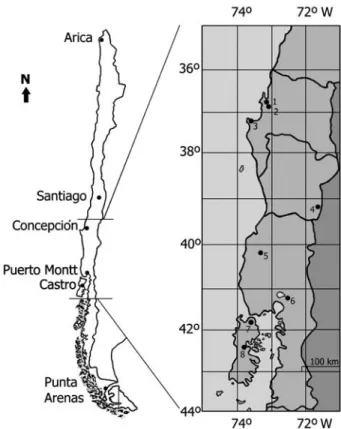
(2) VARIABILITY OF WATER RELATIONS AND PHOTOSYNTHESIS. perate climate, with more chilly winters and more mesic conditions during summer. Summer drought has been generally considered the primary environmental constraint to the productivity and distribution of the vegetation (Larcher 2000). Along the latitudinal gradient of E. cordifolia, summer drought increases towards the northern end of its distribution. It seems, therefore, that E. cordifolia shows the ability to inhabit in a broad range of habitats, which could be in part aided by variability in physiological traits, such as water relations and photosynthesis. Long-lived woody plant species must adjust to daily and seasonal fluctuations in environmental conditions, and such adjustment is usually initiated as an array of physiological responses to stress or changes in the environment that subsequently leads to stable long-term adjustments, reflecting a developmental response to the new environmental conditions (Huner et al. 1998, Lambers et al. 1998). Summer droughts lead to a water deficit in the leaf tissue, which affects many physiological processes such as leaf water relations and photosynthesis (Flexas and Medrano 2002, Flexas et al. 2006). These traits are, therefore, those whose plasticity is more likely affecting the capacity of a species to acclimate to drought conditions. Differences in water potential (Ψw) among plants are often interpreted as indicating relative access to soil moisture. Thus, mean differences in leaf Ψw during the morning among populations of E. cordifolia could reflect differences in moisture along the tree's latitudinal distribution. Also, the minimum seasonal water potential that a plant experiences (Ψmin) provides an important measure of the plant water status, as it reflects the maximum water deficit that the leaves and xylem must tolerate to maintain physiological activity. Ψmin also acts as a selective pressure on xylem structure which, in turn, generates correlations between Ψmin and numerous hydraulic traits of the leaf (Bhaskar and Ackerly 2006). These aspects suggest that differences in water relation patterns between populations of the same species contribute to explain persistence within different habitats. However, it is necessary to have an understanding of ecophysiological implications between vulnerability to cavitation and the actual (Ψmin) water potentials experienced by plants under drought conditions in the field to explain that populations do not experience the same level of water stress (Valladares and Sánchez-Gómez 2005). Also, photosynthesis responds to seasonal and diurnal changes in environmental variables. The optimum temperatures of photosynthesis are similar to the daytime temperature at which the plants normally grow, but the ability to acclimate to different temperatures has been demonstrated in several species (Cabrera et al. 1998). Air humidity and soil water status act on stomatal aperture and photosynthesis metabolism (Schulze 1986, Luoma 1997). Likewise, environmental conditions are associated to the stomatal characteristics of the leaf (Beerling and Kelly 1996, Galmés et al. 2007a, 2000b). A common response to water stress is a decrease in stomatal conductance, which decreases transpiration, photosynthesis and growth. Additionally, there is evidence of direct metabo-. 575. lism inhibition of photosynthesis by water stress (Schulze 1986, Luoma 1997). Association among leaf water characteristics, stomatal density and CO2 assimilation has mainly been studied on plants grown under laboratory or common garden conditions (Benowicz et al. 2000, Wang et al. 2003, Duan et al. 2005). Additionally, there are few studies on the variation of leaf water and CO2 exchange characteristics of the plants in field conditions over all ranges of latitudinal distribution in plants with broad climate gradient (Luoma 1997, Palmroth et al. 1999). Likewise, there are scarce studies in tree species of the rainforest of Chile with this approach (Reyes-Díaz et al. 2005, Piper et al. 2007). The aim of this study was to investigate the variation in leaf water relations, photosynthetic characteristics and stomatal density of E. cordifolia growth along its broad latitudinal distribution in central south Chile. The latitudinal variation in water potential (Ψw), water potential at saturation (Ψπsat), water potential at the turgor lost point (Ψπtlp), photosynthetic light response and stomatal density were studied. It is hypothesized that the leaf water characteristics, photosynthetic rate and stomatal density of the leaf would be linked to each other and that they would vary along its latitudinal gradient, helping to explain the ability of E. cordifolia trees to inhabit a broad latitudinal and altitudinal range throughout the central south Chile.. Materials and methods Study sites and species Measurements were conducted on juveniles of the evergreen tree E. cordifolia Cav. (Cunoniaceae) under field conditions in January 2008 (summer). This species of the Valdivian rainforest is dominant of the vegetation below 700 m a.s.l. both in the Coastal Range and in the Andes of southern Chile (Veblen et al. 1983). E. cordifolia grows between latitudes 36°47′ S and 42°51′ S (herbarium database of Universidad de Concepción, Chile), regenerating in large gaps of the canopy, like Nothofagus dombeyi, Nothofagus nitida and Weinmannia trichosperma (Donoso et al. 1985, Figueroa and Lusk 2001), and eight study sites were selected along the latitudinal distribution of species (Figure 1). In Chile, the Mediterranean-type ecosystems occupy a narrow band along the western margin of South America (30° to 36° S). These ecosystems represent the transition between the Atacama Desert, one of the driest deserts in the world (north of 28° S), and the mixed deciduous–evergreen temperate forests, south 36° S (Armesto et al. 2007). The temperate climate of the northern end is characterized by a rainfall of 950 mm/year and an annual temperature of 13.2 °C (Table 1). At the southern end, annual precipitation reaches nearly 1197 mm and an average annual temperature of 10.7 °C (Table 1). Since the sites had no meteorological station close-by, climate variable was obtained from an interpolated climate surface model,. TREE PHYSIOLOGY ONLINE at http://www.treephys.oxfordjournals.org.
(3) 576. FIGUEROA ET AL.. Pressure–volume curves. Figure 1. Distribution map of the eight study sites selected were located along the distribution ranges of E. cordifolia. 1, Hualpén; 2, Escuadrón; 3, Llico; 4, Huife; 5, Pelada; 6, Ensenada; 7, Quilar; 8, Queilen.. WORLDCLIM (Hijmans et al. 2005). The northern end is affected by the Mediterranean-type climate of central Chile and subject to a cool rainy winter and a summer drought period of 2–3 months. The southern end is affected by the southern westerly winds and high-precipitation regimes during the year. Additionally, southern end populations are subject to low-permeability soil. The Valdivian rainforest in the Coastal Range grew mainly on metamorphic and granitic material of the Palaeozoic age and in the Andes on soils originated from volcanic ash (Holdgate 1961, Mardones 2005).. Leaf water potential was measured during the morning (between 09.00 and 11.00 h) to test the water status of leaves before the onset of photosynthesis measurements (see methodology for gas exchange). During the measurements in the field, rainfall was not present in the eight sites. January 2008 was a dry and warm month in central south Chile. Four plants from each of the eight sites (henceforth populations) were measured in branches with fully expanded leaves in a Scholander-type pressure chamber Model 1000 PMS (OR, USA). Immediately after the measurements of water potential, four to five shoots of E. cordifolia in the five southern populations were fully hydrated overnight with distilled water in plastic bags to bring leaves to full turgor. The next morning, the water potentials of the leaves were measured with a pressure pump and the tissue was weighed immediately after measuring their water potentials. The tissue was allowed to dry slightly at room temperature before being reweighed; the water potential was re-measured and this process was repeated until the tissue reached constant weight. Generally, only short times (∼5 min) of drying between measurements were necessary, although the time increased as the tissue dried. When there was no further decrease in weight, leaves (shoots) were dried for 48 h at 80 °C to determine dry weight. Pressure–volume curves were prepared by plotting the reciprocal of the water potential (Ψ) versus the relative water deficit (RWD). Regression analysis was applied to find the best fit to the linear portion of the curve representing the osmotic potential term (Ψπ) at saturation (Ψπsat) and at turgor loss point (Ψπtlp). The bulk modulus of elasticity (ε) for the branches of the five populations was obtained describing the decrease of turgor potential (Ψp) with symplastic water (Tyree and Jarvis 1982). Gas exchange and CO2 assimilation Photosynthesis (gas exchange and net CO2 assimilation) was measured in five E. cordifolia plants in the eight populations with an open portable photosynthesis system LI-6400PF LI-COR (NE, USA) equipped with a LI-COR LI-6400-. Table 1. Location, nitrogen concentration in the leaves of E. cordifolia, altitude and climate variables of the eight study sites. N, total nitrogen concentration (% dry weight); Elev., altitude; Tyears, average yearly temperature; TDQ, average temperature of driest quarter; PREC, average annual precipitation; PDQ, average precipitation of driest quarter. Content of N in Hualpén, Escuadrón and Llico is a measurement of combined material due to the scarce material. Study site. Location (S; W). N (%). Elev. (m). Tyears (°C). TDQ (°C). PREC (mm). PDQ (mm). Hualpén Escuadrón Llico Huife Pelada Ensenada Quilar Queilen. 36°5′; 36°6′; 37°1′; 39°1′; 40°2′; 41°2′; 41°5′; 42°5′;. 0.93 0.93 0.93 0.9 0.74 1.28 0.78 1.04. 40 50 300 498 354 533 24 30. 13.2 13.0 11.8 8.8 10.4 10.6 10.6 10.7. 16.9 16.8 14.7 13.6 14.8 13.2 13.5 13.9. 956 1161 1150 1590 2363 2141 2319 1197. 54 65 77 142 334 204 316 315. 73°1′ 73°1′ 73°3′ 71°4′ 73°2′ 72°3′ 73°5′ 73°3′. TREE PHYSIOLOGY VOLUME 30, 2010.
(4) VARIABILITY OF WATER RELATIONS AND PHOTOSYNTHESIS Hualpén. a,b. Escuadrón. c,d. Llico. c,d. Huife. c,d d. Pelada Ensenada. a,b N. Quilar. b. Queilen. a,c. -1.4. 577. -1.2. -1. -0.8. -0.6. -0.4. -0.2. 0. Water potential (MPa) Figure 2. Water potential in branches with fully expanded leaves of the tree E. cordifolia. The measurements were performed in eight natural populations of the species in the central south of Chile. Hualpén corresponds to the northernmost end of the tree distribution and Queilen corresponds to the southernmost end of its distribution. Different letters indicate significant differences (a posteriori Tukey test, P < 0.05). The bars indicate ±1 SD.. 02B light source. This system permits the accurate control of cuvette temperature and irradiance at the leaf level to determined light-saturated CO2 assimilation. Curves of net CO2 assimilation at PPFs ranging from 0 to 1500 μmol m−2 s−1 were measured (every ∼50 μmol m−2 s−1) with CO2 reference concentration at 360 ppm, 75% of relative humidity and temperature inside the leaf chamber maintained at 20 ± 5 °C, which is within the optimum temperature range for photosynthesis in temperate species. Maximum photosynthesis (Amax) was calculated with all measurements performed between 09.00 and 11.00 h. Photosynthesis in E. cordifolia was measured before or at midday because, after this time, gas exchange was lower. Photosynthesis measurements were done on fully expanded sun leaf, attached to the tree, between 1 and 1.5 m high and always in juvenile individuals to avoid any effect of the ontogeny (Coopman et al. 2008). We considered juvenile individuals <10 cm DHB and >2 m high (Donoso et al. 1985). Photo-. synthetic instantaneous water use efficiency was calculated as the ratio of Amax to gs (Zhan et al. 1993). Leaf nitrogen and stomatal density analyses Nitrogen leaf concentrations were determined in hundreds of leaves collected in January 2008 in each the eight populations. The determinations were performed at the Soil Laboratory of Agronomy of the Pontificia Universidad Católica de Valparaíso (Chile). Additionally, five leaves of different individuals from all eight study populations were transported to the laboratory to determine the number and density of its sunken stomata. The hypostomatic leaves were kept in a Jeffrey solution (chromic acid at 10% and nitric acid at 10% in equal parts) for 24–48 h, until the epidermis could be easily separated from the mesophyll. Later, the epidermis was dyed in diluted safranin and examined under the microscope. The method used was a modification from Barrera and Meza (2006).. Table 2. Relationship between climate characteristics and water potential, osmotic potential at zero turgor, water content symplastic, elasticity modulus, stomatal density, maximum photosynthesis (Amax), stomatal conductance (gs), photosynthetic water use efficiency (Amax/gs) in E. cordifolia. Non-significant variables when P-value > 0.1 are not presented here. Dependent variable. Independent variable. Coefficient. F. P-value. Water potential Osmotic potential at zero turgor Water content symplastic Elasticity modulus Stomatal density Amax. PDQ PREC Elevation Elevation PREC Elevation Tyears TDQ PDQ PDQ PDQ. −0.68 −1.74 0.29 −0.27 0.82 0.21 2.95 −0.37 0.33 1.67 −1.46. 4.30 238.71 111.22 9.35 104.25 3953.11 2938.31 22.68 1868.23 14.14 15.08. 0.093 <0.001 0.002 0.055 <0.001 <0.001 0.002 0.041 <0.001 0.013 0.012. gs Amax/gs. TREE PHYSIOLOGY ONLINE at http://www.treephys.oxfordjournals.org.
(5) 578. FIGUEROA ET AL. Osmotic potential at full turgor. Osmotic potential at zero turgor. a. Huife. c b. Pelada. d b. Ensenada. d b. Quilar. e N. b. Queilen. e. -3. -2.5. -2. -1.5. -1. -0.5. 0. MPa Figure 3. Osmotic potential at full turgor (white box) and osmotic potential at zero turgor (black box) of E. cordifolia, obtained from pressure– volume curves. The measurements were performed in five populations of the species in central south Chile. Different letters indicate significant differences (a posteriori Tukey test, P < 0.05). The bars indicate ±1 SD.. Statistics Significant differences among populations (P < 0.05) by leaf water potential, osmotic potential at full and zero turgor, symplastic water content at zero turgor, bulk modulus of elasticity, Amax and stomatal densities were evaluated using ANOVA and. Tukey tests (SYSTAT 1996). Significant differences among populations (P < 0.05) by gs and Amax/gs were evaluated using the Kruskal–Wallis test and the method of Dunn. Multiple linear regression analysis was used to determine site climate and orographic factors (see Table 1) that predict leaf water traits (water potential, osmotic potential at full and zero turgor, water. Water content at zero turgor. Symplastic water content. a Huife. c a. Pelada. c a. Ensenada. c b. Quilar. c. N b. Queilen. c 0. 0.2. 0.4. 0.6. 0.8. 1. WCR Figure 4. Water content relative to zero turgor and symplastic water volume of E. cordifolia, obtained from pressure–volume curves. The measurements were performed in five populations of the species in central south Chile. Different letters indicate significant differences (a posteriori Tukey test, P < 0.05). The bars indicate ±1 SD. TREE PHYSIOLOGY VOLUME 30, 2010.
(6) VARIABILITY OF WATER RELATIONS AND PHOTOSYNTHESIS Hualpén. 579. a,c a. Escuadrón Llico. a c. Huife Pelada. b. Ensenada. b. Quilar. N. a,c. Queilen. a 0. 2. 4. 6. 8. 10. 12. Amax (µmol CO2 m-2 s-1) Figure 5. Maximum photosynthesis rate (Amax) in the leaves of E. cordifolia. The measurements were performed in eight populations of the species in central south Chile. Hualpén corresponds to the northernmost point of the species distribution and Queilen corresponds to the southernmost point of its distribution. Different letters indicate significant differences (a posteriori Tukey test, P < 0.05). The bars indicate ±1 SD.. a. Hualpen Escuadron. b. Llico. b b. Huife Pelada. a a. Ensenada. a. Quilar. N a. Queilen 0. 50. 100. 150. 200. Stomatal /. 250. 300. 350. mm2. Figure 6. Stomatal density in the leaves of E. cordifolia. The measurements were performed in eight natural populations in central south Chile. Different letters indicate significant differences (a posteriori Tukey test, P < 0.05). The bars indicate ±1 SD.. content to zero turgor, symplastic water volume, bulk modulus of elasticity), photosynthetic light response (Amax), water use (gs, A/gs) and stomatal density of E. cordifolia. Likely, multiple linear regression was used to determine stomatal density and conductance that predict Amax. Predictors were removed with a backwards procedure when P-values were <0.1. A transformation to natural logs occurred when the data did not have a normal distribution.. Results Water potentials and water relations Water potentials significantly varied among the eight populations under study (F(7,24) = 17.7; P < 0.0001) (Figure 2) and. TREE PHYSIOLOGY ONLINE at http://www.treephys.oxfordjournals.org.
(7) 580. FIGUEROA ET AL. 4. turgor was highest in the two southernmost populations of E. cordifolia and gradually decreased towards the northernmost points (Figure 3). Similarly, osmotic potential at zero turgor was lowest in the northern population located at Huife (Figure 3) and significantly increased in populations subject to higher precipitation (Table 2). Noticeably, the symplastic water content was lower in populations of the two southernmost points (Figure 4) and significantly increased in the higher altitude populations (Table 2). Nevertheless, the water content at zero turgor did not significantly vary in the studied populations (Figure 4). The bulk modulus of elasticity did not significantly vary among populations of E. cordifolia (Huife, 7.1 ± 5.2 MPa; Pelada, 8.9 ± 5.5 MPa; Ensenada, 9.5 ± 5.4 MPa; Quilar, 15.3 ± 5.2 MPa; Queilen: 20.4 ± 8.7 MPa) (F(4,15) = 0,41; P > 0.05) and was not associated to its altitudinal and latitudinal gradient (Table 2).. Ln (gs x 100) (mol m-2 s-1). 2. R = 0.73 P < 0.02. Que En. 3. 2 H. P Qui. 1 Ll Es. 0 4.8. 5. 5.2. 5.4. Ln (stomatal /. 5.6. 5.8. mm2). Figure 7. Stomatal conductance versus stomatal density in seven E. cordifolia populations located throughout their latitudinal distribution. Es, Escuadrón; Ll, Llico; H, Huife; P, Pelada; En, Ensenada; Qui, Quilar; Qu, Queilen.. was not significantly affected by average precipitations of the driest quarter of the year or summer (Table 2). The populations located in the northern region of the distribution of E. cordifolia had the lowest xylematic potential (∼−1 MPa). The exception was the population in Hualpén, located at the northern end, which showed water potential values similar to those of populations at the southernmost points of Ensenada, Senda Darwin and Queilen (Figure 2). Osmotic potential at full. Gas exchange and CO2 assimilation The maximum photosynthesis significantly varied among the eight studied populations (F(7,121) = 9.1; P = 0.001). The populations of E. cordifolia located at the northernmost and southernmost points of their distribution showed similar maximum photosynthesis rates (Figure 5). However, the populations of intermediate distributions located at the Pelada and Ensenada showed the highest net photosynthesis rate with 800 µmol m−2 s−1 PAR (9.8 and 8.3 µmol CO2 m−2 s−1, respectively). Also, the population of intermediate distribution located at Huife showed the lowest net photosynthesis with 800 µmol m−2 s−1 PAR (4.3 µmol CO2 m−2 s−1), a. a. Escuadrón. a. Llico. a. Huife. a. Pelada. Ensenada. b a. Quilar. N Queilen. b 0. 0.1. 0.2. 0.3. 0.4. 0.5. gs (mol. 0.6. 0.7. 0.8. 0.9. 1. m-2 s-1). Figure 8. Stomatal conductance in the leaves of E. cordifolia in seven natural populations in central south Chile. Different letters indicate significant differences (method of Dunn, P < 0.05). The boxes indicate the median and the bars indicate percentile 75%. TREE PHYSIOLOGY VOLUME 30, 2010.
(8) VARIABILITY OF WATER RELATIONS AND PHOTOSYNTHESIS. decrease of ∼40% with respect to Pelada (Figure 5). According to multiple regressions, Amax was significantly associated to four independent variables combined: altitude, average yearly temperature, average temperature of the driest quarter of the year and average precipitation of the driest quarter (Table 2). Maximum photosynthesis significantly increased in populations of higher altitude and subject to higher temperature precipitation (Table 2). Leaf analysis The northern populations showed the lowest stomatal densities (F(7,28) = 8.6; P < 0.001), with the exception of the population located in Hualpén (Figure 6). It must be borne in mind that this population is located at the shore of Lago Hualpén with water available during the entire year. When the Hualpén population in the northern end is removed, we see that the higher stomatal density of the leaves was significantly associated to the average annual precipitation (Table 2). The Queilen population had the highest significant stomatal density and was similar to the other populations located in Pelada at the southern populations, which are subject to higher precipitations than the northern populations (Table 1). The nitrogen content in E. cordifolia leaves varied among populations, between 0.74% (Pelada) and 1.28% (Ensenada) (Table 1); but the pattern was not associated to the latitudinal and altitudinal gradient of the populations.. Relationship between water use and photosynthesis Along its distribution range, the stomatal density variation of leaves was significantly associated with stomatal conductance variation (Figure 7), which significantly varied among populations (Figure 8). However, Amax variation was independent of stomatal density variation (R2 = 0.07; P > 0.05). Likewise, the maximum photosynthesis was not associated to stomatal conductance (R2 = 0.02; P > 0.05) nor to xylematic potential (R2 = 0.01; P > 0.05). However, the stomatal conductance and water use efficiency were significantly associated to the average precipitation of the driest quarter (Table 2), and we found that the population of E. cordifolia subjected to higher precipitation during summer significantly showed greater stomatal conductance and lower water use efficiency (Table 2).. Discussion Variation of water status in E. cordifolia The results showed that the water status of E. cordifolia populations varied with the latitudinal distribution (Figures 2, 3 and 4) and would be dependent on the local water availability (Table 2). These tree populations should be adapted and acclimated mainly to variable water availability during the summer in their respective environments. Low water supply has a direct. 581. effect on the physiological processes of the plants, especially transpiration, photosynthesis, respiration and rooting pattern (Lloret et al. 1999, Cabrera 2002, Duan et al. 2005, Valladares and Sánchez-Gómez 2006). The northern populations showed lower water content in their tissues during the morning, excepting the individuals at the northernmost end, located on the shore of Lake Hualpen (Figure 2). This latitudinal trend was expected since water availability for precipitation in Chile gradually increases towards the south (see Table 1). Additionally, these northern populations of E. cordifolia are subject to an annual pattern of precipitations characterized by several weeks of summer drought. On the contrary, the southern populations are subject to the hyper-humid coastal climate of southern Chile, with abundant rains even during the summer, which are enough to maintain water accumulated in the lowpermeability soil the whole year and air in high-humidity regimens due to strong Pacific winds (Almeyda and Sáez 1958, Di Castri and Hajek 1976). Our results suggest that, in E. cordifolia, there would be a compensatory physiologic mechanism that counteracts the lower water availability in the soil during the summer. Populations further north showed a more negative osmotic potential at full turgor and zero turgor (Figure 3). However, the water content within cells was higher for these boreal populations (Figure 4), which would indicate acclimation and/or adaption at lower water availability (Palmroth et al. 1999). Probably, the involved mechanism is osmotic because the modulus of elasticity did not consistently vary among E. cordifolia populations. Compensatory osmotic mechanisms have been described in central Chile for angiosperm of the genus Kageneckia growing in a Mediterranean-type climate, which can bear strong water stress during the summer (Cabrera 2002). Nevertheless, compensatory mechanism presence in E. cordifolia must be re-evaluated in populations covering all of the northern distribution area, since the material to estimate the pressure–volume curves was misleading from Llico at Hualpén (northern end). The populations studied presented a broad range of altitudinal distribution, nearly 500 m. However, water potential of E. cordifolia was not correlated to altitude, and populations located at 500 m high (Huife) presented xylematic potential as low as populations near sea level (Escuadrón) (Table 1, Figure 2). However, other water variables were more sensitive to altitudinal gradient than water potential. Water content within cells was greater in populations located at higher altitude, and osmotic potential at zero turgor increase in populations subject to higher annual precipitation (Table 2). It is likely that measurements of water status were affected by climate conditions, as there were 3 weeks without precipitation along the transect during January 2008, and by the dissimilar environmental conditions between the Coastal (more humid) and Andes Ranges (colder). There are several studies suggesting that drought stress would be the determinant variable in the distribution of evergreen trees at low or intermediate altitudes (Mooney et al. 1977, Cabrera 2002, Aranda et al.. TREE PHYSIOLOGY ONLINE at http://www.treephys.oxfordjournals.org.
(9) 582. FIGUEROA ET AL.. 2005, Piper et al. 2007). Our results support the idea that the summer drought should be constraining the altitudinal and latitudinal distribution of E. cordifolia in central south Chile. Although the compensatory osmotic mechanisms mentioned above should allow, at least partly, the displacement of E. cordifolia towards a habitat of low water availability. Other studies will be necessary to determine the effects of altitudinal distribution on water use and availability in trees with broad distribution areas (Wang et al. 2003, Duan et al. 2005, Reyes-Díaz et al. 2005).. Variation of photosynthesis in E. cordifolia The results of this investigation showed that maximum photosynthesis rate significantly varied between the populations of E. cordifolia, reaching the highest values in intermediate locations of its latitudinal distribution area and decreasing towards both ends of the latitudinal transect (Figure 5). As expected, photosynthetic rate varied along its latitudinal and altitudinal gradient associated to precipitation and temperature variation during several weeks of summer drought (Table 2). The populations subject to higher average precipitation and lower average temperature during the summer presented the higher photosynthetic rate. Photosynthesis is adapted to the physical environment of the plants, and the rate at which it occurs is regulated by temperature, light, water and soil nutrients (Jones 1985, Cabrera 2002, Galmés et al. 2007a, 2007b). According to the tradeoff between photosynthesis and water cost, northern populations could be limiting their maximum photosynthetic rates due to lesser water availability. For trees of seasonal regions, it has been commonly recorded that the water deficit during the summer drought decreases the photosynthetic capacity, among other effects, such as water relationships, transpiration and stomatal behaviour (Tognetti et al. 1998, Bernacchi et al. 2002, Cabrera 2002, Duan et al. 2005). Similarly, in the case of trees from temperate regions in the south of Chile, it has been suggested that drought tolerance in photosynthesis may be involved in the distribution patterns of the closely related species N. nitida (Phil.) Krasser and N. dombeyi (Mirb.) Blume on the Coastal Range (Piper et al. 2007). The authors suggest that the lower drought tolerance of N. nitida could explain this species' virtual exclusion from the rain shadow created by the Chilean Coastal Range. In contrast, at the southern end, photosynthesis may be limited by lower maximum temperatures during the day and is commonly reflected in lower biomass accumulation in populations from colder regions (Morgenstern 1996, Benowicz et al. 2000) or a clear dependence of photosynthetic rate on temperature during the summer (Beadle et al. 1985, Battalgia et al. 1996). E. cordifolia has previously shown that resistance to cold was related to their geographical occurrence, while temperature variation affects its optimal photosynthesis (Hill et al. 1988, Read and Hill 1989).. Additionally, there was a pattern in the average values of maximum photosynthetic rate along the altitudinal gradient (Table 2). The highest maximum photosynthesis was found in the middle to high altitudes, except in Huife, located in the highest altitude and associated to the lowest maximum photosynthesis in our study. Huife, located in the Andes Range at ∼500 m high, is subject to the lowest temperatures of the eight sites (see Table 1). It is known that photosynthetic performance may be constrained due to low temperatures occurring during the winter in the Andes Range (Reyes-Díaz et al. 2005, Zúñiga et al. 2006). To photosynthesize, the Huife population must be located near the minimum point of the temperature tolerance range during the winter. However, the effects of nutrients in the soil, irradiance on canopy and leaf morphoanatomy and genotypes on photosynthesis in populations of different locations should not be ignored (Giertych 1979, Molotkov and Patlaj 1991, Luoma 1997, Benowicz et al. 2000, Bernacchi et al. 2002, Lawlor and Cornic 2002, Brodribb et al. 2007). These were not specifically evaluated in this study. However, according to the variation pattern of N content of leaves in the studied populations, there is no sufficient evidence that suggests that maximum photosynthetic variation is due to variations in the concentrations of RuBisCo or in the levels of chlorophyll contents, as generally accepted (Duan et al. 2005). Further research, considering the leaf mass per area, is necessary to elucidate factors that may be limiting photosynthesis rate at altitudinal and latitudinal ends of the distribution area in trees of broad range. However, the relationship between water use and maximum photosynthesis will be discussed below. Stomatal traits and photosynthetic water use efficiency E. cordifolia leaves present sunken stomata. Sunken stomata are associated with a xerophytic habitat (Larcher 2003), which is characterized by low water availability supply for plants; this should allow E. cordifolia, among other factors, to be under drier and warmer conditions than other trees of the Valdivian rainforest (Donoso et al. 1985, Moreno and León 2003). We found that the average value of stomatal conductance varied among E. cordifolia populations (Figure 8). The highest average conductance was measured in the southern populations, which show a latitudinal tendency associated to water availability during the summer as well (Table 2). Likewise, stomatal density increases toward the southern end due to the highest precipitation during summer (Table 2) and explains, in part, the variation of stomatal conductance (Figure 7). Also, literature shows that the number of open stomata affects stomatal conductance (Lushnikov et al. 1994), and it predicts a decrease in conductance with the increase of the drought (Palmroth et al. 1999). For conductance regulation and its optimal adjustment, the stomatal and leaf morphoanatomy have a key function (Woodward and Kelly 1995, Zwieniecki et al. 2001). There is agreement that stomatal aperture is the. TREE PHYSIOLOGY VOLUME 30, 2010.
(10) VARIABILITY OF WATER RELATIONS AND PHOTOSYNTHESIS. result of a trade-off between the needs to conserve water and CO2 exchange, and the conductance regulation should allow an optimal adjustment to minimize transpiration and maximize assimilation simultaneously (Berninger et al. 1996, Luoma 1997, Cabrera 2002). However, we did not find a significant relationship between stomatal conductance and maximum photosynthesis rate, which has been recorded in other studies (Field et al. 1983, Wong et al. 1985, Zhan and Marshall 1995, Luoma 1997, Palmroth et al. 1999; Lawson 2009). Photosynthetic water use efficiency, expressed as maximum photosynthesis over stomatal conductance (Amax/gs; see Zhan et al. 1993), varied between populations and increased towards the northern end of the distribution area of E. cordifolia (Table 2). High water use efficiency in plants from dry environments has been postulated to be a consequence of a non-linear relationship between gs and Amax (Cowan 1982, Palmroth et al. 1999). While transpiration increases linearly with gs (Palmroth et al. 1999), Amax saturates at high gs. Our results showed low Amax associated to low gs because saturation by CO2 was not achieved. The lack of association could be due to the methods used where the environmental variables (temperature, drought, etc.) could not be controlled as in common garden experiments. The literature is contradictory in relation to the association between climate and photosynthetic water use efficiency. Studies in water use efficiency over a climate gradient conclude that high water use efficiency is typical in plants of dry habitats (Field et al. 1983, Comstock and Ehleringer 1992, Anderson et al. 1996). Moreover, there are studies in plants that report a decrease in photosynthetic water use efficiency in drought climates (Körner et al. 1991, Lloyd and Farquhar 1994, Palmroth et al. 1999). Our results in E. cordifolia showed that the northern populations, subject to environments with less water availability, present higher photosynthetic water use efficiency (Figure 7). Additionally, it has adjusted a physiologic mechanism, since water content within cells was higher for these boreal populations (Figure 4).. Conclusion In summary, there are not many studies in angiosperm trees recording variation in photosynthetic and leaf water characteristics along its broad latitudinal distribution (Palmroth et al. 1999), highlighting our findings in E. cordifolia in central south Chile. Our results support the hypothesis that the photosynthetic rate and leaf water characteristic variation are associated to the latitudinal and altitudinal climate gradient in central south Chile. The populations located in the northern region of the distribution of E. cordifolia, which are subject to lowest precipitations, had lowest water potential, lowest stomatal densities and higher photosynthetic water use efficiency than the southern populations. Also, the intermediate distribution populations presented the highest net photosyn-. 583. thesis rate, and Amax was significantly dependent on the summer precipitation and temperature along its distribution range. The idea that the summer drought should be limiting the altitudinal and latitudinal distribution of E. cordifolia in central south Chile is support for our results due to the water use strategy that the plant presented. We suggest that, in order to identify other determinants on the variations of the traits analysed, studies of genetic adaptation and environmentally determined acclimation in both common garden and original geographical location experiments are necessary. The results in our experiments suggest that intraspecific variations of water relations, water use patterns, photosynthesis and stomatal density to drought and temperature that occur between E. cordifolia populations considered in our study could be key in helping to explain the ability of E. cordifolia trees to inhabit a broad latitudinal and altitudinal range throughout the central south Chile. Finally, as the measurements were obtained in one season, it is recommended for additional investigation to extend it over inter-annual and intra-annual variation (Benowicz et al. 2000, Palmroth et al. 1999).. Acknowledgements This study was funded by DII-VIEA PUCV (Project DI No. 122.704/ 2007); Project No. 007/2008 U. Central de Chile; Millenium Scientific Initiative PO5-002 (Mideplan, Chile), PFB-23 CONICYT and CONICYT/FONDECYT #1090339 and 1060041 (Chile). We would like to thank G. Goldstein, J. Flexas, L.J. Corcuera and two anonymous reviewers who commented on this manuscript, Clodomiro Marticorena for indicating the collection points, Luis Abarca and Ricardo Segovia for collaborating during the field study and the laboratory students of PUCV who helped to determine stomata.. References Almeyda, E. and F. Sáez. 1958. Recopilación de datos climáticos de Chile y mapas sinópticos respectivos. Ministerio de Agricultura, Santiago, Chile, 195 p. Anderson, J.E., J. Williams, P.E. Kriedemann, M.P. Austin and G. D. Farquhar. 1996. Correlations between carbon isotope discrimination and climate of native habitats for diverse eucalyptus taxa growing in a common garden. Aust. J. Plant Physiol. 23:311–320. Aranda, I., L. Castrom, R. Alía, J.A. Pardos and L. Gil. 2005. Low temperature during winter elicits differential responses among populations of the Mediterranean evergreen cork oak (Quercus suber). Tree Physiol. 25:1085–1090. Armesto, J.A., M.T.K. Arroyo and L.F. Hinojosa. 2007. The Mediterranean environment of Central Chile. In The Physical Geography of South America. Eds. T.T. Veblen, K.R. Young and A.R. Orme. Oxford University Press, New York, USA, p 184–199. Barrera, E. and I. Meza. 2006. Epidermis foliar de árboles chilenos. Museo de Historia Natural de Santiago. Rev. Museo Chil. Hist. Nat. 60:41.. TREE PHYSIOLOGY ONLINE at http://www.treephys.oxfordjournals.org.
(11) 584. FIGUEROA ET AL.. Battaglia, M., C. Beadle and S. Loughhead. 1996. Photosynthetic temperature responses of Eucalyptus globulus and Eucalyptus nitens. Tree Physiol. 16:81–89. Beadle, C.L., P.G. Jarvis, H. Talbot and R.E. Neilson. 1985. Stomatal conductance and photosynthesis in a mature Scots pine forest. II. Dependence on environmental variables of single shoots. J. Appl. Ecol. 22:573–586. Beerling, D.J. and C.K. Kelly. 1996. Evolutionary comparative analyses of the relationship between leaf structure and function. New Phytol. 134:35–51. Benowicz, A., R.D. Guy and Y.A. El-Kassaby. 2000. Geographic pattern of genetic variation in photosynthetic capacity and growth in two hardwood species from British Columbia. Oecologia 123:168–174. Bernacchi, C.J., A.R. Portis, H. Nakano, S. von Caemmerer and S.P. Long. 2002. Temperature response of mesophyll conductance. Implications for the determinations of Rubisco enzyme kinetics and for limitations to photosynthesis in vivo. Plant Physiol. 130:1992–1998. Berninger, F. and E. Nikinmaa. 1994. Foliage area sapwood area relationship of Scots pine (Pinus sylvestris) trees in different climates. Can. J. For. Res. 24:2263–2268. Berninger, F., A. Mäkelä and P. Hari. 1996. Optimal control of gas exchange during drought: empirical evidence. Ann. Bot. 77:469–476. Bhaskar, R. and D.D. Ackerly. 2006. Ecological relevance of minimum seasonal water potentials. Physiol. Plant. 127:353–359. Brodribb, T.J., T.S. Field and G.J. Jordan. 2007. Leaf maximum photosynthetic rate and venation are linked by hydraulics. Plant Physiol. 144:1890–1898. Cabrera, H.M. 2002. Ecophysiological responses of plants in ecosystems with Mediterranean-like climate and high mountain environments. Rev. Chil. Hist. Nat. 75:625–637. Cabrera, H.M., F. Rada and L. Cavieres. 1998. Effects of temperature on photosynthesis of two morphologically contrasting plant species along an altitudinal gradient in the tropical high Andes. Oecologia 114:145–152. Comstock, J.P. and J.R. Ehleringer. 1992. Correlating genetic variation in carbon isotopic composition with complex climate gradients. Proc. Natl. Acad. Sci. USA 89:7747–7751. Coopman, R.E., M. Reyes-Díaz, V.F. Briceño, L.J. Corcuera, H.M. Cabrera and L. Bravo. 2008. Changes during early development in photosynthesis light acclimation capacity explain the shade to sun transition in Nothofagus nitida. Tree Physiol. 28:1561–1571. Cowan, I.R. 1982. Water use and optimization of carbon assimilation. In Encyclopedia of Plant Physiology. Eds. O.L. Lange, V.B. Nobel, C.B. Osmond and H. Zeigler. Vol 12B. Physiological Plant Ecology. Springer, Berlin, p 589–630. Di Castri, E.R. and E. Hajek. 1976. Bioclimatología de Chile. Universidad Católica de Chile, Santiago, Chile, 107 p. Donoso, C. 1993. Bosques templados de Chile y Argentina: Variación, estructura y dinámica. Editorial Universitaria, Santiago, Chile, 483 p. Donoso, C. and A. Lara. 1998. Silvicultura de los bosques nativos de Chile. Editorial Universitaria, Santiago, Chile, 421 p. Donoso, C., B. Escobar and J. Urrutia. 1985. Estructura y estrategia regenerativa de un bosque virgen de Ulmo (Eucryphia cordifolia Cav.)–Tepa (Laurelia philippiana Phil.) Looser en Chiloé, Chile. Rev. Chil. Hist. Nat. 58:171–186. Duan, B., Y. Lu, C. Yin, O. Junttila and C. Li. 2005. Physiological responses to drought and shade in two contrasting Picea asperata populations. Physiol. Plant. 124:476–484.. Escobar, B., C. Donoso and A. Zúñiga. 2006. Eucryphia cordifolia Cav. Ulmo. Familia: Eucryphiaceae. In Las especies arbóreas de los bosques templados de Chile y Argentina. Autoecología. Ed. C. Donoso. M. Cuneo Ediciones, Valdivia, p 246–255. Field, C., J. Merino and H.A. Mooney. 1983. Compromises between water-use efficiency and nitrogen-use efficiency in five species of California evergreens. Oecologia 60:384–389. Figueroa, J.A. and C.H. Lusk. 2001. Germination requirements and seedling shade tolerance are not correlated in a Chilean temperate rain forest. New Phytol. 152:483–489. Flexas, J. and H. Medrano. 2002. Energy dissipation in C3 plants under drought. Funct. Plant Biol. 29:1209–1215. Flexas, J., J. Bota, J. Galmés, H. Medrano and M. Ribas-Carbó. 2006. Keeping a positive carbon balance under adverse conditions: responses of photosynthesis and respiration to water stress. Physiol. Plant. 127:343–352. Galmés, J., J. Flexas, R. Savé and H. Medrano. 2007a. Water relations and stomatal characteristics of Mediterranean plants with different growth forms and leaf habits: responses to water stress and recovery. Plant Soil 290:139–155. Galmés, J., H. Medrano and J. Flexas. 2007b. Photosynthetic limitations in response to water stress and recovery in Mediterranean plants with different growth forms. New Phytol. 175:81–93. Giertych, M. 1979. Summary of results on Scots pine (Pinus silvestris L.) height growth in IUFRO provenance experiments. Silvae Genet. 28:136–152. Hijmans, R.J., S.E. Cameron, J.L. Parra, P.G. Jones and A. Jarvis. 2005. Very high resolution interpolated climate surfaces for global land areas. Int. J. Climatol. 25:1965–1978. Hill, R.S., J. Read and J.R. Busby. 1988. The temperature-dependence of photosynthesis of some Australian temperate rainforest trees and its biogeographical significance. J. Biogeogr. 15:431–449. Holdgate, M.W. 1961. Vegetation and soils in south Chilean island. J. Ecol. 49:549–580. Huner, N.P.A., G. Oquist and F. Sarhan. 1998. Energy balance and acclimation to light and cold. Trends Plant Sci. 3:224–230. Jones, H.G. 1985. Partitioning stomatal and non-stomatal limitations to photosynthesis. Plant Cell Environ. 8:95–104. Körner, C., G.D. Farquhar and S.W. Wong. 1991. Carbon isotope discrimination by plants follows latitudinal and altitudinal trends. Oecologia 88:30–40. Lambers, H., F.S. Chapin and T.L. Pons. 1998. Plant physiological ecology. Springer-Verlag, New York, 540 p. Larcher, W. 2000. Temperature stress and survival ability of Mediterranean sclerophyllous plants. Plant Biosyst. 134:279–295. Larcher, W. 2003. Physiological plant ecology. Springer-Verlag, Germany, 513 p. Latorre, C., P.I. Moreno, G. Vargas, A. Maldonado, R. Villa-Martínez, J.J. Armesto, C. Villagrán, M. Pino, L. Núñez and M. Grosjean. 2007. Late Quaternary environments and paleoclimate. In The Geology of Chile. Eds. W. Gibbons and T. Moreno. London Geological Society Press, London, p 309–328. Lawlor, D.W. and G. Cornic. 2002. Photosynthetic carbon assimilation and associated metabolism in relation to water deficits in higher plants. Plant Cell Environ. 25:275–294. Lawson, T. 2009. Guard cell photosynthesis and stomatal function. New Phytol. 81:13–34. Lloret, F., C. Casanovas and J. Peñuelas. 1999. Seedling survival of Mediterranean shrubland species in relation to root: shoot. TREE PHYSIOLOGY VOLUME 30, 2010.
(12) VARIABILITY OF WATER RELATIONS AND PHOTOSYNTHESIS ratio, seed size and water and nitrogen use. Funct. Ecol. 13:210–216. Lloyd, J. and G.D. Farquhar. 1994. 13C discrimination during CO2 assimilation by the terrestrial biosphere. Oecologia 99: 201–215. Luoma, S. 1997. Geographical pattern in photosynthetic light response of Pinus sylvestris in Europe. Funct. Ecol. 11:273–281. Lushnikov, A.A., T. Vesala, M. Kulmala and P. Hari. 1994. A semiphenological model for stomatal gas transport. J. Theor. Biol. 171:291–301. Lusk, C. and A. Del Pozo. 2002. Survival and growth of seedling of 12 Chilean rainforest trees in two light environments: gas exchanges and biomass distribution correlates. Austral. Ecology 27:173–182. Mardones, M. 2005. La Cordillera de la Costa: Caracterización físico ambiental y regiones morfoestructurales. In Ecología y biodiversidad de los bosques de la Cordillera de la Costa de Chile. Eds. C. Smith-Ramírez, J.J. Armesto and C. Valdovinos. Editorial Universitaria, Santiago, Chile, p 39–59. Molotkov, P.I. and I.N. Patlaj. 1991. Systematic position within the genus Pinus and intraspecific taxonomy. In Genetics of Scots Pine. Developments in Plant Genetics and Breeding. Eds. M. Giertych and C. Mátyás. Elsevier Science Publishers, Amsterdam, p 31–40. Mooney, H.A., J. Kumerow, A.W. Johnson, D.J. Parsons, S. Keeley, A. Hoffmann, R.I. Hays, J. Giliberto and C. Chun. 1977. The producers—their resources and adaptive responses. In Convergent Evolution in Chile and California: Mediterranean Climate Ecosystems. Ed. H.A. Mooney. Dowden, Hutchinson & Ross, Stroudsburg, PA, p 85–143. Moreno, P. and A.L. León. 2003. Abrupt vegetation change during the last glacial to Holocene transition in mid-latitude South America. J. Quat. Sci. 18:787–800. Morgenstern, E.K. 1996. Geographic variation in forest trees: genetic basis and application of knowledge in silviculture. UBC Press, Vancouver, 209 p. Palmroth, S., F. Berninger, E. Nikinmaa, J. Lloyd, P. Pulkkinen and P. Hari. 1999. Structural adaptation rather than water conservation was observed in Scots pine over a range of wet to dry climates. Oecologia 121:302–309. Piper, F.I., L.J. Corcuera, M. Alberdi and C. Lusk. 2007. Differential photosynthetic and survival responses to soil drought in two evergreen Nothofagus. Ann. For. Sci. 64:1–6. Read, J. and R. Hill. 1989. The response of some Australian temperate rain forest tree species to freezing temperatures and its biogeographical significance. J. Biogeogr. 16:21–27.. 585. Reyes-Díaz, M., M. Alberdi, F. Piper, L. Bravo and L.J. Corcuera. 2005. Low temperature responses of Nothofagus dombeyi and Nothofagus nitida, two evergreen species from south central Chile. Tree Physiol. 25:1389–1398. Schulze, E.D. 1986. Carbon dioxide and water vapour exchange in response to drought in the atmosphere and in the soil. Annu. Rev. Plant Physiol. 37:247–274. SYSTAT. 1996. Statistics. SPSS Inc., USA, 751 p. Tognetti, R., A. Longobucco, F Miglietta and A. Raschi. 1998. Transpiration and stomatal behaviour of Quercus ilex plants during the summer in a Mediterranean carbon dioxide spring. Plant Cell Environ. 21:613–622. Tyree, M.T. and P.G. Jarvis. 1982. Water in tissues and cells. In Physiological Plant Ecology II: Water Relations and Carbon Assimilation. Eds. O.L. Lange, P.S. Nobel, C.B. Osmond and H. Ziegler. Springer, Berlin, Germany, p 36–77. Valladares, F. and D. Sánchez-Gómez. 2006. Ecophysiological traits associated with drought in Mediterranean tree seedling: individual responses versus interspecific trend in eleven species. Plant Biol. 8:688–697. Veblen, T.T., F.M. Schlegel and J.V. Oltramari. 1983. Temperate broad-leaved evergreen forest of South America. In Temperate Broad-Leaved Evergreen Forest. Ed. J.D. Ovington. Elsevier Sciences Publishers, Amsterdam, The Netherlands, p 5–31. Wang, K., S. Kellomäki, C. Li and T. Zha. 2003. Light and water-use efficiencies of pine shoots exposed to elevated carbon dioxide and temperature. Ann. Bot. 92:1–12. Wong, S., I.R. Cowan and G.D. Farquhar. 1985. Leaf conductance in relation to rate of CO2 assimilation. II. Effects of short-term exposures to different photon flux densities. Plant Physiol. 78:830–834. Woodward, F.I. and C.K. Kelly. 1995. The influence of CO2 concentration on stomatal density. New Phytol. 131:311–327. Zhang, J.W. and J.D. Marshall. 1995. Variation in carbon isotope discrimination and photosynthetic gas exchange among populations of Pseudozuga menziesii and Pinus ponderosa in different environments. Funct. Ecol. 9:402–412. Zhang, J.W., J.D. Marshall and B.C. Jaquish. 1993. Genetic differentiation in carbon isotope discrimination and gas exchanges in Pseudotsuga menziesii. Oecologia 93:80–87. Zuñiga, R., M. Alberdi, M. Reyes-Díaz, E. Olivares, S. Hess, L.A. Bravo and L.J. Corcuera. 2006. Seasonal changes in the photosynthesis performance of two evergreen Nothofagus species in south central Chile. Rev. Chil. Hist. Nat. 79:489–504. Zwieniecki, M.A., P.J. Melcher and M. Holbrook. 2001. Hydraulic properties of individual xylem vessels of Fraxinus Americana. J. Exp. Bot. 355:257–264.. TREE PHYSIOLOGY ONLINE at http://www.treephys.oxfordjournals.org.
(13)
Figure


+2

Documento similar
Water is used for energy generation and energy is consumed in water extraction, distribution, treatment and desalination.. The water sector is becoming increasingly a
• How does the global consumption of rice relate to the use of different kinds of water at production regions?. • What is the role of the blue (surface and ground) and green water
• Inadvertently, virtual water will play a greater role in food trade – simply as a function of increasing water scarcity and the disparity of water availability between countries
In Europe, there are different classes of water intended for human consumption according to its origin: natural mineral water (NMW) and spring water (SW) which are bottled waters,
studying the autocorrelation and partial correlation function for soil water content measured at a shallower depth as well as the cross-correlation function between soil water
For water policy in Texas, the books I authored, Spanish Water/Anglo Water and Sharing the Common Pool: Water Rights in the Everyday Lives of Texans both published by Texas A & M
midday leaf water potential (A) and midday stomatal conductance vs midday stem water potential (B) in response to different irrigation regimes in 3 year-old pear trees planted
Water potential ( Ψ w ) and relative water content (RWC) of the flag leaves in well-watered (WW) and water-stressed (WS) plants of durum wheat (Triticum turgidum L. durum) grown
