
Corporate social responsability and the supply chain: cell phone companies and the case of coltan
56
0
0
Texto completo
(2) CORPORATE SOCIAL RESPONSABILITY AND THE SUPPLY CHAIN: Cell phone companies and the case of coltan.
(3) CSR AND THE SUPPLY CHAIN. COLTAN AND CELL PHONE COMPANIES . 3 . INDEX . 3 . 1. SUMMERY OF THE THESIS . 5 . 2. INTRODUCTION . 6 . 3. CSR AND ITS VALUE CHAIN 3.1 WHAT IS CSR 3.2 CSR AS A STRATEGY 3.3 CSR RESPECT TO SUPPLIERS . 8 8 8 9 . 4. CELL PHONE COMPANIES -‐ THE CASE OF THE COLTAN 4.1. WHAT THE COLTAN IS 4.2. USES OF COLTAN, DATA PRODUCTION PRICES AND WHAT IT CAUSES 4.3 THE MINERAL SUPPLY CHAIN 4.4 DEMOCRATIC REPUBLIC OF CONGO 4.5. OPTIONS: BAN IT OR BUY IT . 10 10 11 13 13 14 . 5. INITIATIVES FOR THE RESPONSIBLE MANAGEMENT IN THE SUPPLY CHAIN 5.1 CERTIFICATIONS -‐ STANDARDS 5.2 OTHERS REFERRED TO ELECTRONICS 5.3. ETHICAL CODES 5.4 THERE ARE OTHER WAYS TO GIVE CREDIBILITY TO THEIR CSR 5.5. CONFLICT MINERALS INITIATIVES FOR SUPPLY CHAIN 5.6. NGO INVOLVED IN THE CASE OF COLTAN . 16 16 17 18 19 19 22 . 6. CASES 6.1. CELL PHONE COMPANIES . 23 23 . NOKIA APPLE FAIRPHONE PHONEBLOKS . 6.2. TELECOMMUNICATION COMPANIES TELEFONICA/ movistar VODAFONE . 6.3. MULTINATIONAL RETAIL CORPORATION WALMART . 6.4. CONSUMERS GOODGUIDE . 6.5. END LIFE OF PRODUCT CLOSING THE LOOP YOLOREPARO . 23 26 29 32 . 34 34 37 . 39 39 . 41 41 . 41 42 43 .
(4) 6.6. OTHERS -‐ USE OF OTHER MATERIALS (GRAPHENE) 7. CONCLUSIONS COMPANIES TELECOMMUNICATION COMPANIES-‐RETAILERS COMPANY TO CONSUMER CONSUMER INDEPENDENT PARTIES . 43 44 45 46 46 46 46 . 8. REFERENCES . 47 . ANNEX . 54 . . TABLES Table 1 Ways of verifying codes of conduct Table 2 Initiatives Table 3 Fairphone step by step, within 5 core action areas Table 4 Standards Telefónica expects its suppliers to comply Table 5 Priority areas for Vodafone Table 6 Coltan usages . 18 19 30 35 37 54 . GRAPHS Graph 1 Tantalum World mine production 2015 Graph 2 Smelters validated . 12 26 . FIGURES Figure 1 Coltan to capacitor Figure 2 Steps OECD Figure 3 Areas Nokia Code of Conduct Figure 4 Areas Apple Code of Conduct Figure 5 Tantalum supply chain map from Fairphone, step by step Figure 6 Phoneblok design-‐idea Figure 7 Phonebloks key areas Figure 8 Eco-‐ rating Vodafone exemple Figure 9 Product Lifecycle Figure 10 Map of conflict minerals representation in DRC Figure 11 Goodguide Features Figure 12 Risks in the supply chain of conflict minerals, OECD . 11 21 25 27 30 32 33 38 39 55 55 56 .
(5) CSR AND THE SUPPLY CHAIN. COLTAN AND CELL PHONE COMPANIES . 5 . 1. SUMMERY OF THE THESIS The mineral extraction process that occurs in the Democratic Republic of Congo and neighboring African countries have caused controversial around the world because it is characterized in the majority by child labor, sexual harassment and various human rights violations. Also, these raw materials, called as “conflict minerals” have been used during some periods to finance armed Groups. Conflict minerals are Tantalum (Coltan), tungsten, tin and gold and are widely used metals by the electronics industry, including telecommunications equipment such as mobile phones. “Corporate Social Responsibility in relation to suppliers”, is a topic increasingly treated in enterprises given the needs that globalization deals. This thesis related to Corporate Social Responsibility and the supply chain, focuses on the role of cell phone companies and its value chain, how they manage the challenges of purchasing coltan (also, it is debated if it makes sense to ban purchasing coltan in conflict areas, specially in DRC) and, how the companies handle supply chain and include its CSR in there..
(6) 2. INTRODUCTION Nowadays, we live in an age of globalization of the world and of the companies, where everything is interconnected and our society depends more than ever on information technology and communication (from now, ITC). The great transformation and fast development of the ITC has changed our daily lives in the last 20 years, carrying out large changes in our Society, Politics and Economy. To this new situation, companies have adapted to progress, being very common to see how they have been internationalized, meaning that suppliers often come from other countries, having difficulty to know suppliers more closely and to observe their behavior, their ways of working, their policies within the company. On the other hand, there has been a growing interest on working the “ethics” of the business, in its broadest sense, where Corporate Social Responsibility (from now, CSR) due to globalization between other reasons, starts being integrated most of the times into the company fold. Many companies have decided to adapt and extend this CSR to their value chain, not only involving their actions, but also considering their suppliers, although it is usually very complex and a lot of times becomes a challenge (Strandberg, 2010). Hence, it remains much to be done and to be improved. Companies might often decide to include its value chain in its CSR to respond accordingly to their ethic principles or due to reaction to public media, Governments, or NGO´s pressure, trying to integrate Codes of Conduct, Supplier Requirements, Policies in their value chain. Considering CSR and what this represents for the image of the companies and its reputation, accordingly to Reptrak Evaluation in 2014, Telecommunications and Bank sectors are the worst in the “reputation per sectors of the companies”, with a corresponding result of 50 and 45,4 from 100 (Reptrak, 2014). Coltan is a mineral widely used in the technology industry, for capacitors and high power resistors. It is also used to make alloys to increase strength, ductility and corrosion resistance( Chemicool, 2015). Coltan (like other conflict minerals -gold, tin, tungsten) is a mineral that has been closely related to financing armed groups during different periods in the Democratic Republic of Congo (from now, DRC), especially in the area of Kivu. The country has spent years suffering greatly due to the wars that have occurred in there and to its continuous spread of armed groups, some funded by neighboring countries, creating a lot of instability and times of extreme conflict, starring atrocities that cause violations of human rights, child exploitation, recruitment of child soldiers among many other things. In this context, many NGOs, the UN, governments and many other organizations have drawn attention to this situation. Consequently, there has been much media.
(7) CSR AND THE SUPPLY CHAIN. COLTAN AND CELL PHONE COMPANIES . 7 . publication and it has been asked to companies that use these conflicting materials, in this case, in the DRC, to carry out actions. Despite all problems that coltan extraction in DRC arise, It is explained how banning the purchase coltan in there wouldn´t be the best solution for the country, because “In conflict-affected and high-risk areas, companies involved in mining and trade in minerals have the potential to generate income, growth and prosperity, sustain livelihoods and foster local development.” (Oecd, 2013). But, there is long way to do from all parts involved, from Government to companies and inclusive, to consumers. Therefore, this thesis wants to focus on technology companies, especially mobile companies, and in what the extraction of the mineral “coltan” causes and triggers in the value chain, meaning that the top of this value chain- mobile companies- results affected from actions of the bottom. The topic of this thesis is only one example of the abuses that can coexist and affect in a big value chain, such as the extraction of other conflict minerals, diamonds, the sale of Nile Perch and many other cases that have similar and comparable issues, affecting the value chain of companies that are involved and violating human rights. Technology sector is an important, recent and current sector with a big influence and should be ethic and responsible. That is why in this work is going to be mentioned the significance of CSR respect to suppliers and, also, in this sector. Finally to make this complex situation more understandable, to conclude the thesis it is made a diagnosis of different type of cases, companies, which are positioned in different places of the value chain. Big and mature Cell phone companies with long stroke, Social or innovative new cell phone companies that can be a solution, Telecommunication companies, Multinational Retail Corporations and alternatives and ways that could help to the process to be better, where also, consumers can be involved to make more informed decisions..
(8) 3. CSR AND ITS VALUE CHAIN Corporate Social Responsibility (CSR) is a subject matter increasingly known. Nowadays CSR concept has been remaking, which is in constant development and due to circumstances and to adaptation of the moments, CSR in companies has evolved to a concept as a whole, to take into consideration it in its value chain. Changes in markets have lead to a change in business models.. 3.1 WHAT IS CSR Expert Forum on CSR Ministry of Labor established in Spain the following definition: "The social responsibility of business is also strict compliance with existing legal obligations, voluntary integration by the company in its governance and management in its strategy, policies and procedures, social concerns, labor, environment and respect for human rights arising from the relationship and transparent dialogue with its stakeholders, and responsibility for the consequences and impacts derived from their actions. " “ Corporate Social Responsbility (CSR) is the voluntary phenomenon that seeks to reconcile growth and competitiveness, while integrating the commitment to social development and environmental improvement” (Foretica, 2015).. 3.2 CSR AS A STRATEGY There are too many reasons to decide to have Corporate Social Responsibility (CSR) in a business and also in its value chain. Ethical commission, moral, social believing could be main reasons to incorporate CSR in the company because in this case, companies think this is the best way to do business. Also, CSR might be considered because they know it is an essencial element of differentiation and competitiveness in the market and as a way of improving outcomes, it generates value to the company and reassures stakeholders and is a strategy to position the company (EC, 2012). Even CSR might be implemented to the company to respond both interests, longterm economic development (providing benefits such as cost reduction) and compliance of their economical, environmental, social responsibility expectations (Strandberg, 2010). Others, use CSR as a way of taking more control over their suppliers, guarantying the quality, security, characteristics of their product (Strandberg, 2010). On the other hand CSR in its value chain, can be integrated to maintain or improve its reputation as a respond of the extern pressure from organizations (Strandberg, 2010). Also, it can be a way of avoiding legal risks, reacting to regulations that are going to be implemented or that are being developed and at the same time.
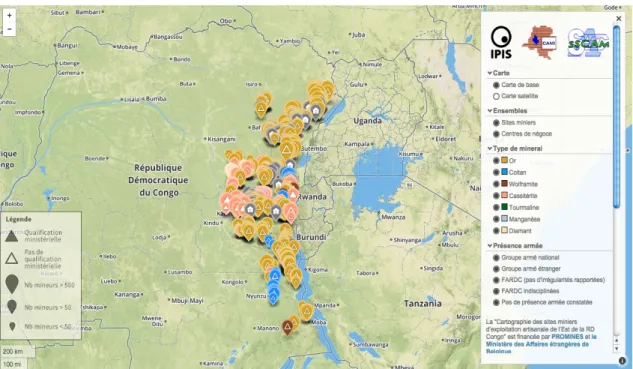
(9) CSR AND THE SUPPLY CHAIN. COLTAN AND CELL PHONE COMPANIES . 9 . obtaining the benefits of being first in the sector (in this case Telecommunications sector) (Strandberg, 2010) Finally it could be because there is no alternative, they form part of a value chain where certain things are demanded and therefore the integration of Corporate Social Responsibility is necessary if they want to remain agreements with their distributors, buyers, suppliers.. 3.3 CSR RESPECT TO SUPPLIERS All topics that are usually discussed in the CSR of a company ( labor and Human Rights, Health and Safety, Environment, Ethics, Management Commitment) due to globalization between other reasons, starts being integrated most of the times into the company fold. Companies explain what is expected from suppliers, according to the behavior ´, philosophy´, politics ´and ethics ´company. The International Chamber of Commerce (ICC, 2007) states that Supply Chain Responsibility is a voluntary commitment from companies to manage their relationships with suppliers in a responsible way. When companies purchase as an activity from the company, there is the opportunity to influence constructively their suppliers ‘social and environmental performance through mechanisms (such as incentives, training, audits of suppliers ‘practices) knowing that best performance is that one that achieves long-term collaboration relation between corporate buyers and suppliers. UN Global Compact and Business for Social Responsibility, 2010, define Responsible or Sustainable supply chain as "managing environmental, social and economic impacts, and the foment of good governance practices through life cycles of products and services" “Since the 1990s, when major consumer brands of the Occidental world faced scandals and campaigns pointing poor working conditions in their supply chains, companies have begun to establish programs to address CSR in the supply chain”(Roca & Ayuso, 2013) Corporate Social Responsibility has become an important part for enterprises, and due to these changes CSR has started to be moved into value chains. Therefore, there is a need of action as a whole. The vision of responsibility throughout the supply chain means that the company is responsible, not only for their actions, but also those of its suppliers (and its distributors, contractors, subcontractors) because economic and social performance can be affected (Strandberg, 2010)..
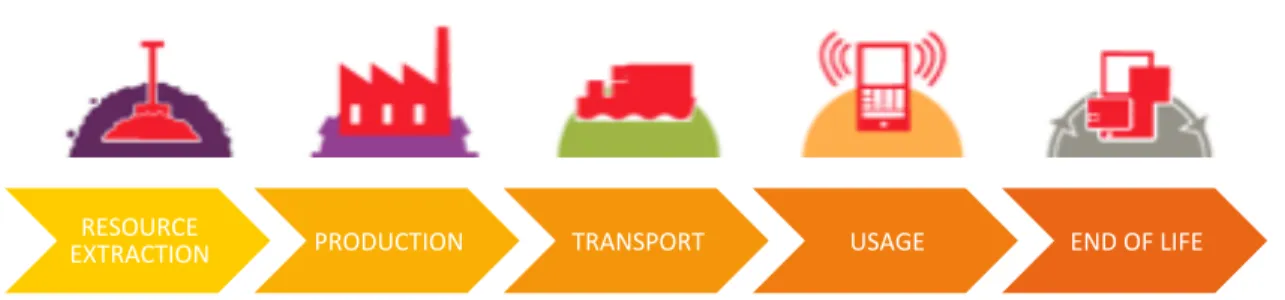
(10) 4. CELL PHONE COMPANIES - THE CASE OF THE COLTAN We live in a stage where Information and communication technologies (from now, ICTs) are so important for the day to day and are all around, they take advantages to society and they have become necessary to perform or conduct any action.. Thanks to its unsuspected and extraordinary possibilities, It can improve people´s live in thousands of ways. Technology sector is constantly updated, it spreads and evolves really fast. Focusing on the global mobile industry, it invoices around 1.13 billion euros per year and in 2013, it can be said the industry sold 1.800 million new mobile phones, being the half of them smartphones. The current number of unique users is more than 4,500 million, which is to say that 63% of the living human uses a mobile phone (Ahonen, 2014). There were 50.82 millions of mobile lines in October, 2014 and the penetration rate of mobile telephony in Spain was at 108.8% (ONTSI, 2014). This thesis related to Corporate Social Responsibility (from now, CSR) and supply chain, focuses on the role of cell phone companies and its value chain, because it is a huge part from the sector with a big influence which is in our day to day and should be ethic and responsible. Therefore, it is going to be represented how they manage the challenges of purchasing coltan, a rare material classified as conflict mineral, specially in DRC and, how the companies manage their supply chain and include their CSR in there. Also, other alternative cell phone companies are going to be treated, and how different ideas have been coming up to provide a solution or another alternative of doing things. To continue and understand the case of mobile phone companies and what deals they find in the downstream of the supply chain, first of all it is going to be explained in this chapter what coltan is, what this mineral implicates; causes and consequences of its extraction, where we it is located and why it causes so many controversies. Also, Government, non-governmental reactions, initiatives to combat the problem and different kind of companies’ cases are going to follow this chapter.. 4.1. WHAT THE COLTAN IS Coltan is a raw material used in technology devices and it has created a lot of controversy and a complex situation in the area of the Lake countries in Africa. Due to that, It has come to question the importance of controlling the value chain of mobile business (in this case). Coltan is a member of the four conflict minerals, which are tungsten, zinc, gold and coltan, which are in areas at risk of conflict or conflict areas, whose exploitation and trade contribute to, benefit from or result in the commission of serious violations of human rights, violations of international humanitarian law or violations.
(11) CSR AND THE SUPPLY CHAIN. COLTAN AND CELL PHONE COMPANIES . 11 . amounting to crimes (BGR, 2010). The term ‘conflict minerals’ is used if the“ control, exploitation, trade, taxation or protection contributes to, or benefits from the context of, armed conflict” (World Bank, 2003). They are used in Aerospace& Defense sector, Automotive sector, Industrial products sector, Retail sector and Technology Sector (PWC, 2015). Coltan (columbite-tantalite) is a dull black metallic solid mineral from which the elements niobium (formerly "columbium") and tantalum are extracted. It is a mix of both components in non-defined proportions. The niobium-dominant mineral is columbite and tantalum-dominant minerals are referred to as tantalite (GENESIS, 2015).. 4.2. USES OF COLTAN, DATA PRODUCTION PRICES AND WHAT IT CAUSES Coltan basically interests are the uses from tantalum, which is now a key enabler of our information and communication-intensive society. Tantalum is a rare, metallic element that due to its properties (heavy, shiny, gray, soft when pure and hard when ductile) has become a vital material for capacitors in miniaturized and portable electronic equipment including mobile phones that store energy in an electric field because of its high volumetric efficiency. But, It is applied in a lot of industries thanks to its characteristics, which enables different other usages (See table 6 in the annex)(Chemicool, 2015)& (MMTA, 2015). Figure 1 Coltan to capacitor. Columbite-‐ tantalite . Tantalum . Tantalum powder . Tantalum capacitor . Source: made by my own from Fairphone 2015, GU International 2013, Aliexpres 2010-2015.. Major sources of Coltan can be found in different places; Australia has the major primary source, but this one and Canada main mines are shut down or on care and maintenance -among other reasons- competition from cheaper regions. Other producing regions include Brazil, Ethiopia, central Africa, Nigeria, Mozambique, and China. There is limited large scale mining and consequently much ore comes from artisanal and small scale mining (60-70% of total supply) (MMTA, 2015). In 2011, 75% of Tantalum market supply came from conventional and artisanal mining. This has an explanation, artisanal mining is characterized by its flexibility, its quickly reaction to changing market conditions and is a cheaper way to extract minerals (Roskill, 2012). During this period, the DRC had a very large role in the global supply of tantalum. As the report is going to focus on the extraction of Coltan in mines from DRC is.
(12) interesting to have an overview of the map of mines of this country (see Figure 10 in the annex). In terms of Tantalum world production, DRC accounted for about 21% in 2014; and the Congo geographic area (Burundi, Congo, and Rwanda), about 53%(USGS, 2015). Paradoxically Rwanda is one of the leading producers despite not having reserves of coltan. Russia is also rich in this resource, although its deposits have not been exploited yet, as far as anyone knows. World Production of Tantalum in 2015 is represented in the table below: Graph 1 Tantalum World mine production 2015. WORLD MINE PRODUCTION OF TANTALUM BURUNDI 2% RWANDA 32% . ETHIOPIA 5% CHINA 8% . NIGERIA 7% . MOZAMBIQUE 11% . RDC 23% . BRAZIL 12% . Source: Made by my own from USGS, 2015.. Spot market prices for tantalum showed few dramatic movements during most of the 2000s, but the downturn in demand, significant downstream inventories and the continuing availability of low cost tantalum from Central Africa caused market prices to fall in mid-2009 (Roskill, 2012). The reason is that Tantalum prices depended on long-term contracts from conventional miners (such as Brazil and Ethiopia, and before Australia) and spot sales for material from artisanal mines (for instance Central Africa, Brazil and Nigeria) and elsewhere. Before the economic slowdown, the price of tantalite was $30 to $40 per 0,45 kg of Ta2O5 content (USGS, 2015). Market conditions improved in 2010 boosting both market and contract prices and they peaked at an average of US$140/0,45kg in 2011 (Roskill, 2012). In 2014, the average price per month of tantalum ore fell from about $116.5 in January to about $92.5 in August. Since 2008/2009, world tantalum mine production has actually declined while prices increased; It can be interpreted that stocks are being drawn down or that increased production is due to higher market demand but, coming from undocumented sources (USGS, 2015)..
(13) CSR AND THE SUPPLY CHAIN. COLTAN AND CELL PHONE COMPANIES . 13 . 4.3 THE MINERAL SUPPLY CHAIN Electronics companies are increasingly acknowledging that the mining phase is part of their supply chain. The process of bringing a raw mineral to the consumer market involves multiple actors and generally includes the extraction, transport, handling, trading, processing, smelting, refining and alloying, manufacturing and the sale of end product (OECD, 2012). The electronic products supply chain form a complex web, wich brand name companies (which might be themselves also component suppliers) have many suppliers, who have also multiple suppliers ( Europa, 2012). The electronics industry as a whole consumes significant quantities of various metals sourced from conflict areas, for example from the Democratic Republic of Congo (Europa, 2012). In this country, conflict minerals are mined in small, manual operations and transferred through several intermediaries in the country who consolidate the ores and negotiate the sales ( UN, 2008). Unfortunately, the extraction of coltan is causing problems and conflicts with serious social repercussions, as other minerals such as tungsten, tin and or. Coltan mining is moved by geopolitical conflicts, especially in the Republic Democratic of Congo, (since the technology boom, mines such as Australia, Brazil became scarce) where the interests of the state and neighboring countries, armed groups operating in the region, Western multinationals and smugglers intermingle.. 4.4 DEMOCRATIC REPUBLIC OF CONGO To understand conflict minerals, the case of coltan in this country, to have a brief introduction is necessary about the historical profile of the country. Democratic Republic of Congo (DRC) located in Central Africa and it has approximately a population of 67.5 million people. DRC is a country rich in natural resources, with a value estimated only in its untapped resources equivalent to the GDP of the US and EU together. Its political and social history is really complex and despite its national wealth, It is one of the poorest and most violent countries in the world (Karen Hayes & Richard Burge, 2003). DRC was a Belgian colony between 1908 and 1960. After its independence a period of instability started with separatist movements and three military dictatorships. Second one was Laurent Kabila regim: Ruanda and Uganda entered to the territory, beginning a devastating war. Third one was Joseph Kabila son. Finally, in 2002 a Peace agreement was signed between army groups and the Government of DRC(UN, 2015). Even though the Peace agreement there is still a continuous proliferation of armed groups in neighboring states of Rwanda and Uganda, fighting each other and.
(14) against the Congolese army (FARDC) for power and control of natural resources and minerals and the alleged defense of the interests and rights of their communities. These clashes have led to widespread human rights abuses, whether perpetrated by the army and by armed groups, being common actions throughout the territory, especially in the regions of greatest conflict such as Ituri and Kivu (UN, 2015). Abuses occur such as abductions, massacres, looting, mass murder, mass rape, mutilation, sexual violence against women, fire populations and recruitment of child soldiers which result in displacement of populations in the eastern region. At the end of 2012 had been internally displaced over 2.4 million people like Amnesty International said. Currently the conflict persists in DRC, as a result of the persistence of illegal armed groups in provinces bordering Rwanda and Uganda, with financial and military support for parts of these, in order to maintain control over geographic areas politically and economically strategic (UN, 2015). The biggest struggle of the Congolese army since May 2012 was against the armed group "March 23 Movement" (M23), supported by Rwanda in the form of supplies of arms, ammunition and recruits (CEAR, 2013) and was defeated in November 2013. Despite this event, it did not result in significant improvements in security and stability, many foreign armed groups in the DRC contributed to the continuous instability in 2014. Also, arms and ammunition Congolese army were diverted to armed groups, which highlights the broader problems facing the country to manage the stockpile in 2014 (UN, 2015). Accordingly UN report, although progress has been made regarding traceability and due diligence of minerals produced in the Democratic Republic of Congo, there is still smuggling to border countries. In addition, some troops from the Congolese army (FARDC) and some armed groups continue to engage in trade of minerals and they probably introduce conflict minerals from conflict areas to supply chains of the Democratic Republic of Congo and neighboring States.. 4.5. OPTIONS: BAN IT OR BUY IT It has been showed that technologic market is really complex and has a big history behind. Raw materials are really important because of their properties and are so used in electronics. In some cases, such as the DRC, the extraction of minerals are closely related to the financing of armed groups and, thanks to this an other political and social factors, it can be associated to exploitation, environmental pollution, damage to the health of people, child labor, sexual harassment and various human rights violations. If companies decide to ban the trade of Coltan in DRC, having other options where to purchase or large inventories existing on earth, it might be the easiest way and.
(15) CSR AND THE SUPPLY CHAIN. COLTAN AND CELL PHONE COMPANIES . 15 . safest option, more specific if companies want to not deteriorate their reputation because in such situations, companies may also be at risk of contributing to or being associated with significant adverse impacts, including serious human rights abuses and conflict. But, it would also be really complicated because smuggling to other countries could occur and we would be almost at the same situation. On the other hand, a regulated, Congolese, coltan industry would be beneficial for the development of the tantalum market. In conflict-affected and high-risk areas, companies involved in mining and trade in minerals have the potential to generate income, employment, growth and prosperity, sustain livelihoods and foster local development (Oecd, 2012). There are organizations helping to disclose and trace supply chain and to know where raw materials come from, there are examples, such as the one of Fairphone (which is going to be explained later) that demonstrates that doing things so thoroughly and carefully it is possible to enter in challenging markets, including the improvement of working conditions. This option could contribute to the peace process in the region (Hayes& Burge, 2003). Also, with indicated procedures and the good voluntary of all parties to do things well could arise and become into longterm contracts, having more stability and more transparent and always helping to a country reach in resources but poor in term of GDP. At the same time “this option is far more complex, not least as it raises significant questions about the acceptability and risk of doing business in a war zone. Paradoxically, however, this route could demonstrate greater corporate environmental and social responsibility “(Hayes& Burge, 2003). Most big companies have codes of conduct, audits (which NGO´s sometimes do it better), certifications, supplier requirements policies, conflict-mineral policies that help to improve the situation (though it is not the solution because at the end is only a piece of paper) and there is a long way to go to translate the words into action. Finally if not banning would be the solution, in terms of Conflict-minerals, DRC and mobile phone companies and its value chain, there is a logical thinking that there is a need for a better and higher support from Governments on Lake regions. Also, there is a need for the education and explanation to supplier companies and countries the importance of the CSR, what transparency, responsibility, information, sustainability means and why it is necessary and accessible to the public. Increase industry and consumers awareness, also consumers should take action too, making informed decisions..
(16) 5. INITIATIVES FOR THE RESPONSIBLE MANAGEMENT IN THE SUPPLY CHAIN More and more Corporate Social Responsibility is taken into account for many companies and organizations as a criteria in order to take decisions in their business, to choose a company as a partner or as a part of their supply chain. Increasingly, it is demanded independent evaluations to be more credible. To give more strength to their CSR, companies choose to go through certification processes, especially is charging more sense when the company operates in some countries where it is important to demonstrate compliance with the Global Compact principles and conventions of the Declaration of human and the International Labour Organization rights (EC, 2012). In the area of technology sector, in particular, it is acquiring more importance and even as a principal priority due to all the complexity that this value chain has and to maintain their CSR reputation. There are many ways adopted to assess and explain conducts that companies want in their supply chain. In this chapter, not only it is going to be explained the standards that can be used for this purpose or for topics that the same CSR talks about (for instance environmental management) but also some issues that companies use for that, such as ethical codes, codes of conduct, reports, audits, companies that measure environmental impacts and so on. Finally, it is going to be explained some initiatives that Governments´, organizations´ or NGO´s have been taken during the years considering the case of coltan in the DRC. Therefore, companies can decide to adhere them to their mission, objectives, conducts, being some of them voluntary or mandatory.. 5.1 CERTIFICATIONS - STANDARDS Considering there is a lot of standards that talk about CSR, in this chapter it is going to go beyond this and to be detailed the most common standards or certifications with the idea of focusing on the aspect of CSR and suppliers: 5.1.1.ISO 26 000 In the case of this standard which seeks to promote a common understanding of social responsibility the topic of suppliers is treated separately in every area defined as critical due to its relevancy. 5.1.2 SA 8000 provides an auditable, voluntary standard, based on the UN Declaration of Human Rights, ILO and other international human rights and labor norms and national labor laws, to empower and protect all personnel within an organization’s control and influence who provide products or services for that organization, including personnel employed by the organization itself and by its suppliers, sub-contractors, sub-suppliers and home worker (Social Accountability International, 2014)..
(17) CSR AND THE SUPPLY CHAIN. COLTAN AND CELL PHONE COMPANIES . 17 . 5.1.3 SGE 21 The Ethical Management and Social Responsibility (SGE21) constitutes an answer for organizations in terms of transparency, integrity and sustainability, based in three main issues: economical, environmental and social. It presents a chapter referring to suppliers to develop "best practices, support and improvement measures." Mentioning that organizations should do a systematic to classify suppliers and to be able to map their suppliers depending on the risk arising from its business, sector, location or business practices, among others. 5.1.4. IQNET SR10 it establishes the requirements for implementing a management system of social responsibility in organizations committed to the continuous improvement and contemplating a systematic and effective relationship with all stakeholders of an organization implemented by Aenor (Aenor, 2010). 5.1.5. AA 1000 are principles-based standards to help organizations become more accountable, responsible and sustainable. They address issues affecting governance, business models and organizational strategy, as well as providing operational guidance on sustainability assurance and stakeholder engagement. 5.1.6. ISO 14001:2004 This standard sets out the criteria for an environmental management system and its certification, mapping out a framework that a company or organization can follow to set up an effective environmental management system. Also, it provides assurance to company management and employees as well as external stakeholders that environmental impact is being measured and improved. 5.1.7. ECOVADIS 2015 says is a Sustainability Monitored Platform which offers tools to manage risks associated to supply chain of the companies. Ecovadis promotes better social and environmental practices of companies relying on the ability to influence global supply chains. Also, it is interesting because they do reference rankings that reflect the sustainability performance of suppliers.. 5.2 OTHERS REFERRED TO ELECTRONICS 5.2.1. Ecolabel is a hallmark of the EU which takes into account environmental considerations into all kinds of products. In electronic focuses on energy consumption, hazardous substances, durability, ease of disassembly, recycling, free removal (Europa, 2015). 5.2.2 TCO is a sustainability certification for IT products that certifies duration, recovery of the products, hazardous substances, packaging for recycling, safety and emissions, energy efficiency, environmental management systems, manufacturing socially responsible (TCO development, 2014). 5.2.3 Ecological Footprint In the case of electronics it referrers to a unit kind of “standardized” that measures life cycle of products, the use of mineral resources required in their manufacture, commercialize and use, recycling and management.
(18) of their residues (Ongawa, 2013). Ecological Footprint allows business to establish benchmarks, set quantitative targets and evaluate alternatives for future activities, providing aggregated and detailed results. (Footprintnetwork,&Earthday, 2015). Certifications help to demonstrate that the company is aware on sustainable and responsible issues. But, at he same time is kind of contradictory because they could certificate they have good values in terms of environmental issues but they might not act really positive in terms of labor conditions. So, there should be an action from the company to act as whole.. 5.3. ETHICAL CODES These are documents made by the company explaining what are their ways of doing business, what they want to transfer and comply with its workers, what are their expectations and responsibilities required. These are "Principles, values, standards, or rules of behavior that guide the decisions, procedures and systems of an organization in a way that contributes to the welfare of its key stakeholders, and respects the rights of all constituents affected by its operations." (International Federation of Accountants, 2007).These codes can be extended to the whole value chain. Most big companies have them and want their suppliers to adhere to them but, sometimes these don´t have the impact desired. Hence, to implement and also, verify codes of conduct in supplier partners there are different ways (Fairhone, 2013): Table 1 Ways of verifying codes of conduct w a y s . Supplier self-assessment questionnaires on social and environmental issues Social audits verifying compliance with the code Training and capacity building Productivity enhancements delivered to reduce working hours and increase wages. Source: Made by my own from Fairphone, 2015.. 5.3.1 Electronic Industry Citizenship Coalition (EICC) mentions it is a non-profit coalition of electronics companies committed to supporting the rights and wellbeing of workers and communities worldwide affected by the global electronics supply chain. It has established codes of conduct in terms of participation of the supplier, offering performance and compliance guidelines in the areas of work, Health, security, environment, ethics and management..
(19) CSR AND THE SUPPLY CHAIN. COLTAN AND CELL PHONE COMPANIES . 19 . 5.4 THERE ARE OTHER WAYS TO GIVE CREDIBILITY TO THEIR CSR Promoting responsible and sustainable strategies, participating in Sustainable indexes recognized worldwide, obtaining recognitions from EU, Governments or Autonomous Communities. In addition, Companies can be ascribed to high reputed international movements such as Global Compact of the United Nations, Carbon Disclosure Project, OECD recommendations and guidelines and recommendations of the European Union (EC, 2012). 5.5. CONFLICT MINERALS INITIATIVES FOR SUPPLY CHAIN Focusing in the case of cell phone companies, their value chain and raw materials extraction, there are many principal international initiatives created from Institutes, Governments and Organizations due to conflict minerals situation with the idea to have a more responsible supply chain. These are figured out in this table: Table 2 Initiatives. INITIATIVES The Analytical Fingerprint (AFP). PRINCIPAL ORGANIZATION (BGR) The Federal Institute for Geosciences and Natural Resources work in the DRC Mineral Certification VOLUNTARY. International Conference on the Great Lakes Region (ICGLR). Eleven countries of the Great Lakes Region signed the Protocol against the Illegal Exploitation ofNatural Resources (Protocol) as part of the broader 2004 Pact on Security, Stability&Developm ent (Pact).2006. OBJECTIVES It is a Project that identifies mine sitespecific geochemical and mineralogical parameters of conflict minerals. It's applied similarly to a DNA test. Traceability information can be achieved. It is completely independent of any shipping documentation and tagging procedures. Integrated into the Regional Certification Mechanism of the ICGLR. (BGR, 2015) The ICGLR Pact and the Protocol provide a critical legal and political framework via and Regional Approach to Peacebuilding. The ICGLR Certification Manual, which sets out the in region standards for traceability and certification of conflictprone minerals, contains four main elements ( ICGLR, 2012): 1. Mineral Tracking from Mine Site to Export 2. Regional Mineral Tracking via an ICGLR Database 3. Independent Third Party Audits 4.ICGLR Independent Mineral Chain Auditor. Tin Supply ITRI; Tantalum- It provides a robust, verifiable system to Chain Niobium Pact address ‘conflict minerals’ minerals Initiative International Study industry, from mine to smelter (the.
(20) ITSCI Center; PROGRAMME Research. Channel ‘upstream supply chain’). iTSCi has three components: chain of custody data collection (traceability), risk assessment, and independent third MANDATORY FOR party audits. Through these, iTSCi MEMBER helps companies conform with the COUNTRIES OECD DDG, but companies remain responsible for their sourcing practices. (ITRI, 2015).. Conflict- Free Electronic Industry Sourcing Citizenship Coalition Initiative (EICC) (CFSI) and Conflict- free Global eSmelter Sustainability Program Initiative (GESI) (CFSP) VOLUNTARY (PPA) Public- Participants Private representing Alliance for governments, Responsible industries and key Minerals members of civil Trade society.. OECD Due Diligence Guidance for Responsible Supply Chains of Minerals from ConflictAffected and High-Risk Areas. SEC Frank. Dodd-. An initiative that offers downstream companies and their suppliers guidance and tools to identify and verify that the sources of conflict minerals processed by smelters are conflict-free. Seeks to operationalize the OECD Due Diligence Guidance for smelters and refiners(EICC&GeSI, 2015). It provides financing support and coordination of organizations working in the region to develop verifiable supply chains as 'conflictfree'; programs and practices for a responsible supply chain of custody; It promotes transparency. The PPA also provides a platform for coordinated, VOLUNTARY productive dialogue among government, industry, and civil society in a nonregulatory setting (RESOLVE, 2012). Organization for Offers recommendations for responsible Economic action in mineral supply chains globally. Cooperation and It establishes a certification development mechanism for mining and trade in (OECD) conflict minerals from the region of the Great Lakes. It promotes VOLUNTARY accountability and transparency within the supply chain, in terms of minerals from conflict zones. Helping companies to respect human rights and avoiding to contribute to conflict through their purchasing decisions and practices of minerals or metals (OECD, 2013) See details below The Dodd-Frank Act Companies related to purchase minerals Section 1502. Us from DRC or Lake region that could be a.
(21) CSR AND THE SUPPLY CHAIN. COLTAN AND CELL PHONE COMPANIES . Regulations. 21 . Government, Federal Agencies And State Department 2010. conflict minerals need to provide a report describing, among other matters, the measures taken to exercise due diligence and chain of custody of those minerals, which must include a private audit MANDATORY FOR independent from the sector and COUNTRY report it (RESOLVE, 2012). MEMBERS. Source: Made by my own from resources cited in each cell. OECD Due diligence for conflict-free supply chains “is a guide which offers a process that companies or individuals should undertake to ensure that the extraction and trade of mineral ores containing tin, tantalum, tungsten and gold support peace and development, not conflict. This includes a five-step framework for risk-based to put in place strong systems of control over the supply chain”. (OECD, 2013). (See figure 12 the complexity of the risks in the supply chain of conflict minerals from conflict-affected and high-risk areas in the annex) Figure 2 Steps OECD. Strengthen due diligence skills, internal systems including tracking and/or traceability systems Engage in risk mitigation and regularly monitor risks in supply chain. Source: made by my own from OECD, 2013. Undertake a risk assessment of mines, transportation routes, points where minerals are traded and suppliers. Participate in audit programs as they develop. Annually describe due diligence efforts and make the report available at offices and website ‘companies.
(22) 5.6. NGO INVOLVED IN THE CASE OF COLTAN Solutions for hope (SfH) tantalum program is a project that helps enable miners of tantalum to work and also “a global platform for supply chain initiatives designed to promote transparency, responsible sourcing, and local community development and promote economic stability in DRC” ( SolutionsNetwork, 2015). The Solutions for Hope model starts pilot projects at small-scale that once tested, they share learning and support policy initiatives to scale up and maximize impact. This program has demonstrated over the years: It is feasible for downstream companies to establish supply chains originating with conflict-free mines in regions impacted by conflict; These supply chains can be independently validated as conflictfree, thus mitigating risks of in-region sourcing; and Leaders from civil society support responsible sourcing from regions experiencing conflict and recognizes companies participating in SfH, as a complement to regulatory initiatives focused on transparency. Currently technology companies such a Motorola Solutions, AVX, HP, Intel, Nokia, Research in Motion participate in the Solutions for Hope Project (SolutionsNetwork, 2015) Enough Project seeks to end genocide and crimes against humanity. It makes intensive field research, develops practical policies to address these crises, and shares sensible tools to empower citizens and groups working for change in South Sudan, Eastern Congo and others to counter rights-abusing armed groups and violent kleptocratic regimes that are fueled by grand corruption, transnational crime and terror, and the pillaging and trafficking of minerals, ivory, diamonds, and other natural resources. Also, it provides rankings on how well companies do in terms for example of diligence in DRC (Enough, 2015). Partnership Africa Canada (PAC) is a Canadian nongovernmental organization which mission is to promote sustainable and inclusive human development in Africa through research, policy engagement and the implementation of initiatives locally and globally (Partnership Africa Canada, 2015). In terms of Conflict-minerals, DRC and mobile phone companies and its value chain, there is a logical thinking that there is a need for a better and higher support from Governments on Lake regions, though there has been an improvement and a lot of initiatives that have arisen as the mentioned above. Also, there is a need for a better transparency from the companies. There is a need for the education and explanation to supplier companies and countries the importance of the CSR, what transparency, responsibility, sustainability means and why it is necessary..
(23) CSR AND THE SUPPLY CHAIN. COLTAN AND CELL PHONE COMPANIES . 23 . 6. CASES As this thesis is based on telecommunications sector, especially in cell phone issues, it is represented different types of companies to show them as some examples with the intention to explain all information above in a practically way. There are going to be mentioned different cases, representing different companies situated in the different stages from the large value chain. First of all, cell phone companies cases are compared, secondly Telecommunication companies that sell cell phones, thirdly multinational retail companies in the area of cell phones and finally different organizations, companies that re-use cell phones or materials, websites that inform consumers about properties related to environment, raw materials, among others, of the products and to end, the uses of other materials are explained with the idea of showing there are other options to face these problems. Some companies have had to face challenges, put some new goals in terms of CSR and, solved problems that have found in their path.. 6.1. CELL PHONE COMPANIES This section will discuss 4 cases very differentiated. First of all it is to talk about Nokia and Apple, which represent existing companies in the sector, with a long experience. It is showed how they try to do better to control suppliers in the mineral supply chain, after realizing on what the purchase of Coltan implicates. Secondly, it is to talk about another company totally different, Fairphone. It is new in the sector, it has social values and, it has arisen from concerns about transmitting more awareness around the abuses in the supply chain of electronics. Therefore, theses companies have their own advantages. Fairphone is new, small; it exists due a concern and not due to be a company to grow fast, easy and with the idea of having the biggest incomes as possible. They can look after closely the suppliers and have the opportunity to choose because they have no compromises from previous contracts, and can change easily. On the other hand, Nokia an Apple are big, they have expertise, they know where to go, they have options, money and they have power if they want to take decisions, change suppliers, they have power of pressure. Finally, It is showed Project Ara through its partner Phonebloks. Project Ara is a development effort and not an official Google product. It is to talk about it to highlight there are other ways of doing business and consider the industry. It is another interesting path to pursue such issue because it solves different problems of the existing sector and shows an intelligent way of recycling and re-thinking Product Life Cycles. NOKIA Until recently, Nokia was a key participant in the mobile devices market through its Devices & Services business. Nokia was positioned as one of the world's biggest.
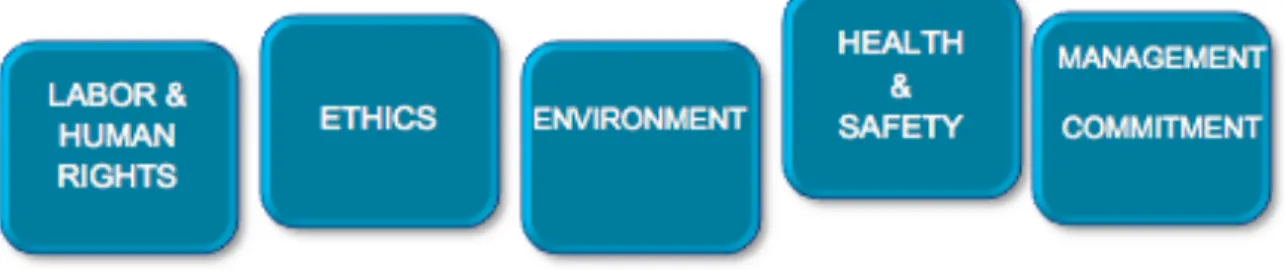
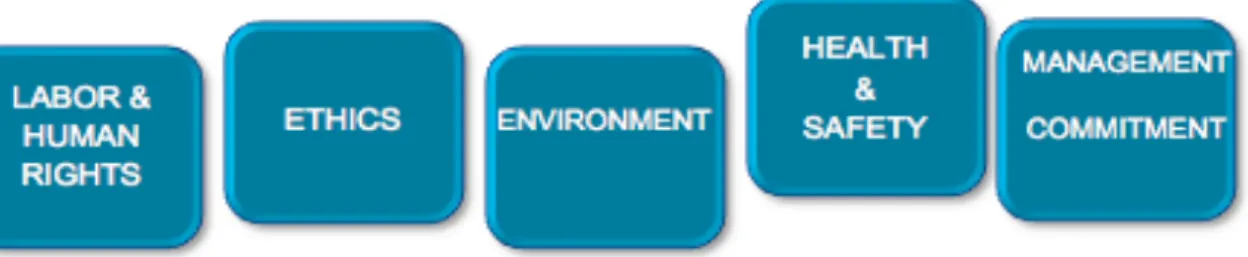
(24) manufacturers of mobile phones, though this changed due its agreement with Microsoft (Interbrand, 2014) which was announced in September 2013 whereby it sold substantially all of its Devices & Services business to Microsoft. The transaction was completed on April, 2014 (Nokia, 2015). Following this agreement, Nokia became the leading provider of smartphones with Windows Phone. Nowadays, Nokia (headquartered in Finland) is a leader in 3 fields: Networks (NSN), which offers network infrastructure software, hardware and services; HERE, which provides location intelligence; and Technologies, through which it pursues advanced technology development and licensing In the early 2000, this company had a lot of media attention when a lot of catchy slogans, and documentaries with names such “Blood in the mobile” were talking about how international companies -where Nokia was included- were using minerals from DRC, which were related to finance armed groups in that country. In that point, the word conflict minerals started to have a meaning and actions from NGO, governments were made. Nokia reacted in that way and since that, there reacted and made improvements. These changes and improvements can be shown by the perception of the employees had from the company in 2013, where 83% of Nokia employees considered Nokia to be socially and environmentally responsible, which was six percent higher compared to previous year. Now, Nokia is one of the leading companies in sustainability: Interbrand1 in its Best Global Green Brands Ranking placed Nokia in 6th position and in Reptrak reputation ranking, Nokia resulted in the 24th position (Reptrak, 2014). In its Nokia People Planet Report, 2013 (which is the last report which one can log in) sates that one of its challenges for next years is the Understanding and driving change in sustainable supply chain management because “one of the great challenges is finding the best ways to effect change on a larger scale. Nokia has put a lot of effort during years in terms of recycling, reducing use of energy, innovation in more sustainable products, registering raw materials, and requiring to suppliers to accomplish its Nokia Substances List, where there are some forbidden (Strandberg, 2010). For instance, it created devices that remember owner when to disconnect the cell phone when battery is full charged (Strandberg, 2010). In terms of transportation, Nokia reduced thousands of trucks distribution, used shapes instead of planes, meaning an estimated 80% reduction in CO2 emissions. Also, it published energy use and greenhouse gas emission generation of its suppliers. Nokia, as it can be seen, has had implication in terms of sustainability but, as this thesis treats, CSR is not only about the firm, is more, iand this means knowing the performance of its value chain and take care of it. Nokia has its NOKIA´S SUPPLIER CODE OF CONDUCT (Nokia, 2015) that states it has been created based on the principles set in internationally recognized.
(25) CSR AND THE SUPPLY CHAIN. COLTAN AND CELL PHONE COMPANIES . 25 . standards such as the United Nations Declaration of Human Rights and International Labour Organization (ILO) including key elements from the Electronic Industry Code of Conduct (EICC) and which expects all suppliers meet or exceed to go beyond compliance them. In this code of conduct it treats:. Figure 3 Areas Nokia Code of Conduct Source: made by my own from NSN, 2013.. Nokia makes verifying process with audits or assessments to suppliers´ facilities, records, business processes to see compliance of Codes of Conduct. Violation of the Code of Conduct may result in the disqualification as a Nokia supplier and the termination of their business relationship.. In the area of Ethics, responsible materials sourcing is treated and watched over suppliers saying that if they manufacture components, parts, or products containing tin, tantalum, tungsten or gold, they must source those materials from environmentally and socially responsible sources only. Suppliers in this category must exercise due diligence regarding the source and chain of custody of these minerals and make any due diligence measures available to customers upon request and if these contribute to conflict, are unacceptable (Nokia, 2015). Nokia Solutions and Networks Conflict Mineral Policy (NSN, 2013) states “is concerned about the potential that the mining and trade of minerals these metals are extracted from is fueling military conflict, related human rights violations and environmental degradation, for example in certain regions of the DRC and adjoining countries”. NSN (NSN, 2013) communicates its Conflict Minerals policy (which is fully in line with its Code of Conduct) to its suppliers, requiring all its partners, subcontractors, and suppliers to implement equally high standards. Assessing and responding to the identified risk, and having a plan in case of finding conflict minerals and identify the suppliers of those products. Nokia demand and follow up corrective actions plans, conduct on-site detailed audits if necessary. Nokia defends that Supply chains in its industry are complex and long but there is a growing demand for making sense of that complexity, tracking eg. the origin of different raw materials and driving change for more sustainable practices when needed. Therefore, NSN collaborates with Information and Communication.
(26) Technology industry and the mining sector with initiatives, validation or certification mechanisms ensuring companies that the metals used in their products are not contributing to conflict because NSN supports seeking sustainable solutions to that. Also, collaborating in improving both the traceability of minerals and the transparency of global supply chains. Finally, it is remarkable Nokia makes Public Reporting due to first step in OECD (Establish strong company management systems) of the progress of the implementation of its Policy as part of its annual corporate responsibility reporting.(Nokia, 2014). In these reports, it is listed the smelters from its supply chain that are conflict-free. Based on its due diligence efforts they found that results of devices & services Supply chain report 2013 (Nokia, June 2014) 92% of direct suppliers adopted a conflict mineral policy and 41% of smelters were validated by CFSP or mutually recognized programs: TANTALUM . GOLD . 91% . TIN . 44% . TUNGSTEN . 28% . 5% . validated . validated . validated . validated . non validated . non validated . non validated . non validated . Graph 2 Smelters validated Source: made by my own from Nokia Supply chain report, June 2014.. In conclusion, Nokia Conflict Mineral Report 2013 (Nokia, 2014) stated: “ As a downstream company, our diligence measures can provide only reasonable, not absolute assurance regarding the source and chain of custody of the Conflict Minerals. Our due diligence process is based on the necessity of seeking data from our direct suppliers and the direct suppliers seeking data within their supply chain to identify the original sources of the Conflict Minerals. We also rely to a large extent on information provided by independent third party audit programs. Such sources of information may yield inaccurate or incomplete information and may be subject to misstatements.” APPLE Apple is an American multinational company founded in 1976, very popular for its electronic equipment (such as the smartphone iPhone), software productions and innovative designs. Previously, Apple was strongly criticized for alleged in an effort to evade taxes in several countries. Also, for their practices against the environment and labor exploitation suffered by employees of outsourcing companies (Musgrove, 2006 & Serraller, 2013) Due to this, Apple has made strong efforts to improve its reputation and public relations issues considering topics such as sustainability, CSR in supply.
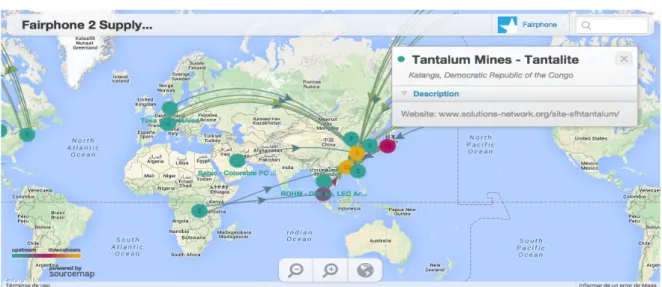
(27) CSR AND THE SUPPLY CHAIN. COLTAN AND CELL PHONE COMPANIES . 27 . chain, labor conditions as some of the points to be treated in the company and to find solutions. Now, Interbrand in its Best Global Green Brands Ranking placed Apple in this case in 21th position. Apple resulted in 4th position in the Reputation Ranking 2014 from Reptrak with a score of 78.23 from 100 with an evolution of 36 positions more compared to previous year thanks to the admiration from respondents people to its innovation, products and services, leadership, financing, work and CSR (in this case, being in the 5th position). In terms of supply chain and CSR, it should be highlighted that Apple has its Supplier Employee Education and Development program, an initiative for training and development for suppliers, such as IT courses, languages, CSR and environmental education, management and engineering (Apple Inc, 2015). In terms of sustainability Apple declares to want its suppliers to be as responsible as it is. It has created Ellen MacArthur Foundation, a like‑minded group working to establish a more circular economy. Also, It has eliminated many toxic substances from its products. It set out to achieve a worldwide recycling collection rate of 70 percent of the total weight of the products they would have sold seven years earlier. All electronic waste it collects worldwide is processed in the region where it’s collected. Apple reduced 31% energy carbon footprint between years 2011 and 2013, which includes emissions from its facilities, supply chain and the use of Apple products by its customers, even though its energy consumption increased by 42% during that period. Some Apple stores in the US and all of Australia are supplied by 100% renewable energy ( Apple Inc, 2015). There is a great data to notify that Apple has included in its webpage all products environmental reports, explaining in a detail way Greenhouse Gas Emissions for the product, its Energy Efficiency, Material Efficiency, Packaging, if it is recyclable, restricted substances, materials and their impacts ( Apple Inc, 2015). Apple has its APPLE SUPPLIER CODE OF CONDUCT (Apple Inc, 2015) that goes beyond mere compliance with the law by drawing upon internationally recognized standards to advance social and environmental responsibility and asks its suppliers its compliance. It is made from internationally principles accepted such as SA 8000, Ethical Trading Initiative, the Electronic Industry Code of Conduct, ILO, Social Accountability International, National Fire Protection Association, OECDGuidelines for Multinational Enterprises, and OHSAS 18001. It treats: Figure 4 Areas Apple Code of Conduct. Source: made by my own from Apple Inc, 2013..
(28) Any serious infringement (such as child labor, physical abuse, forced labor, falsification of information, impairments in auditing, preparation of workers for audits or retaliate against them if they provide information, bribery, high levels of pollution, etc.) to its Supplier Code of Conduct is taken seriously. Auditoria is made to detect cases such as labor forced, child labor, discriminatory conducts from workers. Apple demands to take an action immediately and to rectify it, instead of going directly with termination of the relationship with the supplier because they think that changing suppliers would switch to a same situation. But, if these kind of violations unrelieved, relationship stops (Vilariño, 2013). Also, it treats Ethics Responsible Sourcing of Minerals where it is mentioned that Supplier shall exercise due diligence, in accordance with the OECD Due Diligence Guidance on its entire supply chain with respect to the sourcing of all tin, tantalum, tungsten, and gold contained in its products. It elaborates Conflict Minerals Reports and also publishes its smelters’ and refiners’ names, countries and CFSP participation status, and updating this list publicly each quarter. Also, it is engaged with non-governmental organizations, trade groups, government agencies to promote change and it is committed to programs mentioned above such as ITRI, PAC, PPA, Solutions for Hope, Conflict-free Tin Initiative. In 2009 Apple began investigating the uses of conflict minerals in its products (tantalum, tin, tungsten, and gold), being one of the first companies that started first mapping its supply chain to the smelter or refiner level in 2010. Since 2011, Apple has been driving smelters and refiners to comply with the CFSP or equivalent independent third-party audit programs. Apple is really involved in creating opportunities and economic development to source conflict-free minerals from DRC and adjoining countries The idea of Apple is to expand the base of smelters and refiners that have been verified as conflict-free, rather than concentrate its demand through a limited number of smelters and refiners, or avoiding those sourcing in Central Africa (Apple Inc, 2015). A part from that Apple continue to conduct independent research on smelters and refiners and to work with suppliers throughout its supply chain to re-validate, improve, and refine their information. Apple has made a clear improve, in February 2014, all 37 tantalum smelters from Apple known to be in its supply chain, had been designated conflict-free. More than 88% of the identified smelters and refiners have either successfully completed conflict-free audits or have begun the audit process, and Apple is working with its suppliers to verify the rest or remove them from its supply chain. It launched in 2014 a strict deadlines ‘campaign for smelters and refiners to demonstrate their progress in that sense Apple personnel conducted 38 visits with smelters and refiners and traders and established action plans. As a consequence 4 terminated because they didn´t want to engage in their process (Apple Inc, 2015)..
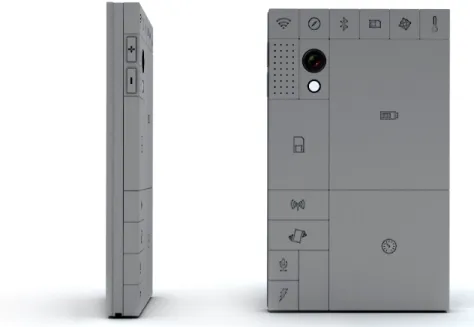
(29) CSR AND THE SUPPLY CHAIN. COLTAN AND CELL PHONE COMPANIES . 29 . Graph 3 Smelters and refiners verified as conflict-free or in audit process. 81 of 101 80% . tantalum, 37 . 37 of 37 100% . gold, 101 Yn, 55 . 31 of 32 97% . TOTAL……….199 of 225 (88%). tungsten, 32 . 50 of 55 91% . Source: made by my own from Apple Inc, 2015. On the other hand, Apple recognizes in its Conflict Mineral Report, from period 2014: “Based on these due diligence efforts, Apple does not have sufficient information to conclusively determine the countries of origin of the Subject Minerals in its products or whether the Subject Minerals in its products are from recycled or scrap sources. However, based on the information provided by Apple’s suppliers, smelters, and refiners, as well as from the CFSI and other sources, Apple believes that the countries of origin of the Subject Minerals contained in its products include countries listed in its Report, as well as recycled and scrap sources”. FAIRPHONE Fairphone is a social enterprise headquartered in Netherlands dedicated to sell smartphones, not linked to tantalum or other conflict minerals and with fair labor conditions for the workforce along the supply chain (Ballester,M., December 2014) Fairphone beginnings were in 2010 just as a campaign aimed to create more awareness around the abuses in the supply chain of electronics and the conflict with minerals (Ballester, M., june 2013). After that, it was decided that instead of complaining about such a conflict situation like the one in DRC, they wanted to create their own phone putting social values at the base of their mission, in order to expose every step in the production with an emphasis on the mining situation in DRC. The goal was to understand the system and see if things could be done differently finding a balance between their mission and size (Fairphone, 2013). They wanted to understand where stuff come from, how they are sourced, where they are manufactured and under what conditions..
(30) Table 3 Fairphone step by step, within 5 core action areas. MINING They support local economies, not armed militias. They’re starting with conflict-free minerals from the DRC. . DESIGN They look for long and repairable products to extend the phone’s usable life and give buyers more control over their products. MANUFACTURING Factory workers deserve safe conditions, fair wages and worker representation. They work closely with manufacturers that want to invest in employee wellbeing. LIFE CYCLE They address the full lifespan of mobile phones, including use ( extend longetivity), reuse and safe recycling. SOCIAL ENTREPRENEURSHIP By operating transparently and sharing the Fairphone story, they’re helping consumers make informed decisions about what they buy, with a focus on social values. Source: made by my own from Fairphone, 2015.. One of their clear aspects is that they want to be completely transparent in all of their achievements, including the areas where they have not yet made progress (Fairphone, 2014). They give a breakdown of all its value chain with public access to this information and provide visualization. They establish a closed-pipe supply chain (including mines, smelters and manufacturers) to provide greater transparency and supply conflict-free minerals from regions experiencing ongoing conflict (Fairphone, 2015). Thanks to their size they can establish a direct and open relationship with the factories and the mines they get their minerals from. Figure 5 Tantalum supply chain map from Fairphone, step by step. Source: Fairphone, 2015.
(31) CSR AND THE SUPPLY CHAIN. COLTAN AND CELL PHONE COMPANIES . 31 . Fairphone, 2015 mentiones it uses conflict-free tantalum for one of the capacitors.This comes from the DRC via the Solutions for Hope (SfH) initiative. Thanks to this initiative and their members, it’s possible to guarantee the minerals are extracted and traded without supporting armed groups. This demonstrates that it’s possible to source conflict-free tantalum from the DRC. They have their manufacturer in China, where major suppliers in mobile technology are. They want to prove that responsible manufacturing is possible and that it should be done even in challenging markets (Fairphone, 2013). Also, on the website one can see all components and parts of the cell phone having tutorials with the explanation on how to repair parts (Ballester, M., December 2014). In addition, they have a cost breakdown to explain consumers to know the whole story and why they have these prices. Also, social awareness exists, giving 3 euros per mobile to Closing the Loop to recycle, with e-waste program. They are working on a program that goes beyond the typical audits that consists on developing a social assistance fund and creating systems of choice for workers to decide where the money from this fund is spent (from manufacturers). This takes a lot of legal work and involves going through several layers of management of their supplier. (Ballester, M., june 2013). Thanks to their initiative, they have taken importance in the society and their words are taken into account when legislative conflict minerals issues are made from Holland Government ( Ballester, M., December 2014). They are trying that other initiatives or companies to adhire to them. Vodafone, KPN are some examples. Rabo Mobiel, GSM and GSM Loket RetourPlan have also supported. (Ballester, M., june 2013). It is interesting to highlight that the project raised money selling phones through pre-orders like a business model, they do not create cellphones until they arrive to the number of orders they wanted as a goal. The company is thriving, proving the business opportunity and sustainability long-term wise. So, Fairphone with their program has aimed to demonstrate that it is feasible for downstream companies to establish supply chains originating with conflict-free mines in regions impacted by conflict; these supply chains can be independently validated as conflict-free, and leaders from civil society can support responsible sourcing from regions experiencing conflict and recognize companies participating in Solutions for Hope in order to complement to regulatory initiatives focused on transparency(Joseph-Gabriel,2014)..
(32) PHONEBLOKS Phonebloks, 2014, are defined as an independent organisation with the purpose of encouraging the development and production of products to find a way to reduce electronic waste. Created by Dave Hakkens in the Netherlands with the aim to show the industry, through their growing community, what the public wanted and what the planet needed. He purposed a new kind of phone, made of blocks to attach all blocks. Being all connected to the base and, the base connected everything together. Becoming an easy way to repair or upgrade without the need for whole widget replacement. If for instance, a piece would break, one could replace it for a new one, or if one would like to have a faster component, one could attach a new one with more speed, or updated it to the latest version. It would be possible to share a module with the family, or swap one with friends. Therefore, one could customize its cell phone, buy the blocks that wants, support the brands it wants or develop its own blocks. Figure 6 Phoneblok design-idea. Source: Phonebloks, 2014.. So, it started as an idea based on a vision of the need for a phone of worth keeping (He didn´t have plans to build a mobile phone himself but it was an effective way to show the mobile industry the need for a change). Therefore, this idea spread out to.
(33) CSR AND THE SUPPLY CHAIN. COLTAN AND CELL PHONE COMPANIES . 33 . the world and inspired big companies. Nowadays, there are lots of partners interested and working together to make this idea possible, such as Sennheiser or Project Ara from Google. The idea is to achieve a holistic approach to end or reduce the various ethical and environmental problems existing in the consumer electronic market today. Phonebloks believes in a transformation from a flat to a circular economy, a more sensible industry with their help on logistic solutions and production materials, creating less waste and pollution as well as a longer life-cycle and higher level of recyclability (or even bio-degradability) for the end product. Ending in an increase of the life span of the product, at the same time reducing waste (Phonebloks, 2014). Figure 7 Phonebloks key areas. Source: Phonebloks, 2014.. Phonebloks also advocates transparency, open source and open innovation and want to be the hub where the industry talks and listens to each other and to the public. Project ARA When Project ARA saw the video of Phonebloks they decided to partner with Dave Hakkens, since his idea was similar in concept to what they were working on Project ARA (Google Inc, 2015). Therefore, Project ARA is an initiative by Google (originally headed by the Advanced Technologies and Projects team within Motorola Mobility while it was a subsidiary of Google) that aims to develop a free, open hardware platform for creating highly modular smartphones and also looks for an elegant industrial design (Google Inc, 2015). This initiative looks for a hardaware that achieves to create a highly personal, functional and customizable experience phone. With experience they mean that they want something to have the ability to choose what you want your phone to do and to how you want your phone to look ( Phonebloks, 2014). Therefore, it has to be said that Project Ara is a development effort and not an official Google product. Consequently, there is not a market launch date. However, they want a limited market pilot in 2015, in Puerto Rico (Google Inc, 2015)..
Figure

+7


Documento similar
The supply chain of the company comprises the on-growing farm, the processing plant, the logistics including warehousing of fish in cold store with
A supply chain is a network of facilities and distribution means whose function is to obtain materials, processing of these materials into intermediate and finished
It ascertains, evaluates or measures the success of the supply chain by assessing the quality of services and goods offered, the competitiveness position of a business firm or
Below, the most important ontologies are presented in the field of business and the Supply Chain, with a focus mainly on the entities (by the term “entity” is meant the
In the present investigation the three dimensional nature of the bypass flow in the region of the air splitter nose imposes the necessity of duplicating radial and axial flow
In the south-east of Spain, some of the main producer groups or marketing companies of fruit and vegetable products are developing short agri-food channels for fresh fruits
Safety and Ergonomics Indexes Applied to Sustainable Supply Chain Evaluation: A Systematic Literature Review. (eds) Digital Transformation
The Management of Port Logistics Governance is based on the existence of a Port Community that provides a platform for coordination and continuous improvement of
