Universidad de Cuenca
Facultad de Filosofía, Letras y Ciencias de la Educación
Carrera de Lengua y Literatura Inglesa
Using Sitcoms in B1/B2 EFL Environments to Enhance Listening Skills: A Pragmatic
Approach
Trabajo de titulación previo a la
obtención del Título de Licenciada en
Ciencias de la Educación en Lengua y
Literatura Inglesa
Autora: Sofía Marcela Egüez Carrión
C.I. 0105778112
Tutor: PhD. Fabián Darío Rodas Pacheco
C. I. 0101867703
Cuenca-Ecuador
Universidad de Cuenca
Resumen
Este proyecto de investigación tiene como objetivo analizar el impacto de ver comedias
situacionales en las habilidades lingüísticas, la de escuchar particularmente, en estudiantes en
algunos países y determinar si es que esta herramienta podría también ayudar a los
estudiantes del Instituto de Idiomas de la Universidad de Cuenca o no. Los resultados de este
estudio fueron obtenidos del análisis de las opiniones, perspectivas e intereses en relación a
las comedias de situación y series de televisión en general de los docentes y estudiantes. Los
resultados muestran que los estudiantes en el Instituto de Idiomas están interesados en
mejorar su inglés mientras ven comedias de situación. Sin embargo, para lograrlo, la
frecuencia con la que las ven definitivamente necesita incrementar. Los docentes del Instituto
creen firmemente que las series de televisión y las comedias de situación pueden promover la
motivación y el interés en el aprendizaje del inglés de los estudiantes mientras mejoran sus
habilidades pragmáticas y de escucha. Después de analizar los resultados, una serie de
actividades basadas en comedias de situación fueron creadas para facilitar el uso de comedias
de situación como herramientas para estudiantes y profesores de inglés en ambientes de
inglés como lengua extranjera.
Palabras clave: COMEDIAS DE SITUACIÓN, PRAGMÁTICA, HABILIDAD DE
Universidad de Cuenca
Abstract
This research project aims at analyzing the impact of sitcom-viewing on students’ language
skills, listening in particular, in certain countries and to determine whether these tools could
also help students at the Institute of Languages at the University of Cuenca or not. The results
of this study were obtained from an analysis of teachers’ and students’ opinions, perspectives,
and interests regarding sitcoms and TV series in general. Results showed that students at the
Institute of Languages are interested in improving their English by watching sitcoms;
however, in order to do so the frequency of viewing definitely needs to increase. Teachers at
the Institute strongly believe TV series and sitcoms can boost students’ motivation and
interest towards English while enhancing their listening and pragmatic skills. After analyzing
the results, a set of sitcom-based activities was created in order to facilitate the use of sitcoms
as tools in EFL environments for English students and teachers.
Universidad de Cuenca
Table of Contents
Resumen……….2
Abstract……….……….3
Table of Contents………...4
Cláusula de Licencia y Autorización para Publicación en el Repositorio Institucional………7
Cláusula de Propiedad Intelectual………..8
Dedication………..9
Acknowledgements………..………10
Introduction………..………11
Chapter 1: Description of the Research………13
1.1 Statement of the Problem………...13
2.3 Pragmatics in the EFL Classroom………..………23
2.4 Language Skills………..24
2.4.1 Listening Skills………26
Universidad de Cuenca
5.4 Development of a Booklet of Sitcom-Based Activities……….81
Chapter 6: Conclusions and Recommendations……….………..83
6.1 Conclusions………83
6.2 Recommendations………..85
Universidad de Cuenca
Appendices…….………..90
Appendix 1: Institutional Permission (1).……….………...………90
Appendix 2: Institutional Permission (2)….……….………...………91
Appendix 3: Teachers’ Interview……….92
Appendix 4: Students’ Survey………..94
Appendix 5: Transcripts From Teachers’ Interviews………...………..….98
List of Figures and Charts Figure 1: Participants’ English studies outside the Institute of Languages………..69
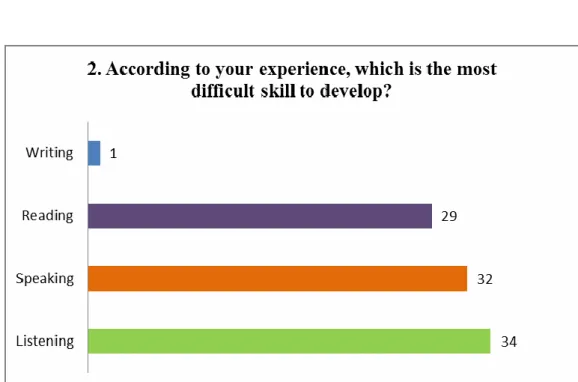
Figure 2: Students’ perceptions of the most difficult skills……….70
Figure 3: Students’ percentage of abroad travelling………71
Figure 4: Students who had taken English proficiency tests………71
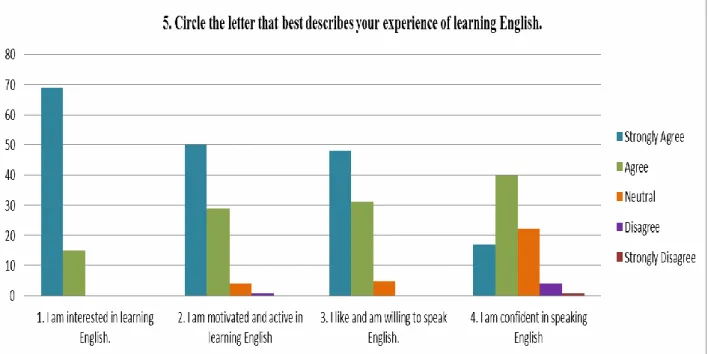
Figure 5: Students’ interest, motivation, and confidence………72
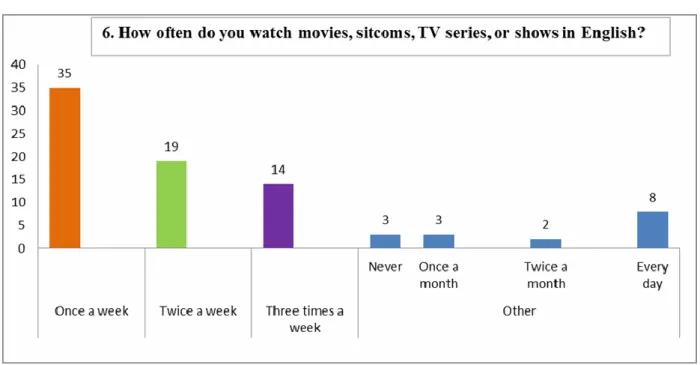
Figure 6: Students’ viewing frequency………73
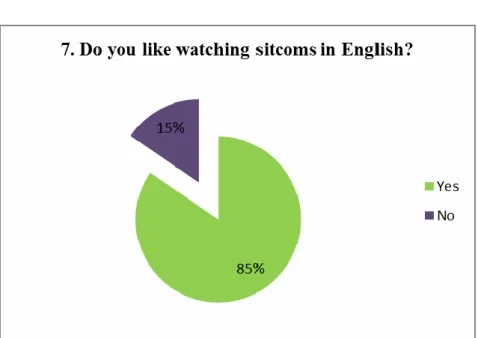
Figure 7: Percentage of students who enjoy watch sitcoms……….74
Figure 8: Reasons why students watch sitcoms………...75
Figure 9: Sitcoms students would like to watch………..76
Figure 10: Students’ opinion about the use of sitcoms for English learning………...77
Figure 11: Use of audio and subtitles when watching sitcoms………78
Universidad de Cuenca
Dedication
I want to dedicate this work to my parents and
siblings, who have always been there to motivate
and inspire me to do better and work hard to
achieve all of my goals. This project is also
dedicated to my boyfriend, José Antonio, who
has been next to me to support and encourage me
every step of the way. You have been my rock
during this process, and you have been the key to
Universidad de Cuenca
Acknowledgements
I am sincerely grateful to my supervisor, Fabian
Rodas, and to my teacher, Tammy Fajardo, who
have guided me during this process from
beginning to end. Without your help, it would
have been extremely hard to successfully
culminate this project. I also want to thank
anyone who somehow collaborated with the
development of this project, teachers, and
Universidad de Cuenca
Introduction
This study focuses on the use of a current tool to enhance English listening skills all
around the world, situational comedies. After analyzing a number of studies conducted in
different countries and determining how useful situational comedies (sitcoms) have proven to
be for English learners, this study aims at discovering if students and teachers at the Institute
of Languages at the University of Cuenca would be willing to use these tools as well.
This project is developed in six chapters for a proper comprehension of the reader.
The first one explains the importance of English nowadays and the problems that learners
may face when practicing their listening skills, and it also includes the objectives and
purposes of this research.
The second chapter focuses on explaining theories, definitions, and concepts from
several authors and researchers regarding pragmatics, its importance when learning a foreign
language, listening skills, and situational comedies. Since this study has a pragmatic
approach, a great emphasis is given to sitcoms as pragmatic sources for learners of English as
a foreign language. Washburn (2001) stated, “although different genres of television shows
can provide input for the development of pragmatic language, only sitcoms reliably provide
models with marked violations of the norms and commentary that can help the viewer
interpret the pragmatic language use” (p.23).
Through extensive investigation in chapter three, the researcher was able to identify
the importance of sitcoms in English learning. Results from several studies have
Universidad de Cuenca
listening. Sitcoms were also considered as sources of authentic language input, hence their
relevance in EFL environments.
The following chapter explains the methodology used for this research. Both,
qualitative and quantitative instruments were applied in the Institute to students and teachers
to determine how relevant they think sitcoms are when it comes to English learning. Thus,
this mix-methods research obtained textual and numerical results that were of great
importance.
The results obtained from the previously mentioned instruments are detailed in
chapter five. They show that both teachers and students at the Institute of Languages agree on
the fact that sitcoms can enhance students’ language skills, and they all showed interest in
using sitcoms and sitcom-based activities during their English classes.
Finally, chapter six includes the conclusions from this study and a few
recommendations for future studies regarding the same topic. Additionally, a booklet of
sitcom-based activities was created to motivate students and teachers to work with sitcoms to
Universidad de Cuenca
Chapter 1
Description of the Research
1.1Statement of the problem
When learning a language, we specially consider four skills: writing, speaking,
reading and listening. The first two skills involve production, and the other two are related to
language comprehension. The relevance these skills have for learners usually varies from one
student to another, as well as the importance of each one of them. Powers (2010) mentions
that, “what English tests users value most often is a person’s ability to communicate in
English in a variety of contexts that is likely to involve the use of multiple language skills
either singly or in combination” (p. 2). Hence, all four skills are crucial, and even if they
seem to work separately, the four of them influence each other.
This research will focus on one of those four skills, listening. Abad (2011) stated,
“listening is considered an essential skill for learning a second language and it appears to be
one of the most difficult for students” (p. 8). Therefore, both, teachers and students are
concerned with finding a relevant audio-lingual source that can have an impact on students’
English learning.
According to Heras (2014), “sitcoms or movie clips contain language that can be
considered fairly authentic and they also often represent a specific culture” (p. 54). Thus,
using this type of material could somehow reduce the use of classroom language and provide
innovative language input to students. Therefore, the aim of this research is to analyze the
influence and the effects that sitcoms may have on English students’ listening skills in EFL
Universidad de Cuenca
After studying a number of sources related to the use of sitcoms in English
classrooms, a survey will be conducted to English students from the seventh and eighth level
at the Institute of Languages at the University of Cuenca. This survey will determine their
interests and preferences in relation to sitcoms in English, and whether they will be willing or
not to learn English using this kind of material.
Finally, a booklet of sitcom-based listening activities will be created to demonstrate
the possible uses of situational comedies in B1/B2 EFL environments. Since this research
will approach English learning pragmatically, it will consider not only how language is
supposed to be used, but also how it is actually used.
1.2Background and Justification
Nowadays, English is considered a lingua franca all around the world. Mahu (2012)
stated, “English is the official or co-official language from 45 countries and is spoken
extensively in other countries where it does not have official position” (p. 1). Therefore,
people who are able to successfully communicate with others using the language, have great
advantages in their work fields, education, and life experiences in general.
Given the importance of English nowadays, this research will analyze an innovative
form of language learning. It will focus on how sitcoms can be used as tools for enhancing
listening skills in students who have a B1/B2 English level, and how it can be done.
In EFL environments, learners are usually in contact with classroom language, which
is not real at all times. It is easier and simpler, so students can understand the topics without
Universidad de Cuenca
get familiar with the language and need it to be less complicated than it actually is; however,
it makes English sound completely different.
Hadhi (2013) indicated that “when second language learners engage in conversations
with native speakers, difficulties may arise due to their lack of mastery of the conversational
norms involved in the production of speech acts” (p. 1). English is fast, full of expressions,
sarcasm, and contractions that as a non-native speaker can be hard to understand, so learners
may get frustrated and lose interest in learning.
Hence, to fully understand English, students must acquire knowledge of its
pragmatics. This will help them overcome difficulties they may encounter in a variety of
contexts that sometimes are not common in EFL classrooms. However, only about five
studies at the University of Cuenca have had a pragmatic approach when speaking of English
linguistics.
According to Heras (2014), pragmatically, sitcoms can be useful for learners of
English because they offer an authentic-like input. Therefore, students could be aware of how
English is used by native speakers on a daily basis and what to expect when they listen to
English speakers in real life. They could be exposed to authentic language without leaving
the country or even the classroom. Kung (2013) stated,
one of the ways for Taiwanese EFL learners to have the authentic input is through TV
series. The popularity and accessibility both make it easy and fun for students
compared with other traditional EFL textbooks that are often outdated and
Universidad de Cuenca
Thus, sitcoms are an excellent source for real language input given that the scripts
include vocabulary, grammar, idioms, and expressions used by native speakers in everyday
situations and probably are not comprised in regular English textbooks.
Also, students can access more information when watching sitcoms because they can
listen to what is happening and relate it with what they are learning (Kung, 2013). They could
analyze how language can be used in different situations and forms and use it in the same
way when they seem to be in one of those situations. Consequently, they will not only study
the language as it should be used, but as how it is actually used by speakers. English learners
could acquire a pragmatic knowledge of English that can be as necessary as any of the four
skills when trying to achieve communicative competence.
Developing listening skills may be a hard task for learners, but using sitcoms as a tool
in EFL environments may motivate students to keep learning. According to Kung’s research
(2013), “implementing TV series-based instruction in class helped students to be more
prepared and willing to speak English, and their interests, confidence, and self-assessed
speaking competence were also boosted” (p. 113). Hence, by improving their listening skills,
students can develop a more phonologically correct speech because they will reproduce the
sounds in a more similar way to the one they listen in sitcoms.
Even though, Vanderplank (2013) indicated that “TV has still not developed as a
global resource for language learning and teaching” (p. 6), teachers in the 21st century are
constantly looking for new and innovative ideas to encourage their students when learning a
language. Thus, the use of TV shows with academic purposes at the University of Cuenca can
Universidad de Cuenca
increase the amount of students willing to enhance their English skills within Ecuadorian
classroom environments.
1.3Research Question
To what extent can sitcoms be considered pragmatic tools to enhance listening skills in
B1/B2 learners?
1.4Objectives
1.4.1General Objective
To create sitcom-based activities as tools to enhance the listening skill in B1/B2 EFL students.
1.4.2Specific Objectives
• To analyze the possible effects that watching sitcoms may have in students’ listening
skills when used in EFL environments.
• To analyze students’ interests and preferences when watching sitcoms.
• To analyze sitcoms’ content to determine the sitcoms and the number of episodes on
which the activities will be based on.
• To analyze teachers’ opinions and perceptions about the use of sitcoms for English
Universidad de Cuenca
Chapter 2
Theoretical Framework
2.1Introduction
Learning English has become fundamental in today’s world because it is necessary in
almost every professional field. British Study Centers points out that “English is the language
of science, of aviation, computers, diplomacy, and tourism. Knowing English increases your
chances of getting a good job in a multinational company within your home country or of
finding work abroad” (10 Reasons to Learn English, n.d.). Therefore, people are always
looking for new ways to teach and to learn English.
This project focuses on one of those new techniques for English learning. First, it will
cover the importance of Pragmatics when learning English. Then it will analyze how
situational comedies could help learners enhance their language skills, especially listening.
Finally, this project will lead to the creation of a booklet of sitcom based activities that can be
helpful for B1/B2 English as a Foreign Language (EFL) learners.
2.2Pragmatics
In her book Pragmatics for Language Educators, LoCastro (2012) explains that “the
term pragmatics was first coined by Charles Morris, a philosopher of language, in 1938, to
label ‘the science of the relation of signs to their interpreters,’ thereby locating this new field
of linguistic analysis within semiotics” (p.5).
Heras (2014) mentions that learning the main skills of a language is not enough in
Universidad de Cuenca
the pragmatics of the language as well to fully understand, use, and respond to speech acts in
different contexts. Green (2017) defines speech acts as “acts that can, but need not, be carried
out by saying and meaning that one is doing so” (p.1). Thus, for the purpose of this project it
is relevant to analyze the role of pragmatics in EFL environments. Leech (2014) stated,
the subject of ‘Pragmatics’ is very familiar in linguistics today. Fifteen years ago it
was mentioned by linguists rarely, if at all. (…) Now, many would argue, as I do
that we cannot really understand the nature of a language itself unless we understand
pragmatics: how language is used in communication. (p.1)
Ferrera (1985) defines pragmatics as “the systematic study of the relations between
the linguistic properties of utterances and their properties as social action” (as cited in
LoCastro, 2012, p.5). Hence, it can be said that pragmatics deals with the meaning words
acquire according to the context and intonation.
This area of Linguistics is precisely the opposite of Semantics, which considers
words’ literal meaning, for example, the one in the dictionary. Pragmatics takes culture,
background, gender, and age into account; therefore, rules governing pragmatics tend to be
subjective (Heras, 2014).
Crystal (2008) argues that “pragmatics focuses on an ‘area’ between semantics,
sociolinguistics and extralinguistic context; but the boundaries with these other domains are
as yet incapable of precise definition” (as cited in Beltrán-Planques and Querol-Julián, 2018,
p.2). Since this branch of Linguistics has gained more and more importance through the
Universidad de Cuenca
Pragmatics is concerned with the study of meaning as communicated by a speaker
(or writer) and interpreted by a listener (or reader). It has consequently more to do
with the analysis of what people mean by their utterances than what the words or
phrases in those utterances might mean by themselves. Pragmatics is the study of
speaker meaning. Pragmatics is the study of contextual meaning. Pragmatics is the
study of how more gets communicated than is said. (as cited in Heras, 2014, p. 18)
However, EFL books and texts do not always include pragmatics in their content.
Hence, students could find it very difficult to overcome communication gaps if they do not
acquire pragmatic skills. LoCastro (2012) states that “pragmatic failure refers to mistakes in
producing and understanding situationally appropriate language behavior” (p. 83).
Martínez and Fernández (2008) said, “effective communication cannot be achieved if
extra linguistic factors are ignored, and it is here that pragmatics comes into the picture”
(p.31). From there, we can infer or make predictions in relation to meaning, word choice, and
uses of specific words, phrases, slang, figurative speech, etc.
Nevertheless, understanding how the pragmatics of our native language works is not
enough in order to fully comprehend the pragmatic rules of a second (L2) or foreign
language. The learner may apply or transfer some of the pragmatic knowledge of his or her
first language (L1) when learning an L2, but the rules will not always be the same. Therefore,
the study of interlanguage pragmatics is absolutely necessary.
2.2.1Interlanguage Pragmatics
Félix-Brasdefer (2012) argues that “Interlanguage pragmatics (ILP), or second
Universidad de Cuenca
the ability to produce and understand communicative action in an L2” (para.1). This involves
a number of aspects related to speech acts, such as ordering food, apologizing, answering the
phone, asking for permission, complaining, etc.
However, this research project will not cover such specific aspects of pragmatics. It
will focus on the general features related to L2 Pragmatics. This means analyzing the context,
language use, pronunciation, and meaning.
One aspect of a learner’s communicative competence is his or her pragmatic
knowledge, which includes two basic components according to Félix-Brasdefer (2012):
The first, pragmalinguistic knowledge, refers to the linguistic resources that are
available in a particular language and that are necessary to express a specific
communicative effect. This includes knowledge of different forms and their
meanings. The second component, sociopragmatic knowledge, refers to knowledge
of social conventions at the perception level, such as an awareness of the differences
in social distance or social power among interlocutors. (para. 2)
Félix-Brasdefer is not the only author who argues about the importance of pragmatic
and communicative competence for L2 learners. Beltrán-Planques and Querol-Julián (2018)
stated, “the ultimate goal of language teachers is to increase learners’ communicative
competence in order to help them to communicate and use the additional language
successfully in a variety of contexts, with speakers of different linguistic backgrounds and for
several purposes” (p.1), and so, that leads us to analyze the importance of pragmatics in EFL
Universidad de Cuenca
2.2.2Cross-Cultural Pragmatics
English is commonly used as a lingua franca in today’s world; this means that people
use English as their second or foreign language to communicate with others when needed.
Hence, when it comes to English pragmatics culture, background, ethnicity, education,
gender, etc., must be taken into account.
The same thing applies to sitcoms, where we find people from different countries and
cultures that find themselves using English every day. These people usually have a different
accent or dialect, and their language use is often influenced by their background. Therefore,
for the purpose of this project, it is necessary to analyze the importance cross-cultural
pragmatics (CCP) has in EFL learning.
Kasper and Blum-Kulka (1993) defined CCP as “the study of linguistic acts by
language users from different cultural backgrounds” (as cited in LoCastro, 2012, p.80). This
specific branch of pragmatics can, therefore, lead to contrasting speech acts among
languages.
LoCastro (2012) states that “ Cross-cultural pragmatics (CCP) is arguably the subfield
of pragmatics that draws the most attention in the modern world where on a daily basis
participants interact while not sharing the same native or primary language for
communication” (p.79).
CCP is in fact related with interlanguage pragmatics because both fields study
pragmatic skills in second and foreign languages. However, there is an important
differentiation between them that is worth mentioning. LoCastro (2012) explains that “In
Universidad de Cuenca
concentrates on environments where participants are not explicitly learners, but full members
of the target language community” (p. 80).
When watching sitcoms in English, the viewer is exposed to both, interlanguage
pragmatics and cross-cultural pragmatics. IP because the learner acquires new skills to
overcome the difficulties he may encounter when using his L2 based on what he hears. On
the other hand, CCP is present when characters (with different cultural backgrounds) from the
sitcom interact with each other.
2.3Pragmatics in EFL Classrooms
Given that EFL text books do not cover much when it comes to Interlanguage
Pragmatics, acquiring those skills might become a complicated task for L2 learners. Thus,
teachers must find a way to include ILP in their lesson plans to boost their students’ language
skills.
Clennell (1999) developed a model for raising awareness of potential communication
difficulty at three distinct levels: socio-pragmatic, pragmalinguistic, and linguistic. Clennell
(1999) explains that this model provides samples of contextualized spoken interaction
promoting pragmatic awareness among learners. Thus, this method includes different levels
of language usage and meaning. It involves analyzing sociocultural, phonological, and
syntactic aspects of language. Clennell (1999) believes his model “enables learners to see
how sociopragmatic meanings are embedded in the discourse, and how effective
communication is dependent on interaction and mutual negotiation” (p.90).
Universidad de Cuenca
the study of pragmatics is therefore fundamental to understand how speakers and
listeners co-construct and deconstruct meaning in a given interaction. However,
regardless the importance of pragmatic competence in the communicative
competence construct and its prominent role in interaction, this competence is not
typically addressed in the language classroom, probably due to the lack of a
curriculum planning and materials based on pragmatics. (p.2)
Ifantidou (2013) remarks that “the need for naturalistic settings of interaction in
assessing pragmatic competence has been recently advocated by scholars who adopt a
conversation-analytic perspective to describe L2 users’ ‘interactional competence’ in a
variety of interactional contexts” (p. 3). Therefore, one of the purposes of this project is to
determine the impact pragmatics could have on students’ L2 skills and their development.
Hence, it is relevant to define and link them to the communicative competence.
2.4Language Skills
Morehouse (2017) explains that “the four skills of language (also known as the four
skills of language learning) are a set of four capabilities that allow an individual to
comprehend and produce spoken language for proper and effective interpersonal
communication” (para.1). These skills include Listening, Speaking, Writing, and Reading,
and all four of them are absolutely necessary in order to reach language proficiency.
Language skills can be divided into two categories. Listening and reading are
considered receptive skills, while speaking and writing are productive skills. Nonetheless, all
Universidad de Cuenca
the process of integrating language skills involves linking them together in such a
way that what has been learnt and practiced through the exercise of one skill is
reinforced and perhaps extended through further language tasks which bring different
skills into use. (p.765)
The acquisition of the different language skills in about 40 languages is regulated
according to The Common European Framework of Reference for Language Learning,
Teaching and Assessment (CEFR), and English is not an exception. According to the Council
of Europe (2017), “the CEFR is a framework of reference designed to provide a transparent,
coherent and comprehensive basis for the elaboration of language syllabuses and curriculum
guidelines, the design of teaching and learning materials, and the assessment of foreign
language proficiency” (A transparent, coherent and comprehensive reference instrument
section).
The CEFR describes foreign language proficiency at six levels: A1 and A2, B1 and
B2, C1 and C2. It also defines three ‘plus’ levels (A2+, B1+, B2+). The Council of Europe
(2017) then adds, “based on empirical research and widespread consultation, this scheme
makes it possible: to establish learning and teaching objectives, to review curricula, to design
teaching materials, and to provide a basis for recognizing language qualifications thus
facilitating educational and occupational mobility” (Six levels of foreign language
proficiency section).
The CEFR will be of great relevance to this research project which focuses
specifically on listening skills, how students acquire them in EFL environments, and the
Universidad de Cuenca
2.4.1Listening skills
The Oxford Dictionary (2018) defines listening skills as the ability to pay attention to
and effectively interpret what other people are saying. This skill allows us to receive
messages, and it defines how well a conversation goes. Since we receive most information by
listening, it requires concentration and focus when learning something new, especially a
language.
Schwartz stated that “language learning requires intentional listening that employs
strategies for identifying sounds and making meaning from them. The complexity of the
listening process is magnified in second language contexts, where the receiver also has
incomplete control of the Language” (as cited in Puma, 2011, p.2).
Since this research project focuses mainly on B1/B2 English learners, it is important
to analyze what they are expected to be able to do when referring to listening skills. The
CEFR (2017) indicates that language learners who have a B1 level of proficiency,
can follow much of everyday conversation and discussion, provided it takes place
in standard speech and is clearly articulated in a familiar accent. Can generally follow
the main points of extended discussion around him/her, provided speech is clearly
articulated in standard speech. (p. 56)
Likewise, according to the CEFR (2017), language learners who have a B2
proficiency level,
can understand standard spoken language, live or broadcast on both familiar and
Universidad de Cuenca
life. Only extreme background noise, inadequate discourse structure and/or
idiomatic usage influence the ability to understand. Can understand the main ideas
of propositionally and linguistically complex speech on both concrete and abstract
topics delivered in standard speech, including technical discussions in his/her field
of specialisation. Can follow extended speech and complex lines of argument
provided the topic is reasonably familiar, and the direction of the talk is sign-posted
by explicit markers. (p. 56)
The CEFR does not only evaluate students’ four language skills. It also considers the
importance of pragmatics when using a language, and it gives certain standards according to
the students’ proficiency level in the language. The Council of Europe (2017) indicates that
the CEFR examines six aspects of pragmatics: flexibility, taking the floor (turntaking),
thematic development, coherence, propositional precision, and spoken fluency (Structured
overview of all CEFR scales, p.30-31).
Since the importance of both, pragmatics and listening skills, in language learning has
already been established, it is necessary to start focusing on how pragmatics can be taught in
EFL environments. This project will discuss mainly how situational comedies fit in the
pragmatic context as tools for English learning, and specifically to enhance listening.
2.5Situational Comedies
McNulty and Lazarevic (2012) agree with other authors in their research when they
explain that “video technology can support learning efforts by improving long-term listening
comprehension skills, student confidence, and pronunciation proficiency” (p.52). The same
Universidad de Cuenca
accurate pronunciation of words and sentences as they are spoken by the native English
speakers” (p.52). Hence, learning with videos could have a very significant impact on the
students’ language development.
The Merriam-Webster Dictionary (2018) defines situation comedy as a radio or
television comedy series that involves a continuing cast of characters in a succession of
episodes. This term was first used in 1925 and has become very popular since then.
Nowadays people use the word blend ‘sitcom’ to refer to this type of TV series that have had
a great impact around the world. North American sitcoms are usually the most popular
among people; however, there are a variety of Chinese, Japanese, Russian, British, and
Spanish situation comedies. In our country, sitcoms have also been created to entertain
Ecuadorians, usually in the afternoon.
Since sitcoms’ main feature is humor, they usually make everyday situations, family
problems, and regular circumstances as fun and entertaining as possible (Palu, 2016). Every
episode usually lasts about 20 to 25 minutes. Additionally, some sitcoms are filmed in front
of an audience, but not all of them.
Sitcoms can be used as audio-visual material for English learning. Swaffar and
Vlatten (1997) indicate that “as a multisensory medium, video offers students more than
listening comprehension: Students have the opportunity to read visual as well as auditory
messages. Apparently, reading what is seen as well as what is heard enhances learning”
Universidad de Cuenca
By watching sitcoms, students can focus on linguistic aspects such as pronunciation,
vocabulary, pragmatics, intonation, grammar, and especially listening, which is the main
purpose of this research project. According to Harmer (2009),
utilizing videos such as American dramas or sitcoms is an extremely helpful and
motivating way of providing exposure to actually used or updated expressions in
different varieties in English, because the language is used by a diverse community
of speakers and each one will have its functioning or operative variety. (as cited in
Kung, 2013, p. 130-131)
Harmer is not the only author who believes sitcoms to be tools for language learning.
Palu (2016) states, “English sitcoms are an excellent way to support English language studies
due to the creation of a positive, inspiring, exciting background for learning” (p. 6).
According to Martínez and Fernández (2008), through sitcoms, English learners will
be exposed to humor based on puns, sarcasm, and cultural factors that can be as important as
language itself. Hence, this aspect can keep students motivated in class, and they will enjoy
listening to what the characters have to say.
By improving their listening skills, students may realize that humor is often hidden in
other aspects of the language they are learning. In addition, Martínez and Fernández (2008)
stated, “when we speak we communicate more than we actually say, and when it comes to
humour this statement becomes even more significant” (p.33).
Kusumarasdyati (2006) argues that “Subtitled movie DVDs turn out to be an effective
teaching device to develop the EFL learners’ listening skills and equip them with the relevant
Universidad de Cuenca
reflect everyday situations and use language as it is actually used by native speakers, we can
say that sitcoms also enhance listening skills and cultural awareness among EFL learners.
Moreover, Kozhevnikova (2014) agrees by stating,
watching sitcoms in English, reading magazines and surfing the Net are considered
fun by many teachers and students and not perceived as activities that can do good to
students’ language proficiency. Yet these resources can considerably increase
learners’ general and cultural awareness and should be interwoven into studying
routines, because background knowledge is a tremendous facilitator of
comprehension. (p.4463)
LoCastro (2012) indicates that “pragmatics concerns speaker meaning, specifically
deriving the intended communicative message from what is said in a particular context” (p.7).
This is exactly what happens in sitcoms. The meaning of an utterance is always linked to a
particular context or situation.
2.6Conclusion
In conclusion, there can be a great number of positive consequences of using sitcoms
to enhance students’ listening skills such as the acquisition of pragmatics, better
understanding of a foreign language, increasing motivation and interest in students, and also,
students can end up improving their speaking and pronunciation skills along with their
Universidad de Cuenca
Chapter 3
Literature Review
3.1Introduction
After analyzing all of the relevant definitions to this project, it is time to review
studies that have been conducted in relation to this topic. Given the significance that English
has nowadays in our globalized society, it is of extreme importance that non-native speakers
learn how to overcome the communicative difficulties that they may encounter when using
the language. Thus, as established in the theoretical framework, learners should acquire
pragmatic skills that would help them avoid communication breakdowns.
The ultimate goal for most English learners is to be able to communicate while using
the language accurately in a variety of situations related to their studies, work field, trips, etc.
Palu (2016) states that “without communication skills, humans are isolated from one another,
unable to share thoughts and feelings with family, friends, and colleagues” (p. 3). Therefore,
students’ aim is to use the foreign language in the most natural possible way, just as if they
were using their native tongue.
Today, according to a great number of researchers around the world such as Kung,
Palu, Washburn, Vanderplank, and others, situation comedies are a possible pragmatic
resource for English learners. Hence, it is necessary to determine why and how TV series and
pragmatics are connected in order to find out if they can help Ecuadorian English students as
Universidad de Cuenca
Kung (2013) deeply believes that “having the language exposure every day is the key
to learning a second language successfully” (p.116). However, sometimes it can be hard for
students to interact with English native speakers, so being exposed to sitcoms is a good
opportunity to enhance their skills as sitcoms represent nearly authentic language input (Palu,
2016). Yet, enhancing one’s language skills through TV series is not as simple as it sounds.
As stated by Vanderplank (2013), “TV requires viewers to actively overcome their own
expectations that little effort is required, if they are to benefit in educational terms.
Educational benefits come only to those who put in considerable mental effort” (p.4).
A number of authors, teachers, and linguists have come to the conclusion that since
sitcoms reflect everyday situations and use colloquial language, they provide great pragmatic
input for the viewers. In his paper, Washburn (2001) strongly supports the use of sitcoms in
EFL environments by stating,
sitcoms provide the best conditions for pragmatic language learning and the best
teaching materials. Like dramas and soap operas, and unlike most textbooks,
television sitcoms offer models that are rich, varied, and contextualized. Sitcoms
present many models of appropriate pragmatic language use among various characters
of differing status, familiarity, gender, and in varied settings, such as at work, at
home, in public places, and at formal gatherings (p. 22).
This idea has been corroborated by research and studies done in Taiwan, South
Africa, The United States, China, Turkey, and many more countries around the world. This
variety of studies and research projects have used TV series such as, Friends, How I met your
Universidad de Cuenca
include activities, analyses, interviews, questionnaires, role plays, recordings, and other
interesting tools that helped students enhance their language skills.
3.2Relevant Studies
For instance, a study conducted by Fun-Wei Kung (2013) aimed at proving that
Taiwanese EFL learners can in fact improve their listening and speaking competence through
TV series. Kung (2013) highlighted that “students generally lack confidence in speaking
English for fear of making grammatical and structural mistakes” (p.115), hence the purpose
of his study.
The 52 participants involved in this study were students at a university in Northern
Taiwan, and all of them had received an average of 10 years of English instruction in the
same country. Because of their low confidence, all the participants believed their listening
and speaking skills needed substantial improvement. Kung (2013) stated that “speaking
English for daily communication has become something impossible simply because students
in Taiwan are not used to doing so” (p.115).
All 52 participants solved a pre-assessment questionnaire which included 50 questions
regarding listening comprehension, and 10 questions regarding speaking ability. These
questions were designed to understand their interests, feelings, opinions, and confidence of
their English proficiency. All of them scored a low grade, so they had to enroll in an
intermediate listening and speaking class, where the researcher was the instructor. Since
English is taught only as a foreign language in Taiwan, having access to American sitcoms
Universidad de Cuenca
(Kung, 2013, p.116). Hence, a side from the textbook and handouts, the instructor included
the first season of the American TV series Gossip Girl in the curriculum.
During the 12 week course, the students watched one episode per week without
subtitles and were asked to discuss what they had learned with a classmate. The episode was
played once, and then it was fast forwarded for extra explanation regarding vocabulary,
phrases, expressions, and questions from the students during the discussion period. Besides, a
variety of activities were conducted in order to enhance the students’ ability to understand
meaning from context, listen to what the characters were saying, and describe what was
happening in the show.
The instructor and researcher of this study videotaped the participants’ in-class
performance and took notes of their reactions to listening and speaking activities. Then a
post-assessment questionnaire similar to the first one was administrated to the participants to
see if there was a significant difference in their listening and speaking performances. Finally,
a 5-minute interview was conducted in order to assess participants’ reflections and feedback
individually.
Kung (2013) stated that “there was a significant difference in students’ perceptions,
interests, and motivation in learning English” (p.125), proving that TV series can have a
positive effect on EFL students’ learning process. Kung then added,
the surveys showed that they were generally more willing to speak English, and they
had also become more confident in speaking up after this study. They were more
active to ask questions in class in English and they were not afraid of making
Universidad de Cuenca
The participants were happy with their improvement after receiving TV series-based
instruction and most of them stated that they were interested in learning English with
American dramas. Kung (2013) stated that “ almost three quarters of the participants believed
that TV series gave them ample opportunities to learn from the L2 input, making them more
aware of the language uses in actual environments” (p.130).
After finishing his research, Kung (2013) concluded that “TV series could also be
combined for L2 speaking improvement along with listening comprehension. Authentic
materials such as TV series can substantially boost L2 speaking acquisition in various ways,
which empirical studies have yet to document” (p.131).
Similarly, Martínez and Fernández (2008) conducted a study in Spain that focuses
mainly on the use of sitcoms in EFL classrooms with the purpose of including pragmatics in
the curriculum. The authors believe there is a need to include authentic language material in
order for students to be pragmatically aware. A total of 23 fragments of the sitcom Friends
were chosen by the researchers. Martínez and Fernández (2008) stated that “the scripts of
Friends capture the main features of authentic language in a fine way, and they are a good
source of everyday, natural expressions” (p.33).
The participants were 15 second-year university students whose major was English.
During the classes, the participants watched a number of episodes of Friends, and they were
asked to write down the dialogues or parts they thought were humorous. After that, they were
asked to explain the reasons why they believed the scenes were funny. All of this was
accompanied by theoretical explanation of pragmatic aspects by the researchers, so the
Universidad de Cuenca
At the end of their research, the authors could demonstrate that humour in sitcoms is
usually caused by word play, which can only be accurately understood if the person has
acquired L2 pragmatic knowledge that allows him/her to develop proper communication
skills. Another important conclusion reached by the researchers is that since people
communicate more than what they actually say, the speaker’s intention has an important role
in humorous aspects of communication (Martínez & Fernández, 2008, p.41).
Finally, the authors believe that using audiovisual material in EFL classrooms can
catch students’ attention and interest. Thus, boosting their motivation and involving them in
the tasks they are supposed to fulfill (Martínez & Fernández, 2008, p.41).
Furthermore, Thomas C. Messerli (2015) conducted a research about the laughter
markers in the sitcom 2 Broke Girls. These markers facilitate the process of recognizing and
understanding jokes for the viewers, thus the main objective of humour markers is to
intentionally communicate humour to the audience (Messerli, 2015, p.4). In this paper,
laughter is considered as an expression of amusement and as a humour trigger.
The researcher used ELAN, a professional tool for the creation of complex
annotations on video and audio resources, to transcribe the dialogues from the sitcom, so all
instances of laughter markers could be easily identified for the purpose of this study. Messerli
(2015) highlighted that “viewers are assumed to be able to detect humour markers employed
by characters and to infer humorous character intentions based on those markers” (p.5).
Consequently, this helped viewers understand the context of each scene or situation.
The fact that viewers laughed according to the humour markers presented either by
Universidad de Cuenca
appreciate humorous situations as part of the sitcom’s context. Therefore, by using their
pragmatic skills, learners could fully understand the scene.
In her article Pérez (2009) emphasizes the importance of language evolution
throughout the years. The author believes English textbooks and dictionaries are no longer
the most reliable sources of language input nowadays. Pérez (2009) stated, “we cannot
guarantee our students will recognize or be aware of recent English expressions which they
should incorporate into their lexicon. We need to find a way to raise their explicit attention to
their existence and use” (p. 4).
Therefore, she introduces a new proposal in her article which purpose is to include
‘real’ English input into the classroom through sources such as sitcoms and TV series,
podcasts, internet texts, and recent best sellers. The same sources will be then used to solve a
number of innovative activities to enhance students’ language skills.
One of the techniques suggested by Pérez (2009) was telecollaboration, which
allowed English students to communicate with native English speakers e-tutors in order to
ask them questions related to grammar, vocabulary, culture, common expressions, and so on.
Another recommended source were sitcoms which, according to Pérez (2009), “will help
students become familiarized, from a receptive point of view, with the language which is
actually used outside the confines of the classroom and, from a productive one, to foster their
fluency through the use of such expressions” (p.6).
To conclude her article, the author emphasizes the need of updated sources of
Universidad de Cuenca
diverse sources of input, such as telecollaboration and ‘coffee and talk’ sessions with
native English speakers, sitcoms and TV series, podcasts, Internet texts, and recent
bestsellers, have been suggested, together with possible ways to exploit them in line
with trendy language teaching methods. (p.7)
Kozhevnikova (2014) conducted a study in Russia which aimed at analyzing the
importance of culture when it comes to communication. The author believes that sometimes
very little emphasis is given to cultural aspects of a language when learning it as a second or
foreign language. Kozhevnikova (2014) stated, “every language reflects the cultural values of
the society in which the language is spoken. Linguistic competence alone is just not complete
for learners of a language” (p.4462).
For this study, Kozhevnikova (2014) used authentic language materials such as the
popular American sitcom Friends (about 50 episodes), and the British magazine Take a
Break (25 articles). The participants of this study were 20 students from Tourism and IT
majors, who were exposed to the previously mentioned materials during their English classes.
Kozhevnikova (2014) believes “authentic video reflects authentic use of target language and
brings extended context motivates students and they achieve significant gains in overall
cultural knowledge after watching videos from the target culture in the classroom” (p.4464).
After including Friends and Take a Break in their classes, all participants were
interviewed in order to analyze their opinions and perceptions related to the study they took
part of. A total of 95% of the participants agreed that the use of authentic materials was
highly beneficial for their cultural and linguistic development. They even believed these sorts
Universidad de Cuenca
English. However, five percent of the participants viewed these activities as useless or boring
(Kozhevnikova, 2014).
Results also showed that students’ motivation towards English learning increased
about 85% due to the fun content and topics of the materials that were used, and 95% of the
students believed the material have helped them enrich their vocabulary. Moreover,
participants were able to identify socio-cultural aspects such as popular celebrations in the
US while they were enjoying the sitcom. To conclude her study, Kozhevnikova (2014) stated,
exposure to the second language is essential, where natural exposure is not available,
the classroom exposure to authentic materials can be quite beneficial for students, if
certain conditions are observed. It`s teachers` primary task to select cultural data and
authentic materials to provide a wide array of cultural and linguistic information.
(p.4465)
As it has been shown, teachers can use sitcoms in EFL environments to approach
different language skills and sub skills; however, since the aim of this project is to enhance
English students’ listening skills, it is of extreme importance to analyze the effects that TV
series can have on students’ listening abilities during and after class. The connections
between what students see and what they hear can be crucial for their language learning
process, and it can produce a variety of reactions among them (Palu, 2016).
Hea-Suk Kim (2015) conducted a study at Seoul Women’s University in South Korea
with the purpose of investigating if the use of video resources can help EFL learners improve
their listening comprehension skills. The students were taught for a 10 session’s course over
Universidad de Cuenca
29 students, the intermediate group also had 29 students, and the advanced group included 28
students.
The videos used for this study included talk shows, sitcoms, news, songs, and movies,
and all groups used the same videos and studied the same material. One video was shown in
each session, and it lasted approximately 5 minutes. A pre-test was taken at the beginning of
the study, and a similar post-test at the end in order to determine the results of this study. The
participants also answered a questionnaire regarding their attitudes, opinions, interests, and
enjoyment when watching videos to expand their listening comprehension skills.
Kim (2015) concluded that the benefit of learning English through videos can only be
extended to the intermediate and advanced groups. The low group could not benefit from this
technique given that their proficiency level did not allow them to comprehend some features
and characteristics included in the videos (Kim, 2015, p.19). Students in the intermediate and
advanced level significantly improved their listening skills based on their pre and post-tests.
Nonetheless, finding the perfect methodology to enhance listening skills can be a hard
task for educators. Kung (2013) stated that “some practitioners and researchers have started
implementing authentic video-based instruction (TV series-based instruction) in several
ESL/EFL settings to familiarize students with not only authentic language input, but also
engaging as well as interesting materials” (p.5).
Palu (2016) stated that “using video, watching TV, listening to original in language
learning is a great opportunity to improve the level of language mastery” (p.5). However, it is
important for students to decide whether to watch sitcom episodes with English captions,
Universidad de Cuenca
subtitles help students and to what extent. Some researchers believe captions only distract
students, and others believe that they actually help students because they make them work
various abilities at the same time (Vanderplank, 2013).
Kusumarasdyati (2006) conducted a study that supports the idea of using subtitled
videos in EFL classrooms at State University of Surabaya in Indonesia. The researcher also
suggested some pre-viewing, while-viewing, and post-viewing activities for students.
Kusumarasdyati (2006) argues that,
to promote the learners’ mastery of listening skills, lecturers need to carefully select
and present a variety of quality materials and appropriate teaching aids to be used in a
language laboratory, ensuring that the learners will attain optimum results from the
lessons. (p.1)
The participants were undergraduate students who were majoring in English
Literature. The materials for this study included some DVDs and worksheets for the students
to work on according to the movie they were showed. The movies were watched with
Indonesian subtitles to facilitate the students’ learning process.
The pre-viewing activities usually included presenting the topic of the movie and pre-
teaching the key vocabulary. After that, the students had to answer to some of the questions
in the worksheet while they watched the movie. The post-viewing activities included
analyzing the movie’s cultural context and background and comparing it to their own. This
last activity helped students to enhance their pragmatic skills by understanding how culture
Universidad de Cuenca
diversity that can exist between two countries and within the same country as well
(Kusumarasdyati, 2006, p.10).
Kusumarasdyati (2006) concluded that “subtitled movie DVDs turn out to be an
effective teaching device to develop the EFL learners’ listening skills and equip them with
the relevant knowledge of the target culture simultaneously” (p.10). Also, the author noticed
how videos greatly motivated and engaged students in their learning process, especially due
to the emphasis given to the cultural contexts presented in the movies.
Wang (2012) conducted a study in China to demonstrate the effects of self-directed
language learning through watching English television drama (ETD). The use of sitcoms and
TV series in general for English learning has become popular around the world, and that is
the case of the five participants involved in Wang’s study.
This study describes the participants’ experience. All five participants majored in
Chinese and reported their English learning process being as long as 20 years. They also
report watching ETD between three and six years, and only one of them has traveled to an
English speaking country. A total of three interviews were conducted to each participant, and
their main purpose was to analyze the participants’ experience, viewing process and
schedules, and reflections regarding EDT watching in order to develop a self-directed
language learning process.
The participants were Chinese teachers, and Wang (2012) stated, “they believe that
the best way to learn a foreign language is to learn it through real-life communication”
(p.342). This shows that all five participants were aware of a language’s pragmatic value.
Universidad de Cuenca
textbooks could not. Wang (2012) then added, “attracted by the contexts and values
contained in these dramas, the study participants did not seem to have stopped at simply
enjoying an entertainment while sitting comfortably on the sofa; instead, they intended to
learn something serious” (p.343).
After analyzing the results of the interviews, Wang (2012) concluded that there were
seven aspects that were involved in the participants’ English learning pedagogy. These seven
aspects were: selection, repetition, use of subtitles, note-taking, imitation, practice, and study.
The author then mentions that sitcoms such as Friends as well as ETD are proper sources of
authentic language that can boost English learners’ motivation not only in China, but around
the globe. Wang (2012) finishes his paper by saying, “learning English serves as an arena
where out-of-school and post-school education takes place, and this needs to be further
promoted and facilitated” (p.347).
However, it is essential for this study to mention that in Ecuador, there are not many
studies (neither in English nor Spanish) that consider sitcoms as a useful tool for learning of
any type. At the University of Cuenca, less than five research projects have been done in
relation to the use of sitcoms for an academic purpose. Hence, this project aims at fulfilling
some possible gaps and motivating students and teachers to use sitcoms as a pragmatic source
of language.
One of the few studies done at the University of Cuenca was conducted by Esteban
Heras, a teacher of the English Major. In his research, Heras (2014) worked with two groups
Universidad de Cuenca
semester. It is important to mention that the second group had already taken the subject
Pragmatics in a previous semester while the other group had not.
To begin his investigation, the researcher applied a diagnostic test to participants from
the 8th semester. The purpose of this test was to determine how much information the
students remembered regarding pragmatics in general, idioms, and the importance of
pragmatics in language learning.
After that, the researcher started working with the main group, 31 students from the
4th semester. The participants filled in a questionnaire regarding their demographic data and
English learning process. They were asked to explain their attitudes toward English, the
difficulties they had experienced, and their English input through audio visual materials such
as movies, TV series, and videos outside the classroom. After analyzing the results, the
author decided to use videos and an episode of a popular sitcom during class.
Next, the researcher organized a guest speaker event in order to test the participants’
speaking skills during a free and natural conversation. The participants were divided into
groups, and each group had one English native speaker. The participants sat around the guest
and took turns, so all of them could talk to him/her. The native speaker, who was a teacher,
came up with the discussion topic, so the students had no freedom regarding the subject
matter. Students’ pragmatic and communicative ability was tested during this event.
Then students took a test that required them to make conclusions based on
pragmatically loaded contexts. Also, they had to analyze non-standard utterances used by
native speakers. They had to decide if the utterances were grammatically correct or not. If not
Universidad de Cuenca
The next step was to introduce a pragmatics booklet to the participants. The booklet
was used during 36 sessions of one hour each. Its purpose was to increase students’ pragmatic
awareness and to boost their pragmatic skills in English through a series of activities. The
activities included discussing different topics, watching videos, identifying different
expressions, vocabulary and gestures, interacting with others, preparing dialogues, answering
questions regarding a specific topic or video, analyzing cross-cultural differences, identifying
mistakes and obstacles in communication, etc. All of these activities were based on a number
of videos presented by the researcher and an episode of the sitcom Two and a Half Men.
After finishing his study, Heras (2014) stated that the booklet of activities helped
students develop their pragmatic skills to a certain level. They were able to understand
pragmatic language use, expressions, and sarcastic utterances. The researcher added that
students’ L1 pragmatic skills might have helped them understand L2 pragmatic situations that
were presented to them.
In addition, the author noticed that the participants used expressions and pragmatically
loaded exchanges when they were asked to use the booklet; however, they did not apply their
recently acquired pragmatic knowledge when freely talking to their classmates. Finally,
Heras (2014) concluded,
the subjects of this study benefited from the use of videos and sitcoms for pragmatics
instruction. The students showed much enthusiasm and willingness to participate.
This might be due to the fact that professors do not use audiovisual materials in their
Universidad de Cuenca
Likewise, Pinos (2014) conducted a study at the University of Azuay. This study did
not focus on the sociolinguistic aspect of sitcoms, but it used sitcoms in order to enhance
students’ ability to acquire and understand vocabulary in context. The participants of this
research were 22 first-semester students, whose English proficiency level corresponded to
A1, according to the CEFR. The study was carried out during 80 lessons, and it used the
popular American sitcoms Drake and Josh, Malcolm in the Middle, and Friends.
The researcher began her study by applying a questionnaire in Spanish to the
participants in which they expressed their opinions and preferences regarding sitcoms. The
participants expressed which sitcoms they enjoy watching, how often they watch them, their
reasons for watching them, and how sitcoms may help them improve their English level.
Furthermore, pre and post-tests were applied to the participants to measure vocabulary
breadth and meaning from context in relation to reading comprehension. These tests included
a variety of questions that allowed the researcher to collect the data. After that, the
participants were interviewed in order to analyze their perceptions and feeling regarding the
treatment. The interview was also conducted in Spanish, and it included questions concerning
the students’ reactions to watching sitcoms in EFL classes.
The researcher also used a journal as a tool to record useful information related to the
project. It was divided into two parts, one for positive and negative aspects of the teaching
process, and one for the positive and negative aspects of the learning process. The treatment
included pre and post viewing activities designed to promote vocabulary acquisition. The
activities allowed students to select unfamiliar words in the video script and then analyze
Universidad de Cuenca
After finishing her study, Pinos (2014) concluded that even if this treatment was
effective for the acquisition of vocabulary and strategies for understanding vocabulary in
context, it did not have a significant impact on reading comprehension.
Since this study focuses mainly on students’ listening skills, it is important to mention
that those skills can influence students’ feelings, emotions, confidence, and motivation in
relation to their language acquisition process (Méndez & Peña, 2013). Research shows that
these aspects are often linked to students’ memorization capacity. Consequently, teachers aim
at creating positive experiences in the classroom that will help their students enhance their
listening skills. Palu (2016) mentions that “watching sitcoms will be interesting for learners
because of humor and always changing actions. Students will love learning, if they feel
happy, safe and motivated during the lesson” (p.9).
Chumbi and Narvaez (2016) stated, “audio visual strategies such as Sitcoms contain
significant elements to be analyzed and synthesized to merge Listening and oral replication
on a determined basis, throughout an established course of learning” (p. 36). In the same
sense, Palu (2016) mentioned that “listening and speaking are very closely related processes,
one cannot exist without another. The more we listen, the easier it gets to communicate with
other people in a foreign language (p.15). Therefore, if sitcoms can enhance students’
listening skills, they might improve their speaking skills as well. Furthermore, Palu (2016)
highlights, “the better our listening skill are the easier it is for us to speak” (p.13).
Nevertheless, not every sitcom is a proper source for English learning, especially for
enhancing listening skills. The person in charge of the learning process must keep in mind