
Occupy Wall Street: The movement in its third anniversary
68
0
0
Texto completo
(2) Working Paper Series WP17-002 Research group: Communication Networks & Social Change (CNSC) Research group coordinator: Manuel Castells (IN3-Universitat Oberta de Catalunya) Submitted in: November 2016 Accepted in: November 2017 Published in: November 2017. Universitat Oberta de Catalunya http://www.uoc.edu/ Av. Tibidabo, 39-43 08035 Barcelona Spain Tel. 93 253 23 00. The texts published in this publication are – unless indicated otherwise – covered by the Creative Commons Spain Attribution 3.0 licence. You may copy, distribute, transmit and broadcast provided that you attribute it (authorship, publication name, publisher) in the manner specified by the author(s) or licensor(s). The full text of the licence can be consulted here: http://creativecommons.org/licenses/by/3.0/es/deed.en..
(3) Occupy Wall Street: The movement in its third anniversary. Daniel Blanche, Antonio Calleja-López, Mireia FernándezArdèvol & Arnau Monterde. Table of contents. Abstract ................................................................................................................... 4 Introduction ............................................................................................................. 6 1. Background and conceptual framework. ............................................................ 6 2. Research goals. .................................................................................................. 7 3. Methods. ............................................................................................................. 8 3.1. Data collection and processing. ............................................................. 9 3.2. Basic characteristics of the sample. .................................................... 10 4. Results. ............................................................................................................. 12 4.1. The OWS movement and me. ............................................................... 12 4.2. Issues and political participation before OWS. .................................. 14 4.3. Uses of ICTs. .......................................................................................... 17 4.4. Emotions related to OWS. ..................................................................... 21 4.5. The evolution of OWS. ........................................................................... 24 4.6. OWS and institutional politics. ............................................................. 26 4.7. OWS impacts. ......................................................................................... 28 5. Conclusions. ..................................................................................................... 33 Acknowledgments................................................................................................. 36 Bibliographic references ....................................................................................... 36 Annex 1 ................................................................................................................. 39 Annex 2 ................................................................................................................. 64. Working Papers is a research monograph series promoted by the Universitat Oberta de Catalunya. Working Papers (2017) ISSN 2462-7461 working-papers.uoc.edu. 3.
(4) Occupy Wall Street: The movement in its third anniversary. Daniel Blanche, Antonio Calleja-López, Mireia FernándezArdèvol & Arnau Monterde. Occupy Wall Street. The movement in its third anniversary. Daniel Blanche ([email protected]) IN3-Universitat Oberta de Catalunya Antonio Calleja-López ([email protected]) IN3-Universitat Oberta de Catalunya Mireia Fernández-Ardèvol ([email protected]) IN3-Universitat Oberta de Catalunya Arnau Monterde ([email protected]) IN3-Universitat Oberta de Catalunya. Recommended citation: BLANCHE, Daniel, CALLEJA-LÓPEZ, Antonio, FERNÁNDEZ-ARDÈVOL, Mireia, MONTERDE, Arnau (2017). "Occupy Wall Street: The movement in its third anniversary" [online working paper]. Working Papers, Issue 2017. Universitat Oberta de Catalunya. DOI: 10.7238/uocriwp.v0i1.3. Abstract. The emergence of networked social movements in 2011 has opened a new door in the social movements’ literature. By adopting a technopolitical and situated approach, in this paper, we explore the case of the Occupy Wall Street movement three years after its formation in September 2011. Through an online survey and a nonprobabilistic sampling procedure, we pay special attention to the perceptions and opinions of the movement’s participants. We distinguish seven thematic sections: the relationship with the movement, previous political participation and motivations, the use of information and communication technologies (ICTs), the emotions experienced, the evolution of the movement, its influence on institutional politics, and its impacts on several aspects of social life. The results show that the respondents (N=522) are overall adherent to the movement and that the majority participated at some point. Most think that the movement still exists in one way or another, and perceive its impact on several areas, institutions, behaviours, and ideas. We conclude by describing OWS as a case that adequately fits the concept of a networked social movement. Finally, we suggest further developments in the understanding of these movements by further applying the online survey designed for this study and complementing analyses via other research methods.. Working Papers is a research monograph series promoted by the Universitat Oberta de Catalunya. Working Papers (2017) ISSN 2462-7461 working-papers.uoc.edu. 4.
(5) Occupy Wall Street: The movement in its third anniversary. Daniel Blanche, Antonio Calleja-López, Mireia FernándezArdèvol & Arnau Monterde. Keywords Occupy Wall Street, Networked social movements, Technopolitics, Information and communication technologies (ICTs), USA. Working Papers is a research monograph series promoted by the Universitat Oberta de Catalunya. Working Papers (2017) ISSN 2462-7461 working-papers.uoc.edu. 5.
(6) Occupy Wall Street: The movement in its third anniversary. Daniel Blanche, Antonio Calleja-López, Mireia FernándezArdèvol & Arnau Monterde. Introduction In 2011, networked protests emerged in Tunisia, Egypt, Greece, Portugal, Spain and the US. A common feature was their innovative and performative connections of social media and urban spaces for collective action. The emergence of these movements and their strategic use of ICT (defined as the converging set of technologies that process information and communication by electronic means, including transmission and display [Castells, 1996; OECD, 2011]) constitute a key factor in the transformation of practices of contentious politics. A new public sphere may be emerging, connected to the spaces of autonomy (Castells, 2012) that movements create on the basis of the possibilities offered by the Internet. Labelled as “networked social movements” (Castells, 2012; Juris, 2004), there are numerous analyses of their relationship with digital practices and social media. In the conception of this study we follow a technopolitical approach (Toret et al., 2015) that takes into account the intensification and complexification of the technological mediation of collective action (Bennett & Segerberg 2012; Castells, 1996, 2009, 2012; Earl & Kimport, 2011) and situates social practices around digital communication technologies at the centre of the analysis (Couldry, 2012). In this working paper we focus on the Occupy Wall Street (hereafter, OWS) movement in its third anniversary, which exhibits fundamental characteristics of the forms of collective action arising with the wave of networked social movements since 2011. OWS emerged in September 2011, with the consequences of the 2008 financial crisis still present in symptoms ranging from unemployment levels (8.6% at the time [Rampell, 2011]) to inequality indexes (Piketty, 2014), and a perception that those directly or indirectly responsible for the crisis were either left off-the-hook or even ended at key US economic institutions (Ferguson & Marrs, 2010). OWS operated through a multi-layered structure that connected offline interactions to mass and digital social media (Bennett & Segerberg, 2012; Gerbaudo, 2012). Born in digital networks with the call of the alternative magazine Adbusters, and the ensuing diffusion via social media, the movement evolved in relation to them. Due to its novelty and relevance, there is a need for a closer examination of OWS’s relation to social media and technopolitical practices.. 1. Background and conceptual framework. It was on July 13th 2011, with the antecedents of Tunisia, Egypt or Spain and the growth of international networks (Castañeda, 2012; Tejerina, Perugorría, Benski, & Langman, 2013) when Adbusters launched its call to Occupy Wall Street. The call took place several months before the day of the action. A few hundreds attended the demonstration on September 17th (Pepitone, 2011), and only after different events and processes took place, in the following days and weeks, did the camp at Zucotti Park and the Occupy movement itself grow exponentially. Different episodes of police violence and the online/offline processes in. Working Papers is a research monograph series promoted by the Universitat Oberta de Catalunya. Working Papers (2017) ISSN 2462-7461 working-papers.uoc.edu. 6.
(7) Occupy Wall Street: The movement in its third anniversary. Daniel Blanche, Antonio Calleja-López, Mireia FernándezArdèvol & Arnau Monterde. reaction to them, occurred during the last week of September and the first week of October, were crucial in the national and international growth of the movement (Gitlin, 2012). We believe networked emotions and the augmented events tied to them were crucial in the initial popularization of the protest, as it was the case of the 15M movement in Spain (Perugorría & Tejerina, 2013). This took place even though, as it happened in Spain, in its early days the movement received more attention in international than in national mainstream media1. Even with some moments of renewal, such as #OccupySandy (Feuer, 2012), the movement declined in the following years. In spite of that, the movement was able to influence public discourse and the media agenda, putting issues of inequality and social justice, or new formulas such as the opposition between the 1% and the 99%, at the centre of it, providing a frame in which the popularity of political figures such as Bernie Sanders became possible. Taking this into account, we believe relevant to examine OWS across time to understand some of its key features and its social and political impacts. The unfolding of movements such as OWS leads us to reassess the study of social movements in the information and knowledge age. The proliferation and massive extension of technopolitical practices for the organization of collective action, the availability of open and distributed communication, the role of emotions in the main events as drivers of networked communication, the emergence of self-organizing forms at a large scale, or the hybridization of layers (physical and digital) in the movement’s development are some of the factors that guide us towards new approaches in the study of social movements in the network society. In this sense, we aim at further developing the notion of networked movement (Monterde, 2015) as a concept that extends and includes most of the characteristics of these emerging social movements, which are articulated both by hyper-connected and complex dynamics. This development would enable new arguments for a better understanding of these movements, arguments that neither allude to technocentric ideas nor neglect the essential role of technologies in these movements. Such a novel and broader approach is captured in the term “technopolitics”, which has been defined as the strategic and tactical use of digital tools in the organization and communication of collective action (Toret et al., 2015). These new conceptual developments in the intersections of social movements and information and communication technologies literatures pave the way for new directions in the analysis of social movements in the context of the current network society. Therefore, we adopt these new advancements in the examination of the OWS movement in the US.. 2. Research goals. In this study, we primarily approach OWS from the viewpoint of its participants. This provides extremely valuable information to understand how they conceive the movement. We believe that their experience and views are crucial for a better understanding of OWS. Having this said, our main goal is to look into the 1. These processes have been narrated in different works such as Gitlin, 2012; Juris, 2012; or Graeber, 2013.. Working Papers is a research monograph series promoted by the Universitat Oberta de Catalunya. Working Papers (2017) ISSN 2462-7461 working-papers.uoc.edu. 7.
(8) Occupy Wall Street: The movement in its third anniversary. Daniel Blanche, Antonio Calleja-López, Mireia FernándezArdèvol & Arnau Monterde. practices, evolution and impacts of the OWS movement from the perspective of its participants, in a transdisciplinary and situated manner. Furthermore, we define several specific goals that delve into greater detail on the experiences and perceptions of the OWS participants. First, to identify the degree of adherence of OWS participants to the movement. Second, to examine their previous political participation and motives to participate. Third, to identify the forms of participation and the technological means used in relation to the movement. Fourth, to explore the emotions experienced by participants regarding the movement. Fifth, to examine the perceived persistence or evolution of the movement through time. Sixth, to explore the influence of the movement on political elections. Finally, to look into the perceived effects of the movement on different domains and institutions in the social and political spheres. In the following section, we describe in greater detail the methodology applied in this study.. 3. Methods. Given the increasing pervasiveness of information and communication technologies in the US, and, especially, the intensive use of digital technologies by the OWS movement (which is a distinctive characteristic of networked social movements), we designed an online survey to collect the desired information. Accordingly, we deem this method to be adequate to reach our main target audience (participants in the movement), who are presumably frequent users of digital technologies or frequently exposed to digital contents. An encouraging precedent is the online survey conducted by Linares (2013) to investigate the 15M movement in Spain, who gathered 6,000 responses in a very short period (from May 14th to May 15th, 2013) thanks to the involvement of 15M participants. This experience demonstrated that it was possible to get a considerable amount of in-depth information on 15M participants through a nonrandomized online survey. Our survey relies on a similar strategy. We first involved several researchers and experienced activists in networked social movements in the United States and Canada in the design phase through several survey pilots. The goal was to include the perspective of the movement’s participants, test the questionnaire and software repeatedly, and obtain their support in sharing the survey. Once the tools reached an optimal level, we released the survey through the main information channels and social network accounts of the movement. We circulated the survey through OWS key diffusion and communication networks, in which members of our research group are deeply involved in. By using some key OWS accounts in social network sites (SNS) we expected to generate a (network of) trust effect, therefore increasing the probabilities of a larger sample and completed questionnaires. We are aware of the limitations of conducting an online survey based on a snowball sampling strategy, especially in terms of a lack of representativeness of the target population. In addition, the sampling procedure entails difficulties in terms of the replicability of the results, meaning that our data cannot offer full certainty of its robustness. In spite of these problems, we believe this strategy is adequate to collect a. Working Papers is a research monograph series promoted by the Universitat Oberta de Catalunya. Working Papers (2017) ISSN 2462-7461 working-papers.uoc.edu. 8.
(9) Occupy Wall Street: The movement in its third anniversary. Daniel Blanche, Antonio Calleja-López, Mireia FernándezArdèvol & Arnau Monterde. relatively high amount of data, in a standardized form, and to appeal, primarily, the OWS participants and supporters.. 3.1. Data collection and processing. The survey was conducted through an electronic questionnaire available on a web server. A self-selected, non-probabilistic sample was generated by making an open invitation to fill out the questionnaire through digital means, social network sites (SNS) among them. Three channels were used to disseminate the questionnaire: email, Twitter and Facebook. For each channel, an access link to the questionnaire was created, which allowed us to identify the source of the questionnaires filled (yet filled by unknown respondents). In addition, the questionnaire could be also accessed through the research group’s website, Tecnopolítica.net. The questionnaires answered through this channel were homologated with those reached by email, since the main purpose was to classify responses according to the three channels of interest. In Twitter, we used the hashtag #OccupySurvey in every tweet along with the link to the questionnaire. Some of the key Twitter accounts that participated in the dissemination of the survey were @OccupyWallStNYC, @OccuWorld, @GlobalRevLive, @takethesquare, @potbanging, among some highly followed profiles. The design of the questionnaire was a collaborative work between researchers involved in the project at the IN3-Open University of Catalonia and collaborators in the United States and Canada. The questionnaire was written in English as it is the predominant first language in the United States. The structure was based on the questionnaire used for the study of the 15M movement in Spain to enable comparability between the two surveys. Yet, the questions and phrasing of the original version were discussed jointly with our collaborators to deem if they were relevant and applicable to their national context. In this light, we wish to stress that the translation of the original survey entailed a situated adaptation, a version of the survey tailored in context. Therefore, a translation of this kind is not merely linguistic, but also contextual and socio-political. As a result, most questions were kept, some were adapted, and some were replaced by others that do not appear in the questionnaire used for the 15M movement. In addition, greater freedom of expression was provided to the respondents in the form of more open-ended questions and categories of response than in the survey applied to the 15M movement. In sum, although the application of a master version of the survey was essential to allow comparability between the two cases, the adaptation in context of the survey was equally ambitioned to achieve a greater understanding of the local case (see Annex 1 to read the final version). Fieldwork was conducted between September 17th and October 22nd of 2014. A proprietary digital platform called Survey Manager (NetQuest) was used for data collection. The electronic questionnaire could be viewed in computers, smartphones and tablets, although it was better suited for the first two devices. The platform registered responses if the questionnaire was opened in one browser window or tab only. We received a total of 542 responses (87 from the questionnaire distributed by email and website, 95 from the one distributed through Twitter, and 360 from the one distributed through Facebook). Subsequently, we checked the quality of gathered data by analysing outliers, response patterns, and inconsistent answers (e.g., answering “stable job” along with “I have no income” as “Economic situation:”). Cases with failed system records and odd selection of answers in different questions were excluded from the sample. In addition, data entries of cases. Working Papers is a research monograph series promoted by the Universitat Oberta de Catalunya. Working Papers (2017) ISSN 2462-7461 working-papers.uoc.edu. 9.
(10) Occupy Wall Street: The movement in its third anniversary. Daniel Blanche, Antonio Calleja-López, Mireia FernándezArdèvol & Arnau Monterde. that submitted inconsistent answers in multiple choice questions were recoded as missing entry points. After data cleaning, the final sample size is of 522 observations. The database, the codebook, and the questionnaire are available under open license at http://tecnopolitica.net/content/OccupySurvey. Regarding statistical techniques, in this working paper we conducted descriptive statistics: frequency tables, contingency tables, and chi-square tests for significant differences. All data analyses were carried out in the statistical package SPSS 23.. 3.2. Basic characteristics of the sample. In table 1 we can observe the basic socio-demographic features of the survey respondents. Bearing in mind the non-probabilistic nature of the sampling design, the distribution of these variables departs from the population distribution. The sample is predominantly male and highly educated. Males make up to 54% of the sample, females up to 43%, and a 3% self-describe according to other parameters. University graduates (71%) represent a vast majority, followed distantly by people with secondary (27%) and primary studies (1%). The average age of respondents is about 40 years old, and ages range from 15 to 84. However, respondents are typically young, wherein a quarter of them are 27 years old or younger and half are 35 years old or younger. Nearly all respondents are United States (75%), Europe (13%) and Canada (8%) born citizens, while most of the respondents also reside predominantly in these places (79% in the United States, and 9% in Europe and Canada each). Finally, respondents of the survey are overwhelmingly non-Hispanic white or Euro-Americans (83%), while Latinos or Hispanic Americans represent a 9%, native Americans or Alaskan natives a 4%, and black or Afro-Americans a 2%, among a few (although respondents could report belonging to more than one race or ethnical heritage). Compared to the 15M survey wherein racial or ethnical heritage was not asked, in this survey we deemed it as a relevant aspect to consider due to the social centrality of race in the American society2. Table 1. Basic socio-demographic characteristics of the sample (N=522) PERCENTAGE Male Female Self-describe. YEARS. 54.2 42.7 3.1. 2 For a detailed distribution of these socio-demographic variables by participation and non-participation in OWS, see tables in Annex 2.. Working Papers is a research monograph series promoted by the Universitat Oberta de Catalunya. Working Papers (2017) ISSN 2462-7461 working-papers.uoc.edu. 10.
(11) Occupy Wall Street: The movement in its third anniversary. Daniel Blanche, Antonio Calleja-López, Mireia FernándezArdèvol & Arnau Monterde. Mean age Standard deviation Minimum-Maximum Percentile 25 Percentile 50 (median) Percentile 75. 39.54 15.19 15–84 27 35 52. University studies Secondary studies Primary studies Don’t know/No answer. 70.7 27.0 1.3 1.0. Place of birth US Europe Canada Asia Other American country Oceania Mexico Africa. 75.3 12.6 7.5 1.5 1.1 1.0 0.6 0.4. Place of residence US Europe Canada Oceania Other American country Asia Mexico. 78.5 9.4 9.0 1.1 0.8 0.8 0.4. Non-Hispanic White or Euro-American Latino or Hispanic American Native American or Alaskan Native Black, Afro-Caribbean, or African American East Asian or Asian American Middle Eastern or Arab American South Asian or Indian American Hawaiian/Pacific Islander Other Don’t know/No answer. 83.3 5.8 3.7 1.9 1.5 0.8 0.4 0.2 7.9 2.9. Note. Categories sorted in descending order (except for “other” and “don’t know/no answer”). Categories listed in racial or ethnical heritage are non-exclusive (its values do not add 100%).. Working Papers is a research monograph series promoted by the Universitat Oberta de Catalunya. Working Papers (2017) ISSN 2462-7461 working-papers.uoc.edu. 11.
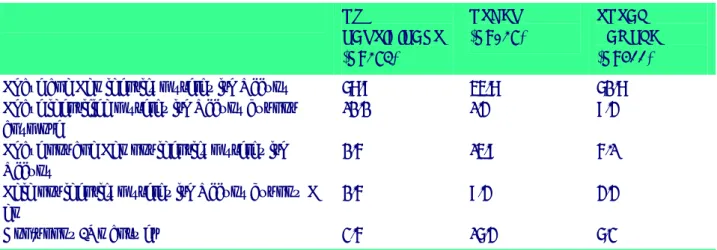
(12) Occupy Wall Street: The movement in its third anniversary. Daniel Blanche, Antonio Calleja-López, Mireia FernándezArdèvol & Arnau Monterde. 4. Results. The following structure of epigraphs mirrors that displayed in the paper on the 15M study (Monterde et al., 2017), and reflects the dimensions of interest in both surveys. We start with participation and degree of identification with OWS. We then focus on OWS participants by examining their previous political participation, the political and social issues that prompted them into participating, and the ways they participated in OWS. Subsequently, we identify the use of channels and electronic devices to access and spread information about OWS, as well as the use of social network sites during their participation in OWS. Next, we examine the emotions experienced by the respondents regarding OWS in its early days and in its form three years later. Next, we examine the perceived current status of OWS and its association with other political groups or processes. Then, we explore the perceived electoral effects of OWS as well as its association with electoral formations in the US. Finally, we focus on the perceived impact of OWS on ideas, behaviours, reputation and different aspects of society.. 4.1. The OWS movement and me. Starting with the proportion of respondents that participated in some way in OWS, table 2 shows that 74% did take part in one way or another, whereas 23% claimed not having participated, and 4% declared not knowing or did not answered the question. This amount of participation in the movement is comparable to that yielded in the 15M study (77%) (Monterde et al., 2016), which shows the relatively high appeal of the movement among respondents of the sample. In spite of a majority reporting having participated in OWS in some way, the amount of respondents that did not is significantly large, which may reflect a lack of interest in the movement or an opposite stance towards it. In the following sections, we will set comparisons between the distribution of OWS participants and “Others” (comprising self-reported non-participants and those who did not know or answer) across several dimensions of the survey (e.g., the use of information and communication technologies, the experience of emotions, the evolution of the movement, perceived electoral and social impacts), and we will further examine the nature and degree of involvement of the respondents that engaged with the protest movement. Table 2. Participation in OWS (N=522) PERCENTAGE Yes No Don’t know/No answer. 73.6 22.6 3.8. Note. Categories sorted in descending order (except for “don’t know/no answer”).. Working Papers is a research monograph series promoted by the Universitat Oberta de Catalunya. Working Papers (2017) ISSN 2462-7461 working-papers.uoc.edu. 12.
(13) Occupy Wall Street: The movement in its third anniversary. Daniel Blanche, Antonio Calleja-López, Mireia FernándezArdèvol & Arnau Monterde. In table 3, we can observe how the distribution of the degree of identification with the OWS movement behaves among self-reported OWS participants and Others. A first look signals the high adherence to the movement among OWS participants, and that this high identification has remained constant in time (79%). However, the high adherence also among Others is remarkable (59%), which suggests that it is neither a lack of interest in the movement nor holding contrary views against it that prevented these respondents from participating in OWS. When taking into account the total proportion of respondents identifying with OWS, which represents nearly three quarters of the sample, it is clear that the majority of the sample sympathizes with the movement. In other words, and due to the sampling design, the survey reached mostly supporters of the OWS movement. Where OWS participants and Others depart from each other relates to having identified with the movement at some point in time. Whereas the second majority of OWS participants regard having identified themselves with the movement initially but not anymore (12%), the third majority among Others (16%) regard not having identified themselves with the movement at any point in time (the second majority, 17%, reported not knowing or did not answer the question). Although not necessarily representing contrary opinions towards OWS, the relatively small proportion of 16% of Others represents the opposition group of the sample regarding OWS. In addition, chi-square tests showed that there is a strong and significant association between the degree of identification with OWS and whether respondents participated or not in OWS. Table 3. Degree of identification with Occupy Wall Street by participation in OWS* (%). I have and I do identify myself with Occupy I have identified myself with Occupy but not anymore I have not and I do not identify myself with Occupy I did not identify myself with Occupy but now I do Don’t know/No answer. OWS PARTICIPANTS (N=384). OTHERS (N=138). TOTAL SAMPLE (N=522). 78.9 12.2. 55.8 1.4. 72.8 9.4. 2.6. 15.9. 6.1. 2.6. 9.4. 4.4. 3.6. 17.4. 7.3. Note. Categories sorted in descending order according to OWS participants’ values (except for “don’t know/no answer”). Chi-square tests ran to check statistically significant associations. *p < 0.001.. Working Papers is a research monograph series promoted by the Universitat Oberta de Catalunya. Working Papers (2017) ISSN 2462-7461 working-papers.uoc.edu. 13.
(14) Occupy Wall Street: The movement in its third anniversary. Daniel Blanche, Antonio Calleja-López, Mireia FernándezArdèvol & Arnau Monterde. 4.2. Issues and political participation before OWS. Focusing particularly on OWS participants, a first step was to compare the extent to which their social participation changed after the emergence of the OWS movement. We do not intend to make any causal claims with these data, but only to observe potential changes in group behaviour between two points in time. Table 4 displays the engagement of OWS participants in several associations or groups both prior to OWS’s emergence in September 2011 and three years later, in September-October 2014. The overall trend of the data is that after the rise of OWS, the engagement in non-institutionalized political participation grew, contrary to the case of institutional politics which decreased. Participation in social movements, Internet related movements, and activist groups were, in that order, the highest prior to OWS; a ranking that remained three years after OWS’s emergence and that grew distant from involvement in other types of groups (all three of them increasing between 12 and 14 percentage points). Conversely, participation in political parties, unions, churches and NGOs saw a decrease in time among OWS participants, a decrease particularly pronounced in political parties (over 12 percentage points less) and slight in NGOs (nearly minus 2 points). This suggests a possible permeating influence of the experience of participating in OWS in their interests and views. Table 4. Participation of OWS participants before OWS’s emergence in September 2011 and in SeptemberOctober 2014 (%). Social movements Movements related to Internet and online activism Solidarity, activist groups, alliance groups Political parties NGOs, non-profits, associations Unions Churches, charities Others None Don’t know/No answer. BEFORE 15M (N=380). MAY 2014 (N=381). 56.1 50.0 46.6 35.8 35.3 21.6 17.6 16.1 10.5 1.6. 70.1 63.8 58.8 23.6 33.6 18.6 12.9 15.2 6.3 1.8. Note. *Non-exclusive categories.. In tables 5 and 6, OWS participants report the political groups, social movements, and issues, either national or international, which prompted them to participate in OWS. The case of Wikileaks, the international network Anonymous, and the wave of events known as the Arab Spring were reported, in that order, as the three most influential events for OWS participants. The wave of protests ignited by the 15M/Indignados social movement in Spain has been documented as influential for the emergence and organization of OWS (Castells, 2012), yet only 13% of OWS participants in this sample acknowledged it as an influential force.. Working Papers is a research monograph series promoted by the Universitat Oberta de Catalunya. Working Papers (2017) ISSN 2462-7461 working-papers.uoc.edu. 14.
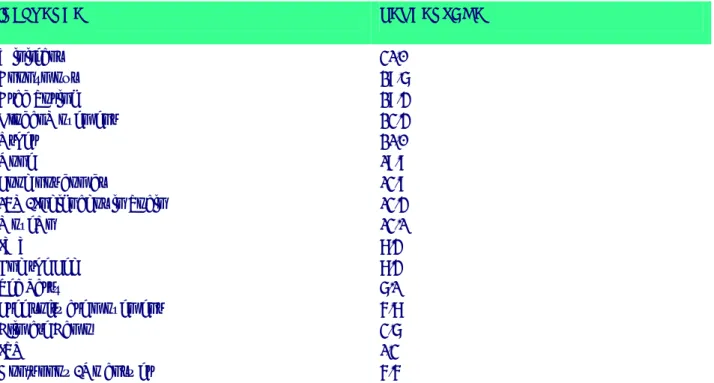
(15) Occupy Wall Street: The movement in its third anniversary. Daniel Blanche, Antonio Calleja-López, Mireia FernándezArdèvol & Arnau Monterde. Also, a notable 20% of OWS participants declared not being influenced by either movements or organizations. Regarding the issues that led individuals to participate in OWS, these were reported to a much higher extent compared to influential movements or organizations. Economic inequality was reported by 91% of OWS participants as a problem boosting their involvement, followed by an 83% reporting a lack of democracy, 80% citing the economic crisis, 79% the financial institutions bail out, and 77% reporting corruption. In sum, what seems to have boosted most participation in OWS in this sample revolves political power, the economy, and their interrelation. Table 5. Influences fostered participation in OWS (N=381) (%) INFLUENCES. PERCENTAGE. Wikileaks Anonymous Arab Spring Global Movement Other None Food not bombs 15M/Indignados in Spain MoveOn IWW End the Fed Tea Party Free software movement Climate Camp ISO Don’t know/No answer. 31.0 29.7 29.4 23.4 21.0 19.9 13.9 13.4 13.1 8.4 8.4 7.1 6.8 3.7 1.3 6.6. Note. Categories sorted in descending order (except for “don’t know/no answer”). Categories listed are non-exclusive. Column values do not add 100%.. Working Papers is a research monograph series promoted by the Universitat Oberta de Catalunya. Working Papers (2017) ISSN 2462-7461 working-papers.uoc.edu. 15.
(16) Occupy Wall Street: The movement in its third anniversary. Daniel Blanche, Antonio Calleja-López, Mireia FernándezArdèvol & Arnau Monterde. Table 6. Issues that fostered participation in OWS (N=380) (%) PROBLEMS. PERCENTAGE. Economic inequality Lack of democracy Economic crisis Financial institutions bail out Corruption Environmental crisis Social cuts Unemployment/Underemployment Student debt Housing Immigration and racism Other motives No particular motive Don’t know/No answer. 90.8 82.9 79.7 78.9 77.4 67.9 67.1 64.7 59.7 52.9 49.7 25.3 0.5 0.0. Note. Categories sorted in descending order (except for “don’t know/no answer”). Categories listed are non-exclusive. Column values do not add 100%.. Examining the actual activities or actions that OWS participants engaged in during their involvement, we can observe in table 7 that the most frequent ones occurred in an interchangeable manner between online and offline actions. The most typical form of participation was signing an online petition (80%), a relatively low intensity form of participation, then followed by participation in a demonstration (73%). Next was participation via online social networks (70%), followed by direct participation in an assembly (62%). Sending emails to politicians (59%) followed by an online/offline combination of participation via online social networks while being physically present at different actions (53%) were next among the most typical forms of participation in OWS. The relatively high degree of participation in active actions, such as attendance in demonstrations and assemblies (and to a lesser extent, engaging in community outreach and Town Hall meetings) suggests the high level of involvement of the sampled individuals who reported having participated in OWS. In addition, the list of forms of participation in OWS presented in the survey seems to be relatively exhaustive due to the relatively low proportion of OWS participants reporting having participated in the movement in another way (16%). Having examined the actual forms of participation in OWS, we now examine the use of technological devices, channels and platforms in relation to OWS in the following section.. Working Papers is a research monograph series promoted by the Universitat Oberta de Catalunya. Working Papers (2017) ISSN 2462-7461 working-papers.uoc.edu. 16.
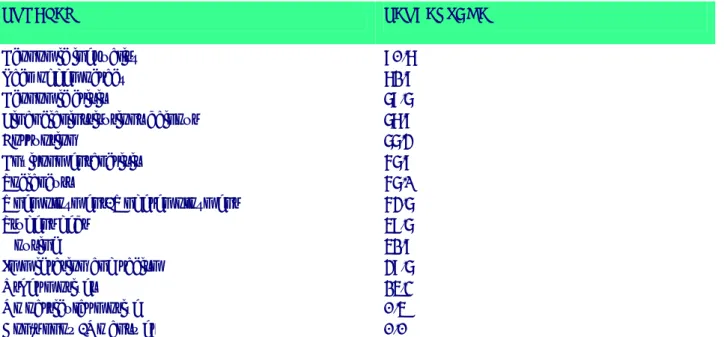
(17) Occupy Wall Street: The movement in its third anniversary. Daniel Blanche, Antonio Calleja-López, Mireia FernándezArdèvol & Arnau Monterde. Table 7. Activities engaged in during OWS participation (N=384) FORMS OF PARTICIPATION. PERCENTAGE. Signing an online petition In a demonstration (direct action, protest) Via online social networks In an assembly Emailing politicians In online social networks while attending events, camping ... Doing community outreach Making a poster Writing a post on a blog Participating in a cultural/artistic project or action Contributing to a crowdfunding Attending City Council or Town Hall meetings Recording video / streaming Participating in a flash mob Other Participating in a blockade Made a newsletter or newspaper Stopping an eviction Shutting down a bank, port ... Did not participate in any activity related to Occupy Don’t know/No answer. 79.7 73.4 70.3 62.0 58.9 52.6 37.8 37.5 36.7 29.7 28.1 26.3 21.6 16.1 15.6 15.4 12.5 9.1 8.3 0.5 0.5. Note. Categories listed are non-exclusive. Column values do not add 100%.. 4.3. Uses of ICTs. To start with, table 8 shows the distribution of the use of channels to get and/or spread information regarding OWS among OWS participants, Others, and the total sample. A first glance suggests that both OWS participants and Others made roughly the same use of social networking sites, television, and other channels in this regard. This is especially noticeable concerning social network sites (i.e., Facebook, Twitter, Google+, among a few), suggesting that both groups heavily accessed social network sites to get information about OWS (91% of OWS participants and 89% of Others). This becomes noteworthy in view of the significant difference between both groups regarding the use of digital media (82% of OWS participants and 62% of Others). So, on the one hand, both groups used the Internet to get information about OWS to a very similar extent (social network sites); and on the other, to a quite different extent (digital media). The use of word of mouth also shows to be largely different between both groups (78% of OWS participants, 54% of. Working Papers is a research monograph series promoted by the Universitat Oberta de Catalunya. Working Papers (2017) ISSN 2462-7461 working-papers.uoc.edu. 17.
(18) Occupy Wall Street: The movement in its third anniversary. Daniel Blanche, Antonio Calleja-López, Mireia FernándezArdèvol & Arnau Monterde. Others); and to a lesser extent, the use of print media (41% of OWS participants, 27% of Others) also shows to be significantly different. Lastly, the use of radio also seems to have been different between both groups, reported by a 22% of OWS participants and by a 14% of Others of the sample.. An additional question was asked to non-participants in OWS (here addressed as “Others”) on the use of social network sites to share information or opinions related to OWS. The result is that 79% of them reported doing so. Although the question does not describe if whether this group shared opinions in favour or against OWS, the high adherence to the movement shown in table 3 above gives hints that opinions were relatively more inclined towards the former. Table 8. Use of channels to inform oneself and/or spread information about OWS by participation in OWS (%). Social networking sites Digital media (including websites)*** Word of mouth*** Print media** Television Radio* Others None*** Don’t know/No answer. OWS PARTICIPANTS (N=384). OTHERS (N=138). TOTAL SAMPLE (N=522). 91.4 81.8 77.6 40.9 24.2 21.6 14.1 0.3 0.0. 89.1 62.3 53.6 26.8 23.2 13.8 10.9 4.3 0.0. 90.8 76.6 71.3 37.2 23.9 19.5 13.2 1.3 0.0. Note. Categories sorted in descending order according to OWS participants’ values. Column values do not add 100%. Chi-square tests ran to check statistically significant associations. *p < 0.05, **p < 0.01, ***p < 0.001.. Concerning the use of electronic devices to serve the same purposes, table 9 shows that there are significant differences between OWS participants and Others in the use of computers, either desktop (62% of OWS participants, 47% of Others) or laptop (79% of OWS participants, 69% of Others). Among these computers, the difference is larger in the case of the former. As for the rest of devices, there are no statistically significant differences between OWS participants and Others, as they use the same electronic devices to look for information about OWS to a very similar extent. The strongest difference between both groups lays on the non-usage of any electronic device, markedly higher for Others (6%) compared to OWS participants (1%).. Working Papers is a research monograph series promoted by the Universitat Oberta de Catalunya. Working Papers (2017) ISSN 2462-7461 working-papers.uoc.edu. 18.
(19) Occupy Wall Street: The movement in its third anniversary. Daniel Blanche, Antonio Calleja-López, Mireia FernándezArdèvol & Arnau Monterde. Table 9. Use of electronic devices to inform oneself and/or spread information about OWS by participation in OWS (%). Laptop* Computer desktop** Mobile phone Tablet Smart TV Other None*** Don’t know/No answer. OWS PARTICIPANTS (N=384). OTHERS (N=138). TOTAL SAMPLE (N=522). 78.6 62.0 61.7 22.9 2.6 2.3 0.8 1.8. 68.8 47.1 58.7 21.7 0.7 1.4 5.8 2.2. 76.1 58.0 60.9 22.6 2.1 2.1 2.1 1.9. Note. Categories sorted in descending order according to OWS participants’ values (except for “don’t know/no answer”). Column values do not add 100%. Chi-square tests ran to check statistically significant associations. *p < 0.05, **p < 0.01, ***p < 0.001.. We now focus on specific digital platforms or social network sites (SNS) used by OWS participants during their activities in the movement. As a reference point, nearly 70% of adult population in the US use at least one SNS, among which the most used are Facebook (68% of adults in the country), Instagram (28%), Pinterest (26%), LinkedIn (25%) and Twitter (21%) (Pew Research Center, 2017). In table 10 we observe that Facebook was by far the most widely used SNS among OWS participants, reported by a 91% of them. The following most used SNS or digital platforms are at quite a distance from Facebook, namely, the OccupyWallSt.org website (56%), websites in general (55%), Youtube (53%) and Twitter (49%). Next, there is a group of two SNS that were fairly used by OWS participants, namely, Ustream or Livestream (34%) and blogs in general (33%). From here on, there is a large list of other SNS or digital platforms that slowly decay in terms of usage which ends with WhatsApp (2%). In sum, the OWS participants in this sample used the most mainstream SNS in general (i.e., Facebook, Youtube, and Twitter), along with websites in general, and OccupyWallSt.org website in particular. Interesting to know also is whether these SNS were first used by OWS participants during their involvement in the movement. Not surprisingly, neither Facebook nor Youtube were first used by OWS participants who used Facebook and Youtube in OWS (8% and 4% respectively), yet Twitter was reported being used for the first time by 39% of OWS Twitter users. The specialized websites InterOccupy.net and OccupyWallSt.org were reported to be first used in this context to a large extent (70% and 69% respectively). However, the SNS reporting the highest first use during OWS was Bambuser, reported by 83% of OWS Bambuser users during their participation. Likewise, Mumble (64%) and Ustream or Livestream (62%) were also among the debuting SNS with highest usage during OWS participation. In this light, participation in OWS entailed an opportunity to adopt new SNS and digital platforms, wherein Ustream/Livestream and Twitter stand out also for being two relatively highly used SNS among all OWS participants.. Working Papers is a research monograph series promoted by the Universitat Oberta de Catalunya. Working Papers (2017) ISSN 2462-7461 working-papers.uoc.edu. 19.
(20) Occupy Wall Street: The movement in its third anniversary. Daniel Blanche, Antonio Calleja-López, Mireia FernándezArdèvol & Arnau Monterde. Table 10. Use and debut of social network sites (SNS) during OWS participation (N=383) (%). Facebook OccupyWallSt.org Websites Youtube Twitter Ustream, Livestream Blogs Google Docs or other online shared documents InterOccupy.net Mailing lists SMS Forums Skype, Google Talk, Google Voice Reddit Tumblr Google+ Chat/IRC Celly Loop Instagram Other Webinars Bambuser Pads Flickr Mumble WhatsApp None Don’t know/No answer. USE OF SNS. FIRST TIME USE OF SNS IN OWS. 90.6 55.9 55.1 53.3 48.8 33.9 32.9 25.3 23.8 21.7 19.8 17.8 17.0 15.4 12.8 11.5 10.2 5.7 5.7 5.0 5.0 4.7 4.4 3.9 3.7 1.8 0.5 0.5. 8.1 68.7 13.3 3.9 39.0 62.0 6.4 14.4 70.3 14.5 5.3 13.4 9.2 24.1 20.4 13.6 21.1 54.5 4.5 26.3 21.1 83.3 35.3 0.0 64.3 0.0 .. ... Note. .. = Data not available. SNS=Social network sites. Categories sorted in descending order according to use of SNS values (except for “don’t know/no answer”). The far right column represents the percentage of OWS participants who having used the corresponding social network site also reported having used it for the first time during their participation in OWS.. In a further question, OWS participants were asked about the frequency of use of such technologies after their participation in the movement (N=354). Results yield that most of them (57%) declared using these technologies with the same frequency as before their involvement in the movement, followed by a 23%. Working Papers is a research monograph series promoted by the Universitat Oberta de Catalunya. Working Papers (2017) ISSN 2462-7461 working-papers.uoc.edu. 20.
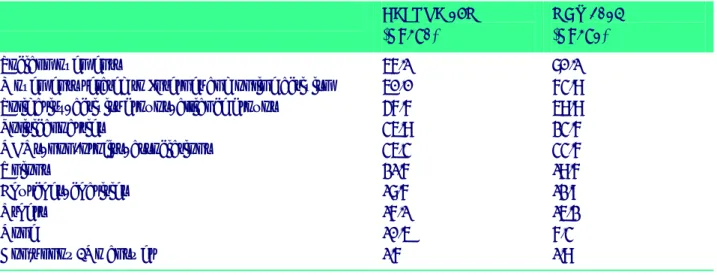
(21) Occupy Wall Street: The movement in its third anniversary. Daniel Blanche, Antonio Calleja-López, Mireia FernándezArdèvol & Arnau Monterde. declaring a higher use post-OWS, and a 14% declaring a lower use (7% of OWS participants did not answer the question). Therefore, in terms of influences in the more technological field, participation in OWS went hand-in-hand with the adoption of new digital platforms and SNS that were strongly related to media usage in OWS (e.g., InterOccupy.net, OccupyWallSt.org, Bambuser, Ustream or Livestream, Mumble, Twitter, Celly Loop). Although the experience of participating in OWS meant no difference regarding the frequency of SNS usage to a majority of them, SNS usage for nearly a quarter of OWS participants did increase (a section below analyses the impacts of OWS).. 4.4. Emotions related to OWS. To a great majority of the sample, the emergence of OWS meant a relevant emotional experience. Table 11 shows that 88% of the sample reported so. Although highly reported by both groups, OWS participants (94%) and Others (72%), the difference is significantly higher in the case of the former, distanced by 22 percentage points. Three years after the emergence of OWS (see table 12), it still remained as an emotionally relevant experience to most respondents (56%), yet decreasing considerably compared to the early days. The decline was especially noticeable among OWS participants (55%), whereas the decline was less pronounced among Others (59%), which is a somewhat remarkable figure in comparison to OWS participants. Table 11. Emotional experience of OWS to respondents in its early days by participation in OWS* (%). Yes No. OWS PARTICIPANTS (N=363). OTHERS (N=127). TOTAL SAMPLE (N=490). 93.7 6.3. 73.2 26.8. 88.4 11.6. Note. Categories sorted in descending order according to OWS participants’ values. Chi-square tests ran to check statistically significant associations. *p < 0.001.. Table 12. Emotional experience of OWS to respondents in its current form (Sept.-Oct. 2014) by participation in OWS (%). Yes No. OWS PARTICIPANTS (N=331). OTHERS (N=109). TOTAL SAMPLE (N=440). 55.3 44.7. 58.7 41.3. 56.1 43.9. Note. Categories sorted in descending order according to OWS participants’ values.. Working Papers is a research monograph series promoted by the Universitat Oberta de Catalunya. Working Papers (2017) ISSN 2462-7461 working-papers.uoc.edu. 21.
(22) Occupy Wall Street: The movement in its third anniversary. Daniel Blanche, Antonio Calleja-López, Mireia FernándezArdèvol & Arnau Monterde. Going into greater detail, the following two tables show the particular emotions felt by the respondents both points in time3. Regarding the emotions felt in the early days of OWS (see table 13), a first majority reported feeling hope (88%); a second majority, empowerment (72%); and a third majority, joy (52%). In all these three emotions, OWS participants reported feeling them significantly more compared to the Others. Outrage was also an emotion felt significantly more among OWS participants than Others (32% and 15% respectively), and to a lesser extent, nostalgia (11% versus 3%), frustration (42% versus 31%), fear (18% versus 9%), and rage (15% versus 7%). It is worth to note not only how an absolute majority of OWS participants reported feeling hope, empowerment and joy, but also that an absolute majority of Others reported feeling hope and empowerment as well. This gives further evidence about the sympathy felt towards OWS in this latter group. Table 13. Emotions felt regarding OWS at the time of the camps in 2011 by participation in OWS (%). Hope*** Empowerment*** Joy*** Frustration* Outrage (Indignation)*** Sadness Fear* Rage* Nostalgia** Disgust Other* Indifference Don’t know/No answer***. OWS PARTICIPANTS (N=383). OTHERS (N=136). TOTAL SAMPLE (N=519). 90.9 77.3 58.5 42.0 32.4 20.1 17.5 14.6 10.7 9.4 7.6 2.1 1.3. 79.4 56.6 33.1 30.9 14.7 14.0 8.8 7.4 2.9 8.1 1.5 4.4 7.4. 87.9 71.9 51.8 39.1 27.7 18.5 15.2 12.7 8.7 9.1 6.0 2.7 2.9. Note. Categories sorted in descending order according to OWS participants’ values. Chi-square tests ran to check statistically significant associations. *p < 0.05, **p < 0.01, ***p < 0.001.. Three years later (see table 14), hope and empowerment remained as the most frequent emotions felt in relation to OWS among all the respondents (60% and 43% respectively). However, two things to remark: (a) it decreased notably compared to OWS’ early days among both OWS participants and Others, and (b) the. 3 Originally, the survey included the emotion “Illusion” among the multiple choices available. However, we deemed the term was mistranslated from the emotion “Ilusión” in Spanish (meaning excitement). Therefore, we excluded this emotion for this paper.. Working Papers is a research monograph series promoted by the Universitat Oberta de Catalunya. Working Papers (2017) ISSN 2462-7461 working-papers.uoc.edu. 22.
(23) Occupy Wall Street: The movement in its third anniversary. Daniel Blanche, Antonio Calleja-López, Mireia FernándezArdèvol & Arnau Monterde. most frequently reported emotions among OWS participants and Others were hope and empowerment in the case of the former, and hope and frustration in the case of the latter (with empowerment in a close third position). It is striking how arguably negative emotions like frustration and nostalgia are reported by both groups, climbing up to third and fourth position respectively in the total sample. At the same time, joy was experienced much less in both groups compared to OWS’ early days. Nostalgia was also reported in a high degree, particularly among OWS participants. In all, three years after the emergence of OWS, both OWS participants and Others experienced a decrease in feelings of hope and empowerment and an increase in frustration, disappointment and nostalgia, although hope remained as the most reported emotion of all. Table 14. Emotions felt regarding OWS in the present time (Sept.-Oct- 2014) by participation in OWS (%). Hope Empowerment* Frustration Disappointment* Nostalgia*** Sadness Joy Outrage (Indignation)** Indifference Fear Other** Disgust Rage Don’t know/No answer. OWS PARTICIPANTS (N=380). OTHERS (N=138). TOTAL SAMPLE (N=518). 58.9 45.5 37.9 37.6 33.2 23.9 23.4 15.0 8.9 8.4 7.9 5.8 5.3 4.2. 60.9 34.1 35.5 26.1 11.6 18.1 18.8 5.1 13.0 7.2 1.4 5.1 2.2 5.1. 59.5 42.5 37.3 34.6 27.4 22.4 22.2 12.4 10.0 8.1 6.2 5.6 4.4 4.4. Note. Categories sorted in descending order according to OWS participants’ values. Chi-square tests ran to check statistically significant associations. *p < 0.05, **p < 0.01, ***p < 0.001.. Summing up this section, both OWS participants and Others experienced a similar pattern regarding their emotions towards OWS: in OWS’ early days, OWS participants felt significantly more the aforementioned positive emotions; whereas three years later, both groups felt more or less to a same extent the aforementioned positive and (arguably) negative emotions.. Working Papers is a research monograph series promoted by the Universitat Oberta de Catalunya. Working Papers (2017) ISSN 2462-7461 working-papers.uoc.edu. 23.
(24) Occupy Wall Street: The movement in its third anniversary. Daniel Blanche, Antonio Calleja-López, Mireia FernándezArdèvol & Arnau Monterde. 4.5. The evolution of OWS. In regards to how respondents perceived the evolution of the movement three years after its emergence, the general impression was that both OWS participants and Others think of OWS in terms of an enduring existence (see table 15). A majority of OWS participants and Others perceived that OWS had evolved into other events, actions, projects or processes (81% and 55% respectively), most notable in the case of the former. In addition, both groups regarded the state of OWS as still relevant, slightly more pronounced among Others (64%) but not significantly different from OWS participants (61%). Interestingly, a relatively large proportion of members of both groups, and at practically the same level, perceived that OWS had diluted over time (27% each group). Contrary to the general trend, a minority in each group believed that OWS was over the moment the encampments ended, which is to say, in OWS’ early days. In sum, most respondents in both groups perceived OWS as still being alive and relevant, that it had not perished or disappeared but rather transformed or evolved into other related forms. Table 15. Agreement with statements on the evolution of OWS by participation in OWS (%). Occupy has mutated into other events, actions, projects, or processes** Occupy is still relevant Occupy had a great impact at first but then disintegrated Occupy ended when the encampments did Don’t know/No answer*. OWS PARTICIPANTS (N=381). OTHERS (N=136). TOTAL SAMPLE (N=517). 81.1. 55.1. 74.3. 61.4 27.3. 64.0 27.2. 62.1 27.3. 7.1 1.0. 11.0 4.4. 8.1 1.9. Note. Categories sorted in descending order according to OWS participants’ values. Column values do not add 100%. Chi-square tests ran to check statistically significant associations. *p < 0.05, **p < 0.001.. So, into what had OWS transformed specifically over time? One possible answer lays on the groups or processes the respondents associate with OWS (see table 16). Most OWS participants and Others regarded Strike Debt, Occupy Sandy and the Encampments as associated acts of OWS. Conversely, OWS participants associated May Day General Strike and InterOccupy to OWS to a relatively higher extent (43% and 41% respectively), whereas Others associated them to a much lesser degree (13%). Another difference between both groups is the significantly higher extent to which OWS participants associated the aforementioned groups or processes (also valid for the case of Free University) compared to the Others.. Working Papers is a research monograph series promoted by the Universitat Oberta de Catalunya. Working Papers (2017) ISSN 2462-7461 working-papers.uoc.edu. 24.
(25) Occupy Wall Street: The movement in its third anniversary. Daniel Blanche, Antonio Calleja-López, Mireia FernándezArdèvol & Arnau Monterde. Table 16. Association of groups or processes with OWS by participation in OWS (%). Strike Debt** Occupy Sandy*** Encampments* May Day General Strike*** InterOccupy*** Neighbourhood Assemblies Free University* Immigrant and Worker Justice Research Justice Other None* Don’t know/No answer**. OWS PARTICIPANTS (N=380). OTHERS (N=135). TOTAL SAMPLE (N=515). 69.7 65.8 48.9 42.9 41.3 36.6 35.3 28.2 11.8 7.6 6.6 5.8. 57.0 39.3 36.3 13.3 13.3 28.9 24.4 25.2 14.1 4.4 13.3 13.3. 66.4 58.8 45.6 35.1 34.0 34.6 32.4 27.4 12.4 6.8 8.3 7.8. Note. Categories sorted in descending order according to OWS participants’ values (except for “don’t know/no answer”). Column values do not add 100%. Chi-square tests ran to check statistically significant associations. *p < 0.05, **p < 0.01, ***p < 0.001.. Now, if there were significant differences found in the proportion of OWS participants and Others associating OWS to the groups or processes listed, these differences grew bigger in terms of participation in nearly every one of them. In table 17 we can observe that although both groups reported not having participated in any of these related groups or processes (dramatically high among Others [80%]), OWS participants show to have participated in nearly all these events to a much higher degree compared to Others. Even Free University, the last event showing this difference, was reported higher among OWS participants (12%) compared to Others (1%). To this point, it becomes clearer that although the Others seemed to generally sympathize with OWS, what makes the greatest difference is that most OWS participants were also active participants in other groups, processes and social movements of the like of OWS, in the past and the present. In other words, it becomes clearer that the sampled OWS participants reflect being part of the core of the OWS movement.. Working Papers is a research monograph series promoted by the Universitat Oberta de Catalunya. Working Papers (2017) ISSN 2462-7461 working-papers.uoc.edu. 25.
(26) Occupy Wall Street: The movement in its third anniversary. Daniel Blanche, Antonio Calleja-López, Mireia FernándezArdèvol & Arnau Monterde. Table 17. Participation in groups or processes associated with OWS by participation in OWS (%). None*** May Day General Strike*** Strike Debt*** Encampments*** Neighbourhood Assemblies*** Occupy Sandy*** Immigrant and Worker Justice*** InterOccupy*** Free University*** Other Research Justice Don’t know/No answer. OWS PARTICIPANTS (N=382). OTHERS (N=138). TOTAL SAMPLE (N=520). 30.4 25.9 22.0 19.6 17.8 14.1 13.1 13.1 11.8 8.1 3.4 9.7. 79.7 0.7 2.2 1.4 2.2 0.0 2.2 0.7 1.4 4.3 1.4 7.2. 43.5 19.2 16.7 14.8 13.7 10.4 10.2 9.8 9.0 7.1 2.9 9.0. Note. Categories sorted in descending order according to OWS participants’ values (except for “don’t know/no answer”). Column values do not add 100%. Chi-square tests ran to check statistically significant associations. *p < 0.05, **p < 0.01, ***p < 0.001.. 4.6. OWS and institutional politics. In the field of institutional politics, we begin by examining the perceived effects of OWS on political elections. In table 18, we observe that most OWS participants and Others perceived an effect of OWS on political elections in the US, either at present or in the future. This perception was high even among Others (69%), although OWS participants perceived this significantly more (79%). Table 18. Perceived actual effects of OWS on political elections in the US by participation in OWS* (%) OWS PARTICIPANTS (N=299). OTHERS (N=102). TOTAL SAMPLE (N=401). 78.9. 68.6. 76.3. Note. Chi-square tests ran to check statistically significant associations. *p < 0.05, **p < 0.01.. Taking a specific case, both groups perceived to an even greater extent that OWS had an effect on the New York City mayoral election of 2013, which made Bill de Blasio the incumbent mayor (see table 19). Here, OWS participants believed so to a significantly greater extent (87%) compared to Others (73%), which shows that OWS is perceived as having real effects on society among the overall sample.. Working Papers is a research monograph series promoted by the Universitat Oberta de Catalunya. Working Papers (2017) ISSN 2462-7461 working-papers.uoc.edu. 26.
(27) Occupy Wall Street: The movement in its third anniversary. Daniel Blanche, Antonio Calleja-López, Mireia FernándezArdèvol & Arnau Monterde. Table 18. Perceived actual effects of OWS on the New York City mayoral election of Bill de Blasio** (%) OWS PARTICIPANTS (N=210). OTHERS (N=59). TOTAL SAMPLE (N=269). 87.1. 72.9. 84.0. Note. Chi-square tests ran to check statistically significant associations. *p < 0.05, **p < 0.01.. As for political parties (see table 20), most of OWS participants (48%) and Others (40%) related OWS to the Green Party, followed by Socialist Alternative (36% and 37% respectively), and Independents’ Party (32% and 28% respectively). A notable proportion in each group associated OWS with no party at all, which was somewhat more acknowledged among Others (30%) than among OWS participants (28%). Interestingly, OWS participants associated significantly more OWS to Ron Paul’s Party (11% versus 4%), whereas Others associated significantly more OWS to the Democratic Party (21% versus 11%). However, the overall impression is that most people in both groups associated OWS to left-wing parties or to no party at all, and that both groups associated OWS to different American parties to a similar extent. Table 20. Perceived association of electoral formations with OWS by participation in OWS (%). Green Party Socialist Alternative Independent No party Working Families Party Libertarian Party Democratic Party** Ron Paul's party* None* Other Republican Party Don’t know/No answer. OWS PARTICIPANTS (N=378). OTHERS (N=136). TOTAL SAMPLE (N=514). 48.4 35.7 31.7 27.8 21.7 12.7 10.8 10.3 9.3 8.2 0.5 12.7. 40.4 36.8 27.9 30.1 17.6 8.8 21.3 3.7 3.7 8.1 0.0 19.1. 46.3 36.0 30.7 28.4 20.6 11.7 13.6 8.6 7.8 8.2 0.4 14.4. Note. Categories sorted in descending order according to OWS participants’ values (except for “don’t know/no answer”). Column values do not add 100%. Chi-square tests ran to check statistically significant associations. *p < 0.05, **p < 0.01.. Working Papers is a research monograph series promoted by the Universitat Oberta de Catalunya. Working Papers (2017) ISSN 2462-7461 working-papers.uoc.edu. 27.
(28) Occupy Wall Street: The movement in its third anniversary. Daniel Blanche, Antonio Calleja-López, Mireia FernándezArdèvol & Arnau Monterde. Following on the previous idea, there seems to be a significant association between the reported political ideology of the respondents and whether they participated in OWS or otherwise. In table 21 we observe that most OWS participants and Others coincided in declaring themselves as socialists (26% of OWS participants and 29% of Others). It is also noteworthy that Others also defined themselves more as liberals (21%) and environmentalists (20%) compared to OWS participants, who identified themselves more with anarchism (20%), environmentalist (16%) and other ideologies (14%). In sum, OWS participants and Others have in common that both are mostly inclined to identify themselves with socialism and environmentalism, and depart regarding anarchism (higher among OWS participants) and liberalism (higher among Others). This gives further evidence that both groups are, with some differences, quite homogeneous regarding the issues presented in this survey. Table 21. Identification with political ideology by participation in OWS* (%). Socialism Anarchism Environmentalism Other Feminism Communism Conservatism Nationalism Liberalism. OWS PARTICIPANTS (N=362). OTHERS (N=129). TOTAL SAMPLE (N=491). 26.2 19.6 15.5 14.1 8.8 5.0 0.8 0.3 9.7. 28.7 11.6 20.2 6.2 6.2 3.1 2.3 0.8 20.9. 26.9 17.5 16.7 12.0 8.1 4.5 1.2 0.4 12.6. Note. Categories sorted in descending order according to OWS participants’ values. Chi-square tests ran to check statistically significant associations. *p < 0.01.. 4.7. OWS impacts. Further examination of the impacts of OWS revolves, firstly, the perceived effects of OWS in a variety of social issues. Table 22 shows that among both OWS participants and Others predominated the belief that OWS has impacted perceptions of people, namely, of capitalism and economic justice. The belief that OWS has changed the perception of capitalism was reported significantly more among OWS participants than among Others (70% and 60% respectively), and so were the practices of social movements (60% versus 50%), the way respondents understand politics (45% versus 34%), and the respondents’ vote intention (22% versus 13%). Yet, what marks the greatest difference between both groups is the respondents’ forms of political participation, declared by 53% of OWS participants and 31% of Others. This is noteworthy in view of, as we have seen above (see table 4), a majority of OWS participants that had experience participating in social. Working Papers is a research monograph series promoted by the Universitat Oberta de Catalunya. Working Papers (2017) ISSN 2462-7461 working-papers.uoc.edu. 28.
(29) Occupy Wall Street: The movement in its third anniversary. Daniel Blanche, Antonio Calleja-López, Mireia FernándezArdèvol & Arnau Monterde. movements before OWS. Perhaps OWS provided new ways to participate in social movements and to be politically involved (see table 6), as well as an opportunity to the introduction of new technologies used with political purposes (see table 9). In addition, in spite that Others did not report participating in OWS in any way, perhaps OWS provided the stimulus for nearly a third of them to engage in politics in a way that was different from their usual political participation repertoire. In sum, according to both groups, OWS seems to have affected mostly people’s perceptions of the economic system, brought awareness of their empowerment potential, and, to differing degrees, the political participation of the respondents themselves. Table 22. Perceived effects associated with OWS by participation in OWS (%). The perception of capitalism* The perception of or attention to economic justice The practices of social movements* My forms of political participation*** The ability of people to change things My way of understanding politics* The media agenda What I consider intolerable in a society The issues that interest me What I consider desirable in a society My vote intention* Other** Nothing Don’t know/No answer. OWS PARTICIPANTS (N=383). OTHERS (N=135). TOTAL SAMPLE (N=518). 69.5 62.9. 59.3 60.7. 66.8 62.4. 59.8 53.0 49.3 44.9 42.6 38.9 35.2 34.7 22.2 5.7 3.7 3.1. 49.6 31.1 47.4 34.1 35.6 38.5 32.6 33.3 13.3 0.0 6.7 3.7. 57.1 47.3 48.8 42.1 40.7 38.8 34.6 34.4 19.9 4.2 4.4 3.3. Note. Categories sorted in descending order according to OWS participants’ values. Column values do not add 100%. Chi-square tests ran to check statistically significant associations. *p < 0.05, **p < 0.01, ***p < 0.001.. Moving on to the perceived effect of OWS on several and diverse areas of society, table 23 shows that a majority of OWS participants and Others believed that OWS has influenced democracy and the economy the most. Housing was perceived by OWS participants to have been influenced by OWS to a large extent (51%), while this perception was reported much less among Others (31%). Arts and culture was another area where both groups diverge significantly (44% of OWS participants compared to 32% of Others). Another notable divergence between both groups regards the perception that OWS had no influence at all on any of the listed areas. A 12% of Others believed that OWS had no influence, while this figure represented only 4% of OWS participants. Although overall, this belief was the lowest among all the areas listed, it is still interesting to note that this perception is one of the things that make these two groups different.. Working Papers is a research monograph series promoted by the Universitat Oberta de Catalunya. Working Papers (2017) ISSN 2462-7461 working-papers.uoc.edu. 29.
(30) Occupy Wall Street: The movement in its third anniversary. Daniel Blanche, Antonio Calleja-López, Mireia FernándezArdèvol & Arnau Monterde. Table 23. Perceived influence of OWS on specific areas by participation in OWS (%). Democracy Economy Housing** Mass media Transparency Arts and culture* Education Health Other Nothing** Don’t know/No answer. OWS PARTICIPANTS (N=380). OTHERS (N=137). TOTAL SAMPLE (N=517). 55.0 52.6 50.5 49.2 48.9 44.2 37.6 27.4 8.2 3.7 11.3. 48.2 47.4 31.4 43.8 41.6 32.1 29.2 19.0 6.6 12.4 11.7. 53.2 51.3 45.5 47.8 47.0 41.0 35.4 25.1 7.7 6.0 11.4. Note. Categories sorted in descending order according to OWS participants’ values (except for “don’t know/no answer”). Column values do not add 100%. Chi-square tests ran to check statistically significant associations. *p < 0.05, **p < 0.001.. In terms of the image and reputation of different institutions, table 24 shows that there is a significant association between OWS participants and Others, and whether OWS exerted a positive or a negative effect on most of these institutions and actors. Chi-square tests suggest that this association is particularly strong regarding public institutions (congress, the police, among a few) and the role of the Internet in organizing protests. OWS participants reported that OWS affected negatively the reputation of powerful public institutions and positively the role of the Internet to organize protest to a very high extent (92% and 94%). While Others, although predominantly reporting both actors the same way, also perceived that OWS had not affected them at all (18% in the case of the former, and 13% the latter). This pattern repeated in the case of financial institutions and banks, political parties, and the media (in order of increasing predominance of “no effects” among Others); institutions which hold a significant, although less strong, association with being whether a declared OWS participant or part of the Others group. Conversely, although the majority of both groups perceived a positive effect of OWS on social movements and labour unions, no statistical association was found.. Working Papers is a research monograph series promoted by the Universitat Oberta de Catalunya. Working Papers (2017) ISSN 2462-7461 working-papers.uoc.edu. 30.
(31) Occupy Wall Street: The movement in its third anniversary. Daniel Blanche, Antonio Calleja-López, Mireia FernándezArdèvol & Arnau Monterde. Table 24. "I think OWS has affected the reputation of..." by participation in OWS (%). Public institutions (Congress, police, ...)** Negatively Not at all Positively. OWS PARTICIPANTS (N=366) 92.3 5.5 2.2. OTHERS (N=122) 80.3 18.0 1.6. TOTAL SAMPLE (N=488) 89.3 8.6 2.0. Political parties* Negatively Not at all Positively Unions Negatively Not at all Positively Social movements Negatively Not at all Positively Media* Negatively Not at all Positively Financial institutions and banks * Negatively Not at all Positively. (N=355) 87.0 11.0 2.0 (N=314) 6.4 33.1 60.5 (N=314) 5.1 5.4 89.5 (N=344) 72.7 21.5 5.8 (N=372) 93.0 5.9 1.1. (N=114) 73.7 22.8 3.5 (N=97) 11.3 37.1 51.5 (N=97) 5.6 11.2 83.2 (N=114) 57.0 35.1 7.9 (N=122) 82.0 16.4 1.6. (N=469) 83.8 13.9 2.3 (N=411) 7.5 34.1 58.4 (N=411) 5.2 6.9 87.9 (N=458) 68.8 24.9 6.3 (N=494) 90.3 8.5 1.2. The Internet to organize protests** Negatively Not at all Positively. (N=361) 1.4 5.0 93.6. (N=128) 7.0 13.3 79.7. (N=489) 2.9 7.2 90.0. Note. Categories sorted in descending order according to OWS participants’ values. Chi-square tests ran to check statistically significant associations. *p < 0.01, **p < 0.001.. Following on the effects of OWS, we examine the perceived contribution of OWS to a social and political change (see table 25). We observe that there is a significant association between the varying degrees of such perception, and whether respondents participated in OWS or otherwise. Most OWS participants responded affirmatively to this question, while most of Others, although also responding affirmatively, introduced a nuanced response. Most Others reported a partially affirmative response to the question, which was also the. Working Papers is a research monograph series promoted by the Universitat Oberta de Catalunya. Working Papers (2017) ISSN 2462-7461 working-papers.uoc.edu. 31.
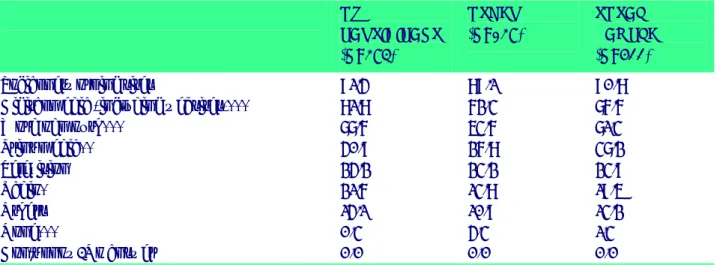
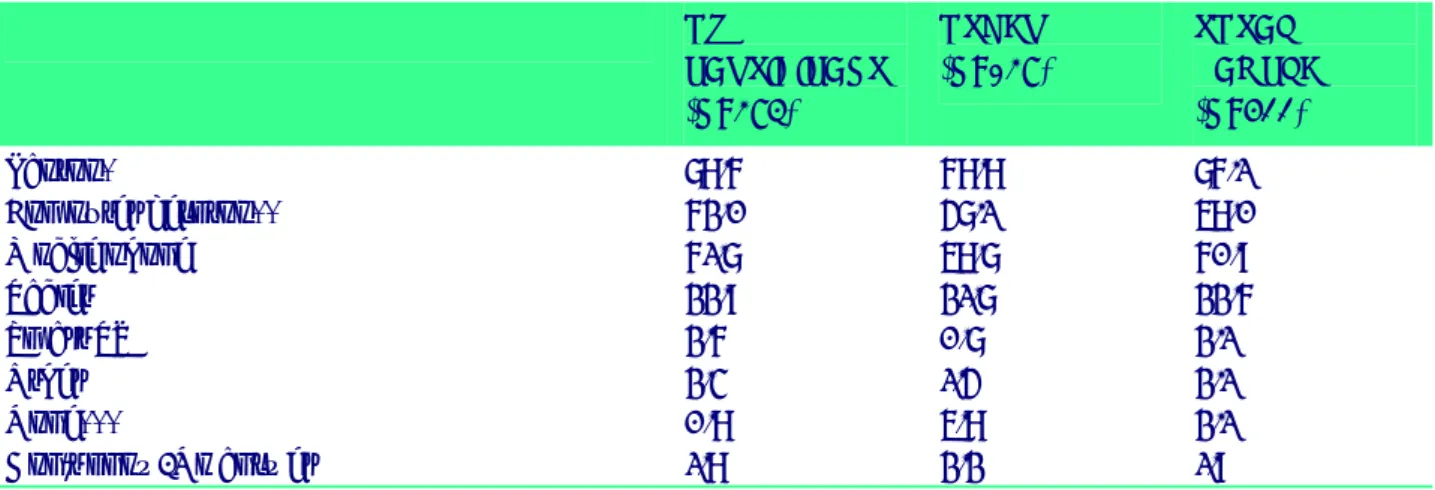
(32) Occupy Wall Street: The movement in its third anniversary. Daniel Blanche, Antonio Calleja-López, Mireia FernándezArdèvol & Arnau Monterde. second largest perception among OWS participants. In sum, although both groups largely perceived that OWS, in effect, contributes to a social and political change, some Others rejected this perception straightforwardly (8%). Table 25. Contribution of Occupy Wall Street to a social and political change by participation in OWS* (%). Yes Yes, in part Yes, but only in the long term No. OWS PARTICIPANTS (N=379). OTHERS (N=134). TOTAL SAMPLE (N=513). 48.8 37.2 11.1 2.9. 37.3 47.0 7.5 8.2. 45.8 39.8 10.1 4.3. Note. Categories sorted in descending order according to OWS participants’ values. Chi-square tests ran to check statistically significant associations. *p < 0.01.. Lastly, after examining the respondents’ perceptions of the possible effects OWS might have exerted over different things, we now present the respondents’ behaviours after the emergence of OWS. An overview of table 26 suggests that what differentiates most OWS participants and Others in this respect is that once OWS emerged, the former engaged in activities that required a relatively higher level of involvement. OWS participants reported having attended protests for issues not affecting them directly (51%), more community events (32%), and City Council or Town Hall meetings (20%); while these behaviours were engaged by no more than 12% of Others. Conversely, most of Others engaged in activities involving a lower level of intensity (e.g., participation in local, state, or federal election [31%], shopping local or at farmer’s market [38%]) or rather relatively passive behaviours (e.g., looking for information or news at different geographical levels). Relatively subtle changes also emerged among OWS participants, who after the emergence of OWS reported feeling greater sympathy with struggles abroad (55%); a change which was also the predominant one among Others (49%). Up to this point, it seems clear that declared OWS participants represent highly and historically engaged people in social movements, protest activities, and activism, activities that demand a high level of involvement; whereas Others seems to represent sympathizers and adherents of OWS, yet usually less involved in non-institutionalized forms of political participation and medium to low intensity level political behaviours.. Working Papers is a research monograph series promoted by the Universitat Oberta de Catalunya. Working Papers (2017) ISSN 2462-7461 working-papers.uoc.edu. 32.
Figure

+7



Documento similar
