Accent, Intelligibility and Discrimination of Non-native
speakers of English
Student: Núria Tarroja Barrio Supervisor: Dr Enric Llurda Giménez
Academic Year: 2014/2015 B. A. in English Studies
University of Lleida
CONTENT
Abstract ... 5
Introduction ... 7
Chapter 1. Accent and Intelligibility ... 9
1. Accent ... 9
1.1 Accent and its relevance in society ... 9
1.2 What influences accent acceptance ... 9
1.3 The importance of accent in the UK and in the USA between the 18th and the 20th century ... 10
1.4 Being accented: viewpoints ... 12
1.5 Current attitude towards an accented speech ... 12
2. Intelligibility ... 13
2.1 Nativeness and intelligibility principles ... 13
2.2 Factors affecting intelligibility ... 14
Chapter 2. Native and non-native English speaking teachers ... 17
1. Native and non-native speakers ... 17
2. Nativeness and language teaching ... 18
2.1 NNESTS ... 18
2.2 NESTS ... 19
2.3 Learning setting and student’s opinion about their English teacher ... 19
3. Idealization, discrimination, obstacles and advantages ... 21
3.1 NESTS: idealization ... 21
3.2 NNESTS: discrimination ... 23
3.3 NNESTS: facing obstacles ... 23
3.4 NNESTS: advantages ... 25
Chapter 3. Accent and discrimination ... 27
1. Employment discrimination ... 28
2. Real cases of discrimination ... 29
Chapter 4. Research. Students’ perceptions concerning English teachers at public and private school ... 31
1. Method ... 31
2. Results ... 32
3. Discussion ... 34
Conclusions ... 37
References ... 39
Appendix ... 47
Appendix 1 ... 49
Appendix 2 ... 50
ABSTRACT
Accent is the language tool that informs about the degree of resemblance among speaker and listener (Bresnahan et al, 2002), and due to its salience people tend to make, often, baseless assumptions (Derwing & Munro, 2015). Hence, of particular interest is discrimination based on accent because everybody has an accent and yet, discrimination persists in our society. This Final Degree Project focuses on accent and discrimination significance, focusing also on the field of native and non-native English speaking teachers (NESTs and NNESTs), and it is structured as follows: Chapters 1, 2 and 3 deal with accent and intelligibility, NESTs and NNESTs; and accent and discrimination. Chapter 4 presents a study, the purpose of which was to prove if the type of school has an influence over students’ viewpoints regarding the topics mentioned in the former chapters. The sample comprises 118 primary school students from public (74) and private (44) schools, aged between 8 and 12. The pupils answered a ten-question survey. The results support the idea that the school has an impact on students’ perception concerning English teachers, accent and discrimination.
RESUM
L’accent ens diu com de diferent o d’igual a nosaltres és un parlant (Bresnahan et al., 2002) i, donada la seva rellevància, sovint es tendeix a fer suposicions infundades (Derwing & Munro, 2015). Per tant, la discriminació en base a l’accent és un tema d’interès perquè tothom tenim un accent, i tanmateix la discriminació continua present en la nostra societat. Aquest Treball de Final de Grau se centra en la importància de l’accent i de la discriminació, i també en l’àmbit dels professors d’anglès natius i no natius. El treball està dividit en quatre parts. Els Capítols 1, 2 i 3 inclouen: accent i intel·ligibilitat; professors d’anglès natius i no natius; i accent i discriminació. El Capítol 4 presenta un estudi amb 118 estudiants de primària, d’entre 8 i 12 anys, de l’escola pública (74) i concertada (44), amb l’objectiu de comprovar si el tipus d’escola condiciona el punt de vista sobre els temes tractats en els capítols anteriors. Els estudiants van haver de respondre un qüestionari de deu preguntes. Els resultats revelen que la percepció dels estudiants respecte el tipus de professor d’anglès, l’accent i la discriminació varia segons el tipus d’escola.
Keywords: accent, discrimination, intelligibility, nativeness, native English speaking teacher (NEST), non-native English speaking teacher (NNEST).
INTRODUCTION
Nowadays, English is present in all stages of education, since primary to tertiary education, and it is required in several jobs, as well. Therefore, the growing interest in learning English is increasing the need for qualified English teachers in order to cater for the learners’ needs. Nevertheless, there is a widespread popular opinion that the most suitable teachers have to be native English speakers. This is connected to Phillipson's (1992) “Native Speaker Fallacy”, which assumes that native English speaking teachers (NESTs) are better language teachers due to their native condition.
Consequently, the issue concerning NESTs and NNESTs has been extensively studied, proving that being a native does not guarantee being a successful teacher per se.
Moreover, since decades ago, several studies conducted in this field support the idea that both type of teachers have positive and negative aspects, and therefore the ideal way to teach English is by combining both NESTs and NNESTs (Medgyes, 1994, 2001).
Nonetheless, one of the aspects that often tip the balance favouring NESTs is accent.
Due to its prominence, people tend to associate values and make assumptions, and reach conclusions concerning that person (Derwing & Munro, 2015; Lev-Ari & Keysar, 2010;
Mugglestone, 1997), which vary depending on the accent and on the interlocutor as well (Dalton & Seidlhofer, 1994). Then, several scholars (Munro & Derwing, 1995; Munro et al., 2006; Scales et al., 2006) strove to prove that having an accented English speech is not troublesome as long as intelligibility is not reduced. Notwithstanding this evidence, there are numerous cases of discrimination among NNESTs (Figueiredo, 2011; Mahboob, 2013; Moussu & Llurda, 2008; Trofimovich & Isaacs, 2012).
The present Final Degree Project is divided into four chapters. Chapter 1 is concerned with accent and intelligibility. The first section of this chapter reviews the relevance of accent in society and the attitude that people have towards accented speech since the 18th century until today, and what makes an accent acceptable. The second section focuses on the factors that influence intelligibility, and on the nativeness and intelligibility principles. Chapter 2 refers to both NESTs and NNESTs and it includes these topics: NESTs and their idealization; NNESTs’ discrimination; the barriers they have to overcome and their advantages; and the influence of the learning setting on the learners’ opinion about their English language teachers. Chapter 3 relates to
discrimination based on accent, and in it some real cases of accent discrimination at work are highlighted.
Although considerable research has been devoted to accent, NESTs and NNESTs, and discrimination, rather less attention has been paid to observe the impact of the school (public or private) on students’ opinion concerning their English language teachers. In Chapter 4, I have carried out a study with primary school children, aged between 8 and 12, from private and public schools. The goal of the study is to determine if the type of school affects students’ perceptions and beliefs regarding their English teachers.
Finally, the outcomes obtained show significant evidences among schools meaning that the school might be a conditioning factor that should be considered.
CHAPTER 1. ACCENT AND INTELLIGIBILITY 1. ACCENT
1.1 Accent and its relevance in society
According to the “Oxford Dictionary”, accent is defined as “a way of pronouncing the words of a language that show which country, area or social class a person comes from”. People can detect a deviant accent in few seconds and its salience also marks the speaker’s communicative intentions. Likewise physical appearance, hearing a different accent may arise pejorative connotations that contribute to prejudge its speakers (Carlson & McHenry, 2006; Gluszek & Dovidio, 2010). In short, accent is about the difference between your and the other’s speech and the impact that it has on both, speaker and listener (Derwing & Munro, 2009). Thus, it has a great importance in the society because it indicates whether someone is different (Bresnahan et al., 2002;
Derwing & Munro, 2015; Moyer, 2013), a fact that has been creating imaginary boundaries among people since centuries ago.
1.2 What influences accent acceptance
There are several variables which influence accent. For example, the age of onset –in some cases (Piller, 2002)– , length of residence in the L2-country, gender, instruction, motivation or the amount of L1 use (Coyle, 2014; Piske, MacKay, & Flege, 2001).
Another element is fluency, because being fluent the speaker can adapt himself or herself to any conversation (Flege, 1988; Moyer, 2013; Scales et al., 2006). But one of the most important aspects that affects accent is familiarity (Bresnahan et al., 2002) which, at the same time, affects comprehensibility defined as the effort the listener has to make to understand the sentence (Derwing & Munro, 2009; Munro et al., 2006).
Comprehensibility is also affected by vocabulary errors, phonology, non-native hesitation patterns (Munro & Derwing, 1995), lexical richness or grammatical accuracy (Trofimovich & Isaacs, 2012).
Going back to accent familiarity, in Dalton-Puffer et al. (1997, quoted in Scales et al., 2006) it is shown those who are more familiar with General American (GA) prefer this accent. Thus, familiarity influences decisions. Major et al. (2002, quoted in Munro et al., 2006), discuss a study in which Spanish speakers showed a higher degree of
intelligibility when they listened English speakers with Spanish accent, even though it was small advantage compared to the other participants. Ballard (2013) focused on accented teachers and comprehensibility and she concluded that NESs received better punctuation, but solely 57% could identify those NESs correctly. Furthermore, student’s familiarity with teacher’s accent influenced the degree of acceptability and comprehensibility of the teacher. The students judged their accent, but they eventually acknowledged that they understood the person.
Therefore, maybe accented speakers are judged too strictly because they might be slightly difficult to understand, since the degree of acceptance varies depending on the interlocutors’ opinion and on their background experience concerning accent (Dalton &
Seidlhofer, 1994; Derwing & Munro, 2009; Munro et al., 2006). In addition to that, it may be due to the “Vampire effect” (Derwing, 2015), which means that the person focuses his or her attention on the speaker’s accent rather than on the message.
1.3 The importance of accent in the UK and in the USA between the 18th and the 20th century
Research concerning accent in the UK reveals that in the 17th century, after “The Great Vowel Shift”, those accent traits deviant from what was regarded as the standard form were used to represent and to parody lower social classes. Although the 18th century is considered the starting point of the English standardization in the UK and in the American colonies as well (Moyer, 2013), before the late 18th century, in the UK it was not a shame to speak with a non-standard accent. However, that view changed toward the end of the century. In the 19th century, language and identity were connected, and the most salient aspects of a person were: the physical appearance and their way of speak (Mugglestone, 1997).
Mugglestone (1997: 1) quotes from “Talking and Debating” (1856) that “a proper accent gives importance to what you say, engages the respectful attention of your hearer, and is your passport to new circles of acquaintance”. Hence, a specific accent could become a barrier to prosper in life. For instance, Mugglestone (1997) quotes some examples of non-standard accent consequences: dropping the /h/ was considered a
“social suicide” (p. 4); George Bernard Shaw said “the mispronunciation of certain
social position of the offender” (p. 2). Thus, accent was a status marker, and the preferred one was the spoken by the London elite (Moyer, 2013).
There was the desire to create a standard pronunciation that suppressed all traces of regional accents. It was called Received Pronunciation (RP) and it was the speech form spoken by the upper class which included 3-5% of the population (Cook, 2012; Jenkins, 2002). In the 1850s, some popular journals encouraged the lower and the middle classes to improve their status by learning how to speak properly. Then, it can be assumed that many people invested time and money in changing their accent because it was considered the tool to prosper in life but, despite the fact that RP might be learnable, it has been proved to be insufficient to improve social status. Otherwise, why did not the entire country adopt RP? On the one hand, some people do not want to sound like the ruling classes. On the other hand, the zeal for “being RP” is almost unreachable, but a possible explanation for that might be the following one: a person cannot remove his or her cultural background and origins and therefore, there will always be traces of you in this attempt to be an RP speaker. At the beginning of the 20th century, the emergence of the media, and more precisely the BBC task as educator, contributed to the expansion of RP (Moyer, 2013; Mugglestone, 1997).
In parallel in the USA, in the 19th century there was the need to create a standard American English. People were aware of that RP would not work due to the quantity of languages present in the country. For instance, a large amount of the north-eastern population spoke German. Moreover, there was the need to differentiate themselves from the British and to create an American identity. In the 20th century, the monolingual ideology was widespread, and consequently the stigmatization of the rest of the languages. Likewise the BBC did in the 1920s, the NBC tried to encourage the population to adopt GA to avoid miscommunication problems. However, the attempt to homogenize accent was not as successful as in the UK, but discrimination cases regarding this issue are present in the American society.
Finally, RP and GA gained in prestige, and they became the models for teaching English as a second language (Moyer, 2013). Thus, was the myth of the “ideal speaker”
created. Nonetheless, it should be borne in mind that languages and their accents are not stable. All languages are constantly evolving and are influenced by other dialects or languages, and these change every generation, too. Nonetheless, as seen before, accent
is regarded as a lifestyle, and it is still carrying a large amount of ideological elements and negative stereotypes, which are developed in the following sections. Finally, while today English students are encouraged to learn RP or GA, regional accents are now gaining ground over these standard English forms (Jenkins, 2002).
1.4 Being accented: viewpoints
The opinion held concerning foreign accent when learning a foreign language has varied through the years. To start with, in the 1920s the lack of “accent correctness” was regarded as abnormal or as a defective speech, and it prevented people from prospering in life. It was not until 1949 when Abercrombie (quoted in Derwing & Munro, 2015) remarked that the important point was to be intelligible, an idea later on supported by other scholars (Moyer, 2013; Mugglestone, 1997). Nevertheless, from the 1960s until the 1980s the importance of teaching pronunciation decreased dramatically: the teaching tasks were more pragmatic and the teaching methods were oriented towards a more communicative situation. Approaching the last decade of the 20th century, the interest on accent increased again, but the importance was placed on intelligibility (Morley, 1991).
1.5 Current attitude towards an accented speech
Bresnahan et al., (2002) affirm that the listener’s attitude is going to be more positive if the accented speaker is intelligible. Nonetheless, NES speech is often more positively evaluated than NNES (Kelly & Santana-Williamson, 2002 quoted in Moussu & Llurda, 2008). Even though it has been proved that and accented speech can often be perfectly understood (Munro et al., 2006), in Rounds (1987, quoted in Bresnahan et al., 2002) we observe that it is important to check the degree of NNESTs’ intelligibility to avoid the prejudices related to foreign a accent, because an accented speech may reduce intelligibility in some specific cases. For instance, Rubin and Smith (1990, quoted in Bresnahan et al., 2002) point out that in a study carried on in the USA many students do not hesitate to skip classes taught by a NNES. Conversely, a newest study shows that due to the students’ lower expectations in front of foreign teachers, when they find their discourse intelligible, their attitude changes into a more positive one. Then, a higher degree of intelligibility is essential to elicit a more positive attitude.
2. INTELLIGIBILITY
Taking into account that the main goal of NNES is to be able communicate successfully not only with NES but also with other NNES with different backgrounds (House, 2012;
Jenkins, 1998; Seidlhofer, 2003), then acquiring a native-like accent remains a secondary goal for second language learners. According to Cook (2012: 2) ”most L2 communication is between fellow non-native speakers” and that ”the primary target for much language teaching may be using the L2 effectively to other L2 users, and communicating with native speakers is a secondary target”.
With respect to the intelligibility concept, it refers to the overall listener’s degree of understanding of an utterance (Bresnahan et al., 2002; Derwing & Munro, 2009; Munro
& Derwing, 1995; Munro et al., 2006). Although considerable research is being devoted to this issue, there is not a total agreement regarding the factors affecting intelligibility (Munro & Derwing, 1995).
2.1 Nativeness and intelligibility principles
Current studies emphasize the importance of intelligibility among English speakers, no matter if they are native speakers (NSs) or non-native speakers (NNSs), as opposed to those for whom accent was and is the central point. Besides, it has been proved that an accented speech does not reduce intelligibility (Munro & Derwing, 1995; Scales et al., 2006; Trofimovich & Isaacs, 2012). Therefore, there are two different principles that should be considered: the intelligibility principle and the nativeness principle (Levis, 2005). The intelligibility principle is the current and dominant viewpoint. The main objective is to be understandable in order to communicate successfully, because being accented does not mean being unintelligible. In addition, the instruction focuses on teaching helpful linguistic features.
Conversely, the nativeness principle is based on the idea that learners need to reach a native-like pronunciation, and in consequence any sign of the L1 must be eradicated. It was the dominant viewpoint before 1960s, and this belief has lead to accent discrimination. For example, the creation of the “accent reduction” industry is one of its consequences (Levis, 2005; Trofimovich & Isaacs, 2012) because many people would
like to speak like a NS (Scales et al., 2006). In some cases, though, trying to adopt a NS pronunciation diminishes intelligibility (Jenkins, 2002).
There are several studies that corroborate the acceptance of the intelligibility principle in front of the nativeness one, but many people are still taking that the nativeness principle as their model. In an experiment conducted by Scales et al. (2006), the majority would like to have a native accent, and the rest place intelligibility as their goal. It is important to notice that, not everybody who wanted to speak like a native could correctly identify a native accent. Eventually, the students acknowledged the fact that it would be better to have a teacher who is easy to understand, despite his or her accent. In another study (Thomson & Derwing, 2014 quoted in Derwing & Munro, 2015) the results were similar: the majority of learners believed in the nativeness principle, others in the intelligibility principle and there was a minority who followed both.
As far as NS identification is concerned, a study carried on by Kelch and Santana- Williamson (2002, quoted in Moussu & Llurda, 2008) pointed out the difficulty that NNESs had when trying to identify a native English accent. As it is shown, only 45% of the students could identify correctly the NESTs, and they qualified them more positively than the NNESTs. Finally, Munro and Derwing (1995) people rated sentences as heavily or moderately accented but they could transcribe them without any problem, because accent did not interfere with intelligibility and comprehensibility.
2.2 Factors affecting intelligibility
As mentioned above, English is the Lingua Franca (LF) employed to communicate among speakers with different L1s. Since the main goal is to communicate properly and not to reach a native-like accent, it is not surprising that some scholars suggest that English as an International Language (EIL) should replace RP and GA. Therefore, an important point is to increase intelligibility among English speakers. There are three main features whose influence over intelligibility is quite remarkable: segmentals, suprasegmentals and accent familiarity.
Segmentals are the sounds, consonants and vowels, which belong to the English language (Jenkins, 1998; Lippi-Green, 1997). Currently, the importance is placed on intelligibility rather than on accent. Therefore, in many English lessons pronunciation teaching remains in a secondary place (Piske et al., 2001). Moreover, the factors that influence comprehensibility and intelligibility are not clear, and language teachers do not have concrete guidelines to teach pronunciation (Munro & Derwing, 1995). In addition to that, this lack of instruction might be because some NNESTs are not trained (Derwing & Munro, 2009).
Jenkins (1998, 2002) has proposed the Lingua Franca Core (LFC) to harmonize pronunciation in order to keep intelligibility among English speakers. The author includes in the LFC some relevant aspects of RP and GA because these are the most common varieties taught as a second or foreign language. Nevertheless, Levis (2005) argues that in English as a Foreign Language (EFL) classes in which students share the same L1, their pronunciation is going to be heavily influenced by the L1, as Jenkins (2002) points out as well. On the contrary, Jenkins (2002) remarks that when speakers from different linguistic backgrounds meet, they try to adjust their pronunciation by avoiding L1 transfer. It appears that this unified pronunciation among English speakers is not going to be easy to achieve, but pronunciation lessons should not be left aside.
Conversely to Jenkins, Dauer (2005) criticizes her LFC by arguing that it emphasizes segmentals over suprasegmentals, and she adds that suprasegmentals interfere with intelligibility by influencing the degree of the speakers’ fluency. Suprasegmentals comprise linguistic elements such as speech rate, rhythm, word and nuclear stress and intonation. Regarding rhythm, it might not be considered as a key tool because it may not reduce intelligibility; it would be relevant solely when a NNES would like to sound like a NES (Jenkins, 1998). With respect to speech rate, a study conducted by Matsuura et al. (2014), concludes that its modification does not change the listeners’
comprehensibility.
Therefore, I will focus only on stress, because it is basic to convey meaning. Word stress misallocation reduces intelligibility in both groups, NESs and NNESs. By way of example, “if the misstressed item foLLOWED occurs toward the beginning of an utterance, it might lead the listener to construct a mistaken meaning representation around the notions of load or flowed” (Field, 2005, p. 418). In addition to that, almost
90% of the English words place the stress on the first syllable. Hence, it can be assumed that it marks the beginning of a new word, and therefore a wrong lexical stress can be problematic when it comes to locate and to understand the words in an utterance (Cutler
& Carter, 1987 quoted in Field, 2005).
Nuclear stress is also important because, in English, the most meaningful words within a sentence are stressed in order to make them preeminent (Jenkins, 1998), for instance:
“I went to the park yesterday” emphasis the day when that person was in the park, whereas “I went to the park yesterday” indicates that the most meaningful bit of information is the actual place where that person went.
As mentioned elsewhere the degree of accent familiarity influences the listener’s opinion (Derwing & Munro, 2015) and it increases intelligibility as well. Concerning the students, they should bear in mind that their English might be different compared to other English learners (Friedrich & Matsuda, 2012) because it may sound differently (Moyer, 2013). Therefore, the learners should be exposed to a wider range of Englishes and the teaching materials should incorporate different English variants and accents (Friedrich & Matsuda, 2012; Levis, 2005; Matsuura et al., 2014).
Finally, a conversation is bidirectional and because of that, the role of the listener is very important. According to (Davies, 1991), is the NES’ group who assumes, mostly, that they are intelligible per se, and that situation is even more present in those people who are not used to interact with NNESs. Derwing and Munro (2015) and Jenkins (2002) argue that the NESs interlocutors will need to adjust themselves to the non- native English accent for a successful communication, and they could interact better with the NNESs by undergoing a training process.
CHAPTER 2. NATIVE AND NON-NATIVE ENGLISH SPEAKING TEACHERS 1. NATIVE AND NON-NATIVE SPEAKERS
In general, a NES can be defined as the person “who learned a language in a natural setting as first or sole language from childhood” (Kachru & Nelson, 1996 quoted in Kamhi-Stein, 2005, p. 73). Conversely, a NNES might be the person who has acquired this language by undergoing a learning process after childhood. Nonetheless, these concepts require a deeper analysis since many people may not be adequately classified in this simplistic manner.
I would like to start this analysis by explaining Kachru’s theory of the three “Concentric Circles”. The “Inner Circle” comprises the countries where English is the L1. In the
“Outer Circle” there are included the countries that were former colonies from English speaking countries, and in which English is integrated as part of their culture and it is often used as their L2 for intranational purposes. Lastly, the “Expanding Circle”
embraces all the nations where English is taught as a foreign language. In order to picture the situation clearly: there are about 375 million people whose L2 is English, and around 750 million for whom English is the foreign language (FL). Hence, it is obvious that the NNESs outnumber the NESs (Braine, 2010, 2012; Medgyes, 1994;
Widdowson, 1994). Despite this evidence, the native speakers continue being the idealized model, and people mirror them in order to reach their goals (Davies, 2012) and NNESs tend to rely on NESs’ norms as well (Medgyes, 1994).
Some scholars, though, consider that these concepts solely serve to separate even more the speakers (Amin, 2001 and Kaplan, 1999 quoted in Kamhi-Stein, 2005), since it is hardly likely for a NNES to be regarded as NES (Medgyes, 2001). By way of example, NESs are able to speak Standard English fluently and spontaneously, and some may provide a good model for RP, although it is a minority who speaks it. They identify themselves with a language community (Cook, 2012), they have linguistic intuition, or they are able to write creatively (Davies, 2012). Nevertheless, it is true that there are several NNES whose command of English is almost native-like and Moussu and Llurda (2008) argue that some non-natives can pass for native speakers and vice versa (Piller, 2002), but it is up to them whether they want to sound like a native or not. In addition to that, an experiment conducted in Israel by Inbar (2001, quoted in Kamhi-Stein, 2005)
with English as a Foreign Language (EFL) teachers concludes that having started to learn English between 0-6 years is a factor that allows them to say that they are NESs.
In order to avoid this separation, several terms were created to include all speakers.
Medgyes (1994) discusses some of those, for instance: “proficient user” (Paikeday, 1985), “expert speaker” (Rampton, 1990) or “English-using speech fellowships”
(Kachru, 1985). Nevertheless, it must also be argued this division among NES and NNES does exist for practical reasons. As Braine (2010) remarks, the term NNS is no longer pejorative. L2 users are not afraid of calling themselves NNSs, even though this carries an implicit acceptance of the separation of both groups (Moussu & Llurda, 2008).
2. NATIVENESS AND LANGUAGE TEACHING
With respect to English teachers, Kamhi-Stein (2005) highlights some pervasive assumptions about being a NEST which arose from the “Commonwealth Conference on the Teaching of English as a Second Language” of 1961: it is often taken for granted that they are better learning models; they are able to use idiomatic expressions correctly;
they speak fluently; they have better knowledge about the culture; and their intuition is an asset to solve possible linguistic difficulties. However, the same author remarks that these characteristics can also be achieved by NNESTs after having undergone a training process.
2.1 NNESTs
Being a NNEST has its advantages. To begin with, NNESTs establish more realistic learning goals. Because of the past experience as learners and their better understanding of the education system, they can teach learning strategies and they can use the student’s L1. Possibly, they had an appropriate training process. Moreover, NNESTs have a higher degree of empathy and language awareness, and NNESTs can foresee and prevent possible language difficulties due to their past experience. Finally, their grammar explanations are more accurate, they focus on form and they can be as seen as successful models to be followed (Braine, 2010; Cook, 2005, 2012; Davies, 2012;
Llurda, 2015; Medgyes, 1994; Moussu & Llurda, 2008; Widdowson, 1994). In addition to that, a study conducted by Mahboob (2003, 2004, quoted in Moussu & Llurda
(2008), concluded that NNESTs followed a stricter methodology, they apparently work harder and their capability to answer questions is higher. On the other hand, the same study reveals the limitations of the NNESTs, in particular: not enough familiarity with the target language’s culture, and poorer oral skills.
With respect to NNESTs’ perceptions about themselves, a study conducted by Medgyes (1994) reveals the main aspects they need to improve: vocabulary, oral fluency and pronunciation, which –according to Medgyes– ought to approach the native norm in order to be acceptable. However, as mentioned in the first chapter, current research (Levis, 2005) establishes the need to approach pronunciation teaching with the goal of intelligibility, rather than nativeness, and –as proved by Scales et al. (2006)– English learners prefer a teacher who is easier to understand, rather than one with a native accent (Braine, 2010). Finally, there are NNESTs who feel more comfortable when teaching grammar, writing and reading skills.
2.2 NESTs
As far as NESTs are concerned, learners appreciate their cultural knowledge, their oral skills, their vocabulary and pronunciation, and teacher’s spontaneity and less dependence on textbooks (Lasagabaster & Sierra, 2005; Llurda, 2015; Modiano, 2005).
Furthermore, Widdowson (1994) states that NESTs are able to define goals because of their awareness of the language that has to be used in a specific context. Conversely, the drawback regarding NESTs is that even beginners and expert teachers are unable of predicting which English features would be difficult to reach by the students, whereas NNESTs of the same L1 are more likely to foresee students’ performance. Also, different studies have found that NESs’ degree of empathy is lower, their teaching methodology and grammar knowledge were criticized by their students, as well as their difficulties when answering questions (Moussu & Llurda, 2008).
2.3 Learning setting and student’s opinion about their English teacher
Having mentioned the pros and cons of each teaching group, as well as their strengths and weaknesses, this part focuses on the student’s perceptions about their instructors taking into consideration the working place: a public or a private school, or language school.
A study carried on by Rahimi and Nabilou (2010) concerning private and public schools in Iran argued that private school English teachers were more efficient, and their teaching quality was better in aspects such as methodology or classroom dynamics, than those from the public school. Moreover, teachers and parents blame these differences on students’ situation, school organization or teaching materials because these are not very oriented towards communication. In this case, the teachers are fully qualified and solely differ in their interpersonal skills when teaching English. Regarding tertiary education, in Japan, Kikuchi (2009) remarks the affinity between private and public universities as far as what demotivates students during the English language learning process.
Likewise the Iranian context (Rahimi & Nabilou, 2010), Japanese students reject the teaching method because it does not allow them to communicate effectively.
Furthermore, the Japanese students complain about their teachers’ bad pronunciation who, at the same time, try correct the learners. In the Greek context, Scholfield and Gitsaki (1996) aimed at proving whether there are differences among what they called Private Institute of Foreign Languages (PIFLs) –private language schools– and Government Schools (GSs) –or public schools–, with a sample of 11 to 15-year-old students. The differences between both groups were not very significant, only the fact that the PIFL classrooms were smaller and stricter, and the students had a greater exposure to English. Notice that none of the three studies mentioned above make any explicit reference to the teachers’ country of origin.
Prodromou (1992) conducted a study with 300 Greek English students from the British Council (BC) and from other private language schools. Half of the sample thinks that the teacher should have some knowledge of the students’ L1, basically for the beginners. The BC students agree with the idea that language teachers should be at least bilingual and bicultural, it may be because they had problems with their NESTs when they had to give complicated explanations or vocabulary. Moreover, concerning cultural awareness: middle and advanced students think that teachers should be familiar with the local culture. About the English variety that they should be taught: private language schools students prefer American English, while those from the BC focus on British English. Finally, only 62% would like to speak like a native because of several reasons:
some native accents are not very intelligible; they feel they are invading the natives’
cultural space; because the myth of the native speakers is gone; or those that attend the
Then, the learning setting might exert an influence on students’ opinion concerning their instructor. Nevertheless, in some cases these differences are more related to the teaching method rather than to their nativeness and type of school. It is also highlighted that, even though some had a NES instructor, not all students follow the native-speaker goal.
However, a good pronunciation model always increases the student’s opinion about their language instructors in both learning settings.
3. IDEALIZATION, DISCRIMINATION, OBSTACLES AND ADVANTAGES Notwithstanding the problems each type of teacher has, it has been proved that students can learn English from both NESTs and NNESTs. Hence, what seems to matter the most in teacher’ efficacy is their expertise rather than his or her place of origin (Medgyes, 2001). For instance, in Wu and Ke (2009) we notice how cultural differences may influence language teaching results because some NESTs ended up being frustrated due to the students’ passivity and lack of confidence when facing the native speakers.
As a result, it would be perfect if the schools could incorporate both NESTs and NNESTs to complement each other and provide learners with a good learning model (Medgyes, 1994).
3.1 NESTs: idealization
There are several examples that highlight the degree of idealization of NESTs. In Taiwan (Wu & Ke, 2009), the majority of the students prefer a NESTs. According to the outcomes, the amount of Taiwanese students who preferred a NEST believed that they were going to learn more by being taught by a NEST, because their English was supposed to be authentic. Besides, foreign teachers employ Standard English with a standard accent, and therefore it seems they might be able to communicate more effectively with their students. Finally, another idealized feature attributed to the NEST, which is not relevant for English teaching, is that they should have good humour since they are supposed to be more amiable than the local teachers.
As previously mentioned, the influence of the “Native Speaker Fallacy” (Phillipson, 1992) appears to be more pervasive in Asian societies than in the Mediterranean area. In all contexts, however, there are non-native teachers who contribute to perpetuate this status of inferiority due to their wish to be like a native, rather than aspiring to
communicate and to use the language effectively (Medgyes, 2001). Consequently, some of them encourage learners to pursue the native speaker goal (Cook, 2012), and such a belief constitutes an obstacle for the improvement of NNESTs’ status and prestige.
With respect to Spain, teachers from primary, secondary and tertiary education have different viewpoints concerning NESTs (Llurda, 2013). Also, less proficient teachers appear to more highly support NESTs’ superiority (Moussu & Llurda, 2008). Llurda and Huguet (2003) show secondary teachers regard themselves as more skilled than primary school teachers, and that the latter ones are more influenced by the “Native Speaker Fallacy”. Besides, many secondary NNESTs thought it is advantageous to be a non-native speaker.
Yet, it can be argued that –at an academic level– the discussion about who is the most suitable teacher is over. For example, as Braine (2010) highlights: since the last decade the president of Teachers of English to Speakers of Other Languages (TESOL) is a NNES, and the editor of TESOL Quarterly as well. Nevertheless, Pérez Cañado (2009) supports the idea of speaking real English to emulate the NESs. By way of an example, if somebody who speaks American English asks you “How are you?” and your answer is “I’m very well, thank you” instead of “I’m good thanks”, “you will only draw attention to the fact that you do not pragmatically master the English language, whereas, in the second case, you will be approximating the actual conventions of native English speakers” (p. 4). Language constantly evolves, and words that exist today may not be remembered in the next decade, or others may become obsolete. This fact solely increases the NNESTs awareness of how narrowed is their English knowledge is (Medgyes, 1994) even if they are proficient users.
Certainly, having our vocabulary updated will help us to express better and to communicate properly. In my view, following Cañado’s (2009) suggestion, NNESTs would have to learn how to answer “How are you?” in all the countries in which English is the L1, since their English is not the same. I imagine the example is too extreme, but from that it cannot be concluded that a NNES is not following the rules established if s/he uses his or her own English rather than American English. Speakers of the same language do not have to use the same expressions. Why do NNESs have to approach to specific NESs conventions when English is the LF, and it is spoken mainly
3.2 NNESTs: discrimination
Although the majority of learners do not show preference for NESTs, discrimination against NNESTs does still exist in the profession (Clark & Paran, 2007). Braine, points out what Phillipson (1992) labelled as the “Native Speaker Fallacy”: “the belief that
“the ideal English teacher of English is a native speaker” (2010: 3). Further, unfortunately for NNESTs, they have been regarded as less proficient in terms of language knowledge and teaching skills. The NESTs have been considered as the models that have to be followed to reach a good command of the language. Therefore, it is not strange that NESTs are reckoned to be the ones that embody Standard English and they are seen as trustworthy models. Consequently, NNESs are supposed to mimic NESTs in terms of vocabulary, culture, or idioms and grammar (Wu & Ke, 2009).
However, the degree of acceptance of the NNESTs depend on the country, for example Asian students appear to be reluctant to take English lessons with NNESTs, whereas in the Mediterranean area it is quite the opposite (Braine, 2010; Llurda, 2015).
Widdowson (1994) says that for the NESs English is their property, it is a way to express themselves, it is part of their identity, and therefore they have to custody it. But, does a language have a rightful owner when it is spoken worldwide? Languages are constantly evolving because people and cultures have to communicate and to express themselves. There is the need to adapt the language to each situation but on the other hand, it should be maintained as stable as possible. Standard English (GA or RP) is the reference for learners which somehow forces non-natives to follow it and to depend on the native English speakers’ rules (Kamhi-Stein, 2005; Medgyes, 2001). Hence, it is not surprising that NNESTs are regarded as secondary actors and less proficient users (Braine, 2012).
3.3 NNESTs: facing obstacles
Despite the fact that not everybody feels the need to speak like a native (Moyer, 2013;
Prodromou, 1992), the higher status of NESTs and lack of appreciation for the value of NNESTs gives them a complex of inferiority in front of NESTSs. Three factors that contribute to perpetuate this feeling are chosen:
1. Discrimination based on accent. This point is further developed below but we may just add that it happens because people take for granted that the native speaker is the authentic English speaker, and therefore the ideal model that has to be followed.
2. Teaching methods and materials. Although, there is a growing number of voices claiming that they should be adequate to the local context and to the students’
needs (Llurda, 2015), they are mostly designed by native speakers and are often based on the NS model, and do not reflect the idea that English is an international language. Prodromou (1992) highlights that the traditional teaching methods do not engage the students because they are ethnocentric and they basically refer to a foreign culture. Teachers should not impose students a pattern of behaviour that is not theirs. Instead, they should encourage students to express themselves in the target language (Widdowson, 1994). Unfortunately, in some cases, students are forced to imitate patterns of the L2 culture, rather than being taught how to express themselves in English (Robinson, 1985 quoted in Prodromou, 1992). This is what Wu and Ke (2009) remark about the obsolete teaching behaviour in Taiwan: those methods were oriented towards grammar- translation, exam preparation and the central figure was the teacher. As a result, the students could not communicate properly when they travelled abroad.
Therefore, the teaching method should be designed to cater for the students’
needs and it ought to be adapted to their reality in order to be engaging (Widdowson, 1994), meaning that the NEST is no longer the central pillar.
Hence, a higher degree of exposure to other Englishes will be beneficial for the students because they will become familiar with them and with different linguistic realities, as well (Friedrich & Matsuda, 2012; Levis, 2005; Matsuura et al., 2014; Moussu & Llurda, 2008; Prodromou, 1992).
3. Working environment. NNESTs’ language deficiencies are increased if their working environment is less favourable. These might depend on the country or on the level in which they are teaching and the beliefs that learners hold, but ideally they should teach at all levels. By way of example, Wu and Ke (2009) claim to avoid the separation between local and NES teachers, and put them on equal levels, therefore learners can obtain better results. In my view, many English learners, even those whose learning goal is the NES, might become
more tolerant when facing NNESTs if they have both types of teachers in the same subject. In addition, for those NNESTs who have a lower self-image, their feeling of inferiority might be increased if they become obsessed with their weaknesses (Llurda, 2013; Medgyes, 1994; Moussu & Llurda, 2008; Reves &
Medgyes, 1994), if they compare themselves with NESs in general (Clark &
Paran, 2007).
3.4 NNESTs: advantages
Having seen the obstacles that NNESTs have to overcome to fulfil their goal, they can take advantage of the large amount of strengths they have. Below, five of them are shown:
1. English as a Lingua Franca (ELF) or English as an International Language (EIL). Currently, the priority is to encourage effective communication among speakers of different L1s, rather than speaking like a NSs. ELF emphasizes that there is no need to become native-like (Cook, 2012) because it “allows individuals competent in the language rights of access and participation”
(Modiano, 2005, p. 30). In the same line, EIL is defined as “an international community in which all participants have an equal claim to membership”
(Jenkins, 2002, p. 85). Similarly, both ELF and EIL aim at including the greatest number of English users.
2. Standard English. According to Davies (2012), the knowledge about the standard language is advantageous for the NNESs’, in contrast to NESs, because their training process has been based on this language variety, either GA or RP.
3. NNESTs proficiency level. Being a NS of a given language does not mean being proficient in that L1. Language proficiency depends on different factors. First, language proficiency takes into account the person’s familiarity with the world that surrounds her or him, and the ability to implement language strategies depending on the situation. Second, there is communicative proficiency or the ability to use a language (Braine, 2010; Llurda, 2000). NNESTs can reach a huge degree of proficiency after having undergone a training process. For instance, spending time abroad has proved to be beneficial for NNESTs because they increase their vocabulary, they speak fluently and they communicate more
appropriately. Moreover, they gain in self-esteem, they realize the importance of being NNSs and the importance of EIL (Llurda, 2013; Moussu & Llurda, 2008).
4. Multicultural teacher. Medgyes (1992, quoted in Moussu & Llurda, 2008, p.
322) says that “the ideal NNS teacher is the one who has achieved near-native proficiency in English”. As mentioned above, many researchers share this idea, and English students would rather prefer a teacher with knowledge of their L1 and culture as well.
5. Code-switching (CS). Being able to use the students’ L1 for practical reasons is an asset (Prodromou, 1992). Nonetheless, some people argue that CS reduces the amount of exposure of students to the L2 and, therefore, English should be the unique language in class (Clark & Paran, 2007). As Cook (2005) and Macaro (2005) highlight, code-switching from the L2 to the L1 is advantageous:
first, it allows the teacher to explain some grammatical aspects more effectively;
second, it is manner to clarify explanations faster; third, CS is useful to convey the meaning of the L2.
CHAPTER 3. ACCENT AND DISCRIMINATION
An accented speech may sometimes be helpful because it indicates that the speaker does not belong to the local community and therefore, listeners tend to accommodate in order to facilitate communication (Thomson, 2012). However, accented speech may also contribute to create negative attitudes and prejudice towards speakers (Carlson &
McHenry, 2006; Derwing & Munro, 2009; Gluszek & Dovidio, 2010), even unintentionally because many people are not aware of being prejudiced in front of foreign accents (Munro, 2003; Munro et al., 2006).
This is known as accent stereotyping and it might lead to discrimination acts against specific individuals, which can be foreigners or not (Munro, 2003). For instance, Asian accented speakers are regarded as highly competitive and technologically skilled, whereas in the Canadian context, Portuguese or Italian accented people a supposed to have a lower-status job (Carlson & McHenry, 2006). Moreover, in the USA, an RP accent is regarded as very conservative (Moyer, 2013). In addition to that, although we might think that some accents are more comprehensible than others, in fact, we unconsciously associate these difficulties to some of them and therefore, we think that there are accents more intelligible than others (Nguyen, 1993).
The mass media and the use of accent to convey stereotypes (Derwing & Munro, 2015;
Lippi-Green, 1997; Munro et al., 2006) are helping to spread out this belief. Concerning children, films also portray a stereotyped vision concerning accented characters. Lippi- Green (1997) concludes that after analysing 371 Disney characters, the majority of the characters with negative motivations are portrayed with an English foreign accent. The importance of Disney lies in the fact that it is one of the most popular film industries known worldwide. Hence, children of all backgrounds are susceptible to watch these movies, with the consequences that it implies concerning accent stereotyping.
If we focus on adults, for example in two well-known American series such as “The Simpsons” and “Family Guy”, the spectators from all over the world see how NNE accents are ridiculed. Concerning “The Simpsons”, there is Apu who has an Indian- accented English and who is not quite fluent in some situations (Moyer, 2013). With respect to “Family Guy” these accent stereotypes are even more exaggerated. In videos available on YouTube –in their original English version and in the Spanish one–, such
as “Peter trabaja de Camarera”1, “Family Guy: Speaking Italian”2, “Qué difícil es dar un número de móvil”3 or “Family Guy: Stereotypes”4 we notice several parodies concerning accented English: we see Black English and Spanish, Italian, Asian, and Arabic accented English. But they not only laugh at their accent, the authors also mock their behaviour and that contribute to accent stereotyping as well. Even when “Family Guy” is dubbed into Spanish, the spectators notice that non-Standard Spanish is the mocked accent. With regard to NNES-accented speech, in an experiment conducted by Lev-Ari and Keysar (2010) concerning the impact on accented speech on the message credibility, they concluded that listeners consider less credible the statements produced by the NNESs, rather than finding them more difficult to understand.
Therefore, it seems logic to conclude that, if from childhood people have been taught that accent stereotyping is something normal, later that person may be prone prejudice and catalogue people depending on their accents because of the inputs received at a very early age.
1. EMPLOYMENT DISCRIMINATION
Having mentioned accent stereotyping in a general way, I am going to focus on teachers and the drawbacks for NNESTs’ employability. Despite the fact that in 1991 TESOL denounced the discriminatory employment practices based on the “native speaker criterion”, such practices are still happening (Clark & Paran, 2007).
Although important institutions such as TESOL have rejected the fact of hiring people solely because they are NESs, a large amount of employers follow this practice. Some reasons to employ NESTs in English language schools are because they upgrade the business, they are an asset for public relations, and because it is what costumers are supposed to want (Clark & Paran, 2007; Llurda, 2015; Medgyes, 2001; Moussu &
Llurda, 2008), even though both NESTs and NNESTs can be equally good models.
As Clark and Paran (2007: 411) state: “the importance attributed to the NES criterion was then shown to correlate negatively with the number of NNESs employed”. A study carried on by these authors concluded that in the UK 72.3% of the employers find the
1 https://www.youtube.com/watch?v=XVAbSeOMphY
2 https://www.youtube.com/watch?v=9JhuOicPFZY
fact of hiring NESs important. Hence, the “native speaker criterion” prevents qualified NNESTs from having access to that job, even if they are better qualified (Clark &
Paran, 2007). In the same line, Mahboob (2003, 2004 quoted in Moussu & Llurda, 2008) shows that of the 122 administrators who responded his questionnaire, 59.8%
considered the NES to be an important criterion when hiring ESL teachers. In an experiment conducted by Mahboob (2013), in which job advertisements from East Asia and Middle East were analysed, 77% considered education as a necessary requirement.
Further, only 13% did not include any nationality requirement, but 49% specified the teacher’s country of origin, mostly from the “Inner Circle”. Lastly, to make things worse, Braine (2012) points out the case of fully qualified NNESTs who obtained their qualifications in the West and cannot find a job in their homeland, and see how unqualified NESs obtain their jobs because of the “native speaker criterion”.
2. REAL CASES OF DISCRIMINATION
I have argued so far that although the “native speaker criterion” should not prevail over others, in some situation it is the prevailing one. Next, I will present three examples of job discrimination that I have found in the literature. These examples illustrate the impact of accented speech in discrimination against individuals.
The first case concerns a Polish substitute teacher in British Columbia (Canada) called Mirek Gajecki, who was accused of not speaking English. The court saw evidence of discrimination. He had to be compensated for damages, and he eventually could go back to his job (Derwing & Munro, 2015; Munro et al., 2006).
The second case is placed in Arizona (the USA), a state in which only English teachers whose accent in not very noticeable are employed by the public school system. They connect accent with English proficiency and this clearly favours the NESTs. The reason given is that if the teacher is accented the learners will not reach a native-like accent (Ballard, 2013). Figueiredo (2011) and Trofimovich and Isaacs (2012) report a discrimination case in Arizona that is not related to language teaching, but with ideology. The teacher, a Mexican immigrant, had to face this situation in which accent almost costs her the job.
The third case concerns a NES professor of Spanish from the University of Pennsylvania, who has a Castilian accent. According to that teacher, her contract was not renewed for ideological reasons, since her Spanish accent reminded her boss, who comes from Bolivia, of the colonial times (Ramírez, 2011). She is currently fighting for readmission and a compensation for the damages received (Associated Press, 2011).
Lippi-Green (1997) remarks that accent discrimination is as important as racial or gender discrimination: it is another a way to cut a person’s rights. Accent has been used as a discrimination tool under the excuse that it could lead to communication misunderstandings, among others. As a result, many NNESs join “accent reduction”
programs, although any scientific evidence supports them. Furthermore, accent can be modified, but it does not mean that intelligibility and comprehensibility are improved (Derwing & Munro, 2009). Unfortunately for those who enrol the “accent reduction”
programs, they are not going to reach their goal because there will always be something that prevents them from being considered a NES (Munro et al., 2006). Lippi-Green (1997) recommends adding a new phonology to the previous phonologic inventory, rather than reducing or eliminating a given accent because everybody, including L1 English speakers, has an accent. Finally, acceptance or rejection of an accented speech greatly depends on the listener’s attitude and willingness to accommodate to a different accent (Munro, 2003), and on the stereotypes the listener holds about a given accent.
CHAPTER 4. RESEARCH. STUDENTS’ PERCEPTIONS CONCERNING ENGLISH TEACHERS AT PUBLIC AND PRIVATE SCHOOL
Although considerable research has been devoted the field of accent, discrimination and native and non-native English teachers, I would like to focus on these elements taking into account English language learners from private and public schools, which is an environment that, as indicated above, does not seem to influence the student’s opinion about their English language teachers.
This study is going to focus on the perceptions the learners have concerning accent and pronunciation, on their preference concerning NESTs or NNESTs; also, if the NES is their learning model and if they acknowledge the importance to have a teacher who speaks their own language. Finally, the survey focuses on whether they like English and if they are worried if they do not reach an acceptable English level. Additionally, this investigation will also try to find out if there are any differences between private and public schools.
1. METHOD 1.1 Participants
In order to conduct this study 118 subjects were chosen. The sample is divided into two groups: 44 students of one private and 74 of two public schools, with a mean age of 9’9 and 9’5 years respectively. The private school and one of the public ones are in the Lleida urban environment, whereas the other public school is in a nearby village. The majority of them speak Catalan or Spanish as their mother tongue/s, whereas the rest (32.2%) have other languages, to be more precise: 44.6% of public school students, and 11.6% in the private school are L1 speakers of languages other than Catalan or Spanish.
They are learning English as a L2 in primary school, and as a compulsory subject. The socio-economic background concerning both schools is not taken into account, but the main difference between two types of school is the different proportion of children born in immigrant families. Almost every student started learning English at school before the age of seven, and each school has their own instructors, books and teaching methods.
1.2 Instruments and procedure
The tool employed was a survey (See Appendix 1), which the students completed in their regular classrooms. The questions were written in Catalan so they could better understand them. The survey consisted of 10 “Likert scale” questions, freely inspired by those used in previous similar studies (Benke & Medgyes, 2005; Lasagabaster & Sierra, 2005; Prodromou, 1992; Wu & Ke, 2009). The students had to answer them according to their level of agreement or disagreement: 1 = totally disagree; 2 = disagree; 3 = no idea; 4 = agree; and 5 = totally agree. The sample needed between 15 and 25 minutes to fill the questionnaire.
1.3 Measures
The non-parametric “Mann-Whitney-Wilcoxon Test” was employed due to the fact that the results were not normally distributed. Significance was established at p-value below 0.05.
2. RESULTS
The results obtained prove that there are significant differences between public and private schools, and among age group and school as well.
Table 1. Results according to type of school
Questions
Mean Median Standard
Deviation
Mann-Whitney- Wilcoxon Test Public
school
Private school
Public school
Private school
Public school
Private school
Q1 3,54 4,32 4 5 1,50 0,88 *
Q2 3,91 4,45 4 5 1,33 0,90 *
Q3 2,51 2,91 2 3 1,64 1,49
Q4 2,80 3,95 3 4 1,64 1,22 *
Q5 3,84 2,98 4 3 1,37 1,37 *
Q6 4,05 3,52 5 4 1,40 1,47 *
Q7 4,12 3,70 5 4 1,31 1,55
Q8 4,20 4,16 5 4 1,22 0,96
Q9 2,30 4,00 1 4 1,61 1,24 *
Q10 4,35 4,11 5 5 1,12 1,32
To start with, Table 1 shows statistical differences between both groups of students concerning Q1 (I like English), Q2 (It is important to speak English like a person from England or the US), Q4 (I would be more eager to learn English if I were taught by an English of American teacher), Q5 (Teachers should pay more attention to pronunciation), Q6 (If I could choose, I would prefer to have a teacher from an English speaking country and another from my homeland in the same subject), and Q9 (The most important in a teacher’s talk is that they have a good accent, although the students some times do not understand him/her very much). The mean proves that private school (PRI) students tend to agree more in Q1 (𝑥=4.32), Q2 (𝑥=4.45), Q4 (𝑥=3.95) and Q9 (𝑥=4). Conversely, public school (PUB) students show a higher degree of acceptance in Q5 (𝑥=3.84) and Q6 (𝑥=4.05).
With respect to Q7 (I am worried about not knowing enough English), Q8 (The most important in a teacher’s talk is that they are comprehensible, although they did not have a very good accent), and Q10 (The teacher has to speak Catalan/Spanish) none of them showed differences.
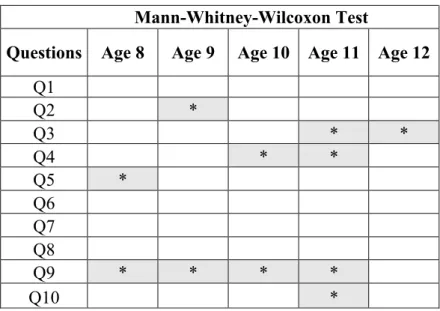
Table 2. Significant differences among questions, age group and school
Mann-Whitney-Wilcoxon Test
Questions Age 8 Age 9 Age 10 Age 11 Age 12 Q1
Q2 *
Q3 * *
Q4 * *
Q5 *
Q6 Q7 Q8
Q9 * * * *
Q10 *
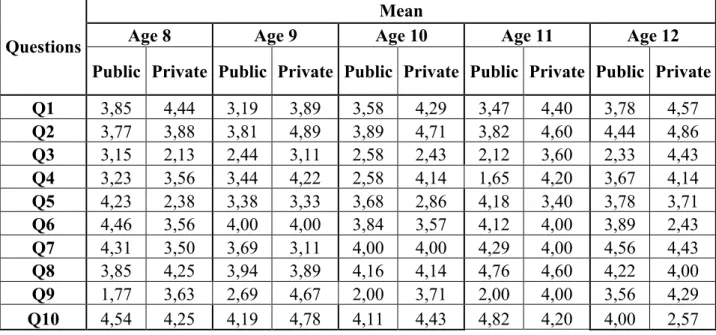
Table 3. Mean: questions, age group and school
Questions
Mean
Age 8 Age 9 Age 10 Age 11 Age 12
Public Private Public Private Public Private Public Private Public Private Q1 3,85 4,44 3,19 3,89 3,58 4,29 3,47 4,40 3,78 4,57 Q2 3,77 3,88 3,81 4,89 3,89 4,71 3,82 4,60 4,44 4,86 Q3 3,15 2,13 2,44 3,11 2,58 2,43 2,12 3,60 2,33 4,43 Q4 3,23 3,56 3,44 4,22 2,58 4,14 1,65 4,20 3,67 4,14 Q5 4,23 2,38 3,38 3,33 3,68 2,86 4,18 3,40 3,78 3,71 Q6 4,46 3,56 4,00 4,00 3,84 3,57 4,12 4,00 3,89 2,43 Q7 4,31 3,50 3,69 3,11 4,00 4,00 4,29 4,00 4,56 4,43 Q8 3,85 4,25 3,94 3,89 4,16 4,14 4,76 4,60 4,22 4,00 Q9 1,77 3,63 2,69 4,67 2,00 3,71 2,00 4,00 3,56 4,29 Q10 4,54 4,25 4,19 4,78 4,11 4,43 4,82 4,20 4,00 2,57
In contrast to Table 1, Table 2 shows no significant difference between same age children in Q1 or Q6. Conversely, other questions appear to have significant differences among students. Q3 is statistically significant in students aged 11 (PUB 𝑥=2.12; PRI 𝑥=3.6) and 12 (PUB 𝑥=2.33; PRI 𝑥=4.43); and the significant difference in Q10 concerns 11 year-old students (PUB 𝑥=4.83; PRI 𝑥=4.2). With respect to Q2, 9 year-old students show differences (PUB 𝑥=3.81; PRI 𝑥=4.89); regarding Q4 the highlighted groups are 10 (PUB 𝑥=2.58; PRI 𝑥=4.14) and 11 (PUB 𝑥=1.65; PRI 𝑥=4.2) year-old students; and Q5 seems to be relevant for the youngest pupils (PUB 𝑥=4.23; PRI 𝑥=2.38). Finally, in Q9 the p-value appears significant in almost all age groups (See Appendix 2).
3. DISCUSSION
The aim of this investigation was to answer whether the school has any effect on English teacher’s perceptions. The outcomes prove the existence of significant statistical differences between private and public school.
Questions 1 and 7 relate to the fact that English is the most spoken L2 in the world (Braine, 2010; Widdowson, 1994). Therefore, it is positive to see that the majority of students like English, although private school students show a better attitude towards
knowing enough English worries them when it comes to pass an exam. Another explanation might be that the public school students acknowledge more the fact that English has become a basic communication tool. Nevertheless, with a relatively small sample, caution must be applied, as the findings might not be transferable to all public and private schools.
Questions 2, 8 and 9 refer to the “Native Speaker Fallacy”. Concerning Q2, all students would like to speak like a native. In general, although both groups agree, private school students show a higher degree of acceptance. Thus, this finding shows a covert discrimination against NNESTs because part of the sample has the NES as the model.
Questions 8 and 9 should be interpreted with caution: since they are opposite, one may expect to find a degree of consistency in the answers. However, this is not the case in both groups. Public school sample answered consistently both questions and as Scales et al. (2006) suggested, students prefer a teacher who is easier to understand and therefore, it is logic that they disagreed with Q9. On the other hand, those from the private school accept both situations. Having seen the significant difference in Q9, it can be deduced that private school students are more influenced by the nativeness principle, whereas those from the public school tend to follow the intelligibility principle (Levis, 2005). The reason for this is not clear but it may be related to the higher percentage of speakers of other L1s in the public school. It can be suggested that the mother tongue influences the acceptance or rejection of the native-like accent, however, further investigation is needed.
Questions 3, 4, 5 6 and 10 concern the teaching method. As mentioned in Chapter 2, knowing the students mother tongue benefits both the teacher and the student (Medgyes, 1994; Prodromou, 1992) and as shown in Q10, all students seem to agree with that. Focusing on Q3, the results show that there is not significant difference concerning both schools. Nevertheless, the older sample (11 and 12 years) from the private school agrees with the fact that teachers should not translate anything. This contradictory result may be due to their interest in becoming a native-like speaker.
Another finding reveals that public school students are the ones who think that English teachers should pay more attention to pronunciation (Question 5) (Kikuchi, 2009), even when it has been shown that the learning model for other group is the native speaker.