Special Session on Web Mining and Recommender Systems María Moreno (Chair) University of Salamanca, Spain. Javier Bajo (President) Technical University of Madrid, Spain Fernando de la Prieta Pintado University of Salamanca, Spain Juan F.
Contents
Special Session on Agents Behaviours and Artificial Markets (ABAM)
Special Session on Agents and Mobile Devices (AM) + Learning, Agents and Formal Languages (LAFLang)
Special Sessions on Multi-Agent Systems and Ambient Intelligence (MASMAI)
Special Session on Agent-Based Modeling of Sustainable Behavior and Green Economies (AMSBGE)
Special Session on Emotional Software Agents (SSESA) + Intelligent Educational Systems (SSIES)
Doctoral Consortium (DC)
Special Session on Agents Behaviours and Artificial Markets (ABAM)
Behavioral and Informational Agents-Based Modeling and Simulation of Emerging Stock
Markets
1 Introduction
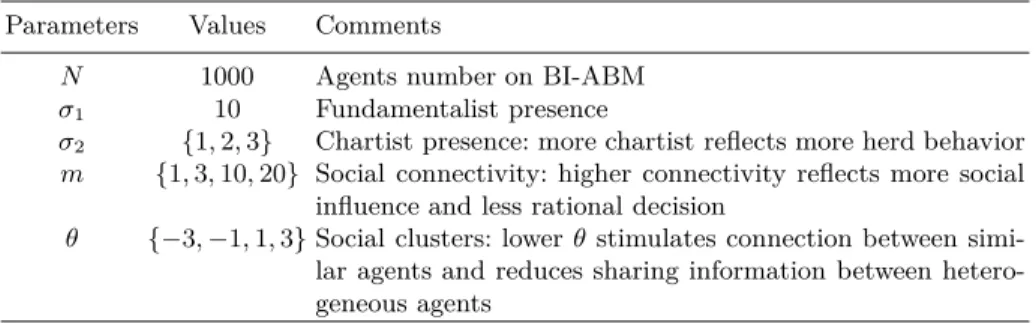
This will reproduce diverse behaviors that, as explained in section 3, are related to asymmetric information. In section 3, simulations are conducted under our choice of network topology dynamics and agent behavioral structure to determine how stylized facts emerge in immature markets.
2 Behavioral Network for Simulating Markets with Asymmetric Information
- Agent Characteristics
- Market Design
- Information Spread and Performance Measure
- Simulating Order Decision
We assume that, independent of his social position and his wealth, at each step any agent has the chance to act on the market. In other words, agent i forms a perception based on his belief and on the social atmosphere.
3 Simulation and Results
Model Parameters and Reproduction of Mature Markets Stylized Facts with BI-ABM
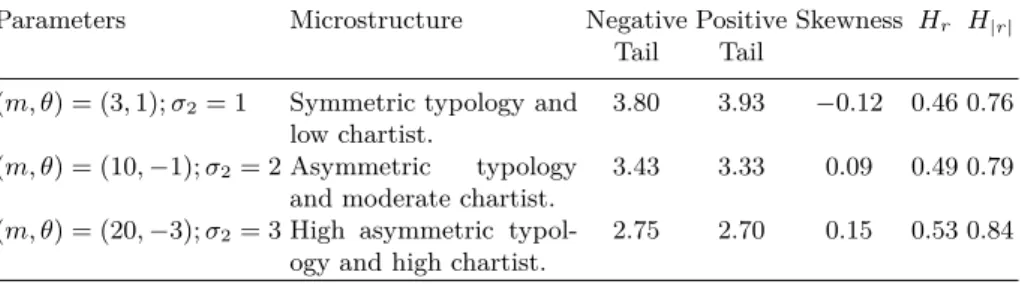
Referring to the literature and simulation experiments, we found the artificial market configuration that reproduces stylized facts on price series and scale-free characteristics in the simulated network. Other stylized facts about the absence of return autocorrelation and the presence of long-range memory in the volatility were proved based on the corresponding values of the Hurst exponent (based on the modified R/S statistics described in [4]), Hr and H|r| = 0.71>0.5 (0.5 is the H value associated with the absence of autocorrelation).
Reproduction of Immature Markets Stylized Facts with BI-ABM
Then, moving the parameters to a microstructure topology with more asymmetric information and more herd behavior, we fall into stylized facts of immature markets. These results confirm that the stylized facts of emerging markets can be explained by asymmetric information and herd behavior of investors.
4 Main Results and Conclusion
Whereas, the third measure, "rout-in", shows more herd behavior due to the connection between the most influential agents, the fundamentalists, and the most influenced agents, the chartists. Therefore, fundamentalists will improve their strategic decisions based on the sentiments of their fundamentalist neighbors, while chartists will distort their strategic decisions due to the influences exerted by other less informed agents.
In Whose Best Interest? An Agent-Based Model of High Frequency Trading
Each trader maximizes his expected profits and must set the limit price for a single unit of stock. We assume that the limit price is a simple linear combination of the best outstanding prices and the bid at the time of delivery, as in (Ladley and Pellizzari, 2014).
2 The Model
The Traders
This can be done by placing limit orders without specific execution or market orders that instead immediately hit the opposite side of the book and execute at less favorable prices. Clearly, this makes it possible to take advantage of orders that appeared after the first submission, or, say, to change the level of aggressiveness of the order according to market conditions.
The Book
We prefer to use private values and costs because an equilibrium price is easily calculated and yet impatience is immediately and intuitively related to the magnitude of values and costs. In fact, high value buyers or low cost sellers suffer huge losses if they do not trade and can be thought of as impatient traders; conversely, buyers/sellers with values and costs close to the equilibrium price can generally receive small profits and are almost indifferent between trading and non-trading, thus resembling patient traders.
The Strategy
As pointed out by a judge, traders have no budget constraints and this is a limitation of the current treatment. 2 We do not model an initial fixation mechanism and assume that the top 10 bids/questions from the previous session are available in the “opening phase” of the next one.
3 Results
Implementation and Parameters
The gains of the first row, relative to the benchmark, are used to normalize the data of the other rows and cases where HF traders are in action are shown in bold. In this case, where agents are evenly split between slow and HFT, the calm traders' profits are almost wiped out (-83%), while both nervous and hysterical traders retain additional profits.

4 Discussion
In short, HFT benefits those who use it, but may harm some other disadvantaged agents, despite the efficiency gains shown in the last column of Table 1. If the model realistically represents the market, traders may be increasingly forced to use HFT, which will produce the results shown in “Experiment 4”.
Agent-Based Model for Order Routing and Financial Market Integration
2 Market Mechanism
The market mechanism, although often replaced by an abstraction for modeling purposes, is explicitly modeled in our agent-based framework. While the market mechanism itself is an important part of the market, we also need to consider the broader market structure, which we briefly examine in the next section.
3 Market Fragmentation
4 Automated Trading and Smart Order Routing
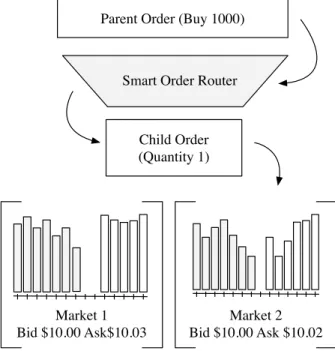
Smart order routing, in its most basic form, simply involves sending a baby order to the most advantageous location. In the model shown below, we simply consider the smart order course as placing an order in the limit order book with the most favorable quote (as seen in Figure 2).
5 Model
In our model, the side of the parent order is to buy or sell with equal probability. If the parent order is exhausted (q=0) when an aggressive trader is activated, a new parent order is generated and the agent places a trade.
6 Results
Market integration is measured by examining the deviation of the mean quote, where the mean quote is defined as. As can be seen in Figures 3 - 5, moderately low levels of intelligent routing result in markets that are highly integrated as measured by mean quota deviations.

Special Session on Agents and Mobile Devices (AM) + Learning, Agents and
Podcast Distribution on Gwanda Using PrivHab
A Multiagent Secure Georouting Protocol
1 Introduction and Motivation
2 Scenario of Application
3 A Habitat-Based Itinerary
Circular Model of Habitat
2. Habitat development: (a) the new center pointC is calculated by averaging the old centerCold and the new locationL; (b) The new radius R is calculated by averaging the old radius Rold and the distance d(L, C) separating the new location L from the center point C. Update the center: The first step to update the habitat is to update the center.
4 The PrivHab Protocol
Nodes’ Privacy
Radius update: After calculating C, the R radius is updated by averaging using the EWMA of the Rold radius of the previous habitat and d(L, C), the distance between L and the center point C. Specifically, in the EWMA of the last T ω locations, 86% of the total is weighted, while previous locations weigh the remaining 14%.
Exchanged Messages
Next, B calculates the point inclusion of W[i] in HB using Equation 7, the distance comparison using Equation 8, and the radius comparison using Equation 9. EA(RA)·EA(dA)RB)/(EA ( RB))nonce=EA((RA+dA·RB−RB)·nonce) (9) Finally, B sorts the results of the two comparisons and the inclusion test into points randomly and sends it to A.
A Multiagent System
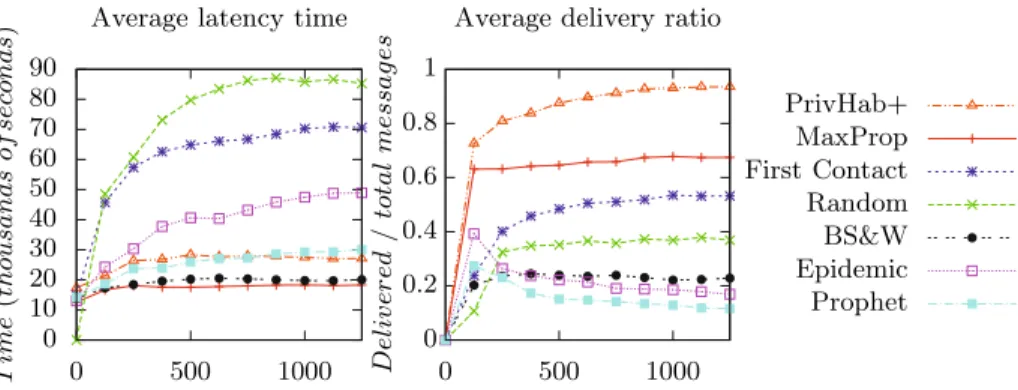
5 Experiments and Results
Modelling and Simulations
6 Conclusions
Learning, Agents, and Formal Languages: Linguistic Applications of Interdisciplinary Fields
Agent technologies are one of the most important areas of information technology that emerged in the 90s. This means that we want to show how the interdisciplinary relationship between machine learning, formal languages and agent technologies can contribute to solving one of the most persistent problems in science: explaining how natural language is acquired and processed.
2 Learning and Formal Languages
Practical Studies with Natural Language Data
Although most of the work in AI is theoretical, we can also find some practical approaches in AI based on natural language data. In GI there have also been attempts to take into account more natural aspects during the language learning process.
3 Agents and Formal Languages
Linguistic Applications of Agent Based Formal Language Theory
Grammatical systems can provide useful tools to account for the arrangement and interaction of different dimensions of natural language grammar. To capture each feature of the above list, a new variant of grammar systems has been introduced: Linguistic Grammar Systems (LGS) [16].
4 Conclusion
In the field of multi-agent models of formal languages, so-called ecogrammatical systems are very important[12]. Ecogrammar systems can model the structure of dialogue and take language development into account.
Assessing an Ontology for the Representation of Clinical Protocols in Decision Support Systems
Ontologies have not been widely explored in representing the procedural logic in clinical protocols, but they provide an ideal support for this knowledge. Section two provides a brief description of the ontology with its main primitive classes and properties.
2 Developed Ontology
The Decision class is used to make statements about the patient's condition, to extract new information from the existing one. This type of task gathers all the information needed to run the clinical algorithm.
3 Materials and Methods
1. Initial definition of a National Comprehensive Cancer Network guideline for the treatment of colon cancer in the CompGuide ontology. The statements used in the questionnaire complete the general statement: "The CompGuide ontology allowed the representation of:".
4 Results and Discussion
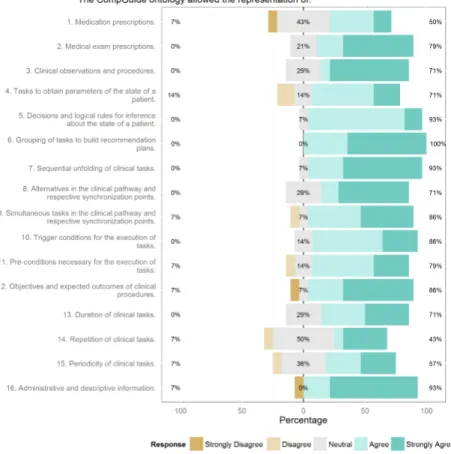
In the reports, participants even mentioned that displaying drug prescriptions was sometimes impractical. Agreement that the CompGuide ontology enabled the display of duration of clinical disability was 71%.
5 Conclusions and Future Work
Meanwhile, item 14, which deals with the repetition of clinical tasks, gathered only 43% compliance and 50% of participants answered in the neutral category. This was also an observation made within the scope of item 15. Finally, item 16 received 93% agreement, which seems to convey that the ontological elements responsible for representing administrative information such as authorization, guide name, general description, date of creation, and so on, are fulfilling their intended function.
An Agent-Based Social Simulation Platform with 3D Representation for Labor Integration of Disabled People
1 Introduction
In the context of occupational integration of disabled people, simulations can make it possible to detect in advance the problems that workers with disabilities will encounter before these problems arise. Through the use of the proposed platform, it is possible to investigate new mechanisms oriented to decision-making regarding workflows in the environment, detection of architectural barriers, etc.
2 Agent Based Social Simulation
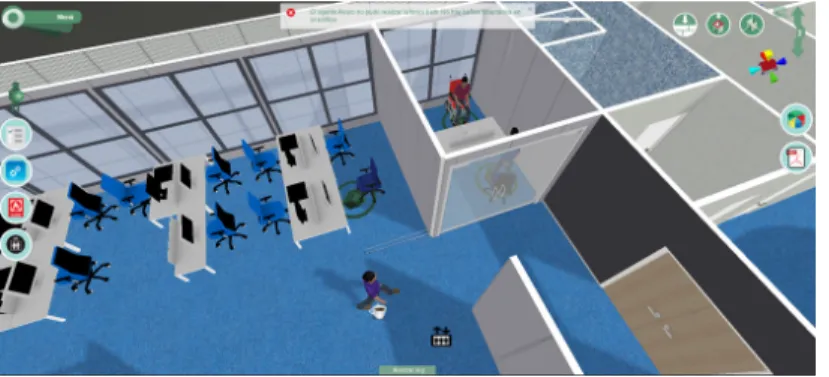
This platform uses 3D workplace models to perform accurate simulations while enabling the collection of relevant and high-quality data. In addition, the advantages of agent computing for computer simulation include various methods for evaluating MAS or for training future users of the system [11].
3 Agent-Based Platform for Simulating Working Environments
Components of the On the one hand, MAS co
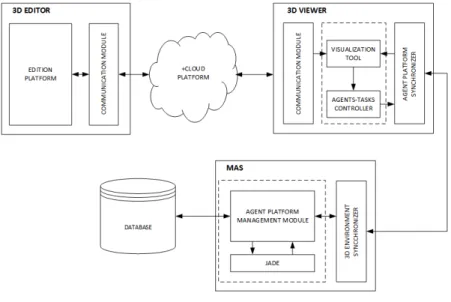
2 shows the main components in detail: (i) the communication with the other based on the BDI model [2 and the 3D environment. On the one hand agents can implement different tasks, d on the other hand the 3D environment allows model environments.
Communication between the Agents Platform and the Visualization Tool As we have highlighted previously, one of the main tasks in the platform is to estab-
On the other hand, the 3D environment consists of an editor and a visualizer, both implemented using the Unity 3D engine –http://unity3d.com/–. Second, the 3D visualizer makes it possible to render and display the environment and features we previously defined in the 3D editor, which we will get from the CC platform.
4 Case of Study
After the simulation, the tool generates a report detailing all the accessibility problems that avatars found and hindered the correct execution of the tasks assigned to them. Once these accessibility problems are detected, a redistribution of the furniture elements whose accessibility can be improved, as well as the relocation of certain workstations of people who use wheelchairs, or the adaptation of certain workstations of people with visual or hearing impairment. is suggested.
5 Conclusions
Prenkert, F., Følgesvold, A.: Relationship strength and network shape: Simulation of interaction in an agent-based business network. Yu, Y., Kamel, A.E., Gong, G., Li, F.: Multi-agent modeling and simulation of microscopic traffic in a virtual reality system.
Integration of a Purchase Porter System into a VO Developed by PANGEA
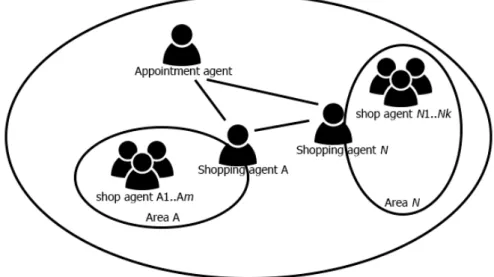
In the framework of this paper, an assistance system is proposed to help customers in shopping centers, designed as a MAS based on virtual organizations (VO), in which each virtual organization represents each different area of the commercial center. To achieve the implementation of this system, PANGEA [5], an agent platform, was chosen as it was developed by the participants in this work.
2 Review of the State of the Art
It is important, as mentioned before, to make the system architecture resemble the actual structure of shopping centers. In chapter 3, the proposed solution, based on virtual organizations, is introduced and then its results and conclusions in section 4.
3 A VO-Based Purchase Porter Multi-agent System
Features of the Purposed Porter System Are as Follows
- Environment
- Purchase
- Agent
Our system adds a priority that is calculated based on the remaining time and distance to the destination. They then deliver those purchases to the destination so they are ready for collection on time.
This feature allows you to improve the control of each node in the system in an individual or group manner. This process is carried out with the 'Monitoring Tool', which allows you to keep and visualize a record of everything that has happened in the system.
4 Results and Conclusions
2] Lane, J.E.: Method, Theory, and Multi-Agent Artificial Intelligence: Creating Computational Models of Complex Social Interaction. 3] Fan, Z., Duan, W., Chen, B., Ge, Y., Qiu, X.: Study on the method of multi-agent generation algorithm in a special artificial community scene.
Special Sessions on Multi-Agent Systems and Ambient Intelligence
MASMAI)
Reasoning about Multi-Agent Systems Using Stochastic Petri Nets
The use of SPN to model multi-agent systems is already present in the literature. By combining the use of Stochastic Petri Nets and DS3, we propose a methodology to formally improve properties in multi-agent systems.
2 Stochastic Petri Nets
One of the strengths of our approach is its ability to verify properties not only in interactions between agents, but also to verify properties and validate agents. A new label created by setting a transition to Enabled is defined in the same way as in a normal labeled Petri net, ie.
3 Multi-agent Systems as Stochastic Petri Nets
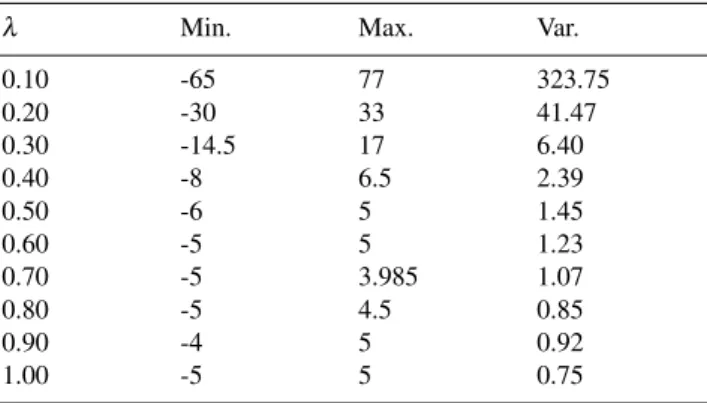
The λ parameter associated with the corresponding transition indicates the processing failure rate. This agent must send its partially processed data to an agent capable of completing its processing (the transition to "Process2" in Figure 2 indicates the input of the semi-processed data by this simpler agent).

4 The DS 3 Logic
Despite the fact that some properties will not be verifiable, this approach leads to a simple network in which the verification and/or validation of properties can be done efficiently (e.g. reducing state explosion in a procedure model check). Π is a finite Stochastic Petri net such that for every program π used in one mode, π∈Π (i.e. π is a sublattice of Π).
5 Verifying Properties
So if we say that M3,ws, ηϕthen it means that the program that starts at tick has probability of execution greater than one (i.e. the probability that a firing occurs is greater than zero) and that when it stops, remains in the current state. We presented how the model of an agent can be applied to a Stochastic Petri net and the use of DS3 logic to verify properties in these systems.
7 Further Work
The use of Petri Nets to model multi-agent systems is present in a large amount of literature. Lopes, B., Benevides, M., Haeusler, E.H.: Verification of properties in multi-agent systems using Stochastic Petri Nets and Propositional Dynamic Logic.
Multi-agent Coordination for a Composite Web Service
Additionally, a web service composition may optionally encounter a problem running one of its services, affecting response time and network traffic congestion. Second, the problem of implementing a composite service requires monitoring the implementation of various activities after selecting online services.
2 Related Work
In this context, we are interested in defining and implementing a model that guarantees the composition of web services based on multi-agent coordination. However, some issues are not well addressed by these works, such as the response time of Web service composition.
3 Proposed Web Service Composition Model
Creation of the Activities Plan and the Suppliers List This functionality is based on the UA and the SA
- User Agent
- Service Agent
After the creation of the activity plan, the SA (stationary agent) creates the supplier list by selecting the best suppliers that match each activity in the plan of the composite service. The creation of the supplier list is done in parallel through all of SA's corresponding activities plan.
Execution Control Strategy
- User Agent
- Compositor Agent
This is a help to avoid discovering web services on the UDDI web service library and to choose the best providers using an external method. In other words, with the discovery and selection of web services locally, we can avoid several problems such as: the security of each remote request, the congestion of traffic on the network and the variation of the response time of each request, which depends on the state server to be visited, and the state of the network traffic.
4 Rules of Interaction between Software Agents
Rules for User Agent
Rule for Service Agent
Rules for the Compositor Agent
5 Evaluation
For this reason, we varied the number of implementation problems for each activity each time in the second evaluation. In Figure 3, we show the composition duration comparison between our model and the model proposed in [3].
![Fig. 4. Comparison of the composition duration between our model and the model of [3]](https://thumb-us.123doks.com/thumbv2/123dok_es/12420028.0/105.659.159.504.621.835/fig-4-comparison-composition-duration-model-model-3.webp)
6 Conclusion
Achieving Parkinson’s Disease Patient Autonomy through Regulative Norms
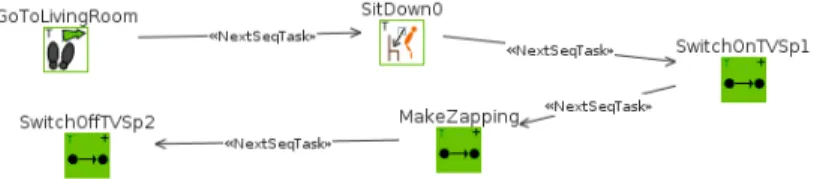
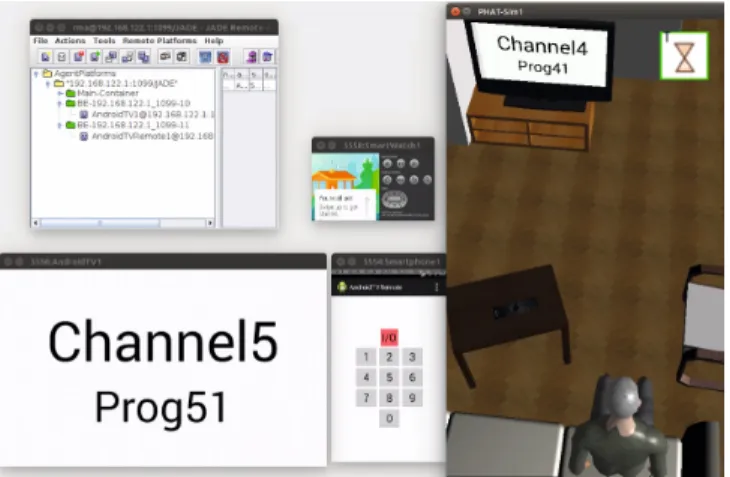
The Social Ambient Assisted Living (SociAAL) project [9] proposes to include social sciences in the definition of AmI systems for people with Parkinson's disease (PD) and the development cost reduction of such systems. There is also a discussion of the scope of a simulation that captures the TV viewing scenario.
2 Autonomy of Parkinson’s Disease Patients in a TV Watching Scenario
From these events, the paper focuses on the button (turn on and channel) pressing problem when the patient has tremors. It can also change the size of the buttons in the screen to make them bigger if the patient has tremors.
3 Adding Control Software and Normative System
The normative system must enforce this criterion of preserving autonomy with the help of the two aforementioned norms. Normative system development is possible because there is complete knowledge of the environment (what is happening and what will happen), and every element in the simulation can be fully inspected.
4 Related Work
The resulting AmI behavior is expected to be aware of norm violations and respond accordingly. Compared to this paper, the norms shown in [7] do not consider the clinical assessment of the patient as in the case of autonomy.
5 Conclusion
The system defines norms that ensure that behavior in organizations is expected. The contract between them is represented by several norms that must be implemented in the normative system.
How Many Kinects Should Look At You?
A Multi-Agent System Approach
Another work [12] shows interference from up to three Kinect sensors capturing the same scene. In [14] the issue of interference arising from two Kinect sensors when focusing on the same scene is also addressed.
2 Description of the Experiments
- Experiment #1: A Single Kinect in Front of the User
- Experiment #2: Two Kinect Sensors in Front of the User
- Experiment #3: Two Kinect Sensors Located Perpendicularly
- Experiment #4: Two Opposed Kinect Sensors
- Experiment #5: Three Kinects in Front of the User
- Experiment #6: Three Kinects Located Perpendicularly
The results of the accuracy of the position of the mannequin are worse than in the previous experiment #1. The accuracy of the mannequin position is lower in this experiment than in experiments #1 and #2, as shown in Fig.

3 Discussion and Conclusion
Oliver, M., Molina, J.P., Montero, F., Gonz´alez, P., Fern´andez-Caballero, A.: Wireless multisensory interaction in a smart rehabilitation environment. eds.). Oliver, M., Montero-Simarro, F., Fern´andez-Caballero, A., Gonz´alez, P., Molina, J.P.: RGB-D assistive technologies for acquired brain damage: description and evaluation of the experience of users.
A Multi-Agent System in Ambient Intelligence for the Physical Rehabilitation of Older People
The elderly are one of the collectives that can benefit from the use of AmI systems. One of the approaches that combines AmI and MAS is the one proposed by Corchado et al.
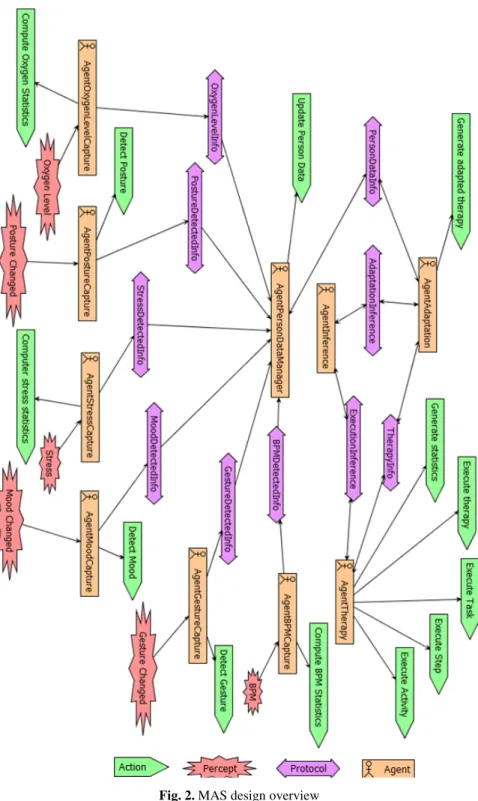
3 A MAS Architecture for Older People Rehabilitation in AmI
- MAS Development Methodology
- Managing Ambient Information
- Therapy Execution
- Logging Therapy Statistics
- Adapting Therapies
The transition from one element of therapy to another is an important fact in the specification of therapy. Therefore, the transition from one element of therapy to another is made in terms of fuzzy rules.
4 Conclusions and Future Work
This loss of accuracy can be the result of fatigue. Therefore, by monitoring the evolution of the data recorded by the sensors, AdaptationAgent can decide to recommend to the patient an interruption in the implementation of the therapy. In addition, our system provides the therapists with some feedback on the execution statistics, allowing to monitor the execution and evolution of the elderly who should perform these therapies.
A Distributed Architecture for Multimodal Emotion Identification
Facial expressions are monitored by a vision agent installed at the height of the human head. The user's activity is also monitored by another vision agent mounted overhead.
2 Emotion Identification Architecture
2. Layout of a distributed emotion identification architecture. video cameras and physiological wearable sensors modeled as intelligent and physical agents) and transmit them to the appropriate nodes. A central emotion detection node” that combines the outputs of the analysis nodes received via the “data/communication bus” and makes a decision about which emotion the person will perceive.

3 Distributed Architecture Setup
Facial Emotion Recognition and Behaviour Analysis
The person also wears electrodermal activity, electromyogram, heart rate and skin temperature sensors that record his/her physiological parameters. Depending on the emotion experienced, a person becomes excited or ceases activities, and his/her posture also serves as an indicator of his/her mood.
Physiological Sensor Data Interpretation
Fusion for Emotion Recognition
4 Conclusions
Kukolja, D., Popovic, S., Horvat, M., Kovac, B., Cosic, K.: Comparative analysis of emotion assessment methods based on physiological measurements for real-time applications. Felisberto, F., Fdez.-Riverola, F., Pereira, A.: A ubiquitous and low-cost solution for motion monitoring and accident detection based on sensor fusion.
Special Session on Web Mining and Recommender Systems
WebMiRes)
Conversely, Dyker utilizes neural networks but keeps them decoupled from the rest of the proposal. The main procedure then learns β-extraction rules for each of the data sets passed as a parameter; it returns a map where each dataset is associated with its corresponding collection of extraction rules.

A Knowledge-Based Recommender Agent to Choosing a Competition System
2 Recommender System
Currently, there is an interesting approach that has emerged as a trend in the next generation of recommender systems: considering user profiles by recognizing what users need and not just what they want or prefer [13]. We therefore believe that knowledge-based recommendation systems will be more suitable for guiding sports managers in the choice of competition system.
3 Knowledge-Based Recommender Systems
Knowledge-Based Recommender Agent
Catalog Knowledge: This is the knowledge we have of the recommended items and their characteristics. The recommendation algorithm (Algorithm1) is based on assigning a score to each competing system and recommending the system with the highest score at the end of the process.
Recommendation Algorithm Based on Scoring
Recommended which competition system is best adapted to the characteristics of the tournament or vice versa. The recommendation agent represents a useful tool to guide sports managers in the choice of competition system.

Combining Users and Items Rankings for Group Decision Support
In addition, automatic analysis of group relationships in OSN can be used to weight or rank group members to incorporate social roles and interactions into such functions. In the first, each user was asked to select their preferred POI from a list, and then the group made the final decision.
2 Related Works
In the second, users were asked to provide rankings for the same POI and then evaluate two solutions for the groups recommended by the system.
3 Two Weighted Social Choice Functions
Fairness Strategy
The proposed fairness strategy (rf air) tries to accommodate everyone in the group, and requires an ordering of the users. One of the main problems with using this strategy is that, by changing the users.
Average Satisfaction Strategy
From these, the one that causes the least misery to the others is selected (in the case of items with the same rating, a non-deterministic choice is made), and the process is repeated with the next user in the ranking.
4 Experiments and Evaluation
A User Study with Binary Decisions
Note that if K equals the number of possible outcomes (as in this case), an activity chosen by all members of the group will be chosen in the final decision. As in the previous case, we also implemented the standard version of a simple average function (rst.avg).
A User Study with Rankings
As we expected, there is a strong correlation between the adoption rate of the proposed strategies and their evaluations made by the users. We imagine that such value is an effect of the testing procedure that ends with a private evaluation of the proposed solutions for the group.
Designing a User Interest Ontology-Driven Social Recommender System: Application for Tunisian Tourism
Aware of the user's importance and his/her preferences in recommendations, in this paper we study the impact of including a semantic user profile (derived from the behavior and preferences of previous users) on the accuracy of a recommendation system[4 ],[5].
2 Social Network-Based Recommender Systems
3 Personalized Social Recommender System for Tunisian Tourism Information
Framework of Personalized Social Recommender System
Then, the social recommender system generates recommendations using the user interest ontology. Our intelligent recommendation system selects information according to the user's needs from the Tunisian tourism database and produces recommendation sets.
Algorithm of the Social Recommender System
User preferences are collected from the user's profile, and friends' preferences are collected from the user's social graph presented by Facebook. Then the system starts searching for items similar to this ontology and representing the user's preference in our Tunisian tourism database.
4 User Interest Ontology to Personalize Social Recommender System
- User Data Collection
- Data Analyzing and User Interest Extraction
- Determination of Trusted Friends List from the User Social Graph To determine the list of friends near a user, we begin, first of all, by all the friends
- Concept Weight in the User Interest Ontology
In this context, the user-generated content can be considered as explicit and implicit data. In this step we analyze the user's preferences and behavior (shares, comments, events, etc.).
5 Conclusion and Future Work
Special Session on Agent-Based Modeling of Sustainable Behavior
Designing Decision Trees for Representing Sustainable Behaviours in Agents
Two limitations were considered when designing the decision model, firstly, it must be based on actual data, and secondly, experts in the field must be able to analyze and discuss it. Therefore, if the decision-making is based on reduced set of features, it is possible to perform different simulations to analyze the effects obtained when they are varied.
2 Materials: Actual Data from a Questionnaire
Decision trees determine the choice of an agent based on its internal parameters (gender, position, values, norms..), while the social network can change some of these internal parameters by the influence of other agents. In this paper, we focus on how to improve the decision-making process, using decision trees, with good generalization skills based on a reduced set of features, sufficient to generate variability in the model, but without hindering the work of experts for it. analyze them.
3 Obtaining Decision Trees with Good Generalization Capabilities
Feature Selection
In the wrapper approach, the feature selection algorithm looks for a good subset of features, using the classifier itself as part of the evaluation function. It should be noted that all of these methods return a subset of features, except SVM-RFE, which returns a ranking of features.
Discretization
Better results are expected when the same classifier is used in selection and subsequent classification. Therefore, a threshold is needed, in this case two values are chosen: 20 and 30 top ranked features (SVM-RFE20 and SVM-RFE30), values close to those used by the C4.5 algorithm when applied alone.
4 Experimental Results
5 Conclusions
Recognition. This work was partially supported by the European Commission under the project ”LOw Carbon At Work: Modeling agents and organization to achieve transition to a low-carbon Europe”, 7th Framework Programme, ENV Grant Agreement 265155 and by the Conseller ´ıa de Cultura, Educaci´ on e Ordenaci´on Universitaria i Xunta de Galicia through research grant GRC2014/035, partially financed by FEDER funds from the European Union. S´anchez-Maro˜no, N., Alonso-Betanzos, A., Fontenla-Romero, O., Brinquis-N´u˜nez, C., Polhill, J., Craig, T., Dumitru, A. , Garc´ıa-Mira, R.: An agent-based model for simulating environmental behavior in an educational organization.
A Simulation of Householders’ Recycling Attitudes Based on the Theory of Planned Behavior
Social norms are, in fact, one of the most powerful customary rules that govern behavior in groups and societies. Research shows that social norms are most persuasive when people are given evidence that the behavior they are encouraged to engage in is already being practiced by people who are similar to them (see Social Comparison Theory) (Festinger, 1954).
2 The Theory of Planned Behavior and the Recycling Issue
When people are surveyed, they typically underestimate the effects of the campaign because they are usually unaware that it has had an effect on them. However, according to Cialdini's Theory of Normative Behavior (Cialdini et al., 1990), it can be suggested that the actual impact of subjective social norms is underestimated when measured by anonymous questionnaires completed in private settings (Stiff & Mongeau, 1994) .
3 A Method for Modelling: Connecting Theories and Models
The concepts of perceived control and moral obligation refer to the individual's perception of their ability to perform a behavior. According to the TBP, perceived behavioral control will influence actual behavior only if the behavior is not completely under the person's volitional control.
4 The Planned Recycling Agent Behavior Model
It is calculated using another decay function over time, which relies on the volume of R present in the viewed neighbor. Garbage transport system – The model includes a transport system, which receives waste from neighborhood agents and moves it to collection points.

5 Results and Conclusions
Taylor, S., Todd, P.: Decomposition and crossover effects in the theory of planned behavior: an examination of consumers' adoption intentions. Tonglet, M., Phillips, P.S., Read, A.D.: Using the theory of planned behavior to investigate the determinants of recycling behavior: a case study from Brixworth, UK.

Introducing LCA Results to ABM for Assessing the Influence of Sustainable Behaviours
In the work reported here, we investigate how to introduce LCA results into agent-based models to simulate the evolution of an agricultural system. We present initial simulation results in Section 5 and present our conclusions in Section 6.
2 Literature Survey
For our work we will use our own initial agent-based model, which allows agents to observe the results of an LCA (for the entire agricultural system) and use them in business planning. In Part 2, we present a brief tour of various agent-based models dealing with agricultural systems, as well as LCA research conducted using agent-based models.
3 Data and Model Structure
Model Structure
The model is driven by agent behavior that aims to match the aspiration level of the farmer with the wealth level. For the current formulation of the project, we will focus on the area (in ha) planted with each crop, for each farm.

Connection to LCA
For prices we will consider a global representation where all prices are identical for all farmers and given by the market. Implementation. To maintain maximum flexibility during model development as well as to be able to use model outputs as input for LCA, we have built our simulator from scratch using java as programming. language.
Model Interconnection
There is only one buyer who offers to buy any product from the entire country. They observe the prices in the system and change the parameters of their main behavior accordingly.
4 Simulation Workflow
Global Simulation
The block named “ABM+LCA” is in charge of distributing the inputs to the ABM simulator (“MUSA simulator” block) and passing the outputs (Land Use) to the LCA software to obtain the final results (impact assessment).
Behaviours
The agent (farmer) has an internal green consciousness (a value between 0 and 1) that dictates the strength of the environmental conditions for the farmer. In the second case (green consciousness higher or at 0.5), the criterion for choosing an alternative crop will be the environmental impact of the list of available crops.
Scheduling
5 Experiments
Results