
According to Einstein's general theory of relativity, gravity is not a force, but is related to the curvature of spacetime. They are produced by the acceleration of large amounts of matter and violent phenomena such as collisions of black holes, supernova explosions, in particular, had to arise in the most violent event that took place in the Universe: the first moments of the Big Bang. Gravitational waves will provide a non-electromagnetic picture of the universe and open up a new spectrum for observation.
Compared to the ease of detecting electromagnetic signals, the detection of gravitational radiation is a technological marvel. The effect of gravitational waves is to change the distance between freely falling test masses. The amount of stretching and compression of space expected to occur near Earth due to events such as the merger of a pair of neutron stars within about 100 million light-years of Earth is about one part in 1022.
Where and when massive black holes form and what role they play in the formation of galaxies. The emission of gravitational waves from a pair of neutron stars orbiting each other has been observed by measuring a small systematic shrinkage of the orbit. However, this dramatic observation is referred to as an indirect confirmation of the existence of gravitational waves, as what we have observed is the effect of the waves on the binary orbit rather than the waves themselves.
Gravitational wave detection requires making an L-shaped antenna roughly aligned with the polarization of the wave so that it is capable.
Data analysis ongoing
Advanced LIGO
The era of the first generation of ground-based interferometric detectors is coming to an end... leaving behind a remarkably rich legacy. The same will be used for the next generation LIGO, Virgo and GEO. New ones will be needed for KAGRA and for a detector in the Asia-Pacific region.
This wealth is being invested in a new generation of detectors that finally promise to detect gravitational waves and open a new window on the universe. As of today, LIGO and VIRGO detectors have been retired to install Advanced LIGO and Advanced Virgo. Advanced Virgo in Italy and KAGRA in Japan will also come online at the same timeframe.
The GW network will enable GW source location, increase detection confidence, 'uptime', source parameter estimation from reconstructed waveform and more sensitive searches. It will be able to test GR in strong field condition and realize precision gravitational wave astronomy. The ET project has just completed its conceptual design study phase, supported by the European Community FP7 with approximately 3M€ from May 2008 to July 2011.
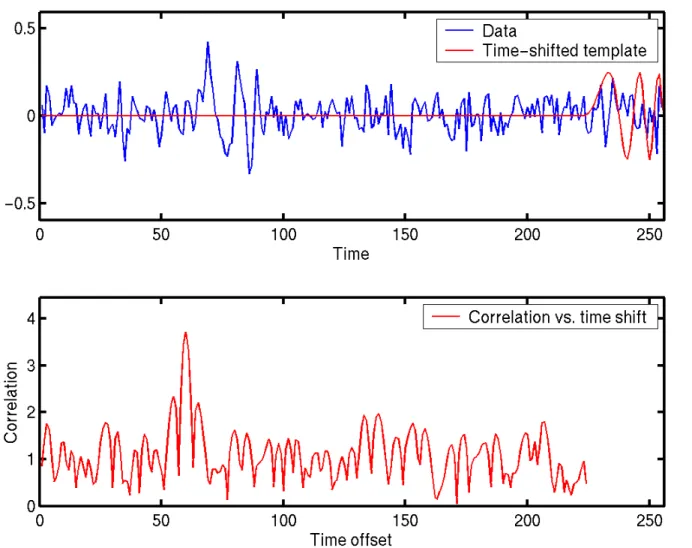
If the expected signal is not present, the correlated output will be filtered noise with no specified time. In the presence of a sufficiently strong signal, the correlated output will show a peak with temporal coherence.
Low Mass X-Ray Binaries!
Wobbling Neutron Star!
Bumpy Neutron Star!
Magnetic mountains !
Several wide-area surveys have placed upper limits on GW fluxes from unknown neutron stars. To date, LIGO and Virgo have not reliably detected GW emissions from neutron stars (but analysis of existing data is ongoing). The parameter space for blind searches for weak signals from unknown isolated neutron stars is very large.
To explore full parameter space without limiting observation time, use semicoherent or incoherent methods. These are objects that have not been previously identified at all, and we have to search over different possible sky positions, frequencies and frequency derivatives. The LIGO S5 result constrains the energy density of the stochastic GW background in the Universe to be < 6.9 x 10⁻⁶ around 100 Hz, assuming a flat spectrum of GWs.
The data exclude models of early Universe evolution with relatively large equation of state parameter, as well as cosmic (super)string models with relatively small string tension favored in some string theory models. This search for the stochastic GW background improves on the indirect limits of Big Bang nucleosynthesis and cosmic microwave background at 100 Hz. A stochastic background of gravitational waves is expected to arise from a superposition of a large number of unresolved gravitational wave sources of astrophysical and cosmological origin.
Until recently, data analysis methods for merging binaries had to rely on post-Newtonian approximations, which previously broke down.
Black hole ringdown
IMRI NSBH
Group members played a crucial role in the development of numerical models for the merger of relativistic binaries in GR,. We are experts exploring the parameter space of binary BH mergers with large-scale numerical simulations. Major advances in numerical and analytic relativity have allowed us to use "complete" inspirational fusion templates and extend the search range.
Horizon distance: Distance in mpc where an advanced LIGO detector can see an optimally placed, optimal. Results show that numerical simulations in full GR will have significant implications for detection rates and the accuracy of parameter estimation. Simulate a population of binary black hole signals from contributed waveforms – Testing GW search sensitivity to BH.
Produce accurate NR waveforms covering a wide range of parameter space, including BBH with generic spins.
EOB-NR
Knowing the exact time and location of the event reduces noise pollution in the network of GW detectors; searches can be deeper. LIGO and Virgo collaborated with the Fast Aiming Telescopes for observations in the summer and fall of 2010.
IceCube
ANTARES
LIGO-Virgo took advantage of knowledge of the timing and possible directions of the neutrino event to improve the sensitivity of the search for GWs. This means that if any of the neutrino candidates came from the astrophysical sources in question, they must have been too far away for gravitational waves to be detected. These three projects began working together under the title of the International Pulsar Timing Array project.
The pulsar temporal array is a set of millisecond pulsars that can be used to detect and analyze gravitational waves in the frequency range from 10-9 to 10-6 Hz. The expected astrophysical sources are massive binary black holes at the centers of merging galaxies orbiting tens of millions of solar masses with periods ranging from months to a few years. The timing of the search for gravitational waves is exciting. So far, no detections.
Future observatories such as ET or US3G will be able to realize precise gravitational wave astronomy. However, NASA announced in April 2011 that it was unlikely to be able to continue partnering LISA or any other L-mission with the European Space Agency due to funding constraints.
