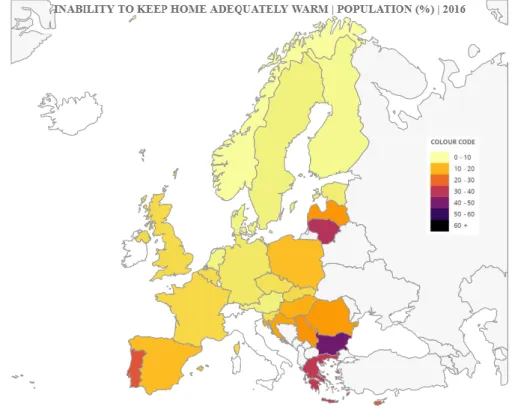
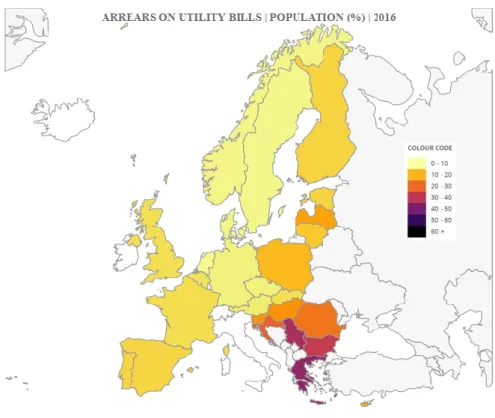
To help Member States in their efforts to combat energy poverty, the European Commission has funded an exciting new initiative, the EU Energy Poverty Observatory (EPOV). Section two reports on the prevalence of energy poverty in the EU, including the methodology used by EPPO.
Introduction
- Overview of the Energy Poverty Concept
- The EU Energy Poverty Observatory
- Tasks and Work Packages
- Governance
- Activities to Date
- Future Activities
EU Observatory on Energy Poverty", which featured around 400 participants from across Europe and North America. 2 5 Closer cooperation with COST Action networks 'European Energy Poverty: Co-Creation and Knowledge Innovation Agenda'.

Prevalence of Energy Poverty in the EU
Methodology
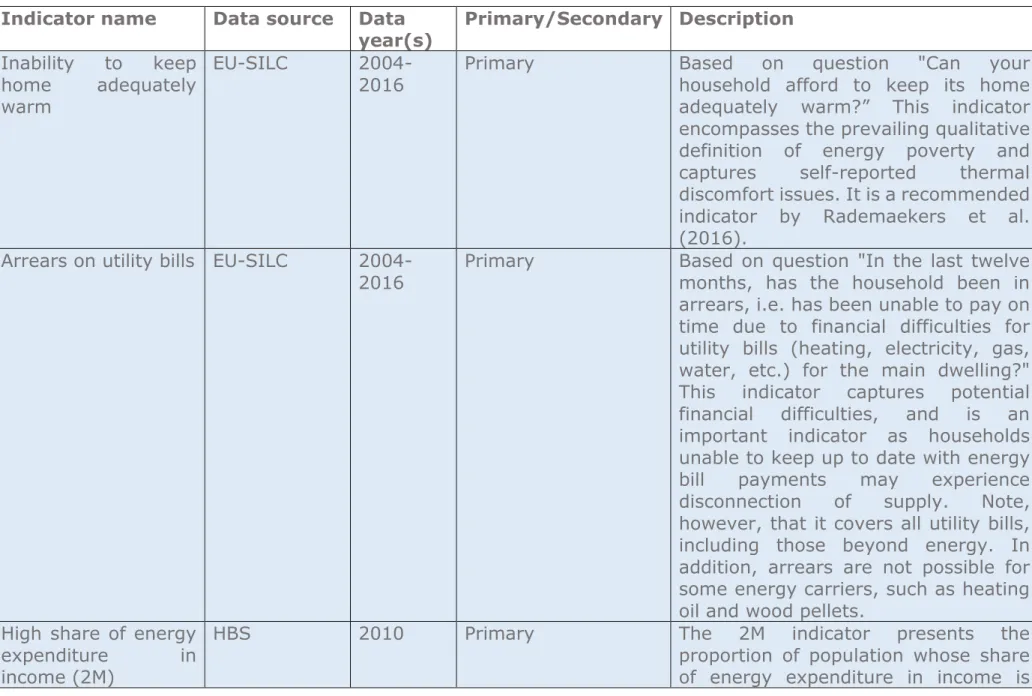
A selection of indicators for measuring energy poverty' (Rademaekers et al., 2016), as well as an earlier review of pan-European data and indicators by Thomson and Snell (2014). Our approach to measuring energy poverty has been to use a set of indicators that need to be looked at and used in combination. Our intention is to use these indicators to show the issues of energy poverty, which could then be explored in more detail in research and action projects.
Primary indicators – those that capture various aspects of energy poverty, and are applied elsewhere in policy and research;. Either the indicator captures facets of energy poverty but may not meet the quality of indicator criteria listed above, or it is relevant in the context of energy poverty but is not a direct indicator of energy poverty itself not. 2016 Primary Based on question "Can your household afford to keep its home adequately warm?" This indicator incorporates the prevailing qualitative definition of energy poverty and captures self-reported thermal discomfort issues.
2016* Secondary Proportion of the population with leaks, damp or rot in their home, which can be seen as an indirect proxy for housing quality and living conditions. Energy expenditure on electricity, gas and other fuels as a share of income divided by income decile. Secondary consumption expenditure on electricity, gas and other fuels as a share of income by income decile.
Headline Statistics
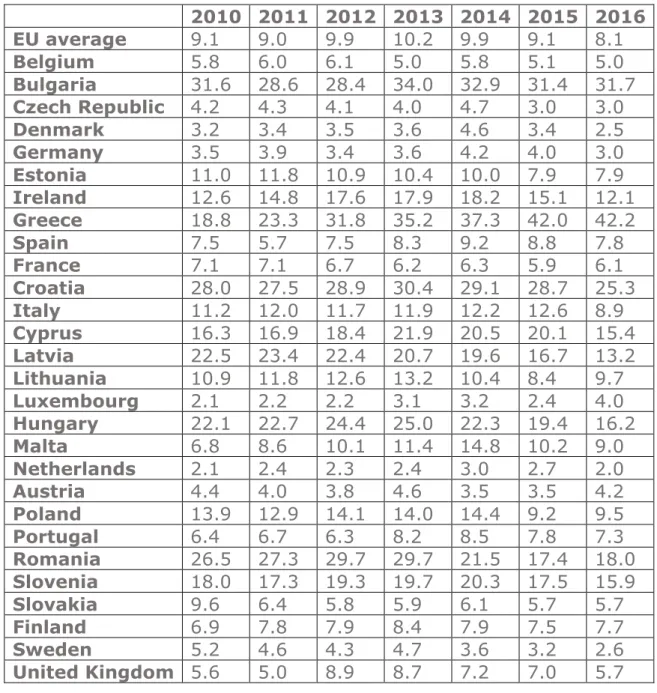
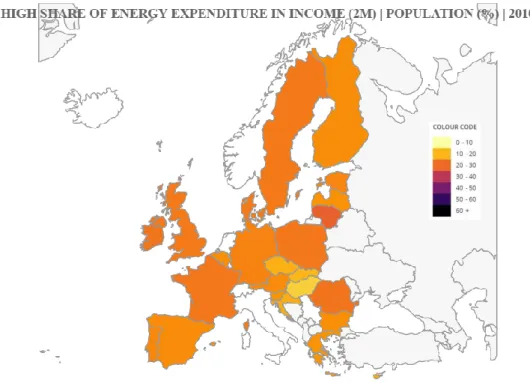
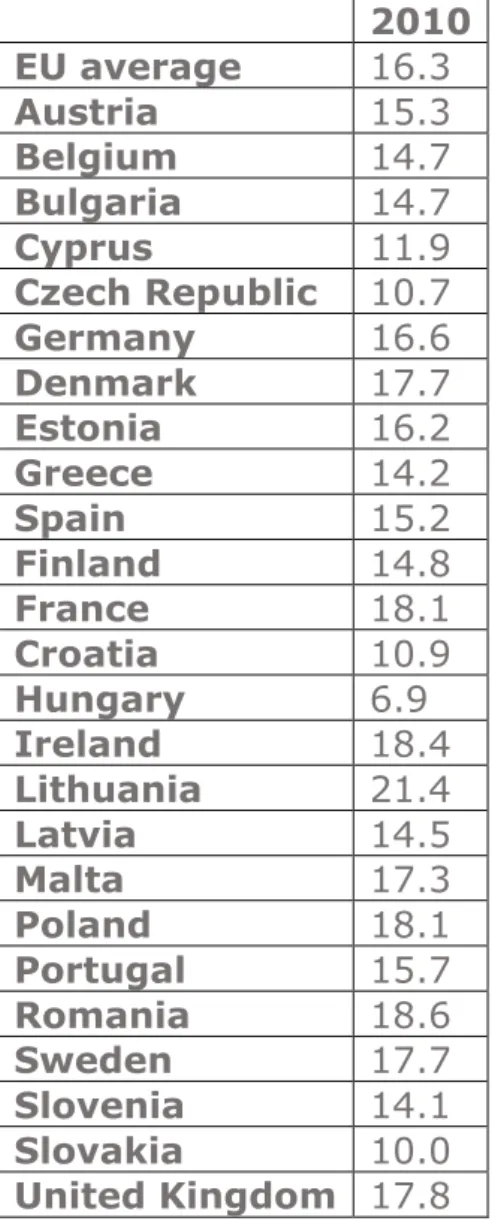
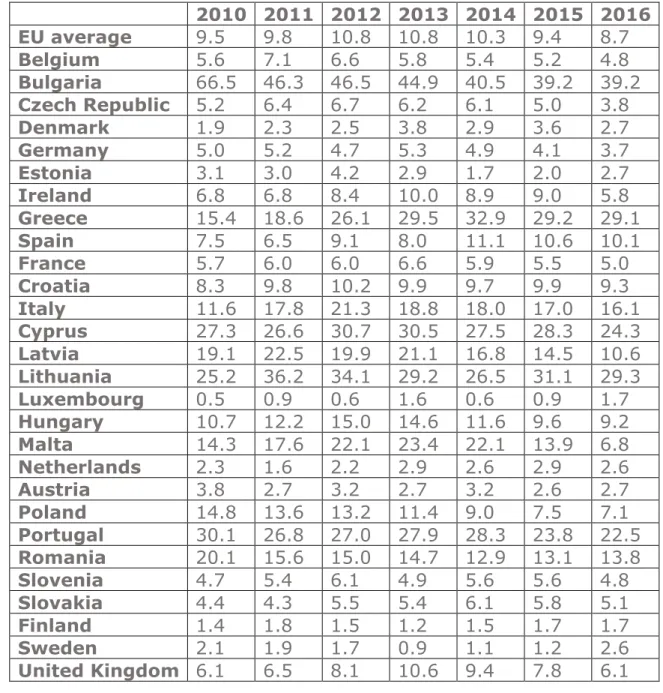
Greece has the highest overall prevalence of overdue utility bills with 42.2% of households reporting overdue bills. As noted earlier, the 2M indicator presents the proportion of the population whose share of energy expenditure in income is more than twice the national median share. In Table 5, we see that the rates of high energy expenditure are greatest within Lithuania, with 21.4% of households spending more than twice the national median on energy.
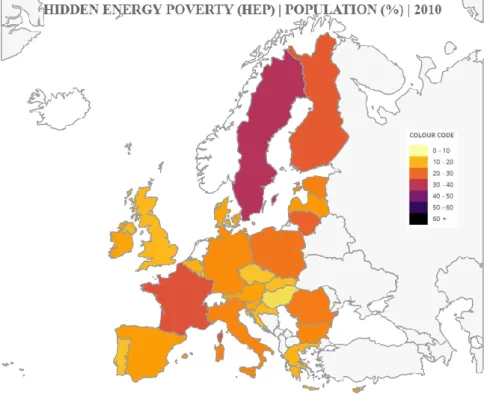
The EU average is much higher for this indicator compared to the previous two indicators, with 16.3% of households facing disproportionately high expenses. While this may be due to high energy efficiency standards, it is also an indication that households are dangerously underusing energy. Taking a closer look at the country means in Table 6, we see that Sweden (31.0%), France (23.7%) and Finland (22.3%) have the highest rates of households with abnormally low expenses.
In Table 7 we find that in 2007 a third or more of households reported that they were not comfortably cool during the summer in eight Member States. The EU28 average for the proportion of homes that are not comfortably cool during summer time was 19.2% in 2012. Considering that a large proportion of Bulgarian households report that their home is uncomfortably hot during summer, only 8.4% of households have an air conditioning unit.
Indicator Gaps
In Spain, the economic crisis contributes to and worsens energy poverty, especially with the increase in unemployment since 2008, rising energy prices and the implementation of austerity measures. She and her children, who had been squatting in this house since 2016, returned to find that thieves had broken in and stolen the windows, the wall sockets and the entire water and electricity installation.
Measures to Tackle Energy Poverty
Existing European Legislation
In addition, in the framework of EU inter-institutional negotiations, political agreement was reached on three additional pieces of legislation relevant to energy poverty: the directive on renewable energy sources and energy efficiency and on the governance of the Energy Union. Of these, the Energy Efficiency Directive and the Management Regulation contain a number of specific provisions related to energy poverty, including the setting of ambitious and comprehensive energy efficiency targets, the creation of transparent, publicly available national rules on the allocation of heating, cooling and hot water costs in multi-apartment and multipurpose buildings and the strengthening of the rules on individual measurement and billing of thermal energy (Energy Efficiency Directive). The integration of the principle "Energy efficiency first" is also foreseen when deciding on new investments in infrastructure, the obligation to report on energy poverty, and the determination of energy poverty reduction goals in national energy and climate plans (management regulation).
Overview of Member State Approaches
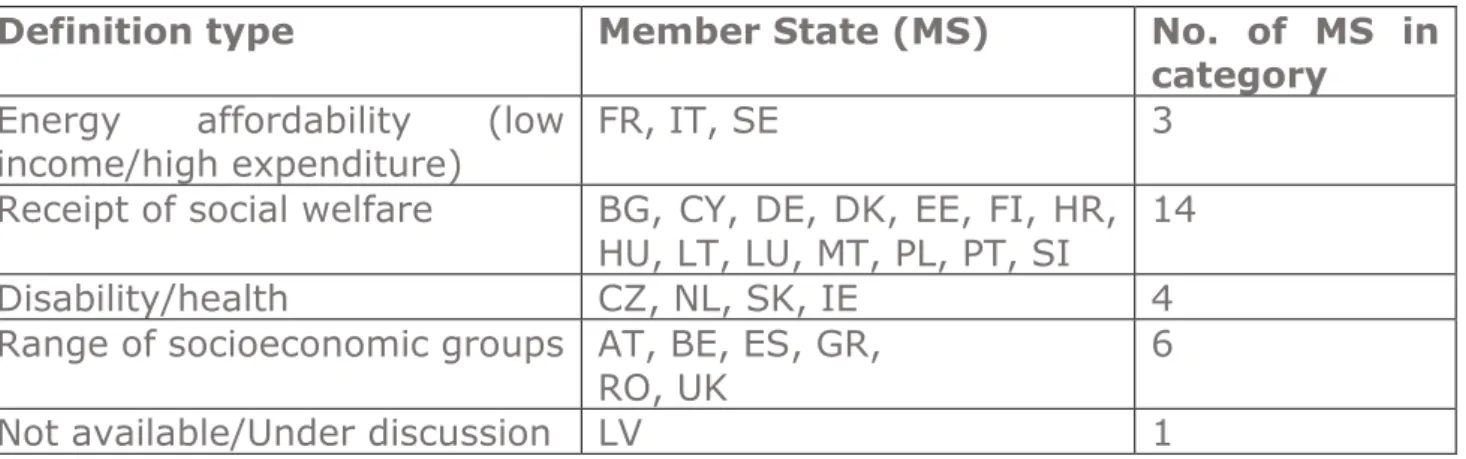
Not available/Under discussion LV 1. Within the Insight_E project on energy poverty and vulnerable consumers in the energy sector across the EU by Pye et al. 2015), a distinction was made between two Member States' approaches: social policy-led and energy policy-led. The social policy-led approach focuses primarily on tackling energy poverty through social security, while the energy policy-led approach focuses more explicitly on energy poverty through specific measures. This distinction is valuable in order to understand the basic political attitude of national governments towards energy poverty.
Measures that are more targeted to a specific vulnerable group, such as pensioners, social housing or heating oil users, will generally be more effective in tackling energy poverty than non-targeted measures. In particular, some countries in Northern and Western Europe have developed a well-functioning system of social housing that provides low-income households with decent energy-efficient housing, which is an important factor contributing to the relatively low levels of energy poverty in this area. territory. Many countries in Eastern Europe also provide social support to low-income households to tackle energy poverty, but the housing stock may not be of sufficient quality to avoid energy poverty.
Compared to social support, more specifically targeted measures for energy poverty are energy bill support and social tariffs, which provide direct financial support to households to pay their energy bills. However, they do not provide a long-term solution to energy poverty by improving the energy situation of households (eg better energy efficiency). These targeted measures are a very effective way to tackle energy poverty in the long term.
Recommendations
These should be adapted to local circumstances, in terms of climate, housing quality and energy cost structure;. Key stakeholders, including the EPOV, should be involved in helping to develop non-stigmatizing policy frameworks. The implementation of energy efficiency schemes can reduce the level of energy poverty and bring a range of other energy and non-energy benefits;
There is a need for closer integration with cohesion and regional development instruments, and the integration of energy policy into urban and regional planning. It is essential that any barriers to receiving energy efficiency investment are identified and removed to ensure that the most vulnerable households can benefit from interventions. Measures that are more targeted at a specific vulnerable group, such as social housing or heating oil users, will generally be more effective in tackling energy poverty than non-targeted measures;.
A European ban on winter shutdowns is an important goal, along with better mechanisms for collective transition. Both social policy and energy policy mechanisms need to be used, especially as energy poverty does not fully overlap with income poverty and has a number of infrastructural causes.
Conclusions
From these findings, it is clear that energy poverty is an important societal challenge that urgently needs to be addressed by member states. Living in inadequately heated or cooled homes is known to have adverse impacts on respiratory, circulatory and cardiovascular systems, as well as mental health and well-being. Energy poverty has also been shown to exert wider economic and political impacts, beyond the private domain of the home.
Electrical safety - The International Federation for the Safety of Electricity Users (Fisuel) has recently requested new indicators on this topic15. Cooling and summer time issues - especially since Eurostat stopped collecting the air conditioning indicator following the 2007 ad hoc module and will soon stop collecting the 'comfortably cool apartment in summer' indicator. The report also examined measures to combat energy poverty, both in terms of EU legislative requirements and national policy definitions of energy poverty and vulnerable consumers, as well as practical schemes to help households.
In this regard, it is expected that EPOV will become an important decision support tool for the new EU-wide energy policy, regulation and legislation that will be developed in the near future.
Appendices
Project Consortium
Members of the Advisory Board
Member State definitions of vulnerable customers
Cyprus law reviews have stated that vulnerable consumers as they are linked to energy poverty are defined based on the types of financial assistance they receive through national welfare services. In addition, the Minister's order also provides for a series of measures aimed at tackling energy poverty and supporting consumers in need. Protection against disconnection - available only to vulnerable consumers with serious medical conditions, subject to examination by a relevant medical board.
Denmark There are no specific provisions regarding vulnerable customers in the energy legislation; instead, this issue is regulated in social legislation. Finland In the Energy Market Act, they are defined in connection with the disconnection of electricity. The concept of basic rights is also in the constitution and the social security legislation defines the target groups.
Latvia There is no clear definition of vulnerable consumers yet, but there are plans to introduce several measures to inform and support vulnerable consumers. Vulnerable consumers include household electricity consumers who receive or live with other people who receive social financial assistance under the Cash Assistance for Low-Income Families (Single Residents) Act. Romania Vulnerable customers are defined as low-income household consumers within the limits set out in Regulation 27/2013.