No part of this publication may be reproduced, stored in a retrieval system, or transmitted in any form or by any means, electronic, mechanical, photocopying, recording, scanning or otherwise, except as permitted by section 107 or 108 of the 1976 United States Copyright Act, without the prior written permission of the publisher, or authorization by payment of the applicable per copy fee to the Copyright Clearance Center, Inc., 222 Rosewood Drive, Danvers, MA, fax or on the Internet at www. .copyright.com. Limitation of Liability/Disclaimer of Warranty: Although the publisher and author have used their best efforts in the preparation of this book, they make no representations or warranties as to the accuracy or completeness of the contents of this book and specifically disclaim any implied guarantees. of merchantability or fitness for a particular purpose.
A RETROSPECTIVE AND FORENSIC APPROACH TO ASSESSMENT OF FUNGAL GROWTH IN THE
MICROBIAL REMEDIATION IN NONINDUSTRIAL
Bacteria are especially common in the indoor environment, where growth may be the result of water damage. The assessment and investigation approach focuses on evaluating the conditions of growth and contamination in the indoor environment rather than assessing human exposure.
INTRODUCTION TO
MICROBIOLOGICAL GROWTH AND CONTAMINATION INDOORS
- INTRODUCTION
- HEALTH EFFECTS OF INDOOR FUNGAL AND BACTERIAL GROWTH
- TEAM AND INDIVIDUAL EXPERTISE
- APPROACH OF THIS BOOK
- CONCLUSIONS
A chapter on the retrospective and forensic approach to the assessment of mold growth in the indoor environment. There is enormous interest in the effects of microbial contamination in the indoor environment.
CONDUCTING BUILDING MOLD INVESTIGATIONS
INTRODUCTION
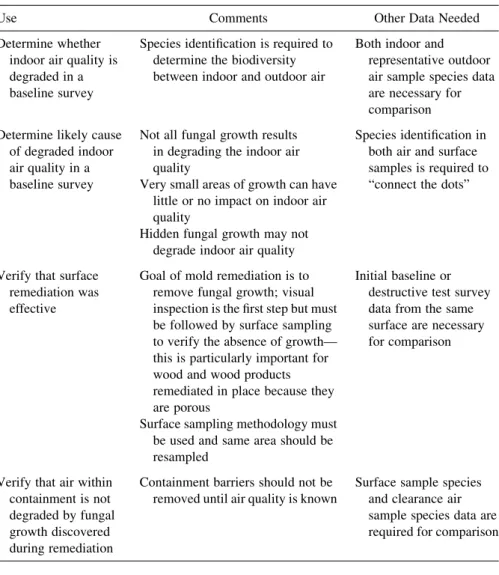
Destructive testing Consists of taking surface samples on surfaces hidden from view in the basic investigation. Determine if the contents are contaminated by the base-documented and destructive fungal growth species.

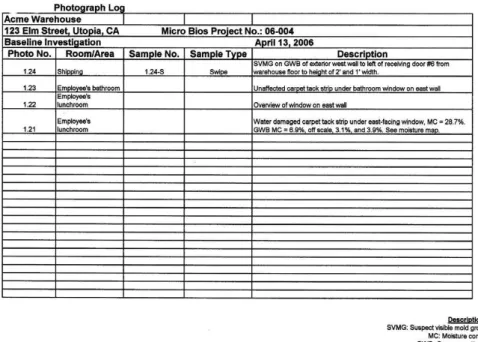
BASELINE INVESTIGATION
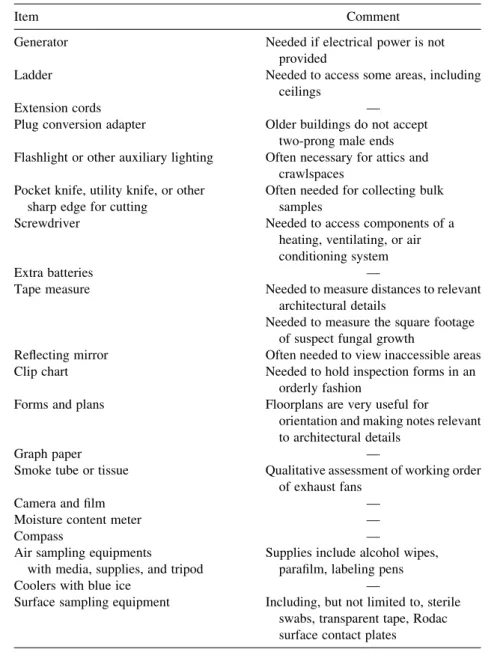
Suspected fungal growth is verified by surface sampling using an appropriate method after air sampling is completed to avoid potential bias in air sample data. Reference ambient air samples should be collected at the ambient air intake of the air handling unit(s) serving the building whenever possible.
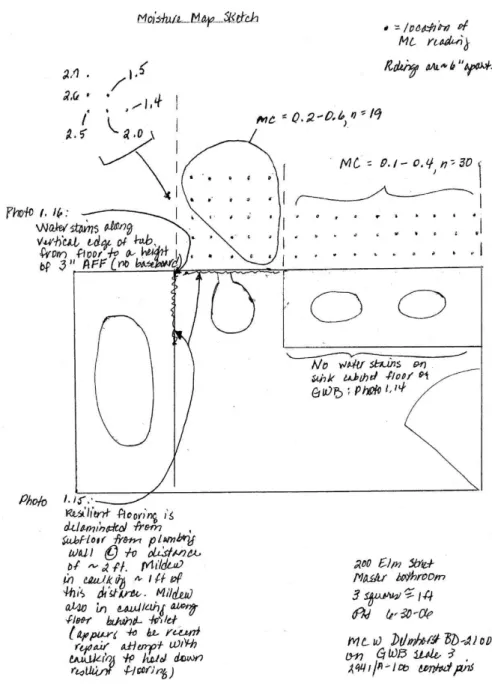
DESTRUCTIVE TESTING INVESTIGATION
It is well known that vigorous mechanical disturbance (such as that involved in destructive testing and mold remediation) can generate high concentrations of airborne fungal spores.21 Thus, destructive testing should be restrained so as not to spread contamination outside. control. . The results of a destructive test study are used to prepare a job site for mold remediation.
SAMPLING DURING MOLD REMEDIATION OVERSIGHT AND CLEARANCE
CONCLUSIONS
American Industrial Hygiene Association, Field Guide to the Determination of Biological Contaminants in Environmental Samples, AIHA Publications. American Industrial Hygiene Association, Field Guide for the Determination of Biological Contaminants in Environmental Samples, 2nd ed., AIHA Publications, Fairfax, VA, 2004.
MICROBIOLOGICAL SAMPLING STRATEGIES IN INDOOR
ENVIRONMENTS
INTRODUCTION
SAMPLING STRATEGY
Conversely, a more focused sampling plan may seek to determine whether specific microbial agents are involved, such as Legionella pneumophilaserogroup 1 or thermotolerant Aspergillus fumigatus or A. In summary, the investigator must have a thorough understanding of the building's condition before developing a sampling plan. 11.
SPATIAL OR LOCATION VARIABLES
Indoor activities such as vacuuming are known to increase bioaerosol concentrations.12 Other activities such as walking around and sitting up and down on upholstered furniture can result in a "personal cloud effect"13 where the airborne particle level in the immediate vicinity of the active person is higher than the particle level in other parts of the same room. If the purpose of the evaluation is to document the personal cloud around the active resident, a personal sampling strategy is needed.
TEMPORAL (TIME) VARIABLES
It may therefore be important for the researcher to determine whether personal or area sampling is appropriate. It is also important that the researcher notes the presence of open windows and doors during sampling, which directly affects the infiltration of phylloplane fungal spores into indoor air.
INDOOR/OUTDOOR COMPARISONS
Outdoor samples should not be collected by placing the sampler just outside an open window or by placing the sampler on a porch or patio of the building being evaluated. For example, during periods when the ground and outdoor vegetation are covered by snow, few, if any, fungi are found outdoors.
COMPLAINT AND NONCOMPLAINT ZONES
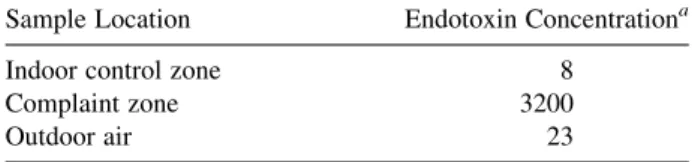
These outdoor sites just outside the building envelope are rapidly affected by pollutants originating from the indoor environment. Air sampling for endotoxin was then performed in the humidifier-affected zone, as well as in an indoor control zone (no humidifier) and in ambient air.
SOURCE AND AIR SAMPLES
BULK SAMPLES
Thus, dirty and clean samples should be placed in separate, sealed containers in the same shipping box or in different shipping boxes.18 In addition, bulk material samples collected moist or wet should be packed with a desiccant at approximately 58 °C (418 F). to reduce growth during shipment to the laboratory. Sampling was also carried out from workplace control locations (water pipes) and from homes of affected employees (Table 3.5). pneumophila serogroup 1 was present in the workplace water system, but not in well water serving the workplace or in the water systems of affected homes.
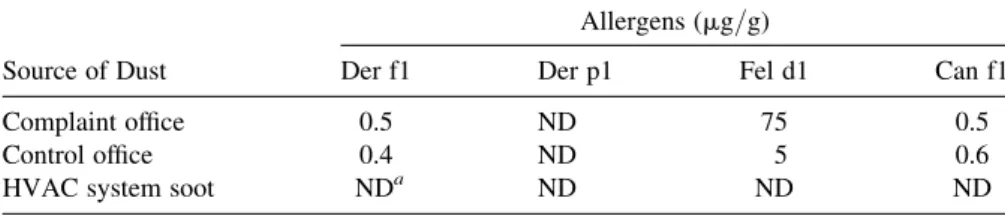
DUST SAMPLES
In the example in Table 3.6, Penicillium/Aspergillus spores made up more than 95% of the airborne forms collected by spore trap. Previous physical inspection of the building envelope showed that biodeterioration involving extensive Stachybotrys growth had occurred on building paper and sheathing in the envelope wall.
SURFACE SAMPLING
Duct tape sampling is useful in detecting the presence of fungal microcolonies (initial mold growth) on surfaces where the growth is not visible to the naked eye. An obvious limitation of whole-tep sampling is that it cannot be used to determine whether mold growth is occurring in a porous material such as carpet or upholstery.
CULTURE PLATE IMPACTIONS AND LIQUID IMPINGERS Sampling for culturable bioaerosols may be carried out by impaction (e.g., single-
The collection fluid can be applied simultaneously to different culture media, selective for the growth of different types of fungi or bacteria. A necessary requirement for the use of impactors on a culture plate is the selection of a suitable medium for the growth of the fungi or bacteria being studied.
SPORE TRAP SAMPLERS
A comparison of Tables 3.6 and 3.11 illustrates the differences between mold air sampling by culture plate impaction and spore trap sampling. In the spore trap sample (Table 3.6) Penicillium and Aspergillus species are combined in the morphological genus Penicillium – Aspergillus.
SAMPLING BY FILTRATION
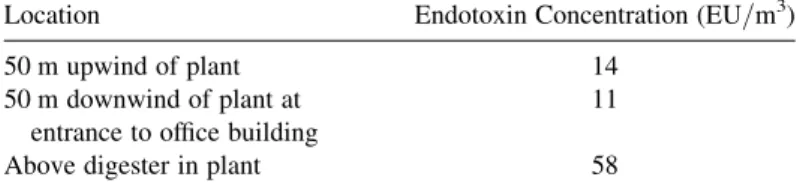
The concentrations of endotoxin in the outdoor air around the office building were similar to those upwind of the sewage plant (Table 3.12). The endotoxin concentration in the waste water plant was only slightly elevated compared to the concentrations in the outside air near the office building and up towards the plant.
CONCLUSIONS
ACGIH, Data Interpretation, Evaluation and Control of Bioaerosols, American Conference of Governmental Industrial Hygienists, Cincinnati, OH, 1999, Chapter 7, p. Macher, Air Sampling, Assessment and Control of Bioaerosols, American Conference of Governmental Industrial Hygienists, Cincinnati, OH, 1999, Chapter 11, p.
MICROSCOPIC ANALYTICAL METHODS FOR FUNGI
INTRODUCTION
PRINCIPLES AND USAGE OF MICROSCOPES 1. Microscopes
It requires a special set of lenses with phase rings located in the rear focal plane of the lens. The American Industrial Hygiene Association (AIHA) Policy Module 2D, Section 2D.3.1.2 states: "The laboratory must have at least one compound microscope with low, high power and 100 oil immersion objectives." Ideally, all targets should be parfocal and parcentric to minimize refocusing.
ASEPTIC TECHNIQUE AND BIOSAFETY
SAMPLE PREPARATION FOR SPORE COUNT
MATERIALS NEEDED FOR PREPARING SAMPLES
If the sample is to be prepared with the collection side up, place a drop of clear nail polish on each of the four corners of the sample slide. This preparation and mounting method significantly reduces the working distance between the specimen and the objective lens due to the thickness of the coating.
STAINING AND MOUNTING TECHNIQUES
The mountant is then applied, a coverslip is gently placed over the sample, and 25–50% or a fixed area of the filter area is examined. Since water evaporates quickly, it must be constantly added to the preparation of the slide to prevent dehydration of the material.
PROCEDURES FOR IDENTIFICATION AND QUANTIFICATION OF SPORE TRAPS
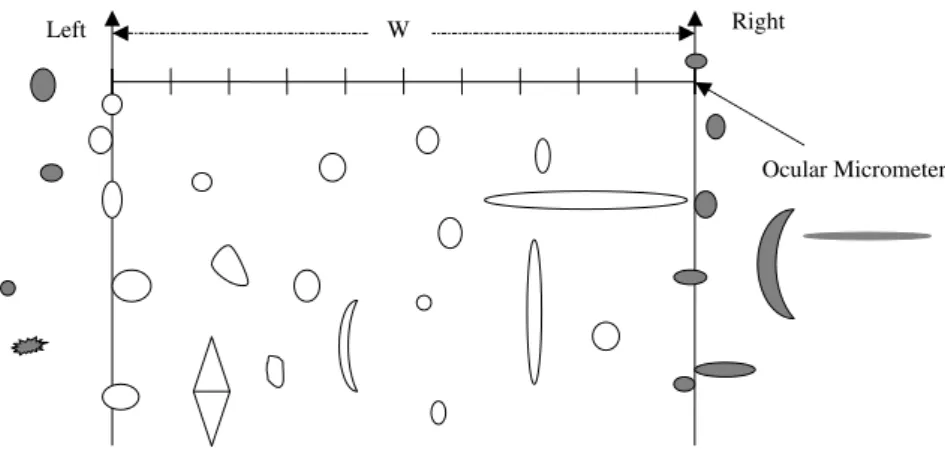
Both the diameter of the lens and the field of view are used to calculate the number of fields needed to cover all or part of the track if the random field method is used. The main advantage of the micrometer method is the analysis of a narrower but more manageable analytical area.
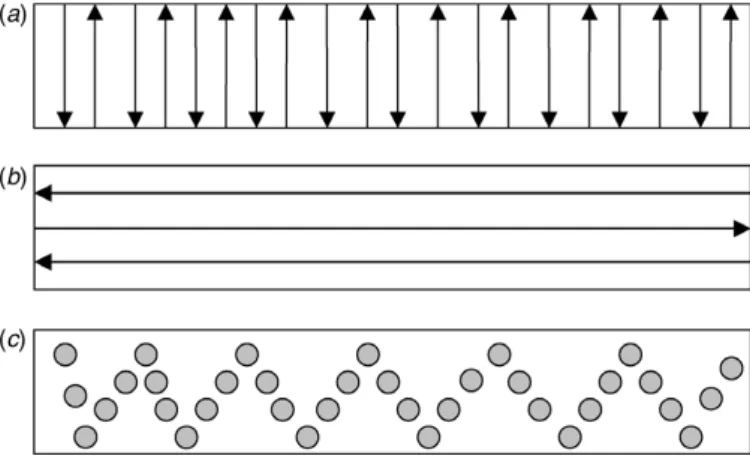
TECHNIQUES FOR SPORE COUNT ANALYSIS The following steps are recommended
Read.20 passes randomly (or enough to cover a minimum of 25% of the track) along the entire length of the sample. The number of counted fields must correspond to at least 25% of the tape area.
BACKGROUND PARTICULATES (NONSPORE MISCELLANEOUS MATERIALS)
Currently, there are no general standards or guidelines for reporting, assessing, or interpreting background particles. Due to the variability of the background particles and fiber composition, there are no correlations between background information and health problems.
LIMITS OF DETECTION
DATA PRESENTATION
VARIATION OF REPLICATIONS AND DUPLICATIONS
SAMPLE PREPARATION FOR DIRECT EXAMINATION OR FROM CULTURES
For a fast growing colony, the tape should be lifted at the edge of the colony as the center of the colony contains the oldest reproductive structures. The advantage of this method is that the wet mount is prepared without a layer of tape and provides better resolution of the mold structures.
EVALUATION OF FUNGAL INFESTATION
When examining bulk samples, it is relatively easier to assess fungal contamination, as the presence of fungal colonies can be obtained by observing discoloration or fungal growth of the samples. For bulk samples, in case of doubt, confirmation of the presence of conidiophores can be achieved by rubbing and/or removing the conidia from the colony to expose the reproductive structures and mycelia and then prepare another tape lift.
TRAINING OF MICROSCOPY ANALYSTS
The trace can also originate from an outdoor source or from contaminated materials. Replications and duplications should be performed routinely for not only quality control but also skill improvement of microscopic analysis.
QUALITY ASSURANCE/QUALITY CONTROL PROCEDURES
Quality assurance and quality control related to the results of microscopic analyzes of fungi should be qualitative, quantitative and semi-quantitative. Such discrepancy shall be documented, including an explanation for the discrepancy, resolution, and appropriate corrective action.
WEB RESOURCES
Davidson, Specimen Contrast in Optical Microscopy (accessed at www.microscopyu.com/articles/formulas/. specimencontrast.html on 12 Dec 2005). Davidson, Specialized Microscope Objectives (accessed at http://www.microscopyu.com/articles/optics/objectivespecial.html on 12 Dec 2005).
CULTURE-BASED ANALYTICAL METHODS FOR INVESTIGATION
- ADVANTAGES AND LIMITATIONS OF CULTURE-BASED ANALYTICAL METHODS
- FACTORS INFLUENCING THE RESULTS OF CULTURE-BASED ANALYSIS
- CULTURABLE SAMPLING CONSIDERATIONS
- SAMPLE PREPARATION METHODS
- IDENTIFICATION OF FILAMENTOUS FUNGI
- DATA REPORTING
- DATA INTERPRETATION
- LABORATORY QUALITY ASSURANCE
When most of the alcohol has evaporated, a drop of lactic acid (for observing spore ornamentation using phase contrast) or lactofussin stain, or other mycological stain (for observing hyphae and conidiophores using bright field) is added to the sample added the glass plate. . Data from a culture-based analytical report confirms both the presence and viability of the detected fungal spores.
AIRBORNE BACTERIA IN INDOOR ENVIRONMENTS
- INTRODUCTION
- BACTERIAL AEROSOLS
- SELECTED BACTERIA-ASSOCIATED HEALTH EFFECTS
- ANALYSIS OF SAMPLES FOR AIRBORNE BACTERIA
- SUMMARY
Amagliani, Assessment of the environmental impact of microbial aerosols generated by wastewater treatment plants using different aeration systems, J. Larsson, Investigation of the concentration of bacteria and their cell envelope components in the indoor air of two elementary schools , J.
GENETICS-BASED ANALYTICAL METHODS FOR BACTERIA AND
ENVIRONMENT
INTRODUCTION
However, it is reasonable to expect that each of these limitations will diminish in the future, making genetic microbial testing methods an increasingly attractive option for many clinical and environmental applications. Other current strengths and limitations of these methods and their prospects for the future are also discussed in Section 7.5.
GENETICS-BASED ANALYTICAL TECHNIQUES 1. In Vitro Nucleic Acid Amplification
Each repetition of these three steps is referred to as athermal cycling which theoretically results in a doubling of the amount of target DNA present in the reaction. One of the most recent and perhaps significant modifications of this technique is real-time PCR.
APPLICATIONS OF GENETICS-BASED METHODS FOR INDOOR MICROBIOLOGICAL ANALYSES
Other practical applications of indoor dust sample analyzes using the real-time PCR technique have been reported for the characterization of normal and water-damaged buildings, based on the mold and bacterial populations present.83,87,88 A number of environmental samples and sample preparation methods have been developed and evaluated. to support PCR and other genetics-based analyzes of diverse indoor microorganisms. As with genetics-based detection methods, the most common uses of genetic strain typing and nucleic acid sequencing have been for the identification of microbial isolates from hospital environments.
QUALITY CONTROL/QUALITY ASSURANCE AND OTHER CHALLENGES
The first step in solving false-negative problems is to develop validated sample preparation and analysis procedures that define the expected performance of the overall method. In addition, purification procedures designed to increase the fractions of the extracted samples that can be analyzed without inhibition often tend to lower the recovery efficiency of the nucleic acids from the original samples.
OUTLOOK FOR THE FUTURE
Tsai, Polymerase chain reaction used for the detection of airborne Mycobacterium tuberculosis in health care settings, Am. Sonntag, Comparison of polymerase chain reaction and conventional culture for the detection of Legionella in hospital water samples, J.
WOOD IN THE BUILT
ENVIRONMENT—CONDITIONS FOR MOLD AND DECAY
INTRODUCTION
MOLDS AND WOOD DECAY FUNGI
Soft rot is a type of wood decay characterized by the formation of diamond-shaped cavities in the wood cell wall (Fig. 8.3a). Soft rot fungi include such ubiquitous species as Alternaria alternata and some species of Aspergillus, Penicillium and Cladosporium.2,5,6.

MOISTURE REQUIREMENTS FOR GROWTH OF MOLDS AND WOOD DECAY FUNGI
WATER AND WOOD—RELATIVE HUMIDITY VERSUS MOISTURE CONTENT
The fiber saturation point (FSP) is the moisture content of wood where the bound water is the maximum and any additional water must exist as free water. Equilibrium moisture content (EMC) is based on the percentage of moisture by weight of oven-dry wood.
MOISTURE REQUIREMENTS FOR FUNGAL GROWTH
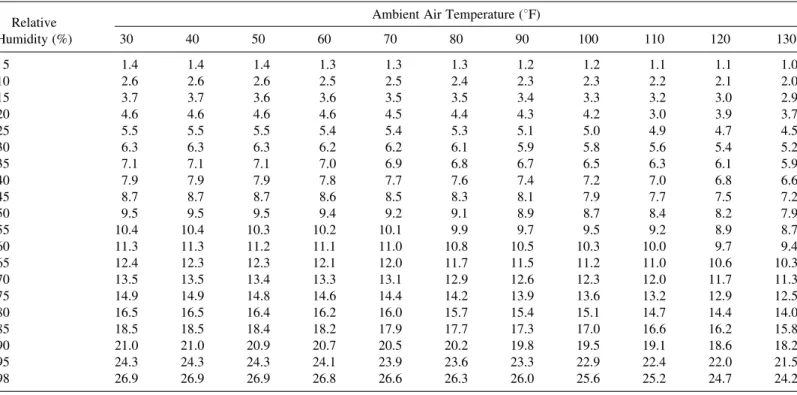
This provided evidence that organic "dirt" in a substrate will facilitate growth under lower relative humidity conditions. According to their model, below 208C the minimum relative humidity required for growth increases to 82% at 108C and 88% at 58C24.
THE EFFECT OF CHANGING MOISTURE AND TEMPERATURE CONDITIONS
Although knowing the minimum moisture tolerance is important in predicting mold growth, the occurrence of mold is much greater and has a much greater impact when the relative humidity is much higher, greater than 90%, or in cases where surfaces are wet from condensation. or where there is excess moisture due to leaks. According to their mold index, at temperatures above 208C, the critical relative humidity is always 80%, while at temperatures below or equal to 208C, the critical relative humidity for mold growth is described by the formula.
SUSCEPTIBILITY OF BUILDING MATERIALS TO MOLD
On the other hand, the absence of visible mold growth is not always an indicator of good air quality as growth can occur within walls or other spaces hidden from view. Because spores from latent mold growth significantly altered the fungal composition of indoor air31 and visible mold does not always correlate with bioaerosol concentration, the presence or absence of visible mold is not always a good indicator of indoor air quality. .
THE EFFECTS OF BUILDING DESIGN AND CONSTRUCTION
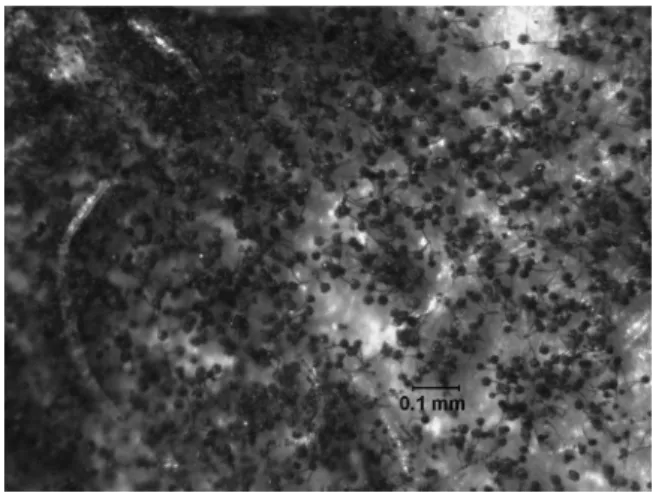
Photo courtesy of Dr. Edson Setliff, assistant professor, State University of New York State College of Environmental Science and Forestry, Syracuse, NY.). Problems in buildings caused by bad construction practices. a) improper installation of a window that allowed water to penetrate the wall below the window and rot to occur; (b) mushroom fruiting bodies showing extensive and elongated mushroom growth that began within the wall cavity, eventually growing through cracks in the wall and through openings from electrical outlets.

TECHNIQUES FOR ASSESSMENT OF WOOD DECAY AND MOLD IN BUILDINGS
To measure the moisture content of wood or other materials, electrical resistance moisture meters are commonly used. Microscopic examination of wood samples is another technique that can determine the types of decay that are present.
SUMMARY
Forest Products Laboratory, Wood Handbook—Wood as an Engineering Material, General Technical Report FPL-GTR-113, U.S. Nielsen, Mould growth on building materials under low water activities: Influence of humidity and temperature on fungal growth and sekondêre metabolisme, Internat.
USE OF STATISTICAL TOOLS FOR DATA PRESENTATION
INTRODUCTION
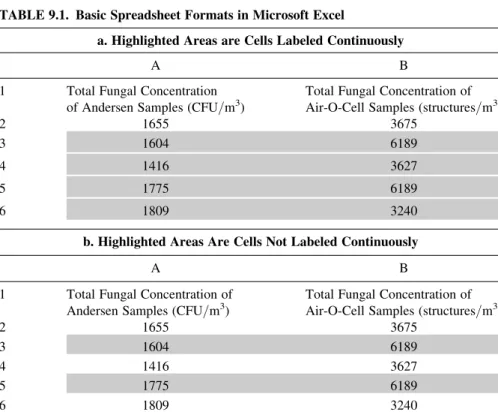
Microsoft Excel is the primary software used as an application tool for data analysis and interpretation in this chapter. More advanced statistical packages, S plus and SAS, are described when functions in Microsoft Excel are not available for specific data presentation or analysis procedures.
DESCRIPTIVE ANALYSIS
The value for kurtosis can be as small as 23 for a flat distribution with short tails, 0 for a normal distribution, and positive for tails that are heavier than a normal distribution.5 Skewness is the parameter that shows the symmetry relative to the mean of the describe data distribution. Microsoft Excel is an excellent package for describing data in various types of graphs and charts [eg.
CORRELATION