This study analyzed the features of the language used by the parties to the conflict, as well as their perception of language and communication in conflict situations. In the Greek intellectual tradition, Aristotle declares that “speech is a representation of the mind” (Robins, 19).
STATEMENT OF THE PROBLEM
For Samuel et al., political control of the area has been the main source of conflict, as the Berom, Anaguta and Afizere indigenous groups (mainly Christians) and the Hausa-Fulani (mainly Muslims) often engage in violent clashes with each other. . Unfortunately, this peaceful scenario was shattered when issues surrounding the political control of the Jos North Local Government Area, which was created in 1991 from the defunct Jos Local Government Area, developed into a violent conflict in 1994.
RESEARCH QUESTIONS
AIM AND OBJECTIVES OF THE STUDY
SIGNIFICANCE OF THE STUDY
This opens a window to the fact that language use is not only determined by context, but language itself also creates the situation. The study is useful for researchers in peace and conflict resolution and also for the government.
THEORETICAL FRAMEWORK
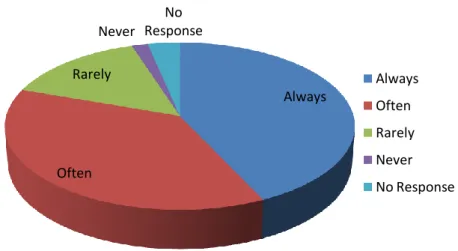
The locus of the important causes of war [is] in human nature. The following are some of the characteristics of the language used during the Jos crises. One hundred and thirty of the respondents indicated that they would always verify any information they received.
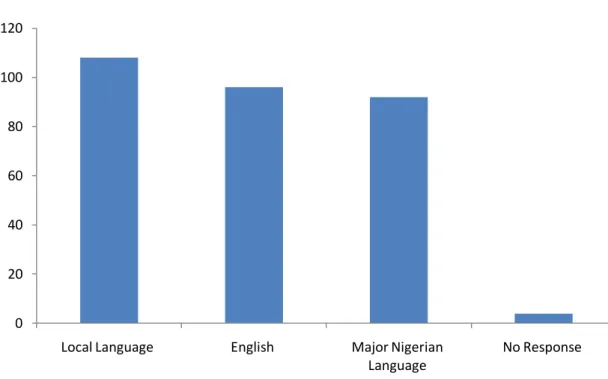
It also depends on the composition of the particular area in which the language is used. For peacefulness, respondents indicated that they would prefer to be addressed by a government official. 90 respondents indicated that they would prefer to be addressed in their local language.
Eighty-five of the respondents would prefer to use the English language.

DELIMITATIONS OF THE STUDY
CONFLICT IN SOCIETY
Although conflict can be a danger, it is possible to transform it in a way that it responds to positive management and resolution, with the will and cooperation of the parties involved in the conflict. One branch presupposes its arguments about the functionality of conflicts in the historical processes of the development of human societies from the primitive age to the modern era.
BACKGROUND AND CONTEXTS OF CONFLICTS
But unfortunately, most of the democratizing countries are unable to accommodate these movements as democratic institutions and norms are not well established in these countries. As a result, violent ethnopolitical conflicts are expected to be more common and frequent in democratizing countries than in countries with well-established and stable democracies.
STAGES IN CONFLICT
These factors have been identified as the attitudes, interests, needs and fears of the parties involved (Bedste 130). However, it is only when the needs and fears of the opposing parties are addressed that the conflict can be resolved or transformed.
LANGUAGE AND CONFLICT
There is a relationship between the language used in conflict and for representing the conflict and the personal and contextual meaning of the conflict itself. The meaning of the conflict structures the language and the intensity of the language used in it.
LANGUAGE AND POWER
Power is not only obtained and maintained through violence or other means, but also through indirect means such as the use of language. In a way, the "power of language" has been made to mean the "language of power" in the sense that power must employ the use of language to express and display itself and to command; it is the use of language for the purpose of exercising authority.
ETHNICITY AND CONFLICT
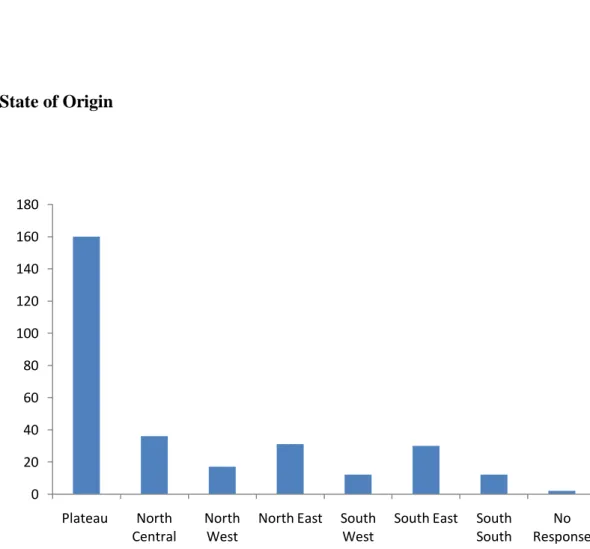
160 of the respondents were from Plateau State and 36 from other states in the North Central Zone. Seventy-five of the respondents said they would use any of the three main Nigerian languages (Hausa, Yoruba and Igbo). To identify a stranger in times of crisis the respondents indicated that they could do so on the basis of language.
Thirty-nine (13%) respondents indicated that they recognize a stranger based on his clothing. One hundred and six said they would prefer to use any of the three main Nigerian languages.
THE JOS CRISES
CAUSES OF THE CONFLICT
The conflict in Jos is viewed from different angles by various researchers and observers. Looking at the conflict from a political angle, Best argues that those who believe the cause of the conflict is political draw attention to the competition between the indigenous people and the Hausa/Fulani to gain control of the local government of Jos North and all the political means that flow from it. of it. Disputes over whether or not Jos should be North Local Government and what its boundaries should be also highlight the political causes of the conflict.
LANGUAGE, ETHNICITY AND IDENTITY
Such distinctive traits are usually shared by members of the ethnic group in question, and not by others outside it. This explains the fact that the number of speakers of a language is not the same as an ethnicity. Language in itself is crucial: according to this view, language is one of the factors that determine ethnicity, and in fact the most powerful factor that in itself maintains an enduring distinctiveness of an ethnic group.
EMPIRICAL STUDIES ON THE JOS CRISES AND OTHER
Dalyop conducted a lexico-semantic study of the reports on the Church of Christ in Nations (COCIN) headquarters and St. did not improve mutual understanding of the crisis situation because there were conflicting currents and tones in the reporting, depending on the side from which the story originated".218. In another perspective, Dooga advocates the use of the language of war to frame it for peace.
SUMMARY OF LITERATURE REVIEW
Furthermore, some scholars have examined the type of language used by the mass media in their reporting of the Jos crises in the last decade. However, none of the papers, to the researcher's knowledge, have recorded and analyzed the verbal exchanges (directly or indirectly) between the parties involved in the Jos crises. This study is an examination of patterns of language use and communication in conflict situations, focusing on Jos and environs.
SOURCES AND INSTRUMENTS OF DATA COLLECTION - 83
Copies of the questionnaire were distributed to community members at various locations within the study area. The questionnaire was used to collect examples of people's feelings towards the conflict in general and the role language played in the conflict in particular. Before starting work, the assistants were sufficiently instructed and informed about the task to be performed and their role in the entire project.
STUDY POPULATION AND SAMPLING PROCEDURE
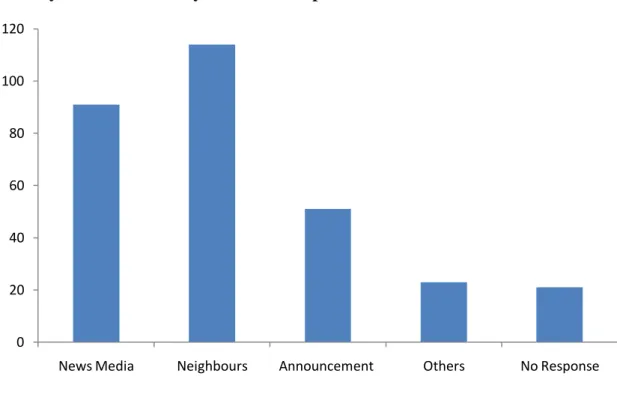
Twenty-three of the respondents indicated that they got information about the crises in other ways than those given. Furthermore, eight of the respondents said that they never did any verification on information received during the crises. To state their grievances in times of conflict, seventy-four of the respondents indicated that they would prefer the use of their local language.
METHOD OF DATA ANAYSIS
STUDY AREA
This popularity and acceptable position, coupled with the growth of the tin mining industry, continued to attract more people to the plateau. Following Halliday's Systemic Functional Linguistics, a critical discourse analysis of the verbal exchanges between the parties in conflict and third parties will be conducted. The context of culture, on the other hand, refers to the broader institutional and cultural environment that consists of the context of the situation (Locke, 18-19).
NEGATIVE LABELLING
The field of discourse: This refers to what a text is about and reveals what is happening or the action taking place. Tenor of Discourse: This refers to the participants, their relationship, their roles and status in relation to each other. Tenor of Discourse: The participants in the discourse are mostly the parties to the conflict (members of the opposing groups) who see each other as opponents.
THREATS
The authors of this statement considered the actions of their opponents to be completely evil, and since the Devil is the embodiment of all evil, they collectively called the opponents the Devil. The statement does not literally refer to the Devil per se. Some of the governor's statements seem not to have gone down well with the Jos North Local. The statement that "the devil has no packing (sic) room in Jos north" suggests that the persons being addressed are not welcome.
SARCASM
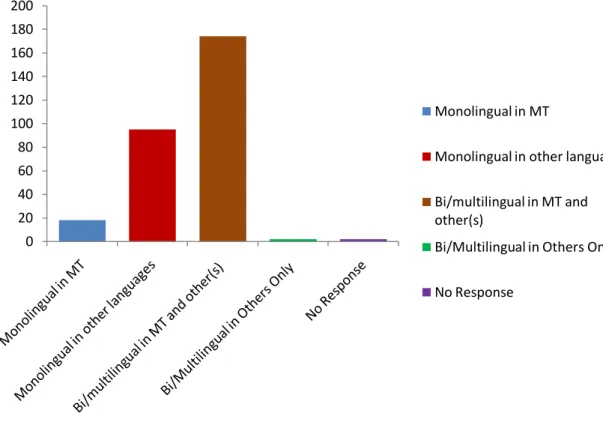
Information from Table 8 shows that 57 (19%) of the respondents were civil servants while of them were traders. 48 (16%) of the respondents indicated that they were also monolingual, but in languages other than their own mother tongue. Five of the respondents indicated that people in their localities discussed crises in ways other than the options offered.
Furthermore, 44 of the respondents indicated that their interaction with people from other groups was rare. For a majority of those surveyed by them, they could identify a stranger by his physical appearance.
CODEWORDS
EXAGGERATION
At the time of the report, the crisis had not gone beyond the Jos-Bukuru area. The semantic implication of the caption "Death on the Plateau" is that there is a great wave of death in the place being described. In the crises studied, they were used to elicit unnecessary sympathy and create a bad image of the opponents.
RUMOUR PEDDLING
Tenor: Those involved are both parties to the conflict and third-party individuals or groups that refer to the events during the crises. Tenor: Those involved are parties to the conflict as well as third parties or outsiders. Some of the outsiders may or may not have a direct relationship with the parties to the conflict.
MISINTERPRETATIONS
Field: Dissemination of unverified information that may be inaccurate, incomplete or even false. In semantics, it means understanding something said or done in a way that differs from the true meaning. Tenor: Those involved range from parties to the conflict to third parties or the general public who overheard conversations or saw certain actions during the crisis.
INCITING REMARKS
Incitement usually draws people into action, and even when they have not yet taken issues seriously, their mindset will immediately begin to change, leading to the escalation of the crisis. The speakers are not necessarily involved in the problem, but what they say contributes greatly to the escalation of whatever problem is involved. Mode: The function of these remarks is to bring about the desired harm to the other party, and to satisfy the wishes of the instigator.
BLAME GAME, ACCUSATIONS AND COUNTER ACCUSATION
The data show that the respondents were bilingual or multilingual in their native and other languages. 85 respondents indicated that they would take rumors seriously, meaning that they would consider them correct regardless of whether they were true or not.
THIRD-P PARTY CONTRIBUTIONS
ANALYSIS OF DATA
The use of any of these languages will therefore depend on the composition of the community in which the respondents reside. On the other hand, 124 respondents stated that crises in their localities are discussed publicly. Six respondents did not answer this question, perhaps because they were not interested in foreigners.
For forty-one of the respondents, all of the aforementioned strategies are effective measures to resolve a conflict.
TOWARDS CONFLICT RESOLUTION
CONCLUSION
RECOMMENDATIONS
LIMITATIONS OF THE STUDY
SUGGESTIONS FOR FURTHER STUDY
CONTRIBUTION TO KNOWLEDGE