
A number of shortcomings were observed in relation to the detention of people with mental health disorders. The health and social service needs of people with mental health disorders are complex and variable.
The Québec Ombudsman’s mission
The purpose of this initiative
With regard to the latter objective, the Québec Ombudsman believes that incarceration and the need for care are not in conflict. The objective of imposing a reasonable punishment for a criminal offense is fully compatible with the objective of long-term rehabilitation for the offender, in order to obtain the best possible guarantee that he or she will no longer be a threat to public safety at the end of the prison term .
Complaints received
Visits to detention facilities
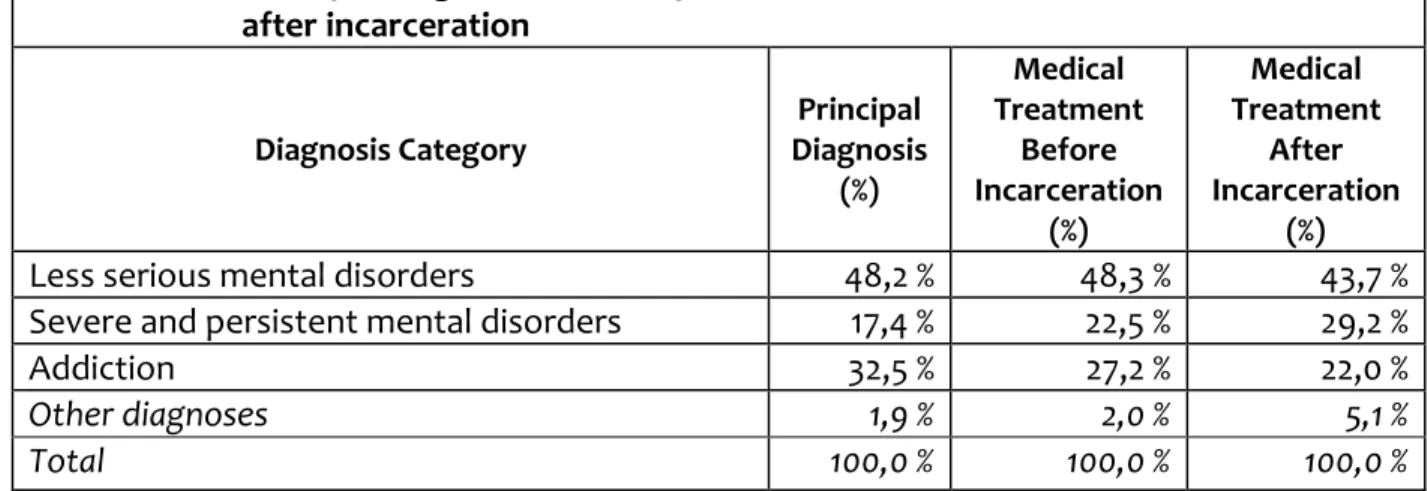
A profile of detention facility inmates, documented
A critical analysis of published evidence on initiatives offering alternatives
While not necessarily exhaustive, these data show higher rates of multiple probation and prior incarcerations among people with mental disorders. These data show that there are higher rates of multiple probation and prior incarcerations among people with mental disorders.
Prior to incarceration: Police interventions and
Police interventions
The police response to each of these situations will vary according to the cause of the behavior and the context in which the intervention is carried out. Therefore, case management is influenced by the types of crisis services provided, their availability at the right time and by the police officers.
Liaison and coordination of police force teams with
That the Ministrère de la Sécurité publique must work with the Ministrère de la Santé et Services sociaux to identify the need to support police officers in each region in managing psychosocial or psychiatric emergencies; The Department of Health and Human Services should enter into management agreements with health and social security agencies to establish targets that specify that the agencies must make available, in a specified order of priority, the services needed to assist police officers in managing psychosocial and psychiatric emergencies cases.
Police officer training for specialist interventions
The Ministry of Public Security and Social Affairs should submit an action plan and a timetable for the implementation of the preserved measures to the Ombudsman of Québec by March 31, 2012. The Ministry of Public Security must work with the École nationale de police and the Ministère de la Santé et des Services sociaux to develop a coherent, integrated training plan for police officers that will cover their basic training and continuous professional development and will aim to enrich their professional knowledge to able to work effectively with people suffering from a variety of problems such as substance abuse and homelessness.
Initiatives offering alternatives to judicial intervention
The difficulty of accessing appropriate
That the Ministère de la Sécurité publique must provide the Québec Ombudsman with a progress report on this issue together with a timetable for the implementation of the chosen measures no later than March 31, 2012. In the case of minor offences, the lack of resources limits the possibility of avoiding prosecution for persons, that do not pose a risk to public safety. A budget of $1.18 million was made available to support the Ministère de la Santé et des Services sociaux's commitment to consolidating emergency shelters for the homeless, and health and social services are committed to monitoring the provision of accommodation services within their respective territories.
That the Ministère de la Sécurité publique and the Ministère de la Santé et des Services Sociaux, in collaboration with other government partners in the homelessness plan, must ensure that target groups have fair and sufficient access to places in shelters or, where necessary, to drug addiction resources, so that police officers are able to direct people to the most appropriate places for their needs;. That the Ministère de la Santé et des Services Sociaux should estimate the number of places required in each region for these types of resources, in order to establish a realistic time frame for their development. That the Ministère de la Sécurité publique and the Ministère de la Santé et des Services Sociaux must submit an action plan and an implementation plan for the chosen measures to the Quebec Ombudsman by March 31, 2012.
Adapting the legal process
The legal criteria for fitness and the criteria used to diagnose mental health disorders are not the same XVIII. Like the Québec Ombudsman, the interministerial committee believes the principle of "the right person in the right place" should be applied by offering a range of services within which resources can be allocated in a manner consistent with the duty to provide care to those. who needs it, and with the legal obligation to choose the place that deprives the person the least of his or her freedom. However, the Québec Ombudsman's critical review of the scientific literature revealed very little real information on which to base the definition of an ideal mental health court27,48-57,63.
Given that there is very little evidence on which to base a definition of the ideal mental health court;. Given that the Mental Health Action Plan envisages a treatment offer in the community that meets the criteria for success;. That the Ministry of Justice should provide the Québec Ombudsman, first, with a review of existing initiatives that provide alternatives to judicial intervention and their availability only to people with mental health disorders, or mental health disorders related to other problems, and second, with a list of treatment programs that meet the criteria for success.
During detention: access to the necessary socio-sanitary services
- Non-systematic screening procedures
- Overly frequent transfers
- A recurrent problem of access to medication,
- Problems concerning confidentiality
- Crisis management limited to the application of physical
- Fragmented services that do not reflect
One of the problems with access to medication is the fact that many of the drugs used to treat mental health disorders have been sought by detainees for trafficking purposes. Complaints about access to medication account for 70.5% of all grounds for complaints from people with mental health disorders, making it the most common ground for complaints in each of the last three years. The CICC study found that only 25% of the detention facilities that participated in the research had health care staff (usually nurses) on duty 24 hours a day.
Only 25% of the detention centers participating in the study had healthcare staff (mostly nurses) on duty 24 hours a day. It is difficult to organize such services in detention centers in the longer term due to the short average length of the detention period. XXXV Complaints about access to care (medical staff or hospital admission) represent 6% of the total number of complaints from people with mental disorders.
Towards services that are better adjusted to the situation
- Clarifying the responsibilities of the various parties
- The need for effective collaboration
- Consideration of the prison detained population’s needs
- A coherent clinical vision
- Systematic screening for mental health disorders
- More effective sharing of relevant information,
- Proper, ongoing management of clinical conditions
- Immediate access to and compliance
- More effective management of transfers
- More support for personnel in crisis situations
- Adapted training for correctional services officers
- Innovative ways of providing access to services
La frontière entre les responsabilités du ministère de la Sécurité publique et du ministère de la Santé et des Services sociaux semble quelque peu floue. Au cours des dernières années, le ministère de la Santé et des Services sociaux et le ministère de la Sécurité publique ont tenté de transférer la responsabilité de fournir des services de santé et des services sociaux dans les centres de détention au Réseau de la santé et des services sociaux. Actuellement le ministère de la Santé et des Services sociaux et ses réseaux.
Interestingly, the 2005-2010 mental health action plan76 of the Ministère de la Santé et des Services sociaux barely touches on the services to be offered in detention centres. Part of the solution may lie in the action plans and individualized service plans that are already in use in the health and social network101. Part of the solution may lie in the action plans and individualized service plans that are already in use in the health and social network.
Reintegration and re-entry into society
The problems observed
It is important to remember that the short average length of detention combined with the lack of human resources to prepare detainees for release makes any individual approach very difficult. It is crucial that the right information is available to help them get back into the community. Unfortunately, the computerized correctional services records of many accused detainees are incomplete, and this category of detainees has limited access to activities available to other detaineesLVII.
The Ministère de la Sécurité publique must ensure that information relating to accused detainees is collected as rigorously as that relating to other detainees and is used to facilitate access to appropriate social reintegration activities. Without this information, it is difficult to establish any continuity with community resources.
People who are left to their own devices upon being released
Towards an integrated vision of social reintegration
Better inter-ministerial coordination and monitoring measures
Assertive treatment programs in the community
When people with mental health disorders are treated, there is a significant reduction in recidivism rates, both legally and in terms of hospitalization70,86,117. The model used in the Québec City region and the model recently introduced in the Laurentides region are both effective in meeting the priority needs of their users.
Helping the most vulnerable people to make sure
The Ministère de la Sécurité publique, in collaboration with the Ministère de l'Emploi et de la Solidarité Sociale, should integrate this practice into the package of basic social reintegration services required by the Social Reintegration Action Plan110LX. Some caution is needed here to avoid compartmentalized approaches with disparate measures that would prevent the development of a truly individualized intervention plan or an individualized service plan that is consistent with the detention center's own intervention plan.
Assessing the costs and benefits of this approach
Que le ministère de la Santé et des Services sociaux doit présenter les résultats de l'évaluation financière au Protecteur du citoyen au plus tard le 31 janvier 2012. Ministère de la Santé et des Services sociaux, Rapport du comité d'experts sur l'organisation des soins en santé mentale. Ministère de la Santé et des Services sociaux (2006) Unis en action : Plan d'action intersectoriel contre l'abus de drogues 2006-2011.
Rapport de recherche déposé à la Régie régionale de la santé et des services sociaux de Montréal-Centre. Ministère de la Santé et des Affaires sociales (2005) Plan d'action pour la santé mentale. 1995) Gestion de cas auprès des femmes sans abri : une étude descriptive. Ministère de la Santé et des Affaires sociales (2009) Conseils pratiques sur les droits psychologiques.
Ministère de la Sécurité publique, (2008) Direction générale des services correctionnels, Guide provincial sur la prévention du suicide, (2 1 l 06). Que le ministère de la Sécurité publique et le ministère de la Santé et des Services sociaux, en collaboration avec d'autres partenaires gouvernementaux en
