The durability of the repair materials was evaluated through a comprehensive testing regime that evaluated the performance of the materials in isolation and in combination with a prescribed substrate. Considering the durability of the material, its potential for repairs seems quite logical. The trade-off you should then consider is the balance between performance and cost of the final product.
The first phase of this research program will consist of evaluating the physical properties of the conventionally accepted ECC mixture based on fly ash. While the inspiration of the program lies in understanding the interface of ECC with conventional concrete, the focus of this program is on the. Because the performance of this interface is due to the paste content and strength of the two materials, the type of sand used may be irrelevant.
The success of a proposed repair material lies in the cost of the material, as much as it does its performance. The second phase of the program will focus on the performance characteristics provided by different levels and types of supplementary cementitious materials.
4 ~ Chapter 2
Due to the high ductility, numerous microcracks can develop along the concrete surface without depleting its ability to resist stress. Since the superior ductility of concrete is primarily a function of fiber-matrix interaction, it would follow that improving this matrix would improve concrete performance. Superplasticizers and other viscosity-modifying admixtures can then be added to improve the workability of the mixture.
Despite this accepted methodology, it was found that by adjusting the sequence to separate the addition of solids and liquids into two steps, separate from the addition of fibers. By testing a range of material proportions, it was found that the ratios of water to binder, sand to binder, and suplasticizer to binder have a significant effect on the rheology of the mix and were found to be optimized at 0.303, respectively. By combining these fibers in different lengths and amounts, it was shown that the waste fibers still had the ability to increase the strength and flexural strength of concrete to levels comparable to manufactured fibers.
A rougher surface was found to provide better bond strength as the specific surface area of the aggregate was greater, allowing more exposure to the cement paste. It was found that the addition of metakaolin improves the durability of concrete, as the resulting denser pore structure decreases the diffusion of harmful ions, which leads to the deterioration of the cement matrix.
9 ~ Chapter 3
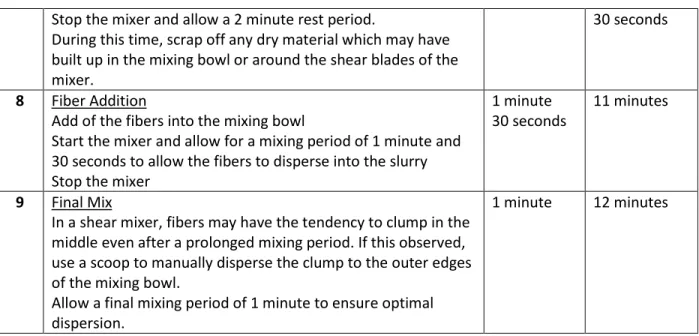
If you notice this, use a ladle to spread the clump by hand to the outer edges of the mixing bowl. After the initial period is over, transfer all uncapped samples to the freezer. To test the modulus of concrete with flexural strength, allow the beams to cure for 86 days.
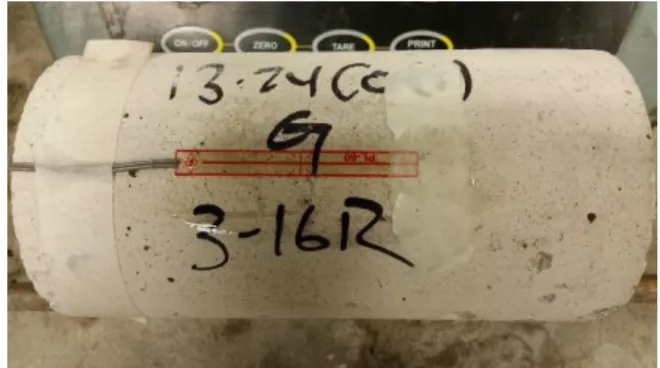
Use a small piece of tape to attach one end of the measuring wire to the concrete surface. Make sure the gauge screws are screwed into the mold after the release agent is applied. After the initial curing period, use a length gauge to take an initial measurement of the sample.
Use a saw to remove the bottom of the mold, leaving only a plastic cover.
27 ~ Chapter 4
Results and Discussion
Figures 4.2 and 4.3 provide compressive strength information for the candidate repair materials used in this phase of the program for 28-day results and 84-day results, respectively. Overall, the effects of the environmental exposure for the 28 day results do not provide any significant changes in potency compared to the reference set. As the volume of the sample is reduced, the occupied void space is also reduced, so that an increase in strength may follow.
The second phase of environmental exposure was freeze-thaw cycles, as described in section 3.2.1.3. While the slag-based repair mix performed the best overall by a significant margin, it also suffered the most significant deterioration as a result of combined environmental exposure with a reduction of 11.8%. This phase of testing will evaluate the modulus of the reference substrate material, as well as each of the candidate repair materials, part of the phase one testing program.
This is expected because the molecular nature of the fly ash particles produces a much more ductile matrix, in contrast to slag-based mixtures which tend to exhibit a higher degree of brittleness. Figures 4.5 and 4.6 illustrate the results of the modulus tests performed for the listed companion mixtures. As a result, the material's modulus was effectively reduced after undergoing what was intended to be a damaging testing regime.
It is interesting to note that the commercial repair mix exhibited a much higher degree of ductility than either of the ECC-based repair mixes, despite the absence of fibers. As the focus of this study is the evaluation of ECC-based repair materials, it is essential to understand the nature of the volume change these materials undergo during such drying conditions. As the first stage of the environmental exposure program is to subject the materials to drying conditions while restrained, the relative volume change (and rates of volume change) between the repair candidate material and the established substrate will need to is appreciated.
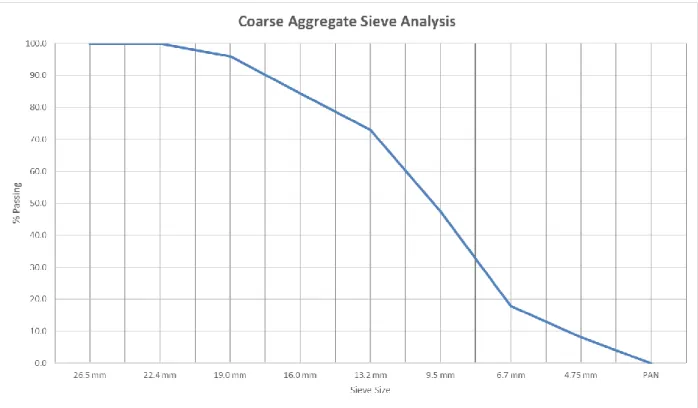
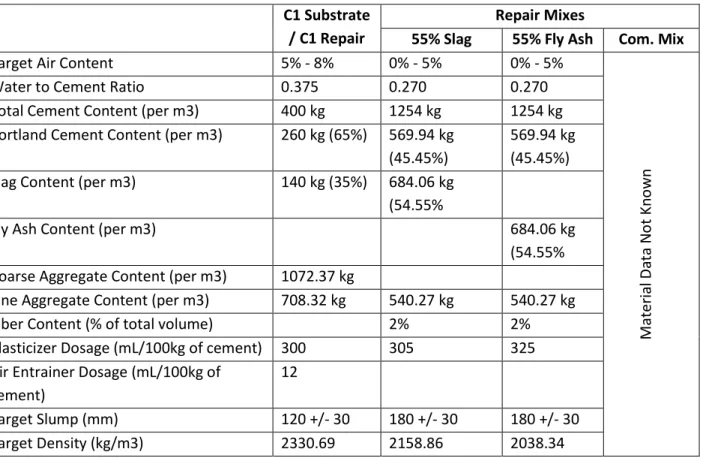
The C1 mix also contains 19 mm of coarse aggregate, a material not present in any of the other repair mixes. The final criteria for evaluating the repair capacity of a material should be how that material interacts with a given substrate. This section will present the bond capacity of the proposed repair material as a function of the oblique shear strength.
When examining the results of the initial exposure conditions, for drying shrinkage, the commercial mix showed the greatest reduction in bond strength of 58%, followed by a 21% reduction observed with the 55% fly ash repair mix. Therefore, any reduction in bond strength that may have occurred at this exposure condition still retained a strength greater than the ultimate compressive strength of the substrate material.

41 ~ Chapter 5
Discussion of Results, and Recommendations for Future Research
To circumvent this decoupling, the substrate fabricated for this study had to be significantly stronger than would typically be encountered in a repair scenario. Although still serving as a valid evaluation of bond strength, the testing then loses its connection to the proposed real-world applications. The intent of this research study was to evaluate the potential for applying the design philosophy of ECC mixes to repair applications.
As this idea has been explored, the lessons learned from this research need to be revised and applied to a more comprehensive, restructured research program. First, any doubt about the data produced by this study must be eliminated in order to draw accurate conclusions from the completed work. Once definitive conclusions can be drawn, the work should be repeated with substrates that better reflect the performance of traditional 35 MPa C1 concrete mixtures, as well as modified repair materials with reduced total cement content.
To isolate the bond capacity of any material under investigation, the compressive strength of the proposed repair material should closely match the compressive strength of the substrate to ensure that failure from shear tests occurs at the bond. Furthermore, in such repair applications it is not necessary to have a repair product with a compressive strength that is significantly higher than that of the substrate. A reduced cement content will also reduce the overall cost of the mix, making the proposed materials that much more practical.
Additional testing should also be performed to better assess bond strength under different exposure conditions. The shear method may not be the most accurate measurement of bond strength, and exposure to various environmental conditions, such as prolonged freeze-thaw cycles, may be better assessed through different methods.
43 ~ References