ATHABASCA UNIVERSITY
A VIRTUAL EDUCATION INTERVENTION TO APPROXIMATE HANDS-ON LEARNING: VIA TASK-CENTRED LEARNING PRAXIS
BY MAE DORAN
A DISSERTATION
SUBMITTED TO THE FACULTY OF GRADUATE STUDIES
IN PARTIAL FULFILLMENT OF THE REQUIREMENTS FOR THE DEGREE OF
DOCTOR OF EDUCATION IN DISTANCE EDUCATION
FACULTY OF HUMANITIES AND SOCIAL SCIENCES ATHABASCA, ALBERTA
APRIL, 2022
© MAE DORAN
ii
1 University Drive, Athabasca, AB, T9S 3A3 Canada Toll-free (CAN/U.S.) 1.800.788.9041 (6821) [email protected] | fgs.athabascau.ca | athabascau.ca
A p p r o v a l o f D i s s e r t a t i o n
The undersigned certify that they have read the dissertation entitled
A VIRTUAL EDUCATION INTERVENTION TO APPROXIMATE HANDS-ON LEARNING: VIA TASK-CENTRED LEARNING PRAXIS
Submitted by:
Mae Doran
In partial fulfillment of the requirements for the degree of
Doctor of Education in Distance Education
The examination committee certifies that the dissertation and the oral examination is approved
Co-Supervisors:
Dr. Agnieszka Palalas (Athabasca University)
Dr. Mohamed Ally (Athabasca University)
Committee Members:
Dr. Cindy Ives (Athabasca University)
Dr. Bob Heller (Athabasca University)
External Examiner:
Dr. Nantha Kumar Subramaniam (Commonwealth of Learning)
April 19, 2022
D e d i c a t i o n
This work is dedicated to the one Creator. Like oxygen, deep in the unseen, present, life- giving, and often unacknowledged, I take Them for granted when success is at hand yet demand help when it isn’t. I am grateful for being shown the careful steps to take along this log flume of life and for providing the next log to jump to when I was frequently on the edge. Like one of my endorsed task-centred learning principles, I am grateful for the internally encoded human Model of Excellence given as a beacon to find the high road, and for the many externally provided examples of excellence in others to inspire me.
This work is also dedicated to my late husband, Dr. Paul Coleman. He was a big
proponent of education and he believed in me unconditionally when I began with no degree at all a few years ago. He stayed alive long enough, when he was seriously ill, to see me graduate the Master of Education degree, and he continues to propel me every day with his love through this doctorate program and beyond.
A c k n o w l e d g m e n t s
Speaking of examples of excellence to inspire me, this section extends the gratitude to a very long list of people (creatures too) who have been my champions and support along the way.
First and foremost, I would like to thank my brother, Jamie Doran, and my son Sebastian, who provided sustained financial support so I could finish this degree. My other brother, Paddy Doran, also sacrificed his own resources to help me on several occasions. Thank you, family, for this and all the other forms of love, support, and solidarity you have given me.
Next, I would like to thank my co-supervisors, Dr. Aga Palalas and Dr. Mohamed Ally of the Faculty of Humanities and Social Sciences at Athabasca University, who modelled integrity and unconditional support as I struggled through the creation of an intervention that would eventually become this research dissertation. Whether it was to attend a meeting, to review a draft, to provide advice, to find committee members or external examiners, for the research sampling, when I needed references, at my exam rehearsals and defense, they were there for me.
Dr. Cindy Ives, one of my committee members, encouraged me with support, wise advice, and carefully scrutinized drafts. Dr. Bob Heller, also of Athabasca University, pushed me with thought-provoking questions and taxonomy puzzles towards a better-quality result.
CNIE/RCIE gave credence to my research with an innovation award, and the Athabasca Awards Unit and Faculty of Graduate Studies enabled me to carry on with the program via research grants and bursaries and answers to questions. Thank you for your support.
In the warm and fuzzy realm, there are my fellow doctoral students. We have been a unified team, with four of us having collaborated on six conference presentations and a book chapter. Three of us formed a group called the “Pajama Mamas”, because we were online higher education learners often working in our PJs, arguing scholarly articles, sharing hummus recipes,
and visiting on Oculus Quest VR, long before COVID. A number of us have supported each other personally in a unique online “swarm” (following the swarm leadership model). As such, our online Teams library is always open and at least two of us can be found working quietly together most days, each on their research dissertation. We have also been able to share just-in- time information or give emotional support to each other when we needed help fast. This
camaraderie mixed with accountability to each other was instrumental for me in completing this dissertation. When there were long days or nights of concentrated writing, it was comforting and focusing to have my colleague close by, just a few screen inches away, doing the same thing. I will treasure these friendships and memories. Thank you, Cohort 11.
Thalia and Michaele, close friends, always called or sent a message or a gift at the uncanny right time. Thalia frequently provided time and space and belief in the potential of the HAvatar intervention. Another friend, a Masters of Distance Education student, Cynthia, encouraged me with her enthusiasm; she devoted time in the first tentative year of the HAvatar idea to our mutual mission of transforming online education, even composing a unique musical sound-bite I could use. Thank you for your friendship.
Then there are my four-legged companions: Squidgy, the mighty 8-pound living soft toy, vocal defender of our forest home, who patiently lies at my side hour after hour; Sierra and Red, my two horses, whose indescribable compassion keeps me inspired and grounded, and who have put up with sparse conditions and a paucity of attention for the past three and a half years.
As a cyborg, it would be remiss of me not to salute the brilliant technology, electronic devices, cell telephony, global net-connectedness, accessible human knowledge, hundreds of software apps, and electric power machinery; dependencies that have truly made it possible for me to do this degree and enable the making of the HAvatar. Many thanks to the tech geniuses.
A b s t r a c t
As yet, technology cannot offer online learners a way to physically touch real objects in a remote learning environment. The gap in provisioning hands-on learning virtually is widening due to the global population explosion and society's quantum move to a net-connected world. A conundrum is growing where organizations are bound to continue using existing equipment, labs, and worksites to teach physical hands-on skills yet need to move curriculum online. Further, the quality of the pedagogy vis-à-vis the needs of tech-oriented twenty-first century learners, as well as wide accessibility to many demographics at minimal cost, are factors of great concern.
Microworld solutions are nascent and out-of-range for all but the most well-funded early adopters such as medical, military, aerospace, and gaming. With this situation in mind, held against the three vectors of the iron triangle of distance education — quality, affordability, and accessibility — I designed a pedagogical-technological intervention called HAvatar. It uses a human avatar to stand in for online learners for equipment-based skills acquisition so that existing facilities can reach online learners with little disruption.
The intervention was evaluated using design-based research methodology in iterations grounded in task-centred learning theory criteria (quality) using existing real-world facilities and readily-available retail technology (affordability) conducted with remote learners via broadband connectedness (accessibility). Data were collected via mixed methods with multiple data sources.
Findings reported that the quality of HAvatar as a way to master hands-on equipment skills was high. The seven participants unanimously recommended that HAvatar be taken further into technical and vocational training organizations. A quantitative in-situ study on its efficacy would be a future recommendation. HAvatar could contribute to the field of distance education by providing a viable solution for virtual hands-on learning.
Keywords: virtual hands-on learning, task-centred learning, task-centred instructional design, quality distance education pedagogy, avatar-based learning, online hands-on learning, simulated virtual learning, design-based research, project-based learning, problem-based learning, learning-by-doing, serious gaming, online tactile skills, pragmatism paradigm, education intervention, experiential learning, outcome-based integration, prior learning activation
T a b l e o f C o n t e n t s
Approval of Dissertation ... ii
Dedication ... iii
Acknowledgments... iv
Abstract ... vi
Table of Contents ... viii
List of Tables ... xii
List of Figures ... xiii
Definitions and Acronyms ... xv
Chapter 1: Positioning... 1
Background ... 1
The Human Avatar and Learning Online (HAvatar) Intervention ... 7
Purpose of the Intervention and the Research Study ... 10
Problem Statement ... 10
Research Questions ... 11
Theoretical Framework ... 12
Scope Considerations ... 17
Chapter 1. Summary ... 20
Chapter 2. Literature Review ... 22
Section 1. Themes of Quality... 23
Twenty-First Century Learners ... 24
Real-World Learning – a Historical Perspective ... 25
Task-Centred Learning Praxis ... 28
Section 1. Summative Reflections ... 40
Section 2. Current Virtual Real-World Learning ... 41
State of XR and Pedagogical Constructs ... 42
Affordability Issues Lead to Accessibility Issues ... 46
XR Intervention Studies... 48
Homing in on Haptic Capability ... 53
AR and HAvatar ... 55
Section 2. Summative Reflections ... 57
Chapter 2. Summary ... 58
Chapter 3. Research Design ... 59
Section 1. Research Approach ... 59
Research Lens ... 60
The Paradigm of Pragmatism ... 60
My Ontology of Change ... 62
The Epistemology of Task-Centred Learning Praxis ... 63
The Methodology of DBR ... 63
Mixed Methods ... 65
Section 2. HAvatar Intervention – DBR Baseline ... 67
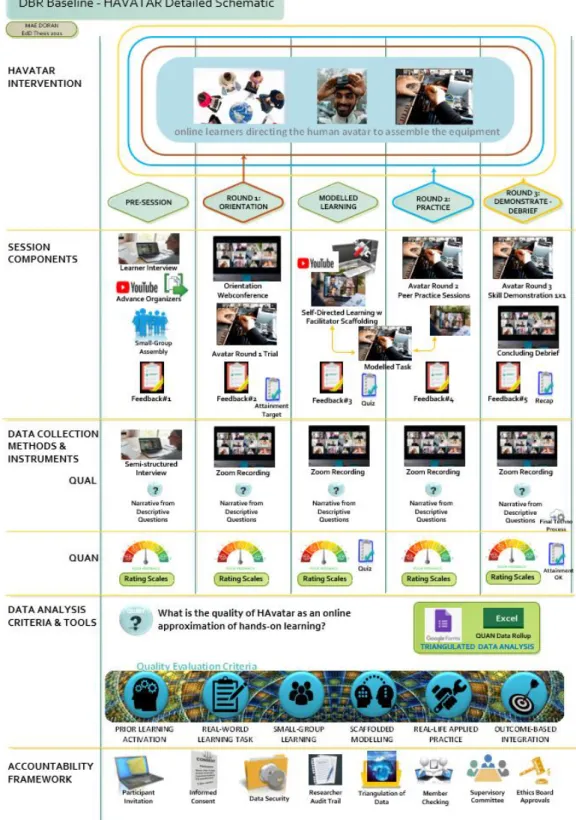
DBR Baseline – Detailed Schematic ... 68
DBR Baseline ... 69
Roles ... 70
Data Collection Instruments ... 73
HAvatar Sessions and Data Collection ... 75
Section 3. Data Analysis Criteria and Tools ... 82
Data Analysis Tools ... 82
Research Questions Reiterated ... 83
Criterion Themes ... 83
Section 4. Accountability Framework ... 84
Participant Invitation... 84
Informed Consent ... 85
Data Security... 85
Audit Trail... 86
Triangulation and Rich Data ... 86
Member-Checking ... 87
Supervisory Committee ... 87
Ethics Board Approval... 87
Chapter 3. Summary ... 88
Chapter 4. Findings ... 89
DBR Timeline and Rollout Schematic ... 90
Iteration 1 ... 92
HAvatar Techno Process #1 ... 93
Pre-Session... 97
Data Collection – Pre-Session ... 100
Iteration 2 ... 104
HAvatar Techno Process #2 ... 105
Orientation ... 107
Data Collection - Orientation ... 109
Modifications Summary Moving Into Iteration 3 ... 111
Iteration 3 ... 115
HAvatar Techno Process #3 ... 116
Modelled Learning ... 117
Data Collection – Modelled Learning ... 121
Practice... 123
Data Collection – Practice ... 126
Iteration 4 ... 129
HAvatar Techno Process #4 ... 130
Debrief ... 131
Data Collection – Demonstrate & Debrief ... 132
Chapter 5. Discussion ... 141
Research Question Discussion ... 141
RQ1. HAvatar and Tactile Skills ... 141
RQ2. HAvatar and Verbally-Mediated Commands ... 142
RQ3. HAvatar and Small-Group Learning ... 142
RQ4. HAvatar and Adding Motivation to Learning Online ... 143
RQ5. HAvatar and Attaining the Skill ... 144
RQ6. HAvatar and Task-Centred Learning Praxis ... 144
RQ7. Task-Centred Learning Praxis and Modifications for Online Learning ... 145
Themes of Quality Criteria ... 145
Criterion Interest. Prior Learning Activation ... 145
Criterion Interest. Real-World Learning Task ... 147
Criterion Interest. Small-Group Learning ... 147
Criterion Interest. Scaffolded Modelling ... 148
Criterion Interest. Real-Life Applied Practice ... 149
Criterion Interest. Outcome-Based Learning ... 152
Chapter 6. Conclusions ... 154
Constraints and Recommendations ... 154
Significance for the Future ... 166
Closing Summary ... 171
References ... 173
Appendix A: Participant Invitation Information Letter ... 193
Appendix B: Participant Informed Consent ... 196
Appendix C: Participant Semi-Structured Interview – Pre-Session ... 197
Appendix D: Concluding Debrief Session – Cohort Questions... 198
Appendix E: Formative Feedback ... 201
Appendix F: Ethics Certification ... 204
L i s t o f T a b l e s
Table 1 Data Collection Methods and Instruments: Pre-Session... 76
Table 2 Data Collection Methods and Instruments: Orientation ... 77
Table 3 Data Collection Methods and Instruments: Modelled Learning ... 78
Table 4 Data Collection Methods and Instruments: Practice... 80
Table 5 Data Collection Methods and Instruments: Demonstrate-Debrief ... 81
L i s t o f F i g u r e s
Figure 1 The Iron Triangle ... 2
Figure 2 VR Application ... 7
Figure 3 YouTube Clip of the Human Avatar ... 9
Figure 4 Theoretical Framework ... 12
Figure 5 The Quality Principles of Task-Centred Learning Praxis ... 14
Figure 6 Conceptual Framework ... 18
Figure 7 The Iron Triangle in the Literature ... 22
Figure 8 Task-Centred Learning Praxis Principles in the Literature ... 29
Figure 9 Revision of Merrill's First Principles to Include the Affective Domain ... 31
Figure 10 Learning Scenarios for Affect and Psychomotor Methods ... 32
Figure 11 The Brain Assimilating New and Prior Knowledge ... 33
Figure 12 Iron Triangle Criteria and Immersive Interventions ... 42
Figure 13 Virtual Simulation in the Medical Industry ... 48
Figure 14 HCI Interaction Components ... 54
Figure 15 AR Remote Control to a Live Site Object ... 56
Figure 16 DBR Baseline – HAvatar Detailed Schematic ... 68
Figure 17 DBR Timeline and Rollout Schematic (T&R) ... 90
Figure 18 Iteration 1. Excerpt – Pre-Session DBR; T&R Processes ... 92
Figure 19 The Computer for PC Assembly ... 94
Figure 20 GF Non-Personal Interview Questions of Participants ... 101
Figure 21 GF Pre-Session Summative Rating Scale ... 102
Figure 22 Iteration 2. Excerpt – Orientation DBR; T&R Process ... 104
Figure 23 Avatar Hand Signals Guide ... 106
Figure 24 Orientation Session Slideshow ... 107
Figure 25 Proposed Schedule – Version 1 ... 109
Figure 26 GF Orientation Session Summative Rating Scale ... 110
Figure 27 Iteration 3. Excerpt – Modelled Learning and Practice DBR; T&R Processes... 115
Figure 28 Excerpt of GF Learning Videos ... 118
Figure 29 Proposed Schedule – Version 2 ... 120
Figure 30 Brief Excerpt Video of HAvatar Preparation Using iPhone Chestmount ... 121
Figure 31 GF Terminology Quiz Scores ... 123
Figure 32 Video of Avatar Interaction ... 124
Figure 33 GF Practice Session Summative Rating Scale ... 126
Figure 34 Iteration 4. Excerpt – Demonstrate & Debrief Session D T&R ... 129
Figure 35 Video Excerpt of RR ... 130
Figure 36 Capturing the Flash Memory Recap ... 132
Figure 37 GF De-Brief Summative Rating Scale ... 134
Figure 38 Feedback on Future Application of HAvatar ... 138
Figure 39 Quality Evaluation Criteria ... 145
Figure 40 DBR Intervention Baseline – DBR Iterations Findings ... 160
Figure 41 The Pedtech Continuum and HAvatar ... 169
D e f i n i t i o n s a n d A c r o n y m s
Term Definition
Active Learning Learners construct their meaning from critical thinking about their learning, not just from passive acceptance of what they are told (Dewey, 1916).
Advance Organizers “Learning and retention of unfamiliar but meaningful verbal material can be facilitated by the advance introduction of relevant subsuming concepts (organizers)”
(Ausubel, 1960, p. 267).
App This is an abbreviation for the word application of a software program. Most often used to describe programs for mobile devices, such as smartphones and tablets (TechTerms, 2021a).
Approximate means to come near to or be close to (something), or a
reproduction that approximates the original (Merriam-Webster Dictionary, 2021).
Artificial Intelligence (AI) enables computers and machines to mimic the perception,
learning, problem-solving, and decision-making capabilities of the human mind (IBM, 2021).
Augmented Reality (AR) is an emergent technology that superimposes computer-generated screens and semiotics onto a real-world environment (Scope AR, 2019).
Avatar is an icon, graphic, or other images which represents a person on a communications network or in a virtual community, such as a chatroom or multiplayer game (Your Dictionary, n.d.). In the case of HAvatar, a human avatar stands in for the learner in the
learning venue and enacts their verbally mediated commands.
The Cloud is close to a synonym for the Internet—more specifically, all affordances accessed remotely over the Internet. Cloud storage is on Internet servers, not on computer hard drives (GCF Global, n.d.).
Cloud Services reside on a global network of connected computers, with software delivered on-demand to end-users over the Internet (Citrix, n.d.).
Cohort is a group of individuals having a statistical factor (such as age or class membership) in common in a demographic study (Merriam- Webster, 2021b).
Cyberspace signifies the online world of computer networks and especially the
Internet (Merriam-Webster, 2021c).
Edtech is a short-form for educational technology (Education Technology:
What Is Edtech? A Guide. | Built In, n.d.).
Fidelity denotes the objective degree of exactness with which real-world experiences and effects are reproduced by a computing system (McMahan et al., 2012).
Gen Z abbreviates generation z, the demographic born after 1996 (Pew Research Center, n.d.).
Gestalt Principles Principles/laws of human perception describe how humans group similar elements, recognize patterns, and simplify complex images when they perceive objects. Designers use gestalt to organize content on websites and other interfaces, so it is aesthetically pleasing and easy to understand. (The Interaction Design Foundation, 2021, para.1)
Haptic is anything based on the sense of touch in the metaverse (Merriam-Webster, 2021d).
Human-Computer Interaction (HCI)
"…deals with the theory, design, implementation, and evaluation of the ways that humans use and interact with computing devices"
(Kim, 2015, p.1).
Information &
Communication Technology (ICT)
Although there is no single, universal definition of ICT, the term is generally accepted to mean all devices, networking components, applications and systems that combined allow people and organizations (i.e., businesses, nonprofit agencies, governments, and criminal enterprises) to interact in the digital world
(TechTarget, 2021).
Intervention "The object, activity, or process…is designed as a possible
solution to address the identified problem….including educational products, processes, programs, and policies" (Shattuck &
Anderson, 2013, p.187).
Learning & Development (L&D)
"Learning and development is a systematic process to enhance an employee's skills, knowledge, and competency, resulting in better performance in a work setting" (GCF Global, n.d.).
Machine Learning represents the science of getting computers to act without being explicitly programmed has given us self-driving cars, practical speech recognition, effective web search, and a vastly improved understanding of the human genome (Stanford University, n.d.).
Member-Checking is a process of sharing research data or transcriptions garnered
from a participant as the co-creator of that data, providing an opportunity to revise their representation (Goulding, 1999).
Metaverse combines the words "meta" and "universe." While "meta" has several different meanings, in "metaverse," it means something of a higher or second-order kind. In other words, the metaverse is another realm that exists outside the real world. While still in the early stages, the goal of the metaverse is to provide a virtual environment that simulates reality. It will allow people to explore an online space, meet other people, and build relationships (TechTerms, 2021c).
Microworld is used in this study to represent any reference to XR learning venues.
Node This signifies any system or device connected to a network (TechTerms, 2021b).
Online Learning is synonymous with distance learning, distance education, elearning, Internet learning, distributed learning, net-centric learning, virtual learning, and web-based learning (Ally, 2008).
PedTech describes the phenomenon of developing pedagogical theory and practice with technological solutions hand-in-hand, in education institutions (Ives et al., 2005).
Praxis is the synthesis of theory and practice without assuming the primacy of either (Definitions.net, 2021).
Semiotics is the study of signs, symbols, and signification. It is the study of how meaning is created, not what it is (Definitions of Semiotic Terms, n.d.).
Situated Learning represents the embedded real-world context is vital in quality education to undertake complex tasks in situ (Lave & Wenger, 1991).
Software Design Lifecycle (SDLC)
comprises the phases of requirements, design, development, testing, and implementation of developing a software product (Altvater, 2020).
Software Requirements Specification (SRS)
represent a comprehensive description of the intended purpose and environment for software under development. The SRS fully describes what the software will do and how it will be expected to perform (TechTarget, 2022).
Task-Centred Learning Praxis
encapsulates many learning theories: project-based, practice- based, task-based, problem-based, evidence-based, experience-
based, elaboration theory, professional task development-based, maker-based and more – all within the theoretical neighbourhood of learning-by-doing (O'Brien, 2017; Reigeluth & Carr-Chellman, 2009; Reigeluth et al., 2017).
Twenty-first century Learners denotes learners born into the digital age and broadly indicates all those born and yet to be born in this century.
Unity is a cross-platform game engine based on programming language C sharp (#) to create games and experiences in both 2D and 3D (Gregory et al., 2016).
Virtual Reality (VR) is a virtual re-creation of the real world to transport the user to fully digitized and interactive environments. This technology was initially conceived for video games; however, it has reached various fields, such as industry, medicine, army, education, and tourism (Naranjo et al., 2020, p. 2).
Zoom is proprietary software for webconferencing, the primary software used in this study (Zoom.US, 2021).
XR means extended reality encompassing virtual reality, augmented reality, and human computer interaction (Goode, n.d.).
C h a p t e r 1 : P o s i t i o n i n g
…if I could just get my hands on that thing!
As yet, technology cannot offer online learners a way to touch real objects in a remote learning environment. The gap in provisioning hands-on learning online is widening due to the global population explosion and society's quantum move to a net-connected world, looking to the Internet for just-in-time learning of all kinds (Christensen & Johnson, 2008). Learning on the web instantly makes everyone a remote, virtual learner. Rapid improvements in technology and shared human knowledge are outstripping our ability to keep up (Manville, 2001; Sarder, 2016).
The societal demand surpasses the capacity of outdated and expensive delivery methods of physical presence to learn (UNESCO, 2016). Despite advances in virtual reality, augmented reality, and robotics innovations, these technologies are still preliminary, expensive, complex to develop, frequently evolving, and marginally accessible to mainstream education (e.g., Kim, 2015; Lane, 2014; Laurillard, 2012; Manville, 2001; Naranjo et al., 2020; Visser et al., 2012).
I pondered if there was a way to approximate real-world, hands-on learning through the Internet using readily available retail technology and existing physical facilities. This query led me to design an intervention and to examine its effectiveness in this design-based research study.
Borrowing concepts from the gaming world and guided by sound task-centred learning theory and instructional design practice, this intervention is called HAvatar, which stands for the human avatar and learning online. Learners can approximate hands-on learning remotely connected to a live workshop.
Background
In order to understand the current state of online learning, I began with a look at the cannon of progress made to date in distance education. Simonson and Schlosser (2009) define
distance education as disparate learning groups where interactive networks unite instructors,
learners, and resources to provide institution-based formal education. Knowledge of the field of education supports understanding the implications of online learning needs.
The Iron Tri angl e of Edu cat ion
Distance education solutions can be assessed through the vectors of the iron triangle of education as informed by Daniel et al. (2009) and Lane (2014). These three vectors, quality – affordability – accessibility, predicate the viability of education innovations; I used them to inform the purpose of this study as depicted below in Figure 1.
Figure 1 The Iron Triangle
The Iron Triangle Affecting Education Interventions (M. Doran, informed by Daniel et al.
(2009))
According to UNESCO (2016), Lane (2014), and Daniel et al. (2009), the iron triangle is of prime importance to national government mandates, education and training organizations, as well as individual students. Millions of learners are seeking a way to access and afford education to prepare for jobs, looking to the Internet for answers; institutions are seeking ways to
effectively prepare their incumbents to fill current and future labour gaps (Daniel et al., 2009;
Daniel, 2019; Educause, 2020; International Labour Organization, 2019; Neal, 2020).
Distan ce Edu cation (DE )
DE theory and practice have risen to the iron triangle challenge in tandem with the rapid development of cloud technologies that enable mass remote learning. Over the past 30 years, DE leaders understood the opportunity via the Internet to exponentially transform the passive
lecture-based paradigm rooted in pre-millennial education to the much-needed paradigm of active learning for this millennium while simultaneously reaching a globally accessible student body. Research into interventions and statistics claims that DE increases the quality of learning experiences, removes situational barriers, and is cost-effective (Kanuka, 2008) – the latter three factors being the iron triangle vectors. Hallmarks of DE prevail in the proliferation of open universities, massive open online courses (MOOCS), and increasing numbers of DE departments in universities. Learning management systems (LMSs) are replacing classrooms and lecture halls; social media and open education resources (OERs) have become acceptable sources of education (Conrad et al., 2013; Miyazoe & Anderson, 2013; Ozturk, 2015; Visser et al., 2012).
Increasingly, the decades-honed epistemology of DE distributed to distance students is being scrutinized as the norm rather than the exception by a web-enabled world now ready for it.
As Conrad confirms, "DE has become synonymous with innovative models of program delivery that offer more generous open and flexible learning opportunities to wider and more diverse audiences than did traditional classrooms" (2008, p.76).
DE thinking, married with technology, has brought to the fore many of the researched paradigms and theories of learning (Kanuka, 2008). For example, constructivism,
constructionism, complexity theory, connectivism, the community of inquiry, and situated
problem-based learning are widely and richly deployed in DE institutions (Anderson, 2008).
Digital-age educators and instructional designers orchestrate the creation of relevant, varied, and colourful curricula from the vast array of human knowledge now available online. They chunk it into focused, manageable, meaningful, and engaging instruction — a far cry from in-person lecture-based learning (Visser et al., 2012). DE assumes the prescience of interaction with peers, facilitators, and content via mobile anytime-anywhere access. Educators of today must know the different approaches and styles of learning, encourage deep processing, provide relevant
feedback, find and orchestrate pertinent content, and scaffold the individual learner astutely while encouraging self-directed learning in tandem with collaborative work (Ally, 2019;
Anderson, 2008b)—no small task.
In Chapter 6, I attest to the continuum between academia struggling to move towards state-of-the-art technologies and technologies working to invoke engaged learning through graphical, virtual, and gaming interfaces. Some futurists aver this struggle as heralding technology's domination over education "should long-established providers of education not respond to accelerating globalization and increasing competition" (Anderson, 2008b, p. 98). In their book, Learning in a Digital Age, Anderson warns that universities will cease to exist, replaced by consumer-oriented education. More than a decade since this publication, the proliferation of e-learning companies independent of public education has indeed become a billion-dollar industry. This commercialization of education impacts the quality vector of the iron triangle (Bates, 2015). According to Clark (1994), "media and their attributes have
important influences on the cost or speed of learning but only the use of adequate instructional methods will influence learning" (p. 27). The learning meant to prepare incumbents for the
digital age often favours appeal over robust instructional design and researched theory (Reigeluth et al., 2017; Zhou et al., 2018).
The R ation al e for the Int er vention
Pedagogy comprising verbal communication, discussions, writing, software app development, or anything that requires soft skills can readily transform into an online format supported by seasoned DE theory and practice.
However, hands-on learning is a different case in DE.
There is a growing conundrum where organizations are bound to continue using existing equipment, labs, and worksites to teach physical hands-on skills yet need to move curriculum online (Reigeluth et al., 2017). No mainstream technology allows a remote learner to manipulate solid objects remotely. The world has countless scientific, technical, and vocational institutions with onsite facilities for tactile learning. For example, there were 2,840,000 hits on the literal string "technical college" from Google search, and there are an estimated 6,000 universities and colleges in the USA alone. To date, if a learner requires an equipment-based, industry-wide accredited skill in, for example, robotics, agriculture, computer or network hardware assembly, machinery, woodworking, or laboratory work, they attend a physical facility to learn hands-on.
As Neal (2020) explains, technical and vocational education and training (TVET) institutions are working to bring their offerings to the virtual classroom. "As distance as possible" (p. 1) is the goal of the Commonwealth of Learning, an international organization running apprenticeship programs. Commonwealth of Learning’s blended learning models target essential workers with both soft skills and hands-on training. The more contextually situated the delivery system is, the more learner-centric, promoting the advantages of learning away from physical campuses.
However, the third apprenticeship option, hands-on, requires the learner to be physically present
at the worksite. The Commonwealth of Learning reports limitations of affordability and
accessibility for these programs.
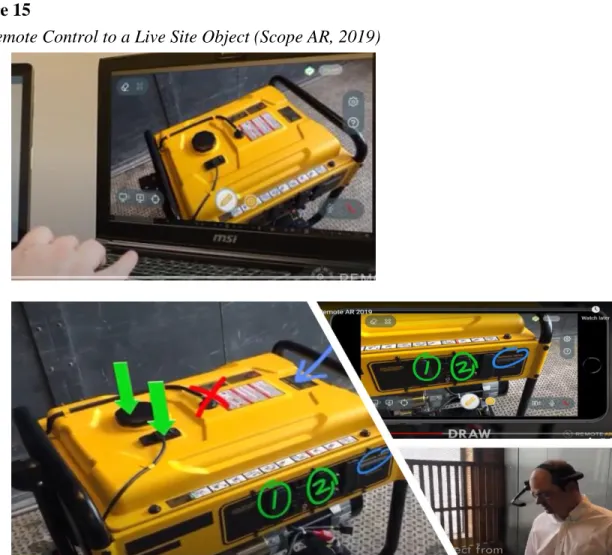
Some innovative technologies, such as the haptic glove (Ma & Ben-Tzvi, 2015), provide a sensation of touch through the cloud; however, this solution requires programming virtual objects in microworlds. Technology can direct robots from a distance to manipulate physical objects, still at great expense, limited application, and niche contexts. Augmented reality can incorporate physical venues into the design but still demands the development of software requirement specifications (SRS) and software design lifecycles (SDLC) (Scope AR, 2019).
Figure 2 illustrates the sophistication of a virtual reality application where a microworld replaces reality completely. Virtual reality initiatives naturally demand complex SRS and SDLC using a 3D software programming engine (e.g., Unity).
Out of the plethora of studies and reports disseminating from the domain of immersive technologies, by far the most developed advancements are found in the well-funded industries, that is, medical, military, aerospace, and gaming. These domains have the most extended history of applied simulation experimentation models and remain at the leading edge of edtech (Naranjo et al., 2020).
However, these domains have not been studying the learning and education of humans as their primary focus. Public and private education organizations are not perceived or reported as front runners in the trend towards virtual immersion, yet the education industry is expected to reach millions of learners with high-quality online learning (e.g., UNESCO, 2014; Visser et al., 2012). The Pedagogical-Technological Change Continuum discussed in Chapter 6 as well as the Literature Review in Section 2 explore this disparity further.
Essentially, edtech is still largely beyond the budgets and time constraints of the
minimally resourced education industry, the industry that greatly needs virtual affordances to transform learning to reach a global cohort.
Figure 2 VR Application VR Application
The Human Avatar and Learnin g Onlin e (HAvatar) In tervention Real -World Appr oxi mation
Online educators and instructional designers constantly seek ways to improve authenticity, interactivity, and collaboration at a distance (Anderson, 2008b). Gregory et al.
(2016) contend that, in online interventions, "the difficulty lies in designing an interface that scaffolds the motivational and learning goals of a specific virtual world" (p. 3). The HAvatar intervention attempts to address this need with an up-close virtual experience that approximates hands-on practice of a manual tactile skill. Its components comprise readily available retail
technology, the Internet, existing physical learning venues, and minimally trained staff; thus,
mitigating the affordability and accessibility issues of the iron triangle of education. As with all online interaction, HAvatar can only approximate a tactile hands-on experience.
A HAvatar Learnin g Ses sion
HAvatar engages a small group of learners (a cohort) virtually present in cloud-based webconferencing such as Zoom. The cohort views a physical learning site via a maximized screen. See the clip in Figure 3 as to how this appears. The screen is livestreamed to the
webconference through the "eyes" of an action camera worn by someone at the physical learning venue. I have labelled the person at the physical venue the human avatar because their role is similar to a virtual gaming avatar. The differentiation between a gaming avatar and the human avatar lies in the video gamer moving the avatar with hand controllers while the remote learner moves the human avatar via spoken words.
The Human A vat ar
As such, the learners do not interact in a social relationship with the human avatar;
instead, they direct the human avatar’s eyes and hands via verbal commands to complete the learning task of manipulating the objects. The non-interference of the human avatar in a puppet role and the non-visibility of their face give the learner a sense of being in control of their learning. Although the learners cannot touch the objects with their own hands, the action camera worn by the human avatar is up-close and focused on the objects.
Figure 3 YouTube Clip of the Human Avatar
YouTube Clip of the Human Avatar
Note. YouTube Clip of HAvatar Roles in HA vatar
An overview of the context and roles of the HAvatar study is as follows:
(1) The combined role of researcher, designer, and facilitator orchestrates all other relationships and gathers the data. In addition, the facilitator role involves touchpoint participatory moments outlined in Chapter 3, the Research Design.
(2) The learning venue could be a workshop, a laboratory, a classroom, a studio, or any venue where physical equipment to be learned is located.
(3) The human avatar is physically present in the workshop, equipped with an action
camera, a still camera, proper lighting, and livestreaming through broadband.
(4) The small cohort of online learners, viewing the learning venue remotely in webconferencing, practice the pre-determined task by giving the human avatar verbally-mediated commands.
Purpose of the In terventi on and th e Research S tudy
The HAvatar intervention aims to improve the practice of online education (McKenney &
Reeves, 2013). Its purpose is to approximate a hands-on learning experience with a real-world task, provide an online way to see it, come as close to touching it as possible, and collaboratively practice the task to competency within a small cohort.
The objectives of this study seek to reveal: (1) compelling feedback about the quality of the HAvatar as a DE solution; (2) improvements to the technical intervention; (3) refinements to task-centred learning praxis when online; (4) recommendations for enacting design-based research methodology on education interventions.
Prob lem S tatement
Succinctly restated, this study addresses a growing conundrum where organizations are bound to use existing equipment, labs, and training sites to teach physical hands-on skills yet need to reach remote learners. Further, the quality of the pedagogy vis-à-vis the needs of twenty- first century learners, as well as wide accessibility at minimal cost, are factors of great concern.
Virtual reality and augmented reality solutions with haptic touch capability are nascent and out- of-range for all but the most well-funded industries, i.e., medical, military, aerospace, and gaming.
Research Qu es tion s
Based on the iron triangle presented earlier as prescient, I reiterate the sidelining of affordability and accessibility issues of HAvatar as a generalized assumption, due to its low cost of requisite equipment, the use of existing facilities and resources, and the minimal disruption to the status quo of the existing learning organization. This stance brings the vector of quality to the fore, that is, the quality of the HAvatar intervention.
Therefore, quality becomes the driving keyword in this study. I have defined quality within the principles of task-centred learning praxis.
What is the quality of HAvatar as an online experience approximating real-world, hands- on learning via task-centred learning praxis?
(1) …in learning a task involving tactile skills?
(2) …in the experience of guiding the avatar with verbally-mediated instructions to accomplish tasks at a distance?
(3) …with respect to solving tasks in a small-group format to direct the avatar and learn the skill?
(4) …with respect to adding motivation and interest to learning online through the avatar to accomplish this task?
(5) Was the skill attained correctly according to the attainment task prior to ever touching the physical objects?
(6) How important to the avatar experience is the task-centred learning pedagogy that organized it?
(7) What are the impacts or refinements to task-centred learning praxis and learning-by- doing theory in this online format?
Theoreti cal Fram ework
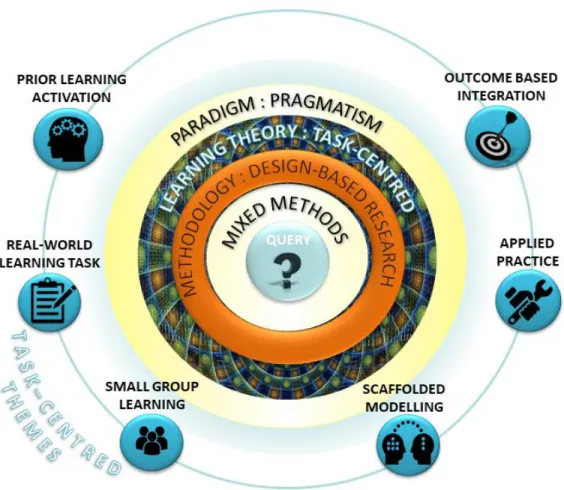
Figure 4 furnishes a high-level overview of the theoretical framework guiding this study, further plumbed in Chapter 3, the Research Design. The concentric rings start from the broadest perspective, the paradigm, to the central focus, the query. These positioning rings are depicted below, introduced with labels in italics as I discuss them.
Figure 4 Theoretical Framework Theoretical Framework
Paradigm
The outer ring in Figure 4 represents the Paradigm, the philosophical worldview permeating the study. I chose Pragmatism as my paradigm because it prioritizes the real-life application of learning with the centrality of change (Arthur et al., 2012; Cousin, 2009; Morgan,
2014). Furthermore, pragmatism is action-based, so it cannot be separated from the situation and context where the action occurs. Education interventions reflect this premise because they occur in real-world settings in specific contexts involving the researcher and the participant-learners in active engagement to advance design changes (Wang & Hannafin, 2005).
Morgan (2014) contends that pragmatism counteracts the notion of universal truths.
However, pragmatism can attest to warranted beliefs resulting from "repeated experiences of predictable outcomes" (p. 26). This study explores how and if HAvatar warrants such beliefs related to quality aspects held against the theory of task-centred learning, which is the next concentric ring in Figure 4.
Learning Th eor y
From seminal to contemporary, research studies spanning more than a century purport that real-life tasks in real-world situations promote the most effective, lasting, and germane learning (e.g., Dewey, 1938; Francom, 2017; Merrill, 2002; Reigeluth et al., 2017). I further discuss these authors' works informing such claims in Chapter 2, Section 1, the Literature Review.
In connecting the quality vector of the iron triangle to the HAvatar intervention, the Learning Theory provides evaluation criteria for the research (Reigeluth & Carr-Chellman, 2009;
Reigeluth et al., 2017). Task-centred learning principles comprise both a learning theory (Francom & Gardner, 2014) and an instructional design theory (Francom, 2017; Reigeluth &
Carr-Chellman, 2009). From this point on, I have labelled it task-centred learning praxis, given that praxis means theory-into-practice (Definitions.net, 2021). Reigeluth and Frick (1999) further substantiate the term praxis by arguing that learning theories often do not include the dimension of practical criteria for instructional design. Task-centred learning praxis does.
Figure 5 The Quality Principles of Task-Centred Learning Praxis
The Quality Principles of Task-Centred Learning Praxis
The following brief descriptions summarize the icons in Figure 5 (Francom & Gardner, 2014; Merrill, 2002; Reigeluth & Carr-Chellman, 2009; Reigeluth et al., 2017):
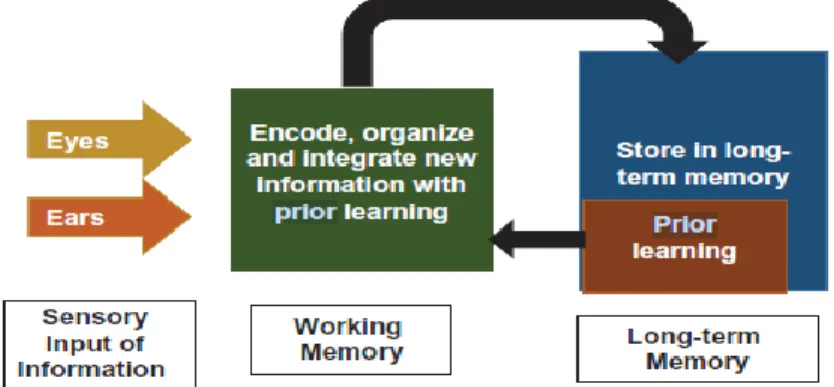
(1) Prior Knowledge Activation. Learning grows when existing knowledge and skill are activated as a foundation for the new learning.
(2) Real-World Learning Task. Learning grows when learners are in a real-world learning situation completing whole tasks.
(3) Small-Group Learning. Learning grows within a small collaborative cohort.
(4) Scaffolded Modelling. Learning grows when new knowledge is demonstrated to the learner and scaffolded by a mentor or facilitator.
(5) Real-Life Applied Practice. Learning becomes real when learners apply the skill to
solving tasks in a real-life situation.
(6) Outcome-Based Integration. Learning becomes firmly established when purposefully reflected upon, demonstrated in students’ artifacts, and integrated into the learners' world.
Attainment matches the real-world learning task.
The reader will meet these principles again in the Literature Review (Chapter 2) and in the Evaluation Criteria (Chapter 3).
Methodol ogy
The third concentric ring in Figure 4 is the chosen Methodology: Design-Based Research (DBR). DBR relates well to the paradigm of pragmatism because it provides a research strategy for producing and evaluating applied education. Wang and Hannafin (2005) describe the
characteristics of DBR as including the researcher in collaboration with participants to
systematically design and implement interventions, improve initial designs, and "ultimately seek to advance both pragmatic and theoretical aims affecting practice" (p. 6). Dewey (1938)
expresses the concept of DBR as lines of inquiry examining theories as to their ability to work in the world.
The HAvatar intervention examines such abilities against task-centred learning praxis as the guiding theory. Due to its iterative, systematic approach, DBR is particularly well-suited to technology-enhanced learning interventions such as this one (Wang & Hannafin, 2005). Chapter 3, the Research Design, further details the DBR methodology.
Mixed Meth ods
In the fourth concentric ring of Figure 4, Mixed Methods represent the methods and instrumentation for the data collection and analysis supporting the DBR methodology, both
qualitative and quantitative. The paradigm of pragmatism and the methodology of DBR with
their existential principles suggest that the research approach is free to use what generates the best data to address the research questions. As such, both pragmatism and DBR associate well with mixed methods (Barab & Squire, 2004; Morgan, 2014; Wang & Hannafin, 2005).
Denscombe (2010) succinctly states the purpose of mixing quantitative and qualitative methods,
“In line with the principles of triangulation, the mixed methods approach provides the researcher with the opportunity to check the findings from one method against the findings from a different method” (p. 139). As explained by Akilli (2008), "The pragmatist philosophy keeps the
researchers away from pointless philosophical arguments" (p. 4) by prioritizing the research question and its context first and foremost then applying a confluence of methods and instruments to serve the answers.
About My Qualitative Methods. The HAvatar intervention as a DBR proposes a sampling of six participants. This initial study implements the intervention design to investigate its efficacy as an innovation within the purview of just a few participants. Qualitative methods appropriate data into interpreting meanings from the experiences of these six participants to generate rich depictions of the sessions, with a scope that is deep rather than wide (Denscombe, 2010; Silverman, 2005). As such, in this study, extensive feedback is gathered from written descriptions of rating scale choices collected formatively from session to session, from video footage, from a quiz, from my personal researcher reflections, and from a critical summative debrief meeting.
About My Quantitative Methods. The proposal of the HAvatar research does not involve quantifiable input from large numbers of participants, characteristic of quantitative studies (Cohen et al., 2018). Nonetheless, the DBR could still benefit from aspects garnered from
rating scales that allow feedback sensitivity beyond binary responses yet are more quantifiable than a narrative description (Cohen et al., 2018; Creswell, 2013; Denscombe, 2010). One binary instrument is set to establish how well the participants learned the task, i.e., Does the computer boot up successfully?
The strategizes concurrent analysis of the quantitative and qualitative data as per Cohen et al. (2018), aligned with the HAvatar mixed methods instruments. In Chapter 3, Section 3, I have detailed the proposed instruments.
Quer y
At the centre of all the concentric rings in Figure 4 resides the Query, illustrating that the theoretical framework revolves around the quintessential research question.
Scop e Consid erations Conceptu al Fr amew ork
The scope bounds the study's concepts, theoretical framework, literature exploration, data and analysis parameters, and project planning. It is essentially a big picture view which I have schematized in an overall Conceptual Framework (Figure 6). Tracking Figure 6, I provide a walkthrough of the Conceptual Framework of this research project, referencing the labels in italics.
Figure 6 Conceptual Framework
Conceptual Framework
Note. Link to a larger, scalable version
The Problem Statement summarizes the dilemma facing organizations in providing online learning via existing physical facilities. The Intervention, the Human Avatar (HAvatar), proposes a possible solution to this dilemma. The Research Question centralizes the query of investigating the quality of HAvatar. The research unfolds within the Theoretical Framework of learning-by- doing—paradigmatically, theoretically, methodologically, and methodically. The Iron Triangle of education bounds the Literature Review by examining the implications of quality –
affordability – accessibility for mainstream education and training. The first section of the literature plumbs the praxis of task-centred learning as a way to establish the criteria of quality for best learning practice. The second section, held in the context of the iron triangle, explores the current state of virtual reality, augmented reality, and human-computer interaction which I have grouped under the extended reality label, XR. Design-Based Research Methodology guides the procedures of The Intervention with online learners directing the human avatar to assemble the equipment. Quality Evaluation Criteria drawn from task-centred learning praxis (see the connecting line from the Literature Review) are used to assess the quality of the HAvatar intervention.
Chapter 3, Figure 16, drills into the detailed methodology, that is, the DBR design portion of this schematic.
Credi bilit y, Risks, and Ethi cs
"Research is an undertaking intended to extend knowledge through a disciplined inquiry or systematic investigation" (TCPS 2: CORE, n.d.). Part of the inquiry discipline involves addressing multiple factors that affect credibility, risks, and ethics (Cohen et al., 2018; Frey, 2018; Neuman, 2002). This due diligence in ensuring a quality study ranges over personal integrity, regulatory requirements of the academic institutions and national ethics boards,
trustworthiness and depth of the data analysis, alignment with the learning theory, unexpected contextual risks, and informed consent of the participants and stakeholders. All of these considerations apply to the research about HAvatar.
Conole et al. (2011) stated, "Tools and users are not static….technologies are continually developed and upgraded, but more importantly, users adapt and change their behavior and interaction with tools over time" (p. 120). As a caveat, I am inserting the HAvatar intervention into a rapidly developing global arena in DE and technologically evolving microworlds.
In HAvatar, the most significant risk lies in the human avatar's role. Suppose the avatar was knowledgeable about the skill or was even the original teacher. In that case, it would be challenging for the avatar to enact directions that are incorrect, especially if they carry on for some length of time. The avatar's role purports to be silent except for some signals about technical difficulties.
C h a p t e r 1 . S u m m a r y
In Chapter 1, I have sought to provide a chain of reasoning (Krathwohl & Smith, 2005) in assembling the components for this research study. I introduced it in the context of the iron triangle of DE informing the rationale behind the intervention. I provided the description of the intervention model, the purpose of this study, the summative problem statement, the research questions, the theoretical framework as a comprehensive guide, and the scope considerations via a conceptual framework.
Chapter 2 reviews the seminal and classic literature related to task-centred learning praxis and current efforts to render online learning more real-life.
Chapter 3 defines the overall research design through the following sections: the research lens and 'ologies approach, the baselined implementation of DBR into the HAvatar intervention
procedures, the selection of participants, the instruments of the mixed methods for data
collection, and finally, the accountability framework.
Chapter 4, Findings, reports on the data, based on the chosen methods.
Chapter 5, Discussion, analyzes these findings against the research questions and evaluation criteria.
Chapter 6, Conclusions, summarizes the study’s results, partly as recommendations arising out of its revealed limitations and partly out of its significance for the future.
C h a p t e r 2 . L i t e r a t u r e R e v i e w
The literature is divided into two sections. The first section assumes that education organizations need to offer more online real-life experiences for Gen Z (born after 1996) and twenty-first century learners (the wider demographic denoting all of this current century) who were born into the digital age. As such, I concentrate on task-centred learning praxis as a determinant of the quality of online pedagogy. The second section centres on XR microworlds and current interventions addressing real-life learning online viz., affordability for organizations to implement, and accessibility for mainstream education and training. Both sections address the three requisites introduced in the iron triangle, as re-illustrated below in Figure 7.
Figure 7 The Iron Triangle in the Literature
The Iron Triangle in the Literature (Repeat from Figure 1)
S e c t i o n 1 . T h e m e s o f Q u a l i t y
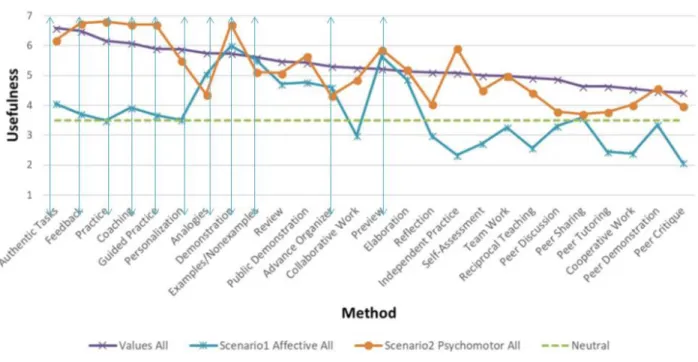
As introduced in Chapter 1, Merrill, Reigeluth, Francom, and their colleagues primarily inform this study about task-centred learning praxis. Based on the spirit of Merrill's (2002) first principles and Francom and Gardners' (2014) task-centred learning theory, general principles determine "effective and efficient instruction" (p. 44). Honebein (2019), who conducted quantitative research on this theory, concurs that first principles have overarching generalities,
"They collectively represent the best instructional components for most instructional situations"
(p. 686). Task-centred learning principles share tenets from the theoretical neighbourhood of learning-by-doing, for example:
● situational practice-based (Lave & Wenger, 1991)
● cognitive apprenticeship (Brown & Duguid, 1991)
● experiential (Kolb, 1984)
● problem-based (Barrows & Tamblyn, 1980)
● project-based (Kilpatrick, 1918)
● competency-based (Reigeluth & Karnopp, 2013)
This family of pragmatic learning theories is increasing in popularity because it promotes students into an active role in their learning experience – an active voice involved in purposeful tasks. Demonstrating chosen artifacts or attainments becomes outcome-based evidence of learning (Blumenfeld et al., 1996; Francom, 2017). In contrast, the industrial hegemony of education emphasizes linearity, conformity, and standardization. UNESCO (2016) expresses the import of this transformation for society as requiring, “a wholesale change in the way we think and the way we act – a rethink of how we relate to one another and how we interact with the ecosystems that support our lives” (p. 8). Sir Ken Robinson at the FETC conference (2018)
urged educators to drop standardized education, which does not cater to the fact that real life is organic, adaptable, and diverse.
Twen ty -Fi rs t Centu ry L earn ers
Twinning with the qualities transforming education are the qualities reportedly required for Gen Z or twenty-first century learners (e.g., Binkley et al., 2012). For example, the Education for Sustainable Development (ESD) report (UNESCO, 2014, 2020) lists essential proficiencies needed in dealing with the "wicked" problems our world faces around sustainability and species survival: systemic thinking, decision-making jointly with others, intergenerational perspectives, competencies in action-taking, and problem-solving. Blaschke (2012) expounds the term heutagogy to describe the highly autonomous, self-determined learner gestalt, “Emphasis is placed on development of learner capacity and capability with the goal of producing learners who are well-prepared for the complexities of today’s workplace” (p. 56). Reigeluth et al. (2017) confirm this stance, "We need graduates who are equipped to embrace change, who are prepared to make sense of the vast amounts of information at their fingertips, and who are curious and eager to communicate, collaborate, innovate, and create new knowledge” (p. 13). As early as 1916, Dewey spoke of this same need for connectivity, collaboration, and authentic context- based learning venues for youth – qualities now considered modern in education: "Playgrounds, shops, workrooms, laboratories not only direct the natural active tendencies of youth, but they involve intercourse, communication, and cooperation—all extending the perceptions of
connections" (p. 366). A century later, Bell (2010), representing a project-based learning model in American public schools, confirms that twenty-first century learners, “will be evaluated not only on their outcomes, but also on their collaborative, negotiating, planning, and organizational skills” (p. 43). Binkley et al. (2012) posit that, across the workboard, careers as technicians or
professionals require an ability to communicate, collaborate, and use powerful global
affordances and information repositories to solve complex problems. Twentieth-century-learners need to modulate, innovate, and ideate in the face of constantly changing situations "to marshal and expand the power of technology" (p. 17), to construct new knowledge, and evolve
humanity's capacity to be productive. Francke and Alexander (2018) recommend, "content through a livelier and more engaging experience…bridging the gap between their [twenty-first century learners] virtual and physical worlds" (p. 99).
Real-World L earni ng – a His tori cal Persp ective
Real-world learning overarches the themes of task-centred learning praxis in fulfilling the purpose of the intervention. I have aligned real-world learning with similar tenets in the
literature, for example: active learning (Dewey, 1938), situational learning (Brown & Duguid, 1991), authentic learning venues (Laurillard, 2012), real-life learning environments (Reigeluth et al., 2017), and experiential learning (Kolb, 1984). Further, tactile learning involving the
manipulation of objects with our own hands avers to deepen learning (Montessori, 1917; Rau, 2020).
Polar-opposite to real-world learning, the industrial-age mindset of education still dominates in the twenty-first century on a global scale within education institutions:
homogenized, passive, lecture-style, time-based, low sensory, subject/teacher-focused learning.
This mindset seems to result in passive, inactive learners who fail to develop critical thinking skills, independence, or creativity in solving the challenges of current fast-paced technological advances (e.g., Manville, 2001; Reigeluth & Carr-Chellman, 2009; Reigeluth et al., 2017;
UNESCO, 2020). "The industrial-age paradigm systematically destroys that self-motivation by removing all self-direction and giving students boring work that is not relevant to their lives"
(Reigeluth & Carr-Chellman, 2009, p. 394). However, this entrenched system is so endemic that all other education systems appear as reform movements. As Robinson and Aronica (2016) espouse,
Some features of conventional schools have little to do with learning and can actively get in their way. The revolution we need involves rethinking how schools work and what counts as a school. It is also about trying a different story about education. (p. xviii) In current theories about transforming public education to the active paradigm, threads consistently lead back to Dewey. He was a prolific pragmatist of the late nineteenth century (e.g., 1899, 1916, 1938). As Dewey (1916) noted, "[Industrial] education proceeds by instruction taken in a strictly literal sense, a building into the mind from without" (p. 74). Dewey had a
naturalistic, progressive ethos about learning as “humanity's innate need to adapt and fully work with its environment” (p. 74). He elaborated,
If I were asked to name the most needed of all reforms in the spirit of education, I should say: 'Cease conceiving of education as mere preparation for later life and make of it the full meaning of the present life’. (p. 393)
Following Dewey, still a century ago, Montessori (1917) of Italy founded an education system emphasizing practical hands-on play self-selected through a child's natural propensities.
Montessori private schools are still thriving in today's active education domain. These pioneers of active learning contributed to the learner-centric movement, prioritizing hands-on, puzzle- solving interactive learning, with the teacher as a guide and the student as a reflective, self- directed learner.
In the 1980s, as the information age began to take hold and unfold, the models and theories of several contemporary and seminal author-educator-researchers have become beacons
of real-world education praxis. They are currently still prolific activists in leading transformation to this new paradigm.
Papert, who died in 2016, published the first version of his famous book, Mindstorms:
Children, Computers, and Powerful Ideas in 1980—recently republished posthumously in 2020.
His pioneering insertion of computers into American schools instantiated this fortuitous prediction from the 1993 version:
I shall try to give you some idea of these possibilities, many of which are dependent on a computer-rich future, a future where a computer will be a significant part of every child's life…forging new relationships between computers and people…That the computer will be there to be used is simply a conservative premise. (p. 18)
The constructionism paradigm, attributed to Papert, perceived as a pragmatic offshoot of constructivism, supports the building of human knowledge combined with the additional
presence of tools, media, and context—this combination promotes self-directed learning
(Ackermann, 2001). An accurate visionary, Papert connected the learner in a hands-on/brains-on relationship with technology.
Reigeluth is a formidable leader in education reform, relentlessly promoting "a quantum improvement in meeting new educational needs of the information age" (Reigeluth et al., 2017, p. 390). From publishing instructional-design theories and models in 1983 to recently authoring a book personalizing competency-based education (2020), Reigeluth and his co-authors have provided a rich panoply of principles, theories, designs, and solutions for pragmatizing real- world learning, including online models. Over a 40-year period, in 12 books and 170 journal articles, their consistent message of real-world learning is infused into this study's conceptual framework.
Kolb (1984), another influential contemporary and seminal author from this era, still
publishing today, spring boarded off Dewey's philosophy of humans as "the learning species"
with an ability to adapt, shape, and create our worlds. The creator of the experiential learning theory of development, Kolb advocates immersive learning in rising spirals of knowledge. His globally recognized work has brought validity to the tenets of experiential, whole-person learning to the academic and training domains.
The following section drills into the components of task-centred learning praxis introduced in Chapter 1, conceptually preparing the reader for Chapter 3, where they become evaluation criteria for the data.
Task-Cen tred L earning Praxis
One of the differentiating factors from other learning-by-doing or problem-based theories is that task-centred learning praxis attempts to balance sufficient learner support with self-
directed learning. The underpinning philosophy of task-centred learning lies in intrinsic motivation, effectiveness, and efficiency with gradually faded scaffolding, prioritizing the transfer of learning to real-world applicability. It claims to have the right ingredients to promote the twenty-first century learner qualities outlined above (Francom & Gardner, 2014; Merrill, 2009; Reigeluth et al., 2017). The development of a problem-solving, critically thinking mindset and the encouragement of a self-regulating yet collaborative attitude are the idealized outcomes of this praxis (Francom, 2017; Reigeluth & Carr-Chellman, 2009).
Figure 8 Task-Centred Learning Praxis Principles in the Literature
Task-Centred Learning Praxis Principles in the Literature (Repeat from Figure 5)
Here are the principles re-iterated from Chapter 1 (Francom, 2017; Merrill, 2002):
● Prior Learning Activation – Learning grows when existing knowledge and skill are activated as a foundation for the new learning.
● Real-World Learning Task – Learning grows when a complex task needs to be completed in a real-world situation.
● Small-Group Learning – Learning grows within a small collaborative cohort.
● Scaffolded Modelling – Learning grows when new knowledge is demonstrated to the learner and facilitated through excellent learning materials and gradually faded scaffolding.
● Applied Practice – Learning becomes real when learners apply the skill to solving tasks where attainment rather than time bounds the outcome.
● Outcome-Based Integration/Reflection – Learning becomes firmly established when integrated into the learner's world.
In support of these seemingly universal principles, Reigeluth and Carr-Chellman (2009) assert, "Just as the grammar of the English language is based on eight parts of speech, so it is possible to trace the many constructs of instruction to a discrete number of sufficiently flexible categories and descriptions" (p. 29). It follows that I would utilize these principles in the context of evaluation criteria to judge the quality of the HAvatar intervention.
Missing Emoti onal Engagem ent Principle?
Honebein's 2019 study introduces the caveat that the affective realm is missing in task- centred learning theory. Reigeluth et al. (2009) partially concur in their metaphor of first principles as guiding stars within a universe but not the entire universe. Galaxies as subsets represent clusters of values and conditions situational to selected clusters of methods. Honebein (2019) gives an example of this specificity regarding the real-life applied practice principle where "practicing a skill, for instance, is far different from practicing an understanding or an emotional disposition" (p. 59).
Kraiger et al. (1993) further assert that priority has been given to measurements of behaviour or cognition while diminishing or omitting attitudinal or motivational measures of learning. Thus, this omission presents an incomplete picture of the learning process.