Universidad del Rosario
Hochschule Mainz
LEADERSHIP AND PERFORMANCE IN MULTICULTURAL BUSINESS ENVIRONMENTS
A QUALITATIVE STUDY IN GERMAN-COLOMBIAN TEAMS
MASTER THESIS
Submitted by: Juliane Spieß
2 University
Faculty Degree
Universidad del Rosario Escuela de Administración Maestría en Dirección
Thesis Facilitator Françoise Contreras Torres, Ph.D.
Contact Details Address Calle 200 Autopista
Sede Complementaria, Bogotá D.C.
Phone Cell
+57 (1) 297 -0200 – 8807 +57 300 558 4264
E-mail [email protected]
University Faculty Degree
Hochschule Mainz - University of Applied Sciences Business School
Master of Arts International Business (MAIB)
Thesis Facilitator Prof. Dr. Susanne Rank
Contact Details Address Lucy-Hillebrand-Straße 2
5518 Mainz
Phone +49 (0) 6131 - 628 -3246
E-mail [email protected]
Student Juliane Spieß
Contact Details Address Walther-Rathenau-Str.6
98574 Schmalkalden, Germany Cell + 49 157 829 118 70
3
DECLARATION
I declare in lieu of an oath that I have written this thesis by myself, and that I did not use other sources or resources than stated for its preparation. I declare that I have clearly indicated all direct and indirect quotations, and that this thesis has not been submitted elsewhere for examination purposes or publication.
Bogotá, 7th September 2015
4
ABSTRACT
Multicultural leadership is a topic a great interest in nowadays globalized work environment. Colombia emerges as an attractive marketplace with appealing business opportunities, especially for German enterprises. After presenting Colombia’s current political, social and economic situation, the thesis elaborates the complex subject of cultural differences while focusing on the peculiarities of German and Colombian national cultures. The resulting implications for a team’s collaboration and leader effectiveness are theoretically supported with reference to the landmark studies of Hofstede and GLOBE. By utilizing semi-structured interview techniques, a qualitative research enriches the previous findings and gives an all-encompassing insight in German-Colombian teamwork. The investigation identifies distinctive behavioral patterns and relations, which imply challenges and factors of success for multicultural team leaders. Finally, a categorical analysis examines the influence of cultural traits on team performance and evaluates the effectiveness of the applied leadership style.
5
ACKNOWLEDGEMENT
First, I like to thank some persons who supported me during the progress of writing the thesis.
My professors Prof. Dr. Susanne Rank and Francoise Contreras Torres, Ph.D., who accompanied me from the topic formulation until the last details and gave me competent advice, personally and even virtually over the distance. I appreciate their constructive criticism and suggestions that helped me to structure, focus and complete this work.
My parents, for their support and the years of trust, especially when I chose to study in Colombia.
Jonatán, for daily encouragement and infinite patience.
6
TABLE OF CONTENTS
DECLARATION ... 3
ABSTRACT ... 4
ACKNOWLEDGEMENT ... 5
TABLE OF CONTENTS ... 6
LIST OF ABBREVIATIONS ... 8
ANALYSIS ABBREVIATIONS ... 9
TABLES AND FIGURES ... 10
1. INTRODUCTION ... 11
1.1. Investigation Approach ... 12
1.2. Justification ... 14
1.3. Objective ... 14
1.4. Importance and institutional linkage ... 15
2. COLOMBIA TODAY: COUNTRY OF CONTRASTS ... 16
2.1. Recent economic, political and social developments ... 17
2.2. International Cooperation ... 19
2.2.1. Relationship with the European Union ... 21
2.2.2. Relationship with Germany ... 21
3. CULTURAL DIFFERENCES IN THE WORKPLACE ... 24
3.1. Definition of culture ... 24
3.1.1. The role of values ... 24
3.1.2. Level of cultures... 25
3.2. Hofstede’s cultural dimensions ... 26
3.3. The GLOBE study: Culture and leadership ... 32
3.3.1. Cultural dimensions and cultural clusters ... 32
3.3.2. Societal practices in Germanic Europe and Latin America ... 35
3.3.3. Implication on effective leadership ... 36
3.3.4. Contemporary approaches on global leadership effectiveness ... 39
4. TEAMWORK IN THE INTERCULTURAL CONTEXT ... 45
4.1. Definition of team and teamwork ... 45
4.2. Team leader competencies ... 46
7
5. EMPIRICAL RESEARCH ... 48
5.1. Conceptualization and research design ... 48
5.1.1. Research objective and conceptual framework ... 48
5.1.2. Methodology ... 49
5.1.3. Selection of data collection method ... 50
5.1.4. Determination of population and selection of sample participants ... 54
5.2. Logistics ... 55
5.3. Execution ... 56
5.4. Study limitations ... 57
6. DATA ANALYSIS ... 58
6.1. Categorization ... 58
6.1.1. Cultural traits ... 60
6.1.2. Team performance ... 69
6.1.3. Leadership effectiveness ... 72
7. CONCLUSION ... 75
BIBLIOGRAPHY ... 77
APPENDIX ... 81
Appendix A: Interview guide in-depth interview (German) ... 81
Appendix B: Discussion guide focus group (Spanish) ... 84
Appendix C: Declaration of consent (German) ... 87
Appendix D: Declaration of consent (Spanish) ... 88
Appendix E: Transcription and data analysis, In-depth interview Company 1 ... 89
Appendix F: Transcription and data analysis, In-depth interview, Company 2 ... 93
Appendix G: Transcription and data analysis, Focus Group Company 1 ... 96
8
LIST OF ABBREVIATIONS
B billion
BMZ Bundesministerium für wirtschaftliche Zusammenarbeit und Entwicklung
CEPAL Comisión Económica para América Latina y el Caribe
CLT culturally endorsed implicit leadership theory
DANE Departamento Administrativo Nacional de Estadística
EC European Commission
ELN Ejército del Liberación Nacional
EU European Union
FARC Fuerzas Armadas Revolucionarias de Colombia
FTA Free Trade Agreement
GDP Gross Domestic Product
GLOBE Global Leadership and Organizational Behavior Effectiveness
IDV Individualism index
IMF International Monetary Fund
IVR Indulgences versus restraint
Ltda. Limitada, Spanish abbreviation for Limited Company
LTO Long-term orientation
M million
MAS Masculinity
PDI Power distance index
SME Small and medium Enterprises
SWOT Strengths, Weaknesses, Opportunities, Threats
UAI Uncertainty avoidance
9
US United States
vs. versus
WB The World Bank Group
WEF World Economic Forum
WTO World Trade Organization
% percent
ANALYSIS ABBREVIATIONS
C1 Company 1
C2 Company 2
FG1 Focus group 1
FG2 Focus group 2
P1 - 6 Participant 1 - 6
TL1 Team leader 1
10
TABLES AND FIGURES
Table 1: SWOT analysis of Colombia’s economic profile ... 23
Table 2: Cultural scores “as is” of the Germanic Europe and Latin America ... 35
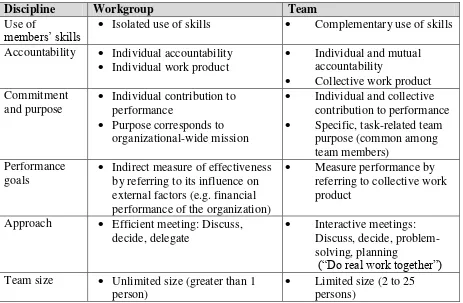
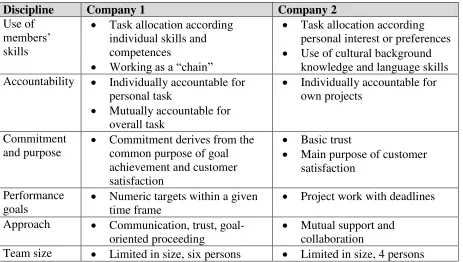
Table 3: Evaluated efficiency of leadership styles in Colombian and German societies 37 Table 4: Disciplines of a teams ... 45
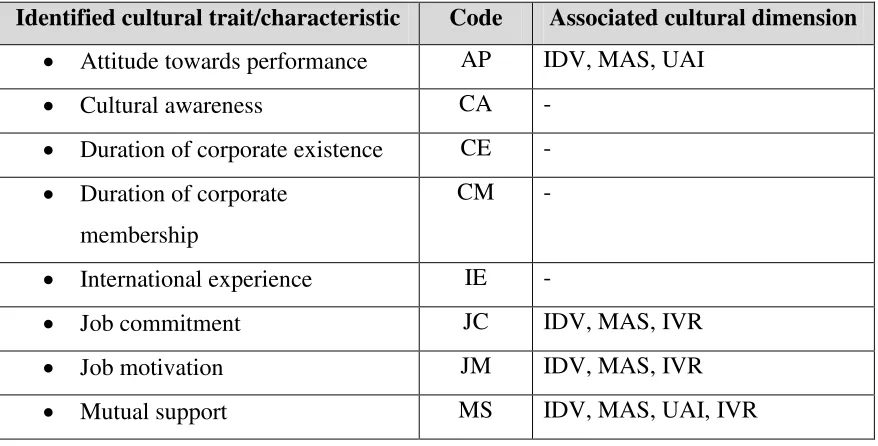
Table 5: Deductive codes for data analysis ... 59
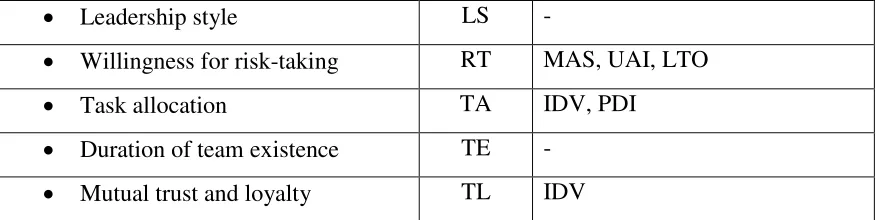
Table 6: Inductive codes from data analysis ... 60
Table 7: Assessed disciplines of team performance in the investigated sample ... 72
Figure 1: Cultural dimension country scores of Colombia and Germany ... 27
Figure 2: GLOBE cultural clusters ... 34
11
1.
INTRODUCTION
The time has never been better for considering a foreign direct investment in Colombia. Country’s safety situation has improved significantly, economy shows promising prospects and also social development programs were initiated to improve internal inequalities. Colombia pursues international trade endeavors in order to facilitate free movement of goods and services and to attract foreign entrepreneurs. By now, it is a member of well-known organizations, such as the International Monetary Fund (IMF), the World Trade Organization (WTO) and further multilateral agreements among its neighboring countries as well as the United States (US) and European Union (EU) (Auswärtiges Amt, 2014).
Its geographic location favors the economic potential. The direct access to Pacific and Atlantic Ocean as well as its centrality between North and South America are important factors for foreign investment deliberations. The capital’s airport El Dorado in Bogotá serves as a hub for both continents. All major cities, e.g. Sao Paulo, Buenos Aires, Mexico City and American metropolis New York City can be reached within a few hours (Rybak, 2012).
Comprehensive infrastructure projects and rising private consumption offer attractive business opportunities in upcoming years. In the areas of mechanical engineering, building materials and transport technology, especially German enterprises will be able to profit from the economic process. Some, e.g. Siemens, decided to focus on this market region years ago and established subsidiaries or branches in the metropolitan area of Bogotá (Siemens, 2015). For business start-ups the German Colombian Chamber of Industry and Commerce together with its subsidiary DEinternational Ltda. provides consultancy advice and negotiating of business partners (Deutsch-Kolumbianische Industrie-und Handelskammer, 2014). Recently established firms are particularly grateful for this kind of service, because the assistance helps to adapt to an unfamiliar culture in order to learn how to do business in Colombia.
12
great extent determined by the predominant culture and the local environment, leadership approaches have to be adapted accordingly. That includes recognizing both, differences and similarities. Understanding and moreover appreciating these characteristics enables to discern separating and unifying factors of a team’s performance. This comprehension is a crucial necessity for cross-cultural management, encouraging leaders to face challenges, avoiding situational misinterpretation and eventually cooperating in a creative and successful manner (Hodgetts, Luthans, & Doh, 2006).
1.1. Investigation Approach
In the course of this work a cultural study about German-Colombian team performance and applied leadership styles will be conducted.
By beginning with a theoretical introduction about the topicality and necessity of the subject-matter, the thesis subsequently describes Colombia’s current economic situation and its relationships to the international economy, particularly to Germany.
Importance is placed on defining culture and relating issues based on the six dimensions of Hofstede’s model of national culture in order to acknowledge similarities and differences as an important requirement to enable the cultural fit among diverging societies. By referring to findings of the Global Leadership and Organizational Behavior Effectiveness (GLOBE) project, the thesis draws an overview about challenges in an intercultural team, i.e. the impact of the cultural variables on organizational processes and structures as well as leader’s effectiveness and appropriate leadership styles.
13
the previous conclusions with practical experiences in the workplace, based on the assumption that relevant aspects, such as shared attitudes and situational understanding, are enclosed into categories.
The investigation regards three aspects of interest (categories) on two levels, namely focusing on culture, team performance and leader effectiveness from both, the management and subordinate perspective. In order to give an all-encompassing insight into the topic, thus, two kinds of interviews are envisaged: on the one hand, the conduction of a personal, semi-structured in-depth interviews with the team leader that is aimed to discover the leader’s individual perceptions and experiences in the workplace that can be linked to his or her personal culture and professional formation. On the other hand, employee’s angle is demonstrated by the mean of a focus group interview. Herewith, views and opinions are shared in an interactive discussion on a community level (Hennink et al., 2011).
The three categories above are integrated in both interviews in a logical, synchronized manner. Cultural traits were captured in individual question blocks using situational examples. The impact on performance and leader effectiveness was regarded individually for the respective trait. Allowing a categorical analysis, every section referred to the following aspects:
1. The existence of cultural traits related to Hofstede’s model of cultural dimensions 2. The influence of cultural traits on member’s and overall team performance 3. The effectiveness of the applied leadership style
14 1.2. Justification
In an attractive market place, such as Colombia, foreign investments are constantly rising. Principal concern for a successful founding of overseas business operations is the awareness and understanding of the foreign culture, as it influences the behavior and business practices considerably. Particularly, newly founded small and medium-sized enterprises often lack these kinds of experiences and seek for professional advice. Furthermore, situational behavior in social environments such as the workplace is mainly determined by perceptions and values of the employees and affects a team’s performance tremendously. Since these attitudes originate in turn from cultural background, international leaders face the challenging task of unifying diverging cultures and enabling cooperation (Bachmann, 2006). Therefore, recognizing and dealing with intercultural differences is a topic of great interest for entrepreneurs in a new market.
1.3. Objective
Regarding the portrayed proceeding, research objective and corresponding guiding questions have been established as follows:
Objective:
To identify cultural traits within German-Colombian work environments and to understand their influence on group performance and leadership effectiveness.
Guiding questions:
Which cultural traits can be identified within multicultural teams comprising German and Colombian employees?
How do cultural traits influence the performance of team members?
How are multicultural teams effectively managed and what is the most appropriate
15
1.4. Importance and institutional linkage
The thesis will be coordinated by Prof. Dr. Susanne Rank at Hochschule Mainz, University of Applied Sciences and Francoise Contreras Ph.D., Universidad del Rosario. It is assigned to the context of Leadership and Organization as a component of Human Resource Management in accordance to the equivalent course Taller de Habilidades de Liderazgo taught
at the partner university Universidad del Rosario, Bogotá, Colombia. Further, the study supports Grupo de Investigación en Perdurabilidad Empresarial, the internal research group of Rosario University’s business school, in its investigation area of leadership.
In order to establish business contacts and conducting the expert interviews with German enterprises in Colombia, the German-Colombian Chamber of Industry and Commerce was contacted for advice and support. The thesis’ study results will be available for the participating interview partners and their companies. Therefore, the thesis not only supports mutual cooperation between Hochschule Mainz, University of Applied Sciences and Universidad del Rosario in terms of knowledge exchange in the research field of Human Resource Management, but also extends the recognition of both universities in a network of internationally operating companies. It is imaginable, that the established contacts might flourish in long-lasting relationships giving both, companies and universities, the opportunity of offering internships or even job placements.
16
2.
COLOMBIA TODAY: COUNTRY OF CONTRASTS
Surrounded by the Pacific and the Atlantic Ocean and situated at the cornerstone between Middle and South America, Colombia provides a strategically important location for national and international trade. Moreover, the country is characterized by its high biodiversity and offers abundant natural resources.
Following Brazil, Colombia is the second most populous nation in South America. Since the Census in 2005, Colombian population grew by an estimated 12.4% to 48.2M and is projected to reach a population of nearly 51M in 2020. Population’s majority (75.9%) lives in urban areas (The World Bank Group (WB), 2015c). With its 7.8M inhabitants, one-sixth of Colombia’s total population resides in the metropolitan area of the capital Bogotá (Departamento Administrativo Nacional de Estadística (DANE), 2014). In addition, megacities like Medellín, Cali and the conurbation of Barranquilla at the Caribbean coast emerged as urban junctions among the country.
17
achievement in March 2015, when conflicting parties decided to collaborate in the clearance of minefields, negotiations are expected to bring a positive end eventually. The EU and particularly Germany, support Colombia in this matter in order to progress peace and thus, social and economic development (Bundesministerium für wirtschaftliche Zusammenarbeit und Entwicklung (BMZ), 2015).
2.1. Recent economic, political and social developments
Colombia’s recent social and economic developments show a contradictory picture. On the one hand, future prospects for economic development are highly optimistic.
In 2013, nominal gross domestic product (GDP) mainly based on activities in the banking sector; services; retail trade; and manufacturing industry, amounted to 378.4B United States Dollar (USD) positioning Colombia in 31st place among worldwide economies (Comisión Económica para América Latina y el Caribe (CEPAL), 2015). Also GDP per capita multiplied by two-and-a-half times in the past decade and represents an increasing private consumption (WB, 2015a).
The economy is growing dynamically by 4% annually with a continuing upward trend. From 2004 to 2007, the pre-crisis figure of more than 6% was even higher. In contrast to other vigorous Latin American economies, Colombia was able to uphold a positive growth of 1.7% when the international financial crisis caused a worldwide decline of GDP. In the aftermath, Colombia quickly resumed its pre-crisis performance. By surpassing the pre-year value of almost 5% in 2013, the country had the highest increase rate among all Latin American nations (WB, 2015).
18
those macroeconomic measures of nominal GDP, inflation and unemployment rates, Colombia proves to be a country of high growth potential.
In the contrary, the still ongoing internal conflict to combat the problem of international drug trafficking and organized crime inhibits the overall national development tremendously. Particularly the rural population is severely affected by the armed confrontation and suffers from expulsion, poverty and enormous development deficits. The number of refugees within domestic boarders is one of the highest worldwide (BMZ, 2015).
According to United Nation Development Programme (UNDP, 2013), Colombia increased its Human Development Index (HDI) in the past thirty years by an overall 27.9% and holds, together with Ecuador, the 98th place of worldwide 187 countries. The rank categorizes it as a country of high human development. The HDI- index captures three basic components such as life expectancy, years of received school education and standard of living using Gross National Product per capita as indicator. Regarding the inequality- adjusted HDI (IHDI), which takes into account discrepancies in the distribution of income, health care and education in between a country’s population, the value however falls to 0.521. This reflects Colombia’s extreme regional inequalities of income and wealth distribution.
In a broader comparison, Colombia falls behind the high development group average of 0.735 as well as the Latin American HDI value of 0.74. The same picture shows when analyzing IHDI. Here again, category’s average (0.59) and Latin American countries (0.559) occupy higher ranks than Colombia. Due to the considerably large gap between HDI and IHDI that generally exists among the Latin American countries including Colombia, structural imperfection becomes apparent.
19
provide a nationwide social security measures, leaving a large part of the society with considerably high employment and poverty risk (WEF, 2014).
Lately, Colombian government has put focus on the importance of structural reforms. The National Development Plan commits authorities to reduce social inequalities and foster substantial economic growth enabled through education attainments and the termination of violence. Recent reforms e.g. the indemnification for victims of the conflict, land restitution and the increases in minimum wage are decisive actions against poverty and regional differences in development (Procolombia, n.d.).
2.2. International Cooperation
Despite infrastructural insufficiencies and political instability including the continuing armed conflict, Colombia successfully promoted its peace endeavors and has intensified its international trade cooperation in recent years. The country benefits from its strategic location and valuable raw materials, such as petroleum, carbon and gold. The macroeconomic environment remains on a healthy, stable level with a balanced government budget, controlled inflation and low unemployment (WEF, 2014). In the international ranking “Ease of doing business” Colombia indicates a favorable business environment for foreign entrepreneurs, providing high investor protection and lending accessibility. Among 189 observed economies, Colombia ranks worldwide 34th place, achieving the best result among Latin American and Caribbean nations (WB, 2014).
International business relations, comprising several regional partnerships with South and Latin American neighbor states1, as well as free trade agreements with the US, Canada and the EU show Colombia’s pursue for establishing an open and competitive market space. Further, the country participates in international economic organizations as an active member of e.g. the WTO, the IMF and the United Nations Conference on Trade and Development (UNCTAD, 2014; Auswärtiges Amt, 2014).
1
20
According to the latest World Investment Report (UNCTAD, 2014) Colombia has evolved as one of the main Foreign Direct Investment (FDI) receivers in recent years. The country belongs currently, to the twenty most attractive host economies. Whereas FDI inflows in South America generally decreased, Colombia demonstrated a reversed upward trend with an 8% growth equaling 17 billion USD. This positive development was principally evoked by the raised number of cross-border mergers and acquisitions by more than 50% in the banking and electricity sector.
In terms of foreign trade the US remain Colombia’s most important trading partner, followed by the Latin American Integration Association and the EU (DANE, 2014). However, China, which currently ranks third place, is becoming increasingly influential and already represents Colombia’s second largest source of imports (European Commission (EC), 2014).
Exports are mainly based on products from the mining sector. By totaling almost 60% the high need for economic diversification becomes apparent (DANE, 2014). Especially the commerce and construction sector, including transportation, offers considerable growth opportunities and will further enable a diversified economic portfolio. Economic growth, increased income and low unemployment enhanced population’s purchase power and will give significant incentives for private demand and therefore, retail and wholesale business (Rybak, 2012).
21 2.2.1. Relationship with the European Union
On 1st August 2013 the free trade agreement (FTA) between the EU, Colombia and Peru came into force. The extensive opening of the prevailing markets including tax elimination, enhanced transparency and business surveillance, is aimed to create stable investment conditions; and to protect human labor rights and enforces rule of law in order to shape a sustainable business environment with a high level of competitiveness, innovation and technological transfer.
Foreign trade volume with the EU reached 13.5B Euros (17.9B USD)2 in 2013 (Boerse.de, 2105). Whereas mineral fuels and lubricant were the most important export goods and machinery, transport equipment and chemical products the most important imports (EC, 2014). With the successful signing of the FTA with the EU this number is intended to improve by 8% prospectively with “...direct positive consequences for local producers in the…processed agricultural goods sectors; for manufacturers of light industrial goods such as textiles, clothing and leather goods; as well as in the heavy industrial goods sector and mining” (EC, 2012, p. 3). Subsequently, the contract fosters European investments, particularly in sectors of raw material processing and energy production, infrastructure projects, manufacturing and service industries (EC, 2012).
2.2.2. Relationship with Germany
Germany and Colombia foster a friendly and co-operational relationship on the political, cultural and economic level. Main emphasis is put on topics related to development policy. Within the EU, Germany represents Colombia’s principal trading partner in terms of exports as well as imports. Besides, the overall benefits of the FTA with the EU, German enterprises in particular will find improved business opportunities. Currently, chemical products, machinery and manufactured goods from the automotive and electronics industry are Germany’s most popular export goods, totaling to a two-third share of overall export goods. By protecting intellectual and commercial property rights and an access to funding for research investigations
2
22
and innovation the treaty also enhances the developmental conditions for small and medium-sized enterprises (SME) and recently established businesses. The changing economic landscape will further raise the demand for German environmental and medical technology or other engineering industry products (Germany Trade & Invest, 2014).
Within the bilateral relationship, particular attention is put on the peace process. President Manuel Santos visited Germany shortly after his re-election in November 2014 when Chancellor Angela Merkel reassured Germany’s continuing support in the peace process and other areas of cooperation, such as environmental and climate protection as well as scientific research (Bundesregierung, 2014). To confirm the given concessions, German development minister Dr. Gerd Müller visited Bogotá in the end of 2014 and signed the governmental agreement. With an amount of 327M Euro (434.6M USD)3, the financial funds, related to development policy, shall be used to impose peace laws and regional reforms, as well as post-conflict actions and the compensation for victims (BMZ, 2014). The agreement will encourage a continuous close cooperation and strengthen mutual trust.
Regarding the previous evaluation of Colombia’s economic potential and attractiveness for foreign and particularly German investors, the country’s profile can be summarized in a so -called Strength-Weaknesses-Opportunities-Threats (SWOT) analysis:
S
trengthW
eaknesses Strategic location
Resource abundance
Young, educated workforce
Increasing consumer spending
Stable macroeconomic indicators
Openness to international trade and
investment condition
Inequality in development and
distribution of wealth
Lack of nationwide social security
High poverty risk
Ongoing internal conflict related with drug trafficking and land expulsion
Insufficient infrastructure
High transportation costs
Deficits in higher education levels
3
23
O
pportunitiesT
hreats National Development Program
Comprehensive infrastructure projects
High demand in commerce and
construction sector
Free trade agreement with EU
Bilateral cooperation with Germany
Positive end of peace negotiations with
FARC
Negative end of peace negotiations
with FARC
Over-exploitation of natural resources,
especially petroleum
[image:23.612.67.545.73.272.2] Setback of commodity prices
24
3.
CULTURAL DIFFERENCES IN THE WORKPLACE
3.1. Definition of culture
The theory of culture originates from anthropological studies. The concept refers to various casual relations and comprises extensive contents of meaning. However, for the purpose of this thesis at hand and the focus on leadership in culturally diverse teams, the term is approached in its ethnographic sense. The following self-generated definition of culture derives from several works in the field of study and shall guide the subsequent investigation and interpretation in the course of work:
Culture can be defined as the pervasive system of shared beliefs, norms, and values within a certain group of people or society that influences behavior and attitude and thus, social interaction. Culture is not naturally inevitable but rather learned, experienced and passed on to future generations. Embedded in traditions, rituals and symbols, cultural patterns are constantly reinforced and therefore difficult to change. Nevertheless, culture is adaptive and related values might develop over time (Hodgetts et al., 2006; Cullen & Parboteeah, 2011).
3.1.1. The role of values
25 3.1.2. Level of cultures
In individual terms, culture is an omnipresent power, acquired through experiences over the course of during one’s lifetime as part of a society with various underlying layers. Thus, every single person is affiliated to several subgroups according to nationality, social class, gender, generation, etc. In multinational business operations culture manifests on three different stages: national, business and organizational/occupational, in which culture pervades from a macro to micro level (Cullen & Parboteeah, 2011).
Regarding the uppermost category of national culture, the above given definition is applied to the area of a state and its political frontiers. Within these borders, culture is determined by the most powerful part of society in political, economic or numerical terms and represented e.g. through the officially used language, education and legal system or a celebrated national sport. However, national culture oftentimes is composed of various subcultures. Based on factors such as geographical location or religious/linguistic or ethnic background, the communities enrich a country’s variety in innumerable aspects of everyday life and form its identity (Hofstede et al., 2010).
Colombian subgroups are for instance the indigenous population with particular traditions and rituals. Another example would be the regionalism of “Paisa” culture. Comprising the area of the federal states of Antioquia, Caldas, Quindío, Risaralda, Norte del Valle y Norte del Tolima inhabitants of this region, so-called Paisas, are identified through their own customs, festivities as well as intonation patterns. Paisa people are said to be good businessmen, proud personalities with a proclivity for egocentricity (“Costumbres de los antioqueños”, 2013, para. 3).On German national territory cultural differences are primarily observed between populations of either side of former inner-German border. Given the high influence on behavioral practices in the workplace, the thesis hereafter draws a general picture on Colombian and German national culture without considering secondary attributes.
26
language of the country and determines negotiations, and business relations or etiquette. Subsequently, this business culture interweaves occupational level and within organizations.
Within professional groups, e.g. jurists, teachers, sales representatives, medics or craftsmen, certain behavioral characteristics derive from similar education and use of information. According to Hofstede, executed practices within occupations show more pervasive idiosyncrasies than the national culture (Hofstede et al., 2010).
Furthermore, prevailing norms and values affect principles of corporate culture and governance that are commonly shared by all members of the organization. Those are reflected in the form of e.g. decision-making, risk management, hierarchical structure, role expectation and leadership style. Nevertheless, in most international companies there is more than just one universal culture. Parent company’s culture is not applicable to every subunit or foreign subsidiary. As employees’ preferences and conditions have an important impact on performance and task achievement, organizational culture has to be adapted frequently (Hodgetts et al., 2006).
Given the influencing power of culture on all aspects of everyday life, including the work place, two empirically sound models, namely Hofstede’s model of national culture and the Global Leadership and Organizational Behavior Effectiveness (GLOBE) project were selected to identify sociocultural components of German and Colombian culture. The following presentation and application of these studies enable the further course of examination.
3.2. Hofstede’s cultural dimensions
Based on deeply founded values, Geert Hofstede refers to culture as “…the collective mental programming that distinguishes the member of one group or category of people from others” (Hofstede et al., 2010, p.6) and “…the unwritten book with rules of the social game that is passed on to newcomers by its members, nesting itself in the minds” (Hofstede et al., 2010, p.26).
27 67 13 64 80 13 83 35
67 66 65
83 40 0 20 40 60 80 100
PDI IDV MAS UAI LTO IVR
Cultural Dimensions
country comparison Colombia - Germany
Colombia Germany
introduced in 1980 in his book “Culture’s Consequences” where Hofstede, seized on four problem areas and empirically established a cultural dimension as a differentiating characteristic relative to another culture (Hofstede et al., 2010). The four value-based dimensions are Power distance, Uncertainty avoidance, Individualism and Masculinity. Due to constant research and
increased number of investigated countries Hofstede defined Long-term orientation as the fifth dimension in 1991. In cooperation with his colleague Michael Minkov, the sixth dimension of Indulgence vs. Restraint was added in 2010 using data from “World Values Survey”, which includes data from 93 countries (Hofstede & Hofstede, n.d.). Many further studies replicate Hofstede’s pioneer investigation. In the course of this work, the GLOBE project as one of the most protrudes and extensive researches is given credit.
[image:27.612.73.521.413.616.2]By referring to the information of Hofstede’s latest publication “Cultures and organizations: Software of the mind”, this section defines the six dimensions and explains their manifestation in a workplace context. Figure 1 gives an overview of the empirically found country scores in German and Colombian national culture.
Figure 1: Ccultural dimension country scores of Colombia and Germany, adapted from Hofstede et. al, 2010
PDI: Power distance
IDV: Individualism MAS: Masculinity UAI: Uncertainty avoidance LTO: Long-term orientation
28 Power distance
The Power distance index (PDI) measures the degree of acceptance for unequal power distribution among members with low or no authority in organizations or groups of one country. High-PDI countries are characterized by large hierarchies and centralized power, which is also reflected in disparities in wage. An autocratic style of management including top-down communication is expected or even appreciated by the employees. Disagreement to authoritarian decisions is usually not expressed. Power distance therefore describes the dependency between authorities and subordinates as well.
With a relatively high score of 67, Colombia can be classified within the category of countries that accept existentially unequal treatment. Among other Germanic language speaking countries Germany is situated at the lower end of the scale with a PDI of 35. Generally, organizations are decentralized and low-hierarchical. Leaders are respected for their skills and
expertise, not for authority and pursue an advisory or participative approach. In consequence, the
manager-subordinate relationship is mutually dependent, and rather pragmatic than emotional.
Individualism
The dimension of Individualism refers to the self-conception of society members.
Individuals perceive themselves as part of a community of high interdependence and
unquestioned loyalty or rather act self-centered according to own interest and needs.
The low score of 13 defines Colombia as a very collectivistic nation. That means that nation’s
identity is shaped by a group dynamic, an affiliation to a certain group and loyalty. This influences the formation of opinions and decision-making tremendously. Establishing a personal relationship is of higher importance than task achievement and trust is an essential precondition
for doing business. Leaders of collectivist cultures are managing a group, not individuals and
decide according to a common interest in order to maintain harmony. In-group members are
29
In contrast, Germany is an individualistic country with a high Individualism index (IDV)
of 67. Activities are directed to personal targets and self-fulfillment. Loyalty and sense of
belonging is determined by individually assessed importance or contractual relationship in the
work place. In order to improve a person’s ability to learn from its mistakes, criticism is believed
to be carried out best in an open and direct way. This communication approach is contrary to the
one in Colombia, where attention is paid to the fact of saving opponent’s face. Thus,
communication is context-rich and voluptuous and criticism is often conveyed through a
mediator.
Masculinity
Striking characteristics that are considered to be dominant in behavior of males are
competitiveness, striving for material success or achievement, whereas feminisms’ is oriented in
balance and quality of life. The masculinity dimension reflects to which extent society’s value
system is influenced by those masculine attributes and is exercised in a professional
environment, i.e. organizational behavior. In the workplace, a feminine society is focused on
solidarity, compromise and negotiation of conflicts. Rewards are based on equality, i.e.
according to a person’s needs, whereas incentives in masculine countries should motivate
performance, job advancement and recognition.
In this regard, both Colombia and Germany are classified as masculine societies with
importance on pursuing a career and target achievement. However, differences appear due to
other influencing dimensions. In Colombia, competitive thinking particularly concerns
challenging different (social) classes due to the high collectivistic consciousness. Group
alignment should enable benefits such as status and success. In Germany, typical characteristics
of male society are executed on an individualistic level. Self-confidence is built on personal
result accomplishment and success, frequently demonstrated by status symbols. Whether it is
based on common agreements or individual preferences, in German as well as Colombian
workplaces, leaders have to assume the role of an ultimate decision maker and therefore, must be
30 Uncertainty avoidance
Uncertainty avoidance (UAI) indicates how a nation is coping with future uncertainties
and the related anxiety or threat. In high-UAI countries such as Colombia and Germany the need
for predictability and interpretability is prevailing. Both countries show propensity toward
avoiding unknown situations. The world is conceived as a hostile place, in which formal rules
and laws structure social existence. In terms of working life, precise tasks, established goals, and
fixed deadlines are expected and followed.
Colombia’s high value of 80 implies a tendency to apply mechanisms in order to avoid
ambiguity. The attitude towards changes in the course of action is inflexible and rather difficult.
However, final (and possibly discretionary) decisions are made by power holders which might be
in contradiction to the formerly established rules and adjusted to the individual purpose of the
group.
Particularly in Germany, experience from former learning processes is crucial for dealing with
uncertainties. This deductive approach substantiates the significance of a leader’s power and
responsibilities which he or she owns due to expertise rather than the hierarchical position itself.
Long-term orientation
This dimension describes the influence of a nation’s history on its current and future situation. Whereas long-term oriented (LTO) countries reward future related virtues, short-term orientation fosters past and present related values. Regarding the attitude towards future orientation, Germany and Colombia differ significantly and show the greatest gap among all cultural dimensions.
31
Germany’s high LTO value of 83 mirrors a world view and adjusted behavior in respect to certain situations and its conditions, meaning it is a solution-oriented, subject-related and rational culture. Traditions therefore, do not have the same importance compared to Colombia. The awareness and acceptance of a constantly changing environment, i.e. considering the future as a long-term problem, manifests in a strong tendency to save and spare resources; and deliberate investments.
Indulgence vs. Restraint
The last indicator compares the tendency towards indulgence versus restraint (IVR). It measures the ability to control impulsive behavior and desires. Whereas in indulgent cultures the acceptance of expressive enjoyment of life and related emotions is high, this behavior is restrained by social norms in countries with a low IVR score.
Countries with a high IVR result, such a Colombia (83), demonstrate a low propensity of control and are considered to be indulgent. It is characterized by hedonistic values, optimism and the importance of leisure time which is reflected in short-time orientation and the attitude towards spending money. Germany scores relatively low (40) what signifies a somewhat restrained behavior towards showing impulsive reactions or desires. The general world view is rather cynical and negatively minded regarding future outlooks. Nevertheless, due to a high esteem of individualism, also Germans place importance on work-life balance.
32
3.3. The GLOBE study: Culture and leadership
Based on the assumptions that “Beliefs about leadership reflect the dominant culture of a country” (Hofstede et al., 2010, p. 331) and ideal leadership entails the shared societal opinion of exemplary behavior, the following chapter examines the cohesion of culture and leadership effectiveness.
In this regard, the investigative approach of the so-called Global Leadership and Organizational Behavior Effectiveness (GLOBE) study has excelled. GLOBE is a multi-country research, which was carried out in 62 societies4, comprising almost 1000 enterprises with a total of 17,300 participants, i.e. leaders on middle management level. Initiated by Robert House in 1991, currently it is considered to be the most ambitious and comprehensive project, that investigates the relation between culture and global leadership (Center of Creative Leadership (CCL), 2014).
3.3.1. Cultural dimensions and cultural clusters
As a precondition for measuring and understanding the influence of cultural variables on leader’s effectiveness, practices and their further impact on organizational processes, House established nine cultural dimensions (Gil & Martí, 2011). Five of them emulated Hofstede’s original dimensions by reusing Power distance, Uncertainty avoidance, distinguished between institutional and in-group Collectivism (Collectivism I and II), redefined Masculinity into
Assertiveness and Gender egalitarianism and renamed Long-term orientation into Future orientation. The two additional dimensions of Humane orientation and Performance orientation
specify Masculinity (Hofstede et al., 2010).
With regard to the meaning of Power distance and Uncertainty avoidance Hofstede’s and GLOBE’s definitions coincide. Further dimensions however, were attached to a different implication. Future orientation focuses particularly on actions related to future events and does
4
33
not value traditions or relevance of the presence. Collectivism I regards the sense of togetherness and spirit of community among the whole organization, while Collectivism II shows individual’s bond and commitment to a specific entity and thus, the strength of in-group cohesion. Certain attributes of Hofstede’s masculinity dimension are emphasized in several GLOBE measures. Assertiveness, for example, describes the degree of severity in direct, confrontational actions
among society members. The pursuit of personal enhancement and excellence is taken into account in the dimension of Performance orientation and mirror stereotypical male characteristics, whereas humane orientation accounts for the femininity-side and refers to the rewarding of fairness, encouragement and generosity. Gender egalitarianism concentrates particularly on the reduction of gender role inequalities (House, Hanges, Javidan, Dorfman, & Gupta, 2004; CCL, 2014).
While Hofstede’s model measures the relative differences between dimensions, GLOBE distinguishes societies in an absolute sense. Culture is either evaluated on people’s assessment about “as it is”, referring to social practices, or “as it should be”, taking into account shared values and beliefs among entities. Moreover, the research was conducted in a two-level analysis, namely on societal and organizational stage (House et. al, 2004). Considering this specific approach as well as the deviating meanings of clusters, the research results of both studies cannot be compared (Gil & Martí, 2011).
Based on eighteen culture scores, i.e. nine dimensions with two evaluation criteria of “as is” and “as it should be”, the project categorized ten clusters. Societies were affiliated to a certain regional cluster due to similarities in geographical location; climate zone; ethnic composition, as well as religious and linguistic roots (CCL, 2014).
34
Figure 2: GLOBE cultural clusters, adapted from House et. al, 2004
Germanic Europe cluster
Most of the Germanic European countries use German as a native language. Besides, the clustering derives from a shared historical context. The religious faith of Protestantism is widely disseminated. Orderliness, loyalty and directness are deeply founded values in society (House et. al, 2004).
Latin American cluster
Colombia, together with other Central American and South American countries is situated in the Latin American cluster. It is characterized by its history and influence of the Spanish occupying powers, i.e. language, legal and religious heritage and ensuing independency wars left indelible marks in nowadays culture. The affiliated countries share the common official languages Spanish or Portuguese and the widespread religious belief is Roman Catholicism.
35
into consideration when debating about employee’s performance (personalism). Particularism is described as the right to make use of connections for one’s personal advantage. At last, paternalism is the high valuation of intimate intra-familial relations or friendships. Persons outside this circle are regarded somewhat skeptically. In connection with the particularistic values, personal ties are thus crucial in the work environment (House et. al, 2004).
3.3.2. Societal practices in Germanic Europe and Latin America
In the proceeding of the investigation, the clusters were allocated according to their cultural scores (high, medium, low)5 in order to predict inter-segmental mindset and common behavior (House et. al, 2004) Nevertheless, study findings also revealed the existence of subcultures which can be found among different clusters and are adjusted to specific attributes and circumstances (Gil & Martí, 2011).
Cultural Dimension Clusters with high scores Clusters with medium scores Clusters with low scores Power
distance X
Germanic Europe
X Latin America
Uncertainty
avoidance Germanic Europe X Latin America
Collectivism I X X Germanic Europe
Latin America Collectivism II
Latin America X Germanic Europe
Assertiveness
Germanic Europe Latin America X
Gender
egalitarianism X
Germanic Europe
X Latin America
Future
Orientation Germanic Europe X Latin America
Humane
orientation X Latin America Germanic Europe
Performance
[image:35.612.67.509.339.624.2]orientation Germanic Europe X Latin America
Table 2: Cultural scores “as is” of the Germanic Europe and Latin America derived from House et. al, 2004
Table 2 shows the categorization of Germanic Europe and Latin American in which cultural practices are evaluated “as is”. According to GLOBE, Germany and Colombia have
36
similar attitudes towards Power distance and Gender egalitarianism (medium scores) as well as institutional Collectivism (low score). Differences were observed in the Assertiveness and
Humane orientation dimension, in which Latin America is affiliated to the medium-score
column, whereas Germanic Europe has a high tendency towards assertive behavior and a rather low esteem for individual-related issues. However, differences are more distinctive in terms of Uncertainty avoidance, Future orientation and Performance orientation, dimensions of high
importance in Germanic Europe. Latin America, by contrast, shows high propensity towards in-group Collectivism (House et. al, 2004).
3.3.3. Implication on effective leadership
Consequently, GLOBE study aims to detect characteristics of competent leadership. Every culture establishes its individual notion “…based on the premise that leader effectiveness is contextual, that is, it is embedded in the societal and organizational norms, values and beliefs of the people being led” (CCL, 2014, p. 3). These beliefs are further shared among the members of an organization and influence the acceptance and response to a certain leadership style. GLOBE identified 112 attributes that are positively influential and encourage employees to work expressively towards the progress and success of the company or a specific objective. Labeled as “culturally endorsed implicit leadership theory” (CLT), these traits were summarized into the 21 characteristics mentioned below. So-called first-order CLTs were subsequently evaluated according to their desirability on a seven-point scale. Mean values of all participating society revealed the following rank from seven, being the most universally desirably leadership quality, to one as the least universally desirable quality (House et. al, 2004; CCL, 2014):
Integrity 6.07 Modesty 4.98
Inspirational 6.07 Humane 4.78
Visionary 6.02 Status conscious 4.34
Performance-oriented 6.02 Conflict inducer 3.97
Team-integrator 5.88 Procedural 3.87
Decisive 5.80 Autonomous 3.85
Administratively competent 5.76 Face saver 2.92
Diplomatic 5.49 Non-participative 2.66
Collaborative team orientation 5.46 Autocratic 2.65
Self-centered 2.17
37
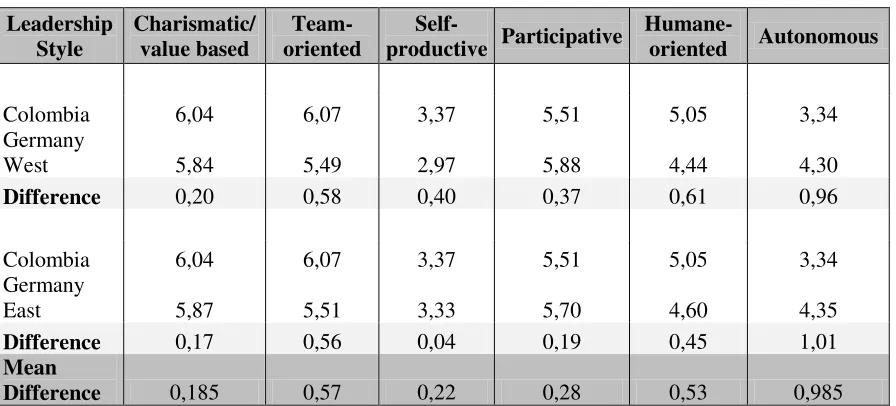
Further analysis of these 21 scales enabled to define six leadership styles (second-order CLT) that are, again based on a seven-point scale, assessed according to their ability to favor or hinder outstanding leadership. Conducive styles score within the range of seven to 4.5; evaluation of 4.5 to 3.5 implies no significant impact on leader’s effectiveness; and obstructive styles are rated below 3.5 (CCL, 2014). Table 3 demonstrates the established approaches regarding their significance for regarding their significance for German and Colombian societies. For comparison purposes the mean value of both German society score accounts as one single nation.
Leadership Style
Charismatic/ value based
Team-oriented
Self-productive Participative
Humane-oriented Autonomous
Colombia 6,04 6,07 3,37 5,51 5,05 3,34
Germany
West 5,84 5,49 2,97 5,88 4,44 4,30
Difference 0,20 0,58 0,40 0,37 0,61 0,96
Colombia 6,04 6,07 3,37 5,51 5,05 3,34
Germany
East 5,87 5,51 3,33 5,70 4,60 4,35
Difference 0,17 0,56 0,04 0,19 0,45 1,01
Mean
[image:37.612.74.522.244.447.2]Difference 0,185 0,57 0,22 0,28 0,53 0,985
Table 3: Evaluated efficiency of leadership styles in Colombian and German societies, adapted from CCL, 2014
38
Further, participative leadership is one of the most popular techniques in Germany which supports the principle of equal contribution in decision-making and task participation. Whereas Western Germans rated this style as the most desirable one (5.88) followed by charismatic, valued based management (5.84), East German society ranked last-named first (5. 87), and participative direction secondly (5.70). In Colombia it is the third most popular approach with a score of 5.51 and only a small divergence in evaluation compared to Germany.
Within German borders humane-orientated leaderships seems to have no significance for leader’s effectiveness. In West Germany, it is evaluated below the 4.5 scale (4.44) and only with a slight positive tendency in the Eastern part (4.60). Compassionate, supportive and patient leaders that consider all the interest and concerns of its group members are favored by Colombian society.
The autonomous style, i.e. self-centered, independent and somewhat isolated behavior is obstructive for leadership excellence in Colombia, where collectivism and solidarity are of high importance. In German societies however, this approach neither has a positive nor a negative influence.
Reflected by a score below the 3.5 mark and confirmed by the small evaluated divergence, both Colombia as well as Germany regard self-protective as rather impedimental for outstanding leadership, in which leaders stress competitive behavior, concerned about individual status and the willingness to risk inter-group discrepancies in order to preserve own interests.
Recapitulating the depicted linkage between culture and leadership, GLOBE project’s findings show a mutual approval of three leadership styles among Colombian and German societies, namely charismatic/value based, team-oriented and participative. Still, there is varying perception about the adequacy of the remaining approaches. These differences also affect the expectations of leader’s behavior. Whereas trustworthiness, honesty and decisiveness are generally appreciated, other characteristics, such as formality, rationality and risk disposition are appraised quite differently among cultures (CCL, 2014). Hence, GLOBE study verified a significant influence of culture in the conduct of efficient leadership.
39
organizations, e.g. in terms of recruiting and expatriate trainings. It not only compares cultural profiles, but also fosters sensibility for adequate leadership behavior and thus enables an application of effectively corresponding practices within a particular societal context and international work environment (Gil & Martí, 2011).
3.3.4. Contemporary approaches on global leadership effectiveness
Nowadays, interest in leadership phenomena is greater than ever. A recent investigation by Dinh, Lord, Gardner, Meuser, Liden, and Hu (2014) demonstrated that the number of published articles in this field of research increased tremendously in the past fifteen years. The analysis collected studies of ten internationally regarded academic journals with the objective of bringing order into the multitude of theories. In total, categorization produced a number of sixty-six leadership styles, which are accounted as either established or emerging approaches.
In this regard, cross-cultural leadership as a yet established theory proves to remain a phenomenon of great interest, comparing leader’s behavior across or in between cultures, universal necessities and respective characteristics of the leader (Dinh et al., 2014). However, Mittal and Dorfman (2012), both contributors of the GLOBE project, argued that present theories still fail to explain reasons for varying convictions about of effective leadership among societies. Yukl (2013) noticed further, that so far only little research effort has been made with respect to changing value conception and leadership behavior over time.
Moreover, Steers, Sanchez-Runde, and Nardon (2012) differentiated three movements of contemporary approaches about cross-cultural leadership. These universal, normative and contingent theories are presented subsequently and discussed according to their suitability in the global context.
3.3.4.1.Universal approaches
40
transformational leadership, are generally considered to be of high influence for leadership effectiveness and thus, also relevant in an intercultural environment.
Charismatic Leadership
Charismatic leadership is characterized by an exceptional leader-follower relationship in which subordinates widely accept and adopt leader’s beliefs as their own. This uncritical followership results from a strong influence and persuasiveness. Leader’s particular power derives from the ability to convey an inspirational and often unconventional vision that is communicated in an eloquent, self-confident manner. Although enthusiastic-optimistic, the vision also reflects the willingness to take personal sacrifices and the expectation of followers to assume equivalent responsibilities. While stressing shared ideological values, charismatic leaders convince the team as well as individual followers of their unique capability for solving a task or contributing to work on a common objective and thus foster the sense of collective and self-efficacy. Further, leaders enable personal and social identification, i.e. member’s emotional attachment with the superior and the group. This strengthens commitment and feeling of importance which eventually becomes inseparable from employee’s self-esteem and need for admiration (internalization).
41
behavior which assigns little authority and participation in decision-making to subordinates, leaving them in high dependency on the leader. Employee’s welfare and development are neglected. Formerly shared values or ideologies are abused for power expansion. Eventually, the omission to develop a capable successor on time eventually ends in a leadership-crisis (Yukl, 2013).
Transformational leadership
Transformational leaders are held in high esteem for their motivational aptitude. By enjoying loyalty and respect, they are enabled to mobilize team’s performance potential and attainment of common ambitions. Followers might even be inspired to accomplish higher performance than expected.
Yukl (2013) defines four types of transformational leadership:
Idealized influence
Individualized consideration
Inspirational motivation
Intellectual stimulation
Transformational leadership uses similar influential tactics as charismatic leaders. Self and collective efficacy is one important feature of motivation, where follower’s contribution and achievements are continuously encouraged and valued. Additionally, the visionary spirit should be internalized in subordinate’s self-conception and be reflected in private interests. This possibly includes personal identification with the leader, as well. However, alterations are not just based on simple admiration, but further on leader’s integrity, a trustful relationship, and the ability to animate followers intellectually or spiritually.
42
employee’s acceptance of leader’s moral concept varies according to personally and culturally determined value proposition.
Both leadership styles show evidence of failure, because universal theories only emphasize some critical traits without considering important local beliefs that might differ from those conceptual key values (Steers et al., 2012). While universal contemplation put great focus on leader’s persuasive power, it ignores the significance of reciprocal interaction and dependencies on situational aspects. Theories are thus, less generalizable as desired (Yukl, 2013).
3.3.4.2.Normative approaches
Normative approaches resume global applicability of universal theory but ascribe effectiveness to certain skills or behavioral traits, i.e. a limited number of specific characteristics that successful leaders all around the globe have in common and allow them to manage globally, such as cultural awareness; openness, curiosity and flexibility for unfamiliar situations, as well as devotion for the task objective (Steers et al., 2012). Hereafter, the two concepts of cultural intelligence and global mindset are used to visualize the subject matter of normativity.
Cultural intelligence
Cultural intelligence is described as a person’s ability of effective performance under conditions that imply dealing with multiculturalism. Being culturally intelligent encompasses cognitive, metacognitive, motivational and behavioral conducts.
43
If the team comprises several nationalities, diverse and sometimes conflicting expectations occur contemporaneously. Hence, leadership effectiveness is shown by the successful achievement of collaboration towards a common goal while using cultural intelligence (Rockstuhl, Seiler, Ang, Van Dyne, & Annen, 2011).
Global mindset
A mindset can be defined as the personal posture of how to perceive the surrounding incidents and how to react accordingly, i.e. a selective function determined by individual preferences and way of thinking. The term “global” embodies the consideration of unusual occurrences in the overall context of the organization that expands the mindset on a larger scale.
Rhinesmith (1992) specified six characteristics and related competencies that are distinctive for a global mindset. First, the permanent pursuit of knowledge acquisition and thorough analysis of the dynamics in the environment enable to establish a strong competitive position. By using analytical skills, intuition and the conceptualization complex tasks become manageable. Adaptability implies a flexible organizational culture that values process higher than standardized directives in order to respond to internal and external changes. Sensitivity is the capability described earlier as cultural intelligence that is necessary to lead culturally diverse teams. Assertiveness is another important aspect of managing uncertain situations without anxiety. Last, the critical assessment of one’s own performance (reflection) facilitates learning processes.
A capacity successfully brought into action requires certain procedures that allow the transformation of a capability in a competence, i.e. “in the application of mindset to behavior, a global manager develops a competency”(Rhinesmith, 1992, p. 68).
3.3.4.3.Contingency approaches
44
leadership. Hence, the leader has to be seen as a local manager whose acceptance is culturally influenced. The GLOBE study is regarded as one of the most important contribution to this conception (Steers et al., 2012). Specific characteristics of the directive styles were previously elaborated and will not be further described at this point.
3.3.4.4.New investigative orientation
By giving new impulses for the understanding of leadership effectiveness in a global context, Steers et al. (2012) suggest taking into account the following two aspects in future researches:
Meaning of leadership as a cultural construct
Variations in local expectations regarding leader behavior
Regarding the first aspect, investigation efforts need to focus on the diverging leadership definitions and tremendous differences in the meaning of those concepts. These relate e.g. to the transferred sense of hierarchical distance between leader and followers, the connotation that accompanies terms such as “leader” or “subordinate” in the literal translation of national language and the amount of people ascribed with executive functions (individual or collective leadership).
Further, the culturally-embedded causes for leader’s acceptance are of high significance. Current theories mainly capture a one-sided view that is focused on leader traits and their effectiveness without considering the inverse impact of that possibly influences the leader himself (Dinh et al., 2014). GLOBE research already provided major insights into which kind of expectations individual countries have towards their leaders. However, further investigation should also regard the motives of those expectations and how these are reflected in the behavior of subordinates.