
TítuloAdhesion of recycled concrete aggregates, demolition debris and asphalt
15
0
0
Texto completo
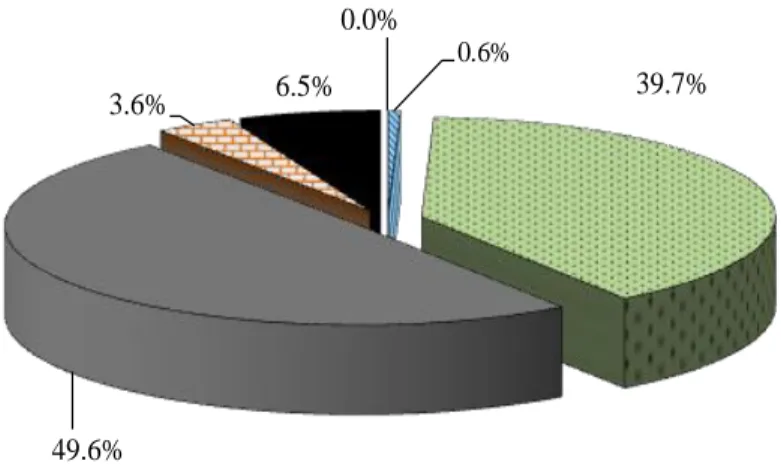
(2) causes the engineering properties of HMA containing RCA to be different than those of conventional mixtures, i.e., those made with natural aggregates. Some researchers (Paranavithana and Mohajerani, 2006; Pérez et al., 2007, 2010, 2012a and 2012b) found that due to an insufficient adhesion between RCA and bitumen, HMA made with RCA was shown to have inadequate moisture damage resistance, which causes stripping that negatively affects the durability of the mixes. Since moisture damage is one of the most important factors that contribute to the premature deterioration of flexible pavements (Caro et al., 2008), the aim of this investigation is to find ways to improve the adhesion between RCA and bitumen and thus reduce the potential of RCA to undergo stripping when used in HMA. In this way, the adhesion of RCA with the binder was evaluated using the Texas boiling water test (ASTM, 2005) and the Rolling Bottle method (AENOR, 2001), for its rapidity and simplicity (Jo et al., 1997). Both tests were applied to various loose mixtures made entirely with RCA. To improve the asphalt aggregate bond different fillers and treatments were used as described below. 2. Materials and methods 2.1. Materials characterisation 2.1.1. Recycled concrete aggregates (RCA) RCA were obtained from the demolition waste of residential buildings in Madrid (Spain) and were supplied by a CDW recycling plant. The EN 933-11 (CEN, 2009) was followed to determine the constituents of the coarse RCA. The test consists of the manual sorting of particles of a sample of material from a list of components (clay, unbound aggregates, concrete, etc.). As shown in figure 1, 89.3% of the mass of the constituents are aggregate, concrete or similar. The rest of the constituents, except. 2.
(3) bituminous materials (6.5%) and bricks (3.6%), are impurities that were removed before producing HMA. An X-ray fluorescence spectroscopy (XRF) (Bruker S4 Pioneer Fluorescence Spectrometer) was used to determine the elemental composition of the RCA grains. The crystallography was evaluated using the X-ray diffraction (XRD) method (Siemens D5000 X-ray diffractometer). The results of the X-ray fluorescence test indicate that the composition of RCA is mainly siliceous (61.46% of SiO2). Consequently, RCA have a high potential to suffer stripping. Figure 2 shows the results of the X-ray diffraction test. The RCA present quartz in their mineralogical composition. Therefore, because the quartz usually has a poor adhesion with the binder (Bagampadde, 2004), it is expected that the adhesion with the bitumen is not satisfactory. 2.1.2. Binder A 50/70 penetration grade bitumen from Venezuela was used in this investigation. Its engineering properties are presented in table 1 (Pasandín and Pérez, 2013). 2.2. Filler and treatments As is well known, the moisture damage resistance of HMA is related to the adhesion between the asphalt binder and the aggregate besides other factors (Epps et al., 2003). To improve the adhesion between the binder and the aggregate and thus, the moisture damage resistance of bituminous mixtures, numerous steps can be taken (Abo-Qudais and Mulqi, 2005). Among all of them, some of most common solutions have been selected: . Use of selected natural or commercial filler. In this investigation, five different fillers were selected among the most widely used.. 3.
(4) . Coating the aggregate with bitumen or other diluents before the manufacture of HMA. Some authors have studied the moisture damage resistance of HMA made with RCA in which recycled aggregates underwent some form of coating. Thereby, Lee et al. (2012) used a slag cement paste to coat RCA and obtained moisture damage resistance results within the range of the Taiwanese specification requirements. In addition, the experimental results of Zhu et al. (2012) showed that the use of pretreated RCA with a liquid silicone resin improved the moisture damage resistance. In this investigation, RCA coated with one of the most commonly used bituminous binders, bituminous emulsion, was used.. Previous research conducted with the same RCA used in this investigation (Pérez et al., 2007, 2010, 2012a and 2012b) recommended allowing the HMA sufficient time to complete the binder absorption by the aggregates. Thus, it was considered appropriate to leave the HMA in the oven for 4 hours at the mixing temperature (170ºC) before compaction. This treatment is similar to a short term ageing process but with a different purpose: to improve the moisture damage resistance. Thus, it must be take into account that the curing time allows the aggregates to absorb more asphalt into their pores. Similarly, the bitumen absorbed by RCA reduces the porosity, thus decreasing water and air accessible voids. Furthermore, bitumen absorption makes the whole aggregate surface be coated by the binder, leaving no fissures through which water can penetrate. Therefore, specifying what was said before, in this investigation, five fillers and two treatments were used. The five fillers were: RCA; RCA+1% of hydrated lime; commercial limestone; grey Portland cement CEM II/B-M (V-L) 32.5 N and fly ash.. 4.
(5) The two treatments applied to the RCA to conduct this study were a loose mixture cured in the oven for 4 hours at 170ºC and RCA coated with 5% of bituminous emulsion (ECL-2d). ECL-2d is a slow-setting cationic asphalt emulsion that has a bitumen content of 61.2%. 2.3. Testing program As mentioned before, to perform the analysis of the RCA and bitumen adhesion, two tests were used: the Texas Boiling Water Test and the Rolling Bottle method. The Texas Boiling Water Test procedure was performed according to the ASTM D3625 Test Method for mixtures that are not compact (loose mixtures). In this test, a sample of loose mixture is heated to boil for 10 minutes. Then, the percentage of aggregate that is covered by bitumen, i.e., that has not been detached as the result of the action of boiling water, is determined. The Rolling Bottle method was performed according to UNE-EN 12697-11. The test consists of introducing a sample of loose mixture in a bottle with distilled water and letting it rotate. The percentage of bitumen that remains adhered to the aggregate, i.e., that has not been removed as a result of rotation of the bottle, is estimated. In addition to testing the five types of filler and the two treatments, the Boiling Water Test and the Rolling Bottle method test were also conducted on a mixture produced entirely by RCA and B50/70 bitumen, without using any filler or treatment (control mixture). The results obtained for the control mixture were compared with the results obtained for the RCA and bitumen mixtures manufactured with different fillers and treatments.. 5.
(6) 3. Test results and discussion As shown in table 2, a total of eight loose mixtures were studied according to the laboratory methods described above. The Boiling Water Test and the Rolling Bottle method results (table 2) indicate that the use of filler improves the adhesion between bitumen and RCA, which was an expected result because it is well known that the filler improves the durability of HMA against water due to two factors. The filler fills voids, thereby reducing the porosity and obstructing the access of water and air (Padilla, 2004). In addition, some fillers have a greater chemical affinity with the bituminous binder, thereby improving the affinity of the bitumen with the aggregate (Padilla, 2004). The RCA without filler and treatment (control mixture) achieves a bitumen coverage of 20% in the Boiling Water Test and 60% in the Rolling Bottle method. When any type of filler is used, the coverage ranges between 50% and 80% in the Boiling Water Test and between 65% and 85% in the Rolling Bottle method. Based on the results, the binder coverage differences between the control mixture (without filler) and the mixtures with any filler are more noticeable in the Boiling Water Test. Moreover, the grey Portland cement is the filler that achieves the best results in both tests. Same as before, the differences between the results are more appreciable in the Boiling Water Test. It must be noticed that the Rolling Bottle Test results are used to compare the adhesion of different samples. Nevertheless, a minimum bitumen coverage is required if the Boiling Water Test is carried out. In this test, a satisfactory adhesion is achieved when the bitumen coverage is over 85-90% (Kiggundu and Roberts, 1988). Although Portland cement as filler does not reach this minimum requirement, it is very close to this limit (80% of coverage). Thus, the result indicates that the adhesion is quite good. This affirmation is emphasised by the fact that the bitumen coverage obtained in this test for. 6.
(7) the sample without filler (20% of coverage) is much lower than the coverage obtained for the sample with Portland cement filler. The strong difference of the asphalt cement coverage between a mixture of RCA and bitumen without filler and a mixture of RCA and bitumen with grey cement filler can be appreciated in figure 3a and figure 3b. In addition, treatments applied to RCA showed their effectiveness. Based on the results shown in table 2, both treatments, 4 hours in the oven and coating RCA with ECL-2d, display satisfactory adhesion. In both cases, the bitumen coverage in the Boiling Water Test is more than 85%. Figure 3c and figure 3d show the remarkable difference of the adhesion between a mixture made with RCA without treatment and a mixture made with RCA that has been manufactured with any of the two treatments analysed: 4 hours in the oven and coating RCA with emulsion. In the Boiling Water Test, the best results occur after 4 hours in the oven while coating RCA with ECL-2d shows the best degree of coverage with the Rolling Bottle method. Thus, both treatments seem to be adequate to improve the moisture damage resistance of bituminous mixtures made with RCA. Two one-way ANOVA analyses were performed. The dependent variable was the bitumen coverage. In the first ANOVA, the factor was the type of filler (RCA, RCA+1% of hydrated lime, grey Portland cement, commercial limestone and fly ash). In the second ANOVA, the factor was the treatment (without treatment, 4 hours and coating with bitumen emulsion). The filler and the treatment are qualitative variables, and the bitumen coverage is a quantitative variable. The results of the first ANOVA analysis indicate that the filler (F=141.5>F-critical=4.3) is statistically significant for a 95% confidence interval (p<0.05). That is, a statistical analysis confirms the expected result: the type of filler influences the adhesion between bitumen and RCA.. 7.
(8) The results of second ANOVA analysis indicate that the treatment (F=145.1>F-critical= 4.96) is statistically significant for a 95% confidence interval. Therefore, the statistical analysis corroborates that the use of pretreatment (4 hours in the oven and coating with ECL-2d) improves the asphalt RCA bond. 4. Conclusions Based on the results of this research, the following conclusions can be drawn: . HMA made with RCA showed poor moisture damage performance, probably due to the porous nature of the attached mortar. Its rough surface gives the appearance of tiny fissures and no coverage areas where water could penetrate. In addition, mortar is absorptive and has many pores that allow water to enter and remove the bitumen from the aggregate. Moreover, the mineralogical composition of RCA affects the adhesion of RCA with bitumen. RCA is mainly siliceous; thus, a bad adhesion with bitumen is expected.. . Using grey Portland cement as filler and letting the mixture stand in the oven for 4 hours at the mix temperature seems to improve the adhesion between RCA and bitumen because the absorbed bitumen can obstruct the entry of water and air to the pores of the aggregate and can help to achieve a better coating.. . In addition, using grey Portland cement as a filler and coating RCA with 5% bitumen emulsion provides good adhesion in the HMA. In this case, pores can also be blocked by the bitumen emulsion. Moreover, the bitumen emulsion that coats the surface of the RCA can improve the chemical affinity of the RCA with the bitumen, thus improving the moisture damage resistance.. 8.
(9) Acknowledgments The authors wish to acknowledge the Spanish Ministry of Education and Science for sponsoring this research through Project BIA2010-17751. The authors would like to thank Nynas bitumen for supplying the binder required for this study, TEC-REC for supplying RCA and Cosmos for supplying the Portland cement. The authors wish to thank the Unidade de Análisis Estructural (UAE) of the Universidade da Coruña (UDC) for the realisation of the diffractrograms. References Abo-Qudais, S. and Mulqi, M.W. (2005). New Chemical Antistripping Additives for Bituminous Mixtures. Journal of ASTM International 2.8: 87-97. AENOR (2011). UNE-EN 12697-11. “Métodos de ensayo para mezclas bituminosas en caliente. Parte 11: Determinación de la afinidad entre áridos y betún”. Arm, M. (2001). Self-cementing properties of crushed demolished concrete in unbound layers: results from triaxial tests and field tests. Waste Management 21: 235-239. ASTM “D 3625-96 (2005). Standard Practice for Effect of Water on BituminousCoated Aggregate Using Boiling Water”. Bagampadde, U. (2004). On investigation of stripping in bituminous mixtures. Licentiate thesis, submitted to the Royal Institute of Technology, Stockholm, Sweden. Caro, S, Masad, E., Bhasin, A. and Little, D.N. (2008). Moisture susceptibility of asphalt mixtures, Part 1: mechanisms. International Journal of Pavement Engineering 9.2: 81-88. CEN (2009). EN 933-11:2009. Test for geometrical properties of aggregates. Part 11: Classification test for the constituents of coarse recycled aggregate.. 9.
(10) Epps, J., Berger, E., and Anagnos, J.N. (2003). Treatments, in: Moisture Sensitivity of Asphalt Pavements: A National Seminar. Transportation Research Board. San Diego, California, 117-133. Jo, Myung-Chan, Tarrer, Arthur R., Jeon, Young W., Park, Sang Joon and Yoon, Hyon Hee (1997). Investigation of the effect of aggregate pretreatment with antistripping agents on the asphalt-aggregate bond. Petroleum Science and Technology 15:3-4: 245271. Kiggundu, B.M. and Roberts, F.L. (1988). Stripping in HMA mixtures: state-of-the-art and critical review of test methods. NCAT Report 88-02. Lee, C.H., Du, J.C. and Shen, D.H. (2012). Evaluation of pre-coated recycled concrete aggregate for hot mix asphalt. Construction and Building Materials 28: 66-71. Padilla Rodríguez, A. (2004). Análisis de la resistencia a las deformaciones plásticas de mezclas bituminosas densas de la normativa mexicana mediante el ensayo de pista. Tesina, Universitat Politècnica de Catalunya, Spain. Paranavithana, S. and Mohajerani, A. (2006). Effects of recycled concrete aggregates on properties of asphalt concrete. Resources Conservation and Recycling 48: 1-12. Pasandín, A.R. and Pérez I. (2013). Laboratory evaluation of hot-mix asphalt containing construction and demolition waste. Construction and Building Materials 43: 497-505. Pérez, I., Gallego, J., Toledano, M. and Taibo, J. (2010). Asphalt mixtures with construction and demolition debris. Institution of Civil Engineering Proceedings. Transport 163: 165 – 174. Pérez, I., Pasandín, A.R. and Gallego, J. (2012b). Stripping in hot mix asphalt produced by aggregates from construction and demolition waste. Waste Management and Research 30-1: 3 - 11.. 10.
(11) Pérez, I., Pasandín, A.R. and Medina, L. (2012a). Hot mix asphalt using C&D waste as coarse aggregates. Materials and Design 36: 840-846. Pérez, I., Toledano, M., Gallego, J. and Taibo, J. (2007). Mechanical properties of hot mix asphalt made with recycled aggregates from reclaimed construction and demolition debris. Materiales de Construcción 57.285: 17 – 29. Symonds, A., Cowi and PRC Bouwcentrum (1999). Construction and Demolition Waste Management Practices, and Their Economic Impacts. Report to DGXI European Commission. Tam, V.W.Y., Gao, X.F., Tam, C.M. and Ng, K.M. (2009). Physio-chemical reactions in recycled aggregate concrete. Journal of Hazardous Materials 163.2: 823-828. Wong, Y.D., Sun, D.D. and Lai, D. (2007). Value-added utilisation of recycled concrete in hot-mix asphalt. Waste Management 27: 294-301. Zhu, J., Wu, S., Zhong, J. and Wang, D. (2012). Investigation of asphalt mixture containing demolition waste obtained from earthquake-damaged buildings. Construction and Building Materials 29: 466-475.. 11.
(12) Table 1 Rheological and physical properties of asphalt cement Test Standard B50/70 Original Penetration (100 g, 5 s, 25ºC), 0.1 mm Softening point, ºC Flash Point, ºC Density (25ºC), g/cm3 After thin film Penetration (100 g, 5 s, 25ºC), 0.1 mm Softening point, ºC. Table 2 Adhesion results Loose mixture. 1 (*) 2 3 4 5 6 7 8. PG-3 requirements. UNE-EN 1426. 52. 50-70. UNE-EN 1427 ISO 2592 NLT-122. 54.9 >290 1.009. 48-57 >235 >1.0. NLT-124. 68. >50. NLT-125. 6.5. <9. Filler. RCA applied treatment. No RCA RCA + 1% hydrated lime Commercial limestone Grey Portland cement Fly Ash No No. No No No No No No 4 hours in oven ECL-2d. Boiling Water Test coverage at 24 hours (%) 20 60 65 50 80 50 95 90. Rolling Bottle coverage at 24 hours (%) 60 65 75 75 85 75 80 82. (*) Control mixture. 12.
(13) Figure 1 RCA constituents X (clay, soil, metals, wood, plastic, rubber and gypsum plaster) Ru (unbound aggregate, natural stone, hydraulically bound aggregate) Rc (concrete, concrete products, mortar, concrete masonry units). 0.0% 0.6%. 3.6%. 6.5%. 39.7%. Rb (bricks, tiles, calcium silicate masonry units) Ra (bituminous materials). 49.6%. Rg (glass). 13.
(14) Figure 2 RCA X ray diffraction results Quartz, maximum at 4,150 counts. Q. Q: quartz C: calcite D: dolomite M: mica F: feldspar. Q. Q D F Q. C F. Q. M. M. M. C. Q. Q. M. Q. D C. Q. Q. Q F F. Q. Q. C D. CC. D. C. Q. Q. 14.
(15) Figure 3 Boiling Water Test results. Bitumen coverage after 24 hours: a) Control mixture, b) RCA with grey Portland cement filler, c) RCA left in the oven for 4 hours and d) RCA coated with bitumen emulsion. a) Control mixture (20% of bitumen coverage). b) RCA with grey Portland cement filler (80% of bitumen coverage). c) RCA left in the oven for 4 hours (95% of bitumen coverage). d) RCA coated with bitumen emulsion (90% of bitumen coverage). 15.
(16)
Figure
Documento similar
The indirect tensile stiffness modulus test ITSM was used to determine the resilient modulus of HMA Marshall samples compacted with 75 blows per face at optimum Marshall bitumen
