FACULTAD DE EDUCACIÓN DE PALENCIA UNIVERSIDAD DE VALLADOLID
A PROPOSAL FOR AN ENGLISH CLASSROOM
LIBRARY IN EARLY YEARS
TRABAJO FIN DE GRADO MAESTRA EN EDUCACIÓN INFANTIL -MENCIÓN LENGUA EXTRANJERA INGLÉS-
AUTORA: Nuria García Méndez
2 Abstract
This work is focused on how to design effective literacy centres as part of a proposal to foster the Reading Plan in early years. However which makes this project special is the coordination between Spanish and English as foreign language learning in a specific context where children attend to a monolingual school starting in a new language when they are three years old. The proposal is guided to a four years old group taking into account the syllabus the teacher is going to develop during the course. In addition I have selected a list of fiction and non-fiction books to work with the activities and resources selected to support the Reading Plan and the English language.
Keywords: literacy, Reading Plan, encourage reading, classroom library, fiction and non-fiction books, resources, foreign language learning and Infant Education.
Resumen
Este trabajo se basa en el diseño de bibliotecas de aula efectivas para promover el plan de lectura en la Educación Infantil. Sin embargo lo que hace especial esta propuesta es la coordinación entre el español y la lengua inglesa, esta como idioma extranjero en un contexto específico, una escuela monolingüe con iniciación temprana en la enseñanza de idiomas. En concreto, esta propuesta está dirigida a un grupo de cuatro años teniendo en cuenta el plan de estudios que la maestra desarrollará durante el curso. Además, he seleccionado una lista de libros de ficción y no ficción para trabajar con las actividades y recursos seleccionados para promover el Plan de lectura y el idioma extranjero, inglés.
3
INDEX
1. Introduction………...………4
2. Objectives………..………5
3. Justification 3.1 Connection between the proposal and the competences of the title………....6
3.2 The importance of this work………7-8 4. Theoretical foundation 4.1 Learning Process………..9
4.2 Plurilingual Perspective……….9-10 4.3 Literacy in Infant Education……….11-14 5.4 Designing Effective Literacy Centres………..15-16 4.5 How to choose the material………..16-17 4.6 Reading to children………...……….18
5. Methodology………19
6. Proposal 6.1 Context: Ave Maria School………...20
6.2 Teacher´s Syllabus………...………20-22 6.3 Objectives………..23
6.4 The proposal……….23-26 6.5 Sample of how to work with a book: “The very Hungry Caterpillar”….27-28 6.6 Other activities to encourage reading………..………28-29 6.7 Resources for the classroom……….29-30 7. Conclusions……….…31
8. Annexes 8.1 Sample: The Very Hungry Caterpillar...…...34-37 8.2 Caterpillar Book Template………38
8.3 Cuadernia…...……… ……39-42 8.4 Online Resources………..………43-44 8.5 Reader of the Month…………....………..45
8.6 Reading Rewards Chart.……..………..46
8.7 Reading Diary …...………47
4
1.
INTRODUCTION
Nowadays all schools offer different plans to support the learning process of their students. One of these plans is the Reading Plan and its purpose is to encourage reading in order for children to achieve their targets. In addition children are expected to understand literacy as a source of pleasure as the curriculum indicates.
What this work offers is to promote literacy in early years in a coordinate way between mother tongue, Spanish, and foreign language, English learning. Therefore the challenge of this work is to select fiction and non-fiction books to complete an efficient classroom library. On the other hand it is necessary design some attractive and didactic activities and resources to use with children and involve them in reading.
Through this work we will observe how we can create an efficient classroom library for Infant Education taking into account several criteria as children´s interest, variety, useful or quality.
Special mention must be given in this project to how a teacher must read to their group. The author Mayesky, M. (2002) gives us some guidelines for an effective reading such us select a suitable place, hold the book out to one side up, not to be in a hurry and others we will see later.
In the end a classroom library proposal is presented. This project tries to reinforce the Reading Plan in the early years. To do so, I have selected several readings in English that combine the contents the teacher works in Spanish. Moreover I have suggested different activities to know how to use books in the class and I have developed one specific example with the book “The Very Hungry Caterpillar” by Eric Carle. Also, I have proposed some innovating resources to foster the Reading plan purpose. These resources are a reading rewarding chart for each child or a diploma for “The Reader of the moth”.
Besides the teaching guidelines are focused on two methodologies: Task-based Learning and Total Physical Response because both are proper methods to work with new languages in early years.
5
2. OBJETIVES
These are the objectives I am going to develop with this work. They are necessary to fund the line to follow.
Recognize the importance of the tales as main resources to learn English at
early years.
Identify the rules to create a classroom library.
Be aware of how to be a good storyteller in Infant Education.
Propose a selection of books as a part of the classroom library taking into account the coordination between English and Spanish lessons.
6
3. JUSTIFICATION
3.1 CONNECTION BETWEEEN THE PROPOSAL AND THE
COMPETENCES OF THE TITLE
The main aim of the degree in Infant Education referred to in the Article 14 of the Ley Orgánica de Educación (L.O.E.) 2/2006, May 3rd is to train professional teachers that focus their educational capacity on first and second cycle of Infant Education (0-6) as well as the elaboration and pursuit of pedagogical proposal that schools run.
Competences
To know children´s literature and develop strategies for children´s approach to literacy texts both oral and written
To know and use efficiently resources to encourage reading and writing.
To participate in proposals for the improvement in different educational fields that a school offers.
Taking into account my role as an Infant teacher and as an English specialist, I would like to mention specific objectives in this project:
Design, develop and evaluate educational proposals focused on encouraging reading and dramatization in the approach to English teaching in early years. Know de main educational tendencies in the foreign language teaching and its
7 3.2 THE IMPORTANCE OF THIS WORK
Nowadays foreign language learning has a great deal of importance in our country and around the world. One of the reasons why Spanish curriculum integrated languages in it was because of the admission of Spain as a European country. But also the new society and new mindsets were the point to change towards the development of communicative competence, referred by Alario, C. (2009). Due to that fact, both the curriculum and the schools changed too. The European Common Framework of References for Languages (2001) was created in order to assemble both policy and educational criteria.
On the other hand new theories and methodologies are involved in the learning process and the child is acquiring an active role in the process of significant learning establishing links between what they know and what they are going to learn. Moreover the new knowledge must be interesting and according to their needs. Thus a positive atmosphere is created, where children feel comfortable and they are able to learn.
There is an essential referent in Infant Education. This is the Basic Competences (B.C.) and both B.C. and curriculum´s objectives must be integrated in the daily routines and activities. B.C. involve the three areas the curriculum establishes. Thus, it is necessary to reorganize methodologies, resources, documents, programs and plans such us the Reading Plan. One of these B.C is learning to learn, the base of constructivist learning, because children learn to manage by themselves in multiple situations.
8
For the previous reasons a classroom library is needed in an infant education classroom, full of literature resources and where reading becomes a pleasure using the different strategies the teacher offers. But we need to take into account that in mother tongue when we speak of literacy, we mean the technical ability to read and write. In the Spanish curriculum it is not a compulsory goal to finish this stage reading, but most of the children in kindergarten are able to read in their last year of this level, while they start writing in the previous level copying letters and words. Nevertheless when children are learning a foreign language the process of reading and writing is under the mother tongue.
9
4. THEORICAL FOUNDATION
4.1 LEARNING PROCESS
Nowadays learning is focused on the constructivist perspective what Bruner (1990) developed in his research on children´s scaffolding, which means to move a child from the assistance to the independent levels of learning. Cognitive learning theories establish how children process information and are able to catch it from the environment and then they organize and understand it. Thus children learn connecting their previous knowledge they know with the knowledge they are going to find out through the different experiences they live.
Taking into account the communicative approach for foreign languages learning Vigotsky referred by Schütz, R. (2014) created a new term to determine how children acquire a new language and it is the “zone of proximal development” which says that language acquisition takes place during human interaction in an environment where the new language is the vehicle for communication. Fos, Pavia, Pérez and Salas (1996) emphasises that the activities designed to put this theory into practise are linked to the real language context. The linguistic components are selected considering the situation, knowledge and interest that children require.
4.2 PLURILINGUAL PERSPECTIVE
Nowadays, the concept of plurilingual contexts has grown heavily all over the world, especially in developed countries where schools offer a second or third language to be learnt. The council of Europe has been created by members of the European Union. One of its tenets is to achieve a common approach to language learning. The Common European Framework of Reference (2001) is this approach. It emphasizes that the role of schools is not simply in teaching languages, but also in recognizing and valuing the plurilingual language and literacy practices of students.
10
According to that, in recent years in Spain the curriculum has established the early teaching of a foreign language and mentions its importance. The official document Bolentín Oficial del Estado (B.OE.) according to the foreign language teaching establishes:
Asimismo, es necesario el desarrollo de actitudes positivas hacia la propia lengua y la de los demás, despertando sensibilidad y curiosidad por conocer otras lenguas. En la introducción de una lengua extranjera se valorará dicha curiosidad y el acercamiento progresivo a los significados de mensajes en contextos de comunicación conocidos, fundamentalmente en las rutinas habituales del aula.
On the other hand the official document of the community of Castilla y León, BOCyL emphasizes more this learning process. It highlights
La importancia de la enseñanza de una lengua extranjera en estas edades. […] La lengua extranjera es un buen aliado para desarrollar las capacidades afectivas, intelectivas y sociales en estas edades, adquirir una mayor competencia comunicativa y facilitar la reflexión sobre el aprendizaje.
How do teachers use language in a foreign language lesson at early years? The curriculum mentions that the basis of communication language will be the foreign language. For these reasons it is necessary to design a proper context to promote an active role for pupils, such us activities that develop communication skills naturally and spontaneously, respecting the silent period, that is, the time children need to listen to and produce meanings.
11
4.3 LITERACY IN INFANT EDUCATION
Literacy is one of the most useful resources to learn in a class of Infant Education. It contributes to develop the three areas of learning in a playful and unconsciously way But why tales are so important in this stage? Tales provide motivational and fun stories, exercise the imagination and creativity involving children in the story, introducing new vocabulary and structures. Furthermore, as López Fernández, M. (2009) says, reading help children to sort out their day-to-day problems due to the fact that many of them feel identify with the characters of the story. When the teacher introduces stories in the foreign language, children are stimulated; trying hard to understand the meaning without being conscious they are learning a new language.
Taking into account the curriculum, presently, the Spanish curriculum for early years collects three areas:
- Self-awareness and personal autonomy - Knowledge of the world
- Languages: communication and representation
Being the last one languages: communication and representation, the one that includes language learning and literature´s approach.
Rodríguez Suárez, M. (1991) says that the use of literature in the class let children approach to the foreign language in a socio-cultural perspective, at the same time that they train pronunciation and intonation.
According to Many, J. (2002) the literacy skills are an integral part of all content areas development. All the stories children heard help them to grow up and develop. In an article by Von Stockar, (2006) about the importance of literacy and books in children´s development, the author emphasises that the production of children’s books “has always been amazingly diverse” from books that show information and knowledge about the
12
As Von Stockar, (2006) highlights, the process of learning to read is also learning to communicate because it involves listening to stories, looking at and interpreting picture books… The storytelling time is a moment that even before learning to read, children enjoy and discover the wonderful world of literature, but this experience is only possible if an adult prepares them and direct them.
In this article, “The importance of Literacy and Books in Children´s Development”(2006) he explains that an active network of school and non-school
environments is necessary for children to have positive reading experiences that enclose authentic assorted learning.
Louton & Louton, (1992), referred by Colville‐Hall, S. & O'Connor, B., (2006)
emphasises that “foreign language learning is most effective when language itself is not the purpose of instruction”. What it means that students acquire and support knowledge about other areas through the foreign language. Hence, reading books in the new language to understand the content of the story embraces that language learning is embedded in reading instruction. In this way, shared reading to kids facilitates the acquisition of the new language.
Curtain & Dahlberg, (2004) referred by Colville‐Hall, S. & O'Connor, B., (2006) point
out that shared reading to early languages learners help to their scaffolding provided by teachers gaining confidence in their oral language; they are learning in a motivated context. In this way repetitive phrases assist children to reduce the quantity of new vocabulary.
13
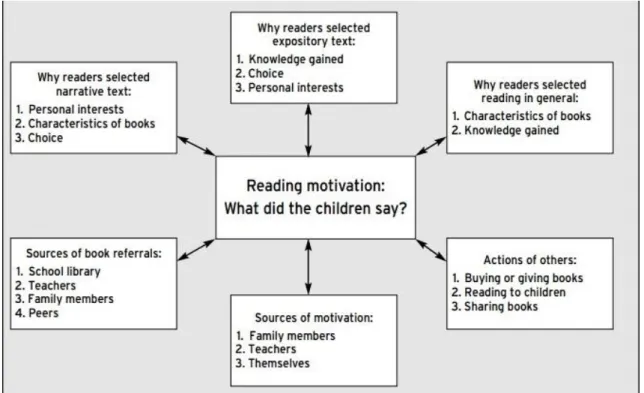
Figure 1: Categories that motivate children to read
Next I explain a bit more about this results. The first category we observe is why readers selected narrative text. The first step was asked to children about the most interesting book they have been reading recently and why. The findings were that the factors that got them excited about reading narrative text were their personal interests because they related their own interest to interesting books, for example they read about magic because they like it. The other factor was the book characteristics, what is referred to as exciting covers, humour… and the last feature was choice, the most of children, eighty four per cent, had selected by themselves the books. Thus the motivation growswhen they are the ones who have the choice to select what they would like to read.
14
The third category includes the factors that get children excited about reading in general. The main pattenrs they obtained were the characterisc of books and knowledge gained. Children got pleasure from fun or scary books taking into account the importance of great illustrations at the same time they learnt knowledge about what they liked.
The fourth category comprises the sources of book referrals to value the ways children are exposed to books. As conclusions they obtained that the main sources were the school library, teachers, family members and peers. The school library is where they find out the most of the stories they liked. Others libraries as the classroom library or the local library were mentioned too because they have the opportunity to choose between a wide range of books. Teachers also have the role to expose and introduce children to books. Other factor is family members, being mothers who have greatest influence in this field but more than families and teacher children like share books with one another like their mates who may have similar interest. Therefore it is a motivational fact to read.
Fifth category: sources of motivation. The point is who or what actually motivates them to read. They answered that family members, especially mothers were a reference for them. We also observe again the essential role teachers play in reading motivation. And even themselves, their desire to read. Some of them said: “Nobody gets me excited. I just like to read books” or “Nobody I know of. I just read them because I like to”.
Finally sixth category is actions of family members, teachers and peers. The question researchers wondered was “what the individuals did to excite the children and interest them in reading?” The three arguments that appeared were buying or giving children
books, reading to them, and sharing books with them. The results showed that children enjoyed receiving books for their birthdays or on holidays. What they also liked was to listen to stories told by others. And finally they expressed that they liked to share with their peers by discussing about their readings as well as using a book report that reflects their preferences.
Based on the data collected there are some suggestions for teachers to increase children’s desire to read. These recommendations are: self-selection, attention to
15
4.4 DESIGNING EFFECTIVE LITERACY CENTERS
Ford & Opitz, (2002), referred in the article “Designing Effective Literacy Centers for the Kindergarten Classroom” defines Literacy Center as “a small area within the
classroom where students work alone or together to explore literacy activities independently while the teacher provide small-group guided reading instruction”
First of all, to create a literacy center it is required that the teacher looks for a quiet, nice, comfortable and well illuminated place. According to R. Rueda (1998, p. 18-25) to get a pleasant and quiet workshop it is necessary to choose an area far from the play´s workshop or any noisy centre. Besides, natural light would be more proper for children´s vision. Concerning the seats is not necessary chairs since pupils prefer sitting on the carpet or on cushions. The main aim is to get a relaxed space that children like and where they can feel calm and comfortable.
There are some characteristics to get effective literacy centers in classroom in order for children to manage by themselves. The article “Designing Effective Literacy Centers for the Kindergarten Classroom” explains us what are these points to take into account.
Effective literacy centers are organized and managed so that students can work successfully and independently.
Management tools are located within easy view for children, all the materials are visibly labeled, and pocket charts are used in several locations. Also teacher must have a full view of the classroom, so furniture and dividers are arranged in the best manner. Concerning to books is necessary they are integrated and easy to locate and return. Moreover an effective literacy center provides as many assorted materials as possible, such us fiction and non fictions books, big books, poems, magazines, newspapers… so that children can work successfully and
independently. Besides, students need designated places to store their tasks. Effective literacy centers are both motivating and engaging.
This type of center allows children for creativity and provides them the chance to work without assistance and reinforce their skills in group work.
16
As Ford & Opitz, (2002) referred by this article says “while the structure of the center can stay the same, the activities within them can change with relative ease”. This means that students focus on the contents showed.
Effective literacy centers are aligned with curriculum
All the activities are designed taking into account the curriculum guidelines. Effective literacy center activities are based on ongoing assessment
Assessment and observational tools are required to find out student literacy needs and then plan specific activities
Effective literacy centers have a built-in accountability system
Before children start to work autonomously, teacher must explain and demonstrate them their aims for high quality work of their students. Therefore children will follow these standards to work on their own
To get an effective literacy center teacher needs to follow several assessing criteria to assess the quality of it. These criteria are collected in “Designing Effective Literacy Centers in the Kindergarten Classroom” and some of them are:
What is the objective? What is the activity?
What does a student do with the materials? What are the rules and procedures?
How will the students learn the rules and procedures?
4.5 HOW TO CHOOSE THE MATERIAL
One of the most important steps according to Rueda, R. (1998, p.46-49) is the guidelines selected to decide what material we want to show in our literacy center:
Variety
A great deal of assortment will be positive in the students because they will have a multiple choice. Consequently they will acquire more critical capacity. The selection should include fiction and non-fiction books, magazines or CD´s. Useful
17 Comprehensible
The material must be appropriate for the age of children to get a good comprehension. This is the first step for the significant learning.
Motivating
If we want children to desire to continue reading, we need to look for a motivating manner to involve them. Interesting books foster children to love reading and achieve a true process of learning to connect with their knowledge. Quality
To choose the best materials for a classroom library it is necessary to take into account contents, which mean text and illustrations, formal aspects like size, paper´s type or binding.
Fiction and non-fiction books are a motivational resource to involve children in an active role due to the fact that they offer a wide range of possibilities to work before, during and after reading. Also, sharing lots of different kinds of books exposes them to new different words and pictures. López Fernández (2009) explains the characteristics of these types of books. On the one hand we have fiction books that usually present similar patterns and have an emotional approach that catches children´s attention. The illustrations are motivational and amusing elements. Moreover these stories reinforce creativity and fantasy children powers. On the other hand non-fiction books are as useful and interesting as fiction books because students have many questions, and these books help them to find the answers.
18
4.6 READING TO CHILDREN
Selecting all days the same moment for reading everyday is quite convenient. Moreover turn it into a routine would be interesting for controlling time concepts, (before reading, after reading). One suitable moment for reading time is after the break because of teacher attracts the attention and children get relaxed, as R. Rueda (1998, p.75-76)says.
In an article by Mayeky, M. (2002) about how to read to young children, there are explained the general requirements adults need to do it the best way. First of all we must choose books that have pictures large enough for them to see. For instance in middle to upper elementary levels the story starts to become as important as the illustration. On the other hand there are several themes children are interested in. Taking into account this previous knowledge, the followings guidelines help to read young children more efficiently.
Select a suitable spot.
Smalls groups better than large groups; it is more effectively and comfortable to read. Preferably a group of six to eight children.
Be sure everyone is cosy, well seated in the carpet in a semicircle facing the teacher.
Hold the book out to one side up beside your cheek. In this way all children see the book.
Feel comfortable with the story you read or, conversely there will be little enthusiasm and interest into the telling of it.
Learn by heart the story; otherwise you will focus too much in the book losing the children’s eye contact. Also if you know well the story the expression and
emphasis telling it will be the appropriate instead of just reading the words. Do not be hurry to read the story, read naturally. It is recommended to modulate
voice or have a “storytelling” voice.
Do not comment so much about the story while reading it or children´s attention will be disturbed.
Encourage comments and questions but try not to interrupt the flow of the story.
19
5. METHODOLOGY
This work is focus on offering a proposal that combines a coordinate way of learning between English and Spanish in Infant Education. Therefore the contents worked in Spanish will be the same that children work in English. The particular point of this project is that the centre of attention about the foreign language teaching are fiction and non-fiction books in order to encourage reading in early years. For the purpose of developing this work, it is necessary a study of the main methods that support the idea.
Taking into account the more actual theories and techniques in language teaching, the methodological choice required in this case are both Total Physical Response (T.P.R.) that links speech and actions referred to the Comprehensive Approach and Task-based Learning (T.B.L.) involved in the Communicative Approach.
On the one hand the T.P.R´s principles are based on language presented in chunks, not word by word. Children can also learn one part of the language through teacher´s body movements and through observing actions as well as by performing them themselves. In addition the student´s understanding of the main intention should be developed before speech. It is important they begin to speak when they are ready, expecting them to make mistakes at the beginning. And the last but not less important is that language learning is more motivating when it is fun. Therefore put this proposal into practice according to the T.P.R. method means that books help children to observe meanwhile teacher tells them the little stories. So through teacher´s voice, intonation, movements, face expressions children connect it with the illustrations and are able to understand the meaning in a motivational and unconscious way.
On the other hand the T.B.L.´s principles are found on clear outcomes for each lesson and activities of all pre-tasks to finally be able to do a similar final-task. Pre-tasks allow the language necessary to complete the last task taking into account the necessary logical thinking steps to complete it. Moreover the teacher needs ways of knowing how involved children are in the process in order to make adjustments. Finally students require feedback of their level of success once they have completed the task. In a real classroom that follows this work the final task will be roles play and simulations activities. In the example “The Very Hungry Caterpillar” the final task is to act out the
20
6. PROPOSAL OF A CLASSROOM LIBRARY
6.1 CONTEXT: AVE MARÍA SCHOOL
Ave María school is a state school situated in the capital of Palencia, in the neighbourhood with the same name. This school includes both Infant and Primary Education. It is a monolingual school, but the teaching of English as a foreign language is initiated in the first level of infant education, at the age of three.
I chose this context to develop my proposal because I did my training period in this school. I worked with the 4 year old group which will be described in the following lines. And as I was a part of this class and I know well how they work and their needs I am going to design a literacy proposal based on the teacher´s planning and taking into account the characteristics of the group.
Classroom 4B
The group is formed by twenty three children, thirteen girls and ten boys aged between four and five years old. Moreover there is a wide range of diversity since we found different cultures and life styles, like gypsies, children born in foreign countries or parents and relatives who have others nationalities. However all of them are perfectly integrated. Thus the class as a whole is an active group with a balanced speed of learning. We only found some cases of mild underdevelopment in the language that does not affect their learning process.
6.2 TEACHER´S SYLLABUS
21
These books offer a connection between Spanish and English lessons. It is important to know the previous knowledge children have about the theme to continue with a significant learning.
The most common methods in the early year’s classes nowadays are Project Work (P.W) and Task Based Learning (T.B.L). Trough these methodologies which are the best methods to work at these ages and to learn a new language, I am going to relate, as a teacher of Infant Education and as an English specialist, contents with the books I will propose. Likewise my role consists on guiding children to elaborate their own knowledge.
Below we observe the syllabus that the teacher has planned for the course. Besides, each theme is divided in topics. These topics are the foundation for the proposal I am going to suggest because it is connected with the syllabus the teacher presents. Furthermore both syllabus and the proposal are based on the curricula, following its contents to achieve the goals it promotes.
First term
THEME 1. Go back to
school
2. Where we live??
3. How we celebrate Christmas? TOPICS - Physical characteristic s (girl/boy)
- Right bodily
habits
- The school
- The class
- The teacher
- Parts of the
body
- Houses´ types
- Dangerous
objects
- The family
- Health and
hygiene habits
- House and
road´s
elements
- The organs of
sense
- Feelings:
happy and sad
- Christmas:
ornaments,
special meals,
celebrations
- The weather
- Winter clothes
- Common
illnesses
- Christmas
22 Second term
THEME 4. Games and
toys
5. What´s going on the road?
6. We can communicate
TOPICS
- Body´s parts:
arms and legs
- Games:
group or
individual
games, inside
or outside
- My toys
- The senses:
vision
- Street´s
elements
- Professions
- Village, town
and
neighbourhood
- Means of
transport
- Road Safety
Education
- Physical
changes
- The T.V. studio
- The fears
- T.V programs
- The media
- Balance diet
Third term
THEME 7. What is the
use of plants
8. Animals grow up
9. See you next course!
TOPICS
- The taste:
sweet and
salty
- Plants´ types
- Part of a plant
- The care for
the
environment
- Vegetable
food
- Plants´ needs
- How animals
change/grow
up
- Different
animals
- Food of
animal origin
- The animals´
movements
- Landscapes
and transports
- Elements to
protect us
against the
summer heat
- Leisure
23
6.3 OBJECTIVES
With this proposal I try to support the Reading Plan using different activities to encourage reading. Moreover English lessons are going to be introduced and related to books to promote the early foreign language learning as the curricula shows.
My targets for this proposal are:
- Submit a proposal for the improvement of the classroom library through the approaching of English language and culture.
- Create a classroom library proposal taking into account the topics planned for the course.
- Identify tittles and authors of English literature. - Enjoy listening to fiction and non-fiction books
6.4 THE PROPOSAL
The Reading Plan is one of the most important plans in the school. Primary Education has a great deal of different activities to encourage reading. One of these activities is to show the books children have read in the corridors. This activity is divided in cycles. First cycle use a big red fish shape that children fill with little fish figures which each one includes the book´s title they have read; second cycle use a huge book to illustrate the readings they have done sticking mini-books figures. The last cycle shows individual records to each pupil. Each child has a daisy picture with their photos in the middle and the petals are the part of the flower where they write the books´ tittles. Nevertheless, the activities designed for the stage of Infant Education are much lower than in Primary. The main activity that they follow out is the “travelling book”. It consists on each week one child takes home the “travelling book”; and with the help of the family they write a new story and make a picture. Then on Mondays the teacher reads the story to the group.
24 Non –fiction books
As we have seen before a quality classroom library must include not only tales and fiction books, unless it is important that children familiarise with other types of book as the non-fiction. This way pupils approach to the real environment.
- A kiss means I love you by Kathryn Madeline Allen. Through this book children learn about nonverbal communication using photographs of real children and sweet rhyming text, for example a kiss means I love you, a wave means hello, a smile means I'm happy.
- Animals babies in Polar Lands by Kingfisher. It describes baby animals from different regions. The book allows children to interact by guessing which animal is the mother of the baby described.
- Artic winter, Artic summer by Susan Canizares. Non-fiction book that shows differences between Artic winter and Artic summer.
- Let´s look on the farm by Caz Buckingham, Andrea Pinnington. A book to review the animals living in the farm. It will help children to prepare their outing to one Farm-School.
- Life-Size Zoo: From Tiny Rodents to Gigantic Elephants, An Actual Size Animal Encyclopedia by Teruyuki Komiya. A book about wildlife animals from pandas to giraffes and elephants, adults and babies.
- Measurement by Penny Dowd. This book offers an easy-to-understand approach to measuring with non-standard, customary, and metric systems.
- Salad people and more real recipes by Mollie Katzen, With “Salad People”
children will enjoy seeing recipes that will inspire kitchen adventures focus on healthy ingredients, individual creativity, and hands-on fun.
- Sea animals by Annie Thomas. This book helps to know better the real life in the deep sea.
- The Earth is mostly ocean by Allan Fowler. Children will learn how the world is and where they live using a scientific book.
25 Fiction books
Children all over the world love listening to stories from adults. At early years the books they like the most are tales where animals or other kids are the main characters and they identify with them. Consequently tales have become a significant foundation for children´s learning. Nowadays fiction books are a must in early year’s classes. All types of topics, characters, places and times can be found in it.
My list of fiction books:
- A first Book of Nature by Nicola Davies. An approach to nature that let us to observe how seasons take place in the wood and watching the animals of each season.
- A walk in London by Salvatore Rubino. We combine the topic of places, observing this big and tourist city at the same time we approach pupils to the English culture.
- A wish to be Christmas tree by Colleen Monroe. For Christmas a Christmas book. The particular characters of this book, the birds, deer and squirrel, help make their special friend's wish come true.
- Clifford Happy Easter by Norman Bridwell. This book shows how Easter is celebrated in British culture with the company of Clifford, the dog.
- David goes to school by David Shannon. A funny book to learn basic classroom and behaviour´s rules.
- Elmer by David Mckee. Elmer´s book is a lovely story to work with diversity inside the class. His main character, Elmer the multicolour elephant is different to the rest and he doesn’t agree with that but finally he realizes that he love being himself.
- Go away Big Green Monster by Ed Emberley. An entertaining story that let children control their fears. Moreover they repeat face´s part, colours and numbers.
- Goldilocks and the three bears. This traditional story helps us to relate the book with the topics of family, numbers and sizes using sweets characters.
26
- I am sick by Patricia Jensen. To develop the topic of illnesses this book offers us a chance to show children that there is nothing to be afraid about because sneeze or cough are common in all children. One visit to the doctor and all of them will feel better.
- I like myself byKaren Beaumont. Through a little girl, the author encourages children to appreciate themselves inside and out.
- I will never not ever eat a tomato by Lauren Child. Two siblings show us the power of imagination. A little girl who doesn´t like the majority of vegetables ends eating them because of her love her brother´s stories about them. We work a balance diet and English vocabulary of vegetables.
- Maisy´s Pop up Playhouse by Lucy Cousins. This pop–up book let us play with the different parts of Maisy´s house. With the help of Maisy´s puppet children see a lot of actions to do in a house like baking a pie. Also it is full of flaps to lift.
- Miffy on holiday! By Dick Bruna. Miffy a lovely little bunny goes on holidays to the seaside with her family. Miffy shows what is necessary to pack in a suitcase for swimming in the sea.
- No, David by David Shannon. A great book that shows the feelings of David, a little boy who usually doesn´t pay attention to his mother´s tips.
- The night before Halloween by Natasha Wing. A Halloween story that approach children to English culture.
- The tiny seed by Eric Carle. A beautiful and simple story about life cycle of plants.
- The very hungry caterpillar by Eric Carle. This is a perfect tale to enjoy learning how the caterpillar´s evolution is. In addition it possible to work with English vocabulary as fruits, week´s days and colours.
27
6.5 SAMPLE OF HOW TO WORK WITH A BOOK: “THE VERY HUNGRY CATERPILLAR”
I propose to use this book on the third term when the theme they are working is “Animals grow up” because the topic of this book is linked to the ones they are focused
on their learning process. So during one week I suggest to plan three lessons to foster literacy and do different activities as part of the Reading Plan to encourage it. All the previous activities children do during the lesson are focused on the final task when children will act out the story.
The design of the lessons will be the next (Annex 1):
First lesson
The teacher tells the tale to the whole group in the meeting area. The only resource she will use is the book. After she finishes the tale, the first activity children do will be paint the food caterpillar ate during the week, but first the teacher will distribute the roles each child will act out in the last lesson. So the picture must correspond with the role in the play, the boy or girl who is a plum in the dramatization, will paint a plum in his or her picture. The child who is caterpillar will draw a caterpillar and butterfly will be acted by the teacher because they are twenty three children in the class, twenty two food (one apple, two pears, three plums…) and one caterpillar. A hole will be done in all of pieces of paper of each picture to introduce through it a thread to children hang it over their neck. Then, to finish the lesson they will model the caterpillar or the butterfly they have seen in the tale using play dough and the figures will be displayed in the class.
Second lesson
28 Third lesson
The final lesson is focused on acting out the story of “The very Hungry Caterpillar”. So the first activity before children dramatize it, will be the teacher retells the story and they practice what they are going to do in the play. When they are ready, each one hangs the pictures made in the first lesson over them and star to act out the story.
On the other hand some Cuadernia´s activities (Annex 3) have been designed in order for children to play during the centers time, that is, computer center. All children will have the chance to play with these activities because the classroom organization is arranged for each day children promote in the different corners, a total of five: library, kitchen, carpet, computer and table one. Thus, on Monday group one is in the kitchen corner, on Tuesday is in the carpet area and so on. The activities are simple and attractive; therefore children will like it so much. The first one is a puzzle and children must set the pieces in the right order to see the butterfly´s figure. Secondly a memory game is designed and they must look for the three pairs of hidden images. After that a jigsaw game that hides a caterpillar and children have to reorder the pieces with logical movements. Each activity has several attempts and indefinite time. And finally a video that tells the tale like TV cartoons.
6.6 OTHER ACTIVITIES TO ENCOURAGE READING
There are many activities that teachers can use with whatever book they read to their young group. Here some suggestions:
To include same changes in the story to asses if they have realized it
To draw the characters and hand out to children. Each time teacher name one character, the child who has it stands up and sets it on the board.
To draw what they like and dislike the most.
To find out the end of the story showing children several flashcards and they have to guess the end of the book.
To dramatize the story.
29
paper and decorates it according to the theme. After that each child chooses how to dress up and they are ready to dramatize their favourite story. Otherwise it can be dramatized in a little theatre creating their own puppets in a piece of paper and glue it to sticks and it is ready to play out.
Despite the fact that this classroom does not have a digital board available, children can use the computer center to interact with ICT resources because there are plenty of webs and activities to encourage reading in an efficient way. Some of these resources to work with in the computer are webs where children can find a wide range of books adapted to their ages. Also, most of them offer audio. There are from traditional books to the most actual ones. There are also webs that offer online magazines with games to interact. (Annex 4)
6.7 RESOURCES FOR THE CLASS
To reinforce the children´s initiative and let them to lead their own way, I propose to introduce new resources in the library workshop. First of all this workshop needs a librarian who will be a new puppet. Moreover each month the teacher will provide three children with the diploma “Reader of the month” (Annex 5), they will be the three that have read more books.
Apart from that, each child will have a reading reward sheet (Annex 6) where every three books they read they will have a reward. Each reward is more attractive than the previous one. Children know what the reward is because it appears in the sheet in capital letters and in a picture. This resource tries to encourage children to read to get what they like. Every reward is the same for the group, but in some cases it would be a benefit to make specific rewards depending on each child. The first reward they will get is a sticker. Then child choose her or his favourite workshop. Thirdly during the lunch time teacher will seat and lunch with the child or children that have got it. After that listening to a story in CD is the reward. Finally the best one is to get a bookmark to put in a book to know where they were reading.
30
the organization station in the corresponding pocket of each child. But what they like the most will be put in another pocket which is named “My Favourites”. Thus all of
them will get read their mates´ suggestions.
Design a very big mural with as many pots as children are in the class and put it in the corridor. Children will stick one sticker for each book they read. Thus the more they read, the more the plants will grow.
As activities to do once per term and promote the reading plan in Infant Education, I suggest to make a giant mural in the class. The group will choose what book they want to work with. Furthermore they will act out the story and families will be invited to watch the performance. Another activity that can be done is to choose a theme, for example Christmas in the first term and make a book about it for the classroom library.
During the “Book Week” children could go on an outing to the public library. There,
children are going to get the library card and checking out a book. Later they will listen to a storyteller. Then when they arrive home they will make a drawing of the book they have chosen and copy the title. These sheets will be part of a mural in the school corridors. On the other hand inter-cycle activities are an interesting option to reinforce social skills between the youngest and older children. The main activity is older children play out a tale by themselves or using puppets. Preschoolers will realize how important reading is while they are watching their peers have fun with books. In addition other activities to develop this week are learning by heart some poems or riddles taking into account the age.
31
7. CONCLUSIONS
Despite the fact that this proposal was not put into practice in the context it is based on, Ave Maria school works in a similar project in Primary Education. The activities the Reading Plan promotes with older children were tested and the results were satisfying. Students enjoy showing others their achievements related to reading. It is a challenge for them and it encourages them to continue reading books.
Therefore my purpose is that children in early years achieve pleasure for literacy even before they know how to read. Books provide them creativity, imagination and knowledge. In addition this proposal is focused on early English teaching because literature offers a great way of learning. Although I do not carry through the project, I have been working with books during my training period in the context explained. The experience was motivating and exciting for children. I adapted the text of the books to my expectations. The methodology I used with this work was T.B.L. being the book the final task however my aim was not encourage reading.
Through this proposal I have selected some books according to the contents the teacher works with children but there are many other books which can be chosen to work with. Nevertheless not all books we find are good options, it is necessary to take into account the previous recommendations to choose the best material that attract children´s attention and are useful to learning to learn.
I think that to create an efficient classroom library is one of the most motivational resources to encourage literacy in early years. It involves not only have beautiful books unless it means that children need other resources to promote reading as this work advances for example using a rewarding chart or awarding diplomas as “The reader of the month”. Hence, if we add activities that help to them to understand better the books
and have fun with them children will love reading.
32
REFERENCES
Alario, C. (2009). O papel das linguas en educación infantil. In Consellería de Educación e Ordenación Universitaria (Ed.), O inglés en infantil: Unha porta ao plurilingüismo. Xunta de Galicia (pp. 23-41)
Bruner, J. S. (1990). Acts of meaning Harvard University Press.
Colville‐Hall, S. & O'Connor, B. (2006). Using big books: A Standard‐Based
instructional approach for foreign language teacher candidates in a PreK–12 program. Foreign Language Annals, 39(3), 487-506.
Coste, D., Moore, D., Zarate, G. (2009) Plurilingual and pluricultural competence (11-15)
Designing Effective Literacy Centers in the Kindergarten Classroom
http://www.region4store.com/catalog.aspx?catid=347949 (Consulted on June 18th)
Edmunds, K. and Bauserman, K. (2006) What teacher can learn about reading motivation through conversation with children 59(5), 414-424
Fos, P et al (1996) Los niños y niñas de 3 a 6 años y el aprendizaje de una lengua extranjera. In Moyano, C. et al (1996) enseñar y aprender una lengua extranjera en el segundo ciclo de Educación Infantil. Barcelona: MEC, 9-26
Good Reads https://www.goodreads.com/ (Consulted on June 24th)
Larsen-Freeman, D. (2000) Techniques and Principles in Language Teaching. Oxford: Oxford University Press
López Fernández, M. (2009) El uso de la literatura en clase de inglés. Un ejemplo para llevar a cabo en el aula. Revista Innovación y experiencias educativas, 24
Lovereading 4 kids http://www.lovereading4kids.co.uk/ (Consulted on June 10th)
Making Learing Fun
http://www.makinglearningfun.com/themepages/hungrycaterpillarprintables.htm
33
Martyniuk, W. The plurilingual and intercultural approach of the Council of Europe and its implications for evaluation and assessment in language education
http://www.alte.org/2011/presentations/pdf/waldemar-martyniuk.pdf (Consulted on June 19th)
Mayesky, M. (2002) Creative language experiences. In Mary Mayesky (Ed.), Creative activities for young children (pp.289-317). New York: Delmar
Morrow, L. M. (2001) Literacy development in the early years. In Joyce E. Many (Ed.), Handbook of instructional practices for Literacy Teacher-Educators. New Jersey: Routledge
Oxford Owl http://www.oxfordowl.co.uk/ (Consulted on June 9th)
Richards, J. C., & Rodgers, T. S. (2001). Approaches and methods in language teaching. Cambridge: University Press.
Rodríguez Suárez, M. (1991) Valores didácticos de la literatura popular y del folklore infantil inglés.
http://www.quadernsdigitals.net/index.php?accionMenu=hemeroteca.VisualizaArticulo
IU.visualiza&articulo_id=553 (Consulted on June 19th )
Rueda, R. (1999) La biblioteca de aula infantil. Madrid. Narcea
Scholastic http://la.scholastic.com/en/educators (Consulted on June 9th)
Schütz, R. (2014). Vygotsky & Language Acquisition http://www.sk.com.br/sk-vygot.html (Consulted on June 19 th)
Von Stockar, D. The importance of Literacy and Books in Children´s Development.
http://www.ibby.org/index.php?id=718 (Consulted on June 19th )
Official documents
DECRETO 1630/2006, de 29 de diciembre, por el que se establecen las enseñanzas mínimas del segundo ciclo de Educación Infantil
9.
ANNEXES
8.1 ANNEX 1
Lesson 1
C
lassro
o
m
M
an
ag
em
ent
Timing Grouping Pupils Teacher Resources
7 All group Listen to the tale Tell the tale to the whole group Tale The Very Hungry
Caterpillar”
10 Individually
Paint the foods caterpillar ate during the week. The child who is caterpillar will draw a caterpillar
Ask for children drawing the foods caterpillar ate and the the very hungry Caterpillar. She will explain them that the role they will act out in the last lesson is linked to their pictures.
Pieces of paper Colours Thread
6 Individually Model the caterpillar or the butterfly they have seen in the tale
Prepare the activity for modelling and look for a
35
Lesson 2
C
lassro
o
m
M
an
ag
em
ent
Timing Grouping Pupils Teacher Resources
12 individually Make their own “The Very Hungry Caterpillar” book using a template. They have to colour the food and the caterpillar´s body parts for then cut it and create a caterpillar. Finally they will glue the pieces and have a book made by themselves with a caterpillar shape
Explain how children have to do to make the Caterpillar book.
Template
3 All group Listen to the teacher and repeat what she orders Tell the tale with the new book created to and
encourage children to repeat the phrases with her Caterpillar´s book
10 All group Help teacher to elaborate the fruit salad. After that they will taste it.
Show to the group different fruits she has brought and elaborate a fruit salad
36
Lesson 3
C
lassro
o
m
M
an
ag
em
ent
Timing Grouping Pupils Teacher Resources
10 All group Practice their roles in the dramatization Retell the story and encourage children to participate
The tale
7 All group
Act out the tale:
The child who is Caterpillar the first time will say “I´m hungry” and later “I´m still hungry”
The foods character will say:
Apple: “On Monday he eat through one apple” Pears: “On Tuesday he ate through three pears” Blums: “On Wednesday he ate through three ” Strawberries: “On Thursday he ate through four strawberries”
Oranges: “On Friday he ate through five oranges” Others: “On Saturday he ate through one piece of
Act out with children. She begins and ends the tale as a narrator. She, also will be the butterfly
37 chocolate cake, one ice cream cone, one pickle , one slice of Swiss cheese, one slice of salami, one lollipop, one piece of cherry pie, one sausage, one cupcake and one slice of watermelon (Each one says their food)
43
8.4 ANNEX 4
Animated Stories for Children
http://www.agendaweb.org/listening/easy_reading_ listening.html
Children´s Storybooks
http://www.magickeys.com/books/
International Children´s Digital Library
http://en.childrenslibrary.org/
Online Magazines
44
“StorylineOnline”
http://www.storylineonline.net/
Story Nory
http://www.storynory.com/
Story Place
8.6 Annex 6
READINGS
REWARD
1
2
3
Get a sticker1
2
3
favourite workshop Choose his or her1
2
3
Lunch with the teacher1
2
3
Listen to a story8.7 Annex 7
THE VERY
HUNGRY
CATERPILLAR
DO YOU LIKE THE BOOK...?
GOOD
VERY GOOD
8.8 Annex 8
HOW
DO
YOU
FEEL
WHEN…
?