FACULTAD de FILOSOFÍA Y LETRAS
Y de EDUCACIÓN Y TRABAJO SOCIAL
MASTER de PROFESOR de EDUCACIÓN SECUNDARIA
OBLIGATORIA y BACHILLERATO, FORMACIÓN PROFESIONAL y
ENSEÑANZA de IDIOMAS
TRABAJO DE FIN DE MASTER
INCLUSION OF AUTISTIC STUDENTS IN A
SECONDARY EDUCATION CLASSROOM: A
TEACHING PROJECT FOR “ENGLISH AS A
FOREIGN LANGUAGE”
Julia González Rodríguez
Tutor: Teresa Calderón Quindós
Departamento de Filología Inglesa
3
PREFACE
This dissertation has been written in order to obtain a Master Degree in Secondary
Education Teaching. For the preparation of this work, the competencies of these Master studies have been implemented, particularly the following:
General competences
To know the curricular contents of subjects related to the corresponding teaching specialization, as well as the didactic contents related to teaching and learning processes.
To plan, develop and assess the teaching and learning process maximizing the educational processes that facilitate the acquisition of the corresponding competences of the subjects, attending to the level and previous education of the students as well as their orienteering, either individually and in collaboration with other teachers and educational staff.
To look for, obtain, process, and communicate (oral, written, audiovisual, digital or multimedia) information, to turn it into knowledge and to apply it in the learning and
teaching processes in the corresponding subjects of the specialization.
To specify the curriculum which will be implemented in schools, participating in its
collective plan; to develop and apply didactic methodologies either in groups and individually, adapted to student diversity.
To know the processes of interaction and communication in the classroom, to master skills and social abilities needed to promote learning and coexistence inside the classroom, and to face problems of discipline and conflict solving.
Specific Competences of the general module Learning and development of personality
To elaborate proposals based on the acquisition of knowledge, and intellectual and emotional skills and abilities.
4
Specific Competences of the specific module Supporting features for disciplinary education
To know the educational and cultural value of the corresponding subjects to the specialization and the contents that are studied in the corresponding subjects.
Learning and teaching of the corresponding subjects
To turn the curriculum into working programs of activities.
Specific Competences of the practicum module
Practicum in specialization, including the Final Project for the Master Degree
To acquire experience of planning, education and assessment of the corresponding subjects to the specialization.
To master the skills and social abilities needed to promote an environment that
5
ABSTRACT
Autism Spectrum Disorder (ASD) is a condition that affects people’s ability to interact,
communicate and behave properly. This dissertation explains the main traits of this disorder in order to raise awareness of the special needs that Autistic people have. In
addition to this, it is also the aim of this paper to provide the readers with a teaching project for the “English as a Foreign Language” classroom that meets not only the Autistic students’ requirements, but also the non-Autistic children’s ones. This teaching
project is based on a group performance of one of Shakespeare’s plays, in this case A
Midsummer Night’s Dream (1595), the students having to accomplish a series of previous tasks in order to perform the play successfully.
Key words: Autism, Shakespeare, A Midsummer Night’s Dream (1595), PBL, Ángel
Rivière (2001), Leo Kanner (1943).
RESUMEN
El Trastorno del Espectro Autista (TEA) es una condición que afecta la habilidad que tienen las personas para interactuar, comunicarse y comportarse adecuadamente. Este trabajo explica los principales rasgos de este trastorno con el fin de concienciar a la gente de las necesidades especiales que tienen las personas Autistas. Además, este trabajo también tiene el objetivo de proporcionar a los lectores un proyecto educativo para el aula de “Inglés como Lengua Extranjera” que no solo cubre los requisitos de los
alumnos Autistas, sino también los de los niños no Autistas. Este proyecto se basa en una representación grupal de una de las obras de Shakespeare, en este caso Sueño de Una Noche de Verano (1595), teniendo que realizar los alumnos una serie de tareas previas necesarias para representar la obra con éxito.
Palabras clave: Autismo, Shakespeare, Sueño de Una Noche de Verano (1595), ABP,
7
TABLE OF CONTENTS
1. Introduction 11
2. Official Regulations Attending to Student Diversity 13
3. Approaching the Autism Spectrum Disorder 14
3.1. Early notions of Autism 15
3.1.1. Qualitative impairments in social interaction 15
3.1.2. Qualitative impairments in communication 16
3.1.3. Restricted repetitive and stereotyped patterns of behavior,
interests, and activities
16
3.2. Emergence of Autism 18
3.3. Current descriptions of Autistic disturbances 19
3.3.1. Restricted or repetitive behavior/interests/activities 19
3.3.2. Communication and social interaction shortage 20
3.4. Frequent necessities in the different Autistic stages 25
3.4.1. Educational necessities 26
4. Methodology 30
4.1. Project Based Learning (PBL) 30
4.2. The use of drama in the EFL classroom 33
5. Teaching Project for “English as a Foreign Language” 35
5.1. Foreign languages regulations 35
5.2. Group context 37
5.3. Timing 37
5.4. Overview of the project: “Shakespeare performed” 37
5.5. Session sequencing 38
5.6. Assessment 50
6. Conclusions 53
7. List of References 55
8. Annexes 61
9
LIST OF ACRONYMS ADHD (Attention Deficit Hyperactivity Disorder).
APA (American Psychiatric Association).
ASD (Autism Spectrum Disorder).
CDD (Childhood Disintegrative Disorder).
DSM (Diagnostic and Statistical Manual for mental disorders).
EFL (English as a Foreign Language).
ESL (English as a Second Language).
FOCM (Folate-dependent One Carbon Metabolism).
ICD (International statistical Classification of Diseases and related health problems).
ICT (Information and Communication Technology).
IDEA (Individuals with Disabilities Education Act).
LOMCE (Ley Orgánica para la Mejora de la Calidad Educativa).
PBL (Project Based Learning).
PDD (Pervasive Developmental Disorders).
PDD-NOS (Pervasive Developmental Disorders- Not Otherwise Specified).
TS (transsulfuration).
VAK (Visual, Autditory, and Kinesthetic).
11
1. INTRODUCTION
Autistic disorder so present in our lives that it has been often taken to fiction,
from movies like Rain Man (1989) by Barry Levinson to literature, as in The Empty Fortress (1967) by Bruno Bettelheim. Thus, everybody is highly likely to have heard about Autism, but it is quite difficult to determine the extent of veracity of the sources from which they got their knowledge. Personally, after inquiring into the Autistic disorder, I realized that the previous notions I had were in fact misleading. To illustrate, it is commonly acknowledged that people with Autism usually show social deficits. However, what is not so well recognized is the fact that these social shortfalls generally lead to a deficit in communication. This concept was demonstrated in the experiment
carried out by Patricia Kuhl, Feng-Ming Tsao, and Huei-Mei Liu called
Foreign-Language Experience in Infancy: Effects of Short-Term Exposure and Social Interaction on Phonetic Learning (2003). What they did in this research was exposing a group of native English babies to a Chinese woman who interacted face to face with them in Mandarin. Consistently, these American babies began to acquire Mandarin Chinese as their L1. The other side of the experiment consisted of a similar group of American children being exposed to interaction with the same Chinese woman but, in this case, through a television screen. Unlike the first group, the babies from the second panel did not acquire Mandarin Chinese as their L1.
What I aim to show at referencing their research is showing that there is more to Autism than what we see in the surface. It is necessary to consider Autism entirely in order to get to understand it fully. Therefore, the first aim of this paper is to illustrate the readers with some fundamental and at the same time essential background of Autism.
12 In this way, this paper will be divided into two main sections, namely “Approaching the Autism Spectrum Disorder (ASD)” and “Teaching Project for “English as a Foreign Language”.” The former chapter deals with the first aim of this
dissertation, which is to offer a detailed explanation of this condition given that, although it is a quite known disorder, its symptoms and characteristics can lead to confusion. Then, the second section of this paper focuses on describing the teaching project designed for the ESO first year students for the subject of “English as a foreign language.” Following the Project Based Learning (PBL) methodology, students will be
required to perform a play written by William Shakespeare. Nevertheless, the play will not be performed in the classroom in live, but students will be asked to record the play and then to display the video in the classroom. By doing this, students will mix drama and ICTs, which will increase their motivation significantly. Apart from these two chapters, this paper also includes other sections such as regulations, some basic information about the methodology employed for carrying out the project (PBL), and a final annex section where the contents and learning standards, key competences, and the materials needed for implementing the project will be included.
As it can be seen, this study endorses a large amount of theoretical contents obtained from the growing body of literature available about the Autism Spectrum Disorder. One of the praised authors that have been most considered in this paper is Leo Kanner, who in 1943 conducted a research study in which Autism was first disassociated from Schizophrenia and Autistic characteristics were categorized for the first time. Also, the work of Angel Rivière (2001) has been much taken into account for developing this dissertation since he includes a lot of valuable information about the
Autistic condition. Last but not least, the effort made by K. O’Leary (2013) by whom my proposal of employing drama in a classroom with Autistic students remained ratified.
13
2. OFFICIAL REGULATIONS ATTENDING TO STUDENT DIVERSITY As this teaching project is aimed at a highly heterogeneous classroom, the
regulations on which this paper will focus are strongly related to student diversity. In
this way, the Ley Orgánica 8/2013, de 9 de diciembre, para la Mejora de la
CalidadEducativa (LOMCE) (2016) establishes that all students are talented, but their talent differs. Consequently, the educational system must possess the necessary mechanisms to recognize and maximize that talent. Besides this, the law reports in Article 79 that it is the educative administration’s mission to identify those students with special educational needs so as to make an early assessment of their requirements. Also, this section states that schooling of those students who present learning difficulties has to be ruled by principles of inclusion and standardization in order to prevent discrimination and to ensure equality.
In the same way, the Regional Act Orden EDU/362/2015, de 4 de mayo disposes
some general action principles in connection to student diversity such as respect, equity, individualization, and social sensitization among others. This document also includes a “Plan for attention to student diversity” which describes the specific programs and the
procedures that schools have decided to adopt in order to attend to student diversity. In addition to these general procedures, some specialized actions fall within Article 26. These extraordinary procedures may imply curricular adaptations, the intervention of specialist teachers and/or complementary staff, and the schooling in non-ordinary institutions. Moreover, Section 4 of this document sets some educational reinforcement actions and materials. These formulae are addressed to students who present learning
difficulties in relation to the basic aspects of the curriculum, who have not developed correctly work and study habits, who have some pending subjects from previous courses, or those students whom the orienteering department has considered to include in those procedures. Indeed, the Autonomic Government of Castilla y León published on June 15, 2017 the “Second Plan for attention to student diversity” (2017-2022) (Junta de Castilla y León, 2017). This document consists of six “strategic lines” which
14
More specifically, the Official document called Real Decreto 1105/2014 (2015)
states that all actions aimed at attending to student diversity in secondary education are oriented towards achieving academic success in this educational stage. Therefore,
educative institutions need to provide students with individual attention in order to allow them to develop their self-learning and group-work capacities at their own paces.
Thus, it is vitally important that all students are included in the classroom equally and that each student’s individual needs are attended and covered. As it has
been formerly stated in the introduction, this paper will develop an inclusive teaching project addressed to a classroom where there may be one or two students with special needs; they are Autistic. In order to approach this project, the normative previously explained will be considered and the major features of children with ASD, which will be subsequently accounted for, will constitute the mainstay for this teaching project. Nevertheless, the considerations taken into account for carrying out this project are not only beneficial for Autistic children, but they have been selected for being suitable for non-Autistic children as well.
3. APPROACHING THE AUTISM SPECTRUM DISORDER (ASD)
Although each human being develops at slightly different paces, the general developmental milestones are almost the same for everyone. This means that, as a general rule, everybody acquires the equivalent sets of skills concurrently. These dexterities refer mainly to the linguistic and communicative competence, socializing, cognitive skills, and corporal progression such as crawling and walking. It is crucially important to remark that all these skills evolve while the brain grows. Therefore, when
one of these linguistic, social or motor human capacities does not evolve as expected, it may be presented as a neuro-developmental disorder. Focusing on the topic of this dissertation, the delay in the development of linguistic and communicative skills may result in isolation. Indeed, this is where the term ‘autism’ originated since ‘auto’ etymologically refers to “self, one’s own, by oneself or of oneself” as specified on the
15
3.1. Early notions of Autism
The first time Autism was considered an independent disorder was in Leo Kanner’s
study called Autistic Disturbances of Affective Contact (1943). Before this research was
conducted, Autistic symptoms had been heretofore regarded as belonging to a
schizophrenic condition. However, Kanner manages to clarify that although Autism features may resemble to schizophrenic ones, there are some clear differences that make Autism an independent syndrome from Schizophrenia.
In this paper, Kanner collected data and reports from the families of eleven Autistic children who shared some “fascinating peculiarities” (Kanner, 1943, p. 217). Kanner stated that, although there existed some “individual differences in the degree of their disturbance […] a number of essential common characteristics appear inevitable.”
(Kanner, 1943, p. 241-242). Kanner classified those common characteristics, establishing in that categorization three main dimensions, namely:
1. Qualitative impairments in social interaction.
2. Qualitative impairments in communication.
3. Restricted repetitive and stereotyped patterns of behavior, interests, and activities. i
3.1.1. QUALITATIVE IMPAIRMENTS IN SOCIAL INTERACTION
The first of these features shared by all the Autistic children explored in the research was the children’s inability to have a social relationship from birth. Besides, those
children usually isolate themselves, what seems to comfort them greatly. This idea is supported by the fact that these Autistic children exclude or avoid almost all the stimuli
that come from the outside. For instance, the data collected from the families of these children point out that they just ignored the people around them, no matter if they were other children of their age or even their own grandparents. Also, Autistic children can restrict social or affective contact to such an extreme that they only allow contact with one person, namely their mothers, as occurs with Donald T. from Case 1 from Kanner’s
16 children react to electronic objects and their respective noises — e.g: vacuum cleaners
or mechanical toys— with particular horror. This is called Hyperresponsiveness or Over
reactivity to Sensory Input, which is “the state of feeling overwhelmed by what most people would consider common or ordinary stimuli of sound, sight, taste, touch, or smell” (Glossary of Terms, 2017).
3.1.2. QUALITATIVE IMPAIRMENTS IN COMMUNICATION.
The language of the autistic children from Kanner’s study was described as
repetitive, irrelevant and metaphorical. For example, the child from the first case of the experiment kept on parroting some verbal rituals all day long. Besides, this child expressed so much pleasure when producing utterances such as “Chrysanthemum” or “Trumpet vine” (Kanner, 1943, p. 219) which have no meaningful relevance. Besides,
this child usually responded to questions in a rather peculiar manner. For instance, he stated “I’ll draw a hexagon” when he was asked to subtract 4 from 10 (Kanner, 1943, p.
222).
It is also acknowledged from this study that autistic children usually produce utterances that have no connection to the present time, being related to the children’s
previous experiences though. For example, we find Paul G. from case 4 who uttered sentences such as “The people in the hotel” or “Did you hurt your leg?” (Kanner, 1943, p. 227) when they were completely unrelated to the children’s speaking situation.
3.1.3. RESTRICTED REPETITIVE AND STEREOTYPED PATTERNS OF BEHAVIOR,
INTERESTS, AND ACTIVITIES
As for their demeanor, Kanner observed that Autistic children’s actions were driven by an “obsessive desire for the maintenance of sameness” (Kanner, 1943, p. 245) which
usually leads to a lack or a restraint of spontaneous activity. Therefore, these children often repeat the same ritualistic routine and get agitated and anxious when that routine is altered.
Regarding physical condition, Autistic children’s physical appearance is basically
17 However, it is not until they are two or three years old when Autistic children learn to adjust their posture to the person who is holding them. In connection to this, it became observable from Kanner’s study that Autistic children show a lack of “anticipatory posture preparatory to being picked up.” (Kanner, 1943, p. 242). This means that these
infants will not raise their arms when they want to be picked up.
Nevertheless, Autistic children have shown a cognitive advantage in relation to the average children: they present an extraordinary memory, used for no profitable use though such us for recollecting complex sequences or for learning several poems and numbers by heart. Therefore, “even though most of these children were at one time or
another looked upon as feebleminded, they are all unquestionably endowed with good cognitive potentialities.” (Kanner, 1943, p. 247).
Leo Kanner concludes his research by stating that “We must, then, assume that these
children have come into the world with innate inability to form the usual, biologically provided affective contact with people, just as other children come into the world with innate physical or intellectual handicaps.” (Kanner, 1943, p. 250).
As it can be observed, Autism embraces a large variety of symptoms and evidences. In order to arrange this turmoil of Autism marks, Lorna Wing developed the notion of “Autism spectrum” to systematize this wide range of Autism conditions and
disturbances. This British psychiatrist became involved in the area of developmental disorders, particularly in autism, after her daughter was diagnosed with this
disorder.Indeed, the novel notion of an Autism spectrum was not only launched by Wing, but in co-operation with Dr Judith Gould in 1979 (Rivière, 2001). They
conducted a research paper called Severe Impairments of Social Interaction and
18 notion of an Autism spectrum may be of assistance in education by means of a better understanding of the needs and pace of progress of children with Autism.
3.2. Emergence of Autism
According to Ángel Rivière, Leo Kanner (1943) and Hans Asperger (1944) initially
believed that Autism symptoms were observable since birth. Nonetheless, some current research has evidenced that Autism is manifested during the first year of life only in one of every four cases. As a rule, Autistic traces begin to appear around eighteen months of life (Rivière, 2001). This was indeed demonstrated in a research conducted by Rivière himself. This author analyzed the reports provided by the parents of hundred Autistic
children, out of them seventy eight were boys and twenty two were girls1.
Rivièrerealized that fifty seven children had manifested Autistic symptoms around the second year of life and twenty five children did so during their first year. Out of the remaining eighteen children, eleven had presented Autistic disturbances between their second and their second and a half year of life and only seven children evidenced Autistic features between their second and a half and their third year of life. Therefore, Rivière’s research proved that Autistic symptoms are more frequently observable during the child’s second year of life.
Figure 1. Emergence of Autism
1The fact that there are more Autistic boys than girls in Rivière’s study is supported by Lai, Lombardo,
Auyeung, Chakrabarti, and Baron-Cohen (2015), who affirm that ASD is more prevalent in males than in females.
0 10 20 30 40 50 60
First year Second year Second-Second and a half year
Second and a half-third year Emergence of Autism
19 This is the notion that has been accepted for years. Nonetheless, a current article carried by a group of biological and biomedical engineers from the United States,
entitled Classification and adaptive behavior prediction of children with autism
spectrum disorder based upon multivariate data analysis of markers of oxidative stress and DNA methylation(2017) alleges that Autism can be diagnosed by means of a blood test. The authors —Juergen Hahn, Daniel Howsmon and their colleagues— have reached the conclusion that abnormalities in the amount of metabolic substances can be considered indicators of ASD.iiTherefore, this study implies that blood tests are a highly-accurate means of Autism detection. Nevertheless, the researchers of the article have admitted that although this method has proved to be quite precise, it is still not factual to use this system to detect Autism precisely (Howsmon, Kruger, Melnyk, James and Hahn, 2017).
On the whole, ASD is considered to have a genetic cause, which influences brain development, particularly cognitive tasks that involve social and communication skills. Nevertheless, it is still very much unknown which the genes that are disturbed in ASDsare. Besides, although there are a lot of environmental triggers that need to be analyzed, no obvious causes have been yet identified. It is also quite relevant to remark that there is no cure for ASD, having been demonstrated though that specific management and therapy have proven to be genuinely useful to take full advantage of independence and quality of life. It becomes vital to mention that a significant diagnosis of ASD relies greatly on paying attention to what parents and care-takers are noticing at home or school given that they spend long time with them.
3.3. Current descriptions of Autistic disturbances
It was not until 2013 when the Diagnostic and Statistical Manual for mental disorders-V (DSM-V) classified the Autism Spectrum Disorder (ASD) depending on the severity of two main fields: Restricted or repetitive behavior/interests/activities and
Communication and social interaction shortage.iii
3.3.1. RESTRICTED OR REPETITIVE BEHAVIOR/INTERESTS/ACTIVITIES.
20
Ritualistic patterns such as shaking their hands, repeating or imitating
words or sounds, and/or aligning objects.
Having strict fixed routines.
Demonstrating restricted patterns of interests like learning by heart the weekday dates of any preceding year.
Children suffering from ASD might show evidence of one or more of these shortage symptoms with different levels of severity. This severity levels will facilitate the identification of how much care and assistance the child is going to need. On the one hand, severity level 1 indicates that the child requires some support. On the other hand, a level 3 of severity implies that the child requires complete and solid support.
3.3.2. COMMUNICATION AND SOCIAL INTERACTION SHORTAGE
Although the DSM-V divides the communication and social interaction area into fouriv subcategories, they are usually considered to be only three, regarding a) social communication, b) social interaction and c) social imagination, and being therefore called “the triad” (Triad of Impairments, 2017 ). In this paper, the disturbances of this area will be explained according to the triad classification, which is the following:
a. Social communication
As it was illustrated in Patricia Kuhl et al.’s study, it becomes clear that social impact is vital for elaborating the patterns and statistics required for acquiring a new language. Indeed, the social aspect is one of the most relevant deficits of Autism, which explains why these children usually show linguistic shortages. Besides, linguistic capacity is one of the key elements involved in the learning process. This is why some years ago it was considered that 80% of Autistic children were mentally disabled when
the problem relied on their linguistic capacities and not on their intelligence quotient.
Having this conception in mind, it is now adequate to present the basic features that Autistic children normally show in terms of language deficits:
Communication is one of the “triad of impairments” that defines autism. Indeed, the
21 medium of communication. A deficit in communication affects both verbal and non-verbal aspects such as words and sentences, and gestures, pitch and visual expression respectively. The two main features that characterized the communication of autistic
children compared to the one of those normally developing children are that it is delayed and deviant. It is said that the communication of autistic children is delayed because their language progress is slowed down. For instance, they say their first words and sentences later. Autistic children communication is also said to be deviant from the one of non-Autistic children given that children with autism present some behaviors or conducts that do not appear at any stage of communication of a typically developing child (Tager-Flusberg, Paul and Lord, 2013)
In relation to the onset of speech, Tager-Flusberg, Paul, and Lord (2013) affirm that non-autistic children produce their first words at 12 months of age, while autistic children do it not at 12, but at 24 or 30 months. There is a fascinating fact about the 25% of the autistic children who produce language between 12 and 18 months of age, and it is that once they have said their first words, they seem to lose them by the age of 18 and 24 months. There is not a firm explanation about this apparent digression but Tager-Flusberg et al. point at a disconnection between other developmental aspects and language development. These authors state that the first words that a baby produces need to be assembled to other developmental aspects in order to be incorporated into the child’s cognitive system. Therefore, those first words that were produced by autistic
children collapse since they do not have other growing aspects they can establish some cognitive connections to.
As it has been previously announced, autistic children present a wide range of abnormal communicative conducts, which are in fact key elements in the diagnosis of ASD. One of these abnormalities is the presence of uncommon and delayed vocalizations (i.e. babbling). Furthermore, autistic children tend to persist longer in using speech-like vocalization such as high pitch sounds, yelling and growling, which normally developing children stop using between 9 and 12 months of age.
22 hand, which is absent in the behavior of a non-autistic children. A child with autism would put their hand in the other person’s hand or arm and would guide it to the object of desire without, of course, looking at the person’s face. Therefore, autistic children are
presented with a lack of communicative conducts previous to speech, namely
protoimperatives and protodeclaratives2 (Rivière, 2001).
Another relevant communicative abnormality in children with autism is that they are much less receptive to others’ speech. For instance, from the very beginning, a
non-autistic child is capable of reacting when they are called by their names or they pay special attention to their mother’s speech. However, as Tager-Flusberg et al. (2013)
have explicitly stated in their paper:
Several studies have found that, as early as 1 year of age, very young children with autism are less responsive to their names or to someone speaking compared to other children […]
and they are less responsive to the sound of their mother’s voice. (p. 341)
Finally, children with autism present a restricted aptitude to imitate, especially the sounds and behaviors of the people that surround them. This is directly connected with the delayed onset of speech in autistic children given that acquisition of language takes place by means of imitation of sounds and words. Therefore, it is logical that autistic children show more problems in acquiring a language than typically developing children.
One of the most prominent features of Autistic speech is echolalia. As the term suggests, echolalia is basically a chat or a talk based on repetition. Autistic children usually repeat what they have just heard or what they heard some time ago, what is called delayed echolalia. The employment of this linguistic phenomenon is not always random, but sometimes it is used in the appropriate context, namely functional echolalia. Jose Ramón Alonso Peña (2009) illustrates this last type of echolalia with the following example: an autistic child may repeat their teacher’s exact words “if you don’t seat down, you will get out of the class” when a kid behaves inappropriately, even when they are not at school. Furthermore, Kanner speaks of a “delayed echolalia” in the
sense that these children repeated the questions they were asked as a sign of affirmation.
2The term protoimpeartive stands for the pointing employed to request something and protodeclarative is
23 For example, Donald T. from Kanner’s research would say “Do you want to get down?”
when he wanted to be got down. In this example, the echolalia is fairly clear since the child is just repeating their parents’ statement to express a desire, instead of producing a
new sentence.
b. Social Interaction
Deficits in social skills are notably present in people suffering from ASD and it has been therefore considered one of the main characteristics of Autistic people. This was acknowledged in an experiment carried out by Catherine Lord and Joyce MaGill-Evans
called Peer Interactions of Autistic Children and Adolescents (2009). In this article, the
authors explain that they grouped in a summer camp three different types of children and adolescents, all of them being in the same age range. The first group consisted of high-functioning Autistic children. The second group was made of non-autistic youngsters that presented linguistic deficits similar to those included in ASD. Finally, the third group was composed of typically-developed children and adolescents. During the two-week period, it was clearly observable that the Autistic children were less likely to participate in social situations, neither initiating nor responding to those social interactions than the other two groups of adolescents. Therefore, although it can be deduced that the social shortages present in people with ASD are connected with their linguistic deficit, this experiment proves that their lack of linguistic competence is not the only agent responsible for this social interaction deficit given that the non-Autistic group of youngsters, who also presented linguistic deficits, were more willing to interact than the Autistic group.
However, although young Autistic people present several social interaction impairments, they cannot be considered totally anti-social. As it was previously explained in Kanner’s article (1943), Autistic children do not reject all kinds of social
interaction, but they restrict it. For instance, they allow social contact with parents (usually their mothers). Besides, people with Autism usually get along with especial
friends3. Therefore, it cannot be stated that people with ASD lack social skills, but they
have some deficits interacting in social situations.
3During my period of practicum in a school, I had the opportunity to deal with two Autistic children.
24 As regards the ability of people suffering from Autism to read body language, it has been always accepted that they were able neither to interpret body language nor to decode others’ emotions. Indeed, this notion has been tested at different times and by
different researches. However, all the experiments that ratified this deep-seated credence only took into account the Autistic children’s ability to read body language from other people’s face. Nevertheless, a fairly recent study about the autistic children’s ability or inability to read other’s emotions challenges the belief that has been hitherto
held. This article, called Children with autism spectrum disorder are skilled at reading
emotion body language(2015), was written by C. Peterson, V. Slaughter and C. Brownell (Rachel David, 2015). In their paper, these authors demonstrated that people with the Autistic condition were in fact capable of interpreting body language when it was done from a distance. Besides, the authors had some people with ASD in front of some pictures of the faces of some people who were expressing certain emotions. The results were that people with Autism succeed at recognizing the emotions of those people’s faces. However, these people showed several difficulties when reacting to
those emotions. For example, they may be aware of the fact that someone is sad, but they might not know what to do or how to react when someone is sad. Therefore, this experiment refutes the notion that Autistic people cannot read people’s emotions, and
supports the idea that these people have troubles with looking at other people’s eyes when they are in face-to-face contact and with reacting to other people’s emotions.
c. Social Imagination
First of all, it is vital to distinguish between imagination and social imagination. The former term stands for “the faculty or action of forming new ideas, or images or
concepts of external objects not present to the senses” (Oxford Dictionaries, 2017). On
the other hand, social imagination is the capacity to “understand and predict the behavior of other people” (Social Imagination, 2017). Besides, impairment in the faculty of social interaction does not only imply an inability to predict other people’s
25 highly related to some of the conduct patterns that have been formerly regarded. Furthermore, the concept of social imagination includes the ability to imagine social situations which can be familiar or unfamiliar to our ordinary social circumstances.
Indeed, the fact that children with autism lack or at least have some deficits in imagining or foreseeing social situations is highly related to the fact that these children become quite stressed and agitated when their normal routine is altered. In addition to this anxiety when their routine is changed, this deficit in social imagination also leads to
unwillingness to move from one activity to another one (transition) (Social Imagination/
Flexible Thinking).
Social imagination is also much related to the concept of empathy. The presence of a shortage in the field of social imagination implies a difficulty or an inability to understand other people’s feelings. This is why several Autistic children are unable to
perceive the meaning or the perspective of what other people say and do, which is fairly connected with the fact that Autistic children and people in general present several social interaction impairments. In connection to the issue of understanding others’
perspective, people with ASD are incapable of interpreting irony and sarcasm given that the conveyed meaning is the opposite than the literal one
Last but not least, deficits in social imagination are linked to an inability to engaging in imaginative games, neither in groups nor individually. For instance, when a child is playing with a toy car, they are much likely to be considering that toy as an amusing thing that rolls rather than as an actual toy car. In connection with this idea, children suffering from ASD present numerous troubles with interpreting abstract thinking.
Although this aspect may have not relevant implications, being able to comprehend abstract thinking is crucial in our every-day life. For instance, if a child is not able to understand the abstract concept of danger, they may not understand why it is dangerous to cross the road when the traffic light is red.
3.4.Frequent necessities in the different Autistic stages
26 that recollected by Jules Bemporad in his article entitled Adult Recollections of a Formerly Autistic Child (1979) (through Rivière, 2001). The data came from a 31-year-old man who was diagnosed with Autism when he was a child. Thanks to his statement,
Bemporad enumerated a list of necessities shared by Autistic people, which had also been displayed in Rivière’s work. All this necessities that will be subsequently exposed in this paper consist on the desires and requests that Autistic patients are not able to articulate, but that are transmitted by their conduct. It is important to highlight that the following list is reported in the Autistic man’s voice, so it is written in the first person:
1. Necessity of a structured and predictable life.
2. Use clear signs.
3. Avoid chaotic, crowded and bustling atmospheres.
4. Lead me; don’t expect me to take initiative.
5. Asses objectively my capacities; don’t trust my physical appearance
excessively.
6. Help me communicate; provide me with signs, movements, gestures and not
only with words.
7. Show in a transparent way the purpose of what you are asking for.
8. The consequences of my conduct should be clear and proportional.
9. Do not respect my loneliness. Try to draw me gently in social interactions and help me take part in them.
10.My conduct disturbances are not against you; do not think my intentions are
evil.
11.My actions are not absurd, they are not positive though. Try to find the logic
of my actions, even of the strangest ones.
12.The best way to extinguish the dysfunctional conducts —e.g. self-harm,
huffs, etc— is substituting them with functional ones.
13.Draw the line: the limits we establish help me notice we both exist.
14.I cannot learn by a trial and error method, but by learning experiences without errors. It is necessary to adapt the aims and learning processes to my developmental level.
15.But do not help me in excess; I should not depend on you, but on the stimuli
and my experiences.
27 This is not the complete list that appears on Rivière’s work, but a selected fragment
of the, from my view, most relevant samples of necessities and demands of Autistic people. It is quite important to bear in mind that all these requests should be adapted to
the different stages of the life cycle.
3.4.1. EDUCATIONAL NECESSITIES
The overriding consideration to take into account regarding the educational necessities of children with ASD is making a thorough assessment of the student’s capacities. The reason for this is that an adequate assessment is what will allow Autistic children to go from just having possibilities of development to truly developing themselves. From a general perspective, there are three main aspects that teachers and educators ought to bear in mind in relation to Autistic children’s education, namely a) The environment b) Coordination between teachers and psychopedagogists c) Specific attention.
a. The environment
As it has been previously mentioned, children with ASD should be as much integrated with non-Autistic children as possible. Indeed, the Individuals with Disabilities Education Act, aka IDEA, (2004) established that it is the schools’
mission to provide these children with an appropriate public education (IDEA
Parent Guide, 2006).Besides, Rivière (2001) affirms that the most appropriate educational environments for Autistic students are those which are patient and quiet, and which imply clear signs and the omission of irrelevant stimuli. Unfortunately,
getting a stark environment in a public school can become really challenging for teachers and educators. Nevertheless, it should be those professionals’ commitment to achieve this union.
b. Coordination between teachers and psychopedagogists
28 psychopedagogists must carry out an analysis about ASD children’s familiar circumstances; about their cognitive, linguistic, motor and social capacity; and about their learning necessities among others (Rivière, 2001).
c. Specific attention
It is officially acknowledged that students with ASD require specific and individual attention, especially in relation to their linguistic and social difficulties. Thus, it is necessary that these children work these aspects with support teachers and experts in hearing and language.
Furthermore, it is logical that Autistic children achieve progress in a slower pace than non-Autistic students. In the wake of this fact, some strategies have been formulated in order to improve ASD children’s educational performance. For
instance, in the early 1980s Schaeffer, Musil, and Kollinzas developed the Program
of Total Communication (throughConsejería de Educación y Cultura de la Región de Murcia, 2001) which consisted of employing simultaneously signs and words, but the ASD child is first taught to make gestures to get what he wants. Then, those signs are joined to some words and after the child produces both the sign and the word, the signs are gradually removed. In this way, the expressive aspect of language, which is the least developed in Autism, is emphasized
In addition to Schaeffer’s program, there are some strategies that can be adopted
on a daily basis in ordinary schools. For example, teachers and educators have to maximize the strong points and abilities of Autistic children and to improve their
deficiencies. Besides, it is crucial to motivate these students by letting them know which accomplishments they have achieved. Last but not least, teachers need to provide these students with security in the sense that teachers have to establish the objectives and what is going to be done during the lessons beforehand. This will make children with ASD less stressed during the lessons due to their deficits in social imagination.
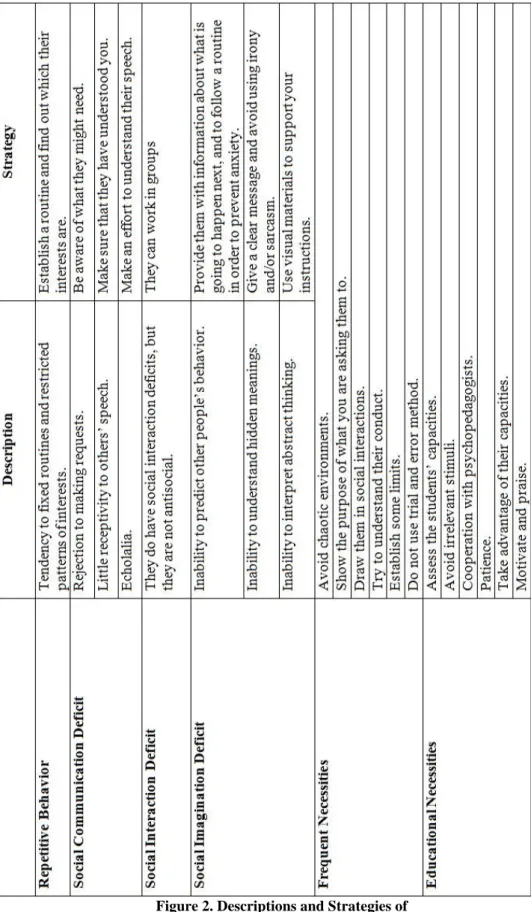
29 Figure 2. Descriptions and Strategies of
30
4. METHODOLOGY
4.1.Project Based Learning (PBL)
The methodology chosen for carrying out this inclusive proposal is the Project Based Learning (PBL) approach. The reason for having selected this methodology is
that, during my school Practicum internship, I had the opportunity to have two Autistic
students in the classrooms, as I have previously stated in this paper. By the end of my stay in that school, we, the students and I, developed a group project about the Shakespearean theatre in which all the students were involved and keenly interested. Indeed, the class I was in charge of was not only composed of Autistic and non-Autistic students, but the diversity within the pupils was even richer: from students with Attention Deficit Hyperactivity Disorder (ADHD) to students with significant curriculum adaptations. Although there was a large variety of students within the same classroom, the implemented project was indeed a success in the sense that it suited the students’ necessities and interests. Therefore, I have decided to include this type of
project into my inclusive proposal since it actually worked for both Autistic and non-Autistic students.
Inquiring into the literature that has been written about PBL, it becomes evident that there is not a unique definition about this concept, but several different ones, each of them including diverse specific features. Therefore, it is difficult to assess what a
project is and what it is not. However, the definition made by Gewen Solomon (2003) is, from my view, the most thorough one.
In project-based learning, students work in groups to solve challenging problems that are authentic, curriculum-based, and often interdisciplinary. Learners decide how to approach a problem and what activities to pursue. They gather information from a variety of sources and synthesize, analyze, and derive knowledge from it. (p.1)
Thus, there are some features to take into account when developing a project with the PBL methodology:
Students must work in groups.
31
That problem must be authentic, based on the curriculum and must encompass
more than one discipline.
Students must make decisions about how to approach the problem and what
activities to undertake.
Students must collect and analyze information.
Finally, students must derive knowledge from the information analysis.
One specific aspect that makes this methodology especially appropriate for children with autism is that PBL requires social interaction in order to accomplish the task. At first, it might seem that this feature can have a negative effect for these students. However, looking back on the necessities formerly collected in this research paper, it was declared that people with ASD do not need to be isolated, that respecting their loneliness is not beneficial for them. For this reason, engaging children with autism in group activities with peer pupils is a way of making them take part in social interactions comfortably.
Although this methodology can result of substantial assistance to the Autistic children’s learning process, there are some issues to be considered beforehand. As it has
been previously explained, PBL promotes the students’ autonomy by allowing them to make their own decisions. However, this may be a drawback for children with autism due to their inability to predict other people’s behavior and their necessity of having a
fixed routine. For these reasons, it is crucial that teachers provide an adequate environment where the objectives and the steps to follow are clearly established. Besides, it is appropriate to maintain the same pattern of work since this will provide Autistic students with a double security: it will prevent the sense of anxiety of not knowing what is going to happen next and it will give these students sameness and a routine.
32 highly beneficial to encourage Autistic students to interrelate to the rest of their mates by means of group work. However, although it is favorable not to respect Autistic children’s desire of isolation, their restricted interests have to fall within the classroom
(Gunn & Delafield-Butt, 2016). The methodology chosen for implementing a teaching project in a classroom with Autistic students, which is PBL, meets these two aspects. This methodological approach suits the Autistic children’s need of being involved in
social interaction given that students will have to develop the project in groups, the pupils in each group being inevitably in contact. Second, PBL respects the restricted interests of children with ASD since they can adapt the project to their personal preferences to the extent to which they follow the teacher’s rules.
Finally, the Project Based Learning methodology will be of assistance when elaborating the inclusive teaching project for a heterogeneous classroom given that PBL meets the criteria established by Villa, Thousand, Nevin, and Liston (2005) in their article Successful Inclusive Practices in Middle and Secondary Schools. This paper consists of a list of those practices considered successful for achieving the inclusion of diverse students within the same classroom. These actions are listed and explained in their paper, and those which deserve consideration for suiting the PBL characteristics will be subsequently accounted for:
Use of technology
Nowadays, students are required by law to develop a digital competence throughout the different subjects. Furthermore, Information and Communication Technologies (ICT) facilitate the students’ learning process by means of increasing their motivation, speeding up tasks and allowing students to go a step further. Besides, the use of technology is beneficial when dealing with the PBL approach since it provides the students with the opportunity to investigate on their own on the topic at issue and to elaborate a wider variety of projects.
Student collaboration and cooperative group learning
As it has been formerly explained, the projects implemented through PBL are meant to be accomplished in groups of students. In the same way, it has already been stated that children with Autism benefit considerably from peer work. Now, it
33
Interdisciplinary curriculum
An interdisciplinary curriculum integrates diverse subjects which have a central topic in common. For instance, history and literature can be incorporated into the foreign language classroom. The Project Based Learning methodology has proven to be especially suitable for combining different disciplines given that the project can be as wide as desired and can require the use of varied branches of knowledge.
Promoting self-determination
Self-determination skills imply the capacity of making decisions, solving problems, and setting goals among others (Villa et al., 2005). Indeed, PBL includes these three aspects as its foremost features. This attribute is not only vitally important for the students’ academic life, but also for their real life. A particularly
unusual but remarkably effective way of promoting self-determination among students is through the use of literature. Whittaker (2012) establishes that the students’ capacity of self-selection, self-awareness, and self-expression benefits
positively by analyzing literature.
4.2.The use of drama in the EFL classroom
As William Shakespeare declared in his play As You Like It, “All the world’s a
stage, / and all the men and women merely players” (The complete works of William Shakespeare, n.d., p. 262). If he was right, then drama should be employed more at schools, especially for teaching and learning English as a foreign language. Indeed, this statement is supported by Valerie Whiteson (1996), who claimed that drama provides a great platform for developing fluency and for analyzing the English language. Notwithstanding, drama benefits English learning and teaching in many other different ways. For instance, it promotes the acquisition of authentic language, the vocabulary and the grammatical structures being fully contextualized (Boudreault, 2010). Furthermore, employing drama in the English as a Foreign Language (EFL) classroom suits the different learning styles, namely Visual, Auditory, and Kinesthetic (VAK) (Gholami and Bagheri, 2013). For example, students whose learning process is based on visual elements will feel comfortable with this method since drama offers a considerable amount of visual stimuli. In the same way, those students who learn by means of
34 direct contact with literature and drama provides them with cultural background, which is extremely important, and usually disregarded though.
Although drama benefits non-Autistic students’ learning process, it is also of considerable assistance for Autistic children. In fact, the body of literature supporting this assertion is quite extensive. For instance, O’Leary (2013) conducted a research
project called The Effects of Drama Therapy for Children with Autism Spectrum
Disorders in order to uncover the benefits and the downsides of drama for Autistic children. This author analyzed the behavior and attitude of several children with Autism who were in contact to drama. Unanimously, the results proved that exposing Autistic children to drama activities is of real assistance for them. For example, drama encourages these students to engage and initiate social interactions, and it improves these children’s capacity of social imagination by means of seeing themselves in
another character. Moreover, other authors such as McConnell (2002) states that “sociodramatic play—typically, more structured activities than free play—increases
social interaction rates […] sociodramatic behaviors and social participation” (p. 360). In addition to improving these children’s social interaction, drama is a way of
integrating these students into the classroom community given that, more often than not, Autistic children are isolated and excluded by the rest of their mates.
Drama may not only be of assistance for children with ASD in terms of interaction,
but also in terms of motor capacities. As it has been formerly illustrated in this paper, some Autistic children present physical difficulties as, for example, adapting their posture when there are held in someone’s arms. Although children with Autism do not
have motor severities as a general rule, some of these children may display some troubles in relation to their motor capacities. In view of that, carrying out drama activities in the classroom will help students with ASD reinforce and develop their motor capacities through the performances that they will be required to deliver.
Last but not least, employing drama in the English as a Second Language (ESL) classroom will improve the Autistic students’ speech by staging the performance of the
play at issue. It is highly relevant to remark that uttering words aloud is not something to take for granted in Autistic children’s speech. Conversely, as it has been stated
35 with Autism. Therefore, having these students speaking aloud will serve as the initial step that Autistic children have to take in order to enhance their linguistic abilities.
On the whole, exploiting drama in the classroom as a medium of amending Autistic children’s shortfalls has proven to be effective given that it offers the opportunity to
analyze, discover, and train social relations, and motor and linguistic capacities. For this reason, the final aim of the teaching project that will be portrayed afterward in this paper is a group performance of a Shakespeare’s play. In order for these students to manage ICTs and the digital competence, the performance will be recorded by the students, and each group will be required to display the videos in the classroom by means of a projector.
5. TEACHING PROJECT FOR “ENGLISH AS A FOREIGN LANGUAGE” An inclusive education system welcomes all type of students in order to guarantee universal education goals. In this way, students with disabilities will have the opportunity to join an ordinary classroom, regardless of their differences. This notion will be the basis of the teaching project that will be subsequently accounted for, one or more Autistic students being at its core. In order to carry out this proposal, all the information formerly described about the ASD condition will be taken into account. However, the actions taken will not only be chosen because they suit the Autistic students’ necessities, but also because they are favorable for the non-Autistic children in
the classroom.
5.1.Foreign languages regulations
The Government recognizes the importance of speaking a foreign language at school, as it is determined in the LOMCE (2016). This document disposes that the current globalized society in which we are immersed has prioritized the fact of speaking a second or even a third language fluently. For this reason, it is mandatory that students of secondary education study at least one foreign language.
Likewise, the Regional Act Orden EDU/362/2015, de 4 de mayo establishes that the
36 communicate both orally and in a written way. Also, this Regional Release determines that this subject conforms the rule established in the Common European Framework of Reference for Languages (Council of Europe, 2001) that a student needs to develop five
skills: oral comprehension, written comprehension, oral expression and interaction, and written output. In this way, the curriculum is divided into four blocks, namely comprehension and output of oral and written texts, each block including its contents, assessment criteria, and learning standards.
Additionally, this document describes the competence mainly exploited throughout this subject, which is the linguistic one. Equally important, this document also disposes that the study of a foreign language does not only imply having linguistic knowledge, but also a grasp of cultural aspects, which involves opening our minds towards those
foreign realities. Moreover, this Regional Act sets that the key competence of initiative
and entrepreneurship plays an important role in the foreign language subject in terms of oral and written expression and interaction activities given that the students have to decide what to say, and how and by which means to say it. In addition to these two key competences, this subject also involves the digital one since ICTs are part of our daily —globalized— life.
Similarly, the Real Decreto 1105/2014 (2015) conveys the foremost issues stated in the previous document. However, the Real Decreto broadens these aspects. For instance, it declares that it is crucial to adopt a respectful attitude towards the different cultures considered in the foreign language classroom. Therefore, the social and civic
competence, and that of cultural awareness and expression would fit into this subject as well. Also, this document establishes that the curriculum of this subject help students
develop their learning to learn competence. To accomplish this competence, it is
37
5.2.Group context
The following teaching project is aimed at a classroom composed of 24 students of the
first year of ESO. This classroom is very heterogeneous since the students’ needs and capacities differ markedly. More specifically, this teaching project has been designed for a classroom where one or more students have high-functioning Autism. Nonetheless, it is vital to highlight that although they may not have any significant disorder, all students in the classroom have different necessities and skills. Thus, it is highly important that the teacher considers each student individually.
5.3.Timing
This project will be run during the second term of the course, which is from January to
March approximately. Since students of secondary education receive four hours of the subject “English as a Foreign Language” a week, and the project takes seven sessions to
complete it, it will be carried out in two weeks.
5.4.Overview of the project: “Shakespeare performed”
From a general perspective, this teaching project designed for the EFL classroom consists of a set of performances of six plays by Shakespeare carried out by different groups of pupils. As stated before, this performance will not be delivered in live, but
through a video recording. The plays chosen to be performed by the students are 5
tragedies, namely Romeo and Juliet (1597), Hamlet (1609), Macbeth (1606), King Lear
(1606), and Othello (1604); and one comedy, which is A Midsummer Night’s Dream
(1595) (The complete works of William Shakespeare, n.d.). The reason for having
chosen these plays is that they are, from my view, the most popular ones. Thus, students will be motivated and will learn more significantly since they already have some
previous knowledge about the plays. 4
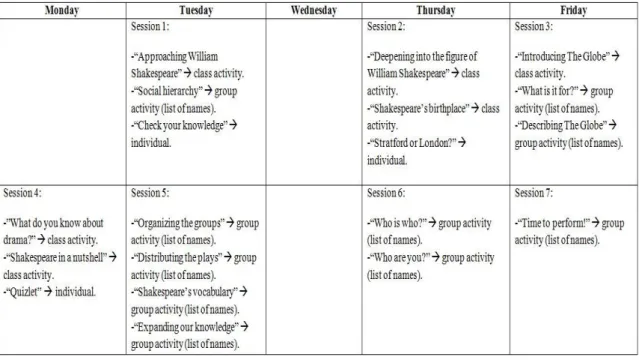
As the methodology followed for developing this proposal is PBL, a set of previous tasks need to be carried out in order to accomplish the final project. It is crucial to highlight that all the tasks on which students will work are needed in order to achieve the ending project. In this line, in order for each student to fully understand and
38 appreciate drama, they will be previously educated about William Shakespeare, his Theatre Company, and The Globe. Thus, pupils will be taught first about the Shakespearean era: Queen Elizabeth I, some English geography, and finally some
relevant aspects about this author’s biography. Then, students will learn about drama as a literary genre and about the theatre as a prestigious institution. In order to ascertain if the learners have understood and followed the lessons, an online test will be created by the teacher using Quizlet online program. After regarding those theoretical contents, students will be presented the six plays on which they will be asked to work. This will be done through a series of videos retrieved from YouTube, which summarize in an amusing manner the plot of each of the plays. Finally, students will be organized into groups and they will work on the play the teacher assigned to them. After analyzing the text, each group will show the recording of the performance to the rest of the classroom.
It is vital to remark that the steps to follow will be stated at the beginning of each session, and more specifically at the beginning of each activity so that students will know what is going to happen next. Therefore, instructions will be given to the students beforehand to improve the students’ performance of the activities and to prevent that the
child with Autism gets anxious or stressed.
5.5.Session sequencing SESSION 1
Time: 60 minutes.
Activity 1: “Approaching William Shakespeare.”
Timing: 10 minutes.
Classroom management: the whole classroom.
Resources: interactive whiteboard and internet connection.
39 way, the teacher will ask the students yes or no questions so that students can answer them by just raising their hands. By doing this, the Autistic student can interact with the teacher without even realizing, being therefore included in the interactive environment
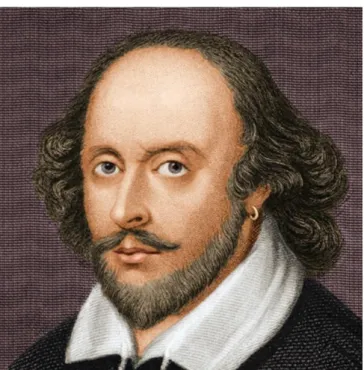
of the classroom. Then, the teacher will show the students some pictures of Shakespeare, and will tell them some appealing aspects of the author that will motivate the students and will serve as an introduction for the topic. For instance, the teacher will mention that William Shakespeare, who was born in the sixteenth century, already had an earring. In this way, students are engaged in the topic and, at the same time, they are taught the era in which William Shakespeare lived.
Activity 2: “Social hierarchy.”
Timing: 25 minutes.
Classroom management: 8 groups of 3 students.
Resources: pieces of paper and pictures of the social classes.
Description: Following this topic, the teacher will deal with the Shakespearean era. The first aspect that students will learn about this age is the social classes of the era and the hierarchy existing between them. As PBL implies that the students collect and analyze information, they will be given five pictures of the different social classes of the time. These students will be asked to draw a pyramid and to arrange the pictures of the social classes in the correct order, from the lowest social rank to the highest. Then, the teacher will provide some feedback if necessary.
Activity 3: “Check your knowledge.”
Timing: 25 minutes.
Classroom management: individual.
Resources: Online presentation
https://www.youtube.com/watch?v=pjJOli2mTMM
Internet connection, the interactive whiteboard and the questionnaire
40 be created by the teacher using the online program “Powtoon”. After delivering the presentation, the teacher will hand out a questionnaire with some questions about what has been displayed in the presentation in order to make sure they have a complete grasp
of all the issues.
A note on ASD students
This session includes an activity carried out in groups of three people not only because Project Based Learning involves group work, but also because it is of considerable assistance that the Autistic students have some mates working with them. Besides, the teacher will make use of a questionnaire given that, as it has been stated before in this paper, it is especially important for Autistic children to ascertain if they have followed the lesson correctly. In this case, it will be done through a written test in order not to overwhelm this student in particular with direct spoken questions since they may not be willing to answer them.
SESSION 2
Time: 60 minutes.
Activity 1: “Deepening into the figure of William Shakespeare.”
Timing: 10 minutes.
Classroom management: the whole classroom.
Resources: internet connection and the interactive whiteboard.
https://www.youtube.com/watch?v=GiqIKkaHLKI
Description: Students will plunge into the figure of William Shakespeare and the
relevant aspects they need to know in order to perform the plays properly. To achieve this, a video created by the British Council, available on YouTube, about the most relevant facts about the life of the author at issue will be shown in to the pupils as many times as necessary.