ISSN: 1524-4539
Copyright © 2003 American Heart Association. All rights reserved. Print ISSN: 0009-7322. Online 72514
Circulation is published by the American Heart Association. 7272 Greenville Avenue, Dallas, TX
DOI: 10.1161/01.CIR.0000061757.12581.15
2003;107;1671-1678
Circulation
T. Douglas Bradley and John S. Floras
Sleep Apnea and Heart Failure: Part I: Obstructive Sleep Apnea
http://circ.ahajournals.org/cgi/content/full/107/12/1671
located on the World Wide Web at:
The online version of this article, along with updated information and services, is
http://www.lww.com/reprints
Reprints: Information about reprints can be found online at
410-528-8550. E-mail:
Fax: Kluwer Health, 351 West Camden Street, Baltimore, MD 21202-2436. Phone: 410-528-4050. Permissions: Permissions & Rights Desk, Lippincott Williams & Wilkins, a division of Wolters
http://circ.ahajournals.org/subscriptions/
Subscriptions: Information about subscribing to Circulation is online at
by on May 4, 2009 circ.ahajournals.org
Sleep Apnea and Heart Failure
Part I: Obstructive Sleep Apnea
T. Douglas Bradley, MD; John S. Floras, MD, DPhil
H
eart failure (HF) affects 5 to 6 million North Americans and is increasing in prevalence.1Mortality remains high.In Ontario, for example, between 1994 and 1997, approxi-mately 33% of patients diagnosed with HF on first admission to hospital died within 1 year.2 Reductions in mortality
demonstrated in randomized clinical trials of pharmacologi-cal agents, such as -receptor blockers3 and
angiotensin-converting enzyme inhibitors,4 have been slow to translate
into substantial reductions in death and hospitalization rates in community-based HF populations. These figures have remained relatively constant between 1948 and 1997.2,5–7In
more recent clinical trials, the addition of newer agents has had a marginal, neutral, or even adverse impact on the high residual mortality of optimally treated patients.8,9
Accord-ingly, investigators such as Massie10have raised the concern
that there may be limits to the benefits achievable through conventional pharmacological strategies. Resource-intensive interventions, such as left ventricular assist devices or heart transplantation, are available to only a small minority of patients. Therefore, there remains a need to develop novel, widely applicable, and cost-effective approaches to the ther-apy of HF.
An important limitation to the current guidelines for the evaluation and management of chronic HF is their focus on the patient as he/she presents while awake.1 This approach
presupposes that any mechanisms that might contribute to the pathophysiology or progression of HF are quiescent during sleep. Our objective in this review, therefore, is to highlight the pathophysiological and therapeutic implications of co-existing sleep apnea in patients with HF.
There are 2 major forms of sleep apnea: obstructive sleep apnea (OSA) and central sleep apnea (CSA). Because their pathophysiologies and clinical implications in the setting of HF are quite different, OSA and CSA will be dealt with separately in the 2 parts of this review. In Part I, we will provide a general overview of the effects of normal sleep on the cardiovascular system and then discuss the impact of OSA and its therapy on HF. In Part II, will focus on the pathophysiology and treatment of CSA.
Effects of Normal Sleep
For the most part, non-rapid eye movement (NREM) sleep, which constitutes approximately 85% of total sleep time, is a state of cardiovascular relaxation. Metabolic rate, sympa-thetic nervous system activity, heart rate, cardiac output, and systemic vascular resistance fall,11,12whereas vagal activity
increases.13 Intermittent surges in sympathetic discharge,
heart rate, and blood pressure do occur in rapid eye move-ment (REM) sleep, but in general, REM comprises only 15% of total sleep time, and average blood pressure and heart rate remain below waking levels.11In general, however, patients
with HF sleep fewer hours and suffer from interrupted sleep. More importantly, from the perspective of this review, at least 50% of patients with HF have OSA or CSA, both of which disrupt the normal relaxing effects of sleep on the cardiovas-cular system.14,15
The hemodynamic, autonomic, and chemical disturbances elicited by repetitive cycles of obstructive apnea during sleep have been characterized extensively in subjects with normal ventricular function.16 –18 However, it is only recently that
their adverse implications in patients with HF have been appreciated.19Intermittent apnea-induced hypoxia,
hypercap-nia, surges in central sympathetic outflow and left ventricular afterload, daytime hypertension, and loss of vagal heart rate regulation are potent stimuli to myocyte necrosis and apopto-sis, myocardial ischemia, arrhythmias, adverse cardiac re-modeling, and accelerated disease progression in HF.20,21
CSA shares many of these pathophysiological features of OSA22–24 and has independent adverse effects on
surviv-al.25,26Therefore, the potential for OSA and CSA to
acceler-ate the relentless progression of HF and the possible benefi-cial impact of their treatment on cardiovascular outcomes merit greater attention.
Sleep Apnea: Classification and Diagnosis
Obstructive apneas and hypopneas result from complete or partial collapse of a narrowed pharynx,27 respectively,
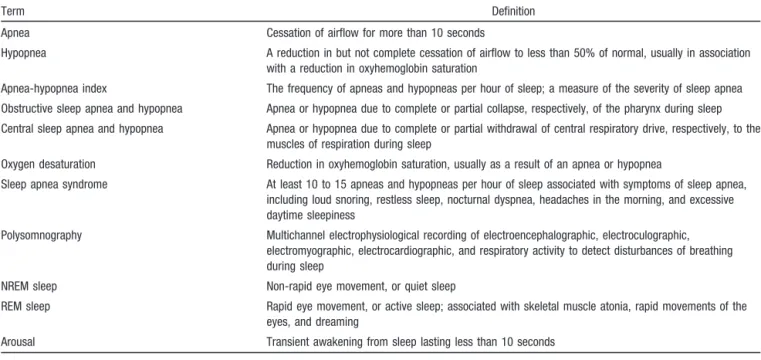
whereas central apneas and hypopneas arise from reductions in central respiratory drive28 (Table 1). During obstructive
apnea, the effort generated to produce airflow increases,
From the University of Toronto Centre for Sleep Medicine and Circadian Biology (T.D.B., J.S.F.), the Cardiopulmonary Sleep Disorders and Research Centre of the Toronto General Hospital/University Health Network (T.D.B.) and the Toronto Rehabilitation Institute (T.D.B.), and the Departments of Medicine of the University Health Network and Mount Sinai Hospital (T.D.B., J.S.F.), Toronto, Ontario, Canada.
This article is Part I in a 2-part series. Part II will appear in the April 8, 2003 issue of Circulation.
Correspondence to T. Douglas Bradley, MD, Toronto General Hospital/University Health Network, NU 9-112, 200 Elizabeth St, Toronto, ON, M5G 2C4, Canada. E-mail [email protected]
(Circulation. 2003;107:1671–1678.)
© 2003 American Heart Association, Inc.
Circulation is available at http://www.circulationaha.org DOI: 10.1161/01.CIR.0000061757.12581.15
causing the rib cage and abdomen to distort and move out of phase. In contrast, in central events respiratory movements are absent or attenuated, but in phase. The reported preva-lence of OSA in otherwise healthy adults is approximately 4% in women and 9% in men. Of these, less than half report symptoms of a sleep apnea syndrome.29 The prevalence of
CSA in otherwise healthy adults has not been determined, but appears to be far less common than OSA.29,30
The diagnosis of sleep apnea is generally based on the demonstration of at least 10 to 15 apneas and hypopneas per hour of sleep (Table 1)15,29and when accompanied by 1 or
more symptoms of snoring, restless sleep, morning head-aches, and excessive daytime sleepiness, it constitutes a sleep apnea syndrome. Current standards for overnight polysom-nography require the concurrent monitoring of sleep struc-ture, cardiac rhythm, oxyhemoglobin saturation, and respira-tion, using noninvasive methods capable of discriminating between obstructive and central events, such as respiratory inductance plethysmography.31
Obstructive Sleep Apnea
Pathophysiology
Obstructive apneas are caused by collapse of the pharynx during sleep. In subjects with normal pharyngeal anatomy, the partial withdrawal of pharyngeal dilator muscle tone that accompanies the onset of sleep is insufficient to cause pharyngeal collapse. However, the pharynx of patients with OSA is anatomically narrowed and highly compliant. In this setting, the superimposition of the normal withdrawal of pharyngeal dilator muscle tone at sleep onset causes the pharynx to occlude, triggering apnea.32Obesity is the chief
risk factor of OSA, partly because layering of fat adjacent to the pharynx narrows its lumen.33In addition to this
mecha-nism, other factors may come in to play in HF. For example, periodic oscillations in ventilatory drive related to
Cheyne-Stokes respiration may cause withdrawal of pharyngeal dila-tor muscle tone during the waning of ventilation, predispos-ing to upper airway narrowpredispos-ing or collapse.34In the recumbent
position, fluid from the legs shifts to more central structures. If some of this fluid should accumulate in the upper airway, the pharynx could become narrowed and more susceptible to collapse.35 However, there is as yet no direct evidence to
support this possibility.
Mechanical and Hemodynamic Effects
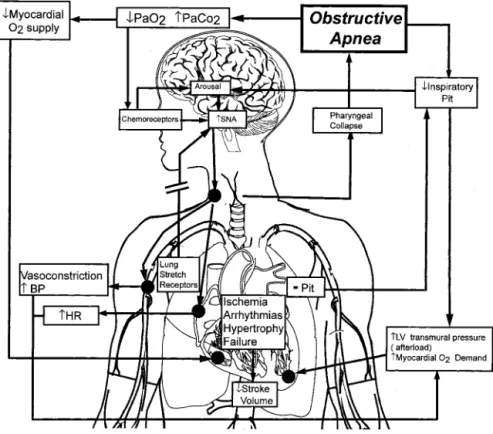
Obstructive apneas during sleep elicit a series of mechanical, hemodynamic, chemical, neural, and inflammatory responses with adverse consequences for the cardiovascular system (Figure 1). Futile inspiratory efforts against the occluded pharynx cause abrupt reductions in intrathoracic pressure. These increase left ventricular transmural pressure (the dif-ference between intra-cardiac pressure and intra-thoracic pressure) and hence afterload.36 Venous return is also
en-hanced, resulting in right ventricular distension and a leftward shift of the interventricular septum. The latter impedes left ventricular filling.37Diminished left ventricular preload and
augmented left ventricular afterload act in concert to reduce stroke volume.17,38
Neurohumoral Effects
Increased sympathetic nervous system activity, a cardinal feature of obstructive apnea, results from the interaction of several excitatory mechanisms normally dormant during sleep. During apnea, the reflex arising from pulmonary stretch receptors that suppresses central sympathetic dis-charge during normal breathing ceases, disinhibiting central sympathetic outflow. The ensuing hypoxia and hypercapnia further augment sympathetic activity by stimulating periph-eral and central chemoreceptors.39,40The resulting
vasocon-striction raises peripheral resistance, whereas increased car-diac sympathetic stimulation increases heart rate and reduces
TABLE 1. Definitions of Terms
Term Definition
Apnea Cessation of airflow for more than 10 seconds
Hypopnea A reduction in but not complete cessation of airflow to less than 50% of normal, usually in association with a reduction in oxyhemoglobin saturation
Apnea-hypopnea index The frequency of apneas and hypopneas per hour of sleep; a measure of the severity of sleep apnea
Obstructive sleep apnea and hypopnea Apnea or hypopnea due to complete or partial collapse, respectively, of the pharynx during sleep
Central sleep apnea and hypopnea Apnea or hypopnea due to complete or partial withdrawal of central respiratory drive, respectively, to the muscles of respiration during sleep
Oxygen desaturation Reduction in oxyhemoglobin saturation, usually as a result of an apnea or hypopnea
Sleep apnea syndrome At least 10 to 15 apneas and hypopneas per hour of sleep associated with symptoms of sleep apnea, including loud snoring, restless sleep, nocturnal dyspnea, headaches in the morning, and excessive daytime sleepiness
Polysomnography Multichannel electrophysiological recording of electroencephalographic, electroculographic, electromyographic, electrocardiographic, and respiratory activity to detect disturbances of breathing during sleep
NREM sleep Non-rapid eye movement, or quiet sleep
REM sleep Rapid eye movement, or active sleep; associated with skeletal muscle atonia, rapid movements of the eyes, and dreaming
Arousal Transient awakening from sleep lasting less than 10 seconds
1672 Circulation April 1, 2003
by on May 4, 2009 circ.ahajournals.org
heart rate variability.41 Although arousal from sleep at the
termination of obstructive apnea facilitates the resumption airflow by stimulating pharyngeal dilator muscles,37,42 the
resulting excitatory input from cortical centers will cause a further burst of sympathetic outflow accompanied by a loss of vagal tone.11,43The immediate post-apneic period is therefore
characterized by profound surges in blood pressure and heart rate. Sleep quickly resumes and with it, collapse of the pharynx. In severe OSA, these cycles of apnea and arousal can recur several hundred times each night, exposing the heart and circulation to high amplitude oscillations in central sympathetic nerve traffic, blood pressure, and heart rate.
The adverse effects of obstructive apnea on the cardiovas-cular system are not confined to sleep. Daytime sympathetic nervous activity and systemic blood pressure are increased in patients with OSA.18,44The mechanism for this is not certain,
but intermittent apnea-related hypoxia may be playing a role, as hypoxia causes sympathetic activation and blood pressure elevations that persists after removal of the hypoxic stimu-lus.45,46 There also appears to be a sustained reduction in
vagal tone in patients with OSA, exemplified during wake-fulness by a reduction in total heart rate variability and its vagally-mediated respiratory (high frequency) component.41
Inflammatory, Oxidative, and Vascular Endothelial Effects
There is increasing evidence that inflammatory mediators such as C-reactive protein, as well as oxidative stress play important roles in atherogenesis and arterial thrombus forma-tion.47 In a recent study, Shamsuzzaman et al48 found that
compared with control subjects matched for age, sex, and body mass index, patients with OSA had higher plasma C-reactive protein concentrations that were proportional to
the frequency of apneas and hypopneas. Patients with OSA also demonstrate signs of increased oxidative stress, such as increased reactive oxygen species production in neutrophils49
and monocytes.50In patients with OSA and coexisting
coro-nary artery disease, increased oxidative stress is associated with elevated levels of the soluble circulating adhesion molecules intracellular adhesion molecule-1 (ICAM-1), vas-cular cell adhesion molecule-1 (VCAM-1) and E-selectin.51
Increased expression of the adhesion molecules CD15 and CD11c in monocytes has also been reported in patients with OSA. Monocytes from OSA patients adhere more avidly to vascular endothelial cells in culture than those from control subjects.52
Intermittent apnea-related hypoxia and post-apneic reoxy-genation probably contribute to generation of both reactive oxygen species and adhesion molecules. Conversely, treat-ment of OSA by continuous positive airway pressure (CPAP) lowers basal reactive oxygen species production by CD11⫹ monocytes, downregulates adhesion molecule expression (CD15 and CD11c on monocytes), and decreases leukocyte adherence to human endothelial cells in culture.50Activated
leukocytes play an important role in the vascular endothelial inflammatory response to injury caused by hypoxia/reoxy-genation that may alter endothelial reactivity and initiate atherogenic processes. However, as of yet there is no direct evidence that OSA causes atherosclerosis.
Patients with OSA have low plasma nitrite concentrations, suggesting reduced bioavailability of endothelially derived nitric oxide and altered endothelially mediated vasodilation.52
Imadojemu et al53also found that reactive hyperemic blood
flow and vascular conductance after forearm arterial occlu-sion were attenuated in patients with OSA compared with control subjects. After treatment of OSA by CPAP, reactive
Figure 1.Pathophysiological effects of OSA on the cardiovascular system. Obstructive apneas increase left ventric-ular (LV) transmural pressure (ie, after-load) through the generation of negative intrathoracic pressure (Pit) and elevations in systemic blood pressure (BP) second-ary to hypoxia, arousals from sleep, and increased sympathetic nervous system activity (SNA). Apnea also suppresses the sympathetic inhibitory effects of lung stretch receptors, further enhancing SNA. The combination of increased LV afterload and increased heart rate (HR) secondary to increased SNA increases myocardial O2demand in the face of a
reduced myocardial O2supply. These
hyperemic blood flow and vascular conductance increased in association with a reduction in sympathetic nervous system activity. Another clinical manifestation of augmented sympa-thetic discharge and endothelial dysfunction in OSA is enhanced vascular responsiveness to neurogenic vasocon-strictor stimuli. For example, compared with control subjects, patients with OSA have an augmented pressor response to hypoxia.54Compromised endothelially mediated vasodilation
in the setting of increased sympathetic vasoconstrictor dis-charge would predispose patients with OSA to the develop-ment of hypertension.18,55,56
Hypoxia has been shown to stimulate production of angio-genic substances like vascular endothelial growth factor (VEGF).57The plasma concentration of VEGF is increased in
patients with OSA in proportion to the frequency of apneas and the degree of nocturnal hypoxia. In addition, VEGF concentrations fall in response to reversal of OSA by CPAP.58,59As of yet, however, there is no direct evidence of
enhanced VEGF-induced angiogenesis in OSA. Nevertheless, variations in the VEGF response to nocturnal hypoxia may influence the cardiovascular system’s response to tissue hypoxia.
Obstructive Sleep Apnea in Patients With
Heart Failure
Epidemiology
In the Sleep Heart Health Study, comprising 6424 men and women, the presence of OSA (defined as an apnea-hypopnea index ⱖ11/h) conferred a 2.38 relative increase in the likelihood of having HF, independent of other known risk factors.60 In the 2 largest case series of patients with HF
undergoing polysomnography, OSA was detected in 37% of 45014and 11% of 8115subjects studied, with the prevalence
of OSA greater in men (38%) than in women (31%).14Risk
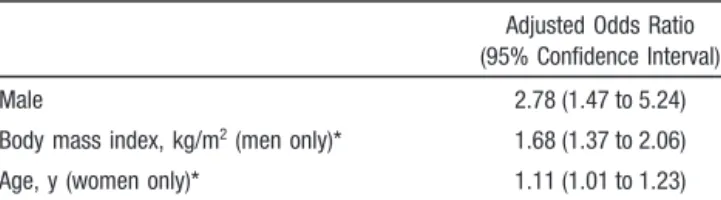
factors for OSA differ between men and women; the main risk factor in men is obesity, whereas in women it is older age (Table 2).
Clinical Features
The clinical features of OSA in HF are similar to those of OSA patients with normal left ventricular function. Patients are usually obese and have a history of loud habitual snoring. However, only a minority complain of excessive daytime
sleepiness,15 suggesting that many patients with HF have
relatively asymptomatic OSA.
Implications for Progression of Heart Failure
The pathophysiologies of OSA and HF converge in 2 areas fundamental to progression of myocardial failure and prema-ture mortality: the adverse impact of sympathetic nervous system activation and of vagal withdrawal on the cardiovas-cular system in general, and the detrimental effects of altered loading conditions and hypoxia on the failing ventricle in particular. In addition, the consequences of high sympathetic drive to the failing heart include myocyte necrosis and apoptosis, -adrenoceptor downregulation and desensitiza-tion, arrhythmogenesis, and increased mortality rates.20,21,61
Stimulation of renal sympathetic nerves promotes renin-an-giotensin-aldosterone activation, as well as sodium and fluid retention.21 Impaired baroreflex and tonic vagal heart rate
control are additional markers of adverse outcome due in part to an increased risk of sudden death.62 In contrast to HF
patients without OSA, these disturbances of circulatory con-trol are exacerbated during sleep, leading to increased myo-cardial oxygen demand in the setting of recurrent hypoxia, which can itself directly reduce myocardial contractility.63
Consequently, these repetitive stresses place the patient with OSA and HF at greater risk of worsening ventricular dys-function, arrhythmias, and, ultimately, reduced survival.
Systemic hypertension is the commonest risk factor for cardiac hypertrophy and failure in longitudinal studies.64
Exposure of dogs to experimental OSA for several weeks leads to both nocturnal and daytime hypertension,65 left
ventricular hypertrophy, systolic dysfunction, and interstitial pulmonary edema.37,66 A large prospective epidemiological
study has also provided compelling evidence that OSA is a risk factor for the development of systemic hypertension, independent of other known risk factors.44 Left ventricular
hypertrophy is more closely linked to hypertension during sleep than during wakefulness.67 Accordingly, the higher
nocturnal blood pressure experienced in hypertensive patients with OSA than in those without may place them at greater risk for left ventricular hypertrophy.68Because output from
the failing left ventricular is particularly sensitive to increases in afterload, the most direct mechanism by which OSA might compromise left ventricular systolic function is through its effect on blood pressure. When HF patients develop trains of obstructive apnea during sleep, blood pressure rises above, rather than descending below waking values.69Moreover, in
a recent study, Sin et al70demonstrated that the presence of
OSA in medically treated patients with HF was associated with elevated daytime blood pressure in proportion to the frequency of obstructive apneas and hypopneas. Mechanisms by which OSA could contribute to chronic hypertension in HF patients are similar to those described above for OSA patients with normal cardiac function.18,45,55
The repetitive generation of exaggerated negative intratho-racic pressure against the occluded pharynx is a cardiac load unique to OSA. Pressures as low as⫺65 mm Hg have been recorded during obstructive apneas in patients with HF.71
When subjected to such abrupt increases in left ventricular afterload and myocardial oxygen demand, patients with HF
TABLE 2. Independent Odds Ratios for Obstructive Sleep Apnea in Patients With Heart Failure
Adjusted Odds Ratio (95% Confidence Interval)
Male 2.78 (1.47 to 5.24)
Body mass index, kg/m2(men only)* 1.68 (1.37 to 2.06)
Age, y (women only)* 1.11 (1.01 to 1.23)
Odds ratios are in comparison to patients without sleep-related breathing disorders.
*Odds ratios for these variables reflect the incremental increase in risk for a 5-unit increase.
Data are modified from Sin D, Fitzgerald F, Parker JD, et al. Risk factors for central and obstructive sleep apnea in 450 men and women with congestive heart failure.Am J Respir Crit Care Med. 1999;160:1101–1106.13
1674 Circulation April 1, 2003
by on May 4, 2009 circ.ahajournals.org
experience more profound and prolonged reductions in stroke volume than control subjects with normal left ventricular function.36These obstructive events are replicated hundreds
of times over the course of the night. If this scenario is considered comparable to the sequential administration of several hundred boluses of a potent pressor agent each day, the long-term implications of these repetitive increases in wall stress for the induction of genes involved in ventricular remodeling become obvious. Marked reductions in intratho-racic pressure generated during obstructive events could play a significant role in the development of myocyte slippage, contractile dysfunction, and adverse ventricular remodeling in such patients.72OSA also prevents the normal fall in heart
rate that accompanies the onset of sleep.69When coupled with
marked reflex increases in central sympathetic outflow, which are greater in HF than in individuals with normal left ventricular function,73 these marked elevations in afterload
and heart rate increase the metabolic demands of the myo-cardium in the face of reduced O2supply, cardiac output, and
coronary perfusion, setting the stage for recurrent nocturnal ischemia and arrhythmias.74 Conversely, abolition of OSA
can reverse these pathophysiological processes and improve left ventricular structure and function.69,71,75
In addition to these adrenergic and mechanical actions, increased levels of inflammatory mediators, oxidative stress, and vascular endothelial dysfunction in OSA have the poten-tial to accelerate atherogenesis.47–50,55Because ischemic heart
disease is the commonest cause of HF in the industrialized world, OSA could potentiate myocardial dysfunction through these adverse influences on the coronary vasculature.
Treatment of Obstructive Sleep Apnea in Heart Failure
The full range of indications for and most effective means of treating OSA in patients with HF remain to be established. Nevertheless, as with patients with normal ventricular
func-tion, the most compelling indication for treatment of OSA would be a complaint of debilitating daytime sleepiness or related symptoms of sleep apnea. General therapeutic consid-erations for such patients include weight reduction, which may reduce the severity of OSA,76 and abstinence from
alcohol and sedatives, which predispose to pharyngeal col-lapse during sleep.77
Randomized trials in patients with OSA and excessive daytime sleepiness but with normal cardiac function have demonstrated that CPAP applied via a nasal mask alleviates OSA, improves sleep quality, reduces daytime sleepiness, augments neurocognitive function, and may lower nocturnal and daytime blood pressure.78,79 On the other hand, a
ran-domized trial of patients with relatively severe OSA (apnea-hypopnea index ⬎30 per hour of sleep) but without a symptom of excessive daytime sleepiness demonstrated that although patients randomized to CPAP were compliant with it, they did not derive any symptomatic or neurocognitive benefit.80These findings support the use of CPAP for patients
with symptomatic OSA, but do not support its use for those with asymptomatic OSA. In a non-randomized trial involving patients with nocturnal angina, elimination of OSA by CPAP reduced the frequency of ST-segment depression and angina during sleep.81 Treatment of OSA by CPAP also reduces
nocturnal and daytime sympathetic nervous system activi-ty,18,82 augments heart rate variability,41 and may reduce
oxidative stress, increase endothelially derived nitric oxide, and improve endothelially mediated vasodilatation.49,52
There is no evidence that pharmacological agents used to treat HF have any influence on the severity of OSA,83 and
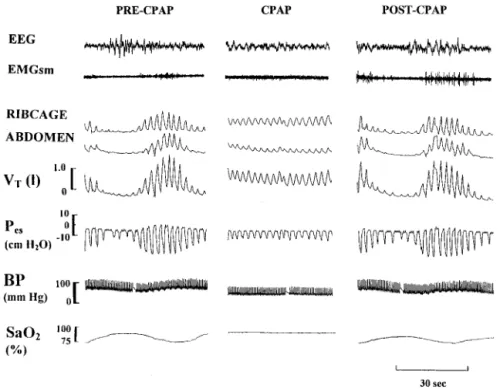
thus far no randomized trials in HF have evaluated the impact of treating OSA on important clinical cardiovascular out-comes. However, acute abolition of OSA by CPAP in patients with HF prevents recurrent hypoxia, reduces nocturnal blood pressure and heart rate,65 and increases arterial baroreflex
sensitivity84(Figure 2). The first study to examine the effects Figure 2.Effects of continuous positive airway pressure (CPAP) on obstructive sleep apnea (OSA) in a patient with heart failure. Abolition of obstructive apneas by CPAP prevents dips in oxygen saturation (SaO2), dampens negative intrathoracic
pressure (ie, esophageal pressure; Pes),
swings and lowers blood pressure (BP). The combination of the latter two causes a marked reduction in left ventricular transmural pressure, an important deter-minant of afterload. EEG indicates elec-troencephalogram; EMGsm, submental electromyogram; and VT, tidal volume. Reprinted with permission Tkacova R, Rankin F, Fitzgerald FS, et al. Effects of continuous positive airway pressure on obstructive sleep apnea and left ventricu-lar afterload in patients with heart failure.
of treating OSA with CPAP on left ventricular function in patients with HF was uncontrolled. Eight patients with idiopathic dilated cardiomyopathy and coexisting OSA were studied. After 1 month of CPAP, mean left ventricular ejection fraction increased from 37% to 49% and dyspnea was reduced significantly.71These improvements reversed 1
week after withdrawal of CPAP. A randomized trial involv-ing 24 patients with HF and OSA has been recently pub-lished.75The 12 patients randomized to CPAP used a mean
pressure of 8.9⫾0.7 cm H2O for 6.2⫾0.5 hours per night
during the 1-month study. They experienced a significant reduction in daytime heart rate (from 68⫾3 to 64⫾3 bpm,
P⫽0.007) and systolic blood pressure (from 126⫾6 to 116⫾5 mm Hg, P⫽0.020). Their mean left ventricular ejec-tion fracejec-tion increased by 9% (from 25.0⫾2.8 to 33.8⫾2.4%,
P⬍0.001). In contrast, those in the control group experienced no improvement in any of these variables.
In awake patients with HF, CPAP also increases heart rate variability and its vagal modulation.85In many respects, these
effects of CPAP are analogous to the chronic effects of -blockade in HF,3 but they are achieved
non-pharmacologically by reducing oxygen demand and increas-ing oxygen supply and by attenuatincreas-ing central sympathetic outflow. Although these short-term results are encouraging, there remains a need for randomized trials to determine whether the specific treatment of OSA in HF will improve long-term morbidity and mortality. However, such trials may be difficult to design and execute because of the inherent reluctance of many physicians to withhold CPAP, a standard therapy of OSA, from a control group for prolonged periods. This difficulty is compounded by the issue of whether a truly neutral placebo or “sham” CPAP can be administered to a control group over the course of a multi-year trial.86
Never-theless, as many patients with HF who have OSA do not have daytime sleepiness,15,75 and because such patients do not
derive symptomatic or neurocognitive improvement from CPAP therapy,80it may be feasible to carry out longer-term
randomized clinical trials, as these patients lack the conven-tional clinical indications for treatment.78
Mandibular advancement devices have been shown in randomized trials to improve OSA and its symptoms, but they are generally not as effective as CPAP.87,88 Surgical
proce-dures designed to increase the caliber of the pharyngeal lumen, such as uvulopalatopharyngoplasty and laser assisted uvulopalatoplasty, are effective in less than 50% of patients and have not been subjected to randomized trials.89 There
have been no studies of the potential therapeutic effects of mandibular advancement devices or upper airway surgery on OSA in patients with HF. Until such studies are completed, these approaches cannot be recommended as therapy for OSA in this setting.
Conclusion
In a substantial proportion of patients with HF, OSA may play a role in the pathogenesis and progression of cardiac failure through mechanical, adrenergic, and vascular mecha-nisms. However, more research is required to determine basic mechanisms by which OSA exerts its adverse effects on the cardiovascular system. Such investigations could include
studies of the effects of intermittent hypoxia on cardiovascu-lar function at the cellucardiovascu-lar and molecucardiovascu-lar levels,and of genetic susceptibilities to adverse cardiovascular consequences of OSA and intermittent hypoxia. In addition, more clinical investigation, especially large scale randomized trials of various interventions for OSA in patients with HF, will be required to determine the effectiveness of these therapies on cardiovascular outcomes.
In the next issue of Circulation, we will address CSA, or Cheyne-Stokes respiration.90 This breathing disorder has an
inordinately high prevalence in patients with HF compared with the otherwise healthy population and appears to have adverse prognostic implications. In Part II, we will review the literature in this area and provide a broad perspective on the potential pathophysiological and clinical significance of co-existing CSA for patients with HF.
Acknowledgments
This work was supported by the Canadian Institutes of Health Research (grants MOP-11607 and UI-14909). Dr Bradley holds a Canadian Institutes of Health Research Senior Scientist Award, and Dr Floras is a Career Investigator of the Heart and Stroke Foundation of Ontario.
References
1. Hunt HA, Baker DW, Chin MH, et al. ACC/AHA guidelines for the evaluation and management of chronic heart failure in the adult: executive summary: a report of the American College of Cardiology/ American Heart Association Task Force on Practice Guidelines (Com-mittee to Revise the 1995 Guidelines for the Evaluation and Management of Heart Failure). Circulation. 2001;104:2996 –3007.
2. Tu J, Zhang H. Congestive heart failure outcomes in Ontario. In: Naylor CD, Slaughter PM, eds. Cardiovascular Health and Services in Ontario:
An ICES Atlas. Toronto, Canada: Institute of Clinical and Evaluative
Sciences; 1999:111–122.
3. Packer M, Coats AJ, Fowler MB, et al. Carvedilol Prospective Ran-domized Cumulative Survival Study Group. Effect of carvedilol on survival in severe chronic heart failure. N Engl J Med. 2001;344: 1651–1658.
4. The SOLVD Investigators. Effect of enalapril on survival in patients with reduced left ventricular ejection fractions and congestive heart failure.
N Engl J Med. 1991;325:293–302.
5. Ho KK, Pinsky JL, Kannel WB, et al. The epidemiology of heart failure: the Framingham Study. J Am Coll Cardiol. 1993;22:6A–13A. 6. Centers for Disease Control. Changes in mortality from heart
failure-United States, 1980 –1995. MMWR Morb Mortal Wkly Rep. 1998;47: 633– 637.
7. Feldman DE, Thivierge C, Guerard L, et al. Changing trends in mortality and admission to hospital for elderly patients with congestive heart failure. CMAJ. 2001;165:1053–1055.
8. Pitt B, Poole-Wilson PA, Segal R, et al. Effect of losartan compared with captopril on mortality in patients with symptomatic heart failure: ran-domised trial. The Losartan Heart Failure Survival Study ELITE II.
Lancet. 2000;355:1582–1587.
9. Duggrell SA. Moxonidine: some controversy. Expert Opin
Pharma-cother. 2001;2:337–350.
10. Massie BM. Treating heart failure: it’s time for new paradigms and novel approaches. J Cardiac Fail. 2002;8:117–119.
11. Somers VK, Dyken ME, Mark AL, et al. Sympathetic-nerve activity during sleep in normal subjects. N Engl J Med. 1993;328:303–307. 12. Khatri IM, Freis ED. Hemodynamic changes during sleep. J Appl Physiol.
1967;22:867– 873.
13. Van de Borne P, Nguyen H, Biston P, et al. Effects of wake and sleep stages on the 24-h autonomic control of blood pressure and heart rate in recumbent men. Am J Physiol. 1994;266:H548 –H554.
14. Sin DD, Fitzgerald F, Parker JD, et al. Risk factors for central and obstructive sleep apnea in 450 men and women with congestive heart failure. Am J Respir Crit Care Med. 1999;160:1101–1106.
1676 Circulation April 1, 2003
by on May 4, 2009 circ.ahajournals.org
15. Javaheri S, Parker TJ, Liming JD, et al. Sleep apnea in 81 ambulatory male patients with stable heart failure: types and their prevalences, con-sequences, and presentations. Circulation. 1998;97:2154 –2159. 16. Tilkian AG, Guilleminault C, Schroeder JS, et al. Hemodynamics in
sleep-induced apnea: studies during wakefulness and sleep. Ann Intern
Med. 1976;85:714 –719.
17. Tolle FA, Judy WV, Yu PL, et al. Reduced stroke volume related to pleural pressure in obstructive sleep apnea. J Appl Physiol. 1983;55: 1718 –1724.
18. Somers VK, Dyken ME, Clary MP, et al. Sympathetic neural mechanisms in obstructive sleep apnea. J Clin Invest. 1995;96:1897–1904. 19. Bradley TD, Floras JS. Pathophysiologic interactions between sleep
apnea and congestive heart failure. In: Bradley TD, Floras JS, eds. Sleep
Apnea: Implications in Cardiovascular and Cerebrovascular Disease. Lung Biology in Health and Disease. vol. 146. New York, NY: Marcel
Dekker; 2000:385– 414.
20. Daly PA, Sole MJ. Myocardial catecholamines and the pathophysiology of heart failure. Circulation. 1990;82(2 suppl):I35–I43.
21. Floras JS. Clinical aspects of sympathetic activation and parasympathetic withdrawal in heart failure. J Am Coll Cardiol. 1993;22:72A– 84A. 22. Trinder J, Merson R, Rosenberg JI, et al. Pathophysiological interactions
of ventilation, arousals, and blood pressure oscillations during Cheyne-Stokes respiration in patients with heart failure. Am J Respir Crit Care
Med. 2000;162:808 – 813.
23. Franklin KA, Sandstrom E, Johansson G, et al. Hemodynamics, cerebral circulation, and oxygen saturation in Cheyne-Stokes respiration. J Appl
Physiol. 1997;83:1184 –1191.
24. Naughton MT, Benard DC, Liu PP, et al. Effects of nasal CPAP on sympathetic activity in patients with heart failure and central sleep apnea.
Am J Respir Crit Care Med. 1995;152:473– 479.
25. Lanfranchi PA, Braghiroli A, Bosimini E, et al. Prognostic value of nocturnal Cheyne-Stokes respiration in chronic heart failure. Circulation. 1999;99:1435–1440.
26. Sin DD, Logan AG, Fitzgerald FS, et al. Effects of continuous positive airway pressure on cardiovascular outcomes in heart failure patients with and without Cheyne-Stokes respiration. Circulation. 2000;102:61– 66. 27. Bradley TD, Brown IG, Grossman RF, et al. Pharyngeal size in snorers,
non-snorers, and patients with obstructive sleep apnea. N Engl J Med. 1986;315:1327–1331.
28. Naughton M, Benard D, Tam A, et al. Role of hyperventilation in the pathogenesis of central sleep apneas in patients with congestive heart failure. Am Rev Respir Dis. 1993;148:330 –338.
29. Young T, Palta M, Dempsey J, et al. The occurrence of sleep-disordered breathing among middle-aged adults. N Engl J Med. 1993;328: 1230 –1235.
30. Bradley TD, Phillipson EA. Central sleep apnea. Clin Chest Med. 1992; 13:493–505.
31. Tkacova R, Niroumand M, Lorenzi-Filho G, et al. Overnight shift from obstructive to central apneas in patients with heart failure: role of PCO2
and circulatory delay. Circulation. 2001;103:238 –243.
32. Remmers JE, Degroot WJ, Sauerland EK, et al. Pathogenesis of upper airway occlusion during sleep. J Appl Physiol. 1978;44:931–938. 33. Horner RL, Mohiaddin RH, Lowell DG, et al. Sites and sizes of fat
deposits around the pharynx in obese patients with obstructive sleep apnea and weight matched controls. Eur Respir J. 1989;2:613– 622. 34. Alex CG, Onal E, Lopata M. Upper airway occlusion during sleep in
patients with Cheyne-Stokes respiration. Am Rev Respir Dis. 1986;133: 42– 45.
35. Shepard JW Jr, Pevernagie DA, Stanson AW, et al. Effects of changes in central venous pressure on upper airway size in patients with obstructive sleep apnea. Am J Respir Crit Care Med. 1996;153:250 –254. 36. Bradley TD, Hall MJ, Ando S, et al. Hemodynamic effects of simulated
obstructive apneas in humans with and without heart failure. Chest. 2001;119:1827–1835.
37. Brinker JA, Weiss JL, Lappe DL, et al. Leftward septal displacement during right ventricular loading in man. Circulation. 1980;61:626 – 633. 38. Parker JD, Brooks D, Kozar LF, et al. Acute and chronic effects of airway obstruction on canine left ventricular performance. Am J Respir Crit Care
Med. 1999;160:1888 –1896.
39. Morgan BJ, Denahan T, Ebert TJ. Neurocirculatory consequences of negative intrathoracic pressure vs. asphyxia during voluntary apnea.
J Appl Physiol. 1993;74:2969 –2975.
40. Somers VK, Mark AL, Zavala DC, et al. Contrasting effects of hypoxia and hypercapnia on ventilation and sympathetic activity in humans.
J Appl Physiol. 1989;67:2101–2106.
41. Narkiewicz K, Montano N, Cogliati C, et al. Altered cardiovascular variability in obstructive sleep apnea. Circulation. 1998;98:1071–1077. 42. Phillipson EA, Bowes G. Control of breathing during sleep. In: Cherniack
NS, Widdicombe JG, eds. Handbook of Physiology: Control of
Breathing. vol. 2. Bethesda, Md: Williams and Wilkins; 1986:649 – 689.
43. Horner RL, Brooks D, Kozar LF, et al. Immediate effects of arousal from sleep on cardiac autonomic outflow in the absence of breathing in dogs.
J Appl Physiol. 1995;79:151–162.
44. Peppard PE, Young T, Palta M, et al. Prospective study of the association between sleep-disordered breathing and hypertension. N Engl J Med. 2000;342:1378 –1384.
45. Xie A, Skatrud JB, Puleo DS, et al. Exposure to hypoxia produces long-lasting sympathetic activation in humans. J Appl Physiol. 2001;91: 1555–1562.
46. Arabi Y, Morgan BJ, Goodman B, et al. Daytime blood pressure elevation after nocturnal hypoxia. J Appl Physiol. 1999;87:689 – 698.
47. Rifai N, Ridker PM. Inflammatory markers and coronary heart disease.
Curr Opin Lipidol. 2002;13:3383–3389.
48. Shamsuzzaman AS, Winnicki M, Lanfranchi P, et al. Elevated C-reactive protein in patients with obstructive sleep apnea. Circulation. 2002;105: 2462–2464.
49. Schulz R, Mahmoudi S, Hattar K, et al. Enhanced release of superoxide from polymorphonuclear neutrophils in obstructive sleep apnea: impact of continuous positive airway pressure therapy. Am J Respir Crit Care
Med. 2000;162:566 –570.
50. Dyugovskaya L, Lavie P, Lavie L. Increased adhesion molecule expression and production of reactive oxygen species in leukocytes of sleep apnea patients. Am J Respir Crit Care Med. 2002;165:934 –939. 51. El-Solh AA, Mador MJ, Sikka P, et al. Adhesion molecules in patients
with coronary artery disease and moderate-to-severe obstructive sleep apnea. Chest. 2002;121:1541–1547.
52. Ip MS, Lam B, Chan LY, et al. Circulating nitric oxide is suppressed in obstructive sleep apnea and is reversed by nasal continuous positive airway pressure. Am J Respir Crit Care Med. 2000;162:2166 –2171. 53. Imadojemu VA, Gleeson K, Quraishi SA, et al. Impaired vasodilator
responses in obstructive sleep apnea are improved with continuous positive airway pressure therapy. Am J Respir Crit Care Med. 2002;165: 950 –953.
54. Hedner JA, Wilcox I, Laks L, et al. A specific pressor effect of hypoxia in patients with sleep apnea. Am Rev Respir Dis. 1992;146:1240 –1245. 55. Carlson JT, Rangemark C, Hedner JA. Attenuated endothelium-dependent vascular relaxation in patients with sleep apnoea. J Hypertens. 1996;14:577–584.
56. Fletcher EC, Lesske J, Culman J, et al. Sympathetic denervation blocks blood pressure elevation in episodic hypoxia. Hypertension. 1992;20: 612– 619.
57. Schultz A, Lavie L, Hochberg I, et al. Interindividual heterogeneity in the hypoxic regulation of VEGF: significance for the development of the coronary artery collateral circulation. Circulation. 1999;100:547–552. 58. Schulz R, Hummel C, Heinemann S, et al. Serum levels of vascular
endothelial growth factor are elevated in patients with obstructive sleep apnea and severe nighttime hypoxia. Am J Respir Crit Care Med. 2002; 165:67–70.
59. Lavie L, Kraiczi H, Hefetz A, et al. Plasma vascular endothelial growth factor in sleep apnea syndrome. Am J Respir Crit Care Med. 2002;165: 1624 –1628.
60. Shahar E, Whitney CW, Redline S, et al. Sleep-disordered breathing and cardiovascular disease: cross-sectional results of the Sleep Heart Health Study. Am J Respir Crit Care Med. 2001;163:19 –25.
61. Kaye DM, Lambert GW, Lefkovits J, et al. Neurochemical evidence of cardiac sympathetic activation and increased central nervous system nor-epinephrine turnover in severe congestive heart failure. J Am Coll
Cardiol. 1994;23:570 –578.
62. La Rovere MT, Pinna GD, Hohnloser SH, et al. Baroreflex sensitivity and heart rate variability in the identification of patients at risk for life-threatening arrhythmias: implications for clinical trials. Circulation. 2001;103:2072–2077.
63. Kusuoka H, Weisfeldt ML, Zweier JL, et al. Mechanism of early con-tractile failure during hypoxia in intact ferret heart: evidence for modu-lation of maximal Ca2⫹-activated force by inorganic phosphate. Circ
Res. 1986;59:270 –282.
65. Brooks D, Horner RL, Kozar LF, et al. Obstructive sleep apnea as a cause of systemic hypertension: evidence from a canine model. J Clin Invest. 1997;99:106 –109.
66. Fletcher EC, Proctor M, Yu J, et al. Pulmonary edema develops after recurrent obstructive apneas. Am J Respir Crit Care Med. 1999;160: 1688 –1696.
67. Verdecchia P, Schillaci G, Guerrieri M, et al. Circadian blood pressure changes and left ventricular hypertrophy in essential hypertension.
Cir-culation. 1990;81:528 –536.
68. Portaluppi F, Provini F, Cortelli P, et al. Undiagnosed sleep-disordered breathing among male nondippers with essential hypertension.
J Hypertens. 1997;15:1227–1233.
69. Tkacova R, Rankin F, Fitzgerald FS, et al. Effects of continuous positive airway pressure on obstructive sleep apnea and left ventricular afterload in patients with heart failure. Circulation. 1998;98:2269 –2275. 70. Sin DD, Fitzgerald F, Parker JD, et al. Relationship of systolic blood
pressure to obstructive sleep apnea in patients with congestive heart failure. Chest. In press.
71. Malone S, Liu PP, Holloway R, et al. Obstructive sleep apnoea in patients with dilated cardiomyopathy: effects of continuous positive airway pressure. Lancet. 1991;338:1480 –1484.
72. Cohn JN, Ferrari R, Sharpe N. Cardiac remodeling: concepts and clinical implications: a consensus paper from the international forum on cardiac remodeling. J Am Coll Cardiol. 2000;35:569 –582.
73. Bradley TD, Tkacova R, Hall MJ, et al. Augmented sympathetic neural response to simulated obstructive apnea in human heart failure. Clin Sci. 2003;104:231–238.
74. Franklin KA, Nilsson JB, Sahlin C, et al. Sleep apnoea and nocturnal angina. Lancet. 1995;345:1085–1087.
75. Kaneko Y, Floras JS, Usui K,et al. Cardiovascular effects of continuous positive airway pressure in patients with heart failure and obstructive sleep apnea. N Engl J Med. 2003;348:1233–1241.
76. Smith PL, Gold AR, Meyers DA, et al. Weight loss in mildly to mod-erately obese patients with obstructive sleep apnea. Ann Int Med. 1985; 103(Pt 1):850 – 855.
77. Issa FG, Sullivan CE. Alcohol, snoring and sleep apnea. J Neurol
Neu-rosurg Psychiatry. 1985;45:353–359.
78. Engleman HM, Martin SE, Deary IJ, et al. Effect of continuous positive airway pressure treatment on daytime function in sleep apnoea/ hypopnoea syndrome. Lancet. 1994;343:572–575.
79. Pepperell JC, Ramdassingh-Dow S, Crosthwaite N, et al. Ambulatory blood pressure after therapeutic and subtherapeutic nasal continuous positive airway pressure for obstructive sleep apnoea: a randomised parallel trial. Lancet. 2002;359:204 –210.
80. Barbe F, Mayoralas LR, Duran J, et al. Treatment with continuous positive airway pressure is not effective in patients with sleep apnea but no daytime sleepiness: a randomized controlled trial. Ann Int Med. 2001; 134:1015–1023.
81. Yu J, Zhang JF, Fletcher EC. Stimulation of breathing by activation of pulmonary peripheral afferents in rabbits. J Appl Physiol. 1998;85: 1485–1492.
82. Narkiewicz K, Kato M, Phillips BG, et al. Nocturnal continuous positive airway pressure decreases daytime sympathetic traffic in obstructive sleep apnea. Circulation. 1999;100:2332–2335.
83. Kraiczi H, Hedner J, Peker Y, et al. Comparison of atenolol, amlodipine, enalapril, hydrochlorothiazide, and losartan for antihypertensive treatment in patients with obstructive sleep apnea. Am J Respir Crit Care
Med. 2000;161:1423–1428.
84. Tkacova R, Dajani HR, Rankin F, et al. Continuous positive airway pressure improves nocturnal baroreflex sensitivity of patients with heart failure and obstructive sleep apnea. J Hypertens. 2000;18:1257–1262. 85. Butler G, Naughton MT, Rahman A, et al. Acute effects of continuous
positive airway pressure on heart rate variability in congestive heart failure. J Am Coll Cardiol. 1995;25:672– 679.
86. Leung RS, Tkacova R, Bradley TD. Obstructive sleep apnoea and sham CPAP. Letter. Lancet. 1999;354:1212–1213.
87. Gotsopoulos H, Chen C, Qian J, et al. Oral appliance therapy improves symptoms in obstructive sleep apnea. Am J Respir Crit Care Med. 2002;166:743–748.
88. Engleman HM, McDonald JP, Graham D, et al. Continuous positive airway pressure and mandibular repositioning splint. Am J Respir Crit
Care Med. 2002;166:855– 859.
89. Sher AE. Update on upper airway surgery for obstructive sleep apnea.
Curr Opin Pulm Med. 1995;1:504 –511.
90. Bradley TD, Floras JS. Sleep apnea and heart failure: part II: central sleep apnea. Circulation. In press.
KEYWORDS: heart failure 䡲 respiration 䡲 morbidity 䡲 sleep apnea
1678 Circulation April 1, 2003
by on May 4, 2009 circ.ahajournals.org