NC Chávez-Tapia et al. New insights into the pathophysiology of nonalcoholic fatty liver disease S9
www.medigraphic.com
Annals of Hepatology 2009; 8(1): Supplement: S9-S17
Annals of
Hepatology
New insights into the pathophysiology of
nonalcoholic fatty liver disease
Norberto C. Chávez-Tapia;1 Misael Uribe;1,4 Guadalupe Ponciano-Rodríguez;2 Roberto Medina-Santillán;3
Nahum Méndez-Sánchez4
1 Department of Gastroenterology, Instituto Nacional de Ciencias
Médicas y Nutrición Salvador Zubirán.
2 Faculty of Medicine, National Autonomous University of
Mexico, Mexico City, Mexico.
3Sección de Estudios de Postgrado e Investigacion Escuela
Superior de Medicina-IPN, México, D.F., México
4 Liver Unit and Biomedical Research Department, Medica Sur
Clinic & Foundation, Mexico City, Mexico.
Address for correspondence: Nahum Méndez-Sánchez, M.D.,Ph.D.
Departments of Biomedical Research, Gastroenterology & Liver Unit, Medica Sur Clinic & Foundation, Puente de Piedra 150, Col. Toriello Guerra, Mexico City, Mexico. Phone: (+525) 606-6222, ext. 4215 Fax: (+525) 666-4031 and 606-1651; E-mail: [email protected]
Manuscript received and accepted: 14 November 2008
Abstract
The consequences of pathologic adipose tissue accumu-lation have been described for almost all organs. Non-alcoholic fatty liver disease (NAFLD) is considered the most relevant hepatic manifestation of obesity. There is great interest in the study of NAFLD, and new insights into its pathogenic process have been described. Cur-rently, in addition to insulin resistance, which was con-sidered the hallmark of this disease, endocrine, immu-nologic, and central nervous system factors are at-tracting interest as explanatory variables. In this review, new factors associated with the main theories on the pathophysiology of NAFLD are analyzed. Key words: Fatty acids, immune response, vagus nerve, steatosis, insulin resistance.
Introduction
The consequences of pathologic adipose tissue accu-mulation have been described for almost all organs, the main feature of which is a state of insulin resistance. Sev-eral consequences on hepatitis C virus infection and al-coholic liver disease for the liver, and biliary system have been described, including an increased incidence of gallstone disease. Currently, nonalcoholic fatty liver
dis-ease (NAFLD) is considered the most relevant hepatic manifestation of obesity.1 There is great interest in the study of NAFLD, and there are new insights into its pathogenic process. Currently, in addition to insulin re-sistance, endocrine, immunologic, and central nervous system factors are attracting interest as explanatory vari-ables associated with this chronic liver disease. In this review, new factors associated with the main pathogenic theories on the pathophysiology of NAFLD are analyzed.
Insulin resistance
Classical clinical descriptions of the pathophysiology of NAFLD involve impaired insulin sensitivity in hepat-ic and muscle tissues.1–3
Numerous factors participate in the regulation of insu-lin sensitivity, including a complex network of endo-crine signals in which adiponectin plays a key role. Structurally, adiponectin belongs to the complement 1q family4-6 and contains a carboxyl-terminal globular do-main and an amino-terminal collagenous dodo-main.7,8 The globular domain shares homology with the globular do-mains of collagens VIII and X. The complement 1q fami-ly characteristicalfami-ly forms multimers.4,5 Adiponectin reg-ulates the activity of AMP-activated protein kinase and increases the expression of peroxisome proliferator-acti-vated receptor (PPAR)-α target genes such as CD36, acylcoenzyme A oxidase, and uncoupling protein 2 (UCP-2). Detailed descriptions of the anti-inflammatory properties of adiponectin and its effects on tumor necro-sis factor (TNF)-α activity have been published.9,10 An in-teresting aspect of adiponectin is its ability to form mul-timers, which determine its physiological effect. It also undergoes extensive postranslational modification via hydroxylation and glycosylation and circulates in trim-eric, hexamtrim-eric, and oligomeric forms. Mutations in the adiponectin gene, hyperglycemia, and hyperinsulinemia reduce the levels of circulating high-molecular-weight (HMW) adiponectin, the active form.11 Consequently, the plasma ratio of HMW adiponectin to total adiponectin is a stronger predictor of insulin resistance than the total concentration of adiponectin.12 HMW adiponectin con-centration is inversely correlated with insulin resistance and elevation of fasting blood glucose level. Moreover,
Artemisa
www.medigraphic.com
serum alanine aminotransferase (ALT) level was thestrongest univariate correlate of HMW adiponectin level and was an independent covariate of both total- and HMW-adiponectin level in a multiple linear regression analysis.13 The lysyl hydroxylase family, consisting of lysyl hydroxylase-1, -2a, -2b, and -3, catalyzes the con-version of lysine into hydroxylysine and is responsible for postranslational modification of adiponectin.14 This finding is particularly interesting because there is evi-dence that modification of the structure of adiponectin significantly alters the phosphorylation of hepatic AMP-activated protein kinase,15 a key enzyme through which adiponectin exerts its metabolic effects.
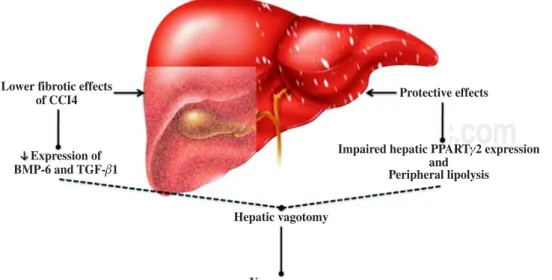
The discovery of leptin has made an important contri-bution to our understanding of the relationship between the nervous system and obesity, and therefore of the rela-tionship between the nervous system and NAFLD.16,17 In this respect, the study of Uno et al.18 demonstrated the di-rect role of the vagal afferent and efferent neural branch-es in the regulation of liver insulin sensitivity. They per-formed selective hepatic vagotomy on mice in which PPARγ2 was overexpressed using an adenovirus vector and administered a pharmacologic β-adrenergic blocker. They demonstrated that 1) β-adrenergic nerve function enhances lipolysis in adipose tissues of mice that overex-press PPARγ2, 2) the hepatic vagus nerve mediates the remote effects of hepatic PPARγ2 expression, 3) activa-tion of the afferent vagal nerve at the liver mediates the remote effects of hepatic PPARγ2 expression on periph-eral lipolysis, and 4) the effects of PPARγ2 on glucose metabolism are dependent on the afferent vagal and effer-ent sympathetic nerves. This hypothesis was extended not only to the insulin sensitivity pathway (Figure 1) but also to liver fibrosis, as confirmed by other studies in which both surgical and chemical methods of cholin-ergic denervation decreased expression of bone morpho-genetic protein-6 and transforming growth factor-β1 in
carbon tetrachloride-induced liver fibrosis of rats.19 This mode of action has also been described for other ele-ments of metabolic syndrome.20,21
Despite the relationship between insulin resistance and overaccumulation of fatty acids in the liver, the mechanisms involved in this phenomenon have not been completely described. Hyperinsulinemia caused by di-etary overindulgence results in 1) increased microsomal triglyceride transfer protein (MTP) expression, 2) in-creased apoB availability, and 3) inin-creased triglyceride levels caused by transcriptional induction of lipogenic enzymes. Most of the flux of fatty acids originates from adipose tissue under normal circumstances. However, during insulin resistance, de novo lipogenesis and lipo-protein uptake make significant contributions to the fatty acid pool, resulting in steatosis. During the insulin resis-tant state, the liver adapts by increasing MTP expression via nuclear localization of the forkhead box-containing protein O subfamily-1 (FoxO1) and inducing MTP tran-scription.22 This is concordant with the results of studies of humans, which show that FoxO1 expression differs ac-cording to liver histopathology: the level of FoxO1 is greater in patients with nonalcoholic steatohepatitis (NASH) than in NAFLD patients or subjects who do not have NAFLS. This may be related to increased levels of transcription NAFLD factors such as sirtuin-1. Moreover, FoxO1 mRNA levels are correlated with insulin resistance markers, NASH activity score, and the percentage of stea-totic hepatocytes but not with the severity of fibrosis.23
Lipid metabolism
The liver is responsible for the conversion of excess dietary carbohydrates to triglycerides (TGs) through de novo lipogenesis, a mechanism that is regulated by glu-cose and insulin.24 In this hormone-controlled pathway, the nuclear receptors are ligand-activated transcription
Figure 1. Regulation of liver physiology by the vagus ner-ve. Experimental evidence sug-gests that the vagus nerve plays a protective role against adipose tissue accumulation and chemi-cal liver damage. This effect is mediated by a limited fibrosis res-ponse and downregulated bone morphogenetic protein-6 (BMP-6) and transforming growth fac-tor (TGF-β1) expression. In no-nalcoholic fatty liver disease, this protective effect may in-volve peroxisome proliferator-activated receptors (PPAR) and peripheral lipolysis.
Lower fibrotic effects of CCI4
Expression of BMP-6 and TGF- 1β
Hepatic vagotomy
Vagus nerve
Protective effects
Impaired hepatic PPART 2 expression and
Peripheral lipolysis
www.medigraphic.com
factors that coordinate gene expression in response tohormonal and environmental signals. Members of the su-perfamily that forms heterodimers with the retinoid X re-ceptor (RXR) serve as sensors of dietary components.25 However, this pathway was mainly characterized on the basis of the effects of insulin on the enzymatic pathway involving the sterol regulatory element binding protein-1c, which only partially explains fatty acid synthesis.26 Although the nature of the glucose-signaling compound is not known, the identification of a glucose-responsive basic/helix-loop-helix/leucine zipper transcription factor named ChREBP (carbohydrate responsive element bind-ing protein) has shed light on the mechanism whereby glucose affects gene transcription. ChREBP is a large protein (864 amino acids) that contains several domains, including a nuclear localization signal near the N-termi-nus, polyproline domains, a basic loop-helix-leucine zip-per, and a leucine-zipper-like domain. Glucose activates ChREBP by regulating its entry from the cytosol into the nucleus, thereby promoting its binding to the carbohy-drate responsive element in the promoter regions of glyc-olytic and lipogenic genes.27 Glucose regulatory mecha-nisms also involve the liver X receptor (LXR), a nuclear receptor that coordinates hepatic lipid metabolism. Mitro et al.28 studied HepG2 cells transfected with expression vectors for LXR and RXR, and demonstrated that glu-cose and its derivatives induce LXR and RXR activity in cells grown in the absence of glucose. They also demon-strated that this is mainly a direct effect of glucose and its derivatives on LXR activity and not a result of genera-tion of an endogenous ligand or postranscripgenera-tional modi-fication. It is interesting to note that LXR binds to more than one site and may act in combination with another ligand. This effect on lipogenesis is mediated by in-creased expression of ChREBP, indicating that the
con-certed action of sterol regulatory element binding pro-tein-1c and ChREBP is necessary for normal fatty acid and triglyceride synthesis in vivo. Subsequent evidence has clarified some aspects of the regulatory effect of glu-cose on hepatic lipid metabolism. Using LXRα/β knock-out mice, Denechaud et al.29 demonstrated high carbohy-drate diet-mediated induction of ChREBP expression and translocation. Interestingly, when ChREBP was silenced by siRNA, lipogenic genes were not induced by high glu-cose concentrations in LXRα/β knockout hepatocytes, confirming the importance of ChREBP as a glucose sen-sor. This demonstrates the lack of involvement of LXR in the regulation of glucose-sensitive genes in the liver. A new element involved in this regulatory pathway is the transcription repressor, basic helix-loop-helix binding Protein 2, mRNA levels of which are elevated in the mus-cles of diabetic and insulin-resistant humans.30 Iizuka et al.31 showed that overexpression of basic helix-loop-he-lix binding Protein 2 in rat hepatocytes inhibits the ex-pression of glucose-induced lipogenic genes by inhibit-ing the bindinhibit-ing of ChREBP to the carbohydrate respon-sive element. Basic helix-loop-helix binding Protein 2 competes with ChREBP for binding to the carbohydrate-responsive element and suppresses the activities of fatty acid synthase and hepatic pyruvate kinase. This suggests that there is a negative feedback loop between ChREBP and basic helix-loop-helix binding Protein 2, but its sig-nificance is unclear at present (Figure 2).
Small heterodimer partner (SHP) is an unusual orphan nuclear receptor in that it lacks a DNA-binding domain. It is expressed in several tissues and has a relatively high level of expression in the liver, heart, and pancreas. SHP interacts with a number of other nuclear receptors, in-cluding estrogen receptor α, RXRα, hepatocyte nuclear factor-4α, liver receptor homolog-1, and estrogen recep-tor-related receptor γ, and inhibits their transcriptional activity. Nuclear receptors are key regulators of metabol-ic pathways. Studies with SHP knockout mmetabol-ice have con-firmed that SHP is involved in the homeostasis of bile acid, cholesterol, and TG. In humans, loss of SHP func-tion has been associated with mild obesity in Japanese subjects, but genetic variation in SHP activity is not com-monly associated with obesity in Caucasians in the Unit-ed Kingdom. SHP inhibits the function of a variety of nu-clear receptors that act as metabolic regulators. Previous studies of SHP–/– mice have identified functions for SHP in the negative regulation of bile acid production, lipo-genesis, and energy production. A recent study involv-ing a hepatic SHP overexpression model suggests that SHP plays an important role in the control of TG metabo-lism.32 Hartman et al.33 studied the role of SHP in liver lip-id metabolism using SHP, farnesolip-id X receptor (FXR), and low density lipoprotein (LDL) receptor knockout mice. In this study, levels of markers of hepatic inflam-mation, including serum ALT and aspartate aminotrans-ferase (AST), were elevated in the FXR–/– mice but not in
ChREB
ChREB
Chore Chore
BHLHB2 BHLHB2
LXR
LXR SREBP1cSREBP1c LipogenicLipogenicgenesgenes
PXR PXR
PPARγ PPARγ
Steatosis Steatosis
Glucose
Insulin
FFA CD36CD36
www.medigraphic.com
the SHP–/– mice, suggesting that the loss of SHP had anoffsetting beneficial activity on plasma lipids and hepat-ic inflammation. When fed a challenge diet containing cholic acid, the expression of several inflammatory mark-er genes, including vascular cell adhesion molecule, in-tracellular adhesion molecule-1, and TNFα, was in-creased in the livers of the SHP+/+ mice. The basal level of expression of these genes was not altered in the SHP–/– mice, and there was no induction of these genes in the SHP–/– mice by the diet containing cholic acid. In the SHP+/– mice, the diet containing cholic acid induced vas-cular cell adhesion molecule expression to the same mag-nitude as in the SHP+/+ mice. In contrast, induction of in-tracellular adhesion molecule-1 and TNFα was partially reduced in the SHP+/– mice. These results suggest that various inflammatory genes may differ in sensitivity to the loss of SHP. This thesis was also confirmed with a Western diet, which also increased hepatic expression of hepatic inflammatory marker genes, including vascular cell adhesion molecule, intracellular adhesion molecule-1, and TNFα in the LDL receptor–/– mice. Again, the loss of SHP expression in the LDLR–/–SHP–/– mice resulted in a near complete block in the induction of these genes. This protective effect was confirmed in another animal model, the leptin-deficient model, in which it was ob-served that loss of SHP reduces brown fat mass without af-fecting obesity. Leptin-deficient animals that lacked SHP also had improved insulin sensitivity. Another interesting finding is the effect of SHP on MTP; basal MTP protein levels were increased in both SHP–/– and OB–/–/SHP–/– liv-ers compared with SHP +/+ or OB–/– controls. By introduc-ing mutations of the liver receptor homolog-1, the authors demonstrated that this receptor binds to the MTP pro-moter and increases MTP expression in hepatocytes and that this transactivation is repressed by SHP.
As previously mentioned, activation of orphan nucle-ar receptors, including LXR, PPAR, and the pregnane X receptor (PXR), has been associated with hepatic steato-sis. PPARγ2 induces lipid accumulation in hepatocytes. One of the lipogenic genes induced by PPAR is Cd36, a membrane receptor capable of taking modified forms of LDL and fatty acids up from the circulation. Moreover, LXR has been reported to activate PPARγ2 in the liver. Using LXR transgenic, PXR transgenic, and Cd36 null mice, Zhou et al.34 investigated the role of CD36 as a key step in the regulation of LXR, PXR, and PPARγ in hepat-ic steatosis. They observed that in mhepat-ice transfected with LXR and wild-type mice treated with an LXR agonist, there was a significantly increased expression of CD36 (a phenomenon conserved in primary human hepato-cytes), and this was related to the activation of endoge-nous CD36 by the LXR agonist in primary human hepato-cytes (Figure 2). To demonstrate that CD36 is an essential factor in the promotion of steatosis via LXR, Cd36 null and wild-type mice were treated with an LXR agonist. Cd36 null mice had greatly attenuated LXR-agonist-induced
hepatic lipid accumulation, which is concordant with the observation that CD36 null mice failed to accumulate in-trahepatic TG.
Finally, a new element connecting hepatic lipid me-tabolism, xenobiotic meme-tabolism, and fatty liver diseas-es is ddiseas-escribed. To protect the body against xenobiotics and the buildup of toxic endogenous lipids, two nucle-ar receptors function in a metabolic cascade to regulate detoxification and elimination. The constitutive an-drostane receptor (CAR) mediates the response to a nar-row range of phenobarbital-like inducers. Although CAR was initially proposed to be constitutively active, ligands with negative (androstanes) and positive (phe-nobarbital) effects are present. CAR binds to and acti-vates the CYP2B promoter in response to phenobarbit-al-like molecules, the pesticide 1,4-bis[2-(3,5-dichlo-rpyridyloxyl)]- benzene (TCPOBOP), certain androgens, and the muscle relaxant drug, zoxazolamine. Genetic disruption of the mouse CAR gene abolishes induced CYP2B expression, resulting in increased serum levels of nonmetabolized products,35 and also acts as a het-erodimer with the RXR. This suggests that this nuclear receptor plays a critical role in the pathogenesis of NASH because of its ability to regulate genes. Yamaza-ki et al.36 studied CAR –/– mice fed a methionine- and choline-deficient diet (MCDD), and observed higher levels of ALT in CAR+/+ mice and CAR+/+ mice that had been treated with an agonist of CAR than in CAR–/– mice. Consistent with serum ALT levels, inflammatory cell infiltration and hepatocyte necrosis in the CAR+/+ mice was more severe than in the CAR–/– mice. The in-flammation score for the CAR –/– mice was lower than that for the CAR+/+ mice. Both the CAR+/+ and CAR–/– mice fed the MCDD had marked steatosis compared with the mice fed the control diet, and this effect was in-dependent of the hepatocyte fat overload. Thus, this is a good model of the second step in the two hits theory. All these deleterious effects are associated with an ele-vation in lipid peroxidation and the induction of cyto-chrome P450 and inducible nitric oxide synthase.
www.medigraphic.com
proliferation results in enlargement of small intestinalvilli. This may increase the capacity for fat absorption.37
Immune response
The role of the immune response in chronic liver dis-eases, including NAFLD, has been studied in several ani-mal-based experiments and human trials, which have demonstrated the importance of several cytokines in the inflammatory component of NAFLD. However, the regu-latory process associated with this immune-mediated damage is not completely understood. New information on the roles of the signal transducers and activators of transcription (Stats) is important for understanding the re-lationship between obesity and liver diseases. There are seven Stat transcription factors (Stat1, Stat2, Stat3, Stat4, Stat5a, Stat5b, and Stat6), all with six shared domains of homology. This characteristic differs from that of the four Janus tyrosine kinases (Jaks) (Jak1, Jak2, Jak3, and Tyk2), which have seven Jak homological (JH) domains and play a role in receptor binding activity. Binding of cytokines to cytokine receptors attracts and activates one or more of the Jaks, which are tyrosine phosphorylated themselves, and phosphorylate tyrosines on the cytokine receptor sites, thereby creating active docking sites for Stats.38 This pathway is apparently associated with the effects of leptin. The involvement of leptin in NAFLD has been clearly described; the main profile of NAFLD patients is hyperleptinemia with resistance to the physio-logic effects of leptin,17,39,40 but this resistance profile has not been clearly described. Using rats fed a fructose- vs. glucose-supplemented diet, Roglans et al.41 showed that fructose-fed rats were hypertriglyceridemic and hyperlep-tinemic and had TG accumulation in liver tissue. This was associated with a marked reduction in the activity of the hepatic β-fatty acid oxidation system because of de-creased PPAR-α transcriptional activity, and conse-quently decreased activation of nuclear factor (NF)-κB. Fructose-fed rats showed impairment of the leptin trans-duction signal through the STAT3 pathway. Leptin ad-ministration to rodents has been shown to increase liver fatty acid oxidation and to decrease hepatic steatosis by activating the PPAR-α system, and to diminish the ex-pression of several lipogenic genes. This confirms the hy-pothesis that the activation of STAT3 transcriptional ac-tivity is necessary for leptin’s effects on energy homeo-stasis,42 and this activity may be involved in the action of other cytokines such as interleukin 6.43 These data in-dicate a clear role for leptin in STAT3 activation, partic-ularly as data from leptin-deficient animal models show that STAT3 is overexpressed in these animals.44 More-over, these STAT signaling effects are observed not only in the liver but also in the central nervous system, as bas-al hypothbas-alamic phosphorylated STAT3 levels are sig-nificantly higher in high-fructose-fed animals than in controls, whereas leptin receptor protein levels were
simi-lar between the control and fructose groups, which affect-ed weight gain, adiposity, and anorexia.45 This informa-tion has now been applied to clinical research. Gene vari-ants and haplotypes involved in linkage-disequilibrium blockade of STAT3 have been shown to be involved in NAFLD. The markers, rs6503695 and rs9891119, have been shown to be associated with NAFLD in that rs6503695-T and rs9891119-A allele carriers are 2.3- and 2.5-fold, respectively, more likely to have NAFLD than noncarriers. Additionally, these gene variants are associ-ated with the clinical and histological features of NAFLD.46
www.medigraphic.com
In contrast, the extent of centrizonal fibrosis wasmarked-ly reduced in livers of TNFRDKO mice. The livers of wild-type mice fed the MCDD also exhibited increased staining for α-smooth muscle actin, TNFR1 and TNFR2 deficiency, but reduced fibrotic damage. The adminis-tration of the MCDD augmented the number of large macrophage clusters preferentially distributed in peri-central regions, and TNFR1/TNFR2 deficiency reduced this recruitment. The reduction in recruitment may be explained by increased hepatic CD14 expression (the number of CD14, a functional lipopolysaccharide re-ceptor, is enhanced on Kupffer cells after activation by multiple stimuli such as lipopolysaccharide and TNFα) and lower expression of hepatic intracellular adhesion molecule 1 and vascular cell adhesion molecule 1 in knockout mice.48
Another pathway associated with the immune re-sponse in NASH that has not been investigated in de-tail involves Chitotriosidase (Chit), an enzyme that belongs to the family of glycosylhydrolases. The CHIT gene is localized on chromosome 1q31-q32,10 and it consists of 12 exons and spans about 20 kb of genom-ic DNA. Tissue macrophages largely secrete newly synthesized 50 kDa Chit, and a second step cleaves the enzyme to produce the active form of Chit (39 kDa). In several diseases, pathological tissue macrophages ex-press Chit on a massive scale. In humans, levels of Chit expression are significantly higher in NASH pa-tients than NAFLD papa-tients or control papa-tients, and there is a positive correlation between CHIT expres-sion and the degree of NASH. Plasma levels of Chit ac-tivity are higher in NASH patients than in NAFLD pa-tients. The expression of TNFα correlates with Chit in-duction in NASH and steatosis patients, whereas in control subjects, there is no correlation between CHIT and TNFα mRNA levels.49
Oxidative stress
Because of the key role that mitochondria play in fatty acid metabolism, these structures are involved in the pathogenesis of NAFLD. When animals are fed a high-fat diet, the state 3 respiratory capacity and respi-ratory control ratio values increase. The respirespi-ratory quotient and the nonprotein respiratory quotient are al-tered, indicating that there is a shift in oxidation of nu-trients. However, these changes appear to be affected by circadian rhythm and age in rats.50 The role of oxidative stress and mitochondrial dysfunction has been de-scribed widely, but not all processes involved have been clarified, particularly the role of oxidative stress in diseases associated with obesity. In mice fed an HFD, increased production of reactive oxygen species (ROS) precedes the elevation of TNFα and free fatty acids in the plasma and liver. Gene expression levels of various metabolic pathways increase after 6 weeks on the HFD.
In particular, pathways for sterol regulatory element binding protein 1c-related fatty acid synthesis and PPA-Rα are upregulated in the livers of mice fed an HFD. In contrast, the pathway for fatty acid synthesis is down-regulated in adipose tissue. In contrast to the pathways involving fatty acid metabolism, oxidative stress path-ways are coordinately upregulated in both the liver and adipose tissue, but the mRNA expression level of TNFα in the liver and adipose tissue of mice fed an HFD for 6 weeks is similar to that of control mice. Furthermore, the plasma level of TNFα was below the detection limit of the enzyme-linked immunosorbent assay in both groups. These data suggest that the production of ROS may be an initial key event that triggers HFD-induced insulin resistance.51 These modifications are accompa-nied by functional changes. In animals fed an MCDD, the state 3 respiratory rate after the addition of ADP was increased by 45% by either glutamate/malate or succi-nate/malate. Either of the following two mechanisms may be involved in this decrease in mitochondrial effi-ciency: a change in the proton conductance of the inner mitochondrial membrane, i.e., a proton leak, or a de-crease in the efficiency of coupling between electron and proton flux through the respiratory chain, i.e., redox slipping.52
www.medigraphic.com
ESTE DOCUMENTO ES ELABORADO POR MEDI-GRAPHIC
progression of NASH causes a proton leak to avoid a pro-gressive increase in the rate of mitochondrial H2O2 pro-duction.53
Apoptosis
Apoptosis is a mode of cell death used by multicellu-lar organisms to dispose of unwanted cells under a diver-sity of conditions, including NAFLD. In subjects with NASH, the number of TUNEL-positive cells is greater than that of controls.54 The importance of this process is illustrated by clinical trials that have shown that the sub-strates of proteases, particularly cytokeratin-18 (CK-18), are very good markers of NASH. In patients with biopsy-proven NASH, plasma levels of CK-18 fragments ranged from 105.5 to 2,306.4 U/L. These levels were significant-ly higher than those observed in 35 healthy controls (me-dian 234 U/L).55 Similar results have been reported for tissue polypeptide-specific antigen (TPS), a serological mirror of keratin18, and it has been shown that its accura-cy in differentiating between NASH and simple fatty liv-er is bettliv-er than any othliv-er parametliv-er. A TPS value of 88 ng/mL among patients with underlying NAFLD was asso-ciated with a high probability of NASH (sensitivity and specificity, 92 and 96%, respectively).56
This clinical evidence indicates that this pathway is relevant to the pathophysiology of NASH. Apoptosis is associated with oxidative stress. In liver cells cultured in enriched medium with free fatty acids, the unfolded pro-tein response (UPR) is initiated by three endoplasmic reticulum (ER) transmembrane proteins, inositol-requir-ing ER-to-nucleus signalinositol-requir-ing protein 1a (IRE1a), RNA-de-pendent protein kinase-like ER eukaryotic initiation fac-tor-2a kinase (PERK), and activating transcription factor-6 (ATFfactor-6). Activation of IRE1 promotes the splicing of X-box-binding protein-1 (XBP1) mRNA and subsequent transcription of molecular chaperones and genes in-volved in ER-associated degradation. Increased expres-sion of GADD34, a member of the growth arrest and DNA damage family of proteins, is involved in the dephos-phorylation of eIF2α, and therefore in reversal of transla-tional attenuation. Failure of the UPR to reestablish ER homeostasis may result in apoptosis via mitochondrial-independent and -dependent mechanisms.57 The precise mechanism of apoptosis in NASH has been partially de-scribed. Overexpression and subsequent translocation of the proapoptotic protein Bax induces cytochrome c re-lease from mitochondria and, consequently, caspase-3 ac-tivation. Caspase-3 activation coincides with a 2.3-fold upregulation of Bax in NASH patients. In hepatocytes, apoptosis is usually initiated by interactions between plasma membrane receptors such as TNF-R1 and Fas and their ligands, TNFα and the Fas ligand, respectively. These signals are combined in a final common apoptotic pathway that targets mitochondria, promoting cyto-chrome c release and activation of a caspase cascade.
Liver injury is often linked with the induction of protec-tive factors such as antiapoptotic members of the Bcl-2 protein-family. Bcl-2 is notably upregulated in NASH (an increase of 112-fold) and is almost absent in control specimens. Despite upregulation of Bcl-2, apoptosis is increased in steatohepatitis, which confirms that the pro-tective response is insufficient under these conditions. In contrast to Bcl-2, no significant changes were found in Bcl-xL expression, suggesting that this protein is not im-plicated in a possible protective liver pathway against steatohepatitis.54 New advances have been made since the initial description of the role of Fas in NASH, in which upregulation of Fas contributes to hepatocyte apo-ptosis. Zou et al.58 analyzed pathways involved in Fas-re-lated damage. They detected the Met-Fas complex in the majority of normal human samples but not in simple stea-totic liver samples. Fas was also dissociated from Met in almost all NASH cases. Fas abundance was similar in control and diseased livers, whereas Met was significant-ly less abundant in fatty livers and NASH livers than in normal control livers. The dissociation of Met from Fas showed that Fas and Met were colocalized in normal but not in fatty hepatocytes. Hepatocyte growth factor (HGF) expression was greater in fatty liver tissue than in normal liver tissue, suggesting that the vulnerability of fatty hepatocytes to apoptosis is not caused by a lack of Met activation by its ligand, HGF. To confirm that fatty acid administration induces dissociation of Met from Fas and the marked stimulation of FasL expression, they used mutant and functional peptides from Met YLGA, a pep-tide that binds specifically to Fas. The functional peppep-tide reduced the apoptotic population induced by FasL from 31.12 to 6.17%, whereas the mutant peptide had no ef-fect. When this functional peptide was administered to ob/ob mice, the activation of caspase-8 and caspase-3 was significantly reduced, and this was accompanied by a significant reduction in hepatocyte apoptosis and liver damage (reduced hepatic inflammation and serum ALT level), lower hepatic caspase-3 activity, and a lower num-ber of TUNEL-positive hepatocytes. These changes were associated with a 300% reduction in collagen-1 mRNA expression.
References
1. Méndez-Sánchez N, Chávez-Tapia NC, Zamora-Valdés D, Medina-Santillán R, Uribe M. Hepatobiliary diseases and insulin resistance. Curr Med Chem 2007; 14: 1988-1999.
2. Abdelmalek MF, Diehl AM. Nonalcoholic fatty liver disease as a complication of insulin resistance. Med Clin North Am 2007; 91: 1125-1149, ix.
3. Utzschneider KM, Kahn SE. Review: The role of insulin resis-tance in nonalcoholic fatty liver disease. J Clin Endocrinol Metab
2006; 91: 4753-4761.
4. Crouch E, Persson A, Chang D, Heuser J. Molecular structure of pulmonary surfactant protein D (SP-D). J Biol Chem 1994; 269: 17311-17319.
www.medigraphic.com
collagen-like region of rat SP-A play critical roles in interactions with alveolar type II cells and surfactant lipids. J Biol Chem
1997; 272: 27971-27979.
6. Wong GW, Wang J, Hug C, Tsao TS, Lodish HF. A family of Acrp30/adiponectin structural and functional paralogs. Proc Natl Acad Sci USA 2004; 101: 10302-10307.
7. Shapiro L, Scherer PE. The crystal structure of a complement-1q family protein suggests an evolutionary link to tumor necrosis factor. Curr Biol 1998; 8: 335-338.
8. Yokota T, Oritani K, Takahashi I, Ishikawa J, Matsuyama A, Ouchi N, Kihara S, et al. Adiponectin, a new member of the family of soluble defense collagens, negatively regulates the growth of myelomonocytic progenitors and the functions of macrophages. Blood 2000; 96: 1723-1732.
9. Guerre-Millo M. Adiponectin: an update. Diabetes Metab 2008; 34: 12-18.
10. Méndez-Sánchez N, Chávez-Tapia NC, Zamora-Valdés D, Uribe M. Adiponectin, structure, function and pathophysiological im-plications in non-alcoholic fatty liver disease. Mini Rev Med Chem
2006; 6: 651-656.
11. Pajvani UB, Du X, Combs TP, Berg AH, Rajala MW, Schulthess T, Engel J, et al. Structure-function studies of the adipocyte-se-creted hormone Acrp30/adiponectin. Implications for metabolic regulation and bioactivity. J Biol Chem 2003; 278: 9073-9085. 12. Hara K, Horikoshi M, Yamauchi T, Yago H, Miyazaki O, Ebinuma H, Imai Y, et al. Measurement of the high-molecular weight form of adiponectin in plasma is useful for the prediction of insulin resistance and metabolic syndrome. Diabetes Care 2006; 29: 1357-1362.
13. Liu Y, Retnakaran R, Hanley A, Tungtrongchitr R, Shaw C, Sweeney G. Total and high molecular weight but not trimeric or hexameric forms of adiponectin correlate with markers of the metabolic syndrome and liver injury in Thai subjects. J Clin Endocrinol Metab 2007; 92: 4313-4318.
14. Passoja K, Rautavuoma K, Ala-Kokko L, Kosonen T, Kivirikko KI. Cloning and characterization of a third human lysyl hydroxy-lase isoform. Proc Natl Acad Sci USA 1998; 95: 10482-10486. 15. Wang Y, Lam KS, Chan L, Chan KW, Lam JB, Lam MC, Hoo
RC, et al. Post-translational modifications of the four conserved lysine residues within the collagenous domain of adiponectin are required for the formation of its high molecular weight oligo-meric complex. J Biol Chem 2006; 281: 16391-16400. 16. Méndez-Sánchez N, Bermejo-Martínez LB, Vinals Y,
Chávez-Tapia NC, Vander Graff I, Ponciano-Rodríguez G, Ramos MH, et al. Serum leptin levels and insulin resistance are associated with gallstone disease in overweight subjects. World J Gastroenterol
2005; 11: 6182-6187.
17. Méndez-Sánchez N, Ponciano-Rodríguez G, Chávez-Tapia NC, Uribe M. Leptine participation in the development of liver ste-atosis and biliar lithiasis. Gac Med Mex 2005; 141: 495-499. 18. Uno K, Katagiri H, Yamada T, Ishigaki Y, Ogihara T, Imai J,
Hasegawa Y, et al. Neuronal pathway from the liver modulates energy expenditure and systemic insulin sensitivity. Science 2006; 312: 1656-1659.
19. Lam HB, Yeh CH, Cheng KC, Hsu CT, Cheng JT. Effect of cho-linergic denervation on hepatic fibrosis induced by carbon tetra-chloride in rats. Neurosci Lett 2008; 438: 90-95.
20. Bernal-Mizrachi C, Xiaozhong L, Yin L, Knutsen RH, Howard MJ, Arends JJ, Desantis P, et al. An afferent vagal nerve pathway links hepatic PPARalpha activation to glucocorticoid-induced insulin resistance and hypertension. Cell Metab 2007; 5: 91-102. 21. Warne JP, Foster MT, Horneman HF, Pecoraro NC, de Jong HK, Ginsberg AB, Akana SF, et al. The gastroduodenal branch of the common hepatic vagus regulates voluntary lard intake, fat depo-sition, and plasma metabolites in streptozotocin-diabetic rats. Am J Physiol Endocrinol Metab 2008; 294: E190-200.
22. Sparks JD, Sparks CE. Overindulgence and metabolic syndrome: is FoxO1 a missing link? J Clin Invest 2008; 118: 2012-2015. 23. Valenti L, Rametta R, Dongiovanni P, Maggioni M, Fracanzani
AL, Zappa M, Lattuada E, et al. Increased expression and activity
of the transcription factor FOXO1 in nonalcoholic steatohepatitis.
Diabetes 2008; 57: 1355-1362.
24. Iizuka K, Horikawa Y. ChREBP: a glucose-activated transcrip-tion factor involved in the development of metabolic syndrome.
Endocr J 2008; 55: 617-624.
25. Shulman AI, Mangelsdorf DJ. Retinoid x receptor heterodimers in the metabolic syndrome. N Engl J Med 2005; 353: 604-615. 26. Foufelle F, Ferre P. New perspectives in the regulation of hepatic glycolytic and lipogenic genes by insulin and glucose: a role for the transcription factor sterol regulatory element binding pro-tein-1c. Biochem J 2002; 366: 377-391.
27. Denechaud PD, Dentin R, Girard J, Postic C. Role of ChREBP in hepatic steatosis and insulin resistance. FEBS Lett 2008; 582: 68-73.
28. Mitro N, Mak PA, Vargas L, Godio C, Hampton E, Molteni V, Kreusch A, et al. The nuclear receptor LXR is a glucose sensor.
Nature 2007; 445: 219-223.
29. Denechaud PD, Bossard P, Lobaccaro JM, Millatt L, Staels B, Girard J, Postic C. ChREBP, but not LXRs, is required for the induction of glucose-regulated genes in mouse liver. J Clin Invest
2008; 118: 956-964.
3 0 . Coletta DK, Balas B, Chávez AO, Baig M, Abdul-Ghani M, Kashyap SR, Folli F, et al. Effect of acute physiological hyperinsulinemia on gene expression in human skeletal muscle in vivo. Am J Physiol Endocrinol Metab 2008; 294: E 9 1 0 - 9 1 7 .
31. Iizuka K, Horikawa Y. Regulation of lipogenesis via BHLHB2/ DEC1 and ChREBP feedback looping. Biochem Biophys Res Commun 2008; 374: 95-100.
32. Wang L, Huang J, Saha P, Kulkarni RN, Hu M, Kim Y, Park K, et al. Orphan receptor small heterodimer partner is an important mediator of glucose homeostasis. Mol Endocrinol 2006; 20: 2671-2681.
33. Hartman HB, Lai K, Evans MJ. Loss of small heterodimer partner (SHP) expression in the liver protects against dyslipidemia. J Lipid Res 2008.
34. Zhou J, Febbraio M, Wada T, Zhai Y, Kuruba R, He J, Lee JH, et al. Hepatic fatty acid transporter Cd36 is a common target of LXR, PXR, and PPARgamma in promoting steatosis. Gastroen-terology 2008; 134: 556-567.
35. Chawla A, Repa JJ, Evans RM, Mangelsdorf DJ. Nuclear recep-tors and lipid physiology: opening the X-files. Science 2001; 294: 1866-1870.
36. Yamazaki Y, Kakizaki S, Horiguchi N, Sohara N, Sato K, Takagi H, Mori M, et al. The role of the nuclear receptor constitutive androstane receptor in the pathogenesis of non-alcoholic steatohepatitis. Gut 2007; 56: 565-574.
37. de Wit NJ, Bosch-Vermeulen H, de Groot PJ, Hooiveld GJ, Bromhaar MM, Jansen J, Muller M, et al. The role of the small intestine in the development of dietary fat-induced obesity and insulin resistance in C57BL/6J mice. BMC Med Genomics 2008; 1: 14.
38. Stepkowski SM, Chen W, Ross JA, Nagy ZS, Kirken RA. STAT3: an important regulator of multiple cytokine functions. Trans-plantation 2008; 85: 1372-1377.
39. Méndez-Sánchez N, Chávez-Tapia NC, Medina-Santillán R, Villa AR, Sánchez-Lara K, Ponciano-Rodríguez G, Ramos MH, et al. The efficacy of adipokines and indices of metabolic syndrome as predictors of severe obesity-related hepatic steatosis. Dig Dis Sci
2006; 51: 1716-1722.
40. Canbakan B, Tahan V, Balci H, Hatemi I, Erer B, Ozbay G, Sut N, et al. Leptin in nonalcoholic fatty liver disease. Ann Hepatol
2008; 7: 249-254.
41. Roglans N, Vila L, Farre M, Alegret M, Sánchez RM, Vázquez-Carrera M, Laguna JC. Impairment of hepatic Stat-3 activation and reduction of PPARalpha activity in fructose-fed rats.
Hepatology 2007; 45: 778-788.
www.medigraphic.com
43. Hong F, Radaeva S, Pan HN, Tian Z, Veech R, Gao B. Interleukin 6 alleviates hepatic steatosis and ischemia/ reperfusion injury in mice with fatty liver disease. Hepatology
2004; 40: 933-941.
44. Torbenson M, Yang SQ, Liu HZ, Huang J, Gage W, Diehl AM. STAT-3 overexpression and p21 upregulation accom-pany impaired regeneration of fatty livers. Am J Pathol 2002; 161: 155-161.
45. Shapiro A, Mu W, Roncal CA, Cheng KY, Johnson RJ, Scarpace PJ. Fructose-Induced Leptin Resistance Exacerbates Weight Gain in Response to Subsequent High Fat Feeding. Am J Physiol Regul Integr Comp Physiol 2008.
46. Sookoian S, Castano G, Gianotti TF, Gemma C, Rosselli MS, Pirola CJ. Genetic variants in STAT3 are associated with nonalco-holic fatty liver disease. Cytokine 2008; 44: 201-206.
47. Rivera CA, Adegboyega P, van Rooijen N, Tagalicud A, Allman M, Wallace M. Toll-like receptor-4 signaling and Kupffer cells play pivotal roles in the pathogenesis of non-alcoholic steatohepatitis. J Hepatol 2007; 47: 571-579.
48. Tomita K, Tamiya G, Ando S, Ohsumi K, Chiyo T, Mizutani A, Kitamura N, et al. Tumour necrosis factor alpha signalling through activation of Kupffer cells plays an essential role in liver fibrosis of non-alcoholic steatohepatitis in mice. Gut 2006; 55: 415-424.
49. Malaguarnera L, Rosa MD, Zambito AM, dell’Ombra N, Marco RD, Malaguarnera M. Potential role of chitotriosidase gene in nonalcoholic fatty liver disease evolution. Am J Gastroenterol
2006; 101: 2060-2069.
50. Raffaella C, Francesca B, Italia F, Marina P, Giovanna L, Susanna I. Alterations in hepatic mitochondrial compartment in a model of obesity and insulin resistance. Obesity (Silver Spring) 2008; 16: 958-964.
51. Matsuzawa-Nagata N, Takamura T, Ando H, Nakamura S, Kurita S, Misu H, Ota T, et al. Increased oxidative stress precedes the onset of high-fat diet-induced insulin resistance and obesity.
Metabolism 2008; 57: 1071-1077.
52. Romestaing C, Piquet MA, Letexier D, Rey B, Mourier A, Servais S, Belouze M, et al. Mitochondrial adaptations to steatohepatitis induced by a methionine- and choline-deficient diet. Am J Physiol Endocrinol Metab 2008; 294: E110-119.
53. Serviddio G, Bellanti F, Tamborra R, Rollo T, Capitanio N, Romano AD, Sastre J, et al. Uncoupling prote2 (UCP2) in-duces mitochondrial proton leak and increases susceptibility of non-alcoholic steatohepatitis (NASH) liver to ischaemia-reperfusion injury. Gut 2008; 57: 957-965.
54. Ramalho RM, Cortez-Pinto H, Castro RE, Sola S, Costa A, Moura MC, Camilo ME, et al. Apoptosis and Bcl-2 expression in the livers of patients with steatohepatitis. Eur J Gastroenterol Hepatol
2006; 18: 21-29.
55. Wieckowska A, Zein NN, Yerian LM, Lopez AR, McCullough AJ, Feldstein AE. In vivo assessment of liver cell apoptosis as a novel biomarker of disease severity in nonalcoholic fatty liver disease. Hepatology 2006; 44: 27-33.
56. Tarantino G, Conca P, Coppola A, Vecchione R, Di Minno G. Serum concentrations of the tissue polypeptide specific antigen in patients suffering from non-alcoholic steatohepatitis. Eur J Clin Invest 2007; 37: 48-53.
57. Wei Y, Wang D, Pagliassotti MJ. Saturated fatty acid-mediated endoplasmic reticulum stress and apoptosis are augmented by trans-10, cis-12-conjugated linoleic acid in liver cells. Mol Cell Biochem 2007; 303: 105-113.