
Hair cortisol in cattle as a measure of long-term adrenal activity
209
0
0
Texto completo
(2) HAIR CORTISOL IN CATTLE AS A MEASURE OF LONG-TERM ADRENAL ACTIVITY. DISSERTATION TO OBTAIN THE DEGREE OF DOCTORBY:. Oriol Talló Parra. UNDER THE DIRECTION OF:. Dr. Manel López Béjar and Dr. Xavier Manteca Vilanova. PRESENTED TO THE DEPARTMENT OF ANIMAL AND FOOD SCIENCE, VETERINARY FACULTY, UNIVERSITAT AUTÒNOMA DE BARCELONA. Bellaterra, 2016.
(3)
(4) Manel López Béjar, professor titular d’universitat del Departament de Sanitat i Anatomia Animals de la Universitat Autònoma de Barcelona, i Xavier Manteca Vilanova, catedràtic del Departament de Ciència Animal i dels Aliments de la Universitat Autònoma de Barcelona,. Certifiquen:. Que la memòria titulada “Hair cortisol in cattle as a measure of long-term adrenal activity”, presentada per Oriol Talló Parra amb la finalitat d’optar al grau de Doctor en Veterinària, ha estat realitzada sota la seva direcció i, considerant-la acabada, autoritzen la seva presentació perquè sigui jutjada per la comissió corresponent.. I perquè consti als efectes oportuns, signen la present a Bellaterra, 9 de setembre de 2016.. Dr. Manel López Béjar. Dr. Xavier Manteca Vilanova. Oriol Talló Parra (doctorand).
(5) Per a la realització de la tesi l’autor va gaudir d’una beca pre-doctoral FI-DGR concedida per l’Agència de Gestió d’Ajuts Universitaris i de Recerca de la Generalitat de Catalunya (Ref. 2013FI_B 01118)..
(6) Als protagonistes d’aquesta història: totes les vaques i vedells que han aguantat les nostres actuacions sense poder triar-ho ni saber el perquè..
(7) Agraïments Sempre he pensat que la ciència ens diu com som i l’art com ho portem. Després de passar la muntanya russa emocional que és el procés de fer una tesi doctoral, crec que els agraïments són una mica com l'art, i per això son tant importants. En primer lloc vull parlar dels meus directors: el Manel i el Xavi. Quan fa cinc anys vaig decidir que volia dedicar-me a això, vaig preparar el meu millor estil i vaig escriure dos emails ( que he rellegit i són horribles) un al Xavi i l’altre al Manel. Els explicava que em volia dedicar a la docència i a la recerca i que ells havien estat els meus referents. M’agradava el que feien i com ho feien. Vaig creuar els dits desitjant poder col·laborar d’alguna manera amb algú d’ells i quan els vaig desencreuar, ells ja m'havien ofert una cosa molt millor: treballar conjuntament amb els dos! Un màster i un doctorat després, segueixo amb l'esperança de poder seguir tenint-los a prop, col·laborant i aprenent-ne. Manel, gràcies per obrir-me la porta més difícil, la primera. Per lluitar per mi i creure-hi. Per fer-me sentir important. Per ensenyar-me però alhora escoltar-me. Per serhi sempre. Amb tu i aquella beca de col·laboració va començar tota aquesta aventura. Xavi, gràcies per tot el teu suport i atenció. Per la claredat i la senzillesa. Per haver-ho fet tot fàcil. Amb una reunió al bar ja m’estructuraves el cap. Tot el que he après de tu i tinc la sensació d’haver rascat només la punta de l’iceberg. Si els directors son les veles del vaixell amb el qual he navegat en aquest impredictible oceà que és el doctorat, els companys i les companyes en són, sense cap mena de dubte, les provisions: impossible sobreviure’n sense. A les amigues del despatx: heu fet d’aquest oceà un divertidíssim aquaparc. Gràcies per haver convertit tots els dilluns, dimarts, dimecres i dijous en divendres. Sou absolutament magnífiques! Annaïs, indiecita fea de la guarda (no l’estic insultant, no patiu, coses nostres), sapito imprescindible en el meu dia a dia. La teva amistat ha traspassat ELISA’s, mostrejos, articles i medalles fucking genious a les millors idees. Tant, que has acabat sent clau en els moments personals més importants de la meva vida. Gràcies i benvinguda, d’aquí no te’n vas. Laura, ets tan única que porto 5 minuts intentant trobar un símil graciós i cap et supera. (Ah, ara) Ets tan genial que quan la rutina té malsons i mira a sota el llit, et busca a tu. Brindarem amb Kinderbuenos per cada au o ecosistema que salvis i per cada soroll que puguis imitar correctament... mentre intentem solventar el dilema ètic que portin oli de palma. Gràcies! Maria, has estat la meva constant en aquest viatge. Una barreja de germana gran i petita. Mira’t, ara: doctora i a punt de parir (substituir per /recent parida si la cosa s’avança!). Gràcies! Meritxell, intento pensar en una forma graciosa de definir el teu somriure tímid i la teva presència agradable però no puc deixar de pensar en aquell menú vegetarià que ens vas cuinar l’altre dia... boníhim! Gràcies! També voldria donar les gràcies al Carlos, ¡creo que eres mi amigo másmayor! (el Sergi està així així) Gracias por tu honesta amistad y compañía. Por el brutal conocimiento de tu trabajo y por estar siempre dispuesto a compartirlo. Sólo por aguantarnos ya deberían darte un honoris causa... I a l’Encarna: Gràcies! Has arribat com un miracle i el grup ha fet un salt qualitatiu enorme. Com una espècie de Mary Poppins científica... però sense marxar, vale? Tampoc voldria oblidar-me de totes les persones que han passat pel grup: doctorands, estudiants de màster, de TFG, investigadors realitzant estàncies... tots heu format part d’aquesta etapa. No poso tots els noms però us penso! Gràcies!. VI.
(8) Durant la realització del doctorat, he tingut el privilegi de treballar amb dues investigadores (i persones) excepcionals: Maria Devant i Elena Albanell. Maria, moltíssimes gràcies per acollir-me com una espècie de fillol científic i fer-me sentir un més del grup. Gràcies per haver posat a la meva disposició tot el teu talent. De tu n’he après una barbaritat. I la de tallaos que ens queden! Elena, mil gracias por tus ganas, tu dedicación y tu atención. ¡Yo de mayor quiero ser como Elena Albanell! Agrair també a l’Eva Mainau, la Deborah Temple, la Lorena Castillejos i a la Bruna Quintana la seva ajuda en la tesi sempre que l’he necessitat així com a la resta de companys i companyes de l’SNiBA, de la unitat de remugants de l’IRTA, al personal de la granja el Nial així com al Grup Alimentari Guissona. Gràcies! A la Carme i a tots els professors d’anatomia amb qui he compartit pràctiques: gràcies per haver-me ensenyat a ensenyar! Tampoc podria oblidar-me del Marçal (amb tu sobren les paraules, ets l’amic), el Sergi (gran estadista i millor persona. Si ens veiem i no parem de riure, perquè deixar de veure’ns?), el Nico (un mestre de la vida) i la resta de companys i companyes del màster: Imma, Gemma, Cris, Bryan... a tots, gràcies per haver format part d’aquesta magnífica etapa. Podria seguir i anomenar al Miki, la Montse, l’Andreu, l’Albert o la Marina, però això es faria etern. Intentaré evitar-ho agraint a totes les persones que han fet del meu dia a dia durant aquest doctorat, una etapa meravellosa: becaris de la facultat (ànims!), investigadors i investigadores que han destinat un moment o molts a resoldre’m algun dubte, personal del bar (i el seu cafè) i PAS de la facultat... a tots, gràcies! Ah! Si heu flipat amb la portada i la maquetació de tant bé que estan, no és mèrit meu sinó de l’Esther, que sent més passió per la ciència que molts científics! No surten com a coautors a cap article, però en la meva feina s’hi han de veure i sentir reflectits, encara que sigui mirant-me els cognoms: papa i mama, tot el que sóc, he fet i aconseguit és gràcies a vosaltres. El doctorat, també. Gràcies! Laia, gràcies per exercir de germana gran, cuidar-me i interessar-te per aquest mon estrany en el que em moc. Marc, gràcies per ser el meu còmplice en aquest tinglado que és el món de la recerca. Que orgullós n’estic! (T’explico un secret? Encara que sembli impossible, el doctorat s’acaba!). Gràcies a la resta de la meva família i especialment a les iaies, que han tingut el poder de fascinar-se pel que faig sense saber el que faig. Els meus últims agraïments els voldria dedicar al Fuet, per recordar-me cada dia perquè val la pena el que faig i per donar-nos tant malgrat passar-se el dia dormint. I a tu, la bona, bonica, llesta i simpàtica Alba. Aquesta tesi és teva no només per tot el que has fet, sinó perquè de tu va tot això. Per a tu va això de voler un món millor i posar-hi el granet de sorra a través de la ciència. Per tu. T’e. Gràcies. Bé, ara ja ho puc escriure:. Thesis, the end!!!. VII.
(9)
(10) SUMMARY In the last decades, social interest in animal welfare and welfare management has increased substantially. Stress is a decisive factor in animal welfare because of its impact and mainstreaming. Although stress response evolved to maintain animal’s homeostasis, chronic stress is prejudicial and a serious threat to animal’s well-being. The hypothalamic-pituitary-adrenal-axis is a key element in the stress response and ends with glucocorticoid secretion in the bloodstream by the adrenal gland. The measurement of glucocorticoid concentrations associated to adrenal activity is the most used methodology to assess animal’s stress status. Cortisol, the main glucocorticoid in cattle, can be detected in blood (serum or plasma), saliva, urine, milk or faeces, but none of these matrixes is able to provide a measure of long-term adrenal activity. Hair is a matrix with the potential to provide an integrative value of long-term circulating cortisol levels and therefore, to be a measure of long-term adrenal activity. However, as a relatively new matrix, hair potential must be tested and validated. An accurate knowledge of hair as a matrix that accumulates cortisol is essential for its future use in chronic stress research associated to animal welfare and animal production. Consequently, the general objective of this thesis was to validate, evaluate and optimize the use of hair cortisol measurement as a tool to assess long-term adrenal activity in cattle. First, we validated a standardized protocol for the extraction of cortisol from cattle hair and the quantification of these cortisol concentrations by an enzyme immunoassay kit with excellent validation results. Second, we studied the feasibility of hair cortisol concentrations (HCC) to represent a long-term integrative value of adrenal activity by: 1) correlating HCC with faecal cortisol metabolites concentrations (FCMC), a validated measure of adrenal activity and 2) studying the effect on HCC of acute and non recurrent changes in circulating cortisol levels that did not represent the general status of the animal. Hair cortisol concentrations from dairy cows correlated well with the average value of FCMC, demonstrating indirectly that there exists a relationship between adrenal activity and HCC. Moreover, we evaluated the robustness of HCC from bull calves in front sporadic peaks of circulating cortisol induced by injections of adrenocorticotropic hormone and concluded that HCC are able to represent long-term adrenal activity. Third, we explored the potential uses of hair cortisol determination in dairy cattle production. This study investigated the relationships between HCC and physiological or productive data from a commercial dairy herd. High individual variability was found and greater HCC were associated to low milk yields during almost all lactation period demonstrating the sensitivity of HCC to certain long-term stressors affecting milk production. Fourth, we aimed to optimize hair cortisol detection by evaluating near infrared reflectance spectroscopy (NIRS) technique for hair cortisol quantification in cows. Although NIRS through the obtained equations was not able to replace current methodologies, it was able to detect accurately animals with high HCC and be used for general animal screening. Finally, we reported the effects of secondary characteristics associated to hair matrix with a presumptive influence in hair cortisol measurement. Hair colour and hair anatomical location affected significantly HCC. Although future research is necessary to understand confounding factors, cortisol concentrations in hair seem to represent long-term adrenal activity with potential to be used as a tool in dairy cattle studies of animal welfare and production.. IX.
(11) RESUM Durant les últimes dècades, l’interès social sobre el benestar animal i la seva gestió ha incrementat de manera notòria. L’estrès és un factor decisiu del benestar animal degut al seu impacte i a la seva transversalitat. Malgrat que la resposta d’estrès va evolucionar per a mantenir la homeòstasis de l’animal, l’estrès crònic és perjudicial i una amenaça seriosa pel benestar dels animals. L’eix hipotalàmic-hipofisariadrenal és un element clau de la resposta d’estrès que finalitza amb la secreció de glucocorticoides al torrent sanguini per la glàndula adrenal. Mesurar les concentracions de glucocorticoides associades a l’activitat adrenal és la metodologia més usada per a l’avaluació de l’estat d’estrès d’un animal. El cortisol, el glucocorticoid principal en vaquí, pot detectar-se en sang (sèrum o plasma), saliva, orina, llet o femta, però cap d’aquestes matrius és capaç de proporcionar una mesura a llarg termini de l’activitat adrenal. El pèl és una matriu amb el potencial de proporcionar un valor integrador dels nivells de cortisol circulants a llarg termini i, per tant, de ser una mesura de l’activitat adrenal també a llarg termini. No obstant, al ser una matriu relativament nova, tot el potencial del pèl ha de ser testat i validat. Un coneixement exacte del pèl com a matriu que acumula cortisol és essencial per al seu futur us en estudis d’estrès crònic associats a benestar i producció animals. Per tant, l’objectiu general d’aquesta tesi era validar, avaluar i optimitzar l’ús del cortisol en pèl com a eina per a valorar l’activitat adrenal a llarg termini en vaquí. Primerament, es va validar un protocol estandarditzat per a l’extracció de cortisol provinent de pèl de vaquí i la seva quantificació mitjançant l’ús d’un enzim immunoassaig comercial amb excel·lent resultats de validació. Seguidament, es va verificar la capacitat de les concentracions de cortisol en pèl (HCC per les seves sigles en anglès) per representar un valor integrador de l’activitat adrenal a llarg termini a través de: 1) la correlació de les HCC amb concentracions de metabòlits del cortisol en femta, una mesura ja validada d’activitat adrenal i 2) l’estudi de l’efecte de canvis no recurrents i aguts (que no representen l’estat general de l’animal) dels nivells de cortisol circulant en les HCC. Les HCC de vaques lleteres van correlacionar bé amb la seva mitjana dels valors de metabòlits de cortisol fecals, demostrant indirectament que existeix una relació entre l’activitat adrenal i les HCC. A més a més, es va avaluar la robustesa de les HCC de vedells en front pics esporàdics en els nivells de cortisol circulant induïts per injeccions d’hormona adrenocorticotròpica i es va concloure que les HCC eren capaces de representar l’activitat adrenal a llarg termini. Després es va explorar les aplicacions potencials de la determinació de cortisol en pèl en la producció de vaca lletera. En aquest estudi es van investigar les relacions entre les HCC i dades fisiològiques o productives en una granja comercial de vaques lleteres. Es va trobar una alta variabilitat individual i HCC elevades es van associar a una menor producció de llet durant tota la lactació, demostrant així la sensibilitat de les HCC a certs estressors a llarg termini que afecten la producció lletera. En quart lloc i amb l’objectiu d’optimitzar la detecció de cortisol en pèl, es va avaluar la tècnica de l’espectroscòpia de l’infraroig proper (NIRS per les seves sigles en anglès) per a la quantificació del cortisol en pèl de vaques. Malgrat que el NIRS (a través de les equacions obtingudes) no va resultar capaç de reemplaçar les metodologies actualment utilitzades, si que va demostrar ser capaç de detectar amb exactitud animals amb altes HCC i ser útil per exàmens inicials. Finalment, es van reportar característiques secundàries descobertes durant la tesi associades al pèl amb una presumpta influència en les seves concentracions de cortisol. Malgrat que es necessita futura recerca per entendre alguns factors de confusió, les concentracions. X.
(12) de cortisol en pèl semblen representar l’activitat adrenal a llarg termini amb el potencial de ser usades en estudis de benestar i producció animal en vaquí lleter.. XI.
(13) RESUMEN Durante las últimas décadas, el interés social sobre el bienestar y su gestión ha incrementado de forma notoria. El estrés es un factor decisivo del bienestar animal debido a su impacto y su transversalidad. A pesar de que la respuesta de estrés evolucionó para mantener la homeóstasis del animal, el estrés crónico es perjudicial y una amenaza seria para el bienestar de los animales. El eje hipotalámico-hipofisario-adrenal es un elemento clave de la respuesta de estrés que finaliza con la secreción de glucocorticoides en el torrente sanguíneo por la glándula adrenal. Medir las concentraciones de glucocorticoides asociadas a la actividad adrenal es la metodología más usada para la evaluación del estado de estrés de un animal. El cortisol, el glucocorticoide mayoritario en vacuno, puede detectarse en sangre (suero o plasma), saliva, orina, leche o heces, pero ninguna de estas matrices es capaz de proporcionar una medida a largo plazo de la actividad adrenal. El pelo es una matriz con el potencial de proporcionar un valor integrador de los niveles de cortisol circulantes a largo plazo y, por lo tanto, de ser una medida de la actividad adrenal también a largo plazo. No obstante, al ser una matriz relativamente nueva, todo el potencial del pelo debe ser testado y validado. Un conocimiento exacto del pelo como matriz que acumula cortisol es esencial para su futuro uso en estudios de estrés crónico asociados a bienestar y producción animales. Por lo tanto, el objetivo general de esta tesis era validar, evaluar y optimizar el uso del cortisol en pelo como herramienta para valorar la actividad adrenal a largo plazo en vacuno. En primer lugar se validó un protocolo estandarizado para la extracción de cortisol proveniente de pelo de vacuno y su cuantificación mediante el uso de un enzimoinmunoensayo con excelentes resultados de validación. Seguidamente, se verificó la capacidad de las concentraciones de cortisol en pelo (HCC por sus siglas en inglés) para representar un valor integrador de la actividad adrenal a largo plazo a través de: 1) la correlación de las HCC con concentraciones de metabolitos del cortisol en heces, una medida ya validada de actividad adrenal y 2) el estudio del efecto de cambios no recurrentes y agudos (que no representan el estado general del animal) de los niveles de cortisol circulante en las HCC. Las HCC de vacas lecheras se correlacionaron bien con la media de los valores de los metabolitos de cortisol fecales, demostrando indirectamente que existe una relación entre la actividad adrenal y las HCC. Además, se evaluó la robustez de las HCC en terneros frente a picos esporádicos en los niveles de cortisol circulante inducidos por inyecciones de hormona adrenocorticotropicay se concluyó que las HCC eran capaces de representar la actividad adrenal a largo plazo. Después se exploró las aplicaciones potenciales de la determinación de cortisol en pelo en la producción de vaca lechera. Se investigó las relaciones entre las HCC y datos fisiológicos o productivos en una granja comercial de vacas lecheras. Se encontró una alta variabilidad individual y HCC elevadas se asociaron a una menor producción de leche durante toda la lactación, demostrando así la sensibilidad de las HCC frente a ciertos estresores a largo plazo que afectan la producción lechera. En cuarto lugar y con el objetivo de optimizar la detección de cortisol en pelo, se evaluó la técnica de la espectroscopia del infrarrojo cercano (NIRS por sus siglas en inglés) para la cuantificación de cortisol en pelo de vacas. Pese que el NIRS (a través de las ecuaciones obtenidas) no resultó capaz de reemplazar las metodologías actualmente utilizadas, sí que demostró ser capaz de detectar con exactitud animales con altas HCC y ser útil para un examen inicial. Finalmente, se reportaron las características secundarias descubiertas durante la tesis asociadas al pelo con una presunta influencia en sus concentraciones de cortisol. A demás, la influencia de la tasa de crecimiento del pelo y la. XII.
(14) relación entre los estresores y el período de actividad adrenal monitorizado por el pelo parecen ser otros aspectos cruciales en la detección de cortisol en pelo. Pese a que se necesita más investigación para entender algunos factores de confusión, las concentraciones de cortisol en pelo parecen representar la actividad adrenal a largo plazo con el potencial de ser usadas en estudios de bienestar y producción animal en vacuno lechero.. XIII.
(15)
(16) PREFACE. “The only feelings we can feel are our own. When it comes to the feelings of others, we can only infer them” StevanHarnad. Animal welfare is one of the scientific fields closer to ethics and philosophy. The whole concept of animal welfare science relies on the study of an entity considered individual because of its unified cognition, own consciousness and capacity to feel. All these concepts are still being unknown mysteries for humanity despite they have been approached from very different fields such as philosophy, neurobiology or even artificial intelligence. Researchers in animal welfare do not only try to study the emotional states and conscious experience of others but we do it in other species rather than humans (none of them able to talk and most of them very different from our own) and try to find ways to measure and judge it! Consequently, the nature of animal welfare science is to be controversial and in constant discussion and the best example of this is the absence of a unified animal welfare definition. However, this situation should be accepted as an intrinsic and wonderful characteristic of this field. After all, animal welfare science is one of the toughest scientific fields if someone is looking for certainties but at the same time it is one of their most altruistic and fascinating ones.. Oriol Talló Parra. XV.
(17)
(18) TABLE OF CONTENT SUMMARY ................................................................................................................................... IX RESUM .......................................................................................................................................... X RESUMEN................................................................................................................................... XII PREFACE ...................................................................................................................................XV TABLE OF CONTENT ..............................................................................................................XVII INDEX OF TABLES .................................................................................................................XXIII INDEX OF FIGURES ............................................................................................................... XXV ABBREVIATIONS .................................................................................................................. XXVII LIST OF SPECIES MENTIONED ........................................................................................... XXIX INTRODUCTION ........................................................................................................................... 1. LITERATURE REVIEW ................................................................................................................ 5 1. ANIMAL WELFARE ............................................................................................................ 7 1.1. Importance of animal welfare ....................................................................................... 7 1.2. General description of animal welfare.......................................................................... 8 1.3. Welfare in dairy cattle ................................................................................................. 10 2. STRESS ............................................................................................................................ 10 2.1. Stress definition .......................................................................................................... 11 2.2. The stress system: stressor, stressor perception and stress response ..................... 12 2.2.1.Stressor and stressor perception .......................................................................... 12 2.2.2. Stress response .................................................................................................... 13 2.3. General implications................................................................................................... 15 2.4. The role of stress in animal welfare ........................................................................... 17 2.5. Stress in cattle ............................................................................................................ 18 3. STRESS ASSESSMENT .................................................................................................. 19 3.1. Activity of Hypothalamic-Pituitary-Adrenal axis ......................................................... 19 3.1.1. Glucocorticoids ..................................................................................................... 20 3.2. Other .......................................................................................................................... 20 3.2.1. Behaviour ............................................................................................................. 20 3.2.2. Other stress indicators.......................................................................................... 21 3.3. Stress assessment in cattle ....................................................................................... 21 4. MATRIXES FOR CORTISOL DETECTION...................................................................... 22 4.1. Single-point matrixes.................................................................................................. 23 4.1.1. Blood..................................................................................................................... 24 4.1.2. Saliva .................................................................................................................... 24 4.2. Intermediate matrixes................................................................................................. 25 4.2.1. Faeces .................................................................................................................. 25 4.2.2. Urine ..................................................................................................................... 25. XVII.
(19) 4.2.3. Milk ....................................................................................................................... 26 4.3. Cumulative matrixes................................................................................................... 26 4.4. Cortisol detection in cattle .......................................................................................... 27 5. HAIR MATRIX FOR CORTISOL DETECTION ................................................................. 27 5.1. Hair characteristics ..................................................................................................... 27 5.1.1. Mechanisms for cortisol incorporation in hair ....................................................... 28 5.2. Hair cortisol analysis: background, pros and cons .................................................... 29 5.2.1. Background .......................................................................................................... 29 5.2.2. Pros and cons ....................................................................................................... 30 5.2.3. State of the art of hair cortisol detection in cattle ................................................. 31 6. CORTISOL DETECTION METHODS ............................................................................... 31 6.1. Immunoassays ........................................................................................................... 32 6.1.1. Radioimmunoassay .............................................................................................. 32 6.1.2. Enzyme immunoassay and enzyme-linked immunosorbent assay ..................... 32 6.2. Others......................................................................................................................... 33 6.2.1. Near infrared reflectance spectroscopy................................................................ 33 7. VALIDATION OF CORTISOL DETECTION METHODOLOGIES .................................... 35 7.1. The importance of validation ...................................................................................... 35 7.2. Validation test for immunoassays .............................................................................. 35 7.2.1. Specificity ............................................................................................................. 35 7.2.1. Linearity ................................................................................................................ 36 7.2.1. Accuracy ............................................................................................................... 36 7.2.1. Precision ............................................................................................................... 36 7.2.1. Range ................................................................................................................... 36 7.2.1. Sensitivity ............................................................................................................. 37 7.3. Validation of near infrared reflectance spectroscopy ................................................. 37 8. REFERENCES ................................................................................................................. 38. OBJECTIVES .............................................................................................................................. 55. Chapter I. Hair cortisol detection in dairy cattle by using EIA: protocol validation and correlation with faecal cortisol metabolites ........................................................................... 59 1. ABSTRACT ....................................................................................................................... 62 2. IMPLICATIONS................................................................................................................. 63 3. INTRODUCTION .............................................................................................................. 63 4. MATERIAL AND METHODS ............................................................................................ 64 4.1. Animals, housing conditions, diet and handling ......................................................... 64 4.2. Faecal sampling and steroid extraction ..................................................................... 64 4.3. Hair sampling and hormone extraction ...................................................................... 65 XVIII.
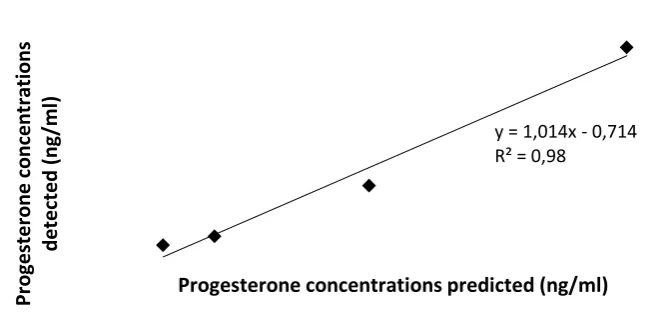
(20) 4.4. Steroid analysis and validation tests .......................................................................... 66 4.5. Statistical analysis ...................................................................................................... 66 5. RESULTS AND DISCUSSION ......................................................................................... 67 5.1. Validation tests ........................................................................................................... 67 5.2. Hair cortisol concentrations ........................................................................................ 68 5.3. Hair cortisol and faecal cortisol metabolites............................................................... 69 6. CONCLUSION .................................................................................................................. 70 7. REFERENCES ................................................................................................................. 71. Chapter II. Progesterone in hair from dairy cattle by EIA: protocol validation ................... 77 1. ABSTRACT ....................................................................................................................... 80 2. INTRODUCTION .............................................................................................................. 81 3. MATERIAL AND METHODS ............................................................................................ 81 3.1. Animals and hair sampling ......................................................................................... 81 3.2. Hair wash and progesterone extraction ..................................................................... 81 3.3. Progesterone analysis and validation tests................................................................ 82 4. RESULTS AND DISCUSSION ......................................................................................... 83 5. CONCLUSION .................................................................................................................. 84 6. REFERENCES ................................................................................................................. 85. Chapter III. Acute ACTH-induced elevations of circulating cortisol do not affect hair cortisol concentrations in calves ............................................................................................ 87 1. ABSTRACT ....................................................................................................................... 90 2. INTRODUCTION .............................................................................................................. 91 3. MATERIAL AND METHODS ............................................................................................ 91 3.1. Animals and study design .......................................................................................... 91 3.2. Housing conditions, diet and performance ................................................................ 92 3.3. ACTH administration and blood sampling .................................................................. 92 3.4. Hair sampling ............................................................................................................. 93 3.5. Hair cortisol extraction................................................................................................ 93 3.6. Cortisol analysis and EIA validation tests .................................................................. 94 3.7. Statistical analysis ...................................................................................................... 95 4. RESULTS AND DISCUSSION ......................................................................................... 95 4.1. ACTH administration and serum cortisol levels ......................................................... 95 4.2. ACTH administration and hair cortisol levels ............................................................. 95 4.3. Correlation between hair samples ............................................................................. 98 5. CONCLUSION .................................................................................................................. 98 6. REFERENCES ................................................................................................................. 99. XIX.
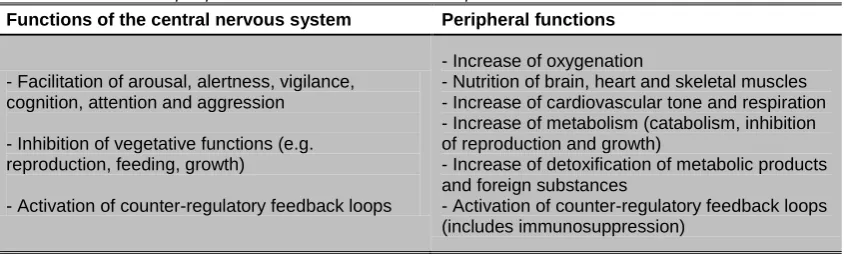
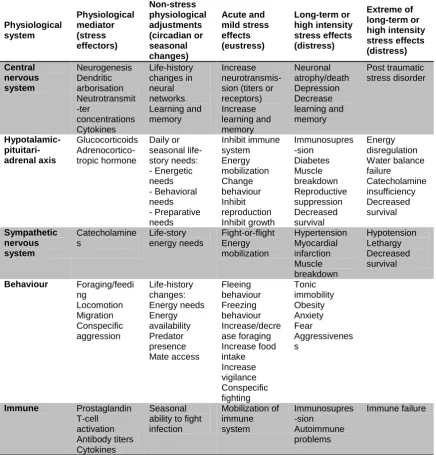
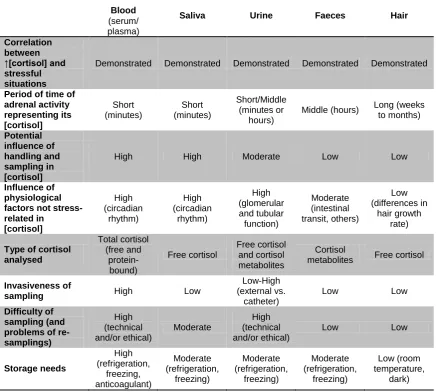
(21) Chapter IV. Hair cortisol and progesterone detection in dairy cattle: interrelation with physiological status and milk production ............................................................................ 103 1. ABSTRACT ..................................................................................................................... 106 2. INTRODUCTION ............................................................................................................ 107 3. MATERIAL AND METHODS .......................................................................................... 108 3.1. Study design ............................................................................................................ 108 3.2. Animals .................................................................................................................... 108 3.3. Housing and handling conditions ............................................................................. 109 3.4. Hair sampling and storage ....................................................................................... 109 3.5. Hair washing and steroid extraction ......................................................................... 110 3.6. Hormone detection and validation tests ................................................................... 110 3.7. Animal’s data collection............................................................................................ 111 3.8. Statistical analysis .................................................................................................... 112 4. RESULTS ....................................................................................................................... 113 4.1. Hair steroid concentrations ...................................................................................... 113 4.2. Hair steroid concentrations and physiological data ................................................. 114 4.3. Hair steroid concentrations and milk data from the two previous months ............... 114 4.4. Hair steroid concentrations and milk data from the whole lactation ........................ 115 5. DISCUSSION .................................................................................................................. 115 5.1. Hair cortisol concentrations and physiological data ................................................. 115 5.2. Hair cortisol concentrations and milk production and composition .......................... 117 5.3. Hair progesterone concentrations and physiological data ....................................... 118 5.4. Interrelation between hair steroid concentrations .................................................... 119 6. CONCLUSION ................................................................................................................ 120 7. REFERENCES ............................................................................................................... 121. Chapter V. Prediction of cortisol and progesterone concentrations in hair from cow by near infrared reflectance spectroscopy (NIRS) .................................................................... 127 1. ABSTRACT ..................................................................................................................... 130 2. INTRODUCTION ............................................................................................................ 131 3. MATERIAL AND METHODS .......................................................................................... 132 3.1. Study design ............................................................................................................ 132 3.2. Animals and hair sampling ....................................................................................... 132 3.3. Hair washing ............................................................................................................ 133 3.4. Hair trimming and NIRS analysis ............................................................................. 133 3.5. Steroid extraction ..................................................................................................... 133 3.6. Steroid determination by EIA ................................................................................... 134 3.7. Spectral data analysis .............................................................................................. 134 3.8. Data analysis ............................................................................................................ 135 XX.
(22) 4. RESULTS ....................................................................................................................... 135 4.1. Description of hair spectrum by NIRS ...................................................................... 135 4.2. NIRS calibration and validation ................................................................................ 136 4.3. Comparison of HSC and quartile distribution between EIA analyses and NIRS prediction in trimmed hair ................................................................................................ 137 5. DISCUSSION .................................................................................................................. 138 6. CONCLUSION ................................................................................................................ 139 7. REFERENCES ............................................................................................................... 140. GENERAL DISCUSSION ......................................................................................................... 145 1. Biochemical validation of standardized protocol for hair cortisol detection .................... 147 2. Feasibility of hair cortisol concentrations to representan integrative value of long-term adrenal activity .................................................................................................................... 150 3. Potential uses of hair cortisol determination in dairy cattle production ........................... 154 4. Evaluation of the near infrared reflectance spectroscopy technique for hair cortisol quantification in cows .......................................................................................................... 157 5. Effects of hair secondary characteristics on hair cortisol measurement ........................ 158 6. Findings on hair progesterone detection in cattle ........................................................... 162 7. Hair cortisol detection in cattle: present and future. A personal view ............................. 163 8. REFERENCES ............................................................................................................... 164. FINAL CONCLUSIONS ............................................................................................................ 175. XXI.
(23)
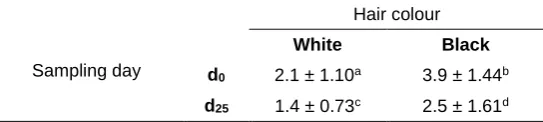
(24) INDEX OF TABLES. General introduction Table 1. Central and peripheral functions of the stress response .............................................. 15 Table 2. The five major systems involved in the stress response and its effects ....................... 16 Table 3.Comparative of main mammal matrixes’ attributes regarding their cortisol detection ... 23. Chapter I. Hair cortisol detection in dairy cattle by using EIA: protocol validation and correlation with faecal cortisol metabolites Table 1. Cortisol concentrations (pg cortisol/mg hair) from hair sampled at the beginning (d0) and at the end (d25) of the study .................................................................................................. 68. Chapter III. Acute ACTH-induced elevations of circulating cortisol do not affect hair cortisol concentrations in calves Table 1. Hair cortisol concentrations (HCC, pg/mg) from forehead and hip depending on treatment (control and ACTH-injected) at D0 (initial) and D14 (final) of the study ........................ 96. Chapter IV. Hair cortisol and progesterone detection in dairy cattle: interrelation with biological status and milk production and composition Table 1. Number of parturitions of the cows used in the study ................................................. 109 Table 2.Milking control data from the same month (17 November) and the previous months (17 October) of hair sampling .......................................................................................................... 111 Table 3. Number of pen changes during the two months previous to the hair sampling.......... 111 Table 4. Milk production parameters obtained for the whole lactation (until 124 days after hair sampling) ................................................................................................................................... 112 Table 5. Hair cortisol and progesterone concentrations from milking cows by enzyme immunoassay ............................................................................................................................ 113. Chapter V. Prediction of cortisol and progesterone concentrations in hair from cow by near infrared reflectance spectroscopy (NIRS) Table 1. Physiological and productive data of the cows used in this study .............................. 132 Table 2.Reference values of cortisol and progesterone concentrations in cow hair samples determined by enzyme immunoassay ....................................................................................... 134. XXIII.
(25) Table 3. NIRS calibration. Spectral pre-treatments and statistics of the best model obtained for predicting the concentrations of cortisol and progesterone in cow hair samples ...................... 136 Table 4. Relationship of data distribution in quartiles between a reference method (EIA) and trimmed NIRS predictions for hair cortisol concentrations ........................................................ 137 Table 5. Relationship of data distribution in quartiles between a reference method (EIA) and trimmed NIRS predictions for hair progesterone concentrations .............................................. 137. XXIV.
(26) INDEX OF FIGURES. General introduction Figure 1.Hypothalamic-pituitary-adrenal axis ............................................................................. 14 Figure2.Mechanisms for cortisol incorporation in hair ................................................................ 28. Chapter I. Hair cortisol detection in dairy cattle by using EIA: protocol validation and correlation with faecal cortisol metabolites Figure 1.Parallelismbetweenlinesfromthe log10 of thestandardandsample pool curves............. 67 Figure2. Simple linear regressionbetween log10transformedvalues of whitehairsamplesat d25andtheaverage of all faecalsamples (R2 = 0.58, P < 0.001) ................................................... 69. Chapter II. Progesterone detection in hair from dairy cattle by EIA: protocol validation Figure 1.Linearity of dilution of progesteroneconcentrationsfromhairextracts ........................... 83 Figure2.Parallelismbetweenlinesfromthestandardandsample pool curves ................................ 84. Chapter III. Acute ACTH-induced elevations of circulating cortisol do not affect hair cortisol concentrations in calves Figure 1.Parallelismbetweenlinesfrom log10 of thestandardandsample pool curvesshowingimmunologicalsimilaritiesbetweenstandardand pool hormones .......................... 94 Figure2.Serum cortisol concentrations (ng cortisol/ml serum; presented as a mean + standard error) immediately prior to ACTH administration (b0h), onehour post administration (b1h) andthreehours post administration (b3h) from control groupand ACTH-administratedgroupat D0and D7. ..................................................................................................................................... 97. Chapter V. Prediction of cortisol and progesterone concentrations in hair from cow by near infrared reflectance spectroscopy (NIRS) Figure 1.Average of spectrafromtrimmed (greyline) and non-trimmed (blackline) hairsamplesby NIRS .......................................................................................................................................... 135 Figure2. Linear relationshipbetweennearinfraredreflectancespectroscopy (NIRS) predicted data andchemicalreference data, determinedby EIA, for cortisol (a) andprogesterone (b) concentrations in trimmedcowhairsamples. .............................................................................. 136. XXV.
(27)
(28) ABBREVIATIONS. ACTH AV AVP BW CNS CRH CV DIM DNA DT EIA ELISA FAWC FCMC HCC HPA HPC HPLC HSC MPLS MSC NIR NIR NIRS PVN R RER RIA RPD SC SCC SD SEC SEP SNS SNV. adrenocorticotropic hormone avoidance arginine vasopressin body weight central nervous system corticotropin-releasing hormone coefficient of variation days in milk deoxyribonucleic acid detrend enzyme immunoassay enzyme-linked immunosorbent assay Farm Animal Welfare Council faecal cortisol metabolites concentrations hair cortisol concentrations hypothalamic–pituitary– adrenal hair progesterone concentrations high-performance liquid chromatography hair steroid concentrations modified partial least square multiple scatter correction near infrared reflectance near infrared reflectance near infrared reflectance spectroscopy hypothalamic paraventricular nucleus reflectance range error ratio radio immunoassay ratio of performance to deviation somatic cell serum cortisol concentrations standard deviation standard error of calibration standard error of prediction sympathetic nervous system standard normal variate. XXVII.
(29)
(30) LIST OF SPECIES MENTIONED. Name used. Scientific name. cattle. Bostaurus. cat. Feliscatus. dog. Canis lupus familiaris or Canisfamiliaris. ewes (sheep). Ovisaries. giant panda. Ailuropodamelanoleuca. grizzly bears. Ursusarctos. humans. Homo sapiens sapiens. red deer. Cervuselaphus. caribou, reindeer. Rangifer tarandus. rhesus macaques. Macacamulatta. western lowland gorilla. Gorilla gorillagorilla. wolves. Canis lupus. XXIX.
(31)
(32) INTRODUCTION.
(33)
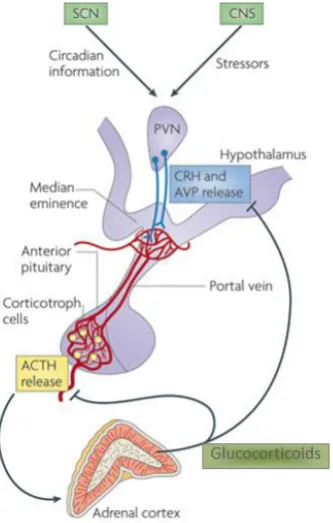
(34) Introduction. In the last decades, social and political interest in animal welfare and welfare management has increased substantially (de Vries et al., 2011). Once we have realised and recognised that animals are sentient beings, society is starting to face this moral challenge considering that our lifestyle use or condition all of them. In this context, animal welfare scientists have been given the task of defining objective and quantifiable parameters of an animal’s welfare status under given conditions and providing solutions to animal welfare problems identified by society(Ohl and van der Staay, 2012). Animal welfare is a complex concept that includes animal’s normal biological functioning but also animal’s emotional state and their possibility to express certain normal behaviours (Fraser et al., 1997). Stress is a decisive factor in animal welfare because of its impact and mainstreaming. Although stress response evolved to maintain animal’s homeostasis (Moberg and Mench, 2000), chronic stress is prejudicial and a serious threat to animal’s well-being. Welfare-threatening stress appears when inadequate, inappropriate, or excess activation of the compensatory stress systems does not maintain homeostasis and resistance fails. In this condition, somatic and psychological damage results as the biological cost of these responses can ultimately affect the growth, health and reproduction of the animal, among others (Barnett and Hemsworth, 1990). Moreover, they are often associated with negative emotional experiences, such as anxiety, fear or anger (Clark et al., 1997).The hypothalamicpituitary-adrenal-axis is a key element in the stress response and ends with glucocorticoid secretion in the bloodstream by the adrenal gland (Buchanan, 2000). The measurement of glucocorticoid concentrations associated to adrenal activity is the most used methodology to assess animal’s stress status. Cortisol, the main glucocorticoid in cattle, can be detected in blood (serum or plasma), saliva, urine, milk or faeces, but none of these matrixes is able to provide a measure of long-term adrenal activity. In contrast, hair matrix for cortisol detection has gained much attention in the last years. Hair is a keratin matrix and accumulates hormones during all its growth. Consequently, it is a matrix with the potential to provide an integrative value of long-term circulating cortisol levels becoming a measure of long-term adrenal activity (Stalder and Kirschbaum, 2012). Moreover, hair is present in almost all mammals, it is abundant and its sampling is non-invasive, safeand easy. Other advantage of hair matrix is their stability: hair does not have special storage requirements and can be stored at 3.
(35) Introduction. room temperature (Macbeth et al., 2010). Despite their promising capacity of long-term adrenal activity monitoring and practical advantages, hair is a relatively new matrix and an accurate knowledge of hair as a matrix that accumulates cortisol is essential for its future use in chronic stress research. Consequently, several studies are necessary to validate hair biologically before confirming what it looks like: hair is perhaps the best matrix for cortisol detection in studies of long-term stress assessmentassociated to animal welfare and animal production.Over the recent decades the dairy industry in Europe has undergone profound changes and has been demonstrated to be particularly supportive of welfare research, perhaps conscious of the importance of good welfare standards for their productivity and consumer’s view.There exists the need for evaluating the use of hair cortisol measurements as a potential tool to assess welfare in cattle.. 4.
(36) LITERATURE REVIEW.
(37)
(38) Literature review. 1. ANIMAL WELFARE 1.1. Importance of animal welfare The human being has an exceptional ability to know and study the other species (Harnad, 2016) but at the same time to understand and empathise with them (Rizzolatti and Craighero, 2005). The union of these two capacities is what initially motivated the idea of animal welfare science. The capacity to empathise with animals is inherent to the human being and some cultures acquired an exceptional sensitivity to the life of other species thousands of years ago. However, in a global perspective, humanity reached recently consensus that non-human animals (at least some) are also sentient beings. Regarding farm animals, mentioning the importance of Ruth Harrison and her book Animal Machines: The New Farming Industry in 1964 cannot be avoided. Therefore, since 1960s society is starting to face a fact: once we have realised and recognised that animals are sentient beings, we had to choose how to deal with this reality and this moral challenge considering that our lifestyle use or condition all of them. In the last decades, social and political interest in animal welfare and welfare management has increased substantially (de Vries et al., 2011). Whenever we act upon the principle of respect for the intrinsic value of an animal, independent of its extrinsic value (to us), we make a moral judgement (Webster, 2001). Therefore, deciding how to treat animals requires ethical decision-making. However, the confidence about an ethical conclusion increases if the arguments that lead to it are supported convincingly by facts, scientific deductions, reason and ethical argument, and arise from a process of genuine discussion (Rushen et al., 2008). Consequently, animal welfare scientists have been given the task of defining objective and quantifiable parameters of an animal’s welfare status under given conditions and providing solutions to animal welfare problems identified by society (Ohl and van der Staay, 2012). In other words, animal welfare science must provide the framework of knowledge in which society is based to perform its decisions about the level of welfare that should be afforded to animals within his charge. The quality of life of millions of animals will depend on the result of these decisions, which at the same time are defining us as a society and as a species.. 7.
(39) Literature review 1.2. General description of animal welfare Animal welfare is an abroad, complex concept in constant evolution that uses a multidimensional approach. Although there is not a single or ultimate definition, it is generally accepted that animal welfare includes these three interrelated elements (Fraser et al., 1997): . Animal’s normal biological functioning: especially related to good health and nutritional status. . Animal’s emotional state: it includes the absence of negative emotions such as pain, fear and distress. . Animal’s possibility to express certain normal behaviours: the feasibility to satisfy the behavioural needs. One of the most famous and useful standpoint to animal welfare is the “Five freedoms” principle created by the currently renamed Farm Animal Welfare Council (FAWC). The principle states that an animal’s welfare is ensured when the five conditions are met (Farm Animal Welfare Council, 1993, 1992). Following, the five conditions are presented with five provisions also provided by the FAWC: . Freedom from thirst, hunger and malnutrition (by ready access to a diet to maintain full health and vigour). . Freedom from thermal and physical discomfort (by providing a suitable environment including shelter and a comfortable resting area). . Freedom from pain, injury and disease (by prevention or rapid diagnosis and treatment). . Freedom from fear and distress (by providing sufficient space, proper facilities and the company of the animal’s own kind). . Freedom to express normal behaviour (by ensuring conditions which avoid mental suffering). The five freedoms (which are actually eleven) were especially designed for farm animals although it has been adapted to the assessment of welfare in other animals (Bayne and Turner, 2014). The interrelation between all aspects of animal welfare is crucial to understand its whole concept (Fraser, 2008). For instance, a disease can cause suffering to an animal and impair the expression of some normal behaviours. However, although the emotional state of the animal is a key factor in animal welfare, the absence of negative emotions does not ensure a good animal welfare. Even without suffering pain or any negative feeling, the welfare of an animal with any impairment related to any other mentioned element should be considered poor or diminished (Broom, 1991a). Finding other ways to define animal welfare, Broom (1986) stated that the welfare of an individual is its state as regards its attempts to cope with its environment. Interestingly, this definition interrelates very well with most of stress definitions (Section 2. STRESS) and allows the proposal that good animal welfare is the biological state in which an animal would desire to be investing its biological resources (e.g. behavioural, physiological, immunological) to reach it.. 8.
(40) Literature review Importantly, welfare is a characteristic of an animal, not something that is given to it (Broom, 1991a); and consequently it is an individual issue or characteristic (Wickins-Dražilová, 2006). Despite the obvious influence of factors such as species, gender or age, similar animals can be in different welfare status under the same conditions, as its behavioural, physiological and cognitive capacities to face an environment are different. This is easy to understand with an example using animal nutrition, where cows ( Bostaurus) from the same characteristics under the same conditions can need different amounts of feed to satisfy their energy needs. However, this is also happening with other aspects less clear such as behavioural needs or stress. Therefore, this situation should be cautiously considered when performing animal welfare studies and future generalisations with them. It should be noted that animal welfare is a continuous concept that ranges from very poor (or very bad) to very good and that can be scientifically measured (Broom and Johnson, 1993). Ethical decision on what should be considered as acceptable or not for the animal must be taken after welfare has been scientifically evaluated (Broom, 1991b). Despite all above mentioned, the study of animal welfare continues to struggle with the problem about how to define animal welfare but also with another problem interrelated: how to determine which measures should be used to evaluate it (Moberg and Mench, 2000). Behavioural, physiological, immunological, injury, disease, mortality risk, growth and reproduction measures are all of value in assessing welfare (Broom, 1991b). However, the definitive parameter or indicator of animal welfare does not exist because of its high complexity and mainstreaming. Although the scientific community is widely discussing the best measures for animal welfare, their characteristics, strengths and weaknesses, the most repeated recommendation is to use several (Botreau et al., 2007; Broom, 1991a; Fraser, 2009). Therefore, it is evident that animal welfare assessment is truly complicated. For example, evaluating the severity or physiological impact of a disease can be relatively easy by using biomedical indicators (e.g. blood analysis) and it is evident that the welfare of the diseased animal is diminished. However, determine if the welfare of an animal with a mild disease is better or worse than the welfare of an animal with severe malnutrition could be extremely difficult. This question about animal welfare is indeed a question about the animal's subjective experience, but in these cases scientists are unable to provide empirical answers (Fraser et al., 1997). This inability arises because there is not yet any generally accepted method to combine different negative states into overall indices but neither to quantify the pleasure experienced by an animal or to balance suffering against enjoyment. Interestingly, Fraser (1995) considered that instead of attempting to measure animal welfare, the role of science should be seen as identifying, rectifying and preventing welfare problems. However, different approaches have proposed with the aim to face the challenge of global animal welfare assessment, being the Welfare Quality® project one of the most interesting and ambitious (Botreau et al., 2009). Moreover, some new research lines are focusing in markers of positive emotions to assess animal welfare (Boissy et al., 2007).. 9.
(41) Literature review 1.3. Welfare in dairy cattle Over the recent decades the dairy industry in Europe has undergone profound changes: economic pressures, technological innovations, demographic shifts, consumer expectations, and an evolving regulatory framework have contributed to the impetus for changes in the global dairy industry (Barkema et al., 2015; Jacobs and Siegford, 2012; von Keyserlingk et al., 2009). All these changes affected the welfare of dairy cows and calves. For instance, the number of farms has decreased considerably, whereas herd size has increased (Barkema et al., 2015). The management and housing conditions of big size herds threat the animal welfare in a different way (not necessarily better or worse) than small or medium herds (Phillips, 2002). This underlines that dairy cattle research is also entering in a period of changes in which the main spotlights of its attention may vary. Fortunately, the dairy industry has been demonstrated to be particularly supportive of welfare research (Walker et al., 2014). Some of most important current issues concerning animal welfare in dairy cattle production related with animal handing and management are: tail docking, absence or insufficient anaesthesia or analgesia in processes such as dehorning, castration or postpartum, timing of cow-calf separation and individual housing of calves, among others (Barkema et al., 2015; Stafford and Mellor, 2011; von Keyserlingk et al., 2009; Weary et al., 2006). Regarding health, laminitis, mastitis, dystocia in cows and diarrhoea and high levels of mortality in suckling calves are some of the pathological problems with great impact in animal welfare from cattle (Rushen et al., 2008; Stull and Reynolds, 2008). Periods of dairy cattle productive cycle like peripartum or the dry period (and the dry-off) are also threatening cow’s animal welfare (Rushen et al., 2008). Moreover, the debate about the impact of the lack of access to pasture is increasing (Arnott et al., 2016; Legrand et al., 2009) and the effect of heat stress in dairy cows still being a hot topic (Roland et al., 2016; Staples and Thatcher, 2000). Other aspects of animal welfare in dairy cattle not mentioned previously must be considered as potential key factors deserving scientific attention. For example, considerable research in pain has been done but not much in fear, anxiety or distress (von Keyserlingk et al., 2009; Weary et al., 2006) and it seems reasonable that future efforts will be focus in these welfare issues. Finally, the effect of ordinary citizens on the welfare of dairy cattle should not be forgotten: the pressure to governments for producing laws ensuring some animal welfare standards or the tendency of consumers during the last years to increase their interest in the welfare of the animals producing their bought milk or cheese, for instance, influence enormously dairy cattle’s animal welfare.. 2. STRESS “I have been so stressed trying to finish my thesis on time that I need holidays again ”. This sentence, including the concept of stress, could be easily understood for most people regardless whether they have scientific background in stress or not. Curiously, the term “stress” had a strong wide acceptation in popular 10.
(42) Literature review culture. Mason (1975) suggested that this may be because stress concept solved intuitively the need for describing a biological phenomena not adequately covered by other generic terms. Unfortunately, the difficulty to define scientifically the concept of stress has been proportionally to its wide use and popular acceptance. This paradox also exists within scientific community, which has not been able to reach an agreement in stress definition but this situation has not stopped stress from being one of the most cited constructions in biomedical literature in recent years (Le Moal, 2007; Levine, 2005). There is some controversy over if Walter B. Cannon or Hans Seyle were the first to use the term stress in a physiological or biomedical context (Levine, 2005). However, it seems clear that Seyle was the responsible for stress popularisation after mentioning in 1936 a ‘‘biologic stress syndrome’’ in the definition of the socalled ‘‘General Adaptation Syndrome’’ what could be considered one of the first scientific descriptions of the stress response (Clark et al., 1997; Mason, 1975).. 2.1. Stress definition Uncountable attempts to define stress have been made. McEwen (2007) defined stress as a real or interpreted threat to the physiological or psychological integrity of an individual that results in physiological and/or behavioural responses. Moberg(2000) defined it as the biological response elicited when an individual perceives a threat to its homeostasis. Finally, Chrousos(2009) described stress as a state in which homeostasis is actually threatened or perceived to be so. Interestingly, although these three definitions are similar, they are defining stress as a “threat that cause responses”, as a “response” and as a “state”, respectively. One of the main reasons why stress definition is still being subject of debate in scientific community is because we use stress for defining a composite, multidimensional concept (Le Moal, 2007; Levine, 2005; Moberg, 2000; Romero et al., 2015). It includes at least three components that can be identified, are interrelated and interact: . The input or threat (stress stimulus or “stressor”). . The processing systems (the interpretation, including the subjective experience of stress). . The output (stress responses). A fourth element should be included as another key component in the understanding of stress concept: “homeostasis”. Used as a more complex and encompassing concept than “integrity”, homeostasis refers to the complex dynamic equilibrium that all living organisms try to maintain with the aim to live and reach its biological potential (Chrousos, 2009; Levine, 2005). Again, several authors emphasized the ambiguity and circularity of the definition of stress in terms of a threat to homeostasis in general as virtually all activities of an organism directly or indirectly concern the defence of homeostasis (Koolhaas et al., 2011; Levine, 2005; Romero et al., 2009). McEwen et al. (2010) exemplify this problem by arguing that biological processes like the beginning of lactation for a cow undergo morphological, physiological and behavioural changes (involving regulation of gene expression) and although homeostatic set points will have changed from pre-lactation levels, none of this is essential for the 11.
(43) Literature review maintenance of cow’s homeostasis.“Of course the cow lactating must do so to reproduce successfully. But. the adjustments in homeostasis that occur during this life cycle events are to accommodate changed physiology as part of the predictable life cycle, not simply responses to deviations from some set point that maintains life processes” stated. Romero and colleagues (2009) presented a different terminology and a new model for conceptualizing and describing the impact of stress on the body, combining traditional notions of stress and homeostasis with the more recent terminology of “allostasis” and “allostatic load”. Recent discussions are published regarding the new terminology to solve (or at least improve) the problem with ambiguities and rigidity in homeostasis and stress definitions and to include a framework allowing the incorporation of perturbations in major events of the predictable life cycle (such as reproduction, migration etc.) also as potential sources of stress (Koolhaas et al., 2011; McEwen and Wingfield, 2010; Romero et al., 2009). As this discussion still ongoing and a deeper understanding of these new concepts are not essential in the comprehension of this thesis, the concepts of allostasis and allostatic load will not be presented here. However, the lectures of Romero et al. (2009), McEwen and Wingfield (2010) and Koolhaas et al. (2011) are recommended if lector wants to obtain deeper information. Interestingly, Kopin et al. (1988) described many years ago stress as a state in which expectations—whether genetically programmed or acquired—do not match current or anticipated perceptions of the internal or external environment. They probably used “expectations” with the aim to encompass not only pure homeostatic or survival needs but also life cycle processes. Therefore, in this thesis stress could be considered an heterogeneous assortment of phenomena that appears when a cow or calf perceive (being real or not) a potential negative alteration of its life expectations (genetic and acquired, including survival and life cycle) and respond to it by changing their state into a most appropriate one to face the threat and reach expectations again. Finally it should be noted that, despite it is a source of confusion and an obstacle to precise scientific communication, the controversy over the definition of stress should not affect the validity of the underlying scientific and clinical observations or concepts (Clark 1997). The stress research is complex, wide and sometimes contradictory, but there are not many other fields in animal and human research with such degree of mainstreaming and thus, potential positive impact if research on it is performed.. 2.2. The stress system: stressor, stressor perception and stress response Before starting the following section, it should be noted that the aim of this review is to provide a brief overview of the stress system and not to provide a deep review. The neuroendocrine factors involved in the stress response presented here are only the main ones but lector should be aware that the stress system is more complex than presented below. 2.2.1. Stressor and stressor perception The stressor is the input or supposed threat perceived by the individual that activate the stress response and is also called stress stimulus. Strictly speaking, the only characteristic in common between all stressors is that 12.
Figure
+7




Documento similar
therefore used the denervated organ of Corti for the study of neuronal regeneration and synaptogenesis with hair cells and found that spiral ganglion neurons obtained from the
A low cortisol response to acute stress is related to worse basal memory performance in older people
The relationship between the cortisol response and memory performance was U shaped: a low cortisol response to stress was related to poorer declarative and working memory
El objetivo de este estudio fue la evaluación de la influencia de la estación de parto sobre las
Genetic variations in the genes encoding proteins involved in the human pigmentation pathway have been associated with phenotypic differences in skin, hair and eye colour,
Mastitis is one of the most important diseases in dairy cattle being on the top among diseases related with biofilm production (Melchior et al., 2006b). The general
Skin resident mast cells contribute to hair follicle immune privilege under physiological conditions but are known to become proinflammatory in alopecia areata, in which mast
SCs are not depleted in the bulges of TR-deficient mice The skin phenotype of mice with defective thyroid hormone signal- ing (reduced response to proliferative stimuli, retarded
The skin phenotype of TR KO mice with defective response to proliferative stimuli, retarded hair growth and impaired wound healing would be compatible with the existence of a defect
