DOCTORADO EN ECONOMÍA APLICADA
DEPARTAMENTO DE ECONOMÍA Y DIRECCIÓN DE EMPRESAS
COMPLEXITY-BASED VIEW OF THE FIRM:
THEORETICAL PERSPECTIVES,
METHODOLOGICAL FRAMEWORK AND
EMPIRICAL EVIDENCE
A Dissertation Presented
by
FRANCISCO JAVIER NAVARRO MENESES
Directed by Professors: FEDERICO PABLO MARTÍ JAVIER CARRILLO HERMOSILLA
would never have been written. Thank you.
***
To my beloved daughters Sofía and Alicia. Let this thesis be an inspiration for you
to believe in your dreams and cultivate a passion for learning.
***
ACKNOWLEDGEMENTS ...xi
ABSTRACT ... xiii
LIST OF TABLES ... xv
LIST OF FIGURES... xvii
CHAPTER 1. INTRODUCTION ... 1
CHAPTER 2. COMPLEXITY AND THE FIRM ... 7
2.1 Introduction ... 7
2.2 The Firm as a Complex System ... 11
2.3 Complexity and Theory of the Firm ... 13
2.4 Literature on Complexity and the Firm ... 16
CHAPTER 3. BASIS FOR A NEW APPROACH ... 21
3.1 Introduction ... 21
3.2 Why a New Approach is Necessary? ... 22
3.3 Evidence for a Complexity-based Approach... 24
3.4 Conceptualization of the CBVF Approach ... 27
3.5 Refocus of the Theorizing Process ... 36
CHAPTER 4. COMPLEXITY-BASED VIEW OF THE FIRM ... 45
4.1 Introduction ... 45
4.2 Theoretical Constituents of the CBVF ... 48
4.3 Methodological Framework ... 66
CHAPTER 5. TESTING THE THEORY AND METHOD: AIRLINES FIELD RESEARCH ... 157
5.1 Introduction ... 157
5.2 Field Research Design ... 158
5.3 Results Obtained ... 170
5.4 Discussion and implications ... 217
CONCLUSIONS ... 223
FURTHER RESEARCH ... 231
APPENDIX A. REVIEW OF THEORIES OF THE FIRM ... 237
A.1 Introduction ... 237
A.3 Transaction Costs Theory ... 241
A.4 Agency Theory ... 243
A.5 Resource-based View of the Firm ... 246
A.6 Knowledge-based Theory of the Firm ... 250
A.7 Stakeholder Theory ... 252
A.8 Organizational Theories of the Firm ... 254
A.9 Developments in Strategy ... 258
APPENDIX B. DELPHI’S EXPERT BENCHMARKING OF RESPONSES ... 261
B.1 Interconnectedness between Constraints and Value Repositories ... 262
B.2 Interconnectedness among Value Repositories ... 263
B.3 Interconnectedness between Value Repositories and Operating Margin... 265
APPENDIX C. PANEL MEMBERS ... 267
APPENDIX D. DELPHI QUESTIONNAIRES ... 271
D.1 Delphi Round 1 Questionnaire ... 271
D.2 Delphi Round 2 Questionnaire ... 273
D.3 Delphi Round 3 Questionnaire ... 275
D.4 Delphi Round 4 Questionnaire ... 277
APPENDIX E. FIELD RESEARCH DATA... 279
E.1 Participants Profile (participants.xlsx) ... 279
E.2 Participation Data (participants.xlsx) ... 280
E.3 Delphi Round 1 Constraints (round_1_R.xlsx) ... 284
E.4 Delphi Round 1 Value Repositories (round_1_R.xlsx) ... 285
E.5 Delphi Round 2 Constraints (round_2_R.xlsx) ... 287
E.6 Delphi Round 2 Value Repositories (round_2_R.xlsx) ... 288
E.7 Delphi Rounds 3 and 4 Data ... 289
E.8 Edges Values and Attributes (edgespanel.csv) ... 290
E.9 Vertices Attributes (vertices.csv) ... 305
APPENDIX F. R CODE FOR REPRODUCIBLE RESEARCH ... 307
F.1 Code for Delphi Method Analysis ... 307
F.2 Code for Network Analysis ... 315
F.3 Code for Fuzzy Cognitive Map ... 328
APPENDIX G. VALUEINAIRLINES.COM ... 333
APPENDIX H. SOFTWARE TOOLS ... 341
H.1 R Programming Software ... 341
H.2 Network Workbench ... 342
H.3 Qualtrics Survey System ... 343
BIBLIOGRAPHY ... 345
xi
ACKNOWLEDGEMENTS
This thesis has been an extraordinary journey of learning and discovery for me, indeed one of the most rewarding knowledge experiences in my life. Now the memory of the
excitement associated with constructing theory and finding empirical support for it clearly outweighs all the trouble and times of self-doubt. Notwithstanding, this my particular grain of sand to social research would have not been possible without the help and support of many people.
First and foremost, the author desires to express his grateful appreciation to Professors Dr. Federico Pablo Martí and Dr. Javier Carrillo Hermosilla, under whose direction this thesis has been brought to completion. They smoothed the path of my research by devoting much of their valuable time to me. They provided advice and guidance to overcome the difficulties, and challenged me to prove what started off being mere intuitions and beliefs from my own professional experience. Thank you for your encouragement and motivation to accomplish this “complex” work.
Thanks are also due to Dr. Elpiniki Papageorgiou, Assistant Professor at the
xii
This thesis has also involved many highly experienced executives from the airlines industry around the world, who took part, to a greater or lesser extent, in the field research Experts’ Panel. Despite their busy agendas and responsibilities, they painstakingly sought to address key issues related to our complexity-based approach in airlines, providing the author with key data to test basic assumptions on the thesis. Without their insightful contributions and enthusiasm for sharing their knowledge, the field research would not have been possible. They are simply too many to name here. Thank you all.
In addition, I would like to thank the complexity community at online research platform ResearchGate.net, where many scholars from everywhere provided me with valuable insights on various intricate questions that I circulated. They not only helped me with recommendations on how to better focus on difficult questions, but inspired me with their comments at my
beginnings and progressions in the fascinating world of complexity.
xiii
ABSTRACT
The progress made by the theory of the firm has been outstanding in the last 80 years, its central concepts having become foundational for any theoretical and practical work focused on understanding the behavior of the firm. However, in spite of this remarkable achievement, most of the firm’s real problems remain intractable. Furthermore, an increasing new class of issues emerge which seemingly fall out of managers’ control, relentless challenging our current theories and methods. The above are traits of what investigators call complexity, and a new paradigm centered on tackling and managing it is being formed in the social sciences. To explore the applicability, opportunities and consequences that this paradigm may have for increasing our understanding of the firm, this thesis examines two distinct lines of inquiry: theoretical and methodological. Building upon a novel theoretical characterization of the firm as a complex system, whose fundamental units continuously create and exchange value, and a
xiv
research are provided in the thesis that should encourage the next rounds of investigators to dig deeper and seize the yet unrealized opportunities offered by a complexity-based view of the firm.
xv
LIST OF TABLES
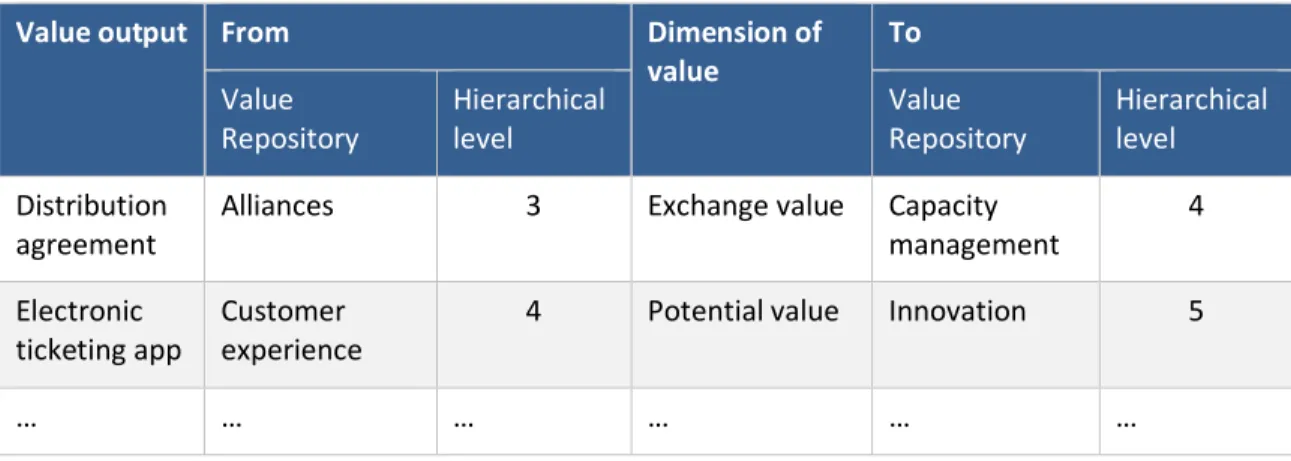
Table 1. Value Classification Technique ... 94
Table 2. Summary of the CBVF Methodological Framework ... 155
Table 3. Delphi Survey, Distribution of Panel Members by Functional Area ... 171
Table 4. Distribution of Panel Members by Organic Position ... 173
Table 5. Delphi Round 1: Summary of Top Cited Constraints ... 176
Table 6. Delphi Round 1: Summary of Top Cited Value Repositories ... 177
Table 7. Comparison of Top 10 Constraints, Round 1 vs Round 2 ... 178
Table 8. Comparison of Top 15 Value Repositories, Round 1 vs Round 2 ... 180
Table 9. Most Important/Influential Value Repositories in the AVCN ... 199
Table 10. AVCN-FCM Adjacency Matrix ... 205
Table 11. AVCN-FCM Simulation Scenarios ... 208
Table 12. Base Scenario Outcome State Vector ... 209
Table 13. Scenario #1 Input Vector ... 210
Table 14. Scenario #1 Outcome State Vector ... 211
xvi
Table 16. Scenario #2 Outcome State Vector ... 214
Table 17. Scenario #3 Input Vector ... 215
Table 18. Scenario #3 Outcome State Vector ... 216
Table 19. List of Panel members ... 269
xvii
LIST OF FIGURES
Figure 1. Dimensions of Complexity of the Firm ... 10
Figure 2. Illustration of the Multi-level Web of VRs ... 59
Figure 3. Stages of the CBVF Methodology ... 73
Figure 4. Phased Approach to Resolve the Problem With Data ... 77
Figure 5. The CBVF Methodology: Stage 1 Activities ... 82
Figure 6. The Multidimensional Value System Dynamics ... 84
Figure 7. The CBVF Method: Stage 2 Activities... 109
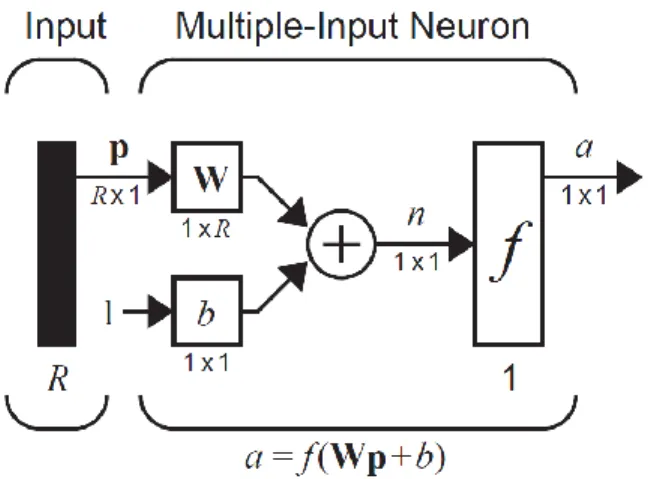
Figure 8. Neuron with R Inputs ... 121
Figure 9. Example of How a SOM works ... 128
Figure 10. Fundamental Connections in Bayesian Networks ... 130
Figure 11. Causal Diagram of Management of a Forest ... 142
Figure 12. The Delphi Process ... 164
Figure 13. Distribution of Participants by Geography ... 172
Figure 14. Type of Responses Provided by Panel Members ... 174
xviii
Figure 16. Strength of Interconnectedness: Value Repositories (Round 3) ... 183
Figure 17. Strength of Interconnectedness: Value Repositories-Op. Margin (Round 3) ... 184
Figure 18. Strength of Interconnectedness: Constraints-Value Repositories (Round 4) ... 187
Figure 19. Strength of Interconnectedness: Value Repositories (Round 4) ... 188
Figure 20. Strength of Interconnectedness: Value Repositories-Op. Margin (Round 4) ... 189
Figure 21. Airlines’ Value Creation Network (AVCN) ... 192
Figure 22. AVCN Pathfinder Network Scaling ... 194
Figure 23. Clusters in the AVCN ... 196
Figure 24. AVCN Tree-like Dendrogram ... 197
Figure 25. Interconnectedness of Value Repositories and Operating Margin ... 200
Figure 26. Base Scenario Inference Outcome ... 209
Figure 27. Scenario #1 Inference Outcome ... 211
Figure 28. Scenario #2 Inference Outcome ... 213
Figure 29. Scenario #3 Inference Outcome ... 216
Figure 30. Benchmarking of Responses: Constraints vs Value Repositories ... 263
Figure 31. Benchmarking of Responses: Value Repositories... 264
1
CHAPTER 1.
INTRODUCTION
Much research endeavor has been devoted in the last 80 years to theorizing on the behavior of the firm. Such has been the interest of scholars in this field that the number of papers, articles, books and thesis in the subject is one of the largest among all the branches of economics. As a matter of fact, the study of the firm as an intricate behavioral entity has exponentially grown in last decades to become a fully consolidated stream of research, as evidenced by the large community of dedicated investigators around the world and the various theoretical developments and schools emerged.
In spite of this prolific output, this author submits that there is no certainty that we are today more capable to explain the behavior of the firm than we were 80 years ago; much less to envision or predict as to how a particular firm would behave under real-world circumstances. Notwithstanding the foregoing, few theorists of the firm would usually react to the above critique, partly because taking these critiques would seriously mean questioning fundamental tenets of mainstream economics (Foss, Klein 2005).
2
highlights as outstanding the achievements made by the theorists of the firm in helping generations of scholars and practitioners better approach an understanding of the firm.
However, these same people increasingly encounter today a daunting class of problems that current theories of the firm fail to explain, or for which its explanatory power remains limited or subtle. By these problems we do not mean some extraordinary happenings in the life of the firm, but events that are rather familiar to its everyday operations. We refer to problems that generally involve a large number of interacting parts, transcend the conventional
boundaries of the firm, and impact its behavior in an unusual variety of ways. Moreover, problems that are seemingly uncontrollable and unforeseeable, and often neglected because they fall out of range for managers.
The above are signs of what researchers and practitioners call complexity, and this author contends that most theories of the firm have remained somewhat oblivious of the need to comprehend its significance and produce science-based insights into its sources and effects. It is true that many theories of the firm have worked well at explaining disorganized complexity
―i.e. when the properties of the firm as a whole can be understood by using probability and statistical methods (Weaver 1991)― but at the end, most of the firm’s real problems are left intractable and unexplained.
3
Ultimately, these are traits suggesting that a new paradigm devoted to understanding, predicting and influencing the behavior of complex systems is emerging out of our increased awareness and capacity to tackle complexity (OECD 2008). Furthermore, this paradigm centered on discovering and managing complexity has been born in the context of natural sciences ―i.e. biology, physics, ecology, to name just a few― and has evolved over the past several decades to spread into diverse fields in social sciences, where its particular potential for the study of the firm remains mostly unrealized and full of possibilities.
This thesis is a research journey dedicated to dig deeper into the development of such paradigm in the field of the theory of the firm. More specifically, this thesis explores i) the theoretical implications derived from the application of the idea of complexity to the context of the firm, ii) questions whether a complexity-based view of the firm can be brought to practice, and iii) investigates the form in which this approach might be replicated. Furthermore, by providing empirical evidence from real-life firms, the author tests in the thesis the feasibility of a complexity-based view of the firm as a means to extend our understanding of the behavior of the firm.
4
As we shall see, the above calls for the application of new qualitative research methods (Coughlan, Coughlan 2002) that bridge the gap between theory, reality and practice, as to make our complexity-based view of the firm usable in practical applications that give practitioners some control of situations (Glaser, Strauss 2009). Eventually, our approach should bring new opportunities for researchers to explore collective behavior and validate new theoretical models, and for practitioners, to configure firm’s policy settings and try to anticipate performance.
This thesis is organized into four main chapters, in addition to Introduction, Conclusions
and Further Research. Chapter 2 investigates the relations between complexity and the firm as a complex system. Despite the difficulties to arrive at a universal definition of complexity, in this chapter the author examines the different dimensions that complexity of the firm may have, and concludes that the notion of “complexity” is an inherent feature of every firm operating in a competitive environment and a key building block to take into consideration for further advance of the theory of the firm.
Upon the theoretical and practical shortcomings identified by the author, Chapter 3 sets the basis for a new approach and provides evidence as of why a reality bounded theory is necessary. In particular, the author underlines the importance of a new conceptualization of the firm, as well as the need to refocus the theorizing process around an idiosyncratic notion of complexity of the firm.
5
methodological framework that guides researchers and practitioners on the practicalities of addressing complexity. Therefore, Chapter 4 provides the basis for the design of such
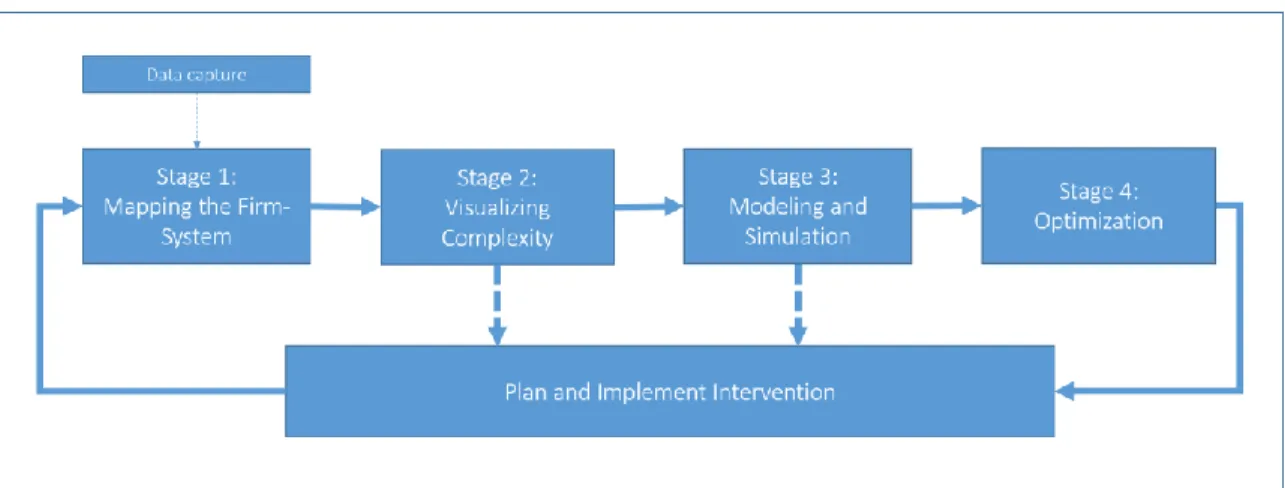
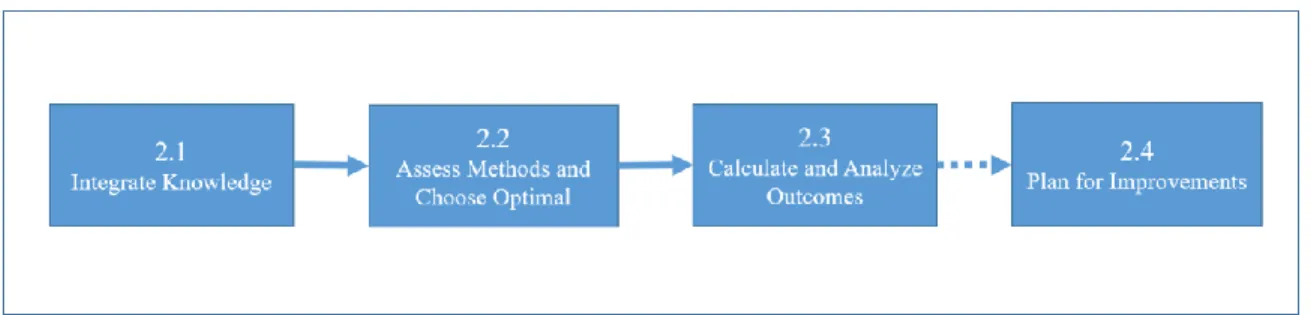
methodology, specifically formulating a method comprised of four stages that covers the key activities, tools and techniques that should serve to systematically untangle complexity of the firm.
As no theory building process would be complete without empirically illustrating the application of the theory, Chapter 5 presents the results of a field research carried out by the author at an international scale in the airline industry. The results obtained give supporting evidence of the applicability of the theory and method presented in this thesis, and of the replicability of the key assumptions made to further advance the new paradigm of complexity in the firm.
Finally, this thesis is complemented with eight appendices. Appendix A provides a summary of the theoretical review carried out by the author on a selected number of seminal theories of the firm, specifically focusing on the extent to which these theories address the problem of complexity in the firm. Appendix B shows an example of an expert’s benchmarking of responses, drafted and handed out to each and every member of the Experts’ Panel
participating in the thesis field research. Appendix C contains the list of members participating in the Delphi Experts’ Panel. Appendix D provides a transcript of the questionnaires used across the four stages of the Delphi process. Appendix E shows the data captured in the field research.
Appendix F contains the R programming code used in the field research. Together with the data provided in Appendix E; this code should enable any interested investigator to reproduce the outcomes obtained in the thesis. In Appendix G there are screenshots of the website
6
communication tool with the members of the Experts’ Panel along the field research. Finally,
7
CHAPTER 2.
COMPLEXITY AND THE FIRM
2.1
Introduction
The Oxford English Dictionary defines “complexity” as something “consisting of parts or elements not simply coordinated, but some of them involved in various degrees of subordination;
complicated, involved, intricate; not easily analysed or disentangled”. What this definition invokes is that some of the terms used in the definition of “complexity” are subject to personal consideration, or they are even context-sensitive. What is more, if we add to the above a review of up to date literature on complexity, there seems to be no fixed or universal definition of complexity. This suggests instead that the degree of intricacy, involvement, or complication of a system depends entirely on the observer’s assessment and/or a context.
Furthermore, “complexity” is such a general concept that it means something different to different people, even in the academic circles. As an example, the following list illustrates the considerable disparity of what “complexity” entails to the complexity research community:
“Simply stated, complexity arises in situations where an increasing number of
independent variables begin interacting in interdependent and unpredictable ways”
8
“A great many quantities have been proposed as measures of something like
complexity. In fact, a variety of different measures would be required to capture all
our intuitive ideas about what is meant by complexity and by its opposite, simplicity”
(Gell-Mann 1995).
• “To us, complexity means that we have structure with variations” (Goldenfeld, Kadanoff 1999).
• “In a general sense, the adjective “complex” describes a system or component that by design or function or both is difficult to understand and verify. […] complexity is
determined by such factors as the number of components and the intricacy of the
interfaces between them the number and intricacy of conditional branches, the
degree of nesting, and the types of data structures” (Weng, Bhalla et al. 1999). • “A complex system is literally one in which there are multiple interactions between
many different components” (Rind 1999).
• “Common to all studies of complexity are systems with multiple elements adapting or re-acting to the pattern these elements create” (Arthur 1999).
• “Complexity starts when causality breaks down” (Editorial 2009).
9
As pervasive as the idea of structural complexity may seem, it is not the only feature or measure that we should consider when attempting to get a comprehensive idea of what complexity is. We must consider other complementary measures, such as “environmental complexity” and “process complexity”, the latter if we are specifically centered on dynamic systems.
Environmental complexity takes into account the physical and metaphysical
environments where the firm operates. Conceptually, it addresses the rules and conditions from within and outside the boundaries of the firm, which in turn determine the satisfaction of the firm’s intentions or goals. To grasp a realistic idea of what environmental complexity is all about, it is appropriate to measure various dimensions, including institutional complexity, geo-political complexity, and competitive complexity.
Process complexity is a key measure of the difficulty of describing and executing a process. Specifically, a “process” may be defined as an interactive algorithm used to execute relational orders according to the rules and/or constraints set to satisfy a goal or intention (Howard, Rolland et al. 2004). When a process is so-defined, it indirectly concerns to a system that is led by an objective and organized by a relational order of its components, which is a definition closely related to what the firm stands for.
Furthermore, process complexity addresses the execution of periodic and non-periodic processes within the firm and in relation to its environment. An assessment of process
10
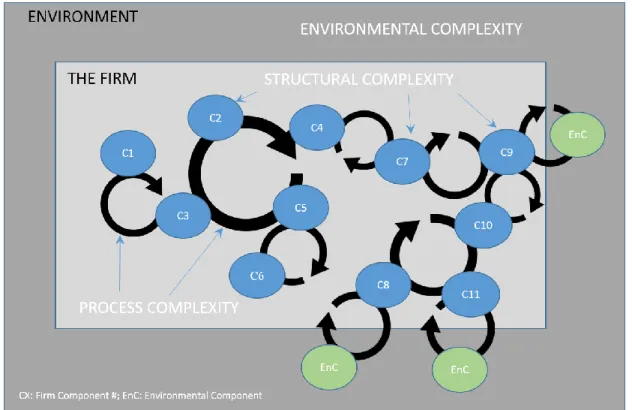
As described above, the notion of “complexity” is an inherent feature of every firm operating in a competitive environment. As such, complexity may change in terms of magnitude, i.e. some firms may present more complexity than others, but it will always be present in the characterization of the firm as an open system. Fig.1 provides a graphical illustration of the different dimensions of complexity described above.
Figure 1. Dimensions of Complexity of the Firm
Source: own elaboration
11
we shall see next, the CBVF particularly calls for the integration of knowledge from other scientific disciplines and the emergence of new idiosyncratic concepts and hybrid tools.
2.2 The Firm as a Complex System
A foundational consideration of our proposed CBVF, to bear in mind throughout this thesis, is the characterization of the firm as an open system, embedded in a complex
environmental setting with which it continuously exchanges value.
From a practitioner perspective, this may be a rather intuitive idea, since the
interconnectedness between the firm and its outer environment appears both as commonplace and as an apparent determinant of the behavior of the firm. Nevertheless, a closer look at some of the most important theories of the firm (Appendix A) reveals a somewhat different state of affairs, many of which aim at understanding the firm as the sum of the properties of its
individual components, without allowing much for the emergence of additional properties from component interactions.
12
However, “dissecting” the firm to its slightest components and focusing on a single, or a few, component/s, removes virtually all the properties associated with the real behavior of the firm. The alternative offered by advocates of the behavioral theory of the firm to look at the firm as a whole (Cyert, March 1963) is also limited. By focusing on the firm as a whole, we could gather empirical data and explain the behavior of the firm in terms of phenomenological models, the components of which would have no real significance.
We can agree that this reductionist approach has worked well for the last two or three decades, illustrating situations in which its premises are valid and the descriptions provided are useful (Kaneko 2006). But it is not yet clear that maintaining the same strategy in the twenty-first century will suffice. Actually, there are many flaws in the theories of the firm that hamper their explanatory power and, as a result, a new approach is all the more necessary if we are to keep the theory of the firm alive and with practical relevance.
Yet, this is not a trivial task. To embed a higher level of complexity into the “core” of the theory of the firm entails major consequences. The implications affect the way researchers build theories and models of the firm and, even more, how they approach the theory of the firm subject matter. Certainly, these consequences are deep and far reaching as set out below.
First, if we are to internalize complexity into the theory of the firm we should start by changing our conceptualization of the firm. This fundamentally involves acknowledging that the firm is an open complex system in continuous exchange of inputs and outputs with the
13
Second, to grasp (even a slight) understanding of the complex nature of the firm and of the patterns of interaction between its components, the firm as a whole and its outer
environment, we not only need a new conceptualization of the firm, but to further develop a more holistic complexity-based view of the firm. This new approach should be contingent on key concepts, such as hierarchy, system boundaries, holism, network, synergism, etc. thoroughly addressed in systems research and other non-economic complexity-centered disciplines (Kaneko 2006, Jørgensen 2006, Boogerd, Bruggeman et al. 2007, Alberghina, Westerhoff 2007).
Finally, a complexity-based view of the firm entails opening an entirely new set of methodological perspectives, based on i) a more interdisciplinary philosophy that addresses the behavior of the firm from simultaneously different knowledge dimensions and, ii) the use of qualitative and quantitative hybrid tools specifically designed to tackle complexity —even if they are to be borrowed from other scientific disciplines and were not original designed to solve complex social or economic problems.
2.3 Complexity and Theory of the Firm
So far we have been using concepts such as “firm” and “theory of the firm”, which are central for the development of our proposed complexity-based view of the firm. It is thus all the more necessary that we stop for a moment and ask ourselves, What is that we call “firm”? What do we exactly mean by “theory of the firm”? What scholars are actually doing when they
14
Certainly, a number of questions arise when we attempt to recapitulate the key issues under the consideration of the theory of the firm. In fact, the field of the theory of the firm is so extensive that it is challenging to present the theory of the firm as a single, well-defined, distinctive set of assumptions and methods, all of which neatly resemble a unique and round theory of the firm. Quite the contrary, the theory of the firm is best examined as a broad body of theoretical constructs ―i.e. organizational theory, strategy management, etc.―, each of which aims at explaining the behavior of the firm from a different perspective and employs a somewhat different methodology. Yet, all these different perspectives share the same subject of research: the firm, and produce fragmented though complementary and interrelated knowledge on the behavior of the firm.
At this point it is also useful to make a distinction between the economics of the firm and the theory of the firm. The former concerns itself with issues related to the structure of the firm, its organization and boundaries, whereas the latter usually refers to the analysis of the behavior and strategies of the firm in certain market scenarios (Dietrich, Krafft 2012).
The author is well aware that the economic literature often characterizes the different theories of the firm through their peculiar definitions of the “firm” and according to the
determination of its boundaries. These two issues have helped stress the diversity of theories of the firm and highlighted the difficulties existing to place them under the same theoretical umbrella. As for the purpose of this thesis, a firm may be a corporation, a group of corporations, a part of a corporation, or it may be a partnership, or some combinations of all the above (Papandreou 2000).
15
topics: i) the firm as a mechanism for the allocation of scarce resources, ii) the mechanisms for decision-making within the firm, and iii) the organization of the firm (Mahoney 2005). More particularly, the author will refer to the family of theories of the firm and its customary methodologies, as “conventional” theories of the firm. This is meant to differentiate the mainstream paradigms that hinge on premises and authors dating back to the mid-twentieth century, from the multidimensional prone, non-linear, complexity-based view of the firm set out later on this thesis.
For most of the so-called conventional theories of the firm (see Appendix A) the term “complexity” appears more like the ability of the firm to interact with, or grasp resources from, the outside world (market). Cyert et al. summarize this position clearly when they assert with almost watchmaker's precision that “the information received from the market enables the firm to apply its decision criterion, and the competitive system then proceeds to allocate resources
and produce output. The market information determines the behavior of the so- called firm”
(Cyert, Hedrick 1972). Consequently, in a greater or lesser degree within the set of conventional theories of the firm, once the market conditions are described, the behavior of the firm is “automatically” deduced from the assumptions, in a rather aprioristic and programmed-like fashion.
16
“complexity” is used in this thesis to denote how realistically the postulates of the theory of the firm approach the behavior of the firm.
2.4 Literature on Complexity and the Firm
A growing body of literature on complexity of the firm has developed in last years, mainly linked to the fields of management and organizational studies and the attempts made to approach organizations from a complexity perspective. The advancements achieved so far reflect not only the scholars’ increasing interest on this topic, but also shows that a new theory of the firm based on complexity might be at sight.
Complexity in management have got inspiration from concepts originating in disciplines like chemistry, physics, biology, mathematics and computing. However, as many of the
complexity-related concepts are difficult to “translate” to the field of management, metaphors are most often suggested. The downside of this approach is that it does not help much to remove ambiguity, or make new conceptualizations based on complexity useful.
What follows are some of the key contributions that are shaping today’s research on complexity in firm-related disciplines and which further support the case for our CBVF.
Allen et al., for example, have dedicated time to reflect upon how complexity science has influenced management and organization studies over the past two decades. For them, complexity science challenges not only the foundations of our knowledge, but also the
17
Enlightenment”. Furthermore, Allen et al. submit that adopting a complexity perspective has important ontological, epistemological and axiological implications with which management researchers and practitioners alike must come to terms. In sum, complexity science provides scholars with a firm and scientifically anchored foundation from which to explore and understand human organizations (Allen, Maguire et al. 2011).
In their comparative analysis of theoretical approaches to managing complexity in organizations, Bohórquez and Espinosa echo the central role of self-organization in the life of organizations. Their work attempts to identify the differences and similarities in the way the notion of self-organization is explained in different theories of complex systems used in management, and they end up grouping them as complex systems theories, complex adaptive systems (CAS) and organizational cybernetics (Bohórquez, Espinosa 2015). The different approaches have theoretical and methodological differences.
Gharajedaghi suggests that as the organization as a whole is becoming more
interdependent, the parts increasingly display choice and behave independently. This dilemma thus requires a dual shift of paradigm: “the first shift results in the ability to see the organization as a multi-minded, sociocultural system, a voluntary association of purposeful members who
have come together to serve themselves by serving a need in the environment. The second shift
helps us see through chaos and complexity and learn how to deal with an interdependent set of
variables” (Gharajedaghi 2011).
For Gorzeń-Mitka and Okręglicka, the “complex” view of reality is important in
18
management, these authors contend that most companies have not introduced or implemented yet a complexity management system/approach, or if they use one, they do not know whether it is efficient and adequate. A literature review conducted by these authors shows that existing complexity management strategies can be organized according to different management
approaches. Therefore, for each area of complexity –avoidance, reduction, transfer and control– several strategies or complexity management models exist (Gorzeń-Mitka, Okręglicka 2015).
McMillan’s perspective is on management of change in all its rich complexity. What complexity involves for organizations, she argues, is “acting differently and introducing change using complexity-based principle” (McMillan 2008). On implementing a complexity approach, management has to think differently about organizations and management, focusing on process and dynamics and acknowledging the uncertainty, unpredictability and the paradoxical nature of life in today’s organizations. The implications, according to this author, are evident: “a manager considering change from a complexity standpoint will realize that it is pointless to attempt to
control all the key variables in a given situation and will instead focus on what it is possible to
know and understand” (McMillan 2008). She goes as far as to propose twelve principles for introducing a complexity-based change process in organizations.
19
to these authors, the complexity sciences can be brought together with psychology and sociology in many different ways to form a whole spectrum of theories of human organization.
21
CHAPTER 3.
BASIS FOR A NEW APPROACH
3.1 Introduction
A review on some of the most prominent theories of the firm (Appendix A) reveals that though they mostly provide the fundamental “building stones” for understanding the behavior of the firm, there is still much room for enhancing their explanatory power in the form of more realistic constructs.
Years of outstanding theoretical and methodological advancements have led us to what we know today about the firm, and how we explain its behavior. In our continuous strive for improvement, questions such as the increasing attention paid by scholars to the role of the environment in the behavior of the firm are an example that illustrates how most recent developments in the theory of the firm are starting to overcome some of its main limitations.
22
In this chapter the author provides further arguments according to which a new approach to the behavior of the firm seems inevitable, thereby setting the basis for a new conceptualization and theorizing process of the theory of the firm.
3.2 Why a New Approach is Necessary?
The question of why a new approach is necessary might be best answered with a statement of principles: a new approach is necessary because conventional theories of the firm —with their mostly linear, equilibrium-based, cause and effect thinking, and yet to improve
empirical evidence—, largely deviates from the real-business life, where firms operate and
develop.
It is precisely the author’s interest in the flaws evidenced by the conventional theories of the firm to explain the real world and the particular chunks of reality that they ignore, which point to the need for making new improvements in the theory of the firm. As a matter of fact, there are many arguments at play that support this position.
We argue that there is a strong case for challenging the validity of some fundamental assumptions made by the conventional theories of the firm, particularly those concerned with propositions such as the firm as a profit-maximizing agent, how firms get started, the role of the entrepreneur in a modern XXI-st century’s society (Papandreou 2000), or the way the firm understands value creation. All of them need improvement, since they do not adequately reflect the way actual firms operate.
23
that has been useful for analyzing the various historical forms in which economic production and distribution have been organized and coordinated. Over the past century, our notion of
boundaries has experienced significant modifications that reflect changes in the way firms have been conceptualized (Martin 2012).
The two strains of work that have dominated the research on the boundaries of the firm, transaction cost and property right economics, are arguably no longer valid to support the significant organizational changes that are taking place (Holmström, Roberts 1998). For some authors, the question of understanding where the boundaries of a firm lie is even a matter of interpretation and “managers need to consider alternative interpretations which they and others might make in any specific situation as this is a question subject to interpretation” (Blois 2006).
Whatever the case may be, the very concept of boundaries has become blurred as result of the changes in the environment of business activities and the more open networked
formations that are taking place, both within and between firms (Nolan 2007, Cantwell 2013). Reality is stubborn, and constantly remind us that firms are complex entities that deal with a much richer variety of problems than conventional theories can withstand.
24
3.3 Evidence for a Complexity-based Approach
The approach to the firm as an open complex system is not something new. In fact, the theorizing effort in the last decades on disciplines related to the theory of the firm ―i.e. organizational theory, management studies, behavioral economics, social systems, or consumer psychology― is a good example of the aspiration of the research community to explain the behavior of the firm with more detail and precision, though from different theoretical perspectives and with different purposes in mind.
As threshed as the field of the theory of the firm seems can be, why, then, do we suggest a new “view” or approach to the firm? Why is it worth to dedicate more time and brains to this seasoned topic of the theory of the firm, which has produced by the way, hundreds of thoughtful papers and research literature? What else can a complexity-based view of the firm add to our knowledge that we cannot obtain by mixing some of our currently available conventional approaches? The facts are that much evidence suggests that the conventional theories of the firm simply fail to tackle the key challenges posed by real business life of the twenty-first century, and that a complexity-based view of the firm might be a plausible alternative.
As Sanders (2003) submits: “the challenges we face today and those we’ll confront in the future require new ways of thinking about and understanding the complex, interconnected and
rapidly changing world in which we live and work, and insights arising from the study of complex
25
First, it should be noted that significant progress has been made in complexity-related studies within a broad range of non-economic scientific disciplines —e.g. theoretical physics, biology, ecology, software computing. This has inevitably pushed forward their respective frontiers of knowledge, building upon innovative and idiosyncratic methods aimed at tackling complexity. No doubt such precedents are an excellent source of methods and tools —as well as inspirational ideas— for the introduction of higher levels of complexity in the general economic theory and, particularly, in the theory of the firm. Add to this picture the fact that never before in the history of economics —and of social sciences— have researchers had the tools and techniques to come face to face with complexity as they have today, hence the chance to seize the opportunities provided by a new complexity-based view of the firm.
Second, a growing number of scholars in the field of general economic theory and in the theory of the firm openly admit that economic life does not obey laws expressed in terms of
𝑭(𝑿, 𝒀, 𝒁). For years we have realized that the real world of the firm is not describable merely in terms of prices, production and costs, and that the firm does not function in a mechanical way. Instead, we have learned, in one way or another, that the real firm might function like a mechanism, but more like a complex system than a precision machine. This analogy has been noted by some authors, though not yet developed sufficiently to seize all its theoretical and practical possibilities (Jaynes 1991).
26
mathematical model or computing power can help us. It may be a matter that we have not yet fully understood what complexity entails for the economic system and the firm.
Third, closely linked to the previous evidences is the acceptance of the premise that every component of the firm is related to the whole system and vice versa, and therefore that no meaning can be gathered out if it is excluded from the whole (Karsten 1990). In other words, the firm can no longer be interpreted as a self-contained structure and examined with reference solely to its constituent parts, but instead it forms a holistic construct. In this respect, we could use a metaphor from modern physics to explain the whole/component relationship of our proposed CBVF, saying that the universe is viewed as a dynamic part of an inseparable whole and where the conventional concepts of space and time, and of cause and effect, have lost their (conventional) meaning (Capra 1985).
Fourth, the firm research community seems today more prone than ever to changing its mood towards complexity. This is reflected by how complexity is no longer considered the dead end where most investigations come to a halt, or where theories of the firm lose their grip, but the starting point for many innovative approaches. No doubt that the term complexity is not as dreaded today as it was years ago, and that a growing number of scholars is now starting to acknowledge complexity as the basis on which to build their research. This suggests that by embracing a CBVF-like approach, new opportunities for the study of the firm should arise, which might in turn greatly boost the theoretical and practical outcomes.
27
CBVF approach is seriously determined to keep the theory of the firm bounded to reality, which in turn involves producing practical theories and fulfil its obligations with society with regards to general progress and wellbeing.
3.4 Conceptualization of the CBVF Approach
Future theoretical and methodological developments in the theory of the firm will necessarily depend upon coming to grips with complexity and open adaptive systems. Such approaches involve a distinct view of the firm that is complex both in its composition —many components interacting with each other and with their environment on multiple levels— and in the rich diversity of behavior of which they are capable. The following section provides a general overview of the key conceptual elements necessary to articulate and realize future
developments in the theory of the firm when complexity is introduced.
3.4.1 Open complex system approach
The adoption of an open complex systems approach in the theory of the firm is nothing new. Its philosophical roots can be traced back to the discussions between advocates of the mechanistic and organismic models of the 19th and early 20th centuries (Kast, Rosenzweig 1972, Johnson, Kast et al. 1973), and can be epitomized when Scott asserts that “the only meaningful way to study organization is to study it as a system (…) Modern organization theory
and general system theory are similar in that they look at organization as an integrated whole”
28
interdependent decision rules, responding to both external feedback and to internal reinforcement (Gavetti, Greve et al. 2012).
Not surprisingly, many firm’s practitioners in the last century have been using a systems approach intuitively (and implicitly), without even knowing much about the underlying stream of systems research. As a matter of fact, all that practitioners needed to do is develop an intuitive sense of the situation of the firm, act as if they were flexible diagnosticians, and adjust their actions and decisions accordingly (Kast, Rosenzweig 1972).
Today, the open systems approach is touted as a promising means to better understand the complexity of “live” organizations, and as Simon observes “its popularity is more a response to a pressing need for synthesizing and analyzing complexity than it is to any large development
of a body of knowledge and technique for dealing with complexity”(Simon 1962a).
The key idea behind the open system approach is that firms are themselves open systems, maintaining in continuous exchange of inputs and outputs with the outer environment, and in continuous building up and breaking down of their components (Von Bertalanffy 1950). This hardly novel but powerful idea comes to break with the approaches used in conventional theories of the firm, centered almost exclusively on closed or semi-closed systems and fictitious equilibria. Instead, according to the open systems approach, real business life shows that the firm as a whole does not behave as a closed system and is never in equilibrium, but instead in a state of continuous flow of change.
The implications of the open systems approach for the theory of the firm are broad and varied. One of the main concerns has to do with the way in which the firm responds to
29
This fundamentally leads us to a new conceptual model, contingent on concepts such as holism, synergism, hierarchy, system boundaries, dynamic equilibrium, multiple goal-seeking, to name just a few, and the need to define more explicitly certain patterns of relationships and
interactions between the firm, its components, and key environmental variables.
As a result of the above considerations, it becomes pressing for the complexity-based approaches to the theory of the firm to extend their assumptions far beyond the boundaries of the firm, and transcend thus far isolated economic disciplines. This shall necessarily involve establishing a broader formulation of the theory of the firm, which comprises states of non-equilibrium as well as those of non-equilibrium.
In short, it would be highly desirable that the complexity-based approach attempt to “refound” the fundamental underpinnings of the theory of the firm, and incorporate the key principles governing open adaptive systems. Such a consideration of the firm as an open system would most probably lead to relevant quantitative and qualitative new insights, what would itself further increase our abilities to understand the real behavior of the firm.
30
Only the time and commitment of the firm research community in their struggle to find new answers to complex behavioral questions will tell how successful the open systems
approach can be. After all, it should not be forgotten that one of the major contributions made by the introduction of an open systems mindset is to prevent us from accepting as final a level of theoretical analysis that is below the level of the empirical world we are investigating (Boulding 1956). The open systems approach might well spur that step forward in the scale of complexity that the theory of the firm inexorably deserves.
3.4.2 Interdisciplinarity
There is growing awareness in the research and practitioners communities of the need to accomplish the study of the firm leaving aside the (theoretical and methodological) shortcuts that hamper our ability to understand the behavior of the firm from an interdisciplinary
perspective. This call for new means to better understand the behavior of the firm is also reflected in the works of many theorists of the firm, who have long requested a more interdisciplinary approach —see for example the papers published in the Journal of Interdisciplinary Economics.
31
A valuable starting framework of reference for the implementation of an
interdisciplinary approach within the theory of the firm is provided by the General Systems Theory (GST). GST aims at providing scientists with an integrated frame of knowledge so that they can understand and communicate with each other —i.e. GST would enable firm
researchers to find out new answers to key questions by interacting with scientists in related areas of knowledge such as computing scientists, data scientists, sociologists, biologists, etc. (Boulding 1956). GST also supports the idea of isomorphism, which should enable us to identify and make use of common elements from within the scientific universe, as they are all basically concerned with the same phenomena.
The space of opportunities for improvement of the theory of the firm may be substantial, shall we apply a more interdisciplinary approach. In fact, prominent authors like Boulding (1956) specifically cited management science as a field of opportunity to break with old mechanistic methods and foster more powerful and fruitful approaches.
Nevertheless, the advocates of GST are not the only ones pressing for the
interdisciplinary approach. Other prominent authors such as Edith Penrose, have also claimed that under complexity and diversity a firm could be approached with many different types of analysis —i.e. sociological, organizational, engineering, economic— as well as from whatever standpoint that seems appropriate to the firm’s concrete problem at hand (Penrose 1959).
32
asserting that organizational economics and strategic management are like chess, inevitably culture-bounded and history-bounded, Simon stretches the interdisciplinary focus.
An example of how the interdisciplinary approach may become a key concept for the development of complexity-based theories of the firm is illustrated by the growing importance given to terms like “trust” when it comes to describe the behavior of the firm. As Arrow (1974) denotes, trust is an “important lubricant of a social system” and, together with other values such as loyalty and authenticity, portrays a positive externality that cannot be analyzed from a strict economic perspective to become fully understandable, but only through an
interdisciplinary approach.
3.4.3 Empirical new modeling tools
A predominant number of investigations carried out under the conventional theories of the firm have involved sample studies using secondary data, most often from public business databases. Standard multiple regression models are the dominant statistical technique, together with the use of correlations and analyses of variance (ANOVAs). In some cases, studies have been performed using a cross-sectional design with static specifications of the relationships under examination, though most studies do not include an effective set of control variables (Hitt, Gimeno et al. 1998).
33
each of the academic disciplines has taken a narrow “partial systems view” and find comfort in
the relative certainty which this creates”.
However, as research in the theory of the firm continues to develop —and other related disciplines, such as organizations and strategic management— better research, refined theory, and more powerful and sophisticated analytical methods have entered the arena. New and better sources of data have also been developed, along with a better understanding of the field investigated, all of which is resulting in more and better outcomes (Hitt, Gimeno et al. 1998).
But despite the progress made, the shift from the conventional conceptions of the firm to one consisting of a complex open system entails an entirely new scientific style and use of a full new set of advanced modeling tools. From an emphasis on deductive reasoning within a tight system of axioms, the complexity-based theories of the firm demand that higher attention is paid to a detailed empirical exploration of complex algorithms of thought (Mahoney 2005) and multivariate phenomena, if the goal is to keep the theory relevant.
The classical world of magnitudes thus needs to give way to the analysis of interactions between the different components and subsystems of the firm, and between these and
environmental interfaces. Interactions are now key, and researchers need to measure them proficiently.
Along this process, many challenges will arise in complex firm modeling that threaten our research integrity. One of the major challenges is that the need to deal with comprehensive systems of relationships overruns our ability to fully understand and predict the firm
34
components and subsystems, not to say to gather the informational inputs that are necessary to make the systems approach really work. It is worth noting that only today we are beginning to understand multivariable relationships, at the expense of pushing the limits of our capacities. Consequently, if the theory of the firm is to advance and make contributions of practical relevance, it must either adopt new empirically-oriented modeling tools from outside the discipline, or develop its own.
In this regard, the forecast made by Hitt et al. (1998) on the future tools and methods that strategic management research will use, seem highly applicable in the field of the theory of the firm today. In particular, these authors forecast that future strategic management research will use: (a) methods appropriate for longitudinal or panel samples, (b) explicitly dynamic analytical methods, (c) methods appropriate for studying discrete strategic choices, behaviors, or actions, (d) methods that acknowledge the interdependence of firms with other firms or actors in their environment, (e) methods that explicitly account for the heterogeneity of firms,
(f) methods that uncover the causal structure among and the endogeneity of variables, and (g)
methods that account for the imperfect measurement of strategic constructs.
As we would expect, many of these methods and its related tools will have to be borrowed from other scientific disciplines, such as computer science, systems biology,
35 3.4.4 Extensive management of information
When carrying out the adoption of the concepts above, information becomes a critical asset. Notwithstanding the grounds for this view is nothing new. The difference today lies in that firms are embedded in environments of varying complexity, thus information impacts the behavior of the firm at a higher rate, and to a deeper extent. In fact, no firm can prosper today unless it is able to articulate knowledge from within the organization and its environment, and to permeate all levels of the organization and drive it to action.
Information is not only key for adjusting internal decision-making procedures that account for environmental variations, but it is also a factor required to create strong relationships and coherent organizational architectures. Consequently, the integration of information management into the new theoretical and practical perspectives of the firm is a necessary condition to improve the scope and depth of the new (complexity-based) theories of the firm.
The next generation of theories of the firm will thus give priority to the processes by which the firm gathers, operates and makes information actionable. This fundamentally concerns the firm’s maturity cycle of information, from the point where the information is captured, to the point where it is turned into usable knowledge and disseminated within and outside the boundaries of the firm.
An example of the impact that the management of information has over the behavior of the firm is the level of attention reached by the search and transmission of information,
36
surprising that the emphasis given to how the firm acquires and processes information is one way in which “complexity” has been introduced into the theory of the firm.
3.5 Refocus of the Theorizing Process
Theorizing from a complexity standpoint entails the need to deconstruct the very own hierarchical structure of the firm. To apprehend the concept of hierarchy, we resort to Simon’s (1962) definition, which states that a system is composed of interrelated subsystems (or components), each of which is, in turn, hierarchic in structure until it reaches some lowest level of elementary subsystem. The idea of hierarchy greatly simplifies the description of a complex system and, as in the case of the firm, facilitates the understanding of how it behaves.
It is worth noting that considerable discussion has taken place in the research
community as to what comes first, whether our vision of the world as a hierarchical system, or our need to use the idea of hierarchy as the only way to get useful knowledge about a complex system (Simon 1962). Of course this is not the place to go deeper into this controversy, although the debate itself denotes the extent to which the term “hierarchy” is a key concept to consider in the study of complexity of the firm.
37
understanding of the firm’s behavior. The latter resulting in either an incomplete, or a scarcely useful theory of the firm.
3.5.1 Unraveling of the hierarchy of the firm
The first obstacle that emerges when we attempt to unravel the hierarchy of the firm is to figure out what is the basic building block of the firm; in other words, what is the
fundamental piece or “atomic particle” to which the remaining components of the firm can be reduced. For example, in astronomy the basic building blocks are the stars or planets; in biology, the cell or proteins (Simon 1962a).
Within our approach of the firm as an open adaptive system, the fundamental building block that we will consider, from which the firm’s components (and subsystems) become differentiated and cohesive, is “value”. Value is the brick and mortar that gives consistency to the firm’s hierarchical structure. Without creating and exchanging value, the firm’s components would collapse inevitably, and the firm would cease to exist.
Notwithstanding the foregoing, the term “value” is a controversial concept that means different things to different people. Moreover, most of the research literature on “value” comes from neoclassical bounded economic theory, and there is little consistency in the approaches.
38
an interactive, dynamic, and contextual preference and experience (Brandenburger, Stuart 1996).
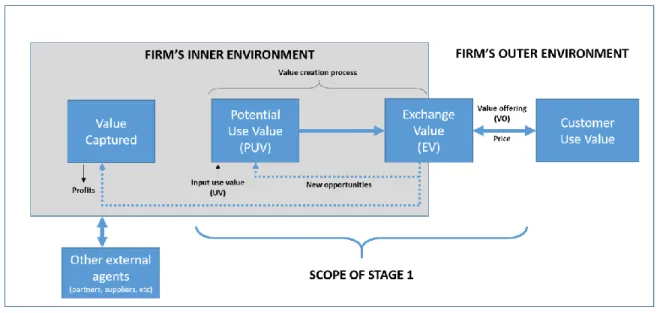
Since no universal meaning of “value” seems plausible, in the thesis we will use this term not in a strict economic sense —i.e. the difference between the willingness-to-pay of a buyer minus the opportunity cost of the supplier (Brandenburger, Stuart 1996)— but in a much broader sense. More specifically, we will refer to the firm’s Multidimensional Value System Dynamics (see Section 4.3.5, B.1), which comprises both the internal and external value creation and exchange processes flowing to and from the components of the firm.
Upon embracing the idea of “value” as the basic building block of the firm-system, the next step leads us to substantiate the firm’s fundamental components as “value repositories”. Value repositories exhibit a duality between value creation and exchange or, in other words, between the stock of distinctive value accumulated by the firm ―generally in the form of Potential Use Value― and the dynamic realization of that value with a customer ―in the form of Exchange Value (Bowman, Ambrosini 2000, Lepak, Smith et al. 2007).
Value repositories have an interconnected nature, thus forming a network that links them together at different levels of hierarchy and strength. For example, as we shall see in Chapter 5, the network of most important value repositories in an airline is made of 15 unique and highly connected value repositories.
39
(Chapter 5), does not match with any particular organizational unit in an real life airline. Instead, this value repository features the distinctive value created and exchanged by airlines ―allegedly involving several organizational units― aimed at simplifying the relationship with the customers and gain internal efficiency.
To effectively unravel the hierarchy of the firm, we shall thus assess the firm’s value system dynamics through the interactions taking place between value repositories. This involves mapping the strength of the interactions, its temporality, and where and with whom the
strongest and weakest interactions happen.
In this process it is important to realize that only a small fraction of the interactions between value repositories will have real influence on the behavior of the firm. At this point it is useful to bring up Simon’s notion of “redundancy” (Simon 1962a), which states that the
underlying complexity of a system can be reduced to only a limited amount of subsystems and interactions that are truly relevant and differentiated.
40
3.5.2 Decomposition of the interactions among firm’s components
Let us first explain what we mean by “interactions”, and how other scientific disciplines use this term.
Usually when molecular biologists say that cells interact, what they are most probably thinking is that some effect is communicated between cells through receptors, or the exchange of certain molecules. Ecologists most likely would consider “interaction” as the relation of individuals in an ecological system such as prey–predator relationship. Physicists and chemists would consider interaction to be the influences communicated by forces –intermolecular, electromagnetic, etc. (Kaneko 2006).
For the purpose of this thesis, we use the term “interaction” in a broad sense, meaning the mutual effects resulting from exchanges among the firm’s value repositories. For example, we regard as an interaction the exchange of value flowing from value repository A to value repository B, or the redistribution of resources between two value repositories.
The interactions between the firm’s value repositories can be decomposed according to the following set of variables:
Intensity. The intensity or strength of the interactions between value repositories
41
In a rather similar way as ecologists observe, we should expect that a firm ecosystem had strong interactions among its key value repositories, and weak interactions across its boundaries (Jørgensen 2006). For the purpose of this thesis field research (Chapter 5), the intensity of the interactions between the airlines value repositories are scaled in five different levels: Zero, Very Weak, Weak, Strong, and Very Strong.
Type. Interactions between value repositories can be of two main types: intra-component interactions, and inter-intra-component interactions. Each type of interaction usually features a distinctive level of intensity and dynamics. As Simon (1962) observes, inter-component interactions are generally of a lower intensity than intra-component interactions. Although this may be true in the field of natural sciences, further analysis remains to be done in the case of the firm. In some cases, inter-component interactions may be so weak that some value repositories might be studied in a stand-alone fashion. For example, in the thesis field research (Chapter 5) the main type of interactions investigated are those among value repositories from inside the firm, these being influenced by up to 10 environmental constraints. Dynamics. Interactions among value repositories can be sorted out by high and low
frequency interactions. High frequency interactions usually take place inside value repositories, whereas low frequency interactions are more common among different value repositories.
42
unfolds, make refinements to address the next round of inter-component interactions. Note that a parsimonious approach, as the 4-round Delphi process used in this thesis field research, should be used for decomposing the interactions and strike a balance between excessive detail and simplicity.
Eventually, the analysis and categorization of the interactions among the firm’s value repositories should allow researchers and practitioners not only to characterize the interactions but also to obtain a measure of the “Total Interaction Capacity (TIC)” of the firm as a whole —or of a particular value repository. The TIC would be contingent on the three decomposition variables described before —intensity, type and dynamics— and may be used to determine the maximum number of simultaneous interactions that a value repository, or the firm as a whole, may assume at any given time. Limitation of the firm to continue interacting may be a sign of the firm’s own information processing capacity.
3.5.3 Modeling of the firm’s network dynamics
Once the firm’s hierarchy has been revealed and the interactions between value repositories decomposed, the next step in the new theorizing process based on complexity should focus on accomplishing a tentative modeling procedure. This way we may offer new possibilities for the exploration of key behavioral questions, simulate specific firm’s behavioral scenarios, and investigate new theories of the way the firm behaves.
43
Several model formulations can be envisaged —e.g. dynamic models, stochastic models, agent-based models, fuzzy models, etc.— and the ability to choose among them requires that sound constraints are imposed on the model not to make it more complex than the data can bear; in other words, researchers must manage the trade-offs between knowing much about little or little about much (Jørgensen, Bendoricchio 2001). In some cases, there might be
environments where the levels of complexity imposed cannot be managed by firms, unless they set considerable simplifying constraints on the information processed.
To illustrate the above considerations, it may be useful to start working with tools such as the adjacency or incidence matrix, a matrix made of ones and zeros, which assigns a value of 1 to the interactions between an element 𝑖 with another 𝑗, and 0 to the absence of any
interaction. Most real-world incidence matrices are sparse and they usually concentrate the larger interactions close to the diagonal of the matrix. Incidence matrices can also be useful to infer subsystems with different degrees of clusterization (Simon 1976).
45
CHAPTER 4.
COMPLEXITY-BASED VIEW OF THE FIRM
4.1 Introduction
The CBVF’s subject matter is not different from that of many other theories of the firm: the study of the behavioral phenomena produced by the firm as a living social and economic structure.
If I may use the simile of systems biology, the CBVF approach aims at understanding how the behavioral properties of the firm are brought about by the interactions of their constituents (Kitano 2002, Alberghina, Westerhoff 2007). In other words, the CBVF aims to decipher how the components of the firm (value repositories) jointly bring about firm behavior.
The problem addressed by the CBVF is therefore one of understanding the behavior of the firm that does not rely on simple enumeration of its components and processes, thereby it is perhaps necessary to define what we regard as constituting “understanding”.