
Exploring the influence of flipped learning strategy on tenth graders writing process at two public schools in Bogota: A route towards differentiation
140
0
0
Texto completo
(2) Running head: FLIPPERENTIATED WRITING PROCESS. Exploring the Influence of Flipped Learning Strategy on Tenth Graders Writing Process at Two Public Schools in Bogota: A Route Towards Differentiation. Francia Catalina TORRES Velandia Andrea Paola HERNANDEZ Herrera. Research Report submitted in partial fulfillment of the requirements for the degree of Master in English Language Teaching for Self-Directed Learning Directed by Carolina RODRIGUEZ Buitrago. Department of Foreign Languages and Cultures Universidad de La Sabana Chía, Colombia June 2017.
(3) 2 FLIPPERENTIATED WRITING PROCESS Declaration. We hereby declare that our research report entitled: Exploring the Influence of Flipped Learning Strategy on Tenth Graders Writing Process at Two Public Schools in Bogota: A Route Towards Differentiation,. ●. is the result of our own work and includes nothing which is the outcome of. work done in collaboration except as declared and specified in the text; ●. is neither substantially the same as nor contains substantial portions of any. similar work submitted or that is being concurrently submitted for any degree or diploma or other qualification at the Universidad de La Sabana or any other university or similar institution except as declared and specified in the text; ●. complies with the word limits and other requirements stipulated by the. Research Subcommittee of the Department of Foreign Languages and Cultures; ●. has been submitted by or on the required submission date.. Date:. June 19th, 2017. Full Name:. Francia Catalina Torres Velandia and Andrea Paola Hernandez Herrera. Signature:.
(4) 3 FLIPPERENTIATED WRITING PROCESS. Acknowledgements We want to thank God for his endless love to us and his continuous blessings, including the opportunity to study in this master’s program. We owe everything to Him. We also thank our families for being our inspiration during all this process, and who have given us the strength to never surrender. Special thanks, admiration and respect to our director Carolina Rodríguez Buitrago, for her unselfish and permanent support and encouragement. Finally, to our schools and students from José Francisco Socarrás and Débora Arango Pérez schools, for their collaboration, and for being part of this study.. ..
(5) 4 FLIPPERENTIATED WRITING PROCESS Abstract This action research examined the impact of differentiated flipped instruction on English process writing. The study was conducted with A1 English level tenth graders from two public schools in Bogota, who demonstrated difficulties with vocabulary and ideas organization when producing written texts. Very few studies have been carried out in the Colombian context on the effect of flipped learning strategies on writing, and on differentiation and the writing process, but they have been applied mainly at university level. For this reason, it was not possible to find any previous study in which all these factors were integrated towards writing development at the school level. Data were collected by means of an entry and exit writing test, questionnaires (needs analysis surveys and final survey), learners’ artifacts (two writing products resulting from the writing process workshops) and teachers-researchers memoirs, which were analyzed through the grounded theory method. After analyzing the data, it was evidenced that flipperentiated instruction helped enhance students’ writing as learners had a remarkable improvement in the quality, complexity and clarity of their written texts. The implementation of this strategy contributed to teacher and learners’ performance, students’ interest towards English learning, and fostering learners’ autonomous behaviors. Key words: Autonomy, differentiation, flipped learning, writing process approach..
(6) 5 FLIPPERENTIATED WRITING PROCESS Resumen Esta investigación acción examinó el impacto de la enseñanza invertida y diferenciada en el proceso de escritura en inglés. El estudio se realizó con alumnos de nivel de inglés A1 en grado décimo de dos colegios públicos de Bogotá, quienes demostraron dificultades con el vocabulario y la organización de ideas al producir textos escritos. Muy pocos estudios se han realizado en el contexto colombiano sobre el efecto de las estrategias de aprendizaje invertido en la escritura, en diferenciación y en el proceso de escritura, pero se han aplicado principalmente a nivel universitario. Por esta razón, no fue posible encontrar ningún estudio anterior en el que todos estos factores estuvieran integrados en el desarrollo de la escritura a nivel escolar. Los datos fueron recogidos mediante una prueba de escritura de entrada y una de salida, cuestionarios (encuestas de análisis de necesidades y encuesta final), artefactos de los alumnos (dos productos escritos resultantes de talleres de proceso de escritura) y registros escritos de las docentes investigadoras los cuales fueron analizados a través del método de la teoría fundamentada. Después de analizar los datos, se evidenció que la enseñanza diferenciada e invertida ayudó a mejorar la escritura de los estudiantes ya que hubo una mejora notable en la calidad, complejidad y claridad de sus textos escritos. La implementación de esta estrategia contribuyó en el desempeño de profesores y alumnos, el interés de los estudiantes por el aprendizaje del inglés y el fomento de la autonomía en los alumnos. Palabras claves: aprendizaje invertido, autonomía, diferenciación, enfoque de proceso escritor..
(7) 6 FLIPPERENTIATED WRITING PROCESS Table of Contents Acknowledgements. 3. Abstract. 4. Resumen. 5. Table of Figures. 10. Table of Tables. 11. Chapter 1: Introduction. 12. 1.1. Introduction to the study. 12. 1.2 Rationale of the study. 14. 1.2.1 Needs analysis and problem statement. 14. 1.2.2 Justification of problem’s significance. 17. 1.2.3 Strategy selected to address problem. 18. 1.3 Research question and objective(s). 20. 1.4 Conclusion. 20. Chapter 2: Theoretical Framework & State of the Art. 22. 2.1 Introduction. 22. 2.2 Theoretical framework. 22. 2.2.1 Flipped learning.. 22. 2.2.2 Differentiated instruction.. 26. 2.2.2.1 Flipperentiated instruction.. 28.
(8) 7 FLIPPERENTIATED WRITING PROCESS 2.2.3 Writing. 2.2.3.1 Writing process.. 29 30. 2.2.4 Autonomy. 33. 2.3 State of the art. 34. 2.4 Conclusion. 36. Chapter 3: Research design. 38. 3.1 Introduction. 38. 3.2 Type of study. 38. 3.3 Context. 40. 3.3.1 Participants. 40. 3.3.2 Researchers’ role. 41. 3.3.3 Ethical considerations. 41. 3.4 Data collection instruments 3.4.1 Introduction. 42 42. 3.4.1.1 Learners’ artifacts. 42. 3.4.1.2 Surveys. 43. 3.4.1.3 Entry and exit tests. 44. 3.4.1.4 Teachers’ memoir journals. 44. 3.4.2 Validation and piloting 3.5 Conclusion. 45 45.
(9) 8 FLIPPERENTIATED WRITING PROCESS Chapter 4: Pedagogical Intervention and Implementation. 46. 4.1 Introduction. 46. 4.2 Visions of language, learning, and curriculum. 46. 4.2.1 Vision of language. 46. 4.2.2 Vision of learning. 47. 4.2.3 Vision of curriculum. 48. 4.3 Instructional design. 50. 4.3.1 Lesson planning. 52. 4.3.2 Implementation. 53. 4.4 Conclusion. 55. Chapter 5: Results and Data Analysis. 57. 5.1 Introduction. 57. 5.2 Data management procedures. 57. 5.2.1 Validation.. 58. 5.2.2 Data analysis methodology.. 58. 5.3 Categories. 59. 5.3.1 Overall category mapping.. 59. 5.3.2 Description of categories.. 62. 5.3.2.1 Flipperentiation effectiveness. 5.3.2.1.1 Concept exploration.. 62 62.
(10) 9 FLIPPERENTIATED WRITING PROCESS 5.3.2.1.2 Meaning Making. 67. 5.3.2.1.3 Experiential Engagement. 70. 5.3.2.1.4 Demonstration & application. 72. 5.3.2.2 Writing Enhancement.. 76. 5.3.2.2.1 Prewriting value. 76. 5.3.2.2.2 Fostering drafting. 82. 5.3.2.2.3 Revising challenge. 84. 5.3.3 Core category 5.4 Conclusion. 90 90. Chapter 6: Conclusions and pedagogical implications. 92. 6.1 Introduction. 92. 6.2 Comparison of results with previous studies’ results. 93. 6.3 Significance of the results. 95. 6.4 Limitations of the present study. 97. 6.5 Further research. 98. 6.6 Conclusion. 99. References. 100. Appendixes. 107. Appendix A: KET Test. 107. Appendix B: Needs Analysis Instruments. 111.
(11) 10 FLIPPERENTIATED WRITING PROCESS Appendix C: Consent letters. 113. Appendix D: Scoring Criteria for written products. 115. Appendix E: Writing Workshops. 116. Appendix F: Students’ artifacts. 118. Appendix G: Final Survey. 123. Appendix H: Platform for videos and activities upload. 124. Appendix I: Sample lesson plan. 128. Appendix J: Writing tool kit. 137. Table of Figures Figure 1. ............................................................................................................................................................ 16 Figure 2. ............................................................................................................................................................ 22 Figure 3. ..................................................................................................................................................... 24 Figure 4. ..................................................................................................................................................... 24 Figure 5. ..................................................................................................................................................... 27 Figure 6. ..................................................................................................................................................... 29 Figure 7. ..................................................................................................................................................... 47 Figure 8. ..................................................................................................................................................... 49 Figure 9. ..................................................................................................................................................... 49 Figure 10. ................................................................................................................................................... 51 Figure 11. ................................................................................................................................................... 61 Figure 12. ................................................................................................................................................... 62 Figure 13. ................................................................................................................................................... 64.
(12) 11 FLIPPERENTIATED WRITING PROCESS Figure 14. ................................................................................................................................................... 66 Figure 15. ................................................................................................................................................... 66 Figure 16. ................................................................................................................................................... 67 Figure 17. ................................................................................................................................................... 74 Figure 18. ................................................................................................................................................... 76 Figure 19. ................................................................................................................................................... 85 Figure 20. ................................................................................................................................................... 89. Table of Tables Table 1 .............................................................................................................................................................. 13 Table 2 .............................................................................................................................................................. 15 Table 3 .............................................................................................................................................................. 54 Table 4. ............................................................................................................................................................. 60.
(13) 12 FLIPPERENTIATED WRITING PROCESS Chapter 1: Introduction 1.1 Introduction to the study. The National Ministry of Education (herein MEN per its acronym in Spanish) revealed learning English as a foreign language has become a need in our current Colombian context (2004). To provide a framework for English language teaching in Colombia, educational policies like the National Bilingual Program 2004-2019 (MEN, 2004) have emerged to guide educational institutions towards the bilingual program goal, which is in its Spanish version: To have citizens who are capable of communicating in English, in order to be able to insert the country within processes of universal communication, within the global economy and cultural openness, through [the adoption of] internationally comparable standards. (MEN, 2004) Public schools, in this case José Francisco Socarrás (JFS) and Débora Arango Pérez Schools (DAP), have assumed the challenge of contributing to Colombian children’s English foreign language development and started to implement the necessary strategies. However, the situations listed below have affected the expected process towards English learning in the four language skills according to the levels (Table 1) proposed in the Basic Standards of Competencies in Foreign languages: English (MEN, 2006)..
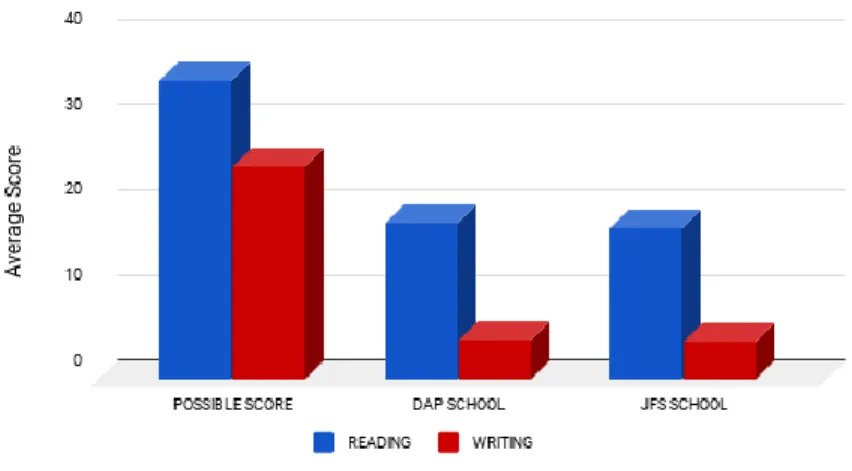
(14) 13 FLIPPERENTIATED WRITING PROCESS Table 1 Levels to be reached by the students in the Colombian Educational System. (MEN, 2006) CEFR. Equivalent Level. Grades to develop. Levels. in Colombia. each language level. Education goals until 2019. A1. Beginner. From 1st to 3rd grades. A2. Basic. From 4th to 7th grades Minimum level for the 100%. B1. Pre-intermediate. th. th. From 8 to 11 grades of High school graduates *Minimum level for English teachers. B2. Intermediate. *Minimum level for professionals in other University Education. careers Minimum level for new. C1. Pre-advanced. graduates in Bachelor of English. C2. Advanced. Note. CEFR stands for Common European Framework of Reference for Languages promulgated by the Council of Europe (2001). The first issue is related to the time devoted for English teaching, learning and practice. English is used mainly during class time which is restricted to four, even less, weekly hours given the curricular and extra-curricular activities contemplated in the school’s program. This is worsened by the large number of students in each class, an.
(15) 14 FLIPPERENTIATED WRITING PROCESS average of forty students who need accurate and specific guidance in their English learning process. The third aspect refers to the great diversity of learning styles, skills, interests, language proficiency levels within the same group of students, contrasting with the generalized curricular goals, classes and tasks. All these factors, have affected the teaching and learning of English language in its four skills and particularly writing, which is the focus of this study as it has been relegated to short, simple and quickly graded tasks that limit the exploration of written language and all the possible advantages it may bring for language learners. 1.2 Rationale of the study. 1.2.1 Needs analysis and problem statement. Due to the two public schools particular circumstances mentioned previously which have led to underestimate writing skill value for language learning, it was necessary the application and analysis of the following instruments to determine how students managed to produce English texts, their main weaknesses when writing, and thus corroborate the need of implementing new strategies to develop and improve this skill. The first instrument applied was an entry test (Appendix A) taken from the reading and writing section of a Key English Test (KET) which is a basic-level qualification test issued by Cambridge English Language Assessment and aligned with the CEFR (Council of Europe, 2001). It was used to measure students’ proficiency in reading and writing before and after the pedagogical implementation for contrasting the results and verifying the effectiveness of the strategy applied during this project. The results presented in Table 2 show that, in terms of writing, initially only an average of 9% of the students in these.
(16) 15 FLIPPERENTIATED WRITING PROCESS groups could be classified in the proficiency level expected by the MEN for tenth grade (A2-B1). Table 2 Students' Writing Proficiency Level According to Entry Test Scores LEVEL TEST TAKERS. TOTAL A. A1. A2. D.A.P. 22 (59%). 10 (27%). 5 (14%). 37. J.F.S. 24 (66%). 9 (25%). 3 (9%). 36. TOTAL. 46. 19. 8. The test scores represented in Figure 1 demonstrated that students’ reading skill level was higher than writing in both schools. Most of the students had many difficulties when completing the writing paper from the test and some of them even left some tasks unanswered. Considering this difference between reading and writing performance, it can be inferred students still need to learn how to transfer the knowledge gained in reading to writing, in terms of vocabulary, structures and paragraphing; apart from acquiring additional resources that can foster their writing process..
(17) 16 FLIPPERENTIATED WRITING PROCESS. Figure 1. Entry test results: Reading and Writing Averages got by school. During the diagnostic stage, the second instrument applied was an autonomy survey (Appendix B) which inquired about students’ habits for studying, learning strategies and the use of technological devices for academic purposes which lighted up the viability of the pedagogical strategy selected for this study. The responses showed that students have different technological resources at hand that they use mainly for entertainment and socializing. Additionally, although most of the students acknowledged their weaknesses and strengths when writing and learning in general, they still need to be trained in their use for their learning benefit. This is reflected also in the 82% of students who considered that real learning can only happen during classes and from the teachers, versus the 17 % who work on their own on strategies to access knowledge outside of the schools lessons. Finally, the writing questionnaire (Appendix C) explored learners’ perceptions towards the process of writing in English. In it, learners stated their need to be able to identify their mistakes and correct them by themselves, or with teachers and classmates’ support. In the same way, even when students considered writing importance for different aspects in a person’s life, the lack of tools to improve writing made them prefer to copy.
(18) 17 FLIPPERENTIATED WRITING PROCESS models than create their own written products. As has been mentioned previously, the short time from English classes that can be devoted to writing affects the teaching of strategies to improve writing skills like the writing process, appropriate vocabulary use, spelling, punctuation, sentence structuring, linking of ideas and paragraph organization. In the same way, written tasks are usually considered and graded as finished products leaving aside the revision, editing and drafting steps and wasting the chance for learning from the corresponding feedback. Then, the results gathered from the needs analysis instruments revealed students’ low English proficiency level, particularly in the writing skill; as well as the scarce autonomous use of available resources for students’ individual and academic growth, together with the limited provision of adequate tools for each student’s advancement in writing and English language learning. 1.2.2 Justification of problem’s significance. When learning any language, writing becomes a necessary challenge whose mastery contributes to communicative competence and language proficiency. Although the four language skills play an important role in language learning and communication, writing has particular relevance as it requires additional time and conscious effort to integrate the different levels of language into the production of any written piece. This research presented an opportunity to progress in writing by providing students with knowledge and practice in the writing process. Thanks to this initiative, the other language skills were positively affected and at the same time students’ general performance in the English language..
(19) 18 FLIPPERENTIATED WRITING PROCESS Having so little time for learning and practice, as is the case in these two schools, harms writing development as it is difficult to arrange a whole lesson or more to carry out the writing process and get a truly elaborated text from each student. Additionally, the correction and grading of students’ writing is a lengthy activity that ends up with the score and in very few cases with improvement, and correction of the text for learning’s sake. Thereby, writing is usually accomplished as isolated homework, without teacher support for the individual difficulties each student might face and without the application of the process to enhance the quality of their texts. Finding a way to address and overcome these difficulties is mandatory as the opportunity for learning, expressing, creating and communicating through written English is being wasted. For this reason, writing usage must be implemented in classroom practice to take advantage of the classmates and teacher’s assistance, the strategies, and tools available and thus enrich English knowledge and the writing process. All these aspects contribute to personal and academic growth making learners more autonomous in learning not only for writing skills improvement and English learning, but also for other subjects and tasks.. 1.2.3 Strategy selected to address problem. According to the needs analysis results, the participants of this study still have many weaknesses when writing in English. Writing is acknowledged as a complex skill because of the small pieces that need to be set together to create an acceptable written product and the time it demands for writing and giving feedback. For this reason, the writing process (WP) approach has been considered as the most appropriate strategy to address this.
(20) 19 FLIPPERENTIATED WRITING PROCESS problem, because when writing any task following the steps in the process, students become aware of the vocabulary, spelling, structures and organization being used. By following a sequence of steps, this approach leaves space for supporting learners’ processing of ideas (Tribble, 1996) revising and working on the feedback according to each student’s needs and strengths. With the implementation of the writing process approach, time remains a drawback for writing so flipped learning (FL) was incorporated to reinforce this pedagogical strategy. When flipping a course, direct instruction is moved out of the classroom to the students’ individual space modifying the focus of the lesson and teacher and learners’ roles. Writing instruction and process steps being delivered as the lecture part of the lesson through online videos and similar resources, extends face-to-face class time to be used in a more productive, active and interactive coached practice towards writing skills development, and privileges teacher’s assistance in individual difficulties or strengths within this collaborative environment. Taking advantage of technology and internet connection to receive teacher’s online instruction, students can access and review the resources when they consider it necessary, allowing them to gain more control of their learning and thus being an active part in their learning process, which is one of the main principles of differentiated instruction (DI). This component of the strategy contributes to dealing with the heterogeneity of the groups, by considering learners’ individual differences and offering a variety of possibilities to reach the expected output. Differentiating the content, process, product and environment when writing, learners can take advantage of each lesson for their individual growth, challenging and engaging them in the process of writing and avoiding boredom or lack of interest..
(21) 20 FLIPPERENTIATED WRITING PROCESS As differentiation is based on the way people learn (Carbaugh & Doubet, 2016), by being knowledge-centered, assessment-centered, and learner-centered, it complements flipped learning to introduce the writing process as an alternative to develop students’ English writing skills, far from the traditional way in which they have been taught. 1.3 Research question and objective(s) The research question that drove this study was how differentiated flipped instruction can impact English process writing of A1 tenth graders at two public schools in Bogota. Based on the stated question, the following objectives have been stated: To determine the effectiveness of the differentiated flipped learning approach to improve the writing skill. To analyze the gradual improvement of students’ written products during the implementation. To contribute new methodologies for enhancing the English teaching and learning process to public schools. 1.4 Conclusion Improving writing in English lessons will give learners the opportunity to develop an essential communicative skill, because it requires and combines more basic skills than any other subject area (Spivey, 2006). Besides, students will explore alternative ways to access information, learn and practice transcending the classroom and beyond the teacher, use technology and address autonomous learning for their benefit. Flipped learning is used in this study to help students become responsible for their language learning (Bergmann & Sams, 2012) and to optimize English face-to-face sessions.
(22) 21 FLIPPERENTIATED WRITING PROCESS in these two public schools. This study aims to clarify students’ doubts about writing through scaffolding and differentiating the individual writing process. Having more time for practice propitiates self and peer correction of students’ written products and as Brandvik (1990) observes “encourage students to take a constructive role in analyzing and evaluating their own and the writing of their peers and make hypotheses about the nature of language to test them through use” (p.6)..
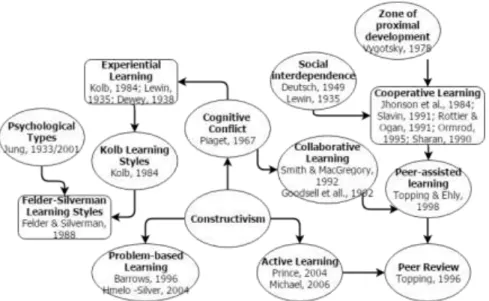
(23) 22 FLIPPERENTIATED WRITING PROCESS Chapter 2: Theoretical Framework & State of the Art 2.1 Introduction This chapter develops the theoretical foundations of flipped learning, differentiated instruction, the writing process and autonomy and how they are related to each other in creating an alternative scenario for the improvement of writing skills. Additionally, recent research regarding these fields is presented as a way to locate this study within the body of literature of similar works delivered. 2.2 Theoretical framework. 2.2.1 Flipped learning.. Since Flipped Learning and all its different models (flipped class 101, flipped mastery, in-flip class, etc.) were born, they have become an evolving phenomenon that has been growing as a means to overcome the limitations of traditional approaches. Bishop & Verleger, (2013) claimed FL foundations focus on student – centered learning theories which they illustrated in Figure 2:. Figure 2. Psycho-educational origins of student-centered learning theories..
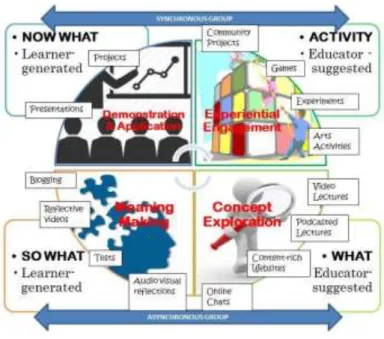
(24) 23 FLIPPERENTIATED WRITING PROCESS The pioneers in FL Bergmann & Sams and the Flip Learning network defined this approach as: A pedagogical approach in which direct instruction moves from the group learning space to the individual learning space, and the resulting group learning space is transformed into a dynamic, interactive learning environment where the educator guides the students as they apply concepts and engage creatively in the subject matter. (FLN, 2014). This definition introduces three core principles: first, pre-teaching, referred to the activities that traditionally were done in class but now at home (Bergmann & Sams 2012). Secondly, FL is learner centered because it’s main goal is learning by offering the possibility of “meeting students’ needs with a wide variety of learning styles” (Lage et al, 2000, p. 37). And the class time, used for the construction of meaning rather than for information transmission, intended to be active and interactive by carrying out experiential engagement, demonstration and application phases from the learning cycle adapted by Gerstein (2011) and presented in Figure 3.
(25) 24 FLIPPERENTIATED WRITING PROCESS. Figure 3. Flipped classroom learning model cycle (Gerstein, 2011). The Flip Learning Network (FLN), (2014) defined four main pillars for FL, closely related to the principles listed above and represented in Figure 4:. Figure 4. The four pillars of FLIP by the FLN, (2014) The pillars presented above imply five main changes in essential aspects from traditional approaches: first, the focus from the curriculum pacing guide, by shifting the.
(26) 25 FLIPPERENTIATED WRITING PROCESS lecture-centered instructional model to students’ learning needs as the driver of instruction (Hamdan et al, 2013). Secondly, the teacher’s role, who knows and teaches the students, but becomes a facilitator, a guide who leads from behind (Marshall, 2014) and a better supporter of struggling students (Bergmann & Sams, 2012). In the third shift, learning becomes active, understood as “the process of having students engage in some activity that forces them to reflect upon ideas and their accurate use” (Michael 2006, p.160). Freeing classroom from lectures creates the potential for active, engaged, student-centered learning, peer interactions, and personalized instruction (Hamdan et al, 2013), peer instruction, collaboration and projects (Marshall, 2014), associated with improved student academic performance by the development of high order thinking skills. Fourth is direct instruction received in the individual learning space through different resources (Forsey, Low & Glance, 2013) as homework was done before, reviewed and controlled at students’ own pace, according to their needs or interests (Gerstein, 2011). Lastly, time in face-to-face sessions can be invested to develop open ended, cross curricular projects which engage students and bring real-life relevance to their skills (Fulton, 2012). In this environment students receive more personalized instruction, with activities designed to help them master the material, meeting them at their readiness level (Hamdan et al., 2013) and addressing those specific doubts of each learner. Additionally to the concept given above, Bergmann & Sams, 2012, defined flipped classrooms as “that which is traditionally done in class is now done at home, and that which is traditionally done as homework is now completed in class” (p.24). Other authors defined and used flipped learning as “a model of ‘peer instruction’ in which the teacher provides material for students to prepare and reflect on before class and then, they used class time to.
(27) 26 FLIPPERENTIATED WRITING PROCESS encourage deeper cognitive thinking” (Crouch and Mazur, 2001). Most of the definitions agree on the relevant role of teachers to provide solid material and instruction to students in order for them to work on significant knowledge meaning before arriving to the lessons and, strong support during the lessons to enhance their higher order thinking skills, which means a challenging implementation for teachers and learners.. 2.2.2 Differentiated instruction.. According to Kyriacou (2009),ability, motivation, social class, gender, race and special education needs are the main differences among students; interpretation sustained on student diversity, learning styles, brain research and multiple intelligences theories (Subban, 2006). As a support in this field, differentiated instruction (DI) appears as the strategy to deal with diversity among the students in the same class group in contrast to the standardized tendency: the one-size-fits-all curriculum being used although it no longer meets the needs of the majority of learners. Differentiation is referred as a philosophy with the premise that students learn better when their teachers accommodate, plan and design strategically to achieve targeted standards (Tomlinson, 1999). It means effective teaching (Kyriacou, 2009), involving catering for those differences (Tomlinson, 2005), for planning strategically aiming to provide equity of access to excellence for every student (Tomlinson, 2014). Its purpose is to offer challenging and appropriate options for them, in order to reach success through becoming self-directed, productive problem solvers and thinkers (Gregory & Chapman, 2007). Accordingly, differentiated classrooms support all students through two elements:.
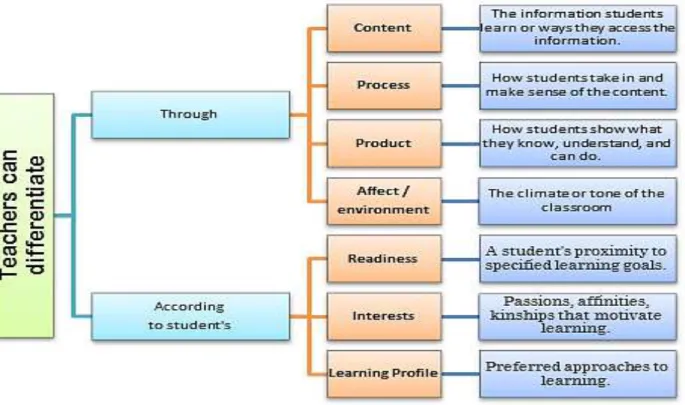
(28) 27 FLIPPERENTIATED WRITING PROCESS engagement, related to the meaning and relevance of the class goals for the students and, understanding related to the sense of the class for the students in their learning process (Tomlinson, 2014). Likewise, important elements in differentiated classroom brain research include safe and non-threatening learning environments; appropriate challenge, meaningful ideas and skills significant association (Tomlinson & Kalbfleisch, 1998). Differentiated instruction can be carried out by task, outcome, learning activity, pace, dialogue, support and resource (Kyriacou, 2009); having, thus, several ways in which teachers can differentiate as represented by Tomlinson (2014) in the chart included in Figure 5.. Figure 5. How differentiation works. (Tomlinson, 2014) The figure illustrates the routes that can be taken by the teacher to differentiate in the classroom; such routes involve aspects related to content, process, product, and environment observed in the classroom. It also describes important features to take into.
(29) 28 FLIPPERENTIATED WRITING PROCESS account at the moment of working on differentiated instruction. Different instructional strategies must be used to support DI, for instance: stations, interest centers, rafts, graphic organizers, scaffold reading/writing, intelligence preferences, tiered assignments, learning contracts, menus, tic-tac-toe complex instruction, independent projects, expression options, small-group instruction and literature circles, as suggested by Tomlinson (2014), as well. 2.2.2.1 Flipperentiated instruction. Both, Flipped Learning and Differentiated Instruction provide innovative scenarios for language teaching and learning on represented their own, each one of them providing several benefits and at the same time, being core to achieving significant and observable growth for every student who comes in this way (Carbaugh & Doubet, 2016). But together, there are many aspects in which these two constructs complement each other. Hirsch (2014) coined the term Flipperentiation by claiming that if differentiation is the engine, flipped learning is the grease. Similarly, Carbaugh & Doubet (2016) highlighted the local synergy between these two models. Flipperentiation provides rich opportunities to cater to diversity due to the flexibility rooted to its use. Then, “students first explore their learning on a single, self-guided path; afterward, navigate with others, a map of interlocking trails to discover their ultimate destination” (Hirsch, 2014). Figure 6, illustrates the modifications to traditional education thanks to flipperentiation..
(30) 29 FLIPPERENTIATED WRITING PROCESS. Figure 6. Evolutionary change (Carbaugh & Doubet, 2016) Through this blended model, student engagement will likely rise due to an emphasis on meaning making and more personalized contact with information. As teacher focuses the lesson on learners’ needs; then, instructions and activities are formulated to accomplish particular instead of general demands. Hence, a richer culture of collaboration will emerge among students responding to the teacher’s willingness to create suitable and challenging learning opportunities through careful and intentional planning (Hirsch, 2014).. 2.2.3 Writing.. Writing, an inherent skill in human beings, deserves special attention and training to be developed. It plays a relevant role in social, academic and professional contexts. As a complex skill, writing needs to be taught and improved permanently according to its use for people's specific purposes (Langan, 2009). Writing starts with the simple action of.
(31) 30 FLIPPERENTIATED WRITING PROCESS transferring thoughts and feelings from one’s head into words. However, most of the time it becomes complicated, involving a great deal of time to achieve the desired written product. In comparison to speaking, writing involves more actions like selecting the correct vocabulary, grammar, spelling, punctuation, style, kind of text, type of readers, among others (Langan, 2009, p.10). 2.2.3.1 Writing process. The writing process appears as a response to some ideas affirming that writing a final product is the most important aspect when students learn this skill, and consequently in assessing it, leaving aside all the time, effort and monitoring done to obtain such product. WP is a set of stages to follow before presenting a final product, as a help to plan, organize better, and improve the required information in different aspects throughout the process. Such stages do not follow a linear sequence but can be reviewed depending on the author. For Murray (1997) the WP itself can be divided into three stages: prewriting, writing, and rewriting; whereas for Tribble (1996:39) the four stages of the writing process are: prewriting, composing/ drafting, revising and editing. However, they agree with the idea of a cyclical process in which the writer can return to pre-writing when necessary (Badger & White, 2000). Prewriting is the first step of the WP, when the writer starts generating ideas about the selected topic. Prewriting constitutes 85 % of the writing time, as the writer has to focus on the topic and requires research (Murray, 1997), for this reason, it is relevant for the following steps. The strategies for prewriting are brainstorming, free writing, clustering and outlining. Each writer has the possibility to select the best pre-writing strategy according to the needs and preferences. If the writer devotes appropriate time to this stage, the topic will.
(32) 31 FLIPPERENTIATED WRITING PROCESS be enriched with enough strong ideas (Peha, 2003). Drafting means to start writing using a structure and organizing ideas according to the kind of text selected by the writer. In this stage, the writers can include all the ideas considered important to contribute to the writing. Using the outline created in the prewriting step, the writer defines the important aspects to include in the composition. Revising helps the writer to check some aspects related to the content of the writing, like missing ideas, words that can be added, moved or removed. Moreover, it can help to know if the text structure is appropriate, or if it is necessary to change it somehow. In editing, the writer checks and corrects mistakes related to accuracy, grammar, punctuation and spelling. It can be done by the writers own effort, or asking for peers’ and teacher’s support. Finally, publishing is choosing the best way to present the final written product, doing the last checking and adding possible pictures, drawings, images etc., when necessary. Although following the stages can be time consuming, it avoids teachers’ superiority regarding correction and feedback on learners’ written products, as feedback in the writing process can be addressed by teachers, classmates or headmasters (Keh, 1989), it allows information exchange among students to enrich the process and assures their appropriation of the process to reach better products (p, 296). Tribble (1996) states that the process approach emerged with a different focus from the product approach, as the process approach stresses the creativity of the individual writer, and focuses on the development of good writing practices rather than the imitation of models. At the same time, the WP encourages learners to be active in their knowledge acquisition, generating the ideas, supporting them, helping each other, realizing their own.
(33) 32 FLIPPERENTIATED WRITING PROCESS mistakes, and other implicit actions that strengthen their skills. This is contrary to the product approach which mainly focuses in the written product, no matter if it is repetition of existent models (White, 1988). The product approach also has four stages: familiarization, controlled writing, guided writing and free writing but they intend to produce a final written product, and during each stage, the learners are guided and suggestions are given on what and how to write (Badger & White, 2000). Here, the teacher plays an active role as controller of each learner action throughout the sequence of writing. When implementing the writing process, teachers’ roles change in the classroom, giving the writers the opportunity to propose, work and learn throughout the process. The teacher is silent, letting the students ask, create, and use language freely with the right amount of their language knowledge. Each step of the process has its importance and usefulness, as Murray states: Instead of teaching finished writing, we should teach unfinished writing, and glory in its unfinishedness. We work with language in action. We share with our students the continual excitement of choosing one word instead of another, of searching for the one true word. This is not a question of correct or incorrect, of etiquette or custom. This is a matter of far higher importance (1997, p. 19).. It means going against the way teachers have been trained to evaluate writing, but at the same time bringing more satisfaction, for teachers and for learners, when both realize on a major success on writing by following the writing process stages. As the initiator, the learner has the active role in the WP dynamics. The learner does, writes, requests asks for help and contributions, and the teacher patiently waits to take part in the process when the learner needs support and encouragement (Murray, 1997)..
(34) 33 FLIPPERENTIATED WRITING PROCESS With the WP, learners feel encouraged to write freely for communicating by all possible means, therefore, in most of the process fluency plays an active role, however accuracy and the form is still important (White, 1988).. 2.2.4 Autonomy. Since the beginning of studies in this field, the concept of autonomy in language learning and teaching has drastically changed, but its incidence has dramatically increased. Barfield, Andrew & Toogood (2009), cited in Benson (2001) state that since 1970’s, and with the beginning of the new century, discussions and chapters on autonomy have begun to appear more frequently by different authors, and with varied perspectives. Benson (2001) defined autonomy as “the control of one’s own learning” (p. 47); while Holec (1981) defined it as the capacity to take charge of one’s own learning. Little (1991) in Benson (2009), argued that learners’ autonomy can “take numerous forms, depending on their age, how far they have progressed with their learning, what they perceive their immediate learning needs to be, and so on” (p, 15). After these perceptions, Benson defines autonomy vaguely as “a multidimensional capacity that will take different forms for different individuals and even for the same individual in different contexts or at different times” (Benson, 2001, p. 47). Capacity explained by Little as “a capacity for detachment, critical reflection, decision-making, and independent action” (p, 47), which is also shown in the way the learner learns and transfers what has been learned to wider contexts” (1991). One of the possible outcomes regarding autonomy in language learning has to do with “learners’ responsibility towards their learning, dependent of the learner needs,.
(35) 34 FLIPPERENTIATED WRITING PROCESS purposes, capacities, and ultimate achievement” (Little 1994) in Huang (2013. p, 28). At the same time, teachers and classmates (co-learners) play a special role at helping each other to build their knowledge (Lennon, 2012, p. 19). If learners are responsible of their learning they will find ways to consult, develop tasks and improve autonomously. Teachers’ expectations with regard to learners’ autonomy must be accompanied by actions that promote autonomous acts in learners (Little, 1994) in Huang (2013). If a classroom has a learner-centered environment, it will help to accommodate teachers to the personal constructs of their learners (Little, 1994), without setting aside their teachers’ own constructs and concept in teaching. Lennon (2012) concluded that teachers had to be “constantly reminded to monitor progress and adjust their working processes accordingly if necessary” (p. 22). The four constructs described above complement each other in this study, as all of them demand changes in learners’ behaviors and actions towards learning (Little, 1994; Murray, 1997; Tomlinson, 2014); at the same time, they require changes in teachers’ instructions and interaction with students, making the individual learners’ needs the motor of the process. The data collected and analyzed in the coming chapters was confronted with the present theoretical framework to support the results and provide accurate conclusions about the strong and weak outcomes of the current study. 2.3 State of the art The following research presents works in the fields of FL and DI, and their contribution to English language teaching and learning, more specifically in the development of writing skills. At the same time, these studies provide a basis to corroborate that this study is well addressed in order to contribute to the English language learning and.
(36) 35 FLIPPERENTIATED WRITING PROCESS teaching field. R. Buitrago & Diaz’s, (forthcoming) study was related to flipped writing components in groups of University students to write compare and contrast essays. By using the FL approach, researchers aimed to enhance important aspects for learning such as: writing skills, use of ICTs for academic purposes, and autonomous learning. Some findings were students’ improvement in their writing skills by using the WP approach and peer feedback; increase in autonomy based on the purposeful use of technology and a shift in teachers’ and students’ perception towards learning. Writing workshops were used in R. Buitrago & Diaz, (forthcoming) and in the present study, although the groups of students were different. The implementation of this tool helped to guide learners in each of the stages of the writing process approach, and the theoretical part of the lessons was flipped in both research projects as well. Engin (2014) conducted a University study in the United Arab Emirates with native Arabic speakers in an academic writing course. There, the flipped classroom was used as students watched tutorial videos at home and spent class time working on research and writing with the teacher’s one-to-one guidance, feedback and support. Findings of this study were that students felt encouraged to use higher order thinking skills in writing. Furthermore, students thought carefully about language and content for explanations and did their best to understand the topic before making the video. Accordingly, the lesson steps designed for the current study provided an environment for deeper interaction between teacher and learners in which the latter gained awareness in language use and improving their writing skills. Bueno’s (2016) study focused on raising students’ awareness on paragraph writing.
(37) 36 FLIPPERENTIATED WRITING PROCESS and developing writing habits through the WP approach, and facilitating the structuring of paragraphs by using peer feedback and additionally, Donzel (2014) concentrated her action research on the brainstorming, outlining, and drafting stages of the WP. In both cases, planning before writing resulted in an increase of learners’ motivation to complete writing activities and improved their written compositions in terms of organization of ideas and better presentation of written products. Although, Bueno (2016) and Donzel (2014) concentrated just on some stages of the writing process, they showed participants’ effectiveness and improvement regarding learners’ writing skills, and confirmed the importance of a good planning of the writing for better results on learners’ compositions. Rincon (2009) and Garnica and Torres (2015) conducted their studies implementing a genre-process writing approach at public schools in Bogotá. The former promoted the use of e-portfolios for developing students’ WP and helping them to become active studentwriters, while the latter, focused on taking advantage of a blended learning method, and the process genre writing approach implemented for creating descriptive paragraphs. Both studies reported a significant improvement in written products, evidencing better coherence, cohesion and vocabulary use. Both research projects were useful in the current study to corroborate the importance of designing activities for the “in class” stage that help learners to improve different aspects in writing, as the ones mentioned above. Other important outcomes in the described study were the effective use of portfolios as a learning and assessment tool and learners’ self- reflection on their own learning. 2.4 Conclusion This chapter introduced the theoretical support regarding the constructs of this study. It is possible to identify how flipped learning, differentiated instruction, the writing.
(38) 37 FLIPPERENTIATED WRITING PROCESS process, and autonomy are linked to one another due to their theoretical foundations, contributing to developing the pedagogical proposal stated in this research. Additionally, the reports on similar studies confirmed the viability of connecting these constructs providing samples on the paths that previous researchers have followed when conducting similar studies..
(39) 38 FLIPPERENTIATED WRITING PROCESS Chapter 3: Research design 3.1 Introduction Throughout the this chapter, the type of research used in the present study is described, and the way it was implemented taking into consideration the context, the participants and researchers’ roles. Additionally, the data collection instruments and procedures are described, as well as the ethical considerations, and the validation of the study. 3.2 Type of study The purpose of this research is to determine to what extent the implementation of the writing process approach through a differentiated flipped learning environment can help tenth graders improve their English writing skills. Therefore, a collaborative, practical action research with mixed method data collection was carried out to systematically study the particular school contexts involved here with a view towards improving education practice, students’ learning and teachers-researchers’ professional development, as stated by Schmuck (1997), cited in Creswell (2012). Mills (2011) defined action research designs, as systematic procedures done by teachers (or other individuals in an educational setting) to gather information about, and subsequently improve, the ways a particular educational setting operates, their teaching, and their student learning. Additionally, Creswell (2014) indicated that using quantitative and qualitative data opens a possibility for the researcher to involve philosophical assumptions and theoretical frameworks, in order to understand better the research problem of a study..
(40) 39 FLIPPERENTIATED WRITING PROCESS Anderson, Nihlen, & Herr (2007) stated that action research cycles involve moments of planning actions, acting, observing the effects, and reflecting on one’s observations. These cycles form a spiral that results in refinements of research questions, resolution of problems, and transformations in the perspectives of researchers and participants (p. 3). Following the action research cycle, the research plan was established as a guide for data collection. During the first stage, the application of the needs analysis revealed a problem in the writing skills of the selected participants. With the data collected, the problem was stated, and the research question and objectives were formulated. In the acting stage, intervention activities like flip videos, lesson plans implementing differentiated instruction, writing workshops, and rubrics to assess learners’ writing products were designed (see Appendix D and Appendix E). While the instruments were being applied, they were observed and their effect was analyzed to answer the research question and evidence any learners’ improvement in their writing skill. This small-scale research project was designed and implemented in the context of the teacher-researchers’ own environment, attending to the groups’ needs; and intending to contribute to a better teaching and learning practice (Ferrance, 2000). Furthermore, it pointed out to improve in varied aspects in the classroom, as Mackey and Gass (2005) pointed out, with the goal of wanting a better understanding of how second languages are learned and taught, together with a commitment to improve the conditions, efficiency, and ease of learning..
(41) 40 FLIPPERENTIATED WRITING PROCESS 3.3 Context This study was carried out at Débora Arango Pérez (DAP) and José Francisco Socarrás (JFS) schools, two public schools located in Bosa, in the south of Bogotá. The students come from low income and challenging socio-economic conditions, most of the participants’ parents only have elementary or high school level of education, making it difficult for them to support their children in tasks and homework activities. Nevertheless, most students have internet access at home which facilitated their participation in this study, allowing the flipped learning paradigm to be fully implemented. While the group from JFS school belongs to the morning shift, DAP students have classes the whole day, but in both schools, the syllabus implemented is adapted mainly from the guidelines issued in The Basic Standards of Competence in Foreign Language: English (MEN, 2006).. 3.3.1 Participants. The participants were 68 tenth graders, between 14 and 17 years old, from both schools, taking English lessons with the teachers-researchers to follow one of the characteristics of action research and contribute to the improvement of teachers-researchers field of activity. Although the groups in both schools are large (between 40 and 43 students), only the mentioned number was selected as they presented the consent letter signed at the beginning of the current study. About 80% of the learners have between Aand A1 English proficiency level according to the CEFR, which means they had similar needs to use class time for more practice, improve their English language skills, and be prepared for the state exams to be taken next year..
(42) 41 FLIPPERENTIATED WRITING PROCESS Both groups are quite similar regarding students’ creativity and attention spans, but heterogeneous in their skills and interests. Learners are very dependent on their teachers and have difficulties working collaboratively. They also have difficulties following timelines, and finding the right tools to support their learning. As an advantage, all of them are very respectful of teachers’ suggestions and are well-disposed towards working in class but they have trouble working independently in other spaces, so they need to recognize the way they learn to improve their learning processes. 3.3.2 Researchers’ role. The teacher-researchers of this action research performed as designers, leaders, assessors and reflective practitioners. They concentrated the study on their own work, to improve what they do, including how they work with and for others (Cohen, Lawrence & Morrison, 2007). So, researchers’ reflection was vital from the beginning of the process to identify those aspects that could improve the strategy and contribute to the learners’ progress. Furthermore, the teacher-researchers supported the students, by giving feedback on time and encouraging them when they met difficulties and the goals seemed to be impossible to attain. Finally, by being in a familiar context, the researchers could identify the immediate needs regarding language learning, and the most suitable approaches, tools and techniques to implement in these two groups.. 3.3.3 Ethical considerations. Considering that research should not involve any risk, harm or disadvantage to the.
(43) 42 FLIPPERENTIATED WRITING PROCESS participants involved in the actions taken, neither should it invade their privacy by touching on personal or sensitive areas (Burns, 2010) this research and all the information provided from schools, students and contexts was mentioned after asking for consents and permissions, where the confidentiality was guaranteed. The principals of the schools were informed of the process and stages to be carried out in each institution, and similarly, parents were informed about the research and their permission was received through the consent letters (Appendix C). Accordingly, the participants’ identities, personal information or any fact that might affect students’ rights will not be revealed in this report. 3.4 Data collection instruments. 3.4.1 Introduction. In this study, data were collected to know whether the WP, introduced through a differentiated flipped learning approach, contributed to improve learners’ writing skills and foster their autonomy towards language learning. Hence, learners’ artifacts, two surveys, entry and exit tests, and teachers’ journals were the instruments to gather such data. 3.4.1.1 Learners’ artifacts As action research is formative, learners’ artifacts documented students’ process and progress in writing skills when following the WP stages. Merter (2007) in Mills (2007) described artifacts as “written or visual sources of data that contribute to our understanding of what is happening in our classroom” (p.72). These artifacts were collected in each lesson designed for the implementation step, where learners worked on two writing workshops developing the stages of the writing process. In this study, the artifacts were the learners’ written productions like the ones presented in Appendix F. The researchers analyzed the.
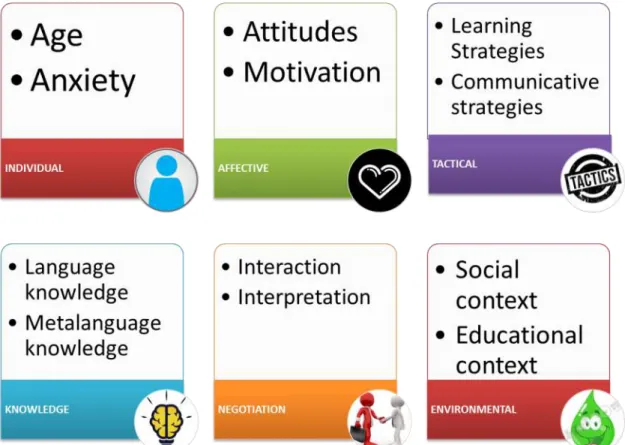
(44) 43 FLIPPERENTIATED WRITING PROCESS learners’ improvement in terms of writing more complex and comprehensible texts, with a better use of vocabulary, grammar structures and punctuation, among other language factors that can be improved by following the stages in the writing process in each workshop. In these aspects, there are studies that evidenced learners’ improvement by following the writing process steps after analyzing such kind of artifacts (Bueno, 2016; Rincón, 2009; and, Garnica and Torres, 2015). The process and the products of the first and second workshop were compared, to determine any changes in the writing skills. The researchers designed a scoring criteria for the assessment (Appendix D), and this rubric provided learners with a score and accurate feedback, which made that participants realized some aspects they need to improve in their future written productions and, at the same time, researchers could find patterns regarding the research question, proving the impact of flipperentiated instruction applied during the implementation as explained in Table 3. 3.4.1.2 Surveys The questionnaires, as common instruments in language research (Brown, 1997), were useful to gather learners’ impressions in writing and in a short time. Two surveys were designed to gather qualitative data (open ended questions), and quantitative data (closed questions). The initial survey (Appendix B) took place during the needs analysis and it had one sections about the learners’ perceptions of their learning and a second one about the resources available to support that learning; the latter with four sub-sections: independence and responsibility, learning strategies, learning, and use of technological resources, for a total of twenty-seven questions. The second survey was about learners’ perceptions towards writing and its importance in their learning process. It was designed.
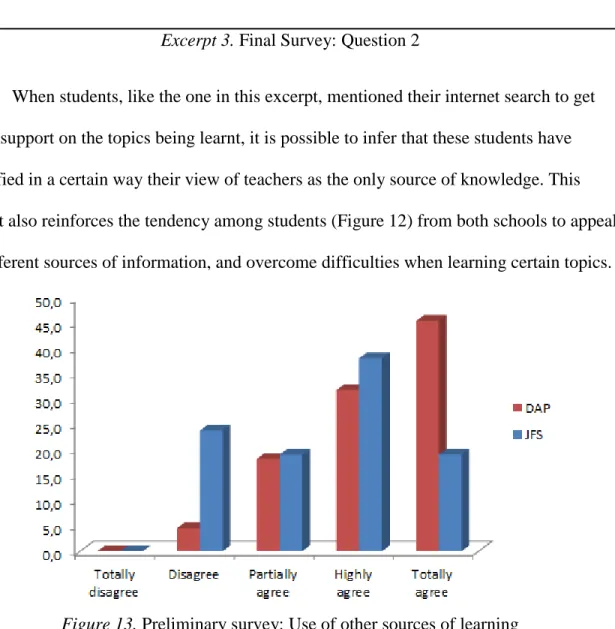
(45) 44 FLIPPERENTIATED WRITING PROCESS with scoring scales, multiple choices, closed and open questions in English with their Spanish translation, and both of them were administered with Google Forms. After the implementation of the strategy, the final survey () was applied and, by means of openended questions, information emerged about how learners felt during the writing workshops, about the change in the delivery of the lesson, and how they perceive their own progress in writing. This type of survey allowed the learners to express freely the good and bad aspects they noticed in the stages of the study (Anderson et al, 2007). 3.4.1.3 Entry and exit tests A test based on the reading and writing sections in a KET for Schools test was applied before and after the implementation stage (Appendix A). The entry test helped to determine English proficiency level in the participants before the study, in order to design the other instruments with the accurate language level for both groups, as part of the differentiation strategy. Additionally, with the results of the entry and exit tests, it was verified whether learners’ writing skill was affected after the implementation of the strategy. These tests provided quantitative and qualitative data to compare and analyze. 3.4.1.4 Teachers’ memoir journals Non-observation action research methods for data collection are extremely useful to capture significant reflections, beliefs, ideas, insights and events about the practice on an ongoing way (Burns, 2010). Memoir journals keep accounts of times during the process when the researchers want to articulate their values and theories as teachers by registering significant moments that influenced their teaching practice. Teachers-researchers made hand-written notes on specific aspects they observed before, during and after the.
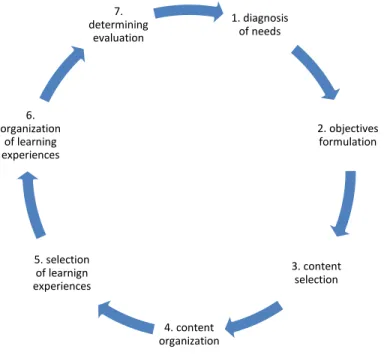
(46) 45 FLIPPERENTIATED WRITING PROCESS implementation which were later exchanged in order to determine any possible adjustment needed in instruction.. 3.4.2 Validation and piloting. With the purpose of ensuring the trustworthiness of this study, the thesis director read the instruments, and those were piloted with a similar group of students in both schools before applying them, this allowed that instruments were timely corrected, contributing to a better design of the strategy. During the process of data collection and analysis, the qualitative and quantitative instruments provided the information to be analyzed by means of triangulation, defined as the use of two or more methods of data collection in the study of some aspect of human behavior (Cohen, Manion, & Morrison, 2007). Thus, the researchers could verify that the instruments and the data gathered were valid and reliable information to analyze and state the conclusions of the study. 3.5 Conclusion This chapter described the participants, context and researchers’ roles in the designed action research plan with mixed instruments of data collection. The ethical considerations for data collection were described and finally, the piloting of data collection instruments was done to improve them and thus guarantee their validity and reliability..
(47) 46 FLIPPERENTIATED WRITING PROCESS Chapter 4: Pedagogical Intervention and Implementation 4.1 Introduction In this section, it is explained how this study’s main constructs were pedagogically articulated into the flipperentiated writing process strategy with the purpose of enhancing the participants’ writing skills. 4.2 Visions of language, learning, and curriculum. 4.2.1 Vision of language. Ortega (2013) defined language as a symbolic system and the most uniquely human capacity employed for meaning and communication about immediate, imagined and remembered worlds. While Kumaravadivelu (2006) pointed out that despite the fact that language has been studied extensively from three different perspectives: as a system, as discourse and as ideology, it is still an unknown object. With this background perspective, this study combines the three perspectives by integrating the textual, interpersonal, and ideational functions (Halliday, 1973; Breen and Candlin, 1980) as cited in Kumaravadivelu (2006); areas that involve an intricately interconnected and interactive interpretation, expression, and negotiation during communicative performance. Similarly, Cuningsworth (1995) more specifically points out grammar, vocabulary, phonology, discourse, styles, and appropriateness as language main categories of study, which are also embedded in the language vision for this research. When creating any written piece, the mentioned aspects of language should be carefully linked and weaved to produce understandable, coherent and meaningful texts. For this reason, writers need to work on developing each individual area to reach a whole.
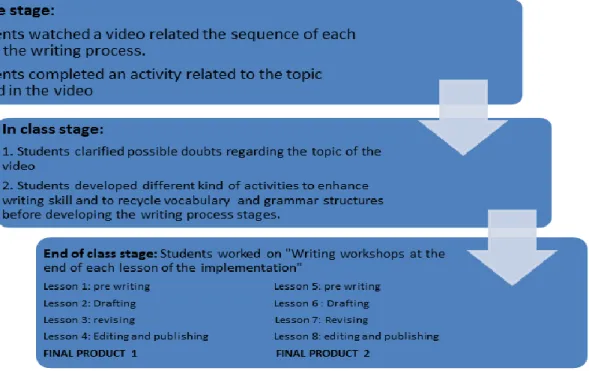
(48) 47 FLIPPERENTIATED WRITING PROCESS harmony among those aspects within their products.. 4.2.2 Vision of learning When learning a foreign language, learners’ cognitive capacity mediates between the input (stimulus) and output (response) with the advantage of having the first language acquisition process as a benchmark of language development (Ortega, 2013). During the pedagogic implementation of this study case, interlanguage, simplified and non-simplified input were presented to the students, keeping in mind intake factors that might hinder or foster their learning process. Intake factors (Kumaravadivelu, 2006) defined as the learner internal and external aspects that can impact the psycholinguistic processes of language learning, are illustrated in Figure 7:. Figure 7. Intake factors (Kumaravadivelu, 2006).
(49) 48 FLIPPERENTIATED WRITING PROCESS DI provides support and strategies in each of these aspects while FL promotes the communicative abilities of negotiation, interpretation, and expression that are considered to be the essence of a learner-centered pedagogy. Both methodologies empower learners to reach the goals of language study by increasing their knowledge of the language system, so that productive and receptive skills can be improved (Harmer, 2001). Language learning goals involve the responsibility of language teachers as facilitators, interdependent participants, organizers and guides that supports students to become more active in their learning process so they can develop language awareness while exploring and researching language by their own (Harmer, 2001). Teachers also foster meaningful communication through contextualized, discursive situations where the four skills are integrated and errors are considered natural outcomes of language development (Kumaravadivelu, 2006).. 4.2.3 Vision of curriculum. Curriculum, defined as the overall design for a course and how that course content is transformed into a blueprint for teaching and learning (Richards, 2013). Given the fact that any outcome is expected as a demonstration of the interaction between teaching and learning (Wiggins and McTighe, 2006), Richards (2013) acknowledges input, process and output as the three dimensions of a curriculum, which are represented in the syllabus, methodology and learning outcomes as explained in Figure 8:.
(50) 49 FLIPPERENTIATED WRITING PROCESS. Figure 8. Curriculum Dimensions according to Richards (2013) Curriculum development in language teaching can start from input, process or output. Backward curriculum design has to do with the specification of learning outcomes (output), so the syllabus and the methodology are design based on them. Wiggins and McTighe (2006) in Richards (2013) asserted the statement of the desired results are the key to start the design of this curriculum, where the methodology is selected according to the most suitable way in which learners reach the expected outcomes and these steps must be followed as showed in Figure 9: 7. determining evaluation. 1. diagnosis of needs. 6. organization of learning experiences. 2. objectives formulation. 5. selection of learnign experiences. 3. content selection. 4. content organization. Figure 9. Curriculum design (Taba, 1962: 12)..
(51) 50 FLIPPERENTIATED WRITING PROCESS One example of backwards design is the Common European Framework of Reference for Languages (CEFR). A document that establishes the foundations for the Basic Standards in English as a Foreign Language (MEN, 2006) and the Basic Learning Rights (2016), specifying that tenth graders are expected to write narrative, descriptive and explanatory texts related to topics of interest or that are familiar to them, and promote the use of the WP to reach the written output expected for this level. The curriculum from the two institutions involved in this study is guided by the previous parameters and the learner-centered curriculum proposed for this implementation aims at generating environments which promote the solution to students’ learning needs, in order to confront real life communicative situations. 4.3 Instructional design The flipperentiated written process led the whole implementation, therefore the lessons and materials were designed and implemented in both groups in the same way as they had similar characteristics and a similar English proficiency level. The lessons followed three general stages: at home stage, in class stage, and end of class stage as explained in Figure 10..
(52) 51 FLIPPERENTIATED WRITING PROCESS. Figure 10. Stages developed in each lesson As can be seen in this figure, during the first step of each lesson, completed outside of class, students watched a video or presentation uploaded on a technological platform () that introduced the writing stage to work on. The resources were designed to instruct in how to carry out the writing process steps, presenting definitions, types, examples and everything that would be included in the traditional in-class lecture on the topic. Then, students completed an activity related to the resource watched to verify and reinforce their learning. The activities included a great variety of tasks involving listening, reading and writing in English like multiple choice, matching, gap fill, sentences completion, comprehension questions among others, as can be seen in . During the lessons, the flipping continued by verifying exercise answers or making a whole class application exercise which aimed to clarify doubts, receive feedback and elicit the understanding of the information delivered outside the class. Later, learners.
(53) 52 FLIPPERENTIATED WRITING PROCESS worked on the differentiated activities, with their teacher’s permanent support, that were designed to reinforce the target writing skills and general language contents as input to accomplish the two writing workshops. The activities were completed either individually, by pairs or in groups according to students’ preferences, needs or readiness, but always fostering active learning and students’ engagement. Moreover, these activities were differentiated using strategies like color grouping and learning menus, as exemplified in the lesson plan sample in Appendix I. At the end of each lesson, learners were granted some time to work on their writing workshops that progressively led them to complete the two writing products required for the study. Both products were narrative texts: the first one was an autobiography related to their own lives, a famous or an imaginary person’s life; and the second one, a real or imaginary short story. This dynamic promoted more direct contact between teachers and learners during the learning practice, besides the use of students’ notes and out of class activities to feed the writing process as well.. 4.3.1 Lesson planning. The lessons were planned using the lesson plan template adapted from Dr. Joan Rubin’s lesson planner but due to the nature of this study, the position of content presentation and the lead in or preparation steps were inverted Appendix I. The presentation of content was outside the class with the materials prepared by the teachers about the stages for writing. Then, during the lead in stage, many examples were used to elicit the information, vocabulary and structures presented outside the class which were necessary for class activities and their written productions. Later, the free practice.
Figure
+7

Documento similar
This study aims to determine how the three elements present in the quality criteria (research skills, academic reading and writing and innovation processes) of this systematic review
Parameters of linear regression of turbulent energy fluxes (i.e. the sum of latent and sensible heat flux against available energy).. Scatter diagrams and regression lines
In the preparation of this report, the Venice Commission has relied on the comments of its rapporteurs; its recently adopted Report on Respect for Democracy, Human Rights and the Rule
Astrometric and photometric star cata- logues derived from the ESA HIPPARCOS Space Astrometry Mission.
This paper is devoted to the study of experience as a semiotic process of constructing the personal meaning of the situation lived. Its main purpose is to devise
Government policy varies between nations and this guidance sets out the need for balanced decision-making about ways of working, and the ongoing safety considerations
No obstante, como esta enfermedad afecta a cada persona de manera diferente, no todas las opciones de cuidado y tratamiento pueden ser apropiadas para cada individuo.. La forma
– Spherical Mexican hat wavelet on the sphere software (developed by the Observational Cosmology and Instrumentation Group at
