Accepted Manuscript
Title: Homocysteine and Cognition: A Systematic Review of 111 studies
Author: Esther Seti´en-Suero Marta Su´arez-Pinilla Paula Su´arez-Pinilla Benedicto Crespo-Facorro Rosa Ayesa-Arriola
PII: S0149-7634(15)30139-1 DOI: http://dx.doi.org/doi:10.1016/j.neubiorev.2016.08.014 Reference: NBR 2560 To appear in: Received date: 20-8-2015 Revised date: 14-6-2016 Accepted date: 10-8-2016
Please cite this article as: Seti´en-Suero, Esther, Su´arez-Pinilla, Marta, Su´arez-Pinilla, Paula, Crespo-Facorro, Benedicto, Ayesa-Arriola, Rosa, Homocysteine and Cognition: A Systematic Review of 111 studies.Neuroscience and Biobehavioral Reviews http://dx.doi.org/10.1016/j.neubiorev.2016.08.014
This is a PDF file of an unedited manuscript that has been accepted for publication. As a service to our customers we are providing this early version of the manuscript. The manuscript will undergo copyediting, typesetting, and review of the resulting proof before it is published in its final form. Please note that during the production process errors may be discovered which could affect the content, and all legal disclaimers that apply to the journal pertain.
© 2016. This manuscript version is made available under the
CC-BY-NC-ND 4.0 license http://creativecommons.org/licenses/by-nc-nd/4.0/
Homocysteine and Cognition:
A Systematic Review of 111 studies.
AUTHORS:
Esther Setién-Suero
a,b,c*
+Marta Suárez-Pinilla
d+Paula Suárez-Pinilla
a, b,cBenedicto Crespo-Facorro
a, b, cRosa Ayesa-Arriola
a, b, cAffiliation/Location of Work:
a
University Hospital Marqués de Valdecilla. Department of Psychiatry, School of
Medicine, University of Cantabria, Santander, Spain
b
CIBERSAM, Biomedical Research Network on Mental Health Area, Madrid, Spain.
cIDIVAL, Valdecilla Biomedical Research Institute, Santander, Spain.
d
Sackler Centre for Consciousness Science. Department of Informatics, University of
Sussex. United Kingdom.
Manuscript: 6,104 words; Figures: 7; Supplementary figures: 7; Tables: 4; References:
166
+ These authors have equally contributed to this work
*Corresponding Author:
Esther Setién Suero
Unidad de Investigación Psiquiatría
Hospital Universitario Marqués de Valdecilla
Avda. Valdecilla, SN. 39008
Santander. Spain. Tel: +34-942-203826
HIGHLIGHTS
There is a positive trend between cognitive decline and increased Hcy plasma
concentrations.
Vitamin supplementation fails to reduce the cognitive impairments once they
appear.
Earlier detection of elevated Hcy levels may prevent cognitive impairment and
dementia.
ABSTRACT
Background: Elevated plasma homocysteine (Hcy) levels have been associated with cognitive
dysfunction in a wide range of conditions. The aim of this review is to establish which cognitive
domains and populations are the most affected.
Methods: We systematically review the literature and consider all articles that showed any
relationship between plasma Hcy levels and scores achieved on cognitive performance tests in
both, the general population and patients suffering from central nervous system disorders and
other diseases. When effect sizes were available and combinable, several meta-analyses were
performed.
Results: We found 111 pertinent articles. There were 24 cohort studies, 18 randomized trials,
21 case-control studies, and 48 cross-sectional studies. This review reveals a positive trend
between cognitive decline and increased plasma Hcy concentrations in general population and
in patients with cognitive impairments. Results from the meta-analyses also confirm this trend.
Discussion: Further investigations are warranted to clarify this relationship. Earlier detection
of the elevated Hcy levels may be an effective intervention to prevent cognitive impairment
and dementia.
Keywords: Plasma Hcy, Hyperhomocisteinemia, Cognition, Cognitive Impairment, Cognitive
Domains.
1.
INTRODUCTION
Homocysteine (Hcy) is a non-protein, neurotoxic, sulfur-containing amino acid that originates
from methionine metabolism. Methionine is an amino acid precursor of peptides and proteins
that plays an important role in the metabolism and transfer of methyl groups (1, 2). There is a
close relationship between plasma Hcy and folate, B6 and B12 vitamin levels, which act as
coenzymes of methionine and Hcy metabolism. Deficiencies in folate, and B6 and B12 are
potential factors that contribute to increase the plasma concentrations of Hcy (3).
The reference values for plasma Hcy range from 5 to 15 μmol/L (4). Hyperhomocysteinemia
(HHcy) occurs at concentrations over 15 μmol/L in fasting serum. Moreover, HHcy has been
classified as moderate (plasma total Hcy concentrations of 15-30 µmol/L), intermediate
(plasma total Hcy concentrations of 31-100 µmol/L), or severe (plasma total Hcy
concentrations 100 µmol/L) (5).
The total concentration of Hcy in plasma is the result of a complex interaction between
multiple genetic and environmental factors. Physiological determinants, such as age, gender,
ethnicity, menopause and pregnancy, are also involved. Thus, Hcy levels show a progressive
increase with age. Moreover, higher total Hcy levels have been found in males and
postmenopausal women. Additionally, the plasma Hcy levels are generally lower in the black
mutations in methionine synthase, cystathionine b synthase (CBS) and variants of the
methylene tetrahydrofolate reductase (MTHFR) gene (7). Lifestyle determinants, such as
smoking, alcohol and coffee consumption, and a lack of physical exercise or poor nutrition,
may also contribute to the Hcy plasma levels (8, 9). Finally, it is worth knowing that some other
variability sources differents than the indivudual facors, such as determinants related to
sample collection and storage, may also alter the Hcy measurements (10).
There is growing evidence that higher Hcy levels are involved in age-related cognitive deficits
and various types of central nervous system (CNS) disorders (11), including Alzheimer´s disease
(AD) (12), Parkinson disease (PD) (13), multiple sclerosis (MS) (14), cerebrovascular diseases
and strokes (15). The relationship between HHcy and age-related neurodegeneration has also
been highlighted (16). Furthermore, elevated Hcy levels may influence the cognitive
impairment that is commonly observed among patients with psychiatric disorders (17), such as
affective disorders (18) or schizophrenia (SCZ) (19). In most of these cases, the associations
remain strong, even after adjusting for vitamin status or renal function.
The CNS disorders related to HHcy may be explained by three possible mechanisms (20, 21).
First, by promoting oxidative stress, Hcy may produce direct neurotoxicity, alter
neurotransmission and induce neuronal excitotoxicity, apoptosis, β- amyloid accumulation and
hyperactivation of the NMDA receptors (22, 23). Second, it has also been noted that a
metabolic disruption in Hcy and the one-carbon metabolism may alter neurotransmitter
synthesis. Finally, the association of homocysteinemia with occlusive vascular disease may be
mediated through damage to the blood vessel wall or impaired blood coagulation.
By combining these results with the hypothesis that HHcy is a modifiable risk factor for
cognitive dysfunctions, the aim of the present review is to identify which cognitive domains, if
any, and populations are related to the increased Hcy levels in plasma.
2.1. Comprehensive search of the literature
A systematic review of the literature was conducted through an electronic search of scientific
journals in English and Spanish from the Medline database, via PubMed and Embase. The
following key terms were used for the search: "homocysteine" and "cognition". We found 474
articles, and 373 articles were published between January 2005 and the end of December
2015. In addition, the references from these articles that met the established inclusion criteria
were also included.
2.2. Eligibility and study selection
The full text of each potentially eligible article was read by two researchers (one medical
doctor and one psychologist) before a final decision was reached about its inclusion in the
present review. For inclusion, we considered all of the original articles that addressed the
influence of the plasma Hcy levels on cognitive functions in healthy subjects and patients
suffering for any disease or condition. The studies could report their results quantitatively or
qualitatively. Non-original articles, such as reviews, meta-analyses, case series, letters to the
editor, comments and case reports, were also excluded. We also rejected those studies where
Hcy levels were measured in different fluids, such as cerebrospinal fluid. Finally, animal
research articles were not included, as our purpose was to identify a relationship between
HHcy and the cognitive domains in humans. Disagreements were resolved by consensus.
2.3. Data extraction
Data extraction was classified according the design of the selected studies. The articles were
divided into four blocks based on their design: case-control studies, cohort studies,
randomized clinical trials (RCTs) and cross sectional studies. A database was created and the
common variables of each article were extracted: sample size (N) of the reference population
in the study, Hcy levels in plasma, and the neurocognitive tests used to measure the cognitive
specified for the cohort study block. For the randomized controlled trials, the treatment
received in each branch was also noted.
2.4. Data analysis
In regard to the qualitative approach, the studies were compared and grouped into categories
regarding each clinical condition: Alzheimer's and other cognitive impairments, Parkinson´s
disease, schizophrenia, bipolar disorder, geriatric depression, eating disorders, cardiovascular
diseases, cerebrovascular diseases, multiple sclerosis, kidney diseases, other diseases
(epilepsy, comorbidies in geriatric population, obstructive apnea sleep syndrome and multiple
system atrophy), and the general population.
A quantitative approach was performed when average effect sizes and their corresponding
standard errors were reported or could be calculated through confident intervals or p values.
The quantitative assessments were presented as different meta-analyses for each study design
(cohort, case-control, RCT and cross-sectional design), with subgroups analyses based on
clinical conditions. All the analyses were performed using Stata 12 (StataCorp, College Station,
Tex., USA). The calculated effect sizes (ES) were: standardized mean differences (Cohen´s d),
for group comparisons (i.e. comparison of cognitive scores between the treatment and
placebo groups, and Hcy concentration difference between cases and controls), and linear
regression coefficient, to show the influence of Hcy variations in cognitive scores (i.e. cohort
studies, cross sectional studies and case control studies).
Fixed and random effects were used to combine effect sizes, but only random effects are
presented in the manuscript since they were deemed more suitable given the important
differences between studies. This policy was followed for all the analyses despite low values of
heterogeneity tests in several cases. Fixed effect results are available upon request. These
DerSimonian and Laird method for random-effects analysis (24). Overall and subgroup
meta-analyses (by population) were performed when the possible.
Heterogeneity was assessed using Cochran’s Q and I2 statistics (25-27). An influence analysis
was performed across individual studies by successively subtracting each study in order to
know the effect size variation, considering the largest studies or studies which could contribute
to the heterogeneity because of their special conditions or conducted in specific populations.
Publication bias was assessed using the funnel plot method by a visual inspection (28).
3. RESULTS
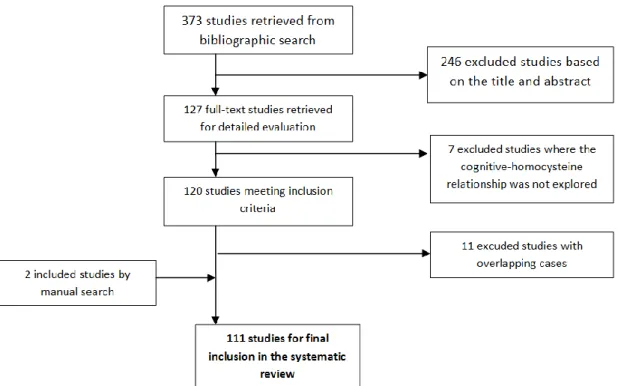
Of the 373 articles that were selected based on the search criteria, 127 items were chosen as
potentially relevant after reading the abstracts. Among them, seven studies were excluded
because they did not identify a direct relationship between the blood Hcy levels and cognitive
functions. From these 120 articles, 11 were excluded because they overlapped with other
included studies in the place and time of performance (16, 29-38). Finally, two additional
articles were added from the references as they met the established selection criteria (Figure
I).
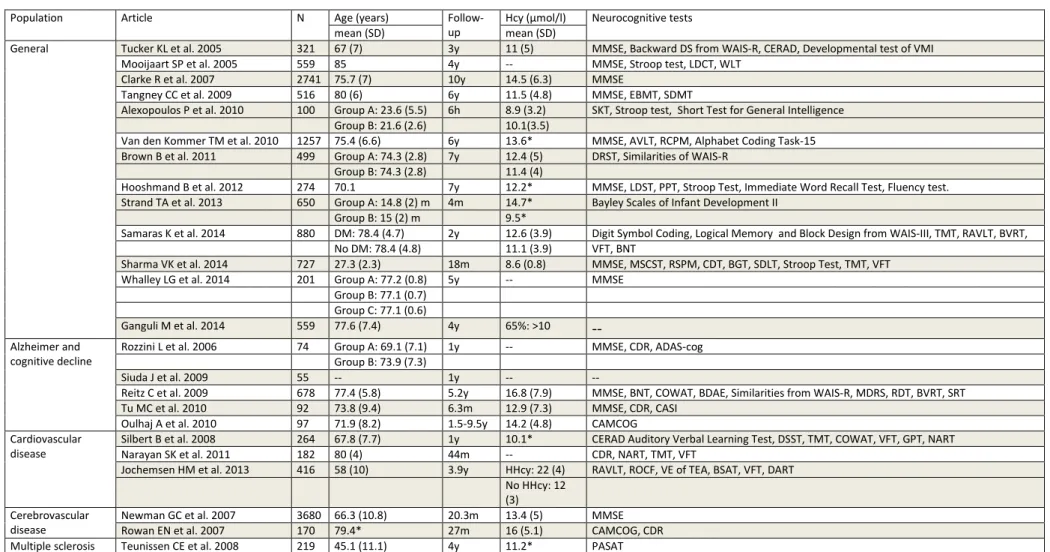
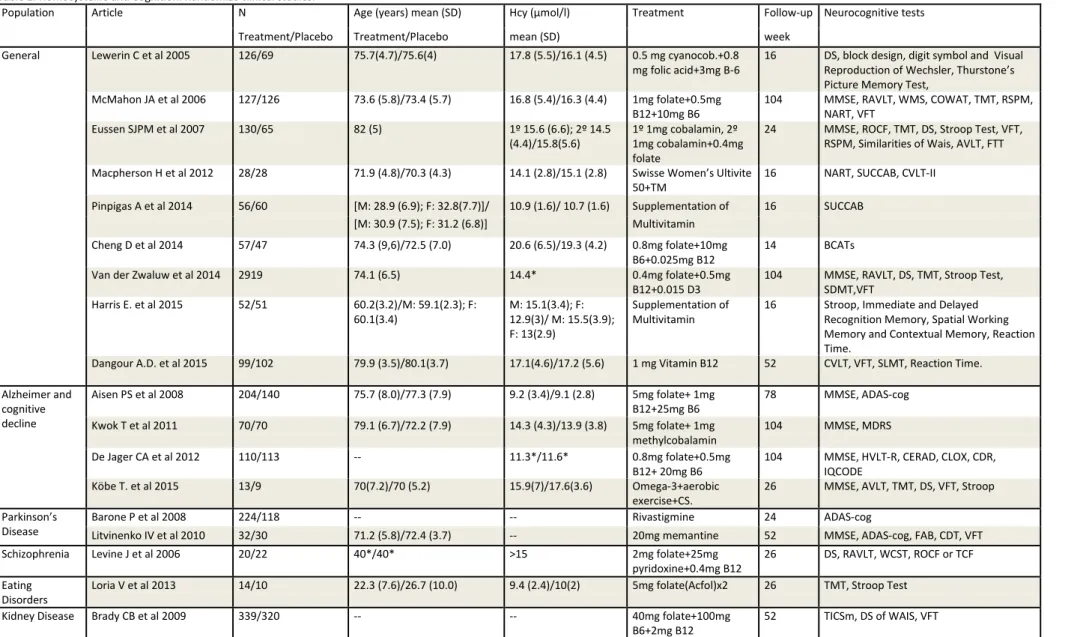
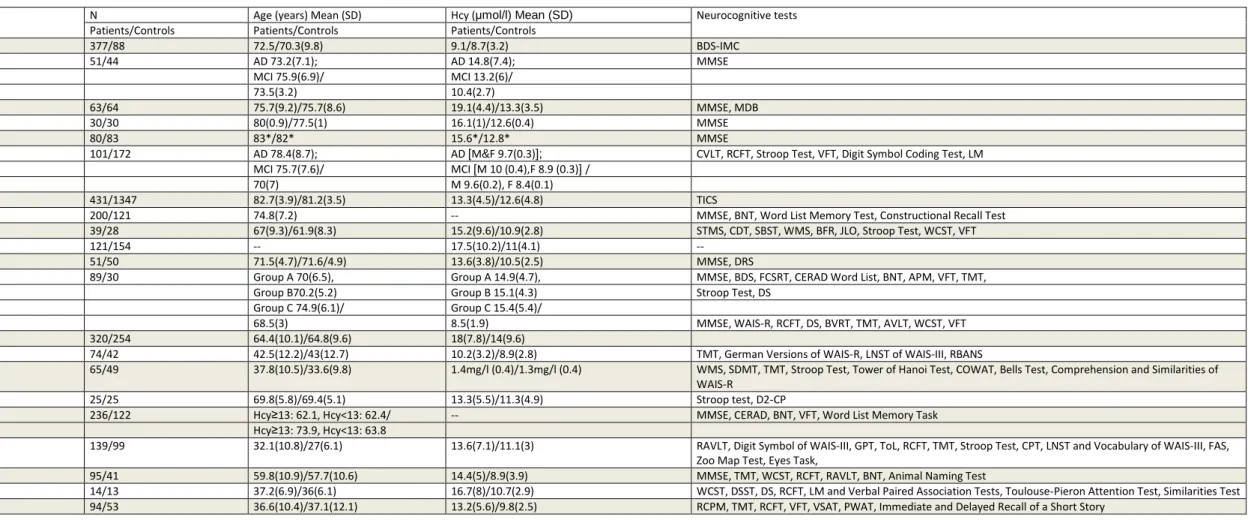
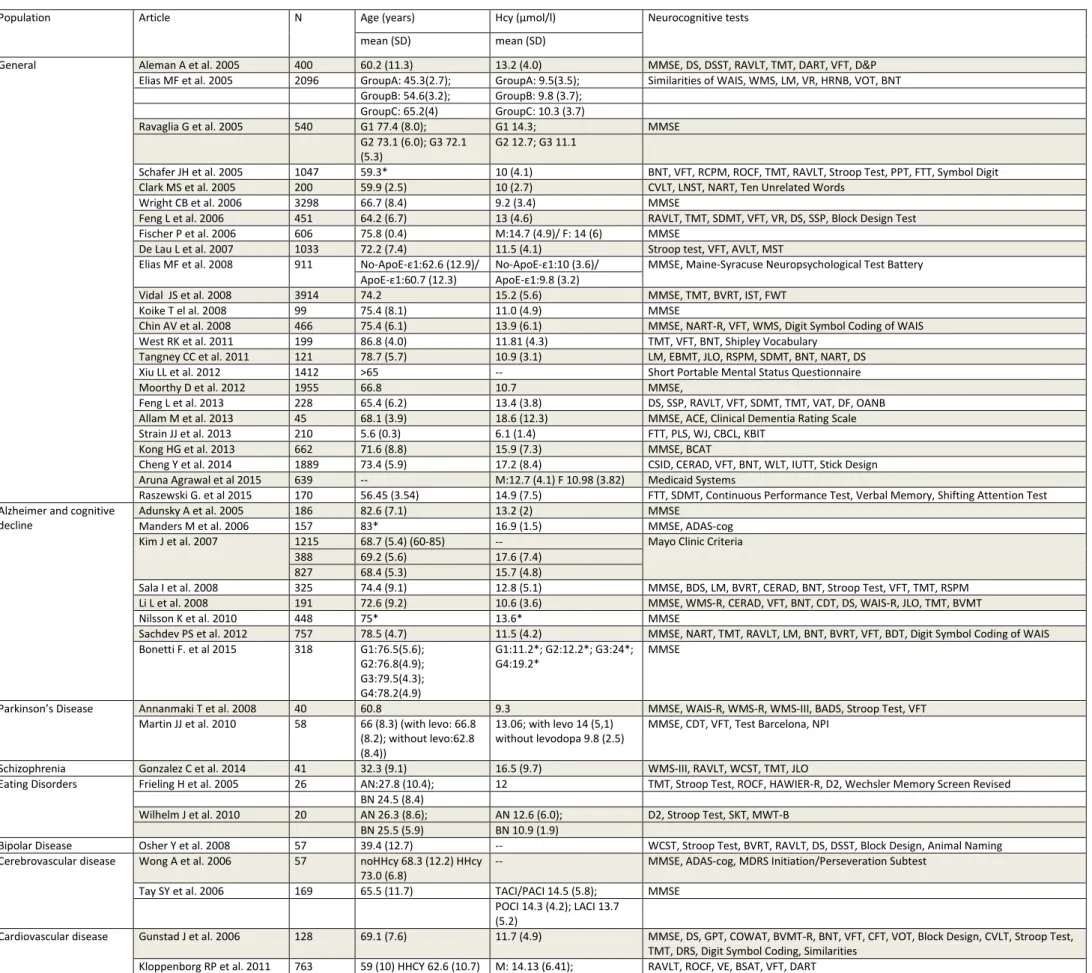
A total of 111 articles were included in the systematic review. Tables I to IV show the
distribution of the articles according to their design: 24 cohort studies, 18 randomized
double-blind trials, 21 case-control studies and 48 cross-sectional studies (Tables I-IV).
3.1. Alzheimer´s and cognitive impairment
The eight case-control studies showed significant associations between the plasma Hcy levels
and cognitive functions in population with AD and/or cognitive impairment. In four studies,
this association was determined using the Mini Mental State Examination (MMSE) test.
Overall, an inverse correlation was found between the MMSE scores and the plasma Hcy levels
between the plasma Hcy levels and the scores of the Word List Memory and Constructional
Recall (WLMCR) test in the AD group, after adjusting for several covariates. However, this
association did not remain significant in either the mild cognitive impairment (MCI) group or in
the control group (43). Additionally, Faux and colleagues found a negative trend between the
cognitive scores and plasma Hcy levels; a negative correlation between the plasma Hcy levels
and different types of memory was also found (44). Irizarry and colleagues demonstrated a
significant relationship between the plasma Hcy levels and cognitive function only in the group
of patients with PD without dementia, while no correlations were shown in the dementia
group (45). Finally, in the population over 75, Ford and colleagues observed that a two-fold
increase in the plasma Hcy concentrations resulted in a 36% increase in cognitive impairment
(46).
Eight case studies with
cross sectional analyses of cases
included people suffering from AD or cognitive impairment. Four of them, showed an inverse association between the plasma Hcylevels and the MMSE scores (47-50). Similarly, two other studies stated that high plasma Hcy
levels are a risk factor for MCI (51, 52). Nevertheless, Manders and colleagues have found
contradictory results in institutionalized patients, and did not find any relationship between
the plasma Hcy levels and cognitive function (53). Finally, one study found several significant
negative associations between the plasma Hcy levels and scores measuring the domain of
visuoconstructive abilities (54).
With regard to the four selected RCTs, three found that although vitamin supplementation
may reduce the plasma Hcy levels, there was no effect regarding the cognitive tests (55-57).
However, De Jager and colleagues observed that executive functions benefit from vitamin
supplementation compared with the placebo. There were significant differences in semantic
memory and global cognitive function (MMSE) in patients with plasma Hcy levels over 13.1
Five cohort studies were included in the AD and/or cognitive impairment group, and the
results were disparate. Thus, Tu and colleagues found an association between the reduced
Cognitive Abilities Screening Instrument (CASI) and abstract thinking scores and the Hcy levels
during six months of follow-up (59), although there were no significant correlations between
the cognitive scores and the Hcy levels at the baseline and at the end of the studies. Similarly,
Rozzini and colleagues showed an association between HHcy and the progression of memory
impairment (60). Moreover, Oulhaj and colleagues found a concentration dependent
relationship between the baseline Hcy levels and the rate of decline in the patients´ Cambridge
Cognition Examination (CAMCOG) scores, where the higher the Hcy levels, the faster the
decline. This relationship was significant in patients aged over 75 years who had not previously
suffered a stroke (12). However, in Siuda et al., 2009, there was no relationship between the
Hcy levels and the evolution in cognitive functions during one-year follow-up, even though the
baseline HHcy were higher in the MCI group compared to the healthy individuals (61). Reitz et
al., 2009, did not find any associations between the Hcy levels and the prevalence of MCI in
either the transverse or longitudinal analyses after adjusting for ethnicity and the ApoE-Ɛ4
genotype (62).
3.2. Parkinson´s disease
Regarding the five case-control studies, three did not observe significant relationships
between the plasma Hcy levels and cognitive functions in cases (63-65). In contrast, Zoccolella
and colleagues showed a significant association between the Hcy levels and the prevalence of
dementia in PD (66). In addition, in the study by Ozer and colleagues, the group of PD patients
with Hcy levels > 14 μmol/liter had a worse performance in frontal and memory tests (67).
Two studies with
cross sectional analyses of cases
were included. In Annanmaki et al. 2008, there was no association between the cognitive function scores and the plasma Hcy levels (68).levodopa treatment and cognitive impairment compared with those levodopa treated patients
without cognitive impairment (13).
Two RCTs explored the relationship between the Hcy levels and cognition in PD. Thus, Barone
and colleagues showed that elevated Hcy levels were associated with greater differences in
rivastigmine-treated patients than normal/low Hcy levels. The group of rivastigmine-treated
PD patients presented marked or moderate improvement in their cognitive outcomes after 24
weeks of treatment compared to the placebo group, whereas no between-group differences
were found in patients with low or normal Hcy levels (69). Similarly, Litvinenko and colleagues
found that PD patients with dementia and higher Hcy levels who were treated with memantine
had higher scores on the MMSE, Alzheimer's Disease Assessment Scale-cognitive subscale
(ADAS-cog), clock drawing test and Frontal Assessment Battery (FAB) by the end of study at
week 24, compared to PD patients with dementia without memantine treatement or PD
parkinson with dementia who were treated with memantine and who had lower Hcy levels
(70).
3.3. Schizophrenia
Three studies explored the relationship between the plasma Hcy levels and cognitive function
in patients with SCZ. The case-control study showed that patients had a statistically significant
increase in their plasma Hcy levels. In addition, patients with SCZ exhibited a significantly
increase in cognitive deficits. However, no relationship between the Hcy levels and cognitive
impairment was detected (71). Moreover, the cross sectional study did not find associations
between the Hcy levels and cognitive test performance in patients with SCZ (72). A randomized
clinical trial observed that the Hcy levels were decreased in patients with Hcy > 15 μmol/liter
and vitamin therapy compared to the placebo group. The overall neuropsychological test
results, and the Wisconsin Card Sort test (WCST) results in particular, were significantly
3.4. Bipolar disorder
Three articles contemplated the relationship between the Hcy levels and cognition in euthymic
patients with BD. A trend between higher Hcy levels and worse cognitive functioning was
noticed. A cross-sectional study in euthymic patients with BD demonstrated that
male bipolar subjects showed higher average Hcy levels than a comparison group of normal
subjects, and the authors also found that poorer functioning on a task of executive function
(WCST) was related to higher Hcy levels (73). There were two articles with a case-control
design based on euthymic patients with BD and healthy controls. In Dittman et al., 2008, the
Hcy levels were significantly higher for patients than the controls. Stepwise regression analyses
revealed a significant and independent association of the Hcy levels with verbal learning,
delayed memory and executive function in the patient group (18). On the other hand, Dias and
colleagues showed that the Hcy levels for the euthymic patients and healthy controls were
similar. Patients with higher Hcy levels performed significantly worse on all neurocognitive
tests, and there was a significant association between the Hcy levels and the number of
perseverations on the Stroop Color Tests and the number of moves on Hannoi Tower Test
(ToH); however, a linear regression modeladjusting for gender, age, education, and number of
prescribed psychotropics, revealed that Hcy was not a significant predictor of neurocognitive
test performance (74).
3.5. Geriatric depression
We included two case-control articles that studied cognition and Hcy levels in major
depression, with contradictory results. Alexopoulos and colleagues found that depressed
patients with high levels of Hcy performed better in language processing and processing speed
than patients with Hcy concentrations ≤ 11.7 μmol/liter, whereas the results were opposite in
the healthy control group (75). However, Ford and colleagues found that elevated plasma Hcy
and global cognitive performance compared to those with normal Hcy levels, which was
independent of the presence of major depression (76).
3.6. Eating disorders
Two cross-sectional studies indicated that higher Hcy levels were related with increased
cognitive impairment in patients with anorexia and bulimia nervosa. Thus, Frieling and
colleagues showed a significant positive association between long term and short term
memory and the Hcy levels (77). Similarly, Welheilm et al. 2010, found a significant association
between low Hcy levels and cognitive deficits (78). In contrast, a RCT using folic acid versus
placebo showed that the supplemented group exhibited significantly increased serum and red
blood cell folate levels, reduced Hcy levels and significantly improved most of the cognitive
test scores, whereas the placebo group showed no significant changes in any of the evaluated
variables (79).
3.7. Cardiovascular diseases
The opposite results were found in the cross sectional studies of population with
cardiovascular diseases. Two of the studies found no significant association between cognition
and the Hcy levels after adjusting for demographic and medical factors (80, 81). Nevertheless,
one study found a significant association between HHcy and worse cognitive performance
after adjusting for age, gender, premorbid intellectual coefficient and white matter lesions
(82).
Regarding the three cohort studies of patients with cardiovascular diseases, two of the studies
observed a significant relationship between the Hcy levels and cognition during follow-up.
Narayan and colleagues showed a positive association between higher Hcy levels and cognitive
impairment in three domains (executive function, episodic memory and processing speed).
executive function did not remain significant when folate was included as a covariate in the
regression model. (83). Similarity, Jochemsen et al. 2013, observed a significant association
between higher Hcy concentrations and worse executive function in patients over 65 during a
longitudinal study of 3.9 years. The study highlighted that elevated Hcy levels were related to
the progression of ventricular enlargement and increased the risk for a decrease in executive
functioning in older persons (84). However, Silbert and colleagues showed no association
between the Hcy levels and cognition at any time during a one-year follow-up, but their Hcy
levels were strongly associated with age and left ventricular function (85).
3.8. Cerebrovascular diseases
In the group of cerebrovascular diseases, the results were again contradictory. Of the two
articles with
cross sectional analyses of cases, one study found no differences between
HHcy and cognitive performance
(86). Conversely, another study showed a significant inverse relationship between the plasma Hcy levels and MMSE scores (87). One study using acase-control design found that the Hcy levels werestrongly correlated with cognitive decline in
patients with small vessel disease (88). The controversies persisted in two cohort studies of
populations with cerebrovascular diseases. One study found no relationship between the
plasma Hcy levels and cognitive results after 27 months of follow-up (89). On the other hand,
Newman and colleagues considered Hcy to be an independent predictor of less successful
cognitive recovery in patients after stroke (90).
3.9. Kidney diseases
No significant relationship between the Hcy levels and cognitive impairment was detected in
patients suffering from kidney disease (91-93). In a RCT with B vitamin supplementation versus
improve the initial cognitive outcomes or affect the subsequent cognitive status one year later
(93).
3.10. Multiple sclerosis
A case-control study showed that patients with MS had higher plasma levels of Hcy and,
consequently, HHcy was associated with cognitive impairment (14). However, a longitudinal
study showed that the MS patients and healthy controls had similar Hcy levels. Patients with
higher Hcy levels had lower cognitive scores, as measured with the Paced Auditory Serial
Addition Test (PASAT). During a four-year follow-up, higher Hcy levels were associated with
decreased cognitive scores in the PASAT (94).
3.11. Other diseases
In adolescents with epilepsy, there was no relationship between the plasma Hcy levels and
cognitive scores, even though the Hcy levels were significantly higher in patients with epilepsy
compared to healthy subjects (95). Similarly, there was no association between the plasma Hcy
levels and the MMSE or SKT scores in a sample of geriatric patients with multiple co-morbid
conditions (96). There was also no correlation between the Hcy levels and cognitive results in
patients with obstructive apnea sleep syndrome (97). However, in a sample of patients with
multiple system atrophy, a significantly negative correlation appeared between Hcy levels and
the MMSE score (98).
3.12. General population
Twenty-four articles based on the general population used a cross sectional design. From
these, 17 identified significant associations between the plasma Hcy concentrations and
cognitive scores. A negative association between the MMSE scores and plasma Hcy levels was
found in five studies (99-103). Furthermore, two more studies found a significant relationship
E-ε4 carriers (105). Specifically, negative associations between cognitive performance and Hcy
levels were found in psychomotor speed, coordination, manual dexterity, verbal memory and
learning (106), processing speed and spatial vision (107), visual and verbal memory (108),
delayed memory and attention (109), and executive functions and language (110). One study
showed that the Brief Cognitive Assessment Tool (BCAT) scores were significantly impaired in
people with homocysteinemia over 16 μmol/liter, specifically in the domains of perceptual
speed, mental arithmetic efficacy, spatial vision and working memory (111). There were two
articles conducted on post-menopausal women, which showed a significant association
between higher plasma Hcy levels and worse cognition performance. In the first study, the
association was significant when the working memory and the verbal memory scores were
grouped in a global score (112). In the other one, the global score was based in scores of the
five cognitive domains (113). In a sample of right-handed people, processing speed was also
associated with the Hcy levels after adjusting for age, gender and educational level. The
signification disappeared when the white matter volume was included in the regression
analyses as a covariate (114). Finally,the relationship between cholesterol levels and cognitive
function depends upon Hcy levels; in participants with normal Hcy levels, an inverse U-shaped
relationship between the total cholesterol level and cognitive score was found, indicating that
both low and high cholesterol levels were associated with lower cognitive scores. In
participants with high Hcy levels, no significant association was found
between cholesterol and cognition (115). In seven cross-sectional studies, there were no
association between the plasma Hcy levels and cognitive performance (116-122). In one study,
although the Hcy concentration was not associated with any particular domain, it was
associated with global cognition. However this association did not remain significant after
adjusting for the white matter volume and brain infarcts, although the significance persisted
cognition and the Hcy levels in subjects aged 65 years and older when results were adjusted
for the folate levels (122).
From the nine randomized clinical trials in the general population, eight showed that although
vitamin supplementation reduced the Hcy levels, this did not impact the cognitive test scores
(123-130). However, improved cognitive performance was observed in one article where the
vitamin supplementation reduced the Hcy levels. This trial was conducted with middle- and
older-aged people with HHcy (131).
Finally, 13 cohort studies were conducted with the general population. From these, there were
significant relationships between the Hcy levels and cognitive functions during the transverse
analyses in three studies. However, during the follow-up, the Hcy concentrations were not
predictors of cognitive impairment (132-134). Nevertheless, Ganguli et al., 2014, found no
associations between the Hcy levels and cognitive functions during transverse analyses but
there was a significant association between the Hcy levels and the executive function domain
during four years of follow-up (135). In addition, five studies demonstrated a significant
association between the plasma Hcy levels and cognitive function during some point of the
longitudinal design (136-140). Hence, Van den Kommer and colleagues showed that
higher Hcy levels at baseline were negatively associated with prolonged lower cognitive
function and a faster rate of decline in information processing speed and fluid intelligence
(140). Additionally, Hooshmand and colleaguesfound thathigher plasma Hcy levels at the
onset of the study were associated with poorer performance in global cognition, episodic
memory, executive functions and verbal expression at a seven-year follow-up (139). These
results may be comparable with the study of Strand et al. 2013, which was performed in
15-month-old children. In this study, each 2-fold increase in the Hcy concentration was associated
with a two-point decrease in the mental development index score (138). Interestingly, Sharma
stay at high altitude and hypobaric hypoxia. Moreover, the Hcy levels were inversely
correlated with the MMSE scores during across the entire follow-up period (137). Moreover,
the study of de Whalley et al., 2014, supported an association between HHcy and late onset
dementia during a five-year follow-up. The association between Hcy and dementia was
independent of the plasma folate, B12 and antioxidant micronutrient concentrations (136).
Finally, in 2014, Samaras and colleagues, found no association between the plasma Hcy levels
and global cognitive function over a two-year study, but the Hcy levels were predictors of an
inverse association with executive function (141). On the contrary, Tucker and colleagues
showed no association between the plasma Hcy levels and cognitive scores over four years in a
male sample, after adjusting for the folate and B6 and B12 vitamin concentrations (142).
Furthermore, two more studies observed no association between increased Hcy levels and
changes in cognitive performance (143, 144); one of them was conducted with university
students, and the time of follow-up was six hours (143).
3.13 Quantitative approach
3.13.1. Case control studies
For the case-control studies, we assessed the difference in Hcy levels between cases and
controls, on the one hand, and the influence of Hcy levels in MMSE scores in the case group,
on the other hand. There were not enough studies assessing the influence on other cognitive
scores, nor such influence for both cases and controls. Fifteen studies comparing Hcy levels in
patients versus healthy population reflected that Hcy concentration is significantly higher in
the group of patients with a pooled Cohen's d ranging between 0.30 - 1.17, depending on the
population subgroup (14, 18, 39-43, 63-65, 67, 71, 74, 75, 88). Thus for most subgroups, these
pooled values indicate a medium to large effect size (145) (Figure 2). This fact is particularly
interesting because there is included a wide range of diverse diseases (AD, PD, BD, small vessel
the ES only with one study (14, 71, 75, 88). In regard to the PD group (63-65, 67), levodopa
administration is a confusion factor as the treatment usually increases the Hcy levels (146).
On the other hand, three studies could be included for the case analyses of patients with AD
(40, 41) and PD (64). We found that higher level of Hcy was associated with worse MMSE
results in the overall analysis (ES=-0.34 [-0.63, -0.05]; significance test for ES ≠ 0: z=2.30,
p=0.022) (Figure 3). Supplementary figure 1 depicts the effect sizes pooled by population (note
that there are only two studies in AD and one in PD patients), with the AD subgroup showing
also significant inverse association between Hcy and MMSE score.
3.13.2. Cross sectional studies
The effect size represents the standardized linear regression coefficient for the relationship
between Hcy levels and cognitive scores: MMSE (13 studies) (47-49, 87, 98, 101-103, 107, 108,
119, 132, 144), BNT (three studies), TMT (four studies), RALVT (three studies). We have found
a negative association between plasma Hcy levels and MMSE scores (ES=-0.19 [-0.27, -0.10],
significance test for ES ≠ 0: z=4.42, p<0.001) (Figure 4). This negative association holds for all
populations as shown in the subgroup analysis (Figure 5). Despite this effect across all clinical
conditions, tests showed a significant between-group heterogeneity (Q=34.54, p<0.001),
although the high within-group heterogeneity in Alzheimer's studies (47-49) and the small
number of studies in the other subgroups render this test questionable.
No significant associations were found when Hcy levels were compared with scores of BNT,
TMT, and RAVLT scores. It is worth noting that only a small number of studies could be
included for each case (Supplementary figures 2-4).
3.13.3. RCT studies
Five RCT articles were included in the quantitative approach exploring the difference in
receiving placebo (55, 56, 93, 124, 128). The effect size is the Cohen's d for the variation in
scores before and after intervention, compared between vitamin and placebo groups.
Overall, there was no association between group allocation and MMSE score (ES= 0.04 [-0.06,
0.14], significance test for ES ≠ 0: z= 0.82 p = 0.411) (Figure 6). This lack of association holds
for all populations in the subgroup analysis, with no significant between-subgroup
heterogeneity (Q=1.19, p=0.552), although there were very few studies per subgroup
(Supplementary figure 5). There was neither association between Hcy and RAVLT scores in the
analysis that could be performed with three studies (Supplementary figure 6)
3.13.4. Cohort studies
Five cohort articles (59, 93, 139, 140, 142) were included for a quantitative exploration of the
association between baseline Hcy and MMSE scores at the end of follow-up (i.e. after 6 - 84
months, 39.05 on average). Results show a negative association between higher baseline Hcy
and MMSE score at the follow-up (ES=-0.08 [-0.12, -0.04], significance test for ES ≠ 0: z=
3.98, p <0.001) (Figure 7). In the subgroup analysis, there were significant negative
associations when considering the general population (139, 140, 142) and the kidney disease
(93). No significant associations in regard to the AD (59), although there were very few studies
per subgroup (Supplementary figure 7).
4. DISCUSSION
Overall, our findings suggest a possible role for the plasma Hcy levels in the development or
the progression of cognitive dysfunctions. More than half of the included articles (N=59) show
some form of significant association between the plasma Hcy levels and cognitive functions,
whether the high Hcy concentrations are responsible for cognitive impairments, and its
etiopathogenic mechanism has not been conclusively identified.
The included articles used several different instruments to measure cognitive impairment.
However, the MMSE test is one of the most commonly used tests. The MMSE is frequently
used as screening test for global cognition (147). The results of this systematic review include
multiple studies with significant associations between the plasma Hcy concentrations and
MMSE scores. Overall, the associations between the Hcy levels and cognition were negative.
Although this instrument provides information on global cognitive impairment, the MMSE test
does not allow us to identify the domains that are the most altered. In many other articles,
more complete cognitive batteries demonstrate that the processing speed and the executive
functions were the domains that were most affected by the increased plasma Hcy
concentrations. Frequently, different types of memory, such as visual memory, short-term
memory and explicit long term-memory, are also altered in patients with high Hcy levels. The
relationship between the plasma Hcy levels and the scores representing such domains is
inverse, similar to the MMSE test. Therefore, higher blood Hcy levels are associated with a
worse performance in several cognitive tests. One of the most relevant prospective studies in
this field from the Framingham Study cohort reported that an elevated Hcy level at baseline, in
cognitively intact adults, was related to a decline in MMSE scores, but only after a follow-up
period of at least four years. Furthermore, baseline Hcy was an independent risk factor for the
development of dementia and AD in adults without cognitive impairment (148).
Interestingly, there are three studies showing a positive association between cognition and the
Hcy concentrations (75, 77, 78). Two of them were performed in patients with eating
disorders, and found a positive association between the elevated Hcy levels and memory test
scores (77), with a better performance in Stroop and SKT tests (78). These results note a
eating disorder patients. This fact may indicate that the link between the elevated Hcy levels
and cognition originating from a nutritional deficiency may be different than the relationship
between the high Hcy levels and cognition in the elderly. Another study with similar findings
was conducted with aging patients with major depression (75). In this case, the elevated Hcy
concentrations were associated with a better performance in the processing speed and
language processing tests. As is highlighted, there are certain results indicating that major
depressive disorder may be related to a perturbation in glutamate metabolism (149, 150).
Long term potentiations (LTPs) of excitatory synapses are prime candidates for learning and
memory processes depending on activation of the NMDA receptors (151). In major depressive
disorders, prefrontal glutamate/glutamine concentrations are abnormally reduced (152). In
this context, Hcy may actually replace glutamate at excitatory synapses, acting as agonist on
the glutamate binding site of the NMDA receptor (153). This linkage may avoid the direct
neurotoxicity of HHcy and may generate LTPs at some specific sets of synapses mediating
other forms of plasticity, attenuating the cognitive deficits caused by glutamate deficiency
(152, 154-157). This theory could be similar in eating disorder patients, where there is also
reported a glutamate reduction using proton magnetic resonance spectroscopy (158). This fact
is supported by the evidence that dietary restriction decreases extracellular glutamate levels in
striate nucleus in mice (159).
Concerning the cross sectional studies, the most affected domains by the elevated Hcy levels
are executive functions, different types of memory, processing speed and global cognition.
Moreover, the case control analyses revealed higher levels of Hcy in patients of diverse
diseases compared with healthy controls. Also patients normally showed a worse performance
in cognitive tests. In regard to the cohort studies, most of them showed an association
between the Hcy concentrations and the evolution of the cognitive decline, particularly in the
studies concerning the general population, AD and cognitive impairment, cardiovascular
may be partially explained by suggesting cumulative effect of Hcy in the elderly, with
endothelial injury and atherosclerosis (160).
Nevertheless, many of the RCTs find no evidence of B vitamin supplementation and cognitive
improvement; although there was evidence that B vitamins may reduce the plasma Hcy levels
to the standard values. From the 15 RCTs, the treatment with B vitamin reduced the Hcy levels
in all cases, but only six studies indicated an improvement in the patients´scores on different
cognitive tests (19, 58, 69, 70, 79, 131). There are two possible theories for these observations.
On one hand, the effects of Hcy in the brain may be irreversible and therefore, the effects of
vitamin supplementation may be limited once the pathological changes appeared (161). On
the other hand, the cognitive impairment may not be caused by the elevated Hcy levels but
could be produce by common mechanisms of both conditions (162, 163). Both theories could
explain why the vitamin supplementation could reduce the Hcy levels, but could not reduce or
prevent the cognitive impairments. It is debatable whether the earlier detection of HHcy and
related factors may prevent the neurodegeneration associate with aging and dementia (164).
However, as a primary preventative measure, screening for Hcy levels may protect patients
from other devastating effects, such as atherosclerosis (165), hypertension (166), thrombus
(167), aging-related oxidation (168) and osteoporosis (169), which are commonly associated
with higher Hcy concentrations.
This review is subject to some limitations that are worth noting. The reasons why certain
cognitive domains are more affected by the high Hcy concentrations in some studies but not in
others are not clear. These discrepancies may be due to the differences in the cognitive
batteries between studies and those inherent to the administration, as well as to the
methodology employed during the experiments (170). Moreover, as noted above, the Hcy
concentrations are a complex function resulting from the interaction between genetic and
studies limited the comparison and pooling of data. Therefore, this review could not elucidate
the relative effect of elevated homocysteine in some cognitive domains, and instead was
necessarily limited our meta-analyses to only the most commonly measured outcomes. The
quantitative approach was also limited by the fact that not all the articles explained their
results using an association measure, or in some cases their design made them unsuitable to
summarize in a pooled estimate with the other studies, and a discrete number of study could
be included in the meta-analysis. The meta-analytic results only represented a subsample of
the literature summarized in the present review. Finally, it is worth noting that the small
sample size (N ≤26) of the three articles with a positive relationship between cognition and the
Hcy levels should be considered when interpreting the results presented here.Among the
strengths of this review is the fact that, to our knowledge, it is the largest systematic effort to
summarize the data on the associations between Hcy and cognition in different populations.
In conclusion, further investigations are warranted to clarify the relationship between the
plasma Hcy levels and cognitive function. Treatment with vitamin supplementation often fails
to reduce the cognitive impairment once it appears. Earlier detection of the elevated Hcy
levels before the decline in cognitive function may be an effective intervention to prevent
cognitive impairment and dementia.
REFERENCES
1. Menéndez Cabezas A, Fernández-Britto Rodríguez JE. Metabolismo de la homocisteina y su relación con la aterosclerosis. Rev Cubana Invest Biomed. 1999;18(3):155-68.
2. Rudiger H, Jaenicke L. The biosynthesis of methionine. Mol Cell Biochem. 1973 Jun 27;1(2):157-68.
3. Fowler B. Homocysteine: overview of biochemistry, molecular biology, and role in disease processes. Semin Vasc Med. 2005 May;5(2):77-86.
4. Cotton F, Wautrecht JC, Lechevin V, Macours P, Thiry P, Gervy C, et al. Reference intervals for plasma homocysteine by the AxSYM immunoassay after collection in fluoride tubes. Clin Chem. 2003 Feb;49(2):315-7.
5. Christopher R, Nagaraja D, Shankar SK. Homocysteine and cerebral stroke in developing countries. Curr Med Chem. 2007;14(22):2393-401.
6. Refsum H, Smith AD, Ueland PM, Nexo E, Clarke R, McPartlin J, et al. Facts and recommendations about total homocysteine determinations: an expert opinion. Clin Chem. 2004 Jan;50(1):3-32.
7. Eghlim FF, Ashavaid TF, Nair KG. Genetic determinants of hyperhomocysteinemia in atherosclerosis. Indian J Clin Biochem. 2006 Sep;21(2):4-11.
8. Jacobsen DW. Homocysteine and vitamins in cardiovascular disease. Clin Chem. 1998 Aug;44(8 Pt 2):1833-43.
9. Finkelstein JD. Methionine metabolism in mammals. J Nutr Biochem. 1990 May;1(5):228-37.
10. De Luis DA, Fernández N, Aller R. Homocysteine, metabolism and dietary factors. Endocrinol Nutr. 2004;51(8):458-63.
11. Troen A, Rosenberg I. Homocysteine and cognitive function. Semin Vasc Med. 2005 May;5(2):209-14.
12. Oulhaj A, Refsum H, Beaumont H, Williams J, King E, Jacoby R, et al. Homocysteine as a predictor of cognitive decline in Alzheimer's disease. Int J Geriatr Psychiatry. 2010
Jan;25(1):82-90.
13. Martin-Fernandez JJ, Carles-Dies R, Canizares F, Parra S, Aviles F, Villegas I, et al. [Homocysteine and cognitive impairment in Parkinson's disease]. Rev Neurol. 2010 Feb 1-15;50(3):145-51.
14. Russo C, Morabito F, Luise F, Piromalli A, Battaglia L, Vinci A, et al.
Hyperhomocysteinemia is associated with cognitive impairment in multiple sclerosis. J Neurol. 2008 Jan;255(1):64-9.
15. Bostom AG, Rosenberg IH, Silbershatz H, Jacques PF, Selhub J, D'Agostino RB, et al. Nonfasting plasma total homocysteine levels and stroke incidence in elderly persons: the Framingham Study. Ann Intern Med. 1999 Sep 7;131(5):352-5.
16. Kado DM, Karlamangla AS, Huang MH, Troen A, Rowe JW, Selhub J, et al.
Homocysteine versus the vitamins folate, B6, and B12 as predictors of cognitive function and decline in older high-functioning adults: MacArthur Studies of Successful Aging. Am J Med. 2005 Feb;118(2):161-7.
17. Moustafa AA, Hewedi DH, Eissa AM, Frydecka D, Misiak B. Homocysteine levels in schizophrenia and affective disorders-focus on cognition. Front Behav Neurosci. 2014;8:343. 18. Dittmann S, Seemuller F, Grunze HC, Schwarz MJ, Zach J, Fast K, et al. The impact of homocysteine levels on cognition in euthymic bipolar patients: a cross-sectional study. J Clin Psychiatry. 2008 Jun;69(6):899-906.
19. Levine J, Stahl Z, Sela BA, Ruderman V, Shumaico O, Babushkin I, et al. Homocysteine-reducing strategies improve symptoms in chronic schizophrenic patients with
hyperhomocysteinemia. Biol Psychiatry. 2006 Aug 1;60(3):265-9.
20. Selhub J, Bagley LC, Miller J, Rosenberg IH. B vitamins, homocysteine, and neurocognitive function in the elderly. Am J Clin Nutr. 2000 Feb;71(2):614S-20S.
21. Mattson MP, Shea TB. Folate and homocysteine metabolism in neural plasticity and neurodegenerative disorders. Trends Neurosci. 2003 Mar;26(3):137-46.
22. Lipton SA, Rosenberg PA. Excitatory amino acids as a final common pathway for neurologic disorders. N Engl J Med. 1994 Mar 3;330(9):613-22.
23. Sánchez-Cuevas M, Jiménez-Reséndiz SP, Morgado-Vázquez JS. La Homocisteina: un aminoácido neurotóxico. REB. 2009;28(1):3-8.
24. DerSimonian R, Laird N. Meta-analysis in clinical trials. Control Clin Trials. 1986 Sep;7(3):177-88.
25. Cochran WG. The Combination of Estimates from Different Experiments. Biometrics. 1954;10:101-29.
26. Higgins JP, Thompson SG. Quantifying heterogeneity in a meta-analysis. Stat Med. 2002 Jun 15;21(11):1539-58.
27. Higgins JP, Thompson SG, Deeks JJ, Altman DG. Measuring inconsistency in meta-analyses. BMJ. 2003 Sep 6;327(7414):557-60.
28. Sterne J, Egger M, Moher D. Addressing reporting biases Higgins JPT, Green S (eds): Cochrane Handbook for Systematic reviews of interventions, Chichester, Wiley. 2008:297-334. 29. van Raamt AF, Kalmijn S, Mali WP, van Zandvoort MJ, van der Graaf Y. Homocysteine level and cognitive function in patients with arterial disease: the second manifestations of ARTerial Disease Study. J Am Geriatr Soc. 2006 Apr;54(4):575-9.
30. Elias MF, Robbins MA, Budge MM, Elias PK, Brennan SL, Johnston C, et al. Homocysteine, folate, and vitamins B6 and B12 blood levels in relation to cognitive performance: the Maine-Syracuse study. Psychosom Med. 2006 Jul-Aug;68(4):547-54. 31. Dittmann S, Seemuller F, Schwarz MJ, Kleindienst N, Stampfer R, Zach J, et al.
Association of cognitive deficits with elevated homocysteine levels in euthymic bipolar patients and its impact on psychosocial functioning: preliminary results. Bipolar Disord. 2007 Feb-Mar;9(1-2):63-70.
32. Chee MW, Chen KH, Zheng H, Chan KP, Isaac V, Sim SK, et al. Cognitive function and brain structure correlations in healthy elderly East Asians. Neuroimage. 2009 May
15;46(1):257-69.
33. Cheng DM, Jiang YG, Huang CY, Kong HY, Pang W, Yang HP. Polymorphism of MTHFR C677T, serum vitamin levels and cognition in subjects with hyperhomocysteinemia in China. Nutr Neurosci. 2010 Aug;13(4):175-82.
34. Nilsson K, Gustafson L, Hultberg B. Plasma homocysteine, brain imaging and cognition in older patients with mental illness. Int J Geriatr Psychiatry. 2012 Apr;27(4):409-14.
35. Slawek J, Roszmann A, Robowski P, Dubaniewicz M, Sitek EJ, Honczarenko K, et al. The impact of MRI white matter hyperintensities on dementia in Parkinson's disease in relation to the homocysteine level and other vascular risk factors. Neurodegener Dis. 2013;12(1):1-12. 36. Lipnicki DM, Sachdev PS, Crawford J, Reppermund S, Kochan NA, Trollor JN, et al. Risk factors for late-life cognitive decline and variation with age and sex in the Sydney Memory and Ageing Study. PLoS ONE. 2013;8(6):e65841.
37. Huang CW, Chang WN, Huang SH, Lui CC, Chen NC, Chang YT, et al. Impact of
homocysteine on cortical perfusion and cognitive decline in mild Alzheimer's dementia. Eur J Neurol. 2013 Aug;20(8):1191-7.
38. Wu MK, Lu YT, Huang CW, Lin PH, Chen NC, Lui CC, et al. Clinical Significance of Cerebrovascular Biomarkers and White Matter Tract Integrity in Alzheimer Disease: Clinical correlations With Neurobehavioral Data in Cross-Sectional and After 18 Months Follow-ups. Medicine (Baltimore). 2015 Jul;94(28):e1192.
39. Hernanz A, De la Fuente M, Navarro M, Frank A. Plasma aminothiol compounds, but not serum tumor necrosis factor receptor II and soluble receptor for advanced glycation end products, are related to the cognitive impairment in Alzheimer's disease and mild cognitive impairment patients. Neuroimmunomodulation. 2007;14(3-4):163-7.
40. Gorgone G, Ursini F, Altamura C, Bressi F, Tombini M, Curcio G, et al.
Hyperhomocysteinemia, intima-media thickness and C677T MTHFR gene polymorphism: a correlation study in patients with cognitive impairment. Atherosclerosis. 2009 Sep;206(1):309-13.
41. Lepara O, Alajbegovic A, Zaciragic A, Nakas-Icindic E, Valjevac A, Lepara D, et al. Elevated serum homocysteine level is not associated with serum C-reactive protein in patients with probable Alzheimer's disease. J Neural Transm. 2009 Dec;116(12):1651-6.
42. Lildballe DL, Fedosov S, Sherliker P, Hin H, Clarke R, Nexo E. Association of cognitive impairment with combinations of vitamin B(1)(2)-related parameters. Clin Chem. 2011 Oct;57(10):1436-43.
43. Kim G, Kim H, Kim KN, Son JI, Kim SY, Tamura T, et al. Relationship of cognitive function with B vitamin status, homocysteine, and tissue factor pathway inhibitor in cognitively
44. Faux NG, Ellis KA, Porter L, Fowler CJ, Laws SM, Martins RN, et al. Homocysteine, vitamin B12, and folic acid levels in Alzheimer's disease, mild cognitive impairment, and healthy elderly: baseline characteristics in subjects of the Australian Imaging Biomarker Lifestyle study. J Alzheimers Dis. 2011;27(4):909-22.
45. Irizarry MC, Gurol ME, Raju S, Diaz-Arrastia R, Locascio JJ, Tennis M, et al. Association of homocysteine with plasma amyloid beta protein in aging and neurodegenerative disease. Neurology. 2005 Nov 8;65(9):1402-8.
46. Ford AH, Flicker L, Hankey GJ, Norman P, van Bockxmeer FM, Almeida OP. Homocysteine, methylenetetrahydrofolate reductase C677T polymorphism and cognitive impairment: the health in men study. Mol Psychiatry. 2012 May;17(5):559-66.
47. Li L, Cao D, Desmond R, Rahman A, Lah JJ, Levey AI, et al. Cognitive performance and plasma levels of homocysteine, vitamin B12, folate and lipids in patients with Alzheimer disease. Dement Geriatr Cogn Disord. 2008;26(4):384-90.
48. Nilsson K, Gustafson L, Hultberg B. Plasma homocysteine and cognition in elderly patients with dementia or other psychogeriatric diseases. Dement Geriatr Cogn Disord. 2010;30(3):198-204.
49. Adunsky A, Arinzon Z, Fidelman Z, Krasniansky I, Arad M, Gepstein R. Plasma
homocysteine levels and cognitive status in long-term stay geriatric patients: a cross-sectional study. Arch Gerontol Geriatr. 2005 Mar-Apr;40(2):129-38.
50. Bonetti F, Brombo G, Magon S, Zuliani G. Cognitive Status According to Homocysteine and B-Group Vitamins in Elderly Adults. J Am Geriatr Soc. 2015 Jun;63(6):1158-63.
51. Kim J, Park MH, Kim E, Han C, Jo SA, Jo I. Plasma homocysteine is associated with the risk of mild cognitive impairment in an elderly Korean population. J Nutr. 2007
Sep;137(9):2093-7.
52. Sachdev PS, Lipnicki DM, Crawford J, Reppermund S, Kochan NA, Trollor JN, et al. Risk profiles of subtypes of mild cognitive impairment: the sydney memory and ageing study. J Am Geriatr Soc. 2012 Jan;60(1):24-33.
53. Manders M, Vasse E, de Groot LC, van Staveren WA, Bindels JG, Blom HJ, et al.
Homocysteine and cognitive function in institutionalised elderly A cross-sectional analysis. Eur J Nutr. 2006 Mar;45(2):70-8.
54. Sala I, Belen Sanchez-Saudinos M, Molina-Porcel L, Lazaro E, Gich I, Clarimon J, et al. Homocysteine and cognitive impairment. Relation with diagnosis and neuropsychological performance. Dement Geriatr Cogn Disord. 2008;26(6):506-12.
55. Aisen PS, Schneider LS, Sano M, Diaz-Arrastia R, van Dyck CH, Weiner MF, et al. High-dose B vitamin supplementation and cognitive decline in Alzheimer disease: a randomized controlled trial. JAMA. 2008 Oct 15;300(15):1774-83.
56. Kwok T, Lee J, Law CB, Pan PC, Yung CY, Choi KC, et al. A randomized placebo controlled trial of homocysteine lowering to reduce cognitive decline in older demented people. Clin Nutr. 2011 Jun;30(3):297-302.
57. Kobe T, Witte AV, Schnelle A, Lesemann A, Fabian S, Tesky VA, et al. Combined omega-3 fatty acids, aerobic exercise and cognitive stimulation prevents decline in gray matter volume of the frontal, parietal and cingulate cortex in patients with mild cognitive impairment.
Neuroimage. 2015 Oct 1.
58. de Jager CA, Oulhaj A, Jacoby R, Refsum H, Smith AD. Cognitive and clinical outcomes of homocysteine-lowering B-vitamin treatment in mild cognitive impairment: a randomized controlled trial. Int J Geriatr Psychiatry. 2012 Jun;27(6):592-600.
59. Tu MC, Huang CW, Chen NC, Chang WN, Lui CC, Chen CF, et al. Hyperhomocysteinemia in Alzheimer dementia patients and cognitive decline after 6 months follow-up period. Acta Neurol Taiwan. 2010 Sep;19(3):168-77.
60. Rozzini L, Chilovi BV, Bertoletti E, Conti M, Del Rio I, Trabucchi M, et al. Angiotensin converting enzyme (ACE) inhibitors modulate the rate of progression of amnestic mild cognitive impairment. Int J Geriatr Psychiatry. 2006 Jun;21(6):550-5.
61. Siuda J, Gorzkowska A, Patalong-Ogiewa M, Krzystanek E, Czech E, Wiechula B, et al. From mild cognitive impairment to Alzheimer's disease - influence of homocysteine, vitamin B12 and folate on cognition over time: results from one-year follow-up. Neurol Neurochir Pol. 2009 Jul-Aug;43(4):321-9.
62. Reitz C, Tang MX, Miller J, Green R, Luchsinger JA. Plasma homocysteine and risk of mild cognitive impairment. Dement Geriatr Cogn Disord. 2009;27(1):11-7.
63. Bialecka M, Kurzawski M, Roszmann A, Robowski P, Sitek EJ, Honczarenko K, et al. Association of COMT, MTHFR, and SLC19A1(RFC-1) polymorphisms with homocysteine blood levels and cognitive impairment in Parkinson's disease. Pharmacogenet Genomics. 2012 Oct;22(10):716-24.
64. Rodriguez-Oroz MC, Lage PM, Sanchez-Mut J, Lamet I, Pagonabarraga J, Toledo JB, et al. Homocysteine and cognitive impairment in Parkinson's disease: a biochemical,
neuroimaging, and genetic study. Mov Disord. 2009 Jul 30;24(10):1437-44.
65. Camicioli RM, Bouchard TP, Somerville MJ. Homocysteine is not associated with global motor or cognitive measures in nondemented older Parkinson's disease patients. Mov Disord. 2009 Jan 30;24(2):176-82.
66. Zoccolella S, dell'Aquila C, Abruzzese G, Antonini A, Bonuccelli U, Canesi M, et al. Hyperhomocysteinemia in levodopa-treated patients with Parkinson's disease dementia. Mov Disord. 2009 May 15;24(7):1028-33.
67. Ozer F, Meral H, Hanoglu L, Aydemir T, Yilsen M, Cetin S, et al. Plasma homocysteine levels in patients treated with levodopa: motor and cognitive associations. Neurol Res. 2006 Dec;28(8):853-8.
68. Annanmaki T, Pessala-Driver A, Hokkanen L, Murros K. Uric acid associates with cognition in Parkinson's disease. Parkinsonism Relat Disord. 2008 Nov;14(7):576-8.
69. Barone P, Burn DJ, van Laar T, Hsu C, Poewe W, Lane RM. Rivastigmine versus placebo in hyperhomocysteinemic Parkinson's disease dementia patients. Mov Disord. 2008 Aug 15;23(11):1532-40.
70. Litvinenko IV, Odinak MM, Mogil'naya VI, Perstnev SV. Use of memantine (akatinol) for the correction of cognitive impairments in Parkinson's disease complicated by dementia. Neurosci Behav Physiol. 2010 Feb;40(2):149-55.
71. Ayesa-Arriola R, Perez-Iglesias R, Rodriguez-Sanchez JM, Mata I, Gomez-Ruiz E, Garcia-Unzueta M, et al. Homocysteine and cognition in first-episode psychosis patients. Eur Arch Psychiatry Clin Neurosci. 2012 Oct;262(7):557-64.
72. Gonzalez-Liencres C, Tas C, Brown EC, Erdin S, Onur E, Cubukcoglu Z, et al. Oxidative stress in schizophrenia: a case-control study on the effects on social cognition and
neurocognition. BMC Psychiatry. 2014;14:268.
73. Osher Y, Bersudsky Y, Silver H, Sela BA, Belmaker RH. Neuropsychological correlates of homocysteine levels in euthymic bipolar patients. J Affect Disord. 2008 Jan;105(1-3):229-33. 74. Dias VV, Brissos S, Cardoso C, Andreazza AC, Kapczinski F. Serum homocysteine levels and cognitive functioning in euthymic bipolar patients. J Affect Disord. 2009 Mar;113(3):285-90.
75. Alexopoulos P, Topalidis S, Irmisch G, Prehn K, Jung SU, Poppe K, et al. Homocysteine and cognitive function in geriatric depression. Neuropsychobiology. 2010;61(2):97-104. 76. Ford AH, Flicker L, Singh U, Hirani V, Almeida OP. Homocysteine, depression and cognitive function in older adults. J Affect Disord. 2013 Nov;151(2):646-51.
77. Frieling H, Roschke B, Kornhuber J, Wilhelm J, Romer KD, Gruss B, et al. Cognitive impairment and its association with homocysteine plasma levels in females with eating disorders - findings from the HEaD-study. J Neural Transm. 2005 Nov;112(11):1591-8.
78. Wilhelm J, Muller E, de Zwaan M, Fischer J, Hillemacher T, Kornhuber J, et al. Elevation of homocysteine levels is only partially reversed after therapy in females with eating disorders. J Neural Transm. 2010 Apr;117(4):521-7.
79. Loria-Kohen V, Gomez-Candela C, Palma-Milla S, Amador-Sastre B, Hernanz A, Bermejo LM. A pilot study of folic acid supplementation for improving homocysteine levels, cognitive and depressive status in eating disorders. Nutr Hosp. 2013 May-Jun;28(3):807-15.
80. Gunstad J, Bausserman L, Paul RH, Tate DF, Hoth K, Poppas A, et al. C-reactive protein, but not homocysteine, is related to cognitive dysfunction in older adults with cardiovascular disease. J Clin Neurosci. 2006 Jun;13(5):540-6.
81. Ford AH, Garrido GJ, Beer C, Lautenschlager NT, Arnolda L, Flicker L, et al.
Homocysteine, grey matter and cognitive function in adults with cardiovascular disease. PLoS ONE. 2012;7(3):e33345.
82. Kloppenborg RP, Nederkoorn PJ, van der Graaf Y, Geerlings MI. Homocysteine and cerebral small vessel disease in patients with symptomatic atherosclerotic disease. The SMART-MR study. Atherosclerosis. 2011 Jun;216(2):461-6.
83. Narayan SK, Saxby BK, Firbank MJ, O'Brien JT, Harrington F, McKeith IG, et al. Plasma homocysteine and cognitive decline in older hypertensive subjects. Int Psychogeriatr. 2011 Dec;23(10):1607-15.
84. Jochemsen HM, Kloppenborg RP, de Groot LC, Kampman E, Mali WP, van der Graaf Y, et al. Homocysteine, progression of ventricular enlargement, and cognitive decline: the Second Manifestations of ARTerial disease-Magnetic Resonance study. Alzheimers Dement. 2013 May;9(3):302-9.
85. Silbert B, Evered L, Scott DA, McCutcheon C, Jamrozik K. Homocysteine and C-reactive protein are not markers of cognitive impairment in patients with major cardiovascular disease. Dement Geriatr Cogn Disord. 2008;25(4):309-16.
86. Wong A, Mok V, Fan YH, Lam WW, Liang KS, Wong KS. Hyperhomocysteinemia is associated with volumetric white matter change in patients with small vessel disease. J Neurol. 2006 Apr;253(4):441-7.
87. Tay SY, Ampil ER, Chen CP, Auchus AP. The relationship between homocysteine, cognition and stroke subtypes in acute stroke. J Neurol Sci. 2006 Dec 1;250(1-2):58-61. 88. Pavlovic AM, Pekmezovic T, Obrenovic R, Novakovic I, Tomic G, Mijajlovic M, et al. Increased total homocysteine level is associated with clinical status and severity of white matter changes in symptomatic patients with subcortical small vessel disease. Clin Neurol Neurosurg. 2011 Nov;113(9):711-5.
89. Rowan EN, Dickinson HO, Stephens S, Ballard C, Kalaria R, Kenny RA. Homocysteine and post-stroke cognitive decline. Age Ageing. 2007 May;36(3):339-43.
90. Newman GC, Bang H, Hussain SI, Toole JF. Association of diabetes, homocysteine, and HDL with cognition and disability after stroke. Neurology. 2007 Nov 27;69(22):2054-62. 91. Kurella Tamura M, Xie D, Yaffe K, Cohen DL, Teal V, Kasner SE, et al. Vascular risk factors and cognitive impairment in chronic kidney disease: the Chronic Renal Insufficiency Cohort (CRIC) study. Clin J Am Soc Nephrol. 2011 Feb;6(2):248-56.
92. Troen AM, Scott TM, D'Anci KE, Moorthy D, Dobson B, Rogers G, et al. Cognitive dysfunction and depression in adult kidney transplant recipients: baseline findings from the FAVORIT Ancillary Cognitive Trial (FACT). J Ren Nutr. 2012 Mar;22(2):268-76 e1-3.
93. Brady CB, Gaziano JM, Cxypoliski RA, Guarino PD, Kaufman JS, Warren SR, et al. Homocysteine lowering and cognition in CKD: the Veterans Affairs homocysteine study. Am J Kidney Dis. 2009 Sep;54(3):440-9.
94. Teunissen CE, Killestein J, Kragt JJ, Polman CH, Dijkstra CD, Blom HJ. Serum
homocysteine levels in relation to clinical progression in multiple sclerosis. J Neurol Neurosurg Psychiatry. 2008 Dec;79(12):1349-53.
95. Di Rosa G, Lenzo P, Parisi E, Neri M, Guerrera S, Nicotera A, et al. Role of plasma homocysteine levels and MTHFR polymorphisms on IQ scores in children and young adults with epilepsy treated with antiepileptic drugs. Epilepsy Behav. 2013 Dec;29(3):548-51.
96. Hengstermann S, Laemmler G, Hanemann A, Schweter A, Steinhagen-Thiessen E, Lun A, et al. Total serum homocysteine levels do not identify cognitive dysfunction in multimorbid elderly patients. J Nutr Health Aging. 2009 Feb;13(2):121-6.
97. Sales LV, Bruin VM, D'Almeida V, Pompeia S, Bueno OF, Tufik S, et al. Cognition and biomarkers of oxidative stress in obstructive sleep apnea. Clinics (Sao Paulo). 2013
Apr;68(4):449-55.
98. Chen D, Wei X, Zou J, Wang R, Liu X, Xu X, et al. Contra-Directional Expression of Serum Homocysteine and Uric Acid as Important Biomarkers of Multiple System Atrophy Severity: A Cross-Sectional Study. Front Cell Neurosci. 2015;9:247.
99. Aleman A, Muller M, de Haan EH, van der Schouw YT. Vascular risk factors and cognitive function in a sample of independently living men. Neurobiol Aging. 2005 Apr;26(4):485-90.
100. Ravaglia G, Forti P, Maioli F, Brunetti N, Martelli M, Servadei L, et al. Serum C-reactive protein and cognitive function in healthy elderly Italian community dwellers. J Gerontol A Biol Sci Med Sci. 2005 Aug;60(8):1017-21.
101. Wright CB, Sacco RL, Rundek T, Delman J, Rabbani L, Elkind M. Interleukin-6 is associated with cognitive function: the Northern Manhattan Study. J Stroke Cerebrovasc Dis. 2006 Jan-Feb;15(1):34-8.
102. Koike T, Kuzuya M, Kanda S, Okada K, Izawa S, Enoki H, et al. Raised homocysteine and low folate and vitamin B-12 concentrations predict cognitive decline in community-dwelling older Japanese adults. Clin Nutr. 2008 Dec;27(6):865-71.
103. Allam M, Fahmy E, Elatti SA, Amer H, Abo-Krysha N, El-Sawy E. Association between total plasma homocysteine level and cognitive functions in elderly Egyptian subjects. J Neurol Sci. 2013 Sep 15;332(1-2):86-91.
104. Elias MF, Sullivan LM, D'Agostino RB, Elias PK, Jacques PF, Selhub J, et al. Homocysteine and cognitive performance in the Framingham offspring study: age is important. Am J
Epidemiol. 2005 Oct 1;162(7):644-53.
105. Elias MF, Robbins MA, Budge MM, Elias PK, Dore GA, Brennan SL, et al. Homocysteine and cognitive performance: modification by the ApoE genotype. Neurosci Lett. 2008 Jan 3;430(1):64-9.
106. Schafer JH, Glass TA, Bolla KI, Mintz M, Jedlicka AE, Schwartz BS. Homocysteine and cognitive function in a population-based study of older adults. J Am Geriatr Soc. 2005 Mar;53(3):381-8.
107. Feng L, Ng TP, Chuah L, Niti M, Kua EH. Homocysteine, folate, and vitamin B-12 and cognitive performance in older Chinese adults: findings from the Singapore Longitudinal Ageing Study. Am J Clin Nutr. 2006 Dec;84(6):1506-12.
108. Chin AV, Robinson DJ, O'Connell H, Hamilton F, Bruce I, Coen R, et al. Vascular biomarkers of cognitive performance in a community-based elderly population: the Dublin Healthy Ageing study. Age Ageing. 2008 Sep;37(5):559-64.
109. Agrawal A, Ilango K, Singh PK, Karmakar D, Singh GP, Kumari R, et al. Age dependent levels of plasma homocysteine and cognitive performance. Behav Brain Res. 2015 Apr 15;283:139-44.
110. West RK, Beeri MS, Schmeidler J, Mitchell DB, Carlisle KR, Angelo G, et al.
Homocysteine and cognitive function in very elderly nondemented subjects. Am J Geriatr Psychiatry. 2011 Jul;19(7):673-7.
111. Kong HY, Cheng DM, Pang W, Sun SD, Liu J, Huang CY, et al. Homocysteine levels and cognitive function scores measured with MMSE and BCAT of middle-aged and elderly subjects in Tianjin City. J Nutr Health Aging. 2013;17(6):527-32.
112. Clark MS, Guthrie JR, Dennerstein L. Hyperhomocysteinemia is associated with lower performance on memory tasks in post-menopausal women. Dement Geriatr Cogn Disord. 2005;20(2-3):57-62.