
The role of maternal experience of childhood trauma, symptoms of depression, adult attachment style, and parental reflective functioning on preschool children's socio emotional development and theory of mind in a chilean population
133
0
0
Texto completo
(2) INDEX. ABSTRACT……………………………………………………………………………….……...4 INTRODUCTION……………………………………………………………………….............5 RATIONAL FOR THE STUDY …………..……………………………………..............9 THEORECTICAL AND EMPIRICAL BACKGROUND……………………………...……12 ATTACHMENT THEORY……………………………………………………...…..13 Origin of attachment theory, research, and classification……………………….13 Adult attachment…………………………………………………………………16 Adult attachment styles…………………………………………………………..17 Attachment and childhood trauma………………………………………….........19 Attachment and depression………………………………………………............21 Attachment and parenting………………………………………………………..22 MENTALIZATION………………………………………………………………….23 Definition and overview …………………………………………………............23 Development of mentalization……………………………………………….......26 Mentalization/reflective function and attachment……………………………….27 PARENTAL REFLECTIVE FUNCTION……………………………………..........29 Definition and overview………………………………………………………….29 Parental reflective functioning and attachment………………………………….33 Parental reflective function and the experience of childhood trauma………........34 Depression, childhood trauma, and parental reflective functioning…………………………………………………………………………..39 THEORY OF MIND……………………………………………………………........42 Definition and overview………………………………………………………….42 Theory of Mind and attachment…………………………………………….…….45 The influence of parental factors on Theory of Mind………………….………….46 Theory of Mind and environmental context……………………………………….48 SOCIO-EMOTIONAL DEVELOPMENT…………………………………………..49 Definition and overview………………………………………………………….49 Socio-emotional development and attachment……………………...……………52. 2.
(3) DEPRESSION IN CHILE……………………………………………………………53 CONCEPTUAL FRAMEWORD OF STUDY………………………………………54 OBJECTIVES…………………………………………………..………………………………56 GENERAL OBJECTIVES……………………………………………………………….56 SPECIFIC OBJECTIVES………………………………………………………………..56 HYPOTHESES……………………………………...………………………………………….56 GENERAL HYPOTHESIS………………………………………………………………56 SPECIFIC HYPOTHESES……………………………………………………………....56 METHOD……………………………………………………………………………………….57 DESIGN………………………………………………………………………………….57 PARTICIPANTS………………………………………………………………………...57 PROCEDURE……………………………………………………………………………58 MEASURES……………………………………………………………………………..59 DATA ANALYSIS………………………………………………………………………63 ADDITIONAL ANALYSIS……………………………………………………………..64 RESULTS……………………………………………………………………………………….65 DISCUSSION………………………………………………………………………………...…80 ADDITIONAL ANALYSIS…………………………………………………………….89 LIMITATIONS OF STUDY…………………………………………………………….90 REFERENCES…………………………………………………………………………………95 APPENDICES…………………………………………………………………………………104. 3.
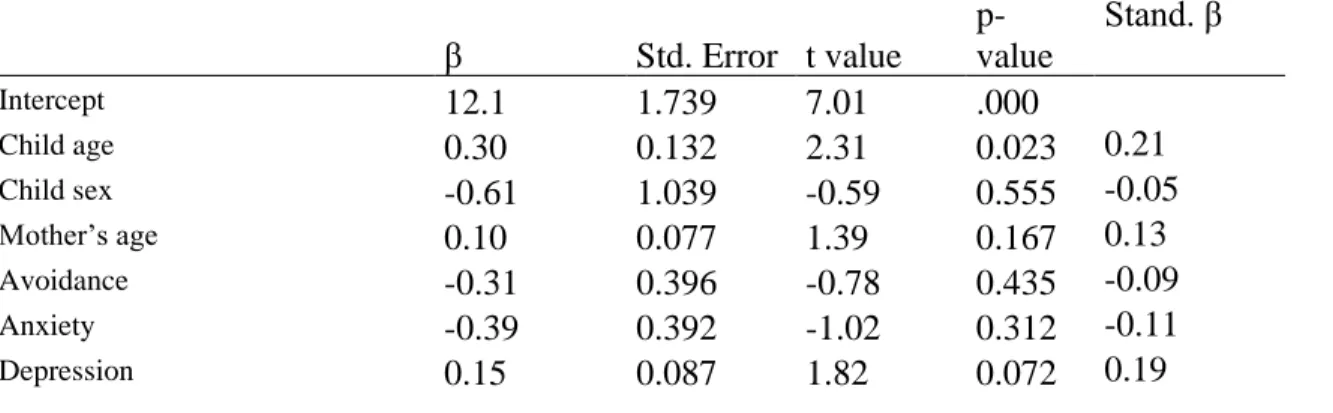
(4) Abstract The purpose of this study was to examine the relationship that maternal experience of early childhood trauma, symptoms of depression, adult attachment style, and parental reflective functioning has on their preschool child’s socio-emotional development and development of Theory of Mind, as these are parental variables often found to co-exist and/or affect one another, however the mechanisms through which they affect child’s development is still a subject of study. The participants of this study were 125 mother-child dyads who were part of the FONDECYT Project 1130786. Results from this study show that maternal symptoms of depression and lower parental reflective functioning significantly predicted a risk to their child’s socioemotional development. Interestingly, avoidant attachment style significantly predicted decreased levels of parental reflective functioning, whereas anxious attachment style, and childhood trauma significantly predicted maternal symptoms of depression. This particular study found that when differentiating between different types of trauma, the experience of sexual abuse during childhood significantly predicted maternal symptoms of depression and its indirect effect on the child’s socioemotional development was close to being statistically significant. Finally, this study sought to explore the mediator role of parental reflective functioning and found that both parental reflective functioning and symptoms of depression mediated the effect that childhood experience of trauma and insecure attachment styles had on children’s socioemotional development.. 4.
(5) Introduction The parent-child relationship is unmatched in its effects on the psychological, physical, and physiological development of children. The quality of early relational experiences has lasting implications on the cognitive schemas that will later affect the child’s interpersonal and social functioning. It has been evidenced that an infant’s brain is a “social brain”, equipped with the mechanisms and structures necessary to detect, facilitate, and respond to imitation, affiliation, and intimacy (Happe & Frith, 2014). As a result, parental contingency, responsiveness, and sensitivity are essential to the child’s socioemotional wellbeing. From a neurological perspective, the parentchild relationship promotes levels of oxytocin and vasopressin in developing children, both essential hormones in social bonding, homeostasis, and social recognition (Carter, Williams, Witt, & Insel, 1992). From a psychological perspective, the quality of the parent-child relationship and attachment bond have been associated to a wide range of developmental outcomes, like the ability to form healthy and intimate relationships and the ability to function socially and academically. From very early on social reciprocity and parental synchrony are essential to the sociocognitive development of children, making way for emotional comprehension of the self and others that becomes increasingly more profound and complex as development takes place. One of the processes underlying these capabilities is mentalization. Fonagy et al. (2002) assert that the process of mentalization is inherently human and part of our essence as social beings. Mentalization is understood as the capacity to comprehend mental states of oneself and of others (Fonagy, Steele, Moran, Steele, & Higgit, 1991). Similarly, parental mentalization is the capacity a parent has to reflect on their own experiences and their child’s, understanding that their child’s behavior is driven by underlying mental states (Slade, 2005). Mentalization and reflective functioning are two terms that are often used interchangeably, although reflective functioning (RF). 5.
(6) is an operationalized construct that refers to “the mental capacities that generate mentalization” (Fonagy, Gergely, Jurist, & Target, 2002, pg. 3). In the same line, parental reflective functioning (PRF) refers to the overt capacity a parent has to reflect on the child’s experience, displaying genuine curiosity about the child’s mental states and recognizing that mental states underlie the child’s behaviors (Bottos & Nilsen, 2014). There are a number of factors that can affect PRF, one of which is parental experience of early childhood trauma. Growing up in an environment characterized by maltreatment can debilitate mentalizing capacities, as reflectiveness becomes hindered in this context and thus can potentially distort mentalization (Fonagy et al., 2002). Abusive and negligent households can be related to insecure attachment patterns, while at the same time resulting in mentalizing failures. This is especially true when the experience of trauma occurs within the family unit and the primary caregivers are the perpetrators of abuse. Assessed through neglect and abuse, childhood trauma can have immediate effects, as well as potential intergenerational effects, coloring the attachment relationship and mentalizing capacities in children of parents who have survived early experiences of trauma (Lawsom, Davis, & Brandon, 2013). As such, parents who have negative representations of their own childhood can form incorrect assumptions and misinterpretations from their children’s behaviors that could pose problematic parent-child relational issues (Kelland, Fagerlund, von Koskull, & Pajulo, 2016). Depression is one of the most common sequela of early experience of trauma (Bottos & Nilsen, 2014) and has also been linked to insecure attachment patterns and mentalizing failures (Pawlby et al., 2010). As such, symptoms of depression have also been found to potentially compromise parental mentalizing capacities (Bottos & Nilsen, 2014). In this same line, symptoms of maternal depression have been linked to mentalizing failures in children, for example, Hughes. 6.
(7) & Ensor (2009) found that 3 to 4-year-old children of depressed mothers had difficulty adequately identifying emotional expression and affective states in others. In another study of 91 children, Rohrer, Cicchetti, Rogosch, Toth, & Maughan (2011) found that 5-year-olds whose mothers experienced symptoms of depression showed significant difficulties in false-belief tasks, a measure of mentalizing abilities. It has been hypothesized that the characteristics of symptoms of depression like irritability and isolation affect the capacity of adults to engage in the mental states of those around them, especially their own children (Pawlby et al., 2010). Maternal experiences of depression have the potential to affect parenthood and can have consequences that affect the upbringing and development of the child, especially concerning mentalization. The objective of this study is to analyze the effects that maternal experience of childhood trauma, symptoms of depression, adult attachment style, and parental reflective functioning have on their preschool children in terms of socio-emotional development and Theory of Mind (ToM). The preschool period is a developmental stage during which children begin to implement their internal resources. Among the milestones reached during this stage is the capacity to regulate emotions and behaviors, form relationships to peers, and detect social cues that allow them to form positive relationships (Farkas, Grothusen, Muñoz, & von Freeden, 2006). The preschool period puts to test the skills children have acquired through their caregivers and environment in a new and changing context. This stage is also important for children in that they learn to recognize and understand mental states and to understand that others have thoughts that differ from theirs, namely, they begin to develop a Theory of Mind (ToM) (Laranjo, Bernier, Meins, & Carlson, 2010). The development of ToM goes hand in hand with the socio-emotional development of children and both are developed in the context of early experiences to primary attachment figures.. 7.
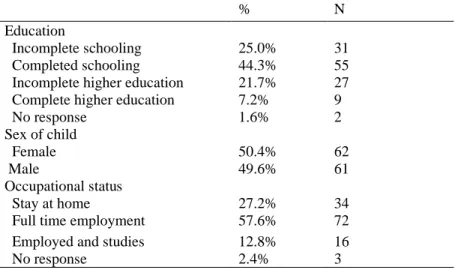
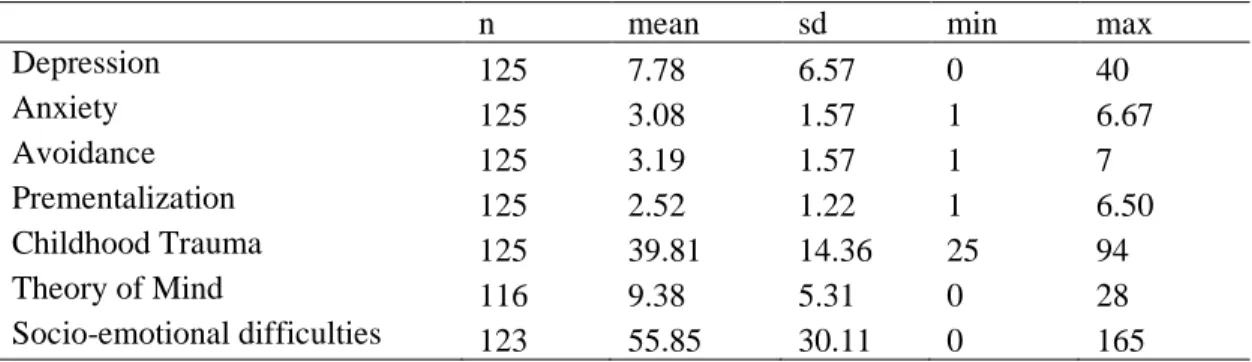
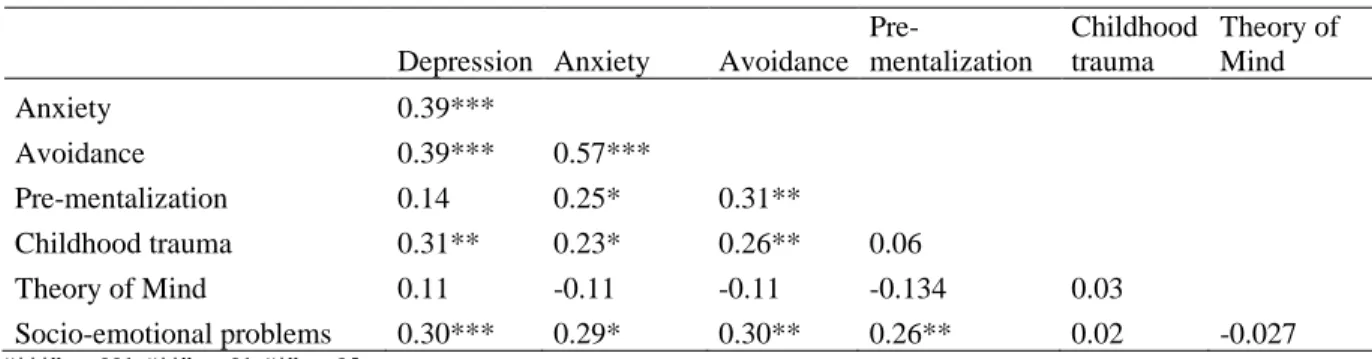
(8) This study seeks to explore the relationship that maternal childhood experience of trauma, symptoms of depression, adult attachment style, and parental reflective functioning has to the development of Theory of Mind and to the socioemotional development of preschool children in Chile. The children evaluated were between the ages of 3 and 5 years old, a total of 125 mother/child dyads were evaluated. The children evaluated attended JUNJI preschools (JUNJI schools are free, government funded Chilean preschools whose goal is to provide public preschool education to underserved, low-income communities). The data used for this study is secondary data belonging to the FONDECYT 1130786 project. The participating mothers were assessed for trauma with the Childhood Trauma Questionnaire (Bernstein et al., 2003), assessed for symptoms of depression using the Beck Depression Inventory (Beck et al., 1961), assessed for adult attachment style using the Experiences in Close Relationships scale (Brennan, Clark, & Shaver, 1988), and for parental mentalizing capabilities using the Parental Reflective Questionnaire (Luyten et al., 2009). The children were evaluated for their socio-emotional development with the Ages and Stages Questionnaire-SE (Squires, Bricker, & Potter, 1997) and for their mentalizing capabilities with the Theory of Mind Evaluation (Farkas, 2013). This study sought to explore the role that Parental Reflective Functioning would have in mediating the relationship between childhood experience of trauma, symptoms of depression, and adult attachment style to the variables considered for their children, socioemotional development and Theory of Mind. This study expected to find that greater maternal experience of trauma would increase maternal symptoms of depression, insecurity of attachment, and decrease parental reflective functioning, resulting in higher risk to their offspring’s socioemotional development and negatively impact their children’s Theory of Mind capabilities. Additionally, this research paper seeks to explore if the different types of traumas assessed had specifically pronounced effects on maternal symptoms. 8.
(9) of depression, parental reflective functioning, and adult attachment style, and if these effects posed a greater risk to their child’s socioemotional development and Theory of Mind than other types of trauma. The study also sought to describe and analyze the effects that different types of trauma had to the overall relationship between the variables. Rationale for the Study This study inserts itself in a line of research that seeks to contribute to our knowledge regarding the intergenerational effects of early childhood traumatic experiences. Early childhood trauma has profound and lasting effects that range from physical to psychological sequela that affects individuals on different levels. The experience of trauma has important effects on child development, however, the unresolved experience of early childhood trauma has its potentially most devastating effects when that child becomes an adult and eventually a parent. Fraiberg et al. (1975) stated that the painful experience of fear and helplessness inherent to childhood trauma can “haunt” the parent-child relationship, ultimately affecting the healthy development of the child. While Fraiberg et al. (1975) talk about the presence of these “ghosts” left behind by trauma, Fonagy et al. (2002) talk about the absence of mentalizing in parent-child relationships where there has been significant exposure to traumatic events. Mentalization refers to an individual’s capacity to understand and reflect on one’s own and other’s mental states and the understanding that other’s behaviors are guided by mental states (Fonagy et al., 2002). Thus far, research has indicated that maltreating households inherently stunt mentalizing, as this type of environment is not conducive to openly talking about and reflecting on mental states (Bottos & Nilsen, 2014). As one of the most common sequela of early childhood trauma, depression has also been observed to compromise mentalizing development (Cicchetti, Rogosch, Toth, &. 9.
(10) Maughan, 2011; Hughes & Ensor, 2009). To date, studies have suggested that adults who were victims of childhood trauma and who have experienced symptoms of depression show mentalizing deficits (Cicchetti, Rogosch, Toth, & Maughan, 2011; Aust, Härtwig, Heuser, & Bajbouj, 2013), and clinical literature has focused on the effects that parental experience of childhood trauma and the experience of symptoms of depression can have on their children’s mentalizing development (Fonagy, Gergely, Jurist, & Target, 2004). Additionally, Bottos & Nilsen (2014) evaluated 106 mother-child dyads and assessed for symptoms of depression, experience of childhood trauma, maternal reflective functioning, and children’s Theory of Mind, also looking to differentiate the effects that different types of trauma had on maternal and child mentalization, hypothesizing that emotional maltreatment would have the most significant effects. Their results highlighted the high rates of childhood history of trauma in women experiencing symptoms of depression and found that significant trauma and the experience of symptoms of depression showed the most pernicious effects for their children’s mentalizing capacities, highlighting the significant impact that cumulative experience of adversity can have throughout the lifespan and intergenerationally. Furthermore, their study found that parent’s experience of emotional maltreatment significantly predicted their children’s mentalizing abilities at a higher rate than other types of abuse. The present study sought to expand on this study in terms of addressing potential effects on children’s socioemotional development, as we know that maternal experience of trauma can adversely affect offspring health, but we are still learning the ways in which this happens. Understanding how parental mentalization is affected by symptoms of depression, childhood trauma, and adult attachment and their effect on children’s development is valuable information for mental health providers, highlighting the importance of trauma-informed. 10.
(11) therapeutic models, especially for professionals that work with the 0 to 5 age population, as there are few studies that focus on the mentalizing development and characteristics of preschoolers that take into account the caregiver’s experience of trauma, attachment style, and mentalizing capacities (Sharp et al., 2007).. 11.
(12) Theoretical and Empirical Background The importance of the relationship between a child and his/her caregiver has proven to be more profound than initially thought. Children’s general wellbeing and development is rooted in the parent/child relationship and the quality of this relationship has been positively associated to varying positive outcomes, such as socioemotional, cognitive, and neurological development (Shonkoff & Phillips, 2000). This relationship is composed of micro-moments and microexpressions that are associated to parental sensibility and synchrony, and become essential agents of communication between parent and child. For example, the exchange of glances between parent and child during key moments have a profound effect on both, as it demonstrates that they are part of a contingent relationship where the child’s needs are attended to and the parent has the knowledge that she/he can satisfy them. Throughout child development, the parent’s capacity to correspond to and validate the child’s internal experience underlies the development of a sense of self that increases in complexity with time. The internal resources a parent possesses play a crucial role in the parent/child relationship and can be affected by different factors like, parental stress (Guajardo, Snyder, & Peterson, 2009), discipline methods (Arranz, Artamendi, Olabarrieta, & Martin, 2002; Slade, 2005), and attachment style (Arranz, Artamendi, Olabarrieta, & Martin, 2002; Slade, 2005). As such, the parent’s childhood experiences play a significant role in the development of said internal resources that consequently affect, and can even shape, the bond between a parent and their child. The following sections will present what has been empirically and theoretically evidenced regarding the themes and variables observed in this study.. 12.
(13) Attachment Theory Origin of attachment theory, research, and classifications John Bowlby’s attachment theory shaped how we think about one of the most essential human needs: forming affective bonds to others. Attachment theory encompasses the emotional bond human beings establish from infancy onward, beginning with their primary caregivers and later on with their own children, romantic partners, and other people throughout life (GarridoRojas, 2006). Bowlby’s (1978) theory of attachment and the research carried out in this area has undoubtedly shown that the capacity to form emotionally healthy bonds to others is rooted in early experiences of attachment. Attachment theory proposes that not only are humans born with the universal need to form affectional bonds, but also that this need be reciprocated from early on. In essence, while the infant seeks attachment behaviors (smiling, crying, cooing, etc.), the child’s caretaker must also be able to reciprocate these attachment seeking behaviors by smiling back, touching, providing the child with verbal and non-verbal cues, etc. to name a few. Such reciprocity fosters a sense of security in the child, and they develop knowing that their needs will be met and that they have the agency to achieve emotionally reciprocal behaviors in their primary caretakers (Fonagy, Gergely, Jurist, & Target, 2002). On the other hand, a child who is not able to have their emotional and in some cases their physical needs met, learns that they cannot rely on their caretakers to provide them with emotional reciprocity, thus leaving them with a sense of that they are not secure in this world at a most fundamental level. Attachment bonds are especially important when understanding emotion and affect regulation. We are not inherently born with the capacity to self-regulate and this only develops within the context of a secure dyadic relationship based on contingency, holding, and emotional reciprocity. For example, when a child becomes upset, overly aroused, and stimulated, he/she. 13.
(14) will require their caretaker to organize their emotions by returning them to emotional equilibrium by means of holding, feeling understood, and soothing. Bowlby (1983) proposed that repetitive experiences of emotional regulation and experiences with caretakers later become the foundation for internal working models. These internal working models become relationship prototypes and are thought to be the relational origin of a person’s capacity to form and maintain relationships (Slade, Grienenberger, Bernbach, Levy, & Locker, 2005). Attachment was first classified through the work of Mary Ainsworth (1969) when she devised the now infamous “Strange Situation”. The Strange Situation is an experimental procedure in which a mother and child (12-18 months old) are observed through a one-way mirror, with special focus on the child’s behaviors and reactions to 8 episodes lasting 3 minutes each. Scoring for this procedure takes into account the child’s behavior during the two reunion episodes between mother and child, they are: proximity and contact seeking, contact maintaining, avoidance of proximity and contact, and resistance to contact and comforting. The experimenters also take into account other behaviors such as, exploratory behaviors, searching behaviors, and displays of affect (McLeod, 2016). As a result of this experiment, Ainsworth devised a classification system consisting of 3 attachment styles: secure attachment, insecureambivalent attachment, and insecure-avoidant attachment. Secure attachment is characterized by the child expressing distress upon his mother’s departure, avoidance of the stranger when left alone with her, friendliness towards the stranger when his mother was present, happiness upon mother’s arrival, and displays of exploratory behavior (exploring the toys) with mother as a safe base to explore the environment. Children with ambivalent attachment were more likely to show signs of intense distress upon mother’s departure, show avoidance and fear towards the stranger, the child approaches mother upon reunion, but resists contact, and cries intensely and explores. 14.
(15) less. Finally, the child classified with avoidant attachment shows no sign of distress upon mother’s departure, shows no fear of the stranger and plays with the stranger, shows little interest in mother upon reunion, and the mother and stranger are able to calm the child down equally well. These classifications of attachment serve to point out the organization of the attachment system and provides clinicians and researchers with insight into the parent-child relationship. Securely attached children signal their needs and have the knowledge that their parents will be there to satisfy their needs in a predictable, sensitive, and responsive manner (George, 2014). Securely attached children are also prone to sharing joyous moments with their caregivers, and their relationship is characterized by play, curiosity, eye contact, and exploratory behavior (George & Solomon, 2008). On the other hand, an insecure-avoidant relationship between parent and child is characterized by distance in which the child diffuses anxiety and fear using rejecting behaviors (George & Solomon, 2008). This type of attachment style is characterized by a strong separation anxiety in the child, mildly rejecting parenting, and parental tendency to redirect their child’s attention during moments when their child expresses attachment-related needs (George, 2014). Finally, the insecure-ambivalent-resistant child is characterized by chronic anxiety and clinginess. A child with this attachment classification oscillates between neediness and rejection, to which the parent contributes with inconsistent and contradictory caregiving, making the relationship between the two very frustrating and confusing (George, 2014). Both types of insecure attachment style are characterized by children who present fewer facial expressions and a distorted exploration of their environment. Secure attachment style, insecure-avoidant, and insecure-ambivalent-resistant are what are known as organized attachment styles and were the original attachment classifications devised by Ainsworth (1969). Later on, Mary Main (1986). 15.
(16) added a new classification, disorganized attachment style, to account for children whose strategies to signal and gain proximity to their attachment figures were found to be “broken down” and fundamentally disorganized. As a result, children with disorganized attachment style present with a sense helplessness and appear overwhelmed by their attachment needs (George & Solomon, 2008). When presented with the Strange Situation, disorganized children appear disoriented, frightened, hostile, and generally conflicted about proximity upon reunion with mother (Main & Solomon, 1990). The parent-child relationship behind this attachment classification is often one ridden with conflict, unpredictability, complex trauma, fear, and dissociative parental and child behaviors (George, 2014). Adult attachment Attachment style is not only assessed within the context of the parent-child relationship, it is also assessed in adults through the bonds that they form with other attachment figures, such as romantic partners. As previously noted, attachment theory emphasizes that attachment bonds formed later in life are thought to be rooted in early childhood attachment experiences (Fraley, 2002; Yumbul, Cavusolgu, & Geyimci, 2010). Adult attachment styles have been researched theoretically conceiving that an individual’s adult attachment style is an extension of early developmental experiences. However, longitudinal research has not shown consistent results in regards to the stability of attachment style from infancy to adulthood (Fraley, 2002). However, there have been some studies worth noting that have found empirical evidence of attachment style stability though the life span. For example, in a meta-analysis of existing longitudinal data, Fraley (2002) found that attachment was moderately stable during the first 19 years of life by mathematically testing different models of attachment stability. He concluded that stability of attachment was due to the so-called. 16.
(17) “prototype model”, which poses that later experiences of attachment are rooted in attachment style prototypes developed early in childhood. In a later study, Fraley et al. (2013) assessed attachment style in one-month old infants up through 15 years-old in 707 participants. Their findings suggested that differences in adult attachment styles had their origin in the participant’s early developmental attachment experiences. Fraley’s et al. (2013) study is important in that it helped fill a gap existing in attachment research that empirically evidenced what attachment theorists and clinicians had pointed out for 25 years prior. However, Fraley et al. (2013) point out that while there was a relationship, it was not as pronounced as they expected, as only 29% of variance of adult attachment styles was explained by early attachment experiences. They state that while the importance of early childhood experiences is profound, they cannot be solely responsible for adult attachment styles because there are a number of other factors that contribute to adult attachment like ongoing interpersonal experiences, the life-stage they are in at the time of assessment, and environmental context (Frayley et al., 2013). Therefore relationships formed throughout the lifespan can also affect the course a person’s attachment bond. In addition to this, Fraley et al. (2013) point out that the quality of caregiving environment during childhood is also subject to change, whether it be due to environmental reasons, socio-economic reasons, or experiences such as trauma. Adult attachment styles Adult attachment style encompasses a person’s representation of the self and of others (Marganska, Gallagher, & Miranda, 2013) and is rooted in early childhood experiences. Attachment style in adulthood can inform a person’s historical pattern of relationships and their capacity to regulate emotions when seeking proximity to attachment figures.. 17.
(18) While there continues to exist debate on how adult attachment styles can be assessed, the Adult Attachment Interview (AAI) (George, Kaplan, & Main, 1985) continues to be one of the most commonly used instruments of measurement (Marganska, Gallagher, & Miranda, 2013). The AAI scores individuals based on their mental representations of early attachment experiences, resulting in four categories of attachment, secure/autonomous, insecure/dismissing, insecure/preoccupied, and unresolved, which respectively correspond to the categories laid out by Ainsworth (1978). In the scientific search for finding increasingly better ways to assess adult attachment styles through different types of instruments, Brennan, Clark, & Shaver (1998) produced a seminal factor-analysis in which they included all self-report measures of adult attachment at the time and identified two stable dimensions of adult attachment labeled anxiety and avoidance. With such a complex construct to measure, as is adult attachment, there has since been a general consensus that adult attachment generally falls under these two dimensions (Wei, Russle, Mallinckrody, & Vogel, 2007). Attachment anxiety is characterized by a fear of abandonment and/or rejection, resulting in an anxious preoccupation with intimate partners, and distress when their partners (or other attachment figures) are not able to respond. Intimate relationships are often characterized by a constant checking in and strong efforts to maintain proximity (Mikulincer & Shaver, 2007). There is often an exaggeration of needs and clingy and controlling behaviors that often lead to excessive intrusiveness, coercion, and aggression that lead to partner dissatisfaction and rejection (Mikulincer & Shaver, 2007). On the other hand, attachment avoidance is characterized by fears of dependence and interpersonal intimacy, excessive need for self-reliance, and a reluctance of self-disclosure and nurturing trust (Wei at al., 2007). These individuals have a tendency to deny their attachment needs and seek to control and maximize. 18.
(19) psychological distance (Mikulincer & Shaver, 2007). Insecure individuals can score high on one of these and low on the other dimension, for example, preoccupied adult attachment style scores high on anxiety and low on avoidance and dismissing attachment style scores low on anxiety and high on avoidance. Individuals who score high in both dimensions often fall under a disorganized attachment style or a fearful avoidant attachment style and these individuals often have a history of complex trauma and come from abusive/neglectful homes (Mikulincer & Shaver, 2007). Individuals who score in either of these dimensions, or score highly on one of them, are classified under insecure attachment style, whereas individuals who score low on both of these dimensions are classified as securely attached (Malinkrodt, 2000, Wei et al., 2007). The attachment system is based on behavioral strategies known as hyperactivating strategies, in which the goal is to gain proximity to the attachment figure when they are perceived as unavailable or unresponsive (Mikulincer & Shaver, 2007). Anxiously attached individuals often use these strategies when their attachment systems becomes triggered. Hyperactivating strategies are intended to gain affection, but often yield intense and destructive emotions (Mikulincer & Shaver, 2007). Contrarily, when intimacy is perceived as threatening and dangerous, individuals use deactivating strategies, characterized by ignoring and denying attachment needs and avoidance of situations that require intimacy and emotional involvement (Mikulincer & Shaver, 2007). Attachment and childhood trauma In line with these findings, it is important to consider an individual’s historical factors that could potentially contribute to adult attachment style. In this study, the experience of childhood trauma was considered. There is significant empirical evidence of a relationship between the experience of trauma and infant-attachment styles, yet there are fewer studies that. 19.
(20) consider the experience of early childhood trauma and its relationship to adult attachment styles (Ensink, Berthelot, Bernazzani, Normandin, & Fonagy, 2014). In fact, Bakermans-Kranenburg & Ijzendoorn (2009) carried out a meta-analysis and found that only 5 studies had focused on the relationship between childhood history of trauma and adult attachment style and fewer studies included non-clinical populations. A more recent study in this area was carried out by Yumbul, Cavusoglu, & Geyimci (2010) who assessed the relationship between participant’s experience of childhood trauma and adult attachment style in 150 participants. Their results showed that as the experience of childhood physical neglect increased, so did the chance of individuals score in the Dismissive/Avoidant attachment classification. Upon dividing adult attachment classification into secure and insecure adult attachment style, their study found securely attached participants reported fewer experiences of trauma during their childhood than their insecurely attached counterparts. Yumbul, Cavusoglu, & Geyimci (2010) point out that their study indicates that childhood trauma can prevent a person from forming healthy relationships, however, they also point out that they did not find a correlation between absence of childhood trauma and secure attachment, indicating the need for future research in this area. In a similar study, StovalMcClough & Cloitre (2006) compared the adult attachment styles of 30 women with histories of abuse and neglect and found that a decreased history of trauma was associated to higher rates of attachment security. From a theoretical perspective, the relationship between childhood experiences of trauma and adult attachment style is sound, posing childrearing that occurs in the context of childhood maltreatment has the potential to disarm a sense of security in the attachment relationship that has footprints in attachment relationships formed from thereafter (Fonagy, 1999).. 20.
(21) Attachment and depression Early attachment experiences play a significant role in an individual’s capacity to regulate intense emotions, particularly during times of distress. When in need of proximity, especially from their attachment figures, individuals who are high on attachment anxiety tend to use strategies such as clinging and controlling behaviors that can indeed drive people away in times of need (Mikulincer et al., 2003). Individuals who score high on attachment avoidance tend to avoid closeness out of fear, and emphasize self-reliance and independence (Mikulincer et al., 2003). On the other hand, individuals who score low on both attachment anxiety and attachment avoidance and are securely attached have been found to have more optimistic beliefs about themselves and their ability to handle stress, they have greater acceptance of the negative parts of themselves, and are more comfortable in seeking the help of others and trust that others will reliably and genuinely be able to respond to their needs (Marganska et al, 2013). Furthermore, securely attached individuals are flexible in how they express their emotions (Sroufe, 2005), show greater social competence and adjustment (Mikuliner et al., 2003), and can moderate their impulses when responding to environmental and social demands (Kobak & Sceery, 1998). In contrast, insecurely attached individuals tend to have lower self-esteem and social competence (Cooper et al., 1998) and report increased loneliness and interpersonal conflict (Wei et al., 2005). These are all factors that are important to the general well-being of a person and can be important risk factors for depression and symptoms of depression. It has been researched that secure attachment is generally associated to psychological wellbeing, whereas insecure attachment has been linked to depression and anxiety at a greater scale (Marganska et al., 2013). Hankin, Kassel, & Abela (2005) found that both avoidant and anxious attachment predicted symptoms of depression at an 8-week and 2-year follow-up. In a study by Marganska et al.. 21.
(22) (2013), they found that attachment insecurity was significantly correlated to symptoms of depression and Generalized Anxiety Disorder (GAD). Moreover, they found that fearful avoidant and preoccupied attachment style had the strongest association to both depression and GAD. Their findings were similar to other studies and pointed to the factors that put insecurely attached individuals at risk for these disorders, such as ineffective emotional regulation, propensity to negativity and rumination, absence of positive cognitions, and the tendency to experience high negative affect and low positive affect (Clark & Watson, 1991; Gentzler, Kerns, & Keener, 2010; Marganska et al., 2013). Attachment and parenting The attachment relationship begins from infancy and extends into adulthood resulting in relational patterns that have important implications for a person’s general wellbeing (George, 2014, Ch. 6, p. 97). As such, these relational patterns can extend to parenting practices and the parent/child relationship. For example, parents that fall under the preoccupied adult attachment orientation seem to react in anger and express anger at a greater rate than securely attached parents and are reported to have more intrusive interactions with their child (Adam, Gunnar, & Tanaka, 2004). Rholes, Simpson, & Blakely (1995) found that adults with avoidant attachment styles responded to their children with less warmth and reported feeling detached from their children emotionally. Parents who were classified as insecure avoidant also reported greater parenting stress and less parental satisfaction (Rholes, Simpson, & Friedman, 2006). In the same line, Rosiman et al. (2007) reported that insecurely attached individuals seemed to engage in anxious/uncollaborative and avoidant/disengaged behaviors with their children at a greater rate than securely attached parents. Theoretically speaking, caregivers who fall under insecure attachment styles are prone to feeling overwhelmed by their child’s need for proximity,. 22.
(23) becoming rejecting and attributing negative connotations to their child’s behaviors (Lieberman & Horn, 2011). As such, to form a secure attachment parent/child relationship, the parent must have the capacity to hold, regulate, and experience their child’s emotions without becoming overwhelmed or shutting down (Slade, 2008). In his seminal work on attachment, Bowlby (1973) postulated that attachment security is passed down intergenerationally, but the mechanisms through which this happened were unclear. In the exploration to understand how attachment styles were passed from one generation to the next, the concept of mentalization was put forward as a factor of extreme importance in fostering secure attachment styles. The following section will review the concept of mentalization, or reflective functioning, and describe its relationship to attachment and trauma.. Mentalization Definition and overview of mentalization or reflective function The concept of mentalization is born out of attachment theory through the work of Fonagy, Steele, Moran, Steele, & Higgitt (1991). Defined broadly, mentalization refers to the capacity to understand the mental states of one’s self and others, understanding that behaviors are influenced by intentional mental states such as, desires, intentions, beliefs, emotions, thoughts, goals, purposes, etc. However, mentalization is a multifaceted construct, integrating different aspects of the ability to “think about thinking” (Fonagy, 2015, NAPA presentation). Among these different aspects is curiosity, having awareness of the impact that affects can have on others, understanding that the mind of others is opaque and nuanced, the ability to take the perspective of others, and the capacity to trust (Fonagy, 2015). As such, one of the most important roles mentalization plays is helping us anticipate, interpret, understand, and affect the behavior of those around us (Bateman & Fonagy, 2013; Fonagy et al., 1991; Target & Fonagy,. 23.
(24) 1996; Fonagy, 1998; Sharp & Fonagy, 2008). Fonagy, Gergely, Jurist, & Target (2002) state that mentalization is essentially “human” in that humans strive to understand ourselves and the mechanisms that propel our behavior by making the effort to understand our own minds, as well as others. In this line, “making sense” of mental states and behaviors has proven to be crucial to social functioning and the development of interpersonal relationships (Bateman & Fonagy, 2013). Identifying and giving meaning to internal states is also said to be intricately associated to the organization of the self and to the regulation of affect (Fonagy et al., 2002; Slade, 2005). Attributing meaning to internal mental states through meta-cognitions allows humans to think and reflect about how they feel, while at the same time becoming emotionally engaged in their thoughts. As Target (2003 as cited in Slade, 2005) states, it is the ability to “think about feeling” and “feel about thinking”. When this ability is somehow compromised, a person can become overwhelmed by their own mental states (thoughts, desires, emotions, etc.) and thus shut down, foregoing the capacity to experience rich and complex dynamics inherent to internal and interpersonal dynamics (Slade, 2005). As Fonagy et al. (2002) make clear, affect regulation works at different levels. On one level, it serves a physiological purpose as it allows us to return to homeostasis when necessary for survival (Fonagy et al., 2002) on another level, it serves to regulate and craft our affects in relation to others so that we can adequately communicate specific affects. This leads Fonagy et al. (2002) to propose that affect regulation is a form of selfregulation in that it brings the existence of the self to the forefront because, “the object of regulation is the self” (Fonagy et al., 2002, pg. 95), thus underlying the organization of the self and its affects. As a result, the ability to mentalize has been positively associated to affect regulation and organization of the self, leading to increased capacity to cognitively regulate. 24.
(25) affects and tolerate negative thoughts and feelings, underlying mechanisms that lead to more successful and healthy interpersonal relationships (Allen et al., 2008). Were it not for this capacity, we would respond to behaviors, rather than the complex feelings that underlie them, as we have observed in people suffering from personality disorders, such as borderline personality disorder, characterized by the inability to hold and regulate emotions and mentalize affects appropriately (Slade, 2005). Mentalization and reflective functioning are terms often used interchangeably, specifically, reflective functioning refers to the operationalization of the underlying mechanisms of the capacity to mentalize (Fonagy et al., 2002). Reflective functioning (RF) specifically assesses a person’s capacity to understand behavior as meaningfully connected to underlying mental states, more specifically embedded in the context of an attachment narrative (Allen, et al., 2008; Slade, 2005). Individuals scoring high levels of RF show a greater capacity to reflect on their emotions and others, and show a better understanding of how emotions, thoughts, and behaviors are associated (Fonagy et al., 1998). Furthermore, scoring higher RF indicates greater metacognitive abilities, that is to say that the individual is successfully and meaningfully able to think about their thoughts and feelings (Slade, Grienenberger, Bernbach, Levy, & Locker, 2005). The assessment of RF is intricately linked to attachment styles and coded as such; for example, Jesse et al. (2016) point out that identifying or describing mental states is not enough to indicate high levels of RF, rather, they have found that individuals coded with a preoccupied attachment style show the ability to describe mental states, in fact their discourse regarding mental states is excessive, analytical, and over intellectualized, but lack meaningful connections between emotions and behaviors. Therefore, high scores in RF account not only for the ability to describe mental states, but to also create thoughtful, meaningful links between mental states and conduct. 25.
(26) (Fonagy et al., 1998; Jessee et al, 2016). The connection between mental states and behavior in the assessment of RF is important because though there are similar constructs in existence like mind-mindedness (Meins, 1997), metacognitive mirroring (Main, 1991), self-reflection, insight, and insight introspection (Oppenheim & Koren-Karie, 2002), to name a few, none emphasize this link as strongly (Fonagy et al., 2002). Development of mentalization The development of mentalization marks the beginning of the development of self, more specifically the agentive self (Fonagy et al., 2002). According to Fonagy et al. (2002), the development of self-agency is typically acquired in the first five years of life through the progressive understanding and maturity of five levels self-agency: physical, social, teleological, intentional, and representational. As a physical agent, the infant’s initial self-organization is based on body related experiences. As a social agent, self-organization is based on the social exchanges that take place from infancy onward in which the infant begins to understand his/her capacity to induce behavioral and emotional reactions in his/her caregivers. Between sixteen and eighteen months of age the self is understood as a teleological agent, referring to understanding that alternative actions can be chosen to achieve a particular goal, followed by the internalization of the self as an intentional agent where it becomes apparent that actions are caused by intentional mental states. Finally, at three or four years old, the self is understood as a representational agent, where there is an understanding that actions are caused by intentional mental states which are representational and symbolic in nature (Fonagy et al., 2002). During the first four years of child development, children have two modes through which they experience internal and external reality, the earliest building blocks of mentalization. Firstly, children experience “psychic equivalence” in which there is virtually no distinction between the internal. 26.
(27) world and the external world, resulting in distressing projections of fantasy to the outside world (Fonagy et al., 2002). It is contingent upon their caregiver’s responses to expose children to repeated experiences of appropriate affect-mirroring and emotional regulation in a loving and safe context so that the child understands that his/her feelings cannot spill into the outside world, producing a so-called “decoupling” of mental states and physical reality (Fonagy et al., 2002). Ideally, a child will move from the psychic equivalence mode to the pretend mode, in which the child acquires the capacity use objects as symbolic representations and understands that internal experience doesn’t necessarily reflect external reality. However, during the pretend mode the child lacks the understanding that internal states affect the outside world, lacking the developmental maturity to understand the relationship between internal states and external reality. Mentalization, or the reflective mode, is acquired when both the psychic equivalence mode and the pretend mode are integrated and the developmental process gives way to understanding that mental states represent reality, but are not equated to it (Fonagy et al., 2002). The complex developmental process by which mentalization is acquired begins from early infancy onward and is largely dependent on the environmental context in which it takes place. Mentalization/reflective function and attachment As previously noted, the concept of mentalization and reflective functioning were developed within the context of attachment theory. The development of mentalization is born out of dyadic relationships to primary attachment figures and is based on the caregiver’s capacity to provide the infant/child with the contingency, reciprocity, empathy, and emotional containment necessary (Fonagy et al., 2002). As a result, the child’s internal and external world is reflected in ways that ultimately organize his/her emotional states. Mentalization is marked by behaviors such as mirroring ( a high-order representation of the child’s experience) (Fonagy et al., 2002). 27.
(28) and marked contingency ( a symbolic representation of the child’s experience, rather than a literal, and overwhelming exact reflection of the child’s emotional state) (Fonagy et al., 2002). Theoretically, the attachment system becomes triggered through these types of interactions between a caregiver and their child; this relationship has been evidenced empirically, for example, Slade et al. (2005) found that mothers who had a secure attachment orientation seemed to understand the intentions and feelings of their children and their behaviors and thus were able to respond accordingly, especially understanding when and why their children sought comfort and closeness at a much higher rate than mothers who had insecure attachment orientation. On the other hand, caregivers who have an insecure attachment orientation can become overwhelmed by their child’s emotions and they respond as such, undermining the child’s ability to process information about his own emotions and eventually others (Fonagy et al, 2002). Essentially, Fonagy et al. (2002) proposes that the attachment relationship signals the quality of mentalization that occurs. It has been argued that the capacity to mentalize is one of the mechanisms through which attachment style is passed on inter-generationally, facilitating parental sensibility toward their child, thus promoting secure attachment (Van Izjendoorn, 1995). Though associations between both constructs have been found, the exact manner in which they affect each other is still unknown. However, it has been evidenced that RF has a protective role, for example, Arnot & Meins (2007) found that insecure mothers with high RF are more likely to have securely attached children than mothers with the same attachment insecure attachment style and low RF (Arnot & Meins, 2007). Failure to mentalize, or low reflective functioning, has been associated to several adverse outcomes. In the worst of cases, failures in mentalization have been linked to psychopathology,. 28.
(29) specifically Borderline Personality Disorder (BPD). Failure to mentalize refers to a compromised ability to process and interpret information regarding mental states, thus affecting the success and manner in which the individual relates to the social world (Fonagy, 2002). These types of failures can lead to developmentally inappropriate and distorted experience of emotions, interpreting behavior in terms of physical processes rather than cognitive or emotional processes, in addition to lacking adaptability in interpersonal relationships in terms of communication styles, thus failing to adapt to evolving dynamics in relationships to others (Bateman & Fonagy, 2016). Mentalizing failures and unsuccessful interpersonal relationships have also been associated to a fragmented sense of self, On the other hand, individuals with high mentalization have shown greater capacity to be attuned to the emotions of others, facilitating and promoting healthier interpersonal relationships, social competence, and a more integrated, healthier sense of self (Allen., Fonagy, & Bateman, 2008).. Parental Reflective Function Definition and overview Bateman & Fonagy (2012) propose that mentalization is a developmental construct born out of the attachment relationship. As such, there are several characteristics of a child/parent relationship that can promote the development of adequate and healthy mentalizing; these characteristics are known as parental reflective functioning (PRF). PRF refers to the capacity a parent has to reflect on their own mental states and their child’s while also meaningfully connecting their own behavior and their child’s to mental states (Fonagy et al., 2002). In addition to this, PRF also includes the parent’s (or caretaker’s) ability to reflect upon their own mental states and how they will affect their child (Slade, 2008). In broader terms, it is the parent’s capacity to hold the inner life of the child (Slade, 2005). Though this construct refers to a. 29.
(30) caregiver’s or a primary attachment figure’s capacity (mother, father, relative, etc.), this study looks specifically at maternal parental reflective functioning and will refer specifically to a mother’s relationship to the child and will use the “her” pronoun hereafter to refer to a mother’s PRF capacity. This important capacity has been correlated to various developmental outcomes and its absence has the potential of forcing the child to adapt pathologically, resulting in adverse outcomes as serious as the development of psychopathology, specifically in terms of personality disorders like Borderline Personality Disorder (Slade, 2005). Fonagy et al. (2002) posits that all human beings are born with the capacity to mentalize, however, it is the parent-child relationship that enables its development. A child’s capacity to discover and interpret his own intentions, desires, and feelings is contingent upon his parent’s capacity to understand him as an independent psychological agent and not as an extension of the parent’s own unresolved experiences (Fonagy et al., 2002; Kelland et al., 2016; Slade, 2005). As a result, the parent is able to provide the child with attuned interactions, specifically through affect-mirroring. Affectmirroring refers to the mother’s capacity to represent her child’s feelings through facial and vocal expressions in a way that sooths the child instead of overwhelming him (Fonagy et al., 2002). Through adequate affect-mirroring, the child learns to tolerate feelings of frustration or distress and slowly learns to not become inundated by these feelings, the very building blocks of affect-regulation and self-organization. Furthermore, the child learns to organize his primitive affects in order to then be able to recognize them, integrate them, and express them to others (Fonagy, Gergely, Jurist, & Target, 2002; Guajardo, Snyderb, & Peterson, 2009; Slade, 2005). On the other hand, the inability to provide congruent affect-mirroring has the potential to distort the identification of certain mental states, rendering them confusing, unsymbolized, and difficult to control (Fonagy et al., 2002). An important aspect of parental affect-mirroring is “marked-. 30.
(31) mirroring” or “marked contingency”, referring to a characteristic of affect-mirroring in which the parent reflects the child’s affective states in an exaggerated way that communicates that these are not the parent’s feelings, rather a symbolic representation of the child’s affective states (Fonagy et al., 2002; Slade, 2005). This is important because parent’s who reflect back the child’s affect without the element of “marked-mirroring” can cause the child to perceive his affects as contagious and dangerous and only intensify his level of arousal when experiencing negative affects (Fonagy et al., 2002). Ideally, through appropriate marked-mirroring, the child becomes sensitized to his own mental states, leading to a mentalized experience of emotions and affect regulation. It’s also important to note that these contingent, marked-mirroring maternal behaviors should be developmentally appropriate, beginning with vocal and facial expressions and later on using vocabulary referring to mental states and finally ending in symbolic play. As a result, PRF has been correlated to increased security of attachment in children, greater social abilities and success in interpersonal relationships, and a greater use of symbolic play (Fonagy, 2008). Mothers who have high PRF engage in different types of mentalizing behaviors, for example, mothers with high PRF seem to be genuinely curious about their child’s mental states and thus, engage their children in a way that expresses this curiosity (Slade, 2005). Additionally, highly reflective mothers understand their children’s mental states to be nuanced, not black and white, and make an effort to convey that they want to understand their child’s mental states, especially during times of dysregulation and distress (Bottos & Nilsen, 2014; Slade, 2005). Furthermore, mothers with high PRF engage in “mental state talk”, referring to the use of mindrelated comment that allude to the child’s state of mind, giving them the vocabulary to name certain affects (Rosenblum, McDonough, Sameroff, & Muzik, 2008).. 31.
(32) PRF has been proven to be a significant predictor of attachment security (Fonagy et al., 2002; Meins et al., 1997, 2002; Sharp & Fonagy, 2008) and has been linked to several other positive outcomes for children, like socio-cognitive development (Sharp & Fonagy, 2008), decreased physiological reaction to stress, increased self-regulatory capacities, increased capacity to concentrate, better academic performance, and better quality of social interactions to peers (Gottman et al., 1996). PRF has also shown to be a protective factor that promotes resiliency and reduces the chances of developing symptoms of depression and post-traumatic stress in traumatic contexts and in women experiencing depression and anxiety (Allen & Fonagy, 2006). While adequate PRF can be beneficial in child development and in maternal satisfaction, failures in PRF have shown to be associated to several different maternal psychiatric and psychological problems (Toth, Rogosch, & Cicchetti, 2008), maternal experience of substance abuse (Pajulo et al., 2012), and fewer socio-economic resources (Pajulo, Helenius, & Mayes, 2006). Decreased PRF has also shown to be associated to poorer quality of parent-child relationship, less parental satisfaction, decreased maternal involvement and communication, compromised limit setting capacity, and finally, inability to provide the child with ageappropriate independence and autonomy (Rostad & Whitaker, 2016). One last important note is that the quality of PRF and its effects depend very much on context; highly reflective parents are not reflective all the time, rather, adequate PRF is also characterized by rupture and repair, and disequilibrium is a normal part of the parent-child relationship, the most important aspect of this relationship is the ability to “repair” moments where high intensity affects took over the mother’s capacity to be reflective (Slade, Grienberger, Bernbach, Levy, & Locker, 2005).. 32.
(33) Parental reflective functioning and attachment It is important to note the significant links observed between PRF and attachment. As mentioned previously research has evidenced an association between reflective functioning capacities and adult attachment style, namely that increased reflective functioning has been associated to patterns of secure attachment and these have been associated to increased parental capacity to respond predictably and with sensitivity to the needs of their children (Fonagy, Steele, & Steele, 1991; van Ijzendoorn, 1995). In fact, Fonagy (2008) states that appropriate parental mentalizing fosters secure attachment and is integral in the development of the child’s mentalizing capacities. On the other hand, adults reporting decreased reflective capacities tend to present patterns of insecure attachment styles, less PRF, and their children present with patterns of attachment insecurity as well (Fonagy, Steele, & Steele, 1991, Fonagy et al., 2002; Slade, 2005). The idea is that the manner in which an adult relates to her child is rooted in internal working models that are developed during their childhood with their primary attachment figures (Rostad & Whitaker, 2016). Mothers with insecure attachment styles often present overwhelm in the face of the children’s needs and find it difficult to calm and regulate their children in times of distress (Slade, 2005). Conversely, mothers presenting secure attachment style show greater capacity to organize and regulate their emotions before responding to their children’s needs, leading to more sensitive caregiving responses when their child is in distress and dysregulated (Slade, 2005). Interestingly, the relationship between PRF and insecure attachment is more complex and nuanced depending on the type of insecure attachment style. For example, in a study of 40 mother-infant dyads assessing attachment style and parental reflective functioning, Slade, Grienberger, Bernbach, Levy, & Locker (2005) found that securely attached mothers showed. 33.
(34) higher PRF than organized insecure mothers in general, but when assessing for differences among insecurely attached mothers, their results indicated that disorganized insecure mothers showed the lowest levels of PRF amongst all participants with insecure attachment style. Slade et al. (2005) theorize that these differences between organized insecure attachment style and disorganized insecure attachment style in terms of PRF have to do with the “quality and organization” of the internal working models at the root of the mother’s interpersonal functioning; that is to say that a disorganized and disconnected perception of childhood experiences have a significant effect on the mother’s attachment style, PRF, and her child’s attachment style (Slade et al., 2005). In the same line, Beebe et al. (2010) found that mothers with disorganized attachment style did not present global PRF failures, rather PRF failures were restricted to situations in which their children manifested anxiety, responding positively and then being surprised at the reaction this caused in their infants. This type of response is thought to be an attempt to negate their child’s distress and anxiety, a defense mechanism rooted in the mother’s early childhood experiences triggered by her child’s distress. In general, it has been observed that securely attached adults tend to have an integrated and coherent narrative of their early childhood experiences, whereas adults with insecure attachment styles, especially disorganized-insecure, tend to have narratives of their childhood that are incoherent, disorganized, and not integrated, distorting their capacity to mentalize regarding the past, present, and future (Main et al., 1985). Parental reflective functioning and experiences of childhood trauma Among the contributing factors that have the potential to affect parental reflective functioning capacity is parent’s experience of early childhood trauma. Childhood experience of trauma refers to maltreatment during an extended period of time (emotional abuse, physical. 34.
(35) abuse, sexual abuse, verbal abuse, or negligence) or the experience of being exposed to violent behavior, like domestic violence (Lawsom, Davis, & Brandon, 2013). The experience of childhood maltreatment has been associated to a myriad of adverse outcomes, among them are: depression, anxiety, eating disorders, somatization and personality disorders (de Marco, 2000; Florenzano, 2001), medical disorders like irritable bowel syndrome, severe migraines, and gynecological symptoms (Leserman, 1996; Walker & Kato, 1993). The severity of mental disorders (e.g. symptoms of depression) are exacerbated in people who have early experiences of trauma (Ballesteros, Virtiol, Florenzano, Vacarezza, & Calderon, 2007). Young children and adolescents are more prone to experiences of trauma and as a result, individuals who experience early childhood trauma are up to three times more likely to suffer serious symptoms of depression or dysthymia than those without experiences of childhood trauma (Widom, DuMont, & Czaja, 2007; Blalock, Minnix, Mathew, Wetter, McCullogh Jr., & Cinciripini, 2013), thus it is easy to see that younger children and adolescents are more vulnerable to traumatic experiences that have profound impact on their development as they transition into adulthood. Particularly detrimental to development is the experience of trauma where the perpetrator is a primary attachment figure. In this context development is characterized by a feeling of insecurity with repercussions that extend to different aspects of childhood psychological development and are later manifested in adulthood (van der Kolk & Curtois, 2005; Lieberman & Van Horn, 2008; Lieberman, Silverman, & Pawl, 2005). Traumatic experiences at the hands of primary caregivers have been particularly associated to self-destructive and self-harming behaviors, social withdrawal, aggression, and increased severity of depressive symptoms (Curtois & Ford, 2013; Laswom, Davis, & Brandon, 2013). This speaks directly to the complexity of an attachment relationship developed in the context of trauma where the caregiver. 35.
(36) is the traumatizer. Van der Kolk (1987) refers to this experience as possibly one of the most psychologically complex and detrimental experiences an individual can go through because from a very early age, the child loses his secure base, thus deeply compromising his sense of safety in the world. A child who perceives his caregiver to be dangerous or threatening can be deeply affected in terms of attachment style, the development of an integrated self, and can lead to a profound sense of distrust in interpersonal relationships (Courtois & Ford, 2013; Harris, Lieberman, & Marans, 2007; McWilliams & Bailey, 2010; Ballesteros, Vitriol, Florenzano, Vacarezza, & Calderon, 2007). A child whose development takes place in the context of trauma, perceives the world to be unpredictable, threatening, and, in some circumstances, dangerous, thus developing mechanisms that help him survive in this context (Slade, 2016). These “survival mechanisms” are often in line with the innate instinct children have to protect their relationship to their primary caregivers, as Porges (2013) states, “the child is biologically programmed to detect threats to the relationship and to his safety, this is the key to survival”. As such, from a very early age, children growing up in this context learn that their caregivers cannot satisfy their needs and are likely to repress their needs, deny them, or not express them at all (Slade, 2016). When fear and insecurity are part of the daily life of a child, danger becomes internalized and ultimately contradicts the innate tendency of children to seek closeness, form bonds, and feel safe (Lierberman, Gosh Ippen, & Van Horn, 2015). In Chile, the high rates of interfamilial violence, child abuse, and child sexual abuse have been well documented (Larrain, Vega, & Delgado, 1997), but there have been few studies describing or correlating early traumatic experiences with psychopathology during adolescence and adulthood and the effect they have on parenting (Silva, 2002; Trucco, 2002).. 36.
Figure


+7


Documento similar
Assessing depressive symptoms using the Child Depression Scale and the Children’s Depression Inventory: A cross cultural comparasion of children in Puerto Rico and the United
Preschool children at social risk: Chronicity an dtiming of maternal depressive symptoms and child behavior problems at school and at home... Cognitive and social correlates of
The aim of this work is to test a theoretical structural model, proposing a direct effect of childhood and adolescent behavioral and emotional problems on adult
This hypothesis was based on the following rationale: (1) The ontogenetic period for BDZ central receptors extend from prenatal days 13 – 14, in which only 35% of adult levels
It is generally believed the recitation of the seven or the ten reciters of the first, second and third century of Islam are valid and the Muslims are allowed to adopt either of
In the preparation of this report, the Venice Commission has relied on the comments of its rapporteurs; its recently adopted Report on Respect for Democracy, Human Rights and the Rule
The draft amendments do not operate any more a distinction between different states of emergency; they repeal articles 120, 121and 122 and make it possible for the President to
H I is the incident wave height, T z is the mean wave period, Ir is the Iribarren number or surf similarity parameter, h is the water depth at the toe of the structure, Ru is the
