A New Multidisciplinary Home Care Telemedicine System
to Monitor Stable Chronic Human Immunodeficiency
Virus-lnfected Patients: A Randomized Study
Agathe León1*, César Cáceres2, Emma Fernández1, Paloma Chausa2, Maite M a r t i n3, Caries Codina3,
Araceli Rousaud4, Jordi Blanch4, Josep Mallolas1, Esteban Martínez1, José L. Blanco1, Montserrat
Laguno1, Maria Larrousse1, Ana Milinkovic1, Laura Zamora1, Neus Canal5, Josep M . Miró1, Josep M .
Gatell1, Enrique J. Gómez2, Felipe García1
1 Infectious Diseases Unit, Hospital Clinic, Instituí d'Investigacions Biomediques August Pi I Sunyer, University of Barcelona, Barcelona, Spain, 2Bioengineering and
Telemedicine Unit, Technical University of Madrid, Madrid, Spain, 3 Pharmacy Service, Hospital Clinic, Instituí d'Investigacions Biomediques Augusí Pi I Sunyer, University
of Barcelona, Barcelona, Spain, 4Clinical Insíiíuíe of Psychiaíry and Psychology, Hospiíal Clinic, Insíiíuí d'lnvesíigacions Biomediques Augusí Pi i Sunyer, Universiíy of
Barcelona, Barcelona, Spain, 5 Healíh Economics and Ouícomes Research, IMS Healíh, Inc., Barcelona, Spain
Abstract
Background: Antiretroviral therapy has changed the natural history of human immunodeficiency virus (HIV) infection in developed countries, where it has become a chronic disease. This clinical scenario requires a new approach to simplify follow-up appointments and facilitate access to healthcare professionals.
Methodology: We developed a new internet-based home care model covering the entire management of chronic HIV-infected patients. This was called Virtual Hospital. We report the results of a prospective randomised study performed over two years, comparing standard care received by HlV-infected patients with Virtual Hospital care. HlV-infected patients with access to a computer and broadband were randomised to be monitored either through Virtual Hospital (Arm I) or through standard care at the day hospital (Arm II). After one year of follow up, patients switched their care to the other arm. Virtual Hospital offered four main services: Virtual Consultations, Telepharmacy, Virtual Library and Virtual Community. A technical and clinical evaluation of Virtual Hospital was carried out.
Findings: Of the 83 randomised patients, 42 were monitored during the first year through Virtual Hospital (Arm I) and 41 through standard care (Arm II). Baseline characteristics of patients were similar in the two arms. The level of technical satisfaction with the virtual system was high: 85% of patients considered that Virtual Hospital improved their access to clinical data and they felt comfortable with the videoconference system. Neither clinical parameters [level of CD4+ T lymphocytes, proportion of patients with an undetectable level of viral load (p = 0.21) and compliance levéis > 9 0 % (p = 0.58)] ñor the evaluation of quality of life or psychological questionnaires changed significantly between the two types of care.
Conclusions: Virtual Hospital is a feasible and safe tool for the multidisciplinary home care of chronic HIV patients. Telemedicine should be considered as an appropriate support service for the management of chronic HIV infection.
Trial Registration: Clinical-Trials.gov: NCT01117675.
C i t a t i o n : León A, Cáceres C, Fernández E, Chausa P, Maríin M, eí al. (2011) A New Multidisciplinary Home Care Telemedicine System ío Moniíor Síable Chronic
Human Immunodeficiency Virus-lnfecíed Paíienís: A Randomized Síudy. PLoS ONE 6(1): e14515. doi:10.1371/journal.pone.0014515
Editor: Ruperí Kaul, Universiíy of Toronío, Canadá
Received May 7, 2010; Accepted December 1, 2010; Published January 2 1 , 2011
C o p y r i g h t : © 2011 León eí al. This is an open-access aríicle disíribuíed under íhe íerms of íhe Creaíive Commons Aííribuíion License, which permiís
unresíricíed use, disíribuíion, and reproducíion in any médium, provided íhe original auíhor and source are crediíed.
F u n d i n g : Dr. León is supporíed by Conírací CM06/00170 from íhe Insíiíuí de Invesíigacions Biomediques Augusí Pi I Sunyer and Fundació Clinic in collaboraíion
wiíh íhe Spanish Healíh Deparímení. The role of Healíh Economics and Ouícomes Research IMS Healíh in íhe síudy had been only ío analyze íhe paíienís' qualiíy of life daía. The funders had no role in síudy design, daía collecíion and analysis, decisión ío publish, or preparaíion of íhe manuscripí.
C o m p e t i n g Interests: A León, C Cáceres, E Fernández, P Chausa, M Maríin, C Codina, A Rousaud, A Milinkovic, M Laguno, M Larrousse, L Zamora, and EJ Gómez
have no poíeníial conflicís of iníeresís. Neus Canal is employed by a commercial company, Healíh Economics and Ouícomes Research IMS Healíh. E Maríinez, F García, J Blanch and JL Blanco have received research granís from Abboíí, Brisíol-Myers Squibb, and Gilead Sciences. J Mallolas and JM Miro have received research granís from Abboíí, Boehringer-lngelheim, Brisíol-Myers Squibb, Gilead Sciences and Roche. JM Gaíell has received honoraria or research granís from Brisíol-Myers Squibb, MSD, GlaxoSmiíhKIine, Gilead Sciences, Tiboíec, Roche, Boehringerngelheim, Abboíí and Pfizer. This does noí alíer our adherence ío all íhe PLoS ONE policies on sharing daía and maíerials."
Introduction
Since the appearance of highly active antiretroviral treatments (HAART) the process of H I V / A I D S becoming a chronic disease in the industrialised world has led to a dramatic change in the illness paradigm [1]. Patients who would previously have been terminally ill are now chronically ill, and palliative care has become chronic care [2,3]. This situation requires a completely new approach to care of the H I V / A I D S patient.
For patients, a chronic disease course means visiting their hospital every three months, first to perform a blood test, second for the follow-up appointment and, fmally, to collect their medication from the hospital pharmacy. This clinical routine can interfere with patients' attempts to return to normality in their dañy lives, and may créate problems with employers due to work absences [4,5]. In addition, patients need to be closely monitored in order to maximise their adherence to medication, and therefore prevent the development of resistance.
For the infectious diseases physician the follow-up of a chronic H I V patient has become easier, because these patients are relatively young, show few comorbidities and do not require complex monitoring, simply a blood test and routine appointments every three months to check on results.
However, there is still no cure for the infection and the number of chronic HlV-infected patients is increasing year by year, thereby placing greater demands on healthcare systems. As a result there is a need to optimise health resources, both in terms of infrastructure and staffmg levéis.
In this regard, ideas about how to approach this situation may be gained by looking at other chronic diseases such as diabetes [ 6 -9], chronic obstructive pulmonary disease [10-12] or congestive heart failure [13-15], which have made use of telemedicine for severa! years now. Research has shown that a multidisciplinary management programme and home-based intervention can reduce hospital readmission rates and length of hospital stay in patients with chronic cardiac disease [16-18], as well as improving their quality of life [19-21]. In the case of diabetes, telemedicine allows the frequent transmission of blood glucose valúes to healthcare providers, thereby enabling them to modify the medical regime a n d / o r diet so as to improve metabolic control [22-25].
Telecare involves the delivery of health and social care to individuáis within the home or wider community, with the support of systems enabled by information technology [26]. It introduces new forms of assessment designed to improve the quality and variéty of information which clinicians have about a patient's health status. Measures of functional status and quality of life, in addition to physiological monitoring, can be translated into accurate predictors of health risk, and they can be combined with electronic alarm systems to initiate an appropriate course of action. This information is invaluable in identifying and treating problems, sometimes at an earlier stage [27].
A further aspect is that the coordination of the care team and the involvement of patients in their own care [28] seem to be factors of great importance for good chronic disease management [29]. A multidisciplinary care team is also desirable in a disease such as H I V / A I D S , where psychological and social factors have an increasing influence on a patient's health status. Indeed, chronic care requires a holistic model that integrales doctors, psychologists, nurses, social workers and pharmacists into the same team, of which the patient should also be seen as a member [30]. Telemedicine is attractive to physicians because it offers them the possibility of reaching all those patients who need their advice regardless of distance, whñe the appeal to patients is that it gives them a greater access to health care. Naturally, both groups prefer
the face-to-face consultation whenever possible, but consultations can sometimes be offered through a form of telemedicine, which is more convenient, cheaper, less time-consuming and may be equally satisfactory for both parties. Furthermore, telemedicine may reduce the patient's travelling time and absence from work, thereby decreasing the overall societal costs.
Given the current situation facing patients and health providers, and the enormous possibilities offered by the internet, we developed a telemedicine service to complement standard care. Specifically, this involved a telecare follow-up for stable HIV-infected patients in the chronic phase of their disease. T h e present study evalúate the home care provided by this telemedicine system called Virtual Hospital, comparing standard care received by HlV-infected patients with Virtual Hospital care. T h e objective of the study is to demónstrate that Virtual Hospital could improve and facilítate the access of the patients to the health system without any deleterious effect on their care. T h e technical structure of the system has already been published in severa! telemedicine journals [31,32].
Methods
An open-label, two-arm, prospective randomised study was performed between January 2005 and December 2007 in a university hospital in Barcelona. Participants were 3500 H I V outpatients. T h e protocol for this trial and supporting C O N S O R T checklist are avañable as supporting information; see Checklist SI and Trial Protocol S I .
T h e main goals were the defmition, development, clinical routine installation and evaluation of a telemedicine service that compares standard care with telecare follow-up for stable HIV-infected patients in the chronic phase of their disease. T h e study was approved by the local H u m a n Research Ethics Committee. Patients signed written informed consent and were randomised (with balanced randomization [1:1] through a computer generated randomization list without any restriction) to either: Arm I, where they were monitored virtually via the internet during the first year of follow-up; or arm II, where they were monitored in the day hospital via standard care. After one year of follow up, patients switched their care to the other arm.
Standard Care in a stable H I V infected adult consists firstly in to perform a blood test (to assess biochemical parameters, C D 4 T cells, HIV-1 viral load) 15 days before the day of consultation in the Infectious Diseases Day Care Hospital (laboratory needs 2 weeks to have all the results of the blood test performed). Secondly, the infectious disease physician during consultation, checks the analysis, asks about any clinical change and expends antiretroviral prescriptions if the patient is treated. Thirdly, patient goes with the antiretroviral prescription to the hospital Pharmacy to perform a visit with the pharmacist to check antiretroviral compliance and finally to collect the drugs. T h e patient repeats this clinical routine every 3-A months.
T h e telecare system, Virtual Hospital, offered integrated online patient monitoring by a multidisciplinary care team (nine infectious diseases specialists, three nurses, one psychologist, one psychiatrist, three pharmacists and one social worker), allowing the patient to be remotely followed-up by these professionals and have access to their own clinical and pharmaceutical files. See test web
http://web.gbt.tfo.upm.es/clinic/login.asp.
considered selection criteria. Exclusión criteria were HlV-infected adults with current therapeutic failure (defined by detectable viral load on treatment or C D 4 cell count < 2 5 0 cells/ml), tumours, opportunistic infections, or pregnant women.
T h e architecture of this web-based system had two parts. T h e first was the hospital infrastructure, where we added our server to the existing demilitarised zone (DMZ) of the hospital, which was protected by a firewall and integrated into the hospital's information system network. Health professionals accessed this server via the hospital's intranet. T h e second part was the home infrastructure, where the patient accessed the server via a basic broadband connection and, for security reasons, through a virtual prívate network (VPN) (Figure 1). Of critical importance in the system was the connection of the server with three databases. T h e Virtual datábase was the new datábase created for the telemed-icine system, where the data of patients involved in the trial were stored. This datábase was filled and synchronised with the H I V / AIDS datábase, which the Infectious Diseases Service of the Hospital Clinic has been using over the last twenty years; this datábase includes the records of over 5,000 H I V / A I D S patients. Finally, the server was also connected to the pharmacy datábase, where all the avañable drugs and data related to antiretroviral compliance were recorded.
T h e graphical interface was carefully designed in order to make it user friendly for both professionals and patients. Another main goal was to develop a low-cost system so as to enable an increased number of patients to be offered such care in the future. This is why low-cost, home web cams and broadband were some of the chosen technologies for the implementation. Security was one of the most carefully designed aspects of the project, mainly because of its experimental nature and due to the characteristics of the disease in question. As well as securing the Communications, via V P N tunnelling, patient data were also encrypted and all personal identification data were removed. A completely sepárate tool was developed outside the web system, so that only the system
administrator would have access to it. All access to the system was monitored, and the system automatically sent an alert e-mail to the technical manager in the event of recurrent access. More technical information about Virtual Hospital has been previously reported [31,32].
Virtual Hospital offered four main services: Virtual Consulta-tions, Telepharmacy, Virtual Library and Virtual Community.
Virtual consultations had two levéis: first, appointments/consulta-tions conducted via videoconferencing; and second, chat sessions or message exchanges for emergency or off-schedule consultations. During any of these sessions the Electronic Health Record was avañable to both professionals and patients (see Figure 2). However, whenever patients wish it, in addition to the virtual consultations they might have an in-person consultation with the health professionals. It should be noted that psychological and social data were also integrated into the patients' records. An electronic diary was also avañable so that at the end of the appointment, the patient and the professional could set a time for the next one.
Telepharmacy allowed the pharmacist to receive electronic prescrip-tions, to perform virtual consultations about compliance, adverse events or interactions, and to send the antiretroviral medication to the patient's home by courier. The standard care in our centre is that patients take their antiretroviral prescriptions to the hospital pharmacy, where the pharmacist sees the patient, checks whether he/she is having any problems with treatment, and dispatches the drugs (in Spain antiretroviral drugs are given out exclusively in hospital pharmacies). The telepharmacy system enabled patients to track the evolution of their treatment on charts and consult basic information regarding the avañable antiretroviral drugs. The new process and the telepharmacy system are shown in Figure 3.
Virtual library stored validated information about H I V as links to other web pages, for both patients and professionals. All links were categorised by their type of source and were included in different groups according to the subject they referred to.
VIHrtual Web Server
Figure 1 . Architecture of the Virtual Hospital. The architecture of this web-based system has two parts. The first was the hospital infrastructure,
where we added our server to the existing demilitarised zone (DMZ) of the hospital, which was protected by a firewall and integrated into the hospital's information system network. Health professionals accessed this server via the hospital's intranet. The second part was the home infrastructure, where the patient accessed the server via a basic broadband connection and, for security reasons, through a virtual prívate network (VPN).
f- http:/Nrtb/ - Consulta* Profesionales - Windows Internet Explorer
r i
¡si
HHUiiiU
Visita Presencial
Consulta por Vídeo
Consulta por Chat
Gestión de Citas
ensajes
O
hospi
v i r t u
t a l
tu@l
_ __ _
AGbl\ H Tiene 1 hoy a las 1
cita para
¿J No tiene ningún mensaje pendiente
H i
._
B
3 CONSULTA POR VÍDEO - Mk
I E N T E S E L E C C I O N A t e s t l
H - K
O
h o s p i t a l
v i r t u I
Figure 2. Electronic Health Record. A. This figure shows the Virtual Consultation menú, where users select appointments conducted via standard
care, videoconferencing, chat sessions or message exchanges. An electronic diary is also available so that at the end of the appointment, the patient and the professional could set a time for the next one. B. Here it shows an example of a teleconference appointment. Electronic Health Record contains demographic, epidemiological and clinical data (Hepatitis B or C coinfections; CD4 cell count and HIV-1 plasma viral load evolution; HAART-compliance and tolerance; comments of the infectious diseases physician) and is available to both professionals and patients during any of the sessions.
doi:10.1371/journal.pone.0014515.g002
Virtual community provided space to exchange information about the disease and the project, as well as to share opinions or comment on articles and news Ítems. T h e information offered by this tool differed according to the user (i.e. healthcare professional or patient). Exclusive to professionals was the clinical session
option, where they could share opinions about the cases they were responsible for at the time.
*
1 Prescribe Doctor
Trealmenr
2 Notiíies 3 Filis
r
Palien!
T
Compliance U .
* Consults Ph»rm»c*ull«i
I
S. Asks tor complemeruary mío 6 Sena
*
' SenO Cooner 8 Acknowleetgemenl
B
3 H i s t o r i a l C l í n i c o E l e c t r ó n i c o - M i c r o s o f t I n t e r n e t E x p l o r e r
P A C I E N T E S E L t e s t l
O
hospital
virtual
TRATAMIENTO
19^06/2002 09/10/2002 25/10/2000 13/06/2002
D4T.3TCABT. D4T;3TC.IND;RIT;
hiperlngliceridernia
Observaciones
06/07/2004 •6/07/2004
[Rec eta] Sigu e tratamiento
[Seguimiento] Cuestionario final del tratamiento
Doctor Caligarl Doctor Caligari
Ultima Piso, | F. Devolución Dosis | Pauta | P i s p e n . Exceso Retorn ',-.iriEJ.Vhlr)Ucgrnr) recuü | Jlj/i: f r j UI..4 I
Jntol. | • No descrita- | Motivo | - No descrito- | Cuest- — "^ | EVA — <*• \ pr — •*•• | R M S — •=&
F i r m a co SUSTIVA 600 mg 30 comprimidos
Ultima Disp, [ F , Devolución Dosis } Pauta Dispen, Exceso Retorn, 06/07/200+ [
- N o r j e s t i i t í - - NO desuto- - "t I L',r
d i s p e n s a d o r ! ^ | | s e g u i m i e n t o t j ^ | [ p l a n h o r a r i o
=iz\*i
O
hospital
virtu@l
El t r a t a m i e n t o q u e s i g u e s e n la a c t u a l i d a d f u e r e c e t a d a p o r Felipe García A l c a i d e el 0 7 / 0 1 / 2 0 0 5 y d i s p e n s a d o p o r ú l t i m a v e ; el 1 4 / D 2 / 2 0 0 5 p o r M a i t e M a r t i n . T u p l a n t i l l a h o r a r i a es la s i g u i e n t e :
P LAN IFIC A C I O N H O RAF IA _D EL T RATAMIENTO
8 I A I 12 1 # | | 16 |r#F| 22 | «
C^CQIV C O M B I V I R Ljm vuj.ihí.jiai-'.ti.airi
•
1
-T o m e 1 c o m p r i m i d o e n el d e s a y u n o y la c e n a . ORAL. ES-TE MEDICAMENTO LE SERÁ DISPENSADO EN LA FARMACIA DEL HOSPITAL CON UNA RECETADE PROSEREME.
S U S T i V A 8 0 0 m g ¡.•úiliprioikiotcori CLibltrl* pelicular travlrtnz V n dial
| DckU-&«jwSieaM
T o m e 1 c o m p r i m i d o a n t e s d e a c o s t a r s e . ORAL. ESTE MEDICAMENTO LE SERÁ DISPENSADO EN LA FARMACIA DEL HOSPITAL CON UNA RECETA DE PROSEREME,
B£)£-Figure 3. Telepharmacy. A. Telepharmacy allows the pharmacist to receive electronic prescriptions, to perform virtual consultations about
compliance, adverse events or interactions, and to send the antiretroviral medication to the patient's home by courier. B. This figure shows how professionals track patient's HAART-history. C. In this section, the patients can also visualise the evolution of their own treatments on charts and consult basic information on the antiretroviral drugs available.
doi:10.1371/journal.pone.0014515.g003
technical problems involving hardware or software (patients had a telephone number to cali in such cases). This company resolved most of the problems by telephone, but when necessary a technician went to the patient's house.
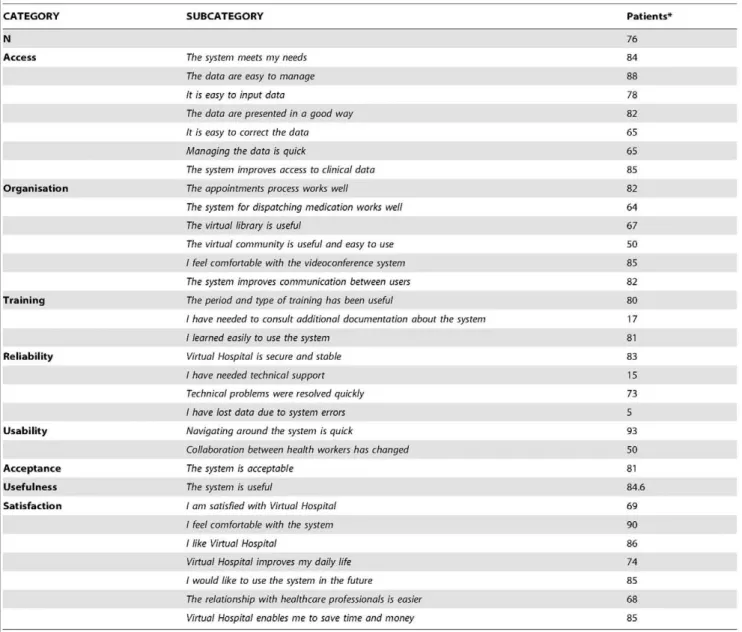
T h e technical performance of Virtual Hospital was evaluated by both professionals and patients. Validated questionnaires were used to assess different aspects of the system, with items being rated on a five-point scale, from 1 for the most negative appraisal ("Not appropriate/Totally disagree") to 5 for the most positive one ("Very appropriate/Totally agree"). Parameters regarding access, organisation of the system, the need for training, reliability, usability, acceptance, usefulness and satisfaction were also evaluated.
T h e Virtual Hospital was also evaluated in terms of its clinical performance, assessing the impact on H I V clinical parameters
[CD4 cell count, viral load (VL), opportunistic infections, death], the need to start combined AntiRetroviral Treatment (cART) and cART-compliance throughout the study follow-up. Adherence was evaluated at each clinical consultation by monitoring pharmacy refills and through self-reports and was considered high if the patients take more than 90% of the scheduled medication [33].
Quality of life was evaluated through a questionnaire that has been validated in H I V patients, the Mini International Neuro-psychiatric Interview (MINI) [34,35]. This assessed various aspects including mental and physical health, cognitive and social functioning, energy levéis and vitality, perceived social support, sleep and sexuality. Scores were standardised on a scale from 0 to 100, where 0 corresponds to better quality of life and 100 to a
worse one.
Psychological and emotional Impact was evaluated using severa! validated screening questionnaires: the Hospital Anxiety and Depression (HAD) Scale [36,37] to measure anxiety and depression, Goldberg's General Health Questionnaire (GHQ-28)
[38,39] to screen for symptoms of psychopathology, and the Psychosocial Adjustment to Illness Scale (PAÍS) [40] to measure the impact of a medical condition on general psychosocial functioning.
A qualitative statement about health services utilization in the study population, was registered in one of the questionnaires that patients field. There were two questions (question 7 and 9) addressing this issue. Question 7 was: How many times per year, do you consult the following health care providers? (7.1-7.3 Infectious Diseases Unit, 7.4 Pharmacy, 7.5 Social Work, 7.6 Psychiatry, 7.7 Primary Care, 7.8 Others). T h e answers were: never, one or two per year, each three or four months, each two months, each month, more than once per month. Question 9 was: How often has consulted to the following health care providers in the last three months? (Excluding Virtual Consultations) (9.1-9.3 Infectious Diseases Unit, 9.4 Pharmacy, 9.5 Social Work, 9.6 Psychiatry, 9.7 Primary Care, 9.8 Others). T h e answers were: never, ever, several times, once a month, more than once a month.
Quantitative characteristics were described as medians and the interquartile range (IQR), whñe qualitative data were given as frequencies and percentages. Laboratory parameters were com-pared using a Wilcoxon signed-rank test. Intra-individual changes in these parameters were compared for the period monitored by Virtual Hospital versus the period involving standard care (intra-arm or intra-individual variations), and variability between (intra-arms at
the end of the two-year follow-up was also compared (inter-individual variations). All statistical analyses were performed using SPSS versión 15.0.1. Patients were analyzed in the groups to which they were randomly assigned and a per-protocol analysis was conducted.
Sample size calculations (using McNemar's test of paired proportions with a significance level of 5%) showed that 77 patients would have 80% power in detecting differences of 25% when the expected proportion of discordant pairs was 35 %. T h e selection of this difference is consistent with other studies that found that non-adherence was associated with poorer virological outcomes [41-44]. With an estimated lost-to-follow-up rate of 10%, the total sample size required would be 90 patients.
Results
Initially, 91 patients were assessed for eligibility, but four were excluded due to a lack of broadband, whñe a further four declined to particípate. Of the remaining 83 randomised patients, 42 were monitored during the first year through Virtual Hospital (Arm I) and 41 through standard care (Arm II). Patients switched their care arm in year two of the study. Baseline characteristics of the patients were well-balanced between the arms (see Table 1). Overall, 9 3 % (n = 77) of the cohort had an active working life and 38% (n = 32) had a university degree. A similar number of patients (n = 46, 5 5 % of the overall cohort) were receiving antiretroviral therapy at baseline (see Table 1). Over the two years of follow-up, seven patients (8%) discontinued the study: two were lost to follow-up (one left the country and one was whereabouts unknown), two left the Virtual Hospital because they disapproved of the system, two developed tumours (one non-Hodgkin lymphoma and one hepatocellular carcinoma), and one patient was killed in a trafíic accident (see patient availability in Figure 4). Overall, therefore, 76 patients (92%) completed the study.
Technical evaluation
Questionnaires submitted by patients (n = 76) revealed a high level of technical satisfaction with the system after one year of Virtual Hospital care (Table 2). Overall, 8 5 % of patients (n = 65) considered that Virtual Hospital improved their access to clinical data, as compared with standard care, and they felt comfortable with the videoconference system. T h e system was rated by 82% (n = 62) of patients as an easy way to communicate among users. T h e same questionnaires were also completed by professionals (n = 18), with simñar results (data not shown).
Clinical evaluation
No opportunistic infections were reported. Regarding the immunologic evaluation there were no intra-individual (data not shown) or inter-individual differences over time in C D 4 cell counts as monitored through Virtual Hospital versus standard care (See Table 3).
T a b l e 1 . Baseline characteristics o f t h e patients.
CATEGORY
N
A g e * (years)
G e n d e r * *
Risk G r o u p * *
N a t i o n a l i t y * *
Educational l e v e l * *
E m p l o y m e n t s t a t u s * *
Hepatitis C * *
Hepatitis B**
C D 4 + T cells (cells/mm3)*
Log1 0VL ( c o p i e s / m l ) * * * * T r e a t m e n t * *
P for comparison between arm 1 and II **(n, %),
«««(n, % of patients on treatment), ««««Mean (SE). HMS: Homosexual. HTS: do¡:10.1371/journal.pone.0014515.t001
SUBCATEGORY
M a l e
Female
H M S
HTS
D U
Spanish
O t h e r
Primary school
Secondary school
University
U n e m p l o y e d
W o r k i n g
Disabled
«Median (IQR),
Heterosexual. DU: Drug users.
Cohort
83
37 (34-43)
72 (87)
11 (13)
56 (68)
20 (24)
7(8)
66 (79)
17(21)
10 (12)
41 (49)
32 (38)
6 ( 7 )
77 (93)
0
10 (12)
9(11)
602 (471-726)
2.79 (0.14)
46 (55)
A r m 1
42
37 (34-43)
36 (86)
6(14)
25 (60)
13 (31)
4 ( 9 )
31 (74)
11 (26)
5 (12)
20 (48)
1 7 (40)
3 ( 7 )
39 (93)
0
5 (12)
3 ( 7 )
585 (461-738)
2.79 (0.22)
24 (57)
A r m II
41
37 (34-43)
36 (88)
5 (12)
31 (76)
7(17)
3 ( 7 )
35 (86)
6(14)
5 (12)
21 (51)
15 (37)
3 ( 7 )
38 (93)
0
5 (12)
6(15)
636 (511-718)
2.90 (0.20)
22 (54)
P
0.9
0.56
0.36
0.20
0.20
0.97
0.12
0.15
0.97
0.12
0.15
0.72
0.17
0.66
0.40
0.52
A s s e s s e d for eligibility (n=91)
R a n d o m i s e d (n=83)
Excluded (n=8) No broadband (n=4) Declined to particípate (n=4)
g
1
o
É
1
Allocated to Virtual Hospital (n=42)
Lost to follow-up (left the country) (n=1) Disapproval of the system (n=2) Death (n=1)
Analysed (n=38)
Allocated t o Standard Care (n=41)
Lost to follow-up (missing patient) (n=1)
Developed Ol or tumours (n=2)
Figure 4. Patient availability. 91 patients were assessed for eligibility, but four were excluded due to a lack of broadband, while a further four
declined to particípate. Of the remaining 83 randomised patients, 42 were monitored during the first year through Virtual Hospital (Arm I) and 41 through standard care (Arm II). Patients switched their care arm in year two of the study. Over the two years of follow-up, seven patients (8%) discontinued the study: two were lost to follow-up (one left the country and one was whereabouts unknown), two left the Virtual Hospital because they disapproved of the system, two developed tumours (one non-Hodgkin lymphoma and one hepatocellular carcinoma), and one patient was killed in a traffic accident. Overall, 76 patients (92%) completed the study.
Table 2. Technical evaluation by patients of the Virtual Hospital.
CATEGORY
N
Access
Organisation
T r a i n i n g
Reliability
Usability
Acceptance
Usefulness
Satisfaction
SUBCATEGORY
The system meets my needs The data are easy to manage It is easy to input data
The data are presented in a good way ít is easy to corred the data Managing the data is quick
The system improves access to clinical data The appointments process works well
The system for dispatching medication works well The virtual library is useful
The virtual community is useful and easy to use 1 feel comfortable with the videoconference system The system improves communication between users The period and type of training has been useful
1 have needed to consult additional documentation about the system 1 learned easily to use the system
Virtual Hospital is secure and stable 1 have needed technical support Technical problems were resolved quickly 1 have lost data due to system errors Navigating around the system is quick
Collaboration between health workers has changed The system is acceptable
The system is useful
1 am satisfied with Virtual Hospital 1 feel comfortable with the system 1 like Virtual Hospital
Virtual Hospital improves my daily Ufe 1 would like to use the system in the future The relationship with healthcare professionals is easier Virtual Hospital enables me to save time and money
Patients*
76
84
88
78
82
65
65
85
82
64
67
50
85
82
80
17
81
83
15
73
5
93
50
81
84.6
69
90
86
74
85
68
85
Questionnaire ¡tems were rated from 1 (most negative) to 5 (most positive).
*Proport¡on of patients who gave the t w o highest ratings (4= "appropriate/agree", or 5 = do¡:10.1371/journal.pone.0014515.t002
"Very appropriate/Totally agree"
Twenty-three patients (28%) switched antiretroviral therapy during the study follow-up. Therapeutic changes were due to: simplification (in 15 patients); because of side events related to medication (in 6 patients); virologic fañure (in 1 patient) and in 1 patient because of interrupted manufacture of the antiretroviral being taken.
6 patients (7%) started cART throughout the study. cART switching and the need to start cART was simñar between arms (Table 3).
cART-compliance was high (more than 90%) and was simñar within individuáis (data not shown) and between arms during the two years of follow-up (Table 3).
Quality of Nfe and Psychological and emotional evaluation
Quality of life assessment did not shown any difference between arms during the two years of the study (Table 3). In addition, none
of the psychological tests performed (HAD scale, Goldberg Health Questionnaire, Psychosocial Adjustment to Illness Scale) observed differences between arms during follow-up (Table 3)
Health services assessment
Table 3. Study findings.
CATEGORY
N
CLINICAL E V A L U A T I O N
C D 4 + T cells (cells/mm3)*
Log1 0VL (copies/ml)* N e e d to start HAART * *
cART s w i t c h i n g * *
cART c o m p l i a n c e *
Tu mor s * *
Deaths * *
Q u a l i t y of life assessment**
PSYCHOLOGICAL E V A L U A T I O N
H A D scale * * *
G o l d b e r g Q u e s t i o n n a i r e * * *
PAÍS s c a l e * * *
HEALTH SERVICES U T I L I Z A T I O N
Infectious Diseases U n i t * * *
P h a r m a c y * * *
Primary C a r e * * *
O t h e r health p r o v i d e r s * * *
SUBCATEGORY
SUBCATEGORY
M o n t h 12
M o n t h 2 4
M o n t h 12
M o n t h 2 4
M o n t h 12
M o n t h 2 4
M o n t h 12
M o n t h 2 4
M o n t h 12
M o n t h 2 4
M o n t h 12
M o n t h 2 4
M o n t h 12
M o n t h 2 4
M o n t h 12
M o n t h 2 4
SUBCATEGORY
M o n t h 12
M o n t h 2 4
M o n t h 12
M o n t h 2 4
M o n t h 12
M o n t h 2 4
SUBCATEGORY
M o n t h 12 ( 4 M / 6 M )
M o n t h 2 4 ( 4 M / 6 M )
M o n t h 12 ( 4 M / 0 )
M o n t h 2 4 ( 4 M / 0 )
M o n t h 12 ( 0 / 1 - 4 )
M o n t h 2 4 ( 0 / 1 - 4 )
M o n t h 12 ( 0 / 1 - 2 )
M o n t h 2 4 ( 0 / 1 - 2 )
Cohort 83 Cohort 712 (32) 751 (38) 2.76 (0.13) 2.57 (0.14) 3 (4) 3 (4) 16 (19) 7(8) 93.4 (1.2) 94.5 (0.9) 2 (2)
0 ( 0 )
1 (D
0 ( 0 )
29.0 (2.3)
32.1 (2.6)
Cohort
1 7.2 (0.4)
1 7.5(0.6) 4.9 (0.9) 5.6(1.3) 66.5 (0.7) 66.4 (1.1) Cohort 78%/19% 79%/18% 60%/33% 59%/34% 45%/43% 45%/44% 65%/24% 64%/24%
A r m 1
42
A r m 1
738 (46) 688 (43) 2.58 (0.19) 2.92 (0.20) 1 (D 0(0) 8(10)
4 ( 5 )
94.5 (1.5) 91.9 (1.9) 0(0) 0(0) 0(0) 0(0) 30.4 (3.4) 27.2 (2.6)
A r m 1
18.1 (0.6) 16.9 (1.0) 5.9 (1.6) 5.9 (1.8) 67.3 (0.9) 67.0 (0.9)
A r m 1
78%/1 7% 79%/18% 49%/32% 48%/33% 45%/42% 45%/42% 51%/32% 51%/33%
A r m II
41
A r m II
796 (50) 706 (58) 2.40 (0.19) 2.74 (0.21) 2 (2) 3 (4) 8(10) 3 (4) 95.1 (1.2) 93.6 (.3) 2 (2)
0 ( 0 )
0 ( 0 )
0 ( 0 )
32.0 (3.8)
32.1 (3.7)
A r m II
16.0 (0.5) 18.3 (0.8) 3.6 (1.0) 5.4 (1.8) 66.7 (0.9) 65.8 (2.0)
A r m II
70%/20% 67%/29% 59%/34% 58%/37% 43%/46% 42%/46% 73%/20% 75%/17% P P 0.4 0.2 0.3 0.4 0.3 0.4 0.5 0.9 P 0.1 0.2 0.8 0.6 0.5 0.8 P 0.6 0.1 0.3 0.3
P for comparison between arm I and II. «Mean (SE).
**(n, %). cART compliance: 93.4 means that patients took the 93.4% of the scheduled medication.
***(%). 4M: every 4 months. 6M: twice a year. 0: Never used. 1-4: Used from 1 to 4 times a year. 1-2: Used from 1 to 2 times a year. do¡:10.1371 /journal.pone.0014515.t003
Excluding Primary care, all the consultations performed not only infectious diseases specialists, but pharmacists, social worker and psychiatrists are integrated in the multidisciplinary care team of Virtual Hospital, allowing the patient to be remotely followed-up by these professionals too.
O n the other hand, analyzing the health services utilization out of Virtual Consultations 69% (n = 52), 74% (n = 56) and 86% (n = 65) of the patients always consulted the Infectious diseases Unit, Pharmacy and Psychiatry services, respectively, using the virtual system. Again, simñar results were observed between study groups.
Costs Evaluation
Discussion
We report the results of a prospective randomised study using a new model of multidisciplinary home care for chronic and stable H I V patients. T h e approach is based on a telemedicine platform, the Virtual Hospital, which covers the entire process of patient care (consultations, medical care, psychological and social support, medication, quality of life) via the internet and allows patients access to their own file. T h e study shows that Virtual Hospital constitutes a feasible, fairly satisfactory and safe tool for the clinical care of stable HlV-infected patients, and it has no deleterious effect on H I V clinical parameters, antiretroviral compliance, quality of life, or psychological and emotional status.
Patients were very satisfied with the system, as it has been showed by the satisfaction questionnaire and the low rate of withdrawal [76 from the 91 patients randomized ended the study (83%)]. In addition, when this study ended (december 2007), patients involved in it express their willingness to continué on Virtual Hospital and from then until now Virtual Hospital is being used as a routine work tool of the Infectious Disease Unit of the Hospital. Nowadays, there are round 200 patients cared of their H I V infection with such internet service. Otherwise being cared via Virtual hospital has not increased health resources utilization because of most of patients (69%, n = 52), out of Virtual consultations has never consulted to the Infectious diseases Unit even though almost a thirty percent of the study population (23 patients, 28%) has switched their antiretroviral medication, certainly one of the more difíicult points in H I V management.
Telemedicine in H I V has been assessed in low-resource settings, both as an additional tool to help in the routine care of HIV-infected patients and for the training and education of healthcare providers [45]. Teleconferences, calis by mobile phones and e-health systems have all been used to support comprehensive H I V treatment programmes. In developed countries, telemedicine has been used as a tool to solve communication problems, as a prevention strategy for gay men [46] or special populations such as Latinos [47] or African-Americans [48], and to improve health outcomes including antiretroviral adherence [49], access to care for HlV-infected prisoners [50], clinical monitoring of highly treatment-experienced HlV-infected patients [51], cardiovascular risk assessment electrocardiograms at distance [52], and smoking cessation interventions [53]. T h e main innovation of our web-based system is that, to our knowledge, this is the first time that a telemedicine approach has enabled the whole range of H I V care to be offered to stable and chronic patients.
New procedures and improvements in telemedical patient education could support self-management and self-care of this disease through tools such as access to electronic medical records, availability of constant information updates, and the development of a custom online community of patients. The system is also scalable for future functionality and enables the integration of both information and services, which could facilítate cooperation between different professionals (primary and specialist care), creating units to improve the care of H I V infection.
Our platform provides a technical infrastructure that can simultaneously support telemedicine programmes for different chronic diseases and patients with different risk levéis. Indeed, platforms like the Virtual Hospital are destined to play a major role in facilitating new strategies for chronic care management, for example, by means of out-of-hospital follow-up, patient empow-erment and care coordination, thereby improving patient care without an associated rise in costs. Several chronic diseases such as diabetes, congestive heart fañure or chronic obstructive pulmonary disease have all used telemedicine with simñar fmdings [6-25].
The world's population is aging. As we age, the incidence and prevalence of chronic illness continué to rise, and elderly patients typically have múltiple chronic diseases. The HlV-infected popula-tion follows this same trend, but the fact that the rate of new H I V infections has remained stable since 1995 [54] means the effect is worsened by the growing number of HlV-infected patients. The Hospital Clinic in Barcelona receives about 250 new HlV-infected patients each year. This increase, coupled with the drastic decrease in mortality due to current antiretroviral treatments, produces a significant annual increase in the care burden (around 10%, with an annual increase of 1000 new appointments in the Day Hospital). Given the current situation facing not only patients (who are likely to remain clinically stable for years) but also health providers, it is important to consider the enormous potential of the internet. Here the Virtual Hospital has been shown to be a feasible and safe tool for providing multidisciplinary home care to chronic H I V patients.
Although our study did not set out to measure the economics of study arms, to assist the reader's understanding of the importance of the work to health care providers and to society as a whole in implementing the new system, we have made a qualitative statement about whether, for example, cost savings could be expected with the new system. T h e population of this study for clinical monitoring of their infection, regardless of belonging to a study arm or another, required to perform a blood test, a medical visit and eventually, antiretroviral treatment.
Regarding costs of blood tests, both direct costs (unitary price of a standard blood analysis, a CD4 test and an HIV-1 RNA test) and indirect costs (transport costs and time invested to reach the laboratory, productivity cost, absenteeism, quality of life and psychosocial status) should be the same for both study arms, because this study contemplated to perform the blood tests on the same site. Costs of medical consultations for the health system, as the estimated unit cost for an outpatient visit with an H I V specialist care provider would not be modified in both types of cares. However, indirect costs regarding the time that professionals spend on each visit, the resources on space, infrastructure and personnel needed for a consultation presumably would be lower in the telemedicine arm and higher the communication effectiveness between patients and professionals. For example, the median time of a consultation via telemedicine is usually 5 minutes, compared with 20 minutes of standard visits; virtual consultation can be made at any office with a computer connected to the Internet (it is not necessary a day care hospital unit investing large áreas, technical infrastructure and staffmg complex), the median time to response to a consultation in the virtual branch is usually 24 hours, thus minimizing possible deleterious effects that any delay in communication could cause on clinical management. In parallel the costs of medical visits for patients, both direct costs (transportation to hospital) and indirect costs would be diminished in the telematic care among others by reducing travel time or waiting time for visits and medications (the median Hvirtual waiting time consultation is about 10 minutes compared with 60-90 minutes of waiting time at standard care).
T h e direct costs of antiretroviral medicaments should also be the same in both cares, although indirect costs to obtain antiretrovirals in the virtual arm should be lower than in the standard care. In the standard care arm, the patient must go to the hospital pharmacy to pick up the medication, which would include additional costs in transportation and working-time losses as previously mentioned. In the virtual arm, either because the medication arrives directíy to patient's home by courier or because it is the patient who chooses the best time to pick up medication when receives virtual antiretroviral prescription, indirect costs would be lower.
euros (or 70 euros without posting service cost medication delivery to patient home). Taking into account, the mentioned advantages that implementing this new model would provide in terms of direct and indirect costs of medical consultations and antiretroviral prescriptions for the health system and for patients, we believe that Virtual Hospital could be moreover cost-effective.
T h e study shows that Virtual Hospital constitutes a feasible, fairly satisfactory, safe and a low cost tool for the clinical care of stable HlV-infected patients and it has no deleterious effect on H I V clinical parameters and health services utilization.
Telemedicine should be considered an appropriate support service for the en tire management of chronic H I V infection, is likely to prove extremely useful in settings with poor access to the health system.
Supporting Information
Protocol SI. Trial Protocol.
Found at: doi:10.1371/journal.pone.0014515.s001 (0.69 MB DOC)
References
1. Martin D K , Thiel E C , Singer PA (1999) A new model of advance care planning: observations from people with H I V . Arch Intern M e d 159: 86—92.
2. Palella F J J r . , Delaney K M , M o o r m a n A C , Loveless M O , Fuhrer J , et al. (1998) Declining morbidity a n d mortality a m o n g patients with advanced h u m a n immunodeficiency virus infection. N E n g l J M e d 338: 853—60.
3. Reiter GS (2000) Comprehensive clinical care: Managing H I V as a chronic illness. AIDS Clinical C a r 12(2): 13-9.
4. Panel on Antiretroviral Guidelines for Adults a n d Adolescents. Guidelines for the use of antiretroviral agents in HIV-1-infected adults a n d adolescents. D e p a r t m e n t of Health a n d H u m a n Services. November 3, 2008; 1-139. Available: h t t p : / / www.aidsinfo.nih.gov/ContentFiles/AdultandAdolescentGL.pdf Accessed 2009
Jul 23.
5. Martin DJ, Brooks RA, Ortiz DJ, Veniegas R C (2003) Perceived employment barriers a n d their relation to workforce-entry intent a m o n g people with H I V / A I D S . J O c c u p Health Psychol 8: 181-194.
6. Balas EA, Jaffrey F, K u p e r m a n GJ, Boren SA, Brown G D , et al. (1997) Electronic communication with patients. Evaluation of distance medicine technology. J A M A 278(2): 152-9.
7. Pitte J D , Weinberger M , M c P h e e SJ, M a h CA, K r a e m e r FB, et al. (2000) Do automated calis with nurse follow-up improve self-care a n d glycemic control a m o n g vulnerable patients with diabetes. A m J M e d 108{1): 20—7.
8. Lahtela J T , L a m m i n e n H (2002) Telemedical devices in diabetes management. A n n M e d 34(4): 2 4 1 - 7 .
9. F a r m e r A, Gibson OJ, Tarassenko L, Neal A (2005) A systematic review of telemedicine interventions to support blood glucose self-monitoring in diabetes. Diabet M e d 22(10): 1372-8.
10. Y o u n g M , Sparrow D , Gottlieb D , Selim A, Friedman R (2001) A telephone-linked computer system for C O P D care. Chest 119(5): 1565-75.
11. Bourbeau J , Julien M , Maltais F, Rouleau M , Beaupré A, et al. (2003) Reduction of hospital utilization in patients with chronic obstructive pulmonary disease: a disease-specific self m a n a g e m e n t intervention. Arch Intern M e d 163: 585—91. 12. Cooper C B (2009) Respiratory applications of telemedicine. T h o r a x 64(3):
1 8 9 - 9 1 .
13. Clark RA, Inglis SC, McAlister FA, C l e l a n d J G , Stewart S (2007) Telemonitor-ing or structured telephone support p r o g r a m m e s for patients with chronic heart failure: systematic review a n d meta-analysis. BMJ 334(7600): 942.
14. Lobodzinski SS, Jadalla AA (2010) Integrated heart failure telemonitoring system for homecare. Cardiolo J 17(2): 2 0 0 - 2 0 4 .
15. Polisena J , T r a n K, C i m o n K, H u t t o n B, McGill S, et al. (2010) H o m e telemonitoring for congestive heart failure: a systematic review a n d meta-analysis. J Telemed Telecare 16(2): 68—76.
16. Shah N B , Der E, Ruggerio C, Heidenreich PA, Massie BM (1998) Prevention of hospitalizations for heart failure with an interactive h o m e monitoring program. A m H e a r t J 135: 3 7 3 - 3 7 8 .
17. J e r a n t AF, Azari R, Nesbitt T S (2001) Reducing the cost of frequent hospital admissions for congestive heart failure: a randomized trial of a h o m e telecare intervention. M e d C a r e 39(11): 1234-45.
18. Giordano A, Scalvini S, Zanelli E, Corra U , Longobardi GL, et al. (2009) Multicenter randomised trial on home-based telemanagement to prevent hospital readmission of patients with chronic heart failure. Int J Cardiol 131(2): 192-9.
19. Eaton T , Withy S, Garrett J E , Mercer J , Whitlock R M , et al. (1999) Spirometry in primary care practice: the importance of quality assurance a n d the impact of spirometry workshops. Chest 116: 416—23.
20. Benatar D , Bondmass M , G h i t e l m a n J , Abitall B (2003) O u t c o m e s of chronic heart failure. Arch Intern M e d 163: 3 4 7 - 5 2 .
Checklist SI. Consort Checklist.
Found at: doi:10.1371/journal.pone.0014515.s002 (0.24 MB DOC)
Acknowledgments
This article was presented in part (abstract 11032) at the XVII International AIDS Conference, held in México City in August 2008.
We are indebted to the participants in the study.
Author Contributions
Conceived and designed the experiments: AL C Caceres PC C Codina AR JB NC JMM JMG EJG FG. Performed the experiments: AL C Caceres EF PC MM C Codina ARJB JM EM JLB M Laguno M Larrouse AM LZ JMM EJG FG. Analyzed the data: AL PC C Codina ARJB LZ JMG EJG FG. Contributed reagents/materials/analysis tools: AL EF MM C Codina ARJB NC JMG EJG FG. Wrote the papen AL C Codina ARJB JMM JMG FG.
21. Whitten P, Love B (2005) Patient a n d provider satisfacción with the use of telemedicine: overview a n d rationale for cautious enthusiasm. J Postgrad M e d 5 1 : 2 9 4 - 3 0 0 .
22. M o n t ó n V M , Hellgemoe PK, Guyatt G H , D e a n D S , Leung T W , et al. (2004) Telecare for patients with type 1 diabetes a n d inadequate glycemic control: a randomized controlled trial a n d meta-analysis. Diabetes C a r e 27: 1088—94. 23. Polisena J , T r a n K, C i m o n K, H u t t o n B, McGill S, et al. (2009) H o m e telehealth
for diabetes management: a systematic review a n d meta-analysis. Diabetes Obes M e t a b 11{10): 9 1 3 - 3 0 .
24. Stone RA, R a o R H , Sevick MA, G h e n g C, H o u g h LJ, et al. (2010) Active care m a n a g e m e n t supported by h o m e telemonitoring in veterans with type 2 diabetes: the DiaTel randomized controlled trial. Diabetes Gare 33{3): 4 7 8 - 9 4 .
25. Larsen M E , T u r n e r J , Farmer A, Neil A, Tarassenko L (2010) Telemedicine-supported insulin optimisation in primary care. J Telemed Telecare 16(8): 4 3 3 ^ 0 .
26. BarlowJ, Bayer S, Curry R (2003) T h e design of pilot telecare projects a n d their integration into mainstream service delivery. J Telemed Telecare 9{suppl. 1): 1-3.
27. Celler BG, Lovell N H , Basilakis J (2003) Using information technology to improve the m a n a g e m e n t of chronic disease. M e d J Aust 179(5): 242—246. 28. H o l m a n H R , Lorig K R (2000) Patients as partners in managing chronic disease.
Partnership is a prerequisite for effective a n d efficient health care. BMJ 320: 5 2 6 - 5 2 7 .
29. Gretin S, Shortell SM, Keeler EB (2004) A n evaluation of collaborative interventions to improve chronic illness care. Framework a n d study design. Eval Rev 28: 2 8 - 5 1 .
30. Wiecha J , Pollard T (2004) T h e interdisciplinary eHealth team: chronic care for the future. J M e d Internet Res 6{3): e22.
31. Caceres C, Gómez EJ, Garcia F, Ghausa P, G u z m a n J , et al. (2005) A H o m e Integral Telecare System for H I V / A I D S Patients. Stud Health Technol Inform. 2005 114: 2 3 - 2 9 .
32. Caceres C, Gómez EJ, Garcia F, G a t e l l J M , del Pozo F (2006) A n integral care telemedicine system for HrvVALDS patients. Int J M e d Inform 75: 6 3 8 - 6 4 2 . 33. Lima V D , H a r r i g a n R, M u r r a y a M , M o o r e D M , W o o d E, et al. (2008)
Differential impact of adherence on long-term treatment response a m o n g naive HIV-Ínfected individuáis. AIDS 22(17): 2371-2380.
34. Sheehan D V , Lecrubier Y, Sheehan K H , Amorim P, J a n a v s J , et al. (1998) T h e MFNI international Neuropsychiatric Interview (M.I.N.I.): T h e development a n d validation o f a structured diagnostic psychiatric interview. J Clin Psychiatry 59(Supl 20): 2 2 - 3 3 .
35. Trepanier LL, Rourke SB, Bayoumi A M , H a l m a n M H , Krzyzanowski S, et al. (2005) T h e impact of neuropsychological impairment a n d depression on health-related quality of life in HIV-infection. J Clin Exp Neuropsychol 27: 1—15. 36. Zigmond AS, Snaith R P (1983) T h e Hospital Anxiety a n d Depression Scale.
Acta Psychiatr Scand 67(6): 3 6 1 - 3 7 0 .
37. H e r r e r o MJ, Blanch J , P e r i J M , D e Pablo J , Pintor L, et al. (2003) A validation study of the hospital anxiety a n d depression scale (HADS) in a Spanish population. G e n Hosp Psychiatry 25(4): 2 7 7 - 2 8 3 .
38. G o l d b e r g D P ( 1 9 7 3 ) T h e detection of psychiatric illness by questionnaire. London: Oxford University Press, 1972 Psychological Medicine 3: 2 5 7 - 2 5 7 .
39. Lobo A, Pérez- Echevarría MJ, J i m é n e z - Aznárez A, Sancho M A , et al. (1988) Emotional disturbances in endocrine patients. Validity of the scaled versión of the General Health Questionnaire (GHQ.-28). J Psych 152: 8 0 7 - 8 1 2 . 40. Derogatis L R (1986) T h e psychosocial adjustment to illness. J o u r n a l of
Online HIV Care
41. Duong M, Piroth L, Peytavin G, Forte F, Kohli E, et al. (2001) Value of patient self-report and plasma human immunodeficiency virus protease inhibitor level as markers of adherence to antiretroviral therapy: relationship to virologic response. Clin Infect Dis 33: 386–392.
42. Martin M, Del Cacho E, Codina C, Tuset M, De Lazzari E, et al. (2008) Relationship between Adherence Level, Type of the Antiretroviral Regimen, and Plasma HIV Type 1 RNA Viral Load: A Prospective Cohort Study. AIDS Research and Human Retroviruses 24(10): 1263–1268.
43. Lima VD, Harrigan R, Murraya M, Moore DM, Wood E, et al. (2008) Differential impact of adherence on long-term treatment response among na¨ıve HIV-infected individuals. AIDS 22: 2371–2380.
44. Maggiolo F, Ravasio L, Ripamonti D, Gregis G, Quinzan G, et al. (2005) Similar Adherence Rates Favor Different Virologic Outcomes for Patients Treated with Nonnucleoside Analogues or Protease Inhibitors. Clinical Infectious Diseases 40: 158–63.
45. Kiviat AD, Geary MC, Sunpath H, Moosa MY, Wilson D, et al. (2007) HIV Online Provider Education (HOPE): the internet as a tool for training in HIV medicine. J Infect Dis 196 Suppl 3: S512–5.
46. McKee MB, Picciano JF, Roffman RA, Swanson F, Kalichman SC (2006) Marketing the ‘‘Sex Check’’: evaluating recruitment strategies for a telephone-based HIV prevention project for gay and bisexual men. AIDS Educ Prev 18(2): 116–31.
47. Mahoney MR, Khamarko K, Goldschmidt RH (2008) Care of HIV-infected Latinos in the United States: a description of calls to the national HIV/AIDS Clinicians’ Consultation Center. J Assoc Nurses AIDS Care 19(4): 302–10. 48. Goldschmidt RH, Graves DW (2003) The National HIV Telephone
Consultation Service (Warmline): a clinical resource for physicians caring for African-Americans. J Natl Med Assoc 95(2 Suppl 2): 8S–11S.
49. Dunbar PJ, Madigan D, Grohskopf LA, Revere D, Woodward J, et al. (2003) A two-way messaging system to enhance antiretroviral adherence. J Am Med Inform Assoc 10(1): 11–5.
50. Besch Cl (2007) Telemedicine improves access to care for HIV-infected prisoners. HIV Clin 19(1): 4–5.
51. LLibre JM, Domingo P, Del Pozo MA, Miralles C, Galindo MJ, et al. (2008) Long-distance interactive expert advice in highly treatment-experienced HIV-infected patients. J Antimicrob Chemother 61(1): 206–9.
52. Malacarne M, Cargnel A, Lucici D, Pizzinelli P, Porta A, et al. (2007) Feasibility of assessing autonomic dysregulation at a distance: the case of the HIV-positive patient. Telemed J E Health 13(5): 557–563.
53. Vidrine DJ, Arduino RC, Lazev AB, Gritz ER (2006) A randomized trial of a proactive cellular telephone intervention for smokers living with HIV/AIDS. AIDS 20(2): 253–60.
54. Status of the global HIV epidemic 2008 UNAIDS Global AIDS Epidemic Report. Available: http://www.unaids.org/globalreport/default.htm.