
Enhancing fluency in speaking through the use of collaborative and self directed speaking tasks
71
0
0
Texto completo
(2) Enhancing Fluency in Speaking Through the Use of Collaborative and Self- Directed Speaking Tasks. University de la Sabana Master in English Language for Self-directed Learning (Online Program). Chía, 2013. Name: Teresa Hurtado Osorio Signature:.
(3) Enhancing Fluency in Speaking Through the Use of Collaborative and Self- Directed Speaking Tasks. By: Teresa Hurtado Osorio. Research Report submitted in fulfillment of the requirements for the degree of Master in English Language for Self-directed Learning (Online Program). Directed by: Carolina Cruz Corzo. Department of Foreign Languages and Cultures Universidad de La Sabana Chía, 2013.
(4) Acknowledgements This research would not have become reality without the valuable support and guidance of various people, who in one way or another supported me with their experience and wisdom. First at all I want to thank Professor Carolina Cruz Corzo, without whose patience and encouragement this research would have been impossible. I also owe my deepest gratitude to my Master Professors who constantly facilitated my learning for me to seek out the theoretical framework required to face this challenge. I also thank my co-researchers who walked this route by my side and collaboratively we built the way. Last but not least, I am indebted to my husband, who gave me constant support to achieve this goal..
(5) Abstract The aim of this action research project was to test the hypothesis that if my students are guided to do collaborative speaking tasks in the classroom for a defined period of time (3 months), their fluency when speaking will be improved. This study was a mixed action research since qualitative and quantitative methods to collect data were used. This combination allowed the researcher to have a more complete picture of the situation. The students involved in this research were all from seventh grade and were 13 years old in average, from Instituto Santuario, a school in Santuario Risaralda. The data collection process consisted in using different instruments from different sources: teacher’s reflection notes, self-evaluation format and a format to compilate the diverse parameters to measure fluency. The collected data were used to do a triangulation and get a better picture of the existing learning situation during this research The interventions consisted of a pre-test to establish the students’ initial state, eight interventions in a period of three months with collaborative and self-directed tasks, and a posttest to evaluate the final state of the students. Every intervention was recorded then analyzed taking into account specific parameters to measure fluency, such as words per minute and hesitation per minute among others. There was a self-evaluation format filled in by every student right after every intervention for them to reflect on their performance and the researcher to gather more qualitative data. In addition, the teacher took notes after every lesson to have a more detailed account of the events..
(6) Findings suggest that the participants showed a clear improvement in confidence and other parameters related to fluency. These findings indicate that a similar study carried out for a longer period might lead to results which corroborated these findings.. Key words: oral fluency, collaboration, self-directed learning..
(7) Resumen El objetivo de éste proyecto de investigación es probar la hipótesis que si mis estudiantes son guiados para realizar tareas de habla con enfoque colaborativo durante un periodo de tres meses, ellos presentarán un aumento en su fluidez al hablar. Este estudio fue una investigación acción mixta debido a que tanto métodos cualitativos como cuantitativos fueron usados para recolectar la información. Esta combinación permitió al investigador tener una más completa descripción de la situación. Los estudiantes involucrados en el estudio fueron todos de séptimo grado con un promedio de edad de 13 años, del Instituto Santuario, en Santuario - Risaralda. Para el proceso de recolección de datos se utilizaron diferentes instrumentos: diario del profesor, formato de autoevaluación de los estudiantes y el formato de compilación de los diversos parámetros relacionados con la fluidez al hablar para realizar con ellos la triangulación y obtener una mejor interpretación de la situación durante la investigación. Las intervenciones del estudio consistieron en un pre-test para establecer las condiciones iniciales de los estudiantes, ocho intervenciones en un periodo de tres meses con el uso de tareas colaborativas y auto-dirigidas, y un post- test para evaluar el estado final de los estudiantes. Cada intervención fue grabada. y luego. analizada teniendo en cuenta parámetros. específicos para medir fluidez como número de palabras por minuto, vacilaciones o dudas presentadas por minuto y otras. Hubo un formato de autoevaluación llenado por los estudiantes al finalizar cada intervención con el propósito de reflexionar sobre su desempeño y a la vez para recolectar datos.
(8) cualitativos, además el profesor tomó nota en un diario después de cada intervención para conseguir una descripción más completa acerca del desarrollo de cada intervención. Finalizado el estudio los participantes mostraron no solo un claro aumento en confianza sino en diferentes parámetros relacionados a la fluidez, lo cual significa que un estudio similar llevado a cabo por un periodo de tiempo mayor podría tener mejores resultados. Palabras clave: fluidez oral , colaboración, aprendizaje auto- dirigido..
(9) Table of Contents Page List of figures and tables …………………………………………………………………. x. Introduction ………………………………………………………………………………. 1. Research Question ……………………………………………………………….…. 1. Research Objectives ………………………………………………………………... 1. Rationale ………………………………………………………………………..….. 2. Literature Review …………………………………………………………………….…... 3. Task Based Approach …………………………………………………………….... 3. Collaborative Learning …………………………………………………………….. 5. Self- directed Learning …………………………………………………………….. 7. Oral Fluency ……………………………………………………………………….. 8. Measuring Oral Fluency ……………………………………………………………. 10. Scaffolding …………………………………………………………………………. 14. Research Design .…............................................................................................................. 15. Type of the study …………………………………………………………………... 15. Context ……………………………………………………………………………... 15. Researcher´s role …………………………………………………………………... 16. Participants …………………………………………………………………………. 16. Ethical Considerations ……………………………………………………………... 17. Instruments for data collection …………………………………………………...... 17. Measuring Sheet ……………………………………………………………... 17. Students´ Surveys ………………………………………………………...….. 18. Reflection Notes ………………………………………………………...…... 18. Data collection procedures ……………………………………………………..…... 18. Pedagogical Intervention …………………………………………………………………. 20. Instructional Design ……………………………………………………………..…. 20. Data Analysis ….................................................................................................................. 23. Quantitative Analysis ……………………………………………………………... 24 viii.
(10) Qualitative Analysis …………………………………………………………………... 28. Procedures for data analysis ………………………………………………………..…. 33. Conclusions and Pedagogical Implications ………………………………………………….. 35. Pedagogical Implications ………………………………………………………………. 36. Limitations ……………………………………………………………………………... 37. Further Research ……………………………………………………………………….. 38. References ……………………………………………………………………………………. 39 Appendices …………………………………………………………………………………… 43. ix.
(11) List of Figures and Tables. Figure #. Title. Page. Figure 1. FLUENCY FRIDAY PLUS: Timed Sample. 12. Figure 2. Timeline. 21. Figure 3. Number of words per minute. 25. Figure 4. Hesitations per Minute. 26. Figure 5. Number of Over Errors. 27. Figure 6. Incomplete Sentences per Minute. 27. Figure 7. Broken Words per Minute. 28. Figure 8. Numbers of Repetitions per Minute. 28. Table 1 Brown’s expanded view of fluency. 10. Table 2 Fluency Variables vs. Interventions. 25. Table 3 Qualitative Categories. 32. x.
(12) Appendices. Title. Page. Appendix A. Consent Form. 43. Appendix B. Measuring Sheet. 44. Appendix C. Students´ Surveys. 45. Appendix D. Reflection Notes. 46. Appendix E. Lesson Plan Sample. 47. Appendix F. Fluency Variables vs. Interventions (individual scores). 51. Appendix G. Students’ Survey (Compilation). 56. xi.
(13) Introduction. I have always been passionate about speaking as a language skill. In my daily practice I realized that many of my students were willing to speak English, but there was always something inhibiting them, like lack of vocabulary or lack of confidence. This study explored the possibility of enhancing fluency in speaking by using collaborative and self- directed tasks. This study was carried out during a three-month period and was developed in three stages: a pre-test to determine the initial state of the subjects, eight interventions and a final test to measure the final state. The researcher selected a sample of ten students from a population of 32 seventh grade students of Instituto Santuario in Santuario, a Municipality in Risaralda Department. The institution English learning as an academic emphasis, so it was of paramount importance to motivate the students and to show results. Research Question How can fluency in Speaking be fostered in a group of 10 students in the seventh grade at Instituto Santuario through the use of collaborative and self-directed speaking tasks? Research Objectives To implement a set of collaborative and self- directed speaking tasks which aim at enhancing fluency in speaking. . To verify if a set of collaborative and self- directed speaking tasks are a useful source to enhance fluency in speaking.. . To promote collaboration and self- directed learning in the foreign language classroom.. 1.
(14) Rationale Learning a foreign language implies the acquisition of different communicative competencies that drive learners to a successful language performance. The main aim is to communicate and socialize ideas, feelings and cultural experience in order to keep on growing within each learner’s personal and professional fields. However, developing speaking fluency skills within a monolingual context such as in Colombia becomes a real challenge for both teachers and students. Therefore, the relevance of this research study lies in testing the hypothesis that through the use of collaborative and self-directed speaking tasks, learners can produce oral language with coherence, accuracy, and fluency.. 2.
(15) Literature Review. The innovation of the present study is related to the creation and application of collaborative and self- directed speaking tasks to enhance fluency in speaking. There are four main constructs that need to be reviewed: Task based approach, collaborative learning, selfdirected learning, and oral fluency. It is also important to reflect on scaffolding and the relationship between collaboration and fluency. Task- based Approach Scholars have long been searching for the best method for teaching and learning English. The task-based approach (TBA) to language teaching, also known as task-based language teaching (TBLT), has emerged as an important alternative for English teaching and its popularity has increased since the last decade of the 20th Century. The emergence of the TBA is connected to what became known as the 'Bangalore Project' (Prabhu, 1987). This author stated that students were just as likely to learn language if they were thinking about a non-linguistic problem as when they were concentrating on particular language forms. This means that students do not have to focus on language structures as a main goal, but on tasks where they have to face and solve problems. In fact, in this approach, units of analysis are not based only on linguistic forms, but on tasks. The proponents of this method argue that the most effective way to teach is by engaging students in real language use in the classroom. So teachers should provide students with a natural context for language use and this is possible only through tasks. The concept of task is used in many fields, but specifically in foreign or second language teaching. It is defined as "a piece of work undertaken for oneself or for others, freely or for some reward" (Long, 1985, p.89). According to him, some examples of tasks are painting a fence, dressing a child, filling out a 3.
(16) form, buying a pair of shoes, taking a hotel reservation. In other words. We can say that tasks refer to things people do in everyday life. Likewise, Richards and Rodgers (1986, p.289) define task as: “An activity or action which is carried out as the result of processing or understanding language (i.e. as a response). For example, drawing a map while listening to a tape, listening to an instruction and performing a command may be referred to as tasks. Tasks may or may not involve the production of language. A task usually requires the teacher to specify what will be regarded as successful completion of the task. The use of a variety of different kinds of tasks in language teaching is said to make language teaching more communicative . . . since it provides a purpose for a classroom activity which goes beyond the practice of language for its own sake”. On the other hand, Prabhu, (1987) proposes a simpler definition: "An activity which required learners to arrive at an outcome from given information through some process of thought, and which allowed teachers to control and regulate that process" (p. 32). Similarly, Ellis (2003, p.16) defines a pedagogical task as: “A work plan that requires learners to process language pragmatically in order to achieve an outcome that can be evaluated in terms of whether the correct or appropriate propositional content has been conveyed. To this end, it requires them to give primary attention to meaning and to make use of their own linguistic resources, although the design of the task may predispose them to choose particular forms. A task is intended to result in language use that bears a resemblance, direct or indirect, to the way language is used in the real world. Like other language activities, a task can engage productive or receptive, and oral or written skills and also various cognitive processes”.. 4.
(17) Finally, (Nunan 2004, p.17) describes a task as “a piece of classroom work that involves learners in comprehending, manipulating, producing or interacting in the target language while their attention is focused on mobilizing their grammatical knowledge in order to express meaning”. He also explains that a task should “have a sense of completeness, being able to stand alone as a communicative act in its own right with a beginning, middle and an end” (p. 17). Some advantages of the TBA are: the students learn the language by using it, the context for using that language is relevant and meaningful for them, the students explore the language according to their needs and they spend more time communicating ideas which is more motivating. (Wills, 2007) As it can be seen above, Nunan offers the most complex and complete definition. He shares the concept of a task as work with Long (1985) and Ellis (2003) , while Prabhu, Richards and Rodgers(1986) define it as an activity. Although Nunan and Prabhu(1987) talk about thought processing involved in a task completion, Ellis, Richards and Rodgers explain it as language processing. Finally, all these authors coincide in describing tasks as a very practical, meaningful and realistic product. Collaborative Learning Deciding to work individually or in groups is either a personal decision based on learning styles and preferences or a social/academic option that might be seen as a strategy to get specific outcomes or even success. Nevertheless, it is necessary to learn how to work collaboratively and that is why it is worthy to define the term collaboration as a “coordinated, synchronous activity that is the result of a continued attempt to construct and maintain a shared conception of a problem” (Roschelle & Teasley, 1995, p. 70), and collaborative learning as a “situation in which two or more people learn or attempt to learn something together” (Dillenbourg, 1999, p. 1).. 5.
(18) Collaborative learning is aimed to explore and take advantage of the strengths of each of the participants and to put them together harmonically like in an orchestra. Moreover, collaborative learning enhances critical thinking skills which train learners to cope with different social, cultural and professional issues in a globalized world. This is supported by Cohen (1994) when stating that “shared goals and tools can strengthen positive student interdependence” (as cited in Van Boxtel, 2000, p.4). As with any other process in life, collaborative learning involves pitfalls that should be considered in order to guarantee positive results. Collaborative learning in speaking tasks, which is the target of this study, might become meaningless if participants are not equally involved and committed to the common goal within the group or when negotiation is not considered. Clark & Wilkes-Gibbs (1986) introduced the principle of “least collaborative effort” claiming that: “in conversation the participants try to minimize their collaboration effort” (p. 28), and this is quite common when learners feel they have the possibility to hide behind those who have stronger speaking skills. Thus, collaborative speaking tasks should be carefully thought and stated to allow each of the participants to contribute with their own skills, knowledge and personal experiences which enrich and feed the final product. Collaboration and fluency. Given that a language is a social event, it is necessary that interaction between peers is facilitated and encouraged in the English classroom. By working collaboratively, the students learn to participate in social communication. Collaboration implies that each member of the group plays a specific role, so this kind of classroom behavior can be an accumulated experience that they will need when facing dialogues in formal and informal situations that take place in their social life. That way, the students practice with language chunks that will then be useful in real life. “The conversation is highly interactive and is in a. 6.
(19) collaborative conversational style. The listeners give constant feedback, including laughter, to prompt the speaker to continue…” (Richards, 2008, 19-23) On the other hand, fluency is fostered by using collaborative tasks and giving the students the chance to learn by listening to their peers’ interventions. These tasks increase motivation, so it is advisable to include a wide variety of group work to facilitate fluency development (Richards, 2006) Self- directed Learning Approaches to this important field have been broadly discussed, tested and validated for the purpose of solving a never- ending task for specialists: successful learning. Nowadays special attention is being paid to the learners’ own involvement in the learning processes. This includes the learner's personal decisions to undertake systematic procedures as a means to address challenges i.e. this is called self-directed learning (SDL). Self-directed learners are able to implement strategies which enable them to reflect on their own learning objectives, materials to be implemented, and results. Knowles (1975) has broadly explained that self- directed learning involves the learners’ decision to carry out learning schemes, which could be taken independently or with someone else’s assistance. This allows self-directed learners to establish learning objectives, identify appropriate resources and selfevaluate either effective or uneffective results (as cited in Du, 2012, p.6). Finally, studies have explored the advantages of SDL. For instance, Du (2012) has declared that learners’ efficiency levels are evidently increased. Moreover, learners’ enthusiasm, participation and recalling; as well as metacognitive skills are considerably strengthened due to SDL. All in all, existing evidence provided by researchers indicates the benefits of SDL are clear and should lead to supported application inside our teaching and learning contexts.. 7.
(20) Fostering SDL. One aspect of paramount importance in this study is improving selfdirection and autonomy in the learning process. When the students are aware of the way they learn, their strengths and weaknesses, it is easier that they keep on improving autonomously. Having the students to reflect on the way they learn also causes a positive impact on selfdirection. The best way to assess learning in a self-directed learning environment should be based on their progress and the way they have worked to get results. “…grade based on progress and effort, opportunities to rework, attribute success and failure to things the students have control over, scaffolding and providing continuous feedback and authentic learning”(Montalvo. 2009) Oral Fluency Current society has demonstrated an extreme need for bilingual individuals who can use their foreign language in an accurate and fluent form. Therefore, the present study seeks to promote oral fluency through the use of tasks that would make learners collaborate using English as a foreign language. According to Brown (2004), fluency has been defined in a variety of forms. In the first definition proposed by Hartmann and Stork (as cited in Brown 2004) the most important characteristics of fluency are stated as the following: “A person is said to be a fluent speaker of a language when he can use its structures accurately whilst concentrating on content rather than form, using the units and patterns automatically at normal conversational speed when they are needed” (p. 86). Furthermore, Richards, Platt, and Weber (1985) define some characteristics of fluency as “the features which give speech the qualities of being natural and normal, including native-like use of pausing, rhythm, intonation, stress, rate of speaking, and the use of interjections and. 8.
(21) interruptions.” (p. 108). Even so, Richards, et al (1985, p. 108-109) go beyond and takes into account the most important characteristics of fluency portraying them as the person’s level of communication proficiency included in main effective communication characteristics and stated in the following points: 1. Producing written and/or spoken language with ease. 2. Speaking with a good, although not necessarily perfect command of intonation, vocabulary, and grammar. 3. Communicating ideas effectively. 4. Producing continuous speech without causing comprehension difficulties or a breakdown of communication. The authors consider the importance of having in mind what they called the big “G”, or grammar, when addressing fluency. Additionally Brown (2004), states that the big “G” is tied to fluency, and it is necessary to understand it in context. A fluent person is the one that is able to produce grammatically correct sentences, but this does not include the skill to write or speak fluently. Bearing in mind the previously mentioned statements, it is important to understand fluency, not in contrast to accuracy but as the complement to it. In contrast, authors such as Cohen (1994) have explained that it is not easy to assess fluency because it is not possible just to simplify it with terms such as speed or ease of speech. A fluent person is not the one who has a native speech because even for a native speaker, speaking easily does not mean producing oral language appropriately. Kato (1997) discovered that some students he labeled as fluent were not good at having good grammar control and selecting appropriate vocabulary.. 9.
(22) An important proposal is stated by Brown (2004), who explains a more integrated approach to fluency by including explicit aspects he considers to be vital for fluency development: Table 1 Brown’s Expanded View of Fluency. (Brown, 2004) Communicative Language Tools. Communicative Language Choices. Communicative Language Strategies. Paralinguistic features. Settings. Using speed to advantage. Kinesics language features. Social roles. Using pauses and hesitations. Pragmatics. Sexual roles. Giving appropriate feedback. Pronunciation. Psychological roles. Repairing competently. Grammar. Register. Clarifying effectively. Vocabulary. Style. Negotiating for meaning. Fluency is a crucial part of learning a language and it is not the imitation of a native speaker’s speech. Instead, it is the correct use of the language with the speaker’s own pace. According to Binder, Haughton and Bateman (2002) speaking fluency also helps learners improve their learning process by contributing to three types of learning outcomes. The first is retention and maintenance which is described as the ability to retain knowledge after a course has finished. The second is endurance described as the ability to resist distraction for long periods of time. Finally application, the ability to apply what has been learned in different situations and with more creativity. Measuring Oral Fluency. As previously stated, fluency can be defined as the facility to express ideas taking into account factors like speech rate, silent pauses, frequency of repetitions, and self-corrections which make the speaker go on with the conversation line (Schmidt, 1992). 10.
(23) Fluency does not mean to be able to speak without interruptions or hesitations. Even native speakers make pauses when talking. The key is to speak with confidence and correctness so listeners do not have to keep waiting too long to hear the end of an idea (Jones, 2007). Similarly, fluency in learners can differ depending on the surrounding conditions. If the speaker feels confident then the result could be better than in threatening circumstances. According to Garcia- Amaya (2009), to measure fluency not only qualitatively but also quantitatively it is feasible to include diverse variables such as: . Words per minute.. . Words per second. . Syllables per second.. . Length of pauses measured in seconds (de Jong, 2011).. In combination with the production of “hesitation phenomena” unfilled and filled pauses can be considered. The hesitation phenomenon refers to the faltering in speech from learners when they are speaking. This is closely related to psychological factors like anxiety, stress and even motivation as stated by García-Amaya, (2009). The factors considered above make it possible to measure learners’ fluency performance through objective variables.. Some researchers have proposed a variety of instruments to. measure fluency. Bloom and Cooperman (1999) for example, have proposed the following:. 11.
(24) Figure 1 Fluency Friday Plus: Timed Sample. FLUENCY FRIDAY PLUS: Timed Sample Student: _______________________________________________ Age: _________________________________________________ Sample Date: ________________________________________ Speaking Condition: play________ monologue_________ conversation__________ Communication Partner: clinician__________ parents_________ peers__________ Was the student asked to use a fluency strategy prior the sample? Yes or No Instructions: Use stopwatch to time the speaking sample (1 or 2 minutes): only time when student is speaking, turn stopwatch off when student stops talking or when you talk. . Divide # of stutters by # of minutes to get stuttered words per minute (swpm) (ie: 9 stutters in 2 minutes = 4.5 swpm, or 10 stutters in 1 minute = 10 swpm) Sample 1: ______________ swpm Sample 2: ______________ swpm Sample 3: ______________ swpm Types of stutters used: (mark with X) ________Word repetitions 3x or more and rapid ________ Interjections used as starters ________ Syllable repetitions ________ Sound repetitions ________ Prolongations ________ Blocks ________ Multicomponents of these Further description of stuttering: (visible tension, pitch rise, 2ndary behaviors) ______________________________________________________________________________ __________________________________________________________________________. In the same vein, some authors have done research to define this measurement. According to Lennon (1990) the concept of fluency can be referred to in two perspectives; the broader one describes fluency as a global oral proficiency to speak in the target language, whereas the narrow perspective considers fluency as one element of oral proficiency that is evaluated in most of language proficiency tests. Thus, the present study has taken into account this narrow perspective to consider the measurement of fluency. This has been a topic of debate between researchers that claim it is not 12.
(25) tested with objectivity, since the parameters to evaluate it rely on subjective judgments and perceptions of the tester, cramming the literature with impractical assessment strategies and highlighting the need for the establishment of clear components to assess fluency (Hieke, 1985). Research on fluency measurement on second language learners `speech has been reported to follow three approaches. The first one dealt with temporal aspects of speech production (Lennon 1990, Mohle 1984), the second with temporal aspects combined with interactive features of speech ( Riggenbach ,1991) and the third with phonological aspects of fluency (Hieke, 1985). Conclusions from these studies revealed that the use of relevant quantifiers of temporal aspects of speech production enhance the objective assessment of a subjective concept like oral fluency and the similarities led to a selection of set of predictors of fluency : a. Speech rate: number of syllables articulated per minute. b. Mean length of runs: average number of syllables produced in utterances between pauses of 0.25 seconds and above. Mean length of runs is an “increasingly common measure of fluency” and it has been used in several studies (Riggenbach, 1991, Towell et al, 1996, Freed, 2000, Wolf, 2008) c. Stalls. Encompass silent pauses and filled pauses, progressive repeat and drawls, according to Heike (1987) empirical research shows it accounts for the figure of 90 percent of representation in interruptions d. Repairs: false starts and bridging repetitions. e. Parenthetical remarks: Brown (2003). For the purposes of this study the researcher has decided to work on the design and application of ten self-directed collaborative speaking tasks in order to measure fluency.. 13.
(26) Measurement will be in quantitative terms, by counting the number of words and hesitations produced by students per minute. In addition, students and teacher’s perceptions regarding oral fluency will also be collected through questionnaires and reflection notes. Scaffolding “Metacognition is defined as the knowledge and awareness of one’s cognitive, emotional, and motivational processes, and the ability to actively control and supervise them (Brown, 1987; Flavell, 1979).” (Reingold, Rimor, Kalay, 2008). To facilitate this process it is necessary that the teacher provides clear instructions and models for the learner to follow. Having the students to write a journal to think of their performance, following a rubric or taking into account a check list can trigger valuable reflections. (Reingold, Rimor, Kalay, 2008). Scaffolding is defined as the way to support the students in developing a role in a task. This is done by showing the way and providing sufficient instructions as closely as required until they are able to do it by themselves. Scaffolding is provided at different levels: first, to enable someone to do something, second, to explain the way to do something and finally to assist continuously during the learning process. The main purpose of scaffolding is that students are able to do more gradually, and develop more autonomy (Walqui, 2006).. 14.
(27) Research Design Type of the Study The present type of study is a mixed action research. This way the researcher can have a more complete understanding of the situation. Both qualitative and quantitative methods to gather and analyze data are used. The qualitative data provides information on the socio-linguistic aspects like motivation, language awareness, confidence and collaborative work that have influence on fluency improvement. The quantitative data support the observation of fluency development statistically during the study in a more objective way. Given its explicit characteristics, this study also belongs to the field of action research. It occurred within a specific classroom situation, it was conducted by the teacher as a classroom participant, and it aimed to solve a problem observed during the teaching practice by implementing an action plan that was then evaluated. As Nunan and Bailey (2009) explain, “Action Research is a cyclical process of identifying practical problems, formulating a plan for addressing them, taking action, evaluating the results and planning subsequent rounds of investigation” (p.19). Thus, the center of attention in this type of research is to develop the teaching situation and the teacher-researcher rather than to generate new knowledge. Thus, action research generates findings that tend to be useful inside a specific context but not applicable across different situations. Context This research was carried out by a teacher from Instituto Santuario, Santuario-Risaralda (Colombia) with a group of ten seventh graders who are enrolled in a public school with four hours of English instruction per week. It is important to note that the amount of time allocated is not enough to develop the expected speaking proficiency as expected. If the Ministry of. 15.
(28) Education wants to really develop bilinguals as stated in “Programa Nacional de Bilingüismo Colombia 2004 – 2019”, it will need to change the curriculum to provide for sufficient number of classroom hours to achieve this goal. Researcher´s Role My role as researcher included designing interventions with the help, in some cases, of my co-researchers, applying them during the study, processing and analyzing the results of the data collected. I encouraged my students to participate actively during the interventions and to fill in the self-assessment format with a serious reflection based on their process and feelings. Another role of the researcher was providing enough scaffolding to facilitate learners’ performance, by providing models and motivating them to reflect and create awareness of their learning process. Another important role was creating specific roles for the students to follow during the lessons in order to promote collaborative work. Finally, it was important that the researcher designed authentic learning situations that motivated students to improve their performance. Participants The study was an action research study where the participants had an active role. The researcher selected ten participants at random. The ten interventions were applied to the whole group of 32 students, but only the data from ten students were processed and analyzed. The participants were all from seven grader and were 13 years old in average. Considering our current population, it can be argued that some of the participants have a medium or low social status, so their possibilities to access technological resources were limited mainly to the institution facilities.. 16.
(29) Thus, this individual report was carried out in a public school, Instituto Santuario, located in Santuario Risaralda. Most of the students at this school are from medium and low socioeconomic status. A big percentage of the students have relatives living abroad, a fact that improves motivation for learning English since they dream about traveling abroad too. In the same way, some of my students are aware of the importance of learning English for further studies and job opportunities. The sample consisted of ten students from seventh grade, whose average age is 13. Their English level is described as an A- to A1 according to the Common European Framework (CEF) used to judge their understanding and production of the language. Ethical Considerations Taking into account that my students are minors, they needed their parents’ permission to participate in this study. Therefore, I held a parents meeting at the beginning of the research to explain the purposes and to ask them sign the consent form. (Appendix A) The students’ names have not been included in the study to protect their identity; instead, I used a code of subjects assigning numbers from 1 to 10. Instruments for Data Collection The present study involved the use of three main instruments, one of which was designed to measure oral fluency in quantitative terms and two: student surveys and the teacher’s reflection notes were used to collect qualitative data. The instruments can be described as follows: Measuring Sheet. The different interventions were recorded with the purpose of being analyzed with a format that included diverse fluency variables: number of words per minute, numbers of words per participation, number of hesitations per minute, number of overt errors,. 17.
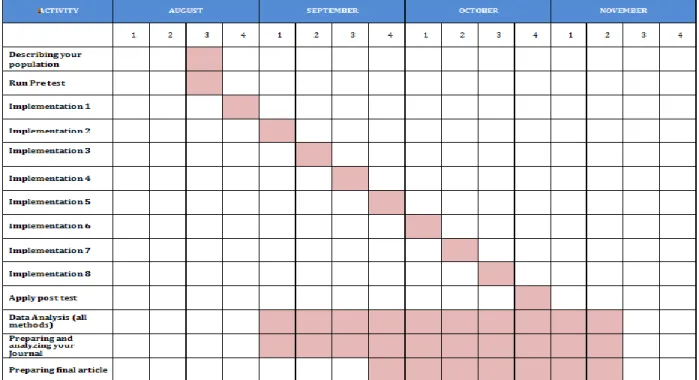
(30) number of incomplete sentences, number of broken words per minute and number of repetitions per minute. (Appendix B) Students´ Surveys. This form was filled in right after every intervention with the purpose of identifying how students’ felt about the classroom activities (4 questions), judgment of their ability (6) and to what extent they were developing autonomy and awareness of their learning process . There were statements like, “necesito poner más cuidado y estudiar más los verbos en pasado”, ‘I can improve the creativity of my answers”, “me gustó poder grabar en la casa mi pronunciación”, ‘estuvimos estudiando para que nos fuera bien al hablar”, ‘I follow all the steps purposed during the class’, ‘I was able to use English to communicate with my partners’. At the bottom of the form there was a space to self- evaluate what they considered their strengths and areas to improve. (Appendix C) Reflection Notes. This is a form used by the teacher to write her impressions of every intervention. It was used to register achievements, reached objectives, expectations of future interventions, the learners’ performance, and the action to be considered for improving validity. (Appendix D) Data Collection Procedures This action research process started with the identification of the problem. The study consisted of a pre-test to measure the initial conditions of the sample, a series of eight interventions with collaborative and self-directed speaking tasks, and a post-test at the end to evaluate the final state of the sample. The instruments were used to gather information according to this sequence: the measuring sheet was filled in after the analysis of each recording; it was done by considering the variables to analyze any fluency change. The students’ surveys were filled in right after every intervention. 18.
(31) to avoid any distortions due to the lapsed time and to have more vivid impressions and feelings in their minds. And finally, the reflection notes which were filled in by the teacher researcher as soon as the intervention was done. These notes were completed the same day to have the most complete version of the events that happened during the lesson.. 19.
(32) Pedagogical Intervention. Instructional Design The present study took place in a three-month period starting in August and ending in October and it was divided into ten stages that are explained as follows: The pre-test was applied in order to identify the initial state of the participants involved in the study. It consisted of describing landscapes based on different pictures. The first session, which was considered as the actual first intervention, encouraged students to describe places in the city while other participants were drawing on those descriptions. Later they were asked to change roles. The second intervention was based in a sequence of pictures which attempted to provide participants with the ideas and images needed to tell a story to their classmates. The third intervention consisted in having participants to say the main events of a movie they previously had chosen The fourth intervention was based on sharing stories about events of their personal lives based on pictures that they were asked to bring to class. The fifth intervention consisted in asking and providing directions in a town. The participants practiced using different maps and then they changed roles. The sixth intervention consisted in having students to perform a talk show oriented for teenagers. The participants were interviewed on their preferences on food, music, clothes and sports. The seventh intervention was a role-play based on a robbery that had happened in a department store. The first participant described the suspect while the second played the role of the manager who attended the complaint. 20.
(33) The eighth intervention was based on having participants to talk about their vacation experiences. The students exchanged information regarding places, activities and food they enjoyed. The post-test was used to determine the final state of the participants’ performance. It consisted in an interview in which one student played the role of a school principal and the other student was an applicant who wanted to be admitted to the school. All the interventions had a self-evaluation space for the students to reflect on the way they faced the shortcomings and how collaboration was useful for them. The timeline followed during the study is shown in the following graphic: Figure 2 Timeline. This timeline was the first research schedule, but it was impossible to comply during the time frame because in some stages (data analysis, report writing) it had a higher level of difficulty and was highly time consuming. The process of analyzing every recording to get the. 21.
(34) measuring sheet for every intervention, including all the variables belonging to the process, was done by hand since the software to do it automatically is quite expensive. Every intervention was designed and planned taking into account self-directedness. It can be seen in the lesson plan section called ‘independent study”. The collaboratively oriented tasks were also described including the students’ roles clearly identified in the lesson stages called “practice” (see Appendix E).. 22.
(35) Data Analysis. The type of the action research was mixed since this provided a better understanding of the situation, the qualitative data provided information of the socio-cultural aspects like motivation, language awareness, collaboration, confidence and autonomy that influenced fluency improvement, the quantitative data, on the other hand, showed statistically the improvement of fluency through the study in an objective way. The journal and the self- evaluation facilitated the qualitative analysis while the recordings of the interventions had two purposes. One was to measure fluency under quantitative parameters like hesitations per minute, number of words per minute, and others named above, to establish learners’ performance intervention by intervention, and the second purpose was helping to determine variables such us motivation, self-confidence, collaborative work, self-direction and language and fluency awareness which are related to classroom work. The research shows in the frequency charts different tops of performance (highest and lowest) judging by quantitative data; for instance, in the intervention five, I had the lowest performance average (31.9 words per minute), even lower than the pre-test (42.1 words per minute). It made me reflect on the kind of task I designed for the intervention five, where the learners had to think not only of the way to express an idea but also they had an extra task to develop (locating a place in a map). As a result, the hesitations were more and the fluency decreased. In general, there was a clear pattern congruent with the kind of tasks. For instance, the best performance was registered in the interventions where tasks allowed students to prepare a general idea of their production, which worked positively for them. As in the intervention number three, about describing the main events of a movie they enjoyed (67.5 words per 23.
(36) minute). In the intervention four, about describing pictures of special moments in their lives (72.3 words per minute), and in the post-test where they role-played an interview in a school as condition to be admitted (95.5 words per minute). More detailed information regarding words per minute is presented in Table 2. On the other hand, there were some other interventions with higher levels of stress that reduced confidence at the moment of speaking. This could have happened for the effect of an unequal discourse power, implicit in the role play as explained by Bailey (1998,p.175). The students who asked most of the questions were more confident, while the others who had to answer to unexpected questions at the moment of speaking, were stressed “ me puse nerviosa porque no sabía como iba a ser la persona que tenía que describir”(S.3, St. S.1) . For instance, in the intervention number seven, about a robbery in a mall, the learner who played the role of the victim just knew whom they had to describe at the moment of speaking when they received a picture. Or the task about locating places, where the student could only see the map and the place at the moment of speaking too. Quantitative analysis Based on statistic variables related to fluency changes, the variables to be analyzed were: . Number of words per minute. . Average number of words per participation (specifying time). . Number of hesitations/ interjections per minute. . Number of overt errors (verb tenses and conjugation). . Number of incomplete sentences per minute. . Number of broken words per minute. _______________ 1. St. S. : Student’s Survey. 24.
(37) . Number of repetitions per minute. The following chart presents the average of scores intervention by intervention for each variable (the individual scores can be seen in Appendix F). Table 2 Fluency Variables vs. Interventions Variable. Pre-test. Int. 1. Int. 2. Int. 3. Int. 4. Int. 5. Int. 6. Int. 7. Int. 8. Post-test. Number of words per minute. 42.1. 61.4. 55.4. 67.3. 72.3. 31.9. 52.9. 52.8. 55.8. 95.5. Number of hesitations/ interjections per minute. 3.4. 3.3. 0.7. 1.4. 1.8. 3. 2.9. 1.6. 2.7. 0.8. Number of overt errors (verb tenses and conjugation). 1.9. 2.6. 1.2. 0.4. 1.1. 0.3. 1.9. 1.1. 1.9. 0.7. Number of incomplete sentences per minute. 0.5. 0.1. 0.1. 0. 0. 0.3. 0. 0. 0. 0. Number of broken words per minute. 0. 0.1. 0. 0. 0. 0.3. 0. 0. 0. 0. Number of repetitions per minute. 2.8. 2.3. 0.8. 0.8. 0.7. 0.9. 1. 1.4. 1.1. 0.7. Analyzing the performance of the subjects in the first variable “Number of words per minute”, there is a clear a pattern of improvement throughout the study, with the highest score at the end. The following figure illustrates the behavior of the variable: Figure 3 Number of words per minute words per minute. 120 100 80 60 40 20 0. 0. 2. 4. 6. 8. 10. 12. Interventions. 25.
(38) In the second variable “Number of hesitations / interjections per minute”, there are clearly four higher scores, the first in the pre-test when the interventions were new to students, so they were very anxious while they were recorded. In the interventions one, six and eight, instead, there were high averages for this variable. These were the tasks that required a longest talking time by the students. There was a reduction tendency probably because the subjects overcame the Hawthorne Effect, which is a way of reaction whereby subjects involved in a study modify an aspect of their behavior. This due to the fact that they know they are being studied, and not in response to any particular experimental manipulation (Nunan & Bailey, 2009, p. 88).The following figure shows the variable behavior for hesitations per minute:. hesitations. Figure 4 Hesitations per Minute 4 3,5 3 2,5 2 1,5 1 0,5 0 0. 2. 4. 6. 8. 10. 12. Interventions. Talking about the number of overt errors (verb tenses and conjugation), there was a reduction pattern, nevertheless some tasks caused a clear improvement in this variable, for instance in the interventions one, six and eight, once again, a possible reason could have been the amount of time that the students were demanded to talk. The figure below illustrates these findings:. 26.
(39) Over-errors. Figure 5 Number of Over Errors 3 2,5 2 1,5 1 0,5 0 0. 2. 4. 6. 8. 10. 12. Interventions. The students’ attitude became more relaxed throughout the study. It was reflected on their speaking production, there was a high score of incomplete sentences in the task where the students had to locate places on a map and think of how to give directions. I hypothesize that when the subjects involved on the study overcame the Hawthorne Effect, their capacity to produce complete ideas improved as well, as it is shown in the figure below:. Incomplete Sentences. Figure 6 Incomplete Sentences per Minute 0,6 0,5 0,4 0,3 0,2 0,1 0 0. 2. 4. 6. 8. 10. 12. Interventions. A similar effect happened with the variable “Broken words per minute”. In general there was a reduction of it throughout the study, and as the previous variable, the improvement score happened in the task about directions. The following graphic shows the averages per intervention:. 27.
(40) Figure 7 Broken Words per Minute Broken words. 0,4 0,3. 0,2 0,1 0 0. 2. 4. 6. 8. 10. 12. Interventions. The final variable was “repetitions per minute”. There was a clear pattern of reduction during the study, which means an improvement in confidence supported by the Students’ Survey. This is shown in the following figure: Figure 8 Number of Repetitions per Minute 3 Repetitions. 2,5 2 1,5 1 0,5 0 0. 2. 4. 6. 8. 10. 12. Interventions. To sum up all variables related to fluency showed a clear improvement during the study. Consequently, it is possible to say that using collaborative and self-directed oriented speaking tasks would cause positive results in students’ performance. Qualitative Analysis The quantitative analysis provided just a partial view of the situation, and then it was necessary to include the qualitative analysis in order to become familiar with students’ perceptions as well as the teacher’s observations. 28.
(41) There were different tools to analyze qualitative information such as the students’ surveys and the reflection notes. According to the different comments gathered, it was possible to find different tendencies that clearly demonstrated how different categories emerged: Self-confidence and Motivation. A change in the subjects’ confidence when speaking can be discerned, from their comments, in the first interventions it was common to find comments like: “me dio pena cuando hablé”(S. 9, St. S) , “dude mucho y me equivoque”(S.3, St. S) , “me puse rojo” ( S. 5, St. S). It is evident that there was an improvement in confidence level of most of the subjects’ comments like: “I feel more confident”( S.4, St. S) , “ya soy capaz de hablar más cosas”( S. 7, St. S), “Now I speak best and not laught”( S. 3, St. S). Of note is the relationship between complaints about lack of confidence and level of fluency. In those interventions with the lowest fluency scores (words per minute). There is direct relation between self-confidence and fluency. Equally , when self-confidence, fluency increased too. During the interventions, the participants involved in this study had a very positive attitude towards English learning mostly when the task was simple enough to encourage interaction among them. In those sessions, positive comments appeared: “I enjoy speaking English very good” (S. 8, St. S), “the speaking was funny y me fue very good”( S. 6, St. S), “when I begin to speak, I like it, I enjoy it”( S. 3, St. S), “me gusta cada vez que aprendo a hablar mas English” ( S. 3, St. S). Based on the above comments, we might conclude that level of motivation (understood as a positive behavior and reaction towards class activity) is closely related to fluency. In addition, when the test showed a higher number of words per minute, there were more comments.. 29.
(42) Working Collaboratively. When the initial questionnaire was applied and participants were asked about their likes for participating in the English lessons, participants said to have enjoyed working in groups: “me gustó mi grupo de compañeros y todos nos ayudamos”(S. 9, St. S), “debo poner más atención a mis amigos para poder aprender a hablar mas”(S.6, St. S) , “sé ayudar a mis compañeros”( S. 8, St. S), “mis compañeros me ayudaron mucho”( S.9, St. S), “I have to communicate with my partners more”( S. 4, St. S). It is clear from these remarks that participants collaborated with each other, but sometimes they noted that their collaboration could be improved. It is clear from these comments that the strongest actors played an important role in scaffolding at the beginning of the study by giving support to their partners. As the interventions advanced, the collaborative work also improved and as a result their speaking also developed. This appears to be a result of collaboration, since they helped each other to create their speech. Collaborative work also appeared. to. reduced anxiety and. increase self-. confidence, and thus probably contributed to their improved fluency. Becoming a Self-directed Learner. At the beginning of the study this was one of the critical points, being shown with comments like: “necesito mayor disposición”(S. 9, St. S), “me falta mayor concentración para aprender vocabulario y pronunciación de verbos”( S. 7, St. S), “necesito poner mas cuidado y estudiar los verbos en pasado”( S. 2, St. S). However, there was a change of attitude towards their responsibility and the necessity of facing the process and working with autonomy. It was reflected in comments like: “La buena memoria me ayuda, de cuando repaso los verbos y ya los sé en pasado y presente”( S. 5, St. S), “ya uso el pasado, he practicado”( S. 8, St. S), “me gusto como lo hice, sobre todo porque me ví responsible”( S. 10, St. S), “ahora soy más responsable”( S. 3, St. S). Based on these comments, it can be concluded that a key point in acquiring a foreign language is the amount of self-direction involved. If the. 30.
(43) learners realize the importance of reflecting on their strengths and weaknesses, they will begin to work towards their improvement and their learning can be faster and better. Language and Fluency Awareness. Fluency is directly related to language development, so the acquisition of vocabulary, the improvement in the use of some grammatical structures cause a positive effect on it. There were many comments related to this aspect: “Sé usar there is y there are”(S. 7, St. S), “Sé bastante sobre los paisajes”( S. 1, St. S), “ los verbos en pasado ya me los sabía y no tuve que usar casi el diccionario”( S. 7, St. S), “hablé bien en pasado” (S. 4, St. S), “I spoke the verbs in past”(S. 4, St. S), “ya soy capaz de hablar mas cosas”( S.1, St. S), “I know many verbs in English”( S. 4, St. S). During this action research, subjects became more aware of their capacity to use the language and this also improved fluency. At the same time this action research may have increased students' self-confidence; hence all categories are interrelated and work to facilitate the final purpose: fluency improving using self-directness and collaborative work. This is the variable that I intended to measure to see if the interventions really meant a gain for them.. In spite of the short period of time for the. intervention I can conclude that the change was positive, mainly in attitude (self-confidence). In general, it was concluded and observed that if participants develop self-confidence, there will be more possibilities for fluency improvement, since a relaxed brain works better for learning (Cave, et all, p.1). There were different comments related to this aspect. At the beginning of the study the subjects said: “algunas palabras se me olvidaron y no las pude recordar”( S. 2, St. S) , “tengo que disminuir las interrupciones”( S. 3, St. S). While the process continued the subjects began to change their minds: “No tengo muchas interrupciones, mejoro cada día más”( S. 2, St. S), “trato de mejorar cada vez más”( S. 9, St. S), “soy capaz de hablar mas cosas en pasado” ( S. 6, St. S).. 31.
(44) In the final stages, the comments were more favorable: “me fue bien speaking vocabulary”( S. 1, St. S), “now I speak best and entiendo plus of what speak” ( S. 9, St. S)), “I speak very well”( S. 4, St. S), “I speak English sin interruptions”( S. 1, St. S). As it can be seen, the participants wrote their comments in Spanish at the beginning of the study, but then they were eager to write in English, even if they ignored some words. This was an extra gain; writing improvement done by students in terms of conveying ideas in a foreign language. The following table exemplifies the way data were organized to start the analysis, as it illustrates findings in more depth: Table 3 Qualitative Categories CATEGORY. Self-confidence And Motivation. HOW IS IT RELATED TO THE RESEARCH QUESTION? If the student feels confident and secure his/her production in speaking will be better and faster. If students are intrinsically motivated to express their ideas, it is easier to get more fluency than when they have to speak by obligation.. Working Collaboratively. Collaboration among the students make them find the way to express their thoughts more easily since their peers help them to build the language.. Becoming a Self-directed learner. Intrinsic motivation together with autonomy are variables positively affecting improvement of fluency, the awareness of students on their strengths and weaknesses help them improve their speaking skill.. Language and Fluency Awareness. The students analyze language areas that need more attention and based on this, the extra class activities are focused on improving them.. HOW IS IT SUPPORTED BY THE DATA GATHERED?* I was able to speak sin interruptions.(S. 8, St. S.) Now speak better, no me da pena( S. 6, St. S.) I like speaking English (S. 3, St. S.) I spoke very fast and good, I like it.(S. 5, St. S.) My communicate with mis friends and sé más speak in past( S. 2, St. S) Me gusta hablar inglés con mis compañeros (S. 1, St. S) Ya nos colaboramos más (S. 10, St. S) My strengths are the collaboration with my friends ( S. 4, St. S) I have plus responsibility (S. 9, St. S) I need more responsibility (S. 5, St. S) I need more creativity in my answers (S. 4, St. S) Debo mejorar pronunciation.(S. 7, St. S) I improve vocabulary, past tenses.(S. 4, St. S) Now I can describe persons (S. 9, St. S) Me demoraba un poco pensando que contestar (S. 2, St. S) Now I have minus interruptions (S. 1, St. S). 32.
(45) *. The gathered data were kept in its original form including mistakes.. S. : Subject St. S. : Student Survey Analyzing the Students’ Survey, I realized that at the beginning of the study the opinions on topics like working in groups, enjoying speaking classes, and being able to communicate in English with their peers, were diverse. However, as the study advanced, they felt more confident working collaboratively and the answers for each statement were more positive. To support this conclusion, go to Appendix F, where complete information on the answer trends throughout the study is compiled. In the teacher’s reflection notes (R. N.), similar trends can be observed. At the beginning of the study, it was not so easy for the students to work collaboratively. Nevertheless, as the lessons continued, the teacher noted that the classroom environment improved and it was clear that the stronger students helped the weaker ones to complete their tasks. Procedures of Data Analysis Based on the fact that this study was mixed, because there were both qualitative and quantitative data, the quantitative data were recorded, measured and analyzed statistically, while the qualitative data were codified using colors according to the emergent patterns. Different ways to analyze the information collected during the study were implemented as follows: Measuring Sheet. The recordings were analyzed manually to get the information regarding the variables of fluency in order to fill in the measuring sheet. The information gathered in this form was analyzed using statistic methods and graphics to facilitate the interpretation and the visualization of every variable; subsequently, it was possible to measure the behavior for each variable during the study. The interpretation was intended to be objective 33.
(46) given that the data were quantitative, and with the help of the qualitative data the explanations of behaviors were better supported. Reflection Notes. This tool was important to collect data about the teacher’s perceptions. This information was used as a complement to analyze and interpret not only the quantitative data but also the qualitative data. This reflection provided additional information on the environment and feelings during the diverse lessons. Students’ Survey. These were necessary to determine the qualitative categories, since through these forms, the subjects’ opinions and feelings were gathered and it was possible to find patterns and changes in their minds that suggested important findings.. 34.
(47) Conclusions and Pedagogical Implications The present study included a variety of instruments that were created in order to achieve a more objective analysis. Throughout the use of the teaching reflection notes, the researcher attempted to observe students’ behaviors and attitudes that are sometimes difficult to measure in a quantitative way. At the beginning of the research, participants were shier at the moment of being recorded, then they overcame the “Hawthorne effect”, became familiar with the recorded sessions, and their performance was more relaxed and natural. Students’ motivation to improve their speaking was high during almost all the study time; nonetheless, they looked a little concerned when the task required some unexpected language used at the moment of speaking. This happened in tasks such as describing people who stole something from them in a mall, or when they were asked to locate places in a map and provide directions. In addition, this study demonstrated that oral fluency improvement was directly related to collaboration only if the students have a relaxed and secure learning environment where they can exchange experiences and are given time to prepare their performance. In this situation their confidence improved, and they indicated they felt more relaxed. Feeling more confident and relaxed appears to have led to more fluency. It appears that collaborative work actually helped fluency improvement. A second factor included during every lesson was the self-directed work on the stage called “independent study” in the lesson plan (see appendix E) so participants had to complement their practice autonomously. This was an extra variable that improved confidence and fluency in further interventions.. 35.
(48) The idea of designing lessons that combined self-directed and collaborative work tasks had a positive impact in this school context and it is possible that the results in other contexts can be similar. Finally, it was also a big challenge to design every lesson plan so that it include collaborative work, self-directed learning strategies and task based learning. Pedagogical Implications Based on the findings, it is possible to conclude that implementing tasks including collaborative and self-directed strategies might provide the necessary elements to improve fluency in speaking. According to this research, it is also advisable to provide students with enough time to prepare their talk in order to reduce their anxiety and obtain better performances. Most of the students enjoyed and took advantage of working collaboratively. Nevertheless, it was necessary to provide a permanent scaffolding to avoid deviations in their work, mainly considering that the students were children or teenagers with short concentration span (Binder, Haughton, Van Eyk, 1990).. The experience of providing more importance to speaking. development, facilitated improvement in motivation and an extra gain was that the subjects were willing to write in English in the Students’ Survey. The study has had a positive impact at the school where it was conducted since the participants now seem more confident and willing to speak. They work as encouragers in the class. Nowadays, it has been reported by their current teacher that they are ready to help when implementing activities that require collaborative work, probably due to their previous experience. It is advisable to include self-direction strategies in every lesson plan since this triggers the development of skills. These strategies provide important insights to students when they face self-assessment. Furthermore, this process fosters the identification of specific learner needs,. 36.
(49) their strengths and weaknesses. On the other hand, scaffolding is a powerful tool to help students in their move towards autonomy, so it must be considered in the lesson plans with the purpose of improving the learners’ performance. Providing meaningful situations to learn, for example sharing information about the students’ likes and dislikes. It enhances motivation and the results are improved since the students are involved in learning how to communicate opinions and ideas. Limitations In spite of the fact that speaking tasks improved motivation, there were aspects of the curriculum that were left aside due to the time constraints and the class size . This can be considered as a limitation since, according to the MEN (Ministerio de Educación), some basic and minimal competences should be covered in a specific level and it is a legal requirement that can be interpreted as pressure to the English teachers. One of the challenges in this study is internet connectivity when the planned lessons involved the use of that technology. More specifically, the school has had problems with internet access for more than one year, it has inhibited the use of some important resources that could have helped in motivating and providing variety during the lessons. In addition, time constraints and the length of the interventions can be seen as a limitation. If there had been more time for speaking practice during the course, the results could have been better. Nevertheless, the way the students faced the study was very positive and it can be concluded that they achieved confidence and for most of the cases, fluency improvement. On the other hand, at the beginning of the study it was challenging to create awareness of the importance of autonomy and collaborative work as relevant strategies to improve fluency in speaking. I think it was a failure to ignore the difference in the way the students face a speaking. 37.
(50) task with or without time to prepare, so the results were diverse, according to the kind of task designed in every intervention. Further Research For future research, it is important to bear in mind that this research area is a field that permits a lot of variations to be implemented during a study, the implemented strategies, can include many different possibilities in time and the way to prepare the spoken production. On the other hand, the number of participants was small, so it would be necessary to try it out in diverse contexts sample sizes to improve validity. In a further research, it would be good to think of similar tasks that provide equal conditions to the subjects throughout the study, for instance, if it will be permitted that students practice in advance, what they are to say during the intervention. This factor must be kept constant; on the other hand, if it is going to be needed that they produce unexpected speech at the moment of speaking, all the tasks must be designed that way. To sum up, talking about both aspects quantitative and qualitative, there was consistent evidence in the data analysis. The students gained confidence and fluency in spite of the time constraints. In general, it may be asserted that in the long run the results may be even better.. 38.
Figure
Documento similar
No obstante, como esta enfermedad afecta a cada persona de manera diferente, no todas las opciones de cuidado y tratamiento pueden ser apropiadas para cada individuo.. La forma
a) To determine the influence of the “freely talking” Program, based on the Communicative Approach, in reducing anxiety when speaking in the dimension “Confidence in the use of a
EVALUATION CRITERIA COMPETENCES.. Comprender las ideas principales, la información relevante e implicaciones generales en textos orales de cierta longitud y complejidad,
The injury rate or number of injuries per 1000 hours exposure to the risk was 2.75 injuries per 1000 hours sports practice, and 8.44 injuries per 1000 matches, thus the
For this purpose, we propose a family of domain-specific languages directed to automate the different tasks involved, like describing the structure and semantics of the heterogeneous
In relation to language knowledge of L1/vehicular language (The teacher has knowledge of the L1/vehicular language in terms of fluency, accuracy, lexicon and
This study is part of a bigger and ambitious research project with the general aim to achieve a standardized and unique self-reported scale in Spanish-speaking population to
The aim is to build a system that will measure the performance parameters of throughput, packet losses, jitter and one-way delay using the technique of the packet time-stamping..
