
Measuring the organizational performance of SMEs in Mexico for optimizing competitiveness
276
0
0
Texto completo
(2) ~. EGADE Business School TECNOLÓGICO DE MONTERREY. Hacemos constar que en la Ciudad de México, el día 17 de Julio del 2012, la alumna:. María de la Concepción Atristain Suárez. sustentó el Examen de Grado en defensa de la Tesis titulada:. "Measuring the Organizational Peñormance of SMEs in Mexico, for Optimizing Competitiveness". Presentada como requisito final para la obtención del Grado de:. DOCTORADO EN CIENCIAS ADMINISTRATIVAS. Ante la evidencia presentada en el trabajo de tesis y en este examen, el Comité Examinador, presidido por la Dra. Andrea Trujillo León, ha tomado la siguiente resolución:. Ap-<0bc,ci º Pº r. u.~ r1. 1. rn, dad. Dr. Rajago al Director de Tesis. Dra. Andrea Trujillo León Lectora. Dra. Raquel Castaño González Lectora. A:ntomo Núñez Mora Director del Programa Doctoral. !MINOS IGNITING CHANGE. EGADE Business School Rectoría de Escuelas Nacionales de Posgrado Tecnológico de Monterrey Av. Eugenio Garza Lagüera y Rufino Tamayo 66269 San Pedro Garza Garc1a. N L. Tel. +52 (81) 8625 6000 www.egade.mx.
(3) .. ,. ·i.
(4) "!_.. ,. TECNOLOGICO DE MONTERREY. •. 1'ECNOLÓCilCO DE MONTERREY. Biblioteca. C..-CludaddeWldco. Instituto Tecnológico y de Estudios Superiores de Monterrey Campus Ciudad de México Measuring the Organizational Performance of SMEs in Mexico far Optimizing Competitiveness. THESIS TO RECEIVE THE DOCTORAL DEGREE IN ADMINISTRATIVE SCIENCES PRESENTED BY:. María de la Concepción Atristain Suárez Thesis Director: Rajagopal. México D.F., Ju/y 17, 2012.
(5) ,. TECNOLOGICO DE MONTERREY. Instituto Tecnológico y de Estudios Superiores de Monterrey Campus Ciudad de México. Measuring the Organizational Performance of SMEs in Mexico far Optimizing Competitiveness Thesis to receive the doctoral degree in Administrative Sciences Presented by:. María de la Concepción Atristain Suárez Thesis Director: Rajagopal Readers: Dra. Andrea Truj illo León Dra. Raquel Castaño González México D.F., Ju/y 17, 2012.
(6) ,. TECNOLOGICO DE MONTERREY. Instituto Tecnológico y de Estudios Superiores de Monterrey Campus Ciudad de México. Measuring the Organizational Performance of SMEs in Mexico for Optimizing Com petitiveness Thesis to receive the doctoral degree in Administrative Sciences Presented by: María de la Concepción Atristain Suárez Thesis Director: Rajagopal. México D.F., Ju/y 17, 2012.
(7) ACKNOWLEDGEMENTS Many people have intervened, in one way or another, in the development of my doctoral thesis; sorne contributing their knowledge; others with wise counsel; ali of them with a word of encouragement. Many are the names that should appear on a list, however, I think I must remember now who have had a decisive influence at the very beginning, and in particular, who have appeared in times of discouragement or despair.. To God, for giving me strength, wisdom and consolation at ali times. To My Parents, for guiding me on the right path, and teach me what I am. To My husband, for encourages me, with ali his !ove, to move forward in each of my goals. For his constant help and consolation, in difficult times. For his great !ove and understanding. To My Children, for their !ove and understanding, knowing that they are the initiative of fight of whole my life. To My Brothers, for giving me their !ove and support, needed to continue. To My Thesis Director, for teaching me, supporting me and guide me in the research. For believing in me and giving me the opportunity to develop this research topic and for helping me get in the fascinating world of publishing. To My Readers, for his wise counsel and support in the development of the doctoral thesis. To My Teachers, for sharing their knowledge in classrooms. To My co-Generation, with whom I have shared for four years this important goal of my life. To The Entrepreneurs, for trusting me, and in the research project. To My Friends, for their interest and concern for the completion of this doctoral project.. I know that whatever may have been my achievements, someone helped me to reach them.. To Ali. THANK YOU VERY MUCH.
(8) AGRADECIMIENTOS Muchas personas han intervenido, de una manera u otra, en el desarrollo de mi tesis doctoral; algunos aportando sus conocimientos; otros con sus sabios consejos; todos ellos con una palabra de aliento. Muchos son los nombres que deben aparecer en una lista, sin embargo, creo que es imprescindible recordar ahora a quienes influyeron de manera decisiva al principio de todo, y en especial, a quienes aparecieron en los momentos de desánimo o desconsuelo.. A Dios, por darme fuerza, sabiduría y consuelo en todo momento. A Mis Padres, por saber guiarme por el camino correcto, y enseñarme lo que soy. A Mi Esposo, por impulsanne, con todo su amor, a seguir adelante en cada una de mis metas. Por su constante ayuda y consuelo en los momentos difíciles. Por su gran cariño y comprensión. A Mis Hijos, por su cariño y comprensión, sabiendo que son la iniciativa de lucha de toda mi vida. A Mis Hermanos, por danne su cariño y el apoyo necesario para continuar. A Mi Director de Tesis, por enseñarme, apoyanne y guiarme en el trabajo de investigación. Por creer en mí, y darme la oportunidad de desarrollar este tema de investigación, así como, por ayudanne a entrar, en el fascinante mundo de la publicación. A Mis Lectoras, por sus sabios consejos y apoyo en el desarrollo de la tesis doctoral. A Mis Profesores, por compartir sus conocimientos en las aulas. A Mis Compañeros de Generación, con quienes he compartido desde hace cuatro años esta importante meta de mi vida. A Los Empresarios, por confiar en mí, y en el proyecto de investigación. A Mis Amigos, por su interés y preocupación, por la culminación de este proyecto doctoral.. Sé que cualesquiera que hayan sido mis logros, alguien me ayudó a alcanzarlos.. A Todos. MUCHAS GRACIAS.
(9) ABSTRACT Though the open access of market brought good business opportunities in Mexico, it also introduced more competition that has led severa! companies to close down or to be merged. Facing a highly competitive environment, the issue of managerial efficiency in work processes, organizational performance and competitiveness have become essential parts for survival and, in the best case, for the competitive success of firms. Today's manufacturing organizations in Mexico are increasingly confronting new markets, new competition, and greater customer expectations. Immersed in this highly competitive environment is considered relevant for manufacturing SMEs, achieve an optima! organizational performance, through efficient work processes, leading the company to accomplish the competitiveness that environment demands. The globalization process has intensified in the different economic environments, affecting the activities of enterprises, regardless of size. Due to this process, small and medium-sized enterprises (SMEs) in Mexico face manifold difficulties in reference to the operational efficiency required to stay on the market. While globalization poses challenges and opportunities for the development of enterprises, SMEs have not found a way to exploit this conjuncture, and they could not be sufficiently competitive with new market requirements. Hence the importance of implementing a model of organizational performance assessment that provides specific solutions for these companies to boost productivity and their competitiveness, to optimize their competitive advantages in order to streamline its operations so it can adapt to the competitive environment in that are involved. Facing a highly competitive environment, the issue of managerial efficiency, organizational performance and competitiveness have become essential parts for survival and, in the best case, for the competitive success of finns. It is widely recognized that today's manufacturing organizations are increasingly confronting new markets, new competition, and greater customer expectations (Blackwell et al. 2006). In the issue to management efficiency, a major problem is the measurement of managerial performance within the manufacture sector of SMEs, there is notan assessment ofthe advantages and disadvantages of having management efficiency (Hwang, 2006). Another problem is detennining the factors affecting the efficiency of management (Hwang, 2006), organizational performance (Alfaro et al. 2007) and competitiveness (Bamey, 2001 ). Considering the RBT model (resource-based theory), where its central premise is to answer the questions of why firms differ and how to achieve a sustainable competitive advantage (Hoskisson et al. 1999), taking into account the company is a set, not only resources but also capabilities (Wemerfelt, 1984) and that the basis for achieving a greater competitiveness lie primarily on the proper allocation of organizational resources and capabilities (Wemerfelt, 1984, Rumelt, 1984 ), in. l-.
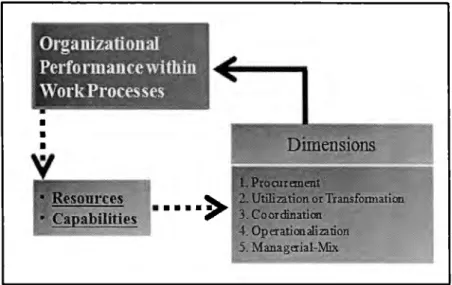
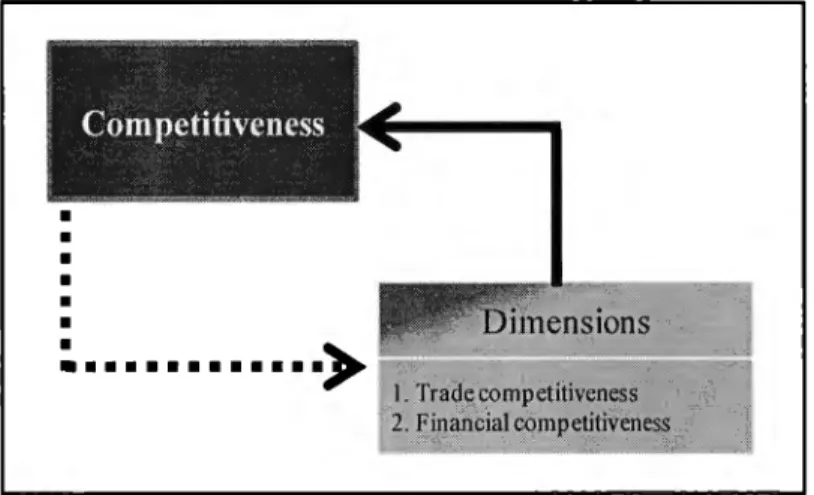
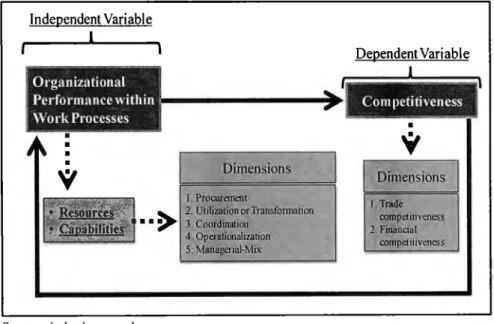
(10) the research, it is proposed a theoretical model to measure organizational perfonnance, based on five dimensions (procurement, use or transformation, coordination, operationalization and managerial-mix) through the analysis of the resources and capabilities to maximize competitiveness of SMEs in the global marketplace. In the first stage of the research, through the application of the questionnaire, and the depth interviews, with the CEOs of SMEs, was obtained information of managerial efficiency, organizational performance and competitiveness of small and medium manufacturing enterprises in Mexico, under the perspective of resource-based theory. lt was learned the degree of importance, and the reasons given by the CEOs, to select the first two indicators more important of each of the dimensions of the organizational perfonnance, as well as for the less important. The indicators that were ranked by the directors of the companies were analyzed through charts and graphs of frequency. Knowledge of the indicators, that were ranked higher, give the opportunity to work with companies on those indicators which were ranked at lower levels to improve the competitiveness, since, as this is a multivariate model, we cannot stop considering them, because they may be identified, as problems, that affect competitiveness. Is important to consider that most of these enterprises do not know how to optimize the use of its resources and capabilities, not only materials but also human. In the second stage of the research, with the incorporation of the theoretical review of the concepts involved in research, and the empirical study, which shows the relationship between organizational performance and competitiveness from the perspective of resource-based theory is provided greater understanding of this theoretical connection through the non-experimental research; of transsectional type; with a correlational/causal approach. Based on research, one can argue that although the ten dimensions of organizational performance, not fully explain the two dimensions of competitiveness, they contribute to the understanding of the relationship between the two variables by 60%. Where is concluded that this relationship is achieved in the following dimensions of organizational performance and competitiveness: procurement of resources with the two dimensions of competitiveness; and utilization or transfonnation of resources; coordination of capabilities; operationalization of resources; and managerial mix of resources with the dimension of trade competitiveness. Therefore, it is important to consider that the theoretical model proposed in the research, to study the relationship between organizational performance and competitiveness is a complex and multifactorial model, where the influence of factors on competitiveness, not only should be focused on two dimensions. Therefore, more dimensions of competitiveness, must be studied in relation of organizational performance..
(11) INDEX 1: INDEX OF CONTENTS. CHAPTER 1: ...................................................................................................................................... 2 INTRODUCTION TO RESEARCH .................................................................................................... 2 1.1 Introduction to research ............................................................................................... 2 1.2 The resource-based perspective ................................................................................... 4 1.3 The crux ofSMEs ........................................................................................................ 6 1.4 Description of the structure of the investigation .......................................................... 7. CHAPTER 2: .................................................................................................................................... 11 RESOURCES AND CAPABILITIES: TO MEASURE ORGANIZATIONAL PERFORMANCE TO OPTIMIZE THE COMPETITIVENESS OF MEXICAN SMES. ........................................................ 11 2.1 The importance of the resource-based theory (RBT) for the firm .............................. 11 2.2 Resources and Capabilities: The approach on the resource-based theory (RBT) ....... 16 2.3 Organizational Performance ...................................................................................... 19 2.4 Competitiveness and competitive advantage ............................................................. 24 2.5 Theoretical model analysis of the relationship between organizational performance and competitiveness of SMEs in Mexico, under the perspective of resource-based view ............ 31 2.6 Managerial efficiency ................................................................................................ 32. 2. 6.1 Managerial efficiency ......................................................................................... 32 2.6.2 Decision making: How decisions should made ................................................... 33 2. 6.3 Organizational design ......................................................................................... 35 CHAPTER 3: .................................................................................................................................... 39 THE SMALL AND MEDIUM ENTERPRISES OF THE MANUFACTURING SECTOR IN MEXICO. ......................................................................................................................................................... 39 3.1 The small and medium enterprises in the world and in Mexico ................................. 39.
(12) 3.2 The small and medium enterprises in the manufacturing sector in Mexico ............... 41. CHAPTER 4: .................................................................................................................................... 45 RESEARCH DESIGN; RESEARCH PROBLEM STATEMENT AND HYPOTHESES. .................... .45 4.1 Research design ......................................................................................................... 45 4.2 Research problem statement ...................................................................................... 47. 4.2.1 Overall objectives ofthe research ....................................................................... 47 4.2.2 Specific objectives of the research ...................................................................... 48 4.2.3 Research questions ............................................................................................. 49 4.2.4 Justification and importance of the research ...................................................... 50 4.3 Hypotheses ................................................................................................................ 51. CHAPTER 5: .................................................................................................................................... 63 METHODOLOGICAL DESIGN OF THE RESEARCH ................................................................... 63 5.1 Variables .................................................................................................................... 63 5.1.1 Operationalization of the variables .................................................................... 64. 5.2 Operationalization of the hypotheses ......................................................................... 69 5.3 Taxonomy of Research Design .................................................................................. 78 5.3.1 First stage of the research .................................................................................. 79 5.3.1.1 Sample selection and instrument used to collect the data ................................ 80 5.3.1.2 Data collection process .................................................................................... 81 5.3.2 Second stage ofthe research ............................................................................... 84 5.3.2.1 Sample selection and instrument used to collect the data ................................ 85 5.3.2.2 Data collection process .................................................................................... 86. CHAPTER 6: .................................................................................................................................... 91 ANALYSIS AND INTERPRETATION OF RESULTS........................................................................ 91 6.1 Analysis and interpretation ofthe results ofthe first stage of research ...................... 91. 6.1.1 Demographic data .............................................................................................. 92 ¡¡.
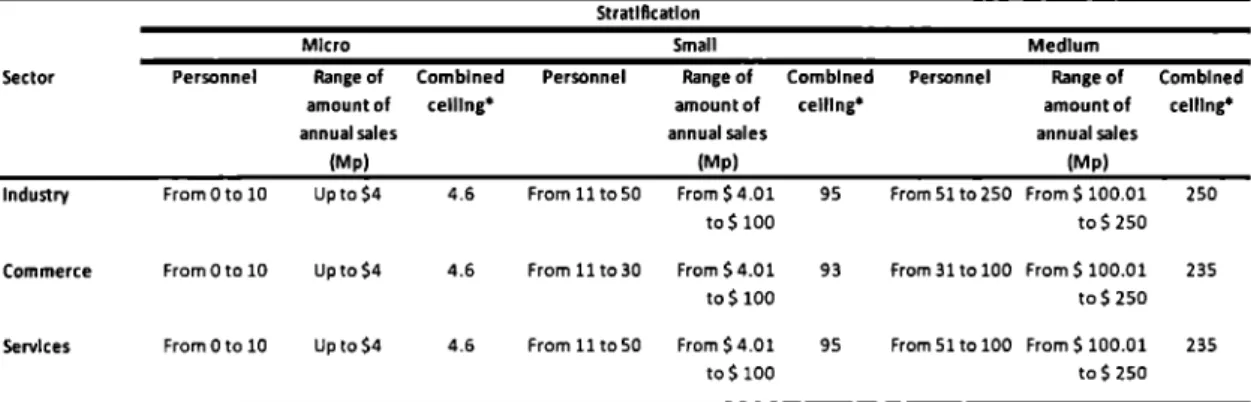
(13) 6.1.2 Analysis of the indicators that are part of the measurement of the managerial efficiency and the organizational performance .................................................. 93 6.1.3 Competitiveness analysis .................................................................................. 115 6.1.4 Conceptual synthesis of the analysis and interpretation of results (First stage of research) .......................................................................................................... 118. 6.2 Analysis and interpretation of the results of the second stage of research ................ 119 6.2.1 Descriptive Analysis ......................................................................................... 119 6.2.1.1 Mean, standard deviation, skewness and kurtosis .......................................... 119 a) Assumptions and criteria ....................................................................................... 120 6.2.1.2 Conceptual synthesis of the analysis and interpretation of results of the Descriptive Statistics ....................................................................................... 135 6.2.1.3 Frequencies analysis ...................................................................................... 136 a) Schooling of the directors interviewed .................................................................. 136 b) Size of company ..................................................................................................... 136 c) Geographic area .................................................................................................... 137 d) Financia/ performance .......................................................................................... 137 e) Trade performance ................................................................................................ 138 6. 2.2 Factorial Analysis ............................................................................................. 139 a) Assumptions and criteria ....................................................................................... 140 6.2.2.1 Factorial Analysisfor Dimensions ofthe Organizational Performance ........ 140 6.2.2.2 Conceptual synthesis of the analysis and interpretation of results of the Factorial Analysis ............................................................................................ 164 6.2.3 Analysis of the reliability estimation ................................................................. 165 a) Assumptions and criteria ....................................................................................... 165 6.2.3.1 Interna/ consistency ofthe independent variable ........................................... 165 6.2.3.2 Interna/ consistency ofthe dependen! variable .............................................. 173 6.2.3.3 Interna/ consistency ofthe independent and dependen! variable ................... 174 ¡¡¡.
(14) 6.2.3.4 Conceptual synthesis of the analysis and interpretation of results of the Reliability Estimation ...................................................................................... 175 6.2.4 Correlation Analysis ......................................................................................... 176 a) Assumptions and criteria ....................................................................................... 176 6.2.4.1 Correlation Analysis between the dimensions of organizational performance. ......................................................................................................................... 177 6.2.4.2 Correlation Analysis of the dimensions of organizational performance and competitiveness ................................................................................................ 180 6.2.5 Regression Analysis .......................................................................................... 182 a) Assumptions and criteria ................................................... .................................... 182 6.2.5.1 Regression Analysis ....................................................................................... 184 6. 2. 6 Conceptual synthesis of the analysis and interpretation of results (Second stage ofresearch) ...................................................................................................... 200 6.2. 7 Conceptual analysis of the results which link organizational performance and competitiveness ................................................................................................ 201 CHAPTER 7: .................................................................................................................................. 203 CONCLUSIONS, LIMITATIONS, MANAGERIAL IMPLICATIONS AND FUTURE RESEARCH PROSPECTS .................................................................................................................................. 203. 7.1 Conclusions ............................................................................................................. 203 7.2 Limitations ............................................................................................................... 214 7.3 Managerial implications .......................................................................................... 214 7.4 Future Research Prospects ....................................................................................... 217 REFERENCES ............................................................................................................................... 219 ANNEXES: ..................................................................................................................................... 240 INFORMATION AITACHED TO THE CHAPTERS ..................................................................... 240. Annex 1. Operationalization of variables ....................................................................... 240 Annex 2. lnstrument used for the first stage of the investigation ................................... 243. iv.
(15) Annex 3. Instrument used for the second stage of the investigation .............................. 247 Annex 4. Factorial Analysis ...................................................................... .... ....... ......... 252. V.
(16) INDEX2:. INDEX OF FIGURES, TABLES AND GRAPHS INDEX OF FIGURES Figure 2.1 Organizational Perfonnance within Work Processes .......................................... 24 Figure 2.2 Influence of interna) factors of an enterprise on its competitiveness......................... 29 Figure 2.3 Competitiveness Dimensions ..................................................................... 30 Figure 2. 4 Theoretical model of Organizational Perfonnance vs. Competitiveness ................... .31 Figure 2.5 Managerial Efficiency Dimensions .............................................................. .33 Figure 4. 1 Research Design ................................................................................... .45 Figure 4.2 The Multifactorial Model ofCompetitiveness ................................................. 61 Figure 7. 1 The Theoretical Model of Organizational Perfonnance vs. Competitiveness ................................................................................... 209. Figure 7. 2 The Multifactorial Model of Competitiveness ................................................ 21 O Figure 7.3 The Partial Model of Competitiveness ......................................................... 213. INDEX OF TABLES Table 3. 1 Stratification of companies published in the Official Journal of the Federation (2009) .. .40 Table 3.2 Economic units and total employed persons of the Prívate sector and parastatal by economic activity 2000 ........................................................................... .41. Table 4. 1 Summary of the Hypotheses Framework ......................................................... 54 Table 5. 1 Scale of measurement for the variable indicators of the competitiveness .................... 66 Table 5.2 Matrix of measurement of the organizational perfonnance and competitiveness, through the resources and capabilities ....................................................................... 68. Table 5.3 Distribution of the sample .......................................................................... 82 Table 5.4 Types of industries within the manufacturing sector ........................................... 82 Table 5.5 Sample distribution in manufacturing industries ................................................ 83 Table 5.6 Geographical distribution of the sample .......................................................... 83 Table 5. 7 Size of the companies of the sample .............................................................. 83 Table 5.8 Distribution of the sample .......................................................................... 87 Table 5.9 Types of industries within the manufacturing sector ......................................... .. 88 Table 5.10 Sample distribution in manufacturing industries ......................................... ...... 88 Table 5. J1 Geographical distribution of the sample ......................................................... 89 vi.
(17) Table 5.12 Size of the companies of the sample ............................................................. 89 Table 6.1.1 lndicators of the Procurement Dimensions ..................................................... 93 Table 6.1.2 Indicators of the Utilization or Transfonnation Dimensions ................................ 98 Table 6.1.3 Indicators ofthe Coordination Dimensions ................................................... 102 Table 6.1.4 Indicators ofthe Operationalization Dimensions ............................................ 106 Table 6.1.5 Indicators ofthe Managerial Mix Dimensions ............................................... 11 l Table 6.1.6 Indicators detennining Competitiveness among SMEs .................................... 116 Table 6.2.1 Procurement ofResources: Mean, standard deviation, skewness and kurtosis .......... 122 Table 6.2.2 Procurement of Capabilities: Mean, standard deviation, skewness and kurtosis ........ 123 Table 6.2.3 Utilization or Transfonnation of Resources: Mean, standard deviation, skewness and. kurtosis ........................................................................................... 124 Table 6.2.4 Utilization or Transfonnation of Capabilities: Mean, standard deviation, skewness and. kurtosis ........................................................................................... 125 Table 6.2. 5 Coordination of Resources: Mean, standard deviation, skewness and kurtosis ......... 12 7 Table 6.2. 6 Coordination of Capabilities: Mean, standard deviation, skewness and kurtosis ....... 128 Table 6.2. 7 Operationalization of Resources: Mean, standard deviation, skewness and kurtosis ... 129 Table 6.2.8 Operationalization of Capabilities: Mean, standard deviation, skewness and kurtosis.130 Table 6.2.9 Managerial Mix of Resources: Mean, standard deviation, skewness and kurtosis ...... 131 Table 6.2. 1OManagerial Mix of Capabilities: Mean, standard deviation, skewness and kurtosis ... 132 Table 6.2.11 Competitiveness: Mean, standard deviation, skewness and kurtosis .................... 133 Table 6.2.1.2 Conceptual synthesis of the analysis and interpretation of results of the Descriptive. Statistics .......................................................................................... 135 Table 6.2.1.3(a) Descriptive distribution of frequency: Education ...................................... 136 Table 6. 2. 1. 3(b) Descriptive distribution of frequency: Size of company .............................. 13 7 Table 6.2.1.3(c) Descriptive distribution of frequency: Geographic area ............................... 137 Table 6.2.1.3(d) Descriptive distribution of frequency: Financial performance ....................... I 38 Table 6.2.1.3(e) Descriptive distribution of frequency: Trade perfonnance ........................... 138 Table 6. 2.2. 1(a) Rotated Component Matrix of Procurement of Resources Dimension ............. 141 Table 6.2.2. 1(b) Rotated Component Matrix of Procurement of Capabilities Dimension ........... 144 Table 6.2.2.l(c) Rotated Component Matrix of Utilization or Transfonnation of Resources. Dimension ........................................................................................................ 146 Table 6.2.2. 1(d) Rotated Component Matrix of Utilization or Transfonnation of Capabilities. Dimension........................................................................................................................................ 149 Table 6.2.2. 1(e) Rotated Component Matrix of Coordination of Resources Dimension ............... 151 vii.
(18) Table 6.2.2.1 (/) Rotated Component Matrix of Coordination of Capabilities Dimension ............. 153 Table 6.2.2. 1(g) Rotated Component Matrix of Operationalization of Resources Dimension ....... 156 Table 6.2.2. 1(h) Rotated Component Matrix of Operationalization of Capabilities Dimension .... 158 Table 6.2.2.l(i) Rotated Component Matrix ofManagerial Mix of Resources Dimension .......... 160 Table 6.2.2. 1O) Rotated Component Matrix of Managerial Mix of Capabilities Dimension ......... 162 Table 6.2.2.2 Conceptual synthesis of the analysis and interpretation of results of the Factorial. Analysis ......................................................................................................... 164 Table 6.2.3.1 (a) Reliability Statistics of Procurement of Resources Dimension ......................... 166 Table 6.2.3.l(b) Reliability Statistics of Procurement ofCapabilities Dimension ......................... 167 Table 6. 2.3. 1(e) Reliability Statistics of Utilization or Transfonnation of Resources Dimension .. 167 Table 6.2.3. 1(d). Reliability Statistics of Utilization or Transformation of Capabilities. Dimension ....................................................................................................... 168 Table 6.2.3.1 (e) Reliability Statistics of Coordination of Resources Dimension ........................ I 69 Table 6. 2.3. 1(/) Reliability Statistics of Coordination of Capabilities Dimension ..................... 170 Table 6.2.3.1 (g) Reliability Statistics of Operationalization of Resources Dimension .................. 170 Table 6.2.3. 1(h) Reliability Statistics of Operationalization of Capabilities Dimension.............. 171 Table 6.2.3.1 (i) Reliability Statistics of Managerial Mix of Resources Dimension ................... 172 Table 6.2.3. 1O) Reliability Statistics of Managerial Mix of Capabilities Dimension ................ 173 Table 6.2.3.2(k) Estimating the reliability of the dependent variable ....................................... 173 Table 6.2.3.3(l) Estimating the reliability of the independent and dependent variable ................. 174 Table 6.2.3.4 Conceptual synthesis of the analysis and interpretation of results of the Reliability. Estimation ........................................................................................... 175 Table 6.2.4 Correlation coefficient between the dimensions of organizational performance and. competitiveness ................................................................................................................ 181 Table 6.2.5.1 (a) Regression: Net Income and Procurement of resources .............................. . 186 Table 6.2.5.1 (b) Regression: Total Annual Sales and Procurement of resources ...................... 189 Table 6.2.5. 1(e) Regression: Total Annual Sales and Utilization or Transformation of resources.191 Table 6.2.5. 1(d) Regression: Total Annual Sales and Coordination of capabilities ................... 193 Table 6.2.5. 1(e) Regression: Total Annual Sales and Operationalization of resources .............. 196 Table 6.2.5. 1(/) Regression: Total Annual Sales and Managerial Mix of resources .................. 198 Table 7. 1 Relationship achieved between organizational perfonnance and competitiveness ........ 211. INDEX OF GRAPHS Graph 3. 1 Participation of the census gross value added in total gross production .................... .43 viii.
(19) Graph 6.1.1 (a) Pareto Diagram with the Indicators ofthe Procurement of Resources ................. 95 Graph 6.1.1 (b) Pareto Diagram with the Indicators of the Procurement of Capabilities ............... 96 Graph 6.l.2(a) Pareto Diagram with the Indicators of the Utilization or Transformation of. Resources ....................................................................................... 100 Graph 6.l.2(b) Pareto Diagram with the Indicators of the Utilization or Transformation of. Capabilities .................................................................................... 100 Graph 6.l.3(a) Pareto Diagram with the Indicators of the Coordination ofResources ................ 103 Graph 6.l.3(b) Pareto Diagram with the Indicators ofthe Coordination ofCapabilities .............. 104 Graph 6.1.4 (a) Pareto Diagram with the Indicators of the Operationalization of Resources ........ 108 Graph 6.l.4(b) Pareto Diagram with the Indicators ofthe Operationalization of Capabilities ...... 109 Graph 6.l.5(a) Pareto Diagram with the Indicators ofthe Managerial Mix ofResources ........... 112 Graph 6.l.5(b) Pareto Diagram with the Indicators ofthe Managerial Mix ofCapabilities ......... 113 Graph 6.6 Market Share of products ofthe SMEs .......................................................... 117 Graph 6. 7 Profitability of the SMEs ......................................................................... 117 Graph 6.2.1 Competitiveness: Distribution of skewness and kurtosis .................................. .134. INDEX OF SCHEMES Scheme 6.1.4 Conceptual synthesis of the analysis and interpretation of results (First stage of. research) ............................................................................... ......... 118 Scheme 6.2.6 Conceptual synthesis of the analysis and interpretation of results (Second stage of. research) ........................................................................................ 200 Scheme 6.2. 7 Conceptual analysis of the results which link organizational performance and. com petitiveness ................................................................................ 201. ix.
(20) INTRODUCTION 1.
(21) CHAPTERJ: INTRODUCTION TO RESEARCH This research can be contextualized, first, in the discipline of Strategic Management, and secondly, in Operations Management. The measurement of organizational performance through the analysis of resources and capabilities to maximize the competitiveness of SMEs in a globalized market is a key issue and appropriate to address at this time. The aim of this chapter is to give an introduction to the research topic. In the next epigraph, we discuss the current environment in which SMEs are immersed, we analyze their situation, their characteristics and the importance they have on the economy of Mexico, consequently, is considered, how the proper use, development and implementation of interna) resources and capabilities in SMEs can provide competitiveness in the marketplace and improve their business performance.. 1.1 Introduction to research Though the open access of market brought good business opportunities in Mexico, it also introduced more competition that has led severa) companies to close down or to be merged. Mexico's participation in the different free trade agreements has led to the SMEs market more competitive. It is important to consider that Mexico has a network of 11 free trade agreements covering 43 countries on three continents, is the second country with the largest number of treaties in the world (Pro México, 2011 ). It has represented not only a unique opportunity for foreign trade and investment, has also been a threat for SMEs that have not have managerial efficient and are not competitive, since it has opened a gateway to a potential market of more than one million consumers and thousands of new competitors. Globalization has not only influenced large companies but also has driven small and medium enterprises (SMEs) with market-oriented focus. In this segment finns have adopted strategies that have allowed competitive growth in manufacturing and marketing activities. These sized finns in severa) subsectors are becoming ancillary to the large industries, through strategies focused on localization and newness (Dawson & Larke, 2005). Evidence suggests that SMEs have shown an accelerated intemationalization process and integration in client networks. Growing technological collaboration among small and medium-sized enterprises allows them to sustain in the market and bridge the innovation gap with their bigger counterparts. A study reveals that although strategic collaborations production, distribution, and technology are useful strategies for firms of ali 2.
(22) sizes to improve innovativeness, it is a critica! factor for the smallest finns (Nieto & Santamaria, 2010). Small and medium enterprises (SMEs) comprise a significant number of private enterprises in Mexico. This phenomenon is not particular to Mexico, but is a recurring feature in different countries. SMEs fonn the backbone of the economy in Mexico for its high impact on employment generation and national production. According to 2009 Economic Census data from the National Institute of Statistics and Geography (INEGI), Mexico has about 3,724,019 private economic units, of which 4.3% are SMEs that generate 33.9% of gross domestic product (GDP) and 49 % of employment in the country (INEGI, 2009). Economic, política! and social changes are rapidly taking place in Mexico including trade liberalization, through the various free trade agreements. Mexico has entered preferential trade agreements with many countries, and globalization has generated a crucial impact in Mexican companies. SMEs have become increasingly active in intemational markets though they do not necessarily follow a pattern of incremental internationalization due to wide range of options, and many are opportunistic. In this process sorne have closed as they could not be competitive with new market requirements, whereas others have managed to remain on the market. However, those SMEs that have survived market competition through efficient manufacturing and operational process could take hold of the new opportunities in the marketplace (Rodriguez, 2007). Due to the dynamic and competitive business environment that exists today, companies have been forced to evaluate their capabilities to know how they contribute to improve performance and efficiency (Zatzick & Iverson, 2006). Today, recognizing the vital role of competitors, so it is considered the main objective of the company, maintaining superior perfonnance by achieving and sustaining competitive advantage (Hunt, 1999). Therefore, facing a highly competitive environment, the issues of managerial efficiency, organizational perfonnance and competitiveness have become essential parts for survival and, in the best case, for the competitive success of firms. lt is widely recognized that today's manufacturing organizations are increasingly confronting new markets, new competition, and greater customer expectations (Blackwell et al. 2006). In the issue to management efficiency, a major problem is the measurement of managerial perfonnance within the manufacture sector of SMEs, there is not an assessment of the advantages and disadvantages of having management efficiency (Hwang, 2006). Another problem is detennining the factors affecting the efficiency of management (Hwang, 2006), organizational performance (Al faro et al. 2007) and competitiveness (Barney, 2001 ). This research study is focused on analyzing the organizational perfonnance and market competitiveness of small and medium enterprises (SMEs) in Mexico within the manufacture sector. 3.
(23) The study discusses various economic hypotheses to improve the perfonnance of SMEs in reference to tangible assets including material, financia], human, organizational, and technological as well as intangible resources comprising knowledge, infonnation, customer base, and trademark. This research draws on the resource-based theory (RBT) of the finn and contributes to the understanding of how the proper use, development and implementation of interna] resources and capabilities in SMEs can provide competitiveness in the marketplace and improve their business perfonnance. The next epigraph, is exposed the central proposition of the resource-based perspective, and secondly, we explain the need to develop a model for asses the perfonnance of the SMEs, laying emphasis on higher competitiveness.. 1.2 The resource-based perspective The central proposition of the resource-based perspective is that finns are heterogeneous in tenns of the strategic resources they own and control. In this vein, each finn can be conceptualized as a unique bundle of resources, and capabilities (Wernerfelt, 1984 ). Resources, which are the basic unit of analysis for RBV, can be defined as those assets that are tied semi-pennanently to the firm (Maijoor & Witteloostuijn, 1996; Wemerfelt, 1984 ). Capabilities, in contrast, refer to a firm's capacity to deploy and coordinate different resources, usually in combination, using work processes, to affect a desired end (Amit & Shoemaker, 1993; Grant, 1996; Prahalad & Hamel, 1990). In this definition, which mainly relies on Amit & Shoemaker (1993), there are two key features that distinguish a capability from a resource.. •. First, a capability belongs to a finn, since it is embedded in the organization and its processes, while an ordinary resource is not (Makadok, 2001 ). This specific feature of capabilities implies that if an organization is completely dissolved, then its capabilities would also disappear, while in contrast, its resources could survive in the hands of a new owner.. •. The second feature that distinguishes a capability from a resource is that the primary purpose of a capability is to enhance the effectiveness and productivity of resources that a finn possesses in order to accomplish its targets, considering these as "intermediate goods" (Amit & Shoemaker, 1993).. 4.
(24) In a changing environment, finns must continually acquire, develop and upgrade their resources and capabilities, if they are to maintain competitiveness and growth (Argyris, 1996a; Robins & Wiersema, 1995; Wemerfelt & Montgomery, 1988). A key challenge facing a company is to identify the origin of resources and capabilities that establish and enhance the sustainable competitive advantage of the finn. Within both the theoretical and empirical work to date, there has been limited discussion of how resources and capabilities are actually created (Schulze, 1994; Zajac, 1992). Most researchers with emphasize managerially, ascribe the capabilities to the role played by leaders of organizations (Prahalad & Hamel, 1990). In other words, resources and capabilities are considered as the product of a history of strategic choices and resource commitments made by the finn, and guided by an economic rationality and by motives of effectiveness and profitability (Conner, 1991). Apart from finn-specific features, we should not ignore the fact that resource selection and deployment are also influenced by externa) components, including the economic, social, or technological environment, industry structure, buyer and supplier power, and competitors' behavior. Therefore, Amit and Shoemaker's (1993), argue that the development of a finn's strategic assets is an integrative process that depends on the finns' strategic choices, in relation to industry and market-determined components. The RBV is assumed that the result desired by the company is to achieve a sustainable competitive advantage1, since this allows the company to achieve economic rents or above-average retums. This approach argues that the achievement and maintenance of competitive advantage lies in the possession of certain key resources, i.e. resources that have certain characteristics such as value, which present barriers to imitation and allow the appropriation of the income generated (Amit and Schoemaker, 1993; Peteraf, 1993; Bamey, 1991; Conner, 1991; Prahalad and Hamel, 1990; Reed and DeFillippi, 1990; Wemerfelt, 1984). The RBV emphasizes strategic choice, charging the company management, the important task of identifying, developing and deploying key resources to maximize perfonnance. From a resource-based perspective, the sustainable competitive advantage is the outcome of resource selection, accumulation, allocation, use and coordination, through organizational capabilities, considering the premise of heterogeneity of the resource and capabilities of the finn. Therefore, to become a competitive firm is important to have the ability to generate and maintain a competitive advantage through the resources and capabilities of the firm. 1 Sustainable competitive advantage is one that is based on heterogeneous and imperfectly mobile resources that empower the company to develop a strategy hardly imitable by competitors and to appropriate the income it generales (Arnit & Schomaker, 1993; Grant, 1991; Bamey, 1991; Rumelt, 1984; Lippman & Rumelt, 1982).. 5.
(25) Therefore, this research study established on the resource-based theory (RBT) of the finn is focused on analyzing the organizational perfonnance through the utilization of their resources and capabilities, of small and medium enterprises (SMEs) in Mexico within the manufacture sector. As mentioned before, the study discusses various hypotheses to improve the efficiency of SMEs, to enhance their competencies, which will help to the business growth. This research contributes to the understanding of how the high internal performance of the SMEs can provide major competitiveness. This research seeks to develop a model for asses the perfonnance of the SMEs, laying emphasis on higher competitiveness, within a developing country, such as Mexico. This thesis provides a literature review of the research done, respect to the perfonnance within work processes and competitiveness of the small and medium enterprises (SMEs), and to the importance of the optimal use of the resources and capabilities to get competitiveness and business growth, in the globalized market where they are. In the next epigraph, is mentioned the lack of research on small and medium enterprises, and the need that these companies have, to be efficient in its operation to suit the highly competitive environrnent.. 1.3 The crux of SMEs In a country characterized by rapid change, paradoxical and complex, where competitiveness and globalization are a must, SMEs have an increased need to be efficient in their operation to adapt to the competitive environrnent in which they are immersed. In the past, numerous studies on SMEs had largely focused on organizational performance, from the point of view of competitive advantage. There is a dearth of research in SMEs in which the role of firm capabilities in combination with resources is examined to measure the achievement of greater competitiveness in relation to organizational performance. In Mexico, small and medium enterprises share the following traits (Méndez, 1996). They operate with low scales of production, using adaptive technologies; they are family owned and their funding comes from their own sources. Capital is provided by one or two people who create a society. The owners drive the evolution of the company. Its management is empirical; the number of employees in the business grows from 11 to 250 people. Its dominates and supplies a wider market, although it does not necessarily have to be local or regional, as often it produces for the domestic and even the international markets. SMEs are in the process of growth; the small tends to be median and is aiming to be big. They get sorne tax benefits by the State that are sometimes considered minor, depending on their sales and profits. The company's size is small or medium in 6.
(26) relation to other companies operating in the area. In the following epigraph of this introduction there is a description of the structure of the investigation.. 1.4 Description of the structure of the investigation The work of this thesis is divided into seven chapters and two sections, one for references and one for the annexes. Here are detailed, the summary of the chapters:. Chapter l. Introduction to research This chapter is a preamble to the research topic, which describes the general aspects of the study, placing the reader in the research topic to develop. The measurement of organizational perfonnance through the analysis of resources and capabilities to maximize the competitiveness of SMEs in a globalized market is a key issue and appropriate to address at this time. The aim of this chapter is to discuss the current environment, in which SMEs are immersed, analyze their situation, their characteristics and the importance they have on the economy of Mexico. On the other hand, it is analyzed, how the proper use, development and implementation of interna! resources and capabilities in SMEs can provide competitiveness in the marketplace and improve their business perfonnance.. Chapter 2. Theoretical framework This chapter presents the conceptual framework or paradigms that integrate our research, i.e. is exposed the literature on organizational perfonnance and competitiveness from the perspective of resource-based view. The aim of this chapter is to address briefly the conceptual principies the importance of the resource-based theory for the companies; the study of the two critica! organizational factors, resources and capabilities, through which we seek to measure organizational perfonnance to optimize the competitiveness of small and medium enterprises; the analysis of organizational perfonnance that is a crucial step in the evaluation process of an organization, despite that perfonnance measurement is one of the most problematic issues in the field of organizational theory; and lastly, the conceptual foundations of the competitiveness and the managerial efficiency. Based on ali this research of the literature, we develop the theoretical model of the relationship between organizational perfonnance and competitiveness of SMEs in Mexico, under the perspective of resource-based view. It also presents the definitions of the constructs included in this study.. 7.
(27) Chapter 3. Profiles ofSMEs This chapter focuses on the study of the small and medium enterprises of the manufacturing sector in Mexico, fonning the framework of the investigation. It is a detailed analysis of SMEs in Mexico and in the world.. Chapter 4. Research design In this chapter, we illustrate the way in how this research was conducted, therefore, outlines the research design, sets the problem of study, arise the questions and the objectives to be achieved, and formulates the hypotheses linking organizational perfonnance and competitiveness. This chapter is of great importance, since, the research design has the committed to answer the research questions raised, achieve the study objectives, and analyze the accuracy of the hypotheses made in a particular context.. Chapter 5. Methodology In this chapter we discuss the methodology we have used. It has been included in this, the definition of the variables, both conceptually, as operationally. The variables selected for the study have been broadly classified into the dimensions of the constructs: organizational performance and competitiveness, this is shown, in the matrix of measurement of the organizational perfonnance dimensions and competitiveness, through the resources and capabilities. Likewise, propose concretely, the operationalization of the hypotheses, and finally, is explain the mixed methodology of data analysis used in research, where specifies the qualitative and quantitative methodology, and in each of these methodologies is detailed the sample selection, the instrument used to collect the data, the data collection process (the development and administration of the survey used), and the response rate obtained.. Chapter 6. Findings In this chapter is presents the findings of the two stages of research, first, the analysis of the determinants that are most important to increase the management efficiency, and a high organizational performance to achieve competitiveness, secondly, the quantitative analysis, which displayed five statistical analyzes (descriptive analysis, factorial analysis, analysis of reliability, correlation analysis, and estimation and regression analysis ). Is show the results of research, analyzing those results, present a conceptual model which link organizational perfonnance and competitiveness from the perspective of resource-based view on the basis of the results, and reject or not reject the research hypothesis. These analyses include various perspectives in the 8.
(28) organizational performance of SMEs and their performance in the markets that show the competitiveness they have developed.. Chapter 7. Conclusions This thesis concludes with Chapter 7, in which we conduct the discussion of the results and highlight the main conclusions we have reached from our proposed research model. lt stands out the contributions to academic research, are recognized the limitations of the study and provides suggestions for future research, and finally, the emphasis is on the managerial implications.. References Are detailed the references of the literature used for the study. We documented scientific journals, books, and websites.. Annexes We present additional data for a better understanding of the investigation.. 9.
(29) THEORETICAL FRAMEWORK 10.
(30) CHAPTER2: RESOURCES AND CAPABILITIES: TO MEASURE ORGANIZATIONAL PERFORMANCE TO OPTIMIZE THE COMPETITIVENESS OF MEXICAN SMES. This chapter presents the conceptual framework or paradigms that integrate our research, i.e. is exposed the literature on organizational perfonnance and competitiveness from the perspective of resource-based view. This research can be contextualized, first, in the discipline of Strategic Management, and secondly, in Operations Management. Consequently, it is consistent with both the resource-based theory (e.g. Bamey, 1991), and with the prospect of causation and correlation between organizational perfonnance and competitiveness (e.g. Day & Wensley, 1988; Wemerfelt, 1984; Rumelt, 1984). The aim of this chapter is to address briefly the conceptual principies that underpin both approaches. In the next epigraphs, we present the importance of the study and implementation of the resource-based theory for the companies; the study of the two critica) organizational factors, resources and capabilities, through which we seek to measure organizational perfonnance to optimize the competitiveness of small and medium enterprises; the analysis of organizational perfonnance that is a crucial step in the evaluation process of an organization, despite that perfonnance measurement is one of the most problematic issues in the field of organizational theory; and lastly, the conceptual foundations of the competitiveness and the managerial efficiency. Finally, based on all this research ofthe literature, we develop the theoretical model of the relationship between organizational perfonnance and competitiveness of SMEs in Mexico, under the perspective of resource-based view. It also presents the definitions of the constructs included in this study.. 2.1 The importance of the resource-based theory (RBT) for the firm The importance of the resource-based view (RBV) of strategic management is manifest in its rapid diffusion throughout the strategy literature (e.g., Wemerfelt, 1984; Rumelt, 1984; Dierickx & Cool, 1989; Bamey, 199 I; Grant, 199 I; Mahoney & Pandian, 1992; Amit & Schoemaker, I993; Peteraf, 1993). A major contribution of the RBV is that it provides valuable suggestions for a firm to focus on those specific interna] resources. Since, the RBV shifts the focus from the industry structure to 11.
(31) the resources developed by a finn. It is mainly based on Selznick's (l 957) seminal work on "distinctive competences", and on Penrose's (l 959) early argument that a finn is a collection of resources and its perfonnance depends on its ability to use them (Ambrosini, 2003). The perspective really took off in the 1990s, when a number of conceptual papers were published (e.g. Peteraf, 1993; Mohoney & Pandian, 1992; Bamey, 1991; Conner, 1991). The principies were popularized by Prahalad and Hamel (l 990; Hamel and Prahalad, 1994 ), who propose that finns should develop unique resources and so achieve core competence to sustain growth. Toe main propositions of the RBV are:. ( 1) A firm can be viewed as a collection of resources. (2) Competitive advantage does not depend on market and industry structures but stems from the resources inside a firm. (3) Not ali resources are necessarily the source of a firm's competitive advantage, it is only the firm specific resources that meet the criteria of valuable, rare, non-substitutable, imperfect imitability and imperfectly mobile. (4) A firm must identify and strengthen those finn specific resources in developing its core competence. (5) Usually, 'resources' here refer to not only the possession of finn-specific resources, but a1so to the effective utilization of these resources to achieve competitive advantage.. Therefore, one of the founding ideas of viewing a finn as a bundle of resources was pioneered by Penrose in 1959. Penrose argued that it is the heterogeneity and not the homogeneity of the productive processes, achievab1e from its resources that give each finn its unique character. The notion offinn's resources heterogeneity is the basis ofthe RBV. The origin of the resource-based view was in 1984 when it published two papers (Foss, 1997a): "A resource-based view of the firm", by Birger Wernerfelt; and "Towards a strategic theory of the firm", by Richard P. Rume1t. In little more than a decade, this theory became, in a dominant perspective in the field of strategic management. The nineties witnessed an important deve1opment in the field of strategic management, one of the key factors is the resource-based theory, allowing one hand, the integration of the various approaches to strategy and organization, and, on the other hand, the renewed interest of professionals for the strategic direction, of the optimum use of resources and capabilities to contribute to organizational development (Foss, 1997a).. 12.
(32) In 1991, Barney exposed a more comprehensive and concrete framework to determine the needed characteristics of company resources in order to generate sustainable competitive advantage. These characteristics considered if resources are (Barney, 1991 ):. •. valuable (in the sense that they exploit opportunities and/or neutralize threats in a firm's environment),. •. rare among a firm's current and potential competitors,. •. inimitable, and. •. non-substitutable.. Following Bamey's (1991) formulation ofthe RBV, a firm is said to possess n resources which can be described by the vector R = [ri, r 2 ,. ••. ,. rn]- Each of these resources produces a positive, neutral. or negative impact on the overall competitive advantage of the firm. This impact depends on two types of characteristics of the resource, namely its value and rarity. In addition, the competitive advantage is influenced by interactions, combinations, and complementarities across the resources of the firm. Using the function V(R) to denote the combined effect of the value and rarity of resources is considered that competitive advantage is a function of the accumulated value and rarity of ali firm resources and resource interactions. n. CA= V(R). =. ¿. V(r¡ 1 R - r¡). i=l. Where, CA = Competitive Advantage V= Value of the resources R = Rarity of the resources. This theory, since its inception, has established an emerging theoretical framework, and has favored the emergence of a variety of investigations from three different perspectives (Mahoney & Pandian, 1992; Bamey, 1992): strategic management, economics of organizations and industrial organization. From the perspective of strategic management, the resource-based theory examines the relationship between the interna! characteristics of the company and its competitive position, so it 13.
(33) takes two basic hypotheses (Foss, 1997a; Barney, 1991 ): (a) there systematic differences between the companies to the extent that they control resources needed to implement the strategies (i.e., firms in a sector or group may be heterogeneous with respect to strategic resources they control), and (b) these differences are relatively stable (i.e., these resources may not be perfectly mobile and, thus, the heterogeneity may be of long duration). The resource-based view uses these two hypotheses for the analysis of the sources of competitive advantage, thereby trying to complete the conventional strategic analysis that identifies opportunities and threats in the environment (e.g., Bamey, 1991, 1992, Peteraf, 1993; Cuervo García, 1993). To Foss (1997a), the basic structure of the theory of resource-based, emerge when the two previous assumptions are combined with other key assumptions, largely come from the economy, among these assumptions stand out two (Schulze, 1994; Foss, 1997):. (a) Differences in the business resources leads to unequal performance, and (b) Companies try to increase, although not necessarily maximize its performance.. For many authors, the key strengths of the companies are "resources", so for example, Wemerfelt (1984) defines the term "resource" as everything that could be a strength or weakness of a company, for his part, Barney (1991) uses the term "resource" to describe anything that allows the company, developing and implementing strategies to improve their efficiency and effectiveness. However, Prahalad & Hamel ( 1990), speak of "core competence" in the terminology of Wemerfelt and Barney is a resource type, defined as the collective leaming of the organization, especially how to coordinate diverse production skills and integrate multiple streams of technology. Other authors (e.g., Langlois, 1992, Kogut & Zander, 1992), refer to the term "capabilities". For Penrose (I 959), the altemative terms of "resources", have meaning when you want to capture the distinction between stocks: (i.e., resources) and flows or services that may be obtained from resources (i.e., competencies and capabilities). Within the approach to business management, looking that business can ensure high performance through the acquisition and optima( resource utilization. The overall objective of resource-based view is to "explain the creation, maintenance and renewal of competitive advantage in terms of company resources, their characteristics and how these change over time" (Foss, 1997a). According to Peteraf (1993), so that resources constitute legitimate sources of competitive advantage, they must meet four conditions:. 14.
(34) (a) Heterogeneity, since only differences in efficiency between resources and capabilities explain the existence of competitive advantage; (b) Ex ante limits to competition (i.e., before a company chooses a higher position based on specific resources, there must be a limited competition to achieve that position); (c) Ex post limits to competition (i.e., should be difficult or impossible for competitors to imitate or replace the resources and capabilities that generate income) and (d) Imperfect mobility (i.e., resources and capabilities should be relatively specific of the company, to prevent competitors from appropriating them).. Thus, the heterogeneity creates income, ex post limits to competition allows rents do not disappear, imperfect mobility ensures that valuable resources and capabilities remain in the company and that income is shared, and ex ante limits competition ensures that rents are not outweighed by the costs. On the other hand, the resource-based theory is being presented asan altemative to explain why finns create and participate in strategic alliances or inter-organizational relationships (e.g., Eisenhardt & Schoonhoven, 1996). As the strategic alliances, or inter-organizational relationships involve coordination of resources between several organizations, the resource-based theory suggests that the decision to participate in elections depends on the types of resources that an organization devoted to it (Mahoney and Pandian, 1992) and, above ali, depends of the type of economic rents you want to achieve (Bergh, 1995). The unique capabilities of the organization, in tenns of managerial skills and technological know-how, are an important source of heterogeneity that can lead to sustainable competitive advantage and is not likely to be exchanged through strategic alliances or inter-organizational relationships. On the other hand, is considered that organizations have different types of resources (Chatterjee & Wernerfelt, 1991), and these can be used to obtain two types of economic rents (Bergh, 1995):. l. Cooperative and strategic, that come from sharing highly specialized resources (e.g.,. labor, equipment), or 2. Competitive and financia!, that are the result of allocating resources more efficiently within the organization which in the market.. Therefore, organizations will participate in strategic alliances, when seeking cooperative and strategic rents, that is, when they can obtain resources and capabilities of other organizations to 15.
(35) enable them to share costs and risks (Eisenhardt and Schoonhoven, 1996). In the next epigraph, we present the study of the two critica! organizational factors, resources and capabilities, through which we seek to measure organizational performance to optimize the competitiveness of small and medium enterprises, and also present the definitions of the constructs included in this study.. 2.2 Resources and Capabilities: The approach on the resource-based theory (RBT) Therefore, this study focuses on two critica! organizational factors, resources and capabilities, through which we seek to measure organizational performance to optimize the competitiveness of small and medium enterprises. To understand the concept of "resources" and "capabilities," it is important to rely on the resource-based theory (RBT). This approach identifies and classifies types of resources used to manage organizations. We identify two basic resources categories:. ( 1) Tangible, physical, technological and financia! resources; and (2) Intangible such as those based on the information, defined by Suarez (1994).. Intangible resources are divided respectively by Aaker (1989) & Hall (1993) as assets and property that is legally protected (patents, trademarks, licenses, etc.), and those that are not, such as culture, reputation, knowledge, routines, procedures, know-how, skills, and abilities. The latter include assets that can support the generation of sustainable profits and that are comparatively higher than those of competitors. The resource theory defines the firmas a unique collection of resources and capabilities that cannot be freely bought and sold on the market (Conner, 1991; Rumelt, 1987; Wemerfelt, 1984). For this theory, the company is the appropriate leve! of analysis, and its primary mission is the study of differences in business outcomes. lts fundamental premise is the existence of heterogeneity among companies as to the resources they control, with the heterogeneity that explains the different results obtained by each of them (Lippman & Rumelt, 1982; Rumelt, 1984; Barney, 1991). The concepts of resource and capabilities have been discussed by severa! authors, although often the definitions are too broad and therefore misleading, which is inappropriate from a pragmatic view when tackling new problems. This is the case with Barney ( 1991 ), who defines the resources of the company as ali assets, capabilities, organizational processes, business attributes, information, knowledge, etc. These resources are controlled by a company, and they enable it to conceive and implement strategies that will enhance its efficiency (the amount of resources used to 16.
(36) produce a unit of output: "doing the thing right"); and efficacy (the degree in which an organization realizes its goals: "doing the right thing"). This definition includes the concept of resource and the capacity and, therefore, is unclear. Wemerfelt (1989) defines resources according to their potential use and identifies three categories:. (l) Resources with a fixed potential; (2) Resources with a virtually unlimited potential; and (3) Resources with a fixed potential short term but unlimited in long term.. This concept is similar to that posed by Black & Boa) (1994), and refers to the first two categories which are the resources and third party capabilities. Dierickx & Cool ( 1989) and Amit & Schoemaker (1993), among others, differentiate the static aspect of the dynamic. The resources are static and include the stock of productive factors that the company owns or controls. Hence, the performance of the firm may be categorized in reference to financia), physical, human, organizational, and technological capabilities (Grant, 1992). These capability drivers include resource-based information and exhibit sustainable competitive advantage (ltami, 1987). The capabilities are considered as flow, i.e., they represent the dynamic aspect that defines how the company uses its resources (Amit & Schoemaker, 1993 ). Moreover, given its dynamic nature, it cannot be considered independently of its use (Penrose, 1962). Both theoretical (Peteraf, 1993; Amit & Schoemaker, 1993; Mahoney & Pendian, 1992; Bamey, 1991; Grant, 1991; Dierickx & Cool, 1989; Ghemawat, 1986; Day & Wensley, 1988; Wemerfelt, 1984; Penrose, 1959), as the empirical studies (Graves et al. 2006; Ethiraj et al. 2005; Dutta et al. 2005; Schroeder et al. 2002; Makadok, 2001; Rosen bloom, 2000; Yeoh et al. 1999; Kusunoki et al. 1998; Farjoun, 1998; Huselid et al. 1997; Deeds et al. 1997; Henderson & Cockbum, 1994) have highlighted the importance of the capabilities in generating competitive advantage. Also, Fortune (2003) in his research establishes the positive influence of the capabilities to produce competitive advantages for the firm. However, Amit & Schoemaker (1993) consider that the capacity would be the ability to manage the resources to realize a concrete task in the organization. Hence, capacity refers to the competence of an organization to deploy resources in combination with organizational processes to produce what is already planned. Thus, the mere possession of resources by an organization does not explain its potential. It is important how these are combined and operated, which will determine their abilities or skills. In this sense, it is appropriate to distinguish between the possession of a 17.
(37) resource and the ability to efficiently and effectively use the services that this resource can provide (Ventura, 1996). The capabilities based on organizational knowledge are often not valued and communicates only through stored organizational memory, so that, as in the case of individuals, the organization reacts automatically to certain stimuli (Teece, 1982). The skills are linked to human capital; they rely primarily on intangible assets, particularly in the technological and organizational knowledge of the company, and govern the transformation of inputs to outputs, create value, and determine the efficiency and degree of organizational innovation (Fernandez, Montes Peón, & Vázquez Ordás, 1997). The capabilities are complex patterns of coordination or interaction between people and between people and resources (Grant, 1991). These patterns have formed slowly as a result of organizational collective learning (Prahalad & Hamel, 1991; Winter, 1995) and continuously define what the organization can or cannot do. This implies that the company resources can only be used within a limited range of possibilities. Different authors argue that a capability is, in essence, a routine, and that the organization is itself a set of routines. Organizational routines are a set of guidelines for regular and predictable actions that indicate the tasks to be performed and how to implement them (Grant, 1991; Fernandez, 1993; Nelson & Winter, 1982). To explain this, Grant (1991) uses the concept of organizational routines as described by Nelson and Winter (1982), thus the capabilities not only depend on the assets of the organization, but on the ability to combine, integrate, and mobi lize them through these routines. The routines are predictable and regular patterns of action, by determining the tasks to be performed and how they should be conducted. In view of the above discussion it may be stated that a capability is a set of organizational skills with which they perform sorne task or activity. As this is a joint effort of a number of resources, it is considered therefore a dynamic concept that expresses the combination of organizational skills and mechanisms through which coordination is achieved and encourages proper interaction between a set of technological and human resources to develop a specific function or activity (Ventura, 1996). The capabilities may include more elements such as technological skills, complementary assets (Teece, 1990), management, and physical systems and values (Leonard-Barton, 1992). Prahadal & Hamel ( 1990) and Nelson (1991) defined capabilities, as the power to properly manage the resources to perform a specific task within the organization. Therefore, in this context, capabilities refer to the competence of an organization to deploy resources in combination with organizational processes to produce a desired end. Literature has termed these capabilities that are proposed as the key to generating business value the "essential capabilities" or "essential 18.
Figure

+7




Documento similar
In the preparation of this report, the Venice Commission has relied on the comments of its rapporteurs; its recently adopted Report on Respect for Democracy, Human Rights and the Rule
In the previous sections we have shown how astronomical alignments and solar hierophanies – with a common interest in the solstices − were substantiated in the
Finally, experiments with solar [17–34], atmospheric [35–45], reactor [46–50], and long-baseline accelerator [51–59] neutrinos indicate that neutrino flavor change through
Díaz Soto has raised the point about banning religious garb in the ―public space.‖ He states, ―for example, in most Spanish public Universities, there is a Catholic chapel
Even though the 1920s offered new employment opportunities in industries previously closed to women, often the women who took these jobs found themselves exploited.. No matter
We seek to characterize the transport in a time-dependent flow by identifying coherent structures in phase space, in particular, hyperbolic points and the associated unstable and
In the “big picture” perspective of the recent years that we have described in Brazil, Spain, Portugal and Puerto Rico there are some similarities and important differences,
No obstante, como esta enfermedad afecta a cada persona de manera diferente, no todas las opciones de cuidado y tratamiento pueden ser apropiadas para cada individuo.. La forma
