1
ESCUELA TÉCNICA SUPERIOR DE INGENIEROS DE
TELECOMUNICACIÓN
DEPARTAMENTO DE TEORÍA DE LA SEÑAL Y
COMUNICACIONES, E INGENIERÍA TELEMÁTICA
TESIS DOCTORAL:
Review and Analysis of mHealth Applications.
Development and Evaluation of a Heart
Diseases Self-Management App
Presentada por Borja Martínez Pérez para
optar al grado de doctor por la Universidad de
Valladolid
Dirigida por:
3
To my mother,
who will always be with me
A mi madre,
5
Agradecimientos
Para asegurarme que todos los mencionados se enteran escribiré esto en español.
Quiero dedicar y agradecer este trabajo de manera especial a mi madre, la mujer de la sonrisa perenne, a quien he amado, amo y amaré siempre, y a quien estaré eternamente agradecido porque me lo ha dado todo y yo a ella muy poco. Durante la realización del mismo, ella estuvo luchando contra la enfermedad que acabó finalmente por llevársela de mi lado. Hasta entonces siempre me estuvo apoyando de todas las maneras posibles incluso anteponiendo mi tesis al hecho de pasar sus últimos días conmigo. Doy gracias a Dios todos los días por haberla desobedecido una última vez y haberme quedado con ella hasta el final. Por tanto, para paliar el gran debe que tengo con ella, este trabajo es para ella, como lo serán todas las acciones y obras que realice a partir de ahora.
Obviamente, no me olvido de mis familias, la de siempre y la nueva, a quienes también dedico este trabajo. Eternas gracias a mi padre y a mi hermano, que han compartido mis penas y alegrías y me han aguantado siempre, a las buenas y a las malas, que es mucho decir. Ambos se merecen lo mejor. Gracias también a Cristina, mi nueva familia, mi queridísima futura mujer, que siempre ha estado al día con mi tesis, aguantando mis quejas y mis enfados, ayudándome con el inglés de las publicaciones, siempre sin quejarse, apoyándome y aconsejando cuando lo necesitaba. Con toda seguridad, la que más me ha sufrido en esta etapa, siempre con paciencia y comprensión. No hay palabras suficientes para agradecérselo. Sin ella, tengo clarísimo que este trabajo habría costado el doble o el triple.
7
Contents
Resumen ... 1
Abstract ... 3
1. Introduction ... 5
1.1. Background ... 5
1.2. Objective ... 7
2. Methods ... 9
3. Results ... 15
4. Discussion and Conclusions ... 29
5. Limitations and Future Lines ... 33
5.1. Limitations ... 33
5.2. Future lines ... 33
References ... 35
Appendix ... 39
A.1. Publications included in this work ... 39
A.2. Other publications of this author ... 169
Journal papers ... 169
Resumen
1
Resumen
En los últimos años, Internet ha llegado a casi todas las zonas del mundo y nuevas tecnologías han sido descubiertas y creadas, especialmente en comunicaciones móviles. Estas tecnologías han propiciado el desarrollo y rápida expansión de dispositivos móviles como los smartphones y tablets, y, con estos dispositivos, una nueva industria software: la industria de las apps móviles. Actualmente hay apps para cualquier aspecto de la vida, videojuegos, educativas, de productividad y, por supuesto, apps centradas en el cuidado de la salud. Estas apps relacionadas con la salud son parte de lo que se conoce como salud móvil o mSalud, definido por la Organización Mundial de la Salud (OMS) como “práctica de salud médica y pública realizada con ayuda por dispositivos móviles, como teléfonos móviles, dispositivos de monitorización del paciente, asistentes digitales personales (PDAs), y otros dispositivos inalámbricos”. Por tanto, el objetivo de las aplicaciones y sistemas de la mSalud es combatir las condiciones y enfermedades que minan la salud de los pacientes intentando diagnosticarlas, tratarlas o aliviarlas.
Este trabajo tiene dos objetivos principales. El primero es realizar una revisión de las apps móviles existentes centradas en enfermedades o condiciones no comunicables, especialmente en el campo de la cardiología. Esta revisión se basó en las condiciones más prevalentes, las enfermedades líderes en mortalidad y las enfermedades cardíacas. Fue además complementada con una revisión de Sistemas de Ayuda a la Decisión Móviles (SADM). El segundo objetivo es el diseño, creación y desarrollo de una app móvil innovadora en el campo de la cardiología, con el objetivo de copar un hueco comercial encontrado en la revisión anterior. Para llevar a cabo dicho objetivo, varios estudios fueron realizados para solucionar los problemas encontrados. La experiencia aprendida es compartida con investigadores y desarrolladores con el objetivo de ayudarles en el proceso de creación de apps de mSalud. La revisión fue realizada en etapas diferentes y llevada a cabo tanto en sistemas y bases de datos académicas (IEEE Xplore, Scopus, Web of Knowledge, PubMed) como comerciales (Google play, App Store), siguiendo una serie de requisitos. Se obtuvieron varios resultados, como la distribución de trabajo realizado en las distintas enfermedades, la evolución del mismo a lo largo del tiempo y algunas clasificaciones de las diferentes apps encontradas. Con una de estas clasificaciones obtenida para apps relacionadas con el corazón, se encontró un tipo de app muy interesante pero con un desarrollo limitado. Se trata de una app para la autogestión de enfermedades y condiciones del corazón. Se vio mucho potencial y se decidió crear una app con este objetivo, denominada Heartkeeper.
Abstract
3
Abstract
In the last years, Internet has been reaching almost every zone in the world and new
technologies have been discovered and created, especially in mobile
telecommunications. These technologies have propitiated the development and fast
expansion of mobile devices such as smartphones and tablets, and, with these devices,
a new software industry: the mobile apps industry. Currently, there are apps for every
aspect of life, videogames, educational, productivity apps, and, of course, apps focused
on health care. These apps related to health care are part of what is called mobile
health or mHealth, defined by the World Health Organization as “medical and public
health practice supported by mobile devices, such as mobile phones, patient monitoring
devices, personal digital assistants (PDAs), and other wireless devices”. Hence, the
objective of mHealth applications and systems is to fight against conditions and
diseases that undermine the health of the patients trying to diagnose, treat or relieve
them.
This work has two main objectives. The first is to perform a review of the existing
mobile applications focused on non-communicable diseases or conditions, especially in
the field of cardiology. This review was focused on the most prevalent conditions, the
diseases that are leading causes of death and heart diseases. This was complemented
with a review of Mobile Decision Support Systems (MDSS). The second objective is the
design, creation and development of an innovative mobile application in the field of
cardiology in order to fill a gap found in the previous review. In order to achieve that
goal, several researches were performed to solve the problems encountered. The
experience learned is shared with researchers and developers in order to help them in
the process of developing mHealth apps.
The review was performed in different stages and it was done in both academic and
commercial systems and databases, with a number of requisites. Several results were
obtained, such as the distribution of work done in the different diseases, the evolution
of this work along the years and some classifications of the different apps found. With
one of these classifications obtained for heart related apps, a very interesting type
with limited research was found. It was an app for the self-management of heart
diseases and conditions. It was catalogued with high potential by the authors, who
decided to create an app with this objective named Heartkeeper.
1. Introduction
5
1. Introduction
1.1. Background
Since the creation and expansion of the Internet, new technologies have been created in every facet of life [1]. As a result, an incredible boost of the mobile technologies has been produced in the last decade, being created many new wireless communication technologies. Some examples are mobile telecommunication networks (2.5G, 3G, 4G, HSPA+), Wireless Local Area Networks (WLAN), Wireless Personal Area Networks (WPAN) including Bluetooth and ZigBee, Wireless Body Area Networks (WBAN), Wireless Sensor Networks (WSN), Radio-frequency Identification (RFID), and Worldwide Interoperability for Microwave Access (WiMAX) [2-7]. These mobile communications, in combination with other technologies have propitiated the fast expansion of mobile devices such as smartphones and tablets, especially in developed and under-development countries. Currently there are more than 1 billion smartphone units worldwide [8]. Taking into account also tablets, there are more than 1.8 billion of global users [9] and it is expected to surpass 2 billion in 2016, which is a quarter of the world population [10]. Besides, the number of users of mobile devices surpassed the users of desktop devices at the end of 2013, which is a clear sign of the users’ preferences of mobile devices over desktop systems [9]. To see this evolution, Figure 1 shows the number of smartphones sold to end users worldwide from 2007 to 2014.
This amazing growth of the number of users has propitiated the creation of a new branch in the software industry: the mobile applications or apps, understood as programs for smartphones and tablets which can be downloaded in the device directly from a commercial store. This industry has grown at the pace of smartphone sales and as of July 2014 there were 3.17 million apps [12] in the most common commercial stores. Figure 2 shows these numbers for each different store. As it can be seen, Google Play and Apple App Store have many more apps than the rest and, besides, the operating systems these stores use, Android and iOS respectively, have the majority of the market share: 76.6% for Android and 19.7% for iOS as July 2014 [13].
Figure 1. Number of smartphones sold to end users worldwide from 2007 to 2014. Source: [11]
122,32 139,29 172,38
296,65
472
680,11
969,72
1244,89
0 200 400 600 800 1000 1200 1400
2007 2008 2009 2010 2011 2012 2013 2014
Sale
s
in
mil
lio
n
u
n
its
Borja Martínez Pérez
6
Figure 2. Number of apps available in leading app stores as of July 2014. Source: [12] These apps have different purposes and can be enclosed in different categories: games, education, business, lifestyle, travel, etc. There are also apps for health care and medical apps. In fact, health and fitness apps are 2.74% of the totality of apps while the medical apps are 2.08% [14]. As of June 2014, there were almost 43,700 medical apps available only in the Apple store and their number is growing each day [15].
All these type of apps focused on health care are part of the mHealth or mobile health, which was defined by the Global Observatory for eHealth (GOe) of the World Health Organization (WHO) as “medical and public health practice supported by mobile devices, such as mobile phones, patient monitoring devices, personal digital assistants (PDAs), and other wireless devices” [16]. Although PDAs experienced a boom in the 1990s and early 2000s, they have been replaced by smartphones and tablets, which are much more extended, as seen before. Hence, mobile health can be seen as systems (hardware, software or both combined) that use the mobile technologies mentioned for providing or improving the health care of the users. mHealth is more than mobile apps for mobile devices. Its potential is rather well documented and there are a number of studies related [17-20]. For example, there are systems for teleconsulting, for managing electronic medical records, for accessing to information about medications, for continuous monitoring of vital signs or those with educational resources for specific diseases, diagnosis, treatment and prevention.
With this framework, it is normal that the mobile technology and applications are now used for health care, since health is an essential aspect of every individual. The last scientific and medical advances have caused an elderly population and long-term survival of people who suffer chronic diseases, thanks to modern treatments and therapies. This has increased not only the life expectancy but also the quality of life expectation of health care consumers [21]. In 2008, the WHO estimated a total of 56.8 million deaths, of which only 5.1 million were produced by injuries. The rest were caused by communicable disease, maternal and perinatal conditions as well as nutritional deficiencies (15.6 million deaths), and non-communicable conditions (36.1 million deaths) [22]. These diseases are getting more common thanks to the mentioned high life expectancy, so they have to be seriously considered. Nevertheless,
1,3
1,2
0,3
0,24
0,13
0 0,2 0,4 0,6 0,8 1 1,2 1,4
N
u
m
b
er
o
f a
p
p
s a
vaila
b
le
(m
ill
ion
s)
1. Introduction
7 attention should be focused not only on these diseases and conditions that can cause death, but also on those that can produce a disability or loss of health. In this context, it is essential to know the prevalence of an illness, known as the number of people who have the condition at any moment [23].
Of all the non-communicable diseases, the leading causes of death are cardiovascular diseases (CVDs), with a total of 17.5 million casualties in 2012, which means 31% of all deaths worldwide [24]. Besides, the predictions are not better: more than 23 million people are estimated to die annually from CVDs by 2030 [25]. Among them, heart-related diseases have special impact in mortality. For instance, ischemic heart disease is especially dangerous, since it is responsible for 7.4 million deaths only in 2012. In addition, other heart diseases suppose a significant number of deaths, such as inflammatory heart disease or hypertensive heart disease.
It is very clarifying the fact that more people decease of heart malfunction than of AIDS and all cancers combined. The number of disabilities these diseases cause is also very important. Only ischemic heart disease caused 62,587 million Disability-Adjusted Life Years (DALYs) [26]. All these data presented imply colossal costs to the economy of the countries: only in the United States these diseases supposed a total of US$320.1 billion in 2011, including health expenditures and lost productivity [27].
In light of these data, it is totally necessary to reduce the numbers of deaths and DALYs that CVDS and especially heart diseases cause, not only in health care premises such as primary health care facilities, but also in the homes and workplaces of patients. So, it seems that the mobile technologies and the mHealth applications mentioned are the perfect tool for meeting this objective, with special allusion to the apps focused on cardiology and heart conditions available in the commercial stores or under-development.
1.2. Objective
The main aim of this work is to research about mobile health systems and apps related to non-communicable or chronic diseases, especially in the field of cardiology. In order to do so, this work is composed by two different parts with several studies in each one.
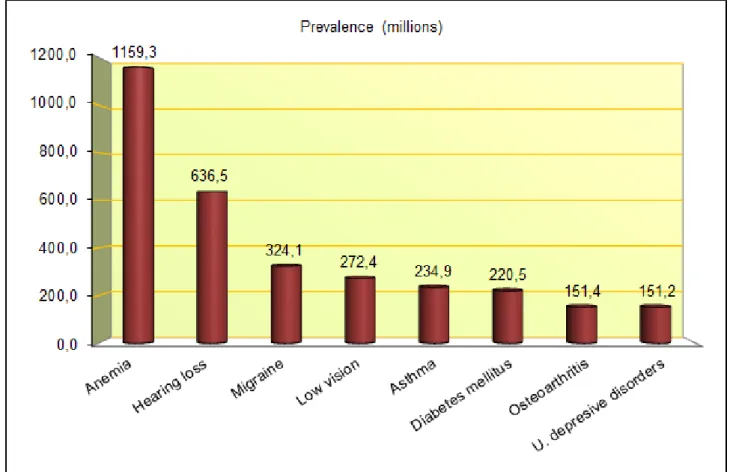
The objective of the first part of the work is to obtain the state of the art of the mHealth apps for several diseases by performing systematic reviews. Four different reviews are performed, but all of them connected by the estimations and documents of the WHO [23]. The first review [28-29][A1.1-A1.2] studies the existing applications for mobile devices exclusively dedicated to the eight most prevalent health conditions by the last update of the document Global Burden of Disease of the WHO [23]. These conditions are Iron-Deficiency Anaemia (IDA), hearing loss, migraine, low vision, asthma, diabetes mellitus, osteoarthritis (OA), and unipolar depressive disorders.
Borja Martínez Pérez
8
Since it was seen that CVDs and especially heart diseases are the deadliest and that also cause many disabilities, the third state of the art review [31][A1.4] is focused on these heart diseases, studying the literature on mobile systems and applications available, as well as the apps related to cardiology from the leading app stores, Google Play and Apple App Store. The last review [32][A1.5] focuses on the mobile clinical decision support systems and applications in order to know the state of the art of these systems, whose function is to link health observations with knowledge in order to support the decisions by health professionals for improved health care. The methods used for all these systematic reviews are the same: two reviews are done in each one, a literature review in academic databases and systems (IEEE Xplore, Scopus, PubMed, Web of Knowledge) and a review in the most important commercial stores (mainly in Google play and App Store).
Once known the state of the art of the mobile apps for the deadliest and the most prevalent diseases, with a thorough study in apps related to cardiology and heart diseases, and the decision support apps, a whole knowledge and classification of the currently available heart related apps are obtained. As a result, some types of apps are missing, such as apps for the self-management of heart conditions by the own patients. Hence, the next section of this work is to design and develop an app that fills this gap found in the market and performs the function mentioned. This app is named Heartkeeper (previously named Cardiomanager, as it is stated in some studies) and is designed for Android. Additionally, during the development of Heartkeeper [33][A1.6], different researches in mobile health with relation to this development are performed.
A tool for measuring the users’ Quality of Experience (QoE) of mHealth applications is created in order to improve the quality of the existing apps and the ones to be released [34][A1.7]. This tool uses the Likert scale from 1 to 5 and it is applied to Heartkeeper (once finished) in order to assess its QoE obtained from its own users. Another tool for measuring the compliance of Heartkeeper with Android guidelines created by Cruz Zapata et al. (2014) is also applied to the app [35]. With the application of these two tools, Heartkeeper is tested and the results are presented in other study [A1.8].
Since clinical data from the patients is very sensitive, it is important to use mechanisms and techniques to assure the privacy and security of this information. Hence, a study of these topics in mobile health applications was performed when doubts related to security and privacy arose during the development of Heartkeeper [36][A1.9]. It consists of three parts: a study of the existing laws regulating these aspects in two of the most developed zones: European Union (EU) and the United States of America (USA), a quick review of the academic literature related to this topic, and a proposal of some recommendations for developers in order to create mobile health applications that satisfy the current security and privacy legislation.
2. Methods
9
2. Methods
The methodology used in this work is different for each type of study performed. However, the methods used for any of the 4 reviews done [28-32][A1.1-A1.5] are practically the same with some variances. Generally, these methods include a deep literature review and a commercial apps review in the different app stores.
The methods used in the literature review were the following:
A search of published papers is developed in several academic systems and databases. These systems are IEEE Xplore, Scopus, Web of Science (previously known as Web of Knowledge) and PubMed. In the first review, ScienceDirect is also used.
The search words are completely related to the topic to study and are defined previously, but if the numbers of results obtained is too low, another combination of words are used until obtaining a significant number of results. These search strings are used only for metadata.
The results are limited to a determined period, normally the last 10 years. In the last review this period is for 7 years.
Specific eligibility criteria are followed. Common requisites were the following: the papers should be written in English, should be related to the topic to study and must include at least a relevant application or system related to the topic searched.
For applying the criteria chosen, the title and the abstract of each paper is read. If relevant, it is included in the study; if repeated, it is dismissed; if there are doubts, the whole paper is read in order to include it or not in the study.
The methods used in the commercial reviews are similar to the ones for the literature reviews: The review is done in the most important app stores of mobile devices considering the
market share of their operating systems. For the initial review Google Play, App Store, BlackBerry World, Windows Phone Apps+Games Store and Nokia’s Ovi Store are considered. For the second review Ovi Store is not used and for the remaining two only Google Play and App Store are considered.
The search words are normally the same of the literature review.
The search in commercial stores is not limited by a period, so all the apps returned are considered.
Similarly to the literature review, eligibility criteria are followed. The apps should be in English or in the native language of the authors (Spanish), designed for human health, not animal health, and focused on the disease or type of app searched. Those apps included in the categories of entertainment, games or music are dismissed. In addition to these common requisites, other are used depending on the review done.
For including or not the app in the study, its title and its description in the store are read. If it is irrelevant for the study, or do not fulfil the established criteria it is dismissed.
Borja Martínez Pérez
10
papers and apps included in the study and the classification or selection is done together with common agreement.
For the development of the tools for measuring the QoE of mHealth apps [34][A1.7], it is decided to use the metric Mean Opinion Score (MOS) as a subjective measure that quantifies the perceptual effect of different forms of degradation of the service from the point of view of the end-users [38]. The features measured by the tools are: content quality, security, use, availability, performance, appearance, learning curve and accuracy of the apps. These tools are developed with the collaboration of psychologists. For evaluating them, a sample of representative commercial apps from Google Play is chosen, since Google Play it the most used store [13], as mentioned. To conduct the evaluation a total of 28 physicians and 112 patients collaborate filling in the tools delivered. The results of these evaluations are introduced in the program IBM SPSS Statistics [39] in order to obtain statistics from the results.
2. Methods
11 The methods used for obtaining the recommendations for developers in privacy and security [36][A1.9] are the following. Firstly, the security and privacy laws in mHealth in EU and USA are identified and carefully read in order to obtain the main points and acknowledge common aspects as well as main differences. Then a literature review of privacy and security aspects in apps is performed, including all the papers related to any mechanism or technique for ensuring privacy and/or security. The requisites and the methodology for this search are the same as the previous literature reviews. Finally, the results obtained in the previous parts of this research are used to create privacy and security recommendations for mHealth app developers.
For the design and implementation of Heartkeeper [33][A1.6], the methods used are the following. Based on the results obtained from the review of cardiology apps, it is decided to create an application for the self-management of heart diseases and conditions. The main reason of doing this is because only one app for this heart management is found in Google Play and the App Store. Additionally, the most common diseases are included in Heartkeeper: ischemic heart disease, valvular heart disease, hypertension, and auricular fibrillation. Other aspects that can influence the hearth health are also incorporated: the relations between heart and pregnancy, physical activity and diabetes. Heartkeeper was designed with three main sections:
An informative section with medical information that will help the patients to understand their disease, its symptoms and its treatment; and a patient guide in order to inform the users about best practices, prohibitions and life style they should adopt in order to improve their condition.
A section to record the user’s activities (good and bad for their conditions) and health measurements in order to act in consequence with them. Examples of these activities are rehabilitation, physical activity or excesses (in alcohol or food intakes, for example), whereas typical measurements are blood pressure, glucose or cholesterol. A section for registering the users’ medications and the hours that they should have
them, offering the possibility to establish alarms to warn them. These intakes should be registered in order to create a daily record stored in the calendar.
For the implementation of Heartkeeper it is decided to develop it for Android, from version Android 2.3 (API 9), since it is the most extended mobile operating system [13], and the tool used for this is the Android Software Development Kit (SDK), which includes the Eclipse Integrated Development Environment (IDE) with built-in Android Development Tools (ADT). The lessons learned in the privacy and security research are applied to Heartkeeper. Hence, some features are included: a disclaimer with information about the app and the treatment of data is shown at first launch; the data is stored in the device rather than in a server or in the cloud in order to avoid external attacks; the most sensitive data are encrypted by a password-based algorithm that uses 256-bit Secure Hash Algorithm (SHA) techniques with random data input that adds more security in order to make those data inaccessible by intruders.
Borja Martínez Pérez
12
Figure 4. Framework of Heartkeeper (Source: [33][A1.6])
The validation of Heartkeeper is done by several methods. In an exhaustive testing phase all the operations permitted by the app are performed systematically in several devices with different screens (3.5, 5, 7 and 10.1 inches) in order to find errors and bugs and assure the correct behaviour of the app. The response times of the most time-consuming operations of Heartkeeper are also measured in the mentioned devices to check the speed of the app. For measuring the compliance with Android guidelines [A1.8] a tool created by Cruz Zapata et al. (2014) [35] is used, a questionnaire shown in Table 1, which is based on the layers of web design style, behaviour and structure [40].
2. Methods
13
Table 1. Questionnaire for measuring the compliance with recommendations by Google Q1. Style
Q1. 1. Is the writing style simple and informal and is the second person used to talk to the user?
Q1. 2. Are pictures used to explain ideas?
Q1. 3. Are pre-defined icons used for common actions?
Q1. 4. Does the app adapt to both horizontal and vertical orientations? Q2. Behaviour
Q2. 1. Are the user preferences learned over time?
Q2. 2. Do the elements react to the user’s gestures by changing color or illumination? Q2. 3. Are there confirming messages showing warning information related to actions
that the user needs to consider?
Q2. 4. Are there acknowledging messages to let users know that the action they have invoked has been completed?
Q2. 5. Do long tasks show non-stationary activity indicators? Q3. Structure
Q3. 1. Is the app loaded immediately without any splash screen or startup experience? Q3. 2. Is the login delayed to allow the user to use a particular functionality first? Q3. 3. Are suggested structure patterns used: action/tool bar, tab bar, spinner or
navigation drawer?
Q3. 4. Is the navigation consistent when moving between hierarchical screens?
The QoE of the users of Heartkeeper is also obtained using the survey created previously. From this tool, only two questions are not used since they were not relevant for Heartkeeper: the one related to the regular updates of the app (not included since no update has been done until obtaining the QoE), and the one related to the precision of the calculations done (not used since Heartkeeper does not perform any calculation). For obtaining the feedback of the users, the survey is accessible in a Google form [41] through a button included in the app, so every user could access it. The period for collecting responses was from October 2014 to February 2015, both included.
For the ex-ante economic impact assessment of Heartkeeper [37][A1.10], a population sample similar to the selected by Naveiro-Rilo et al. (2012) is used [42]. This sample consists of patients with documented chronic HF, seen through hospital discharge report done by a specialist or by the family doctor, and based on Framingham criteria diagnosis and additional examinations such as chest radiography, electrocardiogram and echocardiography. This sample belongs to the area of Valladolid, which has a population of more than 200,000 individuals over 39 years.
An anonymous census is elaborated with 2000 patients. The sample size is considered for estimating dichotomous variables with an overall precision for the health area of 4% and 95% confidence, in proportions of 50%. The result is a size of 630 patients. An economic evaluation type cost-effectiveness [43-44] is made on a structured Markov model, via a static deterministic hypothetical cohort with annual cycles and considering the clinical states shown in Figure 5.
Borja Martínez Pérez
14
National Statistics Institute [47-48]. The results of this analysis are calculated using the incremental cost-effectiveness ratio (ICER), expressed as cost per additional Quality-Adjusted Life Year (QALY) obtained. For the construction and the model analysis the software Tree Age Pro Suite 2009 is used.
3. Results
15
3. Results
In this section the main results of this work are presented, extracted from each study performed.
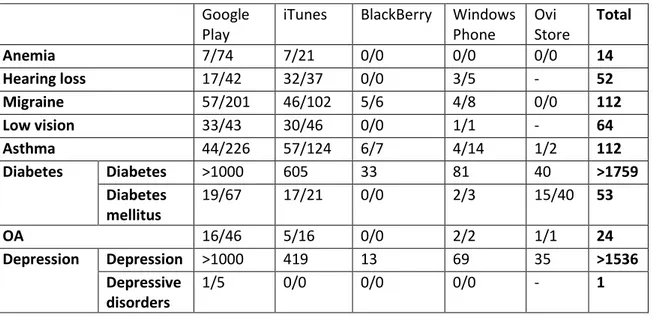
Firstly, the results obtained from the literature and the commercial review of the systems and applications for the most prevalent conditions [28-29][A1.1-A1.2] are presented in Table 2 and 3 respectively. The last column of both tables indicates the addition of all the matches obtained in all the systems for each disease. Table 3 indicates the number of relevant apps out of the total number of apps returned in each store. Besides, the results of diabetes and depression were divided into results for diabetes mellitus and diabetes in the first case, and depression and depressive disorders in the second.
Table 2. Results of the literature review of the applications for the most prevalent conditions
IEEE Scopus ScienceDirect WoK PubMed Total
Anaemia 2 3 0 1 1 5
Hearing loss 4 8 0 5 2 9
Migraine 2 2 0 1 1 3
Low vision 0 7 1 3 1 9
Asthma 8 29 1 25 16 36
Diabetes mellitus
16 112 5 79 53 140
OA 0 6 1 5 3 6
Depression 6 22 5 18 13 32
Table 3. Results of the commercial review of the apps for the most prevalent conditions Google
Play
iTunes BlackBerry Windows Phone
Ovi Store
Total
Anemia 7/74 7/21 0/0 0/0 0/0 14
Hearing loss 17/42 32/37 0/0 3/5 - 52
Migraine 57/201 46/102 5/6 4/8 0/0 112
Low vision 33/43 30/46 0/0 1/1 - 64
Asthma 44/226 57/124 6/7 4/14 1/2 112
Diabetes Diabetes >1000 605 33 81 40 >1759
Diabetes mellitus
19/67 17/21 0/0 2/3 15/40 53
OA 16/46 5/16 0/0 2/2 1/1 24
Depression Depression >1000 419 13 69 35 >1536
Depressive disorders
Borja Martínez Pérez
16
Similarly, the outcomes from the literature and commercial review of the applications for the deadliest diseases [30][A1.3] are shown in Tables 4 and 5 respectively. These tables are similar to the Tables 2 and 3. The last row of Table 5 shows the total number of apps returned in each store.
Figure 6 shows three graphs, each one for a different region (low-income, middle-income and high-income region), indicating the percentage of the number of apps found in the stores for each of the top 6 causes of death in each region, excluding the rest.
Table 4. Results of the literature review of the applications for the deadliest diseases IEEE Scopus Wok PubMed Total
LRI 5 11 5 2 12
Diarrhoeal diseases 0 2 0 0 2
HIV/AIDS 3 15 6 4 18
IHD 24 31 27 8 49
Malaria 1 4 2 2 4
Stroke and other cerebrovascular diseases 5 16 10 4 19
COPD 3 8 6 1 10
Trachea, bronchus, lung cancer 1 2 1 1 2
Alzheimer and other dementias 8 22 12 4 24
Table 5. Results of the commercial review of the apps for the deadliest diseases Google play iTunes BlackBerry
World
Windows Phone Store
Total
LRI 5/57 1/17 0/0 0/0 6
Diarrhoeal diseases 12/88 8/12 0/0 0/5 20
HIV/AIDS 54/238 56/121 7/8 7/19 124
IHD 60/249 44/79 3/4 4/21 111
Malaria 12/51 7/25 1/2 2/8 22
Stroke and other
cerebrovascular diseases
27/>1000 45/530 4/46 3/105 79
0/0 0/2 0/0 0/0 0
COPD 20/50 17/37 0/0 1/3 38
Trachea, bronchus, lung cancer
0/0 0/1 0/0 0/0 0
0/1 0/0 0/0 0/0 0
14/88 14/54 1/3 0/2 29
Alzheimer and other dementias
38/175 25/96 1/2 6/14 70
32/185 23/70 0/0 3/10 58
3. Results
17
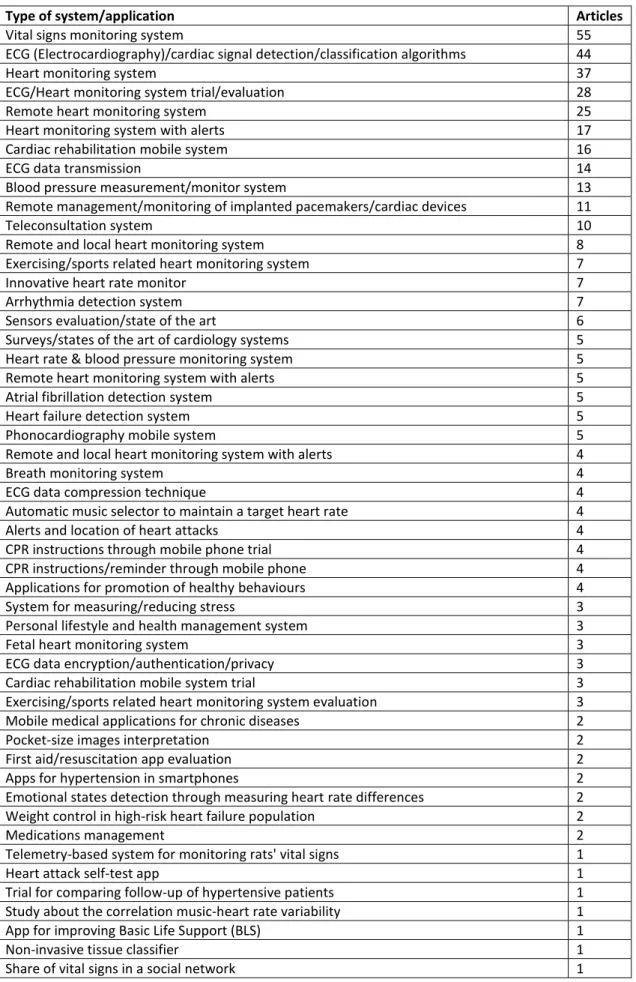
Figure 6. Percentage of apps (%) related to the top 6 causes of death of each different zone: (a) low-income zone, (b) middle-income zone and (c) high income zone (Source: [30][A1.6]) From the review of mobile applications and systems related to cardiology [31][A1.4], a total of 406 papers and 710 apps are found, 439 available for iOS and 271 for Android. Table 6 shows the classification of the relevant papers by their content, which also shows the number of articles for each category. Similarly, Table 7 and Table 8 shows the classification of the apps found, sorted by their functions.
(a)
(b)
Borja Martínez Pérez
18
Table 6. Classification of the results of the literature review of mobile applications related to cardiology
Type of system/application Articles
Vital signs monitoring system 55
ECG (Electrocardiography)/cardiac signal detection/classification algorithms 44
Heart monitoring system 37
ECG/Heart monitoring system trial/evaluation 28
Remote heart monitoring system 25
Heart monitoring system with alerts 17
Cardiac rehabilitation mobile system 16
ECG data transmission 14
Blood pressure measurement/monitor system 13
Remote management/monitoring of implanted pacemakers/cardiac devices 11
Teleconsultation system 10
Remote and local heart monitoring system 8
Exercising/sports related heart monitoring system 7
Innovative heart rate monitor 7
Arrhythmia detection system 7
Sensors evaluation/state of the art 6
Surveys/states of the art of cardiology systems 5
Heart rate & blood pressure monitoring system 5
Remote heart monitoring system with alerts 5
Atrial fibrillation detection system 5
Heart failure detection system 5
Phonocardiography mobile system 5
Remote and local heart monitoring system with alerts 4
Breath monitoring system 4
ECG data compression technique 4
Automatic music selector to maintain a target heart rate 4
Alerts and location of heart attacks 4
CPR instructions through mobile phone trial 4
CPR instructions/reminder through mobile phone 4
Applications for promotion of healthy behaviours 4
System for measuring/reducing stress 3
Personal lifestyle and health management system 3
Fetal heart monitoring system 3
ECG data encryption/authentication/privacy 3
Cardiac rehabilitation mobile system trial 3
Exercising/sports related heart monitoring system evaluation 3 Mobile medical applications for chronic diseases 2
Pocket-size images interpretation 2
First aid/resuscitation app evaluation 2
Apps for hypertension in smartphones 2
Emotional states detection through measuring heart rate differences 2 Weight control in high-risk heart failure population 2
Medications management 2
Telemetry-based system for monitoring rats' vital signs 1
Heart attack self-test app 1
Trial for comparing follow-up of hypertensive patients 1 Study about the correlation music-heart rate variability 1
App for improving Basic Life Support (BLS) 1
Non-invasive tissue classifier 1
3. Results
19
Table 7. Classification of the apps related to cardiology of the commercial review (part 1)
Type of app Number
Heart Rate Monitor 94
Algorithm/calculator/predictor 85
Informative guide 41
Educational ECG/Interpretation aid of ECG 37
News/journal 34
Blood pressure tracker 30
External devices heart rate monitor 22
CPR (Cardiopulmonary Resuscitation) instructions 21
Educational anatomy 17
Medicine students education 17
Guide/book 17
Health tips 17
Diagnosis & treatment guidelines 14
Echocardiography reference 14
Professionals & students education 14
Medicine exam preparation 13
General education 11
Diagnosis aid 10
Animated guide 9
Heart sounds reference 9
Blood pressure & heart rate monitor 9
Cardiology medical reference 8
Medical images reference 8
Catheter reference 8
Guide of professional commercial devices 7
Stethoscope/educational stethoscope 7
AED (Automated External Defibrillator) location 6
Professionals education 6
Clinical trials 6
ECG cases reference 5
Hypertension reference/guidelines 5
Procedures in emergency cases 5
Patients’ history/ECGs/images 4
Surgeon aid/training 4
Professionals connections, knowledge/cases share 4
Angiography reference/guide 4
Auscultation reference 4
Heart rate monitor for exercising 4
Fetal heart rate monitor/interpretation 4
Heart rate calculator 4
Ultrasound video reference 4
Borja Martínez Pérez
20
Table 8. Classification of the apps related to cardiology of the commercial review (part 2)
Type of app Number
Educational/explanations for patients 3
ECG sending 3
Log procedures 3
Diseases prevention guide 3
Heart rate monitor with external devices for exercising 3
Professionals guidelines 3
Audio reference 2
ECG signal transformer 2
Location of cardiac emergencies 2
Blood pressure measurement with external devices 2
CPR and AED instructions 2
Prescribing drugs 2
AED training 2
Pulse measurement aid 2
Hospitals 2
Instructions/training CPR & AED location 2
Perfusion reference 2
Arrhythmia reference 2
Acute coronary syndrome reference 2
Stent guide/reference 2
Prosthesis guidelines 1
Teleconsultation 1
Upload ECG from a commercial monitor 1
Medications reminder 1
Treatment guide 1
Stand-alone or with external device heart rate monitor 1
Auto-diagnosis 1
Cardiac rehabilitation guide 1
Anesthesia management 1
Social network 1
Atrial fibrillation guidelines 1
AED training with simulation of external device 1
Blood pressure prevention & treatment exercises 1
Condition management 1
Congenital heart defects reference 1
Clinical examination guide 1
Blood pressure measurement 1
Driving guidelines for cardiac patients 1
3. Results
21
Table 9. Classification of apps in the commercial review sorted by medical field
Medical field Number
General medicine 47
Drugs information 16
Emergencies 12
Paediatrics 11
Cardiology 7
Oncology 7
Psychiatry/Mental health 7
HIV 6
Infectious diseases 6
Lab values 6
Neurology 6
Haematology 5
Cardiovascular 4
Dermatology/Wounds 4
Gynaecology 4
Radiation therapy/Radiology 4
Gastroenterology 3
Anaesthesia 3
Hepatitis 3
Nutrition 3
Orthopaedics 3
Respiratory system 3
Surgery 3
Urology 3
Diabetes 2
Geriatrics 2
Imaging 2
Albuminuria 1
Day time somnolence 1
Dysanatremia 1
Endocrinology 1
Hospital 1
Insomnia 1
Nephrology 1
News/Research 1
Ophthalmology 1
Sclerosis 1
Borja Martínez Pérez
22
Table 10. Survey to measure the QoE of finished mHealth apps
CONTENT QUALITY
1 Does it make the function that you expected? 1 2 3 4 5
2 Can you do the same without the application? 1 2 3 4 5
3 Does the application receive updates regularly? 1 2 3 4 5
4 Do you think the data are reliable? 1 2 3 4 5
5 Can you identify with this application health problems? 1 2 3 4 5 6 Do you have possibility to send information about your status to your doctor? 1 2 3 4 5 7 Do you have better quality of life by using this application? 1 2 3 4 5
SECURITY
8 Do you think that this application has appropriate security methods to protect data that are introduced?
1 2 3 4 5 9 Do you think that the data obtained with this application are sufficiently protected? 1 2 3 4 5
EASE OF USE
10 Do you find what you need? 1 2 3 4 5
11 Do you think that the traditional method used so far is more difficult or does not exist? 1 2 3 4 5 12 Is this application useful for monitoring the disease? 1 2 3 4 5
AVAILABILITY
13 Do you have the guarantee of access to the application and its data at any time? 1 2 3 4 5
PERFORMANCE
14 Do you think you might have a more optimized performance? 1 2 3 4 5 15 Do you find some kind of error or problem while using the application? 1 2 3 4 5
APPEARANCE
16 Do you find adequate the appearance of this application? 1 2 3 4 5 17 Would you change or add something from this application? 1 2 3 4 5
LEARNING
18 Do you think that the time for learning the use of the application is appropriate? 1 2 3 4 5
PRECISION
19 Do you think the calculations done by this application are correct? 1 2 3 4 5
Table 11. Survey to measure the QoE of not finished mHealth applications (research)
CONTENT QUALITY
1 Would you use the app if developed? 1 2 3 4 5
2 Do you think that in the future it can be useful to society? 1 2 3 4 5 3 Do you think it will improve the quality of life of the users? 1 2 3 4 5 4 Will this future application help in treating diseases? 1 2 3 4 5
3. Results
23
Table 12. Laws requisites regarding privacy and security in mHealth applications
Cover data The data that must be covered are that information that can be used to identify a person. It includes ID numbers, physical, physiological, mental, economic, genetic, social, medical, cultural factors regarding to the past, present or future of the patient.
Information requirements
Before providing their Personal Health Information (PHI), users must be informed about the identity of the person/entity that will use the PHI, the purposes of the collecting, the entity’s privacy practices, whether the provision is compulsory or voluntary, the rights they have to access/modify the data and a contact method for more information or complaints. This information must be given directly to a parent or legal tutor in case of children under 13.
Consent requirements
The user/patient’s consent to the data collecting must be obtained by the entity, when this collecting can not be justified by a statutory ground. The entity is enhanced to obtain this consent written. In the case of children under 13, they can not consent their data collection, being their parents or legal tutors the ones to do this.
Data retention
Generally, PHI should be kept only the necessary time for the purpose that was collected and must be erased once the purpose is reached. Entities must also include a clear data retention policy as part of their security procedures.
Security The entities are required to implement and maintain appropriate technical, administrative, physical and organizational security measures to protect PHI from accidental or unlawful loss and unauthorized access or disclosure. Since health data is very sensitive, the security must be higher.
Breach notification obligations
In case of a personal data breach, the entities must notify it to the competent authority as well as the user whose data has been compromised without unreasonable delay, especially when the breach may have adversely affected to the user. In cases of massive breaches, the media should be also notified.
Data transfers
Entities need the users’ consent to transfer their personal data to another entity or a third party, even when this transfer is necessary to complete one of the purposes of the data collecting, unless the transfer is allowed by law.
Borja Martínez Pérez
24
Table 13. Security and privacy recommendations for mHealth applications
Property Minimum requirements Recommended requirements
Access control The access control to the PHI must be patient-centric. The users should be able to allow or forbid access to their information at any moment.
It is preferable to create a role-based access, giving reading possibilities to some roles and adding limitations to other ones.
Authentication The authentication must be done with a unique ID and a password only known by the user. This ID can be linked to a Public Key Infrastructure (PKI), preferable Rivest, Shamir and Adleman (RSA) system and/or a symmetric key used for encryption.
The password used must be complex, with at least seven characters and a combination of letters and numbers, including one capitalized letter and a special character. It is better to employ multifactor authentication to complement the ID/password identification when possible: using an item the user possesses (smart key) or a physical feature such as fingerprint.
Security and confidentiality
Use Advanced Encryption Standard (AES) to encrypt PHI. The cryptographic key used must have at least 128 bits. This method offers better encryption times than other techniques.
It is better to improve the security using a key of 192 or 256 bits.
Integrity At least, a symmetric key-based authentication code must be used, for example AES.
A public key-based digital signature is preferred. Under no circumstances watermarking methods must be used with medical images since they can deteriorate the quality of them and even provoke bad diagnoses.
Inform patients Before the collection and use of PHI, the app should present a privacy police informing the patients about the identity of the entity that will use the data, the purpose of the collection, the privacy methods used, the rights they have and a contact method. If the users accept this police they give their consent to the data collection. It must include a section for children under 13, requiring the consent of a legal tutor.
The policy should be easy to understand, concise and clear, since users are not fond of reading large legal documents in an app. It is highly recommended to leave the policy accessible for the user at any moment in the app.
Data transfer Use Transport Layer Security (TLS) with 128-bit encryption methods. It is also possible to use Virtual Private Networks (VPNs).
It is preferable to use TLS with 256-bit encryption methods. It is also very recommendable to show an icon in the app notifying the transfer of data.
Data retention The retention policy should be included in the privacy policy to inform the patients. The data should be kept only the necessary time for the initial purpose.
When the purpose is achieved, the PHI must be erased and the user should be notified. The entity should provide a mechanism to let the user check that the data has been deleted.
BANs
communication
At least cryptographic methods must be used in securing the BSNs for authentication and key distribution. The mobile device (smartphone) can be identified and authenticated by its International Mobile Equipment Identity (IMEI) or its Subscriber Identity Module (SIM) card number.
Biometric patterns of the user can be utilized to encrypt and decrypt the symmetric key, which can facilitate the connection of the BSNs to the mobile device.
Breach notification
In case of a PHI breach, the competent authority as well as the user affected must be notified as soon as possible (1-3 days). The entity must help the user in order to relieve the consequences the breach may have caused.
3. Results
25 (a) Main page of Heartkeeper (b) Creation of a medication register
(c) Calendar activities (d) Graph with the registers of pulse
Borja Martínez Pérez
26
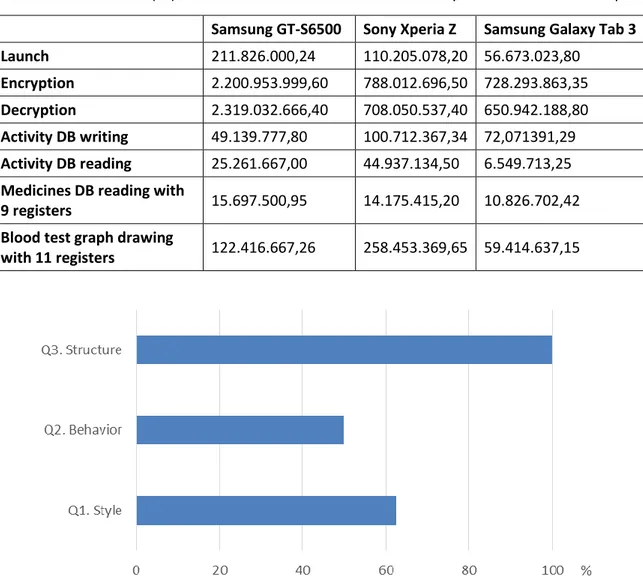
As mentioned in the Methods section, Heartkeeper is tested in several ways. Hence, Table 14 shows the mean value of 10 measurements of the response times of the app in nanoseconds when performing specific actions.
The application of the tool for measuring the compliance of Heartkeeper to Android guidelines [A1.8] for each feature provides some results, presented in Figure 8, whereas the score averages obtained for each block with the tool for measuring the Heartkeeper users’ QoE are shown in Figure 9.
For calculating the economic impact of the introduction of Heartkeeper in the region of Castile and Leon [37][A1.10] some previous calculations are needed. The characterization of the cost of a heart failure patient is made considering the report by the Ministry of Health Care, Social Policy and Equality [50]. Besides, costs are adjusted to 2011. The breakdown of costs associated to a heart failure patient is shown in Table 15. Considering this, the cost analysis of the two scenarios (without the introduction of Heartkeeper and with it) is shown in Table 16.
Table 14. Mean times (ns) of a total of 10 measurements of some operations with Heartkeeper
Samsung GT-S6500 Sony Xperia Z Samsung Galaxy Tab 3
Launch 211.826.000,24 110.205.078,20 56.673.023,80
Encryption 2.200.953.999,60 788.012.696,50 728.293.863,35
Decryption 2.319.032.666,40 708.050.537,40 650.942.188,80
Activity DB writing 49.139.777,80 100.712.367,34 72,071391,29
Activity DB reading 25.261.667,00 44.937.134,50 6.549.713,25
Medicines DB reading with
9 registers 15.697.500,95 14.175.415,20 10.826.702,42
Blood test graph drawing
with 11 registers 122.416.667,26 258.453.369,65 59.414.637,15
3. Results
27
Figure 9. Score average obtained per block with the tool for measuring the Heartkeeper users’ QoE (Source: [A1.8])
Table 15. Analysis of the cost of health states of the established Markov model
States Unitary cost
Treatment -
Hospitalization (including health stabilization) 13.889,79€
Outpatient care 1.413€
Re-entry 12.434,4€
Monitoring 577,92
Table 16. Ex-ante global impact analysis of the introduction of Heartkeeper for the management of HF
States Without Heartkeeper With Heartkeeper
Hospitalizations (including health stabilization)
13.889€ 8.333€
Outpatient care 1.413€ 1.413€
Re-entry 12.434€ 9.256€
Monitoring and treatment 577 0
TOTAL per patient 28.315€ 19.012€
TOTAL sample 17.895.080€ 12.015.584€
ICER - 9.303
5. Discussion and Conclusions
29
4. Discussion and Conclusions
In this section the most relevant conclusions extracted from the different studies of this work will be presented.
Some conclusions can be obtained from the literature and commercial review of the applications for the most prevalent conditions [28-29][A1.1-A1.2] and the leading causes of death [30][A1.3]. First of all, there are many more results returned in the commercial review than in the literature review, which means that the economic motivation is stronger than the research one. Secondly, comparing the number of apps available on each store, it is obvious that Android and iOS are the preferred operating systems by app developers. Windows Phone is the third in number of apps whereas Ovi Store (currently disappeared) and Blackberry World have a very small number of apps related to these conditions and diseases.
Focusing on the most prevalent conditions, a huge difference can be observed in the number of mobile applications depending on the considered condition. Hence, some conditions have more than 1000 apps, such as diabetes and depression while other varies in a range between 14 and 112 apps. Surprisingly, the most prevalent condition (IDA) is the second with less research and the first with less commercial apps. On the other hand, two of the less prevalent, such as diabetes and depression, are the most researched and commercially utilized. This can be explained by two reasons: the first is that diabetes and depression are common conditions of developed countries whereas IDA is common in underdeveloped zones; the second is that there is a big social conscience of diabetes and depression, much more than the social conscience of IDA. Following these findings, the four most prevalent conditions have less work than the remaining four, apart from OA.
Focusing on the deadliest diseases, there are two differentiated groups. On one hand, there are 4 diseases with the majority of work done, which are Alzheimer and other dementias, heart diseases, HIV/AIDS, and stroke and other cerebrovascular diseases. On the other hand, the rest of the diseases have much less work.
Comparing the number of work done for disease with the position in cause of death for the different zones, the following conclusions are obtained. The leading cause in high-income zones, heart diseases, is one of the most researched, which is logical since developers normally focus on typical diseases of developed zones [51]. However, the first and second causes of death in low-income countries, LRI and diarrheal diseases, have very little research. This is because they are not common (diarrheal diseases) in developed countries or there is no use of an app for them (LRI), so that their research is not worthwhile, in addition to the fact that in low-income zones (where diarrheal diseases and LRI are common) the technology for mobile devices is not widespread [52].
In contrast, HIV/AIDS is the opposing case. It is in the top 6 of low- and middle-income zones but not among the first causes of death in high-income countries, but it is the second disease with more work done. The reason is similar to what happened with diabetes and depression, HIV/AIDS is very popular and have a big social conscience not only in underdeveloped zones but also in in richer countries [53], so it has the attention of developers and the general population.
Borja Martínez Pérez
30
clear since cancer in general is a common matter with an enormous social conscience, specially these cancers since they are consequences of smoking [54]. Hence, developers have the opportunity to fill this empty space by creating apps for these types of cancer.
From the results obtained in the review of mobile applications related to cardiology [31][A1.4], several findings can be extracted. Focusing on the literature review, there are 198 papers related to heart monitoring systems including vital signs, which means almost half of all the papers found. This is a clear indicator that the most researched area is the linked to these heart monitoring systems.
From the commercial review, it can be seen a big distance between the first two positions in the classification (heart rate monitors and calculators) and the rest of the apps, when considering the number for each category. Contrasting with these types, there are others categories with very few apps, such as guides for cardiac rehabilitation and apps for the self-management of a heart condition of disease. For this reason, it was decided to design and develop a mobile app with this last purpose.
Some interesting findings can be obtained from the results of the review of mobile decision support systems [32][A1.5], especially from the commercial review. The most common field of these applications is general medicine, followed by others such as drugs prescribing, emergency services tasks and paediatrics. Focusing on the specialties, the ones with more apps are cardiology, oncology, psychiatry, neurology and infectious disease (especially HIV). As seen previously, these specialties involve some of the leading causes of death (ischemic heart disease, HIV/AIDS and trachea, bronchus and lung cancers), the most prevalent conditions (unipolar depressive disorders) and the most disabling diseases (Alzheimer, Parkinson). In addition, almost half of these apps are developed for medical specialists.
The QoE tools [34][A1.7] are created in the form of surveys because they are very common, useful and easy to answer. A similar thing occurs with Likert scale, so it is decided to use it as well in the creation of these tools. Besides, the use of Likert scale adds the possibility of introducing the data obtained in statistical programs. Another important aspect taken into account was the length of the surveys, since users can get tired or bored when answering too many questions. Hence, the tool is limited to 19 questions that can be completed in 1-2 minutes. Therefore, the main problem faced is to create a survey that covers every aspect of an app but with a limited length. The QoE tool is tested with a number of different types of mHealth applications and a total of 140 users. Among them, 127 are positive about the tool, so it is confirmed as useful for assessing the QoE of mHealth apps.
From the study of the privacy and security in mHealth apps [36][A1.9], some conclusions can be obtained. First of all, the laws that regulate these aspects were approved a long time ago (1995-1996), before the appearance of the mHealth technology. Therefore, these laws are based in obsolete technology only applicable to the eHealth field, so currently these laws are too open and too old and need to be renewed considering the current technologies and problems.
5. Discussion and Conclusions
31 seen as a complement of standards in security and privacy such as ISO/IEC 27001/2013 [56] about information security management and other related documents [57].
The production of the app Heartkeeper [33][A1.6] was done by performing all the steps needed to create a mobile app with guarantees. Firstly, a market research is performed in order to know the existing types of apps related to cardiology; then Heartkeeper is designed, with its functions and appearance; the implementation phase is next, with special consideration about the security and privacy of the app; finally, Heartkeeper is tested and validated to fix bugs and errors before its release in Google play. In this validation, it is seen that the launch of the app takes about 2 milliseconds in the worst case, which is much less than 2 seconds, as recommended [55]. The encryption/decryption of the user’s personal data is the most time-consuming, about 2.3 seconds in the oldest device used and less than 1 second in newer devices. However, this operation is performed occasionally, so it can be concluded that Heartkeeper provides fast responses.
Heartkeeper can be improved by including the possibility to link external devices such as wearable or smart devices to it by wireless technologies (Bluetooth, NFC), in order to detect and take automatically measurements such as the blood pressure or heart rate, but this idea has not been performed yet since these external sensors are normally expensive and the majority of heart patients do not usually have them, so it was decided to develop a Minimum Viable Product (MVP) ready for its use by patients and leave the addition of this functionality for a later phase, when Heartkeeper is thoroughly evaluated and improved.
The application of the tool for the compliance with Android guidelines [A1.8] to Heartkeeper gives a score of 9, which is included in the High Quality Group, according to Table 17, extracted from [35]. This means that Heartkeeper is an app that obeys the recommendations for Android in many cases. However, the scores obtained for each block indicates that the structure of the app is perfect according to Android guidelines, but the style and behaviour of Heartkeeper need some improvements.
On the other hand, the application of the tool for measuring the users’ QoE to Heartkeeper [A1.8] gives interesting conclusions. All the average scores obtained for each question are good, all over 3, which indicate the satisfactory QoE that Heartkeeper provides. The best valued aspects are its general appearance, its learning curve and the fact that the description in Google play corresponds to the reality. However, some aspects should be improved: a number of users indicated that they can do the functions of Heartkeeper using traditional methods, some sections in the app are difficult to find and its performance can be improved. This information is very valuable and these aspects will be revised in next updates of Heartkeeper.
Table 17. Quality Groups by the score obtained from the tool for measuring the compliance with Android guidelines
Score Quality Group
Borja Martínez Pérez
32
From the ex-ante economic evaluation [37][A1.10] the following conclusions are obtained. A saving for the Public Health Care System of Castile and Leon of approximately 6 million euros would be generated with a total investment of 63,000 €, which corresponds to a saving of 0.31% of the total health expenditure in this region [58]. Therefore, the introduction of Heartkeeper for the control of HF would have an impact not only in better management of the disease but also in generating savings of 33% of the total cost related to HF. This saving had an impact in the Health Care System and in the economy, because there are also gains in efficiency of the system.
As indicated, the main purpose of Heartkeeper is to help heart disease patients with the management of their diseases, which means an improvement in their quality of life. However, not only patients can benefit from it, but also providers and stakeholders. A company that develops health apps can obtain profits in several ways. They can sell their apps in the commercial stores and get paid for each download, but this method is only recommended when an app has been strongly promoted or when it has been adopted by an important institution or collective, such as physicians or nurses, who have enough power to oblige other groups to adopt that app. Either way, a powerful advertising marketing is needed, which can not be affordable by most companies. Other method to obtain profits from the health apps (and all types) is selling them for free but introducing ads in them, which can be specific ads if the target of the people who will use an app is well known [59-60]. The application of this way of commercialization is recommended initially in order to obtain a significant part of the market, and when the app is extended and commonly known, a premium version without advertising can be offered by a reasonable price. Hence, users are able to choose the most suitable version for each one. Of course there are other methods such as offering an app for free but with micropayments in it, or for a short period of time but when this period expires, the user needs to pay in order to continue using the app. However they are typical methods of aps containing video games so they are not recommended for a health app.
![Figure 1. Number of smartphones sold to end users worldwide from 2007 to 2014. Source: [11]](https://thumb-us.123doks.com/thumbv2/123dok_es/5505783.728369/13.892.130.767.773.1120/figure-number-smartphones-sold-end-users-worldwide-source.webp)
![Figure 2. Number of apps available in leading app stores as of July 2014. Source: [12]](https://thumb-us.123doks.com/thumbv2/123dok_es/5505783.728369/14.892.124.770.99.454/figure-number-apps-available-leading-stores-july-source.webp)