The National Academy of Medicine (formerly the Institute of Medicine) was established in 1970 under the charter of the National Academy of Sciences to advise the nation on medical and health matters. Learn more about the National Academies of Sciences, Engineering and Medicine at www.national-academies.org. YA-CHEN TINA SHIH (Co-Chair), Professor of Health Economics, Chief, Cancer Economics and Policy Section, Division of Health Services Research, University of Texas MD Anderson Cancer Center RALPH R.
Chairman of the Department of Radiation and Cellular Oncology, Director of the Ludwig Center for Metastasis Research, University of Chicago. GANZ, Distinguished University Professor, University of California, Los Angeles (UCLA), Fielding School of Public Health, David Geffen School of Medicine at UCLA, Jonsson Comprehensive Cancer Center. YA-CHEN TINA SHIH, Professor of Health Economics, Chief of the Division of Cancer Economics and Policy, Department of Health Services Research, University of Texas MD Anderson Cancer Center.
Department of Radiation Oncology, Director of the Ludwig Center for Metastasis Research, University of Chicago Medical Center GEORGE J. Federal sponsors include the Centers for Disease Control and Prevention and the National Cancer Institute/National Institutes of Health.
WORKSHOP SUMMARY
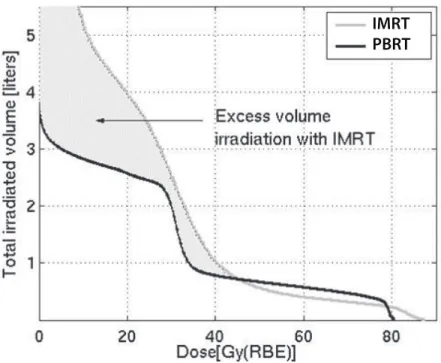
Jason Efstathiou, director of the genitourinary division of the department of radiation oncology at Massachusetts General Hospital, also cited a British study showing that 3D conformal radiation therapy, compared with conventional two-dimensional radiation therapy, significantly reduced the incidence of proctitis in prostate cancer patients. (Dearnaley et al., 1999). SOURCE: Efstathiou presentation, July 21, 2015 (Trofimov et al., 2007) Adapted from International Journal of Radiation Oncology*Biology*Physics. But he noted that these results are disputed by others who argue that the study design was flawed (Bekelman et al., 2013b).
This study found a slight reduction in the number of urogenital complications at 6 months after radiation therapy, but no differences were detected at 12 months after therapy (Yu et al., 2013). Another cost study also suggested that the radiation option was less expensive (Shah et al., 2013). But another study conducted in the same population found that radiosurgery alone may be more expensive due to increased use of further tumor treatments (Lal et al., 2012).
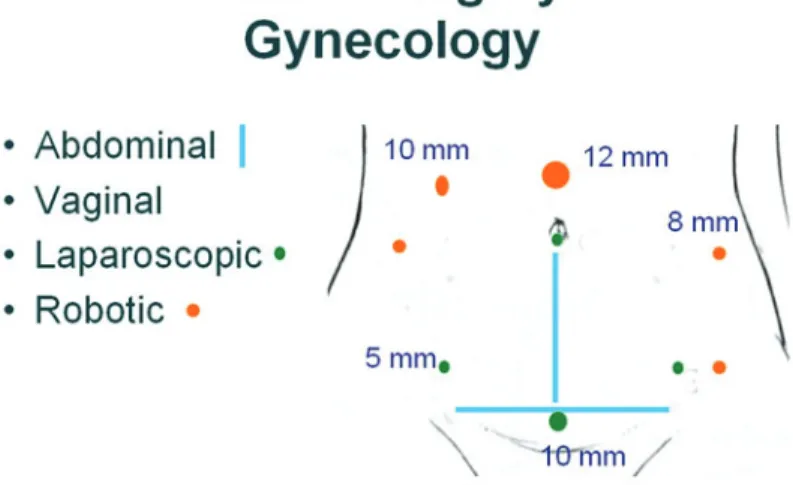
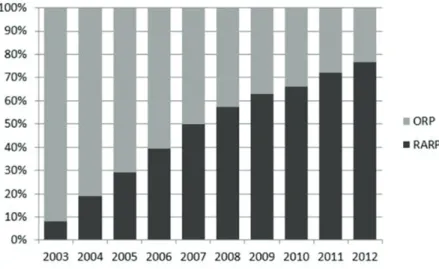
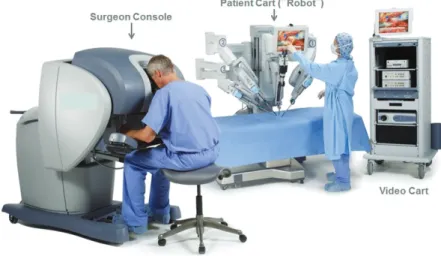
Another study cited by Hu found that the type of surgical system used influenced the types of robotic malfunctions and clinical outcomes (Lucas et al., 2012). Hu reported that his study using Medicare claims found that robotic surgery was associated with more diagnoses of erectile dysfunction and incontinence compared to open surgery (Hu et al., 2009). A more recent Swedish study using highly specific patient-reported outcomes on erectile function found that robotic surgery reduced the incidence of erectile dysfunction compared to open prostatectomy (Haglind et al., 2015).
Another recent study also found that sexual function and urinary function were better in men who had prostatectomies with robotic surgery compared to open surgery, Hu noted (O'Neil et al., 2015).
R02940 Figure 5
The question is whether it delivered on the promise we hoped for,” he said. We are market-based, so we have a boom, then a bust, and then we sort out the right use,” he said. There is certainly a role for marketing, for hospitals and patients as well as for doctors,” he said.
There are many non-medical reasons that are driving technologies like this," he said. Although these recommendations "are toothless because they are not enforced, specialty societies can at least nudge doctors in an ethical direction," he said. reimbursement and the way protons have been thrown in this country has been an economic trap from which we must get out", he said.
But he noted that if precise criteria were used, there would likely be fewer positive coverage determinations due to the need to meet a statistical test “or hard and fast criteria rather than us using our judgment,” he said. We as a country must find a way to make data collection and integration a priority,” he said. We need to be clear when we design and interpret studies what exactly we want to achieve,” he said.
Mohler responded by pointing out that "we are far too obsessed with randomized clinical trials." He noted that such trials for advanced prostate cancer often show that new agents extend survival between 2.4 and 5 months. The international market is not that different from us, but they are slower to adopt,” he said. We have to translate that back to what it means on the ground, in terms of the patient experience, and that can be intangible,” he said.
Ashley noted that the MOC's practice assessment for general surgery is minimal and requires surgeons to participate in a national database "that doesn't really provide surgeon-specific data or really anything about outcomes [ long-term]," he said. Ultimately that should lead to better results, so you don't have to do a thousand surgeries to get where you need to be," he said. It's clear that there's a need for adjustment when you think about the learning curves and patient outcome sacrifices made along those learning curves," he said.
Finding the right balance in credibility "is something we have to think about as a profession," he added. Yet this is the kind of fiction payers live on." He added: “To have policy mechanisms that are more flexible and adaptable.

The Intervenon Ladder
- Eliminate choice 7. Restrict choice
- Guide choice through disincenves
- Guide choice through incenves
- Guide choice through changing the default
But she added that they won't address "cancer exceptionalism" — the idea that every treatment is well-warranted for cancer — which has made it difficult to determine value in oncology care in the past. Shih noted financial incentives that promoted the spread of new technologies in the clinic, including the capital investment providers in these highly expensive technologies. Comparison of high-dose proton radiotherapy and brachytherapy in localized prostate cancer: A case-matched analysis.
Rectal toxicity after proton therapy for prostate cancer: an analysis of the results of prospective studies conducted at the University of Florida Proton Therapy Institute. Comparison of radiation side effects of conformal and conventional radiotherapy in prostate cancer: a randomized trial. Life, liberty and the pursuit of protons: an evidence-based review of the role of particle therapy in the treatment of prostate cancer.
Integrated prostate cancer centers and IMRT overutilization: A close look at fee-for-service medicine in radiation oncology. Patient-reported outcomes after 3-dimensional conformal, intensity-modulated, or proton beam radiotherapy for localized prostate cancer. Use of advanced treatment technologies in men at low risk of dying from prostate cancer.
Potential reduction in the incidence of radiation-induced second cancers using proton beams in the treatment of pediatric tumors. Cost-effectiveness of evidence-based treatment guidelines for the treatment of non-small cell lung cancer in the community setting. Patterns of use and short-term complications of breast brachytherapy in the national Medicare population from 2008-2009.
Intensity modulated radiotherapy, proton therapy or conformal radiotherapy and morbidity and disease control in localized prostate cancer. Lobectomy, sublobar resection, and stereotactic ablative radiotherapy for early-stage non-small-cell lung cancer in the elderly. Assessing the impact of a cooperative group trial on breast cancer care in the Medicare population.