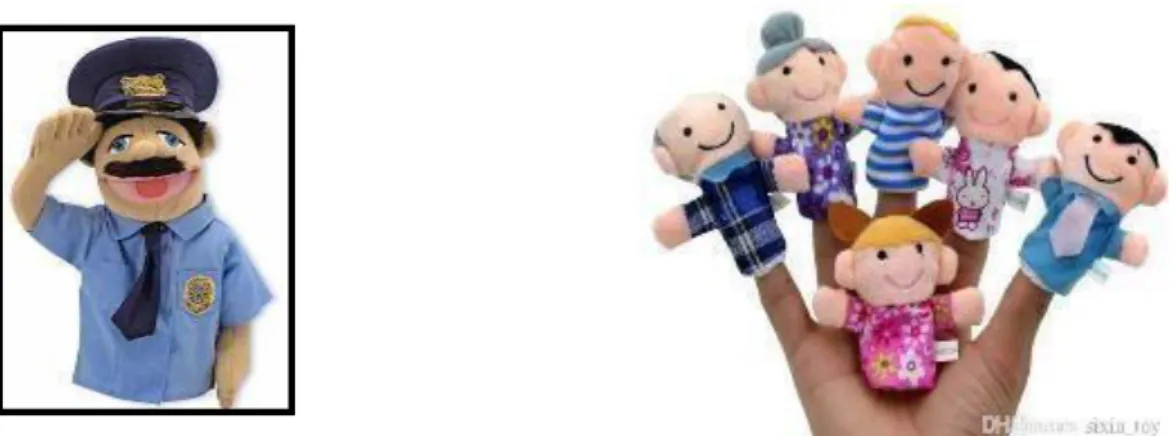
On the other hand, Escalante (2015), in his master's thesis presented at the Benemerita universidad Autónoma de Puebla, Indonesia, wanted to analyze and describe the most common methods used by BUAP CELE teachers to promote English as a foreign language (EFL) in the classroom. The aim of the research was to determine the student's success in speaking skills using a puppet show.
Theoretical Model
Social constructivism theory
For this reason, the second language teacher must know the current level of the student and contribute slightly above his level to develop his second language. It is important for teachers and students to foster trust and openness in the classroom so that all students are enthusiastic listeners.
Puppets
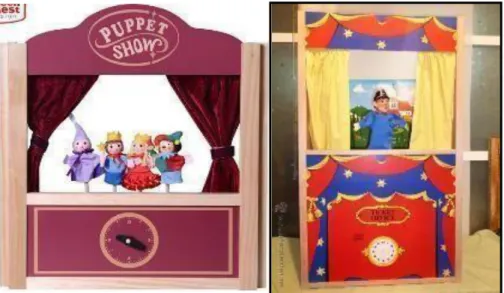
16 Hand puppet was chosen because the students can be motivated to be active in the class. In the school environment, communication takes place between teachers and students and between children and teachers.
Oral expression skill definition
Organized production focuses on the use of correct, often specific, form that is created in class. Effective teachers teach students speaking strategies (using minimal responses, recognizing hyphens, and using language to speak the language) that they can use to help them expand their knowledge and confidence in the language.
Importance of pair work and group work
Through well-planned communication activities such as role plays and discussions, you can encourage students to experiment and innovate with the language and create a supportive atmosphere where they can make mistakes without fear. For students to be successful, they must get used to using the English language without constant support from the teacher. Individual sounds – consonants, vowels, diphthongs as in day sounds and triads as here.
For example, connected speech produces contractions such as no, connecting sounds such as /j/ in "I am", lost sounds such as /t/ in "I don't know", and modified sounds such as /t/ in 'beli bags' changes to /p/. Speakers must be able to understand and follow the grammar of the language at the word, sentence and text level. The speaker must be able to understand and use the language apparatus as a means of communication.
Verbal tools such as volume changes, e.g. whispers and shouts and noises like ugh! and task!. The speaker must be able to understand and apply the social meaning of the speech. Principles of conversation such as exchange and exchange – these can be different in different cultures and societies.
Correcting learners’ mistakes
Write the incorrect sentences used in the activity on the board and ask the students to correct them. Invent and write a story containing some mistakes that the teacher heard during the activity and that the students try to identify and correct. Write two lists (A) and (B), each containing ten active sentences, some of which are true and some of which are false.
In accuracy-based activities, teachers are encouraged to correct students' errors as much as possible. By practicing accuracy, students will notice phonological errors immediately because the teacher is not waiting for the task to be completed. This approach is appropriate if it focuses mainly on grammar and allows students to notice and correct their mistakes and avoid repeating them.
MARCO CONCEPTUAL
Teachers who focus on accuracy can help students produce grammatically correct written and spoken English. Fluency: features that give speech a natural quality, including local use of pace, rhythm, pitch, emphasis, speaking rate, and use of pauses. Grammar: Describe the structure of language and how language units, such as words and phrases, are included in the sentences of the language.
Instrument: This is a collection of tools and applications designed so that teachers can obtain accurate information about the quality of their students' learning. It is also used to promote dialogue between students and teachers about the learning process and how it can be improved. Methodology: This is the study of the practices and processes used in education and the principles and beliefs that support them.
A constructivist view of teaching suggests that teachers make their classroom meaningful and take on the role of reflective practitioners. Strategy: The actions used in learning, thinking, etc. are used as a means to an end. In language learning, learning strategies and communication strategies are conscious or unconscious processes that language learners use to learn and use the language.
Methodology
- Population
- Sampling
- Process
It will consist of 32 students (one section) of the first grade of "La Florida" school students. The bibliographic method was used to collect scientific information on the use of puppets to improve oral expression. The first step is a collection of files related to the use of puppets to enhance oral manifestations.
The next step is to establish an oral production activity that explores and explores the evolutionary level of oral expressive skills. It includes dialogues for group work and a rubric used to evaluate students' oral performance. The next step is to implement 16 study plans, where the researcher designs activities based on dolls (see study plan).
The researchers made it based on mannequins intended for high school students to improve oral expression during the months of August 9, 10, 11 and 12. Five months after using the curriculum, verbal production feedback was used to check if the use of manikins was a good way to achieve the aims of this study.
Data collection materials, methods, techniques and instruments
- Investigation methodology
- Deductive method
- Hypothetical-deductive method
- Empirical method
- Pre-test
- Post-test
- Rubric
- Dramatization
According to Behar (2008), the scientific method is a strict procedure, of a logical order, the purpose of which is to demonstrate the value of the truth of certain propositions. The word method comes from the roots: meth, meaning purpose and odos, meaning way. Through this method, the principles that have been discovered are applied to specific cases from the linking of trials.
This method consists in knowing how the truth or falsity of the basic statement tells about the truth or falsity of the hypothesis we are testing. According to Cerezal & Fiallo (2002), empirical methods allow the researcher to collect real data about the behavior of events, phenomena, objects and processes of nature and society. It is a complementary empirical method of research, it is a direct, attentive, rational, planned perception of the phenomena related to the objectives of the research, in their natural and usual conditions, with a view to providing an explanation to find for the phenomenon being studied. .
Usually pre-tests are taken to find out how much they already know or can do before they start learning or doing something. Is an evaluation tool or set of guidelines used to promote the consistent application of learning expectations, learning objectives or learning standards in the classroom, or to measure their achievement against a consistent set of criteria.
RESULTS
- Analysis of the oral production skill before the proposal
- PROPOSAL Presentation
- Analysis of the oral production skill after the proposal
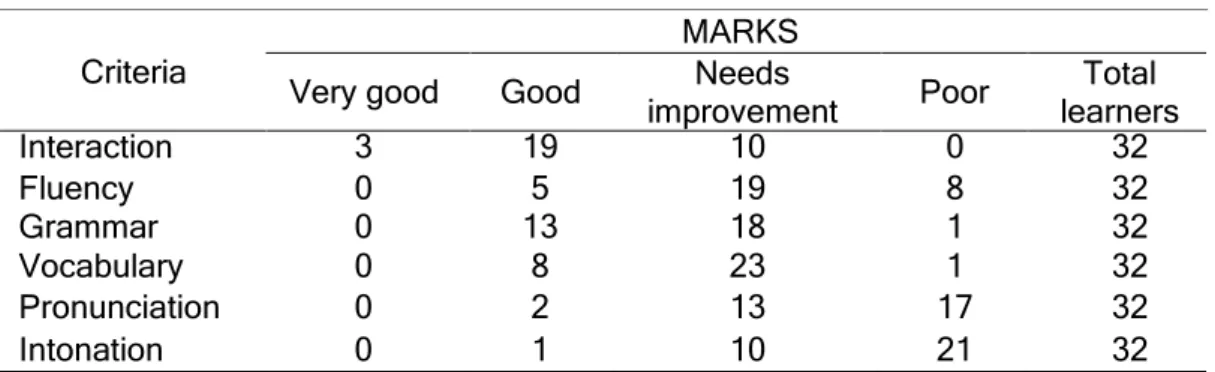
According to figure number 6, only 31.25% of students had difficulties in interaction because they did not understand the questions. As we can see in figure number 7, 25% of the students showed poor fluency during communication, so their speech is incomprehensible. According to figure 8, almost 60% of the students did not show satisfactory grammar management because they did not use grammatical structures correctly.
As we can see in figure 9, 75% of the learners showed a limited and very simple vocabulary during communication. According to the figure of the learners had poor pronunciation, so it is difficult to understand their speech and 40.63 % of them needed improvement. According to figure number 13, only 21.88% of the learners had problems with interaction because they did not understand the questions.
As we can see in Figure 14, only 9.38% of students showed poor communication fluency, so their speech is unintelligible. As can be seen in Figure 16, 3.13% of students showed a modest vocabulary in communication. According to the number, the students had poor pronunciation, so it is difficult to understand their speech, and 15.63% needed improvement.
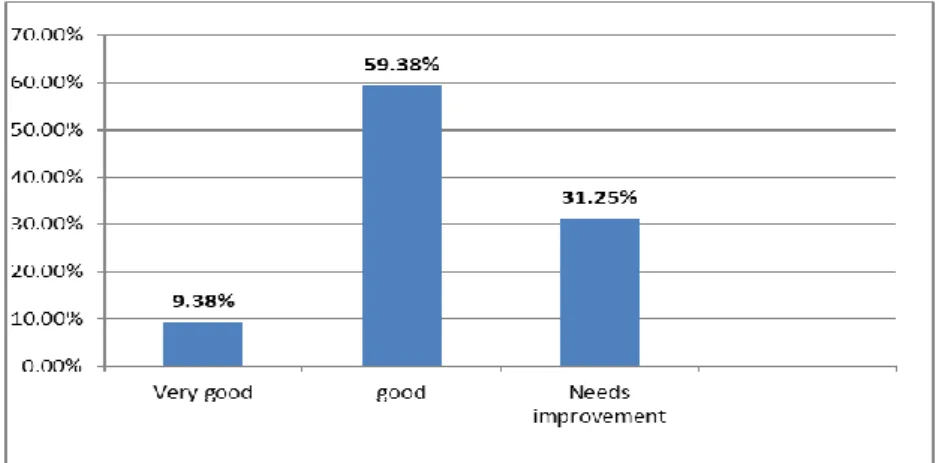
COMPARATIVE ANALYSIS OF THE ORAL PRODUCTION SKILL BEFORE
After applying the Didactic proposal, based on puppetry, to improve oral expression skills, the results showed us that students improved the level of speaking performance from "Beginning" Level 10.2% to "In Process" Level 12.8% (according to the MINEDU -evaluation scale).
DISCUSSION
Regarding the ability to speak, Harmer (2011) presupposes not only knowledge of the features of language, but also the ability to process information and language. It should be emphasized that teaching in general is a complicated affair in all senses of the word. A pre-test in the form of model conversations was designed to find out the level of oral expression of the students of the first year of “La Florida”.
The results of the pretest showed that more than 70% of the students had an oral expression below the satisfactory level, and the average speaking level of the class was at the entry level. After applying the didactic proposal to improve the students' oral expressive ability, the results showed that 60% of the students got an oral expressive ability above the satisfactory level, and the average speaking level of the class showed an improvement from the initial level to a process level. To the principals of Cajamarca city, to implement a better infrastructure in all educational institutions for optimal learning of the English language.
Note: Source: This is a rubric for one of the most important skills that children need to develop at this stage, Speech Adaptation according to the Royal Decree of 7 December. What will be the topic for today?. Teacher explains the uses and forms of the verb "Be" and asks some questions such as: What are the forms of the To Be. Which pronouns go with am, with is and with are. Teacher teaches and explains the short form of the verb be.. Learners present one famous person who changes the names by pronouns.. Learners write examples on the board.
Students complete the sentences with the pronoun and the correct form of the verb to be. Fill in the blanks with the correct pronoun and forms of the verb to be.