Guidelines of the American Thyroid Association for the Diagnosis and Management of Thyroid Disease
During Pregnancy and Postpartum
The American Thyroid Association Taskforce on Thyroid Disease During Pregnancy and Postpartum Alex Stagnaro-Green (Chair),1Marcos Abalovich,2Erik Alexander,3Fereidoun Azizi,4 Jorge Mestman,5
Roberto Negro,6Angelita Nixon,7Elizabeth N. Pearce,8Offie P. Soldin,9 Scott Sullivan,10and Wilmar Wiersinga11
INTRODUCTION
P
regnancy has aprofound impact on the thyroid gland and thyroid function. The gland increases 10% in size during pregnancy in iodine-replete countries and by 20%–40% in areas of iodine deficiency. Production of thyroxine (T4) and triiodothyronine (T3) increases by 50%, along with a 50% increase in the daily iodine requirement. These physi- ological changes may result in hypothyroidism in the later stages of pregnancy in iodine-deficient women who were euthyroid in the first trimester. The range of thyrotropin (TSH), under the impact of placental human chorionic go- nadotropin (hCG), is decreased throughout pregnancy with the lower normal TSH level in the first trimester being poorly defined and an upper limit of 2.5 mIU/L. Ten percent to 20% of all pregnant women in the first trimester of pregnancy are thyroid peroxidase (TPO) or thyroglobulin (Tg) antibody positive and euthyroid. Sixteen percent of the women who are euthyroid and positive for TPO or Tg an- tibody in the first trimester will develop a TSH that exceeds 4.0 mIU/L by the third trimester, and 33%–50% of women who are positive for TPO or Tg antibody in the first tri- mester will develop postpartum thyroiditis. In essence, pregnancy is a stress test for the thyroid, resulting in hy- pothyroidism in women with limited thyroidal reserve or iodine deficiency, and postpartum thyroiditis in women with underlying Hashimoto’s disease who were euthyroid prior to conception.
Knowledge regarding the interaction between the thyroid and pregnancy/the postpartum period is advancing at a rapid pace. Only recently has a TSH of 2.5 mIU/L been ac- cepted as the upper limit of normal for TSH in the first tri- mester. This has important implications in regards to interpretation of the literature as well as a critical impact for the clinical diagnosis of hypothyroidism. Although it is well accepted that overt hypothyroidism and overt hyperthy- roidism have a deleterious impact on pregnancy, studies are now focusing on the potential impact of subclinical hypo- thyroidism and subclinical hyperthyroidism on maternal and fetal health, the association between miscarriage and preterm delivery in euthyroid women positive for TPO and/or Tg antibody, and the prevalence and long-term impact of post- partum thyroiditis. Recently completed prospective ran- domized studies have begun to produce critically needed data on the impact of treating thyroid disease on the mother, fetus, and the future intellect of the unborn child.
It is in this context that the American Thyroid Association (ATA) charged a task force with developing clinical guide- lines on the diagnosis and treatment of thyroid disease during pregnancy and the postpartum. The task force consisted of international experts in the field of thyroid disease and pregnancy, and included representatives from the ATA, Asia and Oceania Thyroid Association, Latin American Thyroid Society, American College of Obstetricians and Gynecolo- gists, and the Midwives Alliance of North America. Inclusion of thyroidologists, obstetricians, and midwives on the task
1Departments of Medicine and Obstetrics/Gynecology, George Washington University School of Medicine and Health Sciences, Washington, District of Columbia.
2Endocrinology Division, Durand Hospital, Favaloro University, Buenos Aires, Argentina.
3Division of Endocrinology, Diabetes, and Hypertension, Brigham & Women’s Hospital, Harvard Medical School, Boston, Massachusetts.
4Internal Medicine and Endocrinology, Research Institute for Endocrine Sciences, Shahid Beheshti University of Medicine Sciences, Tehran, Iran.
5Department of Medicine and Obstetrics and Gynecology, Keck School of Medicine, University of Southern California, Los Angeles, California.
6Division of Endocrinology, V. Fazzi Hospital, Lecce, Italy.
7Angelita Nixon, CNM, LLC, Scott Depot, West Virginia.
8Section of Endocrinology, Diabetes, and Nutrition, Boston University School of Medicine, Boston, Massachusetts.
9Departments of Medicine, Oncology, and Obstetrics and Gynecology, Georgetown University Medical Center, Washington, District of Columbia.
10Department of Obstetrics/Gynecology, Medical University of South Carolina, Charleston, South Carolina.
11Endocrinology, Academic Medical Center, University of Amsterdam, Amsterdam, The Netherlands.
Volume 21, Number 10, 2011 ªMary Ann Liebert, Inc.
DOI: 10.1089/thy.2011.0087
1081
force was essential to ensuring widespread acceptance and adoption of the developed guidelines.
The clinical guidelines task force commenced its activities in late 2009. The guidelines are divided into the following nine areas: 1) thyroid function tests, 2) hypothyroidism, 3) thy- rotoxicosis, 4) iodine, 5) thyroid antibodies and miscarriage/
preterm delivery, 6) thyroid nodules and cancer, 7) postpartum thyroiditis, 8) recommendations on screening for thyroid dis- ease during pregnancy, and 9) areas for future research. Each section consists of a series of questions germane to the clinician, followed by a discussion of the questions and concluding with recommendations.
Literature review for each section included an analysis of all primary papers in the area published since 1990 and selective review of the primary literature published prior to 1990 that was seminal in the field. In the past 15 years there have been a number of recommendations and guideline statements relating to aspects of thyroid and pregnancy (1,2). In deriving the pres- ent guidelines the task force conducted a new and compre- hensive analysis of the primary literature as the basis for all of the recommendations. The strength of each recommendation was graded according to the United States Preventive Services Task Force (USPSTF) Guidelines outlined below (3).
Level A.The USPSTF strongly recommends that clinicians provide (the service) to eligible patients. The USPSTF found good evidence that (the service) improves important health outcomes and concludes that benefits substantially outweigh harms.
Level B. The USPSTF recommends that clinicians provide (this service) to eligible patients. The USPSTF found at least fair evidence that (the service) improves important health outcomes and concludes that benefits outweigh harms.
Level C. The USPSTF makes no recommendation for or against routine provision of (the service).The USPSTF found at least fair evidence that (the service) can improve health outcomes but concludes that the balance of benefits and harms is too close to justify a general recommendation.
Level D. The USPSTF recommends against routinely pro- viding (the service) to asymptomatic patients.The USPSTF found at least fair evidence that (the service) is ineffective or that harms outweigh benefits.
Level I.The USPSTF concludes that evidence is insufficient to recommend for or against routinely providing (the ser- vice).Evidence that (the service) is effective is lacking, or poor quality, or conflicting, and the balance of benefits and harms cannot be determined.
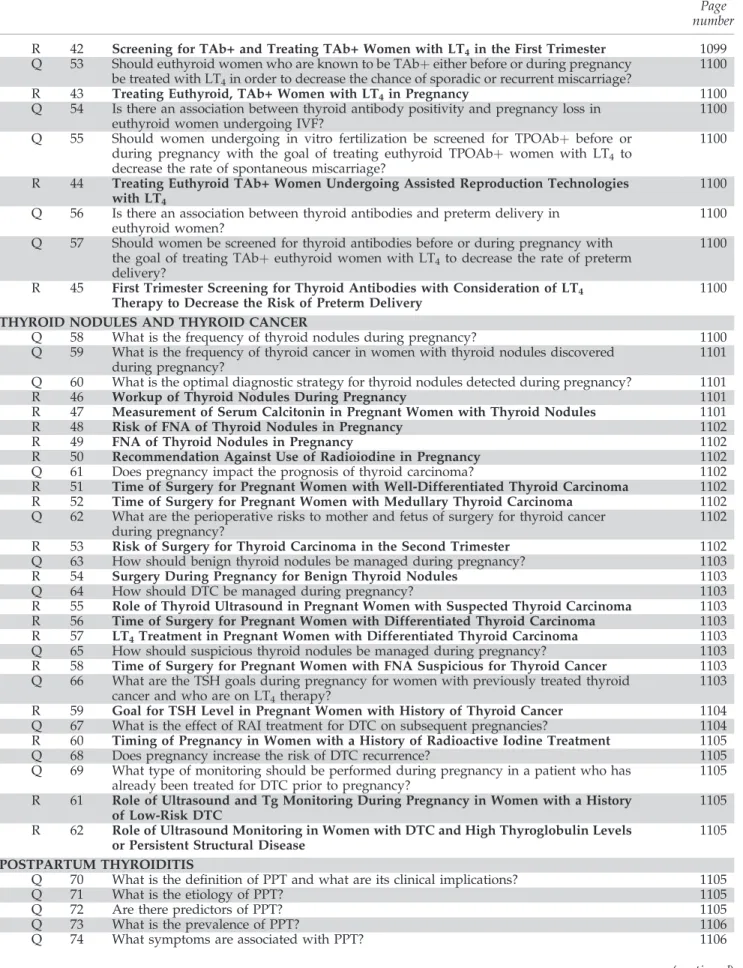
The organization of these guidelines is presented in Table 1.
A complete list of the Recommendations is included in the Appendix. It should be noted that although there was una- nimity in the vast majority of recommendations there were two recommendations for which one of the committee members did not agree with the final recommendation. The two recommendations for which there were dissenting opin- ions are Recommendations 9 and 76. The alternative view points are included in the body of the report.
The final document was approved by the ATA Board of Directors and officially endorsed by the American Association of Clinical Endocrinologists (AACE), British Thyroid Association (BTA), Endocrine Society of Australia (ESA), European Asso- ciation of Nuclear Medicine (EANM), European Thyroid Asso- ciation (ETA), Italian Association of Clinical Endocrinologists (AME), Korean Thyroid Association (KTA), and Latin American Thyroid Society (LATS).
Finally, the committee recognizes that knowledge on the interplay between the thyroid gland and pregnancy/
postpartum is dynamic, and new data will continue to come forth at a rapid rate. It is understood that the present guide- lines are applicable only until future data refine our under- standing, define new areas of importance, and perhaps even refute some of our recommendations. In the interim, it is our hope that the present guidelines provide useful information to clinicians and help achieve our ultimate goal of the highest quality clinical care for pregnant women and their unborn children.
Table1. Organization of Pregnancy Management Guidelines: Sections, Questions, and Recommendations Page number INTRODUCTION
THYROID FUNCTION TESTS IN PREGNANCY
Q 1 How do thyroid function tests change during pregnancy? 1086
Q 2 What is the normal range for TSH in each trimester? 1086
R 1 Trimester-Specific Reference Ranges for TSH, # 1 1087
R 2 Trimester-Specific Reference Ranges for TSH, # 2 1087
Q 3 What is the optimal method to assess FT4during pregnancy? 1087
R 3 FT4Assay Methods, # 1 1088
R 4 FT4Assay Methods, # 2 1088
R 5 FT4Assay Methods, # 3 1088
HYPOTHYROIDISM IN PREGNANCY
Q 4 What are the definitions of OH and SCH in pregnancy? 1088
Q 5 How is isolated hypothyroxinemia defined in pregnancy ? 1088
Q 6 What adverse outcomes are associated with OH in pregnancy? 1088
Q 7 What adverse outcomes are associated with SCH in pregnancy? 1089
Q 8 What adverse outcomes are associated with isolated hypothyroxinemia in pregnancy? 1089
Q 9 Should OH be treated in pregnancy? 1090
(continued)
Table1. (Continued)
Page number
R 6 Treatment of OH in Pregnancy 1090
Q 10 Should isolated hypothyroxinemia be treated in pregnancy? 1090
R 7 Isolated Hypothyroxinemia in Pregnancy 1090
Q 11 Should SCH be treated in pregnancy? 1090
R 8 Treatment of SCH in Pregnancy, # 1 1090
R 9 Treatment of SCH in Pregnancy, # 2 1090
Q 12 When provided, what is the optimal treatment of OH and SCH? 1090
R 10 The Optimal Form of Thyroid Hormone to Treat OH and SCH 1090
Q 13 When provided, what is the goal of OH and SCH treatment? 1090
R 11 Goal of LT4Treatment for OH and SCH 1090
Q 14 If pregnant women with SCH are not initially treated, how should they be monitored through gestation?
1090 R 12 Monitoring Women with SCH Who Are Not Initially Treated During Their
Pregnancy 1090
Q 15 How do hypothyroid women (receiving LT4) differ from other patients during pregnancy?
What changes can be anticipated in such patients during gestation?
1091
Q 16 What proportion of treated hypothyroid women (receiving LT4) require changes in their LT4dose during pregnancy?
1091 Q 17 In treated hypothyroid women (receiving LT4) who are planning pregnancy, how should
the LT4dose be adjusted?
1091 R 13 LT4Dose Adjustment for Hypothyroid Women Who Miss a Menstrual Period or
Have a Positive Home Pregnancy Test
1091 Q 18 In hypothyroid women (receiving LT4) who are newly pregnant, what factors influence
thyroid status and LT4requirements during gestation?
1091 R 14 Factors Influencing Changes in LT4Requirements During Pregnancy 1091 R 15 Adjustment of LT4Dose in Hypothyroid Women Planning Pregnancy 1091 Q 19 In hypothyroid women (receiving LT4) who are newly pregnant, how often should
maternal thyroid function be monitored during gestation?
1091 R 16 Frequency that Maternal Serum TSH Should Be Monitored During Pregnancy in
Hypothyroid Women Taking LT4, # 1
1092 R 17 Frequency that Maternal Serum TSH Should Be Monitored During Pregnancy in
Hypothyroid Women Taking LT4, # 2
1092
Q 20 How should the LT4dose be adjusted postpartum? 1092
R 18 Dose Adjustment and Serum TSH Testing Postpartum 1092
Q 21 What is the outcome and long-term prognosis when SCH and OH are effectively treated through gestation?
1092 Q 22 Except for measurement of maternal thyroid function, should additional maternal or
fetal testing occur in treated, hypothyroid women during pregnancy?
1092 R 19 Tests Other Than Serum TSH in Hypothyroid Women Receiving LT4Who Have an
Uncomplicated Pregnancy
1092 Q 23 In euthyroid women who are TAbþprior to conception, what is the risk of
hypothyroidism once they become pregnant?
1092 Q 24 How should TAbþeuthyroid women be monitored and treated during pregnancy? 1092 R 20 Monitoring Women Without a History of Hypothyroidism, but Who Are TAb+
During Pregnancy
1092 Q 25 Should TAbþeuthyroid women be monitored or treated for complications other than
the risk of hypothyroidism during pregnancy?
1092 R 21 Selenium Supplementation During Pregnancy for Women Who Are TPOAb+ 1093 THYROTOXICOSIS IN PREGNANCY
Q 26 What are the causes of thyrotoxicosis in pregnancy? 1093
Q 27 What is the appropriate initial evaluation of a suppressed serum TSH concentration during the first trimester of pregnancy?
1093 Q 28 How can gestational hyperthyroidism be differentiated from Graves’ hyperthyroidism in
pregnancy?
1093 R 22 Workup of Suppressed Serum TSH in First Trimester of Pregnancy 1093 R 23 Ultrasound to Work-up Differential Diagnosis of Thyrotoxicosis in Pregnancy 1093 R 24 Prohibition of Radioactive Iodine Scans and Uptake Studies During Pregnancy 1093 Q 29 What is the appropriate management of gestational hyperthyroidism? 1093 R 25 Management of Women with Gestational Hyperthyroidism and Hyperemesis
Gravidarum
1094
(continued)
Table1. (Continued)
Page number R 26 Antithyroid Drugs in the Management of Gestational Hyperthyroidism 1094 Q 30 How should women with Graves’ disease be counseled before pregnancy? 1094 R 27 Need to Render Hyperthyroid Women Euthyroid Before Pregnancy 1094 Q 31 What is the management of patients with Graves’ hyperthyroidism in pregnancy? 1094
R 28 Timing of PTU and MMI Use in Pregnancy 1094
R 29 Combining ATDs and LT4During Pregnancy 1094
Q 32 What tests should be performed in women treated during pregnancy with ATDs? What is the target value of FT4?
1095 R 30 Monitoring Frequency of FT4and Target FT4in Women on Antithyroid Drugs During
Pregnancy
1095 Q 33 What are the indications and timing for thyroidectomy in the management of Graves’
disease during pregnancy 1095
R 31 Relative Role of Thyroidectomy and Its Timing for Managing Thyrotoxicosis in Pregnancy
1095 Q 34 What is the value of TRAb measurement in the evaluation of a pregnant women with
Graves’ hyperthyroidism?
1095 R 32 History of Graves’ Disease as a Determinant of TRAb Measurement, and Timing of
TRAb Measurement, in Pregnancy
1095 Q 35 Under what circumstances should additional fetal ultrasound monitoring for growth,
heart rate, and goiter be performed in women with Graves’ hyperthyroidism in pregnancy?
1095
R 33 Recommendations for Pregnant Women with High Risk of Fetal Thyroid Dysfunction 1096 Q 36 When should umbilical blood sampling be considered in women with Graves’ disease in
pregnancy?
1096
R 34 Cordocentesis in Pregnancy 1096
Q 37 What are the etiologies of thyrotoxicosis in the postpartum period? 1096 Q 38 How should the etiology of new thyrotoxicosis be determined in the postpartum period? 1096 Q 39 How should Graves’ hyperthyroidism be treated in lactating women? 1096 R 35 Safe Doses of Antithyroid Drugs for Infants of Breastfeeding Mothers 1096 CLINICAL GUIDELINES FOR IODINE NUTRITION
Q 40 Why is increased iodine intake required in pregnancy and lactation, and how is iodine intake assessed?
1096 Q 41 What is the impact of severe iodine deficiency on the mother, fetus, and child? 1096 Q 42 What is the impact of mild to moderate iodine deficiency on the mother, fetus, and child? 1097 Q 43 What is the iodine status of pregnant and breastfeeding women in the United States? 1097 Q 44 What is the iodine status of pregnant and breastfeeding women worldwide? 1097 Q 45 Does iodine supplementation in pregnancy and lactation improve outcomes in severe
iodine deficiency?
1097 Q 46 Does iodine supplementation in pregnancy and lactation improve outcomes in mildly to
moderately iodine-deficient women?
1097 Q 47 What is the recommended daily iodine intake in women planning pregnancy, women
who are pregnant, and women who are breastfeeding?
1097 R 36 Minimum Iodine Intake Requirements in Pregnant Women, # 1 1098 R 37 Minimum Iodine Intake Requirements in Pregnant Women, # 2 1098 R 38 Minimum Iodine Intake Requirements in Pregnant Women, # 3 1098 Q 48 What is the safe upper limit for iodine consumption in pregnant and breastfeeding
women?
1098 R 39 Recommendation Against High Amounts of Iodine in Pregnancy, # 1 1098 R 40 Recommendation Against High Amounts of Iodine in Pregnancy, # 2 1098 SPONTANEOUS PREGNANCY LOSS, PRETERM DELIVERY, AND THYROID ANTIBODIES
Q 49 Is there an association between thyroid antibody positivity and sporadic spontaneous abortion in euthyroid women?
1099 Q 50 Should women be screened for TPO antibodies before or during pregnancy with the
goal of treating TPOAbþeuthyroid women with LT4to decrease the rate of spontaneous miscarriage?
1099
R 41 Screening for Thyroid Antibodies in the First Trimester 1099 Q 51 Is there an association between thyroid antibodies and recurrent spontaneous
abortion in euthyroid women?
1099 Q 52 Should women with recurrent abortion be screened for TAb before or during
pregnancy with the goal of treating euthyroid TAbþwomen with LT4or IVIG therapy to decrease the rate of recurrent spontaneous abortion?
1099
(continued)
Table1. (Continued)
Page number R 42 Screening for TAb+ and Treating TAb+ Women with LT4in the First Trimester 1099 Q 53 Should euthyroid women who are known to be TAbþeither before or during pregnancy
be treated with LT4in order to decrease the chance of sporadic or recurrent miscarriage?
1100
R 43 Treating Euthyroid, TAb+ Women with LT4in Pregnancy 1100
Q 54 Is there an association between thyroid antibody positivity and pregnancy loss in euthyroid women undergoing IVF?
1100 Q 55 Should women undergoing in vitro fertilization be screened for TPOAbþ before or
during pregnancy with the goal of treating euthyroid TPOAbþ women with LT4 to decrease the rate of spontaneous miscarriage?
1100
R 44 Treating Euthyroid TAb+ Women Undergoing Assisted Reproduction Technologies with LT4
1100 Q 56 Is there an association between thyroid antibodies and preterm delivery in
euthyroid women?
1100 Q 57 Should women be screened for thyroid antibodies before or during pregnancy with
the goal of treating TAbþeuthyroid women with LT4to decrease the rate of preterm delivery?
1100
R 45 First Trimester Screening for Thyroid Antibodies with Consideration of LT4 Therapy to Decrease the Risk of Preterm Delivery
1100 THYROID NODULES AND THYROID CANCER
Q 58 What is the frequency of thyroid nodules during pregnancy? 1100
Q 59 What is the frequency of thyroid cancer in women with thyroid nodules discovered
during pregnancy? 1101
Q 60 What is the optimal diagnostic strategy for thyroid nodules detected during pregnancy? 1101
R 46 Workup of Thyroid Nodules During Pregnancy 1101
R 47 Measurement of Serum Calcitonin in Pregnant Women with Thyroid Nodules 1101
R 48 Risk of FNA of Thyroid Nodules in Pregnancy 1102
R 49 FNA of Thyroid Nodules in Pregnancy 1102
R 50 Recommendation Against Use of Radioiodine in Pregnancy 1102
Q 61 Does pregnancy impact the prognosis of thyroid carcinoma? 1102
R 51 Time of Surgery for Pregnant Women with Well-Differentiated Thyroid Carcinoma 1102 R 52 Time of Surgery for Pregnant Women with Medullary Thyroid Carcinoma 1102 Q 62 What are the perioperative risks to mother and fetus of surgery for thyroid cancer
during pregnancy?
1102 R 53 Risk of Surgery for Thyroid Carcinoma in the Second Trimester 1102
Q 63 How should benign thyroid nodules be managed during pregnancy? 1103
R 54 Surgery During Pregnancy for Benign Thyroid Nodules 1103
Q 64 How should DTC be managed during pregnancy? 1103
R 55 Role of Thyroid Ultrasound in Pregnant Women with Suspected Thyroid Carcinoma 1103 R 56 Time of Surgery for Pregnant Women with Differentiated Thyroid Carcinoma 1103 R 57 LT4Treatment in Pregnant Women with Differentiated Thyroid Carcinoma 1103 Q 65 How should suspicious thyroid nodules be managed during pregnancy? 1103 R 58 Time of Surgery for Pregnant Women with FNA Suspicious for Thyroid Cancer 1103 Q 66 What are the TSH goals during pregnancy for women with previously treated thyroid
cancer and who are on LT4therapy?
1103 R 59 Goal for TSH Level in Pregnant Women with History of Thyroid Cancer 1104 Q 67 What is the effect of RAI treatment for DTC on subsequent pregnancies? 1104 R 60 Timing of Pregnancy in Women with a History of Radioactive Iodine Treatment 1105
Q 68 Does pregnancy increase the risk of DTC recurrence? 1105
Q 69 What type of monitoring should be performed during pregnancy in a patient who has already been treated for DTC prior to pregnancy?
1105 R 61 Role of Ultrasound and Tg Monitoring During Pregnancy in Women with a History
of Low-Risk DTC
1105 R 62 Role of Ultrasound Monitoring in Women with DTC and High Thyroglobulin Levels
or Persistent Structural Disease
1105 POSTPARTUM THYROIDITIS
Q 70 What is the definition of PPT and what are its clinical implications? 1105
Q 71 What is the etiology of PPT? 1105
Q 72 Are there predictors of PPT? 1105
Q 73 What is the prevalence of PPT? 1106
Q 74 What symptoms are associated with PPT? 1106
(continued)
RESULTS
Thyroid Function Tests in Pregnancy
Question 1: How do thyroid function tests change during pregnancy?
To meet the challenge of increased metabolic needs during pregnancy, the thyroid adapts through changes in thyroid hormone economy and in the regulation of the hypothalamic- pituitary-thyroid axis (4,5). Consequently, thyroid function test results of healthy pregnant women differ from those of healthy nonpregnant women. This calls for pregnancy- specific and ideally trimester-specific reference intervals for all thyroid function tests but in particular for the most widely applied tests, TSH and free T4(FT4).
Following conception, circulating total T4 (TT4) and T4
binding globulin (TBG) concentrations increase by 6–8 weeks and remain high until delivery. Thyrotropic activity of hCG results in a decrease in serum TSH in the first trimester (5,6).
Therefore, during pregnancy, women have lower serum TSH concentrations than before pregnancy, and frequently TSH is below the classical lower limit of 0.4 mIU/L (7,8).
Most studies also report a substantial decrease in serum FT4
concentrations with progression of gestation (7,9,10). Serum FT4 measurements in pregnant women are complicated by increased TBG and decreased albumin concentrations that can cause immunoassays to be unreliable (11,12). Therefore the analytical method used for serum FT4 analysis should be taken into consideration.
Question 2: What is the normal range for TSH in each trimester?
There is strong evidence in the literature that the reference range for TSH is lower throughout pregnancy; i.e., both the lower normal limit and the upper normal limit of serum TSH are decreased by about 0.1–0.2 mIU/L and 1.0 mIU/L, re- spectively, compared with the customary TSH reference in- Table1. (Continued)
Page number
Q 75 Is PPT associated with depression? 1106
R 63 Postpartum Depression as an Indication for Thyroid Function Testing 1106
Q 76 What is the treatment for the thyrotoxic phase of PPT? 1106
R 64 Propranolol Treatment of PPT 1106
R 65 Recommendation Against Use of ATDs to Treat PPT 1106
Q 77 Once the thyrotoxic phase of PPT resolves, how often should serum TSH be measured to screen for the hypothyroid phase
1106 R 66 Timing of Serum TSH After Resolution of the Thyrotoxic Phase of PPT, # 1 of 3 1106
Q 78 What is the treatment for the hypothyroid phase of PPT? 1106
R 67 Timing of Serum TSH After PPT, # 2 of 3 1106
R 68 Indication for Treatment with LT4in Women with PPT 1106
Q 79 How long should LT4be continued in women with postpartum thyroiditis? 1106 R 69 Indication and Method for Stopping LT4in Women with a History of PPT 1106 Q 80 How often should screening be performed after the hypothyroid phase of PPT resolves? 1107
R 70 Timing of Serum TSH After PPT, # 3 of 3 1107
Q 81 Does treatment of TAbþ euthyroid women with LT4 or iodine during pregnancy prevent PPT?
1107 R 71 Recommendation Against Use of LT4or Iodine for Prevention of PPT
in Euthyroid TAb+ Women
1107 Q 82 Does treatment of TAbþeuthyroid women with selenium during pregnancy
prevent PPT?
1107 THYROID FUNCTION SCREENING IN PREGNANCY
Q 83 Should all pregnant women be screened for serum TSH level in the first trimester of pregnancy?
1107 R 72 Recommendation Regarding Universal Screening with Serum TSH Determination at
the First Trimester Visit
1109 R 73 Recommendation Regarding Universal Screening with Serum Free T4Determination
in Pregnant Women
1109 Q 84 Should serum TSH testing be carried out in a targeted population of pregnant women? 1109 R 74 Determination of Serum TSH Before Pregnancy in Women at High Risk for
Hypothyroidism
1110 R 75 History Taking in Pregnant Women at Their Initial Prenatal Visit 1110 R 76 Determination of Serum TSH in Early Pregnancy in Women at High Risk for OH 1111 FUTURE RESEARCH DIRECTIONS
ATD, antithyroid drug; DTC, differentiated thyroid carcinoma; FNA, fine-needle aspiration; FT4, free thyroxine; IVF,in vitrofertilization;
IVIG, intravenous immunoglobin; LT4, levothyroxine; MMI, methimazole; OH, overt hypothyroidism; PPT, postpartum thyroiditis; PTU, propylthiouracil; Q, Question; R, Recommendation; RAI, radioactive iodine; SCH, subclinical hypothyroidism; TAbþ, positive for thyroid peroxidase antibody and/or thyroglobulin antibody; Tg, thyroglobulin; TPOAbþ, positive for thyroid peroxidase antibody; TRAb, TSH receptor antibodies; TSH, thyrotropin.
terval of 0.4–4.0 mIU/L of nonpregnant women. The largest decrease in serum TSH is observed during the first trimester and is transient, apparently related to hCG levels, which are highest early in gestation (Table 2). The median TSH values in the three trimesters in Table 2 are quite consistent, except for the study by Marwahaet al.(18) which, for unexplained rea- sons, reports higher TSH values throughout pregnancy.
Serum TSH and its reference range gradually rise in the sec- ond and third trimesters, but it is noteworthy that the TSH reference interval remains lower than in nonpregnant women (13,15). Since hCG concentrations are higher in multiple pregnancies than in singleton pregnancies, the downward shift in the TSH reference interval is greater in twin preg- nancies than in singleton pregnancies (19). In a study of 63 women with hCG concentrations >200,000 IU/L, TSH was suppressed (0.2 mIU/L) in 67% of women, and in 100% of women if hCG concentrations were>400,000 IU/L (20).
In a small percentage of women, TSH can be very suppressed (<0.01 mIU/L) and yet still represent a normal pregnancy.
There are slight but significant ethnic differences in serum TSH concentrations. Black and Asian women have TSH values that are on average 0.4 mIU/L lower than in white women; these differences persist during pregnancy (21,22). Pregnant women of Moroccan, Turkish, or Surinamese descent residing in The Netherlands, have TSH values 0.2–0.3 mIU/L lower than Dutch women throughout pregnancy (23). TSH ranges vary slightly depending on differences between methods of analysis (24). Subclinical hyperthyroidism is not associated with adverse pregnancy outcomes; therefore, a TSH value that is within detection is unlikely to be clinically significant (25).
&
RECOMMENDATION 1
Trimester-specific reference ranges for TSH, as defined in populations with optimal iodine intake, should be applied.
Level B-USPSTF
& RECOMMENDATION 2
If trimester-specific reference ranges for TSH are not available in the laboratory, the following reference ranges are recommended: first trimester, 0.1–2.5 mIU/L; second trimester, 0.2–3.0 mIU/L; third trimester, 0.3–3.0 mIU/L.
Level I-USPSTF
Question 3: What is the optimal method to assess FT4
during pregnancy?
The normal ranges for FT4index are calculated by TT4T3
uptake or a ratio of TT4and TBG, but trimester-specific ref- erence intervals for FT4index have not been established in a
reference population. Only 0.03% of serum TT4 content is unbound to serum proteins and is the FT4available for tissue uptake. Sera TT4concentrations are in the nanomolar range, but FT4concentrations are in the picomolar range. Measuring FT4in the presence of high concentrations of bound T4has proved challenging especially in abnormal binding-protein states such as pregnancy.
Equilibrium dialysis and ultrafiltration are used for phys- ical separation of serum FT4from bound T4prior to analysis of the dialysate or ultrafiltrate. Assays based on classical equi- librium dialysis or ultrafiltration are laborious, time- consuming, expensive, and not widely available.
FT4immunoassay approaches are liable to error by disrupt- ing the original equilibrium, which is dependent on dilution, temperature, buffer composition, affinity, and concentration of the T4antibody reagent and T4-binding capacity of the serum sample (26). High TBG concentrations in serum samples tend to result in higher FT4values, whereas low albumin in serum likely will yield lower FT4 values. In order to decrease nonspecific binding and neutralize the effect of nonesterified fatty acids on serum FT4, some assays add albumin; however, albumin binds T4and when it is added in sufficient amounts, it may disrupt the equilibrium. Nevertheless, the currently used FT4immunoas- says perform reasonably well under most circumstances, accu- rately reporting low FT4levels in thyroid hormone deficiency and high FT4levels in thyroid hormone excess (27).
The serum of pregnant women is characterized by higher concentrations of TBG and nonesterified fatty acids and by lower concentrations of albumin relative to the serum of nonpregnant women. Many current FT4immunoassays fail to account for the effect of dilution (26,28). Because FT4 reference intervals in pregnancy varied widely between methods, interpretation of FT4values requires method-specific ranges (11,12,29). Moreover, such ranges are also influenced by the iodine status of the pop- ulation studied. Whereas it is customary for manufacturers to suggest that laboratories establish their own reference range for a test, this is impractical in clinical practice. It is especially difficult to recruit subjects with specific conditions such as pregnancy in order to independently establish method- and trimester-specific ranges. It follows that it is customary for laboratories to adopt the ranges provided by the manufacturer of the test. Typically, the characteristics of these reference pregnant cohorts are not dis- closed and may differ in iodine intake and ethnicity to an extent that compromises the value of adopting the manufacturer ran- ges across different populations.
Current uncertainty around FT4estimates in pregnancy has led some to question the wisdom of relying on FT4immuno- assays during pregnancy (30,31). In contrast to FT4as measured by two commercial immunoassays, TT4 and the FT4 index Table2. Sample Trimester-Specific Reference Intervals for Serum TSH
Trimestera
Reference First Second Third
Haddowet al.(13) 0.94 (0.08–2.73) 1.29 (0.39–2.70) —
Strickeret al.(14) 1.04 (0.09–2.83) 1.02 (0.20–2.79) 1.14 (0.31–2.90)
Panesaret al.(15) 0.80 (0.03–2.30) 1.10 (0.03–3.10) 1.30 (0.13–3.50)
Soldinet al.(16) 0.98 (0.24–2.99) 1.09 (0.46–2.95) 1.20 (0.43–2.78)
Bocos-Terrazet al.(17) 0.92 (0.03–2.65) 1.12 (0.12–2.64) 1.29 (0.23–3.56)
Marwahaet al.(18) 2.10 (0.60–5.00) 2.40 (0.43–5.78) 2.10 (0.74–5.70)
aMedian TSH in mIU/L, with parenthetical data indicating 5th and 95th percentiles (13,15,18) or 2.5th and 97.5th percentiles (14,16,17).
showed the expected inverse relationship with TSH (30). The authors argue that TT4measurements may be superior to FT4
measurements by immunoassay in sera of pregnant women, provided the reference values take into account the 50% in- crease of TBG in pregnancy by calculating the FT4index with the help of a serum thyroid hormone uptake test.
The latest development in the field of FT4 analysis is to measure free thyroid hormones in the dialysate or ultrafiltrate using online solid phase extraction–liquid chromatography/
tandem mass spectrometry (LC/MS/MS). The method is re- garded as a major advance, with higher specificity in com- parison to immunoassays and great potential to be applied in the routine assessment of FT4and FT3. Using direct equilib- rium dialysis and LC/MS/MS, the 95% FT4reference inter- vals decreased gradually with advancing gestational age:
from 1.08–1.82 ng/dL in week 14 to 0.86–1.53 ng/dL in week 20 (32). Using ultrafiltration followed by isotope dilution LC/
MS/MS, serum FT4concentrations (given as meanSE) were 0.930.25 ng/dL in nonpregnant women, 1.130.23 ng/dL in the first trimester, 0.920.30 ng/dL in the second trimes- ter, and 0.860.21 ng/dL in the third trimester (9). Serum FT4
measured by a direct analog immunoassay in the same sam- ples also demonstrated decreasing values during pregnancy:
1.050.22 ng/dL, 0.880.17 ng/dL, and 0.890.17 ng/dL in the first, second, and third trimesters, respectively. Serum FT4 by LC/MS/MS correlated very well with serum FT4
measured by classical equilibrium dialysis, but correlation with results from the FT4immunoassay were less satisfactory (9).
Free thyroid hormone concentrations measured by LC/
MS/MS correlate generally to a greater degree with log TSH values compared with concentrations measured by immu- noassay (31). In pregnancy, however, there is little relation- ship between log TSH and FT4(r¼0.11 for FT4LC/MS/MS, andr¼ 0.06 for FT4immunoassay) (33), suggesting changes in the set point of the hypothalamic-pituitary-thyroid axis during pregnancy. Application of LC/MS/MS for measure- ment of free thyroid hormones is currently in routine clinical use in a few centers. The method is ideally suited for gener- ating reliable, reproducible trimester-specific reference ranges for FT4(9). A working group of the International Federation of Clinical Chemistry and Laboratory Medicine recommends the use of isotope dilution-LC/MS/MS for measuring T4in the dialysate from equilibrium dialysis of serum in order to obtain a trueness-based reference measurement procedure for serum FT4(34). This assay technology, unfortunately, is currently not widely available due to high instrument and operating costs.
& RECOMMENDATION 3
The optimal method to assess serum FT4during pregnancy is measurement of T4 in the dialysate or ultrafiltrate of serum samples employing on-line extraction/liquid chromatography/tandem mass spectrometry (LC/MS/
MS).Level A-USPSTF
& RECOMMENDATION 4
If FT4measurement by LC/MS/MS is not available, clini- cians should use whichever measure or estimate of FT4is available in their laboratory, being aware of the limitations of each method. Serum TSH is a more accurate indication of thyroid status in pregnancy than any of these alternative methods.Level A-USPSTF
&
RECOMMENDATION 5
In view of the wide variation in the results of FT4assays, method-specific and trimester-specific reference ranges of serum FT4are required.Level B-USPSTF
Hypothyroidism in Pregnancy
In the absence of rare exceptions (TSH-secreting pituitary tumor, thyroid hormone resistance, a few cases of central hypothyroidism with biologically inactive TSH) primary maternal hypothyroidism is defined as the presence of an el- evated TSH concentration during gestation. Historically, the reference range for serum TSH was derived from the serum of healthy, nonpregnant individuals. Using these data, values greater than*4.0 mIU/L were considered abnormal. More recently, normative data from healthy pregnant women suggest the upper reference range may approximate 2.5–3.0 mIU/L (15,19). When maternal TSH is elevated, measurement of serum FT4 concentration is necessary to classify the pa- tient’s status as either subclinical (SCH) or overt hypothy- roidism (OH). This is dependent upon whether FT4is within or below the trimester-specific FT4reference range. The dis- tinction of OH from SCH is important because published data relating to the maternal and fetal effects attributable to OH are more consistent and easier to translate into clinical recom- mendations in comparison to those regarding SCH.
Several investigations report that at least 2%–3% of ap- parently healthy, nonpregnant women of childbearing age have an elevated serum TSH (35,36). Among these healthy nonpregnant women of childbearing age it is estimated that 0.3%–0.5% of them would, after having thyroid function tests, be classified as having OH, while 2%–2.5% of them would be classified as having SCH. These data derive from a population in the United States, which is considered a relatively iodine- sufficient country. It would be anticipated that such percent- ages would be higher in areas of iodine insufficiency. When iodine nutrition is adequate, the most frequent cause of hy- pothyroidism is autoimmune thyroid disease (also called Hashimoto’s thyroiditis). Thyroid auto-antibodies were de- tected in*50% of pregnant women with SCH and in more than 80% with OH (36).
Question 4: What are the definitions of OH and SCH in pregnancy?
Elevations in serum TSH during pregnancy should be de- fined using pregnancy-specific reference ranges. OH is de- fined as an elevated TSH (>2.5 mIU/L) in conjunction with a decreased FT4concentration. Women with TSH levels of 10.0 mIU/L or above, irrespective of their FT4 levels, are also considered to have OH. SCH is defined as a serum TSH be- tween 2.5 and 10 mIU/L with a normal FT4concentration.
Question 5: How is isolated hypothyroxinemia defined in pregnancy?
Isolated hypothyroxinemia is defined as a normal maternal TSH concentration in conjunction with FT4concentrations in the lower 5th or 10th percentile of the reference range.
Question 6: What adverse outcomes are associated with OH in pregnancy?
OH in pregnancy has consistently been shown to be associated with an increased risk of adverse pregnancy com-
plications, as well as detrimental effects upon fetal neuro- cognitive development (37). Specific adverse outcomes asso- ciated with maternal OH include an increased risk of premature birth, low birth weight, and miscarriage. Abalo- vichet al.(38) demonstrated such patients carry an estimated 60% risk of fetal loss when OH was not adequately detected and treated. Leung et al. (39) demonstrated a 22% risk of gestational hypertension in pregnant women with OH, higher in comparison to euthyroid women or those with SCH. Allan and colleagues (36) also describe an increased risk of fetal death among pregnant women with OH. In conclusion, a firm association between OH and adverse risk to the maternal–
fetal unit has been demonstrated.
Question 7: What adverse outcomes are associated with SCH in pregnancy?
SCH is associated with an increased risk of adverse preg- nancy complications and possibly with an increased risk of neurocognitive deficits in the developing fetus. In compari- son to OH, however, data regarding SCH are variable. In the best study to date, Negro and colleagues (40) published data suggesting SCH increases the risk of pregnancy complica- tions in anti-thyroid peroxidase antibody positive (TPOAbþ) women. In a prospective, randomized trial of>4000 women, a group of ‘‘low-risk’’ individuals was universally screened in early pregnancy for TPOAbþand TSH elevation>2.5 mIU/
L. When this combination was identified, LT4treatment was initiated in order to normalize serum TSH. In a control po- pulation of equal size serum samples were obtained in early pregnancy, but measurement of serum TSH and TPO Ab was delayed until after delivery, and thus no LT4was pro- vided to this group. This allowed direct comparison of the effects of LT4administration in women who were TPOAbþ and had TSH values above 2.5 mIU/L with the findings in untreated controls. The results confirmed a significant re- duction in a combined endpoint of pregnancy complica- tions. In a follow-up analysis of the same data, Negroet al.
(41) reported a significantly higher miscarriage rate in TPOAbwomen with TSH levels between 2.5 and 5.0 mIU/
L compared with those with TSH levels below 2.5 mIU/L (6.1% vs. 3.6% respectively,p¼0.006). The latter trial had no interventional component. These prospective data are sup- ported by previous retrospective data published by Casey and colleagues (35). In that investigation, a two- to threefold in- creased risk of pregnancy-related complications was demon- strated in untreated women with SCH. Similarly, Benhadi and colleagues (42) performed a case–control study investigating risk of pregnancy loss in 2497 Dutch women. In this cohort of pregnant women without OH, the risk of child loss increased with higher levels of maternal TSH.
However, some published data demonstrate contrasting conclusions. Cleary-Goldmanet al.(43) reported no adverse effect from subclinical maternal hypothyroidism (detected in the first and second trimester) in a cohort of 10,990 pregnant women. However, the study analysis was per- formed only utilizing a selected subgroup of the entire study cohort (29% of the study cohort analyzed) with a mean gestational age of screening between 10.5 and 14 weeks gestation. Furthermore, women were only included in the study if their pregnancy remained viable until a second trimester serum sample could be obtained. Mannisto and
colleagues (44,45) evaluated the relationship between pregnancy outcome and thyroid function tests obtained at 12 weeks gestation in 5805 women, from an initial cohort of 9247 women, and found no adverse consequence on peri- natal mortality. However, because only 63% of the full study cohort was included in this analysis (5805/9247), interpre- tation of the data is limited.
In the most recently published study on pregnancy loss Ashooret al.(46) evaluated TSH and FT4levels in 202 sin- gleton pregnancies at 11–13 weeks in pregnancies that subsequently resulted in miscarriage or fetal death and compared the thyroid function tests with those of 4318 normal pregnancies. Women who experienced either mis- carriage or fetal loss had increased TSH levels above the 97.5th percentile (5.9% vs. 2.5%, p<0.05) and FT4 levels below the 2.5th percentile (5.0% vs. 2.5%, p<0.05). At present, the majority of high-quality evidence suggests that SCH is associated with increased risk of adverse pregnancy outcomes.
The detrimental effect of SCH on fetal neurocognitive development is less clear. Data from a large, case–control study demonstrated a reduction in intelligence quotient (IQ) among children born to untreated hypothyroid women when compared with euthyroid controls. These data by Haddow et al.(37) describe a 7-point IQ deficit in the off- spring of untreated hypothyroid women in addition to de- lays in motor, language, and attention at 7–9 years of age.
Similar retrospective data were previously published by Man and colleagues (47,48), although it is worth noting that such older data identified patients based on serum butanol- extractable iodine as opposed to thyroid function measure- ment. Preliminary data from the Controlled Antenatal Thyroid Screening trials, presented at the International Thyroid Congress in 2010, have questioned these findings.
Primary outcomes of the study were the mean IQ of children at 3.5 years and the percentage of children with an IQ<85 at 3.5 years among children whose mothers were treated for SCH and/or isolated hypothyroxinemia as compared to children whose mothers were not treated. In the intention to treat analysis there were no differences in either of these outcomes. In the secondary endpoint, which consisted of an analysis based on study completion, there was no difference in mean IQ. However, the percentage of children with IQs<85 was higher in the untreated group vs. the treated group (15.6% vs. 9.2%,p¼0.009). The data presented at the International Thyroid Congress did not break down the findings based on whether the women had SCH or isolated hypothyroxinemia. In summary, an association between maternal SCH and adverse fetal neurocognitive devel- opment is biologically plausible (49), though not clearly demonstrated.
Question 8: What adverse outcomes are associated with isolated hypothyroxinemia in pregnancy?
It is debated whether isolated hypothyroxinemia causes any adverse effects on the developing fetus. Pop and col- leagues (50) reported a decrease in psychomotor test scores among offspring born to women with FT4 indices in the lowest 10th percentile. These mothers often had normal se- rum TSH values. Liet al.(51) observed a similar reduction in the IQ of the offspring whose mothers experienced either
hypothyroidism or isolated hypothyroxinemia during the first trimester. These data have been subject to much debate concerning methodological processes and the plausibility of their conclusion. However, renewing such debate, Henrichs and colleagues (52) recently published data from the Generation R study, conducted in the Netherlands. This prospective, nonrandomized investigation evaluated communication de- velopment in children born to women with isolated hy- pothyroxinemia. A 1.5- to 2-fold increased risk of adverse findings (at 3 years of age) was associated with maternal FT4
in the lower 5th and 10th percentiles. As noted above, the subanalysis of the data from the Controlled Antenatal Thyroid Study on the impact of treating maternal isolated hypothyrox- inemia on IQ of the child at 3.5 years has not yet been reported.
Question 9: Should OH be treated in pregnancy?
Numerous retrospective and case-controlled studies con- firm the detrimental effects of OH on pregnancy and fetal health. Though no prospective, randomized investigation of LT4intervention has occurred in OH pregnant women, such an investigation would be unethical and prohibitive to com- plete. The available data confirm the benefits of treating OH during pregnancy.
& RECOMMENDATION 6
OH should be treated in pregnancy. This includes women with a TSH concentration above the trimester-specific ref- erence interval with a decreased FT4, and all women with a TSH concentration above 10.0 mIU/L irrespective of the level of FT4.Level A-USPSTF
Question 10: Should isolated hypothyroxinemia be treated in pregnancy?
To date, no randomized, interventional trial of LT4therapy has been performed in pregnant women with isolated hy- pothyroxinemia (this will change with the publication of the Controlled Antenatal Thyroid Study). Thus, because only limited data exist suggesting harm from isolated hypothyr- oxinemia and no interventional data have been published, the committee does not recommend therapy for such women at present.
&
RECOMMENDATION 7
Isolated hypothyroxinemia should not be treated in preg- nancy.Level C-USPSTF
Question 11: Should SCH be treated in pregnancy?
A large amount of retrospective data provides circum- stantial evidence supporting an increased risk of adverse outcomes from maternal SCH. Clinicians should be aware of these potential increased risks associated with SCH, and it is reasonable to consider LT4 treatment under these circum- stances. There is a single randomized controlled trial that demonstrated that LT4 intervention at*9 weeks gestation resulted in a reduction in adverse pregnancy outcomes in TPOAbþ women with SCH (40). However, the majority of women with SCH detected in this investigation were TPOAb, and no intervention or treatment was provided for
them. This study also used a composite study endpoint in- cluding hard-to-interpret variables such as cesarean section rates and postdelivery admission to the neonatal intensive care unit. Another randomized controlled trial (RCT) demonstrated a decrease in preterm delivery and miscar- riage in euthyroid (defined as TSH<4.2 mIU/L) TPOAbþ women who were treated with LT4beginning in the first trimester of pregnancy. It should be noted that some of the women diagnosed as euthyroid in this study (TSH
<4.2 mIU/L), would now be classified as having SCH (TSH
>2.5 mIU/L).
& RECOMMENDATION 8
SCH has been associated with adverse maternal and fetal outcomes. However, due to the lack of randomized con- trolled trials there is insufficient evidence to recommend for or against universal LT4treatment in TAbpregnant wo- men with SCH.Level I-USPSTF
& RECOMMENDATION 9
Women who are positive for TPOAb and have SCH should be treated with LT4.Level B-USPSTF
Dissent from one committee member: There is no consistent prospective evidence demonstrating that women who are TPOAbþ, but who have SCH only, achieve maternal or perinatal benefit from LT4treatment. Correspondingly, there is no indi- cation to treat women who are TPOAbþ and have SCH with LT4.
Question 12: When provided, what is the optimal treatment of OH or SCH?
& RECOMMENDATION 10
The recommended treatment of maternal hypothyroidism is with administration of oral LT4. It is strongly re- commended not to use other thyroid preparations such as T3or desiccated thyroid.Level A-USPSTF
Question 13: When provided, what is the goal of OH or SCH treatment?
& RECOMMENDATION 11
The goal of LT4treatment is to normalize maternal serum TSH values within the trimester-specific pregnancy reference range (first trimester, 0.1–2.5 mIU/L; second trimester, 0.2–3.0 mIU/L; third trimester, 0.3–3.0 mIU/L).
Level A-USPSTF
Question 14: If pregnant women with SCH are not initially treated, how should they be monitored through gestation?
& RECOMMENDATION 12
Women with SCH in pregnancy who are not initially treated should be monitored for progression to OH with a serum TSH and FT4approximately every 4 weeks until 16–
20 weeks gestation and at least once between 26 and 32 weeks gestation. This approach has not been prospectively studied.Level I-USPSTF
Question 15: How do treated hypothyroid women (receiving LT4) differ from other patients during pregnancy? What changes can be anticipated in such patients during gestation?
The physiologic changes of the thyroid system during pregnancy have been well elucidated. Total body T4require- ments are not static throughout gestation. Rather, data demonstrate that total body T4concentrations must increase 20%–50% to maintain a euthyroid state (53,54). In a healthy woman who becomes pregnant, the intact hypothalamic- pituitary-thyroid axis self-regulates to increase the T4 pool for the maternal–fetal unit. Additionally, hCG plays a major role in the stimulus of maternal thyroid hormone, especially throughout the first trimester of pregnancy. Together, pla- cental hCG and pituitary TSH stimulate endogenous T4(and T3) production when an intact thyroid is present, and main- tain a euthyroid state during gestation.
In women with known hypothyroidism, however, serum hCG and TSH cannot stimulate T4production. If exogenous LT4
is not adjusted, the increased demand of pregnancy will out- strip supply and maternal hypothyroidism will occur. Clinical studies have confirmed that the increased requirement for T4(or exogenous LT4) occurs as early as 4–6 weeks of pregnancy (54).
Such requirements gradually increase through 16–20 weeks of pregnancy, and thereafter plateau until time of delivery. These data provide the basis for recommending adjustments to thy- roid hormone in affected women once pregnant and for the timing of follow-up intervals for TSH in treated patients.
Question 16: What proportion of treated hypothyroid women (receiving LT4) require changes in their LT4
dose during pregnancy?
Between 50% and 85% (38,53,54) of hypothyroid women being treated with exogenous LT4 need to increase dosing during pregnancy. The incremental increase depends, in part, on the etiology of the hypothyroidism. There is a greater likelihood that dose increase will be required in those patients without functional thyroid tissue (e.g., due to radioablation, surgery) in comparison with patients with Hashimoto’s thy- roiditis (55,56).
Question 17: In treated hypothyroid women (receiving LT4) who are planning pregnancy, how should the LT4
dose be adjusted?
The LT4 adjustment, when necessary, should be made as soon as possible after pregnancy is confirmed to reduce the probability of hypothyroidism. Normalization of TSH levels throughout gestation is the goal. A prospective, randomized study has recently provided evidence in support of one dose adjustment strategy for women receiving LT4who are newly pregnant (57). For women who are euthyroid while receiving once-daily dosing of LT4(regardless of amount), a recommen- dation to increase by two additional tablets weekly (nine tablets per week instead of seven tablets per week; 29% increase) can effectively prevent maternal hypothyroidism during the first trimester and mimic gestational physiology. This augmented dose should occur immediately after a missed menstrual cycle or suspected pregnancy occurs. Confirmatory biochemical testing should also occur simultaneously. A separate option is to increase the dosage of daily LT4by approximately 25%–30%.
&
RECOMMENDATION 13
Treated hypothyroid patients (receiving LT4) who are newly pregnant should independently increase their dose of LT4 by*25%–30% upon a missed menstrual cycle or positive home pregnancy test and notify their caregiver promptly. One means of accomplishing this adjustment is to increase LT4from once daily dosing to a total of nine doses per week (29% increase).Level B-USPSTF
Question 18: In treated hypothyroid women (receiving LT4) who are newly pregnant, what factors influence thyroid status and LT4requirements during gestation?
The difficulties inherent in trying to achieve rapid TSH normalization following conception have focused attention upon preconception TSH modulation. Some advocate that TSH levels be lower than 2.5 mIU/L in women planning to become pregnant (1). Others advocate that preconception TSH levels be lower than 1.2 mIU/L. In a study favoring the latter, only 17% of women with TSH values under this cutoff had to increase LT4dose later during pregnancy (58). Separate, however, from preconception TSH values, it is increasingly apparent that other factors can also influence the rapidity and extent of LT4augmentation necessary to maintain a euthyroid state during pregnancy. For example, variation and changes in maternal estrogen levels during pregnancy correlate with variations in the gestational requirements for LT4(54).
Given the above, it is recommended that all treated hypo- thyroid women (currently receiving LT4) optimize thyroid status preconception. Maternal serum TSH concentration of
<2.5 mIU/L is a reasonable goal for all such women. Ideally, lower TSH values (<1.5 mIU/L) will likely further reduce the risk of mild hypothyroidism in early pregnancy, though no difference in pregnancy outcomes has been demonstrated by this approach.
& RECOMMENDATION 14
There exists great interindividual variability regarding the increased amount of T4 (or LT4) necessary to maintain a normal TSH throughout pregnancy, with some women requiring only 10%–20% increased dosing, while others may require as much as an 80% increase. The etiology of maternal hypothyroidism, as well as the preconception level of TSH, may provide insight into the magnitude of necessary LT4increase. Clinicians should seek this infor- mation upon assessment of the patient after pregnancy is confirmed.Level A-USPSTF
&
RECOMMENDATION 15
Treated hypothyroid patients (receiving LT4) who are planning pregnancy should have their dose adjusted by their provider in order to optimize serum TSH values to <2.5 mIU/L preconception. Lower preconception TSH values (within the nonpregnant reference range) reduce the risk of TSH elevation during the first trimester.Level B-USPSTF Question 19: In hypothyroid women (receiving LT4) who are newly pregnant, how often should maternal thyroid function be monitored during gestation?
A study by Yassa and colleagues (57) investigated the op- timal timing of subsequent assessment of thyroid function following dose modification. Following LT4adjustment, 92%
of abnormal maternal TSH values were detected when blood testing was performed every 4 weeks through midpregnancy.
In comparison, a strategy assessing thyroid function every 6 weeks detected only 73% of abnormal values.
& RECOMMENDATION 16
In pregnant patients with treated hypothyroidism, mater- nal serum TSH should be monitored approximately every 4 weeks during the first half of pregnancy because further LT4dose adjustments are often required.Level B-USPSTF
&
RECOMMENDATION 17
In pregnant patients with treated hypothyroidism, mater- nal TSH should be checked at least once between 26 and 32 weeks gestation.Level I-USPSTF
Question 20: How should the LT4dose be adjusted postpartum?
The necessary LT4dose adjustments during gestation are a function of pregnancy itself. Therefore, following delivery, maternal LT4 dosing should be reduced to prepregnancy levels, and a serum TSH assessed 6 weeks thereafter. How- ever, a recent study demonstrated that more than 50% of women with Hashimoto’s thyroiditis experienced an increase in the pregestational thyroid dose in the postpartum period, presumably due an exacerbation of autoimmune thyroid dysfunction postpartum (59).
&
RECOMMENDATION 18
Following delivery, LT4should be reduced to the patient’s preconception dose. Additional TSH testing should be performed at approximately 6 weeks postpartum.
Level B-USPSTF
Question 21: What is the outcome and long-term prognosis when SCH and/or OH are effectively treated through gestation?
Although many investigations suggest that untreated (or incompletely treated) hypothyroid women have an increased chance of pregnancy complications such as pregnancy- induced hypertension, abruption, low birth weight, and pre- term deliveries (35,40), there are no data to suggest that women with adequately treated SCH or OH have an in- creased risk of any obstetrical complication. Consequently, there is no indication for any additional testing or surveillance in pregnancies of women with either SCH or OH who are being monitored and being treated appropriately.
Question 22: Except for measurement of maternal thyroid function, should additional maternal or fetal testing occur in treated, hypothyroid women during pregnancy?
&
RECOMMENDATION 19
In the care of women with adequately treated Hashimoto’s thyroiditis, no other maternal or fetal thyroid testing is recommended beyond measurement of maternal thyroid function (such as serial fetal ultrasounds, antenatal testing, and/or umbilical blood sampling) unless for other preg- nancy circumstances.Level A-USPSTF
Question 23: In euthyroid women who are TAb+
prior to conception, what is the risk of hypothyroidism once they become pregnant?
In 1994, Glinoeret al.(60) performed a prospective study on 87 thyroid autoantibody positive (TAbþ) euthyroid women evaluated before and during early pregnancy. Twenty percent of women in the study developed a TSH level of>4 mIU/L during gestation despite normal TSH and no requirement for LT4prenatally. This occurred despite the expected decrease in TAb titers during pregnancy. Twelve years later, in a pro- spective and randomized study, Negroet al.demonstrated similar results (28). The authors found that in TAbþeuthyroid women, TSH levels increased progressively as gestation progressed, from a mean of 1.7 mIU/L (12th week ) to 3.5 mIU/L (term), with 19% of women having a supranormal TSH value at delivery. These findings confirm that an in- creased requirement for thyroid hormone occurs during ges- tation. In women who are TAbþ, both OH and SCH may occur during the stress of pregnancy as the ability of the thyroid to augment production is compromised and increas- ing demand outstrips supply. When this happens, an elevated TSH occurs. In summary, patients who are TAbþ have an increased propensity for hypothyroidism to occur later in gestation because some residual thyroid function may still remain and provide a buffer during the first trimester.
Question 24: How should TAb+ euthyroid women be monitored and treated during pregnancy?
TSH elevation should be avoided during gestation because of the theoretical and demonstrated harm both SCH and OH may cause to the pregnancy and developing fetus. Because these risks are increased in this population, increased sur- veillance of euthyroid TAbþwomen should occur. Based on findings extrapolated from investigations of treated hypo- thyroid women who are newly pregnant (54), it is reasonable to evaluate euthyroid TAbþ women for TSH elevation ap- proximately every 4–6 weeks during pregnancy. TSH values that are elevated beyond trimester-specific reference ranges should be treated as described above. Serial testing should occur through midpregnancy because the increased T4de- mand continues throughout the first half of gestation.
& RECOMMENDATION 20
Euthyroid women (not receiving LT4) who are TAbþre- quire monitoring for hypothyroidism during pregnancy.
Serum TSH should be evaluated every 4 weeks during the first half of pregnancy and at least once between 26 and 32 weeks gestation.Level B-USPSTF
Question 25: Should TAb+ euthyroid women be monitored or treated for complications other than the risk of hypothyroidism during pregnancy?
In addition to the risk of hypothyroidism, it has been de- scribed that being TAbþconstitutes a risk factor for miscarriage, premature delivery (28,60), perinatal death (44), postpartum dysfunction, and low motor and intellectual development (IQ) in the offspring (51). Some studies have found, in nonpregnant women, that selenium is capable of diminishing the TPOAb ti- ters (61–63). Other authors have described conflicting data (64). It has also been described that the selenium level can be low in full-
term pregnant women compared with nonpregnant women.
Recently, Negro et al.(65) observed that TPOAbþ euthyroid pregnant women treated with 200mg/d of selenium not only had a significant decrease in the frequency of postpartum thy- roid dysfunction (p<0.01), but also had lower TPOAb levels during pregnancy compared with women in the untreated group. However, patients under treatment with selenium could be at higher risk of developing type 2 diabetes mellitus (66). At present, the risk to benefit comparison does not support routine selenium supplementation during pregnancy.
& RECOMMENDATION 21
A single RCT has demonstrated a reduction in postpartum thyroiditis from selenium therapy. No subsequent trials have confirmed or refuted these findings. At present, se- lenium supplementation is not recommended for TPOAbþ women during pregnancy.Level C-USPSTF
Thyrotoxicosis in Pregnancy
Question 26: What are the causes of thyrotoxicosis in pregnancy?
Thyrotoxicosis is defined as ‘‘the clinical syndrome of hy- permetabolism and hyperactivity that results when the serum concentrations of free thyroxine hormone (T4) and/or free triiodothyronine (T3) are high’’ (67). Graves’ disease is the most common cause of autoimmune hyperthyroidism in pregnancy, occurring in 0.1%–1% (0.4% clinical and 0.6%
subclinical) of all pregnancies (68,69). It may be diagnosed for the first time in pregnancy or may present as a recurrent ep- isode in a woman with a past history of hyperthyroidism. Less common non-autoimmune causes of thyrotoxicosis include toxic multinodular goiter, toxic adenoma, and factitious thy- rotoxicosis. Subacute painful or silent thyroiditis or struma ovarii are rare causes of thyrotoxicosis in pregnancy. More frequent than Graves’ disease as the cause of thyrotoxicosis is the syndrome of gestational hyperthyroidism defined as
‘‘transient hyperthyroidism, limited to the first half of preg- nancy characterized by elevated FT4 or adjusted TT4 and suppressed or undetectable serum TSH, in the absence of serum markers of thyroid autoimmunity’’ (70). It is diagnosed in about 1%–3% of pregnancies, depending on the geographic area and is secondary to elevated hCG levels (70,71). It may be associated with hyperemesis gravidarum, defined as severe nausea and vomiting in early pregnancy, with more than 5% of weight loss, dehydration, and ketonuria. Hyperemesis grav- idarum occurs in 0.5–10 per 1000 pregnancies (72,73). Other conditions associated with hCG-induced thyrotoxicosis include multiple gestation, hydatidiform mole or choriocarcinoma (74,75). Most of the cases present with marked elevations of serum hCG (20). A TSH receptor mutation leading to functional hypersensitivity to hCG also has been recognized as a rare cause of gestational hyperthyroidism (76).
Question 27: What is the appropriate initial evaluation of a suppressed serum TSH concentration during the first trimester of pregnancy?
Serum TSH levels fall in the first trimester of normal pregnancies as a physiological response to the stimulating effect of hCG on the TSH receptor with a peak hCG level between 7 and 11 weeks gestation (77). Normal serum TSH
values can be as low as 0.03 mIU/mL (or even undetectable) with upper limits of 2.5 mIU/mL in the first trimester and 3.0 mIU/mL in the second and third trimesters. Any subnormal serum TSH value should be evaluated in conjunction with serum FT4. The diagnosis of clinical hyperthyroidism is con- firmed in the presence of a suppressed or undetectable serum TSH and an elevated FT4.
Question 28: How can gestational hyperthyroidism be differentiated from Graves’ hyperthyroidism in pregnancy?
In the presence of an undetectable or very low serum TSH and elevated FT4, the differential diagnosis in the majority of cases is between Graves’ hyperthyroidism and gestational hyperthyroidism (70,71). In both situations, common clinical manifestations include palpitations, anxiety, hand tremor, and heat intolerance. A careful history and physical exami- nation are of utmost importance in establishing the etiology.
The findings of no prior history of thyroid disease and no clinical signs of Graves’ disease (goiter, endocrine ophthalmo- pathy) favor the diagnosis of gestational hyperthyroidism. In situations in which the clinical diagnosis is in doubt the de- termination of TSH receptor antibody (TRAb) is indicated. In the presence of a nodular goiter, a serum total T3(TT3) deter- mination is helpful in assessing the possibility of the ‘‘T3toxi- cosis’’ syndrome. Total T3determination may also be of benefit in diagnosing T3thyrotoxicosis caused by Graves’ disease.
& RECOMMENDATION 22
In the presence of a suppressed serum TSH in the first trimester (TSH<0.1 mIU/L), a history and physical exami- nation are indicated. FT4measurements should be obtained in all patients. Measurement of TT3 and TRAb may be helpful in establishing a diagnosis of hyperthyroidism.
Level B-USPSTF
&
RECOMMENDATION 23
There is not enough evidence to recommend for or against the use of thyroid ultrasound in differentiating the cause of hyperthyroidism in pregnancy.Level I-USPSTF
& RECOMMENDATION 24
Radioactive iodine (RAI) scanning or radioiodine uptake determination should not be performed in pregnancy.
Level D-USPSTF
Question 29: What is the appropriate management of gestational hyperthyroidism?
The management of women with gestational hyperthy- roidism depends on the severity of symptoms. In women with hyperemesis gravidarum, control of vomiting and treatment of dehydration with intravenous fluids compose the cus- tomary treatment. Women with severe hyperemesis grav- idarum need frequent medical visits for management of dehydration and electrolyte abnormalities. In some cases hospitalization is required. Antithyroid drugs (ATDs) are not indicated, since the serum T4 returns to normal by 14–18 weeks gestation. The obstetrical outcome was not improved in isolated cases in which gestational hyperthyroidism was treated with ATDs (78). There are no studies reported in the literature comparing ATD therapy vs. supportive therapy. In