Emotions, public space, and urban images in the context of COVID-19
Emociones, espacio público e imágenes urbanas en el contexto de COVID-19
Pablo Cabrera-Barona
FLACSO, Ecuador [email protected] https://orcid.org/0000-0002-6225-5717
Fernando Barragán-Ochoa
Instituto de Altos Estudios Nacionales, Ecuador [email protected] https://orcid.org/0000-0003-1059-4175
Andrea Carrión
Instituto de Altos Estudios Nacionales, Ecuador [email protected] https://orcid.org/0000-0003-3817-3815
Felipe Valdez
Pontificia Universidad Católica del Ecuador, Ecuador [email protected] https://orcid.org/0000-0001-6999-5657
María Fernanda López-Sandoval
FLACSO, Ecuador [email protected] https://orcid.org/0000-0002-3234-4276
Received on: 29/04/2021 Revised on: 17/06/2021 Accepted on: 05/09/2021 Published on: 01/03/2022
Suggested citation: Cabrera-Barona, P., Barragán-Ochoa, F., Carrión, A., Valdez, F., & López-Sandoval M. F. (2022). Emotions, public space, and urban images in the context of COVID-19. Universitas-XXI, 36, pp. 139-161. https://doi.org/10.17163/
uni.n36.2022.06
Abstract
During the COVID-19 pandemic, confinement and mobility restrictions gave rise to different questions regarding the use and perceptions on public space, where the relational and contextual properties of this space may cause a diversity of emotions. We use machine learning and social network analysis to explore emotions in relation to the public space, based on attributes extracted from photos of the city of Quito, Ecuador, taken between April and June 2020. Our results show that an attribute of the urban landscape can be associated with positive and negative emotions, and that opposite attributes of the images (i.e., glossy and dirty) can both influence positive emotions regarding public space. This research inaugurates a new field of study in Latin America regarding urban emotions, and also supports a better understan- ding of citizen perceptions of the public space during the pandemic crisis.
Keywords
Images, emotions, COVID-19, public space, machine learning, social network analysis.
Resumen
El confinamiento y las restricciones de movilidad durante la pandemia de COVID-19 han dado lugar a una serie de dilemas sobre el uso y percepción del espacio público, donde sus propiedades relacionales y contextuales pueden dar lugar a una diversidad de emociones. Con la aplicación de herramientas ma- chine learning y social network analysis, exploramos emociones sobre el espacio público basadas en atributos de imágenes fotográficas en la ciudad de Quito, Ecuador, tomadas entre abril y junio de 2020.
Los resultados muestran emociones positivas y negativas asociadas a un mismo atributo del paisaje urbano, mientras que atributos que pueden considerarse opuestos (como “brillante” y “sucio”) podrían tener mayor influencia en los sentimientos positivos sobre dicho espacio. Esta investigación abre un nuevo campo de estudio en la región sobre las emociones urbanas, y ofrece un mejor entendimiento de las percepciones de los ciudadanos sobre el espacio público durante la crisis de la pandemia.
Palabras clave
Imágenes, emociones, COVID-19, espacio público, machine learning, social network analysis.
Introduction
In the framework of current disruptive technologies, the methods to stu- dy cities are increasingly based on data; human-central urban data science becomes the basis for truly intelligent city planning (Resch & Szell, 2019).
In the human-environment relationship, the objective dimension of the eco- logical context (such as the economy or the environment) and the subjecti-
ve dimension of the sense of place and human emotions are related (Huang et al., 2020). Human emotions are a type of psychological state expressed in response to events in the ecological context (Li et al., 2020). The forms of encounter, contact, interaction and experience in certain places generate emergent properties that alter the perception of space, i.e., in the connection between the geography of emotions and psychology, beyond emotion as an individualized subjective experience, one must move toward localized rela- tional perspectives (Bondi, 2005).
Tuan (1976, 1990), from a humanistic geography, emphasizes that the spatial dimensions adapt to the human sense of fit, purpose and position and not the other way round. In other words, there is a revaluation of experience and subjectivity as a constituent element of both subjects and places, taking into account that there may also be basic or primitive emotions (Ekman, 1999). In this scenario, there are pairs of relationships between positive and negative emotions, active or passive to appreciate and interact with the landscape: joy-sadness, tranquility-fear, hope-melancholy, success-frustra- tion, love-hate, protection-apathy, certainty-doubt, pleasure-suffering, se- curity-danger or belonging-anomia. However, affective and cognitive pro- cesses generate deep perceptions, memories, and anticipations, highlighting that emotions arise in specific situations and contexts (Izard, 2007).
In this sense, citizens can become “sensors” of space transformations by voluntarily providing geographic information (Goodchild, 2007), including their perspectives and emotions on the public landscape, thus facilitating citizen science for a better understanding of urban phenomena. Increasing access to mobile devices with navigation and satellite positioning systems allows spatial data to be generated, shared and exchanged. The rich and abundant information that citizens can provide, including perceptions, can be analyzed efficiently through machine learning techniques (Zhang et al., 2018). Machine learning (ML) is an automated learning that describes gene- ral patterns and inferences for a set of data. Voluntary geographic reference data, processed within ML techniques, can provide information to support new strategies for urban planning and management. On the one hand, the penetration of devices with Internet services and localization allows to ge- nerate data about interactions and everyday life in cities. On the other hand, the urban inhabitants can capture and register the ways of encounter and co- existence in the public space.
The urban public space includes a variety of places, such as parks, squa- res, sidewalks, playgrounds, among others. Thus, visual images of the pu- blic space are means that can offer possibilities for citizens to be active agents in the production and representation of the urban landscape in speci- fic contexts, such as in the COVID-19 pandemic. In this context, a complex web is established between places and human perceptions and representa- tions. This configuration forms a network that, beyond its chaotic expres- sion, is built on structural relationships, which can be evidenced through so- cial network analysis (SNA). SNA as a paradigm of social science research has spread over the last decades with the idea that social life occurs by the relationships and patterns that form them (Marin & Wellman, 2014).
The COVID-19 disease, caused by the SARS-COV-2 virus, has mainly affected cities because of the high population that facilitate the spread of the virus. To curb the spread of the COVID-19 disease, governments im- plemented measures in early 2020 that included social distancing, quaran- tine, and mobility restrictions. In this context, urban public space becomes an emptied space (Cabrera-Barona & Carrión, 2020), which can disconnect from its human dimension, limiting attachment to the place. Attachment to the place is a concept that has different edges, being a field of study that en- compasses various factors (Brown et al., 2015; Hidalgo, 2013; Kamalipour et al. 2012; Lewicka, 2008; Ujang, 2012), including being understood as a determinant of human emotions, where the importance a person can give to a space is also taken into account when not in it (Hidalgo, 2013), and also the formation or construction of place identity (Ujang, 2012). Attachment to a place can be understood through two general dimensions, such as social and physical (Hidalgo & Hernandez, 2001), which in turn are defining the public space.
The relevance of public space lies in that it is a collective space that fa- cilitates social relations and interactions (Ricart & Remesar, 2013), and it gives life to the city as a system, and is a source of diverse urban social net- works. The public space is the democratizing place of the human encounters of the city, and being interpreted as a social construct, it relates not only to attachment to the place or to the identity of the place, but also to its memory.
Attachment, identity and memory of place can be studied through collective perceptions of the city or of different neighborhoods or districts of the city (Lewicka, 2008).
The drastic change that citizenship experienced during confinement and mobility restrictions originated different perspectives on public and private space (Cabrera-Barona & Carrión, 2020). Understanding how individuals perceived urban space in moments they could go out during confinement (for example to buy food), might contribute to a better understanding of the human-environment relationship through emotions, in specific moments such as during the COVID-19 pandemic. Exploring these emotions allows to get ideas for thinking about a healthier, more resilient and inclusive city, not only during pandemic, but also for the future where we overcome the existing health crisis while writing this article.
Recently, various studies have been conducted to explore people’s emotions in relation to the pandemic, through non-traditional techniques such as machine learning. For example, Choudrie et al. (2021) applied in- depth learning and natural language processing to better understand the emotions regarding the COVID-19 pandemic from social media data, fin- ding an increase in feelings of concern and anger during the 2020 loc- kdown. An analysis of the feelings of press headlines about COVID-19 has also been conducted using the Canadian Emotional Words Lexicon to analyze positive, neutral, and negative feelings about the pandemic (As- lam et al., 2020). The use of social network analysis has also allowed to evaluate the dynamics of emotions on COVID-19, mainly using social me- dia data such as Twitter (Kaur et al., 2020; Xue et al., 2020). On the other side, studies have used photographs to better understand the impacts of the pandemic on society. For example, Woodford and Bussey (2021) used photo-provocation to capture the impacts of social distancing on the well- being of athletes, in aspects such as their training capacity and motivation during pandemic confinement.
An exploratory research was carried out, proposing a new methodolo- gical framework based on photo-provocation, techniques of machine lear- ning and social network analysis (we use the English terms because are also known in Spanish) to analyze emotions in relation to photographs of the pu- blic space taken by residents of the city of Quito, Ecuador. Citizen science and the use of voluntary geographic information (VGI) provided through di- gital tools are still at an early stage in social studies in cities in Ecuador, and in Latin America in general. There are few experiences in this area, such as using collaborative data for mobility analysis, pedestrian accessibility and
public space (Orellana et al., 2020). In fact, in a review of IGV’s state of art in Latin America, Hernández Magaña and Güiza Valverde (2016)) iden- tified what aspects of IGV have been addressed in participatory mapping, spatial data infrastructure, and risk analysis; thus, the analysis of other in- formation with a spatial nature, such as geo-localized photographs expres- sing elements of urban space, have merely been analyzed from a quantita- tive approach applied to qualitative and subjective data. According to our knowledge and experience, this is the first research that analyzes a type of VGI, photographs, with techniques of machine learning (ML) and social network analysis (SNA), in order to explore human emotions associated with images, in the context of the COVID-19 pandemic. The following sec- tion of the article presents details of the different methods applied. Secondly we present the results obtained, and then we develop a discussion section, taking into account various concepts and perspectives on the city, the public space, and the pandemic. The article ends with a conclusion of general ideas from this research.
Methods
(https://survey123.arcgis.com/) for residents of Quito, applying a snowball strategy and disseminating it through social networks with support from the Geographic Association of Ecuador. The survey was implemented from late April to early June 2020, when mobility and social distancing res- trictions were adopted due to the COVID-19 pandemic. In the survey we re- quested to upload photographs of public spaces of the city, and to report the emotions that generated each image, also facilitating their geo-location. We obtained 46 answers, each with their photographic and emotional record.
Using the “wordcloud” and “tm” libraries of R software run through RStudio, we generate a word cloud of the emotions associated with photo- graphs to qualitatively understand which words are the most outstanding in terms of the emotions expressed by the people who answered the survey. We then apply a deep convolutional neural network of the PlacesCNN model, previously trained using the Places databases (Zhou et al., 2017) of the MIT Place2 initiative (http://places2.csail.mit.edu/). These databases have a little over 10 million photographs, labeled, taking into account more than 400 se- mantic scenic categories, covering almost every type of place a person can
find in the world (Zhou et al., 2017). The neural network used in Place2 is a residual convolutional neuronal network, a type of neural network that has already been successfully used to predict emotions from visual elements or attributes of urban images (Zhang et al., 2018).
A neural network is convolutional when filters are applied for better and more efficient image segmentation by reducing its size and extrac- ting its most representative data. A neural network is residual when it has shortcut connections between layers of the network, where this type of connections between two layers adds the results of the previous layer to the results of the accumulated layers (He et al., 2016). Neural network la- yers are reformulated as residual learning functions in reference to income layers. In other words, the result of a neuron in a superficial layer is added to an associated neuron located in a deep layer of the network. This pro- cess prevents degradation of information between different layers of the neural network.
Neural network analysis was applied to each of the photographs to ob- tain the different attributes or characteristics of each image. The neural net- work produces a set of words representing the attributes of the image. For example, one attribute may be “natural light” and another may be “asphalt,”
depending on what real-world characteristics the neural network finds in each photograph. We then built a co-occurrence matrix, where the rows re- presented each image and the columns all the attributes found in the group of 46 photographs. The attributes were encoded in binary form, assigning 0 if an attribute does not appear in the photograph, and 1 if it appears in the photograph. One more column was added to the database, representing the positive emotions reported for each image, also expressing this in a binary way (Zhang et al., 2018), using value 1 if the photograph was associated with a positive emotion, and 0 if it was not associated with a positive emo- tion. As can be seen, the different variables in this study are expressed in a dichotomous way, because binarization facilitates the operationalization of algorithms to perform classification and regression tasks (prediction) regar- ding photographic images and their associated emotions (Datta et al., 2008;
Datta et al., 2006; Dhar et al., 2011; Zhang et al., 2018).
Subsequently, the support vector machines (SVM) technique was used to identify the attributes that most influence the emotions of each image, taking as reference positivity (values of 1, as mentioned above). SVM is a computer-efficient ML technique, being able to efficiently and adequately
learn classification and regression tasks, even with small samples (Gholami
& Fakhari, 2017; Meng & Zhao, 2015). It can be considered a powerful bi- nary classification technique that allows the space of the data to be projec- ted into higher dimensions, where two classes (for example, 0 and 1) can be separated linearly (Datta et al., 2006). The R software library “e1071” run via RStudio was used for calculating SVM. An SVM-based regression was applied, with radial kernel function, cost of 1 (for more flexible margins in data separation), and epsilon of 0.1 (to minimize errors).
Finally, a SNA was applied in the free Gephi software to evaluate the multiple relationships between evoked emotions and the presence/absen- ce of attributes in each image. Every emotion as well as every attribute of the images are nodes of the social network. The matches between the emo- tions reported by the people surveyed and the attributes of the images are expressed through “arcs” that show a link between those nodes. Viewing the network allows to see which nodes are closest to each other because of the strength of their links. In addition, a search for “modularities” was applied, allowing to determine subsets (subnets) characterized by the stren- gth of their internal relations. The importance of nodes in the network was analyzed based on their “authority”, calculated from HITS (Hyperlink-Indu- ced Topic Search) algorithm (Kleinberg, 1999). This indicator quantifies the strength and importance of links for each node in the network. In a second moment, network analysis focuses on established correlations that result in the shaping of modularities or subnets.
Results
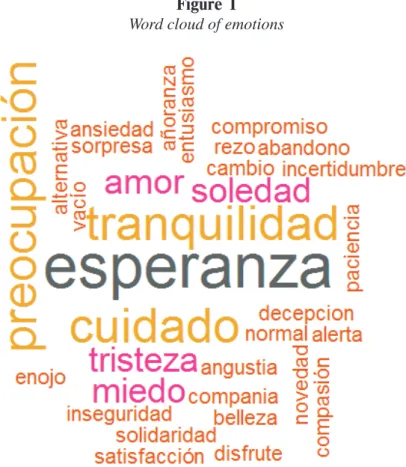
Figure 1 shows the word cloud of the emotions associated with photos.
The most outstanding term is “hope”, while “peace”, “care” and “concern”
are frequent emotions in respondents.
Figure 1 Word cloud of emotions
Figure 2 shows an example of attributes obtained through the applied neural network. It is noted that the attributes of the photograph are: “na- tural light”, “human construction”, “open area”, “not horizon”, “trees”,
“foliage”, “leaves”, “pavement”, “sunny”. In the case of this study, the at- tributes of “trees”, “foliage” and “leaves” were considered as one, “urban green”. It is important to remember that the attributes obtained through the neural network used are based on semantic categories comprising 98% of all types of sites found in the world (Zhou et al., 2017), so it can be applied practically universally, including the images of the city of Qui- to from this research.
Figure 2
Photograph of the Amazonas Avenue, in the sector of La Mariscal, Quito
Scene attributes:
natural light, man- made, open area, no horizon, trees, foliage, leaves, pavement, sunny
Photography is compared, as an example, to the results obtained in extrac- ting attributes of a photograph through the convolutional neural network im- plemented in the PlacesCNN model (http://places2.csail.mit.edu/index.html)
As mentioned above, all these emotions were transformed into binary code for the SVM modeling. A mean quadratic error was obtained from the SVM regression model of 0.37, indicating that the model can predict emo- tions appropriately: a mean quadratic error lower than 0.5 indicates an ap- propriate ability of the model to predict data more reliably. Table 1 shows the results of the scores assigned to attributes of the photographs obtained from the SVM-based regression model. The higher the score, the more in- fluence an attribute has to modify positive emotions of people. It is inter- esting how the Glossy attribute (glossy, shiny) stands out from others as the attribute that could influence or change more a positive emotion. Other significant attributes are Glass (glass, crystal), Dirty (dirty), Transportation (Transport), Plastic (Plastic), Wood and Enclosed area. On the other hand, Asphalt (pavement, asphalt) and Clouds (clouds) appear as the factors that least influence on positive emotions, showing which extreme visual approa- ches, such as seeing clouds or asphalt (top and bottom), has less influence on positive emotions, also suggesting that elements that most commonly en- ter a person’s line of sight (see buildings, see trees, see flowers) are the ones that can influence their emotions the most.
Table 1
Results of the scores assigned to attributes of the photographs obtained from the SVM model
Atributo Puntaje
Glossy 9.48
Glass 6.94
Dirty 6.71
Transporting 5.93
Playing 5.30
Wood 5.30
Plastic 5.29
Enclosed area 5.00
Flowers 4.70
Indoor light 4.70
Metal 4.69
Manmade 4.64
Foliage-Trees-Grass 3.96
Biking 2.73
Natural light 2.53
Open area 2.48
Working space 1.64
Driving 1.18
Sunny 1.05
No horizon 1.04
Clouds 0.66
Asphalt 0.65
Figure 4 shows the graphical expression of network analysis that indica- tes the location and relationships between the different nodes. It is observed that the Manmade attribute (human manufacture) has the greatest authority,
which is explained by considering that it is a study carried out in a widely ar- tificialized environment such as the city. At the same time, the open area at- tribute shows the second level of authority, which is not opposed to the rele- vance of the artificialization of the urban environment, but complements its reading by underlining the role given to open spaces by survey participants.
Thus, we can observe emotions in front of the most artificial area of the city, but also in front of the open spaces that are part of the urban configuration.
As for the attributes of space, it is followed by natural light (natural light) and no horizon (no horizon), which express that, when selecting the photo- graphic frame to communicate an emotion with respect to public space, par- ticipants prioritize areas under natural light, but without a broad horizon, as would be the case in open spaces. As for emotions, it is noted that the grea- test authority is observed in the word “Hope”, followed by “Loneliness” and
“Peace”. These emotions show that beyond the difficulties experienced du- ring confinement, the people surveyed maintained hope by observing public spaces, which were also qualified by their loneliness.
Figure 4
Networks of emotions and spatial attributes
Six subnets have been identified, as shown in Table 2. Subnets A and D have the most nodes and cover a significant area of the total network, espe- cially at the bottom. It is followed by network F, covering a large area whe- re it overlaps with subnet A, C and E. The latter two have the same number of nodes and are on the right side of the network: E to the top and C to the bottom. Finally, subnet B is the smallest and is located away from the others, in the lower part to the left without generating overpositions with others, ex- cept subnet D.
Table 2
Emotions subnets and spatial attributes
Subnet Emotions Network and attributes
A Company, enthusiasm, longing, faith, solidarity,
abandonment, anger, enjoyment. Manmade, open areas, clouds, dirty, flowers.
B Hope, alternative. Plastic, playing, wood.
C Peace, love, beauty, satisfaction, compassion. Natural light, sunny.
D Anguish, sadness, loneliness, normal,
commitment, concern, alert, patience, uncertainty. Driving, asphalt, transporting, biking, glass.
E Deception, surprise, insecurity, anxiety. No horizon, metal, working.
F Emptiness, fear, novelty, care. Foliage-Trees-Grass, enclosed areas, indoor light, glossy.
There are several links inside the subnets that are interesting to men- tion. On the one hand, subnet A shows a fairly generalist view of the space in which both artificial spaces and open areas, clouds (sky) and dirt are articu- lated. There are a number of emotions linked to a positive expectation such as enthusiasm, faith and solidarity. Subnet D is closely related to mobility in- frastructure space. Emotions are more linked to sadness, loneliness, and con- cern, among others. The places on this subnet are the ones that have expres- sed the greatest changes in the time of confinement, so they evoke different feelings clearly less hopeful. Subnet F includes green spaces, internal areas, and work areas. In the face of these spaces, emotions refer to emptiness, fear, novelty and care. The spaces that are part of this subnet also suffered impor- tant changes in the context of confinement, which is expressed in the sen- se of fear, although without reaching the sadness or concern of the previous subnet. Subnet E closely resembles the locations and feelings of Subnet F.
Closed and working places generate disappointment, surprise, insecurity and anxiety among the population. On the contrary, there are the spaces with na- tural and sunny light in subnetwork C that provoke feelings that are totally favorable to human development such as tranquility, love, beauty, satisfac- tion and compassion. This subnet underlines the importance of such spaces for social welfare. Finally, there are spaces in subnet B where material ele- ments such as plastic and wood stand out with a playful purpose for which the population evokes emotions of hope and the search for alternatives.
Discussion
This research presents information of human emotions in public spaces in Quito, during the restrictions of mobility and confinement in 2020 due to the COVID-19 pandemic. Emotional behavior has been captured through feelings reported by people surveyed, who shared personal photographs of the urban landscape. An important contribution of our research is to support the debate on the role and situation of urban public space during the pan- demic crisis. This study is one of the first contributions in Latin America on understanding the potential of considering urban residents as “sensors”
or monitors of phenomena, taking into account context and location (Sagl et al., 2015). In addition, as mentioned above, it is the first research that applies ML and SNA techniques to explore human emotions associated with images, in the context of the COVID-19 pandemic. This enhancement of re- search has two key implications. First, traditionally applied approaches to big data are moved (our study is not a big data analysis) to a certain number of qualitative data provided by voluntary citizens in a complex situation, the COVID-19 pandemic, without losing methodological robustness. For exam- ple, if having a neural network trained to recognize virtually any attribute of a space in the world, why not applying it to images like those used in this study, without creating a new neural network just for the urban landscape of the city of Quito? The second implication is that it opens a field of study litt- le explored in Latin America: the study of perceptions, emotions and urban feelings, applying quantitative methods.
Our results evidence that the COVID-19 context has created a diversity of emotions with respect to urban public space. The results of the ML and SNA analysis indicate that spatial attributes such as outdoor areas and clo-
sed areas have associations with people’s feelings. One attribute that also in- fluences positivity was “transport,” and this is associated with emotions of anguish, loneliness, normal, commitment, concern, alert, patience, and un- certainty. These findings relate to the uncertainty and anguish about social distancing in public transport, the alert and concern that shared transport can have, and the commitment, loneliness and warning that micro-mobility devices and bicycles can cause. Understanding transportation-related emo- tions in “seeing COVID-19 as the city”, can support decision-making to in- crease the safety and health of urban residents. Problems such as anxiety and perceptions of low security have already been reported as transport issues to be solved in the context of COVID-19 (Dong et al., 2021).
On the other hand, the results of SVM also suggest that closed areas may influence positive feelings. Many people may have built the idea of cars and private spaces as safe shelters against the pandemic. Jasiński (2020) states that there has been an erosion of public space along with privatization of transport during the pandemic, while van Eck et al. (2020) affirm that the pandemic is part of the global marketing and privatization processes that eli- minate public sense in urban space. In this sense, “protected” and open spa- ce, but also private closed space, may be acting as socio-spatial constructs of emotions during the COVID-19 crisis. In SNA, natural light attribute is re- lated with positive feelings, while the open areas attribute is associated with both positive and negative feelings. This suggests that more than the spa- ce itself, it is its “quality” (for example, natural light) that changes positive emotions during confinement.
Urban public space facilitates social interactions; this capacity has been reduced during the pandemic, even more so in cases of spontaneous and in- formal interrelation (Honey-Rosés et al., 2020). But it is complex to define the extent to which the pandemic will change the social configuration of pu- blic space. It is likely that a sort of “privatization” of this space will increase, where wearing a mask, maintaining physical distance, and going deeper into virtual spaces will undermine the qualities of public space, such as being su- rrounded by people and talking (Jasiński, 2020). In Latin American cities, the pandemic could exert pressure for a re-configuration of public space where some spaces will be more valued while others will be avoided for se- curity reasons (Honey-Roses et al., 2020). Understanding emotions related to these re-configurations will be essential for proper urban planning. The challenge is that such emotions are and will be changing and dynamic, and
the identification of patterns of individual-urban feelings is key to delinea- ting any planning action. Public space is a democratizing means of society, i.e., it is a means of equal, open, inclusive, and sometimes even unexpected encounters (Low & Smart, 2020). We had mentioned that public spaces are for example squares, parks and playgrounds. It is interesting how characte- ristics that may appear in these spaces (“bright”, “dirty”, “play”, “wood”,
“plastic”) are attributes that have the highest weights in influencing or chan- ging positivity during the pandemic. Does it mean a reaction to the “privati- zation” of the public space mentioned above? Possibly the people who res- ponded to our survey put in their photos and emotions a willingness to value the qualities of public space as a democratizing and strengthening space of the urban collective.
Our results also indicate which open areas and characteristics, such as having flowers, are associated with positive feelings such as enthusiasm and faith. In this way we validate two aspects in the study of urban feelings: the relationship of urban green with well-being, and the possibility of represen- ting emotions and their relationship with urban green using qualitative data such as photographs (Kothencz et al., 2017). Green infrastructure in the city and public-social space are key to ensuring ecosystem services (such as pro- vision, regulation, cultural services) during the pandemic (Hanzl, 2020), and these will remain critical in the post-pandemic city. Open and public urban areas, such as parks, can be considered fully democratic public spaces. For Low and Smart (2020) this kind of space is more open and inclusive; these are places where human encounters are democratized. Other fully democra- tic public spaces are squares, boulevards, and even walkways.
However, during the COVID-19 pandemic, these spaces play a dual role: they become opportunities that are different from pandemic confine- ment (associated with feelings like enthusiasm and enjoyment), but they can also be seen as places that would affect human relationships (originating fe- elings like abandonment and anger). This phenomenon is called uncertainty and abandonment of the urban public place, and includes dichotomies of hu- man emotions such as those identified, as well as distrust of finding an infec- ted person in the public space, unintentionally. Especially in the time of sig- nificant restrictions of human mobility, time when photographs were taken, the public space was that place of abandonment, of the non-encounter with the other. The spaces in a city are heterogeneous, but they are also inequita- ble. In the COVID-19 crisis, a dialectic of placement-displacement happens,
showing the unequal distributions of power over access and exclusion of a place (Devine-Wright et al., 2020). In this sense, the results obtained in this research demonstrate a cognitive location-displacement of the public space, where feelings denoting both attachment and exclusion can be expressed for the same element of the physical-environmental context of the city.
This double emotional sense is clearly found in the results of the SVM technique. Both “bright” and “dirty” are environmental qualities that are in- fluencing people’s positive emotions during the pandemic, even though the- se environmental attributes have always been present in the city. As stated by Acuto et al., (2020) we must “see COVID-19 as the city”, and this allows us to see that there are reactions of citizens to the disruptions of pandemic;
and in addition to this crisis the city must not only be understood from its infrastructure (for example, hospitals) and its local government, as a social network that can offer community-based solutions. One of these solutions can stem from the very recognition that the value of public space as a so- cial construct must be incorporated into inclusive and healthy city planning.
Thus, one of the emerging questions regarding public space during the pan- demic is how a renewed conception of “good citizen” can be built (Devine- Wright et al., 2020). In this sense, in the pandemic, good citizens express their concern for their well-being, but also their concern for the well-being of others, and would possibly redefine the public space of the post-pandemic city, where social justice, social inclusion, and public health are key dimen- sions of smart cities.
This study provides useful information to better understand the emo- tions of urban residents during the pandemic to assess their relationship with public space, and offers an original and potential methodological approach, including the feasibility of transferring the methodology applied to other spaces and contexts. However, the exploratory sense of this research and its limitations allow conducting further research during and after the pandemic.
While we have been able to identify various links between public space and emotions, we believe that future studies could identify in more detail and even validate certain associations between elements of public space and the individual feelings of people, incorporating spatial analysis of context-spe- cific geo-localized emotions. People’s feelings depend not only on percep- tions about an element of space, but also on a complex socio-spatial confi- guration based on previous experiences and cognitive schemes in relation to broader spatial representations.
In this regard, future research can also obtain information on feelings related to public space during crisis, which go beyond the specific scope of the pandemic. Emotions, feelings, perceptions and representations are dyna- mics that occur from experiential processes and levels of knowledge of the environment. Probably the feeling of fear after confinement is less, which is evident in the use of space. In addition, an upcoming research may also in- clude more respondents and make a demographic characterization of them to offer other angles of analysis and understand more about the links bet- ween personal feelings and places. Another future research could generate typologies of public spaces and link such typologies to levels of attachment to the place in pandemic and post-pandemic contexts. In general, we believe that this study opens up a field of study of geographies of perceptions with artificial intelligence support, new in Latin America, with the idea that a bet- ter understanding of the links between emotions and spaces is and will be useful for urban management during and after the pandemic.
Conclusion
Emotions are essential elements in building public space. Certainly, hu- manistic geography provides a framework for engaging with emotional di- mensions in experiences and attachment to place. However, perceptions and representations of urban space go beyond the individual subjectivity of ci- tizens, and constitute relational and emerging properties that provide dy- namics to the use and transformation of the urban landscape through daily practices. In this regard, the collection of voluntary geographical informa- tion and its processing through quantitative techniques allows analyzing re- current patterns that contribute to the understanding of urban space. We have found contradictory attributes (such as “bright” and “dirty”) and fundamen- tal attributes in urban life (such as “transport” and “play”) that can change positive feelings during pandemic. Also, we identify which attributes, such as “open areas”, are associated with conflicting feelings, while others such as “natural light” and “sunny” are clearly related to positive emotions. In general, this research demonstrates diversity and complexity of emotion-at- tribute relationships in the landscape, and although some results may seem contradictory at first sight, the diversity of perceptions generated by the ur- ban landscape at the time of the pandemic is demonstrated: a strong identi-
ty and at the same time an abandonment of the public space of the city. This inclusion-exclusion, this location-displacement, observed in the emotions analyzed suggest that the redefinition of urban space is necessary to make it resilient to global phenomena such as the COVID-19 pandemic.
References
Acuto, M., Larcom, S., Keil, R., Ghojeh, M., Lindsay, T., Camponeschi, C., &
Parnell, S. (2020, December 1). Seeing COVID-19 through an urban lens. Nature Sustainability, Vol. 3, pp. 977–978. https://doi.org/10.1038/
s41893-020-00620-3
Aslam, F., Awan, T. M., Syed, J. H., Kashif, A., & Parveen, M. (2020). Sentiments and emotions evoked by news headlines of coronavirus disease (CO- VID-19) outbreak. Humanities and Social Sciences Communications, 7(1), 23. https://doi.org/10.1057/s41599-020-0523-3
Bondi, L. (2005). Making connections and thinking through emotions: between geo- graphy and psychotherapy. Transactions of the Institute of British Geogra- phers, 30(4), 433–448. https://doi.org/10.1111/j.1475-5661.2005.00183.x Brown, G., Raymond, C. M., & Corcoran, J. (2015). Mapping and measuring place
attachment. Applied Geography, 57, 42–53. https://doi.org/https://doi.
org/10.1016/j.apgeog.2014.12.011
Cabrera-Barona, P., & Carrión, A. (2020). Voiding Public Spaces, Enclosing Do- mestic Places: Place Attachment at the Onset of the Pandemic in Quito, Ecuador. Journal of Latin American Geography. https://doi.org/10.1353/
lag.0.0145
Choudrie, J., Patil, S., Kotecha, K., Matta, N., & Pappas, I. (2021). Applying and Understanding an Advanced, Novel Deep Learning Approach: A Covid 19, Text Based, Emotions Analysis Study. Information Systems Fron- tiers, 23(6), 1431–1465. https://doi.org/10.1007/s10796-021-10152-6 Datta, R, Li, J., & Wang, J. Z. (2008). Algorithmic inferencing of aesthetics and
emotion in natural images: An exposition. 2008 15th IEEE Internatio- nal Conference on Image Processing, 105–108. https://doi.org/10.1109/
ICIP.2008.4711702
Datta, Ritendra, Joshi, D., Li, J., & Wang, J. Z. (2006). Studying Aesthetics in Pho- tographic Images Using a Computational Approach. In A. Leonardis, H.
Bischof, & A. Pinz (Eds.), Computer Vision – ECCV 2006 (pp. 288–301).
Berlin, Heidelberg: Springer Berlin Heidelberg.
Devine-Wright, P., Pinto De Carvalho, L., Masso, A. Di, Lewicka, M., Manzo, L.,
& Williams, D. R. (2020). “Re-placed”-Reconsidering relationships with place and lessons from a pandemic. Journal of Environmental Psycholo- gy, 72, 101514. https://doi.org/10.1016/j.jenvp.2020.101514
Dhar, S., Ordonez, V., & Berg, T. L. (2011). High level describable attributes for predicting aesthetics and interestingness. CVPR 2011, 1657–1664.
https://doi.org/10.1109/CVPR.2011.5995467
Dong, H., Ma, S., Jia, N., & Tian, J. (2021). Understanding public transport satisfac- tion in post COVID-19 pandemic. Transport Policy, 101, 81–88. https://
doi.org/https://doi.org/10.1016/j.tranpol.2020.12.004
Ekman, P. (1999). Basic emotions. In T. Dalgleish & M. Power (Eds.), Handbook of Cognition and Emotion (pp. 45–60). Wiley & Sons Ltd.
Gholami, R., & Fakhari, N. (2017). Chapter 27 - Support Vector Machine: Princi- ples, Parameters, and Applications. In P. Samui, S. Sekhar, & V. E. Balas (Eds.), Handbook of Neural Computation (pp. 515–535). https://doi.org/
https://doi.org/10.1016/B978-0-12-811318-9.00027-2
Goodchild, M. F. (2007). Citizens as sensors: The world of volunteered geography.
GeoJournal, 69, 211–221. https://doi.org/10.1007/s10708-007-9111-y Hanzl, M. (2020). Urban forms and green infrastructure – the implications for public
health during the COVID-19 pandemic. Cities & Health, 1–5. https://doi.
org/10.1080/23748834.2020.1791441
He, K., Zhang, X., Ren, S., & Sun, J. (2016). Deep Residual Learning for Image Recognition. 2016 IEEE Conference on Computer Vision and Pattern Recognition (CVPR), 770–778. https://doi.org/10.1109/CVPR.2016.90 Hernández Magaña, A., & Güiza Valverde, F. (2016). Información Geográfica Vo-
luntaria (IGV), estado del arte en Latinoamérica. Revista Cartográfica, (93), 35–55.
Hidalgo, M. C. (2013). Operationalization of place attachment: A consen- sus proposal. Studies in Psychology, 34(3), 251–259. https://doi.
org/10.1174/021093913808295190
Hidalgo, M. C., & Hernandez, B. (2001). Place Attachment: Conceptual and Empi- rical Questions. Journal of Environmental Psychology, 21(3), 273–281.
https://doi.org/10.1006/JEVP.2001.0221
Honey-Rosés, J., Anguelovski, I., Chireh, V. K., Daher, C., Konijnendijk van den Bosch, C., Litt, J. S., … Nieuwenhuijsen, M. J. (2020). The impact of
COVID-19 on public space: an early review of the emerging questions – design, perceptions and inequities. Cities & Health, 1–17. https://doi.org /10.1080/23748834.2020.1780074
Huang, Y., Fei, T., Kwan, M.-P., Kang, Y., Li, J., Li, Y., … Bian, M. (2020). GIS- Based Emotional Computing: A Review of Quantitative Approaches to Measure the Emotion Layer of Human–Environment Relationships.
ISPRS International Journal of Geo-Information, 9(9). https://doi.
org/10.3390/ijgi9090551
Izard, C. E. (2007). Basic Emotions, Natural Kinds, Emotion Schemas, and a New Paradigm. Perspectives on Psychological Science, 2(3), 260–280. Re- trieved from https://about.jstor.org/terms
Jasiński, A. (2020). Public space or safe space – remarks during the COVID-19 pandemic. Technical Transactions, e2020020, 20200020. https://doi.org/
https://doi.org/10.37705/TechTrans/e2020020
Kamalipour, H., Yeganeh, A. J., & Alalhesabi, M. (2012). Predictors of Place Atta- chment in Urban Residential Environments: A Residential Complex Case Study. Procedia - Social and Behavioral Sciences, 35, 459–467.
https://doi.org/10.1016/J.SBSPRO.2012.02.111
Kaur, S., Kaul, P., & Zadeh, P. M. (2020). Monitoring the Dynamics of Emotions during COVID-19 Using Twitter Data. Procedia Computer Science, 177, 423–430. https://doi.org/https://doi.org/10.1016/j.procs.2020.10.056 Kleinberg, J. M. (1999). Authoritative Sources in a Hyperlinked Environment. J.
ACM, 46(5), 604–632. https://doi.org/10.1145/324133.324140
Lewicka, M. (2008). Place attachment, place identity, and place memory: Restoring the forgotten city past. Journal of Environmental Psychology, 28(3), 209–231. https://doi.org/10.1016/J.JENVP.2008.02.001
Li, Y., Fei, T., Huang, Y., Li, J., Li, X., Zhang, F., … Wu, G. (2020). Emotional ha- bitat: mapping the global geographic distribution of human emotion with physical environmental factors using a species distribution model. Inter- national Journal of Geographical Information Science, 1–23. https://doi.
org/10.1080/13658816.2020.1755040
Low, S., & Smart, A. (2020). Thoughts about Public Space During Covid-19 Pan- demic. City & Society (Washington, D.C.), 32(1), 10.1111/ciso.12260.
https://doi.org/10.1111/ciso.12260
Marin, A., & Wellman, B. (2014). Social Network Analysis: An Introduction. In J.
Scott & P. Carrington (Eds.), The SAGE Handbook of Social Network Analysis (pp. 11–25). https://doi.org/10.4135/9781446294413.n2
Meng, M., & Zhao, C. (2015). Application of Support Vector Machines to a Small- Sample Prediction. Advances in Petroleum Exploration and Develop- ment, 10(2), 72–75.
Orellana, D., Bustos, M. E., Marín-Palacios, M., Cabrera-Jara, N., & Hermida, M. A. (2020). Walk’n’roll: Mapping street-level accessibility for diffe- rent mobility conditions in Cuenca, Ecuador. Journal of Transport and Health, 16, 100821. https://doi.org/10.1016/j.jth.2020.100821
Resch, B., & Szell, M. (2019). Human-Centric Data Science for Urban Studies.
ISPRS International Journal of Geo-Information, 8(12). https://doi.
org/10.3390/ijgi8120584
Ricart, N., & Remesar, A. (2013). Reflexiones sobre el espacio público . On the W@
terfront, (25), 5–35.
Sagl, G., Resch, B., & Blaschke, T. (2015). Contextual Sensing: Integrating Con- textual Information with Human and Technical Geo-Sensor Information for Smart Cities. Sensors, 15(7), 17013–17035. https://doi.org/10.3390/
s150717013
Tuan, Y.-F. (1976). Humanistic Geography. Annals of the Association of American Geographers, 66(2), 266–276.
Tuan, Y.-F. (1990). Topophilia: A Study of Environmental Perceptions, Attitudes, and Values. Columbia University Press.
Ujang, N. (2012). Place Attachment and Continuity of Urban Place Identity.
Procedia - Social and Behavioral Sciences, 49, 156–167. https://doi.
org/10.1016/J.SBSPRO.2012.07.014
van Eck, E., van Melik, R., & Schapendonk, J. (2020). Marketplaces as Public Spa- ces in Times of The Covid-19 Coronavirus Outbreak: First Reflections.
Tijdschrift Voor Economische En Sociale Geografie, 111(3), 373–386.
https://doi.org/https://doi.org/10.1111/tesg.12431
Woodford, L., & Bussey, L. (2021). Exploring the Perceived Impact of the CO- VID-19 Pandemic Social Distancing Measures on Athlete Wellbeing: A Qualitative Study Utilising Photo-Elicitation. Frontiers in Psychology, 12, 2727. https://doi.org/10.3389/fpsyg.2021.624023
Xue, J., Chen, J., Hu, R., Chen, C., Zheng, C., Su, Y., & Zhu, T. (2020). Twit- ter Discussions and Emotions About the COVID-19 Pandemic: Machi- ne Learning Approach. J Med Internet Res, 22(11), e20550. https://doi.
org/10.2196/20550
Zhang, F., Zhou, B., Liu, L., Liu, Y., Fung, H. H., Lin, H., & Ratti, C. (2018).
Measuring human perceptions of a large-scale urban region using machi-
ne learning. Landscape and Urban Planning, 180, 148–160. https://doi.
org/10.1016/j.landurbplan.2018.08.020
Zhou, B., Lapedriza, A., Khosla, A., Oliva, A., & Torralba, A. (2017). Places: A 10 million Image Database for Scene Recognition. IEEE Transactions on Pattern Analysis and Machine Intelligence.