Per aquest motiu, es va realitzar un estudi de la microbiota dels diferents genotips de tomàquet. 8 pràctiques agronòmiques convencionals com l'ús de fungicides per reduir la diversitat de la microbiota. A causa de la manca de dades bibliogràfiques, es va realitzar un estudi centrat en la seva caracterització com a espècie endofítica.
Como ya se mencionó, el genotipo de una planta puede influir en la presencia de diferentes comunidades microbianas, que a su vez pueden influir en las características del genotipo. Por ello se realizó un estudio de la microbiota de diferentes genotipos de tomate. Para ello, recurrimos al estudio del genoma de la microbiota presente en el tejido vegetal, es decir, el microbioma, para determinar la cantidad y estructura de las comunidades de hongos y bacterias endófitos presentes en cada genotipo.
Asimismo, también quisimos demostrar el efecto que tienen las prácticas agronómicas convencionales como el uso de fungicidas en la reducción de la diversidad de la microbiota. A continuación, se evaluó el potencial del endófito para conferir resistencia al estrés biótico a plantas de tomate, estudiando la infección causada por la bacteria patógena Pseudomonas syringae pv.
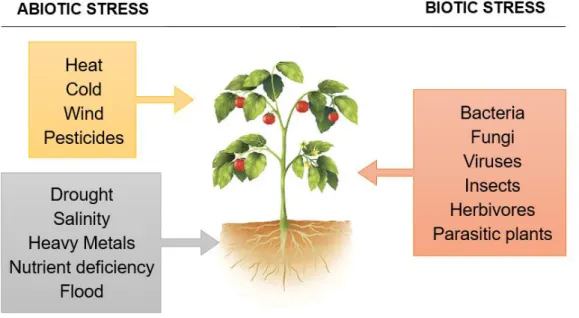
Plant responses to adverse abiotic conditions
The specific morphological and physiological challenges depend on both the stress intensity and the plant's sensitivity to stress ( Mukarram et al., 2021 ). In this case, the main known defense mechanisms are the regulation and activation of stress-related genes (Wang et al., 2003). Plant adaptation and resistance are also variable and depend on plant species and genotype, as well as on developmental stage (Chen et al., 1982).
Heat stress reduces photosynthetic pigments, soluble proteins and rubisco-binding proteins (RBP) (Demirevska-Kepova et al., 2005). However, high temperatures are frequently associated with a decrease in water availability (Simões-Araújo et al., 2003), which can cause more severe damage to the plant. Heat stress transcription factors (Hsf), which are the activators of the HS gene expression, have also been studied for decades in the role of helping plants to survive (Scharf et al., 2012).
In addition, compatible osmolytes have been shown to be crucial for mitigating the effects of stress by regulating osmotic activities (Bita & Gerats, 2013; Ghosh et al., 2021). The response of a plant to two or more stress conditions is reported to be different from the response to the addition of individual stresses, with a complex system that intertwines multiple signaling and molecular pathways and defense mechanisms (Suzuki et al., 2014).
Plant defense against pathogens
Recent studies have also introduced the term NAMPS to describe nematode-derived molecular patterns (Ali et al., 2018). To detect these molecules, plants have a wide variety of receptors, including pattern recognition receptors (PRRs), which are surface-localized receptor-like kinases that respond to MAMPS, and wall-associated kinases (WAKs) that recognize DAMPs (Kaur et al . ., 2022). Nevertheless, recent studies have suggested additional interactions beyond this model, indicating that ETI can potentially enhance PTI (Ngou et al., 2021).
These interactions are complex networks to balance plant development and defense mechanisms against many stresses (Yang et al., 2019). For example, the disease in tomato is mainly caused by the pathovar tomato DC3000 (Mansfield et al., 2012). However, plants can recognize PAMPs such as flagellin and activate PTI, causing stomatal guard cells to close stomata (Melotto et al., 2006).
Plants have in turn evolved to recognize T3SS effectors and trigger ETI to inhibit bacterial growth (Jones et al., 2016). As for coronatin, it is a molecular mimic of jasmonylisoleucine (JA-Ile), the active form of jasmonic acid in the plant (Katsir et al., 2008).
Plant symbionts: the plant microbiome
30 important part of the plant's holobiont: the collective set of organisms that interact with the plant, both internally and externally, to influence its growth, development and survival. In fact, beneficial microorganisms have been shown to promote plant growth, improve nutrient uptake, increase stress tolerance, and protect plants from pests and diseases (Turner et al., 2013). Bacterial and fungal microorganisms can be found on or inside plant tissues and are in constant interaction with the plant.
These fungi form a mutually beneficial relationship with plants where the fungi receive carbohydrates from the plant and in return the plant provides increased access to soil nutrients such as phosphorus (Van Der Heijden et. Another well-known symbiont is nitrogen-fixing bacteria ( Hayat et al. , 2010) that live in nodules on the plant roots and convert atmospheric nitrogen into a biologically available form for the plant.In this work we want to focus on these microorganisms that live in the plant endosphere, known as endophytes.
This term usually refers to organisms that live in plant tissues without causing damage to the host plant (Jia et al., 2016; Porras-Alfaro & Bayman, 2011). It has been proven that they produce substances that promote plant growth, protect plants from stress and stimulate the plant's immune response against pathogens.

Fungal endophytes
Common fungal culture media include Potato Dextrose Agar (PDA), Malt Extract Agar (MEA), Czapex Dox Agar (CDA), Sabouraud Dextrose Agar (SDA) or Nutrient Agar (NA) (Sharma & Pandey, 2010; Syamsia et al., 2019) . For example, vulnerability of the host, presence of other competing endophytes or the longevity of the interaction (Patle et al., 2018; Rodriguez et al., 2009). Because of this, some authors prefer to use the term “true endophytes” for those long-lived mutualistic endophytic associations (Mostert et al., 2000).
Their successful colonization depends on several factors, such as the plant genotype, plant tissue, microbial strain type and environmental conditions (Hardoim et al., 2015). 37 host metabolism to induce certain changes in the plant's metabolic pathways (Harman & Shoresh, 2007; Schulz et al., 2002). Recently, many endophytic fungi have been shown to produce compounds with medicinal properties, including alkaloids, terpenoids, flavonoids, and phenolic compounds (Shevchuk et al., 2023; Strobel, 2003).
Thus, these natural compounds are found to be promising for current agricultural and medical advancement (Gautam & Avasthi, 2019; Raja et al., 2017). However, these compounds are the result of several environmental, evolutionary and ecological factors (Aly et al., 2011).
The roles of fungal endophytes for plant improvement
Current studies aim to find alternatives without increasing the current crop area (Erb et al., 2016). This is known as the phytosphere (Yang et al., 2012) and consists of the phyllosphere, the endosphere and the rhizosphere. They can produce compounds to regulate plant growth or produce antimicrobial compounds to improve the host plant's fitness to overcome adverse situations (Sudha et al., 2016).
Khan AL, Waqas M, Hussain J, et al (2014) The fungal endophyte Penicillium janthinellum LK5 can reduce cadmium toxicity in Solanum lycopersicum (Sitiens and Rhe). Heat stress (HS) is one of the most important abiotic stresses limiting crop productivity worldwide (Bita & Gerats, 2013). In the current global warming scenario, temperatures are expected to rise between 2 and 5 °C by the end of the year. of the 21st century (Battisti & Naylor, 2009; Masson-Delmotte et al., 2021). The ability of plants to survive sudden increases in temperature is known as basal thermotolerance (Mittler et al., 2012).
This parameter has been used to evaluate the response to stress in many plant species (Bineau et al., 2021). Although the implication of SA in abiotic stress tolerance is widely known (reviewed by Khan et al. 2015)), there has been little investigation of SA-mediated responses in the recovery phase. In this regard, some authors prefer to treat the whole concept as holobiont plant (Vandenkoornhuyse et al., 2015).
Therefore, the loss of these satellite microorganisms could harm plant growth and productivity (Gera Hol et al., 2015). Soil is known to have a strong influence on the formation of the root and rhizosphere microbiome (Wang et al., 2016). Studies have shown that the microbiota also changes tissues from the outside in (Zhang et al., 2021).
Unlike the soil microbiota, the endophytic microbiota of the aerial parts of the plant is thought to be acquired more by vertical transmission (Bergna et al., 2018; . Frank et al., 2017). The seed microbiota has previously been found to have a core microbiota that is vertically transmitted (Zhang et al., 2021). Similarly, most analyzes of the microbiome in tomato are focused on underground communities (Chialva et al., 2018;.
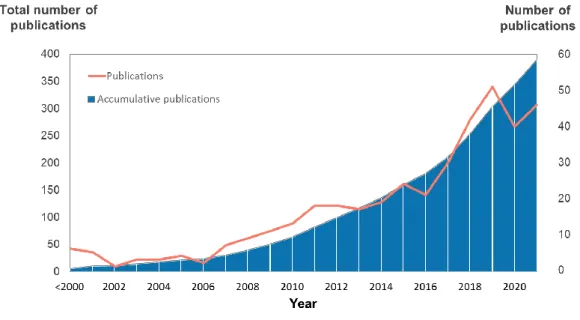
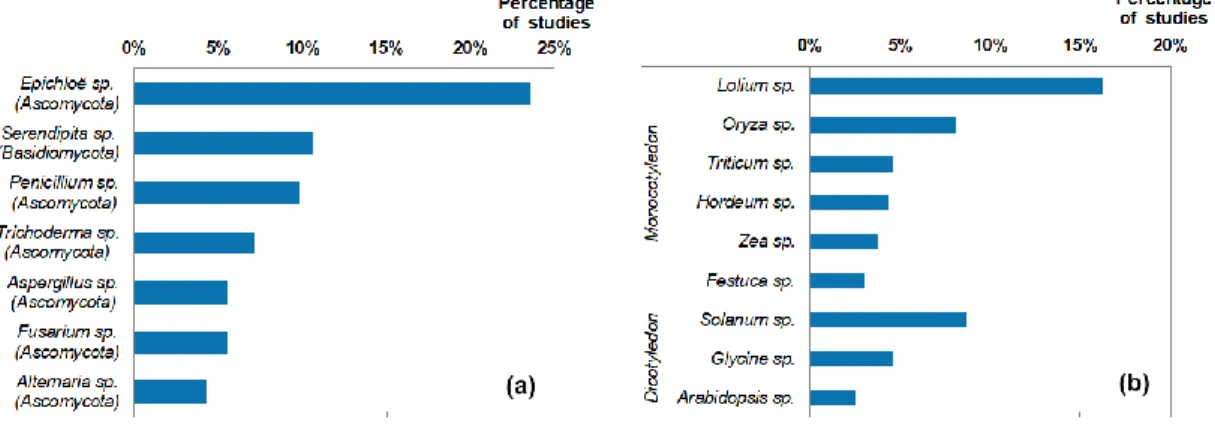
About half of the studies conducted over the past 25 years have focused on Poaceae (Liu-Xu et al., 2022). As previously discussed by (Mayerhofer et al., 2013), several factors may reflect the variability of plant responses, such as the pH of the substrate, and influence the plant response and interaction with the endophytes. This pathogenic species has been classified into more than 60 pathovars depending on host specificity (Xin et al., 2018).
The use of fungal endophytes for plant protection has been previously investigated (Akram et al., 2023).