Based on prior information, English language learners develop an English style that hardly seems similar to that of native speakers. The style developed by a native speaker in his natural environment appears to differ from that of learners.
Purpose of the study
3 Learners not only need a classroom environment to learn a language, but to be in contact with native language input, which provides a full range of opportunities to practice the communicative skills and get used to the native speakers' speech. According to Brown (1990), it is difficult to understand a foreign language because learners emerge in a classroom where the language is hardly used appropriately by their teachers.
Research Questions
Significance of the study
Therefore, we insist that this investigation can be useful for those who want to be effective in one of these abilities that we have just mentioned, especially in the oral skills. Of course, we must emphasize that the native context is richer in terms of oral practice and interaction, and consequently the development of effective oral skills.
LITERATURE REVIEW
Routines and Patterns
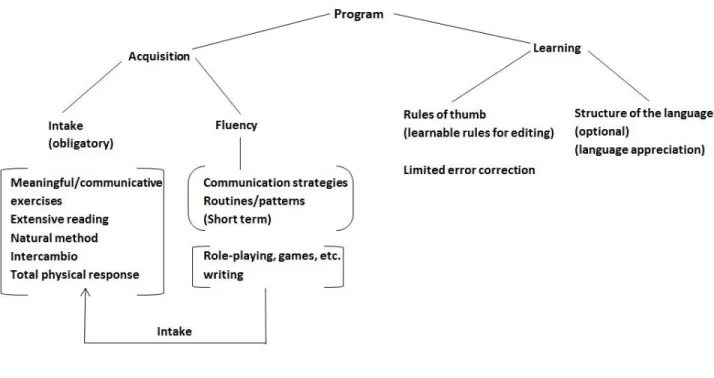
Krashen (1982, p. 83) defines prefabricated routines as whole memorized utterances or phrases, such as How are you? Moreover, Lyon quoted in Krashen (1982) says that such constructions can be combined in sentences according to production rules.
Input
Types of Input
Motor-perceptual skills involve perceiving, recalling and articulating the sounds and structures of language in the correct order. Clevenger (1991) attributes "the continuing problem of defining communication" to the fact that the verb "to communicate" is well established in the common lexicon and therefore not easily captured for scientific use. David Hargreaves (2004) identifies student voice as 'the most powerful gateway' to personalizing learning, as students are encouraged to provide feedback on their learning and contribute to their curriculum.
Therefore, the development of communication skills in the context where the language is used is the basis of our research. Above, as observed in the expression of interviewee 1 "the teacher should give us more opportunities to talk on other kinds of topics", we can conclude that the topics discussed by the teacher make the students feel bored and at the same time they feel limited to speaking due to low interest in academic or formal texts. The teacher should not waste available class time checking homework.
Which of the two environments is most suitable for skillful development of oral skills?
Active Listening
Natural Approach
- Characteristics of Natural Approach
- Importance of Oral Communication
Formal and Informal Environments
- Development of Oral Communication through Activities
- Communicative Competence
- ESL o EFL
The type of vocabulary provided in the classroom also does not always meet the needs encountered outside the classroom. This simple lexico-semantic analysis reveals the fact that the central word in the syngtam "communicative competence" is the word. Competence is one of the most controversial terms in the field of general and applied linguistics.
In the 1970s and 1980s, many applied linguists with a primary interest in the theory of language acquisition and the theory of language testing made their valuable contributions to the further development of the concept of communicative competence. Only a few will be mentioned below, namely those whose theoretical reflections and empirical work appear to have had the most significant influence on the theory of communicative competence.
Language skills
- The role of Interaction
- Communication
- Interaction and Development
Morrow (1981) emphasizes that what you say to someone depends not only on what he said to you (although this is obviously very important), but also on what you want to get out of the conversation. In spoken interaction, speaker and listener need not only be good processors of the spoken word, able to produce coherent language in the difficult conditions of spoken communication. Ellis and Barkhuizen (2005) define negotiation of meaning as the verbal exchanges that occur when speakers attempt to avoid communication failure.
On the other hand, the role of feedback is one of the most important beneficial aspects of interaction that can promote learning in general. The necessity of communication is a momentum to consider the importance of the various points that the natural approach concerns.
Developing Speaking
- Practice and of Importance
- Ways of Practicing Speaking
Studies show that when young people are listened to, involved in meaningful decision-making processes and supported to voice their opinions, they are more likely to feel confident to speak up. Fielding and Ruddock (2004) show that when schools involve student voice, they create opportunities to facilitate a stronger sense of: membership, so that students feel more positively about school; respect and self-worth, so that students feel positive about themselves; themselves as learners, so that students are better able to manage their own learning process; and agency, so that students realize that they can have an impact on things that matter to them in school. Student voice is identified as a key component of personalized learning both in Australia and overseas.
The other three skills (reading, writing and reading) can be easily mastered, but speaking cannot be practiced alone. Another way, in the case of non-native speakers, is to join clubs where people learn to speak English as well.
METHODOLOGY
Participants
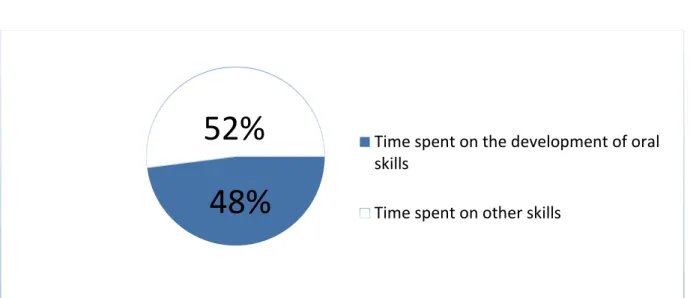
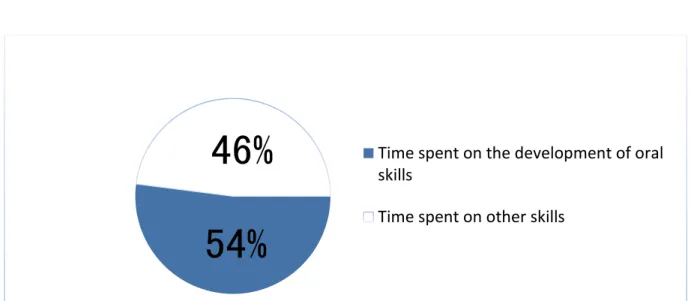
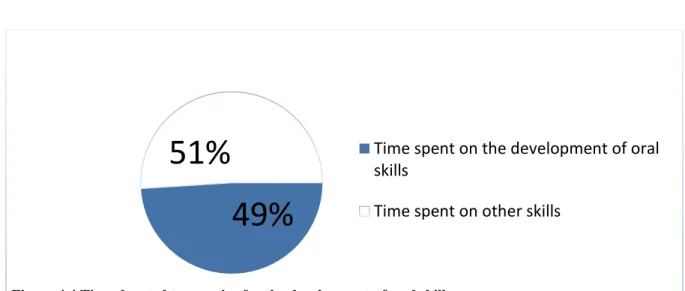
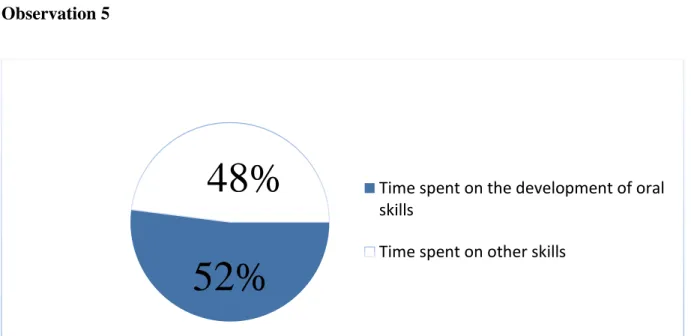
The context where we will apply our tools is in different sessions of Target Language 4 and on five students of the language faculty of the Benemérita Universidad Autónoma de Puebla. The groups were randomly selected to prove that our identified problem existed not only in the selected groups but in the rest of the others. We therefore attended the groups on different dates with the aim of observing everything that happened in the classroom from the very first moment of the activities to the closing of the session.
The final number obtained would show an indicator of the amount of interaction and practice of the students for the development of their oral skills. The purpose of the questions was deliberately formulated to know how the students felt in each environment considering the activities he/she was doing at that time.
Instruments
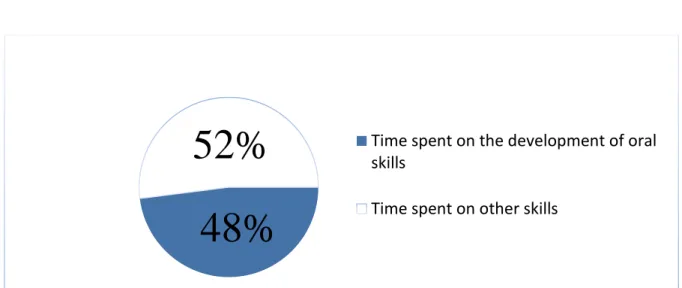
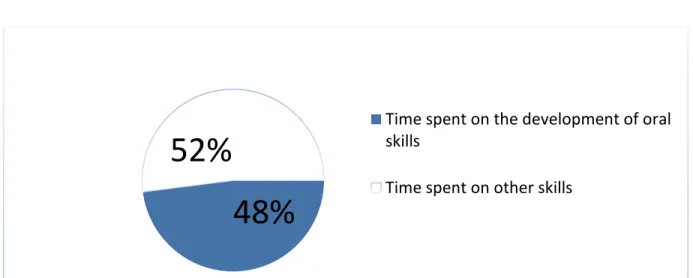
After this observation process is carried out in all the selected groups, we will get a percentage that will show the amount of time spent on developing oral skills. Then, every thought and feeling of each participant has valuable hidden information that must be interpreted and analyzed to identify factors that help or hinder the development of oral skills. Finally in this process, we will interview five students that we have selected based on their immersion experience in the two environments, recording the entire interview speech for later analysis and conclusions.
These two instruments are the essential data keepers that make us discover the pros and cons of being immersed in any environment. Therefore, a person who wants to start in a second language can certainly decide how to acquire it.
Data analysis
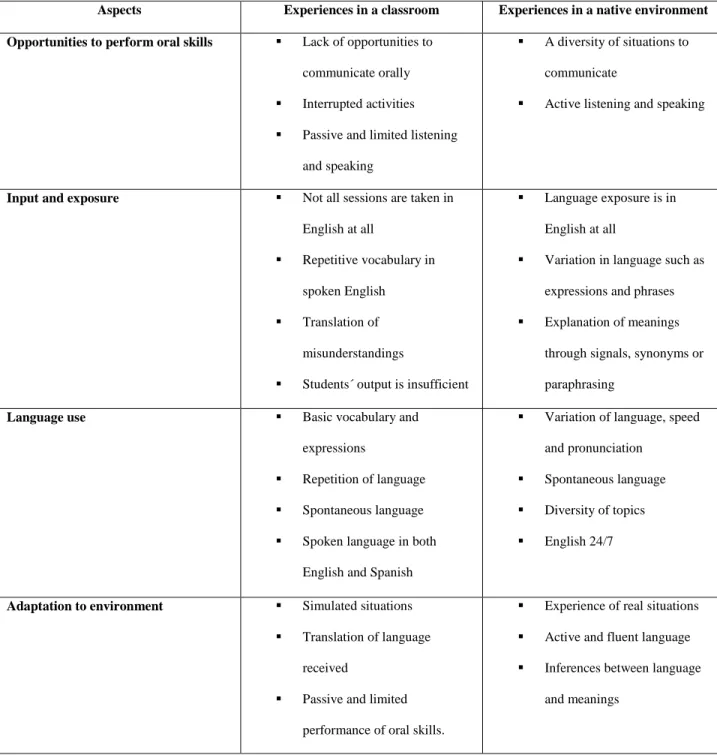
33 The data obtained from the observations will be a large amount of numbers in terms of frequency of interaction and oral language use. On the other hand, the recordings obtained from the interviews as previously explained in 3.3 will be carefully listened to in order to interpret parts of the student's speech. These speaking sections will be divided into the following four categories: Opportunities to perform oral skills, input and exposure, use of language and adaptation to the environment.
These four categories will be represented in a table that will take into account both the native and non-native environment. The advantages and disadvantages highlighted in each environment section will be the key aspects that lead us to determine which of the two environments is best suited for the development of oral skills and what effects are produced by being immersed in each simple environment.
RESULTS
Interviews
Aspects Experiences in a classroom Experiences in an indigenous environment Opportunities to perform oral skills Lack of opportunities to. All students interviewed agreed that their teachers did not provide them with enough opportunities to speak and develop oral skills. Most of the students interviewed expressed that being in the US helped them a lot in their oral skill performance.
Finally, interviewee 2's thought confirms our assumption that native environmental conditions are more suitable for developing oral skills. In fact, as analyzed in the students' testimonies, a native environment is more important for language learners if oral language skills are the target; because of the conditions that native environments have, people immersed in them develop better oral skills.
Observations
The teacher checked the homework and the students were talking about topics not related to the class, it was in Spanish. Despite the fact that the teacher encouraged collaborative work, in most cases the students preferred to speak in Spanish. The teacher could be interactive with them to practice and make good use of time.
In this situation, the teacher could intervene and communicate with the students to encourage them to participate. The teacher did not provide the students with the necessary input to improve their level of communicative English.
CONCLUSIONS
- Research Questions Answers
- Suggestions
- Limitations of the study
- Direction for further Research…
- Conclusions
- Final Findings
- References
What are the factors that help students develop proficient oral skills while immersed in a home-grown environment? What are the factors that do and do not allow students to develop proficient oral skills while immersed in a non-native environment? One of the ideas we gathered from the interview participants was that teachers should engage students in various interesting topics so that students are exposed to a wide variety of language exposures, such as vocabulary, expressions, cultural knowledge and also the development of oral skills as a result of the interaction arose from questions and doubts.
Later, test the same participants once more to obtain new results of the level of oral language use that allow a comparison of the results and determine the progress and influence of the local environment experience. Thus, students face problems in conversations due to the lack of practice and development of their oral skills. A concrete overview of interviews and observations showed that a language class is not enough to develop oral skills.
Knowing this, students need a lot of practice to be effective in oral skills.