
This document has been prepared by the content divisions, sub-regional headquarters and country offices of the Economic Commission for Latin America and the Caribbean (ECLAC). The scale of the challenges faced by the countries of Latin America and the Caribbean is such that dialogue and decisions are needed that are not limited to the short term. In this sense, the SDGs can be of great help in formulating and shaping a shared vision of the future.
Latin America and the Caribbean is facing a development crisis
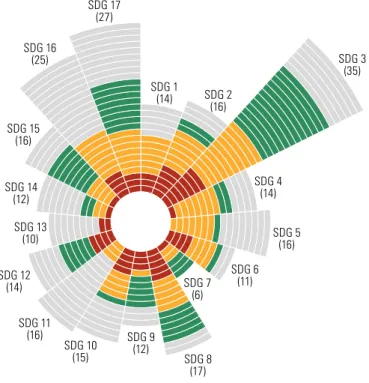
Latin America and the Caribbean are facing difficulties and uncertainties caused by successive global crises (related to climate, biodiversity, healthcare, employment, education, food security and cost of living), which major challenges arise that must be overcome in order to achieve the Sustainable Development Goals. Goals (SDGs). Source: Economic Commission for Latin America and the Caribbean (ECLAC), based on official figures.
Institutional progress on means of implementation of the 2030 Agenda
Latin America and the Caribbean have created an important institutional framework and coordination to achieve the goals of the 2030 Agenda. Fifteen countries in the region have set up ad hoc coordination mechanisms to monitor the implementation of the 2030 Agenda. Since the first meeting of the Forum of the Countries of Latin America and the Caribbean on Sustainable Development (2017), the United Nations system in the region has intensified efforts to promote civil society participation in all intergovernmental fora and to strengthen.
At the regional level, ECLAC's subsidiary bodies report on their significant contributions to the implementation of the 2030 Agenda to the Latin American and Caribbean Forum on Sustainable Development.
Measuring progress towards the 2030 targets of the Sustainable Development Goals
To make the results easier to read, a "traffic light" system is proposed with green, yellow and red lights indicating different situations:. i) the green group of the targets that have already been reached or will be in 2030 if the current trend and pace is maintained; and (ii) the yellow and red groups of the targets, which will not be achieved by 2030 on current trends unless public policies are implemented to accelerate the pace of progress (yellow) or reverse the observed trend away from the target (red). Most of the region's indicators show that the trend in the 2030 forecast is in the right direction, but progress is too slow to reach the target (yellow). Analysis shows that in Latin America and the Caribbean, 24.6% of the targets have been achieved or will be achieved if the current trend continues; that for 48.4% of the targets the trend is positive, but not sufficient for them to be achieved; and that for 27.0% of the targets the trend is on the way back.
Monitoring the implementation of the 2030 Agenda requires statistics and indicators that cover all aspects defined in the SDGs, adapt to the underlying time period, cover the entire geographic territory and include all relevant breakdowns, both for territories and for selected groups.
Goal 6: Ensure availability and sustainable management of water and sanitation for all
Achieving goal 6 by 2030 will require investment and improving water resource institutions and management. A change of course is needed in relation to target 6.4, on the efficient use of water resources, and target 6.6, on the protection and restoration of water-related ecosystems. In February 2023, in preparation for the United Nations Water Conference, ECLAC held the Regional Water Dialogue in Latin America and the Caribbean 2023, which culminated in the adoption by the countries of the Regional Water Action Agenda, an international cooperation instrument in relation to targets 6.a (expand international cooperation and capacity-building support, the only target of Goal 6 on track to be achieved) and 6.b (strengthen the participation of local communities in improving water management).
The Agenda is an urgent call to action for the mobilization of all political, technical and financial resources available in and for Latin America and the Caribbean.
Goal 7: Ensure access to affordable, reliable, sustainable and modern energy for all
Latin America and the Caribbean: targets of Goal 7, based on the probability of reaching the defined threshold in 2030. While progress has been made towards target 7.2 (increasing the share of renewable energy), the regional energy mix remains largely fossil fuel based and vulnerable to external geopolitical shocks, especially for countries that are hydrocarbon importers; In addition, instrumental regulatory (subsidies), energy security and integration challenges still exist, which, if overcome, would enable progress to be made at the speed necessary to achieve this goal . While Goal 7.3 (increasing energy efficiency) requires significant attention, it also offers a great opportunity for transformation.
The region is lagging behind target 7.a (strengthen international cooperation to facilitate access to clean energy research and technology, including renewable energy, energy efficiency and advanced and cleaner fossil fuel technology, and investment in energy infrastructure in that area), a situation that needs to be reversed, because that goal is precisely the facilitating factor for achieving the other goals mentioned above.
Goal 9: Build resilient infrastructure, promote inclusive and sustainable industrialization
The trend is in the right direction, but progress is too slow for the target to be achieved. The trend is moving. As for target 9.2 (inclusive and sustainable industrialization), the industrialization index has stagnated over the past two decades. However, strong growth in industries in the service sector is noteworthy and will require closer monitoring.
Modern industrial policies must cover the important opportunities in the Internet-enabled service sectors, whose global growth is dramatic but whose expansion depends on a number of conditions related to connectivity, digital skills and regulatory frameworks.
Goal 11: Make cities and human settlements inclusive, safe, resilient and sustainable
Access to sustainable and quality public transport (goal 11.2) is one of the biggest challenges facing the region. The air quality in cities (target 11.6) has improved: a gradual reduction of the average annual concentrations of particulate matter has been achieved in the region over the period, both in the city and in the countryside. Progress towards the implementation of the 2030 Agenda in cities will inevitably involve addressing urban gaps at social, economic and environmental levels.
In Latin America and the Caribbean, overcoming this challenge involves cooperation with local authorities, especially in cities with more than 1 million inhabitants, as they account for 46.1% of the total urban population.
Goal 17: Strengthen the means of implementation and revitalize the Global Partnership
Final reflections: looking towards the future
Cooperation between the statistical institutions in the countries of the region must be maintained and expanded in some areas and for some countries. Achieving a sustainable and inclusive water transition in Latin America and the Caribbean will require progress with the five cross-cutting accelerators of the SDG 6 Global Acceleration Framework5 (UN-Water, 2020), namely:. ii) Strengthening water governance and institutions. iii) Capacity building for public servants, especially local officials. Effectively managing the energy transition in the region requires establishing and redesigning regulatory frameworks and their policy instruments to better enable renewable resources to contribute to inclusive and sustainable energy development, and redesigning tax regimes to facilitate efficient and sustainable investment.
After the pandemic, the distribution of financial and non-financial resources should be restored to mitigate the obstacles observed in the trajectory of many indicators.
Strategy, foresight and planning to get back on track to achieve the SDGs
Addressing challenges and crises with a long-term strategy anchored in the SDGs should be a priority for governments, the private sector and civil society, which requires strengthening state institutions and developing new capacities for analysis, foresight and forecasting to enrich the process of public policies. The changes that the region needs will not happen in a single term of government; there is a need for forward-looking state policies that are protected from the excesses in the exercise of governmental power that are common in Latin America and the Caribbean. A renewed state is needed to advance in the transformation of the development model and on the path to sustainable development.
This implies a cultural change in the region, which would make it feasible to successfully implement the organizational and governance changes necessary to undertake transformative initiatives to accelerate the pace towards the achievement of the 2030 Agenda.
Transformative initiatives
Modern services exports have great potential in the region for progress on several SDGs simultaneously: (i) they promote knowledge flows between economies and enable firms to benefit from local knowledge spillovers (Goal 9), which in turn grow and boost productivity; (ii) they are a source of employment for medium and highly skilled workers, thereby contributing to the creation of quality jobs (Goal 8); (iii) they have a high potential to influence the quality of education (Objective 4) and health (Objective 3) services; (iv) they can be a new driver of regional integration, since physical barriers do not limit trade in these services as much as in goods; (v) they have the potential to reduce gender gaps (Goal 5) through the use of the Internet;. vi) they contribute to the achievement of the climate-related goals (6, 7 and 11 to 15), due to their intangible nature and their contribution to the distribution and application of the best environmental solutions at the lowest cost in the countries of the region . In the context of the demographic and epidemiological transition that the region is undergoing, a marked increase in the demand for care is expected, and the care sectors accordingly have great potential to boost economies and create jobs. Sustainable tourism also has the potential to contribute to the reduction of rural poverty (Goals 1 and 10), especially considering that 80% of people living in extreme poverty are in rural areas (WHO, 2020), where many of the region's tourist attractions are.
For most countries in the region, intraregional trade is more intensive in manufacturing, where it includes the widest range of products and the largest proportion of companies, especially small and medium-sized ones.
Bibliography
IACGB (International Advisory Council of the Global Bioeconomy Summit) (2018), Communiqué: Innovation in the Global Bio-economy for Sustainable and Inclusive Transformation and Wellbeing, Berlin. 2022), "Towards Transformation of the Development Model in Latin America and the Caribbean", Santiago, Economic Commission for Latin America and the Caribbean (ECLAC), 31 October [online] https://. UN-Water (2020), “The Sustainable Development Goal 6 Global Acceleration Framework” [online] https://www.unwater.org/sites/default/files/app/. Report of the Secretary-General, New York [online] https://www.un.org/en/content/common-agenda-report/#download.
