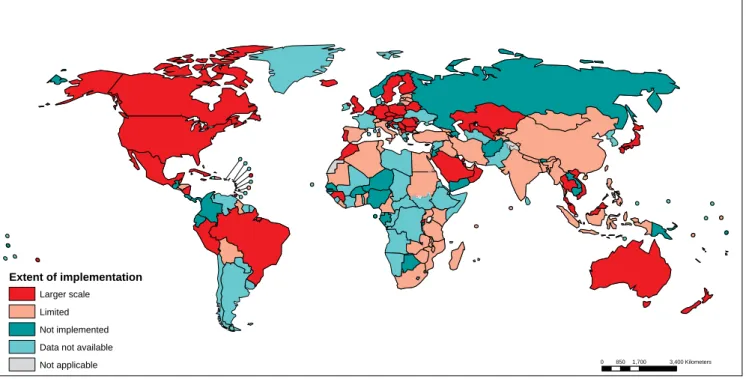
For example, on average, each of the prevention programs surveyed was reported to have been implemented in about a third of the countries. Publication of the Global status report on violence 2014 coincides with proposals to include various forms of violence. The Global Status Report on Violence Prevention 2014 represents the progress countries have made in implementing the recommendations of the 2002 World Report on Violence and Health.
The findings of the 2014 Global Status Report on Violence Prevention are relevant to national, regional and global violence prevention efforts.
Background
The World Health Assembly called on member states to urgently address the problem of violence, and called on the Director-General of the World Health Organization (WHO) to develop a science-based approach to understanding and preventing violence. The WHO responded in part to the resolution with the World Report on Violence and Health – the first comprehensive review of violence as a global public health problem (2). In 1993, the UN General Assembly adopted the Declaration on the Elimination of Violence against Women (15).
In 2010, the UN General Assembly adopted the updated model strategies and practical measures on the elimination of violence against women in the field of crime prevention and criminal justice (16).
State of the problem
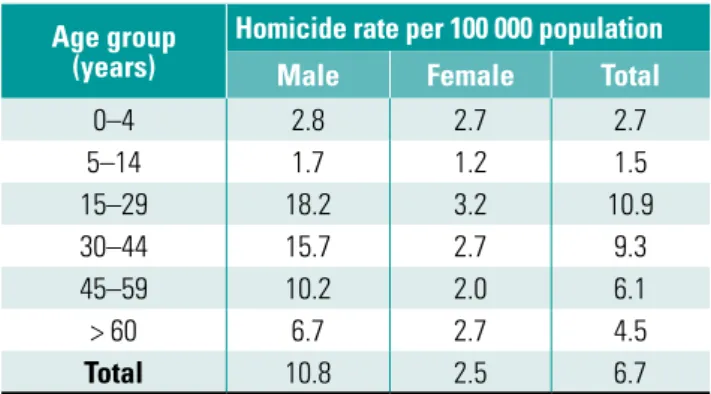
While firearm homicides account for 75% of all homicides in the low- and middle-income countries of the Americas region, they account for 0 1. Protective services for adults Child protective services Africa region, low- and middle-income region of the Americas, low- and middle-income. Women, children and the elderly bear the brunt of the non-fatal consequences of physical, sexual and psychological abuse.
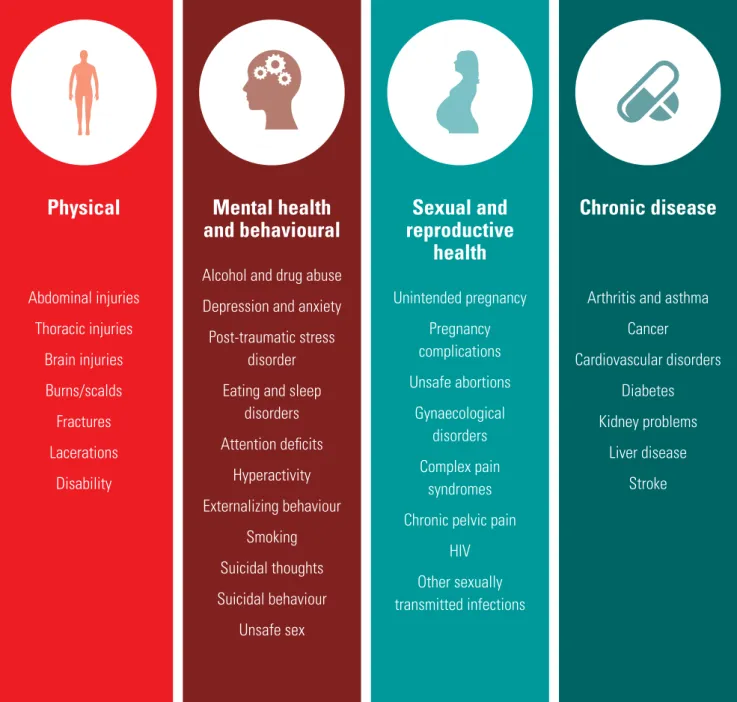
The non-fatal consequences of violence represent by far the largest part of the social and health burden arising from violence (see Figure 7).

Findings
41% of countries in the region reported action plans to address these types of violence. A quarter of countries (26%) reported that they had implemented campaigns to train professionals to recognize the signs and symptoms of elder abuse and improve their problem-solving and case management skills on a larger scale (mostly in the Eastern Mediterranean and European regions); 23% report that they have implemented public information campaigns (see Figure 13). For example, the proportion of countries in the African region (52%) and the Western Pacific region (50%) with laws that criminalize marital rape was reportedly much lower than in the Americas (91%) or Europe. Region (98%).
About half of the countries (53%) reported the availability of identification, referral and support services for women who were victims of intimate partner violence or sexual violence (see Figure 17), with more high-income countries reporting the availability of such services (61%) as

The way forward
The main goal of the report is to identify gaps in national efforts to prevent violence and to encourage action to address them. International partners should build on the report's findings to increase their calls for greater investment in global efforts to prevent violence. New York: Office of the Special Representative of the Secretary-General on Violence against Children; 2013.
Assessing the effects of the dating violence prevention program “Safe Dates” using random coefficient regression modeling.
Explanatory notes
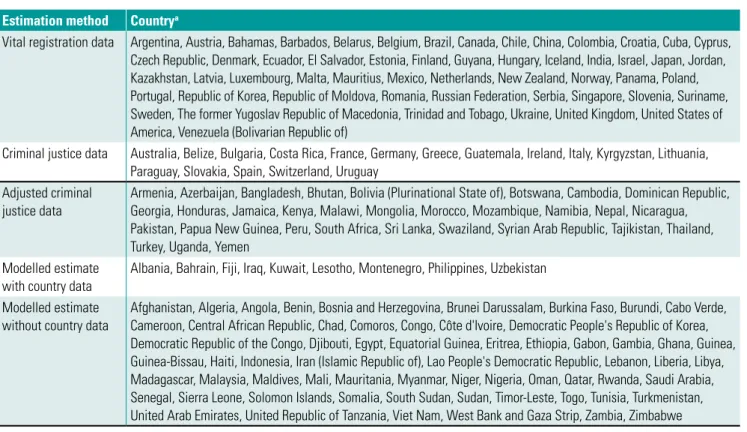
Most countries that record information on homicide deaths rely on vital registration or criminal justice reporting systems and often use both. Reported numbers of homicide deaths are obtained through vital registration or criminal justice reporting systems. Country vital registration data were included in the assessment process if they met the data quality inclusion criteria.
Given that vital register data is often incomplete, there is a legitimate concern that criminal law data may also be incomplete in some cases. If homicide rates reported in the criminal justice data series were, on average, significantly higher (p<0.10) than homicide rates derived from adjusted vital register data, the reported criminal justice homicide rate was used as the final estimate. A few countries (Albania, Bahrain and Kuwait) had vital registration data in the early 2000s and more complete police data, but the two sources differed on homicide levels.
Observations of homicide rates were drawn primarily from the WHO and UNODC databases (described above), after key registry data entered for the modeling were adjusted for incompleteness and misclassification. Criminal justice data were not adjusted for completeness before entering into the regression modeling because a covariate was included in the model to account for systematic differences in homicide rates between vital registration and criminal justice data. In addition to including the long time series of high quality homicide data used to directly produce country estimates above, shorter time series of police homicide data were also included in the model if countries also had high quality vital registration data.
In addition to the explanatory variables, X also contained an indicator variable for whether a data source was from vital registration or criminal justice reporting systems. This covariate was set equal to vital registration during prediction to adjust for underreporting in criminal justice data.

At a glance
Parent education programs aim to improve parenting skills, increase knowledge of child development, and encourage positive child management strategies. Dating violence prevention programs in schools focus on developing healthy relationship skills and reducing attitudes that accept violence. Social and cultural norm change strategies aim to change social norms. expectations, such as the norm that men have the right to control women, leave women vulnerable to physical, emotional and sexual violence by men.
Social and cultural norm change strategies aim to modify social. expectations, such as the norm that men have the right to control women, which make women vulnerable to physical, emotional and sexual violence by men. is still needed to evaluate its impact; however, they remain an important strategy for informing and creating cultural shifts in what is acceptable and unacceptable behavior and for promoting norms that support healthy, nonviolent, and gender-equal relationships. Social and cultural norm change programs aim to change norms of male sexual entitlement, and can reduce attitudes and beliefs that support sexual violence. Social and cultural norm change programs aim to change norms of male sexual entitlement, and can reduce attitudes and beliefs that support sexual violence. strategies are still needed to evaluate their impact; however, they remain an important strategy for informing and creating cultural shifts in what is acceptable and unacceptable behavior.
Professional awareness campaigns aim to improve the ability of professionals to recognize and effectively deal with suspected cases of elder abuse. They can help raise awareness of elder abuse and change social norms that support elder abuse. They can reduce caregiver burden, stress, and depression, which are all risk factors for elder abuse.
Residential care policies aim to improve standards of care in nursing homes and other care facilities for older people by implementing procedures in the homes that reduce the likelihood of elder abuse. Public information campaigns aimed at increasing public awareness of elder abuse, promoting positive attitudes towards the elderly and encouraging respectful, dignified treatment of older people can help increase the visibility of elder abuse and change social norms that support elder abuse.
Glossary
Armed violence is the use or threat of use of weapons to cause injury, death or psychosocial harm that undermines development. Changing social and cultural gender norms aims to change social expectations that define appropriate behavior for women and men, such as norms that dictate men's right to control women and that make women and girls vulnerable to physical, emotional and sexual violence from men. . Collective violence is the instrumental use of violence by people who identify themselves as members of a group - be it temporary or more permanent.
Gang violence is the intentional use of violence by a person or group of persons who are members of or identify with a stable, street-oriented group whose identity includes involvement in illegal activities. Interpersonal violence is the intentional use of physical force or power, threatened or actual, by one person or a small group of people against another person or small group that results or is likely to result in injury, death, psychological harm , maldevelopment or deprivation. Intimate partner violence is behavior within an intimate relationship that causes physical, sexual, or psychological harm to those in the relationship, including acts of physical aggression, sexual coercion, psychological abuse, and controlling behaviors.
Problem-oriented policing integrates everyday police practice with criminological theory and research methods to improve prevention and reduce crime and disorder, and emphasizes the use of systematic data analysis and assessment methods. Residential care policies and procedures to prevent elder abuse aim to improve the quality of care in nursing homes and other residential care facilities for the elderly by implementing policies and procedures in the homes that reduce the risk of elder abuse. Self-directed violence is violence that a person inflicts on themselves, and is categorized as suicidal behavior or self-abuse.
Sexual violence prevention programs for school and university populations involve college/university, high school, and middle school populations and usually include education and awareness exercises that focus on challenging rape myths; providing information on dating and date rape; review of rape statistics and coaching in risk reduction and protective prevention skills. Violence is the deliberate use of physical force or force, threatened or actual, against oneself, another person or against a group or community that either results in or is likely to result in injury, death, psychological harm, malformation or deprivation.
Country profiles
Statistical annex