WASTEWATER TREATMENT WHICH CONTAIN
FARMACEUTICAL CONTAMINANTS
Miceli-MontesinosAuzania Susi Rojas Valencia MaríaNeftalí Nájera Aguilar Hugo Alejandro
OrantesGarcía Carolina Luz Idalia Quintero López
Universidad de Ciencias y Artes de Chiapas, Universidad Autónoma de Chiapas
MICELI-MONTESINOSAUZANIA SUSI NÁJERA AGUILAR HUGO ALEJANDRO
University of Arts and Sciences of Chiapas. School of Environmental Engineering. Libramiento Norte Poniente No. 1150, CP. 29039,
Ciudad universitaria, Tuxtla Gutiérrez, Chiapas.
E-mail: [email protected] ; [email protected]
ROJAS VALENCIA MARÍANEFTALÍ LUZ IDALIA QUINTERO LÓPEZ
Universidad Nacional Autónoma de México. Engineering Institute, Coordination of Environmental Engineering.
Edificio 5, cubículo 212.Avenida Universidad # 3000.
Colonia Coyoacán, Distrito Federal, México.
Tel. 55 52-56-23-36- 00 ext. 8663.
E-mail: [email protected] ; [email protected]
ORANTES GARCÍA CAROLINA
Department of Biological Sciences, University of Arts and Sciences of Chiapas, Libramiento Norte Poniente N°1155,
Colonia Lajas Maciel, Código Postal 29039, Chiapas, México.
ABSTRAC
In the past twenty years, residues of commonly used pharmaceutical products have been found in bodies of water and have become harmful for a variety of ecosystems. These contaminating pharmaceuticals have not been considered an environmental hazard and therefore no legislation has been enacted to control them. Since wastewater treatment plants (WWTP) have not been designed to treat this class of contaminants their efficacy is low. This study focuses on the technical and economic aspects of the most appropriate existing technologies to treat pharmaceutical contaminants. A series of wastewater treatment procedures Including physical-chemical, biological, and combined advanced technologies have been analyzed. The combined wastewater treatment procedure is the most efficient but also the most expensive.
The use of subsurface flow wetland turned out to be an attractive technology offering high removal percentages and being 77% more economical than the conventional wastewater treatment process.
Keywords: Pharmaceutical contaminants, wetlands, advanced, conventional and combined processes, wastewater treatment.
A
nthropogenic activities have increased in recent decades, and consequently so has the range of contaminants in wastewater such as personal care products, among others. These pollutants have been named Emerging Contaminants (EC) and Pharmaceutical and Personal Hygiene products or PPCPs. The compounds are characterized by complex chemical structures.Within the EC are pharmaceutical residues. Although their concentrations in water bodies are relatively low, recent studies show that their presence and contact with aquatic species can cause toxicity (Table 1).
Substance Extremely toxic CE50
˂0.1mg/l
Very toxic CE50 0.1-1
mg/l
Toxic CE50 1-10mg/l
Damaging CE50 10- 100> mg/l
Nontoxic CE50>100
mg/l
Analgesics D D,E
Antibiotics A B
Anti-
depressants D
Anti-
epileptics C D,E
Cardiovas-
cular D
Cytostatics A D,E
Where: A- microrganism; B-algae; C- cnidarians ; D.-crustaceans; E- fish (Valdés, 2009).
Pharmaceuticals, once ingested by individuals, are metabolized and then excreted as waste to be dumped into sewers that reachwastewater treatment plants or other receiving bodies of water directly or indirectly.
Santos states (2006) that this is due to the wide discharge ofwaste.
Wastewater Treatment Plants (WWTP), are the main source of supply of these pollutants to the environment.
Another source is the improper disposal of medications that were prescribed and were not finished by the patient. In Mexico about 10%
of drug residues are thrown into the environment.Acetaminophen is one of the drugs present in wastewater (Ayala and Fernández: 2010).
The pharmaceutical products and sub products (metabolites), such as EC, found in wastewater are not regulated by any standards, and the general effects on the environment (biota and human beings) are not yet sufficiently known since the study of their presence began in the 90´s (Henríquez: 2012).
EC´s are not persistent compounds, but the constant use and discharges to water bodieshave reached conventional WWTP´s which are not designed to remove them and make their concentration rise in the ecosystem (Henríquez: 2012). There are fewer studies regarding drinking water but nevertheless there is the possibility of the presence of EC´s.
Therefore, the presence of pharmaceutically active compounds has been an issue of growing concern (for the possible bioaccumulation in biota) and attention during the past 20 years (since they were discovered in soil, sewage, surface and drinking water). While nature has a capacity of biodegradability, it also should be considered that the increase of these discharges of EC makes this natural process more difficult.
ECOLOGICAL IMPACTS
PHARMACEUTICAL CONTAMINANTS
Adverse drug effects of pollutants on aquatic and human life have been reported in several investigations. It was found that the veterinary use (applied to livestock) of diclofenac has led to a significant decline (95%) in the vulture population in certain areas of the Indian subcontinent.
It has also been seen as a potential risk to other scavengers (Oaks and Meteyer: 2012). The mechanism of death is probably renal failure, a known side effect of diclofenac. Vultures the remains of domestic pets treated by a veterinarian with diclofenac, and are poisoned due to the
accumulated chemical compound (Meteyer, et al .: 2005). Another effect of diclofenac is that it affects the tissues of gills and kidneys of freshwater fish, causing a potential risk to these populations (Hoeger et al .: 2005).
There is evidence that these pollutants have impacts such as mortality, errors in molting, hatching, anatomical deformities, sub lethal changes in plant growth, changes in the sex ratio of higher organisms, changes in biogeochemical cycle, the transmission of antibiotic resistant genes, microbial communities damaged by disinfectants, variation in life cycles, trophic relationships by anesthetics, reduced fertility, change in sexual condition and the hormone-reproductive toxic effects of cytostatic drugs (Stuart et al .: 2012).
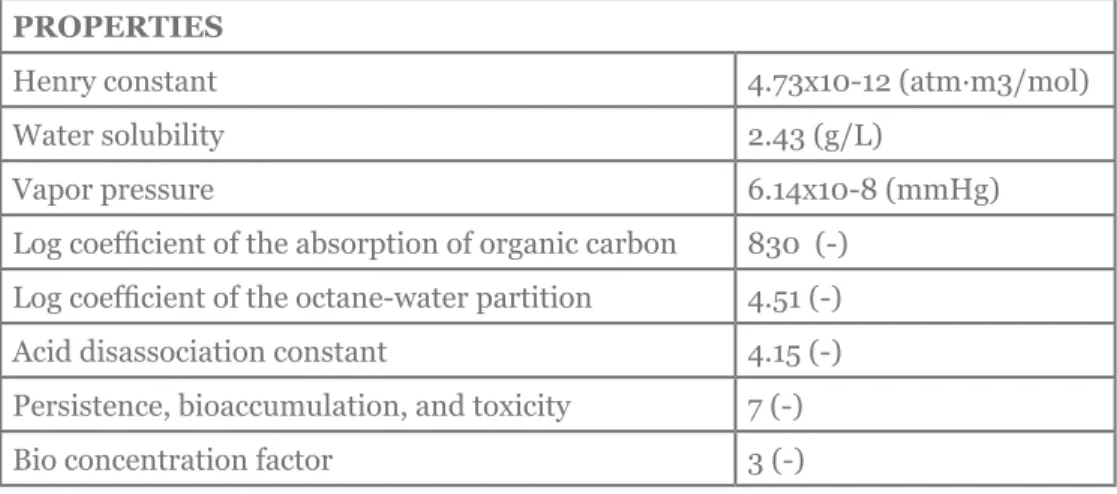
Table 2 shows the physicochemical properties of diclofenac. We can see that there are reports that indicate the risk of bioaccumulation and toxicity (Tables 2 and 3).
Table 2 Physicochemical properties of diclofenac
PROPERTIES
Henry constant 4.73x10⁻¹² (atm∙m3/mol)
Water solubility 2.43 (g/L)
Vapor pressure 6.14x10⁻⁸ (mmHg)
Log coefficient of the absorption of organic carbon 830 (-) Log coefficient of the octane-water partition 4.51 (-)
Acid disassociation constant 4.15 (-)
Persistence, bioaccumulation, and toxicity 7 (-)
Bio concentration factor 3 (-)
Source: Lobo et al., (2012);
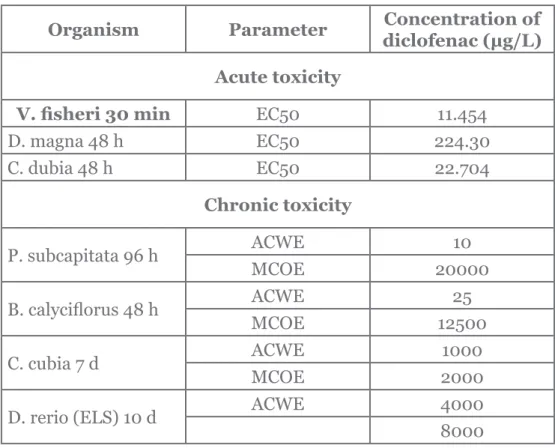
Table 3 lists the species of organisms that have shown reactions of acute and chronic toxicity. You can see the damage depending on the species, which may occur in minutes, hours or days.
Table 3 Concentrations of diclofenac at which acute and chronic toxicity occurs
Organism Parameter Concentration of diclofenac (µg/L) Acute toxicity
V. fisheri 30 min EC50 11.454
D. magna 48 h EC50 224.30
C. dubia 48 h EC50 22.704
Chronic toxicity
P. subcapitata 96 h ACWE 10
MCOE 20000
B. calyciflorus 48 h ACWE 25
MCOE 12500
C. cubia 7 d ACWE 1000
MCOE 2000
D. rerio (ELS) 10 d ACWE 4000
8000
ACWE: Anticipated Concentrations without effect, MCOE: Minimum concentration with observed effect,
EC50Concentration that causes 50% of the effect.
Source: Ferrari et al., (2003).
The toxicity values reported indicate that a small dose produces adverse effects on living organisms, therefore it is important that water discharges made into the environment have a control on the concentration of diclofenac.
TECHNOLOGIES FOR THE REMOVAL OF PHARMACEUTICAL CONTAMINANTS
WWTP treatments for the removal of pollutants in general can be classified into physical, chemical, biological, and advanced and
combinedtechnologies. The following is a summary of the different technologies that are currently operating.
It should be noted that to date that there are no WWTP´s that remove specific CE
Physicochemical technologies
The physiochemical technologies include activated carbon adsorption, oxidation processes (ozone and hydrogen peroxide), coagulation/
flotation, and chlorination. The processes by means of activated carbon and membranes have proven to be more efficient.
In a study conducted at the laboratory level using diverse treatments (coagulation / flotation, lime softening, ozonation, chlorination and granular activated carbon adsorption) the removal of thirty different pharmaceutical compounds were analyzed, without obtaining a significant removal (<20%) with the processes of coagulation/
flotationnor lime softening, but with a good result with granular activated carbon and ozone oxidation and chlorination (> 90%) (Westerhoff et al., 2005). These results are consistent with Adams et al. (2002), where pharmaceutical compounds (carbadox, sulfadimethoxine, trimethoprim) were not removed using coagulants such as aluminum sulfate and ferric sulfate. Similarly in other studies, coagulation was not effective for removing diclofenac, carbamazepine, ibuprofen and ketoprofen (Petrovic et al, 2003;.Vieno et al, 2006.).
A Photo-Fenton and Sono-Fenton heterogeneous system was used for removing a set of eight drugs of various kinds which commonly appear in the effluent treatment plant. These techniques involve the combined application of UV-visible radiation or ultrasound with H2O2 and a heterogeneous iron catalyst supported on a mesoporous silica, type SBA-15. The use of heterogeneous catalysts involves a number of advantages, most notably its easy recovery by filtration and reduced contamination of the reaction medium by the dissolution of iron. The tests were carried out on two different aqueous matrices, dissolving therein a certain concentration of the selected drug (10 mg / L), being
able to assess the influence of the matrix on its degradation. A set of experiments were made on a matrix of Milli-Q ultrapure water to evaluate the influence of different modes of reaction (H2O2, catalyst and light or ultrasound) on degradation, as well as other assays with increasing concentrations of hydrogen peroxide to assess the degree of degradation experienced by the pharmaceuticalsthat were being studied according to the amount of the oxidizing agent.
As for the results obtained from the experiments, it was observed how both advanced oxidation techniques have a high efficiency to degrade the pollutants that were studied. The Sono-Fenton system showed a low utilization of hydrogen peroxide at high concentrations and low effectiveness of degradation when the initial concentration of oxidant is reduced, while the Photo-Fenton system demonstrated a high efficiency for any initial concentration of oxidant, as well as a majority consumption of the same substance. For this reason, this technique seems to be more favorable for this type of testing.
The optimum concentration of H2O2 is considered to be 450 mg/L when applied with Photo-Fenton and 100 mg / L when applied with Sono-Fenton, thereby the Photo-Fenton system remains the most effective in the degradation of pharmaceuticals. The results showed a relationship between matrix effect and degradation in photo-Fenton systems, while in Sono-Fenton systems there does not seem to exist a matrix effect to be considered. Furthermore, it has been found that simple oxidation systems (such as ultrasound sonication without a catalyst or H2O2) provide a very significant degradation of thetreated pollutants compared to the Sono-Fenton system, whereas the Photo- Fenton system the efficiency of the degradation is much greater if this technique is applied and not simpler systems, such as the exclusive application of UV-visible radiation or combinations of UV radiation, UV radiation or catalyst and hydrogen peroxide (Manzano 2008).
Biological technologies
Conventional treatments such as activated sludge systems or biological trickling filters can quickly convert various organic compounds
into biomass that can then be separated by means of clarifiers. In a wastewater treatment plant in Switzerland, compounds such as diclofenac, naproxen and carbamazepine werefound, with a removal efficiency of 69%, 45% and 7% respectively (Tixier et al., 2003).
Another biological technology is wetlands. The aquatic plantTyphaangustifoliahas been used to remove pharmaceutical compounds: carbamazepine (from 26.7 to 28.4%, it turns out to be the more recalcitrant drug), ibuprofen (80%), naproxen (91%), fenopren (25%) and cyclophosphamide (82.2%) with a residence time of 2 to 4 days. An important role of this plant is that the oxidation occurs in the rhizosphere and aeration (Qing et al .: 2011).
Wetlands can promote the elimination of pharmaceuticals through several mechanisms including: photolysis, absorption by plants, microbial degradation and soil adsorption. There are few studies on the rate of removal / disposal of drugs by wetlands. This has generated the need for research to document the extent to which various pharmaceutical compounds are eliminated in large-scale treatment (White et al .: 2006).
Advanced technologies
In recent years, technologies have been studied as reverse osmosis, ultrafiltration, Nano filtration and advanced oxidation processes;
such systems are considered as the most suitable to remove traceconcentrationsof pharmaceutical contaminants.
On the other hand, Advanced Oxidation Processes (AOP) and hydrogen peroxide ozone (O3 / H2O2) have been used for treating ibuprofen and diclofenac, where the removal of 90% of these compounds was achieved (Zwiener et al .: 2000) .
The Advanced Oxidation Processes (AOPs) are technologies that are based on the in situ generation of highly reactive transient species(H2O2, ●OH, O2●-, O3) for he mineralization of refractory organic compounds and the elimination of pathogens (Chong et al.,
2010). The AOP´s have been widely studied, being heterogeneous photo catalysis with semiconductors such as TiO2 and the Fenton reaction (transition metal plus hydrogen peroxide), the two techniques with the greatest environmental applications reported in the last two decades. Using a laboratory scale reactor, the efficiency of a treatment with ozone degradation of nonylphenol (NPEOs) metabolites was evaluated, where acetic acid nonylphenol (NPE1C) was completely mineralized, nonylphenol (NP) at 80% and 50% of lipophilic ethoxylated nonylphenol (NP1EO) in 6 minutes of treatment in all of the cases (Ike et al .: 2003).
Employing technology using a membrane bio reactor (MBR), the removal of various drugs were evaluated including a wide range of pharmaceutical compounds, psychiatric drugs, antibiotics, macrolides, anti-inflammatories, etc.
MBR technology combines the biological degradation of contaminants in a physical separation of the treated water by a filtration membrane incorporated in the bioreactor. If the MBR system is coupled to a subsequent filtration system by reverse osmosis (RO) a greater filtration of the effluent is achieved by the smaller pore size of the RO.
Combining MBR and RO treatment has permitted the removal of more than 99% of pharmaceuticals (Liberti: 1999). This elevated contaminant removal contrasts with conventional purification technologies used in a more widespread way to treat urban wastewater, such as the secondary or biological treatment using activated sludge system in which the elimination of drugs is incomplete..
The conventional sol-gel process is based on the formation of oxo- bridges (molecular arranged) by hydrolysis and the poly condensation of the molecular precursor (usually silicon or metal alkoxides) has been successful in the preparation and understanding of oxide and mixed oxide catalytic materials. An important advantage of the sol- gel process is its versatility, which enables control of the composition, morphology, texture, and structure of the final materials by adjusting
the relative rates of hydrolysis and condensation reactions (Debecker .: et al 2013).
Combined technologies
Several investigations have been reported that include the combination of oxidation processes with biological processes, highlighting their great potential to the problem of treating contaminated water with PPCPs or EC. These can be difficult to remove by conventional processes.
They may be physical-chemical / biological, and with the advantage of reusing this water and contributing to caring for the environment.
(Gogate and Pandit, 2004; Mantzavinos and Psillakis, 2004).
For the treatment of penicillin, ozonation and perozonation(O3 + H2O2)has been implemented at different concentrations, before submitting the effluent with a biological activated sludge treatment.
The result of this investigation was the removal of 83% of the non- biodegradable chemical oxygen demand (COD) (Arslan et al .:
2004). Similarly, a satisfactory treatment of estrogenic substances was achieved in a combined process of ozonation and moving bed reactor after being subjected to a conventional activated sludge treatment (Gunnarsson et al .: 2009). For treatment of common precursor pharmaceutical such as α-methylphenylglycine, a photo- Fenton process was used with H2O2 added as a pre-treatment in an immobilized biomass reactor (IBR), achieving the removal of up to 95% of total organic carbon (TOC ) of which 33% corresponded to the advanced oxidation system and 62% for biological treatment. In this combined system the removal of nalidixic acid (belonging to the group of quinolones) was also studied, succeeding in removing it in only 190 minutes (Sirtori et al .: 2009).
Finally, constructed wetlands and vegetative plants are noted since they are the foundation of the process since they degrade, absorb and assimilate contaminants in their tissues. They also provide a large surface area which favors bacterial growth and retain solids in suspension (Estrada: 2010). A combination of methods of treatment is recommended for wastewater containing pharmaceuticals.
Costs of different technologies for removing pharmaceutical contaminants
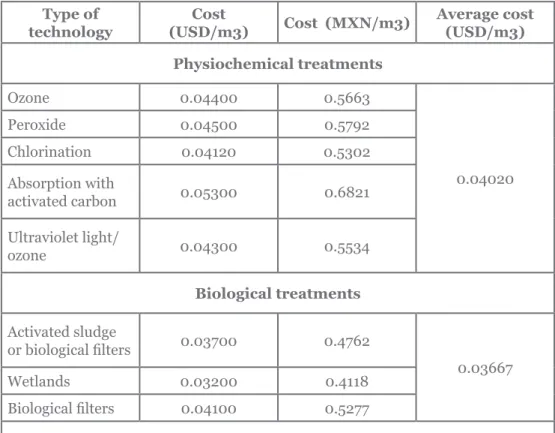
The costs for wastewater treatment are presented in Table 4. It is important to note that the costs presented correspond to the cost of treatment and are averages obtained from the application of each technology, its value is only an approximation at current prices, as many of these costs depend on the manufacturer, the location and characteristics water to be treated.
Table 4 Approximate costs and average pharmaceutical contaminant removal for different technologies.
Type of
technology Cost
(USD/m3) Cost (MXN/m3) Average cost (USD/m3) Physiochemical treatments
Ozone 0.04400 0.5663
0.04020
Peroxide 0.04500 0.5792
Chlorination 0.04120 0.5302
Absorption with
activated carbon 0.05300 0.6821
Ultraviolet light/
ozone 0.04300 0.5534
Biological treatments
Activated sludge
or biological filters 0.03700 0.4762
0.03667
Wetlands 0.03200 0.4118
Biological filters 0.04100 0.5277
Advanced treatments
Reverse osmosis 0.15000 1.93050
0.26100
Ultrafiltration 0.42000 5.40540
Nano filtration 0.45000 5.79150
Advanced
oxidation 0.14000 1.80180
Membrane
bioreactor 0.14500 1.86615
Combined technologies
Physiochemical/
biological 0.16 2.0592 0.1600
Source: IEPS, 2007. Source: Liberti and Notanicola, (1999) Thecurrentvalue of the U.S.
DollarwithrespecttotheMexican Peso is 12.932 ( as of 10/27/13)
Moreover, the Environmental Protection Agency, EPA, reported that:
The main items included in the investment costs of the SF wetlands are similar to many of the systems required for lagoons. These include the cost of land, site assessment, site clearing, earthwork, coating, medium gravel, plants, intake and discharge structures, fences, miscellaneous piping, engineering, legal costs, contingencies, overhead and profits of the contractor, (EPA, 2000).
Costs are summarized in Table 5:
Table 5. Comparison of costs of a subsurface flow wetland system and a conventional wastewater treatment
Cost element
Wetland pro- cess
Conventional process: reactor
sequenced by batches, SBR
% more econo- mical, wetland (value of the cost in dollars)
Investment cost $ 6,278.05 $
14,857.74 58
O/M cost $ 80,712.00 $
1,433,983.20 77
Total cost to PV $ 7,133,595.60 $
30,043,696.80 77
Cost of 378,000L
of treated water $ 9.82 $
41.17 77
*The PV factor (Present value) is 10.594 with a base of a period of 20 years and 7 percent interest ( costs from June 1999 with an ENR construction index = 6039)
** The daily intake for 365 days per year for 20 years, divided by 1000 gallons.
Source: EPA 832-F-00-023
Environmental Protection Agency Washington, D.C. September 2000
Figure 1 refers to the costs reported for different treatments, which have been grouped into four categories: energy, personnel, reagents- maintenance and residuals-various. The weighted average was obtained from 43 plants under study in order to obtain an economic feasibility study in this area.
Figure 1. Distribution of the major costs in technologies for wastewater treatment
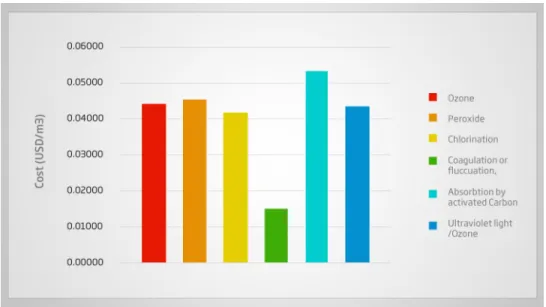
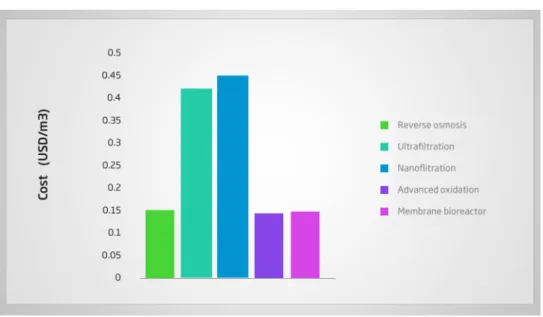
Figures 2, 3 and 4 were made from the data in Table 3, considering an average in terms of cost according to the method to be carried out.
The mixture of pharmaceuticals prevents that a single technology in treatment is sufficient to eliminate all of the compounds. The same figures represent the values in terms of costs for treatment, making comparison between different alternatives of the same method.
Figure 2. Comparison ofwater treatment costs with physiochemical technologies.
Figure 3. Comparisonof water treatment costs with biological technologies
Figure 4. Comparison of water treatment costs with advanced technologies
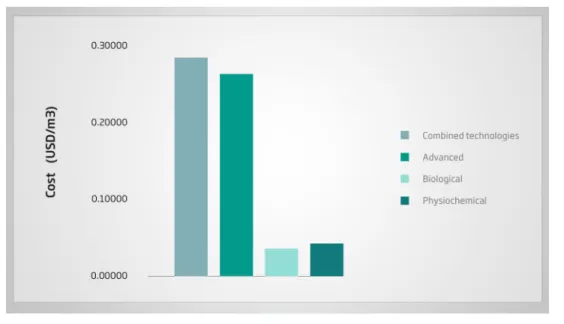
At present, pharmaceutical contaminants that are found in residual water have diversified.In order to be eliminated it is necessary to apply chemical, physical-chemical, and biological methods. In most cases only one type of technology is not sufficient, rather a treatment including various methods and combined technologies is required. It is recommended to consider that the best strategy of combined methods, “natural methods”. A comparison of treatment costs of different technologies is shown in Figure 5.
Figure 5. Comparison of treatment costs with distinct types of technologies.
Table 6 presents information related to investment costs, operation and maintenance of plants.This information was supplemented by budgetary costs of final design, so the values shown are approximations of what might occur today. To obtain the information related to investment costs for building plants, several regressions were performed to establish the curve to estimate the investment based on the design capacity of the plant where wastewater flows of 600 -800 l/
swere considered.
Table 6. Costs and approximate average investment of various technologies for removing pharmaceutical contaminants
Type of
technology Aprox. costs
(USD/m3) Aprox. costs
(MXN/m3) Average costs (USD/m3) Physiochemical treatments
Ozone $420,000.00 $5,405,400.00
$373,333.33
Peroxide $420,000.00 $5,405,400.00
Chlorination $350,000.00 $4,504,500.00 Coagulation or
flocculation $300,000.00 $3,861,000.00 Absorption by
activated carbon $350,000.00 $4,504,500.00 Ultraviolet light/
ozone $400,000.00 $5,148,000.00
Biological treatments Activated sludge
or biological filters $170,000.00 $2,187,900.00
$90,000.00
Wetlands $60,000.00 $772,200.00
Biological filters $40,000.00 $514,800.00 Advanced treatments
Inverse Osmosis $100,000.00 $1,287,000.00
$230,000.00 Ultrafiltration $250,000.00 $3,217,500.00
Nano filtration $200,000.00 $2,574,000.00 Advanced
oxidation $350,000.00 $4,504,500.00
Membrane
bioreactor $250,000.00 $3,217,500.00
Combined treatments Physiochemical/
biological $500,000.00 $6,435,000.00 $500,000.00 Source: IPES, 2008. The current value of the American Dollar
with respect to the Mexican Peso( as of 10/28/13)
CONCLUSIONS
The physicochemical processes of chlorination, oxidation by ozone and granular activated carbon have removed over 90% of thirty different pharmaceutical contaminants while with technologies such as coagulation / flotation and lime softening, removal is much lower.
The Photo-Fenton and Sono-Fenton heterogeneoussystemspresent high efficiency to degrade the pollutants that were studied, however the Photo-Fenton process is the most effective in the degradation of pharmaceuticals.
The biological treatment through wetlands was a good alternative for the treatment of pharmaceuticals like carbamazepine, ibuprofen, naproxen, and cyclophosphamide, with fenopren removal percentages of 28.4%, 80%, 91, 25% and 82.2% respectively.
As far as advanced technologies, the POA with ozone and hydrogen peroxide was able to eliminate 90% of ibuprofen and Diclofenac, while the POA with only O3 managed to mineralize nonylphenol acetic acid- nonylphenol by 80% and 50% in lipophilic ethoxylated nonylphenol, all within 6 minutes of treatment.
The combination of the MBR and RO allowed for the treatment of up to 99% of a broad spectra of pharmaceuticals.
The use of combined technologies demonstrated a 83%
removal of non-biodegradable COD penicillin. Implementing ozonation and perozonation, there was a 95% TOC removal to treat α-methylphenylglycine with a Photo-Fentonsystem adding H2O2 as a pretreatment to an immobilized biomass reactor, and the same process resulted in the total removal of nalidixic acid.
Comparing the costs of a subsurface flow wetland system and a conventional wastewater treatment facility, the wetland resulted being 77% more economical technology than the conventional system.
In summarizing the different types of technologies that were addressed for wastewater treatment that includes pharmaceutical contaminants, it was found that the physicochemical process by coagulation or flocculation, biological treatment with wetlands and the advanced technology of advanced oxidation are the most economic processes. However, it is recommended to evaluate the use of new, more efficient and inexpensive technologies
The combined treatment processes are the most efficient for the removal of pharmaceutical contaminants, but these have higher treatment costs.
REFERENCES
Adams, C., Wang, Y., Loftin, K., and Meyer, M. (2002).Removal of antibiotics from surface and distilled water in conventional water treatment process. Journal of Environment Engineering, 128(3), 253-260.
Arslan, I., Dogruel, S., Baykal, E., and Gerone, G. (2004). Combined chemical and biological oxidation of penicillin formulation effluent. Journal of Environment Manager, 73(2), 155-163.
Ayala Vergara N., Fernández Villagómez Georgina. (2010) “Propuesta para el tratamiento de medicamentos caducos que se acumulan en casa habitación”. Masters thesis. Environmental Engineering UNAM, México. 151.
Chong, N., Jin, B., Chow C., and Saint, C. (2010).Review. Recent developments in photocatalytic water treatment technology: A review. Water Research, (44), 2997-3027.
Debecker, P., Hulea, V., and Mutin, H. (2013).Mesoporous mixed oxide catalysts via non-hydrolytic sol-gel: A review. Applied Catalysis A: General, 451, 192-206.
Estrada Gallegos I. Y. (2010). Monografía Sobre Humedales Artificiales de Flujo Subsuperficial (HAFSS) para remoción de metales pesados en aguas residuales. Undergraduate thesis.
Universidad Tecnológica de Pereira, Technology department, School of Chemistry, Pereira.
EPA: 2000. “Folleto informativo de tecnología de aguas residuales Humedales de flujo subsuperficial.” EPA 832-F-00-023 Environmental Protection Agency Washington, D.C.
Ferrariet et al., (2003). Reviews of Environmental Contamination and Toxicology Volume 218. Consultado Noviembre 2013.
Obtenido de:http://books.google.com.mx/books?id=8eSKsyxkU YIC&pg=PA24&lpg=PA24&dq=ferrari+et+al+2003&source=bl
&ots=4zLu1R6CpC&sig=Q5t2_do6hDZ7EzyYUVUjnWT_6HI&h l=es&sa=X&ei=_vfSUt_OOojlsASLi4HwCw&ved=0CHMQ6AE wCA#v=onepage&q=ferrari%20et%20al%202003&f=false
Gogate, P., and Pandit, A. (2004). A review of imperative technologies for wastewater treatment II: hybrid methods. Advances Environmental Research, 8(3-4), 553-97.
Gunnarsson, L., Adolfsson, M., Björlenius, B., Rutgersson, C., Förlin, L., and Larsson, D. (2009).Comparison of six different sewage treatment processes - reduction of estrogenic substances and effects on gene expression in exposed male fish. Science Total Environmental, 407(19), 5235-5242.
Henríquez Villa Deyanira. (2012). Tesis: “Presencia de contaminantes emergentes en aguas y su impacto en el ecosistema. Estudio de caso: Productos farmacéuticos en la cuenca del rio Biobío, región del Biobío de Chile.” Santiago de Chile.
Hoeger, B., Kollner, B., Dietrich, D., y Hitzfeld, B. (2005). Water- borne diclofenac affects kidney and gill integrity and selected immune parameters in brown trout (Salmotrutta f. fario).
Aquatic Toxicology, 75(1), 53-64.
IPES, 2007.Research Department.ConsultadoNoviembre 2013.
Obtenido de:
http://www.iadb.org/res/ipes/2007/index.cfm?language=En http://www.iadb.org/res/ipes/2007/?language=Spanish
IPES, 2008.ConsultadoNoviembre 2013. Obtenido de: http://ncgg.
princeton.edu/IPES/program2008.php
Ike, F., Asano, M., Belkada, F., Tsunoi, S., Tanakas, M., y Fujita, M. (2002). Degradation of biotansformation products of nonylphenolethoxylates by ozonation and UV/TiO2 treatment.
Water Science and Technology,(46), 127-132.
Liberti L. Notarnicola M. (1999). TratamientoAvanzado y desinfección de lasaguasresidualesmunicipalesreutilización en la agricultura.Cienciasdel Agua. Technol, 40,235-245.
Lobo, M., Frejo, M., Díaz, J., y García, J. (2012).Valoración ecotoxicológica de algunos de los principales grupos terapéuticos encontrados en depósitos SIGRE de oficinas de farmacia. Revista de Salud Ambiental, 12(2), 137-150.
Mantzavinos, D., and Psillakis, E. (2004). Enhancement of biodegradability of industrial wastewaters by chemical oxidation pre-treatment. Chemical Technology Biotechnology,(79), 431-454.
Manzano, E. (2008). Eliminación de fármacos presentes en aguas residuales úrbanas mediante procesos tipo fenton heterogéneos.
Consulted Noovember 4th, 2013.Obtenido dehttp://eciencia.
urjc.es/handle/10115/5568
Meteyer, U., Rideout, A., Gilbert, M., Shivaprasad, L., and Oaks, L.
(2005).Pathology and proposed pathophysiology of diclofenac poisoning in free-living and experimentally exposed oriental white-backed vultures (Gyps bengalensis).J. Wildlife Diseases, 41(4), 707-716.
Oaks, L., y Meteyer, U. (2012). Nonsteroidal Anti-inflammatory Drugs in Raptors.Fowler’s Zoo and Wild Animal Medicine.
Miller E., Fowler M. 349-355.
Petrovic, M., Gonzalez, S., and Barcelo, D. (2003). Analysis and removal of emerging contaminants in wastewater and drinking water. Trends in Analytical Chemistry, 22(10), 685-696.
Qing Zhang Dong, Keat tan Soon, Gersberg Richard M., Sadreddini Sara, Zhu Junfei, Anh Tuan Nguyen (2011). “Removal of pharmaceutical compounds in tropical constructed wetlands.”
Ecological Engineering 37 (2011) 460–464.
SantosMorcillo, J. L. (2006). Análisis y distribución de principios activos Farmacológicos en los procesos convencionales de depuración de Aguas Residuales Urbanas. Tesis doctoral.
Instituto Catalán de Investigación del Agua (ICRA), España.
Sirtori, C., Zapata, A., Oller, I., Gernjak, W., Agüera, A., and Malato, S.
(2009). Decontamination industrial pharmaceutical wastewater by combining solar photo-Fenton and biological treatment.
Water Research, (43), 661-668.
Stuart M., Lapworth D., Crane E., and Hart A. (2012). Review of risk from potential emerging contaminants in UK groundwater.
Science of the Total Environment, (416), 1-21.
Tixier, C., Singer, H., Ollers, S., and Muller, S. (2003). Occurrence and Fate of Carbamazepine, Clofibric Acid, Diclofenac, Ibuprofen, Ketoprofen, and Naproxen in Surface Waters. Environmental Science &Technology, (37), 1061-1068.
Vieno, N., Tuhkanen, T., and Kronberg, L. (2006).Removal of pharmaceuticals in drinking water treatment: effect of chemical coagulation. Environmental Technology, (27),183-192.
Westerhoff, P., Yoon, Y., Snyder, S., and Wert, E. (2005). Fate of endocrine-disrupter, pharmaceuticals and personal care product chemicals during simulated drinking water treatment process. Environmental Science & Technology, (39), 6649-6663.
White, J., Belmont, M., and Metcalfe, C. (2006).Pharmaceutical Compounds Wastewater: Wetland Treatment as a Potential Solution. The Scientific Journal, (6), 1731-1736.
Valdés Alanís Analleli. (2009). Thesis “Evaluación de la toxicidad producida por diclofenaco sobre Daphnia Magna”. Escuela Nacional de Ciencias Biológicas- IPN. México.
Zwiener, C., and Frimmel, F. (2000). Oxidative treatment of pharmaceuticals in water. Water Research, (34), 1881-1897.