I am very grateful to my sources of data collection, who were the anchor of the entire thesis. I appreciate the non-teaching staff of the Department of English, University of Ibadan, especially Mr. Andrew Bassey and Mr. Olugbenga Olaoye, who always respond gently but promptly when their help is needed.
UNIVERSITY OF IBADAN
The Ethnography of the Ibibio People
Similarly, during this era of innocence, a high chief in Oron was the National Treasurer of the Ibibio State Union (3). The Ibibio is "the fourth largest ethnic group in Nigeria, after the three main groups, Yoruba, Igbo and Hausa".
The Socio-Cultural Life of the Ibibio People
- Story Telling Tradition: Folktales, Legend and Myths
- Ibibio Religious Conception
- Rites, Rituals and Chants: The Matrix of Ibibio Religious Life
- Social Structure of Ibibio Society
- Ibibio Personhood
The Ibibio also have their own divine representatives in the form of images of the gods and ancestors. Yet other social components of Ibibio society include: usoro idọk, usọrọ usuuk-udia (new yam festival) – marked with the advent of a special kind of masquerade, ekpo usọrọ abasi, which is given the distinct privilege of representing other ranks of to conduct masquerades around the village and nearby communities and the fishing festival among the fishing communities of Ibibio land called boat regatta (Esema, 2002).
Background to the Study
According to Esen (1982), the sense of order in nature is usually reflected in the numerical and primary activities of the Ibibio. In the case of the Ibibio race, indigenous scholars have focused on one aspect of Ibibio life or another, one form of literary study or another.
Statement of the Problem
Michael Nginan Ushe (2010) of the University of Jos, casually mentions this concept in their theses as a practice among Africans. There is now a resurgence and renewal of interest in some aspects of African oral arts, as most of the oral arts in some societies receive proper literary consideration and attention.
Objectives of the Study
Perspective with special reference to Hebrews”, as an aspect of religious experience in Africa. Their literary qualities were understated, since none of the previous anthropological collectors emphasized "analyzing the way in which effects are achieved through the tonal values of the words" of these poetic manifestations (Herskovits.
Significance of the Study
Research Methodology
In oral performance, there is both a visible and an invisible audience that contributes to the performance by encoding and decoding the texts of the performance. The audience perceives and decodes the text of the play in accordance with the canons already known to them and "traditional elements" within their society (Lord.
Delimitation of the Study
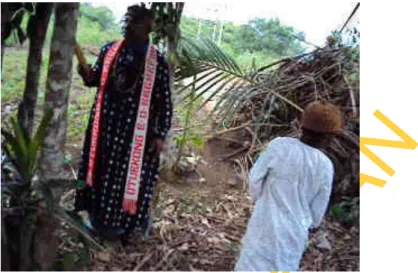
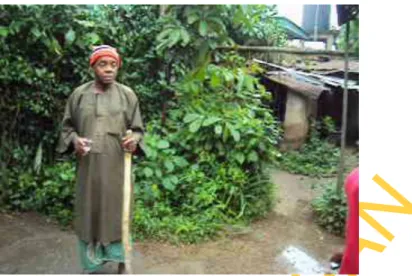
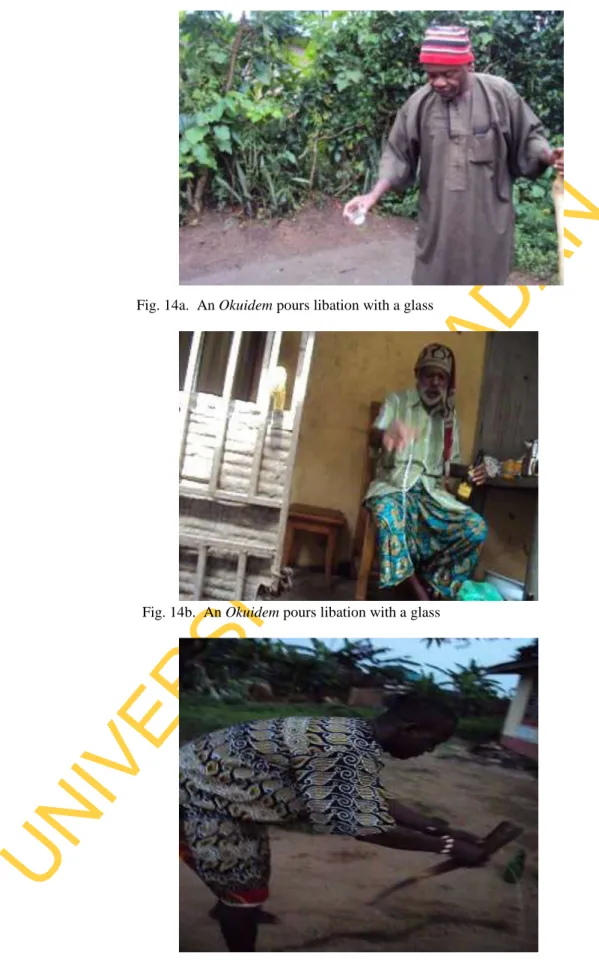
An interview with the Oku clan leader, Eteb Effiong Eberefiak JP, BA, MPA, PhD, on the religious life of the Ibibio people. It is an act of intimate communion with deities or ancestral spirits; it involves the act of ritually pouring a liquid as an offering to deities or ancestral spirits.
African Religious Poetry: The Journey So Far
It is “not simply one with the culture of the people; it is the culture of the people”, the total way of referring to the Supreme Being (Etuk, 2002: 36). He believes that the dense forests of Nigeria have negatively affected the religious life of the people.
Libation
For example, during baptism the words: "I baptize you in the name of the father, the son and the Holy Spirit". If we weren't actually referring to the Almighty, we could easily say "I baptize you in the name of amadioha".
Narrative Arts in Retrospect
The invisible audience is a silent observer of the performer and most of the time the recipient of the performance (in the case of libation). These views are also confirmed by Yankah when he claims that both audiences have a certain influence on the way of performance and the rhetoric used.
Theoretical Framework
- The Semiotic Theory
- The Iconic Sign
- The Indexical Sign
- Semiotics and Literature
- Performance Theory
- Performance Theory and Literature
Peirce vol. 2, par 227) or "the formal doctrine of signs which is closely related to logic". He adds that semiotics is "the doctrine of the essential nature and basic varieties of possible semiosis". This then makes "the signs that people use on a daily basis to constitute a mediating template in the worldview they come to have" (Sebeok, 2001: 8).
In this sense, “the aesthetic sign is free from all conventions and holds its meaning to the representation” – the referent that connects it in the communication process (Guiraud, 1975: 67). He goes on to say that “the spatial organization of the performance location has a primary influence on audience perception and reception” (sic) (quoted in Elam, 1980: 56).
Performance as a Literary Tool
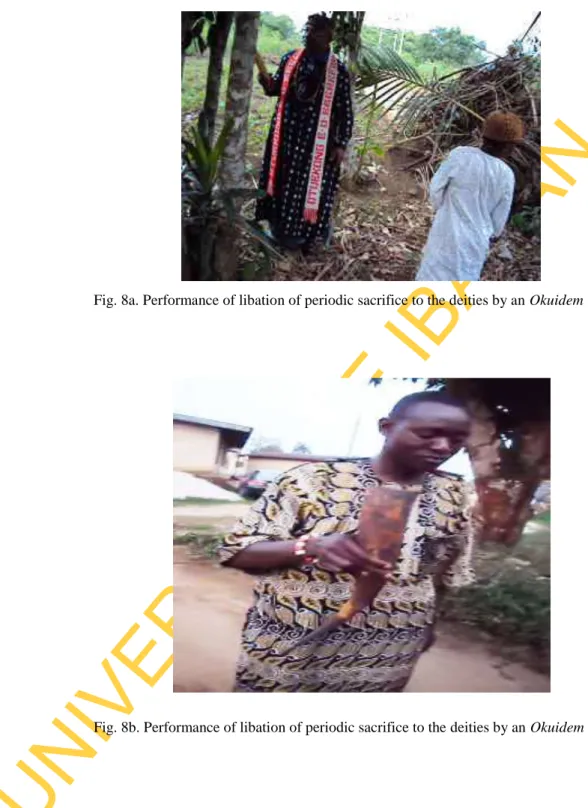
In the latter case, the Okuidem may be the head of the family or his nominee. Translation: It is the owner of the land who appeases the deities/goddesses of his land. The above plays also show the performer's faith in the power of the deities to fulfill the requests.
In the performances for the earthly spirits, the performer first of all invokes the Almighty God, the earth gods and spirits of the land that we have in us: Àbàsì ọnyọñ, àbàsì ísóñ. The invocation/invocation of the earth gods/goddesses is done in order of importance and seniority.
Classification of Libation Texts
- Gathering of the Clan
- Funerals of Important Personalities
- Consulting the Oracle in the Face of Perceived Disaster
- Individual or Clan Afflicted with Calamity
- Initiation into Ekpo, Ekpe and Other Cults of the Land
- Periodic Sacrificing to the Deities
- Childlessness
- Disequilibrium in the Natural Order of the Land
- A woman with Menstrual Cycle
- Rites at the Graveside
This includes regular consultations between family representatives and the elders of the land, where issues related to the land are solemnly discussed. This, after due consultation with the priest of the supposed god(s), must accompany the sacrifice. Some appease the deities at the birth of a child and at certain marked stages of growth until the point of death (the latter depending on the type of cultural religious group a person assumes in adulthood).
Ekong (2001) enthuses that "the birth of twins or any multiple birth in humans or cattle was considered an aberrant event that is abominable to the gods of the land". It is used as a tool of appeasement, invitation and pacification of the deities and ancestors.
Oral Literary Traditions
No amount of imagination and recollection by a writer can put a reader in the place of the listener of an actual one-on-one oral arts performance. Translation: It is the owner of the land who appeases the deities of his land. Variations in word choice, as shown in the multiple persuasive element combinations above, also affect the length of texts from different countries.
In the performance of prayer texts, each place (audience composition) expects to hear the names of its deities and ancestors mentioned in the context of the performance. The nuances of the most important naming of the deities and ancestors of each place explain the high degree of variation in the content of the sacrificial texts accessed.

Narrative Rhetoric and Ibibio Libation Performances
- Improvisation of Contents
- The Personality of the Artist
- Variability in Texts
- External Factors
- Voice of the Artist
- Opening Formula and Salutation
- Appreciation
- Reassurances and Interaction
- Recollection/ Memory
- Ululation
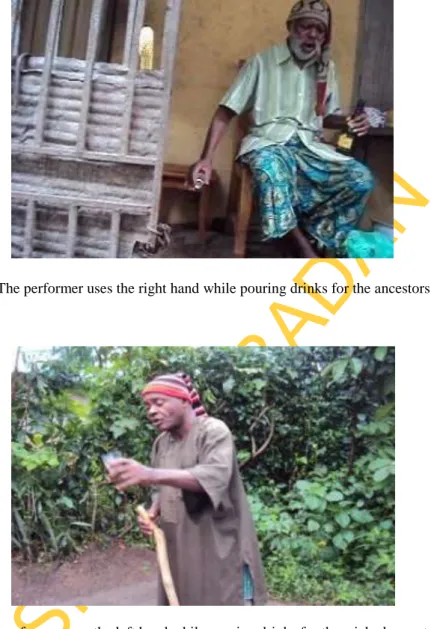
The use of the right hand, sometimes both hands, in the process of pouring libations is symbolic of respect and reverence for the ancestors and the deities. This stems from the oral nature of the texts' performances as well as from the authors'. Similarly, in Ibibio libation performance, the high voice quality of the performer is an asset to his audience.
There are sometimes some variations in the order in which the gods are mentioned, depending on the clan of the performer. The audience's reaction (uwo o o!/ Iya a a!) assumes that everyone present confirms the performer's words.
Aesthetics
- Movement/Extra-linguistic Features
- Metaphors
- Simile
- Plea and Supplication
- Repetition/Parallelism
- The oblique-line pattern
- The vertical-line pattern of repetition
- Re-statement of ideas through synomyms and indirect references
- Threats
- Curses
- Alliteration
- Rhetorical Questions
- Onomatopoeia
- Contraction
- Symbolism
Clark-Bekeredemo (2006) claims that “the ululation is an imitative shout emitted at appropriate points in the performance. In the sentence: Afid ḿbùfò esehe ‟da ye nnyin, idi idiwọñ do k‟bọk nnasia do o o - “All your spirits/powers in support of his cause, drink to your good health from my right hand,” the artist clearly remembers examples of success that the gods and the ancestors have not disappointed the people. Similarly, the word ufọfọb (asọñkọ ukọd) is a local gin containing a psychoactive substance whose inherent property is believed to have power and strength enough to 'awaken' the sleeping gods and ancestors.
The purpose of the study is limited to the collection, exploration and analysis of libation performances among the Ibibio people. Where it is proven that libation shows can have a negative impact on people, some sources confirm that the same is found in orthodox religion; "The word of God is.
Libation Texts
Uwa idiọñ adiaha awo (First daughter’s rites of passage)
Mmêm ûkọd ádó ámì-o o o, ìnwộñọ This is the palm wine, our drink of peace, dó o o. He digs the site, digs up the egg he buried a week before, and washes it in the bucket of water provided. Ísó ádia-ádia, ewanna ûbọk udia mbrê Everyone will eat and share everything you have, -mbrêê (ọduọk ukọd uwak-uwak).
He cleans their mouths, one after the other, 3 times and washes the egg in the bucket of water each time. Both embrace each other and speak for the first time since they were both brought out of hiding amid laughter at the regained freedom and liberty.
God Most High, our deity below, Mmè èté yè mmè èté-éte ǹnyìn. pour some of the drink on the ground. Ñkañgi Ísua, come and drink yours. pour some of the drink on the ground). Ákpédò kèèd kétú ammọ edue ké ìbíọñ If one has failed in his traditional responsibility útòm ammọ, ḿbọk, ìdàkká ìnọ ammọ in an act of omission or (ọukwadukwa). pour some drink generously on the ground).
Ḿbọk, !nìn ìbèññè ibò, yak èmèm, aririo ayi bu ka unu nye ayi udo, ka ádúokkko ké àfíd ùsò usen mfíñ bé eéyé taté (Ḿuọk ukod). wunye ụfọdụ ihe ọṅụṅụ n'ala). Àfíd ḿbùfó esehe 'da yè !nyìn, idì All good and supportive spirits come idiộñ dó k'bôk nnasia dó o. ground).
Cleansing/ Purification of the Land
How big is the lap of the lark (bird), like itiaba aphid. it should be infected by a set of seven. pours drink on the ground. and moaning). That is why we cry (hiss ọduọk ukọd). and pours some of the drink on the ground). Why do we lose ours in theirs. pours some of the drink on the ground and groans).
Ọnwụ nke isi awọ na-abụkarị mkpá ñtek áyín ado mbùbiàm, kelere n'ememe, but the hideous death ase‟dad ùkùd yé èkím ánò obio of youth ushers in sorrows and dark (òdùk ukòd). wunye ụfọdụ ihe ọṅụṅụ n'ala). Chi na mmuo bia, bia, ka m'we jide akam, we kwusi iru uju ndia n'ime obi anyi. wukwasi .inking). na-aṅụ mmanya n'ala ma na-asụ ude nke ukwuu).