ATHABASCA UNIVERSITY
DISTANCE EDUCATION AND SECOND LANGUAGE
INSTRUCTION: AN ANALYSIS AND RECOMMENDATIONS FOR INTEGRATION
BY
LARISSA D. THURLOW
A Thesis submitted to the
Athabasca University Governing Council in partial fulfilment Of the requirements for the degree of
MASTER OF DISTANCE EDUCATION
Athabasca, Alberta January, 2004
ABSTRACT
The following thesis surveyed and examined the fields of distance education and Second Language Acquisition in order to illustrate key theories and assumptions of both fields. This thesis is a synthesis of relevant learning theories and instructional methodologies for each environment, and describes how the two have evolved both individually and collectively.
Using this historical overview as a basis, recommendations for the development of on-line second language instruction have been generated, as have suggestions as to the direction for the combined future of distance education and Second Language
instruction.
The goals of this study were to provide a critical overview of second language acquisition, a critical assessment of distance education, and a comprehensive set of guiding principles for the provision of on-line second language instruction.
ACKNOWLEGEMENTS
The completion of this thesis would not have been realised without the support and
encouragement of many people. I owe a great debt of gratitude to those individuals, both
academic and non-academic, that helped and supported me throughout the process.
Academically, I am indebted to my committee members. I would like to thank Dr. Tom
Jones, my supervisor, and Drs. Schieman and Cleveland-Innes for their guidance and
assistance in the development and successful completion of this study. I would like to
acknowledge the tremendous assistance that the library staff of Athabasca University
provided to me as I worked through this project, especially Kay Johnson, who went to
great lengths to help me locate the information I needed. In addition, I’d like to
acknowledge the remarkable support of Glenda Hawryluk, Administrative Assistant at the
Centre for distance education.
I would also like to thank David Mashiko, who has unselfishly assisted me. I cannot
express my appreciation for his help, steady reassurance, and loyal support.
Finally, but certainly foremost, the ultimate recognition goes to my family; Stewart,
Elaine, and Trevor Thurlow, who from the beginning bestowed the gifts of caring and
affection that have given my life meaning. Without their support, love and encouragement,
this dissertation would not have become a reality.
TABLE OF CONTENTS
CHAPTER I ...1
INTRODUCTION ...1
Definition of Key Terms ...6
English as a Foreign Language...6
English as a Second Language. ...7
The Goals of this Study...9
CHAPTER II ...12
DISTANCE EDUCATION: AN OVERVIEW AND CRITICAL ANALYSIS OF EXISTING MODELS...12
Introduction to Distance Education Concepts...12
Directions in Distance Education...14
Views of Distance Education ...16
Describing and Defining the Field ...19
The Discipline of Distance Education...21
Components of Distance Education ...24
Identifying Critical Elements in a Distance Education Environment ...26
Building a Theoretical Framework ...30
Systems Theory...31
How Distance Education Fits the Systems Model...33
A Student Support System ...34
The Systems-Environmental Model ...37
The Functions-Structure Model...41
The Balanced Scorecard Model...44
The Process-Behaviour Model ...48
Major Technological Applications Currently in Use Distance Education ...50
Technological Impact on the Distance Education Environment ...59
A Synthesis of Directions and Theories in Distance Education...63
CHAPTER III...72
SECOND LANGUAGE ACQUISITION: AN OVERVIEW AND CRITICAL ANALYSIS OF EXISTING MODELS ...72
A Brief Methodological History of Second/Foreign Language Teaching...72
Summary ...79
Classification Criteria...80
Evaluating Theories...81
Theories and Models of Second Language Acquisition...83
The Monitor Model...83
Interlanguage Theories ...86
Universal Grammar Theories...90
Cognitive Theories...92
Multidimensional Model ...94
Acculturation/Pidginization Theory ...95
Summary of Principles and Practices...96
Chapter Summary...99
CHAPTER IV ...103
THE INTEGRATION OF DISTANCE EDUCATION AND SECOND LANGUAGE TEACHING ...103
Introduction ...103
The Need for Integration of Distance Education and Second Language Instruction ...105
Information Technology and Communication ...109
A Comparison of Distance Education and Traditional Teaching Methods for Language Instruction... 114
Drawbacks to Traditional Teaching ... 114
Comparative research ... 115
Principles of Learning and Teaching a Second/Foreign Language... 118
Affective Principles. ...121
Linguistic Principles. ...125
Recommendations for On-line Second Language Instruction ...128
Curriculum/Syllabus ...129
Materials Preparation...130
Content Presentation...131
Cultural Factors ...135
Learner Support ...135
Interactions ...136
Educators ...137
Selection of Media and Technology ...138
Evaluation ...140
Integration of the Distance Education and Second Language Acquisition Models: The Ideal Pairing ...141
CHAPTER V...148
CONCLUSIONS AND RECOMMENDATIONS FOR FURTHER RESEARCH ...148
Instructional Considerations...151
The Student-Centred Classroom...151
The Changing Role of Teacher. ...154
Practical Web Strategies ...155
Guay’s Design Goals ...155
Winn’s Ideas for Learning in the Distance Education Environment ...156
Jones and Farquhar’s Web-Design Pedagogy...157
Berge’s Guiding Principles in Web Based Instructional (WBI) Design....158
Daunt’s Choosing the Right Technology Strategies. ...160
Paquette-Frenette and Larocque’s Collective Approach ...160
Bates’ ACTIONS Model...161
Ann Baron’s Design Considerations ...162
Integrating Web Design Models for Distance Education and Second Language Instruction ...163
Conclusion...164
Recommendations for Future Research ...165
Summary ...166
CHAPTER VI ...168
REFERENCES ...168
APPENDIX A-STANDARDS FOR FOREIGN LANGUAGE LEARNING ...190
LIST OF TABLES
Table 1. Definition for Some Distance Education and Training Terms 20
Table 2. A Systems Model for Distance Education 37
Table 3. The Model of a Distance Education Systems Environment 39
Table 4. Organizational Alignment Model 43
Table 5. Possible Balanced Scorecard Goals for Distance Education 45 Table 6. Externally and Internally Driven Distance Education Assessment 47 Table 7. Distance Learning Technologies: Strengths and Limitations 51 Table 8. Scenarios for Classroom and Distance Learning Delivery 57 Table 9. A Framework for Technology Support for Distance Education 58 Table 10. Indicators of High Technology Performance Distance Education 60
Table 11. Overview of Language Approaches 76
Table 12. The Monitor Model’s Central Hypotheses 83
Table 13. The Main Cognitive Processes of Interlanguage 86
Table 14. Cognitive Principles 119
Table 15. Affective Principles 123
Table 16. Linguistic Principles 125
Table 18. Guay’s Design Goals 155
Table 19. Winn’s Ideas for Learning in Hyperspace 156
Table 20. Jones and Farquhar’s Web-Design Pedagogy 157
Table 21. Berge’s Guiding Principles in WBI Design 159
Table 22. Daunt’s Choosing the Right Technology Strategies 160
Table 23. Bates’ ACTIONS Model 161
Table 24. Ann Baron’s Design Considerations 162
CHAPTER I
INTRODUCTION
The number of distance education academic programs offered through private and public educational institutions continues to expand each year. Adult foreign language instruction, however, is one subject that seems to lag behind other subjects. This may be partly due to the perception that a language can only be learned in the presence of an instructor. Many questions have been identified in the literature about whether foreign language can be taught effectively when teachers and students are not in face- to-face contact in a traditional classroom (Horner & Roberts, 1991).
Perhaps instructors’ concerns about technology replacing them, or the thought of being required to adapt their curriculum and teaching methods to new technologies also adds to the position that foreign languages are best learned in traditional classroom formats (Horner & Roberts, 1991; Chanawangsa, 1992). A better
understanding of how distance education instructional approaches can be applied in a pedagogically sound manner within an English as a Second Language, or English as a Foreign Language, environment may help dispel these doubts and concerns.
Some teachers may feel threatened by the introduction of new technologies and methods. This is often with good reason, as some institutions view distance education as a means to cut costs and reduce staffing. However, in many cases, costs are in fact
increased, and more staff is needed to develop good quality learning materials for distance delivery.
Distance education then, should not be viewed as a means of reducing costs, but as an opportunity to remove barriers, and to provide quality learning opportunities for those who, for one reason or another, have previously been excluded.
Hopefully, educators who recognize the importance of equal access,
communication, and learner autonomy in language learning will realize that the
benefits of distance education technologies are likely to outweigh the adjustments they will have to make. Although the use of information and communication technologies is still not very widespread in the foreign language educational context, it may be a very effective way of accomplishing the task of shifting the emphasis from the traditional grammar-translation instruction to communicative, student-centred language learning. The very nature of these technologies fits into the current theories of communicative language learning and learner autonomy. Caution must be exercised when deciding to use distance education technologies, but, if used properly, they can be an advantageous complement to existing language learning methods.
Recent developments in distance education have opened up new avenues for delivering English as a Second Language and English as a Foreign Language instruction in other than the traditional face-to-face format. Distance education
provides greater access that allows instruction to take place between geographically separated teachers and students. Through the use of advanced technologies, it is possible to develop distance education programs that address the needs of those English as a Second Language/English as a Foreign Language learners whose responsibilities preclude attendance in a traditional classroom, or who are
geographically dispersed. Thus, English as a Second/Foreign Language would seem to be an area in which distance teaching methods and tools could make a useful
contribution (Larson, 1998).
It may be argued that the transactional nature of the Internet and computer technology employed in distance education courses can in fact enhance language courses offered at a distance so that they are actually more effective than traditional face to face instruction. The ability to provide relatively inexpensive, instantaneous, global interactivity, between individuals and computers is what gives effectively designed distance education such potential in the educational arena.
Language instruction delivered in a distance education format can be just as
effective as any other type of instruction and, using the Internet as the communications medium, perhaps even more so. The Internet utilizes advanced technologies of image and sound, storage and retrieval, and because of these features, it may even prove to be the ideal vehicle for delivering foreign language instruction via distance education.
Since Internet use is still a relatively new phenomenon, little research has been published that offers an effective methodology to follow. At the same time, since it is new, and has become prevalent in so many areas of life, many businesses and
educational institutions are attempting to provide this alternative to traditional instruction. Given that the Internet is already being used as a viable alternative to traditional classroom instruction in many other fields, a logical step for the English as a Second/Foreign Language and distance education fields is to design a methodology to employ when designing and instructing an on-line foreign language class. As such, this study will add to the limited research base and assist educators in the process of designing on-line second language instruction.
By creating an effective framework to follow, English as a Second/Foreign Language educators who are unfamiliar, uncomfortable, or distrustful of distance education and the technology it employs may feel more confident about experimenting with it and eventually will introduce it into their usual instructional repertoire. Also, if a basic methodology proves successful, then augmenting that basic methodology with more refined technologies will make it even more effective and enjoyable for distance education students and teachers alike.
Despite an apparent abundance of literature on distance education, and a
considerable body of literature in the field of English as a Second Language/ Foreign
Language, relatively little has been written about language teaching and learning at a distance. As a consequence, it is important to identify what pedagogical factors and considerations educators should know in order to facilitate their decision making process when designing online English as a Second /Foreign Language courses and/or programs.
Current distance education tools, such as the multimedia capable computer and the Internet, deliver information through combinations of video, sound, animation,
graphics and text in an interactive and user-controlled way. These characteristics make appropriately designed distance education a powerful tool for foreign language
communication, but as yet there are few courses or programs developed that offer foreign language instruction completely at a distance, delivered online; as well, there is little research into the effects of such instruction on second language acquisition.
Based upon the ideas, hypotheses and principles of Second Language Acquisition, Second Language Learning and Teaching, and distance education, this study will provide a critical overview of the standard model in Second Language Acquisition; a critical overview of the standard model in distance education, and a comprehensive set of guiding principles for the provision of on-line second language instruction.
The results of this review can be used as guidelines to choose appropriate
instructional methods and decide which technologies (if any) should be employed, and
finally, how to use them most effectively to achieve the highest level of success for foreign language instruction delivered in a distance education format.
Definition of Key Terms
For the purposes of this study, the relevant terms are defined as follows:
English as a Foreign Language. There are several types of second language learning as far as learning contexts are concerned. One of the contexts is technically called English as a Foreign Language which, according to Brown (1994b, p.120), refers to:
Learning English where students do not have ready-made contexts for communication beyond their classroom. They may be obtainable through language clubs, special media opportunities, books, or an occasional tourist, but efforts must be made to create such opportunities. Teaching English in Japan, Morocco, or Thailand is clearly a context of English as a foreign language.
English as a Second Language. English language is taught in second language learning contexts, which refer to those in which the classroom target language is readily available in everyday life. English as a Second Language occurs within the culture of English language or within one’s own native culture where English is an accepted language used for education, government, or business within the country, i.e.
teaching English in Canada or Australia (Brown, 1994a).
Second Language Acquisition. Second Language Acquisition refers to the body of research into language acquisition by non-native speakers. The field of second language acquisition research investigates the influences on, and rate of, second language development. Second Language Acquisition is not a uniform and predictable phenomenon. There is no single way in which learners acquire a working knowledge of a second language. Second Language Acquisition is the product of many factors pertaining to the learner on the one hand, and the learning situation on the other. The interaction of these two sets of factors results in complexity and diversity. Different learners in different situations learn in different ways. Nevertheless, although the variability and individuality of language learning needs to be emphasized, Second Language Acquisition identifies aspects that are relatively stable and hence
generalizable, if not to all learners, then, at least, to large groups of learners (Ellis, 1985). This study will address these aspects.
Second Language Acquisition vs. Foreign Language Acquisition. Second Language Acquisition, as used in this study, is not intended to contrast with Foreign Language Acquisition, as it sometimes does in the literature. Second Language Acquisition is used here as a general term that embraces both terms.
Second Language Acquisition vs. Second Language Learning. Second Language Acquisition is sometimes distinguished from Second Language Learning on the assumption that these are two different processes. The term “acquisition” is used to refer to picking up a second language through exposure, whereas the term “learning”
is used to refer to the conscious study of a second language. There is debate about whether this is a real distinction or not (Ellis, 1985) and thus the two terms are used interchangeably here.
Distance education. Systematic learning that normally occurs in a place different from where the teaching takes place and, as a result, requires special techniques of course design, instructional techniques, methods of communication by electronic and
other technology, as well as special organisational and administrative arrangements (Moore & Kearsley, 1996).
Media. The symbol systems that carry the messages, i.e. print (words and pictures), sound (voice and music), and video (picture, sound, and motion) (Wat-Aksorn, 2001).
Technologies. Machines, systems, and/or organisations that distribute and/or support the use of a variety of media, e.g., correspondence by mail, radio and television broadcasting, satellite, cable, telephone, computer networks, and the Internet (Wat-Aksorn, 2001).
Pedagogical Factors. Factors concerning the art or science of instruction, especially in teaching methods.
The Goals of this Study
This study aims to provide a comprehensive set of guiding principles for the
provision of on-line second language instruction. This objective will be approached by examining the theoretical and research literature from the field of distance education, Second Language Acquisition, and Second Language Instruction, in order to identify
the relevant hypotheses about how second language learning might be facilitated or enhanced by distance education technologies.
This review will determine what promise distance education holds for modern language teaching, particularly to the instruction of English as a Foreign or Second Language, and in what way it can be best used to achieve this potential. As such, it aims to be not only a theoretical discussion, but also a practical starting point for those seeking to integrate distance education and/or distance education technologies into the foreign language curricula.
The study takes place in the following context:
1. Over 700 million people speak English as a first or near native second language (Crystal, 1997).
2. English is the world's main language for the business and academic communities at present.
3. The communications and digital revolutions of the 1990's have facilitated a worldwide boom in personal computer ownership.
4. Distance learning is predicted to be a major growth area for education in the future (Moore & Kearsley, 1996). Several trends, such as the availability of new technologies, emphasis on cost saving, and changing demographics are some of the reasons for the growth of distance education.
5. The development of distance education materials can be very costly and labour intensive, so it is important to understand if, and how, they contribute to English as a Second/ Foreign Language learning.
6. The research base on the design, use, and effectiveness of distance education materials and methodology for English as a Second/Foreign Language instruction is very limited.
The main aims of this study are to provide:
1. A critical overview of the standard model in second language acquisition 2. A critical overview of the standard model in distance education, and 3. A comprehensive set of guiding principles for the provision of on-line
second language instruction.
CHAPTER II
DISTANCE EDUCATION: AN OVERVIEW AND CRITICAL ANALYSIS OF EXISTING MODELS
Introduction to Distance Education Concepts
Distance education, or open learning as it is known in contexts outside of North America, is an educational model in which the student and instructor are separated by time and place. The terms distance education and distance learning have been applied interchangeably by many different researchers to a great variety of programs,
providers, audiences, and media. Its hallmarks are the separation of teacher and learner in space and/or time (Perraton, 1988), the volitional control of learning by the student rather than the distant instructor (Jonassen, 1992), and non-contiguous
communication between student and teacher, mediated by print or some form of technology (Keegan, 1986; Garrison and Shale, 1987).
It includes a variety of non face-to-face teaching procedures; ranging from basic correspondence courses to computer-enhanced interactive video. A basic definition that is generally accepted by most theorists of distance education includes four characteristics (Wat-Aksorn, 2001):
1. Teacher and learner are separated for most of the learning process.
2. The course or program is influenced or controlled by an organised
educational institution.
3. Some form of media is used, both to overcome the physical separation of teacher and learner and to carry course content.
4. Two-way communication in some form must be provided between teacher and learner.
Keegan (1986) developed these four points for his comprehensive definition of distance education, which has been debated, redefined, and rewritten by many people.
Most now agree in principle that these four factors must be present for something to be considered distance education. Krendl et al. (1997) explained the way these four characteristics are interpreted.
The first characteristic eliminates courses that mostly occur in a classroom, with an occasional television or correspondence lesson or module. Classroom teachers who occasionally use an educational film or require their classes to watch a television show at home cannot be said to be teaching at a distance. The second criterion eliminates most self-study programs, such as individuals reading in a subject without formal guidance. The third is interpreted broadly, sometimes defining as distance education a correspondence course whose written material makes heavy use of illustrations. The fourth is also broadly interpreted: Two way communication can mean everything from high-tech interactive video or online computer communication to the cumbersome, but still-effective, written communication between student and teacher, in which the
student submits an assignment and the teacher returns it with comments and suggestions (p.101).
It should be noted that, although not included in Keegan’s points, a fifth area of agreement among most theorists is that distance education is a form of Open Learning (Holmberg, 1989; Bell & Tight, 1993). Student autonomy is one aspect of Open Learning, the autonomy to choose courses, put together a particular course of study, set a time frame for completion, and even set assessment standards (Kember, 1995;
Moore, 1973; Moore & Kearsley, 1996).
Directions in Distance Education
Socio-economic changes are being brought about by the emerging information age, the rapid changes in technology and communications, the emerging global economy and change in population demographics (Norenberg & Lundblad, 1987). Educators are facing an increasingly diverse student population in need of training, retraining, and updating of skills to acquire new jobs or to keep current in present occupations. In today's society, there is also the perception that convenient and quality educational opportunities should be made available to anyone who desires them. With the advance of technology, distance education is an alternative means of delivering quality
instruction to those who desire it.
“Distance learning is the fastest growing model of domestic and international
education” (Poley, 2000, p. 1). Historically, the precursor of technology-based distance learning was correspondence education, which started in Europe and the United States in the mid 19th century (Belanger and Jordon, 2000). Beginning in the middle of the 20th century and continuing today, television began playing a role in providing distance education courses and programs. For example, the Public
Broadcasting Service (PBS) presents courses that are taken by students in over 2,000 U.S. institutions (Berlanger and Jordon, 2000, p. 6).
The continued and growing need for remote access to learning opportunities, combined with newer information systems and communication technologies,
especially the use of the World Wide Web, has now made distance education a focus of concern in higher education. In 1997-98, 91 percent of public two and four year institutions either offered or planned to offer distance learning courses in the next three years (U.S. Department of Education, National Center for Education Statistics, 1997-98, p. 1). According to a report by International Data Corporation, in 2002 approximately 85 percent of two and four year colleges were offering distance
education courses. Student enrolments are estimated to be over 2.2 million students, or 15 percent of all higher education students (Heterick and Twigg, January 1, 2002, p. 2).
Investment in distance education is estimated to reach $2 billion dollars by the year 2003 (Poley, 2000, p. 1).
Almost every country in the world has some form of distance education. Verduin &
Clark (1991) stated that the International Council for distance education (ICDE) estimated that at least ten million people study at a distance worldwide every year. The boom in distance education has occurred for several reasons (Rumble, 1986; Keegan 1986; Verduin & Clark, 1991; Krendl et.al., 1997; Moore & Kearsley, 1996).
In developing countries, the thrust for modernization has led to a need to expand education beyond the primary levels and to improve teacher training on a scale only possible through distance education (Verduin & Clark, 1991; Chaya-Ngam, 1993). In these contexts, distance education is also used for rural and community development.
In developed countries, distance education is used primarily in the context of continuing adult education for such purposes as working on personal development, updating skills of employees, and retraining unemployed workers (Merriam &
Brockett, 1997). A universal reason for using distance education is to equalize and widen opportunities. Distance education enables learners to gain access to educational resources, which they may, for geographic, social, or economic reasons, lack access to in their traditional form (Chaya-Ngam, 1993; Moore & Kearsley, 1996).
Views of Distance Education
Many educators were critical of distance learning in the past because of the expense of technology, lack of student-teacher interaction, and questions over the
quality of student learning. The most recent research, however, suggests that new technology has provided advances that enable students to learn as well with distance education as they might in traditional educational settings. Students and teachers can interact in new and crucial ways to facilitate learning. In fact, distance learning has advantages over traditional instructional methods by offering the opportunity to:
achieve equity of access, share resources, provide personnel when teachers are unavailable, extend existing personnel, provide special courses, adapt to individual learning styles, and improve flexibility regarding location, time, and scheduling.
Though the growth of distance education is noted as a significant feature in the current higher education environment, educators are not of one mind about distance learning. Some welcome the opportunity to expand access to higher education to lifelong learners not well served by traditional courses offered on-site (Dickinson, 2001, p. 2). Others welcome the chance to enrich education for distant students via technology to create a new, active, student-centred learning experience. The key factor is establishing the right mix of teaching modalities that includes instructor-led
teaching, as well as computer and multimedia based learning opportunities (Galimi and Furlonger, 1999, p. 3).
Distance education technologies are expanding at a rapid rate. Too often, instructional designers and curriculum developers have become enamoured of the
latest technologies without dealing with the underlying issues of learner characteristics and needs, the influence of media upon the instructional process, equity of access to interactive delivery systems, and the new roles of teacher and student in the distance learning process.
Some educators express concern that the quality of education for students declines in the Distance education environment (National Education Association, June 2000, p.
42). Weigel (2002) suggests that "distance education in its current incarnation has been accorded the status of second best" (p. 45). He suggests that the emphasis on the convenience of distance education reinforces its second-class status. The language of convenience often functions as a subtle cue to lower expectations for a particular experience (Weigel, 2002, p. 45).
Some teachers’ lack a coherent understanding of distance education practice and the full range of instructional design possibilities available to them in a distance learning environment to achieve desired outcomes (Instructional Design for Interactive Distance Learning, 1997). Some major distance education initiatives emphasize educational issues only when related to fiscal implications (i.e. cost savings) of distance education efforts (Andrew W. Mellon Foundation, 1998; Twigg, 1999; Taylor et.al, 2001; Robinson, 2001; Rivard, 2001; Morgan, 2001).
Educators have an unprecedented opportunity to provide leadership and direction in
helping to make sense of the confused distance education environment. The challenge is to appropriately respond to distance education driven educational changes that Armstrong (2000) has called both "sustaining" and "disruptive," by explaining and anticipating distance education practices for a broad range of emerging educational purposes and experiences.
Describing and Defining the Field
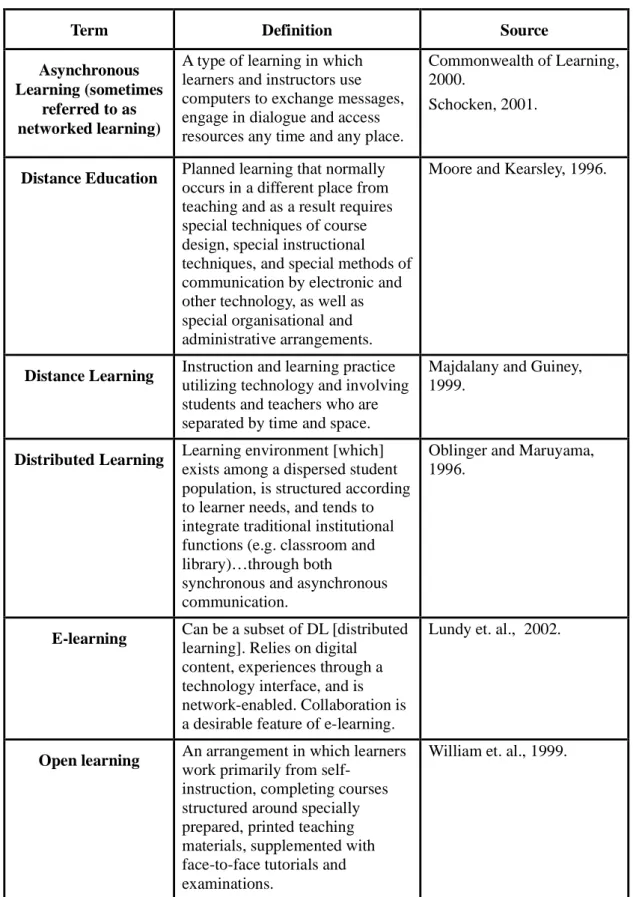
Distance education encompasses essentially all learning technologies, including postal distribution, video broadcast, CD-ROM and Web delivery in which instruction and learning interactions may take place independent of the relative physical locations of the individual participants (Lundy et.al, 2002, p.1). This definition may seem straightforward enough, but “conceptual confusion is continually created with the advent of new terminology” (i.e., distance learning, distributed learning, open learning, e-learning, flexible learning, learning portal and virtual classrooms) (Garrison, 2000, p.1). Table 1 provides definitions for some of the terms found in the literature.
Table 1. Definition for Some Distance Education and Training Terms
Term Definition Source
Asynchronous Learning (sometimes
referred to as networked learning)
A type of learning in which learners and instructors use computers to exchange messages, engage in dialogue and access resources any time and any place.
Commonwealth of Learning, 2000.
Schocken, 2001.
Distance Education Planned learning that normally occurs in a different place from teaching and as a result requires special techniques of course design, special instructional techniques, and special methods of communication by electronic and other technology, as well as special organisational and administrative arrangements.
Moore and Kearsley, 1996.
Distance Learning Instruction and learning practice utilizing technology and involving students and teachers who are separated by time and space.
Majdalany and Guiney, 1999.
Distributed Learning Learning environment [which]
exists among a dispersed student population, is structured according to learner needs, and tends to integrate traditional institutional functions (e.g. classroom and library)…through both
synchronous and asynchronous communication.
Oblinger and Maruyama, 1996.
E-learning Can be a subset of DL [distributed learning]. Relies on digital
content, experiences through a technology interface, and is network-enabled. Collaboration is a desirable feature of e-learning.
Lundy et. al., 2002.
Open learning An arrangement in which learners work primarily from self-
instruction, completing courses structured around specially prepared, printed teaching materials, supplemented with face-to-face tutorials and examinations.
William et. al., 1999.
Despite differences, there is agreement that the definitive characteristic of distance education is the “quasi-permanent separation of teacher and learner through the length of the learning process and it is this condition that provides a basis for inquiry”
(William et. al., 1999, p. 2).
Distance education borrows terminology from other disciplines, including
Psychology, Sociology, Philosophy, History, Economics, Organizational Theory, Adult Education, general education and Information Technology (Lundy, et al. 2002). Thus, this review of distance education begins with an understanding of key concepts related to distance education, including processes, technologies and capabilities.
The Discipline of Distance Education
Some theorists have proposed that distance education can be considered a discipline in its own right with its own vocabulary (Coldeway, 1989). Holmberg (1986) has examined the grounds for regarding the study of distance education as an emerging discipline. He reviews over 300 studies and concludes that, “there is in fact a discipline of distance education, which can be described both in terms of [unique]
research programs and in terms of curricula for university study” (Holmberg, 1986, p.
4). Others have hesitated to speak of a discipline, but rather view distance education as
“a coherent and distinct field of educational endeavor” (Keegan 1996, p. 6). Devlin describes distance education as a derivative field of Adult Education, which in itself is
a "professionalizing vocation," not a discipline in its own right (Devlin, 1989). Still others choose to refer to simply the field of distance education based on the view that
“it lacks autonomy and independence from education”, (Rumble, 1988, p. 1) and that
“there is nothing uniquely associated with distance education in terms of its aims, conduct, students or activities that need affect what we regard as education”(Garrison 1989, p. 8, quoted in Hutton, 1998).
Globalization has inspired additional ways of looking at distance education. Shale (1987) uses the term Open Learning to describe a way of looking at distance education in international higher education. Wedemeyer (1975), one of the early theorists in the open learning field, describes the basic principle that characterizes the open university concept:
Learning is the act or process of acquiring knowledge or skill. When the adjective "open" is used to qualify "learning"
we have put a name to a process of learning that is not enclosed or encumbered by barriers, that is accessible and available, not confined or concealed and that implies a continuum of access and opportunity…The ideal concept of open education would take the form of education permanente, open to all people at all levels, cradle-to-grave (Wedemeyer,
1975, p. 125 as quoted in Shale, 1987, p 2).
The core concept inherent in "openness" is the idea of extending access to educational opportunity, and this may be done in many ways. For example:
1. The provision of more "seats" at the university level.
2. The usual entrance requirements for admission to a university program may be eased or waived.
3. The constraints of having to be at a particular place at a particular time may be alleviated or waived completely.
4. "Substantial" credit may be awarded for life-experience or for university credit taken at other institutions.
5. Credits earned through study elsewhere may be 'banked" and perhaps combined with life-experience credit, to be applied to a degree at a host university.
6. Students study independently and at a pace of their own choosing (Shale, 1987, p. 3).
This study will use the phrase distance education and/or Distance Learning interchangeably to reference various forms of mediated teaching and learning, characterized by the dispersion in time, space or both of learners and their instructors
for the whole or parts of programs. “The distinction between distance learning and open learning has been that as it evolved, distance learning incorporated technological advances into the teaching/learning process, whereas open learning did not necessarily do the same”(William et al., 1999, p. 2). The growth of "open" universities, most of which offer education at a distance, has not helped to clarify the distinction between the two.
The term open generally refers to institutions, such as the British Open University and many North American community colleges, which have open admission policies.
An open admissions policy is not necessarily a characteristic of distance learning programs, however. A survey reported by William et.al., (1999) shows that in a United Nations database of distance learning programs, only 22 percent of 859 distance learning programs had open admission policies (p. 3).
Components of Distance Education Delivery Systems
Distance education appears to be continuing to evolve toward greater conceptual complexity, particularly in relation to the variety, power and flexibility of delivery systems to respond to the variety of learning environments highlighted above. These include print, correspondence, radio, television, fax, audio and video cassettes, CD- ROMS, DVD's, telephone, one-to-one videoconferencing, teaching aids (such as
photographic slides and experimental kits for use in the home), and computers (used to undertake computing as a general tool for word processing and spreadsheets, for electronic mail and computer conferencing and in computer assisted
learning/computer aided instruction). Technological development is increasing the range of such media and increasing the way in which media can be combined. For example, content management software on the web can be used to post syllabuses in combination with a synchronously delivered course via room videoconferencing (Rumble, 1992).
Process
In addition, definitions of distance education exist which emphasize the process of educational delivery. Definitions that focus on process characterize distance learning as a transaction between teacher and learner based on dialogue and structure. Moore (1973) proposes the concept of transactional distance as the key element in distance education. Transactional distance is a "distance of understandings and perceptions [not of geography] that may lead to a communication gap or a psychological distance between participants in the teaching-learning situation" (Chen and Willits, 1998). As a continuous variable, the magnitude of transactional distance is dependent upon
dialogue, the potential for communication between learner and instructor, and
structure, the degree to which a learning program can be individualized for specific
learner needs (Moore, 1993). Moore argues that the degree of transactional distance between learners and teachers and among learners is a function of the extent of the dialogue or interaction that occurs, the rigidity of the course structure, and the extent of the learner's autonomy (Chen and Willits, 1998). Moore argues that transactional distance and learner autonomy are directly related. Learners operating at greater transactional distances need more autonomy (Muth & Guzman, 2000). Learner autonomy is defined as the extent to which in the teaching/learning relationship it is the learner rather than the teacher who determines the goals, the learning experiences, and the evaluation decisions of the learning program (Moore, 1993, p. 31).
Identifying Critical Elements in a Distance Education Environment
Ryan (2001) shows that two models of learner support now exist in the distance education environment: one related to development of the individual's potential and another related more to the needs of the system for accountability. She points to technology's ability to focus on learner-centeredness.
Whereas Dewey conceived of the teacher manipulating the learner's environment and resources in order to stimulate the individual, the distance learner is now seen to be independent of the teacher, who is no longer a directive expert or 'sage on the stage,' but a facilitator or 'guide on the side' " (Ryan, 2001,
p. 73).
Some critics of distance learning consider the individualistic model of learning described above as having serious defects.
For Dewey, a highly individualistic, or libertarian model of learning severely narrows and restricts the meaning and practical effects of education's social function. In his view, the purposes of education in a democracy are necessarily both individual and collective in nature. They consist in developing individuals' natural capacities and acquisition of skills in concert with their preparation for the activities of engaged citizenship and reflective thought (Brint, 2002, p. 4).
Many who analyze the impact of distance education on teaching and learning would instead agree with Twigg and Jurich, who state that greater quality means greater individualization of learning experiences for students. This means moving away from teaching and learning ideas that begin with the thought that 'all students need…' (Twigg, 2001, p. 9), and focusing instead on learner-centred, technology- based forms of learning (Jurich, 2000, p. 4).
Other important contributors to a conceptual analysis of teaching and learning in the distance education field include Wedemeyer, who as early as 1971, began to
identify the defining characteristics of distance learning, including communication, pacing, convenience, and self determination of goals and activities by the learner (Garrison, 2000). Peters (1994) considers the structure of distance education, noting the possibility of adopting industrial production techniques such as the division of labour, mass production and organization to realize economies of scale and reduce unit costs (Garrison, 2000). Holmberg (1989) has developed the concept of guided didactic conversation as the pervasive characteristic of distance education. Essentially, his theory presents the view of distance education as “friendly conversation [fostered by]
well developed self-instructional materials [resulting in] feelings of personal relation…intellectual pleasure [and] study motivation”(Garrison, 2000, p. 8).
Other major theorists include Garrison and Shale (1990), who place the teaching and learning transaction at the core of distance learning practice (Garrison, 2000). A collaborative education perspective is offered by Henri (1992), and includes five educational dimensions: participation, interaction, social, cognitive, and metacognitive (Garrison, 2000).
In spite of the large range of theoretical research on teaching and learning in the distance education environment cited here and elsewhere (see Muth & Guzman, 2000;
Garrison, 2000 for comprehensive reviews) the distance education field lacks a record of empirical research to support its theoretical models and to provide a framework for
the field (Willis, 1998; Saba, 2000). Most research focuses on: 1) descriptions of various programs and institutions “[a recent 10-year survey of distance education research points out that three-fourths of the 890 articles and dissertations reviewed between 1990 to 1999 involved descriptive research (Berge & Mrozowski, 2001, p.
11-12)]”; 2) audience studies, including the performance of students; 3) cost effectiveness studies; 4) methodology, descriptive of the various methods used to teach, support and counsel students; and 5) social context, examining the social context of distance learning (Perraton, 2000, p. 4-5). Research questions are rarely posed within a theoretical framework or based on fundamental concepts and
constructs, making it difficult to draw any general conclusions or consensus about the nature of the field (Saba, 2000; McIsaac & Gunawardena, 2001). As a result, there is a shortage of well-founded research findings on many aspects of distance learning, while findings about its context, critical for policy makers, are especially scarce (Perraton, 2000).
Shale (1990, as cited in McIsaac and Gunawardena, 2001) calls for theoreticians and practitioners to stop emphasizing points of difference between distance and traditional education, but instead to identify common educational problems. Distance education, is after all, “simply education at a distance with common frameworks, common conceptual concerns, and similar research questions relating to the social
process of teaching and learning” (McIsaac & Gunawarden, p. 408). As "hybrid"
teaching (the replacing of some in-person meetings with virtual sessions) starts to blur the distinction between traditional and online instruction (Young, 2002), the
differences between distance education and traditional teaching are becoming less distinct. The need for separate discussions about educational practice in the distance education environment will lessen as convergence of distance education, distributed learning and traditional instruction occurs (Otte, 2002).
Building a Theoretical Framework
While convergence in practice is taking place, there are those that still believe that a theoretical justification of distance education as a separate discipline and practice is needed (Keegan, 1996). McIsaac and Gunawardena (2001) summarize three
approaches to theory building. First, a multi-disciplinary and interdisciplinary
approach to distance education is identified. This approach encourages a broad view, employing insights from the humanities and social sciences to provide an academic perspective on the distance education environment (see von Baalen & Thodenius, 2000). Secondly, they identify research related to adult learning as providing a unique educational perspective in the distance education field (see Einarsson & Gard, 2000).
Thirdly, they discuss an international perspective (see Rumble, 1992), pointing out that certain lines of questioning are more appropriate in some countries than others
due to differing environmental circumstances and needs of potential students.
McIsaac and Gunawardena (2001) point out that though these three approaches to theory building have advanced conceptual thinking about distance learning, more work is needed. They suggest a critical approach that integrates theories from all three perspectives in order to enrich theory building in the distance education field.
Systems Theory
The open systems approach can provide a fundamental context for the critical study of distance education because of its potential value in "synthesizing and analyzing complexity" (Simon, 1968, quoted in Malhotra, 1993, p. 7). This complexity includes:
1. A large number of activities to be integrated including course design and development, production, delivery, teaching and student support;
2. A variety of specialist personnel and resource inputs;
3. Large numbers of students;
4. New communication technologies;
5. Visible and relatively permanent course materials (compared to the more temporary nature of face to face teaching and learning);
6. Significant extra-institutional goals e.g. access and equity, national/mass education;
7. Significant financial investments; and 8. Significant risk.
Together these characteristics imply a need for coordinated management and control and integration of resources - human, physical and monetary. In complex situations, marked by the need to be flexible and adaptive, as well as an emphasis on service to clients, cost reduction, and rapid response to changing technologies, a systems approach can help assist in planning, directing, evaluating, and redirecting programs and processes.
Keegan (1993) has proposed the use of Systems Theory to serve as a basis for systemic study of distance learning, to contribute to conceptual insights about the complexities of distance education, and to provide the basis for developing methods for enhancing the teaching-learning environment. An open system is a distinct entity that takes in resources from its environment, processes them in some way, and produces output. The components of the open system are relationally arranged and interdependent "in order to attain its specified purpose” (Banathy, 1992, p. 191, as quoted in Cookson, 2000, p. 2). A systems approach looks both inward and outward, focusing on relationships and patterns of interaction between subsystems and their environments within the organization. In this context, terms such as input, process, output, control and feedback are frequently used for describing, analyzing, and
evaluating institutions. These tools can be applied to any level and to any function in an institution.
How Distance Education Fits the Systems Model
Keegan (1993) views distance education as a multidimensional system of learning and communication processes. Saba (2000) states that a systems approach is necessary to describe distance education and define a set of prescriptive principles and rules for its effective use, as well as a set of criteria to determine its effectiveness.
Distance education may be conceptualized and analyzed from a systems perspective because it is made up of a complex set of interdependent subsystems.
External to a distance education program are local, state, national, and international structures that impact on offerings and delivery systems. Within the institution, there are three major subsystems: an operational system, a logistical system and a regulatory system. Each is comprised of its own variously integrated sub-systems and sub-sub systems. For example, there is the sub-teaching/learning system. When learners come into contact with teaching/learning materials and are supported in study, a
teaching/learning system exists. The sub-sub systems that integrate to form this sub- system involve:
1. A learning recruitment and admission system.
2. A course design and materials development system.
3. A teaching/mentoring system.
A Student Support System
The distance learning program takes in resources and information and processes them within these sub-systems in a variety of ways, returning a range of educational services and programs to individuals and systems in its environment. The distance education program is highly dependent on resources in the environment for its success.
There are numerous examples of systems thinking in distance education. One example is provided by Moore and Kearsley (1996) in which they refer to distance education as:
a system that consists of all the component processes that make up distance education including learning, teaching, communication, design, and management and even such less obvious components as history and institutional philosophy.
Within each of these broadly named components are
subsystems, which are systems in themselves. For example, there is a subsystem in every distance education system that deals with course design, one that includes many component
activities working together so that the course is produced with quality, on time and at acceptable cost. The course design subsystem links to other subsystems to form the total system.
While we may choose to study each of these subsystems separately, we must also try to understand their
interrelationships. Anything that happens in one part of the system has an effect on the other parts of the system. So as we focus on any one part of the system, we need to hold in the back of our minds a picture of the total context
(p. 5, as quoted in Cookson, 1998, pp. 2-3).
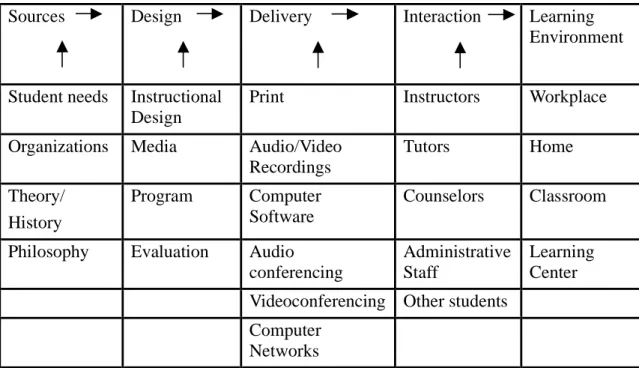
According to Moore and Kearsley (1996), successful distance education programs must examine the whole learning experience systematically and as a collection of its interrelated systems -- the learning organization (students and faculty), instructional design systems, the delivery system, the interactions between student and instructor, and the learning environment.
Potential inputs or options are identified for each of these components (see Table 2 below). For example, interaction is identified as potentially involving: students
interacting with faculty, advisors, administrative staff, and with each other (Moore and Kearlsey, 1996). Options identified for the management and administration of the
distance learning system include: assessment methods, resource allocation, and policy development (Moore and Kearsley, 1996).
The costs and complexities of understanding, implementing and managing a distance learning system justify the use of teams of specialists and a mass production model of education. Moore and Kearsley (1996) draw analogies to the modern air transportation industry, and state: "a distance education system only becomes cost effective when it can take advantage of the economies of scale” (Moore and Kearsley, 1996, p. 7).
Table 2. A Systems Model for Distance Education
Sources Design Delivery Interaction Learning
Environment Student needs Instructional
Design
Print Instructors Workplace
Organizations Media Audio/Video Recordings
Tutors Home
Theory/
History
Program Computer
Software
Counselors Classroom Philosophy Evaluation Audio
conferencing
Administrative Staff
Learning Center Videoconferencing Other students
Computer Networks Adapted from Moore and Kearsley, 1996.
Cookson (1998), using previous research completed by Banathy (1992), analyzes distance education as an organizational system. Banathy described three systems models: system-environment model, the structure-function model, and the process behaviour model. Cookson shows that each model provides a unique perspective for understanding the structure of distance learning as a system (Cookson, 1998).
The Systems-Environmental Model
Comprehension of a system cannot be achieved without a constant study of the environmental forces that impinge upon it (Katz and Kahn, 1966, as cited in Malhotra, 1993, p 1). As Dron, Boyne, and Siviter (2000) write quoting Cox (1997):
what actually governs complex systems is rarely the industrial age's notion of design at all. Rather, they evolve, shaped by an interaction in which system and environment minutely adjust to each other as biological organisms evolve with ecologies (p. 1).
To conceptualize a distance learning system in terms of its environment is to emphasize the importance of exchange between the distance learning program and its environment. Unfortunately, the forces that drive this exchange are not always the needs of the learners, but may be swayed by everything in the environment from government policies to university traditions (Dron, et al, 2000, p. 1).
For example, distance education systems respond to financial imperatives in their environment in one basic way: by collecting tuition. These programs also depend heavily on their environment's human resources to sustain a pool of qualified instructors. In addition to being personnel intensive, distance education programs require special, potentially costly fixed assets, most notably an appropriate technical infrastructure to support course delivery. Another vital form of input for distance learning systems is information, for example, knowledge of subject-specific and job specific-educational needs in a given community.
The most obvious output of a distance education program is course content delivery,
either synchronous or asynchronous. Another output may be supplemental educational resources distributed in various forms, which can be utilized over a longer period of time.
Less tangible outputs can also be considered, such as the effect of distributed learning on students' attitudes about learning in general, or the long-term impact of a distance education program on the economic development of a community. The
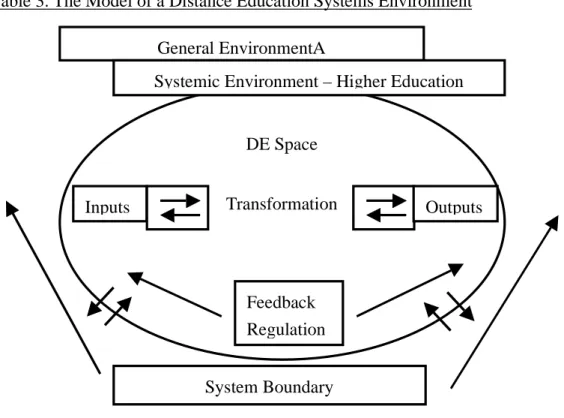
effectiveness of this kind of output is difficult, but not impossible to measure, and may help to determine how well a distance learning program is functioning as a system. By viewing a distance education system in this way, we can determine the adequacy of its response to the environment, as well as the impact of the environment on the distance education system. See Table 3 below.
Table 3. The Model of a Distance Education Systems Environment
DE Space Transformation General EnvironmentA
Systemic Environment – Higher Education
Inputs Outputs
Feedback Regulation System Boundary
Adapted from Cookson, 2000, p. 2.
All distance education systems have boundaries that define what is inside and what is outside the system. Sometimes the boundaries are imprecise. Fundamental to this imprecision is the idea that there is no one best way to organise. Just as with living organisms, the effectiveness of a distance education organisation depends on the alignment among characteristics of the system and between the system and its
environment. The systems-environmental model enables us to see distance learning in terms of interrelated and interdependent processes. This means if one component that impacts the distance education system is changed, other components are likely to change too. For example, if a communication medium is changed, this will affect the instructional design, nature of interaction, and possibly the distance education environment itself. Other dynamics can be anticipated as well. For example, an increasingly effective distance capability might encourage a change in institutional goals from an initial focus on local students or a particular kind of course offering, to a wider range of programmatic offerings delivered to a more widely dispersed student body. Improved institutional capability in distance learning could also change
institutional context by increasing the legitimacy of distance education efforts within the context of university teaching and research missions.
The Functions-Structure Model
The functions-structure model depicts a system at a particular moment in time (Banathy & Jenks, 1990, as cited in Cookson, 1998). This model describes the
distance education system in terms of its nature, purpose and functions, as well as how it is organized to accomplish its mission, and how the different parts are integrated.
The functions-structure model projects a still picture image that enables us to describe the educational system's goals, the functions it carries out to attain those goals, the components of the system that interact to carry out those functions, and the way those components are organized and integrated to create the structure of the system (Banathy and Jenks, 1990, quoted in Cookson, p.52, 1998).
Application of this model to distance education involves five steps: 1) defining the system image; 2) identifying the systems definition, consisting of both purposes and systems specifications; 3) identifying the functions the system carries out; 4)
determining which components of the system carry out the functions; and 5) defining the system's structure of relationships among the various parts (Cookson, 1998).
In applying step one, distance education programs show marked image variation (Foster, 2002, p. 1). They vary in socio-political contexts, in the external infrastructure
and delivery and communications capabilities available to them; in their audience; in the economic circumstance of their audience; in the significance of their role within their parent organization and externally, and in their goals. Institutions vary in the scope of their distance education offerings, and the scale of their distance education program. Institutions also have varied distance education structures. They may be single mode institutions, i.e., offering everything by distance education. Mixed mode institutions teach essentially the same courses by both traditional and distance delivery.
Many North American universities support this model. Departmental models represent those institutions that have a separately constituted department for the offering of distance education opportunities. Audience targeted organizations deliver continuing professional development programs for professional clientele. Dozens of professional associations and societies provide continuing education to members in a distance education mode. Collaborative models include the sharing of resources, technical and/or content, between institutions. A brokerage model includes an organization that brokers the courses of other institutions. Finally, there are a growing number of examples of institutions jointly offering a cooperatively designed course or program (DuMont, 2002).
Kaye and Rumble (1981) focus on the problems faced by educational institutions in developing appropriate structures for their distance education programs. They suggest
that a major issue confronting many universities is how to resolve the conflict between distance education programs, which often requires the management and structure of a business enterprise and traditional academic areas that have a completely different style of governance (Jeffries, 2002, p. 6). These differences often find expression in a conflict between academic 'freedom of action' and the necessity for maintaining effective production mechanisms (Kaye and Rumble 1981, p 179, quoted in Jeffries, 2002) necessary for distance education course development and distribution.
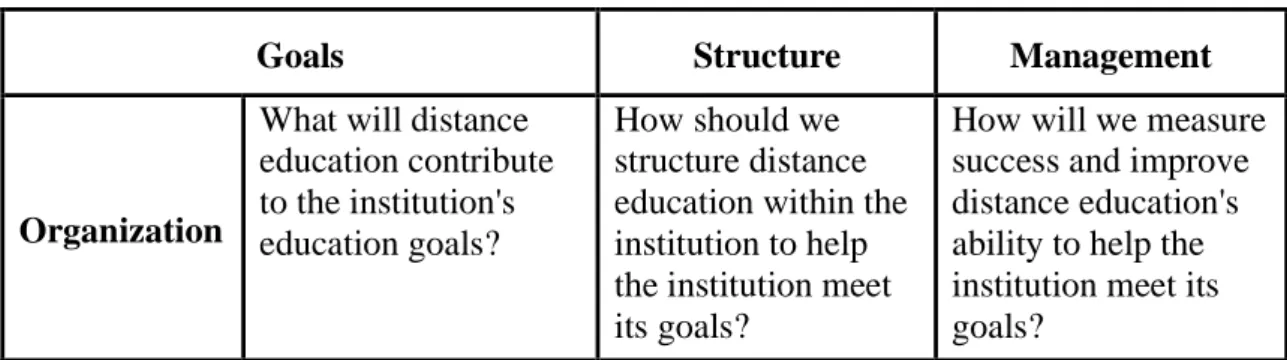
In applying step two of Banathy's (1992) model, convergence between a distance education production model and traditional higher education can occur. Rummler and Brache's Organizational Alignment Model (see Rummler and Brache, 1990) provides a useful framework for analyzing and aligning the goal-setting, structure and
management practices of an institution, its distance education processes, and its staff members (Prestera and Moller, 2001, p. 3). An analysis matrix has been developed for this model and is shown in Table 4.
Table 4. Organizational Alignment Model
Goals Structure Management
Organization
What will distance education contribute to the institution's education goals?
How should we structure distance education within the institution to help the institution meet its goals?
How will we measure success and improve distance education's ability to help the institution meet its goals?
Process
What are the key success factors for delivering distance education such that they meet the institution's goals?
How should distance education functions be structured in order to be effective and help the
institution meet its goals?
How will we measure the efficiency and effectiveness of distance education processes?
Personnel
What do we need from faculty and professional staff in order to meet our distance education goals?
How should roles and responsibilities be defined in order to meet expectations and deliver results?
How will we measure and improve teaching and learning in the distance education environment?
Adapted from Prestera and Moller, 2001.
The Balanced Scorecard Model
Rogers (1995) suggests that for distance education to be successful, distance education options must follow and support university mission, goals and the educational needs of students. Institutions vary in their primary goals for providing distance education opportunities. These goals are established within socio-political contexts and constraints and may focus on serving those who, for a variety of reasons, cannot attend a traditional college or university (Porter & Lane, 2000). These include persons who live in geographically remote areas in which it is difficult or impossible to provide face-to-face teaching; those who suffer from physical disability or long term illness, which prevents them from coming to campus; those who have been displaced; and those who move frequently. Distance education is also suitable for
those who for social, economic or educational reasons missed out on the opportunities available from traditional institutions offered at traditional times and places, or who wish to retrain or update themselves, or study for personal interest and enjoyment. A whole range of enrichment, community development and vocational distance
education courses are possible for adults, including distance learning opportunities provided by firms for the delivery of training opportunities on the job.
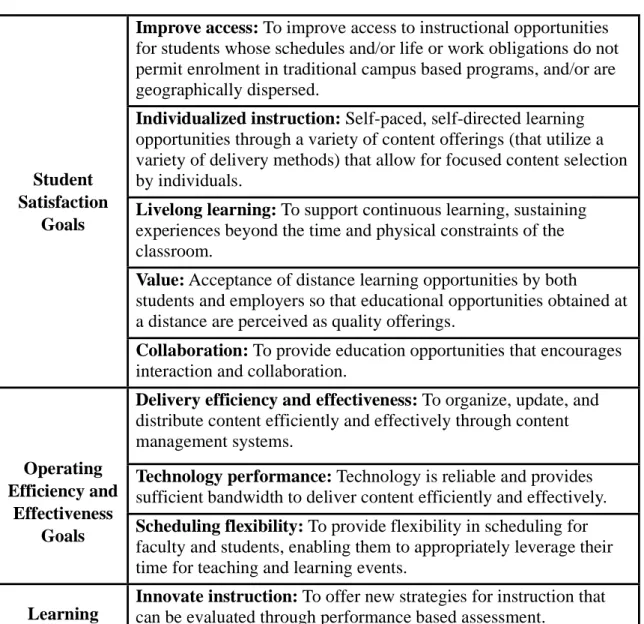
Table 5. Possible Balanced Scorecard Goals for Distance Education
Improve access: To improve access to instructional opportunities for students whose schedules and/or life or work obligations do not permit enrolment in traditional campus based programs, and/or are geographically dispersed.
Individualized instruction: Self-paced, self-directed learning opportunities through a variety of content offerings (that utilize a variety of delivery methods) that allow for focused content selection by individuals.
Livelong learning: To support continuous learning, sustaining experiences beyond the time and physical constraints of the classroom.
Value: Acceptance of distance learning opportunities by both
students and employers so that educational opportunities obtained at a distance are perceived as quality offerings.
Student Satisfaction
Goals
Collaboration: To provide education opportunities that encourages interaction and collaboration.
Delivery efficiency and effectiveness: To organize, update, and distribute content efficiently and effectively through content management systems.
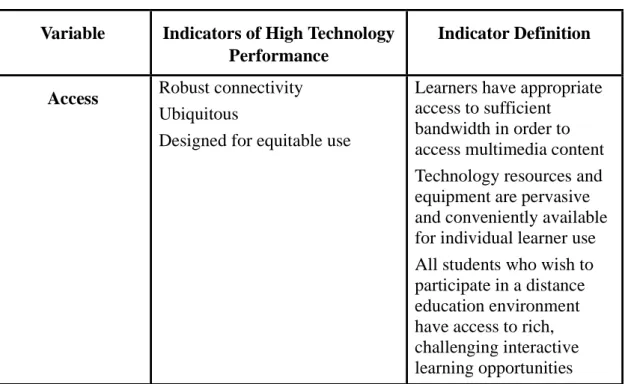
Technology performance: Technology is reliable and provides sufficient bandwidth to deliver content efficiently and effectively.
Operating Efficiency and
Effectiveness
Goals Scheduling flexibility: To provide flexibility in scheduling for faculty and students, enabling them to appropriately leverage their time for teaching and learning events.
Learning Goals
Innovate instruction: To offer new strategies for instruction that can be evaluated through performance based assessment.
Goals Faculty development: Faculty will develop new medium-specific skills that may improve their overall teaching skills as well.
Operating costs: Reduction of costs for course delivery over time.
Financial Goals
Return on investment: Large investments in technology and course development are justified by increases in enrolment and the reaching of new students who would not otherwise be enrolled.
Adapted from Prestera and Moller, 2001, p. 5-6.
Rossner-Merrill (1996) suggests that the wide variety of potential distance education goals, particularly as they relate to "education on demand," marginalizes distance learning as an enterprise. She suggests that a uniform purpose for distance education within institutional settings needs to be established in order to afford it the same status and recognition as other mainstream educational efforts. Most of those in the distance education field would not agree. They would agree with Prestera and Moller instead, who have identified four sets of distance education goals as part of what they call "a balanced approach to goal setting" (Prestera and Moller, 2001, p. 5).
These are summarized in Table 5 above.
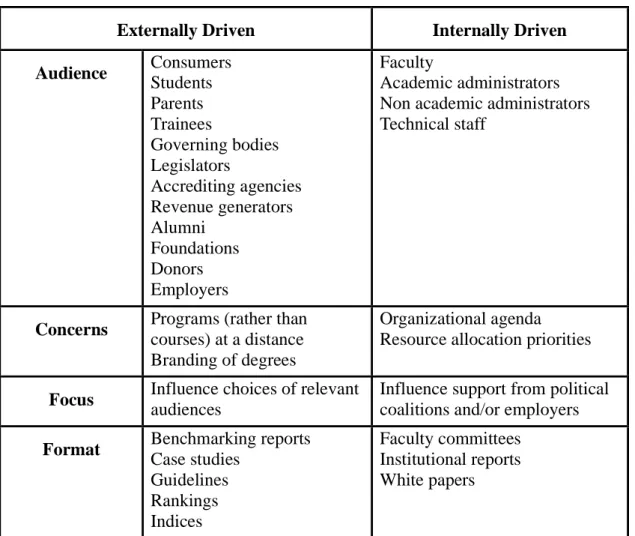
As part of identifying goals and measures to be included in the balanced scorecard, those responsible for distance education programs need to assess the needs of all stakeholders, including potential and existing students, faculty, administrators, and technologists, governing bodies (legislators and accrediting agencies) and potential revenue providers (i.e. alumni, donors and granting agencies.) These stakeholders