That the Greater Vancouver Sewerage and Drainage District Hospital Pollution Prevention Policy be adopted and finally adopted by the GVS&DD Board. That the GVS&DD committee adopts and finally adopts rule no.
OTHER BUSINESS No items presented
Report dated October 17, 2018 from Phil Trotzuk, Chief Financial Officer, requesting approval by the GVS&DD Board of the 2019 budgets for Liquid Waste Services and Solid Waste Services and approval of the GVS&DD Financial Plan.
BUSINESS ARISING FROM DELEGATIONS No items presented
RESOLUTION TO CLOSE MEETING This item was previously considered
RISE AND REPORT (Items Released from Closed Meeting) No items presented
Minutes of the Regular Meeting of the Board of Directors of the Greater Vancouver Sewerage and Drainage District (GVS&DD), held on Friday, October 26, 2018 Page 11 of 11 M. Minutes of the Special Joint Meeting of the Metro Vancouver Regional District ( MVRD), Greater Vancouver Water District (GVWD), Greater Vancouver Sewerage and Drainage District (GVS&DD) and Metro Vancouver Housing Corporation (MVHC) Board of Directors was held at 10:03 A.M.
Section B 2
Minutes of the special joint meeting of the MVRD, GVWD, GVS&DD and the MVHC Board of Directors held on Friday, November 30, 2018 Page 2 of 5 1. Ravi Chhina, General Manager, Parks and Housing Services, provided members with an overview of the MVHC budget and financial plan 2019.
Section B 3
- PRESENTATION
- REPORTS
- NOTICE OF MOTION 1 2019 Budget
- ADJOURNMENT/CONCLUSION It was MOVED and SECONDED
Minutes of the adjourned Special Joint Meeting of the MVRD, GVWD, GVS&DD and the MVHC Board of Directors held on Friday, December 7, 2018 Page 1 of 3 SPECIAL MEETING OF THE METRO VANCOUVER JOINT BOARDS. That the GVS&DD Board receive for information the report dated January 4, 2019, entitled "Annual summary of recycling and solid waste management 2017". The purpose of this report is to provide the Board with an annual update on the reduction, recycling and disposal of solid waste from the Metro Vancouver region.
Metro Vancouver provides an annual summary of the region's solid waste reduction, recycling and disposal metrics. Waste disposal is the combined effect of reduction, reuse and recycling to reduce the amount of solid waste disposed of.
Section E 1.1
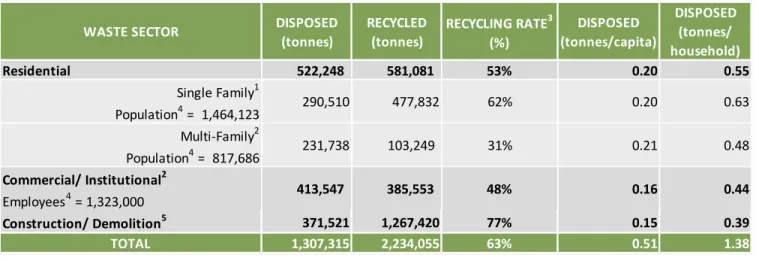
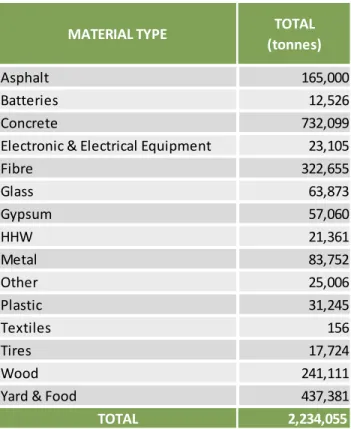
Metro Vancouver's current Integrated Solid Waste and Resource Management Plan (ISWRMP) was approved by the Minister of the Environment on July 22, 2011. In calendar 2017, the region diverted 63% of all municipal solid waste generated (a slight improvement from 62% in calendar 2016). For calendar 2017, an estimated 1.31 million tonnes of municipal solid waste was disposed of from this region.
Metro Vancouver's ISWRMP activities are implemented within the annual budgets for the Solid Waste Services department. This report provides the annual summary of solid waste diversion and disposal in the Metro Vancouver region for calendar year 2017.
Metro Vancouver
Recycling and Solid Waste Management
ATTACHMENT
Metro Vancouver is responsible for planning and managing the region's recycling and solid waste services. This document provides a summary of the recycling and solid waste management activities that took place during calendar year 2017. These activities are managed by the Metro Vancouver Integrated Solid Waste and Resource Management Plan (ISWRMP).
2017 PROGRAM HIGHLIGHTS
Extended Producer Responsibility (EPR) programs, also called product stewardship programs, are industry-administered programs designed to hold producers and consumers accountable for managing goods throughout their life cycle. Most items managed through EPR programs are prohibited from use in Metro Vancouver landfills and are diverted before entering the regional solid waste management system. Metro Vancouver has completed a study to assess the economic and environmental impacts of mattress and furniture recycling and extended producer responsibility.
The seventh year of the Create Memories No Garbage campaign – the new theme of "do something different" this holiday season to reduce waste before, during and after Christmas. Second year of the Love Food Hate Waste campaign - raising awareness of the issue of household food waste prevention.
2017 RECYCLING AND SOLID WASTE SUMMARY
In 2017, Metro Vancouver estimated the distribution of EPR recycling tonnages across the single-family, multi-family, and commercial and institutional sectors (see note 3 in Table 2). 1 Reported tons of waste disposed of and recycled come from municipal reports, data from private recycling and treatment facilities, landfill data, or data from product management associations. 2 Estimated tons of waste removed are based on multifamily per capita removal rates and total commercial waste transfer station scale reports, including multifamily and commercial/institutional quantities.
Metro Vancouver Recycling and Solid Waste Management - Summary 2017 Page 5 (36%), and businesses (10%) with the exception of Recycle BC tonnages which are allocated 85% to the single-family sector and 15% to the multi-family sector. 4 Population, employment and housing figures are based on 2017 projections from the Metro Vancouver Regional Planning Department and are based on 2016 census data.
METRO VANCOUVER’S RECYCLING AND SOLID WASTE MANAGEMENT SYSTEM
METRO VANCOUVER RECYCLING AND SOLID WASTE QUANTITIES 2016 AND 2017
Section E 1.2
Just under six in ten (58%) residents who remember the ads say they are now more likely to use the food waste bin to dispose of food-soiled paper. Overall, just over eight in ten (83%) residents usually use the food waste or rubbish bin for one or more of the types of waste shown in the survey, an increase of six percentage points from 2017. Regional food waste The 2018 recycling campaign budget was $100,000, supported by the Zero Waste Communications Program of the 2018 General Government budget and managed by the Department of External Affairs.
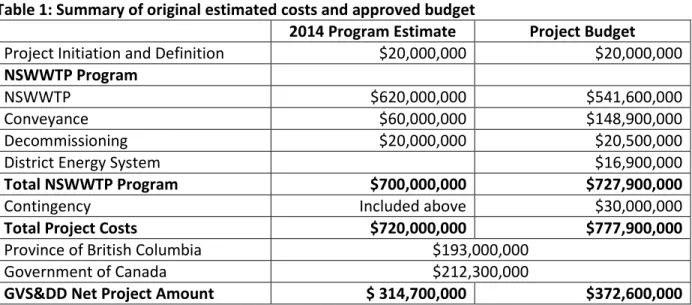
58 percent of residents who remembered the ads said they are now more likely to use the food waste container to dispose of food-soiled paper. To update the GVS&DD Board on the current status of the North Shore Wastewater Treatment Plant Project.
Section E 2.1
In 2011, the board approved a $20 million budget to initiate planning for the secondary upgrades to the Lions Gate and Iona wastewater treatment plants. On April 5, 2017, GVS&DD approved entering into a project agreement with Acciona Wastewater Solutions LP (Acciona) for the design, construction and construction financing of the NSWWTP for $525 million. On July 19, 2018, GVS&DD approved entering into a project agreement with North Shore Conveyance Partners for the design, construction and construction financing of the $141 million Conveyance Project.
Decommissioning of the existing Lions Gate Wastewater Treatment Plant (LGWWTP) and returning the land to the Squamish Nation. The Government of Canada will reimburse GVS&DD 33% of eligible project costs up to a maximum of .
Section E 2.2
That the GVS&DD Committee receive for its information the report dated January 10, 2019 entitled "Island of Iona Wastewater Treatment Plant - Project Definition Update". To update the GVS&DD Committee on the work underway to complete the design definition phase for the new wastewater treatment plant on Iona Island. The project definition phase consists of eight internal workshops involving Metro Vancouver and a team of consultants.
Iona Island Wastewater Treatment Plant – Project Definition Update Liquid Waste Committee Regular Meeting Date: January 17, 2019 Page 2 of 3. Iona Island Wastewater Treatment Plant – Project Definition Update Liquid Waste Committee Regular Meeting Date: January 17, 2019 Page 3 of 3.
Section E 2.3
That the GVS&DD committee receives for information the report dated January 7, 2019 entitled "Capital projects of liquid waste 2019". The purpose of this report is to inform the GVS&DD Board of the solid waste capital projects under its jurisdiction for 2019 as approved by the Board on October 26, 2018. This report summarizes the individual solid waste capital projects included in the above budget.
Financial information for projects under the current waste capital budget must be submitted to the board and committee in the fall of each year as part of the annual budget and five-year financial planning process. For 2019, liquid waste capital projects represent approximately $564.8 million of Metro Vancouver's 2019 capital budget.
City of Vancouver
City of Richmond
City of Delta
City of Surrey
Township of Langley
Langley
City of Maple Ridge
City of MeadowsPitt
CoquitlamCity of
Coquitlam
City of New Westminster
Burnaby
City of Port Moody
Village of Anmore
Belcarra City of
North Vancouver
Municipality
Electoral Area A
District of North
Tsawwassen First Nation
2019 Liquid Waste Capital New Projects
25 kV Substation Replacement - Design and Construction - CDAC System Hardware Upgrade - Design and Construction - Land Improvements - Phase 1 Construction. Biosolids Discharge Plant - Design Phase 1 Construction & Preliminary Design - Relocation of Biogas Lines - Design and Construction. Pre-aeration / Renovation of sedimentation tank and gallery wall - Detailed design - Replacement of Cogen control system - Design and construction.
Gravity thickener and dissolved air flotation Steel repair and recoating - Hydrothermal processing pilot - Design and construction. Remediation of walkways and columns of primary sedimentation tanks - Construction - Replacement of CDAC equipment in galleries - Design and construction.
2019 Liquid Waste Capital Approved in Progress Projects
Electrical Distribution System Protection Control and Monitoring -Detailed design - Optical fiber infrastructure - Detailed design / construction. Emergency Backup Power - Design & Construction Phase 1 - Flow Metering Program - Phase 1. Wastewater Meter Upgrades - Detailed Design. Golden Ears Sanitary Sewer Overflow Store - Design & Property Acquisition - Golden Ears Forcemain and River Crossing - Preliminary Design.
VSA -IIWWTP Maintenance and Administration Building HVAC Construction Richmond VSA -IIWWTP PA-Sed Renovation of Tank and Gallery Wall Detailed Design Richmond. FSA - New Westminster Interceptor Repair Columbia St. VSA - IIWWTP Siphon Chamber Restoration Detailed Design Richmond.
Section E 3.1
The delegate spoke to the committee's priorities and work plan for 2019, highlighting the challenges faced by industrial, commercial and institutional sectors related to regional waste diversion programs and regulatory restrictions. My name is Josh JasenVandoorn and I am a board member of the Waste Management Association of BC. On behalf of WMABC, I thank you for this opportunity to speak to the committee.
As the largest player in the regional waste management services sector, we have and continue to play a key role in providing cost-effective and efficient waste diversion and recycling services to our industrial, commercial, institutional and municipal customers in Metro Vancouver as well. than across B.C. One of the most significant challenges has been the rise of plastic and plastic composite products and packaging in the Metro Vancouver market and the lack of recycling options for these materials.
ATTACHMENT A
I would also like to welcome the new members to the committee and we look forward to building relationships with all of you. By way of background, WMABC is comprised of over 70 independent private waste service companies with over 3,000 employees who provide the majority of waste, recycling and disposal services across Metro Vancouver and the province. Our purpose for being here today is to discuss the 2019 Zero Waste Committee priorities and work plan.
While each can be a separate meeting as there are unique challenges within each, there is a common denominator for all - the lack of waste diversion and recycling capacity in the region. Waste diversion programs in both the municipal and IC&I sectors are facing significant economic and logistical headwinds.