The journal invites previously unpublished original reflective essays and research articles, review articles, reports from the field, testimonials, multimedia contributions, and book reviews focusing on community-engaged scholarship. We welcome contributions from community and academic partners, educators, scholars and researchers pursuing their work in collaboration with diverse communities in Canada and the world. In this issue, I had to pause as Mason, quoting Beaulieu, reminded me that in addition to establishing and maintaining relationality, achieving mutual benefits, and taking joint action to combat oppression, engaged scholarship.
I encourage you to read all the pieces in this issue because the approaches are refreshing, especially after being caught up in our collective struggle to preserve or reinvent engaged scholarship methods during a pandemic. Under the leadership of our book review and podcast editor, Jessica McDonald, we will support the evolution of ESJ to embrace new modalities and be more inclusive for delivering engaged scholarship. We are also grateful to you, the readers, reviewers, and authors, who are dedicated to the art and science of engaged learning.
The quality of our journal depends on the scientific collaboration between the two groups of scientists, the authors and the anonymous peer reviewers of their work.
The Arts in Individual Transformation: Examples from the Recycling Social Movement in São Paulo, Brazil
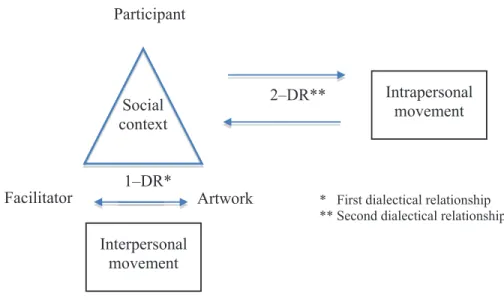
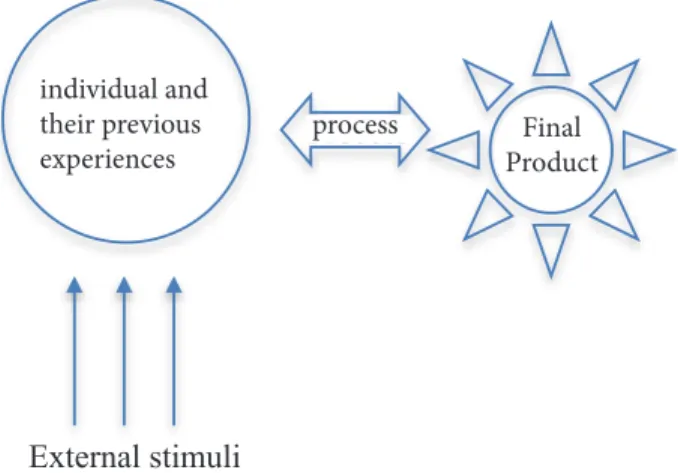
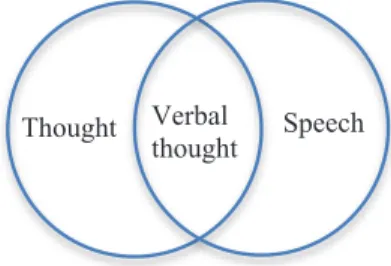
Most recycling cooperatives in Brazil are affiliated with the National Social Movement of Recyclers (Movimento Nacional dos Catadores de Materiais Recicláveis – MNCR), a new social movement that became formalized in 1999 (Gutberlet, 2008). Rather, thinking and speech are a unit that contributes to the developmental process of individual learning and is always tied to the social context. Here we present Dona Telma: a 56-year-old processor from União de Vila Nova and an active member of the MNCR.
Dona Telma brought forth three distinct and yet interrelated entities: the individual (i.e., the participant in the workshop), the facilitator of the workshop, and an already created work of art (i.e., artifact). This relationship between inter- and intrapersonal movement represents another dialectical relationship observed within the dynamics of the individual's intrapersonal movement in relation to the interpersonal movement; the former sparks the latter, continuously and simultaneously. Universe of possibilities established by the interface between the interlocutor's speech and a previously created work of art.
Luiza is one of the members of a recycling cooperative located in a low-income neighborhood in the city of São Paulo. In Luiza's case, her community refers to everyone who was part of the workshop, and the tools refer to all the materials (eg art supplies) she used during the workshop. The recyclers who participated in this study are affiliated with recycling cooperatives and are members of the Brazilian National Recycling Movement (MNCR) in São Paulo.
Three Examples of Engagement through Photovoice 1
However, a discussion of the implications of using Photovoice in each context follows in the section below. My participation was carefully considered by members of the Research Ethics Board because I supervised two coordinators in the team. My use of the Photovoice method occurred while researching innovation within a Public School Board (hereafter referred to as "the organization") where I was employed.
My research concluded that enhancing innovation will require organizational members to (a) bridge the existing gap between the espoused value of innovation and the systemic implementation/practice of innovation, (b) recognize and manage the impact of their unique organizational context on innovation. , (c) use leadership that fosters innovation, and (d) empower staff members and students. Another population invited to participate in the second Photovoice focus group were members of the organization's board of managers. All pictures were displayed in the middle of the table and participants were given five minutes to examine them.
After this, the remaining levels of questioning/discussion took place, with participants engaging in deeper analysis of the photos. Thus, in line with the engagement approach, all stakeholders participated in solving the problem at hand. To ensure anonymity, I was not involved in participant selection for any of the data collection events.
Upon completion of the Photovoice method, the data was returned to me with all identifying information removed. Alison credited the ability to explore far beyond the surface of the subject to the combination of using photography. In a change to the Photovoice process, Michelle allowed participants to choose from magazine images (rather than just requiring images).
This was also true of the anonymous submission used in Nikki and Alison's processes. These relationships served to strengthen the organizational leadership initiatives at the core of all three studies. Catherine Etmanski (corresponding author) is a professor and director of the School of Leadership Studies at Royal Roads University.
Plumb (Ed), Proceedings of the 33rd Annual Canadian Association for the Study of Adult Education (pp. 82-86).
Reports from the Field
Feel’d Notes in Public Places: Affective Artful Expression for Engagement and Transformation 1
Ultimately, my field notes (more accurately, a collage) consisted of a research writing exercise that fit within my methodological framework of arts-informed research. This exercise helped me methodologically: according to Cole and Knowles (2008), arts-informed research is constructed by a researcher attuned to who. These and other decisions revitalized the sites for me, reminded me that arts-informed research is often marginalized in knowledge production (Burns, 2004), and revealed opportunities for engagement and transformation separate from academic research practice.
My focus was neither sociological nor anthropological, but educational, specifically examining how to document lifelong learning experiences using arts-informed research. This insight/into the sites illustrates arts-informed research methodology, which offers “divergent ways of interpreting and re-enacting the research process” (Walsh, 2006, p. 977). With its range of forms of inquiry – such as poetry, literary prose, drama, visual arts, dance and music (Hartel, 2014, p. 1351) – arts-informed research entices us to notice knowledge everywhere: “what we need to know and how we presents such knowledge, cannot always be solely dictated by or expressed in the language of the academy”.
Conducting accessible, engaged research inspired by artistic processes allows art-informed researchers to achieve “multiple [academic] . This dimension of art-informed research provides a point of connection with engaged science to decentralize and rethink knowledge production (Beaulieu et al, 2018). With its range of inquiry forms – such as poetry, literary prose, playwriting, visual arts, dance and music (Hartel, 2014, p. 1351) – arts-informed research entices us to see knowledge everywhere: "what we need to know and how we presenting such knowledge cannot always be determined or expressed only through the language of academia” (Ewing & Hughes, 2008, p. 515).
Conducting accessible and engaging research inspired by artistic processes allows art-informed scholars to “reach multiple [academic] and community audiences” (Cole & Knowles, 2008, p. 59). This dimension of arts-informed research provides a point of connection to scholarship committed to decentralizing and rethinking knowledge production (Beaulieu et al, 2018). Collective change in arts-based inquiry “involves the reader/audience in an active meaning-making process that is likely to have transformative potential” (Cole & Knowles, 2008, p. 62).
My field notes demonstrate a way of transforming record keeping that emerges from engaging with a qualitative arts-informed research methodology. How objects in spaces help people in places: Material object interactions influencing adults' informal learning - Art-informed research using sculptural mobile forms.
Book Reviews
Performing Turtle Island: Indigenous Theater on the World Stage by Jesse Rae Archibald-Barber, Kathleen Irwin and Moira J. Performing Turtle Island: Indigenous Theater on the World Stage grew out of Performing Turtle Island: Fluid Identities and Community Continuities, a event hosted by the University of Regina and the First Nations University of Canada in September of 2015 that explored how Indigenous identity, and Indigenous theatre, shape the country's cultural and artistic scenes. Archibald-Barber, Irwin and Day are experts in the fields of performance, theater history and Indigenous literature in Canada.
Irwin (of Scots-Irish-Welsh descent) is a theater artist and set designer and faculty member in the Department of Media, Art and Performance at the University of Regina. With contributions from researchers, teachers, and practitioners of Indigenous theater and arts, Performing Turtle Island is a collaborative book that explores a range of pedagogical, theatrical, and ideological strategies for connecting Indigenous performance with Western theatrical interpretations and practices. Bringing together warm and engaging essays by authors from diverse educational, professional, and ethnic backgrounds, including music composers, theater directors, playwrights, and Indigenous performers, Performing Turtle Island aims to show how the act and process of performance work as a form of self. - representation for indigenous communities.
In my view, Performing Turtle Island exceeds its goals by providing moving personal testimony and community-based examples of artistic and pedagogical practices that assist in the development of equitable, decolonial and Indigenous spaces for both Indigenous and non-Indigenous theater practitioners and consumers. The content of Performing Turtle Island is divided into two thematic sections: "Critical Self-Representation in Production and Training," and "Performing in Dialogue with the Text." The second section, "Performance in dialogue with the text," is grounded in the problematic and often disjunctive relationship between the play text and the process of performance.
Performing the Bingo Game in Tomson Highway's The Rez Sisters" criticizes the use of Western aesthetic structures when analyzing Highway's game, a common trend in contemporary literary studies. The interdisciplinary array of studies included in this collection helped me to deeper to understand some of the practices that can and should be used to challenge and expand my interpretation and teaching of indigenous theatre.In addition to those already mentioned, I also believe directors of theatrical production companies and boards of directors of local and national theaters would benefit of reading Performing Turtle Island.
With the rise of the Black Lives Matter movement, and the highlighting of systemic racism and exclusion that exists even within creative spaces, the ideological work undertaken in this collection is bound to create self-reflection and. It crosses academic boundaries and disciplines and speaks to anyone who wants to explore new and ever-changing ways to perform Turtle Island.
NEXT ISSUES
Issue 2 Spring 2022 – Engaging feminisms: Challenging exceptionalist imaginaries Issue 3 Summer 2022 – Regular issue
Issue 4 Fall 2022 – Regular issue Volume 9 Issue 1 Winter 2023 – Regular issue
Issue 2 Spring 2023 - Climate Change & Care Issue 3 Summer 2023 - Regular issue
Issue 4 Fall 2023 - Regular issue Engaged Scholar Journal
Engaged Scholar Journal
Community-Engaged Research, Teaching, and Learning
BOOK REVIEW and PODCAST EDITOR Jessica McDonald
GRADUATE STUDENT SERVICE FELLOW Theresa Tavares
ADVISORY BOARD
EDITORIAL BOARD
W in ter 2022ENGAGED SCHOLAR JOURNALVolume 8 Issue 1- Essays -