MECANISMO DE REVISIÓN INDEPENDIENTE:
EL PERÚ
INFORME DE AVANCE
2012-13
MECANISMO DE REVISIÓN INDEPENDIENTE:
EL PERÚ
INFORME DE AVANCE 2012-13
OGP print logo 9/1/2011 this version for all print publications for online, use web version of logo Preferred white space is 25% of logo width on all sides. Letterhead sizing is 1 inch square. 1 in. sizing is preferred where appropriate. Logo typeface is Gill Sans MT. Signage and headlines should use Gill Sans family or open source “Sans Guilt” adapatation. Questions about usage? Contact [email protected]EXECUTIVE SUMMARY ... 3
RESUMEN EJECUTIVO ... 23
I | ANTECEDENTES ... 46
II | PROCESO: DESARROLLO DEL PLAN DE ACCIÓN ... 48
III | PROCESO: CONSULTA DURANTE LA IMPLEMENTACIÓN ... 51
IV | IMPLEMENTACIÓN DE LOS COMPROMISOS ... 52
1 | MEJORAMIENTO DEL MARCO NORMATIVO ... 55
2 | INSTITUCIONALIZACIÓN DE LA TRANSPARENCIA ... 58
3 | DESARROLLO DE INSTRUMENTOS PARA LA TRANSPARENCIA ... 64
4 & 5 | DESARROLLO DE INSTRUMENTOS E INSTITUCIONALIDAD PARA MEJORAR LA INTEGRIDAD ... 70
6 | REVISIÓN DE LAS NORMAS DE INTEGRIDAD ... 76
7 | MEJORAMIENTO DE LOS INSTRUMENTOS DE PARTICIPACIÓN ... 81
8 | FORTALECIMIENTO DE LOS ESPACIOS DE PARTICIPACIÓN CIUDADANA ... 85
10 | DESARROLLO DE INSTRUMENTOS QUE FACILITEN
INTEGRACIÓN DE INFORMACIÓN DEL ESTADO ... 93
11 | MEJORAMIENTO DE LAS NORMAS DE GOBIERNO ELECTRÓNICO ... 98
12 | ARTICULACIÓN DE LOS ESFUERZOS ESTATALES ... 100
COMPROMISOS OMITIDOS DEL TEMA “MEJORAR LOS NIVELES DE TRANSPARENCIA Y ACCESO A LA INFORMACIÓN PÚBLICA” ... 103
COMPROMISOS OMITIDOS DEL TEMA “PROMOVER LA PARTICIPACIÓN CIUDADANA” ... 106
COMPROMISOS OMITIDOS DEL TEMA “AUMENTAR LA INTEGRIDAD PÚBLICA” (PRIMERA PARTE) ... 108
COMPROMISOS OMITIDOS DEL TEMA “AUMENTAR LA INTEGRIDAD PÚBLICA” (SEGUNDA PARTE) ... 112
COMPROMISOS OMITIDOS DEL TEMA “GOBIERNO ELECTRÓNICO Y MEJORAS EN LOS SERVICIOS PÚBLICOS” ... 115
V | AUTO-EVALUACIÓN ... 118
VI | ¿CÓMO AVANZAR? ... 120
INDEPENDENT REPORTING MECHANISM (IRM):
PERÚ
PROGRESS REPORT 2012-2013
AT A GLANCE
PARTICIPATING SINCE: 2011 ORIGINAL NUMBER OF
COMMITMENTS (ACTIVITIES): 47
LEVEL OF COMPLETION
COMPLETED: 3 OF 47
SUBSTANTIAL: 11 OF 47
LIMITED: 15 OF 47
NOT STARTED: 10 OF 47
WITHDRAWN: 2 OF 47
UNABLE TO DETERMINE: 6 OF 47
TIMING
ON SCHEDULE: 14 OF 47
COMMITMENT EMPHASIS
ACCESS TO INFORMATION: 24 OF 47
PARTICIPATION: 14 OF 47
ACCOUNTABILITY: 18 OF 47
TECHNOLOGY & INNOVATION FOR TRANSPARENCY &
ACCOUNTABILITY: 4 OF 47
UNCLEAR: 9 OF 47
NUMBER OF
COMMITMENTS WITH
CLEAR RELEVANCE
TO AN OGP VALUE: 38 OF 47
MODERATE OR TRANSFORMATIVE
POTENTIAL IMPACT: 38 OF 47
SUBSTANTIAL OR COMPLETE
IMPLEMENTATION: 14 OF 47
EXECUTIVE SUMMARY
The Open Government Partnership (OGP) is a voluntary initiative that aims to secure concrete commitments from governments to the citizenry to promote transparency, empower citizens, fight corruption, and harness new technologies to strengthen governance. The Independent Reporting Mechanism (IRM) carries out a biannual review of the activities of each OGP participating country.
On 13 September 2011, Peru made its intention to participate in the OGP public. That month, at the 66th session of the UN General Assembly, Peru formalized its participation in the OGP. There are three institutions with high-level responsibility for the OGP in Peru. The Ministry of Foreign Affairs communicates formally with the OGP Support Unit. It also convoked the work group that supervised action plan development. The Secretariat of Public Management (SGP) is the Cabinet Presidency office responsible for directing the process of modernizing state operations. SGP has been tasked with implementing and supervising all the initiatives for the action plan’s development and implementation. A Multisectoral Commission is responsible for monitoring. It is comprised of officials from the central government, with participation from representatives of the judiciary, private sector, and civil society. The SGP acts as a technical and coordinating body for this commission.
OGP PROCESS
Countries participating in the OGP must follow a process for consultation with civil society to develop and implement their action plans.
Although a timetable was not published and stakeholders were not advised in advance, the government of Peru conducted a sufficiently participatory consultation process. One can identify civil society proposals that were included in the action plan.
During the first year of the Plan, the SGP decided to review the 47 commitments in order to regroup them and assess them using indicators. Twenty-two public institutions, nine Lima-based civil society organizations (CSOs), some with a national scope, and a representative of business associations participated in the process. From May to September 2012, 16 meetings were held.
The first published draft of the self-assessment report did not regroup the commitments and their respective performance indicators, but the final document is more complete
EXECUTIVE SUMMAR
Y
COMMITMENT IMPLEMENTATION
As participants in the OGP, countries are required to make specific commitments in a two-year action plan. Table 1 summarizes each commitment, including level of completion, potential impact, whether it was completed within the planned schedule, and key next steps. Table 2 summarizes the IRM researcher’s assessment of progress for each commitment. The Peruvian plan includes many commitments with significant potential impact, relevance, and levels of completion.
The Peruvian plan was reviewed and reorganized from the original 47 commitments into 12 new commitments. Most of the original 47 commitments became “activities” distributed within the new commitments, although several commitments were omitted. This process and the resulting new commitments and indicators did not become public until 10 months after the start of the implementation period, and still have not been clearly formalized. Consequently, the planned activities set forth in the self-assessment report (i.e., the original commitments) are considered as milestones, and they are analyzed individually. They follow the numbering of the original action plan, but are grouped under the title of the new, consolidated commitment, with the omitted commitments following. Commitments 4 and 5 were evaluated together because they share activities. In this case, duplicate activities were evaluated only once.
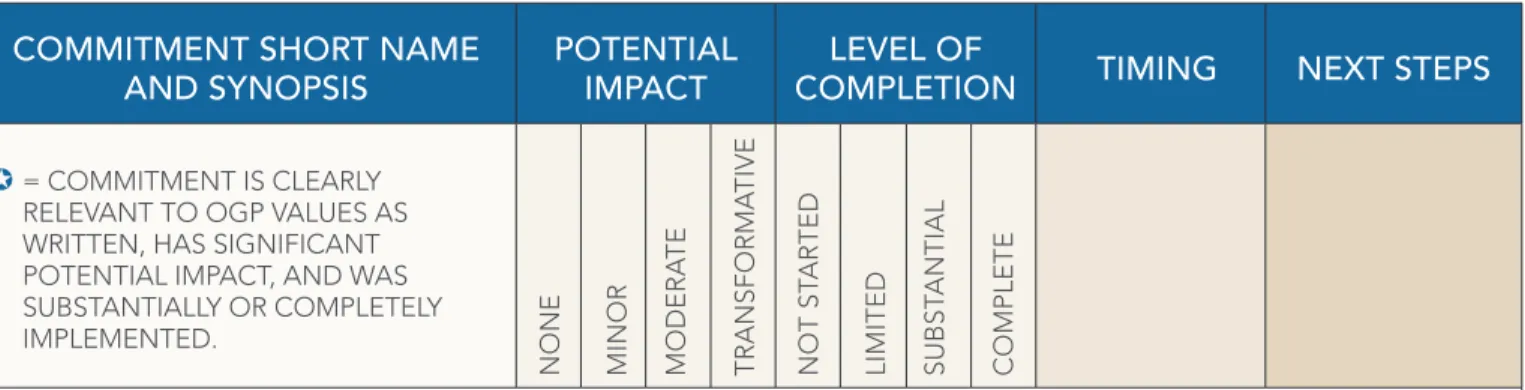
Table 1 | Assessment of Progress by Commitment
COMMITMENT SHORT NAMEAND SYNOPSIS POTENTIAL IMPACT COMPLETIONLEVEL OF TIMING NEXT STEPS
= COMMITMENT IS CLEARLY
RELEVANT TO OGP VALUES AS WRITTEN, HAS SIGNIFICANT POTENTIAL IMPACT, AND WAS SUBSTANTIALLY OR COMPLETELY IMPLEMENTED.
1. Improve Regulatory Framework for Transparency and Access to Public Information
1.a) Review of Regulations on Transparency: Conduct review using a Working Group comprised of government institutions and CSOs.
On schedule
Maintenance and monitoring
of completed implementation
2. Strengthen Institutional Framework for Transparency and Access to Public Information
1.h) Autonomous Institution that
Guarantees Protection of the Right to Access Public Information: Evaluate creation of the institution to solve problems between those who are subject to the requirements and requesters, with the ability to penalize violations.
On schedule work Continued on basic
implementation
1.k) Strengthen Extractive Industries Transparency Initiative (EITI)
Commission: Revision of the
NOT ST
AR
TED
LIMITED SUBST
ANTIAL
COMPLETE
NONE MINOR MODERA
TE
TRANSFORMA
EXECUTIVE SUMMAR
Y
COMMITMENT NAME
AND SUMMARY POTENTIAL IMPACT COMPLETIONLEVEL OF TIMING NEXT STEPS
= COMMITMENT IS CLEARLY
RELEVANT TO OGP VALUES AS WRITTEN, HAS SIGNIFICANT POTENTIAL IMPACT, AND WAS SUBSTANTIALLY OR COMPLETELY IMPLEMENTED.
1.i) Train Officials on Transparency: Use electronic mechanisms to train and raise
awareness about regulations. On schedule Continued work
1.f) Certify Regulations on Standard Transparency Portals: Certify public institutions for compliance with the regulations on portals.
Behind schedule Continued work
3. Develop Tools to Increase Transparency and Access to Public Information
1.j) Improve Access to Environmental Information: Improve the mechanisms for access to environmental information, with an emphasis on extractive industries.
Behind schedule Revision of the commitment
1.c) Standard Transparency Portals:
Develop transparency portal in
user-friendly format. On schedule Continued work
1.b) Monitor Compliance with the Law on Transparency and Access to Public
Information Behind schedule
Revision of the commitment
4.a) Open Information: Make information about the public institutions
progressively more available. On schedule
Revision of the commitment
4. & 5. Tools and Institutional Framework to Improve Integrity)
3.a) Approve the National
Anticorruption Plan 2012-2016 On schedule
New commitment
based on existing implementation
3.k) Strengthen the National Civil
Service Authority (SERVIR) Unable to determine Revision of the commitment
3.e) Strengthen the Fiscal and Judicial Subsystem Specialized in
Offenses Involving Corruption On schedule New commitment
3.j) Strengthen National Complaint Processing System (SINAD): Strengthen SINAD, which is the Office of the Comptroller General of the Republic’s responsibility, and encourage participation in the detection of corrupt acts.
Unable to determine Revision of the commitment
NOT ST
AR
TED
LIMITED SUBST
ANTIAL
COMPLETE
NONE MINOR MODERA
TE
TRANSFORMA
EXECUTIVE SUMMAR
Y
COMMITMENT NAMEAND SUMMARY POTENTIAL IMPACT COMPLETIONLEVEL OF TIMING NEXT STEPS
= COMMITMENT IS CLEARLY
RELEVANT TO OGP VALUES AS WRITTEN, HAS SIGNIFICANT POTENTIAL IMPACT, AND WAS SUBSTANTIALLY OR COMPLETELY IMPLEMENTED.
3.g) Strengthen the High-Level
Anticorruption Commission (CAN) On schedule New commitment
3.f) Strengthen the Council for Defense
of the Peruvian State Unable to determine Revision of the commitment
3.q) Strengthen and Expand the
Administrative Simplification Process Unable to determine Revision of the commitment
6. Revise and Improve the Regulatory Framework for Public Integrity
3.b) Perfect Regulatory Framework
that Governs Officials’ Affidavits On schedule New commitment
3.m) Create Standards of Corporate
Governance: Design and implement regulatory framework so government enterprises can operate with these standards.
On schedule New commitment
3.c) Promote Regulatory Framework that
Prevents and Detects Conflicts of Interest Behind schedule Continued work 3.d) Improve Accountability Mechanism
for Directors of Public Institutions Behind schedule Revision of the commitment
7. Improve Tools for Promoting Participation
2.f) Mechanisms for Budget Information Access: Improve
mechanisms for development, approval, implementation, and closeout of the budget; include structured consultations.
Behind schedule Revision of the commitment
2.e) Technologies for Cooperation:
Expand the use of technologies to facilitate cooperation among the various levels of government and citizens.
Behind schedule New commitment
8. Strengthen Forums for Participation
2.a) Forums for Participation in
NOT ST
AR
TED
LIMITED SUBST
ANTIAL
COMPLETE
NONE MINOR MODERA
TE
TRANSFORMA
EXECUTIVE SUMMAR
Y
COMMITMENT NAME
AND SUMMARY POTENTIAL IMPACT COMPLETIONLEVEL OF TIMING NEXT STEPS
= COMMITMENT IS CLEARLY
RELEVANT TO OGP VALUES AS WRITTEN, HAS SIGNIFICANT POTENTIAL IMPACT, AND WAS SUBSTANTIALLY OR COMPLETELY IMPLEMENTED.
2.h) Improve Forums for Participation
in Competitions and Bidding Processes Unable to determine Revision of the commitment
9. Strengthen Participation Capacity of CSOs and Officials of Public Institutions
2.b) Capacity of CSOs: Strengthen CSO capacity to ensure informed participation in and oversight of the management of public policies.
Behind schedule Continued work
3.s) Develop Proposal for Civic
Participation in Schools Behind schedule Revision of the commitment
2.c) Capacity of Officials and Public Servants: Strengthen capacity of officials and public servants to prioritize participative processes.
Behind schedule Continued work
10. Improve and Develop Information and Communication Technology (ICT) Tools that Facilitate Integration of Government Information
4.b) Digital Gap: Develop proposals for inclusion and computer literacy to
help close the gap. On schedule New commitment
4.d) Interoperability of the Platform for Services: Increase number of
services provided. Behind schedule
Revision of the commitment
4.e) System Integration: Integrate Systems for Financial Administration and Administrative Management, and the National System of State Public Investment.
Unable to determine Revision of the commitment
11. Improve the Regulatory Framework of Electronic Government
4.c) Establish a Multisectoral
Commission to Monitor the Peruvian
Digital Agenda 2.0 Behind schedule
Revision of the commitment
NOT ST
AR
TED
LIMITED SUBST
ANTIAL
COMPLETE
NONE MINOR MODERA
TE
TRANSFORMA
EXECUTIVE SUMMAR
Y
COMMITMENT NAMEAND SUMMARY POTENTIAL IMPACT COMPLETIONLEVEL OF TIMING NEXT STEPS
= COMMITMENT IS CLEARLY
RELEVANT TO OGP VALUES AS WRITTEN, HAS SIGNIFICANT POTENTIAL IMPACT, AND WAS SUBSTANTIALLY OR COMPLETELY IMPLEMENTED.
12. Coordinate Public Institutions’ Electronic Government Efforts
4.i) Design Information Security Framework: Design a framework in accordance with international and domestic standards, allowing for satisfactory, secure access.
Behind schedule Continued work
4.f) Administrative Simplification:
Design and implement the necessary
regulations and incentives. On schedule New commitment
Omitted Commitments Related to “Improve Levels of Transparency and Access to Public Information”
1.d) Document Management Regulations: Revise and improve the
relevant regulations. Behind schedule
Revision of the commitment
1.e) Background and Experience Profiles for Officials Responsible for Access to Information: Establish them to improve quality of service and access to information.
Behind schedule Continued work
1.g) Monitoring Tools: Strengthen these tools, including the various reports of
completion. Withdrawn
Abandon the commitment
Omitted Commitments Related to “Promoting Participation”
2.d) Technologies for Participation:
Promote technology use to gather citizen suggestions and give back relevant information.
Withdrawn Abandon the commitment
2.g) Decisions Handed Down by the Full Supreme Court: Adopt decisions after discussion with citizens and public and private institutions.
Behind schedule Revision of the commitment
Omitted Commitments Related to “Increase Public Integrity”
NOT ST
AR
TED
LIMITED SUBST
ANTIAL
COMPLETE
NONE MINOR MODERA
TE
TRANSFORMA
EXECUTIVE SUMMAR
Y
COMMITMENT NAME
AND SUMMARY POTENTIAL IMPACT COMPLETIONLEVEL OF TIMING NEXT STEPS
= COMMITMENT IS CLEARLY
RELEVANT TO OGP VALUES AS WRITTEN, HAS SIGNIFICANT POTENTIAL IMPACT, AND WAS SUBSTANTIALLY OR COMPLETELY IMPLEMENTED.
3.i) Disseminate Information
Concerning Investigations of Violations
Associated with Corruption Behind schedule
Revision of the commitment
3.l) National Jury of Elections CVs:
Revise the instrument of candidate CVs and penalize the political parties and candidates that are in violation.
Behind schedule Revision of the commitment
3.n) Regulatory Framework of Social Programs: Revise framework with the decentralized governments to provide transparency and management.
Behind schedule Revision of the commitment
3.o) Computer System for Public Acquisitions: Implement the system for information, follow-up, monitoring, and ensuring accountability, especially for social programs.
Behind schedule Continued work
3.p) Information on Lobbying:
Include this, under the heading of “Official Activities” on the Standard Transparency Portal.
On schedule Continued work
3.r) Verification Committee: Establish a committee for potential employees’ CVs as well as criminal, judicial, and administrative records.
Behind schedule Revision of the commitment
Omitted Commitments Related to Electronic Government and Improvements in Public Services
4.g) Documentation Management Systems: Standardize and simplify
document management systems. Behind schedule
Revision of the commitment
4.h) Online processes: Promote implementation and training on online
processes. Behind schedule
Revision of the commitment
NOT ST
AR
TED
LIMITED SUBST
ANTIAL
COMPLETE
NONE MINOR MODERA
TE
TRANSFORMA
EXECUTIVE SUMMAR
Y
Table 2 | Summary of Progress by Commitment
COMMITMENT SUMMARY OF FINDINGS
= COMMITMENT IS CLEARLY RELEVANT TO OGP VALUES AS WRITTEN, HAS SIGNIFICANT POTENTIAL IMPACT, AND
WAS SUBSTANTIALLY OR COMPLETELY IMPLEMENTED.
1. Improve Regulatory Framework for Transparency and Access to Public Information
1.a) Improvement of Regulations on
Transparency
• Relevance to OGP values: Clear • Potential impact: Moderate • Progress: Complete
The government indicates that it took two actions to comply with this commitment: first, changes to the regulations of the TAIP (Transparency and Access to
Public Information) Law and, second, the new guidelines for implementing the transparency portals were published. Stakeholders interviewed emphasized that the SGP needs to be rigorous in developing products that provide information on implementation of the commitment. All interviewees acknowledged that the regulatory changes developed are satisfactory and were made using a participatory process. Relevance of the regulatory changes can be measured only in terms of impact on the public institutions such as, for example, information on the percentage of institutions that have precepts for implementing the TAIP Law based on the new regulations. Interviewees expressed concern about the forums for discussing implementation. The IRM researcher recommends that the information on implementation always be analyzed by the Multisectoral Commission, which includes civil society participation.
2. Strengthen Institutional Framework for Transparency and Access to Public Information
1.h) Autonomous Institution that
Guarantees Protection of the Right to Access Public Information
• Relevance to OGP values: Clear • Potential impact: Moderate • Progress: Substantial
1.h: At this time, four documents serve as input for the discussion. To harmonize these points of view, the Multisectoral Commission created a working sub-group that includes a representative from civil society, the Ombudsman’s Office, the SGP, and the High-Level Anticorruption Commission. Meetings are being held. The next phase is expected to begin in 2014, where the number of participants at the work meetings must be increased.
Seeking consensus for the creation of this institution in accordance with citizen expectations is a complex matter of the greatest importance. It is striking that the government believes the objective has been completed when the discussion process has not yet begun, but it is also important that civil society has been given a role. Interviewees said that to achieve transparency, the government’s most important objective should be to create an institution with the authority, independence, and proper tools to organize the government’s criteria.
1.k: The SGP does not control this activity and does not have information about the EITI Commission’s performance. The actions related to this activity were included in the action plan upon request of the EITI Commission, and match the EITI Commission’s annual activities. For example, a Commission website (www.eitiperu.minem.gob. pe) already publishes conciliation studies and approved the action plan 2012-2014. But the EITI Commission’s action plan does not include a monitoring mechanism, although one should be created, so the government can report on progress. Activities should create relevant, high-quality information for stakeholders to verify that the Commission’s responsibilities align with the commitment.
1.i: International cooperation projects and outside financing to hire consultants support the SGP in carrying out the activities related to training officials. With support from the IDB, a training plan for officials has been developed, and an implementation plan is being developed with the help of outside consultants. It is intended to be a self-study tool that enables officials to train themselves on the issues that the SGP has validated. This training plan has not been published yet, 1.k) Strengthen EITI Commission
• Relevance to OGP values: Clear • Potential impact: Moderate • Progress: Limited
1.i) Train Officials on Transparency • Relevance to OGP values: Clear • Potential impact: Minor
• Progress: Substantial
1.f) Regulations on Standard Transparency Portals
EXECUTIVE SUMMAR
Y
3. Develop Tools to Increase Transparency and Access to Public Information
1.j) Access to Environmental Information • Relevance to OGP values: Clear • Potential impact: Moderate • Progress: Limited
1.j: The SGP does not have control or capacity to supervise this activity. It is the EITI Commission’s responsibility. The EITI commission is developing measurement tools and reports about the level of completion in annual reports. There has not been evidence of coordination between the SGP and the EITI Commission, who is implementing an Action Plan 2012 – 2014, but there are no reports yet on completion of its own goals.
1.c: This proposal was assigned to an outside consulting firm that has delivered its report. The plan seems to be to implement this proposal with a budget that the SGP considers excessive; thus, the entity is implementing some of the recommendations for improvement, including graphic design of the standard transparency portal and improving accessibility of relevant information. There is no information about how the improvements were chosen, although it may be inferred that the reason was economic (i.e. the least expensive or already financed).
1.b: This activity aims to standardize the record of completed and incomplete requests that each institution will publish to follow the
guidelines established by law. The SGP will use the information to develop annual reports on information requests, which it must send to Congress. SGP hopes that the information published by the institutions will enable the PCM Follow-up and Evaluation Component to develop reliable statistics on compliance. But, to date, the SGP has not asked any public institution for information about this activity.
4.a: A World Bank diagnosis concluded that Peru met the necessary conditions to be able to implement an open information policy. The SGP engaged an outside consulting firm, paid by the IDB, to write a report evaluating foreign provisions concerning this matter. The SGP states that this document has been completed, but not published. The SGP also stated that this document supplements another consulting firm’s proposal to develop an open information portal of the most sought-after information. The SGP has not furnished details about how information is being collected. Public information online indicates that some meetings with public officials hosted by the consultant employed focus group methodology.
Given the importance of this commitment, failure to comply with it jeopardizes the plan. Work should continue on the mechanisms for environmental accountability as well as accountability in other sectors. It should always take public satisfaction into account. The IRM researcher also recommends making detailed reports on information requests so that the reports can be effective tools, not just for oversight or accountability, but also for research and citizen consultation. The files should fulfill the “open information” characteristics.
1.c) Standard Transparency Portals • Relevance to OGP values: Clear • Potential impact: Minor
• Progress: Substantiall
1.b) Monitor Compliance with the Law on Transparency and Access to Public Information
• Relevance to OGP values: Clear • Potential impact: Moderate • Progress: Limited
4.a) Open Information
EXECUTIVE SUMMAR
Y
4. & 5. Tools and Institutional Framework to Improve Integrity 3.a) Approve the National Anticorruption
Plan 2012-2016
• Relevance to OGP values: Clear • Potential impact: Transformative • Progress: Complete
3.a: Supreme Decree No. 119-2012-PCM was approved. It is an important document that aims to involve several state entities and thus has significant potential scope.
3.k: This activity is in the hands of SERVIR. The SGP does not know how SERVIR will be strengthened. The IRM researcher requested a meeting with SERVIR, but received no response. Consequently, implementation for this activity could not be determined.
3.e: This activity was added to the plan by proposal of the Judiciary. The SGP is responsible for collecting information about the Judiciary’s implementation strategy, following pre-established, formal, interinstitutional communication channels. There is no evidence that SGP communicated or monitored this activity. However, in July 2012, “A new judicial anticorruption subsystem for complex cases, cases with national impact, and crimes carrying penalties of more than five years in jail” was launched, according to La República. This is an attempt to strengthen the anticorruption system created in 2000. According to Andina, in 2013 this subsystem imposed 212 sentences on public officials, up from 126 in 2012.
3.j: This activity was included by proposal of the Office of the Comptroller General of the Republic. The SGP does not have authority to oversee it. The SGP also does not have information about completion of this activity. The IRM researcher could not find evidence of improvements made during the implementation period.
3.g: Law No. 29,976 of 11 August 2013 created the CAN. Previously it was a working group, but this law established legal responsibility for proposing anticorruption policies at all levels of government. It also established that the CAN be comprised of the highest state authorities and official representatives of the members of the regional governments. Consequently, the IRM researcher believes that this commitment has been completed, although partially outside of the implementation period. Some limitations do remain to overcome.
3.f: The Ministry of Justice proposed both of these activities. There was no information about its completion. It is also not clear whether the Ministry of Justice uses the action plan or its time frames to plan the activities. The SGP indicated that it asked the Ministry of Justice for pertinent information, but SGP has not yet received it. Also, the IRM researcher could not find evidence of progress in the implementation of this commitment. This is one of the commitments that has not received much attention from the interviewees because they believe it has limited ability to affect them since the planned activities are perceived as entirely within the state’s purview. The interviewees do not know of a forum in which to participate. The activities can only institutionalize transparency if citizens have information so that they can also monitor improvements. This recommendation should be applied to each of the actions contained in these commitments. Specifically, CAN’s strengthening could be better if the CAN and the SGP coordinated. Finally, the person(s) responsible for managing the information about action plan activities should be clarified. 3.k) Strengthen the National Civil Service
Authority (SERVIR)
• Relevance to OGP Values: Clear • Potential impact: Moderate • Progress: Unable to determine
3.e) Strengthen the Fiscal and Judicial
Subsystem Specialized in Offenses Involving Corruption
• Relevance to OGP values: Clear • Potential impact: Moderate • Progress: Substantial
3.j) National Complaint Processing System (SINAD)
• Relevance to OGP values: Clear • Potential impact: Moderate • Progress: Unable to determine
3.g) Strengthen the High-Level
Anticorruption Commission (CAN) • Relevance to OGP values: Clear • Potential impact: Moderate • Progress: Complete
3.f) Strengthen the Council for Defense of the Peruvian State
• Relevance to OGP values: Unclear • Potential impact: Moderate • Progress: Unable to determine
3.q) Strengthen and Expand the Administrative Simplification Process
EXECUTIVE SUMMAR
Y
6. Revise and Improve the Regulatory Framework for Public Integrity
3.b) Perfect Regulatory Framework that
Governs Officials’ Affidavits
• Relevance to OGP values: Clear • Potential impact: Transformative • Progress: Substantial
3.b: Previously, a Supreme Decree governed the content of asset affidavits and what was public and confidential. In 2013, the Office of the Comptroller General of the Republic (CGR) submitted a draft bill to Congress to turn regulations into law and to include a system of penalties for deficiencies of form and substance. Congress approved this bill in January 2014, broadening the range of officials who are required to declare their assets in Peru and abroad. Affidavits are required at the beginning, during, and end of the official’s tenure. For the first time, officials who fail to furnish information will be penalized 20% of their income. But Congress vetoed examination of the assets of spouses or common-law spouses; they have been declared confidential.
3.m: The National Fund for Financing State Enterprise Activity (FONAFE) proposed this activity. It is entirely under FONAFE’s responsibility, and the SGP has no authority to participate. However, it was independently ascertained that, in June 2012, the government was going to implement the “Best Corporate Governance Policies” at various Peruvian government energy enterprises with the cooperation of the Inter-American Development Bank. In November 2013, the “Code of Best Corporate Governance
for Peruvian Companies” was published. This document includes four principles of transparency. Thus, the regulatory framework was designed and published, but there has not been enough time to study its implementation.
3.c: The High-Level Anticorruption Commission (CAN) is conducting this activity pursuant to its own plan. In 2012, at its Session Number 12, the CAN approved and sent Congress a draft bill governing the submission of affidavits on conflicts of interest of public officials. But to date the law has not been promulgated, and the SGP did not have additional information on this issue.
3.d: This is the responsibility of the CGR, which acts under autonomous authority. Currently the CGR provides access on its internet portal to the accountability documents of heads of institutions. The user must input the name of the institution and the head of that entity, but it does not always work. For example, the IRM researcher tried to obtain the accountability reports of two former Cabinet Presidents of President Ollanta Humala’s administration, but the attempt was unsuccessful. The SGP is not familiar with CGR’s plan for improving that mechanism.
Public integrity is very relevant and the commitment has transformative potential. But in practice these mechanisms focus more on internal
centralization of control and less on external accountability to citizens.
Principally, the standard of transparency of affidavits concerning revenue, assets, and income of public officials, seeking contributions from the interest groups and promoting better access to that public information through web tools need to be improved. The CGR should do a better job of explaining the concept of accountability and promote easier access to that information. The corporate governance standard of government enterprises or enterprises in which the state is the main participant should be improved with a well-defined and publicized plan. The plan should be divided into phases and cover most, if not all, enterprises.
3.m) Standards of Corporate Governance
• Relevance to OGP values: Clear • Potential impact: Moderate • Progress: Substantial
3.c) Promote Regulatory Framework that Prevents and Detects Conflicts of Interest
• Relevance to OGP values: Clear • Potential impact: Moderate • Progress: Limited
3.d) Improve Accountability Mechanism for Directors of Public Institutions
EXECUTIVE SUMMAR
Y
7. Improve Tools for Promoting Participation
2.f) Mechanisms for Access to Budget Information
• Relevance to OGP values: Clear • Potential impact: Moderate • Progress: Limited
2.f: Outside of the SGP’s competencies, Ministry of Economy and Finance (MEF) officials added this activity to the Plan. But the SGP says that, to implement this activity, a guide has been developed that includes experiences of the International Budget Partnership. There is no draft of this document. Likewise, nothing has been done to create a citizen consultation process on this type of information.
2.e: The SGP has tasked an outside consultant with developing an analysis of three regional governments to assess the possibility of a common virtual platform to promote participation. This work is in progress. It will be difficult to ensure its implementation, since it is a central government initiative that the regional governments will not necessarily accept.
The commitments related to participation caught the interviewees’ attention most. According to them, if the government wishes to improve the quality of participation it should improve the necessary channels or routes, prepare officials to build citizens’ confidence, create or obtain better public information, and be more transparent with that information. The participation component could and should be considered as the engine that drives completion of the other commitments in the action plan implementation strategy. Participation is necessary for adequate completion of the other commitments.
2.e) Technologies for Cooperation • Relevance to OGP values: Clear • Potential impact: Moderate • Progress: Limited
8. Strengthen Forums for Participation
2.a) Forums for Participation in Accountability Mechanisms
• Relevance to OGP values: Clear • Potential impact: Transformative • Progress: Limited
2.a: The SGP tasked an outside consultant with performing a diagnosis of the current level of participation at the three levels of government. The diagnosis has been completed and will be published next year. To the SGP, the most important aspect of the consulting work is that it demonstrates the need for participation to be regulated by central government provisions applicable to the entire government. Also, the diagnosis shows, at the regional and local levels, that participation is very poor or almost non-existent. Consequently, promoting participation is a great challenge and should receive special effort from the government.
2.h: This commitment was an initiative of the Supervising Agency of Government Procurement (OSCE) and is entirely within its sphere of action. The SGP just asks for information to report. As of writing, the SGP had not received any reports. Consequently, the level of completion could not be determined.
This commitment was considered a core one around which all the other open government commitments could be organized to give the action plan direction and better indicators. Because participation mechanisms are highly visible nationally and worldwide in the environmental arena, the government should make efforts to work in an exemplary manner on strengthening them. Environmental experts agreed on the importance of the language used in the participation processes, especially in a multicultural context.
2.h) Improve Forums for Participation in Competitions and Bidding Processes
EXECUTIVE SUMMAR
Y
9. Strengthen Participation Capacity of Civil Society Organizations and Officials of Public Institutions
2.b) Capacity of Civil Society Institutions • Relevance to OGP values: Clear • Potential impact: Moderate • Progress: Limited
2.b: The SGP indicated that it is working with the USAID-Prodes project to design program to strengthen citizen’s capacity to participate and provide oversight (emphasis on education, health, and solid waste). This program is still being developed, and there is no completion date.
3.s: This activity is under review to evaluate whether it should be retained or discarded. The action plan does not set forth well-defined coordination with the other activities. Moreover, the SGP cannot influence its completion. 2.c: The SGP hired an outside consultant (paid by USAID-Prodes) to develop training materials. These have been delivered and are being validated by the SGP. These documents were expected to be published in early 2014 and training was expected to begin between February and March 2014. As of this report, there was no methodology for this activity.
Focus groups led by the IRM researcher highlighted the importance of measuring progress in the quality of participation. Especially important is ensuring that the citizens’ proposals are recorded and collected or taken into consideration by the government. Reference was also made to measuring implementation of citizen proposals: “Currently, the forums for ‘dialogue’ are devalued or discredited because, in practice, the state does not consider the citizens’ opinion if it contradicts positions pre-defined or already taken by the government.” The IRM researcher recommends that institutional responses should be recorded to see whether they are consistent with what has been requested, completed, and fulfilled according to the formal requirements, such as including the multicultural element. The public’s satisfaction should be measured by reviewing those responses. Connecting access to information with participation in decision making and taking the multicultural context into account are most important.
3.s) Develop Proposal for School Participation
• Relevance to OGP values: Clear • Potential impact: Minor
• Progress: Not started
EXECUTIVE SUMMAR
Y
10. Improve and Develop Information and Communication Technology (ICT) Tools that Facilitate the Integration ofGovernment Information
4.b) Reduce the Digital Gap
• Relevance to OGP values: Clear • Potential impact: Transformative • Progress: Substantial
4.b: This is the responsibility of the Office of Electronic Government and Informatics (ONGEI). The most recent notice received by the SGP concerned approval of the National Electronic Government Policy (PNGE) in 2013.
4.d: This activity is ONGEI’s responsibility. There was little evidence of improvements to the platform. In December 2013 a workshop was held with a Uruguayan official who shared lessons learned by Uruguay about its platform with Peruvian public servants.
4.e: Because of the thematic area (Financial Administration, Administrative Management, and Public Investment), this activity is the responsibility of the MEF. According to the SGP, the result of this activity will be that the Integrated Financial Administration System (SIAF) and the National Public Investment System (SNIP), both under MEF control, will communicate with each other to improve quality of information. SGP does not participate in the process. Because it is an internal process, the IRM researcher could not ascertain a level of completion.
The SGP is responsible for developing technologies to promote open data, and it has tasked an outside consultant with the design and the methodology for its execution. The consultant was developing a proposal for a state open information portal with expected completion in late 2013. The guiding idea behind this activity is to achieve a result similar to that of the U.S. government open data portal. The Inter-American Development Bank (IDB) finances this activity. There is no evidence that the activities are coordinated with ONGEI, despite the fact that PNGE objectives 3 and 5 refer to the integrity and availability of the information. Moreover, the ONGEI Plan does not mention open information.
The social impact of these commitments is not evident because the commitments focus on the design of technological tools to improve public management. Interviewees were least interested in this commitment. However, it is a relevant because reducing the digital gap is a way to eliminate great geographic difficulties of connecting people to each other and to government services. The IRM researcher believes that the activity should be specified and, according to the specialists consulted, ONGEI should undertake it pursuant to a rigorous process with institutionalized forums for participation, so the best information is obtained.
4.d) Interoperability Platform Services • Relevance to OGP values: Unclear • Potential impact: Moderate • Progress: Limited
4.e) System Integration
• Relevance to OGP values: Unclear • Potential impact: Moderate • Progress: Unable to determine
11. Improve the Regulatory Framework of Electronic Government
4.c) Establish a Multisectoral Commission to Monitor the Peruvian Digital Agenda 2.0
• Relevance to OGP values: Unclear • Potential impact: None
• Progress: Not started
The SGP indicated that a Multisectoral Commission for monitoring implementation of this policy is pending. Moreover, the PNGE documentation that is published on the Peruvian State website does not show any implementation activity aimed at completing the National Electronic Government Policy objectives. A Multisectoral Commission for monitoring and evaluating the Information Society Development Plan (www.codesi.gob.pe), also known as the Peruvian Digital Agenda, did not included the PNGE. This commitment did not generate much interest among interviewees who believe its results will be felt only in internal state operations. Specific benefits for the common citizen and this commitment’s relevance to open government are uncertain. The IRM researcher
EXECUTIVE SUMMAR
Y
12. Coordinate the Public Institutions’ Efforts with Respect to Electronic Government
4.i) Information Security Framework • Relevance to OGP values: Clear • Potential impact: Moderate • Progress: Not started
4.i: Included in PNGE objective 3, ONGEI is responsible for establishing a regulatory framework. Monitoring this activity also depends on the establishment of a Multisectoral Commission referred to in commitment 11. The SGP is waiting for this to happen and for new activities and to receive information about their completion.
4.f: The SGP is responsible for this activity. Progress has been made in the development of regulations and documentation, for example, the National Administrative Simplification Plan 2013-2016 and the Better Citizen Service manual, both published in 2013. Each institution has yet to implement it, and the challenge for the SGP is to monitor quality rigorously. It aims to gather information about what each institution has done on this issue to date, but this has not yet begun. According to the SGP, gathering information is likely to be put forward as an activity for the next action plan. Ensuring integrity of the information produced by the state is a problem that slows down all state activity throughout the decision making process. Public officials tend to make decisions with poor or little information. The development of regulations is a first step, but not the only step. The commission that monitors the PNGE should be created for the activity under ONGEI, because activity 4.i is included in that document. Guidelines should be developed to standardize application of administrative
regulations. Transparency and external accountability should be included. 4.f) Administrative Simplification
• Relevance to OGP values: Unclear • Potential impact: Minor
• Progress: Substantial
Omitted Commitments Related to “Improve Levels of Transparency and Access to Public Information”
1.d) Document Management Regulations • Relevance to OGP values: Unclear • Potential impact: Moderate • Progress: Not started
There is no information about the omission of commitments 1.d and 1.e, nor evidence that their implementation was initiated independently. Commitment 1.g. remained in the plan reformulation process but its name changed to: “Develop Tools to Increase Transparency and Access to Information,” encompassing four former commitments that came to be called “activities” and were described above. But this change was not officially explained.
The relevance of commitment 1.d to open government values is unclear, especially compared with many of the action plan’s potentially transformative commitments. Nonetheless, commitment 1.e could have had a very big impact. It would have established a new level of transparency and accountability by providing disincentives for rejecting or ignoring requests. The potential impact of commitment 1.g also could ensure external accountability to the population.
During the review process, public officials from invited entities established the plan’s new structure and maintenance of the commitments as such or their conversion to subordinate activities. By keeping 1.g in the new plan, even the public officials recognize its importance.
Commitment 1.d requires a reformulation to explain its relevance to open government. If designed well, it could be helpful. Commitment 1.e. should be taken up again by the SGP and included in the new action plan. Otherwise, an explanation would be needed if they were discarded. Commitment 1.g. is rightly included in other commitments. The IRM researcher recommends improving transparency and access to information. 1.e) Background and Experience for Officials
Responsible for Access to Information • Relevance to OGP values: Clear • Potential impact: Moderate • Progress: Not started
1.g) Monitoring Tools
EXECUTIVE SUMMAR
Y
Omitted Commitments Related to “Promote Participation”
2.d) Technologies for Participation • Relevance to OGP values: Clear • Potential impact: Transformative • Progress: Withdrawn
According to those responsible for the process, while revising the commitments it became apparent that activity 2.d merged with and was absorbed by activity 2.e. This merger was not officially explained. There is no official information about the reason for eliminating activity 2.g. or evidence of its implementation. According to the limited information obtained by the IRM researcher, this commitment aimed to identify and include in government regulations the standards on fundamental rights and obligations of the administration that affect open government, as established by the Supreme Court.
All interviewees considered the entire “Promote Participation” component very relevant. As for the commitment concerning decisions handed down by the full court, although there is no more clear information, it would involve adapting Supreme Court case law to the administrative arena, which could create interesting forums for discussion and participation.
The government should establish a strategy for each sector that includes information technologies so that average citizen can have evidence of action plan challenges, objectives, achievements, and progress. Then the average citizen could offer opinions and know if his or her opinion was taken into consideration and why or why not. It was a good thing to eliminate commitment 2.d and include it as a component of commitment 2.e. A participative methodology and time frame aimed at clarifying and implementing the commitment regarding Supreme Court decisions commitment should be created. Information channels alone serve no purpose, so they need to channel clear, understandable information for all stakeholders who would be able to promote transparency and participation. 2.g) Decisions Handed Down by the Full
Supreme Court
EXECUTIVE SUMMAR
Y
Omitted Commitments Related to “Increase Public Integrity”
3.h) Governance Observatory
• Relevance to OGP values: Clear • Potential impact: Moderate • Progress: Substantial
Analyzing the former commitments not included in the new plan was very complicated. The “Increase Public Integrity” component had four commitments, and there is no official information about why just three were kept. The fourth commitment, which disappeared from the action plan with no official explanation or inclusion in other Plan commitments, was called “Implement Information Mechanisms for Oversight of Public Integrity.” This fourth (disappeared) commitment also included the new activities 3.h, 3.i, and 3.l. The fourth activity of the new commitment, described in activity 3.n, disappeared in the revision process.
The CAN is developing the indicators for the Corruption Risks Observatory. This task is being performed outside the scope of the Open Government Action Plan. The IRM researcher met with the CAN, which confirmed that its Corruption Risks Observatory being developed covered several omitted activities.
3.h and 3.i: According to the information obtained from the CAN, that organization plans to launch and then monitor the Corruption Risks Observatory, which replaces these two activities. However, this task is being performed outside the scope of the action plan. According to the CAN, the Observatory was going to be launched in March 2014, after several meetings and planning activities during the period covered by this report. 3.l: The JNE has a good platform (www.infogob.com.pe) that exhibits the CVs of candidates for political office. But there is no interinstitutional coordination for the commitment or evidence of penalties for violation. There is also a general lack of measurability.
3.n: There is no information or evidence indicating that this revision has been started.
3.o: The CAN believes that the Corruption Risks Observatory makes up for the abandonment of activity 3.o. One of the Observatory’s variables is the monitoring of public acquisitions based on the information provided by the Supervising Agency of Government Procurement (OSCE). This is a coincidence because that variable was included in the CAN Observatory, outside the scope of the open government action plan.
3.p: The CAN concluded that the Observatory also includes this activity, because the CAN has created web software that records in real time visits to people working in the Office of the Cabinet President. It is a pilot experiment. Anyone can review this list online. In this case, the SGP can monitor the progressive implementation of this tool by periodically checking the web portals, but the SGP and CAN need to coordinate. 3.r: There is no evidence that this has been started.
Paradoxically, of the four commitments that came out of the revision of the “Promote Public Integrity” component, the one that disappeared was the most relevant. Activities that gave the component a clear link to transparency and participation (by generating information for monitoring them), with the possibility of major impact, were grouped. The next step for each of these commitments is establishing a means of coordination to launch its implementation. A formal relationship should be built between SGP and the CAN to coordinate and ensure completion of the supplementary activities. A formal relationship should be built with the JNE to develop a work plan for revision of the CVs instrument. The SGP interlocutors should be identified, aimed at creating the mechanisms for revision of the Social Programs regulatory framework. It will be important to ensure participation among the government and citizens, and not just among the central and regional governments.
3.i) Disseminate Information Concerning Investigations of Violations Associated with Corruption
• Relevance to OGP values: Clear • Potential impact: Moderate • Progress: Not started
3.l) National Jury of Elections Candidates CVs
• Relevance to OGP values: Clear • Potential impact: Moderate • Progress: Limited
3.n) Regulatory Framework of Social Programs
• Relevance to OGP values: Clear • Potential impact: Moderate • Progress: Not started
3.o) Computer System for Public Acquisitions
• Relevance to OGP values: Clear • Potential impact: Moderate • Progress: Limited
3.p) Information on Lobbying
• Relevance to OGP values: Clear • Potential impact: Transformative • Progress: Substantial
3.r) Verification Committee
EXECUTIVE SUMMAR
Y
RECOMMENDATIONS
Based on the opinions of the stakeholders interviewed, the evidence produced during this research process, and the evolution of each commitment, the IRM researcher offers these recommendations.
General
• It is important to provide access to public information about the participation process in making important decisions at all levels of government.
• The SGP’s annual evaluation of information completed and incomplete requests should consider the respons-es in relation to the rrespons-espective requrespons-ests, as well as whether they fulfilled the peoplrespons-es’ material and formal requirements. For example, responses should consider multicultural and multilingual requirements, etc. • It is key to rigorously measure institutional strength and the quality of the transparency instruments without
fear of bringing the problems to light. Development of the Action Plan
Clearly, the current action plan was not ready to be monitored in accordance to the four open government values. It had to be streamlined and organized in a process that resulted in the 12 commitments currently being monitored. The challenges this plan has produced, in terms of implementation, measurement, and accountability, are an indication of how important a rigorous design, taking the lessons learned, and capacity of implementing institutions are for the future.
In this respect, it is a good sign that the SGP recognized that the original commitments had to be revised. Next, as the interviewees indicated, it will be important for the government to appropriately establish the indicators and the activities it must undertake to design new action plans on a secure foundation.
Omitted Commitments Related to “E-Government and Improvements in Public Services”
4.g) Documentation Management Systems • Relevance to OGP values: Unclear • Potential impact: Minor
• Progress: Not started
The SGP has no information about the fate of activities 4.g. and 4.h. There is no evidence that implementation of the documentation management systems has started. It is difficult to determine implementation for online processes. However, using the ‘Way Back Machine’ internet archive tool, the IRM researcher learned that the number of online processes offered by the Servicios al Ciudadano y Empresas [Services to Citizens and Companies] portal increased. However, the quality of the portal and processes does not seem to have improved much. To illustrate, the most popular process, passport revalidation, has a broken link.
Given the similarity of commitments 4.g. and 1.d., to revise regulations around managing documents and responsible institutions, their relevance and next steps have already been described above. These activities were among those interviewees found the most difficult to understand. On the one hand, this is because it focuses on improvements within the government. On the other hand, it deals with activities that are not relevant to the users unless they result in specific improvements in, for example, the quality of participation.
The SGP should revise its strategy to make progress on these two activities, or clearly indicate that they were abandoned, at least in the context of the open government plan, because it is likely that the government is conducting or plans to conduct them in another context. Much more explicit transparency is required to be able to validate improvements in online processes.
4.h) On-line Processes
• Relevance to OGP values: Unclear • Potential impact: Minor
BUDGET TRANSPARENCY:
Both Budget Documents
4 OF 4
ACCESS TO INFORMATION:
Law Promulgated
4 OF 4
ASSET DISCLOSURE:
Officials Disclose to Congress
2 OF 4
PARTICIPATION: 8.24 of 10
4 OF 4
Javier Casas is an attorney specializing in freedom of information with a public interest focus to litigation, public management, training, and development projects. He was a journalist from 1995 to 2002, and received the 2001 Inter-American Press Association award for excellence in journalism. He is now a transparency consultant to international institutions, and he is the President of Suma Ciudadana.
The OGP aims to secure concrete commitments from governments to promote transparency, empower citizens, fight corruption, and harness new technologies to strengthen governance. The Independent Reporting Mechanism
ELIGIBILITY
REQUIREMENTS: 2012
To participate in OGP, governments must demonstrate commitment to the idea of open government by meeting minimum criteria on key dimensions. Objective indicators are used to determine country progress on each of the dimensions.
For more information, visit http://www.
opengovpartnership.org/how-it-works/ how-join/eligibility-criteria. Raw data was recoded by OGP staff into a four-point scale, listed in parentheses below.
INDEPENDENT REPORTINGMECHANISM
TOC
EXECUTIVE SUMMAR
Y
and inter-institutional means of cooperating, monitoring, and reporting that involves the private sector, civil society, and citizens in general. The action plan commitments should be directly evident in an average citizen’s daily life.
Monitoring Implementation
The institutions or sectors should designate a sufficiently qualified party responsible for implementing the action plan. For example, the party responsible for participation should develop strategies and be able to revise them to improve them. The creation of the permanent Multisectoral Commission to monitor the open government plan is an interesting sign; it aims to generate confidence in the implementation process. This commission must approve the monitoring methodology and tools. It is also important to highlight the presence of important representatives of CSOs whose function is to provide an independent opinion.
But control of action plan implementation should not be limited to that forum. The two focus groups reiterated their wish that the government work intensely on strengthening the forums for participation both in monitoring state plans in general and in monitoring the open government action plan in particular. The participation component of the action plan is fundamental for all open government actions undertaken by the state. Autonomous State Entity
The need to have an autonomous authority overseeing transparency and the effects of its absence came up in all the focus groups and interviews. An independent state entity with the following authorities is needed to do the following:
• Organize the state transparency policy. • Strengthen informed participation.
• Root out the secrecy that has become entrenched in various state arenas. These recommendations would ameliorate recurring concerns expressed by the specialists who were consulted:
• That the Plan receives political support only to the extent that it does not try to change the status quo. The IRM researcher considers this theory valid as long as the government does not create an entity with sufficient autonomy, authority, and jurisdiction to align the entire state behind a standard of open government.
• That the government is the judge of and party to the process of improving its own management. The process of validating the relevant information, such as the indicators, their application, and the conclusions drawn from them must be subject to a transparent, rigorous process that allows for the opinions of third parties. • That Congress is not sufficiently involved in the OGP process. The
MECANISMO DE REVISIÓN INDEPENDIENTE (MRI)
EL PERÚ
INFORME DE AVANCE 2012-13
VISTA RÁPIDA
PARTICIPANTE DESDE: 2011 NÚMERO DE COMPROMISOS ORIGINALES (ACTIVIDADES): 47
GRADO DE CUMPLIMIENTO
COMPLETOS: 3 de 47
SUSTANTIVOS: 11 de 47
LIMITADOS: 15 de 47
NO INICIADOS: 10 de 47
RETIRADOS: 2 de 47
NO SE PUEDE DEDUCIR: 6 de 47
PUNTUALIDAD
A TIEMPO: 14 de 47
ÉNFASIS DE LOS COMPROMISOS
ACCESO A LA INFORMACIÓN: 24 de 47
PARTICIPACIÓN: 14 de 47
RENDICIÓN DE CUENTAS: 18 de 47
TECNOLOGÍA E INNOVACIÓN PARA TRANSPARENCIA Y
RENDICIÓN DE CUENTAS: 4 de 47
NO CLARO: 9 de 47
NÚMERO DE COMPROMISOS QUE FUERON
CLARAMENTE RELEVANTES
CON UN VALOR AGA: 38 de 47
DE IMPACTO POTENCIAL MODERADO O
TRANSFORMADOR: 38 de 47
REALIZADOS CON AVANCES SUSTANTIVOS O COMPLETAMENTE
RESUMEN EJECUTIVO
La Alianza para Gobierno Abierto (AGA) es una iniciativa voluntaria que busca obtener compromisos concretos de los gobiernos hacia sus ciudadanos a fin de promover la transparencia, empoderar a los ciudadanos, luchar contra la corrupción y usar nuevas tecnologías para fortalecer la gobernanza. El Mecanismo de Revisión Independiente (MRI) lleva a cabo una evaluación bianual de las actividades de todos los países que participan en la AGA.
El 13 de septiembre de 2011 el Perú hizo pública su intención de adherir a la AGA. El Perú formalizó su inclusión en la AGA durante la Asamblea General de las Naciones Unidas nº 66 realizada ese mes.
Hay tres organismos altamente responsables para la AGA en el Perú. El Ministerio de Relaciones Exteriores de Perú se comunica formalmente con la AGA Unidad de Apoyo y fue quien convocó al grupo de trabajo que supervisó la elaboración del Plan. La Secretaria de Gestión Pública (SGP) es la oficina de la Presidencia del Consejo de Ministros encargada de dirigir el proceso de modernización de la gestión del Estado y se ha encargado de implementar y supervisar la elaboración y el cumplimiento del Plan. Una Comisión Multisectorial, integrada por funcionarios del gobierno central está a cargo del seguimiento. También pueden participar en ella miembros del poder judicial, del sector privado y de la sociedad civil. Dentro de esta Comisión, la SGP actúa como órgano técnico y coordinador.
EL PROCESO AGA
Los países participantes en la AGA deben seguir un proceso de consulta con la sociedad civil para desarrollar e implementar sus planes.
A pesar de no haber publicado adecuadamente el cronograma y de no haber avisado previamente a los involucrados, el Gobierno del Perú realizó un proceso de consulta suficientemente participativo. En efecto, algunas propuestas hechas por la sociedad civil fueron incluidas en el Plan de Acción.
Durante el primer año del Plan, la SGP resolvió revisar los 47 compromisos para evaluarlos mediante indicadores. En ese proceso participaron 22 entidades públicas, 9 OSC basadas en Lima aunque algunas son de alcance nacional, y un representante de gremios empresariales vinculados al comercio. Este proceso duró desde mayo hasta septiembre de 2012 e implicó la realización de 16 reuniones.
En cuanto a la auto-evaluación del gobierno, inicialmente se publicó un primer borrador
RESUMEN EJECUTIVO
IMPLEMENTACIÓN DE LOS COMPROMISOS
Como participantes en la AGA, los países deben realizar planes de acción bianuales con compromisos puntuales. El siguiente gráfico resume el nivel de cumplimiento de cada compromiso; su impacto potencial; si fue cumplido en el tiempo previsto o no, y cuáles son los pasos a seguir en planes de acción futuros. La segunda tabla
resume la evaluación que el investigador del MRI hizo de cada compromiso. El plan peruano englobaba muchos compromisos de un considerable impacto potencial, relevancia y grado de cumplimiento.
Como se señaló antes, los 47 compromisos originales del Plan peruano fueron revisados y reorganizados en 12 compromisos nuevos. La mayoría de los 47 pasó a ser “actividades” distribuidas entre los nuevos compromisos, aunque algunos fueron omitidos. Este proceso y los indicadores resultantes no fueron hechos públicos sino 10 meses después del inicio del periodo de implementación y no han sido formalizados. Por tanto, las actividades planificadas analizadas en el informe de auto-evaluación (es decir, los compromisos originales) son consideradas como hitos para alcanzarlos y son analizadas individualmente. Siguen la enumeración del Plan original pero son agrupados bajo el título del compromiso consolidado, seguidos por los compromisos omitidos. Los
compromisos 4 y 5 se evaluaron juntos por compartir actividades. En casos de duplicación, el resumen ejecutivo evaluó cada actividad solamente la primera vez para evitar el contar dos veces.
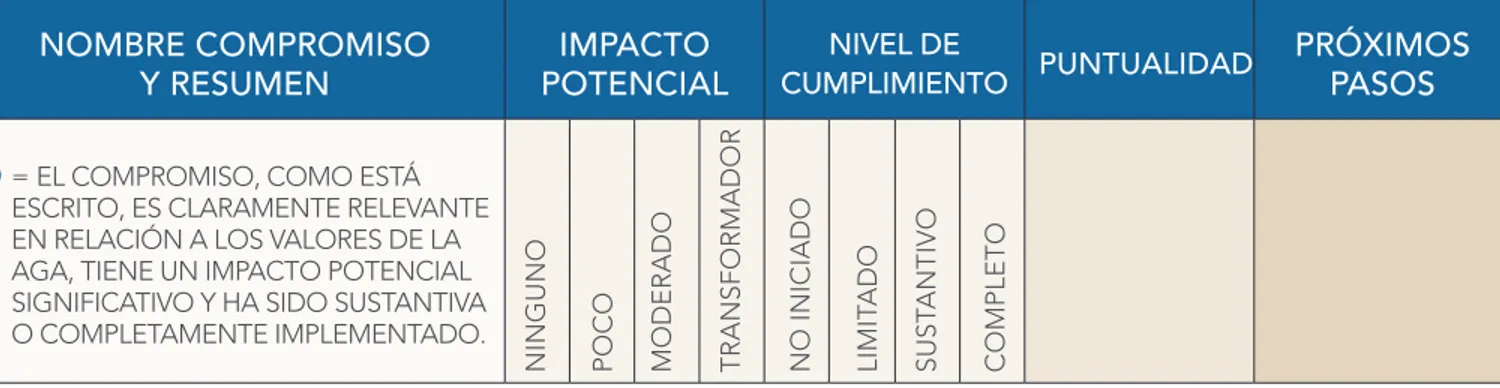
Tabla 1 | Análisis de cumplimiento por compromiso
NOMBRE COMPROMISOY RESUMEN POTENCIALIMPACTO CUMPLIMIENTO PUNTUALIDADNIVEL DE PRÓXIMOS PASOS
= EL COMPROMISO, COMO ESTÁ
ESCRITO, ES CLARAMENTE RELEVANTE EN RELACIÓN A LOS VALORES DE LA AGA, TIENE UN IMPACTO POTENCIAL SIGNIFICATIVO Y HA SIDO SUSTANTIVA O COMPLETAMENTE IMPLEMENTADO.
1. Mejoramiento del marco normativo en materia de transparencia y acceso a la información pública
1.a) Revisión de la normatividad sobre transparencia: realizarla a través de un grupo de trabajo integrado por entidades de la administración pública y OSC.
A tiempo
Mantenimiento y monitoreo del cumplimiento
completo
2. Fortalecimiento de la institucionalidad sobre transparencia y acceso a la información pública
1:h) Institución autónoma que
garantice la protección del derecho de acceso a la información pública: evaluar la creación de la misma para resolver problemas entre sujetos obligados y solicitantes, y con poder de penalización ante el incumplimiento.
A tiempo
Trabajo continuado en la
implementación básica
1:k) Comisión EITI: consolidarla, Revisión del
compromiso
NO INICIADO LIMIT
ADO
SUST
ANTIVO
COMPLETO
RESUMEN EJECUTIVO
NOMBRE COMPROMISOY RESUMEN POTENCIALIMPACTO CUMPLIMIENTO PUNTUALIDADNIVEL DE PRÓXIMOS PASOS
= EL COMPROMISO, COMO ESTÁ
ESCRITO, ES CLARAMENTE RELEVANTE EN RELACIÓN A LOS VALORES DE LA AGA, TIENE UN IMPACTO POTENCIAL SIGNIFICATIVO Y HA SIDO SUSTANTIVA O COMPLETAMENTE IMPLEMENTADO.
1:i) Capacitación de funcionarios sobre transparencia: aplicar mecanismos electrónicos para capacitar y sensibilizarles sobre normatividad.
A tiempo continuadoTrabajo
1:f) Normatividad Portales de Transparencia Estándar: certificar a entidades públicas en cumplimiento de la normatividad de los Portales.
Atrasado continuadoTrabajo
3. Desarrollo de instrumentos para incrementar la transparencia y acceso a la información pública
1:j) Acceso a información medioambiental:
mejorar los mecanismos de acceso, con
énfasis en industrias extractivas. Atrasado
Revisión del compromiso
1:c) Portales de Transparencia Estándar: desarrollarlos en formato
amigable. A tiempo
Trabajo continuado
1:b) Seguimiento al cumplimiento de la Ley de Transparencia y Acceso a la
Información Pública. Atrasado
Revisión del compromiso
4:a) Datos abiertos: disponer de datos de manera progresiva sobre las
entidades públicas. A tiempo
Revisión del compromiso
4 & 5. Desarrollo de instrumentos e institucionalidad para mejorar la integridad
3.a) Approve the National
Anticorruption Plan 2012-2016 A tiempo
Nuevo compromiso
basado en la implementación
existente
3.k) Strengthen the National Civil
Service Authority (SERVIR) No se puede deducir compromiso Nuevo
3.e) Strengthen the Fiscal and
Judicial Subsystem Specialized in
Offenses Involving Corruption A tiempo
Nuevo compromiso
3.j) Strengthen National Complaint Processing System (SINAD): Strengthen SINAD, which is the Office of the Comptroller General of the Republic’s responsibility, and encourage participation
No se puede deducir compromiso Revisión del
NO INICIADO LIMIT
ADO
SUST
ANTIVO
COMPLETO