
Mindfulness e interpretación en los servicios públicos
104
0
0
Texto completo
(2) RESUMEN La creciente presión a la que se enfrentan los trabajadores de los servicios públicos producida por el crecimiento exponencial de la inmigración y en especial por los problemas ocasionados por el nivel de exigencia del sistema económico actual, incrementando la cantidad de estrés y tensión psicológica que lleva a muchos a tomar bajas por depresión. La TISP en ocasiones se ve afectada por estos problemas y los derivados de una sociedad desigual. Sus profesionales a menudo se ven envueltos en conflictos que suponen un reto emocional, que sumado a los problemas derivados de una falta de regularización de la profesión y visibilidad de cara a los usuarios y profesionales de los servicios públicos, pueden resultar desestabilizadores para la interpretación en los servicios públicos. Desde mediados de los años 70, técnicas basadas en mindfulness se han incorporado en hospitales, empresas y otros entornos como remedio contra el estrés, los problemas emocionales y en ocasiones, como actividad enfocada en la mejora de las habilidades cognitivas y el aprendizaje. Mindfulness se basa en la práctica de ejercicios de atención y en generar una actitud de apertura. Siendo la atención uno de los componentes clave en la interpretación y dados los beneficios emocionales que proporciona mindfulness, este trabajo trata de analizar los puntos en común de ambas actividades y de los posibles beneficios que puede aportar a la interpretación en los servicios públicos. La manera de llevar a cabo dicha investigación se hizo mediante una investigación bibliográfica de textos sobre investigaciones en el campo de la neurociencia, otros estudios cognitivos y una encuesta a interpretes en los servicios públicos. En primer lugar este trabajo analiza el funcionamiento tanto de mindfulness como de la interpretación desde un punto de vista neurológico, continuando con una comparación entre las funciones que desempeñan las áreas cerebrales halladas. En segundo lugar este trabajo analiza brevemente las habilidades cognitivas requeridas en mindfulness e interpretación, explora los beneficios emocionales que mindfulness aporta y los problemas presentes en la interpretación en los servicios públicos. En tercer lugar este trabajo analiza los datos de una encuesta enviada a intérpretes en los servicios públicos que medía atributos ligados a la atención plena mediante el cuestionario MAAS. Los resultados de la primera investigación revelan la posibilidad de que tanto mindfulness como interpretación compartan un mismo sistema inhibitorio, así como otras áreas relacionadas con la integración sensorial y metacognición. El análisis de la encuesta no logró mostrar una relación estadísticamente significativa entre la disposición mindfulness de los intérpretes que practican mindfulness con aquellos que no lo hacen, aunque sí existe una correlación positiva entre los niveles de mindfulness, experiencia en la interpretación y la formación previa en gestión emocional y del estrés. Los resultados de ambos análisis, aunque prometedores, no parecen ser suficientes para confirmar la hipótesis inicial: parece existir una relación entre ambas, pero no queda demostrado que mindfulness ofrezca una mejoría clara para los intérpretes en los servicios públicos. Palabras clave: Interpretación, Intérprete, Impacto psicológico en la TISP, Estudios descriptivos, Mindfulness.. 2.
(3) ABSTRACT: The increasing pressure faced by public service workers, caused by the exponential growth of immigration and especially by the problems originated from our demanding current economic system, increases the amount of stress and psychological stress. This leads many workers to take sick leaves because of depression. TISP is sometimes affected by these problems and those originated from an unequal society. Its professionals are often involved in conflicts that represent an emotional challenge, which, combined with the problems arising from a lack of professionalization and visibility in the eyes of users and professionals of the public services, can pose a problem for public service interpreting. Since the mid-1970s, hospitals, businesses and other environments have incorporated mindfulness based techniques as a remedy against stress, emotional problems. These techniques have also being used as a way to improve cognitive abilities and learning. Mindfulness pursuits the practice of attention exercises and generating an attitude of openness. Since attention is one of the key components in the interpretation and given the emotional benefits provided by mindfulness, this paper aims to analyze the common aspects of both activities and the possible benefits that can contribute to public service interpreting. In order to answer this question, a bibliographical research of texts on research in the field of neuroscience, other cognitive studies and a survey of interpreters in public services were carried out. First, this work analyzes the functioning of both mindfulness and interpretation from a neurological point of view, followed by a comparison between the functions performed by the brain areas found in these studies. Second, this paper briefly analyzes the cognitive abilities that comprise mindfulness and interpretation, explores the emotional benefits of mindfulness and the problems present in public service interpreting. Third, this paper analyzes a survey sent to public service interpreters that measured mindfulness traits by using the MAAS scale. The results of the first research reveal the possibility that both mindfulness and interpretation share the same inhibitory system as well as other areas related to sensory integration and metacognition. The survey analysis failed to show a statistically significant relationship between the mindfulness traits of interpreters who practice mindfulness with those who do not, although there is a positive correlation between levels of mindfulness, interpreting experience, and previous training in emotional and stress management. The results of both analyzes, although promising, do not seem to be offer enough evidence to confirm our hypothesis: it seems to be a relationship between the two, but it has not been proved that mindfulness offers a clear improvement for public service interpreters. Keywords: Interpretation, Interpreter, Psychological impact on TISP, Descriptive studies, Mindfulness.. 3.
(4) Agradecimientos: En primer lugar me gustaría agradecer a mi tutor Ladislao Bapory su increíble paciencia en la dirección de este trabajo de fin de máster, sacar tiempo de donde no lo había y por ser una fuente de inspiración, al igual que Carmen Pena, a la que agradezco su amabilidad y su increíble habilidad para salvarme en el último momento de desastres que yo mismo he provocado. No hubiera logrado terminar de no ser por su apoyo. Mi intención era acabar mucho más pronto este trabajo, pero sacar dos másters a la vez me dejó con pocas fuerzas para completar mi objetivo. Gracias a Begoña por descubrirme el mundo de la interpretación y por inspirarme para estudiar la carrera de Lenguas Modernas y Traducción. Gracias a todos los intérpretes que han colaborado con este trabajo y gracias a Salud entre Culturas por su ayuda y por mostrarme, aunque fuese brevemente, lo duro que puede ser la interpretación en los servicios públicos y por compartir algunas historias que reflejan la crudeza de la vida y que por desgracia siguien siendo una realidad para muchos. Gracias también a Nuria, a mi tía y a Miguel Angel por sus consejos, a Paul Leavis por hacer que me volviese a enamorar de la fisiología con sus clases, y a Susana y Verónica por ser las mejores compañeras que se podría desear para este máster y esta profesión. Para terminar, quiero agradecer a mi hermano y mi padre sus lecciones y ánimos para perseverar. Gracias a mi madre por ser un ejemplo, por su apoyo incondicional y por lograr que estudiar sea una opción. Gracias a mi novia porque logra que quiera ser mejor persona y que mis pies toquen el suelo, aunque sea brevemente. Gracias a todos mis profesores y a la vida.. 4.
(5) índice Resumen/palabras clave ............................................................................................................... 2 Abstract/keywords ........................................................................................................................ 3 Agradecimientos ........................................................................................................................... 4 1.. Introducción .......................................................................................................................... 7. 2.. Objetivos ............................................................................................................................... 9. 3.. ¿Qué es mindfulness? ......................................................................................................... 10 3.1. Orígenes y desarrollo: ...................................................................................................... 10 3.2.. Programas sobre mindfulness y líneas de investigación ............................................. 11. 4. Estudios de neuroimagen y neurociencia cognitiva: áreas cerebrales en mindfulness e interpretación ............................................................................................................................. 13 4.1. Descubrimientos mediante estudios de neuroimagen en mindfulness........................... 13 4.1.1. Actividad y plasticidad neuronal en mindfulness................................................ 15. 4.1.2. Áreas cerebrales en la meditación FA ................................................................. 17. 4.1.3. Áreas cerebrales en la meditación OM ............................................................... 17. 4.2.. 4.2.1.. Anatomía del language........................................................................................ 20. 4.2.2.. Mecanismos de inhibición y áreas en el cambio entre idiomas ......................... 22. 4.2.3.. Estudios de neuroimagen sobre traducción ....................................................... 23. 4.2.4.. Diferencias entre TD y TI ..................................................................................... 24. 4.2.5.. Interpretación consecutiva (IC) ........................................................................... 25. 4.2.6.. Interpretación simultánea (IS)............................................................................. 25. 4.2.7.. Vías del procesamiento de información durante IS y la simultaneidad .............. 26. 4.2.8.. Diferencias entre estudios de traducción e interpretación ................................ 28. 4.3. Hallazgos en común en ambas actividades ................................................................. 28. 4.3.1. Áreas en común con actividad neuronal ............................................................. 28. 4.3.2. Cambios en común en plasticidad neuronal ....................................................... 37. 4.4. 5.. Descubrimientos mediante estudios de neuroimagen en Interpretación .................. 20. Conclusiones de la comparación ................................................................................. 47. 4.4.1. Conclusiones sobre la actividad cerebral ............................................................ 48. 4.4.2. Conclusiones sobre plasticidad neuronal ............................................................ 50. Capacidades cognitivas en mindfulness e interpretación ................................................... 51 5.1. Habilidades cognitivas y la atención ................................................................................ 52 5.2.. Habilidades cognitivas en IS ........................................................................................ 56. 5.3.. Habilidades cognitivas en la ISP .................................................................................. 59. 5.4.. Habilidades cognitivas en mindfulness ....................................................................... 61. 5.5.. Estudios sobre el impacto de mindfulness en estudiantes de interpretación ............ 64 5.
(6) 6.. Mindfulness y sus beneficios para la TISP ........................................................................... 66 6.1. Características de la TISP como profesión ....................................................................... 66 6.2.. El estrés de los SP y la dificultad emocional añadida de la TISP ................................. 67. 6.3.. Beneficios emocionales de mindfulness ..................................................................... 68. 6.4.. Aprendizaje de mindfulness en la ISP ......................................................................... 70. 7.. Estudio de los niveles de mindfulness en intérpretes en los SP ......................................... 71 7.1. Justificación teórica .......................................................................................................... 71 7.2.. Objetivos ..................................................................................................................... 72. 7.3.. Muestra y medios de distribución............................................................................... 72. 7.4.. Método ........................................................................................................................ 73. 7.5.. Resultados ................................................................................................................... 76. 7.6.. Discusión ..................................................................................................................... 80. 7.7.. Dificultades y limitaciones........................................................................................... 82. 8.. Conclusiones........................................................................................................................ 83. 9.. Bibliografía .......................................................................................................................... 85. 10.. Anexos ........................................................................................................................... 102. 6.
(7) 1.. Introducción. The current sociocultural system in which we live has changed a lot in terms of workers' rights, however, our way of life and our economic system focuses mainly on efficiency and productivity, paying little attention to the psycho-emotional welfare issues of workers. Lately, some groups and company departments such as HR have implemented programs and taken measures to take care of the psychological well-being of workers. However, the pressure to which many of them are subjected has led some to take sick leaves due to depression, since they found themselves unable to follow an imposed working regime that is not usually adapted to their personal and emotional problems and needs (Madhu Kalia, 2002; Crane and Kuyken, 2012). Nowadays we are moving towards an increasingly globalized and multicultural society, where translation and interpreting services are increasingly gaining relevance (Valero and Lázaro, 2002), as evidenced by the immigration records by the OECD (Spain ranked in the 11th position in 2005). So much so that these services are no longer restricted exclusively to a business environment. Given the increase in immigrant population that has taken place during the last century, especially in the last decades, it has made evident the need for translation and interpreting in public services (PS) and state organizations that play a social role (Valero, 2012). However, many of the fields that have a social function have ‘dehumanized’, that is, PS professionals such as healthcare providers are involved in a professional environment where, due to the circumstances imposed by the economic system, such as schedules and working structures, their profession has become more mechanic. This pressure actually prevents them from giving a more human and closer treatment. Due to this, ‘humanization’ movements have been promoted lately through various conferences and plans by organizations such as Fundación Atresmedia or some patient care departments such as in Hospital Ramón y Cajal. Not only do they try to recover the connection with PS users, they also try to get these professionals to connect with their problems and internal world and to give rise to empathy. The intention behind these efforts is to ensure that they are able to perform their work more effectively after having solved part of the psychological burden that blocked them. This reality highlights the need to provide workers with emotional and stress management training, since stress and emotional imbalance are sicknesses that afflict a large proportion of workers today (Weber and Jaekel-Reinhard, 2000). Of course, the emotional stress and the stress associated with PS professions are in direct contact with the users, also affect the interpreters working in PS . Translation and Interpretation in Public Services (TISP) is a social profession that, as such, carries out an activity of transformation of social reality, giving new meanings to this reality and the situations found in it, defining its dynamics and identifying problems and proposing solutions through the skills of the professionals that integrate it (Sáez, 2004: 32-33). TISP ensures the access to essential rights in the same language of the user, grantin access to justice services (Articles 5.2 and 6.3 of the ECHR 1950, via Guery, 2014) or healthcare (Articles 41 and 43 of the Spanish Constitution) to name a few. Today, it continues to strive to become more visible and to occupy its corresponding place in society, despite the confusion regarding the role and the degree of visibility that the interpreter should have in public services (iPS) (Valero and Derham, 2001). Despite its recent acquisition international attention (Pöchhacker and Shlesinger, 2002), TISP is 7.
(8) still in the process of professionalization in many countries, each one of them following their own conventions. These differences in the professionalization of TISP depend in part on the situation of each country, its training programs, working conditions and codes of ethics (Tebble, 2012: 23). In numerous countries, this has caused most of its professionals to work in precarious situations as freelance (Ozolins, 2010). Public service interpreting (PSI) is afflicted by the problems originated by the lack of recognition as a professional as well: this is a profession that, despite its essential role in shaping a more intercultural society that we are heading into, it is in many cases unknown or misunderstood by many, including those professionals that work in PS (Valero, 2012; Nevado, 2015). There is a lack of communication between professionals entering PS and those already in PS, as well as an obvious lack of knowledge when working with these interpreters by service providers (Valero and Lázaro, 2005). Moreover, the complexity of this work is also evident given the multitude of variants and institutional situations that influence it, as well as a characteristic interdisciplinarity of TISP, which makes its definition complex (Pöchhacker, 1999). As a result, explaining to the rest of PS professionals and clients the function of a public service interpreter (Psi) is also complicated. This reality is one of the main reasons why the Psi usually has to work under undesirable conditions and has to face various problems, not only with those who require the assistance of TISP, but also with PS professionals (Nevado, 2015). TISP is tanking the right steps towards its establishment as a profession, and little by little entities dedicated to providing these services are becoming more visible. Nonetheless, their institutionalization depends on the acceptance of the fact that our society moves towards multiculturalism and interculturalism, as well as on the recognition of immigrants as members of society and as users of PS (Valero, 2012). Due to this changing reality and the stagnation of some socio-cultural situations, polices and political currents towards the acceptance of this changing society that despite the efforts of TISP professionals, its problems do not seem to disappear soon. The consequences of such stagnation is one of the reasons why governments cut on public services and enact policies that limit immigration, therefore delaying the end of social inequalities and problems to which part of the immigrant population is exposed. Sometimes, as a result of these social problems, PSi witness unpleasant situations that are emotionally challenging, and for which many of them are not prepared to deal with when they leave their training period (Valero et al., 2009). Although some authors are betting on the invisibility of the PSi (Hale, 2007), other authors understand that there is a power imbalance between the public service provider and immigrants, as well as a social vacuum that the PSi should try to solve, acting as a bridge, which makes the PSI even a more complex task (Valero, 2005). These problems point to the need to train SPi in emotional and stress management, one of the main problems that can affect the performance of the interpreter and his or her decision-making process. This is especially true for those unexperienced PSi. Adequate emotional management skills provide greater safety for the interpreter and ensures a better professional performance while avoiding internal distractions. In recent decades, programs based on mindfulness as a method to reduce stress and other psychological problems have gained increasing visibility (Tang et al., 2015). These practices hinge on the performance of exercises such as focusing attention on the breathing, bodily and emotional sensations. These techniques have proven their benefits not only in reducing stress, but also in increasing cognitive capacities such as attention (Chiesa et al., 2010). 8.
(9) The ability to focus attention is a key point in interpreting, not only for the interpreting process itself, but also to be focused, which makes it possible to manage one's emotional world while one is involved in a compromised or tense situation. Many authors have investigated the relation between attention and interpreting: “[T]he real-time, interactive nature of interpreting dictates that interpreters be able to regulate their attention across different parallel cognitive activities, navigate the pragmatics of the interaction, and manage the inherent stress of the task. In particular, interpreting involves ‘rapid analytical skills from spoken input’ and also the ability to cope with and even enjoy the stress and challenge of the task, both in school and throughout one’s professional career.”. (Gillies, 2014, via Johnson, 2016). Developing a higher awareness and attentional skills can be especially useful in the context of PSI, where there is no interpretation cabins and there may be numerous interferences that make listening difficult for both interpreter and client. Attention is a regulating mechanism of information and cognitive processes, so it includes the regulation of the motor, sensory and vegetative systems (the latter being in close relation with emotions and behavior) and memory. These are key systems for the correct execution of interpreting and translating, and some of them are have always been trained to improve translating and interpreting skills. The attentional capacity of an individual can be trained, not only to perform activities separately, but also to improve the performance of two different activities that are executed simultaneously (Lambert, 2004). Is it possible that mindfulness can improve attention as well as emotional awareness? How would the benefits of this practice help to address the emotional challenges that Psi have to face? It seems that these techniques are giving satisfactory results in the field of interpretive training as well as education, can they offer any benefit to professional PSi? Are such techniques only useful in early stages of training or can professional interpreters also adopt them? We will study if it is possible that the changes produced by the practice of mindfulness can have a significant impact on the skills required for the performance of language interpreting, as well as trying to better understand how mindfulness can help PSI.. 2.. Objetivos. In this study a critical analysis of bibliography of studies on mindfulness as well as on interpreting with the objective of finding a common ground in the execution of both activities. A survey on mindfulness and emotional wellbeing was carried out with the participation of professional Psi in order to prove the validity of mindfulness exercises along with the potential benefits of its practice for PSI. The hypothesis that this study will try to demonstrate is that mindfulness training can improve interpreting and can help PSi to cope with the emotional stress associated with their work. On the one hand, this study aims to discover possible connections between the neural mechanisms used by both disciplines and to verify if there is anatomical prove that the practice of one activity one can influence the other. This research section will be discussing the discoveries made in neuroimaging studios as well as other studies focused on the practical effects produced by mindfulness training and other neuroimaging studies on professional interpreting. On the other hand, an attempt will 9.
(10) be made to address the emotional challenges faced by the interpreters in PS and to analyze if mindfulness techniques can be useful to perform their work more efficiently and to help them overcome more easily the emotional obstacles Psi have to face. To fulfill this purpose, an statistical analysis of a small survey is included in order to reveal the mindfulness levels of PSi and if there is any correlation between these, their experience, the interpreting method used (telephone interpreting, face-to-face interpreting, etc.) or previous experience with mindfulness. This research will help to find out if these techniques can apply not only to interpreting students, but also to professionals of the TISP.. 3.. ¿Qué es mindfulness?. 3.1. Orígenes y desarrollo: Mindfulness is a term that refers to a state in which a person concentrates on his present actively, observing in a contemplative way all the perceptions and sensations that he or she experiences at the moment in which they occur, without judging (Leon, 2008: 17). According to Vallejo (2006: 93), the attitude established through mindfulness allows to happen whatever has to happen or feel in a complete way. Living what is happening at the moment means letting each experience to happen at their due time, without trying to replace the present experience with what ‘should’ happen or what ‘would be better to happen’, prioritizing the sensations and emotional aspects before the interpretation of them. According to the current of mindfulness, most of the time we spend on ‘autopilot’ or distracted, which leads to a feeling of emptiness and numbness (Siegel, 2007: 14). The role of these exercises and this conscious attitude is to allow the mind to discern its own nature, which is to provoke the realization of the emotional reactions and preconceived ideas that are embedded in the reflective processes and thoughts that are responsible for our afflictions. One can come to this point through meditation and the practice of mindfulness, through an emancipatory process that triggers a liberation from this narrative function, thus allowing the experience of life to manifest clearly through full consciousness. (Siegel, 2007). Mindfulness seems to have arisen around the Western interest in Eastern tradition, specifically in Zen Buddhism (Vallejo, 2016: 95), whose meditative techniques have their origin in India (even before the birth of Buddhism). Although it is true that these techniques have been completely disassociated from any religious belief in its application as mindfulness techniques. This is a relatively new concept that began to have a major impact on the Anglo-Saxon academic world in the late 1970s with Jon Kabat-Zinn's MBSR (Mindfulness-Based Stress Reduction) (Bishop et al., 2004:230). Publications and research on this term have increased in recent years and have expanded to other areas such as education or even language interpreting. This interest is clearly given by the benefits reported in the various studies performed, since several of them have proven that the practice of these techniques are an aid in managing and dealing with personal emotions in a healthier way. This in turn is very helpful in promoting a higher psychological well-being and thus, preventing stressrelated problems (Felipe et al., 2014). Naturally, these hindrances, such as stress and emotional disturbances, can influence students' academic results and cognitive processes, as has also been stated in other studies such as Hedges and Woon (2011).. 10.
(11) There are several programs based on the development of mindfulness and awareness by practicing simple exercises such as focusing attention on breathing, walking or keeping attention on what is being done, whether eating, moving, etc. (Hick and Bien, 2008). This type of training programs were taught to study groups to test the efficacy of the mindfulness method. As pointed out by Leon (2008: 9), many studies that were aimed at training students in mindfulness have been able to increase their capacity to focus attention, maintain it, follow a specific stimulus and to manage distraction (Barragán et al., 2007). These experiments have also increased self-esteem levels, improved daily routines and even increased the feeling of personal self-realization of students (Franco et al., 2010). All these improvements can provide a benefit to the practice of language interpreting, as suggested by other studies with translation students, in which an improvement in the performance of this activity was attained (Jiménez Ivars and Pinazo Calatayud, 2013; Johnson, 2016).. 3.2. Programas sobre mindfulness y líneas de investigación: As previously mentioned, these studies are in their early stages of development, since mindfulness began as therapy in the 70's, most of their findings have focused specifically on the treatment of hospitalized patients. Standard practice, according to Kabat-Zinn (1990) and The Center for Mindfulness In Medicine, Health Care, and Society of the University of Massachusetts Medical School requires at least a 45-minute daily meditation practice for six consecutive days, guided by a qualified instructor. A full program requires a total of more than 80 hours spread over eight weeks, given to groups of 15 to 40 individuals. These courses require the active participation of patients and their commitment to meet the practice hours assigned in their own homes or residences. Other features of these programs are group sessions, individual sessions, orientation sessions, encouraging ‘informal’ meditations (attention to breathing as well as to routine activities) and dialogue between participants (Kabat-Zinn et al., 2007). The main exercise performed in these dynamics is mainly sitting meditation, which consist on keeping the back straight by placing an emphasis or directing and keeping the attention to the sensation of breathing, inhaling and exhaling, without trying to alter anything. If any kind of thought arises or distracts the meditator, he must simply observe his own thoughts, accepting every moment as it is, returning attention to the breath. There are other meditation techniques where one focuses attention on body sensations, sounds or observes thoughts. The entire MBSR program tries to create a learning group rather than a therapy, and it is based on the following principles: -. to develop a non-judgmental practice (avoid making preconceived judgments of what is being perceived or experienced in the present moment); to seek the development of patience, acceptance and the ‘mind of the beginner’ (try to observe things as if it were the first time); to increase confidence in oneself, accept that one can make mistakes; to develop a vision of non-effort (avoid doing things only to achieve an end, to appreciate what is done in the present moment); to learn to ‘let go’ (learn to abandon currents of thoughts that can get us caught or make us obsess over them).. (Kabat-Zinn, 1990).. 11.
(12) From these the characteristics of the original program, different versions have appeared, and have adapted to multiple study groups according to their different objectives, that is to say, different programs were applied depending on the object of study and its hypothesized relationship with mindfulness. The duration of most of the current studies is determined according to the availability of the participants. Some of them also have certain methodological restrictions, such as the absence of control groups or randomization in the assignment of the samples to the control group (Langer et al., 2015). Undoubtedly, this is a delicate field of investigation, since it depends on personal elements and usually require the voluntary participation of the subjects to produce quantifiable changes. Another problem is that, in fact, many studies have tried to focus on mindfulness as something quantifiable by using different scales that are based mainly on the personal assessment and self-observation of their subjects (Navas Ferrer et al., 2014, Christopher et al., 2014). Therefore, since these are usually the only tools available to study mindfulness, it becomes a variable difficult to quantify and control in a direct way, since in general, this type of studies are focused more on measuring other results linked to other variables that are easily quantifiable, such as academic performance, the execution of interpreting exercises, psychological test results, etc. In addition, as Tang, Hölzel and Posner (2015) mention, despite the diverse and numerous studies on the subject, many of the results have not yet been replicated. A large part of these studies are not longitudinal studies actively controlled, and the number of participants in the tests is small. They also imply that many of the experiments do not have very elaborate hypotheses, which is something common in new and recent fields of research. According to Tang et al. (2015), most studies on mindfulness are cross-sectional. These studies only recorded results of an experiment at a particular point in time, in many cases comparing a control group with another who has received training in mindfulness, or making comparisons between a group of expert individuals in meditation and another whose participants are unaware or have very little contact with these practices. The problem derived from this type of cross-sectional approach is that it is not possible to determine whether there were particular differences in individuals with extensive meditation experience that would make them more likely to use these techniques or that their behavior is not the result of other variables that were not considered or bounded. However, this trend is apparently begging to change, especially in studies about the influence of mindfulness on learning, with several longitudinal studies that tested the efficacy of these methods in a sustained but usually short way (Bluth et al. 2016, Galla, 2016). Nevertheless, mindfulness studies on language interpreting are still very scarce (Jiménez Ivars and Pinazo Calatayud, 2013; Johnson, 2016). The studies on mindfulness are still at a very early stage in their development. Nevertheless, they are bearing fruit since there are a large number of studies with positive results despite the problems related to the absence of a truly reliable method to quantify mindfulness as a variable, the lack of resources of many studies and the consequent shortage of studies that seek to replicate the results obtained in previous studies.. 12.
(13) 4.. Estudios de neuroimagen y neurociencia cognitiva: áreas cerebrales en mindfulness e interpretación. Translation is a multidisciplinary and interdisciplinary task (Snell-Hornby et al., 1992) and benefits from other fields of research, helping to broaden and expand translation studies, formulate hypotheses and ultimately discover new fields of research within this discipline in order to tackle its problems in the best possible way and to continue to progress. "Cognitive approaches in translation studies have incorporated methods from other fields, including linguistics, psychology, and computer science. Despite their major contributions, such approaches are mostly uninformative about the neural systems in which translation and interpreting processes are embedded" (García et al., 2016). Translation studies are not the only discipline that benefits from this type of interaction. In fact, in recent years cognitive neuroscience seems to have awakened special interest on translation studies as well as on mindfulness studies. Cognitive neuroscience is the scientific study of the neural mechanisms that allow cognition, trying to associate the performance of specific tasks and behaviors to areas of the brain, their biological substrates and various neuronal groups by using invasive and non-invasive methods (Ahrens et al., 2010, García et al., 2016). Since Broca and Wernickle began to classify the various areas of the brain responsible of speech and oral comprehension (speech processing) during the 19th century, a huge number of advancements have been made. Other studies have focused on investigating the processes of memory or cognition of language, research areas of great interest for translation studies. Until recently, observing the brain during the execution of specific tasks was very difficult. However, nowadays and despite the technological advancements, there are some discussions about which areas are responsible for several specific functions. Nonetheless, this has not stopped some researchers from developing various cognitive theories that have helped to understand how the human mind works –such as Baddeley's working memory– and other authors that are trying to link these theories with the newest discoveries in neuroscience. (Ahrens et al., 2010). Some of the functional neuroimaging techniques commonly used in these studies are: fMRI, (functional magnetic resonance imaging, that uses a nuclear magnetic resonance that allows the detection of increased or decreased blood flow to brain areas), positron emission tomography, near-infrared spectroscopy and electromagnetic techniques (electroencephalography, direct electrostimulation, etc.). In addition to functional neuroimaging techniques, there are other morphometric techniques that aim to detect changes in the structure and shape of the brain, which allow the measurement of the plasticity or changes in the brain. These techniques include voxel-based morphometry (which is the concentration of gray or white matter) or cortex gyrification (among other dimensions of the cortex).. 4.1. Descubrimientos mediante estudios de neuroimagen en mindfulness Although we have previously seen that mindfulness studies tried to measure it through other variables, the field of neuroscience has studied the impact of these techniques on the brain for years. The results from these studies have provided a scientific way of claiming the validity of mindfulness methods, since there are observable changes in the brain that come as a result from meditation. These studies have also cast light into the reasons behind different morphologies in the brains of those individuals with a large 13.
(14) experience in mindfulness and the possible changes in brain plasticity of individuals who received mindfulness training. Neuroscientific studies on mindfulness started to develop in the last two decades (Tang et al., 2015). Numerous studied focused on various mindfulness techniques of different traditions such as Zen, Vipassana meditation, Dzogchen or Mahamudra, as well as other methods based on current mindfulness postures like Integrative Body-Mind Training (IBMT). Some of these studies were to compare results of neuroimaging tests between members of a group with little or no experience in meditation with members of another group with extensive experience, such as Zen or Theravada monks (Manna et al., 2010; Tang et al., 2015). The results of these studies have shown that there are changes in various brain areas of those experts in meditation: there is a greater development of white matter (composed mainly of nerve fibers, i.e., axons and neural connections) and gray matter (composed of somas and neuronal bodies, in charge of information processing). As we have seen before, mindfulness techniques mainly base on a change of attitude towards the present situation, directing the attention to a present stimulus and trying to avoid making judgments or conceptualizations of any present, past or future experience. How does this affect our brain? This change of attitude or focus of attention generates a change in the individual's brain waves, i.e., meditation generates a change in the electrical activity of the brain (Franco, 2004; Ginette Sánchez, 2011). This activity pattern determines the mental state of a person, therefore, through relaxation and concentration anyone can alter their mental state so that other processes such as learning become easier, among other benefits (Luders et al., 2011). People who meditate regularly have stronger neuronal connections between different brain regions, greater neuronal plasticity and show a reduction in the effects of age on the brain. According to Siegel (2007: 189), by internal rebalancing and directing our attention towards intention, an emotional state of closeness with oneself is created, the repeated activation of this state results in changes in brain structure and a greater neuronal integration. Thanks to studies on the effect of mindfulness on the brain as well as other meditative practices, one can conclude that meditation or the meditative state is indeed a mental state: “A brain state can be defined as a reliable pattern of activity and/or connectivity in multiple large-scale brain networks” (Tang et al., 2015: 215). The benefits of this meditative attitude have been shown to influence attention (Bishop et al., 2004: 1) according to some of the cognitive categories: sustained attention, selective attention and attention switching. One of the most frequent issues with mindfulness studies was the contraposition between those studies claiming that the state of meditation consisted of the activation of certain brain areas whereas other studies claimed that this state produced a decrease of neuronal activity in those same brain areas. However, as Lutz et al. (2008) and Manna et al. (2010) pointed out, this problem can be solved though the establishment of two main types of meditative techniques: “Given that regulation of attention is the central commonality across the many different meditation methods, meditation practices can be usefully classified into two main styles – focused attention (FA) and open monitoring (OM) – depending on how the attentional processes are directed”. By doing this, they were able to study what are the characteristics of each type of meditation and therefore, study which areas increased or reduced its activity during each type of meditation: - Focused attention (traditionally Samatha in Sanskrit) focuses and maintains awareness of a specific object, like the breathing or a fixed point in space. This meditation entails 14.
(15) the ability to monitor the focus of attention and to detect distraction, redirecting attention to the object of meditation, thus involving dissociative brain systems that act in conflict monitoring and selective and sustained attention. - Open monitoring (traditionally Vipassana in Sanskrit) tries to observe without reacting to the present experience at each moment in order to recognize the nature of the emotional and cognitive patterns of oneself. Since it does not have an explicit focus, it does not seem to affect areas of selective or sustained attention, but others involved in monitoring and disengaging attention from sources of distraction. However, in spite of having delimited two different meditations, it is worth noting that in both the Buddhist tradition and within mindfulness, these are complementary techniques. Mindfulness insists on the practice of meditation based on breathing and finally that awareness develops and a sense of openness is fostered. The skills developed in FA meditation naturally lead to OM meditation: “The practice of focused attention meditations involves the development of at least four different faculties, including sustained attention to a target object, monitoring faculty (so as to detect mind wandering), the ability to disengage from a distracting object without further involvement (attention switching), and the ability to redirect focus promptly to the chosen object (selective attention). As focused attention training advances, the improved monitoring skill becomes the main point in the transition into mindfulness/open monitoring practice, which is characterized by a gradual reduction of the focus on an explicit object and a concurrent monitoring of all present moment experiences without any explicit object”. (Lutz et al., 2008, via Chiesa et al., 2010).. 4.1.1 Actividad y plasticidad neuronal en mindfulness Though the means of studying of multiple neuroimaging publications on the effects of various meditative techniques, there is surprising coincidence in certain areas despite some minor differences. According to the bibliographical research made by Tang et al. (2015) on brain plasticity produced by meditation, they discovered that: “These studies varied in regard to the exact mindfulness meditation tradition under investigation, and multiple measurements have been used to investigate effects on both grey and white matter. […] Effects reported by individual studies have been found in multiple brain regions, including the cerebral cortex, subcortical grey and white matter, brain stem and cerebellum, suggesting that the effects of meditation might involve large-scale brain networks. This is not surprising because mindfulness practice involves multiple aspects of mental function that use multiple complex interactive networks in the brain.”. (Tang et al., 2015: 215). In fact, numerous studies point to a wide range of areas, those most frequently reported include: · · · · · ·. the anterior prefrontal cortex (BA10) associated with metaconsciousness; the anterior insula, which is normally associated with bodily awareness; the somatosensory cortex, also associated with time awareness; the hippocampus, associated with memory processing; the anterior cingulate cortex (rostral ACC) and the middle cingulate cortex (dorsal ACC), associated with conflict monitoring and inhibitory processes; the orbitofrontal cortex, responsible for error detecting; 15.
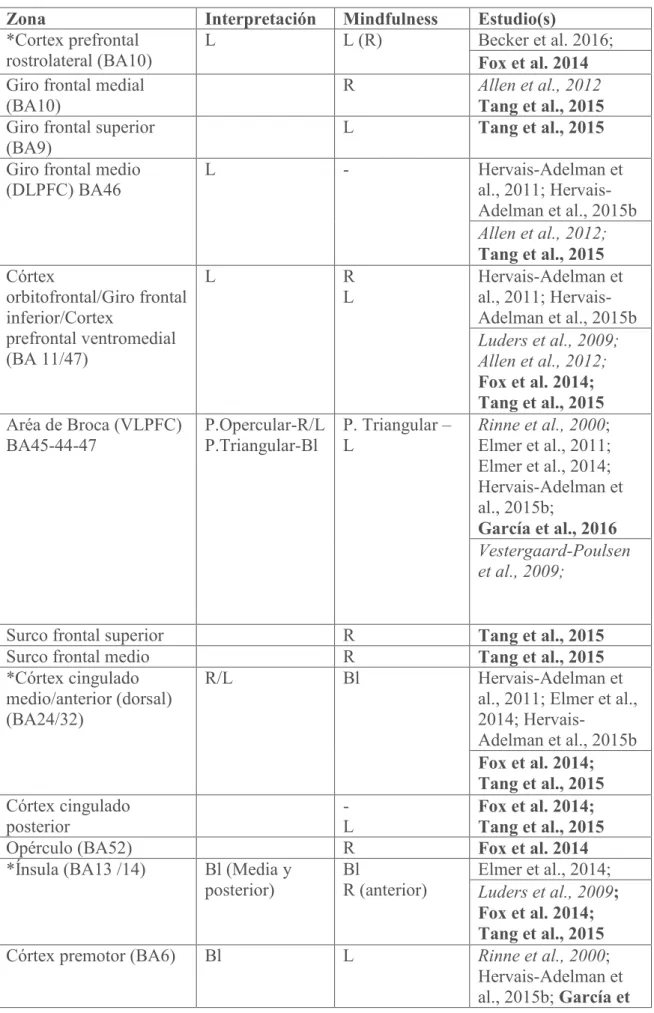
(16) · ·. the inferior temporal gyrus (parahippocampus), its function is unclear, but is estimated to be related to spatial location and bodily awareness; the upper longitudinal fasciculus and corpus callosum, areas involved in intraand inter-hemispheric communication.. (Holzel et al., 2008, Luders et al., 2009, Tang et al., 2015). In general, the role of “the medial prefrontal areas responsible for body regulation, attuned communication, emotional balance, response flexibility, empathy, insight or self-knowing awareness, fear modulation, intuition, and morality” seem to be paramount (Siegel, 2007: 44- 45). These include the cingulate cortex, the medial BA10 and the precuneus. The above-mentioned meditative state is usually associated with three reported areas (Tang et al., 2015): - the caudate nucleus, which is thought to be involved with the putamen in care processes, dissociating it from irrelevant information, which allows it to reach and maintain; -the entorhinal cortex (parahippocampus), which is believed to be responsible for controlling the flow of thoughts and may possibly stop mental distraction; -the medial prefrontal cortex (BA10), which is believed to support self-awareness during meditation. Of all these areas, the one that shows a greater consistency throughout that bibliographic study is the ACC (or BA24), “the ACC enables executive attention and control by detecting the presence of conflicts emerging from incompatible streams of information processing. The ACC and the fronto-insular cortex form part of a network that facilitates cognitive processing through long-range connections to other brain areas” (Tang et al., 2015: 217). It is possible that mindfulness meditation can lead to a greater cortical thickness and to an increase in white matter integrity in the ACC, i.e., a greater number of neural connections in this region. Another discovery from the studies by Tang et al. (2015) and Manna et al. (2010), is the participation of BA10 along with other areas within the prefrontal cortex. “To intentionally bring something into awareness means that rather than just registering input from sensory organs into the primary sensory cortical regions toward the back of the brain, we engage in an active search process, a purposeful seeking of perceptual data in the field of awareness; which is correlated with the side prefrontal region” (Siegel, 2007: 108). Manna et al. (2010: 54) also mention that it is possible that monks in their study (experts in mindfulness) have achieved a high degree of self-regulation thanks to the development of the right dorsal ACC, the left medial frontal gyrus, the lower right frontal gyrus and others prefrontal areas. This resulted in changes in the activity of various parts of the left insula, the anterior medial prefrontal cortex (BA10) and the posterior parietal cortex. The BA24 is in charge of conflict monitoring during FA, increasing the concentration, possibly thanks to the activation of BA10. These two areas play an antagonistic role with the dorsolateral prefrontal cortex of both hemispheres (responsible for working memory and abstract reasoning among other functions), producing a deactivation of these areas when the BA10 and dorsal ACC are activated. Some studies were unable to replicate results that included certain areas, as in the case of BA10, although it is true that a plausible cause for this would be that the activation was too small to be observed. Another cause may be the method of measurement used, 16.
(17) such as measuring the volume of gray matter rather than the density of it (Luders et al., 2009). Another reason for this is that these differences or failed attempts to replicate the results in some brain areas may have their origin in the differences between the different meditative techniques studied (Luders et al., 2009). “Because the studies vary in regard to study design, measurement and type of mindfulness meditation, it is not surprising that the locations of reported effects are diverse and cover multiple regions in the brain.” (Tang et al., 2015: 215). The positive results found in some cross-sectional studies have also often been questioned in the light of the possibility that such structural differences could originate in a cause other than the practice of meditation and that, as a result, With ease (Luders et al, 2009). Nevertheless, this possibility is contradicted in cross-sectional studies and correlative studies between the structural changes found in certain brain areas and meditation experience: it has been verified that there is an apparently proportional coincidence between both and greater changes can be observed in those subjects with greater experience (Manna et al., 2010). The study made by Manna et al. (2010) shows the different patterns of activation that arise from both techniques of meditation, allowing a better understanding of not only the changes derived from a brief mindfulness training, but also the transition from a information processing way associated with FA to the way associated with OM. These changes can be observed by comparing Buddhist monks FA and OM meditations: 4.1.2 Áreas cerebrales en la meditación FA Increased activity was registered in the medial forntal cortex (BA10) (mostly in the right hemisphere), the dorsal anterior cingulate cortex in both hemispheres (BA24) and reduced activity was registered in the lateral preforntal cortex (mostly in the left hemisphere). Other areas where a reduction in brain activity was detected were: Ø In the left hemisphere: the middle region of the frontal gyrus, the dorsolateral prefrontal cortex (BA9/46), the prefrontal anterior lateral cortex (BA10), the precuneus, the transverse temporal gyrus, the anterior and posterior insula (BA13); Ø In the right hemisphere: reduced activity was found in the lower frontal gyrus (BA44 and 46) and superior temporal gyrus (BA22).. 4.1.3 Áreas cerebrales en la meditación OM Reduced activity was found in the ACC (BA24) and medial anterior prefrontal cortex (BA10). There was an increase in activity of the prefrontal lateral cortex in both hemispheres and the medial frontal cortex (mainly in the left hemisphere). There was also an activity increase in the following areas: Ø In the left hemisphere: the areas with the highest activity were the prefrontal cortex anterior (BA10), the superior temporal gyrus (BA22) and the upper parietal lobe along with part of the precuneus (BA7), the dorsolateral frontoparietal cortex (superior frontal gyrus and the medial frontal gyrus as well) and the anterior insula. Ø In the right hemisphere: the superior frontal gyrus of the anterior lateral prefrontal cortex (BA10), the inferior frontal gyrus (BA46) and the transverse temporal gyrus (BA41).. 17.
(18) To simplify the data observed in their study, it can be said that both types of meditation seem to exert different roles, somewhat antagonistic. This is due to the fact that the levels of activity and inactivity observed in the study were obtained by comparing brain activity during OM, AF and at rest. However, this allows us to appreciate that FA actually employs a less extensive neural network and requires the participation of areas associated with executive control (BA10 medial, ACC), whereas OM uses a wider network associated with body and other consciousness stimulus (insula, temporal lobe, precuneus) but also uses other areas associated with executive control (BA10, BA46). Finally, by comparing the results of both groups during OM, Manna et al. concluded that on the one hand the monks showed higher activity levels than the beginners in the left precuneus and superior parnietal lobe (BA7), the anterior dorsal right cingulate cortex (BA32) and right parahippocampal gyrus. On the other hand, beginners showed a higher activity in the right anterior rostral cingulate cortex (BA32), the bilateral inferior frontal gyrus (BA47), the right orbitofrontal gyrus (BA11) and the right anterior prefrontal cortex. The comparison of FA between groups showed an increased activity of the anterior cingulate cortex (BA24) and the right medial frontal gyrus (BA6 and BA10) in both hemispheres in the monk group compared with the results of the beginners group. In summary, the results of their research point to a broad participation of the left hemisphere in both types of meditation, the reduction of activity of the anterior and posterior insula (areas belonging to the limbic system and associated with emotions and subjective experience) during FA meditation. This deactivation during OM was less evident. The precuneus (associated with self-perception and consciousness) of the left hemisphere was active during the transitions to OM meditation and deactivated during FA, so it could be a key area in self-immersion in those states of calmness associated with meditation (Manna et al., 2010: 53). As discussed above, changes observed in areas related to executive control and concentration in studies with mindfulness experts, and not only that: apparently the prolonged practice of these techniques can change the way of processing certain information. According to Siegel (2007: 134) “direct experience gives rise to the sense that mindful awareness involves the dissolution of the influences of prior learning on present sensation. This is the way we diminish the effects of automatic top-down processes and it enables us to create that state of ‘nonjudging’ experience”. This change in processing involves reducing the use of the prefrontal cortex as an emotional suppression or control mechanism –this is, controlling the hippocampal activity– changing from a top-down processing towards a bottom-up processing. This transition is well captured in the study by Manna et al. (2010) in which these differences are clearly observed in the effects of the practice of OM meditation techniques on subjects with extensive meditation experience, in which the participation of different areas is observed, and not only frontal areas. By comparing the results between individuals with different levels of experience (Manna et al., 2010) a transition between the two types of processing can be observed in both meditation techniques (FM and OM). In the early stages of meditation training one can expect a greater activation of executive control areas, (i.e., rostral ACC and orbitofrontal cortex or BA46/47), since at the beginning of these practices a mental effort and attentional control to reach that state of meditation are required. Due to this, studies focused on new practitioners usually register a greater activity in these areas, reflecting the effort required to reach that state. When enough experience is acquired, 18.
(19) the activity in rostral ACC, posterior insula and BA46/47 is reduced, but sensory integration areas such as the parietal lobe increase their activity, as well as medial BA10 (especially in OM). Interestingly, rostral ACC is often responsible for monitoring emotional information and emotional assessment of errors, while dorsal ACC is more intrinsically linked to conflict monitoring, showing a more immediate reaction capacity than rostral ACC, whose correct deactivation facilitates the detection of errors (Polli et al., 2005). This matches with the results obtained from the comparison between monks and beginners in OM and the lower overall participation of the rostral ACC observed in monks. The changes observed when comparing experts with beginners do not seem to imply a repression of the impulses generated in deeper areas of the brain in further stages of meditation. According to Tang et al. (2015) the patterns of activation observed after the intervention of mindfulness techniques reflect a monitoring of reactions or emotional responses rather than a suppression or regulation of them. According to Manna et al. (2010) the patterns of brain activity of monks during OM were similar to the activity registered when no particular exercise was performed, whereas the activity observed during AF was very different from activity during rest. This difference may further suggest that OM meditation is also practiced under ordinary conditions beyond a restricted and delimited practice regime (Manna et al., 2010). Regarding this change in information processing, interesting results have been found in studies comparing mindfulness with emotional control techniques (Murakami et al., 2015), since both strategies have been shown to reduce the activity of the amygdala, which has a major role in emotional reactions. There are several areas associated with human emotions (midbrain, occipital gyrus, prefrontal cortex, and dorsal ACC), the most important is the amygdala, which was the main area monitored by Murakami et al. (2015). Mindfulness is also being considered as an effective technique to achieve this goal since part of that open monitoring meditation includes acceptance of the emotions that arise during its practice. Murakami et al. (2015) showed differences in the processing between both techniques: in mindfulness (FA), the medial prefrontal cortex reduces the activity of the amygdala, whereas in the case of emotional suppression the prefrontal cortex is responsible for controlling the amygdala, which often leads to stress, since the dorsolateral prefrontal cortex usually participates in working memory. Suppressing negative emotions activates the left inferior frontal gyrus and prefrontal ventrolateral cortex, which together with the precuneus control the amygdala impulses through functional connectivity. This generates an activity increase of the sympathetic system (associated to the fight-flight reactions) and the reduction of the precuneus activity during the execution of cognitive tasks. This may suggest that some external stimuli are avoided. Other discovery made by Murakami et al. (2015) was that mindfulness seems to imply a broader neural network than attempting to suppress emotions. These areas include: a greater activation of the percental gyrus (BA6), the inferior frontal gyrus (BA44), the superior frontal gyrus (BA6/8) (BA21/22), the lower parietal lobe (BA40), the putamen and the anterior insula (BA13). These last three areas suggest that emotions were experienced as well as activity in the dorsal ACC implies that attempts were made to detect such emotions. Activity was also found in Broca area (associated with language) and the mean bilateral temporal gyrus since these FA techniques are based on identifying the various stimuli by using verbal labeling. These results seem to point to the acceptance of the experienced emotions rather than a cognitive effort to suppress 19.
(20) them, as reflected by the activation of the dorsolateral prefrontal cortex, as well as the activation of the parasympathetic nervous system (associated with relaxation), which is moderated by the activity of the medial prefrontal cortex. In summary, the amygdala is also regulated by the medial prefrontal cortex through a negative functional connectivity.. 4.2. Descubrimientos mediante estudios de neuroimagen en Interpretación Neuroscience studies on translation and interpretation have been published for a longer time than those focused on mindfulness, yet, these are still scarce. One example is the study by García et al. (2016), who collected multiple studies on neuroimaging and other cognitive neuroscience techniques published between 1995 and mid-2016, deducing that “few scholars in the field have become directly involved in studies measuring neural activity”(García et al. 2016: 22). When analyzing which brain areas influence IPS, one must keep in mind the essential components of a complex task such as interpreting, whether simultaneous or consecutive. However, it is difficult to find studies that focus on a single task, since many of them analyze the processes of translation through tasks similar to interpreting or analyze the execution of sight translation. Furthermore, many bibliographical research compile studies with different objectives and language-related activities such as word translation, sight translation or simultaneous interpreting (SI) (Shreve and Diamond, 2010; 2016). To be able to compare mindfulness with interpreting, a review of the findings discovered in the field of cognitive neuroscience as far as translation processes are concerned will be carried out, in order to better understand the interpreting process. As stated by Shreve and Diamond “Imaging studies of the progression of translation task, for instance, might shed light on the patterns of neural activation that occur within the temporal scope of a single translation unit, allowing us to identify the brain areas involved during comprehension, transfer and production (and their constituent processes)” (2016: 154).. 4.2.1. Anatomía del language Since translation is a complex task requiring the use of two or more languages and another set of cognitive abilities, it is logical to begin by analyzing its more basic skill on which translation hinges: language. According to Price (2000), in traditional neurology the areas associated with language (Broca and Wernicke areas) are located in the superior-posterior temporal sulcus and anterior insula (respectively). Other areas that participate in language are the angular gyrus (part of speech and the semantic system) and various areas of the middle and inferior temporal lobe among others. In various studies, Price noticed the existence of a bilateral language system, instead of a lateralized one. Price analyzes several studies that tried to reveal the areas responsible for reading, writing and speech, as well as semantics: - Listening: hearing words caused activity in the anterior and posterior regions of the superior temporal gyrus (including Heschl gyrus), access to the meaning of words activated the dorsal surface of the superior temporal gyrus (planum temporale), the superior temporal sulcus and the middle ventral part of the temporal gyrus. The Heschl area and the planum temporale are the main areas of the ascending auditory pathway; the rest of the superior temporal gyrus, despite being part of the auditory pathway, is also active during speech, as well as the middle temporal gyrus and the superior 20.
(21) temporal sulcus. These regions appear to contain polymodal areas for the processing of visual, somatosensory and auditory stimuli, since the left temporal lobe is responsible for various phonological tasks: speech, listening and understanding of semantics and use of verbal working memory (Shreve and Diamond , 2010). - Speech: word repetition activates the primary auditory cortex, the Wernicke area (the posterior superior sulcus, an area responsible for speech), the posterior part of Broca area (operculum) and the ventral motor cortex . The posterior area of the left inferior temporal cortex is responsible for lexical recovery whereas phonological recovery involves the activation of the anterior insula and the frontal operculum. The articulation of words required the activation of the left anterior insula or the adjacent region in the frontal operculum (the studies analyzed could not specify which region was involved), and speech motor control was tied to bilateral sensory motor cortex. Once speech occurs, the sound of one's voice rises activity of the superior temporal gyrus. Speaking without repeating words also activates the ACC and the posterior part of the right superior temporal cortex. - Reading: reading words generates activity in the visual cortex for the processing of visual information, and the angular gyrus that remembers the visual shape of words. The connections between the angular gyrus and Wernicke area (BA41 and 42) unite the visual representation of words with their corresponding sound (therefore being able to articulate such word). The primary auditory cortex, the Wernicke area, the posterior area of Broca area (operculum), and the ventral motor cortex are involved in reading despite being areas associated with speech: when reading aloud one hears his own voice, therefore these areas also show activity at that moment. There are also two paths for reading involving the posterior part of the left inferior temporal cortex: one links visual information by linking Wernicke area with the frontal operculum (non-semantic reading) and the other links visual information to meaning by linking the inferior temporal lobe with the frontal operculum (semantic reading). - Semantics: Broca area is necessary for the production of sentences and more complex tasks: the inferior frontal cortex is active during tasks that require to make a decision regarding the meaning of words, whereas tasks that require reflection on their phonological content activate the posterior dorsal area of the inferior frontal cortex. However, when accessing the meaning of words, the posterior area of the left temporoparietal cortex (including angular rotation) and several regions of the bilateral middle and inferior temporal cortex are active. Due to its activity during some of these tasks, it is also possible that the angular gyrus is related to the access to the semantics. Now that we have seen the areas involved in language, the next logical step is to observe which areas and patterns are involved in bilingual communication. As we shall see below, many of the studies on translation in the field of neuroscience have laid the groundwork for the study of this phenomenon: “We assume that the cognitive mechanisms and models explaining the control of the bilingual lexical-semantic system will also be critical to our understanding of more complex bilingual activities such as consecutive interpreting (e.g., with its emphasis on switching in speech production and comprehension) and translation (with its emphasis on switching between Reading in one language and writing in another).”. (Shreve y Diamond, 2010:291).. 21.
(22) 4.2.2. Mecanismos de inhibición y áreas en el cambio entre idiomas Once understood language processing, is there a difference in the use of more than one language? Does it require the function of different areas or is there a mechanism for using one language over another? Shreve and Diamond (2016) state that in the first place, semantic-syntactic memory is shared (at least in bilingual subjects) and that it is found in areas associated with long-term memory (hippocampus, amygdala, limbic system, temporal and frontal lobes). It has been noticed that the same regions are used for the storage of L1 and L2, although it is true that there are clinical cases in which bilingual patients have seen one of their languages deteriorated after having undergone clinical interventions that affected certain brain areas (Gomeztortosa et al. 1995, Hervais-Adelman et al., 2011). One explanation is that there could be groups of neurons specialized in different language-specific responses (Shreve and Diamond, 2010). Since storage space is shared by both languages, there must be an inhibitory mechanisms. Not only should interference from the non-target language be inhibited while the message is being written in the target language, there must also be an area associated with the language switching to change from L1 to L2. Broadly speaking, the process that the brain follows as described by Shreve and Diamond (2010) to perform the task of language switching consists essentially on the activation of a series of mechanisms, namely: the activation of different languages, increasing the activation of the target language, or inhibition of the non-target language. In the neuroimaging studies on bilingualism there are differences in the activation patterns depending on the language fluency and age. When producing a message in a specific language the speaker inhibits or elevates the threshold of activation of the nontarget language while executing the lexical recovery of the target language. The more fluent the speaker is in the L2, the better his or her inhibition mechanisms of the L1. Therefore, the main mechanism is language inhibition. This inhibitory control (Green, 1998) can alter the neural networks of each language, although it is true that its control depends more on an external objective –e.g., answering in L1 when asked in L1– than on specific language mechanisms. This control, from a cognitive perspective, is under a supervisory attention system, which monitors that according to an external stimulus (language input coded either in L1 and L2) it is answered with the appropriate linguistic system (L1 or L2), while it also supervises the correct execution of the lexicosemantic bilingual system of said language. The anatomical correlations with these systems would correspond with a frontosubcortical circuit (left middle and anterior gyri, caudelated nucleus and usually the ACC) and the supplementary motor cortex, that act in the change from one language to another. Therefore, there really is no specific brain area in charge of this task, but rather it depends on various cortical and subcortical brain areas (Luk et al., 2012). It is believed that the dorsolateral frontal region (medial frontal gyrus) plays an important role in this task by connecting the orbitofrontal cortex to several brain areas, including the thalamus, structures of the basal ganglia, the hippocampus and the primary and secondary associative areas of the neocortex (Shreve and Diamond, 2016). By understanding the functions associated with each of the abovementioned areas, they can be linked to the different control systems in Green’s theory (1998): the anterior frontal areas correspond to that supervisory attention system, the basal ganglia is responsible for the right correlation between the input and output language system and the left anterior gyrus and the ACC (and possibly the supramarginal gyrus) matches with the 22.
(23) lexicosemantic error detecting system. Nonetheless, neuroimaging studies suggest that these areas work more as a system and not so isolated. 4.2.3. Estudios de neuroimagen sobre traducción Within translation studies, it is postulated that this task is composed of other subtasks segmented in groups of understanding and transfer –text comprehension and reformulation (Newmark, 1988)–, reflected in the alternation between pauses and outbreaks of linguistic production exerted by the translators (Shreve and Diamond, 2016), as well as decomposition, equivalence search, equivalence selection and recomposition (Gile, 1998). Therefore, we can expect the participation of several neural networks. Some of these areas would be those associated with bilingual memory, language switching, inhibition or the involvement of the frontal lobes during the transfer process (Shreve and Diamond, 2016). One of the first neuroscience translation studies (Klein et al., 1995, via García et al., 2016), which consisted of the isolated translation of words, registered activity in the dorsolateral prefrontal and frontal regions (working memory), left inferior frontal lobe (semantic and phonological processing), inferior temporal lobe (lexical-semantic access) and left putamen (inhibition, which was active only during direct translation). Other areas that showed an increased activity during similar studies are the left anterior insula, the cerebellum (both may indicate a lexical recovery process) and the SMA (possibly as part of the inhibitory control) (García et al., 2016). Other additional areas were discovered to be involved in translation depending on the type of translation unit. Studies that used sentences (involving the syntactic level) as a translation unit in their experiments showed activation of the ventrolateral prefrontal cortex (inhibition) and the globus pallidus (basal ganglia). Studies that required the translation of paragraphs or texts (bigger translation units) found activity in areas of the left supramarginal gyrus or BA40 (parietal lobe), superior temporal lobe, inferior frontal gyrus or Broca area and ACC. These areas are responsible (respectively) for empathy and visual-auditory integration, linguistic comprehension and inhibitory processes (García et al., 2016; Sherver and Diamond 2010). Therefore, larger translation units require greater control to avoid inferences from the other language, as well as a greater capacity for understanding the message. In looks of the complexity of translation processes when facing big translation units, different inhibitory systems are required since translation: “requires rapid access to representations of lexical items in two languages. It therefore demands a different type of language control compared to that required during language switching: Language control in bilinguals’ selection is still essential, but simply favoring one language over another will not enable faithful translation, beyond the case of isolated words.”. (Hervais-Adelman et al., 2011: 3). In their study, Hervais-Adelman et al. (2011) proposed the existence of two systems involved in inhibition processes and other executive functions during translation: (1) A left fronto-basal-ganglia circuit (also important in accessing translation equivalents) that involves language selection and inhibition during message production, although other studies suggest that this function is executed by the left supramarginal gyrus; 23.
Figure


Outline
Cambios en común en plasticidad neuronal
Conclusiones de la comparación
Habilidades cognitivas y la atención
Habilidades cognitivas en IS
Habilidades cognitivas en la ISP
Habilidades cognitivas en mindfulness
Estudios sobre el impacto de mindfulness en estudiantes de interpretación
Mindfulness y sus beneficios para la TISP
Documento similar
In the “big picture” perspective of the recent years that we have described in Brazil, Spain, Portugal and Puerto Rico there are some similarities and important differences,
For further information, please contact: Amy Palacios, Conference Coordinator, Center for the Study of Western Hemispheric Trade, Texas A&M International University,
Although both spike train and total current cross-covariance functions are small, the asynchronous state is characterized by finite values of cross-covariances between the
Keywords: Metal mining conflicts, political ecology, politics of scale, environmental justice movement, social multi-criteria evaluation, consultations, Latin
Recent observations of the bulge display a gradient of the mean metallicity and of [Ƚ/Fe] with distance from galactic plane.. Bulge regions away from the plane are less
For instance, (i) in finite unified theories the universality predicts that the lightest supersymmetric particle is a charged particle, namely the superpartner of the τ -lepton,
The spatially-resolved information provided by these observations are allowing us to test and extend the previous body of results from small-sample studies, while at the same time
(hundreds of kHz). Resolution problems are directly related to the resulting accuracy of the computation, as it was seen in [18], so 32-bit floating point may not be appropriate
