Stripping in HMA produced by aggregates from C&D Waste
I. Pérez1; A. R. Pasandín
Universidade da Coruña. E. T. S. I. Caminos, Campus de Elviña, 15071 A Coruña, Spain J. Gallego
Universidad Politécnica de Madrid. E. T. S. I. Caminos, Ciudad Universitaria, 28040 Madrid, Spain Abstract
This paper analyzes the effect of water on the durability of hot asphalt mixtures made with
recycled aggregates from construction and demolition debris. Indirect Tensile Stress tests were
carried out to evaluate stripping behavior. The mixtures tested were fabricated with 0, 20, 40
and 60% recycled aggregates. Two types of natural aggregates were used: schist and calcite
dolomite. An increase in the percentage of recycled aggregates was found to produce a
decrease in the Tensile Stress Ratio of the hot asphalt mixtures. To study this phenomenon,
two and three factor Analyses of Variance (ANOVA) were performed with Indirect Tensile
Stress being used as the dependent variable. The factors studied were the percentage of
recycled aggregates (0, 20, 40 and 60%), the moisture state (dry, wet) and the type of natural
aggregate (schist, calcite). On the basis of the ANOVA results, it was found that the most
important factor affecting resistance was the moisture state (dry, wet) of the specimens. The
percentage of recycled aggregate also affected Indirect Tensile Stress, especially in the dry
state. The type of natural aggregate did not have a significant effect on Indirect Tensile Stress.
The hot asphalt mixture specimens made with different percentages of recycled aggregates
from construction and demolition debris and of natural quarry aggregates showed poor
stripping behaviour. This stripping behaviour can be related to both the poor adhesion of the
recycled aggregates and the high absorption of the mortar of cement adhered to them.
Keywords: Stripping, Construction and Demolition Waste, Hot mix asphalt
1. Introduction
Waste has become one of the most serious environmental problems plaguing modern societies,
particularly those that are more advanced and industrialized. This increasingly difficult
situation has been aggravated by the sheer volume of waste that is generated and the close
relationship between income levels and quality of life and the amount of waste produced.
Spain produces approximately 13 million tons of construction and demolition waste materials
(C&D waste) annually, less than 5% of which are reused or recycled, while the European
Union recycles or reuses an average total of 28% of the C&D waste it generates (Symonds et
al, 1999). Most of these waste materials are hauled off to landfills, causing a negative
environmental impact. In view of this situation, in 2001 the Spanish National Construction and
Demolition Waste Plan 2001-2006 (Ministerio de Medio Ambiente, 2001) was passed, with
one of its main objectives being to recycle or reuse 60% of the C&D waste by 2006. To date,
this goal has not been achieved. In 2008 the new Spanish National Construction and
Demolition Waste Plan 2008-2015 (Ministerio de Medio Ambiente, 2008) was passed and it
targets the recycling or reuse of 55% of C&D waste by the year 2015. To achieve this
ambitious objective it has become necessary to define more processes to recycle C&D waste.
Given that flexible road pavements consume huge amounts of aggregates, from an
environmental standpoint it would be of interest to consider the possibility of using of C&D
waste aggregates in the construction of flexible road pavements.
Although much research has focused on the use of recycled aggregates (RA) from C&D waste
as unbound granular materials (Bennert el al, 2000; Poon and Chan, 2006) and as materials
treated with hydraulic conglomerates (Hansen, 1992; Cross et al 1996; Rahshir and Barai,
2006) only a limited number of technical experiments have dealt with the use of this type of
In this sense, according to Shen and Du (2004, 2005), HMA containing RA exhibited
satisfactory mechanical behavior and the stripping impact was also considered satisfactory. In
keeping with these authors, Aljassar and Al-Fadala (2005) reported that HMA produced using
aggregates from demolition waste met all the requirements of the Kuwait specifications. On
the other hand, Paranavithana and Mohajerani (2006) observed that HMA made with RA
presented mechanical results comparable to those of conventional mixtures. Nevertheless,
when they evaluated stripping behavior, a 34% loss of Stress in mixtures with RA was
observed. According to these authors, this poor behavior was due to high water absorption and
the easy separation of the mortar adhered to the recycled concrete aggregates. In keeping with
Wong et al (2007) the mechanical behavior of mixtures containing RA achieved better
performance than conventional mixtures. However, no test of any kind was carried out to
evaluate stripping.
Finally, Pérez et al (2007) revealed that HMA made with RA offer a greater resistance to
permanent deformation than mixtures that contain only natural aggregates (NA). They
observed that in HMA produced with RA, stiffness was higher and a deterioration of the
fatigue law was produced. Additionally, Pérez et al (2009) designed pavement sections for
flexible pavements bearing medium or low volumes of traffic with a service life comparable to
that of conventional materials. Unfortunately, HMA containing RA had a considerably high
stripping potential.
Given that the different authors do not share the same opinion as to the stripping potential of
C&D waste in asphalt mixes, the aim of this research work is to evaluate the impact of
construction and demolition waste aggregates on stripping of HMA. The Analysis of Variance
2. Materials and methods
2.1 Characterization of the Basic Materials
The basic materials were characterized in accordance with the Spanish technical standards
NLT (Ministerio de Obras Públicas y Transportes, 2002) (Tests for Roads Materials) from the
Spanish Road Study Centre and the UNE-EN standards from the Spanish Association for
Standardization and Certification (Asociación Española de Normalización y Certificación,
2001). The UNE-EN specifications are the Spanish version of the EN European standards. The
mixtures were designed according to the Spanish General Technical Specifications for Road
and Bridge Construction, also known as PG-3 (Dirección General de Carreteras, 2002). Table
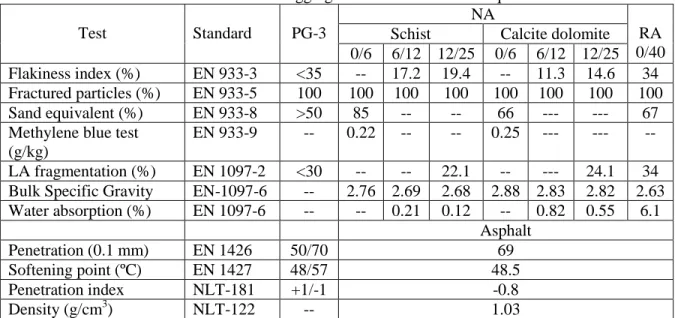
1 presents the results of the tests on the materials and the PG-3 requirements.
Natural Aggregates
Two kinds of natural aggregates were used. The first NA was schist supplied by a quarry in
fractions of 0/6, 6/12 and 12/25 mm. The rock was composed of quartz (35%), albite (30%),
mica (20%) and chlorite (15%). This aggregate complied with the Spanish specifications
(Table 1): i.e., the flakiness index was less than 35%; all the particles were fractured; the sand
equivalent was greater than 50% and the Los Angeles fragmentation coefficient was under
30%. The bulk specific gravity was between 2.76 and 2.68. The water absorption coefficient
ranged from 0.12% (fraction 12/25) to 0.21% (fraction 6/12). The second NA used was calcite
dolomite supplied by a quarry in fractions of 0/6, 6/12 and 12/25 mm. The rock was composed
of calcite (40%), dolomite (40%) and quartz (20%). This calcite dolomite aggregate complied
with the Spanish specifications (Table 1). The bulk specific gravity was between 2.88 and
2.82. The water absorption coefficient ranged from 0.55% (fraction 12/25) to 0.82% (fraction
Recycled Aggregates
The recycling of materials from C&D waste to be used as a recycled aggregate in HMA
entailed the following process: a selection of the appropriate materials at source, crushing at
the C&D waste plant, the removal of pollutants, sieving and classification of the aggregates
and washing. In this sense, an RA production plant is very similar to an NA crushing plant. It
is equipped with crushers, sieves, conveyor mechanisms, equipment for pollutant removal and
electromagnets to separate the steel.
The C&D waste plant (Figure 1a) produces an 0/40-mm fraction used as an unbound granular
material (Figure 1b) in pedestrian and cycling paths with the following composition in weight:
concrete (72.5%); stone (21.5%); miscellaneous bituminous (4%), ceramic materials (1%), and
some impurities such as clay, metals, wood, plastics, rubber and gypsum plaster (1%). Figure
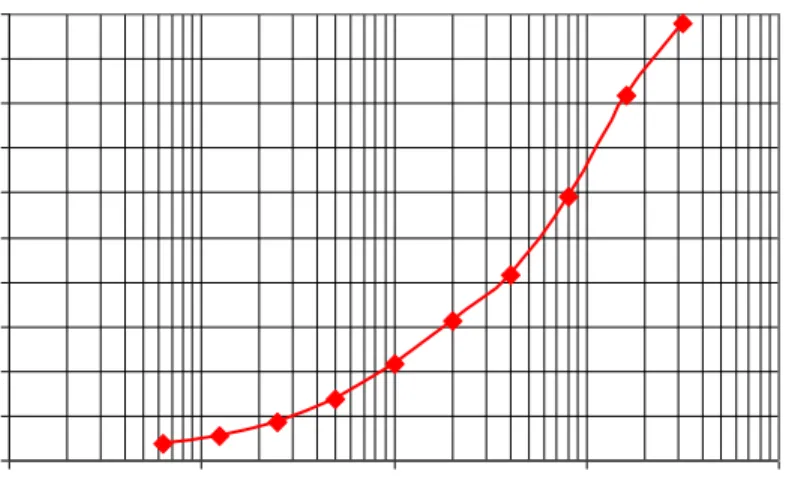
2 shows the grading curve of the RA provided by the C&D waste plant. Table 1 indicates that
the flakiness index and sand equivalent values meet the requirements stipulated in the Spanish
specifications. All of the particles are fractured. The RA do not comply with the Los Angeles
fragmentation coefficient specification (Table 1). The bulk specific gravity was 2.63. The
water absorption coefficient value of the RA was 6.1%, much higher than that of the NA due
to the presence of cement mortar from the concrete, and adhered to the RA. During the
investigation, only coarse RA (>4 mm) were used for HMA production. Prior to production,
all ceramic materials, clay, metals, wood, plastic, rubber and gypsum plaster were eliminated
by visual inspection.
Filler
The filler used in all the types of mixtures was Portland cement. The Blaine surface area was
Asphalt
The asphalt used had a penetration grading of 69.10-1 mm and a softening point with the ring
and ball method equal to 48.5º C. Pfeiffer’s penetration index had a value of -0.8 with a
density of 1.03 g/cm3 (Table 1). It was confirmed that the asphalt complied with all the
Spanish specifications.
2.2 Mechanical Test
Since the least strict HMA requirements are those for the base layers of low volume roads, an
AC 22 base coarse HMA was chosen for the investigation. Table 2 shows the grading curve
selected. A total of eight mixtures were designed with the same grading but different
percentages of RA. The RA used in the mixtures were the coarsest fractions of the grading
curves (between 4 and 20 mm). Listed below are the eight mixtures designed in the lab:
Four HMA using schist as NA and containing the following RA %: 0, 20, 40, 60%.
Four HMA using calcite as NA and containing the following RA %: 0, 20, 40, 60%.
A specific nomenclature system was used to record the mixtures. First a capital letter to
indicate the type of NA: schist (S) or calcite (C), secondly a number referring to the RA % (0,
20, 40, 60%). Thus, for example S-20 indicates a mixture that uses schist as NA and contains
20% RA.
All mixtures were designed with the Marshall Method. This test was performed according to
the Spanish NLT-159 standard (Ministerio de Obras Públicas y Transportes, 1992). Five series
of cylindrical samples compacted with 75 blows per side were made with different asphalt
percentages. The average value of the following parameters was calculated for each
percentage of asphalt: Voids in Mineral Aggregate, VMA (%); Air Voids in Compacted
Mixture Va (%); Voids Filled with Asphalt VFA (%); Flow Value, F (mm); Stability, S (kN);
Next, eight series consisting of six specimens each were designed in order to carry out the
Indirect Stripping Tensile Test (ISTT). The specimens were produced with the optimum
asphalt content (Bo) selected from the Marshall test. The specimens were compacted with 50
blows per side using the Marshall test molds and compactor. The trial temperature of the
specimens was 15º C. The ISTT was used to measure the loss of cohesion produced by
saturation and water acting on the HMA. In this case, the test was conducted in compliance
with the European standard EN-12697-12 (Asociación Española de Normalización y
Certificación, 2004). The ISTT provides a ratio of the average Stress of a conditioned set of
three specimens submerged in water at 40ºC for three days to the average Stress of an
unconditioned set of three specimens maintained in air at 20ºC for three days (Equation 1).
Since the test is an indirect tensile test, the ratio is called a Tensile Stress Ratio (TSR), and it is
expressed as a percentage.
100 IT S IT S T SR
D w
[1]
Where TSR = Tensile Stress Ratio (%), ITSw = average wet Indirect Tensile Stress (MPa),
ITSD = average dry Indirect Tensile Stress (MPa.). In the HMA base courses in Spain, the
TSR values must be over 80%.
2.3 ANOVA Analysis
The use of Analysis of Variance (ANOVA) models provides the researcher with a statistical
based technique capable of producing meaningful models of the importance of the factors
studied in an experiment. A three-way ANOVA analysis using Statgraphics (Statistical
Graphics Corporation, Rockville, MD, USA) was selected to investigate factor effects and
interactions among them. The dependent variable used was the Indirect Tensile Stress. The
RA (0, 20, 40 and 60%). The moisture state and NA type are qualitative variables and the
percentage of RA is a quantitative variable.
Two, two-way ANOVAs were later carried out depending on the moisture state. The purpose
of this was to determine the effect of these factors on the ITS.
In ANOVA models, the effect of each factor is measured as a percent of the total variance of
the data. The effect of each individual factor is called the main effect. The effect of each pair
of combined factors or of a trio of factors is called an interaction effect.
The sum of the main effects and the interaction effects would be 100 if the ANOVA model
were to fully explain the sources of the variance of the data. Usually, however, the model is
unable to relate all of the variances of the data to the effects of the factors. Therefore, the sum
of the effects is less than 100 and the difference is called the residual value. This value
expresses the percent of the variance of the system that the model does not explain.
An effect is considered of statistical significance for a 95% confidence level if the p-value in
the Fisher distribution is less than 0.05.
3. Results and discussion
3.1 Production of mixtures in the laboratory
During the production of the mixtures, it was observed that the quartzites as well as the
siliceous particles coming from the recycled material were covered with great difficulty. This
is due, in part, to the chemical nature of these materials, but also to the fact that other particles
originating from the concrete have mortar on their surface and, because of the high absorption
capacity of the mortar, less effective binder is left to cover the recycled quartzite and siliceous
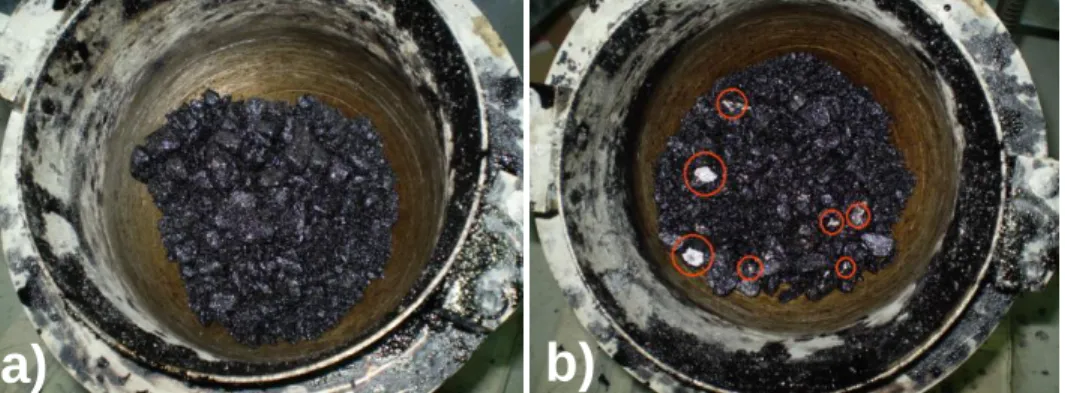
aggregates. This is demonstrated in Figure 3: mixture S-0 has an appropriate color and shine
(a), while mixture S-20, despite containing 1% more binder, exhibits coarse aggregate that was
3.2 Marshall Parameters
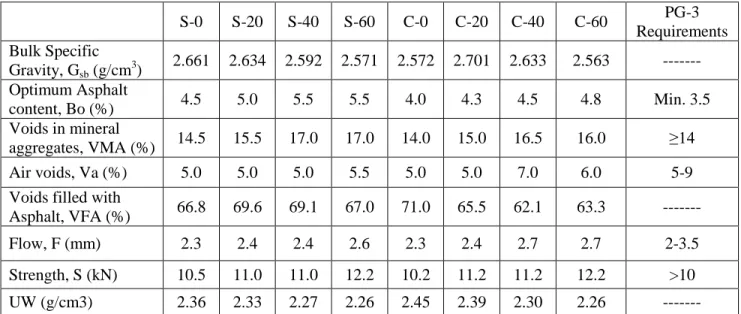
Table 3 shows the Bulk Specific Gravity (Gsb) in paraffin oil of aggregates used in the mixture
designs. Paraffin oil was utilized because of its absorption, which is similar to that of asphalt.
Also given are the optimum asphalt contents (Bo) used in the production of the specimens for
the Indirect Stripping Tensile Test. The Marshall parameters corresponding to Bo are included
as well.
According to the results presented in Table 3, compliance is achieved with the Spanish PG-3
requirements for HMA used as a base course material in low volume roads having heavy
traffic category T3. Traffic category T3 refers to the following interval of Annual Average
Daily Heavy Traffic: 50≤AADTH<200.
It can be seen in Table 3 that the specific gravity (Gsb) of the aggregates diminishes upon the
incorporation of the RA. This translates to a lower unit weight (UW) of the mixtures. This
tendency is accentuated by the increase in air voids (Va) and in voids in the aggregate (VMA)
upon the addition of greater percentages of RA, despite the simultaneous increase in binder
content. That is to say, the compaction operation was less efficient in the mixes incorporating
RA.
Considering the appearance of the mixtures during their production (Figure 3), these
tendencies can be related to the high level of absorption of the cement mortar in the RA which
causes a higher binder demand. This results in the mixtures with RA being short on binder,
despite containing more binder than the reference mixtures.
It would be advisable, when working in the laboratory with this type of recycled material, to
give the mixture time to stand at a high temperature before being compacted. This would
allow time for the absorption of the binder by the cement mortar, resulting in a higher binder
3.3 Tensile Stress Ratios
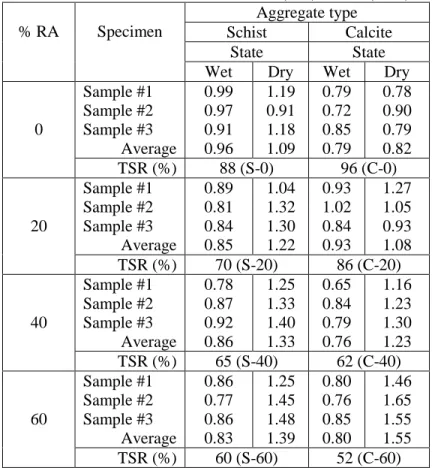
Table 4 gives the results of the resistance of the 48 specimens subject to the indirect tensile
stress test. The table has been subdivided according to the following factors:
Percentage of RA: 0, 20, 40, 60%.
Aggregate type: schist or calcite dolomite.
Moisture state of the specimens: wet or dry.
Table 4 shows that, in keeping with the increasing trend of the Marshall stability values, the
rising RA percentages increase the resistance of the bituminous mixture to tensile stress.
However, upon increasing the RA content, the action of the water has a more severe impact;
that is to say, the TSR is lower as the RA content increases.
This could be due to the air void content, which goes from 5% to 5.5% with the schist NA and
from 5% to 7% with the calcite NA. But it does not appear that such drastic losses in TSR
(from 88% to 60% with the schist NA and from 96% to 52% with the calcite NA) could be
due solely to the increase in voids. It is more likely related to the lack of adhesion of the RA.
As can be seen in Figure 3, during production adhesion was poor in the mixture with RA.
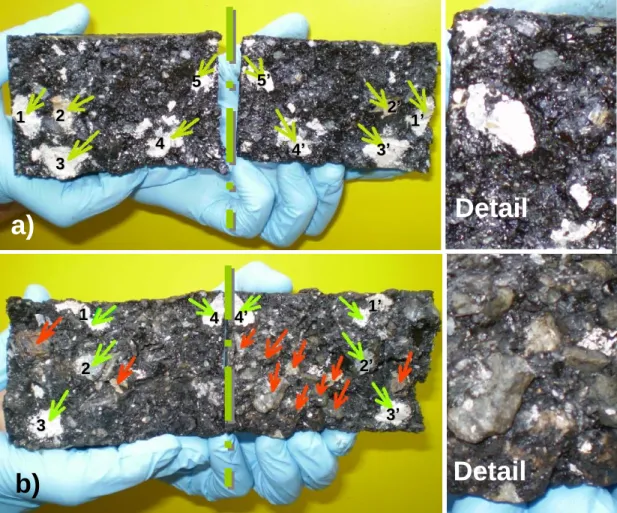
Furthermore, Figure 4 shows that after immersion, the water managed to displace the binder of
the RA and the breakage of the specimen occurred at the interface RA – bituminous mortar.
By contrast, in the dry state specimen the breakage was produced, for the most part, by the
bituminous mortar.
Figure 4a shows the symmetry of a broken specimen of mix S-20 in the dry state. All the
mineral particles (green marks) can be found on the left and on the right of the symmetry axle
at the same time. However, Figure 4b shows the lack of symmetry in a specimen that broke
This demonstrates that the crack affected the interface RA – bituminous mortar rather than the
mineral particles.
Therefore, the decrease in the tensile stress ratio is due to the lack of adhesion of the RA –
bituminous mortar and the high level of absorption of the cement mortar adhered to the RA.
3.4 ANOVA Analysis
Three Way-Analysis
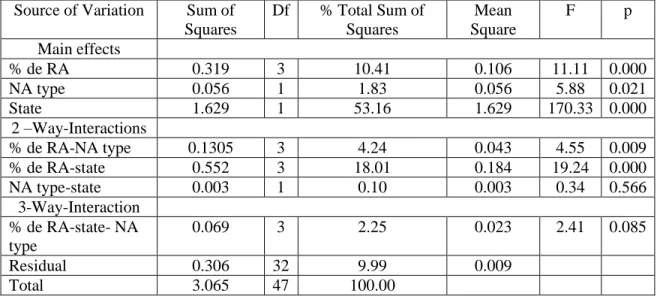
Table 5 offers the results of the three-way ANOVA analysis testing for interaction. The model
explains 90% of the total variance (Residual = 9.99). The three main effects are statistically
significant for a 95% confidence interval. The most important main effect was the moisture
state. This effect explained 53.16% of the total variance (with statistical significance: p=0.000
< 0.05). The other main effects, i.e. RA % (p=0.000) and NA type (p=0.021) were also
significant. However, the effect of RA % proved to be of greater importance, as it explained
10.41% of the total variance, while the effect of the NA type only explained 1.83%.
In second-order interactions (Table 5), the interaction between RA % and the moisture state
was significant (p=0.000), accounting for 18.01% of the total variance. This is reflected by the
opposite behavior of the specimens in the dry vs. the wet state for the different RA
percentages. The resistance of the specimens in the dry state increases with RA percentage;
while the resistance of the specimens in the wet state does not undergo any increase. The
interaction between the RA % and NA type is also significant, although to a lesser extent
(p=0.009), since it is only able to explain 4.24% of the total variance. Table 4 shows the
discrepancy between the behavior of the specimens made with NA calcite (C) and those
containing NA schist (S). The resistance of the specimens is consistently lower with NA
calcite except for the 60% RA mixture where resistance was higher with NA schist. Lastly,
accounted for 0.10% of the total variance. It is interesting to note that the ITS of NA calcite
and NA schist increases in the same proportion when going from the wet state to the dry state.
On the basis of the ANOVA, it can be deduced that the most influential factor in specimen
resistance is the moisture state. Moisture state is involved in 73.52% of the total variance.
Therefore, the effect exerted by both RA % and NA type on resistance would seem to be
different depending on the moisture state (dry or wet). For this reason, two separate ANOVAs
for each moisture state were performed as follows.
Two-Way Analysis
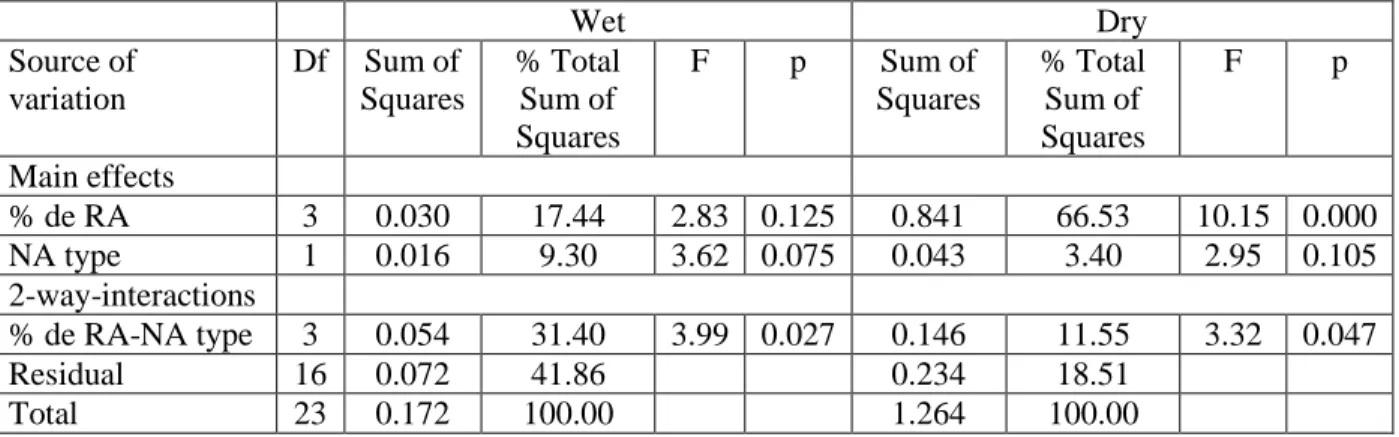
The results of the separate two-way ANOVAs (by moisture state) are given in Table 6. In the
wet state the model explains only 58.14% of the total variance, whereas in the dry state, it
accounts for 81.48% of the total variance.
From the table it is evident that for the wet moisture state, both the RA % (p=0.125 > 0.05)
and NA type (p=0.075 > 0.05) are not significant as single factors. However, the double
interaction between RA % and NA type has a significant effect on the resistance of the
specimens in the wet state (p= 0.027 < 0.05). In keeping with this, the RA % is found in
48.84% of the total variance.
In the dry state, the RA % main effect significantly influences (p=0.000 < 0.05) resistance,
while the NA type main effect (p=0.105) does not have any significant impact. The double
interaction is also significant, although to a lesser degree than in the wet state. Here the RA %
is found in 78.08% of the total variance.
On the basis of the two-way ANOVAs, it was found that when specimens are in the wet state,
the RA % does not significantly affect resistance. What does, however, affect it significantly is
the interaction between RA % and NA type. In contrast, in the dry state, the RA % (as a single
% increases, the ITS of the specimens in the dry state also rises significantly. This, however,
does not occur in the wet state, where resistance tends to diminish. Logically, the above
demonstrates that an increase in RA % leads to a decrease in the TSR values of HMA
specimens.
4 Conclusions
It has been demonstrated that the RA content of the HMA translates to an increase in ITS in
the dry state specimens and a drop in TSR. This behaviour upon exposure to water is due to
the poor adhesion of the RA. To evaluate these results, it must be remembered that only coarse
fraction RA was used, without any fine contaminants, and that all the particles of gypsum
plaster and ceramic material were removed prior to the tests. Hence, the unsatisfactory
adhesion is due to the coarse quartzite and the siliceous mineral particles.
Another circumstance able to accentuate the stripping of the mixtures is the high level of
absorption of RA. The cement mortar adhered to them is porous and requires a greater binder
demand. During the laboratory tests the mixture was compacted directly after mixing.
Therefore the absorption was not complete and this might have contributed to a general
weakness of the mixture when exposed to water.
Considering that the RA do not comply with the Los Angeles requirements and that the
mixtures demonstrate very little resistance to the action of water, the Spanish specifications for
asphalt mixtures are not met. Moreover, these specifications are not even met for bituminous
mixtures used in base layers of low volume roads.
With these results in mind, it is recommended that for further research on Construction and
Fine fraction RA should not be utilized, as it contains significant amounts of cement
mortar and impurities. Gypsum plaster and ceramic content should be eliminated from the
coarse fraction of RA.
Laboratory tests for the design of the asphalt mixture should allow time for the asphalt
mixture to settle at a high temperature to ensure the absorption of the binder by the cement
mortar and concrete particles. In this way the design will take into account the effective
binder after absorption.
Furthermore, the use of anti-stripping agents should be included in further investigations.
The same recommendations apply to large-scale production. In particular, enough time should
be allowed for the transport and laying-down of the asphalt mix in order to complete the
absorption of the binder by the cement mortar in the recycled materials. In some cases,
regulation heated hoppers might be necessary to increase the available time for the absorption
of the binder by the mortar and the cement particles.
Acknowledgements
The authors wish to acknowledge the Spanish Ministry of Education and Science for
sponsoring this research through Project BIA 2006-14742-C02-01 of the National R&D Plan.
They also wish to acknowledge the Xunta de Galicia Consellería de Innovación for sponsoring
this research through Project 07TMT012118PR.
References
Aljassar AH, Al-Fadala KB. Recycling building demolition waste in hot-mix asphalt concrete: a case study in Kuwait. Journal of Materials Cycles and Waste Management 2005; 7 (2): 112-115.
Asociación Española de Normalización y Certificación (AENOR). Norma UNE-EN 12697-12. Mezclas bituminosas. Métodos de ensayos para mezclas bituminosas en caliente. Parte 12: Determinación de la
sensibilidad al agua de las probetas de mezclas bituminosas. Madrid, Spain, 2004.
Bennert T, Papp W, Maher A, Gucunski N. Utilization of construction and Demolition Debris Under Traffic-Type Loading in Base and Subbase Applications. Transportation Research Record 2000; 1714: 33-39. Cross, S.A., Abou-Zeid, M.N., Wojerkowski, J.B., and Fager, G.A. Long-Term Performance of Recycled Portland Cement Concrete Pavement. Transportation Research Record 1996; 1525: 115-123.
Dirección General de Carreteras. Pliego de prescripciones técnicas generales para obras de carreteras y puentes PG-3. Ediciones Liteam, Madrid; Spain, 2002.
Hansen TC. Recycling of Demolished Concrete and Masonry. Report of Technical Committee 37-Drc Demolition and Reuse of Concrete (RILEM Report No 6), Spon E&FN, UK, 1992.
Paranavithana S, Mohajerani A. Effects of recycled concrete aggregates on properties of asphalt concrete. Resources, Conservation and Recycling 2006; 48 (1): 1-12.
Pérez I, Toledano M, Gallego J, Taibo. J. Mechanical properties of hot mix asphalt made with recycled aggregates from reclaimed constructions and demolition debris. Materiales de Construcción 2007; 57 (285): 17-29.
Pérez I, Toledano M, Gallego J. Viability of the use of Construction and Demolition Debris in Hot Mix Asphalt. Eighth International Conference on the Bearing Capacity of Roads, Railways and Airfields. The University of Illinois at Urbana-Champaign. June 29-July 2, USA, 2009.
Ministerio de Medio Ambiente. Plan Nacional de Residuos de Construcción y Demolición 2001-2006. Boletín Oficial del Estado No 166, 2001, pp. 25305-25313, Madrid, Spain.
Ministerio de Medio Ambiente. Plan Nacional de Residuos de Construcción y Demolición 2008-2015. Boletín Oficial del Estado No 49, 2008, pp. 19938-19948, Madrid, Spain.
Ministerio de Obras Públicas y Transportes. NLT-159. Resistencia a la deformación plástica de mezclas bituminosas empleando el aparato Marshall. Ensayos de carreteras. second edition, Madrid, Spain, 1992. Ministerio de Obras Públicas y Transportes. Normas NLT. Ensayos de carreteras. Dirección General de Carreteras, second edition, Madrid, Spain, 2002.
Rahshir S, Barai SV. Studies on Recycled aggregates-based concrete. Waste Management & Research 2006; 24 (3): 225-233.
Shen D, Du J. Evaluation of building materials recycling on HMA permanent deformation. Construction and Building Materials 2004; 18 (6): 391-397.
Shen D, Du J. Application of Gray Rational Analysis to Evaluate HMA with Reclaimed Building Materials. Journal of Materials in Civil Engineering 2005; 17 (4): 400-406.
Symonds Group Ltd, ARGUS, COWI, PRC Bouwcentrum. Construction and Demolition waste management practices, and their economic impacts. European Commission DG XI, Brussels, 1999.
0 10 20 30 40 50 60 70 80 90 100
0,01 0,1 1 10 100
Sieve Size (mm)
%
P
a
s
s
in
g
Figure 3. Appearance of HMA after mixing a) S-0, b) S-20
Table 1 Characterization of aggregates and binder. PG-3 requirements.
Test Standard PG-3
NA
RA 0/40
Schist Calcite dolomite
0/6 6/12 12/25 0/6 6/12 12/25
Flakiness index (%) EN 933-3 <35 -- 17.2 19.4 -- 11.3 14.6 34
Fractured particles (%) EN 933-5 100 100 100 100 100 100 100 100
Sand equivalent (%) EN 933-8 >50 85 -- -- 66 --- --- 67
Methylene blue test (g/kg)
EN 933-9 -- 0.22 -- -- 0.25 --- --- --
LA fragmentation (%) EN 1097-2 <30 -- -- 22.1 -- --- 24.1 34
Bulk Specific Gravity EN-1097-6 -- 2.76 2.69 2.68 2.88 2.83 2.82 2.63
Water absorption (%) EN 1097-6 -- -- 0.21 0.12 -- 0.82 0.55 6.1
Asphalt
Penetration (0.1 mm) EN 1426 50/70 69
Softening point (ºC) EN 1427 48/57 48.5
Penetration index NLT-181 +1/-1 -0.8
Table 2 Asphalt Mix Grading
Coarse aggregate (including RA) Fine aggregate (only NA) Filler
Sieve (mm) 25 20 12.5 8 4 2 0.5 0.25 0.125 0.063
Table 3. Marshall Parameters
S-0 S-20 S-40 S-60 C-0 C-20 C-40 C-60 PG-3
Requirements Bulk Specific
Gravity, Gsb (g/cm 3
) 2.661 2.634 2.592 2.571 2.572 2.701 2.633 2.563 --- Optimum Asphalt
content, Bo (%) 4.5 5.0 5.5 5.5 4.0 4.3 4.5 4.8 Min. 3.5
Voids in mineral
aggregates, VMA (%) 14.5 15.5 17.0 17.0 14.0 15.0 16.5 16.0 ≥14
Air voids, Va (%) 5.0 5.0 5.0 5.5 5.0 5.0 7.0 6.0 5-9
Voids filled with
Asphalt, VFA (%) 66.8 69.6 69.1 67.0 71.0 65.5 62.1 63.3 ---
Flow, F (mm) 2.3 2.4 2.4 2.6 2.3 2.4 2.7 2.7 2-3.5
Strength, S (kN) 10.5 11.0 11.0 12.2 10.2 11.2 11.2 12.2 >10
Table 5 Three-Way ANOVA Source of Variation Sum of
Squares
Df % Total Sum of Squares
Mean Square
F p
Main effects
% de RA 0.319 3 10.41 0.106 11.11 0.000
NA type 0.056 1 1.83 0.056 5.88 0.021
State 1.629 1 53.16 1.629 170.33 0.000
2 –Way-Interactions
% de RA-NA type 0.1305 3 4.24 0.043 4.55 0.009
% de RA-state 0.552 3 18.01 0.184 19.24 0.000
NA type-state 0.003 1 0.10 0.003 0.34 0.566
3-Way-Interaction % de RA-state- NA type
0.069 3 2.25 0.023 2.41 0.085
Residual 0.306 32 9.99 0.009
Table 6 Two-Way ANOVAs at each moisture state
Wet Dry
Source of variation
Df Sum of Squares
% Total Sum of Squares
F p Sum of
Squares
% Total Sum of Squares
F p
Main effects
% de RA 3 0.030 17.44 2.83 0.125 0.841 66.53 10.15 0.000
NA type 1 0.016 9.30 3.62 0.075 0.043 3.40 2.95 0.105
2-way-interactions
% de RA-NA type 3 0.054 31.40 3.99 0.027 0.146 11.55 3.32 0.047
Residual 16 0.072 41.86 0.234 18.51