Rebeca Tapia Carlin, who was also my teacher, and she is a teacher that I admire very much. Michael Witten, for his help in completing this thesis, and for being a bright light in my life. Michael, for hiring me as your tesista and helping me achieve this important goal for me.
Pero la persona más importante a quien quisiera entregarle esta tesis con todo el amor de mi corazón es mi madre, porque ella ha sido una figura clave en todos los éxitos de mi vida, porque siempre me ha apoyado y animado. en todo. Gracias por ser mi apoyo, pero también gracias por ser una mujer admirable, un ejemplo de fortaleza y superación. Que Dios te bendiga siempre y muchas gracias por tanto que me has dado.
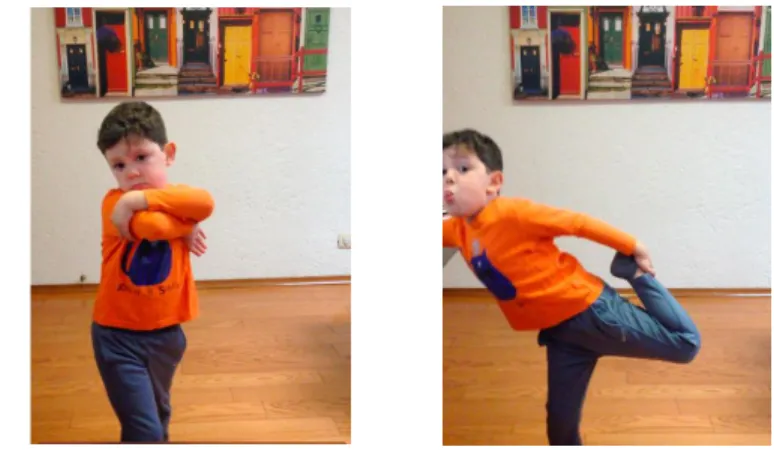
También quiero dedicar mi tesis a la persona que me inspiró para este trabajo de investigación, mi sobrino Iker, que me inspiró este tema con su dulzura. Iker, gracias por participar en esta tesis con tanta ilusión y disposición; Tocaste tanto nuestros corazones al ser una parte clave de este estudio.
INTRODUCTION
- Study significance
- Research background
- Study aims
- Research questions
- Key terms
- Chapter summary
This kind of progress forces us to update ourselves and train ourselves to use technology in almost all areas of our personal and professional lives. Such methodologies are manifested in the specification of pedagogical procedures aimed at improving learning processes. Therefore, the adoption and integration of technical-methodological advances in the ELT classroom has progressed more slowly than might have been expected.
The research described in this thesis focuses on how powerful the use of mobile devices can be in the development of English language learning in a 5-year-old boy using educational iPad applications (apps), English children's songs and audiobooks with images. The importance of this research lies in the exploration of the possible benefits that the use of mobile devices can offer in the development of language skills in children under 6 years old at the time of acquiring a second language. This was the starting point at which I became interested in the topic of this research and began to put into practice what I had learned in this course.
I decided to do an investigation in the form of a case study with my cousin, Iker, who is a student in a bilingual school. In the next chapter, the literature review, the researcher will provide a survey of relevant literature to provide a theoretical basis on which the present study is conducted.
LITERATURE REVIEW
Language Acquisition
Language Learning
- The cognitive theory by Jean Piaget, Jerome Bruner and Lev Vygotsky
- How Children Learn………………………………………………………….1 1
- The role of Total Physical Response (TPR), method in teaching English at the
- The role of play materials in English learning for children
Motivation
Definition of technology……………………………………………………….2 6
In addition, it helps them develop thinking skills through appropriate methodologies, techniques and attitudes of preschool educators that focus on the characteristics of children at the preschool level (Brumfit, 1995). As we can see, the role of the school at the preschool level is a complex and multifaceted issue. Their learning is multidisciplinary, as they are not interested in an analytical approach or separate learning of different elements of the language.
What they emphasize is unanalyzed communicative ability, which results from interaction with speakers of the language (Willing 1987). Language teaching can be defined as "the activities intended to bring about language learning" (Stern, 1991, p.21). However, if these results do not coincide with the objectives of language teaching, teaching and learning will not be considered successful.
The goal of TPR is, through the student's understanding of commands, to promote the development of the productive skills in language learning (Asher 1986). Levy (1997) defines CALL as "the search for and investigation of computer applications in language teaching and learning." Meanwhile, a definition from Kern (2006) refers to CALL as learners learning language in any context with and around computer technologies. The deficit of these last skills will be noticeable due to the child's age (he is even starting to learn to write and read in Spanish).
One of the surveys is aimed at discovering interest in continuing to learn a second language. The next chapter will present a discussion of the results found using the instruments. Qualitative data will then be presented to demonstrate the specific skills that the participant was able to improve as a result of working with the application on the iPad.
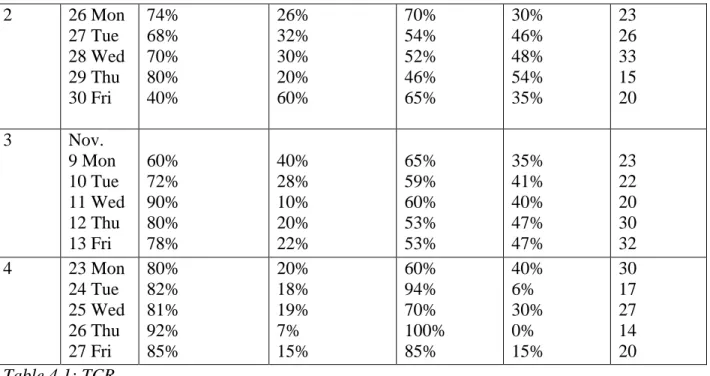
As we can see in figure 4.1, the participant starts with a score of 63% in reception 48% in production. More likely, it is because of the child's enthusiasm in the first week, and then he lost enthusiasm. As we can see in Table 4.2, the participant shows a good reception in the commands the researcher asks him to perform, developing 3 out of 5 requirements at the first time.
But in the third week of the evaluation, table 4.2 shows that the participant has a very good improvement in his listening comprehension from 1 out of 6 performed on. This section provides the reader with the anecdotal evidence of Iker's progress in English as a result of the intervention. I told him that we wanted to change the dynamic of the activity a bit (in this application you have to draw the correct letter to complete the word).
The focus of the current study mainly used an Ipad because it was the participant's preference.