In addition, classroom experiments are directly related to transversal skills such as autonomous learning, as students learn from their own decisions and receive rapid feedback about the results of their actions and other students' strategic reactions to them. The remainder of the study is structured as follows: Section 1.2 presents the antecedents of teaching experiments in economics and entrepreneurship and discusses their utility as a teaching tool to promote student learning.
Classroom Experiments to Study Economics and Entrepreneurial Decisions
Antecedents in the Economics and Entrepreneurial Field
Therefore, this methodology strengthens the basic ability to 'learn to make economic and entrepreneurial decisions', but also the discussion of the results of the experiments makes it possible to understand the economic and management relations and the importance of the different assumptions (treatments) on the subject's behavior and the financial results. Ultimately, one of their primary goals is to create "hands on" experiential learning and thus make the arguments and concepts from the various economic and entrepreneurial theories more understandable, meaningful and interesting for students (Durham et al. al. 2007; Isaac et al. . 2001; Maier et al. 2012).
A Useful Teaching Tool to Stimulate Students’ Learning
The instructions must be very clear and we must ensure (with control questions) that all students understand them before starting the experiment. In a laboratory experiment, experimental subjects should be recruited so that we have a representative sample, but in a classroom experiment, the subjects are only students.
Design/Implementation of a Classroom Experiment on Investment Decisions
- Experimental Overview
- Experimental Design: Instructions
- Identification of Optimal Decisions
- Experiment Implementation: Sample and Data
- Descriptive Analysis of the Experimental Results
The subjects of the experiment were graduate students enrolled in the Master's Degree in Management Research and Ph.D. Most of the subjects in the sample were Spanish (24), but there is also a significant number of foreign students from different geographical areas such as ,ATIN!MERICAN #CHINA )RAN AND %ASTERN%EUROPE.

Discussion and Conclusions
Subjects with knowledge of cost-benefit analysis (like the graduate students in our experiment) fail to find the optimal rule. Also a thoughtful analysis of all kinds of costs of available choices can lead to improved experimental performance of subjects.
In the final phase of the learning process, participants in the experiment were confronted with the resulting evidence. Becker WE, Watts M (2001) Teaching economics in the early 21st century: still chalk-and-talk.
An Experience in Teaching Innovation Based on Collaborative Learning and the Aronson
- Introduction
- Collaborative Learning
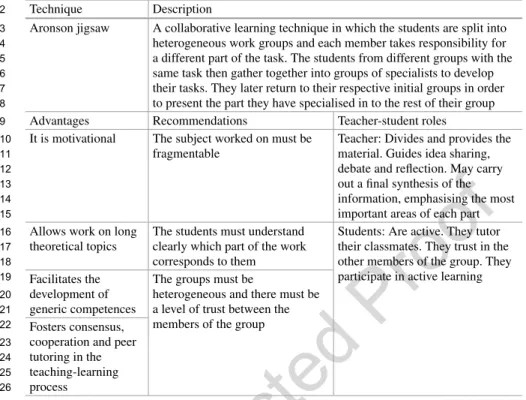
- The Aronson Jigsaw Technique
- Application of the Aronson Jigsaw Technique to an Undergraduate Subject
- Assessment and Sharing Information
- Assessment Phase 1: The One Minute Question
- Assessment Phase 2: Presentation of the Experts
- Results of the Experience
- Group Work and Commitment to Learning
- Results of the Assessment
- Conclusions
Then the chapters of the Oslo manual, which will be used in the session, are introduced. The evaluation is of course one of the most important elements in the teaching-learning process.
Learning by Teaching and Assessing
A Teaching Experience
- Introduction
- Teaching Methods
- Case Study Method
- Learning by Teaching and Assessing
- Research Method
- Results
- Qualitative Results
- Conclusions
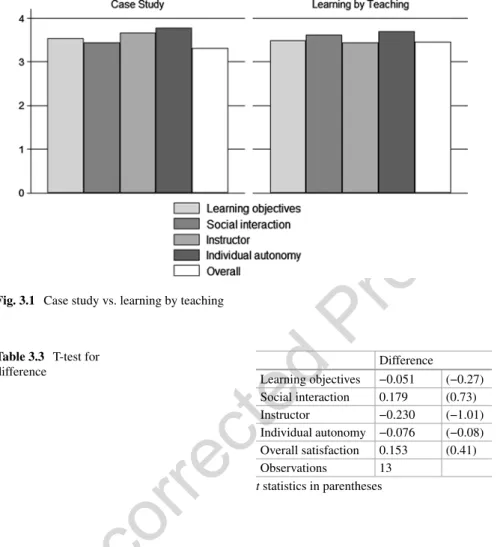
The groups prepared materials for teaching the following topics:. s Company growth strategies: Internationalization and diversification;. with the strategy of the multinational;. s Virtual Growth Strategies: Internet and Social Networks. The individual assessment phase is a weak part of the teaching-learning method and can be improved in the future.
DINNO ® : An Innovative Technological Tool for Empowerment in Assessment
- Introduction
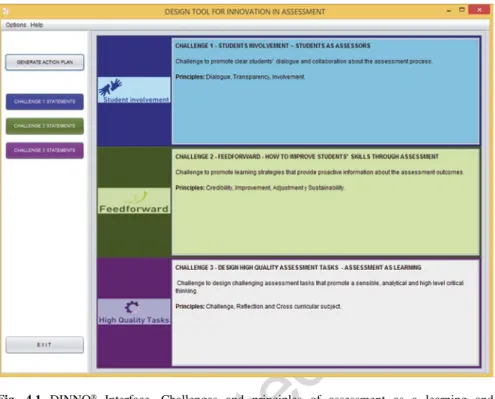
- DINNO ® Design Tool for Innovations in Assessment
- Objectives
- Methodology
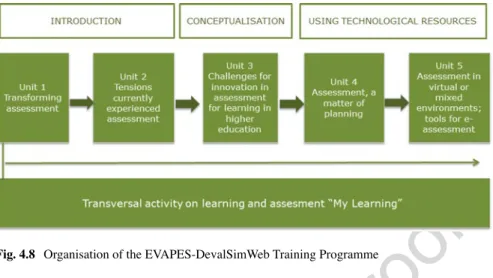
- DINNO ® in the EVAPES-DevalSimWeb Training Programme
- Research Sample
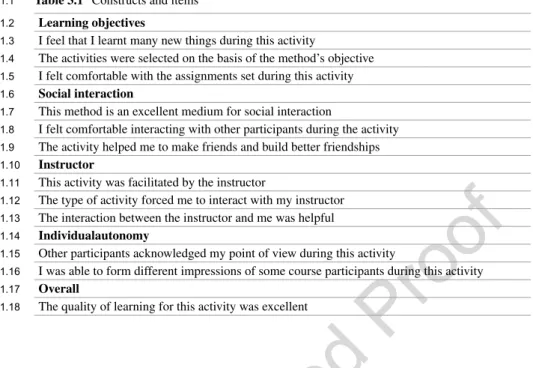
- Instrument
- Data Analysis
- Results
- Value Differences
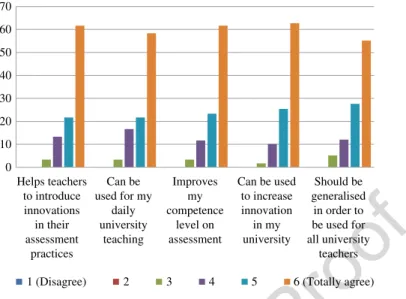
- The Usefulness and Benefits of Using DINNO ®
- Conclusion
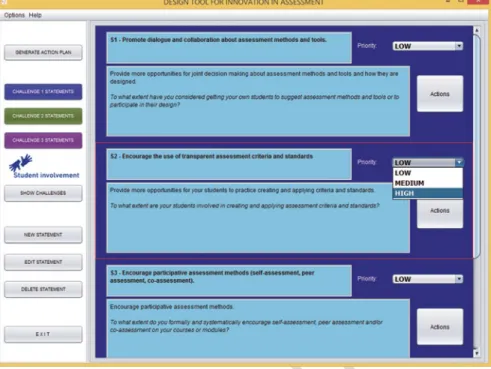
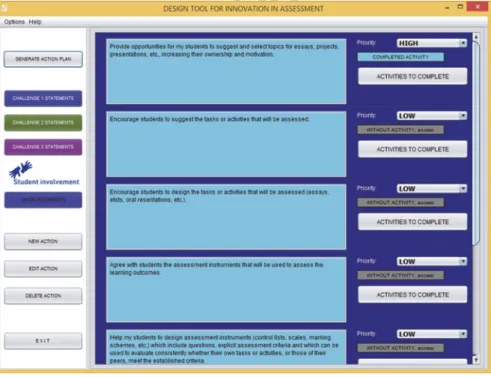
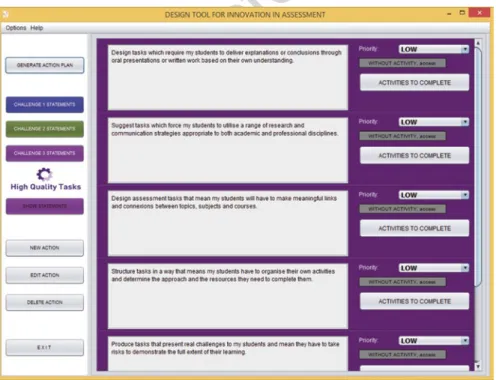
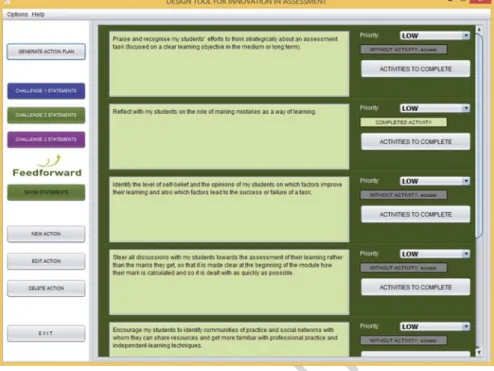
The three challenges are based on ten guiding principles (Figure 4.1) and are expressed in ten statements or statements that guide the development of the Evaluation Innovation Action Plan. This study presents data that highlight the real possibilities and advantages of the DINNO® tool.
Towards Sustainable Assessment: ICT
- Introduction
- Sustainable Assessment and Student Participation
- Technologies for Assessment
- Methodology
- Participants
- Supervision
- Instrument
- Data Analysis
- Results
- Skills Development
- Reliability and Confidence in Self-Assessment and Peer Assessment
- Technology as a Facilitator
- Discussion Points
- Conclusions
Based on the variables that Gielen et al. 2011) consider to be the main characteristics of peer assessment, it can be said that in this study the objects of assessment were both artefacts (technical reports, essays) and observed behavior (oral. At the end of the semester the students filled out an online questionnaire (Questionnaire on levels of satisfaction with participation in the assessment process) comprising 12 Likert questions with six response levels (1 = Strongly disagree; 6 = Strongly agree), structured as follows: average scores also greater than 4.
Finally, one of the issues this study attempted to address focused on how students evaluated the use of web-based services for the assessment process. In particular, an objective of this current study was to analyze the use of the EvalCOMIX® web-based service for both self- and peer-assessment.

Entrepreneurship Education: A Tool
- Introduction
- Objectives
- Methodology
- Theoretical Framework
- The Meaning of Entrepreneurship
- What Does It Mean to Be an Entrepreneur?
- Incubators of Technology-Based Companies
- Technological Innovation
- Technological Innovation Act
- The Brazilian Case
- Data Presentation and Analysis
- Conclusions
It is about relating the technological development of public policy, after the adoption of the Act on Technological Innovation (2004), to the results achieved. In addition, it was not possible to directly relate the technological development of public policy, after the adoption of the Law on Technological Innovation (2004), to the technological innovation generated in incubated and graduated companies with the collected data. Generated innovation is not always very sophisticated, but the development process has become more efficient due to the entrepreneurship curriculum.
Given this scenario, one can relate entrepreneurship to the continuous search for change and new opportunities, as an effective driver of the innovation process. According to the diagrams presented in this study, based on the results obtained from the interviews and surveys, it can be argued that the technological innovation law, the role of universities and the institutional support of IEBTs are strong driving forces for the development of businessmen and companies.
Teaching Entrepreneurship: A Comparison Between Virtual and Classroom Teaching
- Introduction
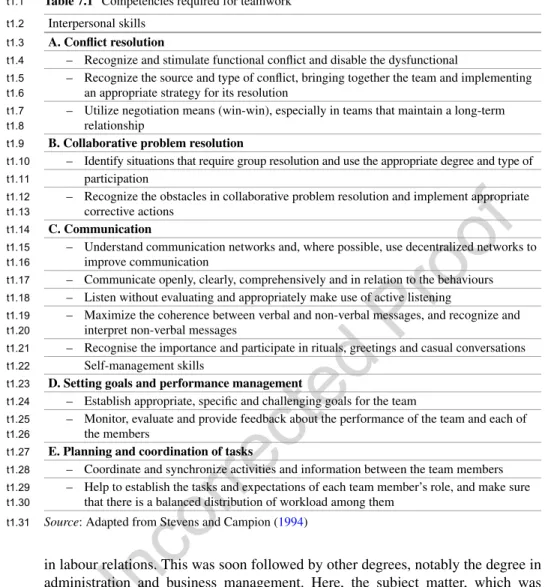
- The Entrepreneurial Team and Group Work Competencies
- The Subject of Entrepreneurship: A Background in Current Content and Non-presential Training
- Articulation of the Teaching and Learning Process through a Business Plan: The Milestones and Group
- Collaborative Work in Different Learning Environments
In this regard, Kamm et al. 1990) pointed out that team size limits effectiveness. In a virtual environment, certain knowledge, skills and abilities are conditioned by communication channels. With this, the subject of establishing companies responds to the recommendations of the European Union.
Both in the virtual context and in the classroom, business plans are laid as the foundation for the teaching and learning experience. From the beginning of the course, the student is given a complete handbook for the subject.
Virtual vs. Classroom
Conclusions
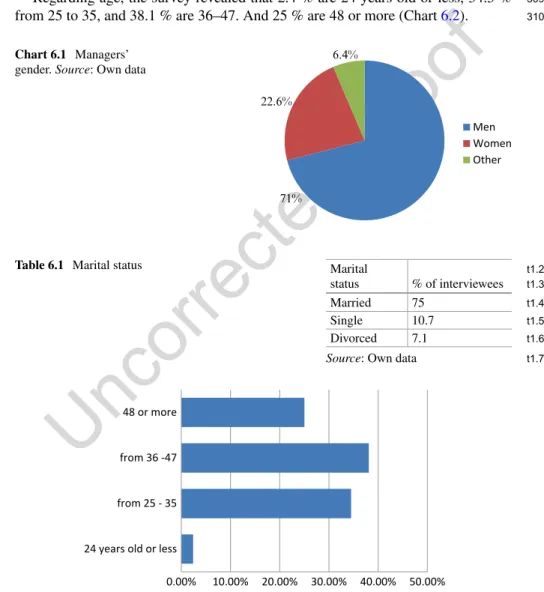
It is noted that there is a greater degree of heterogeneity in the virtual environment than that of the classroom environment. On the contrary, in the classroom environment, students do not pay enough attention to oral expression. This is the dominant form of communication during classroom intervention and group assignments.
Doing the same in the virtual environment would require arbitration of specific measures. In the context of creating entrepreneurial teams to set up a business or a project, this is evident from the educational experience.
Enhancement of Entrepreneurship
Advice (CAPPA) Model
- Introduction
- Theoretical Background
- Entrepreneurship, Innovation and Entrepreneur Concepts
- Overall Situation in Colombia
- Role of Higher Education Institutions in Colombia to Enhance Entrepreneurship
- Methodology
- Analysis of the Current Situation to Promote Entrepreneurship within Universities
- Proposal of a New Model to Maximize Entrepreneurship within Universities’ Students
- Conclusions and Future Research
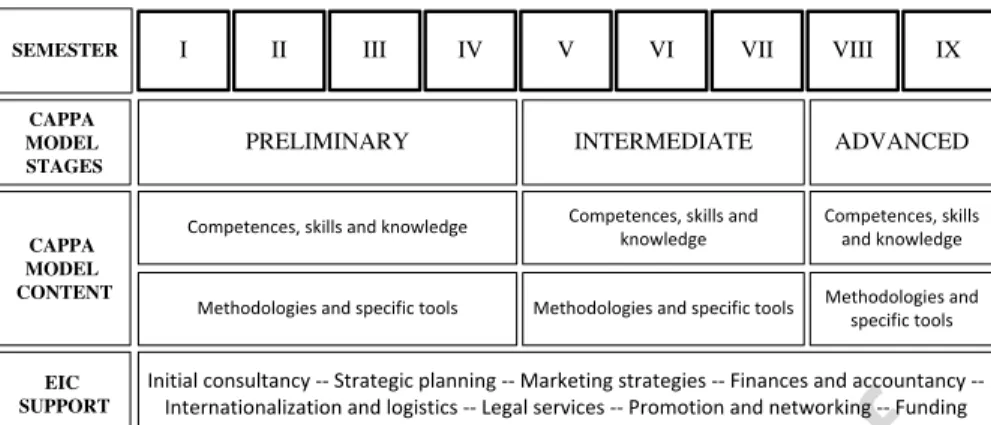
Colombian students clearly identify entrepreneurship with the values of quality of working life. It is designed to be used by any student of any university program regardless of semester, program or experience. Competences, skills and knowledge are designed to be implemented within academic program subjects focused on the four previously highlighted areas: entrepreneurship, analysis, personal development and second language.
They can be described as the foundation and basis for the competencies within entrepreneurship that will develop in the intermediate and advanced phases of the model. The proposal, which applies to any education that wants to create this entrepreneurial spirit among its students, is divided into three different stages of development, depending on which semester the student is in, and it is based on the establishment of key competences. skills and knowledge learning methods (grouped into four categories: entrepreneurship, analysis, personal development and second language), a solution of such knowledge with specific tools and methods (indoor and outdoor, such as case studies, workshops, national and international experiences, simulators, competitions and competitions, new technologies, research groups and internships) and an institutional support provided by an advisory body of the university LWVHOIFDOOHG(QWUHSUHQHXUVKLSDQG,QQRYDWLRQ&HQWUH(,&.
Game Driven Education in Finance Through On-line Trading Tools
- Introduction
- Activity Description
- Hypothesis and Methodology
- Results
- Discussion, Conclusion and Implications
I think that the generalization to other subjects of this type of activity will improve the quality of university education. The activity improved my opinion about the content of the subject (practical approach). This activity changed my view of the university student role as passive information receptor.
The activity has helped me develop skills such as using the computer, searching for documents, using the library, etc. During the development of the activity we discussed alternative solutions to different types of problems.
Educating for Entrepreneurship: Application to the Business Services Marketing Subject
- Introduction
- Conceptual Framework
- Application to the Subject
- Activity 1: Introducing Students
- Activity 2: Devising a Business
- Activity 3: The Aronson Puzzle
- Activity 3: LEGO© Serious Play©
- Drawing up a Marketing Plan
- Results
- Conclusions
This is the fundamental idea that leads to the training of skills we should strive for. H RZH LW WR 'DYLG 0F &OHOODQG WKH SV\FKRORJLVW QDPHG ´)DWKHU RI FRPSH- tences", the successful implementation of such competencies in the workplace (Alemany et al. 2013). This is a lot of work, but it comes before the work in the classroom.
When asked if they knew someone who had started a business in the last 2 years, 50% said they did. The idea is to improve experiences in the entrepreneurship context so that students can learn entrepreneurship from the inside.
Work and Study Habits in the Interconnected Age: What It Means for Businesses
- Introduction
- Adaptation and Technology
- Capacity Constraints in Information Processing
- Self-regulated Learning
- Research Questions
- Methodology
- Results
- Self-predicted Results
- Regression Analysis
- Discussion
- Limitations
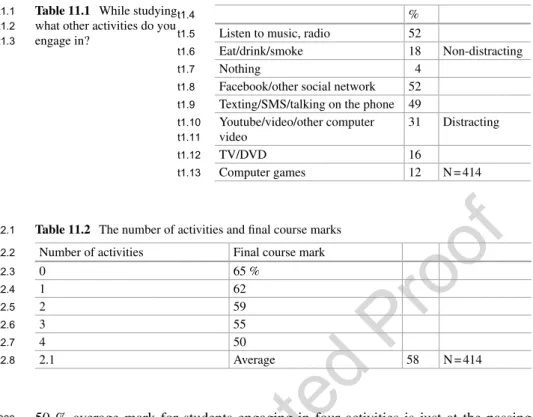
Although it is not surprising that students give high priority to socialization – university is meant to be more than just learning (Pascarella and Terenzini 2005) – the way in which they work and the learning environment they create for themselves theirs seems to place learning only at the same time, at best, with other activities. In this study, we also had information on the native language of the respondents that we included in the analysis. The relationship between activities and final results - the more activities, the lower the grade can also be seen in Fig.
More flatmates or family members as a source of distraction can also be seen in the positive correlation between distracting activities and the number of people in shared space. In contrast, the second figure in the bottom row in Table 11.3 shows no relationship between hours worked and final course marks.
Experiential Activities: A Tool to Increase Entrepreneurial Skills
- Introduction
- Theoretical Background
- Methodology
- Questionnaires
- Sample
- Results
- Conclusions
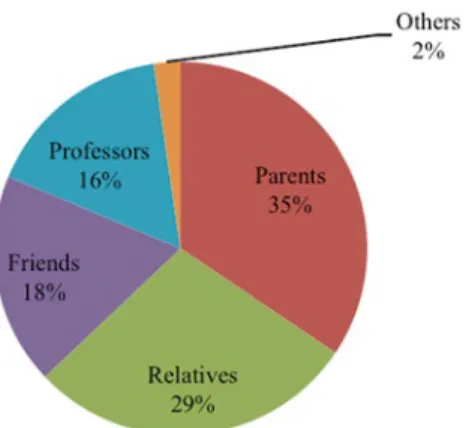
Developing a business plan is not enough; there is no difference in the intention to start a new business after completing the training based on the development of business plans. This is one reason why an experiential learning experience could foster an entrepreneurial spirit among students. This graph shows how the family environment motivates students to start their own business, with 64% of students surveyed believing that the family circle is a positive example of entrepreneurship (Figure 12.1).
One example of the need, importance and impact of employment and practice in entrepreneurial learning/education is that provided by Zhun and Xuyang (2014). Cooper S, Bottomley C, Gordon J (2004) Getting out of the classroom and up the learning ladder: an experiential learning approach to entrepreneurship education.
Fostering Entrepreneurship in Higher Education, by Problem-Based Learning
I. Santateresa
- Introduction
- Competency-Based Learning and Collaborative Learning
- Information Technology and Communication (ICT) Collaborative
- Problem-Based Learning
- Case Study
- Results and Student Satisfaction
- Conclusions
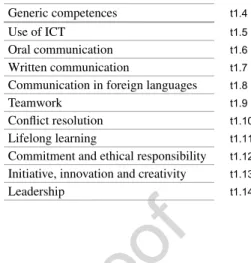
However, in the LOE (Organic Law 2006), autonomy and personal initiative are interpreted as a major competence of action. Each lecturer develops a certain way of teaching in the didactic guide of the subject, contributing maximally to the development of both generic competencies. All these resources are determined according to a comprehensive planning for the proper development of the methodology.
In order to achieve this monitoring, the planning of the research work is structured in different stages of the preparation of the final work. After synthesizing the background, students define the specific objectives of the research and its hypotheses.
Best University Practices and Tools in Entrepreneurship
- Introduction
- The Concept of Entrepreneurial University
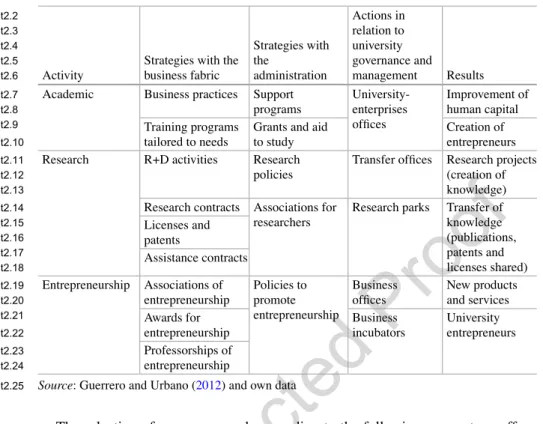
- University Entrepreneurship in the Teaching, Research and Knowledge Transfer Framework
- Case Study: The International Experience
- Harvard University
- Stanford University
- Babson College
- University of Cambridge
- Case Study: The Experience in Spain
- Autonomous University of Madrid
- Polytechnic University of Catalonia
- Polytechnic University of Madrid
- Polytechnic University of Valencia
- University of Extremadura
One of the most innovative practices is the Stanford Entrepreneurship Corner,4 a free repository of resources for teaching and learning about entrepreneurship. 14 University best practices and tools in entrepreneurship .. one of the promoters of the initiative must be a student or graduate of the university. The University of Cambridge is one of the most renowned institutions in entrepreneurship in the UK.
In addition, the University of Cambridge has Enterprise Tuesday,12, one of the most successful training programs in entrepreneurship, a reference for other universities in Great Britain, which aims to introduce participants to the business world in a very practical way (University of Cambridge 2015). QDGGLWLRQWKH$XWRQRPRXV8QLYHUVLW\RI0DGULGKROGVDQDQQXDODZDUGIRUWKH university entrepreneur,17 whose aim is to stimulate the entrepreneurial capacity of students.