The LEED certification component of this report targets Chatham County Schools' buildings, while the renewable energy expansion, specifically the solar expansion, targets the residents of Chatham County. This data provides an example of the effectiveness of solar energy for residents of Chatham County to be better informed. Overall, this report provides actionable recommendations to increase the energy efficiency of new and existing buildings and expand renewable energy production in Chatham County.
Chatham County has already made efforts to implement LEED certification in county-owned buildings. This report, based on the goals outlined in the Chatham County Climate Action Plan (Climate Change Advisory Committee, 2017), urges more buildings in Chatham County to develop sustainably and make existing buildings more efficient. The energy and atmosphere requirement of the LEED Operation and Maintenance (O&M) Reference Guide (V4) contains recommendations to begin the process of becoming LEED certified that apply to buildings in Chatham County.
Chatham County already has projects underway to expand renewable energy production to public school buildings, and such innovations are a great way to earn LEED points. This report analyzes some of the potential costs and savings at different levels of LEED certification by studying and comparing other LEED school projects similar to those in Chatham County. Each of these suggestions can help earn points toward LEED certification, and together they can go a long way toward making Chatham County more energy efficient.
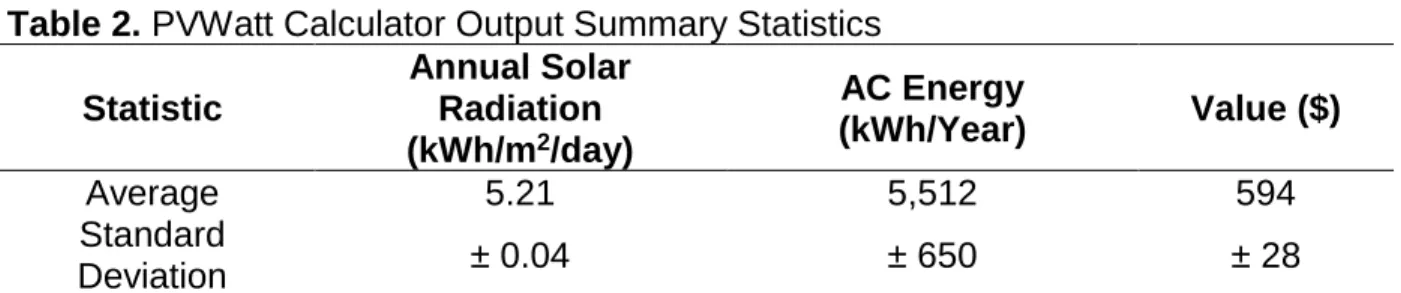
The Chatham County Action Plan addresses measures to expand renewable energy production through the production and use of solar and wind energy in the county. Installing solar PV on the roofs of other buildings is not the focus of this report because the SolSmart program already provides technical assistance for such buildings based on a request submitted by Amanda Robertson, co-founder and former member of Chatham County Climate. Advisory Board. By analyzing the average downward thermal infrared (longwave) radiation throughout the year, the potential for solar energy production in Chatham County can be generalized.
The plot displays the average downward thermal infrared (longwave) radiation flux in kWh/m2/day in Chatham County from January 1, 2018 to January 1, 2019 excluding February 5, 2018. Therefore, the radiation flux given by the NASA Forecast of Global Energy Resources is revealed that Chatham County receives a significant amount of solar radiation throughout the year. All of the Chatham County data was obtained through NC OneMap Geospatial Portal and the National Map and displayed using ArcGIS Desktop 10.5 software.
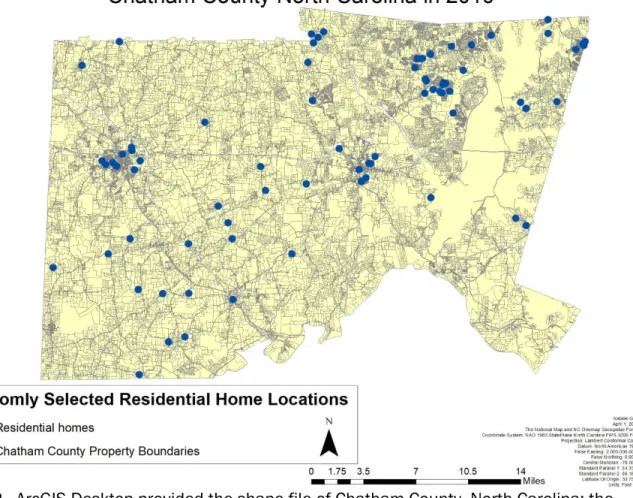
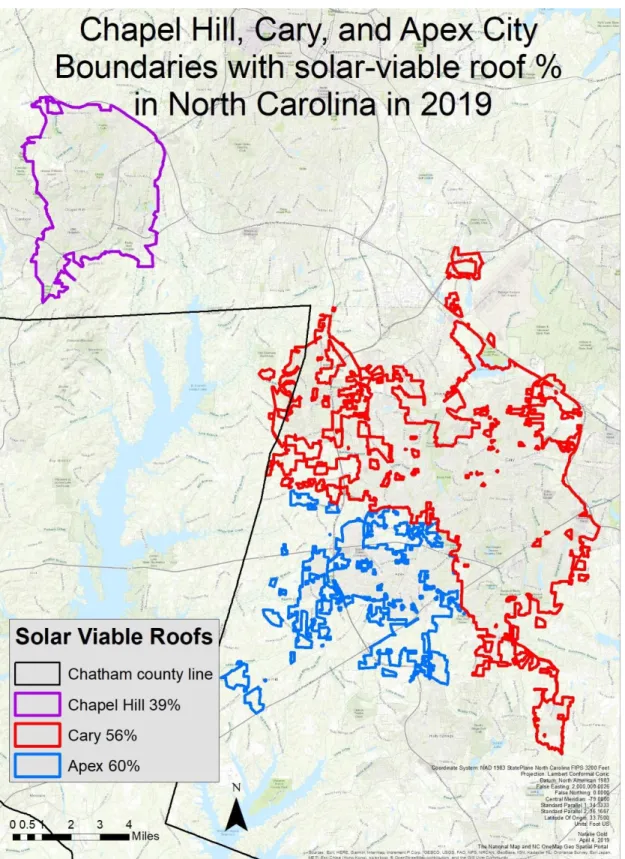
Chatham County parcel data was downloaded from the NC OneMap database, imported into ArcGIS Desktop to show the location of all 44,853 residential houses on top of the state map, and included as a shapefile. After applying this to the map, the data was exported to a new layer showing the desired 74 homes above the Chatham County boundary lines. ArcMap image of the city limits of Chapel Hill, Cary, and Apex, which are part of Chatham County.
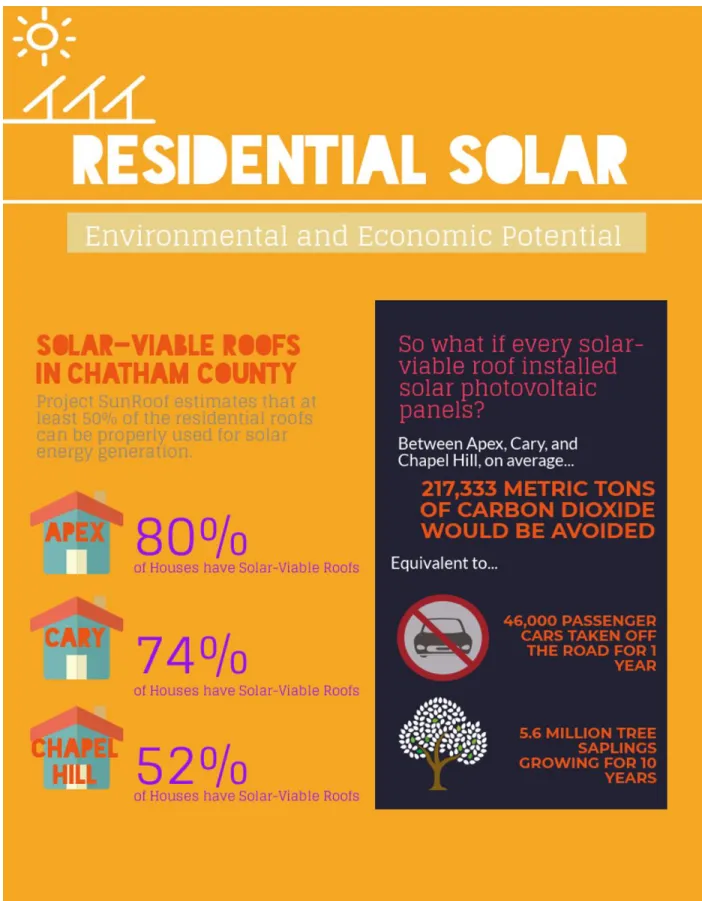
Infographic of the environmental and economic potential of residential solar installed in Chatham County.
FINANCIAL INCENTIVES
Each of the Duke Energy subsidiaries gets 50,000 kW of the 100,000 kW total capacity target along with the mandate to promote PV investments in each of their respective service areas. Any solar capacity not subscribed to by the end of the financial year can roll over to the next financial year's limits. The important clauses of the NM rider are its qualification provisions, the energy credit schedule provisions, measurement.
Good cause includes any circumstance where the outage is beyond the control of the PV system owner. Chatham residents who are unsure of their county residency should be aware of this. The 109th United States Congress established the Renewable Energy Investment Tax Credit (ITC) with the passage of the Energy Policy Act of 2005.
The following sections highlight the key steps of the processes that Chatham County residents will need to observe while applying for solar incentives for their PV systems. This guarantees the eligibility of the customer to apply for rebates by the start date of 1 January 2020. This maintains the eligibility of the photovoltaic system for the 2020 part of the Solar Rebate.
The first step of the process requires customers to submit an online application to request an interconnection with Duke Energy. The diagram will need to include basic customer information, equipment specification manuals for solar panels and inverters, and the metering arrangement specified for the system. The diagram attached to the interconnection request will need to include the model numbers and electrical sizes with the nameplate of each electrical equipment of the PV system.
Customers will need to provide information on the Proposed Construction Report about the owner of the photovoltaic system, a photo or aerial map of the system and its surroundings. Duke Energy requires its customers to attach a copy of the Proposed Construction Report to their Interconnection Request applications. Consumers will need to obtain their file number from the official NCUC website.
Duke Energy will return a copy of the interconnection request to customers who conditionally grant permission to install photovoltaic systems. PV systems must be inspected by a certified professional who will provide an electrical inspection approval form certifying the integrity of the system.

RECOMMENDATIONS