Disclosure of any information contained in this report is the sole responsibility of the recipient. The original technology file provided to you will be retained by WSP Canada Inc. As part of the Environmental Impact Assessment (EIA) analysis for the James Bay lithium mine project, the Ministère de l'Environnement et de la Lutte Contre les Changements Climatiques (MELCC) submitted a list of questions and comments on April 18, 2019.
A second list of questions and comments was received from MELCC in December 2019, a third in September 2020, and a fourth on 21 January 2022, following the submission of the second version of the EIA in July 2021. The purpose of this document is to respond to the MELCC's request for additional information. This is the eleventh addendum to the Project EIA, the first was submitted to the CEA agency as part of the concordance phase (in February 2019), the second to the MELCC in July 2019, the third to the CEA agency in response to the first round of formal questions (in September 2019), the fourth and fifth to the IAAC (in December 2019 and February 2020 respectively) to provide.
JAMES BAY LITHIUM MINE PROJECT RESPONDS TO REQUEST FOR ADDITIONAL INFORMATION RECEIVED FROM MELCC.
FEASIBILITY STUDY
ACCUMULATION AREAS
JAMES BAY LITHIUM MINE PROJECT RESPONSE TO REQUEST FOR ADDITIONAL INFORMATION RECEIVED BY MELCC AS PART OF THE GALAXY LITHIUM (CANADA) INC. ENVIRONMENTAL ASSESSMENT PROJECT. 2021). Impact: The stability and configuration of the waste rock and tailings piles is not expected to change at the end of the laboratory tests.
Impact: There is no indication that the configuration of the North and East Water Management Ponds will change from that proposed in the previous Golder study. The design of the waste rock and tailings storage facilities (WRTSF) is such that no accumulation of water is possible. The design is supposed to direct most of the water from the rainfall into the cave.
JAMES BAY LITHIUM MINI PROJECT RESPONSE TO REQUEST FOR ADDITIONAL INFORMATION RECEIVED BY MELCC AS PART OF THE GALAXY LITHIUM (CANADA) INC. ENVIRONMENTAL ASSESSMENT PROJECT.
WATER MANAGEMENT
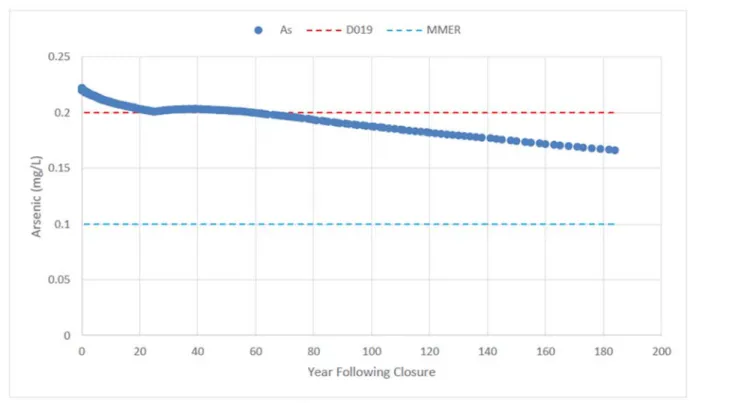
Arsenic levels in pit water are then expected to be between the Directive 019 criterion (0.2 mg/L) and the MDMER standard (0.1 mg/L) until the pit is full. The NWMP Effluent Discharge Water Treatment Requirements (Golder, October 2021) states that arsenic levels when the pit is full are expected to be 1.68 mg/L, which meets the criterion of Guideline 019 (0.2 mg/L ), but exceeds the MDMER standard (see figure below). The proponent's remediation plan does not contain concrete measures to ensure that the quality of the water that will accumulate in the cave is restored to its original level before being released into the natural environment.
It says only that a solution will be investigated in the short term to ensure that arsenic concentrations meet the MDMER criterion before water from the well is released into the natural environment. The proponent must present concrete measures to reduce the arsenic load in the pit water so that the water released into the environment after mine closure meets the criteria of Directive 019, MDMER standards and moves towards EDO compliance. The reagent used would be chosen to optimize the reaction according to the specific environmental conditions of the pit.
This modeling will provide more realistic results to refine the closure plan and provide concrete measures to reduce the arsenic load (and other metals, if applicable) in the well water, so that the water discharged into the environment after the mine closure meeting the criteria of Directive 019, the MDMER standards, and taking steps toward compliance with EDOs.
AIR QUALITY
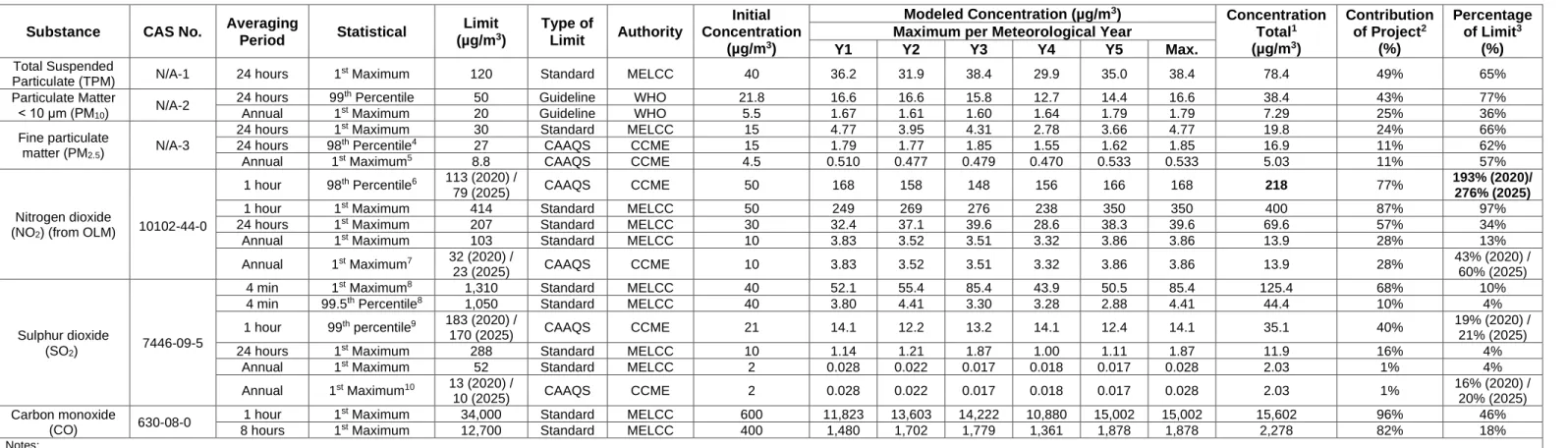
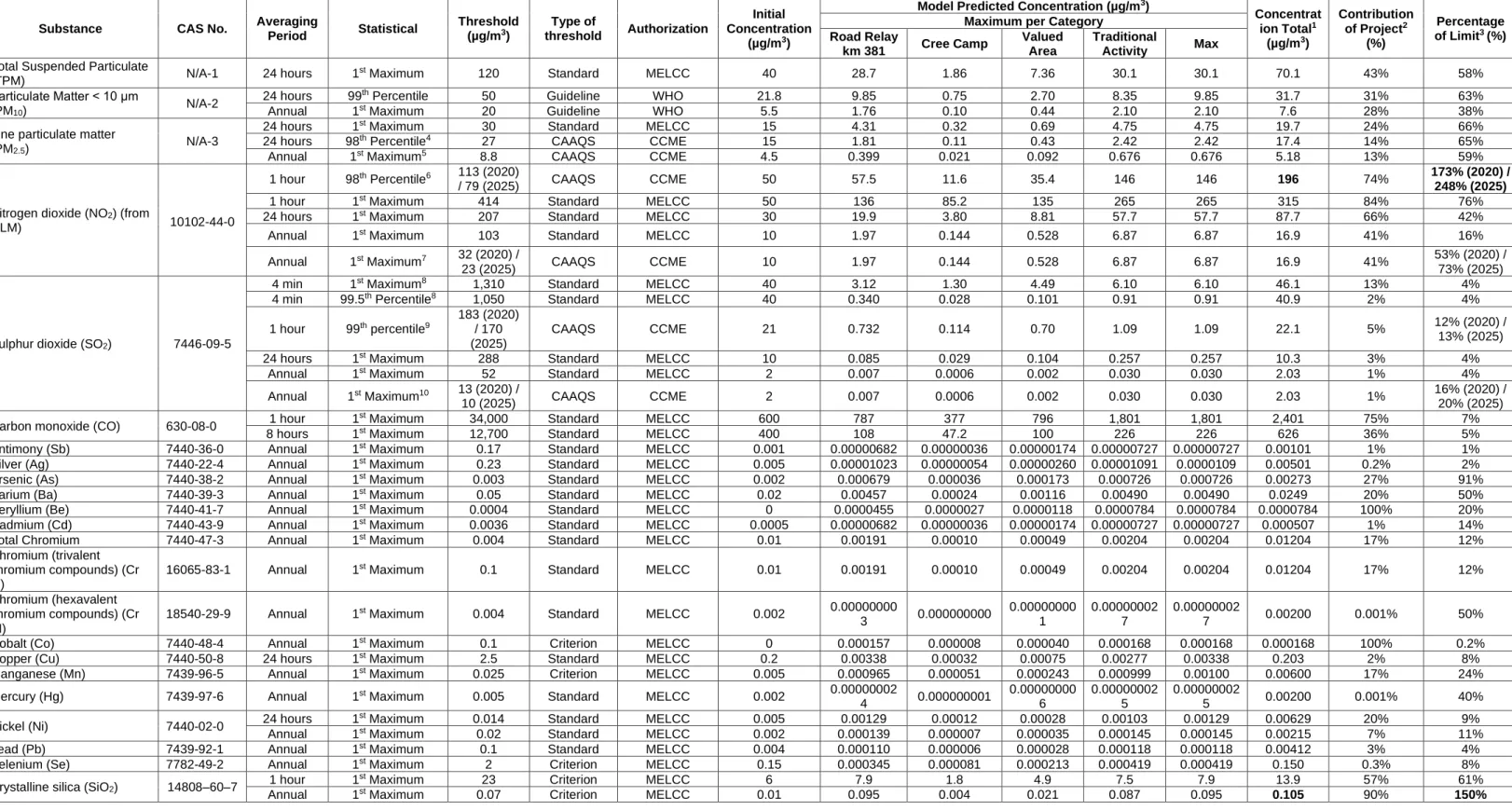
In his answer to question QC4-30, the submitter indicates that he has used the option of dry deposition of particles for all emission sources, as more than 10% of the emitted particles had a diameter larger than 10 μm, with the exception of particles originating of diesel. -powered engines of mining equipment and propane combustion sources (heating and ventilation). The proponent must demonstrate that ambient PM2.5 concentrations meet the air quality standard of the Clean Air Regulation, without considering the dry deposition of PM2.5 emitted from diesel mining equipment engines and propane combustion sources. Adjustments to the modeling still need to be made in order to make a judgment on the acceptability of the project.
On July 27, 2022, the proponent submitted the preliminary results of the air quality modeling update to MELCC. As a reminder, as stated in Appendix H of the Clean Air Regulation, modeling scenarios must be able to reproduce the worst-case pollutant concentrations expected based on the time period of application of the limit value. At first glance, the rates used in the preliminary results do not comply with the guidance in Appendix H of the Clean Air Regulation or with the COMEX Round 4 requirement.
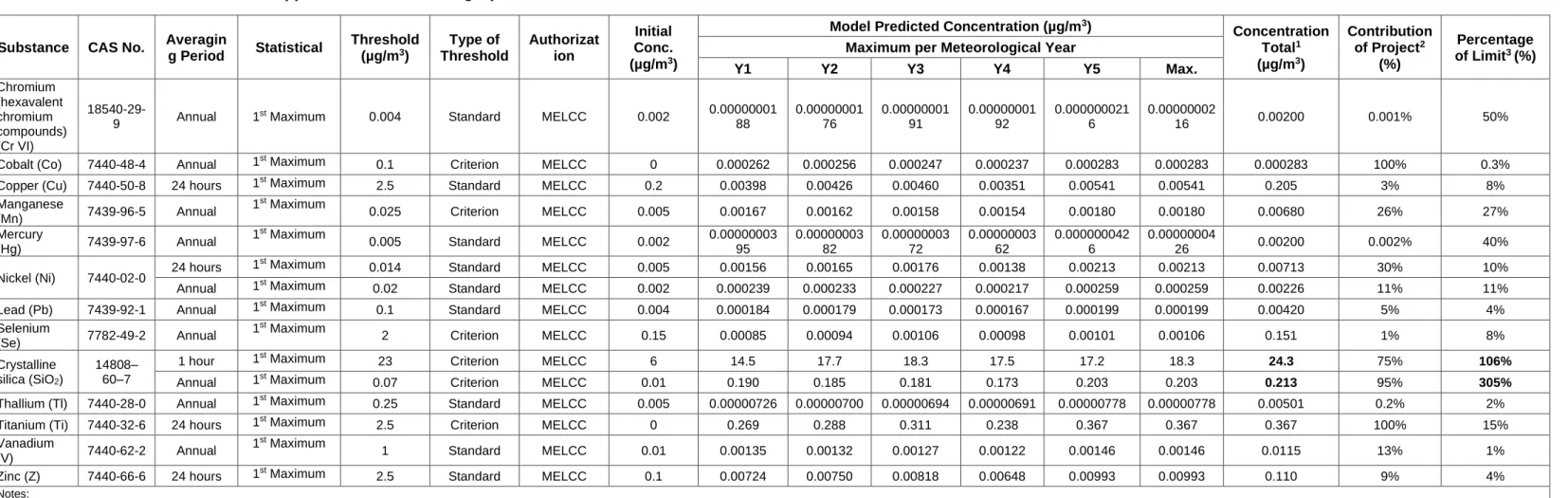
The proponent will revise and submit new modeling using 13% to determine the crystalline silica content of PM10 and PM4, which is 44% of the maximum 30% measured in the waste rock.
SURFACE WATER
In Round 4, the proponent was asked to repeat the modeling scenarios and demonstrate that they considered the maximum concentrations of pollutants emitted based on the application period. The information is contained in the Stantec memo entitled Updated Air Quality Model Results - James Bay Lithium Pegmatite Project with reference number 121416913. In response to the question asked at the August 26 meeting whether year 14 remains the worst-case scenario, yes, year 14 is the worst-case year because the deposition schedule on the piles is adjusted in such a way that in no year an amount is deposited in the stock that is greater than the mitigation scenario presents.
Finally, the modeling that will be carried out with the field data during project operations will allow the. That said, since the effluent released into the CE2 will not have the same properties (i.e. the concentrations of physico-chemical parameters, nutrients, ions, metals, etc. will differ), changes to the properties of the water in the CE2 will definitely be observed. These changes will be most noticeable in the vicinity of the effluent discharge point and will decrease downstream of the discharge point.
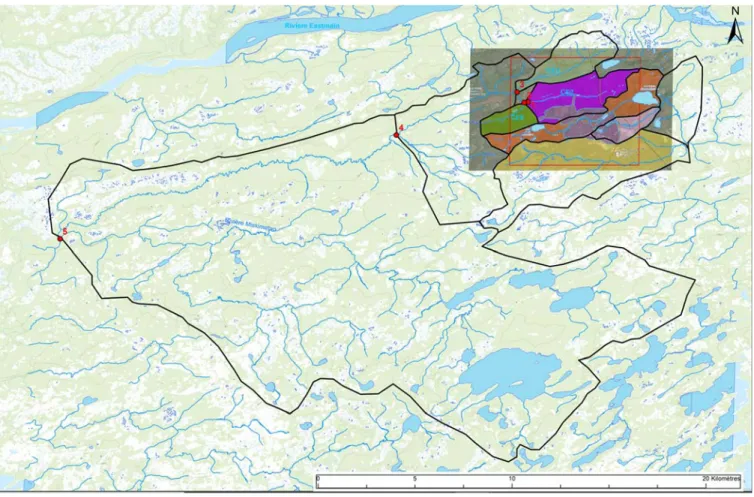
A calculation of the ratio of mean effluent discharge rate to stream flow was thus performed (Table 1) to determine the downstream input of water from other streams to better understand the scale of changes (Figure 1). At CE2 (point 1 identified in Figure 1), the mean streamflow represents 40% of the mean flow at CE2. After the junction with CE6 (point 2 in Figure 1), the average streamflow represents 27% of the average flow of CE6 while after the intersection with CE1, the average effluent flow represents 16% of the average flow of CE1. .
Seven kilometers downstream from the junction with CE1 (point 4 in Figure 1) the average outflow corresponds to 6% of the average stream flow. Finally, at the confluence with the Miskimatao River (about 25 km upstream of the Eastmain River), the percentage drops to 0.9%. It is evident, therefore, that at the confluence with the Miskimatao River and farther upstream, the effect of sewage will no longer be noticeable.

FAUNA AND FLORA
Ministère de l'Environnement et du Changement climatique du Québec/Ministère de l'Environnement et de la Lutte contre les changements climatiques (MELCC). Un filet maillant expérimental (un engin/nuit) et cinq burles (cinq engins/nuit) permettaient alors de capturer uniquement la perchaude. Manuel de normalisation des méthodes de recensement ichtyologique en eaux intérieures, Volume I, Acquisition de données, Ministère des Ressources naturelles et de la Faune, Québec, 137 p.
Le diagnostic du lac Kapisikama consiste à collecter des données avec cinq méthodes différentes et complémentaires : analyse de l'ADN environnemental, prélèvement d'eau de surface, réalisation de profils physico-chimiques, caractérisation des herbiers et berges, bathymétrie du plan d'eau. et la caractérisation de la faune aquatique avec différents engins de pêche. Un échantillonnage d'ADN environnemental (eDNA) avec le dispositif Smith-Root a été réalisé le premier jour de la campagne. La caractérisation du lac a été réalisée par segment de rive homogène, en fonction, entre autres, de la granulométrie, de la profondeur et du type de couvert végétal.
De plus, la température et l'heure ont été enregistrées lors de l'installation et du levage de l'équipement. Au moment de la rédaction de cette version (provisoire), les résultats n’étaient pas encore connus. Pour les paramètres analysés, il n’existe pas de critères ministériels permettant de déterminer la qualité de l’eau afin de protéger la vie aquatique.
Lors de la caractérisation des rives du lac, il a été constaté que le secteur aurait été détruit par un incendie. En bref, le lac Kapisikama est un lac relativement uniforme en termes de qualité de l'eau, physico-chimique et d'habitats pour la faune piscicole du lac. Les analyses de la qualité de l'eau et la faible concentration de phosphore dans l'eau ont permis de déterminer que le lac Kapisikama est un lac ultra-oligotrophe.
Les résultats de l'ADNe et la structure par âge de la population du lac Kapisikama complèteront le diagnostic lorsqu'ils seront disponibles. Le diagnostic du lac Kapisikama sera réalisé en juin 2022 afin de répondre à la question QC4-62 4e demande d'information reçue par le ministère de l'Environnement et de Lutte contre les changements climatiques (MELCC), dans le cadre du projet d'évaluation environnementale visé au l'objet. QC4-62 À la section 7.3.4 de l'Étude d'impact environnemental, version 2 (WSP, 2021), le promoteur indique que le plan de compensation comprendra une étude de l'état initial du lac (diagnostic) et de la population de perchaudes. .
Le diagnostic du lac et de sa population de perchaudes ne donne pas lieu à une compensation. L'initiateur doit soumettre le rapport de diagnostic du lac et de la population de perchaude à l'Administrateur provincial avant que la décision sur ce projet ne soit prise. Le diagnostic sera réalisé conformément au Guide pour la normalisation des méthodes d'inventaire ichtyologique dans les eaux intérieures, partie I – Collecte de données (Service de la faune aquatique, 2011).