Patient adherence to antiviral treatment
for chronic hepatitis B and C: a systematic review
Faydra I. Lieveld, Lotte G. van Vlerken, Peter D. Siersema, Karel J van ErpecumFaydra I. Lieveld, Lotte G van Vlerken: both authors share first authorship.
Department of Gastroenterology and Hepatology, University Medical Center Utrecht, Utrecht, the Netherlands.
ABSTRACT
Introduction. Poor adherence to treatment for various chronic diseases is a frequent phenomenon. Current guidelines for the treatment of chronic hepatitis B (HBV) and hepatitis C (HCV) recommend optimal adherence, since it has been suggested that poor adherence is associated with an increased risk of virological failure. We aimed to give an overview of studies exploring adherence to combination treatment (PEG-interferon
plus ribavirin) for HCV and nucleos(t)ide analogues for HBV. Material and methods. A systematic
review was conducted using the databases PubMed, Embase, Cochrane Library and Web of Knowledge. Search terms included “adherence” or “compliance” combined with “hepatitis B”, “hepatitis C” or “viral
hepatitis”. Results. The final selection included 19 studies (13 HCV, 6 HBV). Large differences in patient
numbers and adherence assessment methods were found between the various studies. For HCV mean adherence varied from 27 to 97%, whereas the proportion of patients with ≥ 80% adherence varied from 27 to 96%. Mean adherence reported in HBV studies ranged from 81 to 99%, with 66 to 92% of patients being 100% adherent. For both HCV and HBV studies, the highest adherence rates were reported in studies using self-report whereas lower adherence rates were reported in studies using pharmacy claims. Poor adherence
to treatment was associated with an increased risk of virological failure. Conclusion. Non-adherence to
treatment in chronic viral hepatitis is not a frequent phenomenon. However, given the increased risk of virological failure in poorly adherent patients, clinicians should routinely address adherence issues in all patients treated for chronic viral hepatitis.
Key words. Compliance. Nucleos(t)ide analogues. Peg-interferon. Ribavirin. Viral hepatitis.
Correspondence and reprint request: Karel J van Erpecum, M.D., Ph.D. Department of Gastroenterology and Hepatology F.02.618, University Medical Center Utrecht
P.O. Box 85500, 3508 GA Utrecht, The Netherlands Ph.: +31 88 75 57004
E-mail: [email protected]
Manuscript received: November 07, 2012. Manuscrip accepted: November 20, 2012.
May-June, Vol. 12 No.3, 2013: 380-391
ORIGINAL ARTICLE
INTRODUCTION
Chronic viral hepatitis is a worldwide problem with 170 million patients chronically infected with hepatitis C virus (HCV) and 350 million persons with chronic hepatitis B virus (HBV).1,2 Chronic
viral hepatitis can lead to liver cirrhosis, decompen-sated liver disease and hepatocellular carcinoma (HCC). It has been estimated that 16% of chronic
HCV and 8-17% of HBV patients develop liver cirrho-sis within 20 years. Approximately 10% of cirrhotic patients will develop HCC within 5 years.3,4 The
ulti-mate goal of treatment is therefore to prevent these complications by achieving adequate viral suppres-sion. In the past decade, the recommended treatment for HCV consisted of pegylated interferon (PEG-IFN) and ribavirin (RBV) for all HCV genotypes.5 The
pro-tease inhibitors boceprevir and telaprevir have recen-tly been approved for HCV genotype 1.6,7 Five
nucleos(t)ide analogues (NUCs) are currently appro-ved for the treatment of chronic HBV: lamivudine (LAM), adefovir (ADV), entecavir (ETV), tenofovir disoproxil (TDF) and telbivudine (TBV).8 In addition,
PEG-IFN can also be used to treat chronic HBV.8
Current guidelines emphasize that optimal adhe-rence to antiviral medication is needed to achieve the best results.5,9 In clinical trials, adherence rates
381
Adherence to treatment for chronic hepatitis B and C. , 2013; 12 (3): 380-391
with a radical drop after 6 months of treatment.10
Furthermore, an association between adherence and response to treatment has been reported for various chronic diseases, including hypertension11
and HIV.12 For example, ≥ 95% adherence to protease
inhibitors in HIV patients has been associated with non-detectable viral loads.12 At this moment, there
is no widely accepted standard of what can be consi-dered good adherence for treatment of chronic viral hepatitis. The 80/80/80 rule is generally used in HCV combination therapy,9 but this is based on
dose reductions by physicians due to side effects rather than missed doses by the patient.13
Adherence to therapy can be measured by several methods, including patient self-reports, pill counts, prescription refill rates, electronic medication moni-tors and measurement of drug levels in blood.10 All
methods have advantages and disadvantages and none is considered to be the gold standard.10,14,15
The two most commonly used methods are patient self-reports and pharmacy claims data. Self-report can either be done by questionnaires, oral self-repor-ts or visual analogue scales (VAS) in which patienself-repor-ts are asked to indicate their adherence between 0 and 100% in a diagram.
This systematic review aims to give an overview of studies exploring adherence to combination treatment (PEG-interferon plus ribavirin) for HCV and NUC regimens for HBV. Furthermore, we summarize studies that evaluated predictors of poor adherence and assessed the relation between virologic response and adherence.
MATERIAL AND METHODS
Search strategy
We performed a systematic literature search in 4 electronic databases: PubMed, Embase, The Cochrane Library and Web of Knowledge, thereby identifying all relevant published articles and abstracts until April 20, 2012. The following search terms were used: “adherence” or “compliance” and their synonyms (in title or abstract) combined with “hepatitis B”, “hepatitis C” or “viral hepatitis” and their synonyms (in title). In addition, reference lists of retrieved articles were manually searched, and re-views were evaluated.
Inclusion and selection of studies
Published articles and abstracts of randomized controlled trials, prospective cohort studies and
re-trospective cohort studies were included when the following inclusion criteria were met:
• The study population consisted of treated adults with HBV or HCV.
• The primary or secondary aim of the study was evaluation of medication adherence.
• Medication adherence was defined as the propor-tion of medicaments taken by the patient as des-cribed by the physician (studies that defined adherence as dose reduction and/or early treat-ment discontinuation were excluded).
• Publication was in English or Dutch.
If multiple publications reported on the same cohort, the study with the longest follow-up was included. Reviews, case reports, meta-analyses, pediatric, animal or laboratory studies were excluded. Two independent reviewers screened all studies. Publications judged relevant based on title and abstract were further evaluated as full article. Disagreement was resolved by discussion.
Outcomes
The primary outcome of this review was medica-tion adherence. Predictors of poor adherence and correlation between adherence and virologic respon-se were considered respon-secondary outcomes.
Data extraction
The following data from included studies were collected: data on study design, baseline characteris-tics, and primary and secondary outcomes. Data included definition of adherence, methods of adher-ence assessment and adheradher-ence outcomes (mean adherence, predictors of poor adherence, correlation between adherence and virologic response).
Definitions
Medication adherence depended on the definition in the study; however, adherence defined as dose re-duction by physicians or early treatment disconti-nuation were not considered valid definitions (see inclusion and selection of studies).
Hepatitis B medication regimens for this review were defined as the nucleos(t)ide analogues (NUCs) approved for treatment, including LAM, ADV, ETV, TDF and TBV.8 Studies assessing adherence to
treat-Lieveld FI, et al. , , 2013; 12 (3): 380-391
382
ment success is not available. Medication regimens for hepatitis C were defined as combination therapy, including PEG-IFN α2a or -α2b combined with riba-virin (RBV) or interferon (IFN) combined with RBV.5
RESULTS
Literature search
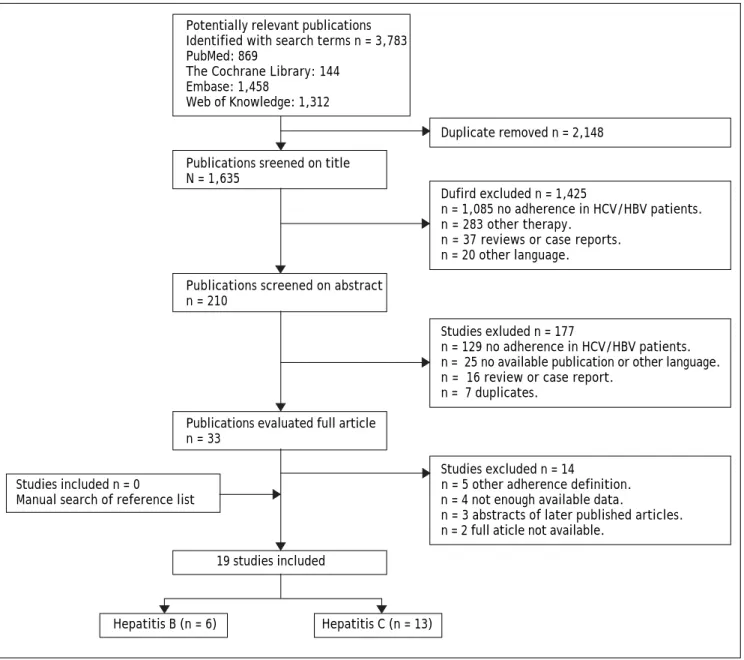
The literature search yielded 3,783 publications, of which thirty-three relevant studies were evalua-ted as full article (Figure 1). After applying the in-clusion criteria, a total of 19 articles and abstracts
describing 17 original studies were included. Thir-teen studies assessed adherence to HCV medication and six studies adherence to HBV medication.
HEPATITIS C
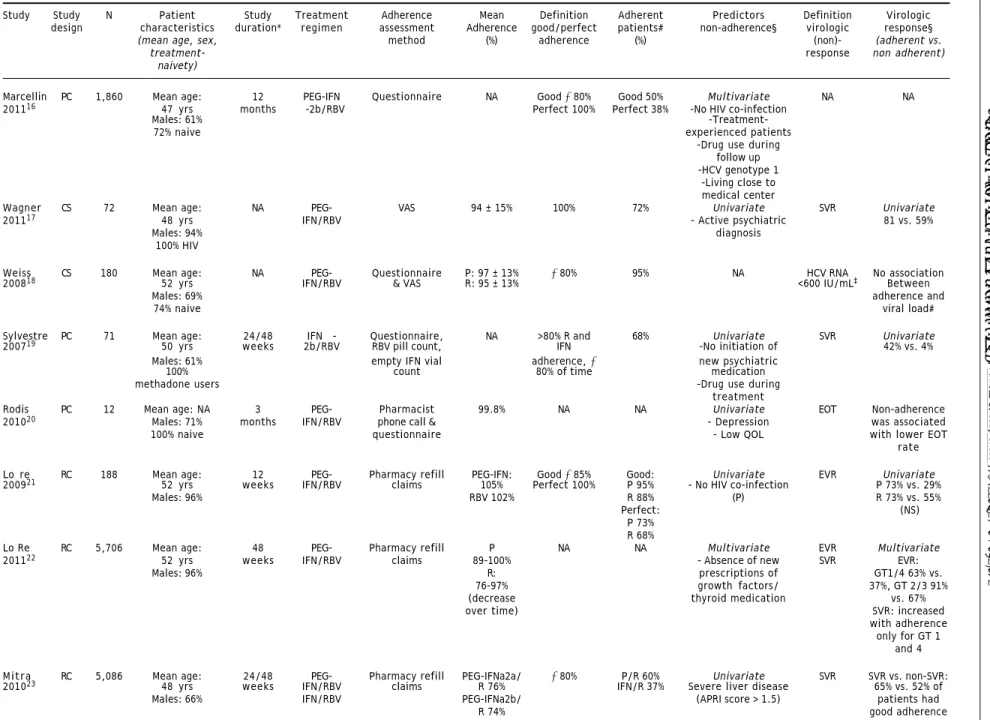
Thirteen studies assessed adherence to combination therapy in chronic hepatitis C patients16-28 (Table 1).
• Patient self assessment. Five studies measu-red adherence to a PEG-IFN/RBV or IFN/RBV re-gimen by means of patient self-reports.16-20
Marcellin16 reported that 50% of 1,860 French
HCV patients exhibited good adherence (≥ 80%),
Figure 1. Flowchart of the studies.
Potentially relevant publications Identified with search terms n = 3,783 PubMed: 869
The Cochrane Library: 144 Embase: 1,458
Web of Knowledge: 1,312
Duplicate removed n = 2,148
Publications sreened on title N = 1,635
Dufird excluded n = 1,425
n = 1,085 no adherence in HCV/HBV patients. n = 283 other therapy.
n = 37 reviews or case reports. n = 20 other language.
Publications screened on abstract n = 210
Studies exluded n = 177
n = 129 no adherence in HCV/HBV patients. n = 25 no available publication or other language. n = 16 review or case report.
n = 7 duplicates.
Publications evaluated full article n = 33
Studies excluded n = 14
Studies included n = 0 n = 5 other adherence definition.
Manual search of reference list n = 4 not enough available data.
n = 3 abstracts of later published articles. n = 2 full aticle not available.
19 studies included
383
Adherence to treatment for chronic hepatitis B and C.
, 2013; 12 (3): 380-391
Table 1. Overview of studies assessing adherence in hepatitis C patients.
Study Study N Patient Study Treatment Adherence Mean Definition Adherent Predictors Definition Virologic design characteristics duration* regimen assessment Adherence good/perfect patients# non-adherence§ virologic response§
(mean age, sex, method (%) adherence (%) (non)- (adherent vs.
treatment- response non adherent)
naivety)
Marcellin PC 1,860 Mean age: 12 PEG-IFN Questionnaire NA Good ≥ 80% Good 50% Multivariate NA NA 201116 47 yrs months α-2b/RBV Perfect 100% Perfect 38% -No HIV co-infection
Males: 61%
-Treatment-72% naive experienced patients
-Drug use during follow up -HCV genotype 1
-Living close to medical center
Wagner CS 72 Mean age: NA PEG- VAS 94 ± 15% 100% 72% Univariate SVR Univariate
201117 48 yrs IFN/RBV - Active psychiatric 81 vs. 59%
Males: 94% diagnosis
100% HIV
Weiss CS 180 Mean age: NA PEG- Questionnaire P: 97 ± 13% ≥ 80% 95% NA HCV RNA No association 200818 52 yrs IFN/RBV & VAS R: 95 ± 13% <600 IU/mL‡ Between
Males: 69% adherence and
74% naive viral load#
Sylvestre PC 71 Mean age: 24/48 IFN α- Questionnaire, NA >80% R and 68% Univariate SVR Univariate
200719 50 yrs weeks 2b/RBV RBV pill count, IFN -No initiation of 42% vs. 4%
Males: 61% empty IFN vial adherence, ≥ new psychiatric
100% count 80% of time medication
methadone users -Drug use during
treatment
Rodis PC 12 Mean age: NA 3 PEG- Pharmacist 99.8% NA NA Univariate EOT Non-adherence 201020 Males: 71% months IFN/RBV phone call & - Depression was associated
100% naive questionnaire - Low QOL with lower EOT rate
Lo re RC 188 Mean age: 12 PEG- Pharmacy refill PEG-IFN: Good ≥ 85% Good: Univariate EVR Univariate
200921 52 yrs weeks IFN/RBV claims 105% Perfect 100% P 95% - No HIV co-infection P 73% vs. 29%
Males: 96% RBV 102% R 88% (P) R 73% vs. 55%
Perfect: (NS)
P 73% R 68%
Lo Re RC 5,706 Mean age: 48 PEG- Pharmacy refill P NA NA Multivariate EVR Multivariate
201122 52 yrs weeks IFN/RBV claims 89-100% - Absence of new SVR EVR:
Males: 96% R: prescriptions of GT1/4 63% vs.
76-97% growth factors/ 37%, GT 2/3 91% (decrease thyroid medication vs. 67%
over time) SVR: increased
with adherence only for GT 1
and 4
Mitra RC 5,086 Mean age: 24/48 PEG- Pharmacy refill PEG-IFNa2a/ ≥ 80% P/R 60% Univariate SVR SVR vs. non-SVR: 201023 48 yrs weeks IFN/RBV claims R 76% IFN/R 37% Severe liver disease 65% vs. 52% of
Males: 66% IFN/RBV PEG-IFNa2b/ (APRI score > 1.5) patients had
Lieveld FI, et al.
, , 2013; 12 (3): 380-391
384
IFN/R 57%
Baran RC 1,173 Mean age: 48 PEG- Pharmacy refill NA =80% 27% NA NA NA 200924 47 years weeks IFN/RBV claims
[Abstract] Males: 65%
Smith PC 401 NA 48 PEG-IFNα- Questionnaire NA 100% Self report NA NA NA 2007†25 weeks 2a/RBV & MEMS R: 85-97%
P: 97-100% MEMS caps R: 69-90% P: 84-100%
Evon PC 394 Mean age: 24 PEG- Questionnaire NA 100% R 73% Multivariate NA NA 2011†26 48 years weeks IFN/RBV P 92% - Increased social
Males: 65% support (P) (NS)
Evon PC 401 NA 24 PEG- MEMS PEG-IFN 90- NA NA Multivariate NA NA
2011†27 weeks IFN/RBV 94% - Younger age
[Abstract] RBV 93-84% - African Americans
- Unemployed (P) - Never married (P)
- No baseline antidepressants (R)
- HCV acquired via drug use (R
Alam PC 503 Mean age: 24 PEG- Pill count & NA Good =80% Good: NA NA NA 201028 49 years weeks IFN/RBV self-report Perfect 100% RBV 89%
Males: 54% PEG-IFN/ RBP 98%
96% naive RBP Perfect:
RBV 87% RBP 88%
*: Duration of adherence assessment. #: according to definition good/perfect adherence. §: significance reached unless otherwise indicated. ‡: baseline and most recent viral load were gathered by patient self-reports (49% of patients reported this). †: these 3 studies used data from the same prospective cohort study.
APRI: AST platelet ratio index. CS: cross sectional. EOR: end of treatment response. EVR: early virologic response. GT: genotype. IFN: interferon. NA: not applicable. NS: not significant.
385
Adherence to treatment for chronic hepatitis B and C. , 2013; 12 (3): 380-391
whereas 38% exhibited perfect adherence (100%). Factors associated with perfect adherence in mul-tivariate analysis were: HIV co-infection (OR 2.5, 95% CI 1.3-4.7, p = 0.003), no illicit drug use du-ring follow-up (OR 2.4, 95% CI 1.3-4.3, p = 0.005), HCV genotype 3 (OR 1.6, 95% CI 1.2-2.0, p = 0.016), treatment-naivety (OR 1.3, 95% CI 1.0-1.7, p = 0.028) and longer transport time to the medical center (OR 1.0, 95% CI 1-1.006, p = 0.024). Wagner17 reported a mean adherence to
PEG-IFN/RBV of 94 ± 15% (range 10-100%) in 72 HCV-HIV co-infected patients, 72% of patients exhibited perfect adherence (100%). In uni-variate analysis perfect adherence was asso-ciated with absence of an active psychiatric diagnosis at baseline (38% vs. 67%, p < 0.05) and SVR achievement (81 vs. 59%, p < 0.05). In a cross-sectional survey among 180 patients, Weiss18 reported good adherence (≥ 80%) to
PEG-IFN/RBV in 95% of patients, with a mean adhe-rence of 97 ± 13% for PEG-IFN and 95 ± 13% for RBV. Non-adherence to PEG-IFN was signifi-cantly related to non-adherence to RBV (OR: 163, 95% CI 23-1,164, p < 0.001). No significant asso-ciation between adherence and the latest viral load (also self-reported), achievement of undetec-table viral load, demographic or treatment-rela-ted factors was found. Sylvestre19 reported that
68% of the 71 methadone-maintained patients in their study exhibited good adherence (≥ 80%) to IFN/RBV. In univariate analysis, good adheren-ce was associated with initiation of new psychiatric medication in patients without a preexisting psychiatric diagnosis (94 vs. 46%, p = 0.04) and with no use of heroin, cocaine and/ or amphetamine during treatment (25 vs. 74%, p = 0.03). Among patients with good adheren-ce SVR rates were higher (42 vs. 4%, p = 0.001). Rodis20 reported a mean adherence of
99.8% in 12 patients who were referred to an interdisciplinary HCV education and monito-ring service. Non-adherence was associated with d e p r e s s i o n ( p = 0 . 0 2 ) , l o w q u a l i t y o f l i f e ( p = 0 . 0 4 5 ) and less chance of achieving end of treatment response (p = 0.048) in univariate analysis.
• Pharmacy claims. Four studies used pharmacy claims to measure adherence to HCV combina-tion therapy and calculated adherence using the medication possession ratio (MPR).21-24 MPR
generally is defined as the sum of day’s supply of a particular drug in an observed period divided by the number of days in this period. Lo Re21,22
measured adherence to PEG-IFN/RBV in two cohorts of HCV patients in the United States. In the first cohort of 188 patients,21 adherence
was not truncated at 100% to evaluate trends in virologic outcomes at the highest observed levels of ad-herence. Good adherence (≥ 85%) to PEG-IFN and RBV was observed in 95 and 88% of patients, respectively, with a mean adherence of 105% for PEG-IFN and 102% for RBV. Patients with HIV co-infection exhibited higher median adherence rates to PEG-IFN (110 vs. 103%, p = 0.01) and RBV (110 vs. 103%, p = 0.30). Adherence was not associated with alcohol abuse, posttraumatic stress disorder and depression. Patients with good adherence had a 0.7 log higher decrease in viral load at 12 weeks (3.2 vs. 2.6 log IU/mL, p = 0.04) and higher EVR rates (PEG-IFN: 73 vs. 29%, p = 0.02; RBV: 73 vs. 55%, p = 0.08). In a second cohort of 5086 patients Lo Re22 reported a mean PEG-IFN adherence of
100, 95, 95 and 89% for treatment weeks 0-12, 12-24, 24-36 and 36-48, respectively. The mean RBV adherence for the same periods was 97, 86, 84 and 76%, respectively. A mean adherence decrease of 7% for RBV and 3% for PEG-IFN per 12-week interval was observed (p > 0.001). Multivariate analysis showed an association between EVR rates and PEG-IFN/RBV adherence rates (p < 0.001, corrected for age, race and site). Higher adherence was associated with SVR achievement in patients with genotype 1 or 4, but not for genotype 2 or 3. Mitra23 reported a
mean adherence of 76% for PEG-IFNa2a/RBV and 74% for PEG-IFNa2b/RBV in 5,086 patients, 60% of the study population exhibited good adhe-rence (≥ 80%). Patients with good adherence were more likely to have mild or moderate disea-se (65/62 vs. 50%) and to have higher total HCV-related costs ($20.132 vs. $12.259, p < 0.01) but lower costs when pharmacy costs were excluded ($1,370 vs. $2,463, p < 0.01). Among patients who achieved SVR, significantly more patients exhibited good ad-herence (65 vs. 52%) compared to non-SVR patients. Baran24 quantified the
Lieveld FI, et al. , , 2013; 12 (3): 380-391
386
prospective cohort study primarily aimed at comparing SVR rates between 401 Caucasian and African American HCV patients treated with PEG-IFN alfa-2a/RBV.25-27 Adherence was
measured by a questionnaire and electronic mo-nitors inside prescription bottles (MEMS caps). Smith25 assessed the validity of these two
adhe-rence assessment methods. The percentage of patients with self-reported perfect adherence (100%) decreased over time and was 97-85% for RBV and 100-97% for PEG-IFN. The proportion of patients with partial or perfect adherence as measured by MEMS caps also decreased over time and was 90-69% for RBV and 100-84% for PEG-IFN. The two adherence methods agreed in 52-81% of the RBV cases (p < 0.05) and corres-ponded in general for more than 93% of cases for PEG-IFN. In the cases with disagreement, patients reported higher adherence rates in self-report than was self-reported by MEMS. Evon26
eva-luated the effect of social support on adherence (based on the questionnaire) in 394 of 401 patients. Mean adherence to RBV and PEG-IFN was 73% and 92%, respectively. Adherence to PEG-IFN decreased as social su-pport increased (RR = 0.98; 99% CI: 0.95, 1.001, p = 0.012), but adherence to RBV was not associated with social support. In a second study, Evon27 identified patient characteristics
associated with treatment non-adherence. Based on MEMS caps data, mean adherence to PEG-IFN and RBV was 90-94% and 93-84%, respecti-vely. Risk factors for non-adherence were different for PEG-IFN and RBV (Table 1). In a prospective, observational study Alam28
compared adherence to RBV with adherence to RibaPak® (RBV tablets available in 400 mg and 600 mg), which could be associated with im-proved adherence compared with traditional ribavirin given the reduced pill burden. The proportion of patients with good adherence (≥
80%) was higher among RibaPak® users compa-red to those using RBV (98 vs. 89%, p = 0.005). Mean missed doses (1.1 vs. 0.4, p = 0.01) and mean missed medication milligrams (47 mg vs. 15 mg, p = 0.01) during the 4 weeks prior to the week-24 visit were significantly higher for RBV compared to RibaPak®. Adherence to therapy was reported to be higher in patient self-re-ports compared to the pill count results.
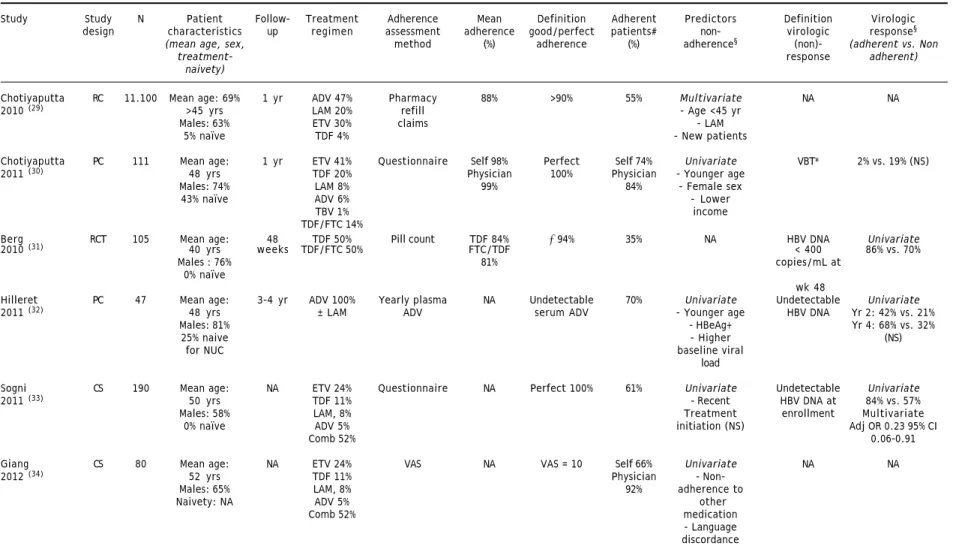
• Hepatitis B. We identified six studies that asses-sed adherence to NUC regimens in HBV pa-tients29-34 (Table 2).
Chotiyaputta29,30 assessed adherence in two
cohorts of HBV patients in the United States. Using a national pharmacy refill claims databa-se29 adherence of 11.100 HBV patients on various
NUCs was assessed; a mean adherence of 88 ± 19% was reported. Independent predictors of good adherence (> 90%) were NUC treatment prior to study enrollment (57 vs. 50%, p = 0.03), age above 45 years (60 vs. 55%, p = 0.002) and NUCs other than LAM (60% vs. 51%, p < 0.001). In a second study Chotiyaputta30
prospectively assessed adherence by self-report in 111 patients at a single center. Mean adherence at enrolment was 98 ± 4%, which remained sta-ble during the year of follow-up. Perfect adheren-ce was reported in 74% of patients and was associated with male sex (82 vs. 53%, p = 0.006), older age (49 vs. 43 years, p = 0.02), and higher income (30% in $20-60,000 vs. 44% in > $100,000, p = 0.04). Perfect adherence was not associated with race, duration of HBV in-fection, type of HBV medication, history of prior HBV treatment, co-morbidities, number of oral medications, education and occupation. Un-detectable HBV DNA levels were observed in 71% of patients with perfect adherence, compared to 77% of patients with < 100% ad-herence (p = 0.78). However, in the patients who completed 3 questionnaires, viral breakthrough was obser-ved in 2% of patients with perfect adherence on all three questionnaires, in 6% with < 100% ad-herence on one questionnaire and in 19% with < 1 0 0 % a d h e r e n c e o n 2 o r 3 q u e s -tionnaires (p = 0.06). Patients reported hig-her adhig-herence rates than physicians (perfect adherence 89 vs. 98%). In a randomized contro-lled trial in 105 patients who had an incomplete response to ADV, Berg31 compared efficacy and
ad-herence to TDF and FTC/TDF therapy during 48 weeks. Median adherence rates, as assessed by pill counts, were similar in both groups (84% for TDF vs. 81% for TDF/FTC). Patients with high adherence (≥ 94%) were more likely to have HBV DNA < 400 copies/mL at week 48 compa-red to those with low adherence (≤ 68%). In 47 patients using ADV with or without LAM, Hi-lleret32 evaluated adherence by measurement of
387
Adherence to treatment for chronic hepatitis B and C.
, 2013; 12 (3): 380-391
Table 2. Overview of adherence studies in hepatitis B.
Study Study N Patient Follow- Treatment Adherence Mean Definition Adherent Predictors Definition Virologic design characteristics up regimen assessment adherence good/perfect patients# non- virologic response§
(mean age, sex, method (%) adherence (%) adherence§ (non)- (adherent vs. Non
treatment- response adherent)
naivety)
Chotiyaputta RC 11.100 Mean age: 69% 1 yr ADV 47% Pharmacy 88% >90% 55% Multivariate NA NA 2010 (29) >45 yrs LAM 20% refill - Age <45 yr
Males: 63% ETV 30% claims - LAM
5% naïve TDF 4% - New patients
Chotiyaputta PC 111 Mean age: 1 yr ETV 41% Questionnaire Self 98% Perfect Self 74% Univariate VBT* 2% vs. 19% (NS) 2011 (30) 48 yrs TDF 20% Physician 100% Physician - Younger age
Males: 74% LAM 8% 99% 84% - Female sex
43% naïve ADV 6% - Lower
TBV 1% income
TDF/FTC 14%
Berg RCT 105 Mean age: 48 TDF 50% Pill count TDF 84% ≥ 94% 35% NA HBV DNA Univariate
2010 (31) 40 yrs weeks TDF/FTC 50% FTC/TDF < 400 86% vs. 70%
Males : 76% 81% copies/mL at
0% naïve
wk 48
Hilleret PC 47 Mean age: 3-4 yr ADV 100% Yearly plasma NA Undetectable 70% Univariate Undetectable Univariate
2011 (32) 48 yrs ± LAM ADV serum ADV - Younger age HBV DNA Yr 2: 42% vs. 21%
Males: 81% - HBeAg+ Yr 4: 68% vs. 32%
25% naive - Higher (NS)
for NUC baseline viral
load
Sogni CS 190 Mean age: NA ETV 24% Questionnaire NA Perfect 100% 61% Univariate Undetectable Univariate
2011 (33) 50 yrs TDF 11% - Recent HBV DNA at 84% vs. 57%
Males: 58% LAM, 8% Treatment enrollment Multivariate 0% naïve ADV 5% initiation (NS) Adj OR 0.23 95% CI
Comb 52% 0.06-0.91
Giang CS 80 Mean age: NA ETV 24% VAS NA VAS = 10 Self 66% Univariate NA NA 2012 (34) 52 yrs TDF 11% Physician -
Non-Males: 65% LAM, 8% 92% adherence to
Naivety: NA ADV 5% other
Comb 52% medication
- Language discordance
#: according to definition good/perfect adherence. §: significance reached unless otherwise indicated. *: VBT was defined as an increase in HBV DNA by ≥ 1 log10 above nadir or 10 times the lower limit of detection in patients who had undetectable HBV DNA previously ADV: adefovir. CS: cross-sectional. ETV: entecavir. HBeAg+: hepatitis B e antigen positivity. LAM: lamivudine.
NA: not applicable. PC: prospective cohort. RC: retrospective cohort. RCT: randomized controlled trial. TDF: tenofovir. TDF/FTC: tenofovir/emtricitabine. VAS: visual analogue scale. VBT:
Lieveld FI, et al. , , 2013; 12 (3): 380-391
388
more frequently HBeAg negative (82 vs. 43%) and had lower baseline viral load (6.1 vs. 7.4 log IU/mL). Good adherence was associated with a lower mean viral load after 1 year of treatment (3.0 vs. 4.4 log IU/mL; p = 0.001), and higher ra-tes of undetectable HBV DNA levels (42 vs. 21% after 2 years (p < 0.01); 68% vs. 32% after 4 years (p < 0.07)). Sogni33 performed a
cross-sec-tional survey in 190 HBV patients using a single questionnaire with VAS. The proportions of pa-tients with perfect ad-herence, moderate adhe-rence (1 skipped dose or VAS 8.1-9.9) and non-adherence were 61, 32 and 7%, respectively. In patients with perfect adherence, previous treatment duration was longer (p = 0.085) and HBe-loss occurred more frequently in HBe-positi-ve patients (46 vs. 25-38%, p = 0.486) compared to less adherent patients. Adherence was not related to geographical origin, baseline viral load, first/second line treatment and mono/com-bination therapy. In multivariate analysis, per-fect adherence was an independent predictor of complete virological suppression at enroll-ment. Giang34 determined adherence to
vario-us NUCs amongst 80 HBV patients and their physicians using a VAS. Sixty-six percent of the patients reported optimal adherence (VAS = 10), while 92% of physicians thought their pa-tients had optimal adherence. Suboptimal ad-herence (VAS ≤ 9) was significantly associated with suboptimal adherence to other medica-ments (p = 0.04) and language-discordance bet-ween physician and patient (p = 0.04). No significant associations between adherence level and sex, age, country of birth and ethnicity were observed.
DISCUSSION
For various chronic diseases, it has been shown that non-adherence to treatment is associated with increased morbidity, mortality and excessive costs. This systematic review evaluated the available lite-rature on adherence to combination treatment (PEG-interferon plus ribavirin) for HCV and NUC regimens for HBV.
A total of 19 studies that examined adherence in viral hepatitis B or C were included in this systema-tic review; 13 of these focused on HCV combination treatment whereas 6 studies assessed adherence to NUC treatment in chronic HBV patients. In con-trast to the studies in HCV patients, all studies in HBV patients were recently published (2010-now).
Direct comparison of the various studies included in this systematic review was found to be difficult due to differences in patient populations, study design, method of adherence assessment and definitions used for good adherence and virological response. Nonetheless, some trends that underscore impor-tant aspects of adherence to treatment for chronic viral hepatitis could be observed.
For chronic HCV, the mean adherence reported in the various studies ranged from 74 to 100%.17,18,20-23,27 The highest adherence rates were
reported in studies that used patient self-report to measure adherence,16-20,25,26,28 whereas the lowest
rates were reported in studies using pharmacy refill claims.21-24 Most studies also reported the
propor-tion of patients with good adherence (defined as ≥
80%), which varied from 27 to 96% in the various studies.16,18,19,23,24 Six studies reported the
propor-tion of patients with perfect adherence (defined as 100%) which varied from 38 to 100%.16,17,21,25,26,28
Only a minority of studies gave a rationale for their cut-off adherence level. In one study, a cut-off of 85% was chosen because virological response was constant above this level.21 In other studies a 80%
cut-off was chosen in analogy with previous stu-dies,16,18,19,23,24 i.e. the 80/80/80 rule, which was
originally based on dose reductions by physicians due to side effects rather than missed doses by the patient.13 Furthermore, a cut-off level of 80%
ad-herence is frequently used in adad-herence studies in other chronic diseases.35-37
A majority of HCV studies also assessed possible predictors of non-adherence. Most frequently identi-fied predictors were related to psychiatric diagnoses or illicit drug use.16,17,19 Two studies showed
adherence rates were higher among patients with HIV co-infection.16,21 Demographic risk factors for
non-adherence identified by a single study were younger age, African-American race, unemployment and being unmarried.27 Almost half of the HCV
studies also investigated the association between adherence and virological response and all but one found a significant association.17-23 Only Weiss, et al. did not report a significant association.18
389
Adherence to treatment for chronic hepatitis B and C. , 2013; 12 (3): 380-391
regimens for triple therapy are more complex and adherence to all three medications will therefore become more challenging for patients.
Compared to HCV studies, it is more difficult to draw conclusions about adherence in HBV patients since no common adherence definition was used in the six included studies. Mean adherence to the various NUC regimens was reported in three studies and varied from 81 to 99%.29-31 The proportion
of patients with perfect adherence (100%) was also reported in three studies and varied from 66 to 92%.29,33,34 Overall, reported adherence rates were
very high in all but one study. The highest adherence rates were observed in studies which used self-re-port or physician reself-re-port. Interestingly, the lowest adherence rates were reported in the study by Berg, et al., a randomized controlled trial in which adherence was assessed by pill counts.31 Generally, adherence rates
in randomized controlled trials are thought to be higher than in daily clinical practice due to frequent follow-up and highly motivated patients. Four HBV studies also assessed the possible association between adherence and virological response.30-33 All
found virological response to be better in adherent patients compared to non-adherence patients, but not all differences were statistically significant. Predictors for non-adherence to NUC treatment for chronic HBV were younger age, recent treatment initiation, use of lamivudine (compared to other NUCs) and female sex.30,32-34
The main differences between the various studies included in this review were the methods used for adherence assessment and the number of patients, which are directly related. In total 5 different methods were used. Self-report, either by a question-naire/VAS or directly to a health care worker was used in half of the studies. The use of self-reports to measure adherence is inexpensive and simple; howe-ver patients tend to ohowe-verestimate their medication adherence.10 Indeed, in the studies included in our
systematic review that used self-report, adherence rates were higher than in studies that used other methods of adherence assessment. Although there is no golden standard for measuring adherence and all adherence methods have limitations,10 the most
accurate way of measurement is direct observation. None of the studies included in our systematic review used this method, most likely because direct observation is rather impractical and is almost exclusively used in randomized controlled trials. A more practical method in cohort studies is the use of electronic monitors which deliver precise and reliable adherence data. However, this method is
rather expensive and therefore difficult to use in stu-dies with large patient numbers. In our systematic review, only one original study (described in 2 sepa-rate articles) used electronic monitors placed in prescription bottles (MEMS caps).25,27 The use of
pharmacy refill claims data is an easy and objective method to measure adherence in large patient groups. It was used in five studies included in our review with study populations ranging from 188 to 11,100 patients. Most important limitation of this method is the possibility of administrative errors and subsequent misclassification.10 Only one study
measured drug levels in blood as a proxy for adhe-rence.32 It is one of the only direct measures of
adhe-rence. However, it is expensive and not available for all drugs. Furthermore, pharmacokinetics are also influenced by age, gender, renal function and varia-tions in metabolism.
Our results suggest that adherence to treatment for chronic viral hepatitis appears to be somewhat better, compared to other chronic diseases. For example, mean adherence rates in HIV patients trea-ted with highly active antiretroviral therapy are around 60%.38,39 In patients treated with
proton-pump inhibitors for gastroesophageal reflux disease, the proportion of patients with > 80% adherence ranged from 54 to 68%.36
Lieveld FI, et al. , , 2013; 12 (3): 380-391
390
CONCLUSION
The available evidence suggests that non-adheren-ce in chronic viral hepatitis could be a less frequent phenomenon than in other chronic diseases. However, given the increased risk of virological failure in poor adherent patients, clinicians should routinely address adherence issues in all patients treated for chronic viral hepatitis.
ABBREVIATIONS
• ADV: adefovir.
• CHC: chronic hepatitis C. • CHB: chronic hepatitis B. • ETV: entecavir.
• EVR: early virologic response. • HCV: hepatitis C virus. • HBV: hepatitis B virus.
• HCC: hepatocellular carcinoma. • HIV: human immunodeficiency virus. • IFN: interferon.
• LAM: lamivudine.
• MEMS: Medication Event Management System. • MPR: medication possession ratio.
• NUC: nucleos(t)ide analogue. • PEG-IFN: pegylated interferon. • RBV: ribavirin.
• SVR: sustained virologic response. • TBV: telbivudine.
• TDF: tenofovir disoproxil. • VAS: visual analogue scale.
FINANCIAL DISCLOSURE
Authors’ declaration of personal interests: Karel J. van Erpecum has served as a speaker, a consul-tant or an advisory board member for Bristol-Me-yers Squibb BV, Gilead BV and Schering-Plough BV (MSD).The other authors declare that they have no competing financial interests.
DECLARATION OF FUNDING INTERESTS
No specific funding has been provided for this study.
REFERENCES
1. Lavanchy D. Chronic viral hepatitis as a public health is-sue in the world. Best Pract Res Clin Gastroenterol 2008; 22: 991-1008.
2. Global burden of disease (GBD) for hepatitis C. J Clin Pharmacol 2004; 44: 20-9.
3. Fattovich G, Pantalena M, Zagni I, Realdi G, Schalm SW, Christensen E. Effect of hepatitis B and C virus infections on the natural history of compensated cirrhosis: a cohort study of 297 patients. Am J Gastroenterol 2002; 97: 2886-95. 4. Thein HH, Yi Q, Dore GJ, Krahn MD. Estimation of
stage-specific fibrosis progression rates in chronic hepatitis C virus infection: a meta-analysis and meta-regression. He-patology 2008; 48: 418-31.
5. Ghany MG, Strader DB, Thomas DL, Seeff LB. Diagnosis, management, and treatment of hepatitis C: an update.
Hepatology 2009; 49: 1335-74.
6. Jacobson IM, McHutchison JG, Dusheiko G, Di Bisceglie AM, Reddy KR, Bzowej NH, Marcellin P, et al. Telaprevir for previously untreated chronic hepatitis C virus infection.
N Engl J Med 2011; 364: 2405-16.
7. Poordad F, McCone J Jr., Bacon BR, Bruno S, Manns MP, Sulkowski MS, Jacobson IM, et al. Boceprevir for untrea-ted chronic HCV genotype 1 infection. N Engl J Med 2011; 364: 1195-206.
8. Lok AS, McMahon BJ. Chronic hepatitis B: update 2009.
Hepatology 2009; 50: 661-2.
9. Weiss JJ, Brau N, Stivala A, Swan T, Fishbein D. Review article: adherence to medication for chronic hepatitis C -building on the model of human immunodeficiency virus an-tiretroviral adherence research. Aliment Pharmacol Ther
2009; 30: 14-27.
10. Osterberg L, Blaschke T. Adherence to medication. N Engl J Med 2005; 353: 487-97.
11. Caro JJ, Salas M, Speckman JL, Raggio G, Jackson JD. Per-sistence with treatment for hypertension in actual practi-ce. CMAJ 1999; 160: 31-7.
12. Paterson DL, Swindells S, Mohr J, Brester M, Vergis EN, Squier C, Wagener MM, et al. Adherence to protease inhi-bitor therapy and outcomes in patients with HIV infec-tion. Ann Intern Med 2000; 133: 21-30.
13. McHutchison JG, Manns M, Patel K, Poynard T, Lindsay KL, Trepo C, Dienstag J, et al. Adherence to combination the-rapy enhances sustained response in genotype-1-infected patients with chronic hepatitis C. Gastroenterology
2002; 123: 1061-9.
14. Pullar T, Kumar S, Tindall H, Feely M. Time to stop counting the tablets? Clin Pharmacol Ther 1989; 46: 163-8. 15. Wagner JH, Justice AC, Chesney M, Sinclair G, Weissman
S, Rodriguez-Barradas M. Patient- and provider-reported adherence: toward a clinically useful approach to measu-ring antiretroviral adherence. J Clin Epidemiol 2001; 54(Suppl. 1): S91-S98.
16. Marcellin P, Chousterman M, Fontanges T, Ouzan D, Rotily M, Varastet M, Lang JP, et al. Adherence to treatment and quality of life during hepatitis C therapy: a prospecti-ve, real-life, observational study. Liver Int 2011; 31: 516-24. 17. Wagner G, Chan OK, Garnett J, Ghosh-Dastidar B, Bhatti
L, Goetz MB, Witt M. Patient Characteristics Associated with HCV Treatment Adherence, Treatment Completion, and Sustained Virologic Response in HIV Coinfected Pa-tients. AIDS Res Treat 2011; 2011: 903480.
18. Weiss JJ, Bhatti L, Dieterich DT, Edlin BR, Fishbein DA, Goetz MB, Yu K, et al. Hepatitis C patients’ self-reported adherence to treatment with pegylated interferon and ri-bavirin. Aliment Pharmacol Ther 2008; 28: 289-93. 19. Sylvestre DL, Clements BJ. Adherence to hepatitis C
treatment in recovering heroin users maintained on me-thadone. Eur J Gastroenterol Hepatol 2007; 19: 741-7. 20. Rodis JL, Kibbe P. Evaluation of medication adherence and
391
Adherence to treatment for chronic hepatitis B and C. , 2013; 12 (3): 380-391
21. Lo RV III, Amorosa VK, Localio AR, O’Flynn R, Teal V, Do-rey-Stein Z, Kostman JR, et al. Adherence to hepatitis C virus therapy and early virologic outcomes. Clin Infect Dis
2009; 48: 186-93.
22. Lo RV III, Teal V, Localio AR, Amorosa VK, Kaplan DE, Gross R. Relationship between adherence to hepatitis C virus therapy and virologic outcomes: a cohort study. Ann In-tern Med 2011; 155: 353-60.
23. Mitra D, Davis KL, Beam C, Medjedovic J, Rustgi V. Treat-ment Patterns and Adherence among Patients with Chro-nic Hepatitis C Virus in a US Managed Care Population.
Value Health 2010.
24. Baran RW, Bhor M, Dietz B, Laitinen D. Poor adherence to treatment witg pegylated interferon/ribavirin in patients with chronic hepatitis C infection is associated with de-trimental health outcomes. Hepatology 2009; 50: 653A. 25. Smith SR, Wahed AS, Kelley SS, Conjeevaram HS, Robuck
PR, Fried MW. Assessing the validity of self-reported medi-cation adherence in hepatitis C treatment. Ann Pharma-cother 2007; 41: 1116-23.
26. Evon DM, Esserman DA, Ramcharran D, Bonner JE, Fried MW. Social support and clinical outcomes during antiviral therapy for chronic hepatitis C. J Psychosom Res 2011; 71: 349-56.
27. Evon DM, Esserman DA, Rao TB, Bonner JE, Fried MW, Golin CE. Patient missed doses and treatment non-persistence during peg/ribavirin therapy for chronic hepatitis C: Im-plications for triple therapy and beyond. Hepatology
2011; 54: 438A.
28. Alam I, Stainbrook T, Cecil B, Kistler KD. Enhanced ad-herence to HCV therapy with higher dose ribavirin formu-lation: final analyses from the ADHERE registry. Aliment Pharmacol Ther 2010; 32: 535-42.
29. Chotiyaputta W, Peterson C, Ditah FA, Goodwin D, Lok AS. Persistence and adherence to nucleos(t)ide analogue treat-ment for chronic hepatitis B. J Hepatol 2011; 54: 12-8. 30. Chotiyaputta W, Hongthanakorn C, Oberhelman K,
Fonta-na RJ, Licari T, Lok AS. Adherence to nucleos(t)ide aFonta-nalo-
analo-gues for chronic hepatitis B in clinical practice and corre-lation with virological breakthroughs (VBT). J Viral Hepat
2012; 19: 205-12.
31. Berg T, Marcellin P, Zoulim F, Moller B, Trinh H, Chan S, Suarez E, et al. Tenofovir is effective alone or with emtricitabine in adefovir-treated patients with chro-nic-hepatitis B virus infection. Gastroenterology 2010; 139: 1207-17.
32. Hilleret MN, Larrat S, Stanke-Labesque F, Leroy V. Does adherence to hepatitis B antiviral treatment correlate with virological response and risk of breakthrough?
J Hepatol 2011; 55: 1468-9.
33. Sogni P, Carrieri MP, Fontaine H, Mallet V, Vallet-Pichard A, Trabut JB, Meritet JF, et al. The role of adherence in virological suppression in patients receiving anti-HBV analogues. Antivir Ther 2012; 17: 395-400.
34. Giang L, Selinger CP, Lee AU. Evaluation of adherence to oral antiviral hepatitis B treatment using structured questionnaires. World J Hepatol 2012; 4: 43-9.
35. Ho PM, Bryson CL, Rumsfeld JS. Medication adherence: its importance in cardiovascular outcomes. Circulation 2009; 119: 3028-35.
36. Hungin AP, Hill C, Molloy-Bland M, Raghunath A. Systematic review: Patterns of proton pump inhibitor use and adherence in gastroesophageal reflux disease. Clin Gas-troenterol Hepatol 2012; 10: 109-16.
37. Simpson RJ Jr., Mendys P. The effects of adherence and persistence on clinical outcomes in patients treated with statins: a systematic review. J Clin Lipidol 2010; 4: 462-71.
38. Malta M, Magnanini MM, Strathdee SA, Bastos FI. Adherence to antiretroviral therapy among HIV-infected drug users: a meta-analysis. AIDS Behav 2010; 14: 731-47.
39. Press N, Tyndall MW, Wood E, Hogg RS, Montaner JS. Virologic and immunologic response, clinical progression, and highly active antiretroviral therapy adherence.